Archive for the ‘movie reviews’ Category

Mumbai Film Festival – our annual movie ritual is on. And like every year, we are going to cover the festival like nobody else does it. moiFightClub regulars and readers will bring you all the day’s reccos and reviews.

Our Day 1 Wrap is here.
201511112_5

Impressions:

Things looked way more organised today as no screenings got cancelled and in spite of the weekend, the crowd management was quite smooth. Quick tip for people watching movies at PVR Juhu – head over to Dakshianayan next to ISCKON temple (5-mins walking) for a quick bite or lunch if you are hungry. Very reasonably priced and the best South Indian food on the western line.

Caught three films today too. (While getting nostalgic about the days we would catch 5 films daily. Sher buddha ho gaya ab.)

DHEEPAN by Jacques Audiard

Audiard’s Palm d’Or winner is a continuation of his theme of looking at the French underbelly and the lives of migrant communities there and it’s as brilliant as we have come to expect from him. This time the focus is on Sri Lankan Tamils through the life of a defeated LTTE soldier and it’s easy to understand why it won him the top award at Cannes. The refugee crisis Europe is in the middle of right now finds an intimate reflection in the struggle of Dheepan, played with a breathtaking intensity by ABC, whose own life has many parallels with the fictional story. He moved to France from Sri Lanka 24-years ago, on an illegal passport, escaping from the life of a child-soldier for LTTE. Today he is a known Tamil writer in France but his sincerity in portraying the role probably comes from a line he said while replying to an audience question – “For a refugee, the closure never comes.”

THE IMMORTALS by Shivendra Singh Dungarpur

Shivendra Singh’s documentary feels more like a walk in a brilliantly curated museum of Indian Cinema History, complete with a very romantic audio-guide. It does give us a look at some rare pictures, equipment, stories, and relics from an era that seems to exist in a time thousand years ago, and not just 100. It’s shot like a dream with every frame looking like a master photographer’s creation but the missing names of interviewees, the poetic but rambling narration, and the abrupt narrative stop it from becoming a great film. It’s puzzling that the Director chose this route as he had some great material at hand. But then, every passionate lover has his/her own way of courting the muse. This one happens to be a bit too personal.

THITHI by Ram Reddy

A hundred-year old man (Century Gowda) dies in a village and his family and villagers prepare for the grand feast (Thithi) to celebrate the life of the grand old fucker. Very few Indian films portray village with as much irreverence, quirkiness and in shades of grey (instead of the standard glorification or demonization) as Thithi manages to and that is probably because of Raam Reddy’s writer and Casting Director Eregowda who hails from the same village.

The film is populated with “more than 100” characters, all non-actors casted locally and they bring so much novelty and weight to this occasionally uneven (the last chunk felt like going in too-many-directions) but very ambitious script. A must watch, not just for the humor but also for the philosophical undertones pulled off quite effortlessly.

– Varun Grover

CHAUTHI KOOT by Gurvinder Singh

Gurvinder Singh picks a potent premise – the everyday fears & paranoia of 1980s Punjab & yet delivers a film that feels mostly ineffectual. Singh eschews drama for mood & atmosphere but never quite seems to be in control of his craft enough to deliver the horror that the material intends. What doesn’t help is that the film is full of opaque characters who lack psychological depth – Tommy the dog (who is a crucial part of the narrative) feels like the best realized character. Slow, D.E.L.I.B.E.R.A.T.E.L.Y paced – the kind of film you can snooze through a couple of times without missing much. Underwhelming.

The Sky Trembles and the Earth Is Afraid and the Two Eyes Are Not Brothers by Ben Rivers

Since I’m not into vipasana & don’t plan to do the Iron Man triathlon anytime soon, I compensate by watching the occasional extreme art-house film as a feat of endurance. The reviews for TSTATEIAATTEANB (phew!) promised a tough, challenging watch and that’s exactly what the film delivers.

This visually striking film doesn’t have much of a narrative, instead it plays as a parable on control & the loss of it (or that’s what I think it’s about). It follows a French filmmaker trying to make a film in the majestic yet inhospitable Atlas mountains of Morocco (reminded me of Herzog & Fitzcarraldo) who is kidnapped & subsequently has graphic, painful misfortunes visited upon him. The film’s language is part surreal art project, part improvised documentary and is always destabilizing audience expectations.

Difficult to say that I liked it, though it does have some moments of amazing cinematic power. More appropriate to say that I’m proud I lasted the whole course. Many others in the hall didn’t – haven’t seen these many walk outs during a screening since Love Story 2050.

@Sumit Roy

PLACEBO by Abhay Kumar

Rarely a film hits you so hard, and that too at the right spot. An investigation of lives at the medical school which has one of the toughest admission process, Placebo is a brave, brave documentary film.

The film creates such a stark mood, and at times, it’s so funny and disturbing. The editing must have been crazy as Abhay shot the film over a period of 2 years.  Special mention for the sound design and background score.

Placebo shook me completely. It’s easily one of the best documentaries i have seen coming out of India in the recent times.
There is one more (last) screening on 3rd November at 6.30 pm (PVR ECX Screen 4) Please DO NOT miss it.

Prince Shah

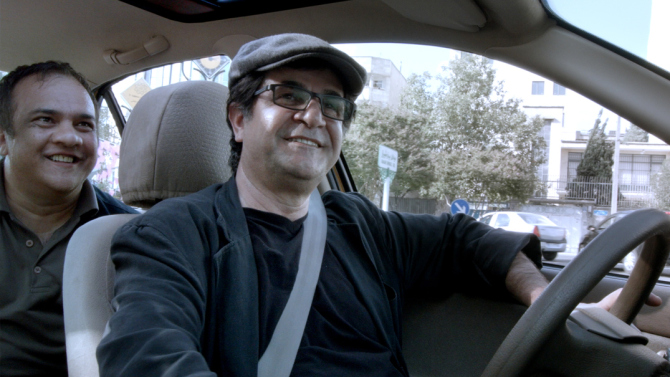
TAXI by Jafar Panahi

Film is Taxi, and its driver and director are the same person – Jafar Panahi.  As he roams around on the streets of Iran pretending to be a taxi driver, people get in/out of his taxi, and the film captures the changing society and it’s morality. Peter Bradshaw aptly described it as Anti-Travis Bickle.

For most part of the film, everything happens inside the taxi. And yet, it’s funny and poignant in equal measure. It’s great fun as passengers of different nature/social status get in and make their point. But it’s sad when you think about the extreme that Panahi has to go to make a film. It’s heartbreaking. Don’t miss the text end plates of the film. This one is a Must Watch.

DHEEPAN by Jacques Audiard

Audiard’s Dheepan reminded me so much of his earlier film, A Prophet. As a ex-LTTE soldier moves to France and tries to start a new life, we realise that it’s never going to be easy for him. Forgetting the turbulent past, making sense of the confusing present, and fear of the unknown future – he and his two unknown companions, who pretend to be his family, battle it everyday.

In the last half hour, the film takes a dramatic turn which is quite different from the tone of rest of the film. But it still remains a powerful film which has empathy for its characters. It completely belongs to his lead actor Antonythasan Jesuthasan who is there in almost every frame, and has a great screen presence.

Jesuthasan was at MAMI to present the film and for the post-screening Q and A. Interestingly, the film mirrors his journey as he was also a member of the LTTE, and later settled in France as a refugee. When i asked him if his life has changed for any better after the film got critical acclaim, bagged the Cannes top award, and he is being invited all over. He said earlier he wouldn’t buy the metro train tickets in France. Now people recognize him and he is forced to buy that 2 Euro train tickets. So that has changed for him – expense of extra 2 euros. And he is still a refugee in France. The difference between life and cinema. Do watch it.

NotSoSnob

Mumbai Film Festival – our annual movie ritual is on. And like every year, we are going to cover the festival like nobody else does it. moiFightClub regulars and readers will bring you all the day’s reccos and reviews.

FILM STILL - ROOM

Impressions :

So all Bombay-based movie buffs’ saalana urs, karvachauth, maah-e-ramzaan, navratri all rolled into one started today. The process of collection of badges and booklet/bag was very smooth and BookMyShow folks are doing a great job. Also the bag this year looks very aesthetic and sturdy. “Sabziyaan laane ke kaam aa sakta hai” in the long run.

On the screening front, films were on time and ran smoothly except for the morning slots where two films got postponed due to technical issues. But I don’t think many complained as they were replaced by additional-screenings of Sorrentino’s YOUTH.

In a way, YOUTH turned out to be the ‘Murder’ of Day 1. As the legend goes, many small town cinema halls in North India keep a print or ‘Murder’ with them always and whenever a big-film flops on Monday, they put up ‘Murder’ and it gets them the audience.

I managed to catch 3 films today.

Heavenly Nomadic (Original title: SUTAK) by Mirlan Abdykalykov

This Kyrgistani film was my random replacement option for the postponed Lobster (which I caught later in the day), and it wasn’t a bad choice. A tribal nomadic family of a little girl living with her mother and grandparents in the stunning rolling-plains of Kyrgistan, where every one is dealing with the death of the girl’s father in his/her own way made for a (film festival jargon mein kahein toh) ‘meditative’, quaint little film. The myths of nomads, the modernity knocking their ancient hills down, the collision of civilisations so to say – all was weaved in quite effortlessly here.

Realistic performances, great sound design and cinematography, and a script of simple ambitions. Not mind-blowing but nothing to dislike here.

Mountains May Depart (Original title: Shan He Gu Ren) by Jia Zhangke

Jia Zhangke’s last film – A TOUCH OF SIN – was very powerful so the expectations were high from this one. It didn’t leave me disappointed but quite dissatisfied. Divided in 3 parts, spanning 26-years in the lives of its characters (last part is set in 2025!) originating from small-town China, it again looks at the country’s social-political dilemmas (chasing America/Capitalism while trying to retain its own legacy) through Zhangke’s allegorical episodes. The first part involving a love triangle especially looked like a bad Hindi film from the 90s (‘Saajan’ instantly came to mind). The film gets better as it goes on and the third episode is the best, both technically as well as in its ambition.

The film keeps switching POVs and that’s a victory of sorts for the director to keep it all tied together in spite of this device, but it also keeps the viewer unsettled throughout.

The Lobster by Yargos Lanthimos

Simply brilliant! A futuristic dystopian look at relationships but via allegorical devices so twisted that it looks like a Kubrick-directed episode of SNL’s ‘Lowered Expectations’ sketch. Revealing anything of the plot will be an unnecessary hindrance to your experience so go into this one blank and be ready for a bullet through your brain & testicles/ovaries. Deeply funny, insightful, and subversive – and at the same time, a perfectly crafted relationship drama. Last chunk gets a bit drawn out, but all genius has space for (as Fabindia calls them) hand-crafted defects.

And ah, it stars some really big names in relatively minor roles. Unmissable.

– Varun Grover

The Train Leaves At Four (Train Chaar Baje Ki Hai) by Antariksh Jain
(Disclaimer – walked in 3-4 min late)

This slow minimal documentary spends maximum time allowing the protagonists – the villagers going about their daily lives, and is a candid capture of the atmosphere and mundaness in a remote village in Madhya Pradesh. The director seems to have let the family members be and dubbed their voices/conversations later. Many frames & scenes are particularly noteworthy – the two villagers talking about their children escaping the ‘trap’ of farming by studying; the child trying to quench her thirst somewhat inefficiently from the hand-pump while the lazy students are seated in the background in the run down school; the one scene where one of the brothers teaches his toddler the skill that has been passed on from generations to generations in his family – how to ensnare a murga using twigs & stones; the desire to escape someplace better than this village in which nothing happens; the women folk their food gathering activities; and the pre-climax sequence involving the overburdened train at the station. In the absence of a narration this does prove to be a difficult watch but the subject matter is so depressing that one cannot help not being moved by it. As we call it at mFC, this is Need-Some-Patience genre.

Mountains May Depart (Shānhé gùrén) by Zhanke Jia

Directed by Zhanke Jia who made the eccentric but arresting Touch Of Sin earlier, this one is divided into three chapters. Do NOT BE DISAPPOINTED BY the 1st chapter which turns out to be a 70s/80s Hindi film love triangle, but if you stay long enough, the other two chapters have enough drama & life to make up for the 1st one. People move on, relationships change, Life doesn’t have great occurrences but usually indifferent and cold instances/events, Parents & Children who almost never seem to be reciprocating their feelings/thoughts to one another simultaneously, an unusual romantic track – may be in retrospect I’m being too lenient to this film. But do watch it.

The Lobster by Yorgos Lanthimos

Something tells me this is one of the most f***ed up films of MAMI 2015. What a delightfully black humored watch from the director of Dogtooth. More an ‘exploration’ than a destination film, this one boasts of excellent writing, cinematography, performances from everyone. Shuru kaahaan hoti hai, aur kahaan se kahaan jaati hai – is incredible. DO NOT MISS THIS at any cost.

– @nagrathnam

Jia Zhangke: A Guy From Fenyang by Walter Salles

Walter Salles’s essay on the very personal roots of Chinese auteur Jia Zhangke’s cinema – Jia has won worldwide acclaim for his films yet most of them remain banned in China.

This film explores how the insularity & deprivation of Jia’s early years came to influence the social-realism of his cinema. This is a sparse & simply told documentary with a lot of Jia in it & a lot of clips from his old films. Luckily Jia is a warm, charming & humane presence & his personality dictates the tone of the film as well. I was engrossed & fascinated despite not being too familiar with his work. Unexpected pleasure was the sight of Jia singing ‘Awaara hunn’!

@sumit roy

From Afar (Desde allá) by Lorenzo Vigas

Debutant director Lorenzo Vigas’ strikes unique right from the first minute of the film. While the narrative is kept relatively simple and minimal, the distinct use of shallow focus to establish the alienated spheres of the characters is what makes it intriguing. Have hardly seen lensing used so uniquely to build scenes through the cumulative elements of each shot. Not once(hope my memory serves me right) does the focus shift from one character to the other, much like the dormant fear of relationships each character shares. Must watch!

@suyashkamat

Land And Shade (La tierra y la sombra) by César Augusto Acevedo

With all the fest-bait adjectives of long shot, languid pace, leisurely treatment, devoid of colours, this one is of uncompromising vision and an assured debut. The director César Augusto Acevedo channels his inner ghosts to bring out a poignant story of a family dealing with loss – of land and relationship. No wonder it picked up the Camera d’Or at Cannes.

Room by Lenny Abrahamson

A heartwarming tale of a mother-son duo who have been held captive in a “Room”. As you keep wondering where will the film move next, it keeps surprising you, and achieves the closure in a beautiful manner, raising some difficult moral questions along the way. Adapted from Emma Donoghue’s novel, this film belongs to child actor Jacob Tremblay who is absolutely stunning in every scene. This one is a Must Watch.

– @notsosnob

Three

 ‘Bring me a dish to satiate my mind and I am happy.’

No, no one great said that, I just made it up coz I wanted to begin with a bang. But that doesn’t mean it is untrue. Kaul, a feature length indie film has had me quite, quite excited since a few days now.

It’s rare a film excites me so much, makes me think so much. So exploring, enquiring, digging, labelling, un-defining…it goes.

Kaulin several cultures, means a call to the divine. It also means higher order or social class. It also means a man of high breed. It also means a purpose or profession. It also means a promise.

How simple is simple?

We live in a world where everything is codified perfectly into two neat brackets, cause and effect, black and white, this or that. Human existence today, is an argument of versus. But simple is a unifying agent, it is a unifying philosophy and has no place for duality. Then?

The task of our times then is to deconstruct. And integrate. To arrive at the core that is simple. Kaul is something like that.

A young man in a small town in Konkan murders a woman and moves to a smaller village. He takes up a job as a teacher, marries and is living a seemingly uneventful life when he undergoes an experience he cannot accept or reject. It is something he cannot define; it is surreal and drives him to the edge of sanity (as defined by common majoritarian understanding). He sets out seeking answers, peeling layers until he arrives at the core.

Mystical? Maybe, but this is not a saintly story of a man’s enlightenment and struggles with it. It is the story of Nietzsche’s ‘Ubermensch’, Camus’ ‘Outsider’, and the 21st century common man experiencing the dark night of his soul fraught with anxiety.

If he kills like Camus’ Stranger and goes off like a being in search of his super-hood, then like our 21st century man he veers towards the confines of psychiatric classifications, depending on the only rules he seems to be made of. ‘Shut me up if I become a threat to the society’, he pleads earnestly, believing himself to have gone bonkers; his classification of insane and normal as binary as the debate between the physical and the metaphysical. In this honesty lies the thread of his search, the honesty that compels him to ensure his road must not end in annihilation of others also leading him to explore the power that lies in that very thought of violence. Is that where ultimate freedom lies?

What if you could just snap your fingers and the world would come to an end?

And what if your redemption lay in it? Through it?

That kind of power is threatening. Life-threatening. Two moves and the torture would end. And it would be a good deed. Or would it be? We are back to polarising.

But it is touch and go, this playing with polarisation, because as is essential, one must quickly leap to integration, from linear to the cyclical, from separation to unification, if one has to arrive at the meaning of existence. In the womb of birth is the seed of death and in the heart of death the first call for creation. Something cannot be destroyed until completely built and cannot be created until it is not completely annihilated. The pendulum has to swing to both extremes to arrive at its true balance. Let me drop the ‘true’ and just say balance. It is simple.

To peel off the layers of our consciousness and definitions of art then, the film throws off layers after layers of myths and faux-labels, crystallising the knowledge, the visual and sound (literally and metaphorically!) in an attempt to integrate sensory experience with emotional resonance in the audience. As the protagonist starts his journey in search of answers we are taken into another world where the physical echoes the metaphysical. The play of day and night, darkness and light, sounds and silences create a universe that is tactile and immersive, daylight exposing the extreme dullness of the regular and darkness the mysteries of the obvious. With this, Kaul gently plays on our senses as it tantalises us to follow the protagonist to find out what is this bat-shit craziness that has descended upon him suddenly.

Two

Do we need the Master?

Needless to say, he finds a guru; the film evoking a Campbell-like mono-myth pattern of a hero’s journey, from afar a simplistic narrative principle, from close quarters simple. As he tries to seek the tutelage of one seemingly mysterious old man another layer of polarity opens up. Along with several other myths the old man also rejects the myth of the ‘guru’, hinting at the infiniteness of the self to find its own way out of this ultra-real world. The role of the seeker as a primary school teacher suddenly gains credence. ‘This whole Guru-Disciple thing is bogus’, roars the old man in defiance, decrying the tradition of looking outward, and by that pushing the protagonist to look within.

He urges him to listen to birds for messages decoding his path.

And what will I find?’ the seeker asks in anticipation.

‘Nothing. You will find nothing. But only after knowing that will you be able to accept it. There is nothing to find.’

A group of philosophers, writers and artists were once asked, ‘Why are we here?’ John Cage famously replied, ‘No why, just here’. Let’s pause here a bit.

Integration is not mathematics, but then maybe it is.

From a distance, there is a danger of viewing and interpreting Kaul as a fable, it is anything but that. Rather it could almost be interpreted as a pataphysical take on the business of spirituality. With a firm belief in the power of self, the film almost cocks-a-snook at the common dialectical understanding of experiential truth and the mysterious secret of man as super-being

Even though interpreting Kaul as a fable would be reductive, there is a certain temptation to do so, given the structure and form it chooses to take. It’s magic realism is Kafkaesque, dark, mysterious and anxious, very anxious. It is mystical and formless, evolving as we go, but it is in enquiry that our existence and the film lies, as embodied by the seeker and that which is being sought. That is the spirit of the film hence its fable-like veneer dismantles before it is fully built as the Kafkaesque intensity deepens, unshackling the viewer from the fluff of fantasy immersing him in the surreality of reality instead. Enquire don’t accept, seek don’t give up, trust your power do not let go of it; some of the ideas the film seems to be urging us to follow with little cushioning.

While merging the hero’s mono-mythical external journey with his internal one, the film adapts and adopts from several theisms and philosophies. Rooted in ancient Hindu philosophy is our mysterious old man, who suggests neti neti is the only path for the insane. In a caustic sweep he derides the modern-day formalist man steeped in illusory materialism and its limited definitions. Neti is a yogic path to enlightenment, propounded in Gnana Yoga and Advaita Vedanta, which emphasises on the rejection of all that is not the Soul and thus coming in touch with it. It is a path of deconstruction, one that nudges the shedding of layers of illusion and belief that we are mere mortals, to reach that germ of immortal within us.

Do what you feel like’ is the only answer the old man has for our angst-ridden protagonist. Hear the calling of honesty. From songs of experience the return to innocence.

It is believed that knowledge or ‘gnana’ was handed down through the alleys of memory, both physical (smriti) and divine (sruti). The Vedas, believed to be central canon of Hindu philosophy, are said to have been written through the assistance of divine memory. The oral tradition of India, (where sagely as well as worldly wisdom was disseminated through stories), and the guru-shishya codification of the same task, then seem to be derivatives of a deeper tradition born of the belief in sruti and smriti.

It is from these traditions that director Aadish Keluskar draws his narrative, borrowing a phrase T S Eliot used to describe the style of metaphysical poets, ‘yoking together’ the content with form in a meta-fictive universe. True to the oral tradition the old man hands down ancient knowledge to the protagonist. Is it from sruti or smriti? The film, like the old man, (its spokesperson almost), gives no ready answers. But there are answers embedded within, for which enquiry is required.

Kaul, bases its world-view, or rather other-world view on prominent philosophies and beliefs, collecting them together to make a base, a context. It then plays within this context of beliefs, pitting one against another to find a middle way. It’s almost like an examination, or experiment rather, of mating the best DNA of Nietzsche’s nihilism, Camus’ absurdism and Hindu spiritualism to free their core and it’s own. What emerges is the distilled idea of the Self. And the absoluteness of its power. From a dot we emerge and into the dot we dissolve, ending where we begin. Again and again, we just need to know it.

The atmosphere of darkness lies like a heavy pall on the film. It is full of bated breaths, the frames holding still in limbo, as anxious and paralysed as its protagonist who doesn’t know where to go from here. Just like neti neti, the structure of the film to arrive at its point is not this, not that. A constant negative reaffirmation. In an admirable example of metafiction, the physical form the film takes is to reflect the essence of its content. In many ways it subverts what we popularly know of the relationship between form and content and how it is practiced. In other ways it is the distilled approach of marrying both, the essence of simple. The old man refuses to provide easy answers to the protagonist pushing him on the path of neti neti and the film does the same to the audience. It is exciting to say the least, to catch clues and link up a path to the centre of the film.

When I reached there, the deepest I could, I found something interesting at the centre of the film. It pretends to be dystopian while it is very utopian and optimistic. Behind the obfuscating mystique, behind the nihilistic violence, behind the weariness of regular life, the film thrusts forth a strong belief in personal power, almost urging us to claim ours. Using violence, it liberates it from the baggage of destruction, leaving only the creative force behind.

one

Perhaps, the richness of the form and content is what I find so exciting in Kaul. The boldness of night photography allowing darkness to rule, the image crystallising as though in response to the call of plot, the soundscape reverberating with enigma, hinting at larger mysteries while guiding through them. It is with a certain intensity that the soundscape plays on the subconscious, informing the world of the film through vibrations, through variations, through space and vacuum, through noise and silence and through the gross and fine. This intensity and vastness of variation melts in with the world of the film, creating a supra-natural, almost physical experience of the protagonist’s journey for the audience.

‘Truth is rarely pure and never simple’ proclaimed Oscar Wilde. Neither is Kaul. It isn’t pure, it isn’t perfect and it isn’t simple. But it wins in nudging us to ask, in our lives and in films, what is simple?

Fatema Kagalwala

(Kaul will be playing at this year’s edition of Mumbai Film Festival and will compete in India Gold section)

https://www.youtube.com/watch?v=X1hu8FQK0V4

It’s known as the Noida Double Murder Case. And it’s easily one of the most talked about murder case in recent history. More so, because it happened in a middle class locality in Noida, a city adjoining to India’s capital.

Shazia Iqbal saw the film Talvar, which is based on the same case, and writes about the big picture that concerns all of us as a society, and as part of the system. And why a filmmaker’s bias is completely fine.

Guilty2

23rd May 2008.

‘Its starting now. Quick, come here’, my mother loudly screamed as soon as the press conference was about to start.

The Delhi police was making the big announcement of the perpetrators in the Noida double murder case in which the 14 year old Aarushi Talwar and Hemraj, the house help were brutally murdered a week ago. I almost didn’t hear my mother because of the noises ringing in my ears since two days. That morning when I left home for a meeting, the police van and the media outside the building opposite to mine seemed like the crime scene outside the Talwar society.

A day ago, Maria Susairaj, an aspiring actress had confessed to Malad Police that her fiancé, Emile Jerome had killed Neeraj Grover, a TV executive in a fit of rage when Jerome found Grover in Maria’s bed. Susairaj stayed in the building opposite to my house. On the night of May 7th, and the morning after, I had a party in my house and I was awake the whole night. After Susairaj’s confession and the gory details of cutting the body into 200 pieces and dressing up the crime scene, that story played in my head enough number of times to make me believe that I was there in that house that night and it all happened in front of me, and that I was a dumb mute spectator.

Neeraj Grover was close to the industry I worked in and we had common friends. His face haunted me, I hadn’t slept for a minute for over 48 hours. With all the drama that was happening outside the building, I didn’t want to step out. The media called the Neeraj Grover murder case as the face of changing India, the young India where relationships are fragile, infidelity is part of commitment and casual sex is no more a ‘man’ thing.

A week before this, the Noida double murder case made headlines as the murder involved a young teenage girl from an affluent family and an older servant who worked in the house. This did not happen 200 meters away from my house but the media made sure that it was very much part of my life. Everyone was talking about the murder and that press conference seemed like the episode from a popular TV soap in which the whole country freaked out when the main protagonist dies. Aarushi’s murder was presented like a high TRP whodunit thriller. Everyone wanted to know who killed her.

I went to the living room where my parents and sister were waiting for the press conference to start on the TV. IGP Gurdarshan Singh began the conference by calling Aarushi as Shruti.

‘How will he solve the murder, if he doesn’t even know the name of the kid’ my mother mused. And once wasn’t enough – Singh kept calling Aarushi as Shruti throughout the conference.

But that wasn’t the only eyebrow raising behaviour from him and his department. They claimed Rajesh Talwar killed his daughter in order to save his ‘honour’, gave details of Talwar’s extra marital affair, their involvement in wife swapping and the deplorable character assassination of a child who was murdered.

“Rubbish”, my father responded shocked, “They can’t find the killer and are making up these implausible stories. He is her father!” He couldn’t believe what was happening. Fathers don’t kill their children because of their affairs, he said. He was afraid this revelation could make every girl distrust her father. A silent tear rolled as I went back to my room.

None of what the IGP said made any sense. Last night when I watched Meghna Gulzar’s movie Talvar based on the case, I was glad it resonated with what I thought during that press conference. I just wanted to know the parents didn’t kill her. I wanted to know this young new ruthless India of frivolous relationships that people keep bringing up with every sensational murder case, is a farce. But, apparently, that India is very much prevalent and so is the antiquated patriarchal India where a police officer blames the Internet for ruining the cultural fabric of the country and 14 year olds having a boyfriend and ‘Sleep’-overs.

Lawyers ML Sharma and AP Singh became the face of this primitive regressive patriarchal India after the Brit docu India’s Daughter was released by BBC. It featured a man who believes he would gladly burn his daughter if she has premarital sex – how would he react to a society where girls tell their fathers about their boyfriends? People who believe that honor killing is right, they also assume that the society also harbors such beliefs. And the effort that the government took in banning India’s Daughter is not as half as much as the combined effort of the local police, the assigned CBI team and the courts took to convict the Talwars.

So what happens when such men raised with such regressive values try to understand a culture belonging to the modern upper class allegedly corrupted by the internet? Talvar.

What more can you say about a murder case where every minute detail has been public for 7 years now. Talvar, written by Vishal Bhardwaj and directed by Meghna Gulzar presents us those details and engages us, without any melodrama or manipulation, mildly tilting in the favour of Talwars. Of course some might use the latter point to brand the film as being biased. I’d like them to know that a film is a writer/ filmmaker’s point of view/opinion on what disturbs them long enough to get up and say something. And that’s why Talvar happened. And I am glad it did.

What can this movie talk about about that you haven’t already read in the papers, news, from the police, CBI officers, from your parents, next-door uncles? ‘Human reaction’, for one. In the last 20 minutes of the film, in a round table sequence that is a master class in writing, the CBI officer who acquitted the Talwars says no two humans can have a pre-conceived reaction to an incident, specially a ghastly cold blooded murder of their only child. The side that files the charge sheet against the parents questions their unemotional façade post the murder and during the trial. Nupur Talwar appeared on a TV show and didn’t cry while talking about her daughter’s death. What kind of a mother is she? In a society with history of rudaalis, where being loud is part of our culture, melodrama is not just for the TV sets but an inherent way to express our emotions specially when it comes to matter of death, how can a mother not cry? Everyone questioned. Every logical person went against the Talwars with this one question.

‘She looks numb. Seeing your kid’s dead body can do that’, said my mother. It takes empathy and humanity to realize that. No other human can reason or understand inner doings of another’s mind. So how can human reaction be even discussed as a generic emotional response?

Watching a dark and disturbing story can be difficult but watching a dark and disturbing story based on real people’s lives can be very painful, especially with the way most of us are attached to Aarushi’s case. Bhardwaj, however, with his straight-faced dry wit makes it easier for you to watch Talvar.

That way Talvar is more than a movie. It is an important film, about the sword of justice that claimed not two but four lives. One of the slain was a child accused of being involved with a man thrice her age. The men who publicly assassinated her character are the ones who are responsible for the law and judiciary in this country. This movie needs to be seen. For Aarushi. To open our eyes and discover a system that failed a child. And as the movie says, it’s up to you to decide what the truth is.

Shazia Iqbal

(To read previous posts by the same author, click here)

Guilty9

(Disclaimer – One of our editors is closely associated with ‘Talvar’)

Jeev-jantu.

SPOILER  ALERT

’मसान’ के बारे में बहुत कुछ लिखा जा चुका है, लिखा जा रहा है, सोचा कि लिखने के लिए कुछ बचा नहीं है, लेकिन इस फ़िल्म ने इतनी सहजता से दिल को छू लिया कि लिखे बिना नहीं रह सकता. लगभग दस दिन हो गए हैं फ़िल्म देखे हुए, लेकिन ना तो ज़हन से उतरी है, ना दिल से. एक अच्छी फ़िल्म, नज़्म, कहानी या किताब की शायद सबसे बड़ी ख़ासियत ही ये होती है कि वो देर तक आप के साथ बनी रहती है. दिनों तक, महीनों तक, सालों तक और कभी-कभी सदियों तक. और ’मसान’ भी इस में कोई अपवाद नहीं है. और यूं भी जिन जज़्बात और मुद्दों को ’मसान’ में दर्शाया गया है, वे सब शाश्वत हैं और आज के संदर्भ में, आज के परिप्रेक्ष्य में रचे गए हैं. और यही बात, इस फ़िल्म को, इस कहानी को, उन किरदारों को और अधिक ख़ास बना देती है. और जिस तरीके से लेखक वरूण ग्रोवर ने हिन्दी-उर्दू के कवियों, शायरों को इस फ़िल्म में याद किया है, वो इस शाश्वतता के पहलू को और अधिक प्रबल करता है.

चार अहम पहलुओं, शाश्वत पहलुओं से बख़ूबी रू–ब-रू करवाती है फ़िल्म. जिज्ञासा, प्रेम, मृत्यु और उम्मीद. ये सभी वो शाश्वत पहलू या जज़्बात हैं ज़िंदगी के, जिनके बिना जीवन लगभग असंभव है. कुछ-कुछ वैसे ही जैसे शाश्वत समय के बिना.

फ़िल्म शुरू ही देवी (रिचा चड्ढा) की जिज्ञासा से, या यूं कहें कि जिज्ञासा शांत करने की कोशिश से होती है. ठीक एक बालिग होते बच्चे की तरह, जिसे बहुत कुछ जानना है और इस जानने की प्रक्रिया में वो समाज के बनाए सही-ग़लत के पैमानों पर ज़्यादा ध्यान नहीं देता है. ये जिज्ञासा बिल्कुल वैसी है, जैसी कभी आदम और हव्वा को हुई होगी, जिस के चलते उन्होंने वो प्रतिबंधित फल चखा था, जिसे चखने का अंजाम हम सब जानते हैं. अब वो सच भी हो सकता है और मिथक भी, लेकिन है एक शाश्वत तथ्य. सदियों से इस और इसी तरह की अनेकानेक जिज्ञासाओं ने इंसान को उत्सुक बनाए रखा है और एक तरह की तरक्की के लिए प्रेरित भी किया है. आज हम जितना भी आगे बढ़ पाए हैं, उस में जिज्ञासा का बहुत बड़ा हाथ है. कुछ ऎसी ही तरक्की देवी भी करना चाहती है. और उस की ये तरक्की किसी भी तरह से भौतिकता से प्रेरित नहीं है. वो बस आगे बढ़ना चाहती है, शारिरिक तौर पर, मानसिक तौर पर, खुले दिमाग से. एक जगह वो अपने पिता विद्याधर पाठक (संजय मिश्रा) को जवाब भी देती है, “जितनी छोटी जगह, उतनी छोटी सोच”. वो इस छोटी सोच से तरक्की चाहती है. अपनी जिज्ञासा को शांत करने के सहारे, अपनी शाश्वत जिज्ञासा को शांत करने के सहारे.

दूसरा शाश्वत जज़्बात, प्रेम, जिसे ’मसान’ ना केवल छूती है, बल्कि उस में सराबोर होकर नाचती है, उत्सव मनाती है. प्रेम, जो जितना जिस्मानी है, दुनियावी है, उतना ही ईमानदार भी है, सच्चा भी है. कहीं कोई छल-कपट नहीं है. खालिस है. और यही खालिस प्रेम, आम तौर पर परिभाषित और दर्शित प्रेम से अलग है. इसीलिए पहुँच पाता है, और छू पाता है, अंतर्मन की उन गहराईयों तक जहाँ तक का रास्ता केवल असल प्रेम को मालूम है. वही असल में केंद्र है, हर एक इंसान का, और प्रेम का यही दृष्टिकोण, दीपक (विक्की कौशल) और शालू (श्वेता त्रिपाठी) का एक-दूसरे के प्रति (दुनिया के एतराज़ को ध्यान में रखते हुए भी), उस प्रेम को दर्शाता है, जो सुबह की ओस की बूंद की तरह साफ़ है, यही साफ़-पाक प्रेम है, जो असल में शाश्वत है.

अगर एक चीज़ है, समय के परे, जो उतनी ही शाश्वत है, और रहेगी तो वो है मृत्यु. और मृत्यु को इतने अलग-अलग दृष्टिकोण से देखा-दिखाया गया है, एक ही फ़िल्म में कि ताज्जुब होता है. एक ओर पियूष (सौरभ चौधरी) आत्महत्या करता है, सिर्फ़ डर के मारे, शर्म के मारे और अनजाने में ही देवी और पाठक की ज़िंदगियाँ दाँव पे लगा जाता है, दूसरी ओर नियति का हस्तक्षेप शालू को इतनी ख़ामोशी से मृत्यु के आग़ोश में ले लेता है कि एक झटका लगता है. गहरा झटका. तीसरा रूप है मृत्यु का, दिन-रात जलती चिताओं का, गंगा के घाट पे. जहाँ मृत्यु सिर्फ़ एक काम है, एक व्यवसाय है और है एक ’पारी’ का खेल. वो खेल जो दिन-रात के हर पहर में खेला जाता है, ठीक एक ज़िंदा आदमी की चलती सांसों की तरह. जब आख़िरी बंधन को खोपड़ी पर बांस मार कर आज़ाद किया जाता है, (जिसे कर्म कांड की भाषा में ’कपाल क्रिया’ कहते हैं), तो मृत्यु बस एक कर्म बन कर रह जाती है. और इसी मृत्यु का चौथा रूप दिखाई देता है, जब झोंटा (निखिल साहनी) एक लम्बा गोता लगा कर वापिस नहीं आता है देर तक. मृत्यु नहीं है उन क्षणों में लेकिन उस की मौजूदगी का एहसास इतना प्रबल है कि पल भर में मृत्यु के शाश्वत होने का एहसास हो जाता है.

महाभारत में जब यक्ष ने युधिष्ठिर से ये प्रश्न किया था कि क्या है जो सबसे हैरत-अंगेज़ है, तो उस ने जवाब दिया था कि सदियों से सब मृत्यु को प्राप्त होते आए हैं, लेकिन फिर भी जब तक जीते हैं, इस तरह से जीते हैं, जैसे अमर हों. मानव-जाति की यही बात सबसे हैरत-अंगेज़ है. और यहीं पर आकर हम अगले शाश्वत जज़्बात से मिलते हैं, उम्मीद, आशा. जिस के सहारे दुनिया तब से चल रही है, जब से ये असल में चल रही है. सब तरह की उम्मीदें, चाहे वो अपनी जन्म-जाति के बंधनों को शिक्षा के ज़रिए तोड़ कर, अपने मनपसंद जीवन-साथी के साथ एक अच्छा जीवन निर्वाह करने की दीपक की उम्मीद हो, या अपना सच्चा प्यार किसी भी तरीके से (घर से भाग कर भी) पा लेने की शालू की उम्मीद हो या फिर सब कुछ बिखर जाने के बाद भी एक नए साथ के साथ एक नया सफ़र शुरू करने की देवी की उम्मीद हो, जिसे अंत में एक नई भोर की तरह की दर्शाया गया है. वो भोर, जो ज़िंदगी, जिज्ञासा, प्रेम, मृत्यु और उम्मीद की ही तरह शाश्वत है.

और भी बहुत से शाश्वत जज़्बात हैं, जिन्हें फ़िल्म बहुत सहजता से पेश करती है. प्रेम के बिछोह से उपजा दर्द, सदियों से हिन्दुस्तान में प्रचलित जाति व्यवस्था, और बंधनों में जीने की देवी की छ्टपटाहट. और वो सब भी यूं घुले-मिले हैं पूरी कहानी में, जैसे आँसुओं में नमक. जो है भी, तक़लीफ़ भी देता है, लेकिन अलग से दिखाई नहीं देता है. इतनी ख़ूबसूरत और ख़ूबसीरत फ़िल्म लिखने और बनाने के लिए लेखक वरूण ग्रोवर, निर्देशक नीरज घायवान और डी.ओ.पी. अविनाश अरूण को गले लगा कर शुक्रिया देने का मन करता है. लेकिन वो फिर कभी सही.

फिलहाल ये एक ही गुज़ारिश है, अगर आपने अभी तक ये फ़िल्म नहीं देखी है, तो कोशिश कर के देखिए. ऎसी फ़िल्में बार-बार नहीं बनती.

 – मोहित कटारिया

(Mohit Kataria is an IT engineer by profession, writer & poet by passion, and a Gulzar fan by heart. He is based in Bangalore and can be reached at [kataria dot mohit at gmail dot com] or @hitm0 on twitter)

Labour Of Love

She takes the tram, bus. He takes the bicycle.

She cooks the fish. He buys it.

She has no company for lunch. He has no company for dinner.

She opens the house. He locks it.

She cleans the clothes. He dries them.

She uses the water. He fills it up.

She has no sounds for company. He has the machines and the music.

She stitches his pant. He keeps it aside for stitching.

She counts the money. He withdraws it from the bank.

She lights up the morning agarbatti. He does the evening one.

She eats the local bakery cake for breakfast. He eats the same.

She sleeps on right side of bed. Alone. He sleeps on left side of bed. Alone.

Because she does the morning shift. And he does the night shift.

Aditya Vikram Sengupta’s Asha Jaoar Majhe (Labour Of Love) is about a middle class couple living in Calcutta, and their daily boring ordinary life. Nothing is exciting in this mundane routine, life is almost fifty-fifty in their chores. But the director captures the sight and sound of this ordinariness in almost meditative gaze, making it look gorgeous. Especially the soundscape of the city is captured in all its beauty. Close your eyes and you can hear everything which leaves strong visual impressions too – blaring loudspeakers, rattling wheels, waffling music, creaking doors, rumbling trams, a rustle here, a clank there, and few Bengali golden oldies.

A few sequences seem odd and jarring, like the one of cereals pouring in glass containers, so advertising-wala that it stood out from the rest of the mood of the film. But apart from that it’s a brave film and quite an extraordinary cinematic achievement for a first time filmmaker, much like Chaitanya Tamhane’s Court which released earlier this year. And Aditya Vikram has not only directed the film, but he has also written, edited, and shot it! Waoh! Seems like this year, the new kids are leaving the veterans far behind.

Also, since my last post on Court created quite a stir and i was accused of many things including having an agenda to pull it down, let me admit it that Labour Of Love also felt like fest-bait. But thankfully, it’s not selling a desi exotica story for the west. Though i never understood why fest-bait was a bad word. If you know the trick and it lends to the grammar of your story naturally, why not. A brave new voice with a beautiful film will disarm every criticism.

Coming back to the film, the Bengali title of the film Asha Jaoar Majhe (In between arrival and departure) is more apt than the English one – Labour Of Love. Because as the day ends and a new one begins, in between there’s magic hour for the characters. It’s so rare that it has become almost surreal. And this is where the film turns magical too. It’s heartbreaking as Ritwick Chakraborty’s eyes stare at Basabdutta Chatterjee leaving for work. That’s when it hits you. The price of recession, the hard work that goes in everyday boring, ordinary life – just for a cup of tea together. Love and longing in the time of recession.

i might be wrong but it seems like this is Basabdutta’s debut feature. Haven’t seen her before. And what a find! That serene face, those expressive eyes, she doesn’t need dialogues to convey anything. And there are no dialogues in the film.

i had tried to watch the film during Mumbai Film Festival. But as the sun was setting in real time on screen, i almost felt asleep, and then decided to walk out of the film. Was too tired. And this film needs all your patience and attention. Because the atmosphere is immersive. Like the sequence where you see on the wire, in close-up, the clothes are moving one by one, you know that Ritwick is hanging them for drying. But why and how are they moving. The mystery is solved later in the film – why and how the clothes moved. It’s simple, and beautiful. With meticulous detailing, Aditya Vikram captures many such moments of everyday routines. Like the way she tucks the bus ticket in her bangle, it bought a smile on my face. Aha, Calcutta, you beauty! So if you don’t get into it, try it later. Give it a chance. It might not be everyone’s cup of tea but try it – you won’t know the taste till you try it. A rare experimental beauty, this one has got a limited release. But if you are among the lucky ones where it has released, catch it.

11038076_1612938935652887_1457324766814610140_n

Five boys in their pre-teens, hailing from a small-town in Maharashtra, each knowing the loss of a dear one, jump into a lake from a height in the total abandon of childhood’s innocence. The protagonist is the last to jump; he hesitates and then takes the plunge. For me, that was the defining moment of Avinash Arun’s debut film Killa.

 Killa 5

Cinema world-over, is moving towards telling big stories of small people. While we continue to have (and be mesmerised) by our Interstellars and Mad Max’, we are also rejoicing in looking deeper into the souls of the commoner through the canvas of everyday life. Iranian cinema, arguably, showed the world the way, and in India, it is Marathi cinema, among other language films, which has moved the cinematic zeitgeist inwards. Little people, little moments and large stories. Not larger-than-life; very common, very grounded, very real and because of this, large. Especially gratifying is the fact that the child as the protagonist is finally here. Our lenses have finally found his story worth telling. His world is being looked into, explored, understood and loved, a practice that has always been at the periphery in our cinema. Vihir, Shwaas, Tingya, Shala, Fandry…the list keeps increasing. And now Killa.

In Killa, Avinash delves into small-town life and his own personal memories of childhood, and paints a moving and heart-warming picture of learning to fight one’s battles with life. It is the journey of a boy still grappling with the death of his father that happened two years back, and the constant change of environment that has followed. It is the story of his mother, a single woman, gritty and upright, determined to ensure she is now the father and mother to her only son. It is the story of courage to break away from the past and it is a story of love, loyalty and trust. But most importantly, and which is why it is more beautiful, it is the story of taking the plunge. And thus, finding the light at the end of the tunnel. In Killa’s case, the cave.

Killa 4

“I think we have forgotten the life, the buildings, and the streets we used to have not so long ago.” Miyazaki said this about Sen to Chihiro no Kamikakushi. Killa, in more ways then one way, pays homage to a kind of childhood fast disappearing and one many of us have never even known. Yet, its emotional tone resonates universally, drawing in even those unfamiliar with the social landscape of the film. An intensely personal film, it is life experienced through the eyes of a sensitive, lonely, fatherless, pre-teen boy. Moving from town to town due to his mother’s transferable job, he pines for putting down roots, for friends he can grow up with and for his dead father. His mother is trying her best to be both the parents for him, stretching to breaking point to ensure him his due upbringing.  It is with a humane eye that Avinash sees the single woman’s struggle, also reflected in the elderly neighbour. Both women develop a bond of mutual respect, an intuitive sign of recognition when one kind, strong soul meets another. The women are lonely too and they are fighting it. Loneliness is the vast canvas Avinash paints his story on because little Chinmay has to break free of this very loneliness and find hope.

Killa, the central motif of the film then becomes the symbol of Chinu’s inner one, the fort of loneliness and mistrust he is caught in. His search for the exit from the fort becomes a beautiful metaphor of his efforts to get rid of the loneliness. And when he emerges into the sunshine he finds hope and trust, literally and figuratively. On the face of it, it is a simple film with a linear narrative, a well-used form. Couched within is a multi-layered narrative of an inner struggle, the experience of which is evoked rather than told. A complete freedom from the need of dramatic tension yet letting the story find its own resolution is evident in the way it unfolds and in certain ways, it is a liberating experience; to co-opt a 3 Act structure and do away with dramatic turning points yet end with confidence, is in my eyes, quite an achievement.

Killa 3

The visual imagery of the film and its soundscape resonates with the simplicity of verdant, small-town life and a child’s inner tenderness. The spaces Avinash uses make up Chinnu’s external and internal world which we experience through the different locales, his home, school, bridge, fort, cave…The visuals are beautiful without being imposing or picture postcard perfect and the staging is natural, keeping the film moving with a steady rhythm of life instead of depending on the artifice of drama. Avinash also handles the small class-room dramas, especially the weaves of inter-personal relationships between children as peers with a certain tenderness and an understanding of the fragility of their world. The performances extracted out of the children are warmly naturalistic endearing each one of us with their quirks and innocence. We see them as children are, vulnerable and stubborn, inexperienced and wise. Perhaps, the biggest victory of the film is bringing to us the ‘cleanness’ of children…something that permeates into the entire experience of it.

11231680_10155683009265461_696525567476838809_n

Ingmar Bergman said ‘No art passes our conscience in the way film does, and goes directly to our feelings, deep down into the dark rooms of our souls.’ Killa does that in its own unassuming way, going directly to our feelings and deep down into the dark room of our souls and lighting it up a bit.

Fatema H. Kagalwala

First published in the Lensight Feb 2015 issue.

11053419_777442529018283_6873409636004394591_n

SPOILER  ALERT

If you are into cocktails, you know Margarita is hardly ever served with a straw, but who is to say you can’t have it with a straw? Who sets these standards of normality? What is normality? When life throws a lemon out at you, make lemonade? That might be the “normal adage” but don’t doubt that you might as well slice wedges of that lemon to spunk up your cocktail – have it with a straw, if you may. The magic, after all, is in the concoction – not the goblet, glass or straw.

I don’t think the highlight of “Margarita With A Straw” is that it is the story of a patient of cerebral palsy. Neither is it her unusual journey of discovering her sexuality.. I think the biggest achievement is how “normal” the story is.

Sex and handicap have so far both been terribly misunderstood and/or misrepresented in our movies (and perhaps our society). Let’s recall what Bollywood has us believe mostly:

  • Handicap in bollywood – a good human being, who is tragically handicapped and the big bad word is mean to this person for no fault of his/her. Poor he/she lives a life of suffering and sympathy is the least you can give him/her.
  • Sexuality in bollywood – (usually means homosexuality) and is the butt of all jokes (pun intended). So a gay angle in mainstream Bollywood is usually intended to provide comic relief (?) and almost always is physical comedy – to evoke laughter over dressing or mannerism. At best, it titillates homophobia (remember kantaben!).

“Margarita with a straw” is a slap-on-your-face impolite departure from both these stereotypes. It is in the end a story of a girl with her unique flaws (and I don’t mean her physical flaws), and how she handles her life on her terms. Yes, her disability is a factor, but who in this world is perfect. And then again, who is perfectly happy. Aren’t we all but a group of mutually exclusive and collectively exhaustive list of flaws?

But then who are we to call anything a flaw. Perhaps there are no flaws, simply facts – which we all accept and get on with life. So what would a mother do, if she found her child was challenged physically? Brood? Perhaps momentarily. But, Brood forever? Nope. She will take it in her stride and do what she must to make sure the child does not feel the pinch.

So welcome to Laila’s (essayed remarkably by Kalki) life – different, but raised normal –  A girl whose dreams do not show any signs of the struggle that her mortar skills do. A musician, composer and writer, in her late teens, who Skypes and messengers with her boycrush, even writes him a song in his languages, only to get her heart broken. But she is a today’s educated girl – who can dabble between software, men and even porn, at her will and has no shame asking a desi dukaandar for a vibrator.

With crushes and sexcapades behind her, her story takes a defining turn when she is accepted in New York University. A lot changes for her and for her Aai (the ravishing, refreshing, rare, Revathi) in the Big Apple. For starters, Aai no longer needs to carry a manual ramp in her non-cosy van, for the developed country is equipped to give her daughter the wings she never imagined. But old habits die hard – in her brief stay in New York she still shadows her daughter without her knowledge only to make sure she is fine. As a confident, yet worried mother returns to India, the brave, yet newly independent daughter stays on to pursue her dreams and live her life.

While academic flight is underplayed, it is the unfurling of Laila’s inner self, that forms the crux of MWAS. When she meets Khanum from Pakistan (Sayani Gupta) in New York, you can sense sparks flying. Make way for Hindi cinema’s most unconventional coupling  – one a patient of cerebral palsy and other with no eyesight. Both women. Chemistry crackles and couple starts to live together. But is Laila sure of herself? Is she as committed as her partner?

In the last leg of the story, the couple of New York arrive in Delhi to make a few announcements. Attempts are made, and Aai, misunderstands bi for baai – and can only empathise that all women are but baais at home – dealing with chores day in and day out. A determined Laila makes it but obvious in the next attempt but has little chance to converse. For beneath the fighter exterior, Aai is losing her battle against cancer.

The protagonists real battles are finally not about her physicality or her sexuality, they are about her family, her infidelity, her personal choices. Does she tell her partner the truth? Does she choose convenience over companionship? Career over family?

Margarita with a straw is more than a film, it is a perspective. Sexuality is not a situation, it is a fact. If you accept that your child has cerebral palsy, why not accept a child who discovers he/she is gay/bisexual? Cerebral palsy can not be cured, but as a parent (and society) you can try and make the environment more conducive to help the person lead a normal life. Is it a lot to expect the same for a person with uncommon sexuality? For everything that is uncommon is not unnatural.

To say so much about this film is to mean without saying that it excels in all departments, and superlatively so in performances. Revathi’s portrayal of Aai is as real as it can get – angry, loving, caring,  sometimes doting and nosey, she is the typical Indian mother, an epitome of affection. Both Sayani Gupta and Kuljeet Singh (as Laila’s father) deliver memorable characters for what they bring to the screen.

But the movie belongs to Kalki Kochlin – who makes Laila very three dimensional, very believable. She works effectively to nail the body language and voice without ever making Laila a caricature. You can see her inner struggle flash on her face and can feel for her everytime she struggles to move or to communicate or make a decision. This is definitely a performance of an international standard.

Kudos to director & writer Shonali Bose, who not only breaks stereotypes but sets a new benchmark of sorts. She has more than pushed the envelope in Bollywood. MWAS is a bold, daring, refreshing and very important film. It breaks conventions and asks you accept what you mustn’t question, and love without conditions.

Do not have fixations of what is right, what is acceptable or what is normal. And the next time you have a Margarita, (or even a filter coffee for that matter), remember you can also have it with a straw 😉

Kartik K J

(Based in Pune, a marketing professional in daytime and a movie buff during night, Kartik K J is currently working on something which he hopes will be a novel someday)

This post is by Salik Shah, whose twitter bio says his location is Milky Way, and he is addicted to speculative fiction. Once in a while, when he remembers us or finds a film worth talking about, he sends us his cinema notes. Over to him.

11138496_360062394197887_5820510164752371357_n

The story about struggle behind the making of a film shouldn’t be criteria for judging a film. The act of borrowings, bold decisions and compromises made can’t be more important than the film.  When a film reaches the theater, or the screen, it stands on its own feet. There is no director to defend it. No producer to sell it. No critic to lead. The decision is tough—whether we like it or not. Our choices reveal more about us than the film.

Let’s take two very different films for comparison, The Drop (Dir. Michaël R. Roskam, 2014) and Court (Dir. Chaintanya Tamhane, 2015)—both set around a fixed point—to see the differences between the choices made by a master screenwriter and a promising debutant.

The bar in The Drop and the court in Court have one thing in common: they don’t move. Written by an American, Dennis Lehane, and adapted to the screen by a European director, The Drop is a striking film set in an American neighborhood. Nothing happens in The Drop—nothing extraordinary—until the beginning of the end, or an end. The Drop ends at one point, and then starts again. Same with Court, like MFC said. Tamhane pushes the violence off the screen. Lehane embraces it. Tamhane denies a verdict. Lehane delivers justice.

Storytellers have to make tough choices—and those choices make or break them. Tamhane’s earlier effort, Six Strands (2011), is mesmerizing minus the political comment. Forerunner (Dir. Sahej Rahal, 2013) is clever and intriguing, also equally political and confident. But it is Pati (Dir. Sohrab Hura, 2011) which emerges as the winner among the three with its stark realism. Pati reminds one of Satyajit Ray’s early films—though it isn’t supposed to be a film.

Court is made with paper, but the script is not the film. Pati’s strength comes from the camera, which isn’t afraid to move when the need arises. Kamble embodies anger, movement and restlessness, but the still camera doesn’t quite capture his free spirit. Court doesn’t let Nutan’s kitchen speak for itself. It chooses noise over silence during the train journey, which could have been a memorable and powerful scene. Pati sings, Court stings.

Dr Babasaheb Ambedkar (Dir. Jabbar Patel, 1999) is a Bollywood film—but manages to offer nuanced characters and scenes. Though I struggled to get past my bias against the style of the film in the beginning, I was really interested in the subject. When the style became unimportant, the story took over my senses. Towards the end of Ambedkar, the struggle is lost but the spirit remains.

Court doesn’t offer such comfort. It refuses to be subjective. It is a balanced work, and therein lies its flaw. It is fair to everyone, but unfair to itself. Jai Bhim Comrade (Dir. Anand Patwardhan, 2011) from where Court borrows its strength isn’t such a sleek and sanitized film. Patwardhan isn’t easy to watch not just because of the controversial subjects of his documentaries, but also for his low-production value, unplanned, haphazard shots and unprofessional cutting by our ‘high’ standard.

Anand Patwardhan tells the truth, and he shows that it can be really ugly, quite literally. He has a signature that doesn’t need introduction in the history of Indian filmmaking. And he isn’t afraid to go the court to fight censorship and secure release of his films. We can label Patwardhan as an activist filmmaker, but Anurag Kashyap (Gulaal), Vishal Bhardwaj (Haider) and Imitiaz Ali (Highway) are also activists in their own fashion and target audience.

Subjectivity comes with the position of power—internal and external—and Court was wise to recognize that it didn’t have such power early on. Court tempered the anger, harshness and spirit of Jai Bhim Comrade to reach out to a wider audience (who might actually commit suicide if made to watch a Patwardhan). Its strategy worked, but our cinema lost. Again.

“In the last few years, [I] have discovered that there is nothing bigger than a filmmaker’s ego. And [I] would surely worship that ego the day I get to know that a film is cure for AIDS or some serious disease like that. Till then, it’s just a film, a fucking film…

Does it deliver anything new? A new cinematic language? A new/hidden India that we weren’t aware of? A new art? A new craft? The answer is no. It’s a new voice that’s assured, makes brave choices but is still following the diktats set by the Top 5-fest-selection-committee.  It felt like what an European art-house director would do if he is asked to direct the film. Even when the lights are switched off one by one in the Court, you knew at that moment that the film won’t be over there. He would go back to the mundane life of one of the characters. And he exactly did that – its predictable in that way, you know whom the film is trying to please.”

MFC  

The above criticism is harsh, but necessary. It is true that a film can’t be a cure to physical diseases, but it can be a balm to spiritual calamities.  It can save marriages and prevent suicides. It can give hope to those who need it desperately. It can also make life bearable and worthwhile. It can help people to grow beautiful from within. It can also lead one astray, sow guilt, and kill. It could be a world event promoting science, or a political tool to ensue genocide. It can be extraordinarily mundane, or remain just a film, a fucking film. Should it be pathbreaking or formulaic? The choice is ours and ours alone to make.

Dear Bollywoodwallas, the good news is: the most famous scene from the court of Indian cinema is yet to be convicted. The bad news is: the world has changed. Chaintanya Tamhane is a confident voice of our changing times, and Court is better than most of our paper mache. Vivek Gomber, you’re the quiet hero we need. (Though I must confess that 12 Angry Men (Dir. Sidney Lumet, 1957) is still my favorite court film.)

In memory of Bollywood, and to good times ahead:

https://www.youtube.com/watch?v=VuqVpLu5nds

Salik Shah

(Pic Courtesy – Court’s FB page)

COURT_Pic1_©Zoo_Entertainment copy

I was in two minds about writing this post. Knowing how it goes, how it is received, and how it ends up with any criticism here, it feels futile and exhausting after a point. Mainstream or indies, the tactic remains the same – a new nomenclature, a new way of shaming, a new email, a new threat, or just a new guilt of killing-my-baby. Knowing too many people from both sides, i always get to know what’s coming, how and when. In the last few years, i have discovered that there is nothing bigger than a filmmaker’s ego. And i would surely worship that ego the day I get to know that a film is cure for AIDS or some serious disease like that. Till then, it’s just a film, a fucking film. And since the love for being a vacuous versovian overrules everything, you wonder if you should pick that weary self again, and do it once more, pick one more fight, for old times sake.

As far as films are concerned, I don’t know anyone who is so difficult to please. He never used to like anything. And I mean ANYTHING. Not a single damn film. That used to be our running joke. Maybe a Kusturica on a good day. He was the cinema snob. At least he used to be one few years ago when we used to have interaction. For his young age, he had seen lot of films from across the world.

During a late night cycle-wala-kaafi, once he was discussing whether he should assist any director and start his career as an AD. And then the bigger question came – which director? For him, no one was worthy enough to assist, and there’s not really enough to learn from them. After much deliberation, he came to the conclusion that in the last few years, he has liked just one Hindi film. Maybe he is the only director he can try, but still he wasn’t sure looking at his other films.

So we would always wonder what kind of films would Chaitanya Tamhane make since he doesn’t like (almost) anything – big, small, cult, legends. And I am happy to say that he is the snob who delivered. ‘Court’ shows confidence and bravery. With no film school or AD-ing anyone, CT went ahead by himself. So much international acclaim and national award for your first film, it’s a stupendous achievement and a dream debut. A big, big Congrats!

But if it wasn’t Chaitanya, maybe i would have been happy with this much. Since it’s CT at the helm of affairs, i expected more, much more. And so I am having second thoughts on it – does it deliver anything new? A new cinematic language? A new/hidden India that we weren’t aware of? A new art? A new craft? The answer is no. It’s a new voice that’s assured, makes brave choices but is still following the diktats set by the Top 5-fest-selection-committee.  It felt like what an European art-house director would do if he is asked to direct the film. Even when the lights are switched off one by one in the Court, you knew at that moment that the film won’t be over there. He would go back to the mundane life of one of the characters. And he exactly did that – its predictable in that way, you know whom the film is trying to please. And my fear is coming from that corner. Not specific to Court, but it gives a starting point to ponder over. I see a new generation of filmmakers who have grown up on world cinema culture – from dvd-wallahs to torrents, easy access changed the rules. And so before they get behind the camera, they know what the Cannes-to-Tribeca likes. You know the norms well, breaking away from the desi formula has sadly become another world-cinema-loved-by-fests formula in itself – take Non-actors, take long takes, unnecessarily stay back and hold the shot even when action is over, use no background music, say ok only on 897654897th take of the shots, show no emotional hook, cut it dry, nobody can cry their heart out, keyword is subtle, and other such routine stuff. It’s the Dogme 2015. And when you can see through the formula applied to achieve the desired result, you know where it’s heading. Not saying that all that is easy or not organic, but the calculative means to target in a specific way and to please a few has started worrying me.

I fear a day will come soon when if a character dies in our film, other characters will come in black suits, and would read eulogies. All formal. Nobody will cry their heart out, no wailing, no rudaalis. Because Remember, subtle! Remember, drama is bad. Remember, melodrama is NEVER. Even though that’s what we would do in real life. Death in our society has nothing formal about it. But we would go that suit-and-eulogy route because that’s the accepted norm by the west, by the film fests whose endorsement we crave for. If being feted by them because you are passing the exams on their terms and conditions, we are surely moving away from what was ours. And it reminds me of this incident which I keep quoting. I was in school then. There was a death in the family. My Granny started wailing, she came out, sat on the elevated platform just outside the door, and continued to do so. Neighbors joined in. And i was feeling so embarrassed. How can she do it?  Why is she crying like that? Can’t she do it more formally? It reminds me that we are in similar scenario – we are embarrassed to show our true colours. We are decorating our stories in the colours they like. Even if a woman is dealing with her dead husband, she remains calm and quiet. Felt bit strange. So give me ‘Fandry’ any day.

Nobody confronts the raw emotions of “Dada, aami banchbo” of Ritwik Ghatak’s ‘Meghe Dhaka Tara’ anymore. It’s so loud, they new-gen cringe at it, how can you have it? Song and dance are strictly no-no even when we really learn and choreograph steps at many occasions in our life and culture. Why? Because another diktat of the west-fest. If their cinema reflects their stories and culture, why our cinema can’t do the same? And am not talking about mainstream Bollywood here. That’s on different tangent. That’s why i like what a Bhardwaj, Kashyap and Ratnam does with their songs. Or what a Q tries in Tasher Desh.

I believe this was long due. Our cinema getting noticed at the top five film fests of the world. But can we push our envelopes now – our stories in a new cinematic voice? One that doesn’t follow the fest-diktats. Hopefully the new gen kids will lose the fear of rejection by west. A ‘Hazaaron Khwaishein Aisi’ or a ‘Vihir’ didn’t really crack the top fest code but they remain an all time favourite. And who doesn’t love those voices when they break the fest-diktats at the biggest fests, be it as fluff and pop as QT’s.

(PS – FOR THOSE WHO THOUGHT WE HAVEN’T WRITTEN ENOUGH ABOUT THE MERITS OF “COURT”, CLICK HERE, and HERE. In Caps, because many seems to be going blind while reading this page)