Archive for the ‘reviews’ Category

BOLLYBOOK

It’d been a long time since I laughed out loud while reading a book. A really long time. But Diptakirti Chaudhuri’s latest book has just about managed that. I laughed, chuckled, and nodded my head several times in the midst of reading the book. “BollyBook – The Big Book of Hindi Movie Trivia” is Diptakirti’s third book, the first one being one on cricket, and the second being the precursor to BollyBook, “Kitnay Aadmi Thay” (KAT). It was a genre shifting Bollywood book in the sense that it did not chronicle the travails of film making or profile some specific stars, but it just focused on Bollywood trivia and did a fine job of that.

BollyBook is expected to release in October, 2014. The initial idea, as Diptakirti says on his blog (diptakirti.blogspot.in), was to pitch BB (indulge me as I acronymize the book titles) as a sequel to KAT, but then his publisher at Penguin suggested the idea of a combining the two as a comprehensive and definitive book rather than having a sequel. And thus, BB was reborn in a new avatar. Just like some Bollywood characters do, some would say.

With 19 sections and nearly 460 pages that are packed with interesting trivia and more, the book can definitely live up to the claim of being the definitive book of Bollywood trivia. Good, bad, funny, dark, all sorts of trivia make up this book. Written in his inimitable style, often sparkling with humour and wit, the book is a paean of sorts to Bollywood.

Today I may count myself a fan of filmmakers such as Scorscese, Linklater, or Fincher, but my first introduction to cinema came through the works of Manmohan Desai, Yash Chopra, and others. Back then, we didn’t have a VCR or DVD at home. There were no multiplexes. Going to the movies meant walking to the neighborhood theater, 15 minutes away from home, standing in queue for “first day first shows” or “matinee shows” for a 10 or 20-rupee ticket. Satellite (cable) TV was not yet introduced in my little town. Regular TV broadcast used to a mix of very old to medium old movies. Religious festivals often heralded special community-screenings in an open-air environment where a projectionist would “show” the picture on a vertically mounted white chaddar. Regardless of the venue or the medium, we watched in awe as those larger-than-life stories unfolded on the screen. Chitrahaar, the weekly programme showcasing hit Bollywood songs, was our reason for going “TGIF”! This, in essence, is what Diptakirti would call a pre-credit backstory compression (hint: see the book to understand what this term really means) to explain my fascination for Bollywood.

It doesn’t matter whether you’re a 70’s, 80’s, or 90’s kid. The book has something for everyone. The earlier generations will nod their head at the various retro references, while the newer ones will easily connect with the new age trivia. Although the table of contents mentions lists, the book isn’t packed with boring ones, instead many trivia are presented in anecdotal form, with a surprise twist here and there. Did you know for instance that the Tamil Nadu CM Jayalalitha acted as second lead opposite Dharmendra in a movie named Izzat? Or that Dev Anand was an employee of the Indian Postal Service and perchance grew to know of Gurudutt who lived in the same chawl as him and became thick with him? Many more such interesting nuggets fill up the book including those about movies you thought you knew in and out, only to discover that you actually don’t.

A remarkable trait of the book is that it isn’t restricted to mentioning trivia regarding only actors and actresses, but also takes a good look at the others who play an important part in a movie’s success. In a chapter covering regional superstars, for example, the last para brings to fore the most successful crossover by a regional musician who has gone on to make a name for himself in the international arena. A. R. Rahman. That’s who.

bollybook2There’s also a whole chapter devoted to films within films, called Meta. The amount of research the author must have undertaken for this book can be gleaned from this chapter alone where he not only recounts meta and self-referencing films/directors but also points out bloopers!

All trivia and no interestingness makes a dull book. And Diptakirti is no dull author. He makes neat use of quizzes, Honorable Mentions and little Alerts (Eg, Subtle Mythology Alert) to break the pattern now and then. Chapters are also occasionally peppered with photos and posters.

All in all, for Rs. 370 – paperback or Rs. 318 (Kindle), this book packs quite a punch, just like some of our Bollywood films. If you count yourself as a Bollywood fan, this book is a must-have for your bookshelf.

Footnote: Our very own mFC finds a small mention in the section on low-profile debuts of actors.

@SilverlightGal

(pic courtesy – from Diptakirti’s blog)

It’s the latest blockbuster that you might not have heard about. A bit of googling tells me that Anurag Singh’s Punjab 1984 had no takers intially. A serious drama in the backdrop of 1984, and that too in the age of YoYoHoneySingh and Jatt-Juliet, who would watch? But if only formulas and calculations of what-works-what-doesn’t could prove right every time, we would have been deprived of some of the best films ever made. Shailesh Kapoor tells us why Anurag Singh’s Punjab 1984 is a must watch, and how it has turned out to be such a blockbuster.

Punjab1984

Technically, Punjabi is my “mother tongue”. I have grown up seeing my parents converse in the language at home, as well as with friends and relatives. I have even studied Punjabi as a third language in school for two years, till I was shifted from a Sikh school to a “normal” school, post the 1984 riots in Delhi.

Yet, I have never watched a Punjabi film in a theatre before this Thursday. Till recently, Punjabi cinema was not a thriving industry. Over the last 3-4 years, the industry has found its feet, thanks to the mushrooming of multiplexes in the East Punjab territory, creating a fertile ground for business. Yet, their cinema has been skewed towards the comedy genre. In a bus trip in Punjab last year, I was subject to watching one such Punjabi blockbuster on video. Assault on the senses won’t be an over-statement to describe the experience.

Glowing online reviews of last week’s release, Punjab 1984, forced me to a theatre during my short Delhi trip earlier this week. My interest in Operation Bluestar has grown over the last few years, leading me to read a few books on the subject. That familiarity with the subject, and the presence of Kirron Kher in the principal cast, was sufficient motivation.

Even as I went in with high expectations, I was not prepared for the brilliance of the cinematic experience I was about to be a part of. Know the song “Luka Chhuppi” from Rang De Basanti? Punjab 1984 is that song’s little story told through a film. And even though the song featured Waheeda Rehman as the mother, Punjab 1984 can well be described as the story of Kirron Kher’s character in the same Rang De Basanti, converted into a full-length feature film.

A mother-son story set in the aftermath of Operation Bluestar, Punjab 1984 has a grammar that’s uniquely matter-of-fact. It does not attempt to commercialize the subject, and equally importantly, it does not do the reverse either – of trying to be an off-beat film that demands to be taken seriously. As a result, what we get is a human story, laced with human situations and dialogue, directed with a free spirit that blends entertainment with sensitivity effortlessly.

Director Anurag Singh has directed some of those mindless blockbuster Punjabi comedies, one of which I encountered in the aforementioned bus trip. With a solid script and a superb starcast, he comes into his own with Punjab 1984, delivering a knockout performance at the helm.

I hadn’t heard of Diljit Dosanjh till a week ago, though I now realize he has sung a few Bollywood songs as well. Kirron Kher is in top form, at home with the language and the culture, and yet, Dosanjh manages to live upto her caliber in the role of her son, played with a sense of raw believability that’s rare to film these days.

There are at least half a dozen moments in the film when you struggle to hold back tears, when emotional highs are delivered through a mix of fine writing and good acting. And unlike Gulzar’s Maachis, the film does not confuse the issue of terrorism, and leaves the audience with a clear message that’s rooted in reality and morality together. Of course, without a hint of being preachy at any point.

The end credits blend the real into the reel. Not a soul moved in my half-filled theatre till the screen had turned absolutely black. I last remember going through that experience in Taare Zameen Par.

Punjab 1984 is set to cross the 10 crore mark, which remains a magical figure for Punjabi films, much like 150 or 200 crore for Bollywood. It’s been four days since I watched it, and I’m still wondering why an industry more than 20 times in size not produce such films, at a rate more than once or twice a year. And by “such films”, I don’t mean this exact film, but unconventional subjects where human emotions are treated as, well, human emotions.

I know that we are in an age of instant gratification and the youth drive cinema choices at the studios these days. But surely, there can be more variants (not versions) of A Wednesday or Queen. Surely, there’s a market. At least, there is no evidence that there’s not a market.

If “regional” cinema like Punjab 1984 is needed to shake up a national industry, then so be it. But hope the shake-up happens at some level. No place is a bad place to learn from.

Go and watch Punjab 1984 in a theatre if you can. Even if the language is entirely alien to you, the universality of emotions will cut through to you, right across the screen. And great performance can be heard, even when you don’t understand a word.

(Shailesh Kapoor is the founder and CEO of Ormax Media)

The World Before Her, directed by Nisha Pahuja is currently playing in select cinemas across India. Fatema Kagalwala first wrote about it on our blog, where we called it a ‘must-watch’. Here’s another post about the film by Shazia Iqbal:

MFC1

“The question isn’t who is going to let me; it’s who is going to stop me”

These are words of Objectivist Ayn Rand who rejected religion and faith and believed in rational reasoning as the way to make sense of life. Her words tore up the frame as the sub text every time the two protagonists (along with other girls) spoke in Nisha Pahuja’s powerful documentary ‘The World Before Her’. The irony is the world they want to capture; a world where they know they can’t be stopped has already caged them with its regressive ideologies and unfortunately they aren’t even aware of it. I watched the film a few days ago and it has been pulling me back for several reasons. Not because the film is full of strange, depressing truths about a divided India, and a women’s identity in the same, more so because it asked the very questions I have been asking of myself for years now. Who else does an atheist woman go to? I love and respect Ayn Rand and women like her who publicly shunned religion because it’s a tad bit more difficult for women to deny God than their counterparts.

I am a Muslim woman. My surname makes me a minority in a country that largely has fixed notions of the community I belong to. My gender makes me a minority in a patriarchal society. Also to make things a little more twisted for myself, I questioned and tried to reason with my religion and others, and bracketed myself in another group, the atheists. Minority again. Minority within minority is a task to pull off, I now realize. In a world where humans are so deeply fucked up, it sometime gets lonely to not even have a god but when you see the madness in the ones that have him, you know you are better off not belonging anywhere.

When asked about my faith, my regular responses are ‘I’m not a Muslim.. I’m an Atheist’, ‘Agnostic?’ Or simpler: ‘My parents follow Islam.’

‘So you are a Muslim?’
‘No, I don’t belong’
‘Don’t belong?’
‘Don’t belong to any religion.. I’m fine without knowing the truth about God’s existence.’

Somehow my answers have never been good enough to not raise eyebrows. For years I have been looking for an identity. And I have made my peace with not having one and my questions being unanswered. I don’t look at myself as a Muslim and that’s why I have not felt discriminated against though being called a Pakistani is something most Indian Muslims grow up with and get used to. I am not victimizing Muslims, just that being a minority comes with its own share of pros and cons in every part of the world. We have our own. So every time my surname separated me from the crowd and I was treated differently, I didn’t retaliate because why should I? I am not a Muslim. So I thought.

I think my parents are a rare case because they celebrated the birth of their first daughter, when everyone around was killing the female child. I was born in a small village near Patna. After two sons, they were craving for a daughter. I am not thankful to my parents for not killing me, I take it for granted as my right to live and yet the character I empathized with the most in the film is Prachi Trivedi, the 24 year old instructor at the training camp of Durga Vahini, the women’s wing of VHP (Vishwa Hindu Parishad) because she is grateful to her father for not killing her at birth. That line made me realize how deeply complexed we are as a society.


My life is not about a movement, I don’t hate Gandhi and terrorizing people is not my idea of teaching. And yet it was Prachi’s volatile relationship with her father that touched my heart. Prachi is aware that the world that gives her strength to fight the enemies of the Hindu Culture (apparently the Muslims and Christians) is also the world that eventually asks her to follow the norms of marriage and children, something she doesn’t agree with. The ideologies that tell her women are not meant for house chores also tell her she ‘has’ to be tamed by getting married and not fly high and dream of a career. Girls don’t do that. Prachi struggles to balance the two contradicting ideologies, while asserting the right to find her way. Like Prachi, I have had my own daddy issues. My emancipated father raised me and my sister like ‘boys’. He told me very early in life about carving out a place for myself in the world. Marriage was not his idea of making a good life. It’s never been my idea of anything. We never spoke about marriage. But our relationship is volatile and argumentative because of our different belief systems of surviving in a society, where we are lesser in numbers compare to other race. It’s not about me being atheist. Although I have defied God in his presence, he is liberal enough to mostly let me think with my own head. The only one issue I have had with him is he asked his children to be quiet and not rebel because ‘we are minorities’. Under different circumstances, we fought over the same issue, and never reached common ground.

During a Ganapati festival, my mother was just back from a long stint in hospital. The noise mongers were playing loud music at 5 in the morning, and after bearing with it for days in row, I finally decided to call the police. He stopped me. ‘We are Muslims, we can’t complain. You are a girl and people don’t show their bias to women but you’ll know some day’. I argued and was told ‘ladki ho, ladki hi raho’ (You are a girl, behave like one). I struggled to understand if this was the same man who took pride in raising his daughters like sons. And whether I should be a boy and speak up or be a girl and shut up. And what’s stopping me from speaking up is it being a Muslim or being a girl? Or both? I felt suffocated in the hypocrisy of the world my father created for me. I didn’t choose to be a Muslim or a girl. Why do others have the rights that I don’t? Lottery of being born a man? Lottery of being born in a religion that’s bigger in numbers? I didn’t want this world. I wanted to make my own new one that doesn’t chain people in their own thoughts. But largely this is the reason why most anonymous in history have been women.

Somewhere halfway through the film, when you are already exposed to two very different, yet parallel, disturbing worlds, a young teen at the training camp gushes with pride ‘No, I don’t have any Muslim friends and I am proud about it’. After bearing with a few prejudices, this one felt like a sharp knife cut through the heart. I felt stifled. A few drop of tears streamed out. Why did it affect me so much when I don’t consider myself part of the community? When I proudly defy standing by any faith. When I don’t feel the need to group with a bunch of people who have similar ideologies and believe we are superior to the other race. Her words made me realize that even though I have left the religion years ago, it hasn’t left me. And in all probability, it never will.

Her words reminded me of how I felt years ago, when Bombay’s lifeline, the trains were attacked on 7/11. I worked as an Asst Art director back then and was shooting in a studio at Filmcity for a feature film. We were working with a couple of stars and anticipated an early pack up that evening. But as soon as the blast news came out of the vanity, the set became a story in itself. Chaos reigned. People panicked and called home. I managed to call home and found everyone safe, except my brother, who none of us could trace. Production decided to lock up the set till the bombings stopped. It went on for 11 minutes but we kept getting news. Mostly post blast rumours. My mother realized that the sixth train that blew up was my brother’s regular ride back home. That was it. I fell on a chair and broke down. A couple of Asst directors gathered around me. Out of nowhere the production manager, a paan chewing middle aged man, shrugged them aside and attacked me in his stringent language ‘kyun ro rahi hai? Tum logon ne toh karaya hai yeh sab’ (why are you crying when you and your people have executed this). I looked at him. The asst director retaliated ‘What the hell! She is a girl…’

He attacked further, ‘the girls carry the bomb inside the veil.. ’ He said that and spat his chewed betel leaf next to me. My friend blabbered something that I didn’t hear. I was numb. I don’t know the chemical composition of a bomb, not even as much as Prachi’s knowledge of an AK-47. But we are both victims here. I have never worn a veil and have fought against people who support and justify women being bound in a veil. I realized that I belong neither to a community that wears the veil nor to the one that’s judges it and labels them a terrorist because of it. I feel that spit on my face every time I recollect this incident. I remembered my father’s words and reasoned his fear of speaking out as a minority.

Ruhi is a Miss India contestant who dreams of winning the crown to make her parents of their product, that’s her. Jo-Ann Endicott in Pina Bausch’s Walzer struts around angrily, frustrated and enraged at a world that tells her how to carry off her body. She chalks out a boundary in different spacial forms her body creates and repeatedly screams ‘I don’t need your help or anybody else’s help, Thank you!! ’ She describes how she is asked to sit with an erect posture, so her legs don’t look fat and ugly. She struggles to keep her thighs together because they fall apart or hold her boobs up with a bra or they hang, sometimes right till the floor. There is rule for every part of the body, the fingers, wrist, elbow, the long neck, the longer hair, the various ways of doing up the hair, which lets the world categorize as classy or trashy. She wants to let her hair down and be herself. She wants to hide herself behind her long hair but they wont let her. Her face, her torso, her spine, her legs, her gait is all exposed for her to be judged. This is the gist of what beauty pageants stand for. Girls in this country have grown up dreaming of the crown from the time Sushmita Sens and Aishwarya Rais won the Miss world crown and made India ‘Proud’. The beauty standards pretty much changed in this country since then and how.

I would love to say fuck your fascist beauty standards if I myself wasn’t falling prey to it every now and then.

It was only a couple of months ago when I went to a skin clinic for a regular acne issue; they asked me to undergo a surgery for a sharper Jawline. A half an hour procedure that would apparently change my life. I was dumbfounded. The doctor told me it would give me confidence to face the world with a new face. Ha! Fortunately I didn’t think anything wrong with the current one. I smiled and walked away. But a lot of women fall prey. The rising numbers of these clinics are a proof of that. Everything is wrong with a world that tells a women a certain body type, certain shapes, particular complexion are what makes an ideal women, empowers them. Botox, skin whiteners, weight control, boob jobs are not going to let me have my place in the world. A director once belittled me when I refused to do a fairness cream TVC. He said if not me, somebody else would take it up. Exactly! I am aware.

Wearing a bikini doesn’t empower women. Neither does holding a gun and being able to pull the trigger. You are not empowered by exposing your bra strap or by being married and raising kids at 18; not by having ideal torso and limbs, not even by internalising the politics of hatred in a religious camp.

If this is power, I don’t want it. I want the opportunity to voice my opinion and be heard respectfully. I do not ask for permission before I speak. It is my right as a human. I do not want a career to escape the world you have made; I want to create my own world. Don’t allot me my space. Give me the freedom to carve my own niche. That would be empowerment. Hope Prachi and Ruhi and thousands like them comprehend this and liberate themselves from the world that is thrown before them.

Thank you- Nisha Pahuja for this hard-hitting story and Anurag Kashyap for supporting it.

(Shazia Iqbal is an Art director, and has worked in Films and Advertising since last eight years. She designed Dum Maaro Dum and many other films. Her script was selected for NFDC’s Director’s Lab.)


Kanu Bahli’s Titli premiered at Cannes Film Festival in Un Certain Regard section. Here’s all the buzz from the Cannes.

(click on any pic to start the slide show)

An enjoyable, character-driven Indian yarn about an emotional family of criminals gets better as it goes on…. Behl shows talent directing a largely non-pro cast, situating them carefully in the squalor of their Delhi surroundings. The family’s cramped apartment is the theater of many domestic dramas but also symbolizes the close ties that bind everyone together, like the humorous intimacy of their noisy tooth-brushing.

All the technical work is top quality. Namrata Rao’s editing keeps the rhythm flowing, while sound effects and music (uncredited) are used to great effect to pump up the mood.

– From The Hollywood Reporter. Full review is here.

To Behl’s credit, as wretched, repulsive and disgusting as his characters often are, it’s impossible to ignore them, because there is a spark of human grace even in the least appealing ones. His cast, mostly consisting of inexperienced actors, instill lots of fiery passion  in their respective roles, with a couple of remarkably intense scenes between Arora and Raghuvanshi standing out among others.

– From Screen Daily review, it’s here.

– Screen Daily interview is here.

– Film critic Anupama Chopra tweeted about it

– A Variety feature on “Titli’s challenges” is here.

– To know more about the film (synopsis, cast, crew, poster, trailer), click here.

(pics from various sources)

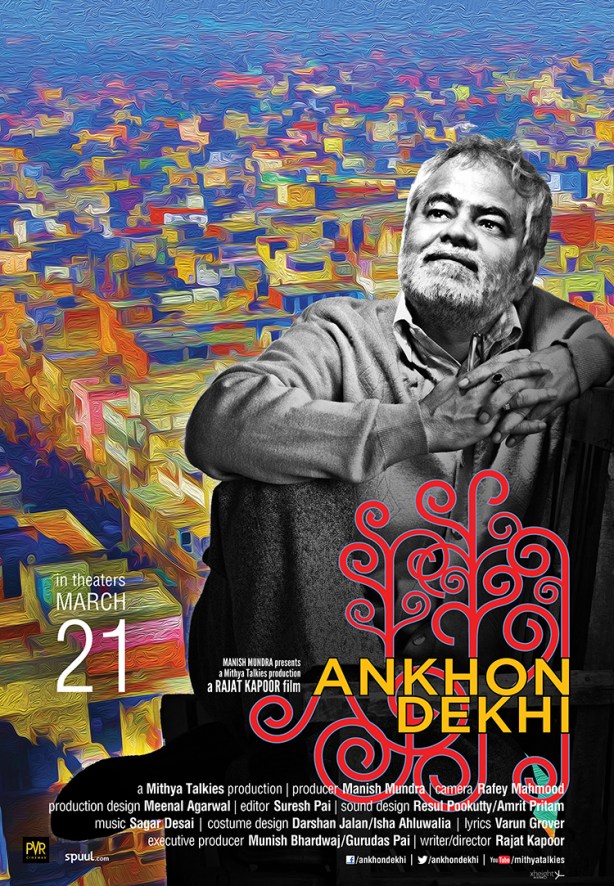
In the last of our posts on Ankhon Dekhi (Fatema Kagalwala’s piece here and Q&A with Rajat Kapoor here), Mihir Pandya (film critic and the author of Shahar aur Cinema: Via Dilli) comes up with some keen observations on the naksha of Babuji’s home, mind-scape, and philosophy.

And continuing with our efforts to share the scripts of most talked-about and best reviewed films, we have Ankhon Dekhi’s script in its pre-shooting original draft. Thanks to Rajat Kapoor for sharing it.


vlcsnap-2014-04-21-16h54m50s212अाँखों देखी : विलक्षण साधारणता अौर अनुभवजन्य यथार्थ

राष्ट्रीय पाठ््यचर्या की साल 2005 में प्रोफेसर यशपाल की अध्यक्षता में बनी रूपरेखा के मध्य एक दिलचस्प किस्सा सम्मिलित है, ‘शीत ऋतु की एक सुबह’ शीर्षक से. किस्सा कुछ यूँ है, “शिक्षिका ने बच्चों को प्रात:कालीन दृश्य बनाने के लिए कहा. एक बच्चे ने अपना चित्र पूरा किया और पार्श्व को गाढ़ा कर दिया लगभग सूर्य को छिपाते हुए. “मैंने तुम्हें प्रात:कालीन दृश्य बनाने के लिए कहा था, सूर्य को चमकना चाहिए.” शिक्षिका चिल्ला उठी, उसने यह ध्यान नहीं दिया कि बच्चे की आँखें खिड़की से बाहर देख रही हैं; आज अभी तक अँधेरा था, सूर्य गहरे काले बादलों के पीछे छिपा हुआ था.” किताबी शिक्षा के ऊपर स्वयं बच्चे के अनुभवजन्य सत्य को तरजीह देनेवाले इस किस्से की याद मुझे फिल्म ‘अाँखों देखी’ देखते हुए बेतरह अाती रही.

रजत कपूर द्वारा निर्देशित फिल्म ‘अाँखों देखी’ के मध्य एक सहज ध्यानाकर्षित करनेवाले प्रसंग में कथा के केन्द्रीय किरदार बाबूजी (संजय मिश्रा) अपने स्कूल में पढ़ने वाले भतीजे के उस गणित के मास्टर से सीधे भिड़ जाते हैं जिसने भतीजे द्वारा उत्तरपुस्तिका में अक्षरश: वही उत्तर न लिखा होने के चलते, जो किताब में लिखा है, उसे परीक्षा में फेल कर दिया है. इस दृश्य की खूबसूरती जितनी इसके तर्क में है, उतनी ही इसके किरदारों की ख़ब्त अौर उससे उपजते उनके विरोधाभासी व्यक्तित्वों में है. यहाँ पुरानी दिल्ली के निम्नवर्गीय परिवार का मुखिया एक मिडिल स्कूल के गणित के मास्टर को यह समझाने में लगा हुअा है कि सिर्फ़ नज़रिये का फर्क किसी सच को झूठ में नहीं बदल देता, अौर कि सच्चाई को देखने-समझने अौर महसूस करने के सबके अपने निजी तरीके-रास्ते हो सकते हैं. दोनों सामान्य से गणित के सिद्धान्त पर दूसरे अादमी को खिजा देने की हद तक पिले हुए हैं. बाबूजी का तर्क है कि जब दो समांतर रेखाएं एक-दूसरे से मिल ही नहीं सकतीं, तो यह क्यों कहा जाये कि वे किसी अनदेखे-अदृश्य ‘अनन्त’ पर जाकर वे मिल जायेंगी?

बाबूजी का भतीजे की गणित की किताब में मौजूद निर्जीव समांतर रेखाअों को नई मौलिक नज़र से देखने का यह अाग्रह जीवंत लोगों को देखने के उनके नज़रिये में भी पैठ बना रहा है. अपने ही दफ्तर के चायवाले अौर साथ काम कर रहे बाबू में उन्हें वह सुन्दरता नज़र अाने लगती है, जिसे चिह्नित करने की फ़ुरसत अौर नज़र, शायद दोनों ही उनके पास पहले नहीं थी. अौर सिर्फ़ अपने ‘भोगे हुए यथार्थ’ पर दुनिया को पहचानने के इस नए प्रण के पीछे कोई अाख्यानिक किस्म का किस्सा भी नहीं है. यूँ ही एक भले दिन घर में घटी सामान्य सी घटना से बाबूजी को यह भिन्न क़िस्म का नज़रिया हासिल होता है अौर फिर घर में एक नितान्त रोज़ाना सी सुबह बाबूजी दफ़्तर जाने से पहले नहाते हुए यह प्रण करते हैं कि “मेरा सच मेरे अनुभव का सच होगा. अाज से मैं हर उस बात को मानने से इनकार कर दूंगा जिसे मैंने खुद देखा या सुना न हो. हर बात में सवाल करूँगा. हर चीज़ को दोबारा देखूँगा, सुनूँगा, जानूँगा, अपनी नज़र के तराजू से तौलूँगा. अौर कोई भी ऐसी बात, जिसको मैंने जिया ना हो उसको अपने मुँह से नहीं निकालूँगा. जो कुछ भी गलत मुझे सिखाया गया है, या गलत तरीके से सिखाया गया है वो सब भुला दूँगा. अब सब कुछ नया होगा. नए सिरे से होगा. सच्चा होगा, अच्छा होगा, सब कुछ नया होगा. जो देखूँगा, उस पर ही विश्वास करूँगा.”

यहाँ यह भी साथ ही रेखांकित किया जाना चाहिए कि बाबूजी को अचानक हासिल हुई दुनिया को देखने की यह अनुभवजन्य यथार्थ पर अाधारित दृष्टि उन्हें परिवार के अन्य किरदारों से भिन्न तो बनाती है, लेकिन वे फिल्म के ‘अादर्श नायक’ नहीं हैं. फिल्म इस बात को लेकर सदा चेतस है कि बाबूजी अपनी नई दृष्टि से लैस होकर भी परिवार के मुखिया की उस भूमिका को नहीं छोड़ते जहाँ घर के अन्य सदस्य उनकी नज़र में स्वयं कर्ता नहीं, उनकी क्रियाअों पर प्रतिक्रिया करनेवालों की द्वितीयक भूमिका में हैं. छोटे भाई के घर छोड़कर चले जाने के प्रसंग में भी उनका अनुभवजन्य यथार्थ उन्हें अपने भाई के निजी यथार्थ तक नहीं पहुँचने देता. अौर ख़ासकर यह उनके अपनी पत्नी (सीमा पाह्वा) से संबंधों में प्रगट होता है. बाबूजी अपनी नई दृष्टि से लैस होकर भी घर के भीतर उस नई दृष्टि का इस्तेमाल कर पाने में असमर्थ हैं अौर अपनी पत्नी को कहते हैं, “कुछ भी नया सोचो अौर तुम अौरतें… चुप रहो.” लेकिन फिर अपनी बेटी से संबंध में यह नई दृष्टि बाबूजी को नई पीढ़ी के अनुभव तक पहुँचने में मदद भी करती है. वे देख पाते हैं बिना किसी पूर्वाग्रह के, जो उनकी बेटी अपने भविष्य के लिए निर्धारित कर रही है.

बाबूजी अजीब किस्म की लगती ख़ब्त तो पालते हैं, लेकिन वे इसके ज़रिये कोई क्रान्ति करने निकले मसीहाई अवतार नहीं हैं. दरअसल इसके ज़रिये वे अपनी साधारण सी लगती ज़िन्दगी को ही कुछ अौर बेहतर तरीके से जानने, समझने की कोशिश कर रहे हैं. यहाँ यह फिल्म शशांत शाह की ‘दसविदानिया’ की याद दिलाती है, जिसमें मध्यवर्गीय ज़िन्दगी की साधारणता अौर उस साधारणता में छिपी विलक्षणता की कथा कही गई थी. यहाँ दरियागंज में पुश्तैनी मकान में रहनेवाले संयुक्त परिवार की ज़िन्दगी का टुकड़ा हमारे सामने है, जिसके चिह्न फिल्म के प्रामाणिक सेट डिज़ाइन, संगीत अौर धारधार छायांकन में उभरकर सामने अाते हैं. अौर उन संदर्भों के ज़रिये जिनसे फिल्म पुरानी दिल्ली की निम्न मध्यमवर्गीय ज़िन्दगी अौर उसमें होते पीढ़ीगत बदलाव को रचती है. घरों का बदलना अौर उनमें मुखियाअों की सत्ताअों का बदलना यहाँ स्टील के गिलास से चीनी-मिट्टी के कपों में होती गरम चाय की यात्रा में अभिव्यक्त होता है. यहाँ बन्द घरों अौर अापस में जुड़ी हुई छतों वाले घरों में इन्हीं शामिल छतों पर मनाए जाते सार्वजनिक जन्मदिन हैं तो मोहल्ले के नाई की दुकान अाज भी पुरुष ज़िन्दगी का सबसे महत्वपूर्ण सार्वजनिक स्थान है. लेकिन फ़िल्म का सबसे चमत्कारिक पदबंध उस घर की संरचना में छिपा है, जिसमें यह संयुक्त परिवार इतने सालों से रहता अाया है.

मेरे लिए ‘अाँखों देखी’ की बहुत सारी प्रामाणिकता उस घर के नक्शे में छिपी है, जिसमें बाबूजी अौर उनका परिवार इकट्ठे रहता है. बीच में बड़े से चौक के चारों अोर बने रेलगाड़ी के अागे-पीछे लगे डिब्बों से छोटे-छोटे कमरों से घिरी इस बहुमंज़िला इमारत को मैं देखते ही पहचान जाता हूँ. चूने की बनी दो हाथ चौड़ी मोटी दीवारों अौर खड़ी सीढ़ियों से बनी यह इमारतें उत्तर भारतीय शहरों की भवन निर्माण कला का शायद एक समय में सबसे प्रामाणिक नक्शा रही हैं. इनका बड़ा पोलनुमा दरवाज़ा किसी घनी इंसानी बस्ती की संकरी सी गली में खुलता है अौर कमरों के भीतर कमरे निकलते चले जाते हैं. अाप इस इमारत के नक्शे का मिलान अागरा शहर में रहनेवाले मिर्ज़ा परिवार की उस पुश्तैनी हवेली से कर सकते हैं, जिसे हमने सथ्यू साहिब की ‘गरम हवा’ में देखा था. अौर साथ ही इस तुलना द्वारा यहाँ समय के साथ उपयोग में बदलाव के चलते इन पुश्तैनी मकानों की बदलती संरचना पर भी गौर किया जाना चाहिए. समय के साथ जैसे-जैसे शहरी जीवन की सामुदायिकता सीमित हुई, घरों की संरचना में चौक का केन्द्रीय महत्व भी सीमित होता गया. भागती ज़िन्दगी के निवासी इन नौकरीपेशा लोगों की ज़िन्दगियों में समय को लेकर वो सहूलियत नहीं थी कि वे चौक में मजमा लगाकर घंटों चौपाल किया करें. नतीजा, चौक की जगह के अन्य उपयोग ढूँढ़े जाने लगे.

लेकिन इन इमारतों का नक्शा कुछ इस शक्ल का था कि चौक पर सीधे-सीधे छत डाल देना भी संभव नहीं था. यह चौक दरअसल बाक़ी मकान के लिए उस कृत्रिम फेंफड़े की तरह था, जिससे होकर ताज़ा हवा अौर रौशनी बाक़ी सारे निर्मित मकान में अाया करती थी. अौर मकान की संरचना में यह इन्तज़ाम ज़रूरी भी था, अाखिर अापस में एक-दूसरे से छतों से जुड़े मकानों वाले इन रिहाइशी इलाकों में वैसे भी अौर घर में रौशनी अाती भी कहाँ से. घर के नक्शे में हवा अौर रौशनी का इन्तज़ाम घर के बीच से ही करना ज़रूरी होता था. अौर ऐसे में अगर इस चौक के ऊपर पक्की छत पड़ जाती तो बाक़ी सारे मकान की हवा-रौशनी बन्द हो जाती. यहाँ फिर वो जुगत काम में अाती है जिसे इन पुश्तैनी मकानों में रहनेवाली नई पीढ़ियों ने इन घरों को हमेशा के लिए छोड़ने से पहले के कुछ सालों में बहुतायत से अपनाया अौर जिसका गवाह मेरा बचपन भी रहा है.

‘अाँखों देखी’ उस परिवार के बारे में है जिसके सदस्यों के मन में नए समय के साथ दौड़ लगाने की तमन्ना तो है, लेकिन उसके पाँव में सीमित अाय की बेड़ी पड़ी है. वह इस पुश्तैनी मकान की संरचना को बदलना चाहता है, उससे बाहर निकलना चाहता है. लेकिन उसके अार्थिक संसाधन उसे ऐसा करने की इजाज़त नहीं देते. अौर इस कारण वह इसी घर को नए समय में अनुकूलित करता है. इसीिलए चौक के ऊपर पड़ी उस जाली को मैं तुरन्त पहचान जाता हूँ. लोहे के सींखचों वाली यह जाली चौक के ऊपरी हिस्से को कुछ इस तरह ढकती है कि रौशनी अौर हवा पूरी तरह बन्द भी न हों अौर ऊपरी मंज़िल (जो ऐसे मकानों में सदा ज़्यादा ‘ख़ास’ होती है) को घर के बीच एक नया फर्श भी मिल जाये. फर्श न नही, फर्श का अाभास ही सही. ‘अाँखों देखी’ में परिवार के रिहाइश के मकान के मध्य में पड़ी यह जाली कितना कुछ कहती है. यह बताती है कि इस मकान में रहनेवाले अब इस रिहाइश के अनुकूल नहीं रहे अौर किन्हीं मजबूरियों के चलते अब अपने मकान को खुद की ज़रूरतों के अनुसार अनुकूलित कर रहे हैं. यह भी कि एक न एक दिन वे यहाँ से निकल जायेंगे. इसीलिए शायद छोटे भाई ऋषि (रजत कपूर) के पुश्तैनी घर छोड़कर जाने पर फिल्म का जो दृश्य सबसे ज़्यादा याद रह जाता है वो है उसी जाली को बीच से खोलकर रस्सियों द्वारा उतरती अलमारी का दृश्य.

कुछ साल पहले ‘लाइफ स्टाइल’ का कहलाए जानेवाले एक टीवी चैनल पर परिचर्चा में निर्देशक अौर अभिनेता रजत कपूर अपनी निजी ज़िन्दगी के बारे में बड़ी दिलचस्प बात बता रहे थे. ऐसे समय में जब मोबाइल भारतीय मध्यवर्ग की ज़िन्दगियों का ही नहीं, शहरी निम्नवर्ग की जीवनचर्या का भी अभिन्न हिस्सा हो गया है, वे अपने साथ मोबाइल नहीं रखते. वजह पूछने पर उन्होंने बताया था कि उनके हिसाब से इतना महत्वपूर्ण कुछ भी नहीं कि ज़रा देर इन्तज़ार न कर सके. बात को कुछ अौर लम्बा खीचूँ तो मतलब यह कि दुनिया में अाप जिस वक्त जहाँ मौजूद हैं, उससे ज़्यादा महत्वपूर्ण कहीं कुछ अौर नहीं घट रहा, यह विश्वास इस निर्णय के पीछे है. गौर से देखिए तो उनके द्वारा निर्देशित फिल्म ‘अाँखों देखी’ के मुख्य किरदार में भी अचानक यही विश्वास पैदा हो जाता है. वह अपने वर्तमान को किसी अन्य अदृश्य यथार्थ के लिए ठुकराने से इनकार कर देता है.

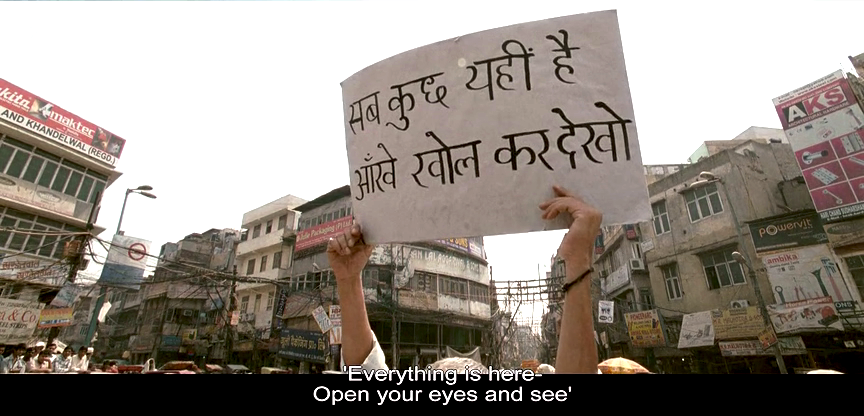
फिल्म में बाबूजी का यह निर्णय उनको अपने निजी यथार्थ में कहाँ पहुँचाता है, यह तो अाप फिल्म देखकर ही जानें. लेकिन फिल्म में बाबूजी की इस ख़ब्त से उपजे दो बहुत दिलचस्प प्रसंग हैं, जिनका उल्लेख मैं यहाँ करना चाहूँगा. पहला प्रसंग उनके फैसले के दिन का ही है, जब बाबूजी अपने भाई के अखबार पढ़ने पर टिप्पणी करते हैं, “खबर नहीं है ये. सब बकवास है. खबर वो होती है जिसे हम अपनी अाँखों से देखते हैं, कानों से सुनते हैं.” अौर दूसरा प्रसंग उनके पड़ोसी के लड़के द्वारा यह टिप्पणी किए जाने पर कि “बाबूजी भी न, कुएँ के मेंढक जैसी बातें करते हैं.” उनका जवाब बहुत मानीखेज़ है, “हाँ, मैं मेंढक हूँ. लेकिन अपने कुएँ से मैं परिचित हूँ. उसको जानने की कोशिश कर रहा हूँ. उससे अपना परिचय बढ़ा रहा हूँ.” अौर इसमें वह प्रसंग भी जोड़ लें जहाँ बाबूजी चावड़ी बाज़ार मेट्रो स्टेशन के बाहर व्यस्त सड़क पर हाथ में तख़्ती लिए खड़े हो जाते हैं. तख़्ती पर लिखा है, “सब कुछ यहीं है, अाँखें खोल कर देखो.” मेरी दिलचस्पी इन दोनों संदर्भों को जोड़कर देखने की है. क्या हम सूचना विस्फोट के इस महासमय में अपने निजी अनुभवजन्य यथार्थ से अपनी पकड़ खो रहे हैं? मैं यह सवाल इसलिए पूछ रहा हूँ क्योंकि इन अाधुनिक सूचना के साधनों पर हमारी निर्भरता कहीं न कहीं हमें द्वितीयक स्रोत पर प्राथमिक अनुभव से ज़्यादा भरोसा करनेवाला बनाती है. तर्क भी इसका साथ देता है क्योंकि एक अकेले व्यक्ति के अनुभव के मुकाबले समूह का अनुभवजन्य सत्य या तकनीक अाधारित सामुहिक यथार्थ बड़ा माना ही जाना चाहिए. लेकिन इसके अपने खतरे हैं, जिनका सामना हम वर्तमान समय में कर रहे हैं. अाज द्वितीयक सूचना के स्रोतों को योजना के तहत नियंत्रित किया जा रहा है. शायद मध्यवर्गीय जनसमूह इसे पहचान भी रहा है. लेकिन दिक्कत यहाँ अाती है कि उसने अपने प्राथमिक स्रोत, अपने अनुभवजन्य यथार्थ में भरोसा खो दिया है. ऐसे में हम सब जैसे किसी अंधेरे तहख़ाने में हैं अौर एक-दूसरे से भविष्य का हाल ऐसे ले रहे हैं जैसे कोई अंधा हाथों से टटोलकर कमरे में रखे हाथी की अाकृति को पहचानने की कोशिश कर रहा हो. पिछले एक महीने में दर्जनभर लोग मुझसे बहुत उम्मीद से यह पूछ चुके हैं कि मैं उन्हें बताऊँ कि अाने वाली सोलह मई को अाखिर होने क्या वाला है.

मेरी खुद को भी, अौर उन तमाम लोगों को भी जो किसी छिपे हुए यथार्थ को जान लेने की तलाश में अाजकल बनारस की अोर भाग रहे हैं, एक ही सलाह है − “सब कुछ यहीं है, अाँखें खोल कर देखो”.

– Mihir Pandya

(This piece was first published in Hindi journal ‘Kathadesh’)

And here’s the script of Ankhon Dekhi

Editor’s Note: This is a guest post by Amit V Masurkar, the director of “Sulemani Keeda”, a self-proclaimed “Versova indie” that was released to much acclaim at last year’s Mumbai Film Festival. More about the film here.

Four years ago, a friend shared his hard disk with me which had gems such as Whit Stillman’s ‘Metropolitan’ and Noah Baumbach’s debut feature ‘Kicking and Screaming’. Google and tastekid led me to more gems from a similar world- young, urban, scruffy, real and often funny. That’s when I discovered (pretty late in life) true blue American Indie Cinema. I’m not counting Jim Jarmusch and Richard Linklater, I’m not talking about Larry Clark, I’m talking about young people like you and me who were actually taking their cameras and telling their own stories. In most cases, their courage and honesty was more inspiring than the film itself.

Here amongst my fellow cinema geeks I would like to share my ten favourite mumblecore-ish films. I’m sure atleast three filmmakers here will object to being bracketed here but it is with utmost respect and love for their films that I present this list.  Hope you enjoy watching these films as much as I did! The numbering is random and not ranking.

Note1: I was tempted to add Noah Baumbach’s “Frances Ha” which in my opinion is his best but I’m desisting simply because he’s now a famous millionaire and his film cannot be considered low budget indie even if it is one!

Note 2: Also, I am not adding  some famous first-films made on celluloid which were my inspiration for my debut feature film, Sulemani Keeda. Films such as Kevin Smith’sClerks’ , Jon Favreau’s Swingers and Indian classics like Saeed Mirza’s Arvind Desai ki Ajeeb Dastaan’  and Awtar Krishna Kaul’s  ‘27 Down’. I want to limit this list to films made on the digital format in the last six-seven years.

1) In search of a Midnight Kiss (2007): Semi-autobiographical film by Alex Holdridge who made this film based on an experience of meeting a woman on Craiglist. Of course the other parts of them walking around the decrepit areas of  Los Angeles on New Years’ Eve seem inspired by the template of Richard Linklater’s ‘Before Sunrise’  but everything else is fresh. They chose to go with Black and White to avoid the ‘digital look’ that SLR cameras give if not exposed correctly and it works for this movie. Watchout for the slight twist in the end, something not seen frequently in this genre. Also, one of the first leading roles of Scoot McNairy who pitched in the money for the film and went on to get better roles in films like Andrew Kaulder’s ‘Monsters’ which is a sci-fi fantasy about an American rescuing his ex-girlfriend from South America when aliens come attacking.! Monsters was shot guerilla and the director and his friends sat at home and made the mindblowing CG that studios spend millions in making!

2) Computer Chess (2013): With his earlier films, Beeswax and Mutual Appreciation, Andrew Bujalski proved that he was a formidable player in this sub-genre. But Computer Chess is where his ambitions and skills are shown in full bloom. This period black and white film explores the subculture of chess nerds who are fighting computers in duels.

3) Drinking Buddies (2013): My absolute favourite from this list. This one attempts to answer the famous question that has baffled psychologists and philosophers: “Kya ek ladka aur ladki sirf dost ho sakte hai?” Made by Joe Swanberg- the Dadamoni of the mumblecore movement who has made more than a dozen films in half a dozen years. IMDb lists some six films alone under his name in 2011. Most of these are not available online but the ones which I thought were worth mentioning include ‘Uncle Kent’, ‘All the Light in the Sky’ and ‘Alexander The Last’.  After watching these films, like a fanboy, I had added Swanberg on Facebook and asked him for technical advice under the guise of making his acquiantance. Swanberg politely told me that he was quitting Facebook to focus on his films and asked me to check one of his many interviews on the web for the answers! I am ashamed to admit I haven’t watched his best known film, ‘Hannah Takes the Stairs’ starring the uber talented Greta Gerwig and if anyone has a DVD (since we don’t promote piracy here), I would love to do a swap.


4) Quiet City (2007): The most unassuming film in this list. Another film that follows the ‘Before Sunrise’ template- of a couple walking the talk, this time in New York, over two days. The film actually makes you feel how easy and free you feel when you shoot digital. However  Aaron Katz, the director followed up with the disappointing mystery, ‘Cold Weather’.

5) Tiny Furniture (2010):  Lena Dunham’s female (and better) version of ‘Wake up Sid’- ok, I’m not great at pitching, but this is a “I wanna figure out life after college” film and a masterstroke at that! I guess this is where she got noticed and got signed to make ‘Girls’ for TV.

6) Puffy Chair (2005): I’m tempted to add this handycam film! It’s grungy and the video quality is puke but the film purely works because of the underplayed performances by the lead pair. It’s about a guy played by the co-director Mark Duplass who goes on a road trip (another favourite template in this genre) to deliver a second hand chair to his father on his birthday. Accompanying him on this journey are his girlfriend and his good for nothing brother.  Directed by The Duplass Brothers—Jay and Mark, who are veteran gareebon ke Coen Brothers of Mumblecore, they followed up with a horror comedy, “Baghead”. Mark satisfied his acting urges with the hilarious “Humpday”, directed by Lynn Shelton where two buddies attempt to shoot a gay porn film for some critical acclaim. Post these films, Mark has become a bada aadmi with starring roles in  films such as “Your Sister’s Sister” and “Safety Not Guaranteed”.

7) August The First (2007): After its debut at SXSW and Karlovy Vary Festivals, Lanre Olabisi’s drama about a Nigerian father returning to New York at a familiy reunion with a hidden agenda has been waiting for the recognition it deserves. Lanre has now started The New York Film Collective and is directing ‘Somewhere in the Middle’- a crowd funded ensemble film.

8) Les Amours Imaginaires (2010): A simple French-Canadian story about a love triangle- M1 loves M2, F loves M2. But whom does M2 love? This one as wikipedia tells me was made on a budget of Canadian $6,00,000 (that’s roughly Rs. 3 Crores) and doesn’t qualify to be in this list. But STILL, I want it here because it’s a film you have to watch! I have no words to describe how beautifully it’s shot. My butt burnt (direct translation from the Hindi phrase) when I found out that the director Xavier Dolan was only 21 years old when he made this and… this was his second film. Such graceful direction and writing!

9) Gandu (2010): I went for a screening of Q’s Gandu at Film Republic which was cancelled as the manager feared an attack from some bigots who had found out about the notorious sex scene. But soon, I downloaded the film and watched it. I haven’t seen a better slacker film from India which puts the reality of our banal existence in a more brutal and straight forward way. It reminded me of another film with a similar theme which I had liked despite the poor projection quality at the MAMI festival, Srinivas Sunderrajan’s The Untitled Karthik Krishnan Project’.

10) Mumbai Cha Raja (2012): The most senstitive depiction of Mumbai’s slum kids after Salaam Bombay. What inspired me most was the fact that I knew Manjeet Singh for years and I never expected him (Sorry Manjeet!) to make such an amazing jewel. I saw him make it on a shoestring budget and directly hold him responsible for making me believe that good cinema can be made without big monies.

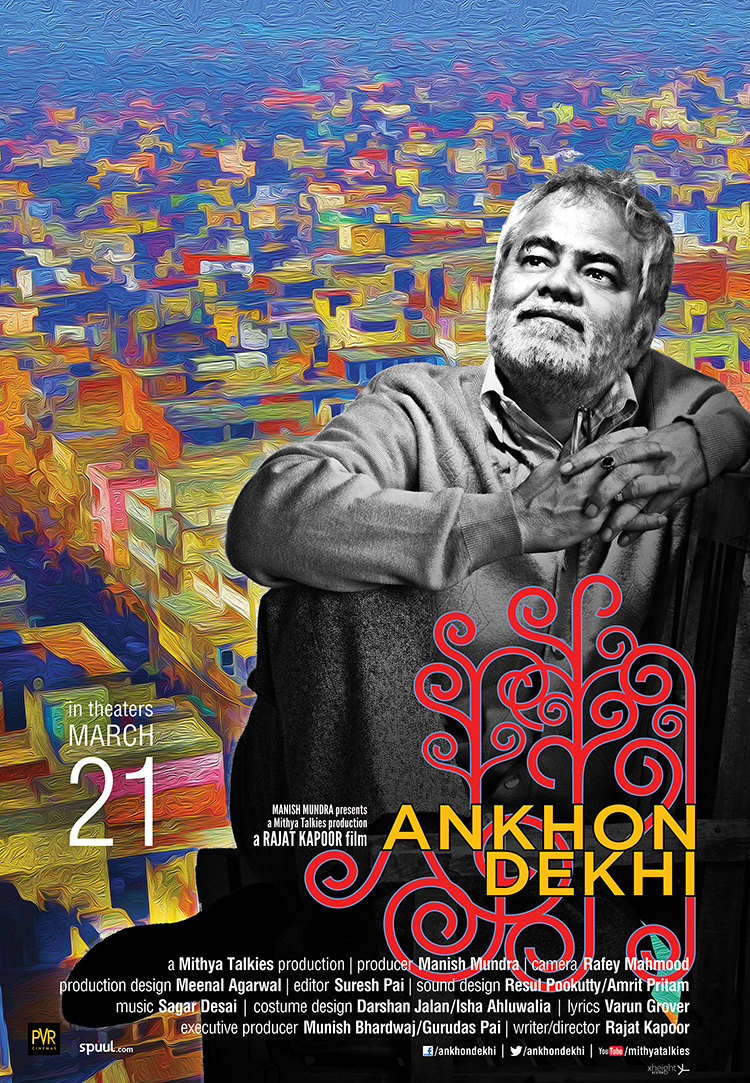
Rajat Kapoor’s new film Ankhon Dekhi opened with rave reviews. Though it has been a limited release, if you still haven’t seen it, do watch. It’s easily one of the finest films of the year. And if you have seen it, here’s Fatema Kagalawala on what worked and what didn’t. Read on to see if you agree or not.

“Rather than love, than money, than fame, give me truth.” ― Henry David Thoreau, Walden
ankhondekhi-4b (1)

Are stories set in a real-life world created with an unimaginable honesty, enough? Remember this line as you read along.

There are films that are character-centric, there are films that are character-driven, there are plot-driven films and there are those where the idea looms large enough to swipe everything under its shadow. Ankhon Dekhi is one of those films. Truth is your inner truth, your own truth, what you can see and feel and experience. Can a theme get more universal and personal at the same time than that? Can a theme get more exciting, thirsting to be explored threadbare than that?

“There are only two days that are important in life; the day you were born and the day you realise why.” – Mark Twain

Bauji has an eiphany one day and he must follow it because suddenly he has realised why he was born. He must follow his own truth and his own truth will only be that which he has experienced. Soon, the meaning of his entire life changes. He leaves his job as a travel agent because he hasn’t seen any of the places he regularly recommends and hence it is a false existence, something he cannot allow in his life anymore. “Rather than love, than money, than fame, give me truth”, Bauji could easily have been Thoreau. Or Maya Angelou who when asked what is right simply said, “Truth is.” His loving wife and daughter indulge him, his younger brother, tired of hauling material responsibilities leaves him, his loyal fans follow him blindly and we have a picture of life as we all have seen unfolding in our own worlds.

Creating a world to touch and feel

Every film is rooted in its own ideology and born of it, whether it likes it or not, whether it is conscious of it or not. Rajat Kapoor’s cinema seeks to question consciously and that is the joy of watching his films. In Mixed Doubles he questioned the idea of monogamous relationships, in Mithya and Fatso identity and truth, in Ankhon Dekhi truth again. There is something very honest, at an intrinsic level, in his searching and nudging set beliefs. That draws you in and makes you take it seriously, keen to know if the journeys of his characters will somehow make your own easier and enlightened.

It does but not in the philosophical proddings. It does in the earthy, rustic (and inspired) casting of Sanjay Mishra, Seema Pahwa and others. It does in the lovely, early morning winter mist-like songs written by Varun Grover used beautifully. It does in the very common-sounding but carefully written dialogues. It does in the loving relationships we see functioning in what we see as a very average, very ordinary family. We smile when we see Seema Pahwa’s Amma, nagging but warm and soft-hearted wife and mother because we know her, maybe in our own mothers, wives, mother-in-laws, aunts, grandmothers or neighbours. Even if we don’t she seems familiar. Because she is real.  There is no artifice in her character or her performance and she appeals to us in a way no hot babe or heartthrob can aspire to. Like most women do, she forms the spine of the family, keeping it together emotionally yet invisibly. (If you disagree, imagine the family without Bauji. Then imagine the family without her). Getting her character right (and getting the brilliant Seema Pahwa to play it) is the first solid brick Rajat Kapoor lays in creating a world we cannot help but fall in love with.

As we gently land into the world we are welcomed by a ruckus over the inappropriateness of the friendship the daughter of the house has with a boy. Bauji protects her as Amma lashes at her. We then see Bauji’s younger brother Rishi (a terribly miscast Rajat Kapoor) step in to play the peace-making voice of sense role with a sigh; a role he has probably been playing for a long time now and is weary of. There is also the no-good younger son (a character that spirals the story even more out of focus in the second half) whom Bauji doesn’t know what to do with and we see that the irregularities of the family are as regular and middle-class as they can get. There is daily bickering, daily endearing moments, gentle warmth and regular disappointments as ordinary yet interesting for it, as the patchwork quilt the family cosily shrouds themselves in, in the cold nights of this North Indian town.

“The truth is out there!”

Bauji would like to believe so but there is a strong corollary to that. Only that truth is truth that is true to your experience. And hence begins a journey of a family dragged into this search of truth by the man of the house who now begins to appear a little senile to our eyes shrouded by practical concerns. We, as an audience become the family and Bauji the lone crusader trying to put out what he has discovered.

I tripped out on the promise of the premise completely.

“In a time of deceit telling the truth is a revolutionary act.” ― George Orwell

Truth does revolutionise Bauji’s life. The search for truth comes with a price, from Gandhi to Satyapriya, they all knew it. The price Bauji pays is to see his joint family breaking up. Rishi chooses to live separately with his family and the graceful Bauji lets him be. We sense there is a parallel search for one’s own truth unfolding elsewhere. Practical and material concerns do not provide us the middle-class luxury to indulge in fancy philosophical journeys; no, that’s for the elite. And hence the entire family rises up in arms against Bauji’s new avatar. Philosophy is costly but we forget that in merely surviving we let go of living. Subtly deceiving ourselves that this is what life is meant to be after all. For Bauji, surviving suddenly becomes an ugly word.

Sadly, his discovery does not become an expansive, life-affirming philosophical journey or a guiding light. Neither does it elevate itself to a deep, cinematic exploration of its theme. Like Matrix did for example.

Instead, we have a situation with little sub-text to the real theme, of his younger brother’s separation from the joint family. Animosity grows between the brothers, one that is treated gently and with love but does it contribute anything to the central conceit of the film? Yes, the younger brother is following his own truth but the film seems to be saying little about his journey, treating it with realist-humanist sympathy alone with no philosophical implications. A mere by-product of the mess Bauji has invited in his life by choosing what he has. That a sub-plot that crucial has little bearing to the theme than being a mere outcome seemed to me to be disservice to everyone included.

“Men occasionally stumble over the truth, but most of them pick themselves up and hurry off as if nothing ever happened.” ― Winston Churchill

The tender-hearted Bauji suddenly becomes a braveheart in our eyes because he finds in himself the courage to face the truth he has found. It isn’t easy, such conviction, but neither is it difficult because when you have an epiphany, when the clouds clear for that insoluble moment of time and the sun shines brighter than it ever has, all shadows fall away, and the truth stands alone, refusing to be blind-sided, refusing to be hidden by rationalisations yet again. With such truth such courage comes as default. One has no other way. Yet, Bauji’s truth does not become ours nor egg us to seek ours. It gets lost in the whimsy of card-playing popularity, fan-following herds, and placard-holding eccentricities. None of which are organic or dynamic. They remain interesting plot points, the ‘coulds’ one writes on the margins of a script when at crossroads of plot development.

It’s almost like Rajat Kapoor himself stumbled over the truth, picked himself up and hurried off as if nothing happened.

And that killed the film for me. A theme as rich as that I found aimlessly tossed around, especially one with a very honest intent and one that is completely devoid of posturing. I know what became of Bauji but was it an organic growth or a cop-out? To me it seemed like the latter. Not that I know, but the alleys of truth must be convoluting, without easy answers, especially since so many of us know so little about it. The end of Bauji’s search seemed very easy. And his journey very unmindful as well. For a man who has found the reason of his existence, one which has been turned 360 degrees, he seemed to be acting more from whim than a focussed intent. Because whim is superficial but intent helps you delve deeper. If Bauji’s character had truly delved deeper he wouldn’t be going on trips to the zoo very late in the second half to establish a point he had painstakingly established very early on. If his character hadn’t taken an eccentric turn he wouldn’t suddenly become the lucky charm of a small-time Mafioso. His character seemed to be truly seeking and struggling, breaking free and revolutionising all that we know of an average man’s search for truth (notice the paradox in the statement) when he took to standing on the chowk holding confounding placards embarrassing his family. But suddenly, there was no movement in this journey. And a brilliant plot point became a mere set piece contributing nothing to anything.

 “The more I see, the less I know for sure.” ― John Lennon

Is this why Bauji ends up the way he does? We don’t know, however we are led to believe that he has come to a fructifying end to his journey. With the end as he chooses for Bauji, Rajat Kapoor seems to want to put an existential spin in the narrative which is as exciting a thought as his original theme. But there are no questions raised before we are led to this resolution. Nor is there an indication of a journey that seeks a proper close. The end comes and goes, just like Bauji’s epiphany, leaving us cold when it should have ideally left us shivering with goose bumps. Maybe inches closer to our own spiritual or intellectual thirst. That is because we did not see enough. Deep enough. Of Bauji and his thirst, his angst of marrying his new reality with his old, or a trajectory that led to his resolution that seemed to satisfy him. The film is linear and not episodic, however treating his journey as episodic fails the entire structure of the film and the audience, who by the middle are expecting more. Not answers, no one has them nor they can give anyone (Your truth is your own, remember?). Nor was it the intent of the film to provide ready ones. It was the experience of the search, the pain, angst, growth, questions, answers, trials and peace. Logically, all of this exists in the film but tattered and scattered, making little sense, not feeding off each other as it should and hence coming across as an under-played game of TT where no one wins.

Aldous Huxley once wrote, “Experience isn’t what happens to a man, it’s what a man does with what happens to him.”

I think that just about sums up, at many levels, what I feel about the film.

– Fatema Kagalwala


gulabi

It’s a great time for desi documentaries. In the recent past we have seen some pretty terrific ones- Malegaon Ka Superman, The World Before Her and Katiyabaaz to name just a few. Which is why it’s a pity that Nishtha Jain’s powerful documentary Gulabi Gang hasn’t quite got the audience it deserves- yet.

Perhaps the makers ought to have employed the Gulabi Gang themselves to whack our lazy, torrent-savvy audiences into theaters. 😉   The film is now running in its second week in a select few theaters/cities with ticket rates further slashed. There’s no good excuse to miss this one, really.

Anyway, here we have an interesting post by Prashant Parvatneni on Gulabi Gang and how genres usually associated with (fiction) cinema can find their way into the documentary format as well. Over to him:

Gulabi Gang by Nishtha Jain is undoubtedly a rigorous study of a women’s movement in the deep interiors of Bundelkhand where a group of women networked between several villages have formed a ‘gang’ to fight against the oppression of women and dalits. They drape themselves in Pink sarees and carry pink lathis that becomes an image of the identity that binds these women. There are complex issues that these women are dealing with and fighting. Young brides are being burnt, dalit activists murdered and certain high-caste Choudharies have concentrated all power in their hands suppressing any and every dissent using gun and muscle power. It is this nexus of power and oppression that the Gulabi Gang is trying to tear apart under their feisty leader Sampat Pal.

Sampat Pal inevitably becomes the ‘hero’ of this film, her infectious zest and fearlessness naturally grabs the attention and it’s hard not to root for her like we would for the angry underdog taking on the system in a Bollywood film. It only helps that Jain adopts a form of narrative that is simple in structure but quite inventive. It follows 2-3 cases that Gulabi Gang encounters and as it does so, quite curiously these cases turn to a kind of whodunit with the Gang acting as detectives trying to uncover the truth behind the violence inflicted on women.

pink

Like in one of the cases, a young wife is found burnt inside the house. When Sampat reaches the spot, the in laws of the woman claim that she got burnt while making rotis but Sampat in true detective spirit, deduces that it cannot be a mere mishap. There wasn’t any stove at the spot, nor was any other part of the house burnt or even charred. Sitting in the audience even we also could start the process of knitting the clues together and deducing while also being acutely aware of entire machinery which includes the panchayat and the police trying to push this crime under the carpet. Sampat Pal’s own relative burns his wife but she wants the truth to come out. When the director’s voice asks her will you fight against your kin as well, she replies inspiringly ‘I just want to find out the truth’. Quite fittingly then, Anand Gandhi (director, Ship of Theseus) called this film a ‘reinvention of detective genre’.

This is a welcome change as the problem with most documentary films dealing with social evils, people’s movements, subaltern issues etc. is that they have sort of reached a saturation of form. While they do deal with a variety of issues, they follow the same old form – interview of key players, a bit of commentary, a bit of field action all merged seamlessly to ‘illustrate’ and ‘explain’ and thereby ‘document’ the problem. Such a form has turned even more uninteresting with its derivatives populating news channels through their ‘human stories’.

Thankfully the film doesn’t stop short of also pointing towards the limits of such genres that evidently end with a resolution a climax arrived at through carefully plotted series of events. Unlike in a detective genre film, we do not get to know whether the culprit was caught or not. Often the battles are lost and the guilty gets away. But like the truest of detective stories, the importance lies in questioning what one gets on face value rather than solving the puzzle and Gulabi Gang does point our attention towards the need to inquire and shakes up the static status quo.

Instead of a gradual convergence towards a resolution of problem, the film starts to spread in and out of such inquiries of cases and looks at the varied other forms of struggle that a people’s movement engages in – organization, activism, mobilization, planning etc. One of the most charming and equally thought provoking sequences involves the meetings and the practice sessions of the Gulabi Gang. As a ritual Gulabi Gang practices lathi fights with a playful zest as two women take on each other while others on the periphery cheer and clap. It quite casually points towards a ritual- even a ritual of violence (though more for protection in this case) that is involved in any people’s movement.

The entire movement also resembles a theatrical performance. There is backstage practice and rituals and there are costumes and props – the pink sarees and pink lathis juxtaposed against the dry, arid brown and gray landscape is an image that gives tremendous gravitas to the Gang and binds them into a community. In fact the saree and the lathi are the first things that are given to the women who join Gulabi Gang and they have to change into the ‘costume’ right away. There is a slightly comic cut in the film where we see Sampat Pal encouraging the mother of the burnt bride to fight her case and in the next shot the frail creature of the mother is draped in bright new pink saree as she is on her way to the court with the Gang. It’s a terrific reminder of how a bit of theatre and performance is a part of every movement or revolution. It also reminds us how such performativity can be appropriated for contradictory causes – for assertion of justice or for religious or political fanaticism.

Gulabi Gang ends with tragic human drama as the documentary manages to trace a character arc of sorts of one of the Gang’s members – Husna. Husna, a hardworking and passionate activist and member of Gulabi Gang takes a position completely contradictory to the movement when her own brother kills her sister for marrying out of love. When she supports him instead of condemning in the name of culture and tradition, one is hit by the extent to which such fundamental, patriarchal ideas can deride compassion and human justice and what a difficult battle Gulabi Gang is fighting – not just externally but internally. For me, the film was special because it shows how certain genres – like detective, political, social drama, human drama genres – can seep into documentary also; in-fact they come from the reality that the documentary often deals with. But, it also shows how cinema can avoid using genre as a trope and move in an out of genres to question the complexity instead of using such genre games to manipulate sentiment and to take an easy position of a sympathizer. The last sequence shows Gulabi Gang members waiting for a train on the platform and few men looking at these women clad in Pink Sarees with contemptuous humor. For them they look nothing short of fancy dress. One of the men asks the man who moves around with the Gang – ‘kuch milta hai issse’. The director shows amazing empathy here as she cuts to the image of Sampat Pal staring into the camera or perhaps into the far horizon, sitting amidst other women with eyes filled with acceptance of difficulty but shining with a rare honest hope. All the contempt of the scene just washes away and we are filled not with sentiment but with emotion – an unsaid but urgently felt hope and a desire at least to think.


(This post was originally published here.)

Editor’s Note: Imtiaz Ali’s much-awaited film ‘Highway’ released last Friday, and, over the course of just a few days, has achieved the unique feat of inviting equal amounts of love and hate. What’s even more remarkable is the vehemence with which both ‘lovers‘ and ‘haters‘ have expressed their views about the film. Barring the sedate review or two, sharp words have flown between between the two ‘camps’, especially if you’ve followed the buzz on Twitter. Or perhaps you’ve read the gloriously funny Neruda-take on the film. With this Highway it seems, there’s been no middle-road.

However, as the fires die down, it’s time to pause and reflect on this undoubtedly fascinating film that’s made some fans of Ali despair at his latest turn; some fans exult in his new achievement; and converted some Ali-sceptics into fans. For now, here’s Shivam Sharma taking stock of the film and taking you on a journey he greatly enjoyed.

Also, if you have seen the feature, click here to watch Imtiaz’s original telefilm which inspired the feature and was also titled Highway. And do participate in an interesting poll in that post.

(The following piece contains spoilers. It also contains personal whims, fancies, two languages and if the point gets lost in between somewhere then भूल-चूक, लेनी-देनी माफ़ कीजियेगा.)

“मैं हमेशा कहती थी न कि मैं भाग जाउंगी यहाँ से, मुझे शहर में नहीं रहना।
सब कहते हैं न, पर भागता कौन है?”

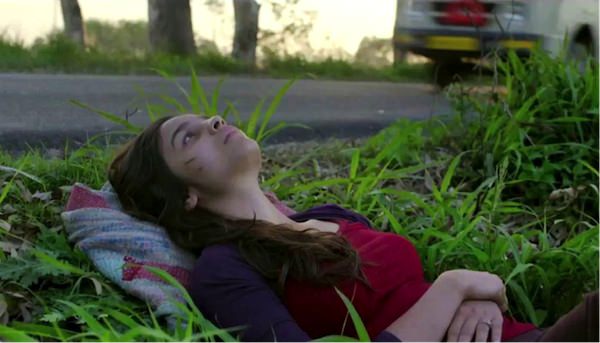
highway-1

१५ साल पहले इम्तियाज़ अली ने ज़ी टीवी के शो “रिश्ते” के लिए एक एपिसोड बनाया था उसके बाद उन्होंने काफी कुछ बनाया, हासिल किया और काफी हद तक बॉलीवुड में एक secure, genre-specific director बन गए. Especially after ‘Rockstar’, his biggest hit, his career graph has gone steadily upwards. ‘रॉकस्टार’ जैसी बड़ी hit देने के बाद, he had the option of going even bigger financially. Knowing how the industry works, giving a big hit generally works wonders — Nolan had a carte blanche to give his whims free rein after ‘The Dark Knight’; and so he made ‘Inception’. But the decision of not going bigger in terms of cast, budget and stars, and instead making a movie based on a story he wrote 15 years ago (or more) with a modest budget, stripped of most ‘Bollywood’ elements and with a not-so-bankable cast, tells us more about the director that Imtiaz is and the path he is on. ‘हाईवे’ की journey सिर्फ वीरा और महाबीर की नहीं है. ये इम्तियाज़ की भी उतनी ही “Finding oneself” वाली journey है. Back to his roots.
१५ साल पहले वाली.

Highway may not be Imtiaz’s best work but it’s definitely his most honest. Of all his films, this has the most scenes without crutches — minimal background music; long, apparently aimless scenes interspersed with silence as if they were unplanned; and scenes that are ‘real’, that feel raw: Veera laughing/crying without any reason sitting on a boulder by a freshwater stream; Mahabeer’s breakdown. Rough edges काफी visible हैं and some scenes seem unfinished in a sense. काफी clear है कि इम्तियाज़ खुद कुछ नया ढूंढ रहे हैं यहाँ. He relies more on his instincts and the power of raw scenes and narrative here than anything else — and he fumbles along the way quite often too. His warts are quite visible here and the screenplay isn’t entirely convincing. However, he has tried to get out of his comfort zone i.e. a strong soundtrack, typical funny side characters, likeable leads etc. The part which juts out like a sore thumb — and that I personally hated the most — was the end segment, the final 15 minutes where he tried to define everything, make sense of the proceedings and tie all the loose ends. It all felt forced and unreal. That part was the most Bollywood-like of the whole movie and I wish he had ended the film 10 minutes earlier and not necessarily provided a forced closure. (The Lunchbox followed it so beautifully. Ritesh Batra knew where to stop. पर it’s ok, कोई बात नहीं.)

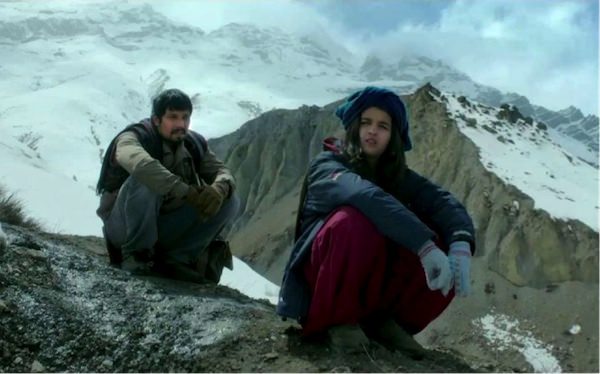
The movie soars with the terrain it slowly travels — almost metaphorically. The part where Veera and Mahabeer lose themselves in the mountains, without a care in the world, is the most enchanting. These scenes soar higher than all others. सूफ़ियत कह लें या कुछ और, उस हिस्से में फ़िल्म एक अलग space में पहुँच जाती है. Imtiaz makes a great decision here to cut back on the spoken word and just let the ambient sounds and the scenery do the talking. This part is probably one of the purest cinematic experiences that I have had at a theatre ever.

highway-2

“एक गोली में आदमी ख़तम हो जाता है न?”
“दो आदमी.”

What looks like a simple ‘Stockholm Syndrome’ story gradually becomes much more as we go farther up the mountains and Imtiaz lets the story take its course beautifully towards the latter half (with the help of some great cinematography by Anil Mehta). There are many scenes without much dialogue here. These silent scenes help — they make you think; at that point, it all becomes subjective. You interpret what you want to, you become a part of the journey and maybe that’s what it all comes down to eventually.
You find stuff about yourself.

The two leads shine as does the supporting cast. Alia is brilliant in most parts, despite overdoing a few things here and there. But what a revelation she is! Randeep Hooda is restrained throughout and gradually takes over when Mahabeer finally breaks down. He is one of the best actors we currently have and this performance strengthens that position. AR Rahman’s music and background score take a backseat here and honestly he does not have that much to do. It’s just not that kind of movie maybe. ‘Patakha Guddi’ and ‘Maahi Ve’ are soulful; Sooha Saha is a lovely track as well. However, I really missed Mohit Chauhan’s vocals. The visuals reminded me a lot of especially this song of his.

Highway tries and succeds and fails and then succeeds again. It has some glorious highs and some not-quite-there moments but कुल मिला कर its highs spectacularly overshadow the lows and the movie now and again transcends into a रूहानी space which is well worth the journey — a rarity in Hindi cinema.

But I have always been a mountain person all my life so do excuse me for being a bit biased. चलिए फिर, I’ll see Highway again and try to find out more.
अपने बारे में.

Shivam Sharma aka @GhantaGuy

(Professional procrastinator. Amateur doer. I sleep, eat, drink and live movies. And right now I am trying to learn how to make movies at FTII)

Well, the header is self-explanatory.

So Milords, scroll down to read Gyandeep Pattnayak‘s defense of Ridley Scott’s The Counselor, and see if it convinces you otherwise.

the-counselor02

‘The Counselor’, for over than a week, has been like that itch which I’ve tried really hard to ignore but can’t anymore.

And won’t.

The reactions to the film are as fascinating as the film itself. But I’m getting way ahead of myself here. Let’s wind back our clocks a little. Remember how the Internet exploded with euphoria when it was announced that Cormac McCarthy had sold his first ever screenplay, and that Ridley Scott was attached to direct it? I mean, who wouldn’t be excited, right? McCarthy – the genius that he is – writes prose that oozes blood and as a writer, he’s pretty much cemented his position as one of the literary greats. Scott, on the other hand, is a filmmaker whose greater works have (often) initially been rejected as being overtly indulgent and devoid of any real emotion. ‘The Counselor’, which boasts of such impeccable pedigree (both in front of and behind the camera) was bound to raise expectations to an all-time high. So, what went wrong?

Nothing.

The primary issue that the audiences (and critics) had with the film was that it was too talky. Agreed that the dialogs are a bit impenetrable at first but meandering and unnecessary they aren’t. Also, this is a film that warrants repeated viewings and it will only get better the next time you see it. To validate this, let’s consider the scene in which the Counselor (Michael Fassbender, as the titular character) goes to Amsterdam to purchase a diamond from a diamond dealer. They engage in a conversation related to the quality of flawed and perfect diamonds. Slowly, the conversation veers towards country, culture, God, philosophy. You are hooked, you ARE the Counselor in this moment. You don’t understand all of what the diamond merchant says but you are intrigued. The words flow like music. And then McCarthy subverts this very scene, with the merchant saying, “Enough, i see your look. No more philosophy.” You expect the conversation to stop. But what the old man says next will show how incisively sharp McCarthy’s writing really is. And this is just the beginning.

Another complaint: the plot is foggy, not enough of story to chew on. Wrong. There is a story about consequences, about what greed begets. There is always some talk about a deal, something which isn’t made clear. But we do see drugs being transported and re-transported in a truck. So we know it’s got something to do with them. And the Counselor is just asked by his friend, Javier Bardem’s Reiner, in plain and simple English, “Do you want to be a part of this?” He agrees. And this being a McCarthy/Scott film, things go spectacularly wrong. What else do you need to know?

Too little action. What the actual fuck? Dread is omnipresent, lurking around in all the frames (and we have Daniel Pemberton’s excellent, moody score to thank for, which adds to the mounting creepiness). There are at least two scenes that will scare you shitless. And then, there’s violence in those words, in between the lines, in all those phrases left unsaid and also in those which are spoken out explicitly (you’ll see what a bolito does). Like that scene in which Brad Pitt’s character Westray asks the Counselor to steer clear of the ‘deal’ while there’s still time. And then, he makes it clear that the beheadings, the mutilations are just part of the business, to keep the fear alive. It is a chilling scene, an indicator of what’s about to follow, and remarkably performed by both Pitt and Fassbender.

Scott, who is an atheist, also injects some of his own perversity into a scene where a character goes into a confession chamber and confesses (or at least tries to) to a priest about the sins that she’s committed. Initially, I thought this scene did not fit anywhere in the film. After seeing the film for a second time, I see where this one’s coming from. This character is just trying to piss off the priest. She wants to see what it feels like being in a confession chamber and she is aware that she feels no remorse, no matter how much she tries to. At one point, she even tells the priest, ‘Look, I don’t need any forgiveness. Just listen to my sins.’ It’s almost as if she’s laughing in the face of the beliefs and rules that ‘normal’ people adhere to.

I could also give you one more reason to watch the film: Cameron Diaz’s character Malkina fucks a car. Yes, you read that right. No, I didn’t mean a cartoon.

SHE.    FUCKS.     A.      CAR.

Got your attention, haven’t I? Nudge, nudge, wink, wink. But yes, there are also two flaws that I can think of right away – 1) A woman wakes up from what she thinks is a nightmare (this scene reminded me of Raakhee from Karan Arjun. You’ll know it when you see it) and 2) the film would have been all the more edgier if not for the couple of cameos that pop up once in a while. Like my friend @drdang observed, ‘Audiences would have lapped it up in a big way had it been a foreign language film.’ I couldn’t agree with him more. To me, it constantly felt like (and I say this with no intention of belittling Scott’s craft) I was watching an Alejandro Gonsalez Inarritu film. In short, the film is anything but your typical Hollywood fare.

I can go on and on about this film because that’s how rich it is, with all those dialogues and those visuals. And honestly, I don’t expect this film to be everybody’s cup of tea because it simply isn’t. But next time, when Scott chooses to direct a tentpole summer movie like ‘Prometheus’, don’t be a dick about it. Because clearly there isn’t any appetite for restrained and intelligent cinema like this one. Towards the end of the film, one character tells another how easy it is to trade places for a loved one’s life and given the current situation, how impossible it really is. The scene closes with this particular piece of dialog – “The extinction of reality is a concept no resignation can encompass.” Even McCarthy couldn’t have put it any better. But he has.

Few years from now, people will look back at this film and wonder: this is the film we’d ridiculed back then? The year is young and there are 10 more months till we start making top 10 lists but guess what, I already know what one of my top favorites is going to be. Simply put, with this one, Messrs McCarthy and Scott have taken ruthless and cynical filmmaking to lethal heights.

Gyandeep Pattnayak