Archive for the ‘reviews’ Category

With the positive reviews pouring in from all quarters, i was waiting for some contrarian views. Because what’s the fun if we all are on same page. Though there have been few such views too, and criticism mostly have been looking at the big picture and the issues involved. But Runcil Rebello believes that the film is about “the smaller picture”. And he also writes about how the film is different from the book.

kai-po-che

In Abhishek Kapoor’s Kai Po Che!, it’s all about opposition – ideas clashing with each other, and sometimes both winning, sometimes just one. There is the age-old money versus passion squabble, further highlighted in the academics versus sports issue omnipresent throughout Indian homes. Then there is the overarching notion on which the film is built: friendship versus ideology, and friendship does not always win. There is also Mathematics versus Biology.

Kai Po Che!, adapted from Chetan Bhagat’s The Three Mistakes Of My Life, is a story set in Gujarat around the turn of the millennium. The nineties were done and dusted with. Internet, Nokia mobiles, malls were making their introduction into daily Indian life. The Indian cricket team would become a leading Test-cricket playing nation in the following decade. Religious politics had not yet reached a fuming and flaming high.

But Kai Po Che! doesn’t have its eyes set on such large-scale issues. Rather, it is content telling the story of three friends: Ishaan (Sushant Singh Rajput) – flamboyant, impulsive, passionate, Govind (Raj Kumar Yadav) – logical, ambitious, money-minded, and Omi (Amit Sadh) – simple, lovable, easily swayed, who set up a sports equipments store-cum-cricket training academy-cum-Maths tuition classes. This film is as much an ode to friendship as it is about the decay of that lovely bond.

The idea of opposition isn’t hammered into our heads. It’s brought up now and then, never over the top. Just like the film. The story (written by Abhishek Kapoor, Chetan Bhagat, Pubali Chaudhuri and Supratik Sen) does not veer much from the book, and if you’ve read the book, you’d realise then that it is a story tailor-made for Bollywood. And yet, the writers and the director stitch the film into an altogether different piece of fabric. The film is removed from typical Bollywood treatment. No star actors, no item numbers, no over-the-top treatment, just three songs (Hell! The soundtrack by Amit Trivedi [with lyrics by Swanand Kirkire] includes a garba-beat song in Shubhaarambh, but the film’s garba scene isn’t picturised on it. Unexpected.) Instead, Kai Po Che! is about the small moments in the fabric. Don’t lose sight of the smaller picture.

Characters, especially Omi’s, oscillate, not able to settle on one thing. He, at times, goes where the wind blows, and sometimes marches to the beat of the other drummers of the show. He may not always like what he does, but he is loyal to any cause he signs up for. Govind and Ishaan, on the other hand, are the proverbial immovable object and unstoppable force. They’d go to any distance to get what they want, albeit what they want is in diametrically opposite directions. Govind has to let loose, has to understand that not all things in life are solved by Mathematics, but some by Biology too. Ishaan’s sister Vidya (Amrita Puri) would be his teacher in this regard. Ishaan has to grow up, has to not let anger affect his decisions, but his mind. Ishaan, and to a lesser degree, Govind too, do not care about how religion plays into their plans. They are fine with sitting on the fence when it comes to this particular power struggle, letting Omi handle the dirty work.

What these three have in common, though, is something India is obsessed with: cricket. Cricket (and films) are said to heal wounds. In this film, it is the historic 2001 Calcutta test match between India and Australia that plays the role of mediator and doctor. It is also cricket that brings together children of two opposing homes, Omi and wiz kid Ali (Digvijay Deshmukh), under one roof.

Abhishek Kapoor has a knack for staging event situations. In Rock On!! earlier, he staged rock concerts in a way no Indian film had before. In Kai Po Che!, he goes large scale, but doesn’t make them the focus of his movie. The eye firmly remains on the three friends. Earthquakes, cricket matches and the Godhra Riots form the trifecta of incidents around which they break and mend. Tough decisions are made, mostly on impulse and emotion. When calamities strike, there is no time to think. Govind, Omi and Ishaan choose their respective sides all on basic instinct.

The film, though, has been meticulously planned. If Anay Goswami’s cinematography portrays Gujarat in a favourable light, Hitesh Sonik’s background score livens up the lives of the three friends. Deepa Bhatia transitions from one date to another finely, giving her best cut in the crucial scene during the riots.

Sushant Singh Rajput and Raj Kumar Yadav play their roles well. They really look the part, and so does Manav Kaul, being crafty and smart as Bittoo mama, Omi’s political leader uncle. Amrita Puri is cute and plucky adequately. In fact, the casting (by Mukesh Chhabra) is impeccable. The one actor, though, to make the most impact is Amit Sadh. From portraying a simpleton to a political henchman, Amit Sadh’s eyes, and hair, speak.

All these people, eventually, are just holding the manja. It is Abhishek Kapoor flying this kite, cutting every other kite in his path. He’ll be the one screaming kai po che! at the end of it. And what a delight it has been to watch this kite soar great heights.


P.S.: If you’ve read the book, you’ll understand the flashback and the conclusion has changed; all for the best. Below are a few details of what is different in the film.

(SPOILERS AHEAD!)

Chetan Bhagat, in his book, The Three Mistakes Of My Life, had Govind as the lead character. The biggest change is towards the end. In the riot scene, Omi is the one who protects Ali, Ishaan and Govind from his uncle. Omi dies in the process, and Ishaan doesn’t talk to Govind for years because of the revelation that his sister and he were in a relationship. Govind eventually, before committing suicide many years later, writes a letter to Bhagat, who he is inspired by, thanks to his two books Five Point Someone and One Night At The Call-Centre, who then intervenes and brings all of them together again. An utterly melodramatic end to the story, which thankfully was changed.

Another important section that was missing from the film was the part where the three friends finance a trip for Ali and themselves to Australia to receive cricket coaching. The Australians, seeing the marvel that Ali is, offer to train him but only if he eventually plays for Australia. Ali here in an outright dramatic fashion proves his patriotism for the country by shouting that he’ll play only for India and then they return to India.

Also, Vidya and Govind sleep together on Vidya’s eighteenth birthday at her home itself in the book. This too was changed in the film.

Also, missing in the book is the Diu section. The three friends are basically saints in the book, not leaving their pol to do things normal twenty-something guys would do i.e. to drink.

Abhishek Kapoor also changed the narrative by making all three characters equally important, thereby removing the crux of the story from the ‘three mistakes’.

The rest of the movie is pretty faithful in its adaptation.

MKBKM

Vishal Bhardwaj is a disturbed man.

At least that’s what it seems. And that’s a good starting point. Filmmakers and artists should feel disturbed by their environment. Great art always comes out of that disturbance. So while rest of the bollywood seems to be living in Tumbuktoo with no connect to the issues that matters, and want you to remain equally stupid, blind and deaf with their corn-cola-crap combo, Matru Ki Bijlee Ka Mandola is Vishal Bhardwaj’s first reaction to the changing world around us.

At a recent presser, Bhardwaj said that wo jo ugly malls…meri saansein aani band ho jaati hai wahan…uske andar…wahan ke shor se. As i watched the film where Pankaj and Shabana talk about his dreams on a hill top with dark clouds hovering over them, and a surreal sequence involving giant cranes, industries and malls comes up, it was eerie (wish they had avoided those tacky interior shots of the malls though). That’s the core of this whimsical film by Vishal Bhardwaj – development at what cost?

Land.

That doesn’t feature in our dictionary. The ones who are born and bought up in city never knew that it existed. We, the kids of small towns who moved to smaller houses in bigger towns, used to hear about it from our previous generation. Now, we are either comfortably numb, or understand the size of 1BHK – space is our only connect with “land”. And in this scenario, it’s quite easy to understand how difficult and daring it is to make a film like Matru Ki Bijli Ka Mandola. Land, farmers, farming, rainfall, pesticides, gobar, anaaz, anaaz ka bhav – they don’t exist in our films anymore. Not that it deserves all the credit just for the dare act.  But, then, the industry and this country doesn’t understand “satire” either. We are still stuck at Jaane Bhi Do Yaaron. Even on the day when the film is out, the makers are selling it as “massy comedy drama”, like they did with the trailer and tried to hide the film. Massy comedy drama? Paincho paincho!

And that’s the tragedy of Vishal Bhardwaj and his films – audience. Maybe the blame lies with him too. Intention is always honest, filmmaking is always top notch, but he wants big budgets. Big budgets means only one thing – big stars. Doesn’t matter if they can act or not. With big stars and big budgets, you need the big box office numbers too. So? Package it as “vitamin ki goli“, or massy comedy drama, as they would like you to believe.

Last time when he made a film without any compromise, he delivered two of the best films of his career which are classics in more than one way – The Blue Umbrella and Maqbool. Since then it’s always been a slippery ground. This balancing act is a tough business. Emir Kusturi-ca’s absurdity is full throttle. Bhardwaj’s absurdity is bollywoodised where every solution lies in hero-heroine ki shaadi. Some of the best cinema across the world never looks for solutions, and trying for a quick fix is unpardonable. Problems/issues – that’s the muse of a true artist. And this is what i found completely indigestible in Matru – how suddenly everything comes together in the end. Maybe they meant it’s “massy comedy drama” by its climax. Aha, the trappings of commerce when the film has an anti-commerce stand. Irony! And watching this film funded by a corporate giant in a multiplex inside a mall. Irony ka baap!

But other than its hurried and hotchpotch climax, the film has so much more to offer and is deliciously wicked. Sit back, relax, and chew it bit by bit like Gulaabo does. This one needs jugaali. (i hope you know what it is) Make sure you watch the film in a theatre which has good audio system. Miss one line and you will miss the joke. But wait, if your idea of being funny is 50 plus actors making faces on the tune of pon pon, this movie is not for you. Call it quirky, whimsical or absurd, i wonder if Mao and moo moo will ever get together in one film. Or you can just buy some species because you like their music. Or a Gulaboo bhains in such a pivotal role. It’s Cattle-ship Communism!

The story is simple – man has a daughter. man has a servant. daughter has a lover with a corrupt mother. It’s a hindi film and so you know the end. In the illustrious filmography of Bhardwaj, this is his first political film. i remember an interview of his where he said script aapko nanga kar deti hai…aap kya sochte ho, wahan sab dikhta hai. And if that’s so, am happy to tell that one of my favourite filmmaker looks smart even when his soch is stark naked. He makes other filmmakers of his generation who are still busy doodling with matters of heart, look like nursery kids. Paincho, ab toh duniya dekho! 

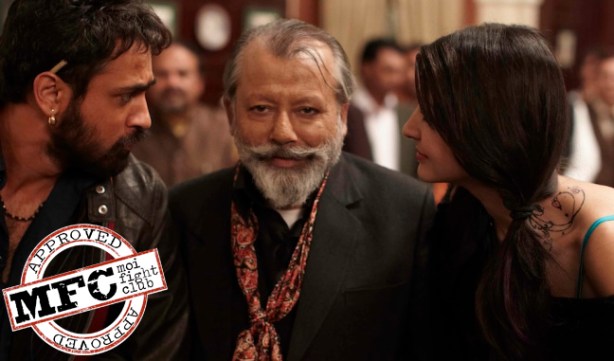
And hand over all, i mean ALL the trophies to Pankaj Kapur. A slur here, a sigh there, a blank stare in this direction – this actor is pure delight on screen. He owns it and how! Forget his Jekyll and Hyde avatar, he is 100 times the Jekyll hidden in one Mr Hyde! The film belongs to him and it’s no wonder that Bhardwaj calls him his most favourite actor on this planet. It’s been ages since an actor made everyone look like lilliput. Even if nothing interests you, just watch the film for him. Actors of his age are put in a bracket called “character actors” in this country and you never know when someone like him can get another terrific role like this one and will do full justice to it. Shabana Azmi is the Politician-who-licks-Lollypop and is a perfect match for Kapur as his footsie partner. And like any other Bhardwaj film, this one also has the entire supporting cast setting up a great ambience and a distinct world where the story unfolds. Any film which has great performances by actors in small roles, or even just for one dialogue – that’s my kind.

Book your tickets now!

– by @CilemaSnob

(PS – Dear VB, why this big dhokha this time?)

Sam: [In the women’s dressing room] What kind of bird are you?
Sparrow: [Starting to point to the other actresses] I’m a sparrow, she’s a dove…
Sam: [Cutting her off] No. I said…
[Points to Suzy]
Sam: What kind of bird are YOU?
Suzy: I’m a raven.
what-kind-of-bird-are-you

I have stood in front of the mirror, pointed my index finger at my image, just like Sam points at Suzy in that delicious Wes Anderson film, and have asked the same question quite a number of time, using all kind of possible emotions. And whenever i think about the scene, it still makes me smile. Bit of Googling tells me that am not the only one who loves this dialogue so much. Though it’s quite difficult to dissect why such a simple line from the film has turned out to be one of my favourite quotes of the year and has stayed back with me for such a long time.

So i thought about doing a collaborative post on similar lines. Quickly mailed some of the friends/films buffs for a simple exercise –

1. Close your eyes

2. Think of all the films you have seen in 2012…released/unreleased/long/short/docu/anything

3. Think what has stayed back with you…impressed/touched/affected/blew

4. Write on it and tell us why.

And i didn’t tell anyone else what the other person was writing about. Got some very interesting responses on all kinds of films and i have put it all together in this collaborative post – 15 film buffs on 17 movies (memories) of the year. The post has turned out to be bit long but hopefully you will enjoy it. And it can also serve as a movie recco list if you haven’t seen the films.

@CilemsSnob

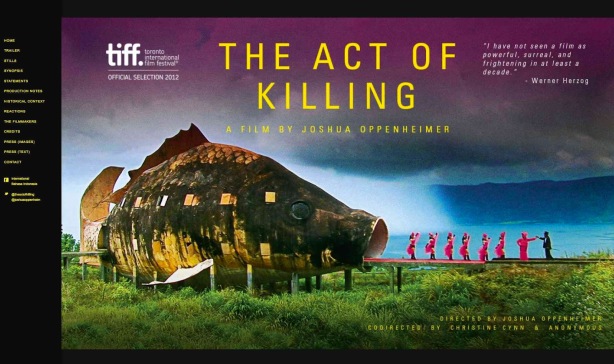
Joshua #TheActOfKilling

—–> Kushan Nandy on The Act of Killing

I saw this two and a half hour-plus documentary at the Toronto International Film Festival in September 2012 and was blown away. Long after the film got over, after Joshua Oppenheimer spoke about it, even much after, weeks later, the film haunted me. It did to me what Incendies had done to me a couple of years back. But much more.

Never before have I seen a film or documentary, where, during the process of film making, the characters go through a life changing process. They metamorphosize into better beings, and this becomes a part of the actual film.

For example, what would happen if someone video interviewed Modi, his political associates or even the people who were the actual executioners of the 2002 Gujarat massacres? And they all accepted their crimes and celebrated this with glee? But suddenly, one of them changed, understanding the repercussions of what he had done?

Anwar, from The Act of Killing, is a person I will never forget. He had butchered thousands. But it was this documentary, and the process of filming it, that showed him who he actually was. He can’t sleep anymore, he stutters, he throws up. He will never be the same again.

And after watching this film, I wont either.

SRK JTHJ1

—–> Varun Grover on Shah Rukh Khan/Jab Tak Hai Jaan

Setting: 7 degree centigrade. Fog. Railway station. A small town in North India where Shatabdi/Rajdhani trains don’t stop.

My fingers are numb and typing out each letter is like feeling the power of it. For some strange reason, the 1st image from Cinema of 2012 that comes to my mind is SRK’s bike rising above the horizon as AR Rahman’s strings go crazy in the background. The theme music of JTHJ (the one they used in promos) it is. Call it the power of music, and it can’t be anything else ‘cos I didn’t even bother to watch the film, or call it my latent romanticism.

My friends from Lucknow – who were there alongside me, fighting for tickets outside Anand cinema hall in 1997 when Dil To Paagal Hai released – watched JTHJ on 1st day in Lucknow and sent me an excited SMS telling me – “Don’t believe the reviews. It’s as good as any Yash Chopra – SRk film you’ve seen. The crowd at Novelty loved it.”

The crowd at Novelty. I was that crowd once. My life’s biggest joys came from being that crowd. Especially on being among the select few who had the matinee show ticket on the 1st day. (1st show was for loafers, matinee was for civilized middle class.)

For Dil Toh Paagal Hai, our friends’ group of 5 was split into 2. Three of us got the evening show, while two fortunate ones got the matinee show. They were clearly the winners – getting to see Maya and Rahul and a new-look Karishma before us. Also they’d get to tease us on their way out, may be telling a couple of spoilers too. So we tried our best to avoid them as their show got over and we were allowed in.

But as it turned out – the theatre owner had cut the film by 15 mins in the 1st and 2nd shows. Apparently he didn’t think the Karishma outrage scene by the river had any merit. But when he saw the audience going crazy with whatever they saw in 1st two shows, he added the cut footage back. And we, the losers till just a few hours ago, were the 1st bunch in Lucknow to watch the entire film.

This scene, Karishma blaming God for complications in love, is almost the crux of Jab Tak Hai Jaan. Though that doesn’t explain why that image of SRK is the 1st that comes to mind. My nostalgia does.
Paan Singh Tomar4

—–> Varun Grover on Paan Singh Tomar

Now inside the train. Cozy and warm. Time to think clearly.

I can’t be a cinema buff by just noting down SRK/ARR as the lasting memory of 2012. But of course there are more. Neeraj Kabi’s intellectual-saint from Ship of Theseus, Denis Lavant and Kylie Minogue singing the existential song of the year (Who Were/Are We) in a post-apocalyptic shopping mall, Sridevi’s eyes full of tears (sprinkled throughout EV), Pi’s uncle swimming in what appears to be sky, the big-screen film print grainy look on Naseer’s face as he looks in the mirror half-seduced, half-confused by Bhakti Barve’s reflection in JBDY (which re-released this year), the spaceship landing smoothly in waters next to a dense mountain in Cloud Atlas, the sad, spent face of Dimple Kapadia at Rajesh Khanna’s funeral (in contrast to a 21-year old Dimple asking Khanna which color sari she should wear for the wedding reception party in the excellent BBC docu resurrected this year due to once-superstar’s death), Gael Garcia Bernal walking away silently, amused and (maybe) depressed amidst the emotionally charged crowds of his nation in Pablo Lorrain’s excellent NO, the trailer of Nikhil Mahajan’s ‘Pune 52’ (though the film didn’t live up to the high expectations and made the trailer look like a red herring), Faisal Khan’s eyes as he lets his gun go crazy on Ramadhir Singh while singer-composer Sneha Khanwalkar screams ‘Teri kah ke loonga‘ in the background……. and I can go on and on.

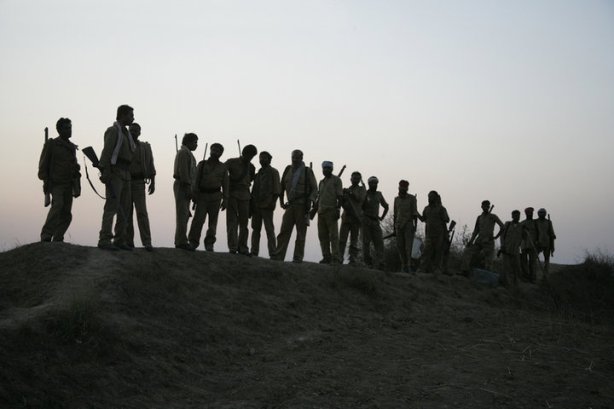
But one image that will shake me for many more years, the one that is so depressing that I haven’t seen the film again even though it is, for me, one of the best films of the year – Paan Singh Tomar’s sadness at seeing his worst enemy Bhanwar Singh dead. The man who had forced Paan Singh to end his international sporting career to become a dacoit had died. And instead of being relieved, Paan Singh was left purpose-less. The cries of Paan Singh, telling Bhanwar Singh’s dead body that he will chase him in another world and get his answers still give me chills. Those lines are the best lines of the year for me, resonating so much with the cynicism and depression of our times, where one fine morning, without any notice, all good turns into hopeless, impossible bad by the apathy of the system and resident evil of vengeful human kind we are, making Paan Singh Tomar the film, a kind of socio-political version of unrequited love stories.

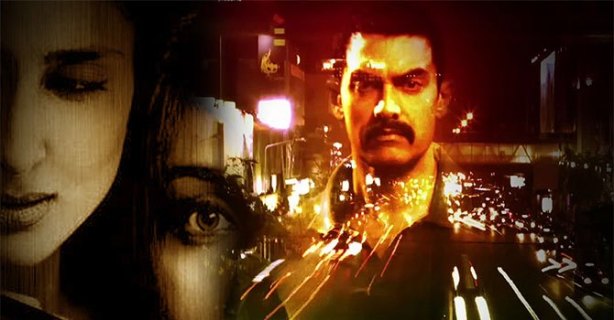
Talaash

—–> @Anand Kadam on Talaash

This year we saw a gamut of movies from the hilarious yet fresh Vicky Donor, violently poetic Gangs Of Wasseypur,  and a mystery with a pregnant femme fatale  – Kahaani . But the movie that has stayed with me, which still sneaks into my mind and cuddles me, is a strange one. I call it a strange choice since this movie isn’t a great one (to be honest), and i didn’t think of it much when i watched it. But the grief stricken Shekhawat and his wife refuse to leave me. Talaash is like “Rabbit hole” with more guilt. When you lose someone very close to you, really really close, his or her or its memories sticks to you like a parasite, sucking every notion of happiness from you. You become a robot going through your daily chores with only one thing playing inside your head – how things could/would have been different. And when a small ray of hope or redemption comes into your life, even if it defies common sense, you cling on to it, not for a closure which comes later (or does it really comes) but for confronting the loss and accepting life as it is.

This is Talaash for me, not the twist, not Kareena or Aamir Khan, or the underbelly of Mumbai. And as i had said it earlier – A movie is never about its twist and if it is, it’s not worth it.
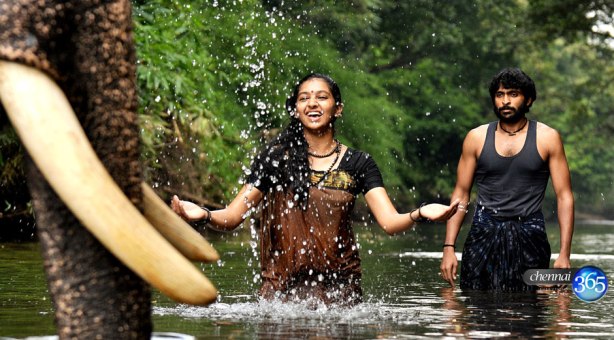
Kumki

—–> @Vasan Bala on Kumki

This year, I guess, without much fuss some low budget sleeper hits happened down south. Sundarapandian, Pizza, Naduvula Konjam Pakkatha Kaanom (a few pages missing in between). This year’s Paruthiveen-set-in-the-Jungles-with-an-Elephant marked the debut of Sivaji Ganeshan’s grandson, KUMKI! Breathtakingly shot. Directed by Prabhu Solomon, the guy who made Mynaa.

The film was earlier called “Komban” (Big Tusker). It’s about a mahavat and his “timid” Elephant Kumki, which is supposed to keep a wild elephant Komban from straying into the fields. The film is basically Kumki v/s Komban. It almost reads like a Pixar film, doesn’t it? BUT….Like any south RURAL “hit” this too has it’s rugged faced man with a toothy grin walking behind a shy girl “LOU STORY”, this one too has endless walks and shy glances and grins and predictably ends in a bloody tragic battle. An epic elephant battle! and it boils down to Computer Generated Blood and Dust (hmmm..ummmm). It’s a bona fide formula now, it’s a dream debut for any Star before he graduates into City “Criminal and Cop” roles, mouthing punch lines and beating up Telugu Villains. Loved the music though.

take-this-waltz04

—–> Jahan Bakshi on The Sarah Polley Double Bill : Take This Waltz & Stories We Tell

Sarah Polley delivered a double whammy this year with two diametrically different but intrinsically linked films. The first was Take This Waltz, her deeply sensual and feminine take on love, longing and those gaps in life that we try to fill in vain, and those questions about relationships that never have easy answers. Once you get over the affectedness: the overtly twee touches and some clunky dialogue at the start, Take This Waltz is in turns both superbly seductive and devastating. Michelle Williams once again, brilliantly owns her character and her mousy imperfection, and it’s clear that Margot could only spring from the mind of a filmmaker with a distinctive voice, and one who is a woman. And it contains two of the most exhilarating (musical) sequences I’ve seen at the movies this year.

In Stories We Tell, Sarah turns the camera on her own family with a brave, deeply felt documentary/personal detective story about her discovery of her real biological father, but more importantly, the meaning of family, secrets, memory and the very nature of storytelling. This must have been an impossibly hard and emotionally testing project to put together, but Polley pulls it off- life might be messy but Stories We Tell holds together very well as a rich document, revelatory in unexpected ways. Watch it when you can, and you’ll see where Take This Waltz comes from.

Shanghai-Movie-2012-Review

—–> Kartik Krishnan and Fatema Kagalwala on Shanghai

Kartik’s take

He gets to know that the system is rotten, that the investigation he was heading was flawed to start with from beginning, that beyond the scattered red herrings lay the actual ‘villain’, who incidentally is the same person who gave him the power & ‘support’ to start the investigation in the first place, that the ‘villain’ is the CM of the State.

So easy for any protagonist to become an Anna Hazare/Kejriwal in such a case, or to become a whistle blower and later face the inevitable martyrdom (ala the Satyendra Dubeys & Manjunath Shanmughams). What else can a cog in a wheel in such a scenario do? Pickup the gun like Eddie Dunford in Red Riding 1974 and blaze away? Become corrupt like Micheal Corleone or Ram Saran Pandey (Mihir Pandya has written an awesome article on Dil Pe Mat Le Yaar) ? Or run away into overexposed light like Vijay in Pyaasa? Should he accept defeat and get down to some other profession like learning Medicine (like KK Menon in HKA), or resign hopelessly like Vikas Pande in The New Delhi Times? Even Z didn’t have an answer.

He goes to the party and plays a ‘Prisoner’s Dillema‘ of sorts with his Paneer tikka-munching Boss and the other Powerful man. Eventually he somehow manages to ensure that the guilty get their comeuppance. But this ‘victory’ is hollow. As his Boss asks him “Yeh hai tumhari Justice?”, he gives a reply which was there in the promos but sadly cut out from the film – “Justice Ka Sapna Maine Chhod Diya Hai”.

And this was probably my moment of the year which is not there in the film, but there in my memory, for a long time!

Fatema’s take

The cutaway from Dr. Ahmadi’s murder to the item song. It was a stroke of brilliance. Not only technically, but as a comment on our conscience in itself. Physically it’s a jolt, meant to unsettle us and shake us up. We’ve just witnessed a murder we’ve seen hundreds of times before but what we expect to come next is NOT an item song. And so we sit up and take notice. Besides, there is the juxtapositioning of the two warring factions of the film itself, one (the ‘good’) killed like a dog on the street and the other (the ‘bad’) celebrating his decadent power in all its ugliness. And then there is that tenuous mirror to our own conscience – what’s our rtn to this cutaway? Are we glad we are back into an indulgent song-n-dance setting and away from boring Dr Ahmadi? Or gratified by our own lust? Or guilty about feeling so? Or disgusted to watch such sharp contrasts unfolding in front of us? Or do we feel the cut is an over-sighted mistake? That the director doesn’t know what he is doing? The answer to this is a huge part of our response to the film and to think AND achieve something like this is no less than genius.
Beasts of the Southern Wild - 6—–> Shripriya Mahesh on Beasts Of The Southern Wild

The movie of the year for me was Beasts of the Southern Wild. I saw it in Sundance in January 2012 at it’s premier. I knew very little about the movie going in because the filmmakers were careful about not even putting out a trailer before the premier.

It was instantly captivating. I love the world Benh Zeitlin creates. It is constantly surprising, always engaging. All the actors are local and that lends significant authenticity to the world (bigwig directors would do well to take note). It tackles such powerful themes, but all from the perspective of the little girl, Hushpuppy, played to perfection by the adorable Quevenzhané Wallis.

There are no long speeches about government control, environmental disasters or about the right to live freely in a manner you choose. No sermonizing. The visuals speak and the magical realism is very nicely done. The music (also composed by Zeitlin) and the the production design really elevate this movie.

And it’s a debut feature. It won the Camera d’Or and Sundance.

Since the film’s theatrical release, there has been a fair share of haters. But for me, it just worked. Eleven months later, I still think about it.

ScreenShotAlma
—–>Mihir Desai on Fjögur Píanó

There are times when I can’t put things in words, I feel the need to express and communicate in visuals. Visuals stick with me and this year one such visual experiment has been playing in my head for the longest time. Directed by Alma Har’el, the Sigur Rós music video, Fjögur Píanó.

Har’el, director of last year’s surreal documentary Bombay Beach creates this gorgeous portrait about the painful pleasures of love. The couple, addicted to each other only really ‘feel’ the pain when separated. The edit juxtaposes the bruises on the girl with the boy softly touching the butterfly. This image stuck with me and Alma Har’el’s quote sums it up so perfectly, “For me it’s about not knowing how to get out of something without causing pain to somebody else.” Without lyrics Alma Har’el has created this beautiful story which I feel was one of the best, cinematic experiences of the year. Due credit to Sigur Rós’ music that inspired Alma Har’el to create this world. Click here to watch the video if you still haven’t seen it.

Other Picks: Celluloid Man, Last Ride, Rampart, Once Upon A Time In Anatolia, Holy Motors, Your Sister’s Sister.

Supermen Of Malegaon

—–> Neeraj Ghaywan on Supermen Of Malegaon

At the surface it may be about the lives of people dreaming about film-making with empty stomachs and hearts full of passion, it could be about an accidental hero, about a world we have never seen but still seems so close. The director is never interested in milking the tragedy of the crew’s limitations, their poverty or the tragic loss of the lead character. Instead, she turns it all into a celebration of life, we smile along with the characters who are making the film, in a way we reflect upon our own personal constraints and learn to laugh at them. It is a comment on the Bollywood system of over-produced film-making, it is paying homage to films of the 80s/90s, it’s also a drawing lessons about how to keep going at it even when there is no hope, it is philosophical at times, it is laughing at itself too.

A film that is so simple in its structure and still speak at so many levels is remarkable. And above everything, it inspires you to take the plunge without thinking twice. When I saw the film, I wanted to get out of the hall and start shooting a film immediately. The biggest achievement of this film is that it goes beyond the confines of being a documentary and touches you more than a big budget fiction based feature.

 Koormavathara

—–> Ranjib Mazumder on Koormavatara and Makkhi

Be it a random blogger or a certified critic, everyone is Noah on internet and takes no time to float the boat of top ten lists. Like the middle-class father comparing his kids among themselves or with other families, we always manage to make a list of ten best films every year, irrespective of their debatable qualities. I am no exception.

However, when I was asked to contribute for this collaborative piece after shutting the eyelids, a bald man appeared in front of my eyes, riding a fly. So, here I am, writing (only because I have been threatened with sarcasm) on two of the most remarkable Indian films of 2012.

Koormavatara

It starts late at MFF 2012. I am almost certain that I would leave it midway because Hansal Mehta’s Shahid is right after it and almost everyone from my group is going for it. The film opens, Godse shoots Gandhi and my doubts evaporated in no time. This is the world of an old man, disinclined to show emotions and engrossed only in his mundane office work and his little grandson. A Gandhi lookalike, when he is approached to play Gandhi in a TV show, he vehemently opposes but gives in due to the greedy family tentacles. Gandhi, like the fourth passenger in Mumbai locals, slowly invades his life, brings him down to the level of helpless co-passengers. Like a master of swift attack, Girish Kasaravalli breaks down the middle-class system and releases the Gandhi in him, leaving him in the midst of incessant disintegration of his surroundings. Rajkumar Hirani’s Munnabhai MBBS was a joy to behold, but Lage Raho Munnabhi, despite a splendid screenplay, offended the adult in me, with its preachy attitude. Without making him God, Koormavatara makes Gandhi accessible showing the mighty repercussions it can have in a typical family in independent India. As far as breaking down the myth of Mahatma, this is the best we have seen so far.

Makkhi

With scenes dipped in liquid cheese, a boy constantly stalks a girl with trite expressions; Makkhi was loathsome in the first 20 minutes. I wanted that boy to just die. Thankfully he did thanks to the overdramatic villain, soon after I wished. Little shaky special effects took charge. And I witnessed the most inventive revenge drama this year. A fly killing a mighty man is simply an impossible idea! But the way this little soldier choreographs his action scenes in the concrete fort of the villain, you can’t help but root for an insect that you have always detested. The triumph of S S Rajamouli’s film lies in the sheer leap of faith. We are yet to have our Jaws, but this is the one that comes closest to the idea of a fantastically executed concept film.

Kahaani2

—–> Pratim D. Gupta on Kahaani

Parineeta did the same thing for me in 2005. Celebrate Calcutta! And how. It reminded me of the way Mira Nair shot Delhi in Monsoon Wedding and Taj Mahal in The Namesake, almost pausing the narrative to just soak in the sensuality of the space. You sexy! Also what Sujoy Ghosh did brilliantly was inculcate his love for cinema in the many myriad moments of the movie in a way that they never became copie conformes but rambunctious references that served those respective scenes just fine. From Satyajit Ray to Salim-Javed to Bryan Singer. And those eyes of Bidya Balan when she looks up in the twist-revealing scene before unleashing her real self. Eyes filled with hurt, vengeance and rage…Our own Beatrice Kiddo? Present please!

Ship Of Theseus

—–> Svetlana Naudiyal on Ship Of Theseus

I don’t see all films that release in the year (and I am kind of unabashedly arrogant about it; can’t spend moneys contributing to someone’s 100 crores or out of sympathies to so called indie/different films), so my opinion from the very beginning of it, is skewed. The indie film movement (or whatever there is of it) took a whole new leap with PVR Director’s Rare creating a platform for their release. And even though in my personal opinion, indie films are becoming the cinema equivalent of DSLR carrying people with so & so photography facebook pages (read opinion as – ‘people should be banned, either from making films or from expecting people to watch’), there have been moments of pure delight at the movies in 2012 than years before that, much thanks to the few Indie films that released this year.

Some of the favourites this year are Supermen of Malegaon (one of the best, a documentary so delightful, hard hitting and yet nowhere remotely close to being poverty porn), Kshay (for Chhaya), Gattu (for finally bringing to the screen an unpolished, bratty, clever, naive and most importantly, real kid), Shanghai (for creating that discomfort that exists in our world and we do not see) , Anhey Ghorhey Da Daan (for creating a cinema experience like no other, for delving into time space and making the silences speak)

The most favorite of all that I managed to see in 2012 would be Ship of Theseus for its language, for its being able to be so unique, so evolved in thought and yet not have an iota of pretentiousness and be accessible to just anyone. For the benchmark it creates not just for indie filmmakers but Indian cinema, in general. I am dying to point out and quote every single nuance I loved, but that should be saved for the film’s release. For the smallest of elements it picks and for the whole it creates. For repeating itself like a poem long after you’ve seen it. This is Cinema!!

anhey ghorey da daan

—–> Mihir Pandya on  “अन्हें घोड़े दा दान” (पंजाबी), निर्देशक – गुरविंदर सिंह

एका – कदमों का, कराहों का, नांइसाफ़ियों का, नकार का। एका – दुख: का, संघर्ष का, सपनों का, समता का। वही इंसानी पैरों का जत्था जिसकी मूक कदमताल में पलटकर मेलू सिंह के पिता शामिल हो जाते हैं। किसी अभ्रक से चमकते इंसानी इरादों का जत्था, जिसका सीधा मुकाबला समाजसत्ता अौर राज्यसत्ता के मध्य हुए भ्रष्ट समझौते से तैयार हुई दुनाली दुरुभिसंधि से होना है। किसी ख़ास दिशा में सतत बढ़ते चले जा रहे वे कदम कोरी भीड़ भर नहीं, वे जनता हैं। एक अात्मचेतस समूह। निर्देशक गुरविंदर सिंह की ‘अन्हें घोड़े दा दान’ के इस विरल संवादों से बने विस्मयकारी दृश्य में, जिसके अन्त में सरपंच की दुनाली के सामने गाँव के दलित फ़कत लाठियाँ किए खड़े हैं, अाप सोचते हैं कि अाख़िर वो कौनसी अात्महंता चेतना है जिसने उन्हें वहाँ साथ अा खड़े होने का यह गर्वीला माद्दा दिया है?

बराबरी का सपना। समता का सपना। यह खुद अपने में पूरा मूल्य है। गैरबराबरी के अंधेरी सुरंग रूपी वर्तमान के अाख़िर में न्याय अौर समानता रूपी किसी उजले सिरे के होने का यूटोपियाई स्वप्न। बराबरी स्वयं ऐसा मूल्य है जिसके लिए लड़ा जा सकता है, जिसके लिए मरा जा सकता है। अौर जिस दिन एक दलित दूसरे के लिए खड़ा होता है, एक शोषित दूसरे शोषित के हक़ की अावाज़ का साझेदार बनता है, वह सदियों से जड़वत इस सत्ता व्यवस्था के लिए अंत का बिगुल है। यह दलित चेतना सबक है जानने का कि हमारी देश के भीतर की तमाम पुरानी संरचनाएं कहीं गहरे बदल रही हैं। यह शोषित की साझेदारी है। यह दुख का एका है। वो बस एक फ्रेम भर है ़फ़िल्म में। गाँव के सरपंच की दुनाली के सामने डटकर खड़े मेरी पिता की उमर के ये निहत्थे भूमिहीन किसान। लेकिन इस एक फ्रेम में अक्स है मणिपुर की उन तमाम माअों का जिन्होंने अपनी उस एक बेटी के लिए खुद को विद्रोह में उठे जिंदा माँस के झंडों में बदल लिया था। इनमें अक्स है सशस्त्र सेना का सामना पत्थरों से करने का दम रखने वाली उस नौजवान पीढ़ी का जिनकी ज़बान पर बस यही गूँजता रहा, “हम क्या चाहते… अाज़ादी”। इनमें अक्स है खंडवा मध्य प्रदेश के उन किसानों का जिनकी सामूहिक जल समाधि ने एक बहरी सरकार को भी सुनने अौर अपना फैसला बदलने पर मजबूर कर दिया। अौर इनमें मेरी ही उमर के उन दो नौजवान साथियों का भी अक्स है जो रविवार की उस रात उस बस में इंसानी जिस्म की हदों के पार जाकर भी अंत तक लड़ते रहे, एक-दूसरे के लिए। बराबरी के उस अप्राप्य दिखते स्वप्न के लिए जो सदा ‘फेंस के उधर’ रही इन अाँखों ने अब देख लिया है।

So this was our list. Do comment and share your movie memories/thoughts/opinions of this year.

BiggerLOGO

Light play, clever shooting angels, or whatever people might be waiting for, when Vishal Bhardwaj announces a film, there is a breed of people that waits for the music of his film because even if it is ‘7 Khoon maaf’-ish, the music album comes packed with a lot of ‘Gulzar Goodies’. Save for the mess that the music release of the film created, we really can’t complain much because as someone wise once remarked ‘If it’s worth the wait, then shut up!’

1. Matru Ki Bijlee Ka Mandola – Sukhwinder…O Sukhwinder! You have done so much on the same lines already, yet you make it sound all so easy and peppy! Excellently arranged and marvellously penned, the song gives a lesson or two to some ill-fated idiots who think in order to sound catchy (and in order to use the name of the film in a song) they have to have an ‘item’ to endorse it. The splendid African weaving in between (with a continuous guitar note in the background) gives the song a certain amount of class that is always missing when it comes to halkat sheilas who are talking about munnis all the time. The bass effect that ‘stops and starts’ gives just the adequate thump to the song. 2 Thumbs up!

2. Khamakha – Beautiful ‘evening’ guitars, accompanied by a coral like backup group (with African lyrics?), excellent bass and, and, and Vishal Bhardwaj! Sung like a madly in love ‘aashiq’, this is easily one of the best arranged songs by Vishal ever. The simple yet never so beautifully expressed habits of those in love (sleeping by the window, for example) are a forte of Gulzarsaab. What amazes simple listeners like us is his ability to convey love every time in the simplest manner without EVER repeating words. Anyway, the end of the song, the last 1 minute and 14 seconds of the song, tell us why there is an ever-growing army of hopeless romantics who wait for a Vishal Bhardwaj music album. The song is pregnant with a range of varied emotions that haven’t been explored before. The note on which the song starts and the note on which ends will tell you exactly what we are talking about. 3 Thumbs up!

3. Oye Boy Charlie – ‘Singerwala Shankar Mahadevan’ starts the song and the song shoots higher thanks to Rekha Bhardwaj and Mohit Chauhan. There is a bit of saxophone and then there is a bit of nasal Shankar Mahadevan (that is just too good!) and then there is a good amount of ‘motorwala mouth organ’ in between along with good guitar. ‘Vishal purists’ might not like the song much because there is an element of cacophony in between, where you feel VB is trying too hard to arrest your attention by throwing in too many elements altogether. There are way too many elements that I missed in the first hearing. It is a fun song with an element of ‘Jhoom Barabar Jhoom’ and ‘Kajra re’ and ‘Satrangi re’ and some comedy and this and that!

4. Lootnewaley – Sukhwinder and Master Saleem start the song. If you play the song with the ‘Awara’ expectation from Master Saleem, you will be a tad disappointed. Sukhwinder emotes better than Saleem to convey the anger. The track is serious. The words are direct and effective. Clearly, a revolution is being hinted. At times chaotic (which may be intentional), the song won’t set music charts on fire. You might argue that any other set of singers could have done the same job as Sukhwinder or Master Saleem have done. The fantastic possibility that these two names promised is clearly missing. How we wish they were exploited better!

5. Sha ra ra – Prem Dehati starts the song again with the typical mela like music arrangement. The brass bands sing along with the singer to elevate the effect of the song. A very short track that begins and ends leaving the brass bands in your mind.

6. Badal Uthiya – The track starts beautifully with Prem Dehati echoing at a distance and then the music setting takes a completely contemporary turn with generous dose of sitar in between. Rekha Bhardwaj does a splendid job (What’s new?) with this track and even though the Prem Dehati version of the song is my favorite, this track can’t be sidelined at all. Rekha Bhardwaj in her typical ‘soul drugged with romance’ voice makes it very hummable.

7. Char dina ki – A Haryanvi kickass item that just elevates the level of the album and how! Excessive usage of brass bands and some real catchy lyrics ensure that it has a very roadside feel. The beginning of this track has shades of ‘chicha leather‘ from Gangs of Wasseypur. Pankaj Kapur, Prem Dehati and Imran Khan go behind the microphone for this and clearly Mr. Kapoor is having fun like only he can. Excellent track! (Mind it – ‘Char dina ki chamak chandni’ will linger in your head…shart laga lo tau!)

8. Chor Police – A fun recitation by Pankaj Kapur with heavy dose of political wrongdoings that the elected government has been committing. Ends with a splash! Back up vocals, brass band and excellent tempo ‘waali’ claps is what make this track up…good one!

9. Nomvula – African track it may be, but this composition has fun written all over it. If you aren’t one of the ‘I don’t understand the words so I won’t automatically like the song’, then you will like it. A very ‘by the beach with beers’ feel. Really what’s music got to do with language?

10. Badal uthiya (Reprise) – There are few good souls that are trying their best to give the masses a taste of the sheer variety that Hindustani classical offers. This song is an addition to that effort. Prem Dehati accompanied with excellent sitar and a contemporary music arrangement hold your soul hostage. The words, the pronunciation of the same, the stillness, the sadness, everything has traces of God particle in it. If you didn’t know, God particle is generally defined as a song/composition that has mastery of Gulzar saab and Vishal Bhardwaj in it.

11. Lootnewaaley (Reprise) – A strong vocal demonstration against the shrewd landlords, Sukhwinder leads the backup singers in what sounds like a ‘lagaan-like’ track, feel wise. Word rich and music light. The track is clearly banking a lot on the visuals. It isn’t musically as structured as the other version. Clearly a circumstantial song.

Including the recitations and other titbits is the new ‘in’ thing for Hindi film O.S.T these days. Strictly ‘song-wise’ speaking, Khamakha, Badal Uthiya (both versions but Prem Dehati version), title song and Oye Boy Charlie are the ones that will remain with us and that’s a lot of them! We missed the mandatory ‘Have Vishal, so Suresh Wadkar will sing’ song.

An album that benefits (like all of us!) with the presence of Gulzar saab and showcases the obvious abilities of Vishal Bhardwaj, the composer. Also, those having silly doubts on Gulzar saab (Ref: JTHJ) have gone missing and how! ख़ामाखा का doubt, वो भी अल्लाह पे? हट पगले!

Post by @Rohwit (who is currently देहाती.)

talaash

SPOILER  ALERT

My blood group is C+ve. And i don’t mean the Hindi cuss word that starts with “C”. Because there’s no other explanation for me getting so restless about films and going to bed peacefully only after i have chased all the possible “sources” to know what the films (or its spoilers) are about. Blame it on occupational hazard, or maybe am in this occupation because of the same blood group. Also, because for me, films are more about “how they happen” and not “what happens”.

Nothing to boast about but i knew about the so called big twist of Talaash almost a year back. Though i had my doubts about it but everything related to the film was pointing in the same direction. And a year is a long time to make peace with the “ghostly” fact. As the release date of Talaash was near, i was travelling out of country. Curious that i am, got in touch with a friend who was watching the film much before anyone else. I asked him if he can let me know as soon as he is done with it. He saw it, liked it, and said, he is not going to tell me the spoilers. I told him, i am going to tell him what i know, and he just has to say yes or no. I asked him about the big twist. He said, yes, but how do you know? Well, the first rule is you never reveal your sources. Aha, much relief after waiting for a year. I quickly tweeted that yes, yes, yes, it’s the same twist that we knew since a year back. At least the C+ souls like me will get a good night’s sleep finally.

I saw the film almost a week after its release. And i have concluded that if you know the twist, the film works in a much better way. And there are many reasons for it. First, the pitch. The makers tried to keep the per-release campaign quite low-key because of the fear that the twist might get out due to over-exposure. Everything pointed out that it’s a thriller or suspense drama. The font of the print campaign started becoming bigger with the countdown – TRUTH will be out in 5…4…3….2…1 day. You can’t blame anyone when everyone saw the same story in the promotions – a cop chasing the death of a film star. He has to crack the case. So what is the TRUTH? The big twist? Now, if the baggage comes down to the fact that Kareena is a ghost who guides Aamir Khan’s character to crack the case, it seems straight out of @OMGFacts, or evn LOL-Facts. It’s easy to dismiss it when you have invested so much in the case which looks so real, and with such great mood that creates the world around it and builds the prefect pace. Ghost? That’s a joke, that’s so flimsy! The writers could not think of anything else?

Now, imagine if the film was pitched to you as “supernatural drama”. You are prepared for it and it’s much to easy to accept it that way. But i think the writers of the film did set up the track of Rani Mukerjee quite well to give you a hint in which direction the film was heading. It wasn’t like a pop-up music video. I can’t say with full confidence but i think i would have still liked it if i had no clue about the twist.

Show me a man who was shattered by the unnatural death of a loved one, and has made peace with it without doing anything unnatural. Shit happens, and then we find our ways to cope with it. I am an atheist but  i have seen/heard/experienced things which are difficult to explain and impossible to believe. They remain unanswered and life goes on till another death comes knocking.

Also, when you don’t know the twist, you are waiting for the big revelation in the end. The problem is the fashion in which we have been conditioned to watch films – the theory of “end me kya hota hai?” But Talaash is much more than that. And you can focus on the rest, which is so gorgeous, once the twist is out of your way. In fact, that’s not even the film. It’s about a couple coming to terms with the loss of their kid. Both take different routes to trace that piece of peace. The murder case is purely incidental. But the sad part is you won’t waste you weekend to watch a couple coming to terms with the death of their loved ones. Will you? You need coke, corn and crap on screen for your weekend outing. So most probably they decided to hook you with that “murder mystery” pitch. And i must admit that’s it gives me a kind of sadistic pleasure to know that you have been cheated.

And in a good way, it also reminded me of an all time favourtive film of mine – Umesh Kulkarni’s Vihir. Because love, loss, death, water, wandering souls, and peace – the motifs are the same here. If you still haven’t seen it, WATCH IT!

Without any doubt, Talaash is one of the best directed films of the year. Mohanan’s photography with Sampath’s music creates such a compelling mood. The tone is set as soon as the credit roll begins with those invisible faces and characters that bollywood doesn’t give a fuck about even though they are at every signal in this city. Rani Mukerjee, Nawazuddin Siddiqui, Raj Kumar Yadav, Sheeba Chaddha, Aditi Vasudev and Subrat Datta – all of them are in top form here. You are hooked to it till the interval happens, and then Cinemax Versova killed the mood for me by playing commercials for at least 30minutes. Had to go out and shout at the manager to start the film post-interval.

Another criticism i have heard so far is that the film scratches the surface, and it doesn’t go any deep. Aha, i have always believed that it entirely depends on you – how you want to read the film. If you can’t scratch beyond the surface, don’t put the blame on the film and the filmmaker always. Instead click here and read the best piece on the film.

I might not be a fan of Aamir Khan but you have to appreciate the choices he makes. He believes in them and pulls it off. Compare it to the films of others A-list stars of Bollywood. What are they doing? What are the delivering? All the focus is on 100-crore these days. And when it’s so much easy to deliver that with cheap crap-corn-cola, why put so much effort and take a risk? Respect for that.

Also, am wondering if it’s high time to divide Excel’s films into Farhan Akhtar Films and Zoya Akhtar/Reema Kagti Films. Someone compared Kartik Calling Kartik to Talaash on twitter and said KCK was better. I tried hard to control my laughter. That film had much more baggage on its twist and it was a (chinese?) joke in the end. And, remember Game – their another venture in similar space? Don’t have words in my dictionary to describe that garbage. Not sure why, but i feel these films belong to Farhan Akhtar who has been on a downhill since his brilliant debut, Dil Chahta Hai. But the ladies are trying new things and pulling it off with so much ease – Honeymoon Travels Pvt. Ltd, Luck By Chance, Zindagi Na Milegi Dobara and now, Talaash. To quote another favourite dialogue of the year, Farhan Baba, tumse na hoga ab, rehne do. Bus acting hi kar lo.

(PS – Can we please nominate Aamir’s eyebrows for performance of the year? Though his moustache was vying hard for attention but my vote goes for the eyebrows.)

– Posted by @CilemaSnob

Wouldn’t it be very boring if we all start liking the same things – no arguments, no fights. And that’s the beauty of  cinema – a divided house, because it means different things to different people. So while i wasn’t sure about the “faith” factor in this week’s release, Life Of Pi, here’s a post by Suprateek Chatterjee who thinks otherwise – have faith, will sail.

A software engineer by degree, Suprateek is passionate about cinema as well as music, and on weekends, can be found writing, composing and playing new music for his electro-rock band Vega Massive. He harbours a strong dislike for pretentious attitudes, Salman Khan fans and Andheri station. Currently at Hindustan Times as features writer/film critic.

Until the age of ten, I used to be quite religious. More than religion, it was mythology that fascinated me. C Rajagopalchari’s versions of Ramayana and Mahabharata occupied a place of pride on my bookshelf, next to my prized Enid Blytons, Hardy Boys and R L Stine’s Fear Street series. I had another book, Tales From The Bible, part of my Catechism/Moral Science curriculum in Don Bosco School, Delhi, where I studied for four years. I was fascinated by the stories, wildly improbable as they seem now, and would often characterise myself according to them.

Alas, I eventually grew up and turned to atheism. However, while the myth stopped appealing to me, the stories didn’t. Over the years, I realised that a part of being religious is accepting a myth blindly, no matter how incredible it sounds. It doesn’t make you smarter or stupider – or better or worse – to give yourself to the myth, and take back the right lessons (whatever those may be).

I read Yann Martel’s Life Of Pi nearly nine years ago and have been waiting dying to watch a cinematic version since. The fact that it was supposedly ‘unfilmable’ (I don’t think I ever agreed with that) only added to the charm, given that past cine-adaptations of unfilmable novels have included stellar films such as ‘A Clockwork Orange’, ‘Lolita’ and ‘American Psycho’, amongst many others.

I watched Ang Lee’s version last Tuesday at a press screening and was stunned. To me, this is the best film version of the novel that could’ve been made. The visuals were stunning and usage of 3D, to me, the best ever – it somehow felt more necessary here than it did even in ‘Avatar’, to convey that feeling of loneliness and intimacy, not to mention the stunning CGI and creature effects. Richard Parker, the part-live-action, part-CGI tiger, is a creation of genius, and goes right up there with Gollum in the category of Non-Human Characters That Deserve All Kinds Of Accolades. The sequence where a helpless Pi spreads his arms heavenward in the face of a raging storm, screaming, “I give myself to you, God!” stands out as one of the most powerful sequences in recent memory. And, of course, that little sequence depicting Pi’s hallucinations when he’s almost lost hope is surely our generation’s version of the Jupiter and Beyond sequence from 2001: A Space Odyssey. If there were an award for The Trippiest Shit Ever Put On Film, this sequence would surely be a strong contender.

I’m not saying I loved everything about the film. David Magee’s screenplay was slightly patchy and hurriedly put together – I agree with CilemaSnob only on that count, that one doesn’t entirely get the sense of Pi having spent 227 days out at sea. Also, that short minute-and-a-half appearance of Pi’s uncle, who named him, has got to be the worst Peter Sellers impression of all time.

That said, a lot of people have been criticising the accents in the film, particularly how Irrfan, the older Pi, and Sharma, the younger one, don’t sound like they speak the same way. How people have come to this conclusion (without being armed with a degree in linguistics, might I add) is beyond me. The older Pi has stayed in Canada for 20 years, but clearly within an Indian community. If we must nitpick about accents, why should we assume that Irrfan’s mostly-Indian-with-a-few-random-Canadian-inflections accent is inauthentic? After all, accents have no set patterns – I have a friend who went to the States for a year and came back with a strong accent and an uncle who has lived in the UK for 40 years and sounds like a Kolkata Bengali trying to put on a slight British accent. Isn’t this just our inherent bias of trying to look for flaws because we’re so sensitive about how Indians are being portrayed by Hollywood, as though Hollywood is aces at portraying everyone else accurately? One justification for this argument goes: “How come our actors can’t pull off accents as well as theirs can?” The answer, of course, is “That statement is bollocks, unless one’s name is Christian Bale,” as this article and this article will show you.

As for the central complaint, about why a story that claims to make one believe in God doesn’t leave you feeling any different, all I can say is, somewhere Yann Martel and Ang Lee are snickering to themselves over a drink and saying, “Gotcha!” Were you really expecting your carefully-constructed belief system, built up over at least a couple of decades, to be shaken by a two-and-a-half hour film? Life Of Pi is not a story about God or religion – it is a well-disguised critique, or should I say an analysis, of how faith affects us. The concept of the myth, religion’s greatest tool, forms the basis for the central act of Life Of Pi. The alternate storyline, revealed at the end, is probably the true version of events, but does that matter? Ultimately, the story is all about faith: Pi’s faith in his many Gods, his faith in his ability to survive, his faith in the story he tells and our faith in his journey.

Irrfan’s Pi asks the writer, “Which of the two is a better story?” Martel and Lee seem to be asking us a similar question: “Between religion and its sometimes-incredible myths, and atheism and its rationalised outlook, which do you prefer?” Whichever side of the fence you’re on, the answer is immaterial; what they’re really asking us is, “Do you like good stories or do you like great stories?”

Ad film maker and FTII alumni Ravi Deshpande writes on Hansal Mehta’s Shahid and its journey so far. (Disclaimer – Hansal says he has been a guide and friend.)

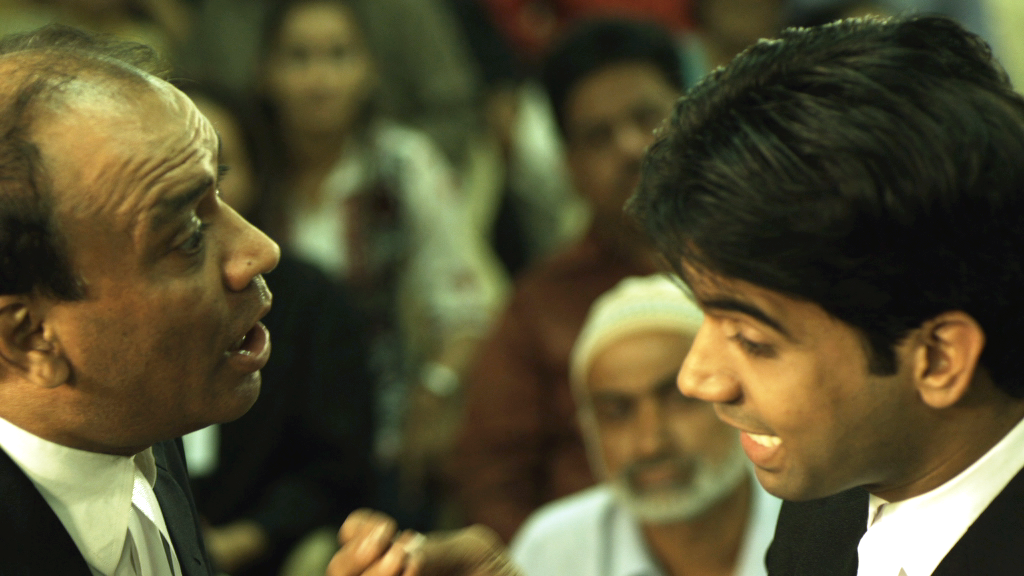
“From reluctant jihadist to crusading lawyer, the life of Shahid Azmi was a remarkable one. Gunned down while defending accused Mumbai bomber Fahim Ansari, Azmi was transformed into an unlikely martyr. But Hansal Mehta’s new film is much more than a biopic; Shahid captures the zeitgeist of a generation.

Shahid’s story began in the slums of Govandi in eastern Mumbai amid violent riots between Hindus and Muslims. A young witness to injustice, Shahid fled his home to a jihadist camp deep in the mountains but, never a dedicated soldier, he deserted as a teenager and returned home — only to be imprisoned on terrorist charges. Tutored by older political prisoners, he resolves to fight injustice upon his release. Finding work in a law office, Shahid struggles against a system steeped in contradictions and hypocrisies, defending clients labelled “anti-nationalist,” “radicals” or “terrorists.”

Hansal Mehta’s Shahid is as much a testament to a remarkable life cut tragically short as it is a cathartic journey through a city filled it seems with equal measure grave injustice and great idealism.”

– Cameron Bailey, Artistic Director, Toronto International Film Festival.

Consider this : By the time he was gunned down, Shahid Azmi had at least 17 acquittals to his credit, a great benchmark for the small span of time he was an advocate.

So why am I writing about this film? Or rather, why am I compelled to write about the experience of this film? Because the film is as close to a real tale as I have seen. The real story of the film concluded with Shahid’s death but just 2 years ago. His strife is still fresh in our minds. It is a Mumbai tale that Mumbaites know. Difficult to satisfy a critical Mumbaite filmmaker’s mind with a Mumbai story.

In the film, the protagonist is a young lad from the FTII stable of actors, Rajkumar Yadav. Leave aside the fact that the bloke does not age through the 2 decades that the narrative unfolds. This fact does not bother me and has not bothered others while watching his stunning underplayed performance. All the other characters (Casting Director Mukesh Chabra) move through the fabric of the film story with finesse (Prableen Sandhu, Mohd Zeeshan Ayyub, Baljinder Kaur, Tigmanshu Dhulia, Kay Kay Menon, Vipin Sharma, Shalini Vatsa, Vinod Rawat, Suvinder Pal, Pawan Kumar, Vivek Ghamande, Paritosh Sand, Prabal Panjabi, Yusuf Husain)

Their mannerisms and expressions are palpable, the interactions are humanly common stance, and the scenes make me angry, make me cry, make my blood rush through my temples, and sometimes make me smile, even squirm with discomfort.

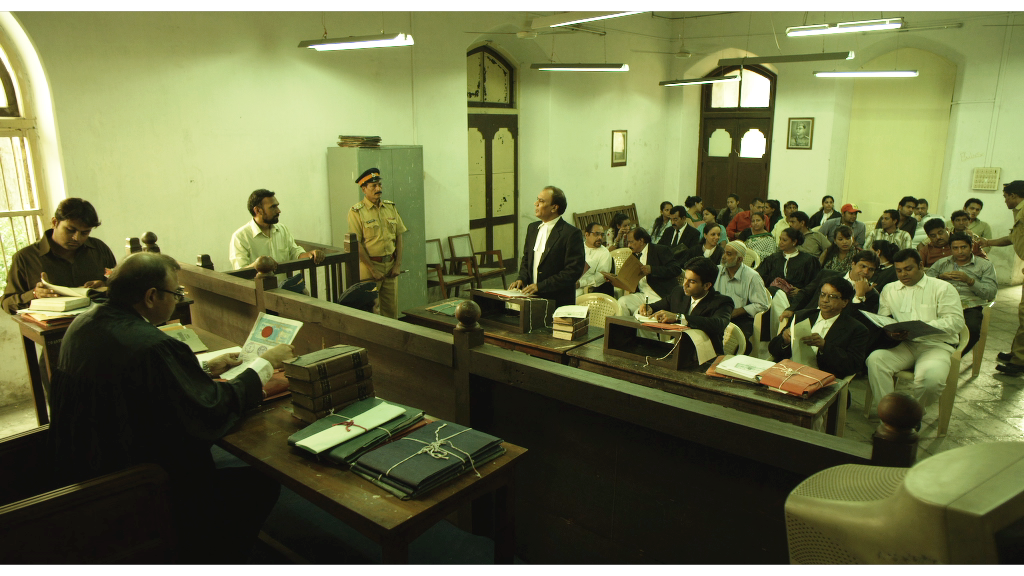
Hansal’s approach to acting as well as most things in the film has been organic in nature, and bereft of conventional method. Many scenes, even dialogues have often been reworked on location. It is a dangerous terrain for a Director to operate because an actor can easily bend a scene in a fashion that could alter the earlier intent. Hansal chose a difficult route to extract from artists what they felt was the most honest delivery. So in the court scene, when the judge too becomes argumentative with the advocates and the accused, the theatre split into laughter, or when the naked Shahid is tortured in the Lodhi Police Station Cell, the viewer in the next seat clenched his fists.

There are other reasons too why this impact is astounding. The Cell is lit by a single tube, and does not light up the protagonist in agony.


Consider this: The DOP (Anuj Dhawan) saw the location (A friend’s godown in Andheri) and said, “Perfect! Lets shoot!” And Hansal as a Director had the balls to do exactly that. Hence the spaces become volumes that the viewer can relate to and inhabit.

Consider this: Shahid’s house in the film is Shahid’s own house, and Shahid’s office in the film where he was shot dead, is in actuality Shahid’s office. A year after his murder, when they were shooting in her house, Shahid’s real mother asked to meet the actor. She just wanted to see him…for her, Shahid was still a part of her ‘present continuous’. Her other son, Khalid Azmi (Played by Vaibhav) has gone on record to say that the film is 95% close to the real story.

So Hansal’s choices, or democratically speaking the crew’s and the cast’s choices were nakedly honest. Hansal was able to guide them through to keep the story of Shahid alive and true. It is one thing to say, fine, I do not care that the actor’s face is not lit up in a scene, and yet another to accept that different digital cameras will land on the shoot on a regular basis.

Consider this: They get a RED MX camera one day, a Red One on another and the next day an Alexa. On some days all they had was a Canon 5D. Hansal and his DOP (Anuj Dhawan) have the guts and gumption to mount it and shoot, to make the most of the time available with the given location and the cast on roll call. What a nightmare for the DI artist and the post-production technical crew.

It looks like a film about the Muslims, for the Muslims, by the Muslims. However, there is not a single crewmember except the artist Arif and the Professor (Played by Mohd. Zeeshan Ayyub and Yusuf Husain respectively) who are muslims. Not the protagonist, neither the director, nor any of the artists, nor even the writers. And the film is about the plight of the Muslims in India. Or perhaps anywhere and everywhere in the world. Simple folk who are pious, righteous, and who wean through the hard struggle of life. Muslims who are wronged for the only reason – that they are Muslims.

And yet, the story could be of any community, as one never becomes conscious of the ‘religion’ in the story but is sensitized only to the situation and the events. Go see any other film about the Muslim community made with adequate or handsome funds and compare – which is the more engaging, which is more honest, which is the tougher film to make, which is bringing a truer story for the audience’s appetite in today’s time of the RTI, which has more layers, which sets you thinking, which churns your bowels, which makes you feel guilty, helpless, angry, which is the one not biased, which is the one that makes you more aware, more empowered, which is the one non-exploitative?

So there is no definite genre that the story can be pinned by. It is neither a courtroom dram, although the crucial scenes are set in courts, neither is it a romantic tragedy, although Shahid’s supportive wife leaves him and then he dies, nor is it a martyr heroic film, although Shahid ends his life as a martyr for a cause. In fact, it is all this and more, because Hansal does not steer it to a dramatic fictional tale but insists steadfastly to narrate the story of an individual with all the truisms intact.

Consider this: Shahid was supposed to be a well-funded film by a corporate production house with a star in place. Hansal and Sunil Bohra (Producer) chose the other route lest the shenanigans of the star system or the numbers game shackle them. And they embraced the hardship with a tougher stance of honesty to make a moving, compassionate film.

For any Director to touch and mould his material with a humanitarian approach is one of the most difficult directing tasks. Hansal has not just immersed himself with the material but internalized it, forgotten his leanings, left aside the grammar of filmmaking that he learnt through his earlier seven feature films, as well as rid himself of easy shooting or post production solutions.

Consider this: The editor Apurva Asrani also co-wrote the film. The earlier decision was to make a non-linear narrative as the world over, the traditional linear narrative is considered to be passé and not smart enough for today’s times. Apu is also known for drastic usage of NGs (No-good takes), jump cutting, and edgy editing styles. With the material in front of them, they both opted to be dumb but true to the material and formed a linear narrative! Apu’s edit does not leap out of the screen at you but lets you immerse yourself in the development of the story unhindered.

Consider this: A veteran artist has reservations because her role seems to be just 3 pages in the courtroom. So she decides nearly 8 hours before the shoot to decline. She has doubted the director because he has said that we will improvise the scene and the dialogues as we shoot. But that is the organic way that Hansal wanted to make the film by involving everyone concerned with the scenes.

Consider this: When the village in the hills threw up extras that were Hindus, the lead actor Raj Kumar Yadav had to train them stepwise (12 steps) on how to do Namaaz. The Director read numbers in order to get shots with movements in cohesion from the group. The sound recordist had but just one assistant for the schedule. That is brave for a film with live sound (Sound Recordist: Mandar Kulkarni).

Although the temptation to turn voyeuristic is huge, Hansal’s camera does not try to barge close to the man who is in flames in the riot filled streets of 1993 Mumbai to sensationalize it, nor does it travel from sunset silhouettes to a frontal of the twosome’s faces up North in POK as they share a happy repartee moment, nor does it underline the most significant moment of Shahid’s assassination in the office with a close up or a long shot. Hansal and the DOP refrain from the usual temptations of over dramatizing the situation. The screenplay (Sameer Gautam Singh and Apurva Asrani), the Mise en scène, the acting, and the editing too blends the subtle manner of telling, aided by a music track that does not interfere with the realism. During the depiction of the love story, the dialogues are as matter of fact as can be, and so are the situations.

Hansal’s ingenious shot division helps us see to events in a seamless fashion. This Spartan style of filmmaking lends way to a new language that is close to real life, and not the crafted, arranged carefully kind of a story, spoon fed by loud, crass everything-to-be-said-through-dialogue and underlined by music. The proximity to the material increases manifold and the viewer relates to the unfolding of the story in a much more integral, much more organic manner. No wonder that audiences in Canada (At the Toronto Film Festival) and at the MAMI waited in long ques due to ‘word of mouth’ to see the film. And no wonder that Hansal has had standing ovations at both places.

Consider this: While Music was being discussed for the film, the sound Engineer was asked what ought to be the music. “Sparse, minimal, hardly there types”, he said. His diktat was followed. (Music: Karan Kulkarni)

Hansal’s directorial abilities were never questioned, and infact lauded several times (Dil Pe Mat le Yaar, Chhal, Jayate, etc.) Nor were his sensibilities (it was his own decision to stay away in ‘Wanvas’ at Lonawala for so many years). He meandered just about everywhere in the Mumbai Bollywood terrain of storytelling. This film has cemented his road. Hansal has to start walking on this path which will lead him to greater heights and us as viewers to greater experiences that he will invoke as a refined old-wine director.

I just hope that the film sees the light of the day and does not but just roam the festivals of discerning viewers across the globe. And hoping against hope that the authorities and political parties do not intervene with their typical horse blinds on release or before.


Consider this: Hansal and Sunil Bohra (Producer) have refrained from censoring the film and releasing it because they want audiences to see the film in this form; the more the better – wonder what will transpire at the censor board.

It is a significant film of our times about our times. There, I have said it.

(It was first posted on Ravi Deshpande’s blog here)

To know more about Varun Grover and to read his Day 1 report, click here, and Day 2 report is here.

One thing I realized this time, thanks to the daily commute of roughly 4-hours to and from the festival venue. Watching a film festival is as much a measure  of your love for cinema as it is a test of your fitness. Running down the railway station stairs to catch Virar-Churchgate fast that is arriving in 1-minute, keeping your senses alert and combative till a seat is found in the crowded train (generally happens after initial 30-minutes of standing at the optimum place – somewhere in the middle of two rows so that you have double the probability of getting a seat), taking the 2-3 kilometer walks from Churchgate station to the venue, and of course keeping your legs folded and hands tied for the duration of the films. That’s why, people who look so enthusiastic on day 1 or 2 of the festival start dropping out by 3rd/4th day. Or start looking like one of the characters from depressing European cinema they are watching.

That’s why, if you don’t sleep mid-screening at least once, you aren’t doing a film festival right.

Digression done.

Shameless/2012/Filip Marczewski/Poland: 

Festival’s centerpiece film Michael Haneke’s ‘Amour’ was cancelled in the morning. Theories abound – they couldn’t find the password to open the disk (apparently, password is sent just one hour before the screening to avoid piracy etc.), the file format they sent was unreadable, that they had a special screening for Tina Ambani and friends the previous night and didn’t realize the password is valid for one screening only. (Thankfully, Amour is screening today afternoon finally.)

So in the slot emptied by ‘Amour’, we headed for ‘Shameless’. And why not? The trailer and synopsis made it read like a juicy piece on a sex-filled drama about a brother and sister. In many ways, it can be thought of as a prequel to Steve Mcqueen’s ‘Shame’, again about a brother and sister having problems due to their unusual sexual ‘conditions’. The ‘troubled place’ Carey Mulligan’s Sissy talks about but is never shown in the film could be imagined as vaguely similar to this. But that’s the only good I could extract out of this film with so many coincidences, thin sub-plots, and sexually charged but never lighting up  mood. Ending, in true European cinema fashion, was abrupt and frustrating. So was most of the film too.

The Taste of Money/2012/Sang-soo Im/South Korea

This reminded me, above all, of DD afternoon show ‘Swabhimaan’ (the one with Rohit Roy, Kittu Gidwani, Manoj Bajpayi et al). A family drama about rich, perverted, crazy for power and sex people. Had a few moments of brilliance, but overall was quite self-serious and  at places, hilariously ridiculous. The worst watch in this festival for me. P.S. – It was the kind of film where in an emotional scene, it starts raining heavily.

Sunrise/1927/F.W. Murnau/USA

Hadn’t seen any film by this master of silent cinema – Murnau, and thanks to this rare opportunity by MFF, I got to see one of his best. So much visual experimentation in a 1927 film, and so original humor and slice-of-life moments (the two toughest things to write in my opinion). And Liberty Cinema, with its red carpeted staircase and red-leather finish chairs in balcony was just the perfect venue for this chicken-soup of a film.

Kauwboy/2012/Boudewijn Koole/Netherlands: 

The last film of the day was an easy watch. Jojo finds a chick Jackdaw fallen out of its nest, carries it home and pets it, while his always-angry-and-cruel single-father learns to love his son over the course of the film. It was that simple a plot, told with lots of humor, emotion, music, and slice-of-life moments. Very little could have gone wrong with this, and very little did.

(Am tempted to add – It should do well in close-knit-family oriented territories of Central and Northern India. First weekend collections should be good. The Jackdaw bird does a satisfactory job but could have done better in emotional scenes. Music was as per the need, and editing was good, but another 10-minutes shorter and it would have crossed 20-crores in 1st weekend.)

DAY 4

Holy Motors/2012/Leos Carax/France-Germany:  

How does one begin writing about this film? A film that is trying to break every convention, burn every book, and shake every belief about cinema in particular and philosophy of life and living in general. It starts with a dream-like sequence of a man breaking a wall to enter the balcony of a cinema hall, where people are watching a film while a naked baby and huge bull-dogs parade the aisles. And from here on, it gets more bizarre. But it’s the variety of bizarre that keeps you completely engaged (I had donated my senses and soul to the film completely, within initial 15-minutes), asking you to stay alert and try piecing together the information, and in return giving you visuals and events of such ambition that your brain’s g-spot is constantly in a rub.

Though for the best experience, I’d suggest you go for it without reading ANYTHING about the film or its plot (as I did) because most of the reviews do give out the philosophical connotations the film is hinting at. And that means some of the awe of discovering it for the first time is gone.

It reminded me of many things, from Hindu mythology to  reptile-race-aliens based science-fiction to Freud’s ‘On Dreams’ to this short film to one of my all-time favorite films, Charlie Kaufman’s ‘Synecdoche, New York’ – another crazy, inventive journey into trying to point out the loopholes in the normal understanding of why/how we exist. And in spite of all this apparent depth, the film is never heavy. In fact, it’s comical at quite a few places, and musical at quite a few others. Will write a detailed piece after the fest is done, and after I’ve watched it one more time when it’s out online.

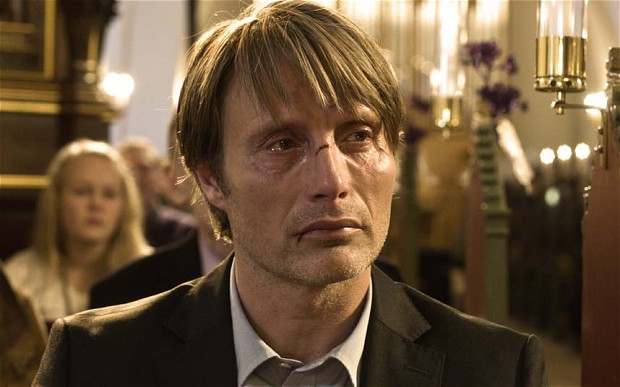
The Hunt/2012/Thomas Vinterberg/Denmark: 

Ideally, nothing should have been watched after the high of Holy Motors, but the greedy festival junkies we are, chucking a film as hyped as The Hunt would have been out of character. Going with the image of Scandinavian cinema, this one too had a cold and dark feel to it. A man, accused of a sex-offense by a kindergarten kid, faces the witch-hunt from a small hunting-crazy town of Denmark. The film gets heavier and intense as it proceeds, but in spite of all its finesse (in almost every department), it failed to impress me much. May be I was still in Holy Motors zone, or may be it worked on too predictable lines of persecution and silence – I found it quite a middling, safe attempt. The last section and the epilogue are terrific though. Good enough to redeem the depressing-frustrating middle.

Something in the Air/2012/Olivier Assayas/France:

Ghanta kuchh samajh nahin aaya. French version of ‘Hazaaron Khwahishein Aisi’. Set in 70′s France, featuring a group of students learning and unlearning the neo-communist movement. Bas itna hi samajh mein aaya. Rest of it was oppression-repression-dissolution-subaltern-minimalistic-bourgeoisie-mumbojumbovadapaav. Excellent production design, a couple of sex-scenes, and evocation of an era gone by were the only redeeming factors. I even stopped reading subtitles after the 1st hour and just spent time looking at the props and recreation of the 70′s France.

************************

To read Varun Grover’s blog, click here.

Going by ReviewGang‘s calculation, the average rating for Sachin Kundalkar’s Aiyyaa is a poor 4.5/10. But almost every reviewer mentioned it that Kundalkar explored many interesting things in the film which never came together. Also, everyone felt that it was too long. On twitter, the most common word used to describe the film was “bizzare”. That made me more curious to find out how “Gandha” became such a wakdaa. I still haven’t seen the film but surprisingly got a post in my inbox which was on similar lines. So over to Shvetal Vyas-Pare and her take on the film and its Marathi original Gandha.

– @cilemasnob

Aiyyaa is a difficult film to like. It can be easily dismissed as having no plot, dragging out one idea for too long and then jumping into a quick conclusion. The tone does not help either – it is neither entirely realistic nor entirely parodied. The actors seem to constantly shifting from subtle to over-the-top, which makes them irritating – both as characters and as actors. However, I’ve been thinking about the film. It hasn’t grown on me, nor will I claim that it is actually a wonderful film that has been misunderstood. I want to use this blog post to think through certain things that I found interesting about the film, and about my reactions to it.

The premise of any story can be outrageous, and it is up to individual viewers whether the story resonates with them or not. Logically, it is absurd to suppose that a wife would not know her husband in a different get-up (Rab Ne Bana Di Jodi) or that a man could pass off a concentration camp as a massive game (Life is Beautiful). I’ve heard people tear the former apart while waxing eloquent about the latter. I’m sure there are also people out there who love Rab Ne… and don’t mind its logical inconsistency. I’m not saying that the two films are at par with each other. The point I am trying to make is that both films accept seemingly outrageous premises as givens and go ahead with their narratives. As I strongly feel that films/books should be allowed to tell the stories they want to rather than those that seem more logical or natural to any individual viewer/reader, an outrageous premise rarely bothers me.

Aiyyaa too has a premise that seems illogical, that of a woman who is attracted to the way a man smells. Come to think of it, smell is difficult to convey on film. You have to rely on familiarity and on audience experience. Like all human experiences, smell is subjective. It is difficult to explain the power of the smell of the mud after the first rains in India to someone who’s never smelt it. It is easier to make films about colour, about touch, about sensation and Aiyyaa too brings in colours – yellow for Rani and blue for Prithvi – and uses them to play around with notions of smell. Perhaps they thought that colours would make smells more tangible. Aiyyaa also reminds one of the odour that one so completely takes for granted in India, showing public toilets and garbage lying open on the streets. Who in India has not scrunched one’s nose, and then passed on?

The other major motif of the film, intertwined with smell, is desire. Meenakshi desires Surya, and is somehow convinced that he is not the monster that everyone else thinks him to be. There is no logical reason behind this belief, and part of the disconnect you feel with her character is because of how illogical her behaviour is. Yet it is good to see the woman rather than the man as the desiring subject in Bollywood cinema, though of late this has become more common. Dreamum Wakeupum (and Ijjajat papad!) are pure genius on the part of Amitabh Bhattacharya. All those thrusting, pumping, heaving dance steps in all those Hindi films over the ages – they were all metaphorically sexual, and this song dispenses with the metaphor.

Another major problem area in the film is the ‘falling in love’ narrative. Meenakshi tries to speak to Surya often, but never actually gets to do so. Until one miraculous evening, wherein they talk, the mystery about him is solved, they confess their feelings, and get engaged to one another, all in the space of one evening. This is again something that induces impatience – how illogical can you get? Behind this impatience however is the assumption that other things that are shown in more realistic narratives are more ‘natural’, whereas they just have become more sedimented in our minds as ways of being in love, ways of performing romance.

Aiyyaa juxtaposes desire, as represented through smell, and the stifling nature of social life in India, as indicated through the odour of the garbage that haunts Meenakshi even in her dreams. The film finds some subtle moments here and there – walking around the clean, rose-garden terrace of a man whom Meenakshi does not find attractive does nothing for her. This garden of red roses must presumably smell great, and brings in notions of conventional romance, but she is entranced neither by the smell nor the appearance of this ideal space because this is not the man for her.

The Marathi original, Gandha, is actually a combination of 3 different stories, each dealing with the motif of smell, and the story that goes on to become Aiyyaa is crisper, told in half an hour. To stretch out the narrative, Aiyyaa adds a younger brother and a rival suitor to the mix, as well as making the boy Tamilian and putting Meenakshi through the task of learning a new language and a different culture. Not just that, the friend of the heroine becomes more bizarre.As ideas, all of them are interesting, though some translate well and some not so well.

Gandha is not as quirky as Aiyyaa and captures its particular Marathi milieu well. In many ways, it is less imaginative than Aiyyaa, perhaps because it is under less pressure in terms of time, and so is more straightforward in its storytelling. Amruta Subhash does an excellent job of conveying the vulnerability as well as the charm of the protagonist. Rani Mukherjee does a good job, but it is easier to understand and relate to Veena in Gandha than to Meenakshi in Aiyyaa.

What seems a small change in the script from the Marathi to the Hindi version brings to light one of the biggest silences of Bollywood cinema. In both versions, the hero is a painter by day and works at an incense factory by night. However, in the Marathi version he had done a diploma in repairing refrigerators and works at the factory to make money and pay for his art education. In the Hindi version the hero is the owner of the factory, left to him by his father, and works alongside his employees. A Bollywood hero cannot be a simple employee, he has to at least own the factory. After all, how could he think about romance otherwise? As if those who repair refrigerators do not have love stories of their own.

Ultimately, my reaction to Aiyyaa is as much about my expectations as about the film itself. I like films to stick to tones and genres. The realistic feel of a college library – the old computers, the library membership cards, the dust on the books – was good. The presence of an overtly sexualised librarian, however, was jarring – such a person would never exist in such a space. But do films have to necessarily be either realistic, or fantasy as accepted by Bollywood convention (i.e. either melodrama or a fantasy of excess, a la Karan Johar or Salman Khan), or totally bizarre? Can a film not be a little bit of each?

The attempt to make a film that is a little bit of each is jarring, but I think that it is a brave attempt. It would not have been that difficult to make Aiyyaa a bit more like Vicky Donor and English Vinglish: emphasise the Marathi – Tamil aspects of both families, show them as more lovable and less quirky, remove the bizarre, give the hero-heroine more conversations, show the heroine as the underdog who finally convinces her family that she has the right to choose her own life partner and so on. I do not think Anurag Kashyap and co. are stupid enough to have not thought of this alternative, safer option. It would have been an easier option to sell too, and that is often a big criterion that drives the way films get made. While I do not quite like the final product thatAiyyaa is, I do admire the fact that they made it their way – bizarre, quirky and idiosyncratic.

(PS – You can watch Gandha with English subtitles here)

(PS – A different version of the write-up was first posted on Shvetal Vyas-Pare’s blog)

Barfi! – Nostalgia for the Light

Posted: September 14, 2012 by moifightclub in cinema, movie reviews, reviews
Tags: , ,

Here’s a game to start with. If i say “nostalgia” and ask you to give 10 words that comes to mind, there are very high chances that if you have grown up in 70s or 80s, or even early 90s, you will find all those ten elements in Barfi! What else is a “radio”? Just another symbol for that old world charm. No wonder it has inspired the name for the lead character as well the title of the film. Quaint is the keyword in this postcard written by Anurag Basu and posted from a small hill town post box.

It’s kind of love triangle between Barfi (Ranbir Kapoor), Shruti (Illeana DÇruz) and Jhilmil (Priyanka Chopra). He can’t speak. She doesn’t speak. And the third one who is unlike the other two – can speak, hear and think, she doesn’t have the guts. So there are hardly any dialogues between the three and this is where Basu shines as a director. He creates simple and gorgeous moments between the lead characters and his camera captures it by dipping every frame in nostalgia. If i am not wrong, he might have started the film that way too. The film opens with a text plate where Basu dedicates the film to his father. Ileana’s look and get up is based on his Mother (see the making of the film where he talks about it). And everything else somehow reminds you that Basu is trying to go back to his roots. As the film opens, it tries to soak you in the same mood – old man, phone call, flashback, voice over, train journey (by the window seat), curvy roads, hill station, tunnel, rain, green fields, paper toys. Aha, you know the drift. And it continues that way with soap bubbles, fireflies and more. Ten down?

Basu’s film is set in a world of disarming charm where naivety wins over everything, where love is all you need. And it’s so hard to believe it all in today’s cynical and materialistic world. Would you? I don’t know. Just the other day i was still trying to figure out the madness for the new IPhone. Well, art and design is fine but it doesn’t come cheap. And it reminded me of an incident during the Doha Tribeca Film Fest. They had a segment for short films for Under-13. The film which won the first prize left me pondering. It was about a kid who gets a new expensive mobile phone and then he starts behaving like a phone. He needs to be charged, needs the signals and his body behaves like the keypad which can be operated. All treated in a comic tone but i was left wondering if the kid’s world really revolved around a mobile phone. This is the only story he could think of? Life as a mobile phone? May be the black humour of the kid’s real life was better than the film. May be i am just old fashioned? May be we were different as kids. May be every generation says the same. But one thing is for sure – we were never told to chase money and materials. May be that’s why it all feels weird now. And may be that’s why Basu’s characters had to be “challenged” in this era to not chase the “money and materials”. And the one who chases it, she….well, that would be a spoiler.

I never bothered to watch Basu’s last film Kites which was a big flop and it never looked like his film to start with. Even when he plagiarised entire plot in his previous films, they were always visually strong. Parts of Barfi is inspired too but Basu is in top form with this one. Almost everything is pitch perfect in direction except two issues – the thriller element in the film looked so weird and forced. It just doesn’t gel. And what’s with the crisscross flashback narrative? Sometimes even flashback in a flashback. It became confusing at so many points and i was wondering if Barfi! is the Inception of flashbacks. Wouldn’t a simpler narrative be better? Aha, blame it again on nostalgia – flashback! And characters talking to the camera with their names coming on screen. Why? No clue.

But extra points to the film for not trying hard to work on your tear glands to get the sympathy vote. Please note, Mister Bhansali.

As the trailers of the film came out, we all thought that Priyanka is going to kill the film. If she is controlled, she can do magic. Remember Kaminey? But mostly she goes over the top and is melodramatic. She proved everyone wrong and how! It takes some time to adjust to the fact that it’s Priyanka Chopra playing Jhilmil but once you do that, it’s hard to believe the way she portrays the character. Not a single false note. And Ranbir Kapoor, what’s next? He is born to act. I don’t have too many adjectives to define his natural talent to get into the skin of every character that he portrays. Supporting characters are well cast and some of them ooze so much warmth even though they don’t have a single dialogue.

Go with little patience and watch it. Barfi! falters on some uneven tracks too but it’s a rare film which will melt your cynicism. At least for two hours.

Or, may be, it’s just good old nostalgia. Those flip-flop green window panels of old Calcutta always does it for me.

Or, may be, Barfi! is the answer to that Johnny Cash song “Where did we go right?”. If you haven’t heard the song, click the play button and enjoy.

And if you want the lyrics of the song to sing along, click here.

– Post by @CilemaSnob