


Rituparno Ghosh’s 2006 film Dosar starts with an accident. A man and a woman in a car. She gets killed. He survives. His wife, and we – the audience, get to know that the man had gone out with his mistress. While returning back after spending the weekend together, they met with a fatal accident.
It’s a strange scenario for the couple. At the moment when the wife gets to know that her husband has survived a fatal accident, she also figures out that he was cheating on her. And at time when the husband doesn’t want to face the wife, he is severely injured, completely bed-ridden, and desperately needs her help for day to day basics. Now, what? How would they react? What would they do? Place yourself in the shoes of either of the characters, and you will realise what a daunting task it is to answer that question – now what?
Now, comes Rituparno Ghosh with his most powerful tool – conversation. It seems like the director puts his invisible camera there without disturbing the space between the husband and wife. In stark black and white, he captures them confronting the worst possible scenario in their relationship. With two other sub-plots in the film, these are essentially three man-woman stories set in different scenarios but with intersecting tracks. And Ghosh was a master at that. Give him a couple and he will give you conversation that will keep you easily hooked for two hours.
Remember, Raincoat? Another stunning work of his where ex-lovers meet to spend an afternoon together and fake their stories to make the other person believe that they are doing good and are happy. Another man-woman pair with an afternoon full on conversation. And another couple in a sub-plot to give a different perspective to a similar scenario. Interestingly, i saw the film in an afternoon show, and i felt like i was in the room with Mannu and Neeru, and when i came out of the theatre hall it was just “Before Sunset”. What felt like fly-on-the-wall direction is a mature, non-intrusive, deft and sensitive hand at work.
Ex-lovers met in Titli too. But there was a new twist in the tale – a terrific coming of age story of a young girl which starts with mother-daughter on the same side of the fence to soon becoming rivals in love. If you are used to closure or conclusive ending, Ghosh never gave that comfort. It was always about confronting it and have a conversation. Sometimes exploitative too, like it was in his heartfelt Bariwali, where a lonely middle-aged widow starts enjoying the company of a young charming filmmaker who comes to shoot a film at her old and sprawling house. Love has a habit of dying young, but rarely does it leave people so lonely, gloomy and hopeless in the woods. It was heartbreaking.
Chokher Bali, Antarmahal, Khela, Shob Charitro Kalpanik – you can see similar motifs in all his films. Man, Woman, and that conflicted space that needs a conversation. Antarmahal got mixed reviews when it released. But i think it is his bravest and most interesting film till date. The way he mixed religion, sexuality and humour, it’s a deadly cocktail, and i doubt anyone will even dare to think about it in today’s times. If you haven’t seen the film, just see the opening few minutes here (with english subs) – it’s sad, funny, and strangely, full of coital-conversation amidst the sound of a creaking bed.
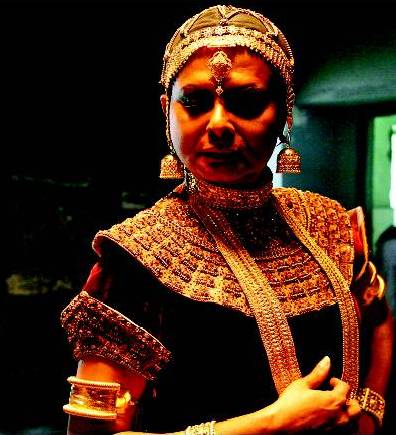 In the last few years, he shifted his focus more towards acting and gave mainstream space to characters of marginalised or alternate sexuality. Arekti Premer Golpo (Just Another Love Story), Memories In March and Chitrangada – all dealt with gender themes. Compared to his earlier films, these looked weak but he was making strong statements about sexual politics. And perhaps the only one who was doing it in mainstream media. Also it became difficult to separate the real and reel Rituparno. There were many rumors floating around but he never bothered. His attire changed drastically. If you looked at the pics in this post, you can see his extreme makeover – from middle class Bengali attire to flamboyant cross-dressing. He was aware of what people were talking about him and he openly discussed these issues too. What he always hated was the labeling – why only man or woman? Sex and gender – they are always not so simple what we are taught in school books. So we will leave it at that, the way he wanted – not man, or woman, just Rituparno.

 F.i.g.h.t C.l.u.b