KAUFMAN - "Or cramming in sex, or car chases, or guns. Or characters learning profound life lessons. Or characters growing or characters changing or characters learning to like each other or characters overcoming obstacles to succeed in the end. Y'know ? Movie shit."
Kaufman is sweating like crazy now. Valerie is quiet for a moment - from "Adaptation".
We are all about CINEMA. That movie shit.
NOTHING is sacred.
NOBODY is spared.
Because we talk about films, dammit.
Not your sex life.
Films, fests, unsung, indies, undiscovered - all that and some fun. If you have dope on anything related to cinema or you would like to share something, do write to us at moifightclub@gmail.com.
The views, opinions, reviews, articles, or positions, expressed by the authors and those providing comments are theirs alone, and do not necessarily reflect the views, opinions, positions or strategies of ANY OF THE EMPLOYERS, FRIENDS, RELATIVES, PR agencies, Production houses, Media group and such third parties associated with the authors. The latter make no representations as to accuracy, completeness, currentness, suitability, or validity of any information on this site and will not be liable for any errors, omissions, or delays in this information or any losses, injuries, or damages arising from its display or use.
In short, if you have an issue with us or any post we've written, write to us at moifightclub@gmail.com
Nagesh-who-went-cuckoo with his last few films, is ready with a new film titled Mod. Starring Ayesha Takia and Rannvijay Singh in the lead, Mod is an official remake of the Taiwanese film Keeping Watch. Check out the trailer…
But why is the text font and the background so tacky? Looks like some intern made it on MS word and paint. And Ayesh Takia, can you please come back to movies. Such a natural actor with a pleasing screen presence.
Here’s the official synopsis…
Mod is a heartfelt, emotional love story between two completely mismatched people.
Aranya, a “full-of-life” 25 yr old, lives in the sleepy and idyllic hill station, Ganga. The little town is the home of many colourful characters – Ashok Mahadeo, Aranya’s whacky father who is the head of the local fan club of Kishore Kumar, the fiery Gayatri Garg, “GG”, her aunt, friend, and confidant, who runs a …restaurant and is a mother figure to Aranya, chubby Gangaram, the local shopkeeper who harbors feelings for Aranya and Ashok’s music band, the ever present Kishore Bhakts.
Aranya’s mother left to pursue bigger dreams in the city when Aranya was a little girl and both father and daughter hope that one day she will return. They wait dutifully everyday to see if the lone train that passes by their house will bring her back. Aranya runs a watch repair store, a legacy handed down by her mother to support her father and herself.
One day a total stranger, Andy, lands up at her doorstep to have his watch fixed. He is painfully shy, but keeps returning day after day to have his water logged watch repaired. As payment he leaves a 100 rupee note in the form of an origami swan. Aranya slowly warms up to this quirky stranger and through a series of meetings and against all odds they fall in love.
But who is Andy? Where is he from? And what is his past?
As Aranya discovers the truth about Andy, the film heads to an exciting and emotional climax in the strongest tradition of great love stories.
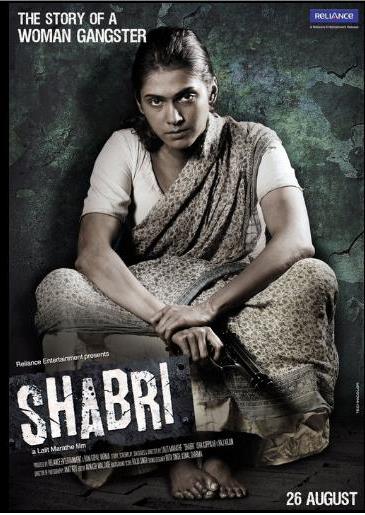
Lalit Marathe’s debut feature Shabri is finally going to release on 26th August. Starring Eesha Koppikhar, and produced by Ram Gopal Varma, the film was made long back, and was ready for release since last 2-3 years. But for some weird reasons it never manage to reach the theatres.
Lalit also directed the tv serial Rajuben, which seems to be similar to Shabri, at least the basic story. Haven’t seen Rajuben, so can’t comment much.
At a time when RGV’s films are all about horny camera movements and ear blasting sound, Shabri looks like it’s back to the old school of story telling. Do check it out.
And here’s the director’s note on the film…bit surprising…
DIRECTOR’S NOTE
Gangster films do not interest me including the ones Mr. Ramgopal Varma has made. I have never known a gangster in my life, man or woman. But the process of a tormented mind resorting to violence, the moral choices made in taking the first step on the path of no return have always fascinated me.
The intensity, the concentration of intent in these choices can be scorching. But if we see a ‘to be’ gangster in a room making that choice, withdraw and include his neighbour bathing her child, step further away to see a man selling his wares on the street beyond the wall, traffic piling up, kids going to school and so forth, the magnitude of that choice can be devastating. Shabri is an effort to portray a woman next door who has made this choice and where that choice leads her.
Shabri supports a family by working in a flour mill in a slum. She becomes this girl with a gun in a man’s world and ends up threatening the biggest corridors of power in the Matka gambling underworld of Mumbai. Shabri’s quest in the film is similar to a resourceful working woman rising to challenge a superior. Despite her daily struggle to survive and keep her family afloat deep within all that Shabri has desperately wanted to do is to stand up and be counted. And this is the biggest trigger for the fateful choice she makes.
Most achievements are directly proportionate to the ferocity of hunger and the finality of the pangs. Shabri feels raw hunger. She is driven as much by the passion for vengeance as the terrible desire to live her life her own way.
When inspired nothing in the world can stop what must rise. When everything is at stake there is nothing to lose. Shabri is an underdog whose stubbornness to have her way against all odds will touch a chord in all those who dream to soar.
Pratim D. Gupta is a full-time film critic with The Telegraph and a part-time screenwriter. Well, part-time till his film gets made. Based in Kolkata, he closely tracks Bengali film industry’s every intelluctual, pseudo-intelluctual and aantel (ask your bong friend. There is no english word for this one) move. So where does Aparna Sen’s latest film Iti Mrinalini fits in? Scroll down and read on…
Disclaimer: I don’t know why I am writing this piece. In an industry where scratching backs is the only way forward and where every film is a classic and every performance award-winning, one online rant really matters very little. Unlike Bollywood where good films and bad films, moneymaking films and praiseworthy films all have their own space, Bengali cinema is going through this incredible phase where you have to laud at everything and anything up there on screen. If you do not comply, you are against the growth and prosperity of Bengali cinema. “How dare you? Just because your script hasn’t got funding, you are badmouthing other films!” Honestly, I can’t help myself. I refuse to be party to this mogojdholai (brainwashing). So you can have your own conspiracy theories but I have my own views and I will stick by them. And no I didn’t like Iti Mrinalini. You too have a choice — close the window at this stage or read on.
What goes wrong with Aparna Sen? She makes a brilliant film and follows it up with something so ordinary, you start wondering how could she have possibly made that earlier great movie? One of the frequently asked questions in Bengali movie circles that has refused to die: Did Ray ghost direct 36 Chowringhee Lane? You watch Mr & Mrs Iyer, Paromita’r Ek Din and The Japanese Wife and you know the answer. You watch Yuganto, Sati and 15 Park Avenue and you are not so sure about your answer.
The problem is not just with inconsistency. There are many great directors whose great films are punctuated with not-so-great films. It is the sheer ordinariness of some of Aparna Sen’s films that really complicates the situation. You look at every nook and corner of the frame hoping to spot that Rina-di touch and your disappointment mounts by the minute till the time you want to throw up your hands and leave the theatre.
Sen, along with Rituparno Ghosh, has been the so-called custodian of the modern Bengali woman on celluloid. Her fantastic domestic femmefatales are independent, self-sufficient beings who manage to emerge on top of every challenge that men (and society) have thrown at them. From Paroma to Paromita. Sen herself in the 1970s was this ultimate epitome of everything that was new and clutterbreaking about the Bengali woman ultimately leading to her print revolution, as editor of Sananda.
Mrinalini is a wimp! A namby-pamby, a maudlin… such a waste of human life, that I do not want to watch her wet — strictly tears — life on screen for two hours. I do not care which bits of that life are fictional and which bits are from Sen’s own life, the life is dull, boring and flaccid. She fell in love with a boy in college who was a Naxal and got shot down, she then fell for her director who had a wife and two kids and was never really interested to set up a home with his kept and their daughter, and then she developed feelings for a man who has a very sick wife at home and yet is always there by her side. As is evident, it’s always the men who call the shots in Mrinalini’s life, who is just a ping-pong ball in search of the net.
And this insipid biopic is narrated in the most archaic way possible — an unfinished letter, a bottle full of sleeping pills and lots and lots of glycerine! You get the drift?
The only mildly interesting bit of the film is Mrinalini’s daughter with her director lover Sid who she gives away to her Canada-based brother and sister-in-law but ensures that the girl spends the summer vacation with Pishi and Kaku. It is a unique relationship that these five people share where terms of endearment and lines of blood get beautifully blurred. But then the most important scene of the film, when the young girl Sohini reveals to Mrinalini that she already knows that Pishi is her real mother and Kaku her real father, is so lazily written and treated so matter-of-factly that the emotional fulcrum is not tampered. How can Mrinalini’s reaction line be: “When did this happen?” As if the date and time of the revelation is more important to her — clearly written with the audience in mind — than the fact that her daughter knows she is her daughter. Compare this scene with the heart-wrenching revelation scene between Irrfan and Kal Penn in the car in The Namesake and you know where the difference lies.
The script has no structure or build-up of any sort and have scenes that shouldn’t have ever made it to the screen. Towards the climax we have a scene between Mrinalini and her young director love Imtiaz which goes something like this… “Have the tea Imtiaz.” “I didn’t ask for tea.” “Now that the tea is here, have the tea.” “No.” “Will you have coffee then?” “I can have coffee. But black coffee.” After she has ordered the black coffee for him, she asks: “Have you studied in America?” “Why because I asked for black coffee?” “Something like that.”
And then the whole film is explained in one scene. “There are different types of love Minu,” says one of the men in her life. Ok alright, we get it! But Rina-di, have you seen Frida? That film conquered what you set out to achieve. Yes, it’s a biopic of a real person and obviously a far more fascinating person that Mrinalini but it has the same plot points comprising Frida Kahlo and the men in her life. And this feels really silly on my part to tell this to someone like you but just by giving voice to WHAT THE WOMAN WANTS, Frida becomes so bloody awesome. When her husband Diego Rivera learns that Frida has been unfaithful to him, he says: “You’ve broken my heart, Frida.” She gives it back to him: “It hurts doesn’t it? But why? It was just a fuck, like a handshake.” Mrinalini sadly has no venom or vermin.
The Rituparno effect on Aparna is quite telling in this film. The whole analogy to Karna-Kunti Sambad and Raktakarabi bears a strong whiff of Ghosh and company in the way literature is blended into the lives of the characters. Throughout Iti Mrinalini there is an attempt to attach importance to a subject which is obviously not that important. It’s not true to its genre, it tries to be An Aparna Sen film. The political events streaming in the background (Vishal Bhardwaj tried the same in 7 Khoon Maaf) and the baffling ending are the biggest examples. It wishes to leave you dumbfounded, just like the ending of 15 Park Avenue. It’s that last shot in the arm to elevate the film to something substantial but when it backfires – like it does here – it really does more harm to the film.
The only masterstroke of Iti Mrinalini is how Konkona Sen Sharma is asked to perform like Aparna Sen and not the other way round. They both play Mrinalini and Konkona has the lengthier role but yet she tries to ape Aparna. Because the director understands that the better actor should be given the difficult task. And while Konkona cannot possibly start looking like a young Aparna, her body language and especially her speech is ditto her real-life mother. Close your eyes in the theatres and you will know what an outstanding job Konkona has done in Iti Mrinalini.
All the other actors barring Aparna herself — these filmmakers who act really need someone else directing them, as was evident in Ranjana Aami Ar Ashbo Naa recently — are good. The deadly combo of Rajat Kapoor on screen and Anjan Dutt in the dubbing studio makes Sid such a believable character. Koushik Sen is so effective in the few scenes he has. Saheb impresses in his little cameo. Priyanshu has great presence but is saddled with such a strange character, he can only do that much. The late Somak Mukherjee shot Iti Mrinalini with a lot of pizzazz, especially that shot on the beach where the two women are chatting and the camera curls on the young girl sleeping on top of Rajat. Wish there was at least a hint of period detailing, though.
Iti Mrinalini is really a very weak and disappointing effort from Aparna Sen. But sometimes there comes a performance that becomes so much bigger than the movie it comes in that the ordinariness of the films takes a back seat. Konkona has always reserved her best acts for her mother’s films. And while her mother’s films have ranged from brilliant to bad, she has shone in all of them. Personally, I found this performance to be her best till date. Here neither did she have the superficial condiments embellishing a Mrs Iyer nor the free mind of a schizophrenic patient like Meethi. It’s just one of the best actresses of our countries at the top of her game.
But Rina-di, don’t you think Koko deserves better? And maybe we too?



 F.i.g.h.t C.l.u.b