Archive for the ‘Awards’ Category

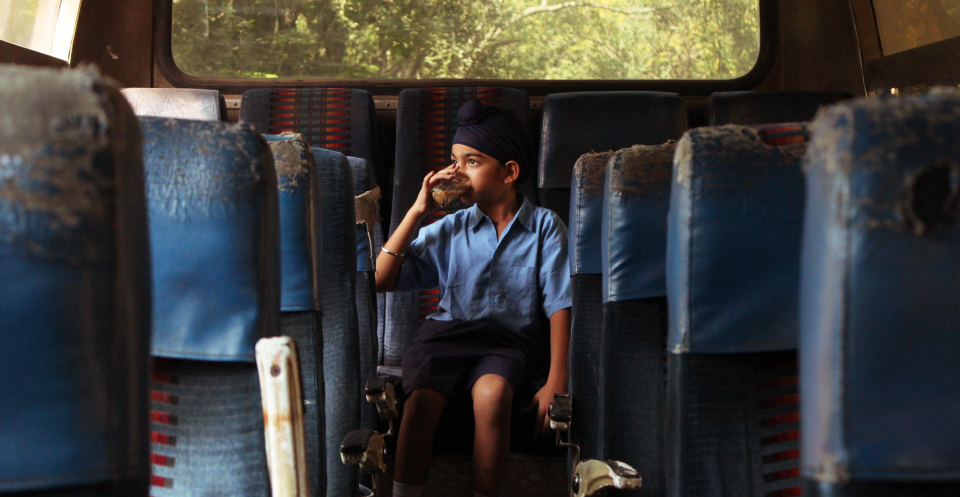
2015 seems to have started on a great note for desi indies. After Umrika’s win at Sundance, Nagesh Kukunoor’s film Dhanak bagged top awards at the 65th Berlin Film Festival.

The film was competing in Generation Kplus category. In this section, the jury members are no older than those of the audience. Eleven children and seven teens award the best films with Crystal Bears. Special Mentions are given for outstanding achievements. Two international juries present further prizes in the Generation Kplus and Generation 14plus competition.

Dhanak has bagged two awards – In the the Children’s Jury, it has been given a “Special Mention” – This year, we chose a colorful, touching and humorous film. The story and the performances of the young protagonists impressed us deeply.

And in the International Jury, it has bagged the Grand Prix of the Generation Kplus for the best feature-length film, endowed with € 7,500 by the Deutsches Kinderhilfswerk:

This dynamically-directed film delivers joy and heartbreak in equal measure – the young brother and sister at its heart and the unbreakable love between them are irresistible. As we journey across the country with these two young people, we become deeply invested in their quirky “against all odds” quest. We were constantly surprised by the twists and turns in their journey, and the unusual, eccentric characters that awaits them at each and every juncture! Filled with color, magic, music, spontaneity and a plenty of emotion, this film lives up to its name and delivers a celebration of life to savor long after the end credits roll!

Directed by Nagesh Kukunoor, the film stars child actors Hetal Gada and Krrish Chhabria in the lead. It’s produced by Manish Mundra, Elahe Hiptoola and Kukunoor.

The film is about an eight-year-old blind boy whose 10-year-old sister promises him that he will get his vision back before he turns 9. The film follows the duo on a magical journey through the sand dunes of Rajasthan.

Last year, Avinash Arun’s Killa had won the Crystal Bear in the same category.
movies-bafta-stephen-fry-with-trophies

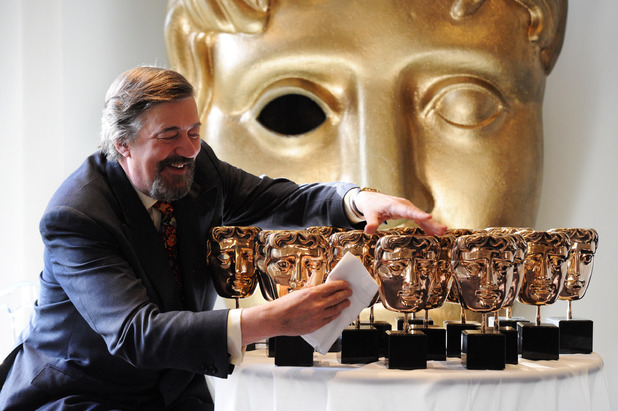
After numerous fest rounds, Ritesh Batra’s critically and commercially acclaimed debut feature, The Lunchbox, is still making news. And for all the right reasons. This time, the film has bagged a BAFTA (British Academy of Film and Television Arts) nomination. The film is nominated in the Foreign Language Film Category (or Film Not in the English Language). It’s a tough category as the other four films are much acclaimed too.

Film Not in the English Language

Ida
Leviathan
The Lunchbox
Trash
Two Days, One Night

So, except the FFI, we guess everyone saw the potential of the film.

Congrats to the team Lunchbox! Click here to see the full BAFTA nomination list.

And if you want to read the script of “The Lunchbox”, click here.

So we read this piece on Quartz India – “A Bollywood-backed Twitter campaign saved the Mumbai Film Festival—but crushed its spirit”. Friends told us it’s a well respected website. Yet to figure out why. (Not that we trust Columbia Journalism grads on desi film industry, most of the times they have no clue about bollywood or indie-bhindies) As we were joking about it, we thought let’s not respond to it till the closing ceremony. Aamir, Madhuri, Anushka, Parineeti, Esha…OMG! So many stars at MAMI! We have never seen them before at Mumbai Film Festival. They killed the indie spirit and how. Look at the winners. Bollywood must not have heard about these filmmakers and they crushed them by giving them awards – Avinash Arun (Killa), Bikash Mishra (Chauranga) and Chaitanya Tamhane (Court). And these 3 films bagged top 6 awards in International Competition and India Gold section. Interestingly, all three are based in Mumbai. City’s fest, city’s filmmakers, what an achievement! MAMI never had a better year than this. If only some people knew what they are writing about.

Moving on, here’s our day wrap of last 2 days

’71

A Soldier is abandoned accidentally by his unit in the middle of a riot in Belfast. I must confess I was at loss quite a few times thanks to the heavy North Irish accent, but this edge of the seat thriller-drama has enough moments to keep you hooked on. The riot sequence and the chase alone itself is worth the watch. Editing, Cinematography, Production Design, Look and feel – all top notch in this gritty film. One can feel the pain of the wound being stitched, the weight of the stone being thrown and the deafening screech after an unexpected bomb blast. Watch it.

Court

This film deserves every accolade it has got abroad. Minimal with pitch perfect detailing, long takes & wide shots, performances that seem natural and unrehearsed, a dab of social & political commentary every now and then, and a realistic depiction of a Kafkaesque trial – it at times ceases to be a film and seems like life unfolding in front of your eyes. Easily one of the top films at MFF this year. Do not miss this for anything.

@nagrathnam

Theeb

This is as unpretentious and straightforward a film can be. And that’s where lies its joy. A young Jordanian boy is left alone to fend for himself in bandit territory with the bandit that killed his brother. The bandit becomes his protector and the boy needs him to reach safety. Its not the barren terrain alone, a terrain from whose womb few films emerge but an entire world that opens up to us simply by the choices the characters make in this film. If you like films as an observer and seeker of experience, then this is well worth it.

Clouds of Sils Maria

Literary world threatens to envelope the real and the real world reflects the literary one, shadowing each other as the film explores the nature of time and age. Oblique with a lot of subtext, Clouds of Sils Maria is a meta referential guide to an aging actor’s work and life experience as we explore her inner world and art through her explorations of the character she is playing. Absorbing and visually beautiful, the end is mystifying but Juliette Binoche’s glorious performance makes it more than worth the watch even as a the point in its entirety maybe subject to subjective audience interpretation or simply lost. Almost meta referential of tha film again!

Mission Rape – A Tool Of War (Documentary)

Disturbing even at its short length of an hour. The documentary talks about the mass rapes that were used to perpetrate horror in Bosnia-Herzegovinian conflict during the early nineties. Victims and their families fighting for justice speak their stories and how justice has been denied to them. A stark image of the hegemony of patriarchy and the politics of war stares in front of us as we despair at the continuing inhumanity of the world. There is no attempt to dramatise events or manipulate the audience, facts are laid out bare and footage used matter-of-factly. Its short and not as incisive or comprehensive as it could be, but its honest and dignified, and therein lies its worth.

Girlhood

 Is it me or was there a major number of women-centric films this year at MAMI?In any case, its a cause for celebration and I did with Girlhood. In fact, what better film than that! Its a journey of an African teenage girl, bred and brought up in a steeply patriarchal culture finding her independence. Not only the thrift of storytelling and the simplicity of narration but the wealth of detailing makes this not only an important coming-of-age film, but a feminist film. Blue as the primary colour in the scheme, girls finding their freedom in acting like boys, the need for male approval, the male gaze and so on and on, the script explores each one of these very important aspects of influence in the shaping of a girl into a woman. A must watch!

Coffee Bloom

An interesting film about coming to terms with the past…Set in lush Coorg that is filmed with a lot of love, it is a the story of Dev, a troubled young man who is trying hard to gather his life torn apart by loss of his childhood home and his love. Love, loss, betrayal with spirituality on the fringes are some of the themes that inform the plot-driven narrative with able support from the lead actors. The screenplay is tight and engaging, the unfolding or rather undoing of the characters and their coming together quite convincing. A minor grouse, however, were the dialogues or maybe it was the way some of them were delivered, that sounded quite banal. An assured debut.

Demons

An adaptation of Dostoevsky’s novel by the same name, it is an ambitious film that tries hard to embody all of Dostoevsky’s ideas questioning nihilism, utopianism, spirituality and the human condition. Unfortunately, it fails to portray the complexity of these ideas, leave alone present a picture of 19th century Russia in all its multifarious-ness. The narrative is non-linear, something that adds a complex physicality to the film but does not supply the necessary depth or breadth, leave alone create any darkness in mood. Demons is supposed to be an intense literary work, both exploring the interiority of its characters as possessed by an inexplicable evil that is part of human belief system as well as the social conditions of Russia and its politics of the time. The film, despite its three hour long running time does little justice to the dark world of Dostoevsky or the zeitgeist of Russia, confusing hyperventilating for intensity and substituting CG work for surrealism.

–  @Fatema

The Tree (Drevo)

In the 15th century, a deadly tradition began in the Balkans, which were then under Turkish rule. Krvna Osveta is still practiced in Albania today. But that is not the story of The Tree, though it does flutter in the backdrop. Instead, in three sections, we see captivity (or, as the director prefers to say, “entrapment”) of three kinds. The story is also about power; about struggling against power; about the various shades of power — personal, political, emotional and familial. Intimately shot and powerfully acted against a spare landscape in three main colours, this film will enter your mind and haunt you endlessly.

Slovenia makes only five to ten films a year — and the director, Sonja Prosenc, who graced the screening, informed us that two of the three remarkable leads were amateurs. In such a spare landscape, it is even more remarkable when a director makes such a stunning debut.

The Big Journey

Perhaps the best movies about journeys are those that are not about the journey at all. A devout, French Muslim coaxes his reluctant son to drive him all the way to Mecca — a taxing route spanning 3000 miles. But there are no sights on the way, even though the son would like to stop for some of them. Instead, we enter the minds of the protagonists and travel through their maze of differences — due to a significant distance in their ages; due to their belonging to different times; due to their having different beliefs about religion, and right and wrong.

Their clashes are the age-old clashes of the conservative and the modern; the devout and the casual believer; the old and the young. There are some regular road movie tropes thrown in — such as trouble at customs; thieves and strange companions on the journey. But there is also some great detailing — especially in the last part where we meet travelling Arabs going to Mecca, replete with their customs, their prayers, their caravans.

As the father and son travel farther away from home, The Big Journey becomes all about bridging the distance between two minds and hearts.

Theeb

Are we a product of our environment? Or do we shape it? Theeb suggests the former. After all, who can shape the mighty desert? In Arabia in 1916, we see the cruel, unforgiving, death-giving desert produce children who see, and accept, cruelty as a routine ingredient of their lives. Of course, accepting cruelty with such equanimity requires fearlessness as well. And we see all of this in both Theebs — the protagonist, and the movie.

Mesmerisingly shot entirely on location against the ravishing landscape of Wadi Rum and Wadi Araba, and cast with non-professional actors from one of the last of Jordan’s nomadic Bedouin tribes to settle down, Theeb is often disturbing — for its hyper-realistic depiction of life in the desert, the desperation it induces, and the everyday violence accepted by the tribes. Often the movie crawls, just like the days in the desert, and it becomes difficult to watch on. But life is never easy; why should such a marvellous movie be?

@Shubhodeep

Court

Extremely real situations (too close to reality for people who keep tabs on what’s happening), real people and performances. In fact, a lot of people in the cast are not professional actors but they seem natural in front of the camera. Film unfolds mostly in a courtroom where a man (a Shahir) stands accused of abetting suicide of another man. Clearly it’s just an excuse by the state to put him behind bars. While the starting point of the film seem to be inspired from real events, it aims to take a broader view of the society and its functioning as well as its relationship with the state and its institutions by going into the lives of each of the main players.

@neeraja

A Girl Walks Home Alone At Night

I have to say I wasn’t terribly impressed by this, given the hype. Powered by a cool ‘vampire-in-a-veil’ conceit and hip soundtrack, it’s fun but doesn’t do anything very interesting thematically or in terms of storytelling, especially given the vast potential of its premise. Instead, it feels disappointingly content in just being an exercise in posturing and Sin-City style B&W visuals instead of being genuinely groundbreaking or revelatory. (Perhaps Tomas Alfredson and John Ajvide Lindqvist set the bar way too high a couple of years back.)

Clouds Of Sils Maria

Juliette Binoche and Kristen Stewart play off each other brilliantly in Clouds Of Sils Maria, Oliver Assayas’ sharp, brutally funny and super-meta movie with a heart of melancholy. The compelling dynamic and amazing chemistry between the actresses alone makes this a must-watch, even as all the nudging and winking occasionally gets a tad overbearing. The film is too diffuse to be devastating (or a modern companion-classic to Sunset Boulevard) but Clouds of Sils Maria is always compelling, and when Binoche bares her soul with such blazing poise and elegance, it’s hard not to be floored.

jahanbakshi

61st National Awards for 2013 – Complete List is here

Posted: April 16, 2014 by moifightclub in Awards
Tags:

The 61st National Film awards were announced today. Among the major winners are – Anand Gandhi’s Ship of Theseus as Best Feature Film, Hansal Mehta for Best Director (Shahid),  Rajkummar Rao for Best Actor (Shahid) which he shares with Suraj Venjaramoodu for Malayalam-film Perariyathavar. Geetanjali Thapa got Best Actress for Liar’s Dice and Rajeev Ravi for its cinematography. Sourabh Shukla bagged it for Best Supporting Actor (Jolly LLB), Amruta Subhash (Astu – Marathi) and Aida El-Kashif (Ship of Theseus) got it for Best Supporting Actress.

Fandry won the award for Best Debut Film of a Director (Nagraj Manjule). Award for Best Production Design went to Ashim Ahluwalia, Tabsheer Zutshi and Parichit Paralkar for Miss Lovely. The film also won the Special Jury award. Best Children’s Film Award was announced for Batul Mukhtiyar’s Kaphal.

In the non-feature category, Kamal Swaroop’s Rangbhoomi won the Best Film. Shubhashish Bhutiani’s Kush won the award for Best Promotional film. Nishtha Jain’s Gulabi Gang won the awards for Best Film on Social Issues and for Best Editing. Best Investigative Film went to Deepti Kakkar and Fahad Mustafa’s Powerless.

For Fiction films,  the 11-member jury was headed by noted directed Saeed Akhtar Mirza.

Here’s the complete list of winners

In what’s turning out to be a most heartening trend in recent years, yet another Indian film has made a name for itself at a prestigious International film festival. Avinash Arun’s directorial debut, the Marathi feature film Killa (The Fort) had its world premiere at the Berlin International Film Festival (better known as the Berlinale). The film was selected in the Generation Kplus competitive category and has won a Crystal Bear from the Children’s Jury and a Special Mention from the International Jury.

About the Prize

In the Generation Kplus section the jury members are no older than those of the audience. Eleven children and seven teens award the best films with Crystal Bears. Special Mentions are given for outstanding achievements. Two international juries present further prizes in the Generation Kplus and Generation 14plus competition.

The film received glowing reviews from both juries. The Children’s Jury, awarding the Crystal Bear said:

“This film convinced us in all respects: with his good camera work and the great actors, but also because of its incredibly beautiful nature images which blend perfectly with the music. This film made us all want to discover India.”

Interestingly, the film also received a Special Mention from the International Jury too:

“A beautifully photographed story about the challenges of being a boy. This film had wonderful pace and rhythm. Never reverting to clichés, the fresh performances left us feeling we were right there with the characters.”

About the Film

Coping with the recent death of his father, Chinu, 11- year old boy moves to a small Konkan town from a big city because of his mother’s job transfer. He finds it difficult to adjust to the new place and finds himself alienated and reluctant to open up to its people. Both Chinu and his mother grapple with their own individual struggles and anxieties in the new town. In the process, they emerge with newer experiences and as newer people, both healed and enriched.

Produced by Madhukar R Musle, Ajay G Rai, Alan McAlex under the banner, Jar Pictures and presented by M R Filmworks, the film was a part of NFDC Film Bazaar’s Work-in-Progress (WIP) Lab in 2013.

It stars Amruta Subhash, Archit Deodhar, Parth Bhalerao and Shrikant Yadav. Here are some stills from the film:

About the Director

Avinash Arun is a Director – Cinematographer from Maharashtra, India. Born in the textile town Solapur in 1985 in a middle class Maharashtrian family, he started assisting in FTII Diploma films at the age of 16. He eventually graduated in Cinematography from FTII in 2011. In 2010, his school project “The Light and Her Shadows” won him the cinematography award in Kodak film school Competition. His diploma film “Allah Is Great” was the official entry from India for Student Oscars. It also won several awards including the National award in 2012. Avinash has worked on “Kai Po Che!” (Berlinale Panorama section 2012), Deool (National Award winner 2011). Killa is his first feature film as director. He is also the cinematographer on this film.

Avinash has also shot Vasan Bala‘s short film ‘Geek Out’, which we’ve featured previously on this blog.

Watch the short below:

— Posted by @diaporesis

If you are regular reader of the blog, you probably know his name. Neeraj Ghaywan is part of the editorial team and is a regular contributor to the blog. So it’s a great news for all of us. Yay! Yay! Yay!

Sundance Institute and Mahindra today announced the winners of the 2014 Sundance Institute | Mahindra Global Filmmaking Award, in recognition and support of emerging independent filmmakers from around the world. The winning directors and projects are Hong Khaou, MONSOON from Vietnam/UK; Tobias Lindholm, A WAR from Denmark; Ashlee Page, ARCHIVE from Australia; and Neeraj Ghaywan, FLY AWAY SOLO from India.

– Each of the four winning filmmakers will receive a cash award of $10,000, attendance at the Sundance Film Festival for targeted industry and creative meetings, year-round mentoring from Institute staff and creative advisors, eligibility to participate in a Sundance Institute Lab, and ongoing creative and strategic support from Sundance Institute’s renowned Feature Film Program.

More details about the winners and their films –

Hong Khaou / MONSOON (Vietnam/UK): Two young men visit present day Vietnam, and are confronted with the war’s ramifications nearly forty years after its end.

Hong Khaou’s debut feature film Lilting premiered in World Cinema Competition at the 2014 Sundance Film Festival.  The film stars Ben Whishaw and Cheng Pei Pei. He is also the director of three short films, including Spring, which premiered at the 2011 Sundance Film Festival, and Summer, which premiered at the 2006 Berlinale. This year, Hong was named one of the Stars of Tomorrow by Screen International.

Tobias Lindholm / A WAR (Denmark):  The major of a Danish unit in Afghanistan faces the consequences of his actions in the aftermath of his most dangerous mission..

Tobias Lindholm graduated as a screenwriter from the National Film School of Denmark in 2007, and has collaborated with Thomas Vinterberg as co-writer on Submarino and Oscar nominee The Hunt. In 2010 he wrote and directed his first feature film in collaboration with Michael Noer, and in 2012 he wrote and directed the critical acclaimed A hijacking.

Ashlee Page / ARCHIVE (Australia): With the help of a supercomputer, an isolated 16-year-old girl grows plant life on Saturn’s moon Titan in the hope of one day restoring Earth’s ecosystems. But when an unexpected accident leads her to the moon’s surface, she discovers evidence that her mission is a lie and that her life is in danger.

Ashlee Page is an Australian writer and director. Her multi-award winning short The Kiss screened at Busan, Clermont-Ferrand, Palm Springs and Tribeca film festivals. Her most recent work is on the film compendium The Turning, adapted from the novel by Tim Winton. Archive is her first feature film.

Neeraj Ghaywan / FLY AWAY SOLO (India): Four lives intersect along the Ganges river: a lower-caste boy in a hopeless love, a daughter torn with guilt, a father sinking in greed, and a spirited kid craving a family, all yearning to escape the constrictions of a small-town.

Neeraj Ghaywan worked with Anurag Kashyap on the veteran director’s two-part opus Gangs of Wasseypur and as the second unit director on Ugly.  His short films as writer-director include Shor and The Epiphany. Shor won the grand jury prize at three International film festivals.

– The script of Fly Away Solo is been written by Varun Grover.

– You can watch Neeraj’s short films Shor and Epiphany here and here. And click here to read a post by him on the making of Shor.

– Also, Love.Love.Love, a short documentary directed by FTII student Sandhya Daisy Sundaram, won the Short Film Special Jury award for non-fiction at the ongoing Sundance Film Festival. More details here.

And who is surprised? Well, i guess esteemed members of the FFI jury who selected it as India’s entry for the Foreign Language Oscar and some other gyaani journalists who were fighting for it. This blog has always been critical about the film’s selection as a wrong choice. So i guess we are not surprised here at least.

So who all made it to the shortlist? The following 9 films.

– Belgium, “The Broken Circle Breakdown,” Felix van Groeningen, director;

– Bosnia and Herzegovina, “An Episode in the Life of an Iron Picker,” Danis Tanovic, director;

– Cambodia, “The Missing Picture,” Rithy Panh, director;

– Denmark, “The Hunt,” Thomas Vinterberg, director;

– Germany, “Two Lives,” Georg Maas, director;

– Hong Kong, “The Grandmaster,” Wong Kar-wai, director;

– Hungary, “The Notebook,” Janos Szasz, director;

– Italy, “The Great Beauty,” Paolo Sorrentino, director;

– Palestine, “Omar,” Hany Abu-Assad, director.

And do you guys spot a familiar name there? Danis Tanovic. He is one of the co-producers of The Lunchbox who had proudly said that if I could give my place to The Lunchbox, I would give it. His film was selected as Bosnian entry for the same.

I guess FFI Jury members and some of the journalists understand the Oscar game plan better than Oscar winner Tanovic.

To quote a report, “You just blew it,” he said about India’s chance at the Oscar.

The Academy of Motion Picture Arts and Sciences today announced that 10 live action short films will advance in the voting process for the 86th Academy Awards. 120 films  had qualified in the category.

And Shubhashish Bhutiani’s short film Kush is in the shortlist.

The film features Sonika Chopra, Shayaan Sameer and Anil Sharma in the lead. The film had also won the Orizzonti Award For The Best Short film at Venice Fest.
Kush

Synopsis
Inspired by a true story, Kush takes place in 1984, surrounding Indian Prime Minister Indira Gandhi’s assassination. Anti-Sikh riots erupt throughout the country. A teacher traveling back from a field trip with her class of 10-year-old students now struggles to protect Kush, the only Sikh student in the class, from the growing violence around him.

Trailer

– Film’s FB page is here.

– To know more about the filmmaker and its making, you can read the director’s interview here.

– The Short Films and Feature Animation Branch Reviewing Committee viewed all the eligible entries for the preliminary round of voting.  Now the Short Films and Feature Animation Branch members will select 3-5 nominees from among the 10 titles on the shortlist.

– The 86th Academy Awards nominations will be announced on Thursday, January 16, 2014.

– Here’s the complete list of Top 10 shortlisted film (in alphabetical order)

– “Aquel No Era Yo (That Wasn’t Me),” Esteban Crespo, director (Producciones Africanauan)

– “Avant Que De Tout Perdre (Just before Losing Everything),” Xavier Legrand, director, and Alexandre Gavras, producer (KG Productions)

– “Dva (Two),” Mickey Nedimovic, director, and Henner Besuch, director of photography (Filoufilm Dani Barsch)

– “Helium,” Anders Walter, director, and Kim Magnusson, producer (M & M Productions)

– “Kush,” Shubhashish Bhutiani, director (Red Carpet Moving Pictures)

– “Pitääkö Mun Kaikki Hoitaa? (Do I Have to Take Care of Everything?),” Selma Vilhunen, director, and Kirsikka Saari, screenwriter (Tuffi Films)

– “Record/Play,” Jesse Atlas, director, and Thom Fennessey, executive producer (Collaboration Factory)

– “Throat Song,” Miranda de Pencier, director (Northwood Productions)

– “Tiger Boy,” Gabriele Mainetti, director (Goon Films)

– “The Voorman Problem,” Mark Gill, director, and Baldwin Li, producer (Honlodge Productions)

qissa_01

Toronto International Film Festival has come to an end, and has announced the winners  for this year.

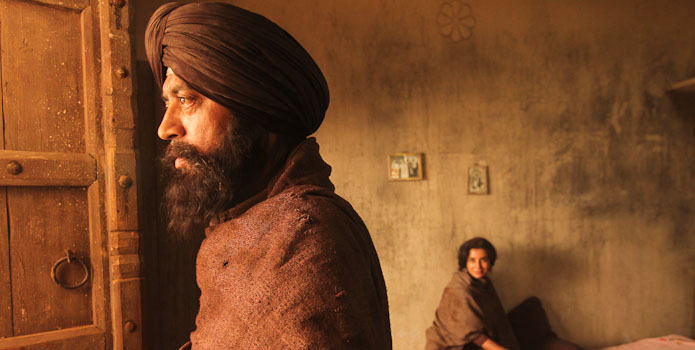
Here’s the good news – An Indian co-production, Anup Singh’s Qissa has bagged the NETPAC Award at this year’s fest. The film stars Irrfan Khan, Tillotama Shome, Rasika Dugal and Tisca Chopra. This Punjabi film is written by Anup Singh and Madhuja Mukherjee. And here’s what the official release says –

As selected by a jury from the Network for the Promotion of Asian Cinema, the NETPAC Award for World or International Asian Film Premiere goes to Anup Singh’s Qissa. Jury members include Jay Jeon (Korea), Intishal Al Timimi (Abu Dhabi) and Freddie Wong (Hong Kong). The jury remarked: “The NETPAC Award for the best Asian film at Festival 2013 goes to Qissa, directed by Anup Singh, for its sensitive portrayal of the issues of identity and displacement that affect people not only in India, but in all parts of the world and for brilliance of cinematic craft and the choice of metaphor that has been employed to tell a moving story that is bound to provoke thoughts, spark debate and give its viewers an intense experience.

TRAILER

TIFF NOTE & SYNOPSIS

Set amidst the ethnic cleansing and general chaos that accompanied India’s partition in 1947, this sweeping drama stars Irrfan Khan — also appearing at the Festival in The Lunchbox — as a Sikh attempting to forge a new life for his family while keeping their true identities a secret from their community.

Beautiful, timeless, and touching the deepest of human impulses, Qissa carries the spirit of a great folk tale. Although it’s set in a particular time and place — the Punjab region that straddles India and Pakistan in the years immediately after partition — it is both deeper and broader than any one moment. As this eerie family drama progresses, it cuts to the heart of eternal desires for honour, empathy, and love.

One of India’s best actors, Irrfan Khan (Life of Pi, Festival premiere The Lunchbox, and a feature guest in this year’s Mavericks programme) plays Umber Singh, a Sikh uprooted by the religious violence that came with partition in 1947. He and his family move to a safer locale, and it is here that the story takes a remarkable turn. Having already fathered daughters, Singh now wants a son. When his next child is born he celebrates his wish come true, but there is one problem: the baby is in fact a girl.

“Qissa” is originally an Arabic word meaning folk tale. Both the word and the idea migrated from the Gulf into the Punjab, still connected by the ancient oral narratives handed down in communal settings. Working within this tradition, director Anup Singh gives his film both the grand themes and elemental emotions of classic storytelling. As Umber’s daughter is raised as a boy, the characters are propelled with greater and greater urgency towards their inevitable fates.

Part of a new generation of directors with feet firmly planted in India and far beyond, Singh has delivered a film immediately accessible to anyone sensitive to the conflicts that drive classic stories: fear versus hubris, individual need versus social codes. Qissa is a Punjabi story for the whole world.

DIRECTOR

Anup Singh was born in Dar es Salaam, Tanzania. He has written film reviews for Sight & Sound, directed Indian television, and consulted for BBC Two. His features as director are The Name of a River (02) and Qissa (13).

CAST & CREW

Director: Anup Singh

Countries: Germany / India / Netherlands / France

Year: 2013

Language: Punjabi

Runtime: 109 minutes

Rating: 14A

Producer: Johannes Rexin, Bettina Brokemper

Production Co.: Heimatfilm, National Film Development Corporation of India, Augustus Film, Ciné-Sud Promotion

Principal Cast: Irrfan Khan, Tillotama Shome, Rasika Dugal, Tisca Chopra

Screenplay: Anup Singh, Madhuja Mukherjee

Cinematographer: Sebastian Edschmid

Editor: Bernd Euscher

Sound: Peter Flamman

Music: Béatrice Thiriet

Prod. Designer: Tim Pannen

Int. Sales Agent: The Match Factory

Screen Shot 2013-09-08 at 1.26.01 AM

The 70th Venice Film Festival has just concluded and the winners have been announced.

And here’s the good news – Indian filmmaker Shubhashish Bhutiani’s film Kush has won the Orizzonti Award For The Best Short film. This was the only desi entry at this edition of Venice fest.

Orizzonti section puts the spotlight on new trends in cinema. This year 31 films from all over the world were selected in this competitive section. The Orizzonti Jury was chaired by Paul Schrader and composed of Catherine Corsini, Leonardo Di Costanzo, Golshifteh Farahani, Frédéric Fonteyne, Kseniya Rappoport and Amr Waked. after screening the 31 films in competition has decided to award:

The film features Sonika Chopra, Shayaan Sameer and Anil Sharma in the lead.
Kush

Synopsis
Inspired by a true story, Kush takes place in 1984, surrounding Indian Prime Minister Indira Gandhi’s assassination. Anti-Sikh riots erupt throughout the country. A teacher traveling back from a field trip with her class of 10-year-old students now struggles to protect Kush, the only Sikh student in the class, from the growing violence around him.

Trailer

– Film’s FB page is here.

– To know more about the filmmaker and its making, you can read the director’s interview here.

Photo courtesy – Kush Twitter feed