KAUFMAN - "Or cramming in sex, or car chases, or guns. Or characters learning profound life lessons. Or characters growing or characters changing or characters learning to like each other or characters overcoming obstacles to succeed in the end. Y'know ? Movie shit."
Kaufman is sweating like crazy now. Valerie is quiet for a moment - from "Adaptation".
We are all about CINEMA. That movie shit.
NOTHING is sacred.
NOBODY is spared.
Because we talk about films, dammit.
Not your sex life.
Films, fests, unsung, indies, undiscovered - all that and some fun. If you have dope on anything related to cinema or you would like to share something, do write to us at moifightclub@gmail.com.
The views, opinions, reviews, articles, or positions, expressed by the authors and those providing comments are theirs alone, and do not necessarily reflect the views, opinions, positions or strategies of ANY OF THE EMPLOYERS, FRIENDS, RELATIVES, PR agencies, Production houses, Media group and such third parties associated with the authors. The latter make no representations as to accuracy, completeness, currentness, suitability, or validity of any information on this site and will not be liable for any errors, omissions, or delays in this information or any losses, injuries, or damages arising from its display or use.
In short, if you have an issue with us or any post we've written, write to us at moifightclub@gmail.com
After a long time, a sexy love story.
I wish to share the joy I felt seeing The Dum Laga Ke Haisha race as a metaphor for sexual love.
Of course throughout the film, sex has been spoken about – real sex, real problems and some harsh realities.
Hurtful things have been said, like
“Let alone making love, I do not even feel like touching her, a man who had to be in the same bed as her would know what hell means.”
The narrative allows her to give him a (well-deserved) slap.
He has said hurtful things and she has borne the rejection.
There can be nothing worse for a woman to hear that the man she loves has spoken so derogatorily about her.
She has been hurt and angry.
She has slapped him in anger.
He has slapped her back in anger, in retaliation.
In guilt?
In love?
What love, we may ask
“S&M?” We may sneer with the shallow labelling that people who think they know all about sex fall back upon?
Yes, we know the terms and we throw them around in our endless conversations about sex, which we are so busy having that we have forgotten how once, just in the way that is contained in those two slaps, we felt hate and love all mixed up.
We fight for the right to depict sex in our films, our writing.
We think of twisted narratives, and explicit scenes which will prove us bold.
And while we sexualize every story, every argument, a seemingly simple story not only speaks bravely about sex without using a single expletive, and without vulgar visuals, in an evocative way makes us feel the sexual love. Kya aisi hi filmein hai jisse kranti aayegi?
I congratulate (and envy) the writer of Dum Laga Ke Haisha.
To the race.
It is flagged off by a singer whose fan Prem has been all his life.
Unsuccessful, loser Prem.
Taunted and laughed at for his one obsession.
All he did was listen to the voice of a distant singer.
Today, when for once, he has dared to take on a challenge, when he needs it most, his idol is there.
Not any machine here, but Prem’s Deus himself- in person.
But that is another story, another one of those many nice things in this film.
The race- yes, first they have to be convinced to participate.
Bua knocks on the door.
Come in, they answer- of course –for they are not together- that is emphasized.
Bua enters the room.
Nain Tara Bua has something to say.
Death has forced her to leave behind, finally, a dead marriage.
The one-sided marriage that she had bitterly kept alive, and yet not lived.
She comes to the couple not with advice from someone who has made partnerships a success, but as someone who knows what it is to be alone.
She has been alone, and perhaps that is why she knows the importance of being together.
She comes as a person who has nothing.
Perhaps that is why she says -When you have nothing to lose, why not dosomething which is not aimed at winning?
For its own sake.
Why not do something together?
For each other? She asks.
From this point the Dum Laga Ke Haisha race is a metaphor for sexual love.
Beautiful sexual love. Beautiful it is and am not going to spoil the subtlety of it by drawing parallels to any acts so to speak.
Let us just go through the various stages of the race and feel it in our hearts.
The race begins. This couple has not, unlike the others practiced.
She encourages him, tries to erase his fears – why are you so afraid, she asks.
Initially, they are awkward, a little slower than the rest. Then slowly, establishing comfort with each other, they dare to go faster.
She knows his weaknesses and advises him accordingly.
While the other couples are making a beeline for the finish, we see Sandhya gently instructing him.
Not to rush over the obstacles. Put both feet in one tyre, then taking time, go to the next one. This takes longer, but he obeys her gentle instructions and sure enough, even as others stumble and fall, our couple makes their way across.
Finally what makes them eligible to compete for the last lap is the fall in a muddy puddle.
The competitor couple falls too. The competitor couple who roughly pick themselves up, in a hurry to make a beeline again.
Sandhya and Prem take the time to look at each other, even laugh at each other first, then at each of their own selves, and finally at themselves as Us.
Most important is the fact that we see that of the competing pair, the girl is injured, but paying no heed to this, her husband pulls her and literally drags her to achieving the end.
Prem on the other hand has asked Sandhya whether she is okay – her well being is more important to him than setting the record.
They are concerned about each other, laugh together and then run together. We already know who will win.
The screenplay too has won – has succeeded in being sensual while telling a simple story, has succeeded in being feminist while telling ‘just a ‘ love story.
The most beautiful , triumphant finale comes while they have to come out of this fall, this puddle.
She emerges stronger – as she has in the narrative.
She is stronger and holds out her hand.
Again, as I said, let us not disturb the subtlety of this fine writing, so I am not mentioning their earlier discussion on prepositions.
He is still struggling and she holds out her hand , and with an expression of utter pleasure – pride and pleasure on his face, Prem allows himself to be supported out of the obstacle .
And they are off on their way.
Together now, but for that crucial moment, much to his happiness, she has clearly, been on top.
– Nadi Palshikar
(An MBBS doctor by training, Nadi has done screenplay writing course at FTII, is currently doing Gender Studies at Pune University, and is a published author. Sutak is her first novel.)
What happens you see a story on screen which seems like pages from your life? You hate it? You love it? Over to Navjot Gulati who writes about Amit Masurkar’s film Sulemani Keeda.
Disclaimer: I’m a struggling writer/filmmaker for over six years now, so I will be biased towards a film that tells my story, and in the process, will overlook its shortcomings because….
…I’m Vacuous Versova too!
So here it goes. I will now list some incidents which have happened with me or my writers friends lives as it is shown in Sulemaani Keeda. And this should be reason enough for you to not miss Sulemaani Keeda at any cost.
because This SHIT is REAL BRO!
The film is essentially about two friends – Dulaal (Naveen Kasturia) and Mainak (Mayank Tewari) trying to make it as screen-writers in Bollywood, where you really need one talent to be big – to be someone’s son/nephew. If you are an outsider, then all the best. Allah hi aapka maalik hai.
SPOILERS ALERT (But they hardly matter. Read it anyway)
Dulaal gets a call from the girl he is in love with, and she tells him, ‘I met someone’. Boom! His world comes crashing down.
Earlier this year, something similar happened with a friend of mine. He was madly in love with a girl and they were in a complex relationship where the girl would never commit to him, and keep giving him hope that one day they will be together as a couple. But then his world came crashing down just like Dulaal’s. One day she told him, ‘I met someone’, and life was never the same for him. He did use her as an inspiration in many of his stories just like Dulaal did.
The film has a hilarious appearance by Anil ‘Gadar’ Sharma and he sends Mainak and Dulaal to meet Gonzo Kapoor, the son of Sweety Kapoor, who wants to get launched in a film that is East European in sensibility.
Not long ago, a friend of mine was in a similar position. He was called to write the debut vehicle of a famous filmmaker of yesteryear who wanted to launch his son in a cool and contemporary love story (basically it involved a rich boy, poor girl and a college in Mumbai as the backdrop). I hope you get the contradiction – A cool and contemporary love story about a Rich Boy and Poor Girl. My friend was not talented enough to write it, so he said no. They did make it, and surprise – the film BOMBED!
Mainak goes to a party where he meets Oona from Poona, played brilliantly by Ruksaana Tabassum. She asks him to drop her home after the party. Mainak thinks he will finally get some action. But….
Aah, well. What follows next – A hot stud is waiting for Oona (from Poona) inside her house. Mainak’s dreams of getting laid are shattered. Yet again. I’m sure this has happened with almost every guy reading this.
The white handkerchief used as a metaphor for life.
Go hang out in any coffee shop in Versova, or Adarsh Bar, or even the (not so) new hangout of (wannabe) film people – WTF. You will find many out of work stalwarts who can change your life instantly with their pop philosophy, however they have not been able to change their own life.
Mainak and Dulaal are asked to go to a farmhouse to write the screenplay.
Farmhouse writing?
Yes? Yes!
This remains an unfulfilled dream. Once upon a time, a B-grade filmmaker of an unreleased film offered me to come to his farmhouse for fifteen days. He said lets finish the script and then he will take me to Aditya Chopra. Yeah. Right. I guess he meant in his dreams. In reality they won’t even let him cross the security gate of YRF.
Mainak and Dulaal have an argument with their tv-writer friends.
TV writers make a LOT of money but ALL of them want to write films. Film writers want to make a LOT of money but CAN’T write TV. #TrueStoryBro
Dulaal is asked, “which film have you written?” He says, “ek likh raha hoon..Aamir Khan kay liyein..bas milna baaki hai unsey”.
The identity of a filmmaker/writer in this B-town is only from the work that has come out. Spare a thought for thousands of us who have been working our asses off to get that one film made. And trust me, to have a solo film credit as a writer is nothing less than a miracle. After years of trying, one miracle happened in my life which is yet to get released. If there are no fault in my stars, hopefully, it should release next year. I wait that day when I can tell people that I’m the writer of that good film that you saw. And not only me. I’m sure everyone reading this is itching for such a thing to happen.
These are some of the similarities between the film and the life we lead. However, our lives are not as funny as the film. Kudos to the writer-director Amit Masurkur and his team for making it look so real and yet so funny. The performances by Naveen, Mayank and Aditi Vasudev are exemplary. The writing is brilliant. Efficient direction by Amit. And yes, even the songs are really good. I love the one sung by Namit Das. It’s called the Colaba song. That’s so rare in a desi indi-bhindi!
To cut the long story short, Sulemaani Keeda is one of the best Indie films made in India, and it deserves your ticket money so that people like Shiladitya Bora (of PVR Directors Rare) can continue to support films made with heart and not just ones with big budgets and bigger stars.
(P.S – I know the film will have difficult show timings and high ticket prices but please do watch it. If you don’t have the money, ask me. I will book the ticket for you. I can surely spare 300 rupees from my hard earned money to make sure people see what we go through everyday 😛 )
Offer Valid for 10 tickets only, on first come first serve basis.
So what do you do when you get to know that there’s a screening of Libaas? Well, only a Gulzar fan can tell you the right answer. So over to Mohit Kataria who tells us what exactly he did.
Before you start:
Please don’t read this post as a film review post, it’s all about my personal experience with the movie Libaas and the way I got to watch it. I’ve never written any movie review before and I don’t think I even qualify for writing one (if there is any qualification criteria). You might also find it really biased as I’m a fan of Gulzar Saab and always wear a particular pair of admiration glasses while reading/watching/listening to any of his works.
Prologue
What do you do when you get any once-in-a-lifetime opportunity? You grab it with both the hands, right? That’s what I also did.
It all started with a Facebook post from a very dear friend and an ardent fan of Gulzar saab, Pavan Jha, that I came to know about Libaas getting screened in IFFI – 2014 in Goa on 22nd Of November. Then after a number of confusions, calculations and discussions later, I decided to go ahead and started making my travel plans. Then, I came to know about something called a delegate registration (I have already warned you about my credentials ), which was already into its “register-with-late-fee-phase”. Somehow got registered with some made up bio-data to prove that I was worthy enough to be a delegate there. I got an email mentioning that the confirmation will be done after some careful review of my bio-data. I waited impatiently for the whole day which was the last day for the registration, and by the end of the day, I got a confirmation mail asking me to pay to be a delegate. I followed the instructions and completed the formalities. Then it was time to book the tickets for travel. After doing some calculations, considering family, work, economics and time dynamics, I booked the flight from Bangalore, scheduled to reach Goa at 2 PM on the day of screening (22-Nov-14) (Libaas was scheduled for screening at 5:30 PM) and also booked first available flight from Goa the very next day (23-Nov-14). Needless to say, my only purpose of going through all this exercise was to witness something I really was waiting for ever since I started following and loving Gulzar Saab and his work – to get a chance to watch Libaas. And I never thought I would get an opportunity of a lifetime in this manner, to watch it with Gulzar Saab himself.
Experience
Before cutting through all the details of getting the passes (where Ashok Bindalji and IFFI organizers helped a lot), reaching the theater following Gulzar Saab, and finally settling down to watch Libaas, I would like to mention here that there were lots of people who wanted to get in and watch Libaas and the auditorium had a limited capacity of accommodating 280 people only. So one senior IFFI organizer (I won’t name him to get him into any trouble), took a call after consulting with Gulzar Saab and Vishal Bhardwaj, to allow people to sit in the gallery, on the floor, to stand on the gates, behind the last row and any other place wherever possible without making others uncomfortable. It got reminded me of the pre-multiplex era when it was a norm for any big movie. Isn’t it delightful to treat and watch the movie in the same manner we used to watch movies when it was actually made (in 1988)?
The stage was set by welcoming Gulzar Saab by the IFFI authorities, and then Vishal Bhardwaj presented the movie Libaas as the inauguration movie of retrospective: Gulzar. Vishal said that it’s an honor for him to present this movie, and spoke about how Gulzar Saab started his career as a poet and brought his poetry from paper to screen. Each of his movies are poetries on screen. He also briefly mentioned about the efforts at various levels that have gone in trying to get the movie released, including his personal efforts of 20 years which has gone in vain. Then he mentioned what it means to him personally, and for his whole family to be part of this historic event.
Gulzar Saab was visibly holding back his emotions, and he started on a lighter note saying, saying, “दोस्तो, मैं भी उतना ही curious हूँ फ़िल्म के लिए, जितने कि आप हैं. आप ने भी नहीं देखी फ़िल्म, मैंने भी नहीं देखी”, which rightly summed up the significance of the film. He was happy that the family and friends have come from all over to see this screening. You can listen to the whole discussion here. And then the magic started on screen. We were in for a very delightful treat for next couple of hours.
As you might know, the movie was completely based on Gulzar Saab’s own story Chaabiyaan which has also published later with the title Seema. There was wit, brilliance, intelligence and emotions written all over the movie. Each frame was flowing into the other one like the way water flows – at times like a river, sometimes like a silent lake and often like waterfall. It was a sheer pleasure to experience Gulzar Saab’s poetry for the next 137 minutes. The movie has four main characters – Sudhir Bhardwaj (a passionate theater director, played by Naseeruddin Shah), T.K. (a flamboyant businessman, played by Raj Babbar), Seema (an amazing actress who is also a not-so-happy wife, played by Shabana Azmi) and the theater which is the sutradhar which keeps tying all the running threads of the movie. It also has a handful of supporting cast who made their presence felt without shadowing the main leads. Not even a single character was out of place or not required. The story primarily deals with husband-wife relationship and a extra-marital affair, all in the backdrop of theater. While watching it, I could feel it was much ahead of its time (it was scheduled to be released in 1988), as was confirmed by Gulzar Saab in a post screening Q&A session that such things were happening at that time but were never shown in cinema. He dared to reflect what was part of society then.
Opening scene of the movie is in a theater, where Jamal Saheb (played by Utpal Dutt) is entering the theater while taking a look at the play being staged.
Utpal Dutt in Libaas
In the canteen, he is greeted by youngsters who are theater artists/aficionados and the scene establishes that Jamal Saheb is a great artist from the times gone by. He is not relevant anymore and is in a poor state. He has been replaced, so to say, by Sudhir, who is dominating the contemporary theater scene. In next few scenes, we come to know that for Sudhir, the first priority of his life is theater – the way he forces Seema to gargle every day in the morning, no matter what, and the way he keeps on talking about and enacting various scenes from his plays. One scene which nails it down clearly is when Seema asks Sudhir if she could get a hair-cut as she feels she would look prettier in short hair. To which he replies, if she gets the hair cut, what would happen to all the characters she is playing in theater, and starts quoting each of the characters from different plays. All the members of his theater group love and fear him in equal measure due to his strictness while doing the rehearsals. A couple of times when Seema forgets her lines during the rehearsals, he yells at her, and at home, he tells her,
“खाना बनाना भूल जाओगी तो बर्दाश्त कर लूँगा, dialogues भूल जाओगी तो कभी बर्दाश्त नहीं करूँगा.”
Phir Kisi Shaakh Ne Phenki Chaanv – Libaas
Seema is already strained, and wants a break from the monotony of Sudhir being so hard on her as he always thinking about one thing – theater. That’s when T.K. enters the scene and their home. He is informal and is such a close friend of Sudhir that even Seema feelss surprised as she had never seen Sudhir being so comfortable with anyone, including her. TK’s flamboyant style of talking and cheerful behavior attracts Seema, and he gets attracted to her beauty. They all meet a couple of times and then while one relationship starts forming, other one starts breaking. On one side, Sudhir is always busy with his play rehearsals and on the other hand, T.K., a well versed businessman is always ready to meet her and pay attention to her.
Her loneliness and boredom from theater adds fire to the fuel, and before even they realize, the relationship becomes complicated. The high-point of the movie is a scene which has brilliance of Gulzar Saab written all over it. It was Gulzar Saab’s craftsmanship that he handled such a burdened situation in such a subtle manner. The treatment of the characters, the dialogues of this one scene leaves us completely mesmerized and catches us unguarded. The scene is when Sudhir decides to confront T.K. and Seema about their relationship. Seema and T.K. enter the house after spending some good time together, and they find Sudhir at home. T.K. tries to cover up his embarrassment by telling Sudhir that he was asking about him from Seema as Sudhir was very busy, they were not able to meet.
T.K. – और किस ड्रामे में busy हो आजकल?
Sudhir – “अ..अ..म.. आजकल… अ… एक personal से नाटक में ज्यादा busy हूँ.”
“ह.. ह.. मतलब..?”
“नाटक तो दूसरे लोगों का है, मैं खा-म-खां बीच में फंस गया”
“अम.. कुछ समझा नहीं यार, वो कैसे?”
T.K., though embarrassed, is still trying to appear innocent even though he is guilty of cheating Sudhir.
“क्या है के हमारे यहाँ… हमारे यहाँ, वो हैं ना… मि. मुखर्जी”
He looks at Seema and starts building the story.
“मुखर्जी? कौन?”
Seema asks, to which Sudhir replies –
“तुम मिली हो उन से, शायद याद नहीं है… मि. मुखर्जी में याद रखने जैसा कुछ है या नहीं मालूम नहीं… लेकिन अपनी पत्नी की वजह से वो.. अक्सर याद रह जाते हैं लोगों को…. बड़ी talented… और talented से ज्यादा ख़ूबसूरत पत्नी है उन की. अब ज़ाहिर है कि लोग उन की तरफ़ तवज्जो देते हैं, attract होते हैं. और ये कम्बख़्त चीज़ ऎसी है कि आदमी हो या औरत, पाँव तले की ज़मीन खींच लेती है. आदमी सोचता है, इश्क ही में ज़िंदगी है, बाकी सब तो फ़न, आर्ट, talent, सब सजावट की चीज़ें हैं. बहरहाल, मि. मुखर्जी का problem है, उन की पत्नी… वो किसी के इश्क में पड़ गई हैं या कोई है जो उन के इश्क में पड़ गया है….”
Seema asks, “तो problem क्या है?”
To which Sudhir replies, point blank, still keeping it indirect,
“तुम्हें नज़र नहीं आता?”
“नहीं मतलब… समझ में आता है लेकिन दोनों अगर एक दूसरे को चाहते हैं तो…”
“नहीं, नहीं, नहीं, नहीं… तुम उस लड़की के problem को देख रही हो, मैं मि. मुखर्जी के problem की बात कर रहा हूँ”
“उनका क्या problem है?”
“क्यूँ? याने… उन का कुछ है ही नहीं?…
उन का problem ये है कि उन्हें मालूम हो गया है… और जान लेने के बाद शौहर यानि मि. मुखर्जी क्या करे उस पत्नी का? चुप रहे? देखता रहे? होने दे जो हो रहा है? मुश्किल तो ये है कि कोई भी शौहर जान लेने के बाद ये निगल नहीं सकता”
Now T.K. intervenes,
“आख़िर मुखर्जी चाहता क्या है?” “चाहता क्या है, वो छोड़ो, क्या करना चाहिए उसे?”
“अम..ज़ाहिर है अगर उन की पत्नी, उन के साथ नहीं रहना चाहती तो उन्हें कोई हक़ नहीं है कि वो उस के साथ ज़बरदस्ती करें. After all.. वो अपना अच्छा-बुरा समझ सकती है, ऎसी कोई बात नहीं है…”
“हाँ, समझना तो चाहिए, सिर्फ़ ये कि जिस से वो प्यार करती है, क्या सचमुच प्यार करती है? यूँ ही उन्स में तो नहीं पड़ गई? ख़ा-म-ख़ां का infatuation तो नहीं है, जिसे वो प्यार समझ बैठी है?”
“आख़िर शादी-शुदा औरत है, क्या इतना नहीं समझती? इतनी mature नहीं होगी के…”
And that’s when Gulzar Saab’s intelligence of handling the complicated situations comes in full form.
Sudhir interrupts Seema at this point and says it straight,
“इतनी mature हो तुम? इतना समझती हो कि जिस राह पे जा रही हो, जिस के साथ जा रही हो वो झूठ-मूठ का कोई ड्रामा तो नहीं कर रहा है?”
At this time T.K. tries to escape saying this is personal matter between husband and wife and he is an outsider.
Then, as a matter of fact, Sudhir tells him,
“बैठ जाओ T.K., तुम भी कोई बच्चे नहीं हो… बैठ जाओ… देखो T.K., इन रिश्तों में कानूनी, ग़ैर कानूनी कुछ नहीं होता. कानूनन कोई पत्नी नहीं बनती, कानूनन कोई शौहर नहीं होता.Law has nothing to do with it. हम ज़बरदस्ती इन रिश्तों पर कानूनी मोहरें लगाते रहते हैं. आज तक, कोई किसी आते को नहीं रोक सका और ना किसी जाते को थाम सका है. और मैं ये कैंसर ले कर नहीं घूम सकता…. तुम ने ठीक कहा, अगर सीमा मेरे साथ नहीं रहना चाहती तो मुझे कोई ज़बरदस्ती नहीं करनी चाहिए, मैं नहीं करूँगा, लेकिन मैं इसे रास्ते पर नहीं छोड़ सकता. मैं तुम्हारा फ़ैसला जानना चाह्ता हूँ, तुम दोनों का फ़ैसला जानना चाहता हूँ… अगर तुम दोनों flirt नहीं कर रहे हो, एक-दूसरे को धोखा नहीं दे रहे हो, सचमुच एक दूसरे को चाहते हो, तो हाथ पकड़ो और निकल जाओ इस घर से.”
Seeli Hawa Chhoo Gayi – Libaas
Even after Sudhir and Seema get separated and she remarries T.K., there is still an element of care and affection for each other.
T.K. and Seema are living happily, yet Seema is not able to forget her past so easily.
In one scene, where one evening she is sitting sad all alone on a yatch, T.K. comes and asks,
“क्या हुआ… सुधीर का ख़्याल आ गया?”
“हूं..”
“इसीलिए तो तुम्हें शादी के बाद यहाँ ले आया. जानता था, अगर वहाँ रहोगी तो अतीत याद आएगा. अतीत बुरा हो तो सीमा, आदमी गर्द की तरह झाड़ दे, ख़त्म कर दे, लेकिन सुधीर जैसा… मुझ पर अंधविश्वास था उसे. जो कुछ हुआ, मुझे उस का अफ़सोस नहीं, बिल्कुल नहीं, बस यही है कि अगर तुम किसी दोस्त के यहाँ ना होती ना…तो अच्छा होता, क्यूँकि तुम जहाँ भी होती, मैं यही करता, I love you. मैं तुम से प्यार करता. I love you Seema, I love you.”
[Edit Note : While Mohit has written the climax in his post, we are not going to reveal what happens in the end, as we expect more screenings of the film soon and expect you to watch it someday, somewhere. We leave you here with Ravi Shastri Quote : All Three Results Possible ]
And the end credits roll over with the song
“तुम से मिली जो ज़िंदगी, हम ने अभी बोई नहीं,
तेरे सिवा कोई ना था, तेरे सिवा कोई नहीं…”
…Leaving everyone in the theater completely spell bound.
Gulzar Saab got a standing ovation which refused to die down for the next few minutes.
Epilogue
It had Gulzar written all over it. Gulzar the writer, Gulzar the dialogue-writer, Gulzar the lyricist and Gulzar the director. It was like various Gulzar competing with each other and attaining the pinnacle of expressions. The music of R.D. Burman was also a highlight of the movie as the melodies are so soulful, the film would have been definitely incomplete without such lovely songs.
From story perspective, it is really difficult to say what was wrong or who was wrong or whether anyone was wrong at all? This is the power of a sensibly told story on screen. We all know that Gulzar Saab has great sense of expression when it comes to relationships. He is the one who has given the words to all the emotions we have gone through at various points in our different relationships. He is no different here as well. Gulzar Saab has also given various references of past work of theater artists who have explored the complexities of husband-wife relations – Leo Tostoy’s Anna Karenina, Vijay Tendulkar’s Khamosh adaalat jari hai, Mohan Rakesh’s Aadhe-adhure. The film, even though made some 26 years back, is still relevant and I believe due to the nature of human relationships, will be relevant even after 26 years.
There are so many situations in the movie which could have been exploited with melodramatic scenes but he kept them subtle, and trusted the intelligence of audience he was catering to. Like after re-marriage, one day when T.K. is gargling in the morning, all of a sudden she gets reminded of Sudhir, who was always after her for gargling. She gets in that groove for a moment that she actually calls out her old maid’s name “दुर्गा…” and then she realizes her mistake. And when she calls up their family doctor (played by A.K. Hangal) asking him to visit their home for T.K.’s cough and cold, she forgets to mention to the doctor about his new life and husband. The doctor habitually visits their old home and because Sudhir is also suffering from the cough at the same time, he doesn’t find it surprising that Seema called him up. Subtle ways to show that the bridges are not yet burnt completely. The central idea of the story keeps coming back again and again in multiple ways.
During the post-screening Q&A we came to know that the climax which was shown in the film was not his choice but the producers insisted upon him to change the climax.
He wanted to leave it a bit open ended, which he couldn’t do in this movie, hence he made Ijaazat, another masterpiece on husband-wife relationship which he ended the way he wanted it to be.
Nobody dared to ask the question, “अगर लिबास release हो जाती फिर भी क्या वो इजाज़त बनाते?” and I doubt if anyone who has watched Ijaazat would even dare to think it being non-existent from the filmology of Gulzar Saab. Nothing to compare but to give a flavor to the people who could not watch the screening of Libaas, in my opinion, it was at par (if not more) with Ijaazat in terms of exploration of relationships, writing, dialogues, songs, direction and music.
To sum it up, I would just say, no matter how many years the movie has spent in the laundry or dry-clean, this Libaas is still as crisp, clean and white as new.
(Mohit Kataria is an IT engineer by profession, writer & poet by passion, a Gulzar fan by heart. He is based in Bangalore and can be reached at [kataria dot mohit at gmail dot com] or [@hitm0 on twitter)
(Pics & Videos by Ashok Bindal [ajbindal at gmail dot com], a close associate of Gulzar saab, based in Mumbai)
Retrospective Inauguration Video via Ministry of I&B YouTube Channel]
Seen Haider yet? Naah? What are you doing? Go, book your tickets first. Coming back to the film, if Vishal Bhardwaj can get two Salmans, we aren’t far behind. We got two Haiders. One is his, other is ours. So here is our Haider on his Haider.
Our Haider Hussain Beig is a 23 year old filmmaker based out of Netherlands. When he’s not alienating close friends with painful film gyaan, he dabbles in Aerospace Engineering. You can check out his stuff here. This is first post here.
To read our previous post on the film, “Haider : Uncertain, Complex, Asymmetric…Because the screenplay is Kashmir”, click here.
Heavy handed exposition usually kills a film for me. It could be a tasteless voiceover or a redundant character painstakingly ear-fucking the audience with drab explanations of already convoluted plot-points. Which brings me to one of my favorite ‘did you catch that?’ Moments in the film. It occurs when Khurram is being led into an abandoned house and he notices ‘Yeh toh Kaul Saab ka ghar hai.’ Then a brief exchange ensues about the whereabouts of ‘Kaul Saab’, finally coming to the conclusion that he has ‘shifted’ to Bombay.
This was an in passing reference to the exodus of the Kashmiri Pandits from their homeland. It perfectly captures the nonchalance of the characters who, putting it crudely, have different issues to deal with now. And perhaps are still dealing with the brutal and horrific ousting of their Hindu neighbours as a mere migration to the big city. This is just one of the many examples of sheer brilliance in storytelling by someone who I would not have expected less of. Best of all, I didn’t feel like I was being explained a point of view or thrown facts at that I was supposed to ingest like a frustrated teenager in a History lesson. I knew most facts about the region and the socio-political situation already, and never once did I feel the need to internally sigh with a ‘pata hai bhai, gyan dena band karo‘. And trust me when I say I know a lot about Kashmir. Because unlike most of us, I have not been fed frustratingly conflicting facts from different sources of news, I have lived them in my own little way.
I was born in Delhi to a German mother and a Kashmiri father, who decided to name me Haider. It’s one of those unique ‘this-guy-is-definitely-a-Shia’ names. I guess like most things my father does, he wanted to be different. And I was happy with that. I personally don’t know any Haiders. Until late last year, when I heard Vishal Bhardwaj was making his third Shakespeare adaptation on Hamlet, called Haider. Same name, same spelling. Not Hyder, Heydar, or Haidar. HAIDER. F-U-C-K-ed-M-E.
Putting it simply, it’s unnerving to see your name in posters, on billboards, as a trending hashtags of some of my cinematic idols on the big screen. In the ticket line at the box office I turned around as a reflex to my name being called out by impatient ticket buyers. And let’s not get started with the jokes that only true friends and elementary school goers can come up with; ‘How does it feel to have Shahid Kapoor in you?’, or ‘Dude! You gave Hansal Mehta fulfilling sleepless nights!’.
What put me to a melancholic ease though, was the name being pronounced in a Kashmiri accent. It took me back to an angry grandmother yelling out ‘Huhder!’ at my mischief. It’s sad that it takes a great like VB to put in the careful attention to detail to make sure that stars make the proper effort into not caricaturizing the dialect. From Shahid Kapoor’s ‘Sirinagar’ to Shraddha Kapoor’s endearing ‘Luvved, Givved, Suckked, Fu..’. They were almost pitch perfect. And even if some may not agree, full points for the effort.
The dialogues, their delivery, and timing, were just a revelation. Blending in Shakespeare’s cunning words with the heavy backdrop of the ‘Kashmir Issue’. Nothing felt pedantic, heavy handed, apologetic, expositional, out of place, or forced. It was as it should have been. Nothing more, nothing less.
The supporting cast was mostly played by locals, and they were spot-fucking on. There was no need for windy character back stories. From Janus’ two faced Salman and Salman, to Khurram’s born-again militant henchman. They could all have separate films based on them and I would pay good money to watch those too. It’s heartening to see such a wide pool of talent scattered all across the country. WAKE THE FUCK UP, BOLLYWOOD!
Shraddha Kapoor’s work was a welcome surprise. I wouldn’t say her performance was perfect, but three films in, she’s already giving her contemporaries a hard time. Aloof, innocent and gullible, Arshia was what I would call a perfect representation of Kashmir in the early parts of the militancy. It resonated, or was rather amplified by Tabu’s Ghazala, as a more worn out, mature, but also much more grey representation of Kashmir in the time the film is set in, the glorious mid-nineties. It seems like Tabu is the only actor that can play a self destructive feminine character in a Shakespearean tragedy to such seasoned perfection. And to Shahid Kapoor, all I want to say is, Ghanta-Ghar in Lal Chowk will never be the same for anyone again. They better fucking throw all the big (even if bogus) awards at him.
Never have I seen a film capture the reality of the situation so beautifully. Pankaj Kumar’s cinematography is a result of what would happen of each character we’re given a brush to paint out exactly what they see. Each frame was a representation of these personal works of art. It was almost akin to the wounded beauty of the valley. You are one of my heros. I was more excited about seeing your name attached to the film than VB’s. After Ship of Theseus, and now this, I can’t wait to see much much more work from you!
Finally, to the master himself. Vishal Bhardwaj. I might need a series of blog posts to talk about your work. And I’m sure, as I have also read, there is enough information, analysis, discourse and dissection of your work already. I’d rather not add to the pile. I’ll stick to what stuck out most for me, the score. I had listened to the songs that had come out in the run up to the release quite a lot. My favorite being, of course, Bismil. Though what really captured my entranced attention was the score. So, so, …. Fuck I’m out of adjectives that would do justice. I hope the score will be out soon. I know what music I’m going to write to now.
I have never lived for more than two months in Kashmir. Most of my upbringing has been in Delhi, though I have visited Kashmir every year of my life since I was born, most of those years being the most dangerous. I have only fond memories. I have never once seen a terrorist/mujahid/militant/freedom-fighter/jihadist. And it’s not like I lived in a cordoned off posh area. In fact my family lives in one of the rather impoverished Shia neighbourhoods in Srinagar. Though that is not to say, that the distant sound of gunshots and bomb explosions was not a common sound. In my own way, a part of my brain would register them as the sound of Diwali fire crackers, and things would be festive in my mind again. I’ve had the most tranquil moments of reflection on the banks of the Nigeen lake, on a grass patch between abandoned houseboats. I’ve cried my eyes out laughing with my cousins at the millionth viewing of Andaz Apna Apna on local cable channels. And don’t even get me started on wazwan. The closest I’ve come to ‘danger’ was a scooter ride back from football practice, dodging a hail of stones, swerving around burning tyres, and slyly detouring to my aunts house who lived nearby. I’ve always thought of that memory as a rather funny adventure. My worried wailing mother on the other hand, did not.
On the contrary, I’ve heard personal first hand accounts of friends, acquaintances and even close cousins (mostly young men), about the dangers they’ve had to endure. From both the militants and the army. Some accounts are so chilling that I’d rather not get into them, for your sake and mine. ‘Jab do haathi ladte hain, neeche ghaas hi kuchli jaati hai‘. It saddens me to see tasteless Anti-India graffiti vomited on ancient walls. Though their distrust and disdain for the AFSPA and conversely the Armed forces, is not without reason. There are bad apples everywhere, even in Kashmir. I recommend Ashwin Kumar’s two brilliant documentaries – Inshallah, Football and Inshallah, Kashmir. They will show you a side of the story the mainstream media conveniently redacts. I’m not an expert on the subject and I’m not foolish enough to think that I might even have something close to an answer. If anything, having a foot in both worlds, has given me a rather confusing point of view, so I usually stay out of Kashmir based bar-conversations. Plus, whenever anyone looks at me for an explanation, I conveniently say, ‘I don’t know bro, I’m German’. Which is why, I love this film too. I went in as an outsider, and actually learnt a few things I did not know. Thank you Basharat Peer, I’m no one to challenge a reputed journalist and writer who, by the way, happens to be from Kashmir.
Haider is by far the most realistic depiction of Kashmir I’ve seen on screen so far. That includes Aamir Bashir’s heartbreaking Harud.
It’s a perfect balance that knocks you out of your seat in a jolt of energy and then in an instant makes you slow-down and wonder. The only think I would have liked to see more of was a bit more on the exodus of the Kashmiri Pundits. Though, the film takes place in a time when the people have ‘gotten over’ it.
The first scene I ever wrote was of a conversation between two friends on the banks of the Nigeen Lake, my spot of tranquility, hiding from the world, sharing a cigarette, something I’ve done a countless number of times. Since then I’ve rewritten, thrown out, written again, and rewritten it again. I think it’s time to finally finish it. Thank you Vishal Bhardwaj.
To everyone out there still deciding, please watch this film. It’s the real ‘Bang Bang’. I really hope it releases in Kashmir. Last I heard, my local cinema in Hawal Chowk was still an army bunker.
A Vishal Bhardwaj film is an event for us. He is our tent-pole movie. With his latest one, Haider, he has left his contemporaries far, far behind. A bold and uncompromised take on a complicated subject with a master craftsman weaving magic on screen – dark, depressing, violent, poetic, and gloomy. How else do you like your VB-film? Who else can do it better than him? Over to Nadi Palshikar who just watched the film and jotted down her thoughts.
An MBBS doctor by training, Nadi has also done the screenplay writing course at FTII. She is currently doing Gender Studies at Pune University. Sutak is her first novel which has recently got published. This is her first post on mFC.
Innocence has betrayed him ; Haider’s hands are tied by the red scarf made by the innocent one.
He has been captured by the trickster, the two faced Janus – comic and now revealed to be cruel.
Two funny photographers with the same name are used to depict a two faced trickster.
The trickster working at the periphery of the state.
Periphery, the two photographers (the two Salmans) have not got ‘permanent’ posts yet, but serve.
They have once bestowed a favor – they came and took Haider away on a motorcycle, they took him away to safety.
Now, they are driving him in a vehicle owned by his enemy, they are taking him away to death.
He overpowers them, but after a scuffle, they escape.
Haider now picks up a stone and aims it at the (two) trickster(s). We see in the background that the landscape is full of stones. Hurled by those who had no other defence against the powerful state.
A stone for a bullet. And yet, the world took notice.
For the first time, India’s lack of capabilities to handle law and order situations in an appropriate manner came to light. Surely, firing is an out-of-proportion response for stone throwing, asked citizens.
For 20 years, the biggest threat to security forces was militancy, now it is these stones youngsters are hurling at the speed of 40 kms per hour said the Chief Minister. The age old form of dissent (probably inspired by the Palestinian Intifada) had worked.
To the world was presented a clear picture, literally a picture of who was the strong Goliath in this confrontation.
But back to Haider, and the landscape heaped with stones.
Then as if the stones have joined to become formidable, a big rock. And Haider uses this rock to destroy the cruel shape shifting monster.
We leave the scene with an image of stones, stones…
Beautiful, but strange..like the landscape of Kashmir, this tribute to the young men who risked the bullet to hurl a stone..
Just writing down my response to one scene in the film. The film is full of such scenes, making meaning – so many meanings. What an excellent screenplay by Basharat Peer (Curfewed Night) and Vishal Bhardwaj.
What it achieves – An unlikely adaptation of Shakespeare’s Hamlet – Unlikely and effective. The setting so difficult, yet so believable.
Every little thing, every spoken word has a purpose, a meaning. Even simple lines of dialogue which may seem just ‘funny’ lines reveal insight. e.g- Haider is at a very low point. He is mentally breaking down. And his girlfriend asks him “kya haal banake rakha hain?” To which his quick and laughing retort is ask me “kuchch lete kyun nahin?” Those of you who were born then, do you remember the 80s Coldarin advertisement? This is 1995, and these two young people were are childhood friends.
They shared this dialogue, laughed about it, when they were children.
Also, those were happier times, easier times.
Now at a very difficult point in their life he calls that line from the past.
Also, for us, as audience – the writers are after all Vishal Bharadwaj who will not have anything purposeless, meaningless in his film, and Basharat Peer who has written Curfewed Night about his personal experiences as a child inKashmir.
He knows that History is not just what you find in textbooks. History is personal accounts. History can be what we experienced in popular culture at a particular time.
As audience we remember that ad – we see Haider remembering that ad.
We shared that experience.
This Kashmiri young man, and us.
The same ad is aired over a geographical location.
We shared it.
We are a part of the same history..
A political stand taken by the film-
I will state it simply – Haider’s monologue about AFSPA is the politically bravest piece of writing that I have seen in film in a long time.
The ending – Even as he ‘hears’ his father’s voice calling for revenge, he also ‘hears’ another voice – his Grandfather’s saying that revenge only leads to more revenge. How can revenge make us free?
How can it give us Azaadi?
Speaking of the AFSPA, remember, when the present government had ruled out changes in the AFSPA?
There was a statement by the army chief which had hurt me then.
He called it an “enabling act” because he said “AFSPA gives Army additional powers to operate in an environment which is marked by very high degree of uncertainty and complexity and an asymmetric environment where you cannot differentiate between a friend and a foe as the terrorist merges with the backdrop and hides amongst the locals.”
A statement that I did not like and now a screenplay that has moved me. See how Kashmir was described?
“environment which is marked by very high degree of uncertainty and complexity and an asymmetric environment where you cannot differentiate between a friend and a foe”
“The crucial thing is to find a truth which is truth for me, to find the idea for which I am willing to live and die” Søren Kierkegaard
I begin with Kierkegaard because Rajeev Ravi begins with Camus. “Every act of rebellion expresses a nostalgia for innocence”, his title slate declares. But before that we get a hint about the road the film might take from the title, ‘Njan Steve Lopez.’ I am Steve Lopez.
Steve Lopez is your regular, middle-class, Malayali college-going youngster of Trivandrum, used to singing songs of innocence. Angst and truth do not bother him, he not escaping nor seeking either. His angst limits itself to communicating his love for his childhood crush Anjali (Ahaana Krishna) and displaying mild abrasiveness to his aged grandfather. Anjali returns his affections and the grandfather isn’t a much of a threat yet Steve finds life boring, a mark of a mind seeking something more, finding it in temporary erotic pleasure by peeping at neighbourhood women from his bathroom window and then, well, moving on. As Camus said in The Plague, “The truth is that everyone is bored, and devotes himself to cultivating habits.” Back to boredeom.
Minutes into the film we realise Steve is an onlooker, a spectator of life as it passes by. He doesn’t seem too keen on engaging with it but he does seem to be nursing a placid wish to understand it, even if it is from the fringes. Farhaan Faasil’s big clear eyes and soft looks reflect a certain innocence as did Fahaad Faasil in Rajeev’s debut, ‘Annayum Rasoolum’, help him incredibly in this task. Son of a DYSP who is also a protective father, Steve, by the looks of it seems to fall in that category of dreamy youth who, wasting away, remain lost in their own self-doubts. Hanging onto the fringes of life they keep drifting, out of touch within and without.
But Steve springs to life one day, when a random accident involving a daylight murder leaves a man bleeding to death in front of him. He rushes the man to the hospital only to be admonished by his father later. Clearly, there is a gangwar on and he doesn’t wish his son to be involved in it. Steve doesn’t see the logic but takes his father’s reprimands silently. As though he is trying to understand this part of life as well.
However, Steve decides to punctuate his silences with uncomfortable questions revolving around the culprit Hari. Questions his father and his subordinate do not wish to entertain. Questions that won’t let Steve be in peace. Gnawed by the need to know, he sets out on his own search for tenuous truth. He could just as well have been Sisyphus. Intuitively then, Ravi weaves the web of humanism across all the characters of the film, binding Steve and Hari together with one simple device, both their lady-loves are called Anjali. Hari is nothing like Steve but to Steve, Hari and he don’t seem much different. With this leit motif of the name, it’s almost like Ravi is nudging us to look closer at our own selves, and around; at others whose essence we share…
Njan Steve Lopez must probably be the simplest and least dramatic tale of existential angst ever told. Of course, it is sentimental using music, slow-motion, poetry at is evocative best. But in the sum of it, it is the internal world of Steve that it urges us to explore, a world that isn’t dramatised by form or style, simply reflected in his persona. A world built for us through a linear narrative, one that is as simple and straightforward as the milieu it belongs to, a mileu Ravi knows as well as he does his protagonist. Steve is quite a template character for the theme – sober, moody, innocent, aloof, reserved and prone to pathos. Yet, Rajeev Ravi paints him intuitively, almost seeming to know the next flick of his hair or twitch of an eye before it will happen. And because Ravi seems to know him so well Farhaan portrays him with more sincerity than sheer talent. And this sincerity is spread across the canvas, across the various actors fresh and experienced. Performances are given to a certain amateurishness and direction seems to be a little raw, something that one did not see a glimpse of in Ravi’s refreshing debut, ‘Annayum Rasoolum’, a Mani Rathnam-ish love story of common people busy loving each other the very common way, who find themselves caught in the web of ganglords and crime. However, Njan Steve Lopez is a more personal story, individuated by the search of this young man for truth and his inevitable coming-of-age. It’s a loaded theme, told subtly, even ponderously, something like Udaan what did, and that precisely draws us in, the deceptive simplicity. There is less deftness of skill but more depth of thought, there is less brilliance of craft but more heart and that is heartening for those whom linearity doesn’t appear as simple-minded. Unfortunately, the sensitivity of Steve’s search and the gentle, even motherly manner with which the film looks at him isn’t nurtured into a fully-formed film to give us something we may call satisfying cinema because of a certain hesitation in direction and performances that tags along throughout. There are times when the sincerity and good intentions alone aren’t enough.
Yet, the film appeals due to its personal nature and maybe that is due to the authenticity of the milieu Ravi creates. The middle class Malayalis of Trivandrum that the film is populated with, with their earthy ambitions and homely habits, cloistered morals and systemic conformation. People who have the ringtone of their phone set to the song in which their beloved’s name appears. People who admonish but take care of each other. People who seem very very real. (However, some of my Malayali friends from the region have bemoaned the fact of unripe accents of the actors mar the authenticity of the film.) Going by his two films, Rajeev Ravi, the film-maker, seems to be drawn to small, individual stories that is punctuated by an ethos and operate in a specific socio-politico-economic environment. Like in ‘Annayum Rasoolum’, he is happy speaking of and to a niche audience one that he knows very well. And maybe, because of this very choice Steve’s dilemmas are more palpable to us than they would have been in a universalised, sterile, lowest common denominator type of palette we are used to. Small town stories, regional stories, stories of India’s very common people, if we won’t tell them who will?
“How one acts is, from the ethical perspective, more important than any matter of fact, truth is to be found in subjectivity rather than objectivity.” Kierkegaard’s subjective truth becomes Steve’s and in a metafictive universe seems like it is Rajeev’s own aim too.
It’s the latest blockbuster that you might not have heard about. A bit of googling tells me that Anurag Singh’s Punjab 1984 had no takers intially. A serious drama in the backdrop of 1984, and that too in the age of YoYoHoneySingh and Jatt-Juliet, who would watch? But if only formulas and calculations of what-works-what-doesn’t could prove right every time, we would have been deprived of some of the best films ever made. Shailesh Kapoor tells us why Anurag Singh’s Punjab 1984 is a must watch, and how it has turned out to be such a blockbuster.
Technically, Punjabi is my “mother tongue”. I have grown up seeing my parents converse in the language at home, as well as with friends and relatives. I have even studied Punjabi as a third language in school for two years, till I was shifted from a Sikh school to a “normal” school, post the 1984 riots in Delhi.
Yet, I have never watched a Punjabi film in a theatre before this Thursday. Till recently, Punjabi cinema was not a thriving industry. Over the last 3-4 years, the industry has found its feet, thanks to the mushrooming of multiplexes in the East Punjab territory, creating a fertile ground for business. Yet, their cinema has been skewed towards the comedy genre. In a bus trip in Punjab last year, I was subject to watching one such Punjabi blockbuster on video. Assault on the senses won’t be an over-statement to describe the experience.
Glowing online reviews of last week’s release, Punjab 1984, forced me to a theatre during my short Delhi trip earlier this week. My interest in Operation Bluestar has grown over the last few years, leading me to read a few books on the subject. That familiarity with the subject, and the presence of Kirron Kher in the principal cast, was sufficient motivation.
Even as I went in with high expectations, I was not prepared for the brilliance of the cinematic experience I was about to be a part of. Know the song “Luka Chhuppi” from Rang De Basanti? Punjab 1984 is that song’s little story told through a film. And even though the song featured Waheeda Rehman as the mother, Punjab 1984 can well be described as the story of Kirron Kher’s character in the same Rang De Basanti, converted into a full-length feature film.
A mother-son story set in the aftermath of Operation Bluestar, Punjab 1984 has a grammar that’s uniquely matter-of-fact. It does not attempt to commercialize the subject, and equally importantly, it does not do the reverse either – of trying to be an off-beat film that demands to be taken seriously. As a result, what we get is a human story, laced with human situations and dialogue, directed with a free spirit that blends entertainment with sensitivity effortlessly.
Director Anurag Singh has directed some of those mindless blockbuster Punjabi comedies, one of which I encountered in the aforementioned bus trip. With a solid script and a superb starcast, he comes into his own with Punjab 1984, delivering a knockout performance at the helm.
I hadn’t heard of Diljit Dosanjh till a week ago, though I now realize he has sung a few Bollywood songs as well. Kirron Kher is in top form, at home with the language and the culture, and yet, Dosanjh manages to live upto her caliber in the role of her son, played with a sense of raw believability that’s rare to film these days.
There are at least half a dozen moments in the film when you struggle to hold back tears, when emotional highs are delivered through a mix of fine writing and good acting. And unlike Gulzar’s Maachis, the film does not confuse the issue of terrorism, and leaves the audience with a clear message that’s rooted in reality and morality together. Of course, without a hint of being preachy at any point.
The end credits blend the real into the reel. Not a soul moved in my half-filled theatre till the screen had turned absolutely black. I last remember going through that experience in Taare Zameen Par.
Punjab 1984 is set to cross the 10 crore mark, which remains a magical figure for Punjabi films, much like 150 or 200 crore for Bollywood. It’s been four days since I watched it, and I’m still wondering why an industry more than 20 times in size not produce such films, at a rate more than once or twice a year. And by “such films”, I don’t mean this exact film, but unconventional subjects where human emotions are treated as, well, human emotions.
I know that we are in an age of instant gratification and the youth drive cinema choices at the studios these days. But surely, there can be more variants (not versions) of A Wednesday or Queen. Surely, there’s a market. At least, there is no evidence that there’s not a market.
If “regional” cinema like Punjab 1984 is needed to shake up a national industry, then so be it. But hope the shake-up happens at some level. No place is a bad place to learn from.
Go and watch Punjab 1984 in a theatre if you can. Even if the language is entirely alien to you, the universality of emotions will cut through to you, right across the screen. And great performance can be heard, even when you don’t understand a word.
Rajat Kapoor’s new film Ankhon Dekhi opened with rave reviews. Though it has been a limited release, if you still haven’t seen it, do watch. It’s easily one of the finest films of the year. And if you have seen it, here’s Fatema Kagalawala on what worked and what didn’t. Read on to see if you agree or not.
“Rather than love, than money, than fame, give me truth.” ― Henry David Thoreau, Walden
Are stories set in a real-life world created with an unimaginable honesty, enough? Remember this line as you read along.
There are films that are character-centric, there are films that are character-driven, there are plot-driven films and there are those where the idea looms large enough to swipe everything under its shadow. Ankhon Dekhi is one of those films. Truth is your inner truth, your own truth, what you can see and feel and experience. Can a theme get more universal and personal at the same time than that? Can a theme get more exciting, thirsting to be explored threadbare than that?
“There are only two days that are important in life; the day you were born and the day you realise why.” – Mark Twain
Bauji has an eiphany one day and he must follow it because suddenly he has realised why he was born. He must follow his own truth and his own truth will only be that which he has experienced. Soon, the meaning of his entire life changes. He leaves his job as a travel agent because he hasn’t seen any of the places he regularly recommends and hence it is a false existence, something he cannot allow in his life anymore. “Rather than love, than money, than fame, give me truth”, Bauji could easily have been Thoreau. Or Maya Angelou who when asked what is right simply said, “Truth is.” His loving wife and daughter indulge him, his younger brother, tired of hauling material responsibilities leaves him, his loyal fans follow him blindly and we have a picture of life as we all have seen unfolding in our own worlds.
Creating a world to touch and feel
Every film is rooted in its own ideology and born of it, whether it likes it or not, whether it is conscious of it or not. Rajat Kapoor’s cinema seeks to question consciously and that is the joy of watching his films. In Mixed Doubles he questioned the idea of monogamous relationships, in Mithya and Fatso identity and truth, in Ankhon Dekhi truth again. There is something very honest, at an intrinsic level, in his searching and nudging set beliefs. That draws you in and makes you take it seriously, keen to know if the journeys of his characters will somehow make your own easier and enlightened.
It does but not in the philosophical proddings. It does in the earthy, rustic (and inspired) casting of Sanjay Mishra, Seema Pahwa and others. It does in the lovely, early morning winter mist-like songs written by Varun Grover used beautifully. It does in the very common-sounding but carefully written dialogues. It does in the loving relationships we see functioning in what we see as a very average, very ordinary family. We smile when we see Seema Pahwa’s Amma, nagging but warm and soft-hearted wife and mother because we know her, maybe in our own mothers, wives, mother-in-laws, aunts, grandmothers or neighbours. Even if we don’t she seems familiar. Because she is real. There is no artifice in her character or her performance and she appeals to us in a way no hot babe or heartthrob can aspire to. Like most women do, she forms the spine of the family, keeping it together emotionally yet invisibly. (If you disagree, imagine the family without Bauji. Then imagine the family without her). Getting her character right (and getting the brilliant Seema Pahwa to play it) is the first solid brick Rajat Kapoor lays in creating a world we cannot help but fall in love with.
As we gently land into the world we are welcomed by a ruckus over the inappropriateness of the friendship the daughter of the house has with a boy. Bauji protects her as Amma lashes at her. We then see Bauji’s younger brother Rishi (a terribly miscast Rajat Kapoor) step in to play the peace-making voice of sense role with a sigh; a role he has probably been playing for a long time now and is weary of. There is also the no-good younger son (a character that spirals the story even more out of focus in the second half) whom Bauji doesn’t know what to do with and we see that the irregularities of the family are as regular and middle-class as they can get. There is daily bickering, daily endearing moments, gentle warmth and regular disappointments as ordinary yet interesting for it, as the patchwork quilt the family cosily shrouds themselves in, in the cold nights of this North Indian town.
“The truth is out there!”
Bauji would like to believe so but there is a strong corollary to that. Only that truth is truth that is true to your experience. And hence begins a journey of a family dragged into this search of truth by the man of the house who now begins to appear a little senile to our eyes shrouded by practical concerns. We, as an audience become the family and Bauji the lone crusader trying to put out what he has discovered.
I tripped out on the promise of the premise completely.
“In a time of deceit telling the truth is a revolutionary act.” ― George Orwell
Truth does revolutionise Bauji’s life. The search for truth comes with a price, from Gandhi to Satyapriya, they all knew it. The price Bauji pays is to see his joint family breaking up. Rishi chooses to live separately with his family and the graceful Bauji lets him be. We sense there is a parallel search for one’s own truth unfolding elsewhere. Practical and material concerns do not provide us the middle-class luxury to indulge in fancy philosophical journeys; no, that’s for the elite. And hence the entire family rises up in arms against Bauji’s new avatar. Philosophy is costly but we forget that in merely surviving we let go of living. Subtly deceiving ourselves that this is what life is meant to be after all. For Bauji, surviving suddenly becomes an ugly word.
Sadly, his discovery does not become an expansive, life-affirming philosophical journey or a guiding light. Neither does it elevate itself to a deep, cinematic exploration of its theme. Like Matrix did for example.
Instead, we have a situation with little sub-text to the real theme, of his younger brother’s separation from the joint family. Animosity grows between the brothers, one that is treated gently and with love but does it contribute anything to the central conceit of the film? Yes, the younger brother is following his own truth but the film seems to be saying little about his journey, treating it with realist-humanist sympathy alone with no philosophical implications. A mere by-product of the mess Bauji has invited in his life by choosing what he has. That a sub-plot that crucial has little bearing to the theme than being a mere outcome seemed to me to be disservice to everyone included.
“Men occasionally stumble over the truth, but most of them pick themselves up and hurry off as if nothing ever happened.” ― Winston Churchill
The tender-hearted Bauji suddenly becomes a braveheart in our eyes because he finds in himself the courage to face the truth he has found. It isn’t easy, such conviction, but neither is it difficult because when you have an epiphany, when the clouds clear for that insoluble moment of time and the sun shines brighter than it ever has, all shadows fall away, and the truth stands alone, refusing to be blind-sided, refusing to be hidden by rationalisations yet again. With such truth such courage comes as default. One has no other way. Yet, Bauji’s truth does not become ours nor egg us to seek ours. It gets lost in the whimsy of card-playing popularity, fan-following herds, and placard-holding eccentricities. None of which are organic or dynamic. They remain interesting plot points, the ‘coulds’ one writes on the margins of a script when at crossroads of plot development.
It’s almost like Rajat Kapoor himself stumbled over the truth, picked himself up and hurried off as if nothing happened.
And that killed the film for me. A theme as rich as that I found aimlessly tossed around, especially one with a very honest intent and one that is completely devoid of posturing. I know what became of Bauji but was it an organic growth or a cop-out? To me it seemed like the latter. Not that I know, but the alleys of truth must be convoluting, without easy answers, especially since so many of us know so little about it. The end of Bauji’s search seemed very easy. And his journey very unmindful as well. For a man who has found the reason of his existence, one which has been turned 360 degrees, he seemed to be acting more from whim than a focussed intent. Because whim is superficial but intent helps you delve deeper. If Bauji’s character had truly delved deeper he wouldn’t be going on trips to the zoo very late in the second half to establish a point he had painstakingly established very early on. If his character hadn’t taken an eccentric turn he wouldn’t suddenly become the lucky charm of a small-time Mafioso. His character seemed to be truly seeking and struggling, breaking free and revolutionising all that we know of an average man’s search for truth (notice the paradox in the statement) when he took to standing on the chowk holding confounding placards embarrassing his family. But suddenly, there was no movement in this journey. And a brilliant plot point became a mere set piece contributing nothing to anything.
“The more I see, the less I know for sure.” ― John Lennon
Is this why Bauji ends up the way he does? We don’t know, however we are led to believe that he has come to a fructifying end to his journey. With the end as he chooses for Bauji, Rajat Kapoor seems to want to put an existential spin in the narrative which is as exciting a thought as his original theme. But there are no questions raised before we are led to this resolution. Nor is there an indication of a journey that seeks a proper close. The end comes and goes, just like Bauji’s epiphany, leaving us cold when it should have ideally left us shivering with goose bumps. Maybe inches closer to our own spiritual or intellectual thirst. That is because we did not see enough. Deep enough. Of Bauji and his thirst, his angst of marrying his new reality with his old, or a trajectory that led to his resolution that seemed to satisfy him. The film is linear and not episodic, however treating his journey as episodic fails the entire structure of the film and the audience, who by the middle are expecting more. Not answers, no one has them nor they can give anyone (Your truth is your own, remember?). Nor was it the intent of the film to provide ready ones. It was the experience of the search, the pain, angst, growth, questions, answers, trials and peace. Logically, all of this exists in the film but tattered and scattered, making little sense, not feeding off each other as it should and hence coming across as an under-played game of TT where no one wins.
Aldous Huxley once wrote, “Experience isn’t what happens to a man, it’s what a man does with what happens to him.”
I think that just about sums up, at many levels, what I feel about the film.
Aseem Chandaver, or Baba Jogeshwari or Gina Kholkar on Twitter or Neelouli on youtube, or by whatever name you might know him, he is hands down the baap of all B-C Grade movie buffs that we know of. Working in Mumbai as a copywriter, the man is responsible for sifting through tons and tons of campy movies, selecting clips, uploading and sharing them in his spare time, purely for the joy and love of B-C Grade cinema. We thought it would be fitting to post what he thought of Miss Lovely and requested him for a review. So here it goes, Aseem on Ashim’s film –
Since the global connection of interconnected computer networks is presently imploding with acute interest, unanticipated awe and limitless curiosity for the once shadowy genre of B, C & D-grade films, I thought since the past one and a half years that director Ashim Ahluwalia’s film Miss Lovely will uphold a sense of equilibrium by retaining the novelty, cleansing the category of all its amassed gloss and prolonging fandom through unseen and unheard tales of cinematic obscurity.
Well, I was wrong. Miss Lovely is definitely a new brand and flavor of soda pop, but without any strong hallmark fizz. An incredibly well-researched and chronicled film that leans on its experiential past without ever paying attention to the evidently weak screenplay and character extinguishes. A stalwart and his coerced unenthusiastic brother who falls in love with the struggling actress, asphyxiated in a subterranean world is not only captivating, but a ticking calm bomb set to explode when you least expect it. Instead of a pensive postmortem or even seeing the world through seedy filmmaking eyes, it does a staccato job of introducing you to half-baked and sometimes clichéd characters with anticlimax dialogues that literally deflate moments of visual narrative and accomplished story.
The film starts with a brilliant spook sequence, which even incorporates cleverly reconstructed POV shots from Director Baby’s B-Grade magnum opus House No. 13, a slight Desi rendition of the movie ‘The Poltergeist’. Ahluwalia’s profound knowledge of what the audience wanted and what psychoactive levels the filmmakers went to entertain those fantasies can be unmistakably seen here.
House No. 13 scene. Watch from 1:00:55 –
In the House No. 13 intro scene, just as the audience gets bored with the ghost being charred to flesh and dust, Ahluwalia reveals years old secret that made some of these films a runaway success. As the House No. 13 reel ends, there begins a Double X rated film which were in the 80s and intermittently in the 90s cut pasted all throughout the film. These double X films were either shot separately with a completely different cast or with the film’s cast continuing a lovemaking scene in the same film but with topless or semi-naked shots. Some insider moments like these keep springing in the first half of the film; two of the most memorable ones being the scenes from Wohin Bhayaanak Raat and a motleyed recreation of Khooni Panja & Hatyarin, where Ahluwalia unveils yet another fascinating tale of fetish based cinematic excellence – Spectrophilia/Necrophilia.
Wohin Bhayanak Raat – From 3.27 –
I think Ashim has been a lot around the sets of B-Auteur Vinod Talwar – The Dulhan Scene particularly motif from these two movies –
Khooni Panja – From 1:02:28
Hatyarin – From 11:23
In one scene, a newlywed bride is being ravished by a monstrous aberration in a sexually charged hypnotic trance which is depicted by Ahluwalia with a hysterical and precise recreation of the shooting style of Camp filmmakers; while in the other we have Kiran Kumar’s deep-fried chicken pakora avatar who ferociously sucks the blood out of female victims is superbly incorporated in the film as if it is made by the film’s lead pair The Duggal Bros (assuming it is made to sound like The Dhillon Bros, a famous B-movie duo).
There are several triumphs like these where the Director outshines and puts a wide smile on enthusiasts and novices alike. The entire movie is laced with a ‘Green Room-esque’ motif, and when you combine the moody direction with ace cinematographer Mohanan’s virtuosity, you are inadvertently left with a princely smack of Cuticura, the mentally depressing lights of the backstage and the impending doom of a wrathful breakdown from the funding Underworld Dons and unpredictably sinister Distributors. The music of the film is absolutely mind-blowing. Instead of lackadaisical 80s guitars and off-tune keyboard sonatas by less known music directors, the music has been perceptively compiled containing the best of post-disco pop such as Nazia Hassan & Biddu and even contains psychedelic compositions by Maestro Ilaiyaraja and Italian exploitation composers Egisto Macchi and Piero Umiliani of Manha Manha fame.
Dum Dum Dede – Miss Lovely Official Song
The musketeers of Miss Lovely are its stylized treatment, costumes, production design and lastly, Da Man Nawazuddin Siddiqui, an actor who rises like a phoenix from a deadpan screenplay and heightens his character even when he stands still, traumatized and sickeningly numb after a prison term, watching his heartless brother’s wife beseeching him not to enter her newly started life. An unforgettable scene where Nawazuddin lifelessly stands still and simply gives a smile, flummoxed at the heartlessness of the world. What masquerades as a dense narrative is actually an intensive lack of scenario. The story is about a forlorn and discontented bloke Sonu (Nawaz) who joins his slightly established B-movie filmmaker Vicky (Anil George) in the Camp movie-making business. After initial shocks and frustrations, he meets Pinky (Niharika Singh), an innocent struggler who hails from a strict family. Sonu pretends to be a filmmaker who promises her a lead role in his upcoming film titled Miss Lovely. After a brutal clash from the underworld and sundry financiers, Vicky lures Sonu into a last resort plan that forever exiles him to oblivion.
Even with the leading characters’ galling complexities, insecurities and their escapades, the film battles between two worlds whether to tell the story of the B, C & D-Grade World through the eccentric mentation of Vicky and Sonu or try to salvage the maladroit storyline impediments of all three characters, leading to an inevitable Bhandarkar-esque situation. And yet the movie is sandwiched by some of the most painstakingly showcased cultural phenomena and developments of the late 80s and early 90s.
With all its narrative faults, Miss Lovely proved to be a commendable watch due to its spectacularly rich recreation of the first ever D-Grade Era, its uncompromisingly Pulp and Psychedelic 80s settings, the Behind-The-Scenes of extremely paltry budget films, dark humor of its characters and of course for the glory for Camp/Cult fanaticism.
P.S – I’m extremely angry as someone flagged my Qatil Chudail video as inappropriate and pulled it out from youtube.
(Editorial Team note – You can check out Aseem’s videos collection here, here and here. And click here for our 2012 rewind post in which we’d written about Miss Lovely)
Nicolas Bourbaki is back. Because it’s call of duty. It’s the same old i-cant-take-criticism-fuck-you attitude. And this time it involved a Tamil film and a popular RJ who has been forced to quit his show. Bourbaki got all the details. Read on.
This Diwali, three Tamil films released.
The Ajith-Arya starrer Arrambam, directed by Vishnuvardhan, which opened to bad buzz and terrible word of mouth but the adrenaline quotient in the film and the combined mass fan following of Ajith and Arya ensured that the film took a great opening with the long weekend. It was heavily inspired from Swordfish with scenes liberally borrowed from Hollywood action flicks, including Mission Impossible 4, packaged smartly with the social revenge drama sentiments from Shankar and Rajnikant films.
The second film to hit screens was Karthi starrer All in All Azhaguraja, directed by Rajesh, who is very good with comedy. Produced and distributed by Studio Green (affiliated to actor Suriya’s family), one of the most powerful and influential banners down South today, Azhaguraja had everything going for it pre release. The director hasn’t failed ever and the promos assured a laugh riot. The film, however, opened to terrible buzz online and the deathly silence to jokes and walkouts in theatres forced the makers to edit out about half an hour from the 170 minute long film. Not that it helped.
The third film Suseendran’s Pandianadu was the dark horse, a make or break outing for actor Vishal who hasn’t had the best run at the box office. It opened to great buzz and positive reviews with most critics declaring it the clear winner among the three films.
That being the context, RJ Balaji, Chennai’s most irreverent reviewer known for his tongue in cheek quips on radio, tweeted on Monday night that his segment 120 (a review show where he told listeners if they should spend 120 rupees on the ticket, purely as a voice of the man on the street) would be no more. Here’s the series of tweets explaining his decision.
1.Ok here it goes.Am a normal guy who wants to do good wrk everyday n go home happy. I can't really handle aftermath of evry show on films.
As many expressed their support to the reviewer, some of the stars on social networks used this opportunity to diss critics and criticism. While some were purely emotional (like Vasuki Bhaskar’s tweet)
Every movie is a baby delivered. This "sensitivity" is understood by any true mature critic.
and some out of friendship (@actorJiiva and director of Azhaguraja go back a long way), the unkindest cut was from Vishal, who shot himself in the foot and undid any goodwill he had earned from his Diwali release Pandianadu.
Dear Mr.so called critic RJ Balaji,jus got 2knw ya comment on AAA.Reviewing is common bt mak sure u don't hit below belt.not happenin!Vishal
(Turns out that Balaji hadn’t even reviewed the film and Vishal was talking about his interaction with viewers who had seen the Diwali releases and the viewers had blasted the films. The third caller had criticised Balaji and he was gracious enough to take the call on air when he had a choice to not allow it. Balaji’s comment was that if a thousand people made a poison biscuit, will you attack the guy who told you it is a poison biscuit or the people who made it? Nothing even remotely personal or below the belt!)
God knows Vishal needs honest criticism the most to triumph at this hour!
If all critics were to say only good things about Arrambam and Azhaguraja out of consideration, to use Vasuki’s analogy, of the babies that were delivered, nobody would have even queued up for Pandianadu. Simply because there is no way people would go watch a third film during the Diwali weekend. Instead of being grateful to people for speaking their mind about what they liked and what they didn’t during the weekend, Vishal actually chose this weekend of all, to suck up to the most influential banner.
About 80 per cent of the films made are either flop or lose money. Not because of criticism but because the makers made a bad film. Singham 2 is one of the highest grossing film down South in recent times despite terrible reviews. Because people liked it even if critics didn’t. People are not always right in recognising good cinema which is why we need critics sometimes to point them in the right direction. We need someone to be the bad guy and say the truth out aloud that this film stinks, go watch the other one.
Because filmmakers don’t offer refunds.
It is extremely juvenile and downright stupid to lash out against critics in times of social media because today, the common man is a critic. One smart tweet summing up a film can get retweeted more times than any review. When everyone is a critic, mass opinion infiltrates the aggregate of tweets and buzz on the film. Which is even more reason you need honest and brave criticism to prevail.
In a world without dissent, the powerful will rule and underdogs will die. Do you want your cinema to be controlled in the hands of a few? Critics are not your enemies, they are your friends.
The real enemies are within your system. The stars who charge salaries that make your project unviable. The marketing spends you invest to beat the competition that puts you at greater risk. The lack of effort in writing or picking the good scripts. The money spent on foreign trips, lavish sets for dance numbers, business class tickets, five star hotels, success parties, audio launches and invites, buying your own tickets to keep the halls housefull… These are the things you can do without.
Criticism, you can do with.
(PS – Bourbaki just got to know that it was scary scenario for the RJ. Got threats too. The way it happens in those bad zimbly zouth films. Only difference is in real life they are scary. So he has decided to opt for something non-filmy now)


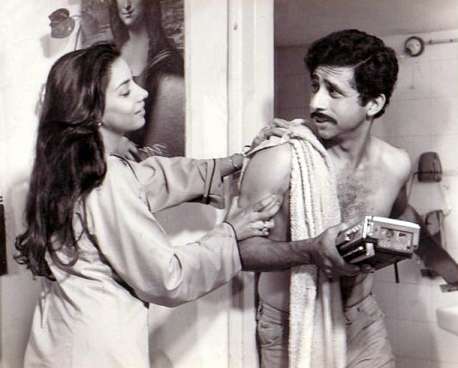
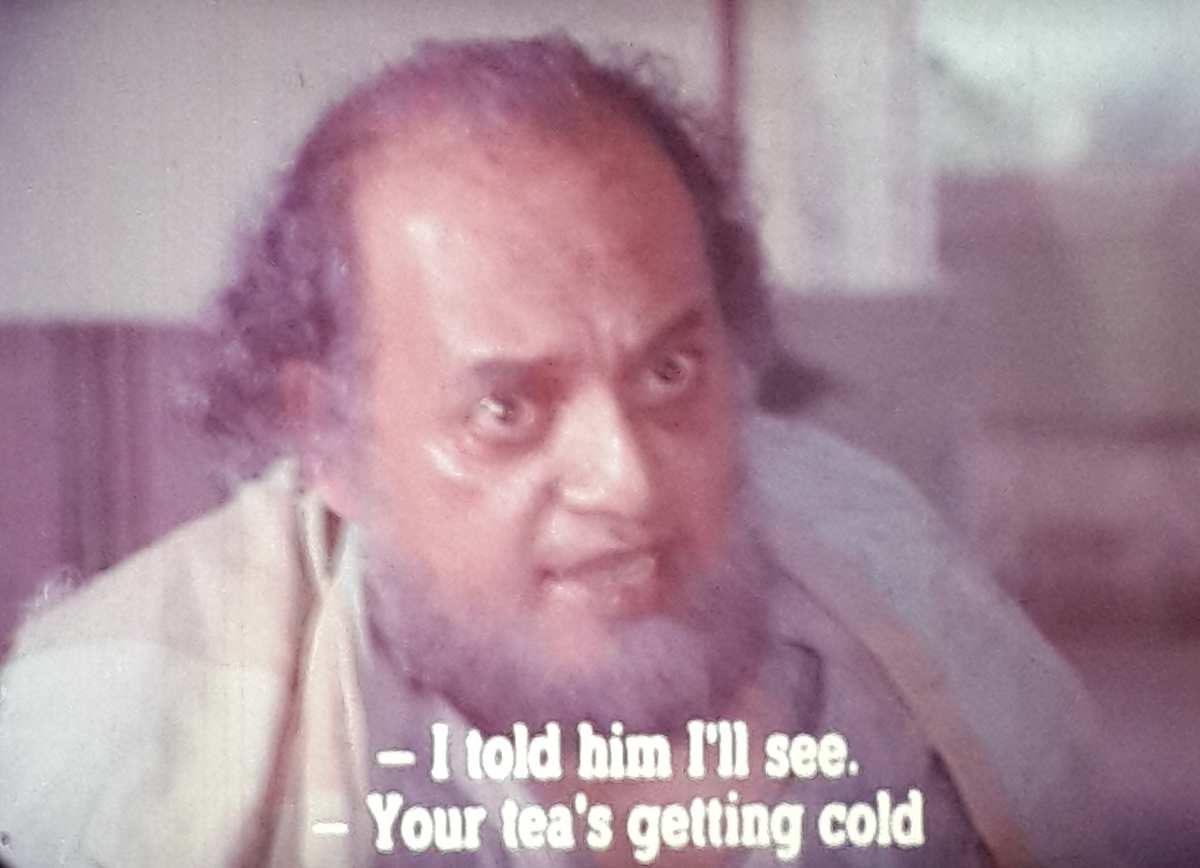




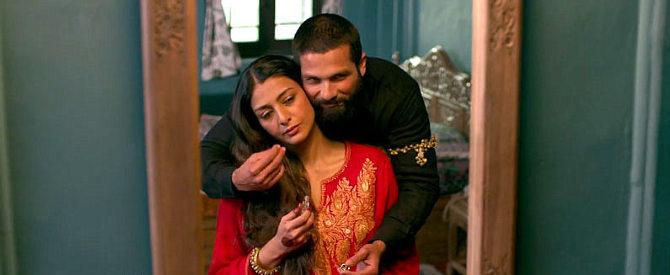


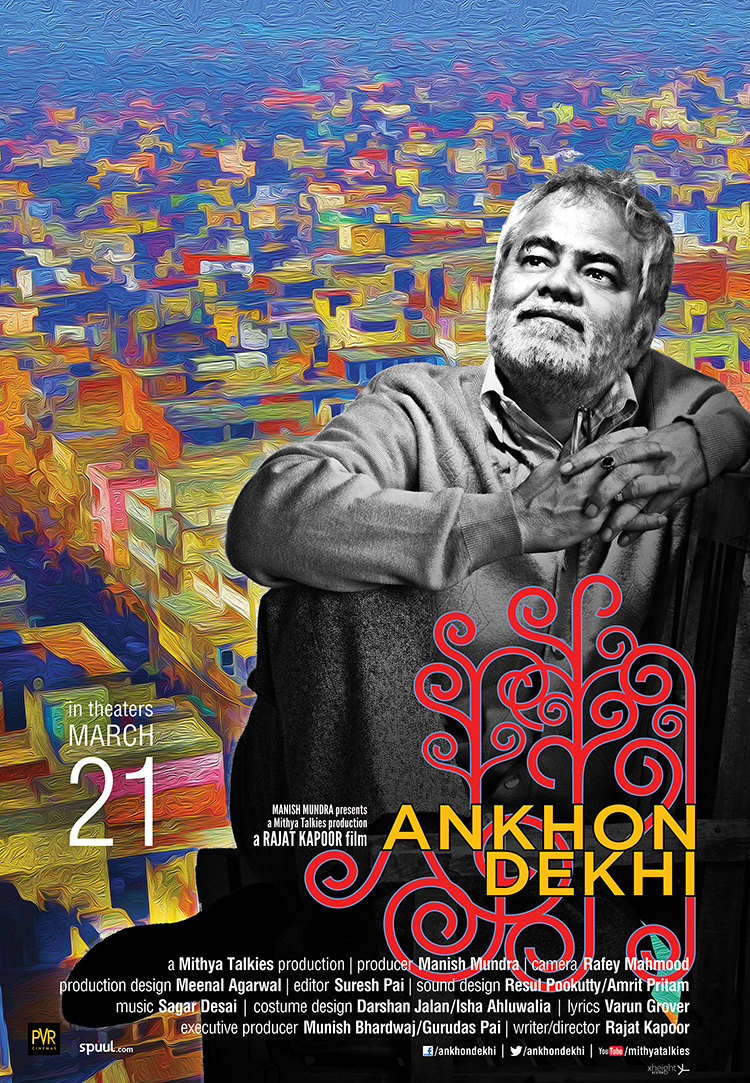


 F.i.g.h.t C.l.u.b