Archive for the ‘Hollywood’ Category

This movie recco post is by Gyandeep Pattnayak.

I ask, “Have you seen The Proposition?”, I get replies like, “Yeah man, that Reynolds guy and Bullock have smoldering chemistry even though she is a bit more…”. I interrupt, “Umm, no, no. The Proposition is a Western starring Guy P…”. My turn to get interrupted, “Western? You mean cowboys and stuff? Man, I thought you were talking about that romantic comedy.” “It is The Proposal.” “Oh, is it? Okay. But, hey man, who watches westerns anymore, anyway?” In a way, the other person is not just speaking for himself/herself; he/she is speaking for a bunch. And it is a fact.

Western is a done-to-death genre which typically involves a plot built on the grounds of retribution. How more can you change it when everything has been done and said by Peckinpah, Eastwood and Leone? What innovation can you bring to these films if there isn’t room for any? The answer is simple – you take the poetic route.

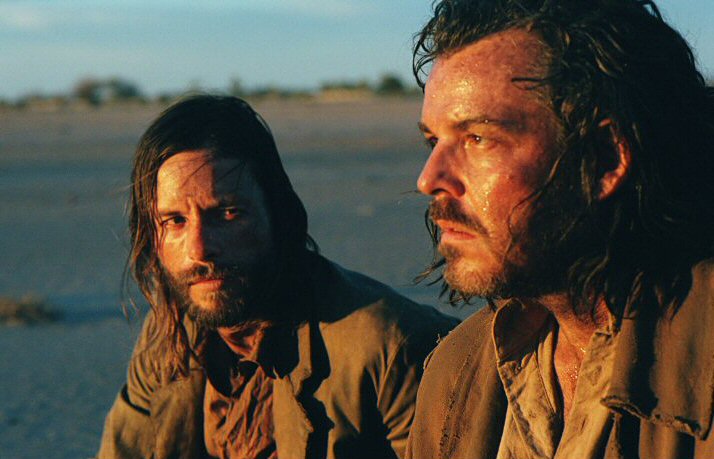
John Hillcoat’s The Proposition is not only the best Western I have seen since Eastwood’s Unforgiven, it is also easily one of the best films ever made. The Hopkins family is brutally massacred by the Burns brothers gang. It is the 1880s and the place is the arid Australian wilderness. The climate is harsh and the dust is as much a character as any other present in the frame. A gunfight ensues between the local police and the Burns gang and Captain Stanley (Ray Winstone) succeeds in overpowering Charlie Burns (Guy Pearce) and his younger brother Mikey. The whole gang is wiped out leaving these brothers Burns in the clutches of Captain Stanley. Stanley knows Charlie and Mikey are not the ones who were involved in the Hopkins massacre. Stanley gives Charlie a choice, “Kill your elder brother Arthur and all will be forgiven. You have 9 days. If you do not, little Mikey here, will hang from the gallows on Christmas Day.” Charlie reluctantly gives in. He hasn’t talked with his elder brother in a long, long time. You see, he hates him as much as anybody else. Why? Because, Arthur not only has a penchant for stomach-churning violence but also has a thing for poetry – which makes him all the more scarier. What kind of a man will maim, rape and murder a lady who is pregnant? Well, welcome to the world of Arthur Burns. This is a ghastly crime, not to be tolerated at any cost. That is the reason why Captain Stanley resorts to this method – one that of partial blackmail.

I think this is one of the key points in the film. Stanley wants to make the place more ‘civilized’. He has just been transferred here and with him is his beautiful wife Martha (Emily Mortimer). It is more than evident that he wants no harm done to her. And for her sake, this place must be swept clean of people like Arthur Burns. And in order to get this done, Stanley has to play it a bit discordant, a bit harsh, a bit like the outlaws. It is easier having an outlaw kill another, right? Captain Stanley, however, has no idea. There are no ideal deals in life; perhaps, he should be aware of that.

Things do not go as planned and word gets around in town – word about the deal which Stanley has made with Charlie. Eden Fletcher, (David Wenham) Captain Stanley’s superior, orders Mikey be given a hundred lashes on his bare back for the heinous crime which he has committed against the Hopkins family. Stanley stands aghast as he watches the entire townsfolk, his wife included, support this punishment. “He committed a horrible crime. This cannot be excused.”, she tell him. But how does he, a lone man, against a town, (no less) make them understand? It is very important to note that Ray Winstone is an actor who is extremely restrained and disciplined. The casting helps here. The portrayal of Captain Stanley giving in to the demands of the public is poignant and is masterfully played by Winstone. It is at this point, that Stanley knows intuitively that the dark clouds have dawned upon them. He knows Arthur will come for them. And he prepares himself for a Christmas dinner with his wife, gun in hand, manners in place and fear in heart. And then terror arrives.

The director John Hillcoat, working from a screenplay by Nick Cave, evokes as much a sense of place and time as much as he exploits violence in these lands. Which is why an actor like Danny Huston is needed to portray Arthur Burns, who is more of a savage than an outlaw. Arthur is a poet. He believes in good things. He believes, letting a man complete his part of a poem, before the man dies, is essential. He believes in violence and his violence is immediate and invisible. Rarely have I seen a film in which the antagonist is as fearsome and as loathsome as Arthur Burns without the film actually showing us the crimes he is committing. That Huston manages to play his part so excellently is commendable in the sense that he brings a sense of calm while he lets us know that something bad is about to happen. Watch that scene in which he comes to know that Mikey is no more alive. And the violence that follows is inevitable. It all comes down to this. You kill mine, I kill yours too.

Guy Pearce who plays Charlie is everything that Stanley and Arthur are not. On finding out that his younger brother died for no fault of his, Charlie takes a decision which, in a sense, is predictable. But it is also necessary. There must be an end to all of this. John Hurt has a cameo and I will not speak about it. Let me just go ahead and say this – at this age, Hurt plays a role which requires him to do some physical action and Hurt nails it. His is a bravura performance and if I were to single out a performance in this movie which was both humorous and scary, it would be this one.

There are violent films and then there are some. The Proposition is savagely brilliant and poetic, both at the same time. Beautifully shot, performed, scored and directed, this is what any filmmaker should be having wet dreams about. It had me pondering, “Is violence a part of these lands or does it come from within?” The more I thought about it, the surer I was of the former. Some places just get the better part of you and don’t let go easily.

PS – For more posts by Gyandeep, click here – The ‘I’ in Cinema.

VOTD : 70mins of Charlie Kaufman

Posted: March 4, 2011 by moifightclub in Hollywood, VOTD
Tags: ,

what else do you want ? And it has some priceless gems too. Like this one about Being John Malkovich – I described the tunnel in the script as vaginal and Spike made it Anal, not exactly what i wanted but now it’s all water under the bridge. Click on the play button and enjoy!

And if you don’t have time to watch the entire video, here are some excerpts from the interview…

Formula – ….It doesnt appeal to me to have a kind of formula for writing anything. Some people like it and it helps them. So i am not going to tell people to no to do it…..am not interested in going in with any kind of framework because it inhibits the possibilities for me.

Adaptation – The main character in the movie is the screenplay itself….from its initial evolution  of the screenplay to its ultimate corruption….that is the tragedy of this creature that is the screenplay….he never was able to make a movie about flowers….Donald represents a corrupting influence..he is a nice enough guy….probably much nicer than Charlie but i don’t think he is helping matter.

Hollywood Romances – It has been damaging to my relationship at least..i can talk about myself.. it sorts of set up unreal expectations and which you then project onto your partners and it just destroys the possibility of any kind of actual conversation.

Taking Risks – I think if what you are doing doesn’t have the possibility of failing, then by definition , you are not doing anything new. That’s  really the way it is. And if you know how to do what you are doing and/or you have seen it done before, then you are not doing anything. So, the only way you can do anything new or interesting is to open up yourself to the risk of failing. And in that sense, I try to look at success and failure both as neutral thing. It’s hard and am not always successful in accepting failure but I feel that I need to keep reminding myself of that…this is the only way it will be worth anything at all…..May be, won’t be….But it definitely won’t be if i don’t do that.

Characters taking themselves seriously – People take themselves very seriously and their struggles are very serious. Life is hard and everyone’s got a struggle. May be, that’s sort of who  I am too…I am not a carefree person….May be so I don’t write carefree people because of that…I don’t know….wish i were.

Synecdoche, New York – I made that movie and I also didn’t understand what was going on there.

Stories – I am not really interested in stories because stories are things that are kind of  have polished end…and seen from a distance….and i want to do things which feels like I am immersed in it when i am working in it….and the audience will experience that immersion and that chaos  and confusion of actual existence as opposed to a story with beginning, middle and end….And a kind of distance, perspective and life lessons that doesn’t really seem to be part of moment to moment  of life that i have….Does that make any sense ?

Direction – I think I have opinions about visual things, about aesthetic things, have lot of interest in paintings and compositions….am novice when it comes to technical stuff of cinematography…..i think all you really have is your opinions.  That’s what your value is….as a director you hope you have good opinions…people will show you stuff and you hope that you like the good stuff.

Money – ….there is lot of “trying to get money” in my life.

Writing – I just add more ideas…when I am writing I generally don’t have an outline that I have to get from this point to this point….I find that kind of constricting..So I like the thing to develop the way it develops. If I have a new idea that excites me, I will include it if i can.

Why John Malkovich ? – It’s funny to me. That’s really the only reason. I can tell you why it is funny but i don’t know if that will matter….when i was writing this script i wasn’t planning on this movie ever getting made, so i could make it whoever i wanted. When Spike came on board, we thought we could get it made and we didn’t have John Malkovich yet, we had to think of other people and possibilities and my instincts were confirmed because we could not come up with anybody who worked as well as John Malkovich.

Struggle – It’s harder when you are trying to do your own thing and then they don’t see a precedent for it…Its harder to get in….It took me over 11 years from the time i left college to my first writing job. It just wouldn’t happened…..what happens is that more people see you are stuff, you get to talk to people, the greater the chance that you will hook up with somebody who gets it and wants to do it…..so perseverance, and if you believe in your stuff then you should do it and continue to push for it.

Writers/Directors/Hollywood – …there is the auteur theory that confused everyone for a long time…..writing in Hollywood is not really important….It’s proven again and again….those who market movies and make movies, they don’t need writers….the worst movies with the most problematic scripts become the most successful movies….then you see that  writers aren’t important.  But directors have a visual language and some of them are celebrities and big names too.

Q. Inception – My friend said that Inception was like a James Bond film written by Charlie Kaufman. what do you say ?

A. …..i have to be very careful about it……(silence)…..i don’t know…(long silence)….You know the weird thing is you cannot say anything anymore anywhere without it appearing online. So i am not going to say anything anywhere anymore.

Q. What is your reason for making/writing films ?

A…..I think its something that i always wanted to do as a kid..it always excited me..the make believe world….its my job….am trying to pay a mortgage and i like this particular kind of job, and i guess it defines me or it helps me feel defined..may be i have something to prove..terrible reasons ? …..i don’t know…why i do it..i don’t know what else  i will do…it sounds bad, right ? I mean, i kind of like it sometimes but sometimes it’s really hard, it’s a struggle and i get depressed. But i will probably get depressed being a homicide detective.

End note – But i do want one more question because there is absolutely no more way that i am going to end on that question…that was like yeeeawwkkkh. Make it something nice, i don’t want to end on that question.

Tip – Jahan Bakshi

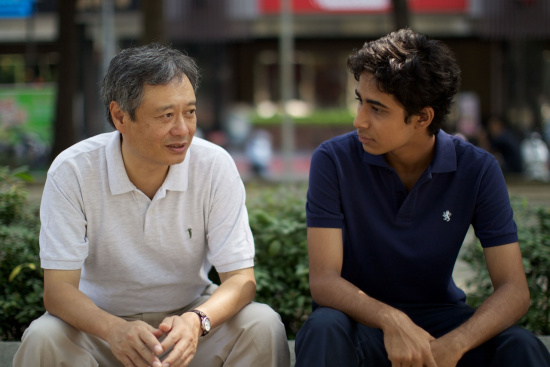
Thanks to the good soul who mailed us the (un)official synopsis of Life Of Pi. The film is directed by Ang Lee and is based on Yann Martel’s novel of the same name. It has Irrfan Khan (Older Pi), Tabu (Pi’s mother), debutant Suraj Sharma (Piscine Molitor ‘Pi’ Patel) and Adil Hussain (Pi’s father) in lead roles. It’s scheduled to release in 2012 and will be in 3D.

And here is the synopis…

PISCINE “PI” PATEL (54) was born in India but now lives in Montreal. Though he loves Canada, he misses the heat of his native country. He is still a bit traumatized by the memory of being abandoned by RICHARD PARKER when he was 12.

Pi’s father studied zoology in Paris which is where he met Pi’s mother. An avid swimmer, Pi’s father taught Pi how to swim when he was seven. His father worked as the director of the Pondicherry Zoo in Madras. Pi grew up around the animals, learning to love each of theirs unique and sometimes amusing idiosyncrasies.

In school, Pi earned the unfortunate nickname of “pissing Patel”. When he entered middle school, he took the moniker Pi and was thankfully never teased again.

In 1964, over the objections of his mother, Pi’s father took Pi and his cousin RAVI to the tiger cage to watch it kill a goat. It was a lesson to teach them to fear the big cats. They may look fluffy and cuddly but they are ferocious animals.

Pi became interested in Catholicism. He would visit the local church and talk to the PRIEST about his religion. Pi was raised as a Hindu and would go to temple to question the PANDIT about his philosophy. Pi also would go to the mosque to ask the IMAM about his religion. Pi was fascinated by all three religions and considered himself a member of each. It never proved a problem until one day when he was walking with his parents and encountered the priest, pandit and imam. Each declared Pi a member of their congregation and got into a fight when the others made the same claim.

When the owner of the zoo, the MAHARAJAH died, his SON took control of his holdings. He decided to raze the zoo and replace it with a golf course. Pi’s father hoped he could change the Maharajah’s son’s mind by acquiring a lion for the zoo. He took Pi with him when he went to a circus to look for a lion to buy. While he negotiated a deal with the circus owner, Pi met the LION TAMER. He took the boy into the cage with him and showed him how he controlled the animals. The most important thing he taught Pi was never to show fear and to always be in command. Pi’s father was unable to make a deal with the circus owner and they left empty-handed.

With the zoo closing, Pi’s father got a job with the Canadian zoo which purchased all of the animals. They were loaded onto a boat along with Pi and his family. While on the cruise to their new home, Pi helped to feed the animals.

Pi was awakened one night to find his room flooding. The ship was sinking. The sailors freed most of the animals, giving them a chance on the open sea rather than drown on the boat. Unable to find his parents, Pi was taken topside by a sailor who threw him into the ocean. Pi swam to the nearest lifeboat, climbed aboard and watched the ship go down. That’s when he noticed that he wasn’t alone on the lifeboat. He shared it with a zebra, peacock and a hyena. Pi never saw his parents again.

Pi saw a tiger named Richard Parker clinging to a piece of driftwood nearby. It got that name from the Brit who found the orphaned cub that was then given to the zoo.

Pi is telling the story from his hospital bed to MR. OKAMATO and MR. CHIBA, investigators from the insurance company who were questioning him about why the boat sunk. Besides the two Japanese, there were a few nurses and orderlies also listening to Pi’s fascinating tale.

Pi then saw a hand grab the edge of the lifeboat. It belonged to a female orangutan who pulled herself into the boat. After a couple of days and getting hungry, the hyena moved to attack the zebra. Pi tried to fend it off with an oar but couldn’t stop the starving animal. It attacked the zebra who panicked and fell out of the boat. Thwarted, the hyena then turned and attacked the orangutan, killing it. That’s when the tiger reappeared, jumped into the boat and killed the hyena. Pi escaped the boat after making a raft from oars and life preservers. He stayed near the boat because it contained supplies that he might need.

As Pi continued his tale, his hospital room began to be filled with more patients and staff who were hanging on every word he said.

As the days continued, Pi remembered the things he learned from the lion tamer. Using a fishing hook he found in the survival kit on the lifeboat, Pi began catching fish to feed himself and the tiger. He would clean the fish by using one of the tiger’s discarded claws. In time, they formed an unlikely truce. The tiger wouldn’t eat Pi as long as he continued to feed him. When Pi got the chance, he would also feed on sea turtles and sea birds that he would encounter. Pi would keep track of the days by making notches on an oar. He would eventually make a total of 137 notches.

Pi woke up one morning to find that his boat had reached an island. The tiger jumped out and ran into the jungle. Pi began to investigate himself before passing out from exhaustion. He woke up to find his hands and feet bound. The sailor from the ship was also on the island. The sailor was apologizing for his what he was about to do – eat Pi. Before he got the chance though, he was attacked and killed by the tiger. Pi jumped back in his boat and began to paddle away but then felt guilty about leaving the tiger, so he used a whistle he had found to call the big beast. It came running (carrying the sailor’s arm in his mouth) and jumped back in the boat.

Some time later, the boat washed up on the beaches of Mexico. The tiger leaped to the shore and disappeared into the woods. Pi was extremely saddened by the loss of his only friend. Pi was found by some locals and taken to the nearest hospital.

By now Pi’s audience had filled his room and spilled out into the hallway. When he finished his story, many of the listeners dabbed at the tears in their eyes. Some openly wept.

SPOILER

Mr. Okamato and Mr. Chiba expressed their doubts about the veracity of the story, finding it to be just too implausible. When they saw Pi’s eyes look downward, they thought they hit a nerve so they ushered everyone out of the room. Pi then told a simpler tale. He said when he reached the lifeboat, it held his mother and two sailors, one with a broken leg. After a few days out on sea, one of the sailors wanted to kill the injured one to eat. Rather than face that fate, he jumped into the ocean taking his chances with the sharks. The sailor then turned and killed Pi’s mother, stripping her flesh to hang and dry. When the sailor fell asleep, Pi killed him and later ate him. Mr. Okamato and Mr. Chiba are distressed by the story, feeling sorry for Pi having to witness his mother being killed and cannibalized. As they left the boy alone, they remarked how similar his two tales were, marveling how the young man’s imagination had replaced humans with animals. They figured the hyena was one sailor, the zebra was the injured sailor and the orangutan was Pi’s mother. Who then was the tiger? Well, Pi of course.

SPOILER ENDS

Years later, Pi is living in Montreal. He returns to his apartment. Pi still has the tiger’s claw.

Not sure why and how, but Freida Pinto is surely going places. As if Danny Boyle, Julian Schnabel, Woody Allen, Tarsem Singh and the Apes movie weren’t big enough for her CV, now she also has Michael Winterbottom.

The film is titled Trishna and will also star Riz Ahmed (Four Lions). It’s based on Thomas Hardy’s novel Tess of the d’Urbervilles. We haven’t read it but according to IMDB, it’s “The story of the tragic relationship between the son of a property developer and the daughter of an auto rickshaw owner”. And a friend described it as “hopelessly depressing”.

The film will be shot all over Rajasthan and it’s a start to finish schedule. The shooting starts by end of February. Last time when Winterbottom shot A Mighty Heart in India, it was in news for all the wrong reasons. So this time its been kept as a hush-hush affair.

And this is not the first time that Thomas Hardy’s novel is getting adapted for the screen. Tess of the D’Urbervillies was also adapated as a four part mini-series for BBC and had Gemma Arterton in the lead role.

Rajasthan, Frieda Pinto, property developer, rickshaw owner – well, something tells us that it will again be desi exotica for the West. What’s missing ? Bollywood and naach-gaana ? Bet it’s there. Someone will move to Mumbai and dhen tedan! We can’t spill all the beans at one go.

Click here to read the Deadline.com report.

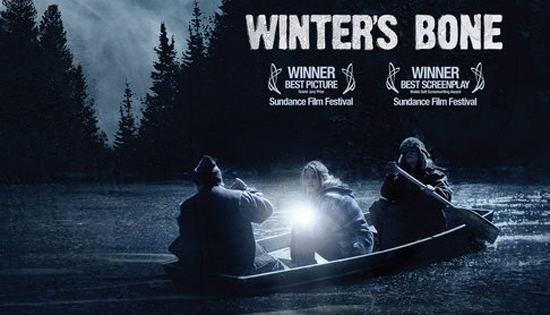
The real battle in storytelling is with the cliches. You sit down to write a different ‘coming of age’ story. You pick a female protagonist, an unlikely location and you paint a grim picture of life addled with addiction, poverty and a fierce sense of kinship. You think that’s distinct – the trunk and branches that should hold the narrative seem real – so, you start arranging the leaves of the tree. It is then the hard work begins. These leaves look no different from the leaves you have seen on many other trees. Then begins your battle with the cliches. Fortunately for us, this is a battle that Debra Granik wins with aplomb in Winter’s Bone. In her dual role as writer and director, she scripts and brings to life on screen a searing coming of age story that’s original, disturbing and filled with arresting details.

There are two templates of coming of age story in modern literature. The most famous of them is Salinger’s Catcher in the Rye. Holden Caulfield’s three days in New York after being expelled from his school where he confronts his sexuality, reconciles to his delusions of being the saviour of his generation, deepens his relationship with his sister and discusses life with his former teacher is the most adapted mould. There is no specific external event that triggers Caulfield’s actions. In fact, most of the external world is actually inert to his condition. The strife of Caulfield is internal as his soft idealism dashes against the granite hard reality that is the world outside. As Caulfield hurtles through the three days, the reader is constantly searching for a motive for his martyr without a cause behaviour. There’s none except you discover at the end that the motive was to have him accept adulthood – that living for cause than dying for it is the mark of coming of age.

The simplest example of the other template is ‘Barn Burning’, a short story by Faulkener. Here the catalyst to the coming of age of Sarty Snopes is his disgust at the life of crime and pyromania his father leads. Sarty has to question the only way of life he has known, discover his moral compass and break free. Again, there’s no added motive to Sarty’s actions. It’s his journey of self discovery; of finding his innate idealism in conflict with the principles (or the lack there of) that have reared him.

The second template is the closest that Winter’s Bone gets to as a coming of age tale. It’s a template that Udaan, one of the finest coming of age tales in Indian cinema, follows as well. What Winter’s Bone does beyond the template is to invest in a motive that would have been a story in itself.

Ree Dolly, the seventeen year old protagonist, has her hands full managing her two younger siblings and her ‘not quite there’ mother. There’s a certain elan and economy with which the Granik eases you into the film. There’s a folk song about Missouri that’s playing at the back as the film opens and the radio cackles with the newscast talking about a spell of really cold weather in the area. The stark landscape of Ozarks is quickly established as is the poverty of the families living there through the opening montage of run down houses, disposed cars and the lack of options for feeding the Dolly family dog. Ree is a woman too early – as she takes charge of the breakfast for her siblings, combs her mother’s hair and then walks the siblings to the school while testing them on their spelling and math. This is unlike any America you have seen on screen for a long time. There’s poverty of the kind where the next meal is uncertain, lurking lawlessness around and the class that’s running when the teenaged Ree reaches her school is on parenting which sums up the social environment. There’s also a strange kind of kinship that’s established quite early when the neighbour brings in meat and potatoes for the Dollys with the purpose of knowing why the police (or the law as it’s referred to through the film) had visited them that afternoon. There’s benevolence in here as also a fierce instinct of self preservation; two forces that drive the story forward. Ree accepts both these forces with a line that sums up her own view about the kinship – ‘never ask for what ought to be offered.’

The arrival of the law sets the things in motion. Ree’s father, Jessup, who’s out on bond on charges of ‘cooking’ meth has gone missing a week before his court date. This wouldn’t have meant much to the family except he has pledged the house and the farm to the court. Finding Jessup is the only thing that will keep the family from being out in the cold. The motive for Ree is established. She has to find her father before the week’s up.

This isn’t an easy task. As Ree goes looking for him, she finds an almost mafia-like code of silence pervading the community. She’s constantly advised to stop looking for him for her own good. There are ruses set up to leade her to believe he may be dead including a burnt barn (that’s when you first think of Faulkener) which seems to have gone up in flames because of the meth exploding while cooking. The reactions to her search range from angry but well meaning advice from her uncle Teardrop to active support from her friend (a teenager who already has a baby which makes the parenting class shown earlier in the film quite appropriate), threat of violence from others involved in the meth trade and finally, violence at the hands of women of the house of the local ringleader. Through all this Ree doggedly pursues in her quest. On the surface this is for her family and for a roof on their heads in this particularly harsh winter. But underlying it is Ree’s desire to understand the lives around her and her own life as it would be. By the time Ree finds her father you know she won’t remain the girl she was before she started this search.

This is an incredibly nuanced film. The cold weather and the landscape of Ozarks are used to create a cold, detached mood through the film. Meth is an all pervading character in the film. You see people addicted to it, dying of it, peddling it and living off it. There’s a matter of fact acceptance that eventually everyone will take to it when you find Teardrop asking Ree if she’s developed any taste for it. There is also chauvanism of the kind that would make khap panchayats proud. The distinct sense of discomfort is not only from the nature of Ree’s questions but the fact that she is a woman who is going about seeking such information. And, when things come to a pass, it is the women of Thump Milton’s house (the local ringleader) who get violent with Ree. The men couldn’t bring themselves to be harsh on a girl.

The film rests on Ree’ shoulders and, this is, quite possibly, the best written female character seen on screen for a long time. Ree is remarkably assured and level headed for the kind of world she lives in. It was easy to make her precocious but she isn’t. She has preserved a set of ideals that she lives by and they give her the fortitude to shoulder on as well as the vulnerability to break down when she finds the seizing of the house by court imminent. You could almost see they way life could have turned out for her when she goes to the Army recruitment centre. The singularity of purpose in the face of odds and the moral courage that she demonstrates would have been attributes of a fine young soldier. Those attributes aren’t lost. They eventually help her discover the truth in a test of grit that’s almost mythical.

Winter’s Bone is a poetic film. There’s lyricism amidst dirt, hunger and betrayal. There’s hope and optimism at the end that juxtaposes with an eerie sense of what Ree might become eventually. It’s poetry because it doesn’t wait to explain. It flows and takes you along till the final sequence. Ree on a rowboat on a pond on an inky cold night along with Thump Milton’s women. There’s a surreal beauty around that pond that hides the macabre truth that Ree already knows but is about to ascertain.

The water’s icy cold and the moment the chainsaw cuts to the bone, you know why this is a mould-breaking coming of age film. You also discover why it’s titled Winter’s Bone.

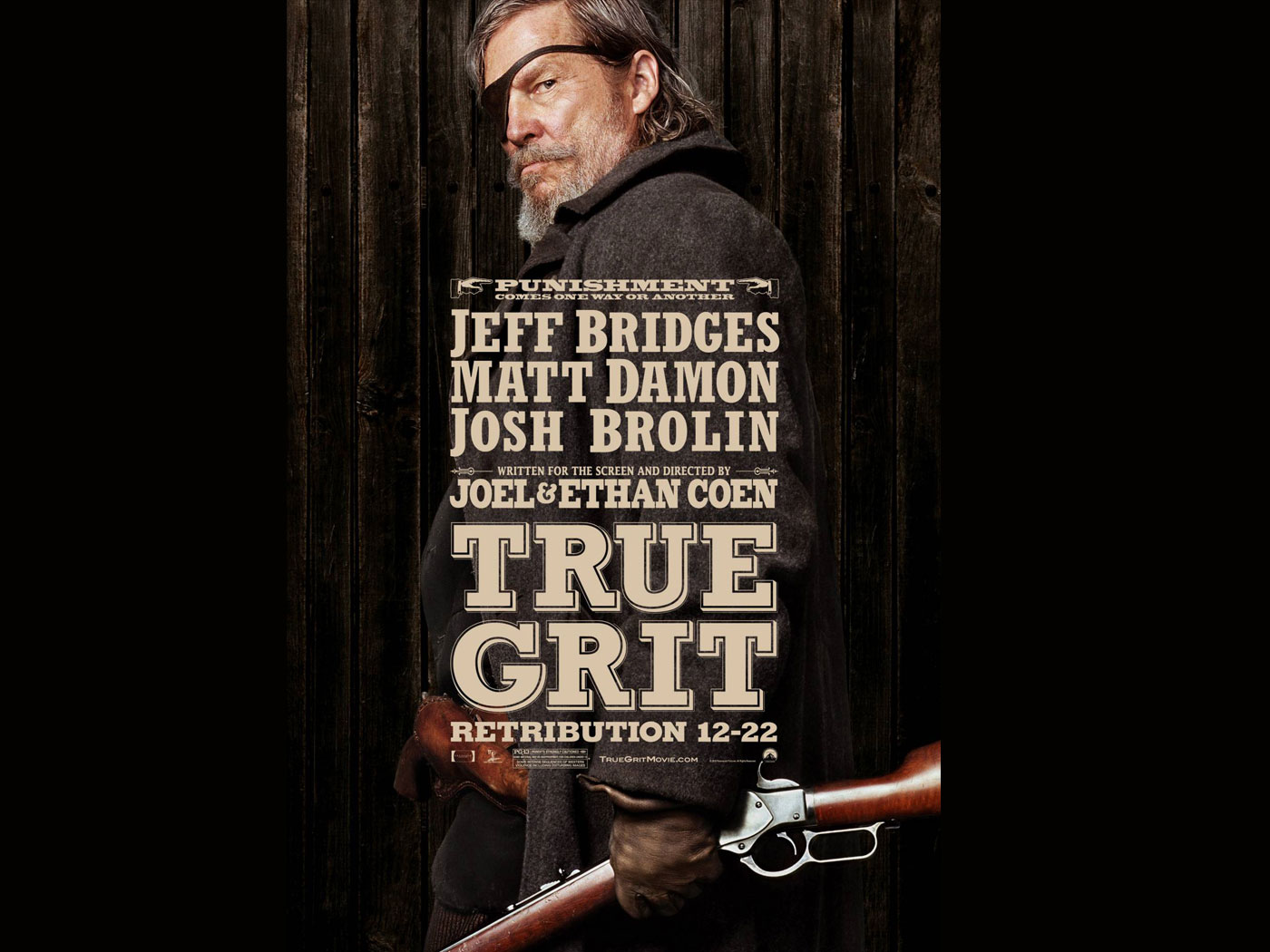
Anupam, who ? Well, here is Jahan Bakshi on Anupam – I can’t really think of any grandiose ways to describe the unassuming bloke that is Anupam Dhar. So I’ll just say that Sunny, as we often call him – is my senior from the rather eclectic Department of Mass Communications at St. Xavier’s College, Kolkata, who happens to be a dear friend- and a huge movie-buff himself.  A Coen Brothers fanboy like many of us, Anupam thoroughly enjoyed their new film True Grit, and with this post, hopes to provide some perspective, especially in light of the many rants about it lacking that ‘Coens touch’ and being ‘just another western’.  Read On…

What is True Grit? This was a question I first saw in a review by some Western film critic. As much as I wanted to answer it, I was never sure I could do so simply because it’s almost so indefinable and so very personal. Indeed as I revisited the retelling of Charles Portis’ novel by the Coen Brothers last night, I was again so sure that maybe True Grit is just more than being brave and courageous in the face of adversity. True Grit is being able to stand up to what is right and what is correct; to be able to take things in your own hands when all around you people are shirking away from it. True Grit is fighting for what you believe in and never compromising on that belief. True Grit is Gandhi in his search for freedom but in the way he wanted it, without ever raising a hand when he was being beaten mercilessly by the British Imperialists. True Grit is Mandela, Martin Luther King, Bolivar and many more who have stood up against adversity with a smile and a determination to fight for what they believed. The biggest achievement of film True Grit is a reminder of that; the noblest and strongest of human emotions which often make people triumph over the seemingly insurmountable.

A lot has been said about the film, how it is just “another Western” with nothing new to add to it. Many were expecting the Coens to add a new dimension, maybe make a dark and satirical interpretation of a book, which had already been made into a much loved film. But isn’t the Western about raw human emotions; about those wild times when the gun ruled supreme and human lives were none too important; about the passions that the raw, unchartered and seemingly endless territories of the New World evoked? If that is so, then True Grit succeeds in its intention. It’s a beautiful film and much of that praise must go to Roger Deakins who once again reminds us that beauty lies in the eyes of the beholder, in this case that of Deakins and his camera. As the camera pans the rough territories, it tells its own story, one of survival and hardships and one where the rule of the jungle reigns supreme.

In one beautiful shot, the film’s protagonists, Mattie Ross and Reuben “Rooster” Cogburn approach a tree to which a man is hung. Neither display any emotion to the scene and their only interest lay in whether the dead man hanging is the man they’re searching for. Life is worth pennies where each man is fighting for his own. The beauty of the film lies in its simplistic narration; where a dark and somber story of courage and revenge is told just as it is, without the intrusion of the directors’ own point of view. In that sense True Grit is not just a story, it is also a study of man’s own brutal instincts and the latent violence that is there in all of us and which threatens to unleash itself at the slightest provocation.

True Grit succeeds a lot because of a wonderful ensemble cast. Led by the towering Jeff Bridges, the cast gives itself off to the film’s characters and brings in them the depth that enriches our experience of the film and makes us sympathise with the characters. Bridges moves far off from John Wayne and gives the character his own personal interpretation resulting in a far more complex character which evolves as the film moves on. Matt Damon is good as well and his Texas Ranger makes a deep mark in the film, especially in the scene where he spanks Mattie and tries to scare her off. Josh Brolin and Barry Pepper shine in their small roles. But this film truly belongs to young Hailee Steinfeld, who as Mattie Ross gives a brilliant performance; one which offers us a vivid picture of the 14 year old girl who wants to avenge her father’s murder. Mattie’s innocence, her resolve, determination, courage and vulnerability is expressed beautifully by Steinfeld which gives her character a larger dimension that was missing from the earlier film. Special mention needs to be made of Production Designer, Jess Gonchor and Costume Designer, Mary Zophres who give the film a beautiful and old world feel. Carter Burwell’s haunting background score adds to the atmosphere of the film. The Coens write and direct the film in the way a Western should be and for once I am very pleased with that. Some films are meant to plainly entertain, some are meant to make you think, but some like True Grit are simply meant to be absorbed and felt. It’s a document of those hard and brutal times and a testimony to the most sublime and also the most dangerous of human emotions. True Grit is, as I had tried to answer before, the heart to stand up and fight.

If you can force your heart and nerve and sinew

To serve your turn long after they are gone,

And so hold on when there is nothing in you

Except the Will which says to them: “Hold on”

Yours is the Earth and everything that’s in it,

And – which is more – you’ll be a Man my son!

Until very recently I was quite unaware of a concept called creative diffidence. Or let’s say creative insignificance. I always thought talent was immeasurable. Everyone had their own share and it’s really upto you to do what you will with it. And even if you had been passed up your share then passion, intellect, skill or some such thing made up for it. Then one day I was speaking to a copywriter friend who is an ardently devoted worshipper (notice the redundancy, its purposeful) of Frank Zappa. This friend plays the guitar, composes and also has set up this small studio at his place to further his passion for music. That night along with waxing eloquent on his studio he was going on about Zappa too and he caught my breath (yes, note that disjunct too) when he said that listening to Zappa makes him feel totally disheartened. Why? The bewildered me asked. He replied, ‘Because I feel so inconsequential as an artist when I listen to his genius. I mean, here is Zappa who is a genius and here I am, doing what I am doing which doesn’t even compare. So why I am doing it at all?’

The stubbornly optimistic, idealistic girl inside me refused to understand what he said then. But those very words and that drowning sort of sentiment in his voice kept coming back to me as I watched 127 hours.

I knew Boyle is a genius. And so is Rahman. I like Franco and loved the premise. It had got spirit, adventure, optimism, fight, survival written all over it, things that make me go very smack-my-lips even in real life. In all truth I went to watch the story of Aron Ralston, not a Danny Boyle film. What I got threw me off with a 50,000 mph force of a meteorite, probably the same ancestor of Ralston’s boulder…

I went in with the expectation to be ‘inspired’ by the story but kept getting awe-struck at the shot-taking. All throughout, right till the end I kept thinking, ‘How the fuck did he shoot that? How the fuck did he execute that? But before execution comes thinking. Imagination. Every time I am bowled over by genius I always ask myself this bewildered question, ‘How did he even think of this?’ Ralston’s story has courage, human spirit, and all elements that have the 100% potential of the drama kind of romance. But Boyle chooses to tell the story just how it happened. Or must’ve happened (I’m not googling now, you do it.) No yarn about spirit, no yawn about courage, no senti about spirituality, no unnecessary emotion. When I first heard of the story and the digital medium and the approach I told myself, ‘Documentary-ish! No, I don’t think I am gonna watch this.’ Oh, dear meteorite in heaven, am I glad I did?

As soon as Ralston gets stuck, I was like aaah, now he is gonna get heroic. He didn’t. Then I thought now he is gonna get emotional, he did a bit but so not hysterical. Then I thought now, its just time for him to get all super-human. In a sense he did otherwise he couldn’t have done what he did, but that was so loaded with sheer desperation and that very vulnerably human wish to live that it all fit in so beautifully. Actually it was a revelation…of realism. At every step my melodrama/drama-fed/trained mind kept getting pleasantly surprised at being second-guessed and being told, ‘Wait, THIS is how a young man trapped by a boulder in a crack in a canyon without a hope for survival would react.’ And yes I agree, that was indeed how a man would react…Funny how a film can take you closer to real life.

While Boyle was keeping me enthralled with the brilliant character disclosure layer by layer he was also doing his own thing on the sly. Ace-gimmicker (I know that’s no word but you know what I mean and its all GOOD!) his aces in his sleeves kept falling out one after the other like Ralston’s hope. His dreams, his hallucinations and his attempts to rescue himself. To completely cliché myself I have to say those are set-pieces of cinematic brilliance that we don’t see often. With the razor-sharp editing Boyle blends the reality, unreality and surreality of Ralston’s situation such that all one is left with is a breath caught in one’s throat. Like when he blends Ralston’s dreams of being rescued by the rain and the other brilliant illusions he sets up for that catch of breath. How did he even think of those?

Like everyone, I had tons of issues with Slumdog and it wasn’t all to do with the portrayal of India. That’s why when I read, Screenplay – Danny Boyle and Simon Beafuoy, I was like, ‘ahem’. But this time it is sheer brilliance. The character arcs, plot points, drama and suspense are perfectly poised. At the same time retaining the essence of the story and telling it with complete honesty and respect.

I am no encyclopedia on film-making but I’ve never watched an exposition of the film as brilliant as this one. Tight, concise and full of adrenaline. And unlike most films who bother a little too much about story or experience this one was all about character. He did not need to but he did. We know Ralston as a carefree, sanguine young man in love with his expeditions. Canyon is his world he has been here many many times. Watching his exuberance at doing what he loves doing we feel, ‘Yes, this is how a man in love should be like. Happy.’ And it is this sense of security that is shattered but without shattering the man behind it. Was it that Ralston had genes from Krypton? Maybe. But what Boyle shows us is clearly a psychological study of a young human with, well, a very vulnerably human wish to live.

I thought I’d come out all blushed about the spirit of survival and all that but in fact I came out gushing about the sheer artistry with which this has been crafted. There is no mood to evoke, just the starkness of events as they happen. Not documentary re-telling but sharp, precise and edgy narrative. Not soft at the edges but yet blurred with the in-n-out surreality to suck us deep into Aron’s desperately befuddled senses.

It is tempered throughout by Rahman’s music like a perfectly matched couple doing a tango and then ballroom and then ballet. And the use of silences was almost post-coital bliss-like…He doesn’t miss a beat like Franco doesn’t. It’s unimaginable to believe he is acting or he is being filmed…the tenseness, the fatigue, the pain and the desperation, it’s palpable without a false note.

The film ends on a soft note of Aron living a happy and fulfilled life today, still doing what he loves that is adventure sports. But again, it is the part-quirky, part tongue-in-cheek, part-sentimental note it ends on that showed me Boyle for the genius that he is. It could have easily ended dead-pan or dramatically. Or it could suddenly put a sentimental spin given the climax is quite cathartic. But Boyle chooses a lighter tone yet conveys so much more! For all those who have watched it you know what I am talking of. For all those who haven’t, please watch it and experience it for yourself.

To come back to my opening para and heading. The film made me dazzlingly optimistic about human genius and the explosive talent that we as a race are so capable of. You know the kind that totally makes you proud to say you are a homo-sapien if you met an alien from Mars? It made me believe that its so possible! There IS vision, there is talent, there is imagination and there is skill and there are also those rare moments in history when all of these come together in all the men/women working with you and you make something like this. Maybe someday even I will discover this dazzling genius inside me and the product of my creative imagination will be my nirvana because if I made a film like this I’d happily die and go to heaven. But then I look at our geniuses again and think, ‘Here they are, these geniuses and here I am, doing what I am doing which doesn’t even compare. So why I am doing it at all?’

FC Ed – Click here to see the real Aron Ralston narrating his story.

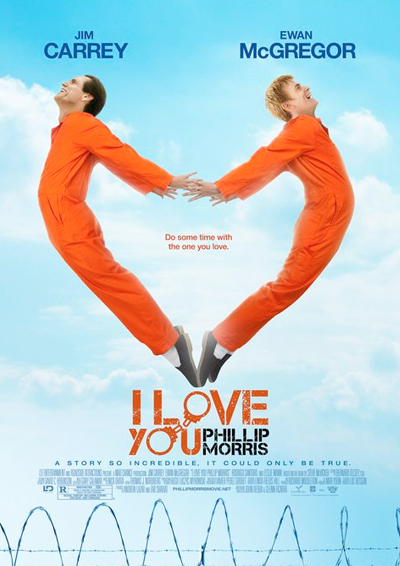
This film recco post is by Jahan Bakshi who loved ILUPM for its sheer irreverence & light-footed, breezy direction. For more, read on…

Nearly 22 months after it premiered at the Sundance Film Festival in January 2009, I Love You Philip Morris finally managed to get a somewhat shoddy release towards the end of last year. Sad, because this is probably one of the most fun, under-recognized and daring Hollywood films of the year gone by.

The story of how and why this huge delay happened (despite the starry presence of Jim Carrey and Ewan McGregor) is pretty interesting in itself, but not quite as fascinating as the story of Steven Jay Russel, a con-man who’s currently serving a 144-year jail sentence for assorted charges, including felony escape and embezzlement.

I’m lazy and bad with summaries, so I’ll just supply the one from IMDb here:

Steven Russell is happily married to Debbie, and a member of the local police force when a car accident provokes a dramatic reassessment of his life. Steven becomes open about his homosexuality and decides to live life to the fullest – even if it means breaking the law. Steven’s new, extravagant lifestyle involves cons and fraud and, eventually, a stay in the State Penitentiary where he meets sensitive, soft-spoken Phillip Morris. His devotion to freeing Phillip from jail and building the perfect life together prompts Steven to attempt- and often succeed at- one impossible con after another.

Now, replace Philip Morris with- say, Phyllis Morris, and this would be perfectly wholesome Hollywood fare- a regular romantic con-caper. Well, at first glance, at least. When filmmakers Glenn Ficarra and John Requa pitched the film, they were asked ‘Could Philip Morris be a girl?’

Of course he couldn’t. Because this is a true story. As incredible and ridiculous as the events in the film seem, it’s actually fairly accurate, save for the usual cinematic liberties (and in a year that has seen The Social Network, who cares about accuracy anyway?). No wonder then, that the film starts with a header to remind us: ‘This really happened. It really did.

But instead of peddling this as the ubiquitously sensitive ‘gay film’, the film is terrifically nonchalant and absolutely blasé about the sexuality of its characters. It’s that rare film that never falls prey to the sentimentality and melancholic self-pity that accompanies mainstream portrayals of homosexuality. By being blissfully coarse, non-conformist and lacking any political correctness, I Love You Philip Morris subtly pushes cinematic and social boundaries, but without any self-conscious fuss; it remains quietly subversive and calmly assured throughout its schizophrenic, hyper-kinetic narrative. It derives quirky comedy from a few homosexual stereotypes (‘Being gay is expensive’, remarks Steven hilariously), but never stoops to making cheap shots; we laugh along with its lead characters: refreshingly and unapologetically amoral, yet full of heart, humor and vibrancy. The dignity with which the characters are portrayed, including Steven’s hilariously orthodox Christian wife, makes sure that none of them feel like cardboard caricatures.

The wide tonal range of this film- from slapstick, borderline farcical to tenderly romantic to achingly tragic- might unsettle many viewers, but the unconventional treatment worked very well for me. And just like Alejandro González Iñárritu’s Biutiful (okay, really strange comparison but) this is another film that couldn’t have worked if not for its leading man, who holds it together and keeps it from falling apart. Jim Carrey is outstandingly good here, his rubber-faced glib persona serving as the perfect bouncing board for Steven’s wild, unpredictable character. He’s absolutely no-holds-barred and such a pleasure to watch, lending his character both charisma and believability. And Ewan McGregor is a delight as his timid, blonde lover; the perfect innocent foil to Carrey’s incorrigible rogue. Together, they make for a charming pair.

‘I Love You Philip Morris’ is not a flawless film. It’s imperfect by design, a tad exhausting and certainly one that will polarize viewers. But it makes for really interesting cinema and deserves to be seen, because quite simply- it defies categorization. Like Steven Russel himself, the film fits into so many guises that by the end, you don’t know what it really is. Which for me, far from being bad, was quite remarkable. After all, what better thing could a film do, than embody the very unputdownable free spirit of the man it is about?

Catch it, for sure.

To read the story of the real Steven Russell & Phillip Morris, click here. And read a super interview of the filmmakers Glenn Ficarra and John Requa right here at ION Cinema.

But Mitch who ? Well, Mitch (born Mithun Gangopadhyay) is a proud black sheep born into a family of doctors who considers his life’s calling to have filmed in each of the seven continents. To his utter shame he has only managed two till now.

After cutting his teeth in Bolly-land, he’s doing his time in Holly where he’s been working in the Camera and Lighting Dept. The list of his credits belies his studly youthful looks (yes, even we can’t resist him). Gaffer, Cinematographer and his first love, Photographer (scroll down to check some of his super stuff) When he’s not fooling with smoke lenses, he’s either smoking the good stuff or fooling around. A taste for the finer things in life has almost killed him numerous times, but he managed to revive and write this post.

The bible of our business aka American Cinematographer recently published a list of the best 10 shot films of the decade.

Amélie: Bruno Delbonnel, ASC, AFC (AC Sept. ’01)

Children of Men: Emmanuel Lubezki, ASC, AMC (AC Dec. ’06)

Saving Private Ryan: Janusz Kaminski (AC Aug. ’98)

There Will Be Blood: Robert Elswit, ASC (AC Jan. ’08)

No Country for Old Men: Roger Deakins, ASC, BSC (AC Oct. ’07)

Fight Club: Jeff Cronenweth, ASC (AC Nov. ’99)

The Dark Knight: Wally Pfister, ASC (AC July ’08)

Road to Perdition: Conrad L. Hall, ASC (AC Aug. ’02)

Cidade de Deus (City of God): César Charlone, ABC (AC Feb. ’03)

American Beauty: Conrad L. Hall, ASC (AC March & June ’00)

For the complete list, click here. It’s a pretty good list except for the fact that since the choice was by popular vote the winners tended to be those films which had gotten a lot of exposure. There were other films from around which I felt were equally as good but suffered from obscurity.

Hence, this is my list of the most visually striking films of the last decade, which includes narrative, documentary, animation as well as anime. With the exception of the LOTR trilogy, I have refrained from naming flicks which were CGI heavy. I totally see the contradiction that I name anime but not greenscreen but that’s just me.

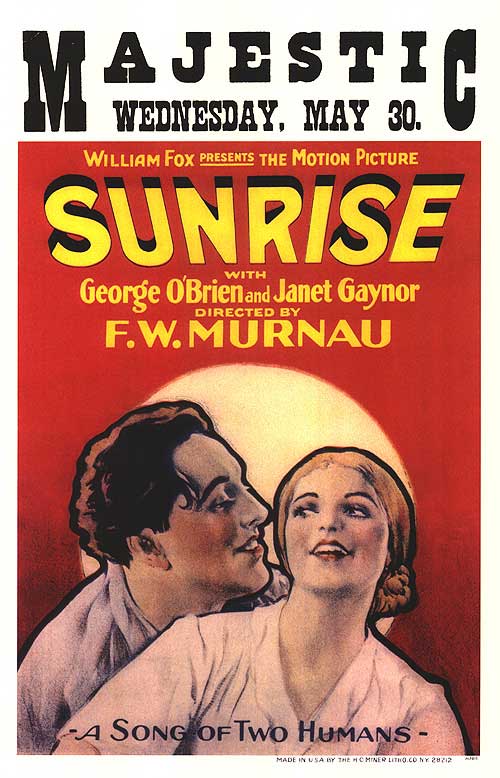
I feel I also need to address the question of what is good cinematography ? A lot of people say that good cinematography should be invisible and the story should take precedence. I dunno if I agree with that. I mean what would Blade Runner, All that Jazz and Sunrise be without the virtuoso cinematography on display. I truly believe that stories in films are meant to be told with the camera and not with dialogue, which is why excessive classical Hollywood style coverage drives me crazy.

For what it’s worth my opinion is great cinematography is that which transports you to a place and makes you believe that what you are seeing is real. For me it’s gotta be visceral enough that I can imagine myself as a character in that movie. I need to taste and smell it and I think only the camera can do that until Smell O Vision makes a comeback like 3D.

A final note on my selection of films (2000-2010). The films are arranged randomly with no order of preference Some choices may leave scratching your heads while some omissions may make you furious. All I can say is that I might not have seen that film or not liked it enough. Since I don’t watch horror films their absence is particularly telling but that’s just the nature of the beast. Also I haven’t had a chance to watch much of regional Indian cinema so that category is also criminally neglected.

1) The Prestige (USA)

2) City of God (Brazil)

3) Amelie (France)

4) The Lord of the Rings Trilogy (New Zealand)

5) Pan’s Labyrinth (Spain)

6) Wall-E (USA)

7) The Assassination of Jesse James (USA)

8) Into the Wild (USA)

9) The Motorcycle Diaries (Brazil)

10) Reprise (Norway)

11) The Lives of Others (Germany)

12) Requiem for a Dream (USA)

13) Children of Men (UK)

14) The New World (USA)

15) Eternal Sunshine of the Spotless Mind (USA)

16) Gladiator (UK)

17) Black Hawk Down (USA)

18) Oldboy (South Korea)

19) A Bittersweet Life (South Korea)

20) District 9 (South Africa)

21) There Will be Blood (USA)

22) The Bourne Ultimatum (USA)

23) A Prophet (France)

24) Amores Perros (Mexico)

25) Tropa de Elite (Brazil)

26) Casa de Ariea (Brazil)

27) Hero (China)

28) Crouching Tiger, Hidden Dragon (China)

29) In the mood for Love (Hong Kong)

30) The Proposition (Australia)

31) Flame and Citron (Denmark)

32) Sunshine (UK)

33) Slumdog Millionaire (India)

34) Y tu mama tambien (Mexico)

35) The Dancer Upstairs (USA)

36) Kiss Kiss Bang Bang (USA)

37) Eastern Promises (UK)

38) Carandiru (Brazil)

39) 5cm per second (Japan)

40) Paprika (Japan)

41) Exiled (Hong Kong)

42) Sex and Lucia (Spain)

43) Triad Election (Hong Kong)

44) Millennium Mambo (Taiwan)

45) The Devil’s Backbone (Spain)

46) Save the Green Planet (South Korea)

47) Bangkok Dangerous (Thailand)

48) Mysterious Skin (USA)

49) Invisible Waves (Thailand)

50) The Wind that shakes the Barley (UK)

51) Man on Fire (USA)

52) Control (UK)

53) Munich (USA)

54) The Diving Bell and the Butterfly (France)

55) Once (UK)

56) Vexille (Japan)

57) Spirited Away (Japan)

58) Silent Light (Mexico)

59) Reconstruction (Denmark)

60) Heima (Iceland)

61) Mongol (Mongolia)

62) The Dark Knight (USA)

63) Memories of Murder (South Korea)

64) Perfume (Germany)

65) Red Cliff (China)

66) The Good, The Bad and The Weird (South Korea)

67) The Hurt Locker (USA)

68) Infernal Affairs (Hong Kong)

69) Sin Nombre (Mexico)

70) Sugar (USA)

71) 2046 (Hong Kong)

72) Half Nelson (USA)

73) Intimate Stories (Argentina)

74) Into Great Silence (Germany)

75) Ghosts of Citi Soleil (Haiti)

76) Send a bullet (Brazil)

77) Coraline (USA)

78) The Fantastic Mr Fox (USA)

79) Mountain Patrol (China)

80) Encounters at the end of the World (Antartica)

81) Black Sun (USA)

82) District B13 (France)

83) Ghost in the Shell 2 (Japan)

84) Climates (Turkey)

85) The Headless Woman (Argentina)

86) Stranded (Argentina)

87) Read my Lips (France)

88) Antibodies (Germany)

89) Burnt Money (Argentina)

90) Paradise Now (Palestine)

91) Sin City (USA)

92) Ballast (USA)

93) The Libertine (UK)

94) Omkara (India)

95) 36 Quai des Orfevres (France)

96) Kaminey (India)

97) Dev D (India)

98) Uzak (Turkey)

99) Love me if you dare (France)

100) Daybreakers (Australia)

101) Marie Antoinette (USA)

102) A time for drunken horses (Iran)

103) Lebanon (Israel)

104) Restrepo (USA)

105) Road to Perdition (USA)

106) The man who wasn’t there (USA)

107) Far from Heaven (USA)

108) Girl with a Pearl Earring (Holland)

109) Frida (Mexico)

110) Three Times (Taiwan)

What else would you like to add to the list and why ? Do let us know.

PS – To catch Mitch’s work, click here. Have pasted some of the pics clicked by him in the slide show. The Sunrise poster is not by him ;-). The slideshow picked it up because its there in the post.

PPS – Strangely No. 8 is not showing in the post. You can see a smiley there. Not sure why and how! May be it knows how much we love the film!

This slideshow requires JavaScript.

And fuck we care! Because one is Priyadarshan and the other is Subhash Ghai production. Damoviemaniac informed us about the first one. We checked with one of the crew members and bingo! It seems to be true. Only the “issue” has been changed. The second one doesn’t need any confirmation. Just check out the trailers.

And here is the next one…