KAUFMAN - "Or cramming in sex, or car chases, or guns. Or characters learning profound life lessons. Or characters growing or characters changing or characters learning to like each other or characters overcoming obstacles to succeed in the end. Y'know ? Movie shit."
Kaufman is sweating like crazy now. Valerie is quiet for a moment - from "Adaptation".
We are all about CINEMA. That movie shit.
NOTHING is sacred.
NOBODY is spared.
Because we talk about films, dammit.
Not your sex life.
Films, fests, unsung, indies, undiscovered - all that and some fun. If you have dope on anything related to cinema or you would like to share something, do write to us at moifightclub@gmail.com.
The views, opinions, reviews, articles, or positions, expressed by the authors and those providing comments are theirs alone, and do not necessarily reflect the views, opinions, positions or strategies of ANY OF THE EMPLOYERS, FRIENDS, RELATIVES, PR agencies, Production houses, Media group and such third parties associated with the authors. The latter make no representations as to accuracy, completeness, currentness, suitability, or validity of any information on this site and will not be liable for any errors, omissions, or delays in this information or any losses, injuries, or damages arising from its display or use.
In short, if you have an issue with us or any post we've written, write to us at moifightclub@gmail.com
Mumbai Film Festival – Our annual movie ritual is on. And like every year, we are going to cover the Festival like nobody else does it. Team moiFightClub will bring you all the day’s reccos and reviews. We are also involved with the fest this year – helping wherever you can to make it better.
DAY 1
Two Days, One Night
Dardenne Brothers. Superb premise, stunning Marion Cotillard, Dardenne brothers venturing into a near-thriller zone, and managing to keep us hooked for most of its duration. The last act was a bit of a downer, but overall, another terrific, depressing, human drama on European working class. Just that as Indians (and cinema audience in general), seeing Marion Cotillard as a down with depression, stuck in poverty mother of two kids takes some amount of suspension of disbelief.
A stunningly assured directorial debut from cinematographer Avinash Arun. Nostalgia, childhood, parenthood, loss, friendship, school all captured in gorgeous detail. Never before has an Indian film about a bunch of kids been so immersive. Terrific performances from Archit Deodhar as a child trying to cope with constant change and Amruta Subhash as his single mother. Cherry on top is the minimalistic music by Naren Chandavarkar.
SCHIMBARE
What would you do if your loved one were terminally ill? How far would you go to save her? Would you take the life of someone else to save her’s? How noble would that be? These questions are explored to brutal levels in the Spanish film Schimbare. Through the eyes of a truly desperate couple (played by Candela Pena and Luis Zahera) we’re taken on an existential dilemma wrought with manic depression, blood, murder, illegal organ transplants and kidnapping. Not for the faint hearted, but certainly a feast for hard boiled film buffs.
The film tries to give a balanced portrayal of war-torn Afghanistan and succeeds to some extent. It is the story of a German commander torn between his conscience and the military protocol. The interwoven story of the Afghani brother and sister is touching. There are moments where one feel that there is also an unmistakable element of “white man’s burden”. An incident regarding the shooting of a cow by the German soldiers is particularly illustrative of the fact that they are trying to dictate terms on some else’s land. More than the story, it is the ragged visuals of the landscape that affect you. Those multiple shots of huge army tanks ravaging the terrain reminded me of Sahir’s lines:
खामोश ज़मीं के सीने में, खैमों की तनाबें गड़ने लगीं
मक्खन-सी मुलायम राहों पर बूटों की खराशें पड़ने लगीं
फौजों के भयानक बैंड तले चर्खों की सदायें डूब गईं
जीपों की सुलगती धूल तले फूलों की क़बायें डूब गईं
Schimbare
Set in a mansion for the most part – the film suffocates you. It’s a dark tale of a desperate couple going to extremes to save their child. The film sort of starts off by asking – Why are we okay to commit a morally ambiguous/wrong act as long as we don’t have to get our own hands dirty? What happens when we can no longer keep our hands clean? The grim setting, absence of background music and some rather depressing scenes (like the one involving a magic show by a criminal, or the little girl eating out of trash) make it a difficult watch. Unfortunately the scenes involving the couple and their struggle to come to terms with their decision are too long, slow and repetitive. They test your patience. The film, however, picks up towards the end and really delivers.
Killa
Stunning, moving and an absolute delight! It takes you back to your childhood, to those simpler times. It deals with multiple themes of loss, parenthood, friendship which are all part of growing up. I know it’s too early to say, but this is probably the best film you will see at MFF.
Lonely Ronah (Brooke Bloom) is doing her Masters in Behavioural Psychology and working with a psychiatrist to treat patients with intimacy issues. Sex is not our of bounds here, in fact the cultivation of an emotional and physical relationship is a part of the process of healing. Ronah’s life is strewn with such incidents and she is somehow managing her loneliness. Until one day. The slow progression of Ronah’s descent into breakdown is subtle yet feelingly traced. The minimalist and cold composition replete with burnt out or dark frames and myriad cutaways create the distance the characters feel between themselves. Ronah’s journey builds from a self assured woman to a battered one in smooth progression leaving us wondering what is in store for her now…
by Takashi miike – is probably something that both Miike fans and non Miike fans should watch. The film is about actors rehearsing a folklore story based play, who end up recreating the scenes into their real lives. Could’ have delivered more on the horror quotient, and laid less emphasis on the culture/subtext (which was lost on me I confess) but still – body horror fans and blood/gore lovers should be satisfied.
In Between Worlds
– I’m sure that the politics of the film will be questioned, but still the film works as a pure humane drama and a War thriller. A takedown of a car particularly & a couple of other scenes reminded me of Apocalypse Now’s puppy scene. Plus the detailing – an engineering clsss has 20 odd male students and 3 female students, etc. The lead is particularly effective sympathetic character and you feel sorry for the other guy (Tariq – the translator) too. Now that is something difficult to achieve in a War film. Nothing is black or white – that is the best part of this film
Schimbare
– a Robert De niro lookalike Hero & a brilliant self destructive heroine as the protagonists of this journey film, this is a slow intense film which tugs your patience but rewards you towards the last 20-30 min. The central premise is only spelled out in the last act, and if you forgive the film’s 60 minutes (setup and characters’ time) – it goes onto drag the rug beneath your feet; all the while establishing the ’cause’ as well. Not to forget – there are several single take scenes in this one. It’s a sad sad situation the world is in when ‘nice’ people have to resort to not so nice steps for a nice cause. Watch this film. Highly recco’d
Fever
– What a brilliant premise. Two teenagers murder an old woman. No motive, but aivain. And a young woman who happens to catch them running away. But then ? Disappointment at not being able to take the premise to fruit. Shot and performed well, this one makes you wonder – what was the point of the film ? Did the director cop out ? I’m sure the murder (not shown in the film) must have been a kickass scene in isolation. But even if the director had shown it, the film must have been a disappointment. No Sir. We want more than just the teenage killers mouthing references of famous historical figures killing off a person to achieve the victim list as a rounded off figure (from 69 to 70). We wanted more drama sir.
She’s Lost Control
– Another film with great premise. A student of masters in psychologist whose job is to resolve her clients’ ‘intimacy issues’ by eventually sleeping with them. That in itself is an arresting premise/character. But then the film tells you something that you already can guess. Despite the lead’s sparkling performance, you might feel disappointed after watching the film.
P.S – those injection shots were insulin or heroine ?
P.P.S – If you are an investigator/doctor – never get too involved with the subject/patient.
This movie confirms the fact that Australian filmmakers can never disappoint. Easily the best of day (out of 2 Days, 1 Night and Boyhood) Charlie an Aboriginal man living in Australia starts feeling distant from his own land and is in constant struggle to adapt with the new way of things. The silence here works because of the well thought out cinematographic frames. At crucial points the way the character is presented (framed) says a lot about how the country treats aboriginals as outcasts and ‘foreigners.’ As grim as this may sound you will be surprised by the how the director injects humour in the darkest of situations. Finally, what really takes the film to a whole new level is David Gulpilil’s extraordinary performance. His Cannes best actor win is absolutely well deserved.
Seen Haider yet? Naah? What are you doing? Go, book your tickets first. Coming back to the film, if Vishal Bhardwaj can get two Salmans, we aren’t far behind. We got two Haiders. One is his, other is ours. So here is our Haider on his Haider.
Our Haider Hussain Beig is a 23 year old filmmaker based out of Netherlands. When he’s not alienating close friends with painful film gyaan, he dabbles in Aerospace Engineering. You can check out his stuff here. This is first post here.
To read our previous post on the film, “Haider : Uncertain, Complex, Asymmetric…Because the screenplay is Kashmir”, click here.
Heavy handed exposition usually kills a film for me. It could be a tasteless voiceover or a redundant character painstakingly ear-fucking the audience with drab explanations of already convoluted plot-points. Which brings me to one of my favorite ‘did you catch that?’ Moments in the film. It occurs when Khurram is being led into an abandoned house and he notices ‘Yeh toh Kaul Saab ka ghar hai.’ Then a brief exchange ensues about the whereabouts of ‘Kaul Saab’, finally coming to the conclusion that he has ‘shifted’ to Bombay.
This was an in passing reference to the exodus of the Kashmiri Pandits from their homeland. It perfectly captures the nonchalance of the characters who, putting it crudely, have different issues to deal with now. And perhaps are still dealing with the brutal and horrific ousting of their Hindu neighbours as a mere migration to the big city. This is just one of the many examples of sheer brilliance in storytelling by someone who I would not have expected less of. Best of all, I didn’t feel like I was being explained a point of view or thrown facts at that I was supposed to ingest like a frustrated teenager in a History lesson. I knew most facts about the region and the socio-political situation already, and never once did I feel the need to internally sigh with a ‘pata hai bhai, gyan dena band karo‘. And trust me when I say I know a lot about Kashmir. Because unlike most of us, I have not been fed frustratingly conflicting facts from different sources of news, I have lived them in my own little way.
I was born in Delhi to a German mother and a Kashmiri father, who decided to name me Haider. It’s one of those unique ‘this-guy-is-definitely-a-Shia’ names. I guess like most things my father does, he wanted to be different. And I was happy with that. I personally don’t know any Haiders. Until late last year, when I heard Vishal Bhardwaj was making his third Shakespeare adaptation on Hamlet, called Haider. Same name, same spelling. Not Hyder, Heydar, or Haidar. HAIDER. F-U-C-K-ed-M-E.
Putting it simply, it’s unnerving to see your name in posters, on billboards, as a trending hashtags of some of my cinematic idols on the big screen. In the ticket line at the box office I turned around as a reflex to my name being called out by impatient ticket buyers. And let’s not get started with the jokes that only true friends and elementary school goers can come up with; ‘How does it feel to have Shahid Kapoor in you?’, or ‘Dude! You gave Hansal Mehta fulfilling sleepless nights!’.
What put me to a melancholic ease though, was the name being pronounced in a Kashmiri accent. It took me back to an angry grandmother yelling out ‘Huhder!’ at my mischief. It’s sad that it takes a great like VB to put in the careful attention to detail to make sure that stars make the proper effort into not caricaturizing the dialect. From Shahid Kapoor’s ‘Sirinagar’ to Shraddha Kapoor’s endearing ‘Luvved, Givved, Suckked, Fu..’. They were almost pitch perfect. And even if some may not agree, full points for the effort.
The dialogues, their delivery, and timing, were just a revelation. Blending in Shakespeare’s cunning words with the heavy backdrop of the ‘Kashmir Issue’. Nothing felt pedantic, heavy handed, apologetic, expositional, out of place, or forced. It was as it should have been. Nothing more, nothing less.
The supporting cast was mostly played by locals, and they were spot-fucking on. There was no need for windy character back stories. From Janus’ two faced Salman and Salman, to Khurram’s born-again militant henchman. They could all have separate films based on them and I would pay good money to watch those too. It’s heartening to see such a wide pool of talent scattered all across the country. WAKE THE FUCK UP, BOLLYWOOD!
Shraddha Kapoor’s work was a welcome surprise. I wouldn’t say her performance was perfect, but three films in, she’s already giving her contemporaries a hard time. Aloof, innocent and gullible, Arshia was what I would call a perfect representation of Kashmir in the early parts of the militancy. It resonated, or was rather amplified by Tabu’s Ghazala, as a more worn out, mature, but also much more grey representation of Kashmir in the time the film is set in, the glorious mid-nineties. It seems like Tabu is the only actor that can play a self destructive feminine character in a Shakespearean tragedy to such seasoned perfection. And to Shahid Kapoor, all I want to say is, Ghanta-Ghar in Lal Chowk will never be the same for anyone again. They better fucking throw all the big (even if bogus) awards at him.
Never have I seen a film capture the reality of the situation so beautifully. Pankaj Kumar’s cinematography is a result of what would happen of each character we’re given a brush to paint out exactly what they see. Each frame was a representation of these personal works of art. It was almost akin to the wounded beauty of the valley. You are one of my heros. I was more excited about seeing your name attached to the film than VB’s. After Ship of Theseus, and now this, I can’t wait to see much much more work from you!
Finally, to the master himself. Vishal Bhardwaj. I might need a series of blog posts to talk about your work. And I’m sure, as I have also read, there is enough information, analysis, discourse and dissection of your work already. I’d rather not add to the pile. I’ll stick to what stuck out most for me, the score. I had listened to the songs that had come out in the run up to the release quite a lot. My favorite being, of course, Bismil. Though what really captured my entranced attention was the score. So, so, …. Fuck I’m out of adjectives that would do justice. I hope the score will be out soon. I know what music I’m going to write to now.
I have never lived for more than two months in Kashmir. Most of my upbringing has been in Delhi, though I have visited Kashmir every year of my life since I was born, most of those years being the most dangerous. I have only fond memories. I have never once seen a terrorist/mujahid/militant/freedom-fighter/jihadist. And it’s not like I lived in a cordoned off posh area. In fact my family lives in one of the rather impoverished Shia neighbourhoods in Srinagar. Though that is not to say, that the distant sound of gunshots and bomb explosions was not a common sound. In my own way, a part of my brain would register them as the sound of Diwali fire crackers, and things would be festive in my mind again. I’ve had the most tranquil moments of reflection on the banks of the Nigeen lake, on a grass patch between abandoned houseboats. I’ve cried my eyes out laughing with my cousins at the millionth viewing of Andaz Apna Apna on local cable channels. And don’t even get me started on wazwan. The closest I’ve come to ‘danger’ was a scooter ride back from football practice, dodging a hail of stones, swerving around burning tyres, and slyly detouring to my aunts house who lived nearby. I’ve always thought of that memory as a rather funny adventure. My worried wailing mother on the other hand, did not.
On the contrary, I’ve heard personal first hand accounts of friends, acquaintances and even close cousins (mostly young men), about the dangers they’ve had to endure. From both the militants and the army. Some accounts are so chilling that I’d rather not get into them, for your sake and mine. ‘Jab do haathi ladte hain, neeche ghaas hi kuchli jaati hai‘. It saddens me to see tasteless Anti-India graffiti vomited on ancient walls. Though their distrust and disdain for the AFSPA and conversely the Armed forces, is not without reason. There are bad apples everywhere, even in Kashmir. I recommend Ashwin Kumar’s two brilliant documentaries – Inshallah, Football and Inshallah, Kashmir. They will show you a side of the story the mainstream media conveniently redacts. I’m not an expert on the subject and I’m not foolish enough to think that I might even have something close to an answer. If anything, having a foot in both worlds, has given me a rather confusing point of view, so I usually stay out of Kashmir based bar-conversations. Plus, whenever anyone looks at me for an explanation, I conveniently say, ‘I don’t know bro, I’m German’. Which is why, I love this film too. I went in as an outsider, and actually learnt a few things I did not know. Thank you Basharat Peer, I’m no one to challenge a reputed journalist and writer who, by the way, happens to be from Kashmir.
Haider is by far the most realistic depiction of Kashmir I’ve seen on screen so far. That includes Aamir Bashir’s heartbreaking Harud.
It’s a perfect balance that knocks you out of your seat in a jolt of energy and then in an instant makes you slow-down and wonder. The only think I would have liked to see more of was a bit more on the exodus of the Kashmiri Pundits. Though, the film takes place in a time when the people have ‘gotten over’ it.
The first scene I ever wrote was of a conversation between two friends on the banks of the Nigeen Lake, my spot of tranquility, hiding from the world, sharing a cigarette, something I’ve done a countless number of times. Since then I’ve rewritten, thrown out, written again, and rewritten it again. I think it’s time to finally finish it. Thank you Vishal Bhardwaj.
To everyone out there still deciding, please watch this film. It’s the real ‘Bang Bang’. I really hope it releases in Kashmir. Last I heard, my local cinema in Hawal Chowk was still an army bunker.
A Vishal Bhardwaj film is an event for us. He is our tent-pole movie. With his latest one, Haider, he has left his contemporaries far, far behind. A bold and uncompromised take on a complicated subject with a master craftsman weaving magic on screen – dark, depressing, violent, poetic, and gloomy. How else do you like your VB-film? Who else can do it better than him? Over to Nadi Palshikar who just watched the film and jotted down her thoughts.
An MBBS doctor by training, Nadi has also done the screenplay writing course at FTII. She is currently doing Gender Studies at Pune University. Sutak is her first novel which has recently got published. This is her first post on mFC.
Innocence has betrayed him ; Haider’s hands are tied by the red scarf made by the innocent one.
He has been captured by the trickster, the two faced Janus – comic and now revealed to be cruel.
Two funny photographers with the same name are used to depict a two faced trickster.
The trickster working at the periphery of the state.
Periphery, the two photographers (the two Salmans) have not got ‘permanent’ posts yet, but serve.
They have once bestowed a favor – they came and took Haider away on a motorcycle, they took him away to safety.
Now, they are driving him in a vehicle owned by his enemy, they are taking him away to death.
He overpowers them, but after a scuffle, they escape.
Haider now picks up a stone and aims it at the (two) trickster(s). We see in the background that the landscape is full of stones. Hurled by those who had no other defence against the powerful state.
A stone for a bullet. And yet, the world took notice.
For the first time, India’s lack of capabilities to handle law and order situations in an appropriate manner came to light. Surely, firing is an out-of-proportion response for stone throwing, asked citizens.
For 20 years, the biggest threat to security forces was militancy, now it is these stones youngsters are hurling at the speed of 40 kms per hour said the Chief Minister. The age old form of dissent (probably inspired by the Palestinian Intifada) had worked.
To the world was presented a clear picture, literally a picture of who was the strong Goliath in this confrontation.
But back to Haider, and the landscape heaped with stones.
Then as if the stones have joined to become formidable, a big rock. And Haider uses this rock to destroy the cruel shape shifting monster.
We leave the scene with an image of stones, stones…
Beautiful, but strange..like the landscape of Kashmir, this tribute to the young men who risked the bullet to hurl a stone..
Just writing down my response to one scene in the film. The film is full of such scenes, making meaning – so many meanings. What an excellent screenplay by Basharat Peer (Curfewed Night) and Vishal Bhardwaj.
What it achieves – An unlikely adaptation of Shakespeare’s Hamlet – Unlikely and effective. The setting so difficult, yet so believable.
Every little thing, every spoken word has a purpose, a meaning. Even simple lines of dialogue which may seem just ‘funny’ lines reveal insight. e.g- Haider is at a very low point. He is mentally breaking down. And his girlfriend asks him “kya haal banake rakha hain?” To which his quick and laughing retort is ask me “kuchch lete kyun nahin?” Those of you who were born then, do you remember the 80s Coldarin advertisement? This is 1995, and these two young people were are childhood friends.
They shared this dialogue, laughed about it, when they were children.
Also, those were happier times, easier times.
Now at a very difficult point in their life he calls that line from the past.
Also, for us, as audience – the writers are after all Vishal Bharadwaj who will not have anything purposeless, meaningless in his film, and Basharat Peer who has written Curfewed Night about his personal experiences as a child inKashmir.
He knows that History is not just what you find in textbooks. History is personal accounts. History can be what we experienced in popular culture at a particular time.
As audience we remember that ad – we see Haider remembering that ad.
We shared that experience.
This Kashmiri young man, and us.
The same ad is aired over a geographical location.
We shared it.
We are a part of the same history..
A political stand taken by the film-
I will state it simply – Haider’s monologue about AFSPA is the politically bravest piece of writing that I have seen in film in a long time.
The ending – Even as he ‘hears’ his father’s voice calling for revenge, he also ‘hears’ another voice – his Grandfather’s saying that revenge only leads to more revenge. How can revenge make us free?
How can it give us Azaadi?
Speaking of the AFSPA, remember, when the present government had ruled out changes in the AFSPA?
There was a statement by the army chief which had hurt me then.
He called it an “enabling act” because he said “AFSPA gives Army additional powers to operate in an environment which is marked by very high degree of uncertainty and complexity and an asymmetric environment where you cannot differentiate between a friend and a foe as the terrorist merges with the backdrop and hides amongst the locals.”
A statement that I did not like and now a screenplay that has moved me. See how Kashmir was described?
“environment which is marked by very high degree of uncertainty and complexity and an asymmetric environment where you cannot differentiate between a friend and a foe”
The World Before Her, directed by Nisha Pahuja is currently playing in select cinemas across India. Fatema Kagalwala first wrote about it on our blog, where we called it a ‘must-watch’. Here’s another post about the film by Shazia Iqbal:
“The question isn’t who is going to let me; it’s who is going to stop me”
These are words of Objectivist Ayn Rand who rejected religion and faith and believed in rational reasoning as the way to make sense of life. Her words tore up the frame as the sub text every time the two protagonists (along with other girls) spoke in Nisha Pahuja’s powerful documentary ‘The World Before Her’. The irony is the world they want to capture; a world where they know they can’t be stopped has already caged them with its regressive ideologies and unfortunately they aren’t even aware of it. I watched the film a few days ago and it has been pulling me back for several reasons. Not because the film is full of strange, depressing truths about a divided India, and a women’s identity in the same, more so because it asked the very questions I have been asking of myself for years now. Who else does an atheist woman go to? I love and respect Ayn Rand and women like her who publicly shunned religion because it’s a tad bit more difficult for women to deny God than their counterparts.
I am a Muslim woman. My surname makes me a minority in a country that largely has fixed notions of the community I belong to. My gender makes me a minority in a patriarchal society. Also to make things a little more twisted for myself, I questioned and tried to reason with my religion and others, and bracketed myself in another group, the atheists. Minority again. Minority within minority is a task to pull off, I now realize. In a world where humans are so deeply fucked up, it sometime gets lonely to not even have a god but when you see the madness in the ones that have him, you know you are better off not belonging anywhere.
When asked about my faith, my regular responses are ‘I’m not a Muslim.. I’m an Atheist’, ‘Agnostic?’ Or simpler: ‘My parents follow Islam.’
‘So you are a Muslim?’ ‘No, I don’t belong’ ‘Don’t belong?’ ‘Don’t belong to any religion.. I’m fine without knowing the truth about God’s existence.’
Somehow my answers have never been good enough to not raise eyebrows. For years I have been looking for an identity. And I have made my peace with not having one and my questions being unanswered. I don’t look at myself as a Muslim and that’s why I have not felt discriminated against though being called a Pakistani is something most Indian Muslims grow up with and get used to. I am not victimizing Muslims, just that being a minority comes with its own share of pros and cons in every part of the world. We have our own. So every time my surname separated me from the crowd and I was treated differently, I didn’t retaliate because why should I? I am not a Muslim. So I thought.
I think my parents are a rare case because they celebrated the birth of their first daughter, when everyone around was killing the female child. I was born in a small village near Patna. After two sons, they were craving for a daughter. I am not thankful to my parents for not killing me, I take it for granted as my right to live and yet the character I empathized with the most in the film is Prachi Trivedi, the 24 year old instructor at the training camp of Durga Vahini, the women’s wing of VHP (Vishwa Hindu Parishad) because she is grateful to her father for not killing her at birth. That line made me realize how deeply complexed we are as a society.
My life is not about a movement, I don’t hate Gandhi and terrorizing people is not my idea of teaching. And yet it was Prachi’s volatile relationship with her father that touched my heart. Prachi is aware that the world that gives her strength to fight the enemies of the Hindu Culture (apparently the Muslims and Christians) is also the world that eventually asks her to follow the norms of marriage and children, something she doesn’t agree with. The ideologies that tell her women are not meant for house chores also tell her she ‘has’ to be tamed by getting married and not fly high and dream of a career. Girls don’t do that. Prachi struggles to balance the two contradicting ideologies, while asserting the right to find her way. Like Prachi, I have had my own daddy issues. My emancipated father raised me and my sister like ‘boys’. He told me very early in life about carving out a place for myself in the world. Marriage was not his idea of making a good life. It’s never been my idea of anything. We never spoke about marriage. But our relationship is volatile and argumentative because of our different belief systems of surviving in a society, where we are lesser in numbers compare to other race. It’s not about me being atheist. Although I have defied God in his presence, he is liberal enough to mostly let me think with my own head. The only one issue I have had with him is he asked his children to be quiet and not rebel because ‘we are minorities’. Under different circumstances, we fought over the same issue, and never reached common ground.
During a Ganapati festival, my mother was just back from a long stint in hospital. The noise mongers were playing loud music at 5 in the morning, and after bearing with it for days in row, I finally decided to call the police. He stopped me. ‘We are Muslims, we can’t complain. You are a girl and people don’t show their bias to women but you’ll know some day’. I argued and was told ‘ladki ho, ladki hi raho’ (You are a girl, behave like one). I struggled to understand if this was the same man who took pride in raising his daughters like sons. And whether I should be a boy and speak up or be a girl and shut up. And what’s stopping me from speaking up is it being a Muslim or being a girl? Or both? I felt suffocated in the hypocrisy of the world my father created for me. I didn’t choose to be a Muslim or a girl. Why do others have the rights that I don’t? Lottery of being born a man? Lottery of being born in a religion that’s bigger in numbers? I didn’t want this world. I wanted to make my own new one that doesn’t chain people in their own thoughts. But largely this is the reason why most anonymous in history have been women.
Somewhere halfway through the film, when you are already exposed to two very different, yet parallel, disturbing worlds, a young teen at the training camp gushes with pride ‘No, I don’t have any Muslim friends and I am proud about it’. After bearing with a few prejudices, this one felt like a sharp knife cut through the heart. I felt stifled. A few drop of tears streamed out. Why did it affect me so much when I don’t consider myself part of the community? When I proudly defy standing by any faith. When I don’t feel the need to group with a bunch of people who have similar ideologies and believe we are superior to the other race. Her words made me realize that even though I have left the religion years ago, it hasn’t left me. And in all probability, it never will.
Her words reminded me of how I felt years ago, when Bombay’s lifeline, the trains were attacked on 7/11. I worked as an Asst Art director back then and was shooting in a studio at Filmcity for a feature film. We were working with a couple of stars and anticipated an early pack up that evening. But as soon as the blast news came out of the vanity, the set became a story in itself. Chaos reigned. People panicked and called home. I managed to call home and found everyone safe, except my brother, who none of us could trace. Production decided to lock up the set till the bombings stopped. It went on for 11 minutes but we kept getting news. Mostly post blast rumours. My mother realized that the sixth train that blew up was my brother’s regular ride back home. That was it. I fell on a chair and broke down. A couple of Asst directors gathered around me. Out of nowhere the production manager, a paan chewing middle aged man, shrugged them aside and attacked me in his stringent language ‘kyun ro rahi hai? Tum logon ne toh karaya hai yeh sab’ (why are you crying when you and your people have executed this). I looked at him. The asst director retaliated ‘What the hell! She is a girl…’
He attacked further, ‘the girls carry the bomb inside the veil.. ’ He said that and spat his chewed betel leaf next to me. My friend blabbered something that I didn’t hear. I was numb. I don’t know the chemical composition of a bomb, not even as much as Prachi’s knowledge of an AK-47. But we are both victims here. I have never worn a veil and have fought against people who support and justify women being bound in a veil. I realized that I belong neither to a community that wears the veil nor to the one that’s judges it and labels them a terrorist because of it. I feel that spit on my face every time I recollect this incident. I remembered my father’s words and reasoned his fear of speaking out as a minority.
Ruhi is a Miss India contestant who dreams of winning the crown to make her parents of their product, that’s her. Jo-Ann Endicott in Pina Bausch’s Walzer struts around angrily, frustrated and enraged at a world that tells her how to carry off her body. She chalks out a boundary in different spacial forms her body creates and repeatedly screams ‘I don’t need your help or anybody else’s help, Thank you!! ’ She describes how she is asked to sit with an erect posture, so her legs don’t look fat and ugly. She struggles to keep her thighs together because they fall apart or hold her boobs up with a bra or they hang, sometimes right till the floor. There is rule for every part of the body, the fingers, wrist, elbow, the long neck, the longer hair, the various ways of doing up the hair, which lets the world categorize as classy or trashy. She wants to let her hair down and be herself. She wants to hide herself behind her long hair but they wont let her. Her face, her torso, her spine, her legs, her gait is all exposed for her to be judged. This is the gist of what beauty pageants stand for. Girls in this country have grown up dreaming of the crown from the time Sushmita Sens and Aishwarya Rais won the Miss world crown and made India ‘Proud’. The beauty standards pretty much changed in this country since then and how.
I would love to say fuck your fascist beauty standards if I myself wasn’t falling prey to it every now and then.
It was only a couple of months ago when I went to a skin clinic for a regular acne issue; they asked me to undergo a surgery for a sharper Jawline. A half an hour procedure that would apparently change my life. I was dumbfounded. The doctor told me it would give me confidence to face the world with a new face. Ha! Fortunately I didn’t think anything wrong with the current one. I smiled and walked away. But a lot of women fall prey. The rising numbers of these clinics are a proof of that. Everything is wrong with a world that tells a women a certain body type, certain shapes, particular complexion are what makes an ideal women, empowers them. Botox, skin whiteners, weight control, boob jobs are not going to let me have my place in the world. A director once belittled me when I refused to do a fairness cream TVC. He said if not me, somebody else would take it up. Exactly! I am aware.
Wearing a bikini doesn’t empower women. Neither does holding a gun and being able to pull the trigger. You are not empowered by exposing your bra strap or by being married and raising kids at 18; not by having ideal torso and limbs, not even by internalising the politics of hatred in a religious camp.
If this is power, I don’t want it. I want the opportunity to voice my opinion and be heard respectfully. I do not ask for permission before I speak. It is my right as a human. I do not want a career to escape the world you have made; I want to create my own world. Don’t allot me my space. Give me the freedom to carve my own niche. That would be empowerment. Hope Prachi and Ruhi and thousands like them comprehend this and liberate themselves from the world that is thrown before them.
Thank you- Nisha Pahuja for this hard-hitting story and Anurag Kashyap for supporting it.
(Shazia Iqbal is an Art director, and has worked in Films and Advertising since last eight years. She designed Dum Maaro Dum and many other films. Her script was selected for NFDC’s Director’s Lab.)
This post is by Salik Shah whose twitter bio says his location is Milky Way and he is addicted to speculative fiction. Once in a while, when he remembers us, he sends us a love note like this one. He also added this bit with the note – I use the first 600+ words to talk about ten thousand things related to filmmaking, before making the point that I haven’t ‘made’ a single film.
We love his blabbering. But if you get bored, scroll down a bit, please. Over to him.
ग्नि के काष्ठ
खोजती माँ,
बीनती नित्य सूखे डंठल
सूखी टहनी, रुखी डालें
घूमती सभ्यता के जंगल
वह मेरी माँ
खोजती अग्नि के अधिष्ठान
मुझमें दुविधा,
पर, माँ की आज्ञा से समिधा
एकत्र कर रहा हूँ
मैं हर टहनी में डंठल में
एक-एक स्वप्न देखता हुआ
पहचान रहा प्रत्येक
जतन से जमा रहा
टोकरी उठा, मैं चला जा रहा हूँ
टोकरी उठाना…चलन नहीं
वह फ़ैशन के विपरीत –
इसलिए निगाहें बचा-बचा
आड़े-तिरछे चलता हूँ मैं
संकुचित और भयभीत
After a screening of Pather Panchali at National Film Archive of India in early 2009, I told Satish Bahadur sir, “I love this film.”
“You’re a poet,” he replied.
I didn’t know what to say. How did he know my guilty secret? Bahadur sir was kind enough to lend me a book about the making of Apu trilogy and invited me to his house and taught me to break down films into scenes and scenes into shots—although I wouldn’t understand him fully or his gestures until many years later. I didn’t know at the time that he was the one who found the month-long refuge for film enthusiasts at FTII, Pune.
Two months ago, one of my poems was accepted by Strange Horizons—a top US speculative fiction magazine—for publication. Was it a great poem? I don’t know. My little brother with a greater appetite for science fiction fantasy liked it more than my other poems. I have had submitted a poem about Afzal Guru to Granta (UK) in early 2013 (they haven’t responded yet) and to Poetry magazine (US), which sent me an encouraging rejection letter. (I didn’t know Poetry doesn’t publish political work.)
Straw-fitted Elephants was my first sale to a literary magazine in twenty-six years. (Strange Horizons is a great platform for poets. Strange Horizons is probably doing more for speculative poetry than any other literary magazine in US.) I started writing poetry when I was twelve and discovered coding soon—and then fell in love with films, and shot and cut my first video on Youtube in 2007. There is a strange quality to the video—it’s dark, mysterious, simple and beautiful. Simple is not ‘easy.’ There is a lot more going on here in this weird music video than other hundred plus videos I have produced for the great Indian audience.
In 2010, I co-wrote and helped launch directorial career of a friend (he is now making his third feature). I helped him set up his office, participated in meeting with producers and then moved on to lead Tata Tea’s Jaago Re! campaign. I sold a lot of tea, and helped Tata Tea establish its earliest digital footprint on social media—perhaps a first by Webchutney, now and then ranked as India’s No 1 digital agency.
In 2011, I was on the set of Ra. One with a camera in hand, following its making. I cut many videos for a popular entertainment portal and saw the business side of videos more closely than ever before. We would receive tapes from film and celebrity events, night after night, and I would write short two-to-five minute scripts, direct the motion graphic artist and oversee the editing. Once in a while, I couldn’t resist getting my hands dirty—in order to produce a new special effect or change the pace or tone of the videos, which would then litter the Internet.
In 2012, I wanted to join my friends and colleagues to receive an award for Why This Kolaveri Di!, but the road journey the previous night was nauseating and kept me confined to bed during GoaFest. (As an adman, I was writing copy for five prominent brands every day at one point, and coding for websites and Facebook apps—before Jack in the Box Worldwide got its new recruits: business managers, content writers, web developers, creative directors and project managers.)
In late 2013, I was commissioned to write a festival film for a FTII veteran by a film enthusiast and architect—a talented but troubled friend with training from IFS, Paris and Whistling Woods. In 2014, a filmmaker with two Bollywood features behind him, got in touch with me to understand digital platform and develop a business model for his next film.
I have already spent 600+ words and I could go on and on about how I have done ten thousand things related to filmmaking, but I haven’t ‘made’ a single film.
Poetry is a lifestyle, like filmmaking. I never submitted any poems—speculative or not—until the hanging of Afzal Guru tormented my soul. It isn’t easy for me to write. Poetry is pain—I can’t use words to hide. I like my poems bare—I love Gu Cheng and Li-Young Lee. (Last week, I got in touch with Neel of Tadpole to expand/adapt one of my short science fiction stories to theater. In case you are wondering what is speculative fiction, see Shlok Sharma’s Tubelight Ka Chand. Yes, it could be that simple.)
“A film is never really good unless the camera is an eye in the head of a poet.”—Orson Welles
Is Anurag Kashyap a poet?
Is Vikramaditya Motwane a poet?
What about Shlok Sharma?
What about Vasan Bala?
When you look at their movies, you can tell the difference between their films—or poetry.
Randeep Hooda in Highway is a poetry-in-motion by Imtiaz Ali—even though the film fails (according to one friend). There is a thin line between masterwork and mediocrity.
The Indian cinema is changing, and though I don’t get time to watch as many films these days, I can tell you films like Kai Po Che! and Chillar Party are like beacons of light—poetry—for a generation growing up with short films, advertisements and pirated movies. (I saw both films at multiplexes—Kai Po Che! in Dilli and Chillar Party in Calcutta.)
I was attending a two-day seminar or something at NFAI with Atharva Gupta, and somebody asked Motwane about the “Indianness” of our films. I don’t remember what he said exactly right now (it was so many years ago), but he said that our films could remain Indian without being “touristy.”
I agree with him, though his next film upset me. It was an unfinished work—like most poems—a flawed ‘masterpiece.’
Are you into audiobooks? Or BBC podcasts?What could audio teach Indian filmmakers, poets and writers? Listen to the BBC podcast of Anton Chekhov’s The Seagull, or RTÉ’s Ulysses, or several master short stories here onThe Guardian.
Why should films be epic long? Why not make short poetry?
Have you ever wondered why Indian publications don’t even send a rejection slip?
Are you into science fiction—and feel let down by Hollywood sci-fi movies?
Have you ever wondered why we can’t make independent science fiction films like District 9, Moon, Upstream Color or Monsters?
Are you a writer-director in love with Wes Anderson?
Why can’t we teach cinema to children?
It is difficult to be a science fiction fan and not get disappointed by sci-fi movies that rely on usual tropes, clichéd plots and mindless action. For every I, Robot, there is probably ten After Earths.
These days, a good sci-fi film is tough to make, hard to find, and come in short length online. The teams behind these short sci-fi films might lack budget, stars and time, but they make up for it with their creative talents. If you have a huge appetite for good science fiction films but can’t seem to find enough of them, you are in for a treat!
I am aware that for some of you this might be a totally new experience—like it was for me.
The operating principle behind the following selection was: Gravity is good, but Moon is better.
#10 Alive in Joburg (2006)
Yes, Neill Blomkamp’s Alive in Joburg is still one of the best sci-fi shorts of all time. The unique premise and documentary-style presentation of the movie has already become a part of film history.
Based on Alive in Joburg, Neill Blomkamp made District 9–the cult sci-fi commentary on the state of human societies around the world. The poverty of aliens was an unexplored theme for me until District 9. But its follow up, Elysium, was a total let down. The distinction between the poor and rich is never so simple. Nevertheless, Joburg is as relevant to the world right now as it was back in 2006.
Witness the birth of a cult. 6 minutes.
#9 Robots of Brixton (2011)
Kibwe Tabares’ Robots of Brixton paints a grim picture of humanity. The student film blurs the line between people and robots, and then goes on to effectively replace reduce us to the status of the robots. There is no God here and certainly no people.
Violence is a meditation on the nature of humanity, and perhaps the existence of God. That’s why riots and rebellions make a constant fixture in sci-fi films. Can machines feel guilt or have conscience? (Joshua Oppenheime’s The Act of Killing might provide an answer.)
Robots of Brixton is an abstract encounter with the mob. 5 minutes.
# 8 From the Future With Love (2013)
Science fiction is often an exaggerated expression of the reality, or the speculation about the fantastic. K-Michel Parandi’s short is a fast-paced sci-fi thriller set in a world where private cops sell protection plans in New York.
From the Future With Love holds a mirror to our society in 12 minutes.
#7 Lifeline (2010)
Andreas Salaff’s Lifeline is a film from the mind, for the heart, and with a soul! This award-winning student film can teach filmmakers a trick or two about the nature of simplicity and intimacy.
An old man keeps searching through various dimensions of time and space for his lost beloved. Can he turn back the wheel of time? Yes, but there is a price.
This is Wong Kar-wai’s In the Mood for Love in 6 minutes.
# 6 Memorize (2012)
Imagine a world where everyone is forced to wear a Google Glass and record everything they do. Sound horrible, right? Two childhood friends, Eric Ramberg and Jimmy Eriksson, took the idea one step ahead to come up with a stylish action film.
In Memorize, every person is implanted with a chip that records everything. But of course, it cannot deter techno-savvy criminals from committing crimes. Rest assured, Agent 007 will never be out of job!
Memorize is fun because it doesn’t pretend to take itself seriously. 7 minutes.
# 5 Grounded (2012)
An astronaut can’t escape the loop of a crash in a strange planet. Grounded is a beautiful piece of filmmaking even if you don’t consider the nerdy intentions of the superb director.
Kevin Margo said he wanted to tackle “themes of aging, inheritance, paternal approval, cyclic trajectories, and behaviors passed on through generations… against an ethereal backdrop.”
Grounded is a short metaphor, which captures the essence of films like Stanley Kubric’s 2001 Odyssey, Andrei Tarkovksy’s Stalker and Terrence Malick’s Tree of Life.
It is a speculative poem on the film. 8 minutes.
# 4 The Final Moments of Carl Brant (2013)
Duncan Jones’ Source Code starts to look like a cliché after you watch Matthew Wilson’s The Final Moments of Carl Brant, loosely based on The Singularity is Near by author Ray Kurzweilwhich.
When Carl Brant is killed, his memory stored on a hard drive is summoned to help solve the murder case. This one is probably the longest short film in this list but I’m sure no one is complaining.
Do machines have souls? You have 16 minutes to find out.
#3 Cargo (2013)
What is science if not the ability to think, rationalize and come up with creative solutions for difficult problems?
Cargo directors Ben Howling and Yolanda Ramke have found a novel way to turn the cliché-plagued zombie genre into a visual treat. Finally, a zombie film which breathes fresh life to the genre of the living dead.
Cargo is a hi-res definition of fatherhood in 7 minutes.
#2 The Flying Man (2013)
Forget Zack Synder’s realistic Man of Steel. Watch the super-realistic Marcus Alqueres’ The Flying Man. While Man of Steel was tedious at times, there is never a dull moment in The Flying Man. It keeps you hooked right from the beginning.
Shot in eyewitness video style, The Flying Man makes us want to believe in the possibility of the premise and the existence of a superhero. I think Alan Moore was the last person who pulled it off so convincingly in the first few pages of Watchmen.
Marcus Alqueres has worked in Hollywood blockbusters like 300 and Source Code, while his partner João Sita has movies like Avatar and Twilight on his belt.
The Flying Man is 9 minutes of cosmic orgasm!
#1 R’ha (2013)
R’ha could be for Kaleb Lechowski what Alive in Joburg was for Neill Blomkamp: the short film that launched his Hollywood career, a wild ticket to his dream run.
In R’ha, we see something totally unexpected: aliens vs machines. Kaleb takes the usual tropes of science fictionfantasy and turns them into a groundbreaking film.
It’s hard to believe that he’s just a 22-year-old German bloke studying digital film design when you watch this epic short film.
R’ha is 6 minutes of youthful, confident and unrestrained tour de force.
First, came this (on Highway). Then, we read this (on Nebraska). And now, this new post – another film, another personal connect, and another journey. This time it’s about Vikas Bahl’s Queen and why Svetlana Naudiyal could find a personal resonance with it. As the saying goes, Not all those who wander are lost. Read on.
I don’t remember being so happy after watching a Hindi film in a long time. It’s as though I am few beers down. I saw it yesterday, and the smile refuses to leave my face.
Her cardigan, her fading Mehndi, her awkward dance moves…the flashbacks…the dancing like crazy but carefully tucking the cardigan in her handbag…the gradual changes in body language…the Alice in Wonderland pullover…Golgappe, Salt and Pepper, Hostel, irrelevance of languages…the list can go on. The several little things, and the lovely whole.
Life needn’t always be particularly traumatizing. You might not have a rich, cold, cruel family; you might never have a heartbreak that turns into Rockstar-dom. It’s easier to tell the black to white story of a somewhat melodramatically traumatized/damaged character, and difficult to go wrong there. But some films still do. It’s not that easy to tell the story of a very ordinary girl from your neighborhood, it’s not easy to catch the greys. There’s a doting happy family, a comfortable life, and you know for a fact that the heartbreak can soon be forgotten. Eventually a new proposal will step in, and the bygones will be bygones, like it happens in real life. Queen’s situation is barely a speck in the universe of the so called Emotional Crises of the International Concern. Internal conflicts of the unconscious mind, particularly those of an unremarkable, ordinary person, are the least appetizing of all stories.
For telling the story of the internal misgivings, and telling it so well – seemingly insignificant, seemingly simple, a king-sized hat tip to Queen!
I am nobody like her but there’s so much of me, and many others I know, in her story. What do we call it – The unsaid understanding of the lone travelers?
For the last few hours, I’ve been sifting through my own photos, scribbles, email drafts from the trips. If there’s any poetry or meaning in life, it’s traveling. That’s it.
——————-
Salinas Drive, Cebu, Philippines. I was inhabited by the chaos of that street. And I loved it. In that chaos, all my noisy selves came to the fore, talking, asserting their presence. Nothing under the sun could stop them anymore.
For very long, of the several people I was and I could be, I was just being this one person. I was clueless, lacked confidence, suffered from low self-esteem, sought approval from everyone but myself, and to top it up – I was confused (which is an alright state to be in otherwise but not in combination with the aforementioned symptoms). I was stuck in a Mangrove swamp and had no strength to realize and admit that I was. All this when all my life, prior to this particular phase, I had been a strong, independent person.
To put it simply – my brain was a mess. I was not even the protagonist of my own life. I didn’t like myself and instead of acknowledging it, I would go overboard with pretending to be fine, sorted and in complete control of what I was doing. I believe staying away from home teaches you that – ‘How to pretend that everything is alright or will be alright soon’. Folks call and you tell them everything is good. (It’s been a decade away from home and I must admit that at this kind of lying, I can quite often defy the mommy sensor!)
Friends could see the mess, but my pretense confused them as well and in turn no one raised an alarm or even a question for that matter.
It was nothing short of a miracle that Philippines happened, and saved me. Through some odd coincidences, I got a freelance assignment at a first time documentary festival in a city called Cebu, that required me to be there for 6 weeks.
I can confess this now, perhaps. And I hope my parents won’t be reading this. Until I reached Cebu, I had no clue what the job entailed. Broadly speaking, and this was the story I told everyone, including my parents – I was supposed to help set up the festival, programme and also take a short course on organizing/setting-up festivals with a batch of film-making students. I didn’t even know if I was appropriate for the job but for once in life, I gathered all my selfishness and jumped at the opportunity headlong.
The organizer person I was interacting with seemed shady, neurotic and hyper, which I later discovered wasn’t an exactly incorrect observation. Her ex-associate on the project – an Indian, was shadier – she had conceived and subsequently abandoned the project, was constantly unavailable or lying about her whereabouts, her work. The organizer inviting me was facing allegations of intellectual infringement on the event concept. Google told me all this and i didn’t even bother to crosscheck with the organizer. My travel, stay, food was on them, and I thought that was enough. I was also promised an alright remuneration too, which was never paid on arrival. And well, not even on departure.
Just a month before leaving, I landed myself a nice job which would eventually entail travel. So actually, there was no urgent need to go to a far flung third world country for a something-fishy assignment. Of course, I didn’t think twice, I was already too much into the plan. Well, actually, in a corner of my mind, I think I told myself – “when you can, for no substantial reason, have faith in some really assholish people, why not take the chance of having faith in humanity”
I don’t know if some friends would remember this. I called up people to say, “bye, I’m leaving for so and so thing in a few days..” I made it point to call everyone I could recall, people I was fond of or cared for. Because I honestly thought what if this job is really some shady thing, what if I do get into some kind of trouble and never return!
(Work there is another story, maybe for another time)
Being removed from your context is an inexplicable relief. Like some plants that find a sudden rush for life in unfamiliar soil. Some adorable new people, a few very discomforting ones. I was as much a stranger to all of them, as I was to me. We were even.
Looking back, I wish I was more disconnected from the world I belonged to. Some transformations would perhaps been faster. There are way too many connecting roads – Whatsapp, Viber, Twitter, Facebook, Skype.. I wish I had some clue, how switching off would/could help me. But again, back then, I hadn’t even acknowledged that I was messed up.
In the sifting, came across something I scribbled back then. Like it happens in movies, everything makes sense in flashback.
“I feel like a familiar stranger to me. There is this sudden feeling of being in love and I don’t even know with what….There’s very little money that I have and that’s depleting quite steadily. I am slightly clueless if this organization is going to pay me at all. And I am barely worried about being absolutely broke when I return. I keep claiming that I am worried but deep inside I’m not. I amble around religiously even though the streets aren’t particularly safe. I tell myself, I’m from India, it’s as bad there. There’s this very silly and surprising joy in being an outsider, a foreigner. I stare at the books, at web-pages, flip through films but it’s walking unfamiliar streets that feels like reading poems. I am engulfed by a comforting loneliness, wordlessness, even the occasional footsteps feel silent. There’s no sun in sight, yet there’s a lingering feeling that the haze will vanish…eventually… hopefully…”
Towards the end of my stay at Cebu, I took a dive safari trip. It was living with a group of strangers on a boat and scuba diving that brought out a little-bit of the person I once used to be – someone who wasn’t awkward or uncomfortable with herself. Overcame my fear of water bodies, forgot that I didn’t know how to swim and let a dive instructor be the master of my life. Picked a bikini and soaked up the sun. It didn’t even cross my mind that how flabby my tummy was, or that the love handles were on display. It was the long-forgotten-least-bothered me, back in form, again! Of course, I figured this out only in hindsight. I didn’t give a damn, nobody gave a damn. There’s a strange freedom from yourself, when you’re not a ‘body’ for people around. Thin, fit, flabby? Nobody cares.
The strength to reclaim my own life, didn’t come back that easily upon return. All I had was a vague blueprint of what I wanted to fix, with a little hopscotch here and there, and somehow managed to do it, eventually.
Friends heaved a collective sigh of relief. So did I.
Post that, it took two more trips and lone-time in different cities, where I went for work, that finally got my head (with self-esteem and sense) back in place. While limping around with a broken foot, in a fast paced first world city. In striking a friendship over ducks & parables, the old-fashioned way, where you meet people in real life first. In a long heart to heart chitchat with a German cabbie who could only speak, what he said was small-English, and I could only speak small-German.
With sharing this, I leave my story on the wall, at least one of the several circles has finally come full circle.
———-
Almost a year after my return from Philippines, I got paid by the organizers. That too without asking for it. #Win!
———-
p.s. I think, I can safely say that through primary, secondary and tertiary experiences, I have a PhD in the Vijay types, by now. Dear Women, for the love of yourself, recognize the ones in your lives, if any, (there are way too many in the world and they needn’t always appear as boyfriends)…take a lone trip to somewhere or not, but run run run, run far away from those.
It’s a great time for desi documentaries. In the recent past we have seen some pretty terrific ones- Malegaon Ka Superman, The World Before Her and Katiyabaaz to name just a few. Which is why it’s a pity that Nishtha Jain’s powerful documentary Gulabi Gang hasn’t quite got the audience it deserves- yet.
Perhaps the makers ought to have employed the Gulabi Gang themselves to whack our lazy, torrent-savvy audiences into theaters. 😉 The film is now running in its second week in a select few theaters/cities with ticket rates further slashed. There’s no good excuse to miss this one, really.
Anyway, here we have an interesting post by Prashant Parvatneni on Gulabi Gang and how genres usually associated with (fiction) cinema can find their way into the documentary format as well. Over to him:
Gulabi Gang by Nishtha Jain is undoubtedly a rigorous study of a women’s movement in the deep interiors of Bundelkhand where a group of women networked between several villages have formed a ‘gang’ to fight against the oppression of women and dalits. They drape themselves in Pink sarees and carry pink lathis that becomes an image of the identity that binds these women. There are complex issues that these women are dealing with and fighting. Young brides are being burnt, dalit activists murdered and certain high-caste Choudharies have concentrated all power in their hands suppressing any and every dissent using gun and muscle power. It is this nexus of power and oppression that the Gulabi Gang is trying to tear apart under their feisty leader Sampat Pal.
Sampat Pal inevitably becomes the ‘hero’ of this film, her infectious zest and fearlessness naturally grabs the attention and it’s hard not to root for her like we would for the angry underdog taking on the system in a Bollywood film. It only helps that Jain adopts a form of narrative that is simple in structure but quite inventive. It follows 2-3 cases that Gulabi Gang encounters and as it does so, quite curiously these cases turn to a kind of whodunit with the Gang acting as detectives trying to uncover the truth behind the violence inflicted on women.
Like in one of the cases, a young wife is found burnt inside the house. When Sampat reaches the spot, the in laws of the woman claim that she got burnt while making rotis but Sampat in true detective spirit, deduces that it cannot be a mere mishap. There wasn’t any stove at the spot, nor was any other part of the house burnt or even charred. Sitting in the audience even we also could start the process of knitting the clues together and deducing while also being acutely aware of entire machinery which includes the panchayat and the police trying to push this crime under the carpet. Sampat Pal’s own relative burns his wife but she wants the truth to come out. When the director’s voice asks her will you fight against your kin as well, she replies inspiringly ‘I just want to find out the truth’. Quite fittingly then, Anand Gandhi (director, Shipof Theseus) called this film a ‘reinvention of detective genre’.
This is a welcome change as the problem with most documentary films dealing with social evils, people’s movements, subaltern issues etc. is that they have sort of reached a saturation of form. While they do deal with a variety of issues, they follow the same old form – interview of key players, a bit of commentary, a bit of field action all merged seamlessly to ‘illustrate’ and ‘explain’ and thereby ‘document’ the problem. Such a form has turned even more uninteresting with its derivatives populating news channels through their ‘human stories’.
Thankfully the film doesn’t stop short of also pointing towards the limits of such genres that evidently end with a resolution a climax arrived at through carefully plotted series of events. Unlike in a detective genre film, we do not get to know whether the culprit was caught or not. Often the battles are lost and the guilty gets away. But like the truest of detective stories, the importance lies in questioning what one gets on face value rather than solving the puzzle and Gulabi Gang does point our attention towards the need to inquire and shakes up the static status quo.
Instead of a gradual convergence towards a resolution of problem, the film starts to spread in and out of such inquiries of cases and looks at the varied other forms of struggle that a people’s movement engages in – organization, activism, mobilization, planning etc. One of the most charming and equally thought provoking sequences involves the meetings and the practice sessions of the Gulabi Gang. As a ritual Gulabi Gang practices lathi fights with a playful zest as two women take on each other while others on the periphery cheer and clap. It quite casually points towards a ritual- even a ritual of violence (though more for protection in this case) that is involved in any people’s movement.
The entire movement also resembles a theatrical performance. There is backstage practice and rituals and there are costumes and props – the pink sarees and pink lathis juxtaposed against the dry, arid brown and gray landscape is an image that gives tremendous gravitas to the Gang and binds them into a community. In fact the saree and the lathi are the first things that are given to the women who join Gulabi Gang and they have to change into the ‘costume’ right away. There is a slightly comic cut in the film where we see Sampat Pal encouraging the mother of the burnt bride to fight her case and in the next shot the frail creature of the mother is draped in bright new pink saree as she is on her way to the court with the Gang. It’s a terrific reminder of how a bit of theatre and performance is a part of every movement or revolution. It also reminds us how such performativity can be appropriated for contradictory causes – for assertion of justice or for religious or political fanaticism.
Gulabi Gang ends with tragic human drama as the documentary manages to trace a character arc of sorts of one of the Gang’s members – Husna. Husna, a hardworking and passionate activist and member of Gulabi Gang takes a position completely contradictory to the movement when her own brother kills her sister for marrying out of love. When she supports him instead of condemning in the name of culture and tradition, one is hit by the extent to which such fundamental, patriarchal ideas can deride compassion and human justice and what a difficult battle Gulabi Gang is fighting – not just externally but internally. For me, the film was special because it shows how certain genres – like detective, political, social drama, human drama genres – can seep into documentary also; in-fact they come from the reality that the documentary often deals with. But, it also shows how cinema can avoid using genre as a trope and move in an out of genres to question the complexity instead of using such genre games to manipulate sentiment and to take an easy position of a sympathizer. The last sequence shows Gulabi Gang members waiting for a train on the platform and few men looking at these women clad in Pink Sarees with contemptuous humor. For them they look nothing short of fancy dress. One of the men asks the man who moves around with the Gang – ‘kuch milta hai issse’. The director shows amazing empathy here as she cuts to the image of Sampat Pal staring into the camera or perhaps into the far horizon, sitting amidst other women with eyes filled with acceptance of difficulty but shining with a rare honest hope. All the contempt of the scene just washes away and we are filled not with sentiment but with emotion – an unsaid but urgently felt hope and a desire at least to think.
Editor’s Note: Imtiaz Ali’s much-awaited film ‘Highway’ released last Friday, and, over the course of just a few days, has achieved the unique feat of inviting equal amounts of love and hate. What’s even more remarkable is the vehemence with which both ‘lovers‘ and ‘haters‘ have expressed their views about the film. Barring the sedate review or two, sharp words have flown between between the two ‘camps’, especially if you’ve followed the buzz on Twitter. Or perhaps you’ve read the gloriously funny Neruda-take on the film. With this Highway it seems, there’s been no middle-road.
However, as the fires die down, it’s time to pause and reflect on this undoubtedly fascinating film that’s made some fans of Ali despair at his latest turn; some fans exult in his new achievement; and converted some Ali-sceptics into fans. For now, here’s Shivam Sharma taking stock of the film and taking you on a journey he greatly enjoyed.
Also, if you have seen the feature, click here to watch Imtiaz’s original telefilm which inspired the feature and was also titled Highway. And do participate in an interesting poll in that post.
(The following piece contains spoilers. It also contains personal whims, fancies, two languages and if the point gets lost in between somewhere then भूल-चूक, लेनी-देनी माफ़ कीजियेगा.)
“मैं हमेशा कहती थी न कि मैं भाग जाउंगी यहाँ से, मुझे शहर में नहीं रहना।
सब कहते हैं न, पर भागता कौन है?”
१५ साल पहले इम्तियाज़ अली ने ज़ी टीवी के शो “रिश्ते” के लिए एक एपिसोड बनाया था उसके बाद उन्होंने काफी कुछ बनाया, हासिल किया और काफी हद तक बॉलीवुड में एक secure, genre-specific director बन गए. Especially after ‘Rockstar’, his biggest hit, his career graph has gone steadily upwards. ‘रॉकस्टार’ जैसी बड़ी hit देने के बाद, he had the option of going even bigger financially. Knowing how the industry works, giving a big hit generally works wonders — Nolan had a carte blanche to give his whims free rein after ‘The Dark Knight’; and so he made ‘Inception’. But the decision of not going bigger in terms of cast, budget and stars, and instead making a movie based on a story he wrote 15 years ago (or more) with a modest budget, stripped of most ‘Bollywood’ elements and with a not-so-bankable cast, tells us more about the director that Imtiaz is and the path he is on. ‘हाईवे’ की journey सिर्फ वीरा और महाबीर की नहीं है. ये इम्तियाज़ की भी उतनी ही “Finding oneself” वाली journey है. Back to his roots.
१५ साल पहले वाली.
Highway may not be Imtiaz’s best work but it’s definitely his most honest. Of all his films, this has the most scenes without crutches — minimal background music; long, apparently aimless scenes interspersed with silence as if they were unplanned; and scenes that are ‘real’, that feel raw: Veera laughing/crying without any reason sitting on a boulder by a freshwater stream; Mahabeer’s breakdown. Rough edges काफी visible हैं and some scenes seem unfinished in a sense. काफी clear है कि इम्तियाज़ खुद कुछ नया ढूंढ रहे हैं यहाँ. He relies more on his instincts and the power of raw scenes and narrative here than anything else — and he fumbles along the way quite often too. His warts are quite visible here and the screenplay isn’t entirely convincing. However, he has tried to get out of his comfort zone i.e. a strong soundtrack, typical funny side characters, likeable leads etc. The part which juts out like a sore thumb — and that I personally hated the most — was the end segment, the final 15 minutes where he tried to define everything, make sense of the proceedings and tie all the loose ends. It all felt forced and unreal. That part was the most Bollywood-like of the whole movie and I wish he had ended the film 10 minutes earlier and not necessarily provided a forced closure. (The Lunchbox followed it so beautifully. Ritesh Batra knew where to stop. पर it’s ok, कोई बात नहीं.)
The movie soars with the terrain it slowly travels — almost metaphorically. The part where Veera and Mahabeer lose themselves in the mountains, without a care in the world, is the most enchanting. These scenes soar higher than all others. सूफ़ियत कह लें या कुछ और, उस हिस्से में फ़िल्म एक अलग space में पहुँच जाती है. Imtiaz makes a great decision here to cut back on the spoken word and just let the ambient sounds and the scenery do the talking. This part is probably one of the purest cinematic experiences that I have had at a theatre ever.
“एक गोली में आदमी ख़तम हो जाता है न?”
“दो आदमी.”
What looks like a simple ‘Stockholm Syndrome’ story gradually becomes much more as we go farther up the mountains and Imtiaz lets the story take its course beautifully towards the latter half (with the help of some great cinematography by Anil Mehta). There are many scenes without much dialogue here. These silent scenes help — they make you think; at that point, it all becomes subjective. You interpret what you want to, you become a part of the journey and maybe that’s what it all comes down to eventually.
You find stuff about yourself.
The two leads shine as does the supporting cast. Alia is brilliant in most parts, despite overdoing a few things here and there. But what a revelation she is! Randeep Hooda is restrained throughout and gradually takes over when Mahabeer finally breaks down. He is one of the best actors we currently have and this performance strengthens that position. AR Rahman’s music and background score take a backseat here and honestly he does not have that much to do. It’s just not that kind of movie maybe. ‘Patakha Guddi’ and ‘Maahi Ve’ are soulful; Sooha Saha is a lovely track as well. However, I really missed Mohit Chauhan’s vocals. The visuals reminded me a lot of especially this song of his.
Highway tries and succeds and fails and then succeeds again. It has some glorious highs and some not-quite-there moments but कुल मिला कर its highs spectacularly overshadow the lows and the movie now and again transcends into a रूहानी space which is well worth the journey — a rarity in Hindi cinema.
But I have always been a mountain person all my life so do excuse me for being a bit biased. चलिए फिर, I’ll see Highway again and try to find out more.
अपने बारे में.
6. Because you probably don’t know what ‘Fandry’ means, even if you are a Marathi manoos. And if not, try asking your Maharashtrian friends. Doubt you will get the answer. We tried it all, saying it from experience. You love your little cocoon.
7. Because current Bollywood has forgotten what “adolescence” means. Same with you.
8. Because you don’t know what your caste is. And it has never mattered in your life.
9. Because every time you saw a pig, you felt it’s ugly and so filthy. Nothing humane there. You don’t need a new feeling.
10. Because it’s that rare film whose 2 scenes made it to our year end list of 16 Most Memorable scenes of the year. Scroll down to read why.
Still looking for another excuse?
We discovered the film at last year’s Mumbai Film Festival. This was our first reaction, or you can call it brief review of the film (was posted here) :
Fandry – It’s Beasts Of The Maharashtrian Wild. The pains of growing up, of dreaming about the girl from upper caste, trying to get fair skin, and aspiring to own a pair of jeans. About a family of pig catchers who are considered untouchable in the village, and of adolescent days. The harsh reality might seem like poverty porn, but a line from The Great Beauty came to my mind – you can’t talk about poverty, you have to live it. A daring film where the entire film seems to be set-up for the powerful last 20 minutes.
Later on, for our year-end post, Kushan Nandy and Varun Grover wrote about 2 powerful scenes of the film. One has spoiler alert, other you can read.
Fandry, Nagraj Manjule’s charming story of Jabya, a young boy battling his inner turmoil of being born a Dalit, whose only source of income is rescuing the village from droves of pigs by chasing them out, and only happiness is a teenage infatuation and perhaps a non-existent bird, reaches an inevitable, satirical climax that can truly be described as the successor of the Mahabharata scene from Jaane Bhi Do Yaaro.
Cruelly hilarious and dripping with pathos, the last scene of Fandry is a portrayal of who we truly are. As Jabya is forced to help his aging parents chase the pigs down, the village gathers to celebrate this humiliation, almost like spectators at a T20 match.
At one point, one of the characters uploads Jabya’s plight on his Facebook page. That one moment points out how technology has invaded us and yet human values remain absent.
However, Manjule’s masterstroke is Jabya doing exactly what the viewer had been wanting to do all along. He gathers his frustration and desperation to plant a sounding kick into the belly of the very society that was trying to hold him down. Match over.
Sadly though, Jabya’s non-existent bird somewhere stands for the freedom from society’s humiliation that he shall never ever get.
Only in a state like Maharashtra, where right-wing is so strong that even after the death of their biggest ideologue I don’t feel confident and safe mentioning his name in a post that has no direct criticism of his easily-criticizable styles of functioning, where newspaper offices get ransacked for faintest of hurt sentiments, where people get beaten up for not standing up during the mandatory National Anthem before the film – a film like ‘Fandry’ is possible. (Just like BR Ambedkar and Vijay Tendulkar couldn’t have been anywhere else.) A state of oppression breeds an inventiveness and ferocity of protest like nothing else.
And in a protest film (though treated like a coming of age for the most part) like ‘Fandry’, comes a scene that makes all the protest scenes in the history of our cinema look tame in comparison. A Dalit family is trying to catch a pig next to a school, the Dalit kid is feeling humiliated ‘cos his friends might be watching the reality of his caste he has so carefully hidden from them, the pig evading them like a pro. After lots of chasing the pig finally seems to be cornered. The family now just has to move closer and catch it and end the misery on both sides of this hunter-hunted divide. The kid seems slightly relieved that the ordeal may be over as they encircle the pig. But, just before they could swoop down, the national anthem starts playing in the school assembly next door. Nobody can move now, except of course the pig. As the Dalit family stands in attention, paying ‘due respects’ to the nation they are equal citizens of, the pig walks away into the free morning.
The whole cinema hall jumped up and applauded the scene wildly. I guess the irreverence, cheekiness, and metaphor it stood for connected with all of us, so used to standing awkwardly before the film, one hand carrying smartphone, another carrying popcorn, thinking ‘Pandit Bhimsen Joshi ji, aalaap mat lo itna lamba. 56 second mein khatam hona chaahiye ideally!
– Click here to watch its trailer and for cast-crew and other details.
Kamal Swaroop’s cult film Om Dar-B-Dar has been restored and its finally in the theatres. Don’t miss it.
DON’T . MISS. IT.
And we are going with the mood of the film, so recycling an old post by Varun Grover which was written 3/4 years ago. Don’t worry, it still reads new just like the film and its ideas. If you have seen the film and are still wondering what the real story is, this post got all your answers.
Death and mythology in a small town
बबलू बेबीलॉन से, बबली टेलीफोन से (Bablu calling from Babylon, Babli listening on telephone)
Om Dar-B-Dar. Om here and there. Or more precisely, Om here and there, helpless. That’s the name of a film I first heard about around 10-years back. It sounded like a typical wannabe ‘Indian Parallel Cinema Movement’ film of the 80’s. Though the ‘movement’ never went beyond the occasional film festival screening in India then (and now, much later, beyond the difficult-to-find DVDs in malls with bad architecture and heavy security) – it did give the otherwise angry-for-no-reason 70’s and colored-clay-pot strewn 80’s some credibility. Shyam Benegal, Govind Nihalani, Basu Chatterjee, Mani Kaul, Kumar Shahani and with a much lighter hand, Sai Paranjape made cinema which was sometimes as local as a small stretch of highway in north India (Uski Roti (Our Daily Bread), Mani Kaul, 1970) or a residential chawl in a Bombay suburb (Katha (The story), Sai Paranjpe, 1983). In fact, they were the only people making cinema with a very strict sense of time and place – love letters which started with a date and place on top.
But then, art cinema movement too had groupies trying to pass off as the real rockstar. Films with dim lights, grim faces, and half a social issue (invariably leftist in thought) would instantly be termed as ‘parallel’, get the government of India funding, and be sent to film festivals abroad. Om Dar-B-Dar sounded like that kind of film, especially after one article I had read which described the film as some kind of existential study into the life of a teenager in a small town of Rajasthan.
Watching it recently for the first time, I realized, it is anything but me-too. Or even close to ‘art cinema’, as we know it. It exists in a league of its own. And though that may not be intended as a high praise, but that’s the only way it can be described.
मिथ्या है संसार – माया है संसार (The world is a lie – the world is an illusion)
Kamal Swaroop, a scientist with DRDO (Defense Research and Development Organization) of India, turned a filmmaker, graduating from FTII, Pune, to debut with Om Dar-B-Dar. He calls his only feature film to date a kind of spoof on ‘art films’ of the time. “If anything, I wanted to make an anti-intellectual film. I didn’t want to make a film on some social issue or sad people. I just wanted to make a film about a small town”, said Swaroop in a personal interaction after the screening a few months ago. Having stayed in Pushkar in Rajasthan, famous for its annual Hindu mela (fare), probably helped him nail the setting of the film. His love for science and mythology admittedly helped in deciding the next two important aspects – the central character of teenaged Om and the basic conflict points in the story.
But is there a story in Om Dar-B-Dar? Kamal Swaroop insists there is – though the group with which I watched the film was clueless. Swaroop calls it bad conditioning – looking for story and only story in cinema. He says cinema is not necessarily mass communication, it can be a personal expression too; a painting or a poem. Though many were not convinced, Swaroop claims that the film, when screened in small villages of Rajasthan, was completely ‘understood’ and enjoyed by the simple villagers. Reasons being – less conditioning and more connection to the vibes and idiosyncrasies of a small town.
Next question – does the film have a form, a structure? Swaroop’s crisp answer – even deform is a form. What about accessibility? Comprehension? Head and tail? Again – Swaroop’s answer – why should cinema be objective? Why a film should be only one of the two things – I got it or I didn’t get it?
That raises some very valid debate points – story, form, and accessibility in cinema. Indian cinema, traditionally has been a story-driven exercise in videography. Starting off with mythological tales in the 30’s and 40’s, and evolving into equally simplistic good vs. evil (Hero vs Villain) cinema of the 60’s and 70’s – there is a long and deeply ingrained history of accessible stories pushing ‘cinema’ more and more into the ever-expanding space of ‘mass-media’. Rumor has it, two of the greatest films of Hindi cinema (Mughal-e-Azam, Guide) had their endings tweaked to accommodate popular tastes. (Anarkali being given a safe passage by the emperor and rains arriving on Raju’s death respectively).
The third aspect – form or structure, was also rarely played with in popular cinema, with the most adventurous of the lot taking the ‘flashback’ route as the only standout narrative element. It can be noted here that most of the art cinema movement films too had a strong focus on story-accessibility couple – they differed majorly in the structure/form department. In addition to having more realistic settings and acting, they succeeded in creating a new cinematic-clock for themselves – a form where time moves slower and hence more details are visible, and vice versa.
And here lies the most distinct element of Om Dar-B-Dar – cinematic clock, here, moves as fast, if not faster than a regular commercial Hindi film while the other two aspects (story and accessibility) are given the least respect. In fact, it would be much enjoyable to watch it as 20 short films (a lot of them very funny, and an equal number completely nonsensical) about Om’s family and friends, stitched together with music, surreal dreams and a mythological back-story. So, for the math-minded – ODBD is an anti-art, anti-commercial film moving at the pace of a commercial film and having the details of an art-film.
टैडपोल से हम(We are like Tadpoles)
After the film screening is over, and after heated debates on whether it can even be called a film in the first place are done with, Kamal Swaroop smiles and asks whether anybody still wants to know the story. A few hands go up and Swaroop relents.
(SPOILERS) Om, a teenager, is blessed with a magical power and he can hold his breath for any desired duration of time. This results in him putting up a show at the holy place of Pushkar (ascribed as the only heaven on Earth in Hindu mythological texts), where he goes inside water and holds his breath. Once, to protest against Brahma, the Hindu God credited as the creator of the world, who has decided to remove the ‘heaven’ status of Pushkar, the locals decide to put up a non-cooperation movement against Brahma. The only non-cooperation they can do to Brahma is to stop breathing, as that’s the only gift he has given. But since Om’s natural tendency is to not breath, for him, the non-cooperation would be the act of breathing. At the time of protest, Om happens to be inside the pond where he puts up his show. He breathes, to support the non-cooperation, and dies. (spoilers end)
But then, one has to watch the film many times to get this story – and as I said, there are at least 20 more stories, all equally layered, and delivered at a crazy pace. At times, it looks like an MTV Production, with the kind of visual liberties, caricatures, and abrupt cutting involved. (No wonder, Swaroop later helmed the launch of Channel V in India, playing a crucial role in defining the ‘funky’ auro-visual space it’s known for now.)
कसप (How do I know)
In a crucial scene in Hindi novelist Manohar Shyam Joshi’s ‘Kasap’, the male protagonist’s naada (thread of pajamas) gets stuck in a knot in front of the girl he is wooing. In Om Dar-B-Dar, a similar thing happens when a young man is about to start making love to his girlfriend. Funny, sad, frustrating, and deeply observational at the same time – moments like these make ODBD a watch to remember.
Whether it’s a film with story, structure, accessibility, or (latest buzzword) ‘take-homes’ is a debate worth drunken nights with friends. The film released in 1988, and has been getting buzz (positive, negative, both) at regular intervals. Though that doesn’t guarantee a great, path-breaking, or cult status to any work of art (or mass-media) – it surely means there are enough cinema crazies in the world.
As for whether you will like it, the only answer is ‘कसप’.


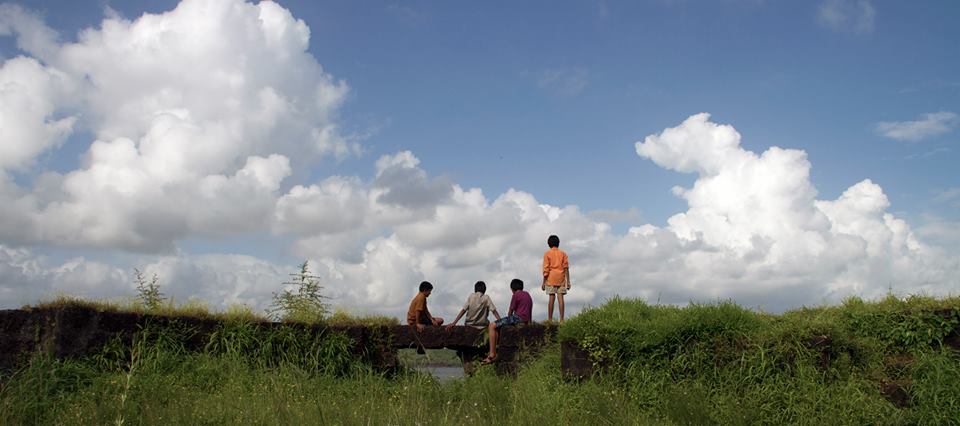
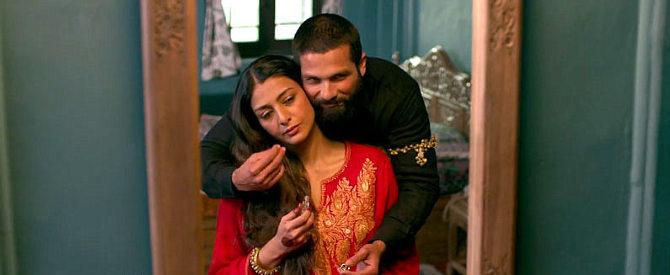


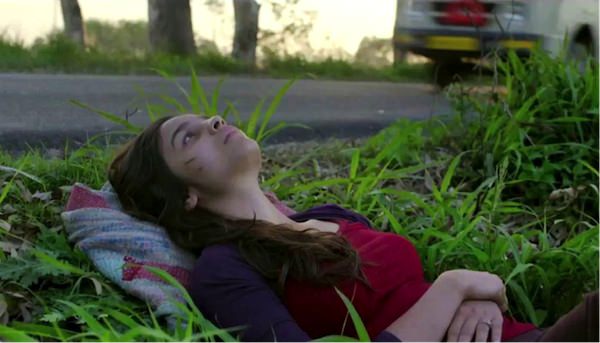
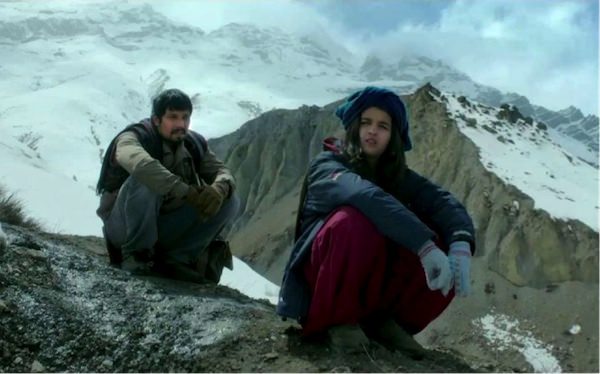


 F.i.g.h.t C.l.u.b