Archive for the ‘movie reviews’ Category

Kamal Swaroop’s cult film Om Dar-B-Dar has been restored and its finally in the theatres. Don’t miss it.

DON’T .  MISS.   IT.

And we are going with the mood of the film, so recycling an old post by Varun Grover which was written 3/4 years ago. Don’t worry, it still reads new just like the film and its ideas. If you have seen the film and are still wondering what the real story is, this post got all your answers.

ODBD

Death and mythology in a small town

बबलू बेबीलॉन से, बबली टेलीफोन से  (Bablu calling from Babylon, Babli listening on telephone)

Om Dar-B-Dar.  Om here and there. Or more precisely, Om here and there, helpless. That’s the name of a film I first heard about around 10-years back. It sounded like a typical wannabe ‘Indian Parallel Cinema Movement’ film of the 80’s. Though the ‘movement’ never went beyond the occasional film festival screening in India then (and now, much later, beyond the difficult-to-find DVDs in malls with bad architecture and heavy security) – it did give the otherwise angry-for-no-reason 70’s and colored-clay-pot strewn 80’s some credibility. Shyam Benegal, Govind Nihalani, Basu Chatterjee, Mani Kaul, Kumar Shahani and with a much lighter hand, Sai Paranjape made cinema which was sometimes as local as a small stretch of highway in north India (Uski Roti (Our Daily Bread), Mani Kaul, 1970) or a residential chawl in a Bombay suburb (Katha (The story), Sai Paranjpe, 1983). In fact, they were the only people making cinema with a very strict sense of time and place – love letters which started with a date and place on top.

But then, art cinema movement too had groupies trying to pass off as the real rockstar. Films with dim lights, grim faces, and half a social issue (invariably leftist in thought) would instantly be termed as ‘parallel’, get the government of India funding, and be sent to film festivals abroad. Om Dar-B-Dar sounded like that kind of film, especially after one article I had read which described the film as some kind of existential study into the life of a teenager in a small town of Rajasthan.

Watching it recently for the first time, I realized, it is anything but me-too. Or even close to ‘art cinema’, as we know it. It exists in a league of its own. And though that may not be intended as a high praise, but that’s the only way it can be described.

मिथ्या है संसार – माया है संसार  (The world is a lie – the world is an illusion)

Kamal Swaroop, a scientist with DRDO (Defense Research and Development Organization) of India, turned a filmmaker, graduating from FTII, Pune, to debut with Om Dar-B-Dar. He calls his only feature film to date a kind of spoof on ‘art films’ of the time. “If anything, I wanted to make an anti-intellectual film. I didn’t want to make a film on some social issue or sad people. I just wanted to make a film about a small town”, said Swaroop in a personal interaction after the screening a few months ago. Having stayed in Pushkar in Rajasthan, famous for its annual Hindu mela (fare), probably helped him nail the setting of the film. His love for science and mythology admittedly helped in deciding the next two important aspects – the central character of teenaged Om and the basic conflict points in the story.

But is there a story in Om Dar-B-Dar? Kamal Swaroop insists there is – though the group with which I watched the film was clueless. Swaroop calls it bad conditioning – looking for story and only story in cinema. He says cinema is not necessarily mass communication, it can be a personal expression too; a painting or a poem. Though many were not convinced, Swaroop claims that the film, when screened in small villages of Rajasthan, was completely ‘understood’ and enjoyed by the simple villagers. Reasons being – less conditioning and more connection to the vibes and idiosyncrasies of a small town.

Next question – does the film have a form, a structure? Swaroop’s crisp answer – even deform is a form. What about accessibility? Comprehension? Head and tail? Again – Swaroop’s answer – why should cinema be objective? Why a film should be only one of the two things – I got it or I didn’t get it?

That raises some very valid debate points – story, form, and accessibility in cinema. Indian cinema, traditionally has been a story-driven exercise in videography. Starting off with mythological tales in the 30’s and 40’s, and evolving into equally simplistic good vs. evil (Hero vs Villain) cinema of the 60’s and 70’s – there is a long and deeply ingrained history of accessible stories pushing ‘cinema’ more and more into the ever-expanding space of ‘mass-media’. Rumor has it, two of the greatest films of Hindi cinema (Mughal-e-Azam, Guide) had their endings tweaked to accommodate popular tastes. (Anarkali being given a safe passage by the emperor and rains arriving on Raju’s death respectively).

The third aspect – form or structure, was also rarely played with in popular cinema, with the most adventurous of the lot taking the ‘flashback’ route as the only standout narrative element. It can be noted here that most of the art cinema movement films too had a strong focus on story-accessibility couple – they differed majorly in the structure/form department. In addition to having more realistic settings and acting, they succeeded in creating a new cinematic-clock for themselves – a form where time moves slower and hence more details are visible, and vice versa.

And here lies the most distinct element of Om Dar-B-Dar – cinematic clock, here, moves as fast, if not faster than a regular commercial Hindi film while the other two aspects (story and accessibility) are given the least respect. In fact, it would be much enjoyable to watch it as 20 short films (a lot of them very funny, and an equal number completely nonsensical) about Om’s family and friends, stitched together with music, surreal dreams and a mythological back-story. So, for the math-minded – ODBD is an anti-art, anti-commercial film moving at the pace of a commercial film and having the details of an art-film.

टैडपोल से हम (We are like Tadpoles)

After the film screening is over, and after heated debates on whether it can even be called a film in the first place are done with, Kamal Swaroop smiles and asks whether anybody still wants to know the story. A few hands go up and Swaroop relents.

(SPOILERS) Om, a teenager, is blessed with a magical power and he can hold his breath for any desired duration of time. This results in him putting up a show at the holy place of Pushkar (ascribed as the only heaven on Earth in Hindu mythological texts), where he goes inside water and holds his breath. Once, to protest against Brahma, the Hindu God credited as the creator of the world, who has decided to remove the ‘heaven’ status of Pushkar, the locals decide to put up a non-cooperation movement against Brahma. The only non-cooperation they can do to Brahma is to stop breathing, as that’s the only gift he has given. But since Om’s natural tendency is to not breath, for him, the non-cooperation would be the act of breathing. At the time of protest, Om happens to be inside the pond where he puts up his show. He breathes, to support the non-cooperation, and dies. (spoilers end)

But then, one has to watch the film many times to get this story – and as I said, there are at least 20 more stories, all equally layered, and delivered at a crazy pace. At times, it looks like an MTV Production, with the kind of visual liberties, caricatures, and abrupt cutting involved. (No wonder, Swaroop later helmed the launch of Channel V in India, playing a crucial role in defining the ‘funky’ auro-visual space it’s known for now.)

 कसप (How do I know)

In a crucial scene in Hindi novelist Manohar Shyam Joshi’s ‘Kasap’, the male protagonist’s naada (thread of pajamas) gets stuck in a knot in front of the girl he is wooing. In Om Dar-B-Dar, a similar thing happens when a young man is about to start making love to his girlfriend. Funny, sad, frustrating, and deeply observational at the same time – moments like these make ODBD a watch to remember.

Whether it’s a film with story, structure, accessibility, or (latest buzzword) ‘take-homes’ is a debate worth drunken nights with friends. The film released in 1988, and has been getting buzz (positive, negative, both) at regular intervals. Though that doesn’t guarantee a great, path-breaking, or cult status to any work of art (or mass-media) – it surely means there are enough cinema crazies in the world.

As for whether you will like it, the only answer is ‘कसप’.

Aseem Chandaver, or Baba Jogeshwari or Gina Kholkar on Twitter or Neelouli on youtube, or by whatever name you might know him, he is hands down the baap of all B-C Grade movie buffs that we know of. Working in Mumbai as a copywriter, the man is responsible for sifting through tons and tons of campy movies, selecting clips, uploading and sharing them in his spare time, purely for the joy and love of B-C Grade cinema. We thought it would be fitting to post what he thought of Miss Lovely and requested him for a review. So here it goes, Aseem on Ashim’s film –

Miss Lovely1

Since the global connection of interconnected computer networks is presently imploding with acute interest, unanticipated awe and limitless curiosity for the once shadowy genre of B, C & D-grade films, I thought since the past one and a half years that director Ashim Ahluwalia’s film Miss Lovely will uphold a sense of equilibrium by retaining the novelty, cleansing the category of all its amassed gloss and prolonging fandom through unseen and unheard tales of cinematic obscurity.

Well, I was wrong. Miss Lovely is definitely a new brand and flavor of soda pop, but without any strong hallmark fizz. An incredibly well-researched and chronicled film that leans on its experiential past without ever paying attention to the evidently weak screenplay and character extinguishes. A stalwart and his coerced unenthusiastic brother who falls in love with the struggling actress, asphyxiated in a subterranean world is not only captivating, but a ticking calm bomb set to explode when you least expect it. Instead of a pensive postmortem or even seeing the world through seedy filmmaking eyes, it does a staccato job of introducing you to half-baked and sometimes clichéd characters with anticlimax dialogues that literally deflate moments of visual narrative and accomplished story.

The film starts with a brilliant spook sequence, which even incorporates cleverly reconstructed POV shots from Director Baby’s B-Grade magnum opus House No. 13, a slight Desi rendition of the movie ‘The Poltergeist’. Ahluwalia’s profound knowledge of what the audience wanted and what psychoactive levels the filmmakers went to entertain those fantasies can be unmistakably seen here.

House No. 13 scene. Watch from 1:00:55 –

In the House No. 13 intro scene, just as the audience gets bored with the ghost being charred to flesh and dust, Ahluwalia reveals years old secret that made some of these films a runaway success. As the House No. 13 reel ends, there begins a Double X rated film which were in the 80s and intermittently in the 90s cut pasted all throughout the film. These double X films were either shot separately with a completely different cast or with the film’s cast continuing a lovemaking scene in the same film but with topless or semi-naked shots. Some insider moments like these keep springing in the first half of the film; two of the most memorable ones being the scenes from Wohin Bhayaanak Raat and a motleyed recreation of Khooni Panja & Hatyarin, where Ahluwalia unveils yet another fascinating tale of fetish based cinematic excellence – Spectrophilia/Necrophilia.

Wohin Bhayanak Raat – From 3.27 –

I think Ashim has been a lot around the sets of B-Auteur Vinod Talwar – The Dulhan Scene particularly motif from these two movies –

Khooni Panja – From 1:02:28

Hatyarin – From 11:23

In one scene, a newlywed bride is being ravished by a monstrous aberration in a sexually charged hypnotic trance which is depicted by Ahluwalia with a hysterical and precise recreation of the shooting style of Camp filmmakers; while in the other we have Kiran Kumar’s deep-fried chicken pakora avatar who ferociously sucks the blood out of female victims is superbly incorporated in the film as if it is made by the film’s lead pair The Duggal Bros (assuming it is made to sound like The Dhillon Bros, a famous B-movie duo).

There are several triumphs like these where the Director outshines and puts a wide smile on enthusiasts and novices alike. The entire movie is laced with a ‘Green Room-esque’ motif, and when you combine the moody direction with ace cinematographer Mohanan’s virtuosity, you are inadvertently left with a princely smack of Cuticura, the mentally depressing lights of the backstage and the impending doom of a wrathful breakdown from the funding Underworld Dons and unpredictably sinister Distributors. The music of the film is absolutely mind-blowing. Instead of lackadaisical 80s guitars and off-tune keyboard sonatas by less known music directors, the music has been perceptively compiled containing the best of post-disco pop such as Nazia Hassan & Biddu and even contains psychedelic compositions by Maestro Ilaiyaraja and Italian exploitation composers Egisto Macchi and Piero Umiliani of Manha Manha fame.

Dum Dum Dede – Miss Lovely Official Song

The musketeers of Miss Lovely are its stylized treatment, costumes, production design and lastly, Da Man Nawazuddin Siddiqui, an actor who rises like a phoenix from a deadpan screenplay and heightens his character even when he stands still, traumatized and sickeningly numb after a prison term, watching his heartless brother’s wife beseeching him not to enter her newly started life. An unforgettable scene where Nawazuddin lifelessly stands still and simply gives a smile, flummoxed at the heartlessness of the world. What masquerades as a dense narrative is actually an intensive lack of scenario. The story is about a forlorn and discontented bloke Sonu (Nawaz) who joins his slightly established B-movie filmmaker Vicky (Anil George) in the Camp movie-making business. After initial shocks and frustrations, he meets Pinky (Niharika Singh), an innocent struggler who hails from a strict family. Sonu pretends to be a filmmaker who promises her a lead role in his upcoming film titled Miss Lovely. After a brutal clash from the underworld and sundry financiers, Vicky lures Sonu into a last resort plan that forever exiles him to oblivion.

Even with the leading characters’ galling complexities, insecurities and their escapades, the film battles between two worlds whether to tell the story of the B, C & D-Grade World through the eccentric mentation of Vicky and Sonu or try to salvage the maladroit storyline impediments of all three characters, leading to an inevitable Bhandarkar-esque situation. And yet the movie is sandwiched by some of the most painstakingly showcased cultural phenomena and developments of the late 80s and early 90s.

With all its narrative faults, Miss Lovely proved to be a commendable watch due to its spectacularly rich recreation of the first ever D-Grade Era, its uncompromisingly Pulp and Psychedelic 80s settings, the Behind-The-Scenes of extremely paltry budget films, dark humor of its characters and of course for the glory for Camp/Cult fanaticism.

P.S – I’m extremely angry as someone flagged my Qatil Chudail video as inappropriate and pulled it out from youtube.

(Editorial Team note – You can check out Aseem’s videos collection here, here and here. And click here for our 2012 rewind post in which we’d written about Miss Lovely)

I saw Coen Brothers’ new film Inside Llewyn Davis at Mumbai Film Festival in October. And i have been looping its soundtrack since then.  The film has released in US now. i saw Noah Baumbach’s Frances Ha recently (Yes, yes, i know am late). And strangely, i have been connecting the dots between the two since that day. This is a perfect double bill. I was shouting out how come nobody was talking about this connect, and so this post. Though recently a friend pointed out a similar tweet by a film magazine editor too.

inside-frances

His name begins on strange note L-L. Her ends on funny note – Ha. He wants to sing. She wants to dance. Both have cat issues which starts their story. Both are in New York. And both have the same problem which they are struggling with – to find a roof above the head, and a bed to sleep.

Inside Llewyn Davis is a grim portrayal of a week in the folk singer’s life. His life is fucked up in more ways than one – career going nowhere, a pregnancy to deal with, family members who don’t mean much, a cat to take care of, and worst, not even a bed to fall asleep and forget all these worries. Is there anything worse than that? The world is hazy, and the weather is cold, gloomy, and depressing. It’s a heartbreaking story of an artist where music is the only comforting factor. In Bollywood dictionary, it’s the story of a struggler – a strange term to define any writer, director, actor, or anyone else who is trying his luck but still haven’t got the big break in the industry. As A O Scott wrote in this absolutely brilliant and spot on review of the film (and read the Coens like nobody has done in any ILD review) – “One of the insights of “Inside Llewyn Davis” is that hard work and talent do not always triumph in the end……We are, as a species, ridiculous: vain, ugly, selfish and self-deluding. But somehow, some of our attempts to take stock of this condition — our songs and stories and moving pictures, old and new — manage to be beautiful, even sublime” This city is full of such bleak stories. Yet that has never stopped anyone from becoming another Llewyn Davis, another eternal struggler. Ha!

Frances Ha film is warmer, lighter and funnier than Llewyn Davis. But her life is no better. She is looking for the same comforts – a roof and a bed. Her dancing career is going nowhere, she has no job, no money, her best friend has moved on, she has just separated from her boyfriend, she is very “undateable”, and her family members are far away from her. Frances doesn’t know what to do with her life, and most importantly, how to do it.

Thanks to Coens’ taste for strange black humour, Llewyn’s life seems to be in never ending loop. Frances is lucky that way. Baumbach is not that cold. In a gorgeous climax which turns this film into one of the greatest films on friendship, Frances at least achieves little bit of happiness (not describing it to keep it spoiler free). And Llewyn just gets another hard punch on his face.

If you are an outsider living and “struggling” in Bombay to find an entry point in Bollywood, you will laugh and cry with this double bill. Too many similarities, and the big picture is too scary at times. A hassle free roof and a comforting bed are the most expensive and elusive things in this city. Just another day, a friend landed up in Bombay. And as it always happens, the first call was about good brokers who can help find that roof and bed.  Or you point them to the Flats Without Brokers FB group. Just two days later, she decided to pack her bags and went back to the city from where she came. i don’t know the reasons yet, didn’t bother to ask too. But it made me ponder over many such friends who have come to this city, struggled their way, and have found थोड़ा सा आसमान and a small corner for their bed. If i call it the “Llewyn Davis Condition”, then the comfort syrup can be called “Frances Ha” – strangers who are in similar situation like yours, who have left their roots for similar dreams, who become your family soon, and with whom you develop a bond so strong that it’s impossible to believe that you never grew up with these friends. Where were they all this while? How did you survive without them for so long?

Inside Llewyn Davis and Frances Ha connects more strongly if you are the fringes of any artistic field, and especially if its something to do with films. As i see many such friends with similar stories, all i know is that everything is uncertain till you quit or your name appears in the credit roll one friday. A talented and now-famous lyricist once explained to me why he still prefers working with a loud and pompous producer. He asked me, do you know what an artist want basically? i said, what? To work in peace so that he doesn’t have to think about the bread-butter, bed, and roof. That producer gives me that comfort and i can focus on my art.

So thanks to my “Frances Ha” bunch who helped me survive this city for more than a decade, and if you are new, hopefully you will find your ‘FHa’ friends soon. All you, Ahoy, Sexy!

All i can think that in a parallel world, Llewyn Davis and Frances Ha will meet. He will sing, and she will dance, he will let the cat out, and she will be happy about it. She will shout out Ahoy, Sexy! and he will sing hang me, oh hang me in response. And hopefully, i will be rich enough in that world to give away one of my houses to this duo.

If you haven’t seen, watch these two films. And watch them back to back. Maybe that’s the closest we can get to that wonderful parallel world.

@NotSoSnob

(ps – If possible, do play the Inside Llewyn Davis soundtrack as you read this)

Fox Star Studios India has recently acquired the Hindi-language remake rights of Pawan Kumar’s Kannada film “Lucia”.  He is going to direct the Hindi version too. Vijay Shankar Murthy tells us why you should watch it and how it has become a landmark film down South.

Lucia

An inspired voice-over quotes legendary poet-musician Kanakadasa:

Nee Mayeyolago, Ninallu Maayavo

Nee Dehadolago, Ninallu Dehavo

Are you a creation of illusion or is  illusion a creation of you?

Are you inside a body or is the body inside of you?

A riveting sequence of opening credits later Pawan Kumar’s terrific psychological thriller “Lucia” opens its cards.

We learn there’s an investigation into a suspected murder attempt on Nikki aka Nikhil who is now on life support. A detective from Mumbai, Sanjay, is inserted into the investigation team much to the chagrin of the local cop. The cops and Sanjay dig deeper into Nikki’s life, stumbling upon a tale of substance abuse–involving a drug named “Lucia”.

Satish Neenasam as Nikki plays an unremarkable country bumpkin from small town Karnataka residing in a teeming metropolis that is Bangalore. He makes a modest living working as an usher (Torch Shiner) in his uncle’s old-style single screen theatre “tyaakies”. Nikki suffers from insomnia and on one fateful night comes into contact with a drug peddler who offers him a solution to his sleeping problems–the tablet “Lucia”. The peddler tells him not only will this tablet enable him to sleep well but also help him be whoever he wishes to be in his dreams.

Taking the plunge into Lucia, Nikki now ascends into his “dream” life. In this alternate reality Nikki is a hugely successful film superstar. Girls swoon over him. Directors and producers queue up to work with him. His manager is Uncle Shankaranna (same as the theater owner Uncle). Nikki’s demeanor suggests that despite the hordes around him, he is still a lonely man in search of something.  Enter model turned actress Shwetha (Sruthi Hariharan), who appears to be the cure-all. Still even in his dream he is plagued with problems and receives extortion threats.

In reality, mean time, Uncle Shankaranna is pressured by a local gangster to part with the Theatre  towards repaying his debt. Nikki realizes that one of the gangsters resembles a guy who shot him with rubber bullets in his dream. Nikki also meets Shwetha from his dreams in reality and begins a quest to win her heart.

Meanwhile in present day, we see the investigation appears to be gathering momentum as Private Detective Sanjay is convinced there is a connection between the attempt to murder Nikki and the drug “Lucia”.  Is it a drug-habit gone bad? Did Nikki stumble upon some secret plans of the drug peddler gang? Did he get lynched by the gang that threatened his uncle?

Writer-Director Pawan Kumar shifts between reality, alternate reality or dream life,  and the present day seamlessly with the lines blurring between what is real and not. The dream sequence is presented in black and white to differentiate itself. The love story between Nikki and Shwetha often acts as the theme that straddles reality and dream around which other events revolve. Kumar also peppers the narrative with other sub-plots intertwined with the goings-on.

An under-current of black humour through the film laments the state of the Kannada film industry. Superstar Nikki’s film is directed by a guy who speaks Tamil (likely that he is a Tamil industry reject) and a Rowdy-like Telugu speaking producer (Possibly not rich enough to produce Telugu movies and hence produces lower budget Kannada movies). An oily distributor tries to convince Uncle Shankaranna to screen Tamil and Telugu or even porn movies in his “Tyaakies” in order to make “Frofit” (Profit) as there are hardly any takers for Kannada movies.

In another sub-plot Shwetha tries to “refine” some of the bumpkinesque traits of Nikki, particularly his inability to speak English. She is particularly unimpressed by his pronunciation of “Theatre” (“Thetru”). This seems a reference to the divide between the English speaking “Cantonment”  Bangalore and the Kannada Speaking “old” Bangalore. The cooling glasses Superstar Nikki sports symbolize “coolth” which torch shining Nikki is not seen with.  It also seems a tool to hide the pain and the loneliness behind the glass veil .

When you look at the central theme of Lucia one can assume it is that of relationships, of love, of loss and the pain of losing love.  Looking at it from another perspective we can also proffer that it is the story of one man – Nikki. A third way of looking at it is that of a typical crime-thriller with a whodunit element.  What is particularly astonishing about Lucia is how seamlessly and organically it straddles these genres, stories and even copious quantities of philosophy but yet remains wonderfully accessible. It’s here where Lucia differentiates itself in a genre that is typically tricky. Above all, as Kumar announces at the beginning of the film—it’s a tribute to cinema—one that’s born out of love for the celluloid world.

All of the high-points of the film would have been rendered useless if it was not for the right people to have worked on this production. The actors playing the three central characters in the film—Nikki, Shwetha and Uncle Shankaranna are perfectly cast.  Satish Neenasam as Nikki does a sensational turn as the lead character. When the narrative juxtaposes reality and dream it chiefly aims to contrast the two Nikkis. In one scene Nikki is a blabbering country bumpkin while in the next he is a suave confident superstar who speaks little. Neenasam rightly plays the complex Nikki almost as if it were two different people. Whether it is getting the Mandya-dialect of Kannada right or the demeanor required of a reigning superstar, Neenasam is incredibly brilliant.  Special mention of how Neenasam’s looks are designed through the film.  It is as important as the performance itself.  This is the time of the Anti-Hero. With the emergence of the likes of Nawazuddin Siqqiqui, Vijay Setupathi etc Neenasam is a welcome addition to the club. It also proves what talent can do when provided the creative canvas. Sruthi Hariharan as Shwetha the model- filmstar/pizza-delivery girl is pitch perfect as well.  Though she doesn’t get the best of the lines she emotes superbly whether it is conveying the aura of the superstar or the pain of losing her love. Achyutha Kumar is effective and eminently likeable as Uncle Shankaranna.

Siddhartha Nuni’s cinematography wonderfully captures the director’s vision. Despite the number of scenes shot up close to the characters, the camera never feels intrusive or gimmicky. It aids us into the lives of its characters. The ecosystem of a typical Single Screen Theatre is captured  in vivid colors and with clinical precision by Nuni’s wavering lens. Poornachandra Tejaswi’s songs don’t always shine although in places it is memorable. The dry humour of the lyrics though is effective. Notice the “item” song that Nikki refuses to dance to but eventually does when the item girl, he realizes, is Shwetha. The background score sufficiently enhances the film.

Kannada movie moguls once upon a time in the distant past produced gems such as Minchina Ota, Manasa Sarovara, Bedara Kanappa, Ondanondu Kaaladalli etc. That was a golden period for Kannada cinema. It is however, highly unlikely that you will find a Kannada film in the recent past that succeeds like Lucia. The tacky 1989 thriller Idhu Saadhya (Meaning: This is possible) starring Anant Nag and Shankar Nag is perhaps a distant genre-cousin of Lucia in Kannada cinema. Additionally one cannot overlook some obvious similarities/references to Cameron Crowe’s Vanilla Sky, but the co-incidences end with the theme and maybe a doffed hat here and there.

In an industry that more often than not receives hand-me-downs of the Telugu and Tamil films and where banalities are magnified further in the remakes, Lucia comes as a true breath of fresh air. The 90s had Sunil Kumar Desai who often attempted to move away from convention with movies such as Beladingala Baale (Lady in the Moonlight) but did not completely succeed in creating a distinct voice. Also inspirational and unheard of in the South Indian film industry is the concept of crowd-funding. Investments here still remain in the purview of the parochial minded where commerce, ego, hero etc usually trump over most things creative. It is not surprising that despite the backing of senior folks like Yograj Bhat, Lucia did not find takers in the Kannada movie industry. How could they if it wasn’t a remake of a “successful” Telugu/Tamil movie? Also incredible is that this movie was made on a budget of Rs.70 Lakhs. Kumar deserves unadulterated credit for standing his ground, for having conviction in his story, but most importantly— ultimately succeeding in delivering what he promised.

Eleanor Roosevelt once said “The future belongs to those who believe in the beauty of their dreams”. It neatly sums up the film and the filmmaker’s journey.

All those who have loved Kannada movies of the 70s and 80s, watch Lucia RIGHT NOW. You will be proud of Kannada cinema again.  And yes, those who love cinema in general – two reasons for you to watch a Kannada movie a) It’s brilliantly subtitled (smart move by Kumar to broaden the audience base) and b) It’s a terrific movie.

(About the author – To pay his bills, Vijay Shankar Murthy works with what John Perkins calls “Evil Big Business”. In an alternate world, he would like that his bills are paid for, and all day he could watch Gangster flicks over and over again. In the middle of all this, he also aspires to be a writer some day.)


ramleela

The early reactions from previews of Sanjay Leela Bhansali’s new film, Ram-Leela, clearly seems to be divisive. For any new film, i always find that exciting.  Now that i have seen the film, it’s easy to understand why. You might like it, fall in love with it too, and it’s entirely possible that you felt like gouging out your eyeballs. And every reaction can be justified. But one thing you can’t do – dismiss it completely. Because there’s just too much packed into this one – you can just pick one thing and easily indulge in it like its director.

I feel this is Bhansali’s coming out film. Coming out as a loud Gujrati masala filmmaker. Few weeks back, he even confessed that he is a “loud Gujarati” at heart. Well, that fits in perfectly with the film’s promotions too. But one can’t fake it so much. And when one fakes it, one delivers films like his last three – dead, plagiarised and bloated Guzaarish, boring and claustrophobic Saawariya, pretentious and ham-fest Black. It’s always good to be back to own’s roots. With apologies to Swades, apne hi Gujju colours me ghul jaana Bhansali ka muqaddar hota hai.

Though Khamoshi still remains his best work – the raw emotional chord strikes the perfect balance with a great soundtrack. He made his mark with his blockbuster Hum Dil De Chuke Sanam set in his home terrain. He used a similar canvas to re-paint Devdas. And now, he is back to his home turf again and has gone the whole hog. The language is not sanitised Hindi of HDDCS. Here everyone speaks in thick Gujju accent and sometimes it’s difficult to follow the dialogues. His keywords have remained the same – big and beautiful – every scene, every frame, every drape. There’s some typical Bhansali wizardry in the silent scenes – my favourite is the one when the lovers meet for the first time in the background of bright colourful gulal flying all over, and interestingly, the last time they meet, it’s in similar pose. Aha, beauty.

He has just added a new one – passion raunchiness. There was never so much lust and physical act in any of his films and it’s a refreshing change. From hyper-objectifying the hero’s body to dialogues filled with sexual innuendos, pelvic and booby thrust to passionate kisses between the lead pair. It’s all done with certain degree of aesthetics that one can expect in a SLB film, but it’s all a new colour on his old canvas. It’s fun to see that a filmmaker who has always wanted to be taken seriously and strictly positioned himself in a certain way, is going on this route. And with all his indulgences.

Like his most films, it’s also set in some strange Bhansali-land. And i have made peace with the fact now. But this time we see mobile phones, porn films, gun business, ports, and characters talk about social media too. The times they are a-changin’, in Bhansalipur too.

I also felt this film bring backs the bonafide bollywood masala genre. With every filmmaker trying a Southie remake and calling it the “masala” film, all my senses have retired hurt. Race2, Once Upon A Time In Mumbai Dobara, Besharam, Himmatwala..the list is long. Some of the films don’t even have a single scene which is well written and directed. I will better pick Ram-Leela – action hai, emotion hai, drama hai, gaane hai, ma hai, bhai hai, behen hai, suhaag raat hai, khoon kharaba hai, holi hai, diwali hai, aur (attempt to) rape bhi hai.

The two jarring aspects of the film are its duration and the screenplay. The basic story is adapted from Romeo-Juliet with elements of Ram(ayan), but the screenplay became too much of hotchpotch in the second half. The first half flows smoothly with Siddharth-Garima’s playful dialogues, and Ravi Varman’s lush photography capturing every grand set, authentic props and flashy colours meticulously used by production designer Wasiq Khan. They are in perfect sync. Add to that the combustible lead pair of Ranveer Singh and Deepika Padukone. Were they in love when they started shooting? Or Bhansal egged them on to get the best result on screen? Because it’s difficult to be so comfortable and uninhibited in intimate scenes, especially on Indian screen. And those long, passionate kisses just added to the magic. When was the last time we saw something so real in our films? Like that scene where they kept kissing each other in quick succession, that’s new on desi screen. So candid, so much at ease, and really that’s how lovers kiss. Also, has she been lit from inside? With Gulshan Devaiah, Richa Chadda,  Abhimanyu Singh and Supriya Pathak strongly supporting the second rank of characters, Sharad Kelkar and Barkha Bishit get noticed even in small roles.

And Dear Deepika, whatever are you smoking, please pass the joint to the bimbos of bollywood. It feels so good to know that finally we have an actress who can act and look hawt, is on top too. *sings ये लाल इश्क़, ये मलाल इश्क़, मेरा नाम इश्क़, तेरा नाम इश्क़, मेरा नाम तेरा नाम*.

Just another small complain – my favourite and that bhakti-bhaav-se-bharpoor composition yeh laal ishq just doesn’t get enough screen time. Even though the film felt long, i waited for the entire end credits just for the song.

@cilemasnob

(PS – If you are still googling to know who or what is Lady Popo, the one who is mentioned in the opening credits of the film, well, let me inform that Lady Popo is SLB’s pet doggy. Ooh la la! Which other filmmaker has given so much credit to his Doggy? Jejus, Agle Janam Mujhe Doggy Hi Kijeo)

Nicolas Bourbaki is back. Because it’s call of duty. It’s the same old i-cant-take-criticism-fuck-you attitude. And this time it involved a Tamil film and a popular RJ who has been forced to quit his show. Bourbaki got all the details. Read on.

ebert3

This Diwali, three Tamil films released.

The Ajith-Arya starrer Arrambam, directed by Vishnuvardhan, which opened to bad buzz and terrible word of mouth but the adrenaline quotient in the film and the combined mass fan following of Ajith and Arya ensured that the film took a great opening with the long weekend. It was heavily inspired from Swordfish with scenes liberally borrowed from Hollywood action flicks, including Mission Impossible 4, packaged smartly with the social revenge drama sentiments from Shankar and Rajnikant films.

The second film to hit screens was Karthi starrer All in All Azhaguraja, directed by Rajesh, who is very good with comedy. Produced and distributed by Studio Green (affiliated to actor Suriya’s family), one of the most powerful and influential banners down South today, Azhaguraja had everything going for it pre release. The director hasn’t failed ever and the promos assured a laugh riot. The film, however, opened to terrible buzz online and the deathly silence to jokes and walkouts in theatres forced the makers to edit out about half an hour from the 170 minute long film. Not that it helped.

The third film Suseendran’s Pandianadu was the dark horse, a make or break outing for actor Vishal who hasn’t had the best run at the box office. It opened to great buzz and positive reviews with most critics declaring it the clear winner among the three films.

That being the context, RJ Balaji, Chennai’s most irreverent reviewer known for his tongue in cheek quips on radio, tweeted on Monday night that his segment 120 (a review show where he told listeners if they should spend 120 rupees on the ticket, purely as a voice of the man on the street) would be no more. Here’s the series of tweets explaining his decision.

As many expressed their support to the reviewer, some of the stars on social networks used this opportunity to diss critics and criticism. While some were purely emotional (like Vasuki Bhaskar’s tweet)

and some out of friendship (@actorJiiva and director of Azhaguraja go back a long way), the unkindest cut was from Vishal, who shot himself in the foot and undid any goodwill he had earned from his Diwali release Pandianadu.

(Turns out that Balaji hadn’t even reviewed the film and Vishal was talking about his interaction with viewers who had seen the Diwali releases and the viewers had blasted the films. The third caller had criticised Balaji and he was gracious enough to take the call on air when he had a choice to not allow it. Balaji’s comment was that if a thousand people made a poison biscuit, will you attack the guy who told you it is a poison biscuit or the people who made it? Nothing even remotely personal or below the belt!)

God knows Vishal needs honest criticism the most to triumph at this hour!

If all critics were to say only good things about Arrambam and Azhaguraja out of consideration, to use Vasuki’s analogy, of the babies that were delivered, nobody would have even queued up for Pandianadu. Simply because there is no way people would go watch a third film during the Diwali weekend. Instead of being grateful to people for speaking their mind about what they liked and what they didn’t during the weekend, Vishal actually chose this weekend of all, to suck up to the most influential banner.

About 80 per cent of the films made are either flop or lose money. Not because of criticism but because the makers made a bad film. Singham 2 is one of the highest grossing film down South in recent times despite terrible reviews. Because people liked it even if critics didn’t. People are not always right in recognising good cinema which is why we need critics sometimes to point them in the right direction. We need someone to be the bad guy and say the truth out aloud that this film stinks, go watch the other one.

Because filmmakers don’t offer refunds.

It is extremely juvenile and downright stupid to lash out against critics in times of social media because today, the common man is a critic. One smart tweet summing up a film can get retweeted more times than any review. When everyone is a critic, mass opinion infiltrates the aggregate of tweets and buzz on the film. Which is even more reason you need honest and brave criticism to prevail.

In a world without dissent, the powerful will rule and underdogs will die. Do you want your cinema to be controlled in the hands of a few? Critics are not your enemies, they are your friends.

The real enemies are within your system. The stars who charge salaries that make your project unviable. The marketing spends you invest to beat the competition that puts you at greater risk. The lack of effort in writing or picking the good scripts. The money spent on foreign trips, lavish sets for dance numbers, business class tickets, five star hotels, success parties, audio launches and invites, buying your own tickets to keep the halls housefull… These are the things you can do without.

Criticism, you can do with.

(PS – Bourbaki just got to know that it was scary scenario for the RJ. Got threats too. The way it happens in those bad zimbly zouth films. Only difference is in real life they are scary. So he has decided to opt for something non-filmy now)

(PS1 – More discussion on the controversy is going on here : http://j.mp/1cKMF3F , http://j.mp/175Ibq3  & http://j.mp/1cKMLIu ) Also, another post on the same issue is here.

(PS2 – If you have problem with Bourbaki, his Godfather Banksy got an answer for you here.)

Blue Is The Warmest Color has easily become the most talked about film of the year. With its release in US, the debate is still on. Fatema Kagalwala saw the film, ponders over it, and tries to understand the controversies and criticism surrounding the film. Read on.

blue-is-the-warmest-colour-alt-poster-600x937

I watched BITWC at MAMI and not without fighting a few battles for it. It included doing a town-to-Andheri trip in rush hour traffic, giving up watching ‘The Past’ after much deliberation, and other such sundry mad-hatter-ness over-enthu cuts are usually prone to. I had bought the hype completely and the third, on–request screening at the MAMI film fest was just way too precious to miss.

I watched the 3-hr long film and then began reading about it all. The criticism of the male gaze, the length of the sex scene, the book vs film, (It is based on Julie Maroh’s graphic novel ‘Blue Angel’), Kechiche’s treatment of the girls and so on. I was quite surprised to read the content of the criticism and notice that the intense film hadn’t moved the nay-sayers enough to be more forgiving. At the same time I was very surprised to see I felt much more for the film than I first realised.

At the outset, it seemed to be yet another coming-of-age European film, delving delicately into the inner life of its tremulous 15 yr old. It turned out to be quite so, except that it wasn’t delicate and it wasn’t a ‘yet another’ film. It was one of the most disturbing, hell-fire-raising films, which days later remains haunting, just like the sleepy eyes of its protagonist Adele.

From the time the film starts we know Adele is special. Just like Juno, in that other defining teenage film of the same name. And she is searching. Just like each one of us is at that age. We don’t know yet what exactly is she searching for, but she is expectant and anticipating. Almost holding a breath, waiting for life to surprise her as she pats her unruly hair in place and casually walks up to her school bus.

Adele’s first romantic encounter isn’t bad. In fact she seems to be enjoying the attentions of this nice guy who really seems to be interested in her. But her first heterosexual encounter leaves her cold. And confused. She wakes up in the middle of the night fantasising about this strange girl with blue hair she passed by on the street the other day and since then hasn’t been able to forget.

Suddenly, she is so restless we crave for her to find that blue-haired girl. She is completely unaware of what she feels though, when she kisses another girl in a fleeting moment of irrepressible passion. By then, we have an inkling of Adele’s journey and wonder if it is going to be easy. By now we know she is an intense person and at that delicate threshold of age where experiences can make or break her.

She meets that blue-haired girl soon enough. It is at a gay bar Adele goes to with her best friend and stays back in, exploring it on her own…almost intuitively, the same way she has decided to explore this new side of her. The girl with blue hair is called Emma and she has been drawn by Adele too. There is something to be said about unexplainable chemistry that all of us at some point have encountered, the same that has now drawn Emma and Adele into its net. It isn’t new for the older Emma, and soon Adele gives herself up to this new-found passion. She gives in because she senses this is the truth she has been seeking. It envelopes her completely and she lets it possess her with a consuming intensity.

As we suspected early on, it isn’t easy for her. The first attack comes from her girl gang back at school and we learn of the irrational, demonic homophobia the world is gripped in. Teenagers, before they turn rebellious, generally are the most prejudiced, most intolerant, most judgemental, operating from a world-view sharp in its blacks and whites. Adele also has a conventional, hetero-normative family, equally prone to the same discomfort with homosexuality her classmates share. It is this that makes Adele introduce Emma as her friend to her family.  But it does not provoke questions in her mind, she is consumed by the passion she feels for Emma. And Emma, for all her arty ambitions, is deeply involved as well, happy to devour Adele and be possessed by her.

They are famished for each other and satiated by each other. The two unprecedented sex scenes in the film, controversial but landmark, define the passion they feel for each other, a passion governed by an unbreakable bond and undeniable chemistry, stuff that made-for-each-others are made of. There have been several disconcerted noises about a straight film-maker making a lesbian film and the male gaze re-imagining a female sexual encounter to its own benefit. As much as my limited understanding of homosexual relationships, desire, love and togetherness goes, they aren’t any different from heterosexual ones. Desire after all, is an equaliser and passion is not partial; that fire consumes all of us equally. Kechiche captures Adele and Emma as raw and animal as possible. They WANT each other and want each other completely. There is something life-affirming in a passion like that and Kechiche and both the girls do complete justice in bringing it to life.

The carnality of the sex scenes, their raw lust for each other and unbridled nudity puts the question of the gaze in picture. Whose point of view the film is from and whose point of view is Kechiche trying to underscore? This (link) lambasts Kechiche for using lesbian sexuality to satisfy the male voyeurism for girl-on-girl action. This (link) criticises the un-emotionality of the scene and feels the 3rd person pt of view, the staginess and complete lack of the girls’ point of view takes away from their story. For the writer, the male gaze claim is somehow validated by the way the scene is staged. However, I find it difficult to imagine how close-ups would have escaped a similar criticism of exploitation. The staging of the film, one that includes the entwined nude bodies of both locked in lust but views it at a distance, could be seen as a documentary eye as well. Or observant. To my mind, if he had cut close, that would have rang false, and maybe then looked like the male gaze on a trip.

Someone asked me if, being a woman, the un-emotionality of the carnal scenes put me off. But being a woman, the scene wasn’t unemotional to my eyes. The lust was raw but it arose from a deep bond the two felt between themselves. And Kechiche’s portrayal seemed to be capturing that bond from a safe distance, hesitant to step in lest he interfere and become the unnecessary third person. I loved what I saw, the unabashed hunger of a female for another female, somehow affirming the yin and yang of ourselves and how we have enough of both in each one us irrespective of our genders.

What is important about the entire male gaze question is the question of protagonist. In a heterosexual sex scene, the action is almost always filmed from the male point of view, with the female framed as the object of vicarious desire for the film-maker and audience. But with both people involved being women and the camera being distant, I was left asking – who was the desired and who was the one lusting, and how was the audience meant to relate to it all? It was an interesting equation Kechiche threw up and I think he did away with the male gaze with his framing. The 3rd person point of view lens helped me watch and engage with a very intimate film without obstruction, without external baggage. It may not have been the intention, but it was liberating. It is worthy of note that in most other emotional scenes Kechiche goes and stays really close, so close it almost seems like he is desperate to peek into Adele and Emma’s souls…And it is important because that involves us intimately, without us really realising it.

Adele’s growing up from a student to teacher is glossed by. Suddenly, she is playing the dutiful, loving ‘wife’ to Emma and her party of arty friends whom we still don’t know if we can take seriously. I am indifferent to the jump in years because what matters most is the change in their relationship. They have settled into a regular live-in relationship and life has begun to fray the passion. Emma doesn’t seem to be as devoted as before and is it only the stress of a career going nowhere? Why the need to connect with Adele intellectually? Why the need for Adele to have a passion especially in the arts? Why isn’t Adele’s love for teaching, something she does intuitively very well, not enough? These questions are at the edge, because the film meanders aimlessly and stops at a lot of places it needn’t have. But after touching on all those uncomfortable questions lightly, it stops at a random encounter of Adele with a man. And Adele’s downward spiral begins. She is lonely and searching again. This time it hurts to watch.

Which was the most disturbing scene – the break-up or the sex scene? Which more agonising? Interviews (link) of the stars have mentioned the trauma they underwent while filming both. Adele speaks of being very raw from being being hit hard and of Kechiche screaming at Emma to hit her even harder. The scene was filmed for hours and hours on end, that and only that scene repeatedly. That I closed my eyes during the scene is probably evidence enough that Kechiche got what he wanted, a soul-searing portrait of heartbreak complete with tears, snot and blood.

When Adele was out on the streets, helpless and howling like a pup in pain, it was then that actually I began to feel for her character. I wanted Emma to take her back and say all was fine. I wanted their passion to be restored to its previous glory and I wanted Adele to be safe. Because after that we never see the Adele we had been watching till then. And as with all those heart-broken, Adele’s lowest point comes in the restaurant when she desperately begs Emma to take her back. We see Emma settled into a boring, conventional life without any of the spark she shared with Adele and it is not explained to us why chose that. Maybe it is age, maybe wisdom, maybe disillusionment. Heartbreaks can leave unrecognisable scars and change us unfathomably. Although she responds with long-repressed passion to Adele’s sexual overtures she chooses to walk away, finding the comfort of a homely twosome more reassuring than the wildfire of one with Adele.

Intentionally or not, the film pushes us to take sides. It is Adele who strays but it is Adele’s hurt we relate to the most. Infidelity in any relationship is traumatic, but in one as intense as this, can be much more; powerful enough to break spines. Irrespective of who strays, both bear the brunt and Emma must have too but we don’t have an opportunity to know her side. She arrives at ‘infinite tenderness’ for Adele by the end of the film and it is a stirring moment. Because after great passions have worn themselves off and great rages have tired, it is actually only infinite tenderness that remains. We do not see Emma’s reconciliation with the loss, nor her transition from anger to forgiveness. But in the fabric of the film, her journey is not important, only Adele’s is and the film seems to be mute about it from this point on. It hangs like Adele does, between the last vestiges of Emma’s memories and a present that refuses to bear a better tomorrow. Anyways, when does life move until healing liberates us? Stranded, life stagnates or goes round and round in circles, desperate to find that point where it all began and where it all ended. It is called moving on for that reason. Adele is stuck too but one day she will move on.

Kechiche’s universe is not dystopian but it isn’t dreamy either. He just leaves enough space for us to imagine and hope if we are optimistic. For Adele though, it’s an end, final. She has no choice but to move on and there is no more of that we can be a part of either. The film ends with her walking away from Emma’s fashionable, successful art show. Adele has grown up or maybe she hasn’t but knowing what we know of her, she will. Perhaps that is why the French title – “La Vie d’Adèle—Chapitres 1 et 2’ makes more sense.

There is so much sensuality in the film and not all of it is tactile. The camera caressing the forms of nude statues, the indulgent focus on food, the splash of blue everywhere, Emma’s nude paintings of Adele and so on. It makes for a voluptuous fabric, the lust seeping out of the seams and spreading across the entire canvas with a hedonistic glee. This focus on the nudes in art points at an attempt to subtly explore the relationship of sexuality and art, foregrounding Emma’s artistic pursuits heightened by Adele’s presence (she calls Adele ‘my muse, my inspiration’.) Adele isn’t gratified by this; modelling for Emma is just an extension of giving herself to Emma. But for Emma, this space isn’t seamless, there are brackets. If there weren’t, her flagging artistic ambitions wouldn’t be straining their relationship. There is a reason why she is an artist and Adele a teacher in the film.

To hear the story of the original novel the film birthed from, after having watched it, it seemed like a K serial re-envisioned by Ray. I am glad the film did not have any of the sentimentality of revisiting memories through diaries, having to deal with the angst of long-suffering bitter parents of your lover and so on. It dealt with the ‘now’ of Adele, with an honesty and temerity few can muster. Kechiche must be an extremely dark and intensely emotional person to have delved into the soul of love, desire and betrayal as he has. Blue, indeed was the warmest colour at Mumbai Film Festival.

As the festival got over last night, here comes our last post in the daily wrap-up series. Our earlier Mumbai Film Festival posts are here – Day 1, What was Leos Carax smoking, Anup Singh’s QissaDay – 2, 3, 4, and on Before Midnight.

And remember, we had put our bet on Qissa winning the top prize. Here’s the complete list of the winners. It got the second prize.

This one has notes by Kartik Krishnan and Varun Grover.

ilo-ilo-002

What’s Love Got To Do With It – An interesting documentary about arranged marriages, bharatmatrimony.com and matchmakers (ala that Savitri Bai tvc), men and women who had arranged & love marriages, candid wedding preparation & ceremonies, uncles & aunties performing embarrassingly at the party to Shammi Kapoor Rajesh Khanna romantic songs; nitpick – wish they had covered at least one middle/lower middle class couple’s marriage story.

Another House – An Old man suffering from Alzheimers, the now recovered alcoholic younger son, his musician girlfriend, and the selfish career oriented elder brother. Despite the fact that 60-70% of the action was set in an around the house, the film is visually appealing and the performance by the old man is reason enough to watch this one. I was just wondering as my friend said – What if the old man had been trolling his younger son ?

Vic+Flo Saw A Bear – A lesbian couple’s attempts to lead a reformed life. Could have been much better. Ati random tha. Do you think a flashback would have helped ?

Siddharth – a child is abducted. His father – a zip repairwala Rajesh Tailang (effective) attempts to find him and the toll it takes on the housewife (Tanistha Chatterjee) and their family. Well made and produced (did they actually get to shoot at Malviya Nagar Police Stn Int & Ext?) and deftly directed – this one touches upon a pretty relevant subject. Did you figure out who is the old man at the other end of the phone conversation in the end without reading the closing credits ? And that the kid is credited with 3 roles ?

The Rocket – Ahhh. It was raining ‘bachche as protagonist’ wali filmein this time. What a kickass performance by the boy and the girl. Thoda communism, thoda competition, thoda filmy climax but mazedaar film. Hats off for Uncle Purple and the grandma too. Though as a friend observed later that this Laos-Australian film is similar to the New Zealand film – Whale Rider. Kisi ne dekhi?

Ilo Ilo – Asfghar Farhadi jaisi film minus ‘thrill/mystery’ with some humor and social commentary, set in Singapore. Again, with a performance by the kid which will easily put anyone to shame, and some memorable sequences. MUST MUST WATCH.

Kartik Krishnan

Bekas : A modern-day, masala version of Turtles Can Fly. The most fun, light-hearted, uplifting film I saw at MFF this year. Two orphaned Kurdistan kids who want to go to America to meet Superman start on a donkey (with a BMW logo on its head) and face many adventures on the way. Irreverent, full of solid one-liners, super-smart filmy kids, and Iraqi folk music in BGM – this one is a must watch. Out #ykw already.

The Missing Picture : One of the most unusual, inventive documentaries i have seen ever. Very close to a literary graphic novel with its excellent poetic prose as narration over clay toys. With a monk-like calm, the narrator (director of the film), tells the story of how the oppressive Pol Pot regime went about making the leftist utopia in Cambodia. Solid, candid, detached kambal pitaayi of many leftist ideals through this very personal family story of the director. Reminded me of Art Spiegelman’s terrific novel ‘Maus’.

Son of Cain : This had an interesting premise – a father employs a chess player as a psychologist to help counsel his psycho, chess-lover son. But what followed was a passenger train derailing into a stampede caused by a cake-throwing match. Acting that screamed b-grade, plot twists that will make Abbas-Mustan’s white clothes red with shame, and characters (a pony-tailed ex-chess player who makes kids stand on a thin bar on one leg, to teach concentration) so whatthefuckfunny – it did end up being a so bad it’s good zone.

Varun Grover

And do VOTE for your favourite film. We have got two polls here. One is for the international films and the other one is for Indian films. You can vote for 2 films in both the polls.
If we have missed any film that should be included in the polls, do post in the comments.

Kartik Krishnan has got his internet back. So here’s one more round-up of Day 2,3 and 4. Our previous warp-up posts are here and here.

shortterm12_4

A Touch of Sin – Starts off as Dombivali Fast/Falling Down, switches onto a multiple protagonist story film – with each protagonist encountering death in one way or another in his/her journey. First story is God Bless America set in a small hamlet in China, the second one ends in a crime which looks shockingly ‘normal’ & commonplace, third one is a journey of a woman working in a spa, and the last one is ‘coming of age’ story of a teenager struggling to make ends meet by working in factories. A little long and may be slightly meandering but this one quite surprised me. Super fun.

Jadoo – Somewhat OTT but funny desi comedy set in UK, this one should be watched among other things, to see that Ibu Hatela urf Harish Patel still got it, though he may have put on some weight. Was laughing at quite a few places. Formulaic, food porn, feel good family coming together at crisis masala cliche very well utilized by the director and yet there is a soul somewhere in place. Nice.

Locke – I know we are mentioning this film again but ‘t’s worth it. Tom Hardy. Driving a car. One night in London. Travelling from one end of town to another. All the time on phone. The premise sounds like a thriller but it is a superlatively shot human drama about a man trying to face his demons. Doesn’t get repetitive despite being a single ‘setup’ film. Wish we could see a hindi film like this but which actor is confident and daring enough to pull off something like this ? I wish subtitles were there because the Brit accent sometimes flew over my head. Now I want to see the writer-director’s Humming bird.

Salinger – A solid docu on the life and works of JD Salinger – Catcher in the Rye wala. Always felt the book was overrated but I want to read more stuff by him. He had 4-5 novel manuscripts ready/work in progress and yet he didn’t publish them untill he died. His eccentric relationship with fame & adulation, and the fact that in three cases of assassination (including the guy who killed John Lenon) the accused used his book to defend himself. Insightful.

Autumn Blood – this Australian thriller’s plot may seem like a B Grade rape-revenge film but I was very quickly hooked in from the opening sequence. In the 90 plus minutes of it’s duration, it has BARELY 5 MINUTES of dialogue (reminded me of Amit Kumar’s terrific Bypass). The excellent sound design and BGM is used in addition to visual storytelling and what a feat this is to pull it off. Hats off!

The Keeper of Lost Causes – Scandinavia, Police procedural, old boy, mood piece, creepy and intense, investigative thriller. Everything perfect except may be the slightly filmy end.

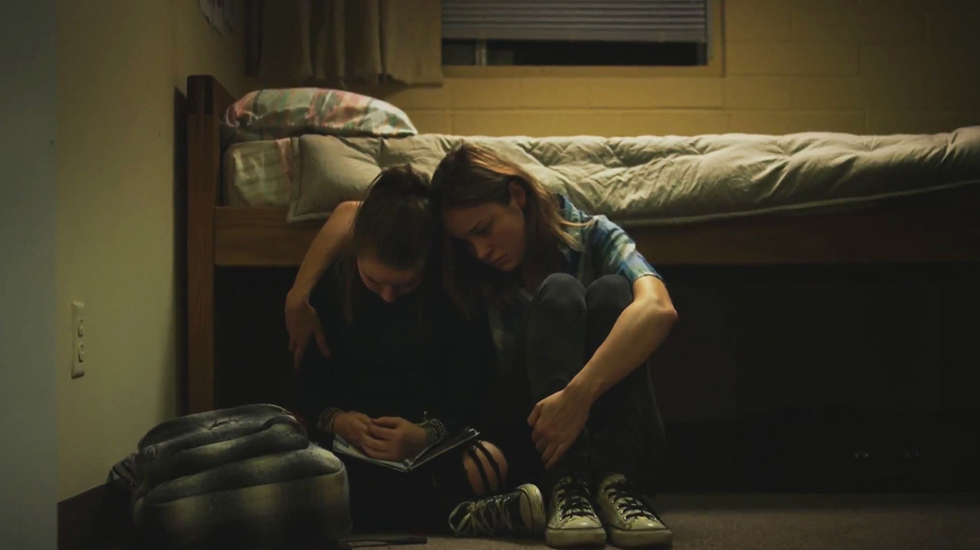
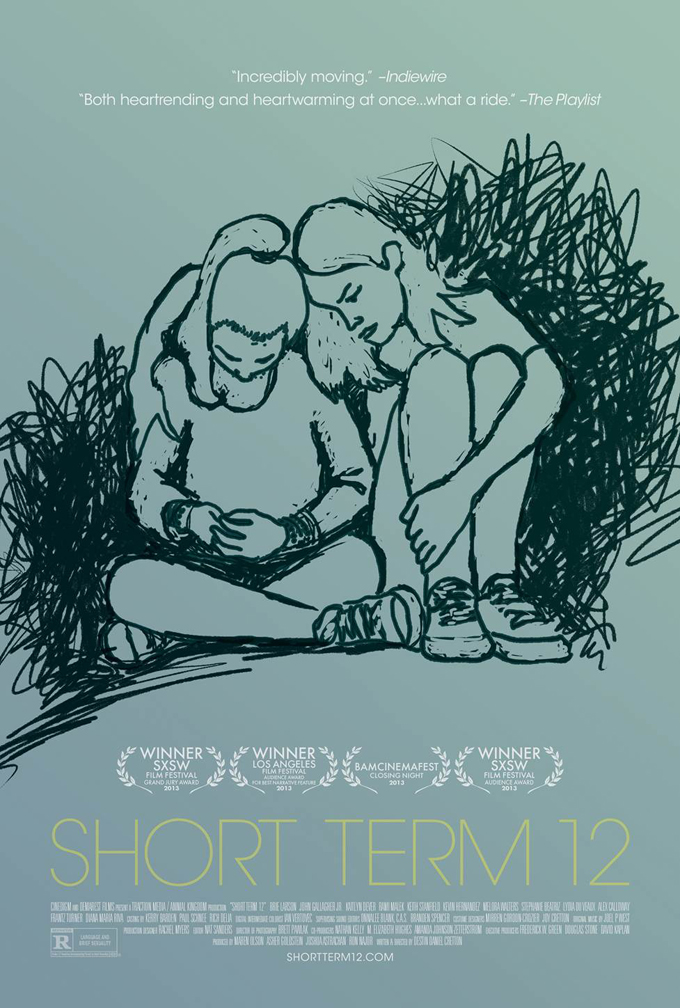
short-term-12-posterShort Term 12 – THE FILM OF MFF for me. Hands down. In the same ballpark as The Class. Nothing to nit pick. Nothing to write. WATCH IT NOW. Shed a tear or two in few scenes. What a depiction of a love relationship! And the teenagers are so good.

Heli – family getting caught up in extra judicial military forces ka atyachar. Quite liked it. I don’t know if this happens in Mexico, but it surely does in Kashmir & Dantewada.

For Those In Peril – this redemption tale set in the gloomy scotland (wish there were subtitles) lost me somewhere in the middle. And the bizzare ending just left me confounded. Koi samjha do kya hua.

Tonnerre – another doomed relationship film. Lovely. The lead is so good and ‘paavam’ (bechara). Was pleasantly surprised by the ending.

My Dog Killer – what an opening sequence. A tough guy training his dog, called by his dad for help. Stark, minimal, gritty, family social drama, this film left me wondering all the time where the hell this is going to go. And the dark ending nailed it for me. Don’t go by the title of the film!

A Long and Happy Life – a farmowner’s struggles to balance the shifting equations between his farmer community and the city council. Must start watching more Russian films after this one.

Kaphal (Wild Berries) – a sweet little funny children’s film set in the plush garwal, what a cinematic delight this one was. The kids(normally irritating in most hindi films) were so lovable, they carried the film on their shoulders. Ably supported by Subrat Dutta (Talaash), Pubali Sanyal (did she play Boti’s wife in Maqbool?) and cilemasnob‘s favorite under utilised Sunita Rajwar – who has a monologue and she rocks! Another movie which made me cry a couple of times. The audience loved it. Take a bow Batul Mukhtiar!

Good Morning Karachi – Slumdog Millionare meets Madhur Bhandarkar in Karachi. Was really disappointed. So were the fans of Khamosh Paani. Heard an editor friend laughing throughout at the unintentional hilarity at times.

Katiyabaaz – a very intresting film. Mazedaar. Somewhere between a documentary and a Dibakar Bannerjee-ish at times feature, this one digs into the power supply problems, a local hero (Loha Singh is the new Sagairaj!), the unpopular IAS Ritu Maheshwari – MD of Kanpur Electricity Board, the dwingling kaarkhanas of the industrial city, Indian ocean’s music and the superb background score. Lovely. Hats off to the full team. More power to apni Alice & apna Varun 🙂

Killer Toon – a web comic designer’s comic sketches potrayl of deaths, are carried out with precision of a serial killer. How? Why? Who? Is the designer responsible? What are the cops going to do about it? Who is that kid on the road? This excellent premise laden film begins with a arresting opening sequence and the horror-thriller tone is set. The repeated flashbacks and seamless transition to & from animation to reality itself is worth seeing this film – the chills down your spine while watching this one in a dark theater notwithstanding.

And an entire film can be made out the funeral business wala. What a character and what a performance by the actor (albeit in a role spanning less than half of the film). Would love to see that alternate film.

The Past – Asghar Farhadi’s superlative follow up ‘sequel’ of sorts to his brilliant A Seperation. This dysfunctional family drama is set in a almost Ramin Bahrani’s version of Paris, with characters bickering, coming to terms, confessing. It doesn’t get more ‘real’ than this and yet the situations are so dramatic. The lead from Seperation & Prophet nail it in this one, and the wife deserves all the accolades. Long takes, minimalist camerawork, terrific performances from the cast – Farhadi’s signature everywhere. I have been informed marriage-separation is the director’s favorite genre. He seems at home in this film with an objective eye on every one. The train sequence with the father son choked me up. And I loved Fohad – the little kid. MUST MUST WATCH.

You still haven’t seen Richard Linklater’s Before Midnight? Well, here’s the first thing to do. Click here to go to Mumbai Film Festival site and book your seat at Liberty Cinema for its screening on 23rd Oct at 5:30 pm slot.

And now come back to this post. Shubhodeep Pal watched the film and went meditative on Jesse and Celine’s two decade long love story – wonder, ponder, and all that jazz. Read on.

(I just have one question – they are not a couple in real life? Hawke and Delpy never fell for each other? Unbelievable, this cinema shit!)

Before Midnight2

In one of the many memorable scenes in Before Midnight, Celine watches the setting sun descend into the distant hills, and counts down to the moment when dusk will envelop Jesse and her. “Still there” she breathes. “Still there”. Until the inevitable moment when, of course, it’s no longer there.

But is it the sun that she’s referring to, or their love – spanning two decades – that her longing, slightly sad eyes see sailing into the dark? After all, doesn’t love too follow a similar arc to the sun? It is not a far cry to suggest that, in love too, there is a period of expectation akin to dawn, then the happy realisation of love that reaches a zenith, followed by a gradual disintegration until dusk arrives, and, finally, a darkness that marks the passing of love.

However, just as they expect the sun to, many people expect dead love to conquer the darkness in a dawn that’s imminent. Sadly, love is less predictable and more beguiling than the cycle of the sun. Indeed, love is often more like the stages of our lives than we’d like to admit, and, often, it mirrors our emotional state at that stage. Our best shot is perhaps to extend the middle period – from zenith to dusk – and try to make love oscillate between these two points. Or, at least, delay the inevitable.

In Before Midnight, Jesse and Celine occupy this middle period. The heady lightness of discovering love, followed by the more sombre loss of paradise, are now past. They are together, but saddled with age, children and responsibility. More importantly, in their story, they are separated from their first moment of love by two decades. Has their love actually survived that long, Celine frequently asks. Will it endure much longer? Or will competing interests tear them apart?

In another romantic classic, Eternal Sunshine of the Spotless Mind, Joel, one of the two protagonists, wonders: “What a loss to spend that much time with someone, only to find out that she’s a stranger”. Celine and Jesse find themselves in this spot too. Can they truly say they understand each other perfectly because of their love? Their differences, after all, are prodigious:

Celine is a strong-headed woman of the arts from post-feminist Paris and no pushover for men. Jesse is American and, despite being a moderately celebrated writer, by his own admission, lacks the cultured sophistication of Celine. Indeed, it is sometimes difficult to see Jesse’s virtues as anything other than an unremitting adoration for Celine and winning wit.

At this moment in their lives, more than anything else, they find themselves in need of re-affirming the love that binds them together. Celine and Jesse are living with their two children in Paris – but Jesse’s son from his previous marriage must spend most of his time with his mother. Jesse would prefer to be closer to him; Celine cannot think of moving to America on a whim, especially when she’s just secured a new job. Will these forces, tugging the two in opposite directions, tear them apart?

When the first feelings of love are a distant memory, what remains? Is it still love, or just a memory of love? Moreover, how does love cohabit a space in which our human frailties are eventually revealed from under the glare of the initial moments of love? In Eternal Sunshine of the Spotless mind, this thought finds succinct expression in a dialogue between the protagonists Joel and Clementine:

“Joel: I can’t see anything that I don’t like about you.

Clementine: But you will! But you will. You know, you will think of things. And I’ll get bored with you and feel trapped because that’s what happens with me.”

Similar concerns drive one of the major underlying currents of Before Midnight. In one scene, Celine asks Jesse whether, seeing as she is now, as a woman older by twenty years, would Jesse have still come up to talk to her. Jesse tries to give a reasoned answer, instead of the expected romantic one and that irks Celine. Does love survive on expected answers, instead of the truth?

The writer Alain de Botton, in his fine book, Essays in Love, writes: “To be loved by someone is to realize how much they share the same needs that lie at the heart of our own attraction to them. Albert Camus suggested that we fall in love with people because, from the outside, they look so whole, physically whole and emotionally ‘together’ – when subjectively we feel dispersed and confused. We would not love if there were no lack within us, but we are offended by the discovery of a similar lack in the other. Expecting to find the answer, we find only the duplicate of our own problem.”

In Before Midnight, both Jesse’s and Celine’s insecurities find expression in articulate, intelligent dialogues that play one’s insecurities off the other. Perhaps the finest set of dialogues written in recent memory belongs to the hotel set piece when Celine and Jesse’s differences clash violently and spill all over each other’s sore spots. And they react as all humans do – by hurting the other in order to find a balm for one’s own wounds. The genius of this movie lies in how we can easily see – like we have often seen in our lives and in our homes — how both Jesse’s and Celine’s arguments appear sound until the other returns with a counter-argument.

Each successive argument, however, shows an increasing pain and a withering appetite to hurt. Is this the mark of true love: The unwillingness to keep on hurting the other, even in a fierce argument? Jesse tries to make peace repeatedly but fails. Celine will have none of it. But when she says “I don’t love you” to Jesse, does she really mean it or is she trying to justify to herself the reason for her vituperation of Jesse (which is undermined by her obvious affection for him)? Elsewhere in his book, de Botton writes: “We fall in love because we long to escape from ourselves with someone as beautiful, intelligent, and witty as we are ugly, stupid, and dull. But what if such a perfect being should one day turn around and decide they will love us back? We can only be somewhat shocked-how can they be as wonderful as we had hoped when they have the bad taste to approve of someone like us?” More than anything, this middle stage of love – as we might as well call it – is a time for the recalibration of the love of Jesse and Celine, especially as they prepare to look beyond themselves into matters that will affect the lives of not just their own selves, but also the family as a whole.

Before Midnight illuminates both the comforting and disconcerting aspects of love and how it ages. Undoubtedly, love can be transcendental and offer the purest of joys to those under its spell. Equally true is that the mist of love can unravel just as quickly as it appeared. In such circumstances, it is an abiding respect for each other that offers the best anchor for saving that love. More importantly, it is an appreciation for the mundane aspects of love that might provide the most enduring memories – remember how Robin Williams, in Good Will Hunting, says how he remembers his dead wife the most at night, during which her farts while sleeping are missing.

Susan Sontag argued in her seminal essay “Against Interpretation”, that the new critical approach to aesthetics undermines the spiritual, transcendental importance of art, which, is, instead, being replaced by the emphasis on the intellect. Can we perhaps extend a similar argument to the interpretation of love? Are we witnessing a transformational age in which love becomes a means to an end, soon to be discarded for more “substantial” things such as a meeting of minds that is based on logic and compatibility? The illogic of love can barely withstand the logic of our personal wants.

 ~

before-midnight

As a movie, Before Midnight is an oddity. In an industry that pleasures itself by commissioning inferior sequels that can endlessly cash-in the goodwill earned by the first movie, Before Midnight offers arguably more than the previous two films in the series combined. Apart from its deep meditation on love, it also has much warmth and wit to offer – on asides as various as parenting; sex in the age of virtual reality; the difference in psychologies of men and women, and the interpretation of literature. Even the funniest gags are littered with meaning — a particularly amusing one has Celine acting a bimbo.

The only irksome facet of this movie – which is quite deeply feminist at heart – is how it often shifts the audience’s “sympathy” to Jesse’s predicament and portrays Celine as unrelentingly insensitive to his plaints. This does not appear unnatural as it is presented in the movie, but was a slight cause of concern to me. Why did I feel more sorry for Jesse? Is it just how the characters are, or was Celine’s constant rebuffing of Jesse a bit too exaggerated? That said the movie excels beyond your highest expectations.

But do the two characters find a resolution? In a masterstroke, the movie refuses to tell us. And, given how faithfully it mirrors the oscillations of love in most of our lives, that is how it should be. For, what is life but an endless search for answers, only to find that each answer leads to more questions? The moments of peace that must be snatched are those during which we know that right now, for a few minutes or seconds, everything is okay.

 – Shubhodeep Pal