Archive for the ‘reviews’ Category

Three

 ‘Bring me a dish to satiate my mind and I am happy.’

No, no one great said that, I just made it up coz I wanted to begin with a bang. But that doesn’t mean it is untrue. Kaul, a feature length indie film has had me quite, quite excited since a few days now.

It’s rare a film excites me so much, makes me think so much. So exploring, enquiring, digging, labelling, un-defining…it goes.

Kaulin several cultures, means a call to the divine. It also means higher order or social class. It also means a man of high breed. It also means a purpose or profession. It also means a promise.

How simple is simple?

We live in a world where everything is codified perfectly into two neat brackets, cause and effect, black and white, this or that. Human existence today, is an argument of versus. But simple is a unifying agent, it is a unifying philosophy and has no place for duality. Then?

The task of our times then is to deconstruct. And integrate. To arrive at the core that is simple. Kaul is something like that.

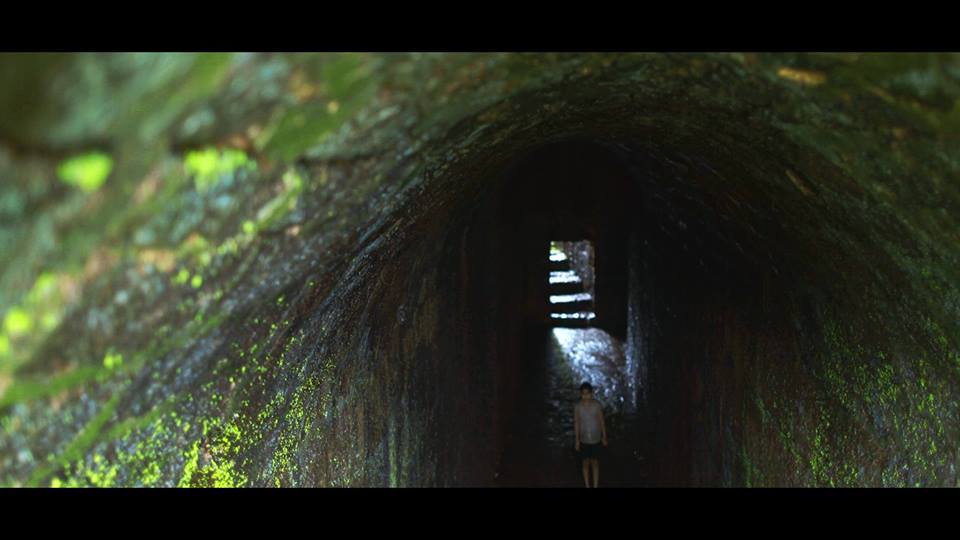
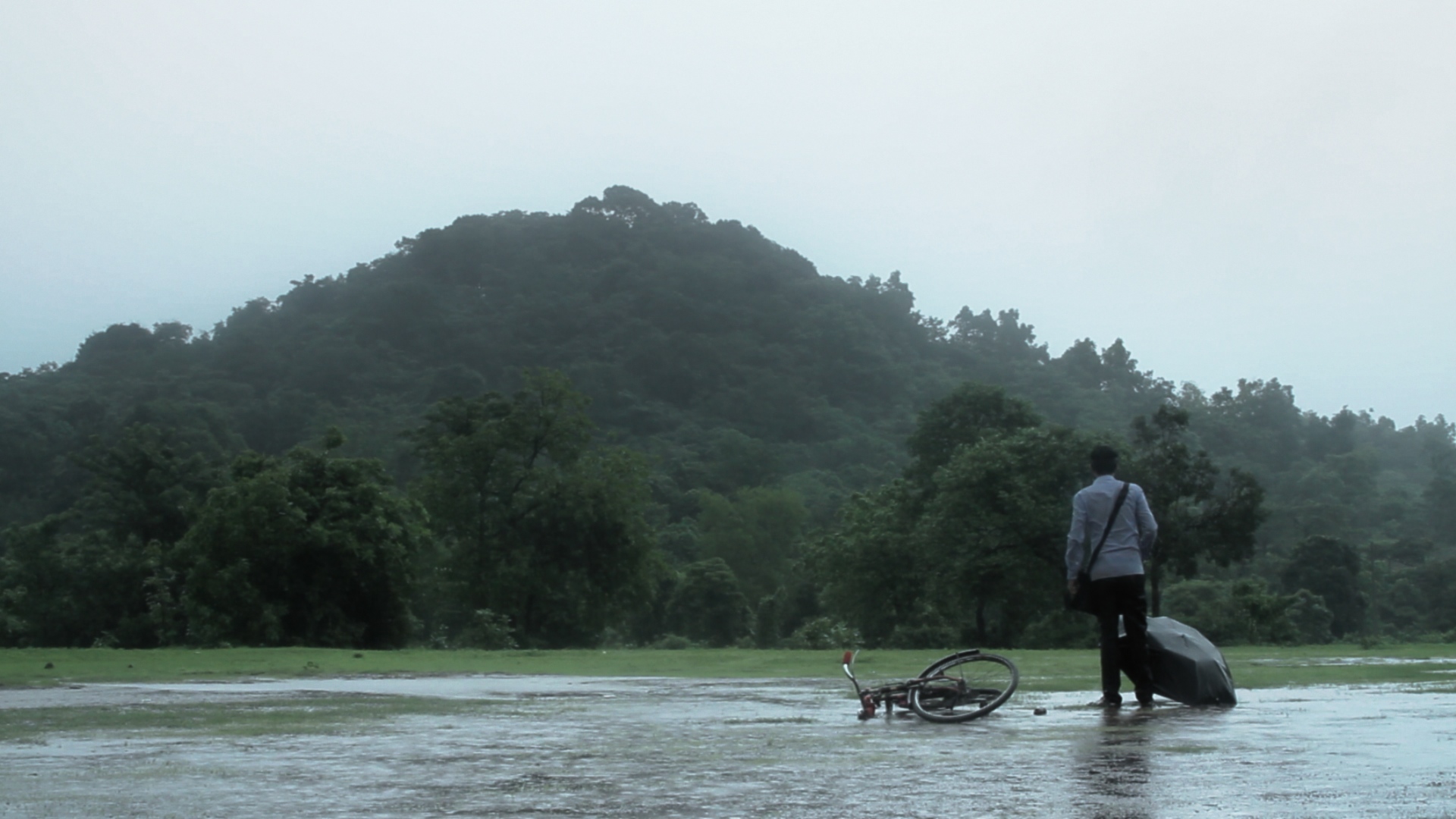
A young man in a small town in Konkan murders a woman and moves to a smaller village. He takes up a job as a teacher, marries and is living a seemingly uneventful life when he undergoes an experience he cannot accept or reject. It is something he cannot define; it is surreal and drives him to the edge of sanity (as defined by common majoritarian understanding). He sets out seeking answers, peeling layers until he arrives at the core.

Mystical? Maybe, but this is not a saintly story of a man’s enlightenment and struggles with it. It is the story of Nietzsche’s ‘Ubermensch’, Camus’ ‘Outsider’, and the 21st century common man experiencing the dark night of his soul fraught with anxiety.

If he kills like Camus’ Stranger and goes off like a being in search of his super-hood, then like our 21st century man he veers towards the confines of psychiatric classifications, depending on the only rules he seems to be made of. ‘Shut me up if I become a threat to the society’, he pleads earnestly, believing himself to have gone bonkers; his classification of insane and normal as binary as the debate between the physical and the metaphysical. In this honesty lies the thread of his search, the honesty that compels him to ensure his road must not end in annihilation of others also leading him to explore the power that lies in that very thought of violence. Is that where ultimate freedom lies?

What if you could just snap your fingers and the world would come to an end?

And what if your redemption lay in it? Through it?

That kind of power is threatening. Life-threatening. Two moves and the torture would end. And it would be a good deed. Or would it be? We are back to polarising.

But it is touch and go, this playing with polarisation, because as is essential, one must quickly leap to integration, from linear to the cyclical, from separation to unification, if one has to arrive at the meaning of existence. In the womb of birth is the seed of death and in the heart of death the first call for creation. Something cannot be destroyed until completely built and cannot be created until it is not completely annihilated. The pendulum has to swing to both extremes to arrive at its true balance. Let me drop the ‘true’ and just say balance. It is simple.

To peel off the layers of our consciousness and definitions of art then, the film throws off layers after layers of myths and faux-labels, crystallising the knowledge, the visual and sound (literally and metaphorically!) in an attempt to integrate sensory experience with emotional resonance in the audience. As the protagonist starts his journey in search of answers we are taken into another world where the physical echoes the metaphysical. The play of day and night, darkness and light, sounds and silences create a universe that is tactile and immersive, daylight exposing the extreme dullness of the regular and darkness the mysteries of the obvious. With this, Kaul gently plays on our senses as it tantalises us to follow the protagonist to find out what is this bat-shit craziness that has descended upon him suddenly.
Two

Do we need the Master?

Needless to say, he finds a guru; the film evoking a Campbell-like mono-myth pattern of a hero’s journey, from afar a simplistic narrative principle, from close quarters simple. As he tries to seek the tutelage of one seemingly mysterious old man another layer of polarity opens up. Along with several other myths the old man also rejects the myth of the ‘guru’, hinting at the infiniteness of the self to find its own way out of this ultra-real world. The role of the seeker as a primary school teacher suddenly gains credence. ‘This whole Guru-Disciple thing is bogus’, roars the old man in defiance, decrying the tradition of looking outward, and by that pushing the protagonist to look within.

He urges him to listen to birds for messages decoding his path.

And what will I find?’ the seeker asks in anticipation.

‘Nothing. You will find nothing. But only after knowing that will you be able to accept it. There is nothing to find.’

A group of philosophers, writers and artists were once asked, ‘Why are we here?’ John Cage famously replied, ‘No why, just here’. Let’s pause here a bit.

Integration is not mathematics, but then maybe it is.

From a distance, there is a danger of viewing and interpreting Kaul as a fable, it is anything but that. Rather it could almost be interpreted as a pataphysical take on the business of spirituality. With a firm belief in the power of self, the film almost cocks-a-snook at the common dialectical understanding of experiential truth and the mysterious secret of man as super-being

Even though interpreting Kaul as a fable would be reductive, there is a certain temptation to do so, given the structure and form it chooses to take. It’s magic realism is Kafkaesque, dark, mysterious and anxious, very anxious. It is mystical and formless, evolving as we go, but it is in enquiry that our existence and the film lies, as embodied by the seeker and that which is being sought. That is the spirit of the film hence its fable-like veneer dismantles before it is fully built as the Kafkaesque intensity deepens, unshackling the viewer from the fluff of fantasy immersing him in the surreality of reality instead. Enquire don’t accept, seek don’t give up, trust your power do not let go of it; some of the ideas the film seems to be urging us to follow with little cushioning.

While merging the hero’s mono-mythical external journey with his internal one, the film adapts and adopts from several theisms and philosophies. Rooted in ancient Hindu philosophy is our mysterious old man, who suggests neti neti is the only path for the insane. In a caustic sweep he derides the modern-day formalist man steeped in illusory materialism and its limited definitions. Neti is a yogic path to enlightenment, propounded in Gnana Yoga and Advaita Vedanta, which emphasises on the rejection of all that is not the Soul and thus coming in touch with it. It is a path of deconstruction, one that nudges the shedding of layers of illusion and belief that we are mere mortals, to reach that germ of immortal within us.

Do what you feel like’ is the only answer the old man has for our angst-ridden protagonist. Hear the calling of honesty. From songs of experience the return to innocence.

It is believed that knowledge or ‘gnana’ was handed down through the alleys of memory, both physical (smriti) and divine (sruti). The Vedas, believed to be central canon of Hindu philosophy, are said to have been written through the assistance of divine memory. The oral tradition of India, (where sagely as well as worldly wisdom was disseminated through stories), and the guru-shishya codification of the same task, then seem to be derivatives of a deeper tradition born of the belief in sruti and smriti.

It is from these traditions that director Aadish Keluskar draws his narrative, borrowing a phrase T S Eliot used to describe the style of metaphysical poets, ‘yoking together’ the content with form in a meta-fictive universe. True to the oral tradition the old man hands down ancient knowledge to the protagonist. Is it from sruti or smriti? The film, like the old man, (its spokesperson almost), gives no ready answers. But there are answers embedded within, for which enquiry is required.

Kaul, bases its world-view, or rather other-world view on prominent philosophies and beliefs, collecting them together to make a base, a context. It then plays within this context of beliefs, pitting one against another to find a middle way. It’s almost like an examination, or experiment rather, of mating the best DNA of Nietzsche’s nihilism, Camus’ absurdism and Hindu spiritualism to free their core and it’s own. What emerges is the distilled idea of the Self. And the absoluteness of its power. From a dot we emerge and into the dot we dissolve, ending where we begin. Again and again, we just need to know it.

The atmosphere of darkness lies like a heavy pall on the film. It is full of bated breaths, the frames holding still in limbo, as anxious and paralysed as its protagonist who doesn’t know where to go from here. Just like neti neti, the structure of the film to arrive at its point is not this, not that. A constant negative reaffirmation. In an admirable example of metafiction, the physical form the film takes is to reflect the essence of its content. In many ways it subverts what we popularly know of the relationship between form and content and how it is practiced. In other ways it is the distilled approach of marrying both, the essence of simple. The old man refuses to provide easy answers to the protagonist pushing him on the path of neti neti and the film does the same to the audience. It is exciting to say the least, to catch clues and link up a path to the centre of the film.

When I reached there, the deepest I could, I found something interesting at the centre of the film. It pretends to be dystopian while it is very utopian and optimistic. Behind the obfuscating mystique, behind the nihilistic violence, behind the weariness of regular life, the film thrusts forth a strong belief in personal power, almost urging us to claim ours. Using violence, it liberates it from the baggage of destruction, leaving only the creative force behind.

one

Perhaps, the richness of the form and content is what I find so exciting in Kaul. The boldness of night photography allowing darkness to rule, the image crystallising as though in response to the call of plot, the soundscape reverberating with enigma, hinting at larger mysteries while guiding through them. It is with a certain intensity that the soundscape plays on the subconscious, informing the world of the film through vibrations, through variations, through space and vacuum, through noise and silence and through the gross and fine. This intensity and vastness of variation melts in with the world of the film, creating a supra-natural, almost physical experience of the protagonist’s journey for the audience.

‘Truth is rarely pure and never simple’ proclaimed Oscar Wilde. Neither is Kaul. It isn’t pure, it isn’t perfect and it isn’t simple. But it wins in nudging us to ask, in our lives and in films, what is simple?

Fatema Kagalwala

(Kaul will be playing at this year’s edition of Mumbai Film Festival and will compete in India Gold section)
https://www.youtube.com/watch?v=X1hu8FQK0V4

Tamasha

Matargashti is a song that is filled with fantastic sounds, although it sounds over the top a lot of times (especially when Mohit tries hard to reduce A R Rahman’s burden of polishing the song – in high notes), but the simple notes are Mr. Chauhan’s forte in the studio, and he rules it. Somehow I felt there was too much happening in the song and nothing new hit me.

Mika is always hungry, and he chews on words making it impossible for most of us to understand what he is trying to sing. Heer to badi sad hai is no exception. Rahman has composed this with a lot of love, and it shows. Irshad Kamil can be quite cheeky and in this song, it works like magic! Not saying Mika didn’t suit the song, but this song would have been so so good had Sonu Nigam, Nakash or Javed Ali would have loaned their voice.

Alka Yagnik sounds unlike herself when Tum saath ho begins, and you can’t help but think it is a slow tempo ‘Maahi ve’ beat that is embellishing the song, which is easily the best penned song of the album. Making Arijit sing in two different pitches (or tracks or whatever it is called) and keeping both in the song is a shot of genius because it doesn’t allow the Arijit fatigue to creep up. Good to have Alka Yagnik back. Sadhna Sargam in DLKH and Alka here, this is a good year for us 90s kids!

Wat wat wat wat – Shashwat Singh (not ‘Sashwat’ as iTunes would have us believe) kicks it, and my God, does he do a great job doing it! A somewhat street treatment to a Bhojpuri song filled with moans and exotic ‘la la’ at strategic places, this song is easily the ear-worm of the album, and don’t bother liking it because once you hear it, you will not be able to ‘un-play’ it in your head. I am sure it was a situational demand to do so but Arijit drags the song down and is no match for Shashwat. There is a vengeance mix of the song which is groovy and electric and has no Arijit Singh. Even ARR knew it would be great to let Shashwat have a go at it, alone. It is like ‘Wanna mash up’ in Bhojpuri and I LOVED Wanna mash up! Not to forget the excellent lyrics of the song – udat chidiya ke haldi ragad ke lagawat…WTF! Superb imagination!

Chali kahaniappears to be a stage song but it cannot hide under this fact for being awfully low on melody and cacophonous at places. We have enough examples of great stage songs and that is why this song is quite a put off especially coming from ARR. Sukhwinder shines but Haripriya and Haricharan have been given the worst lines (and tune) of the album so they made peace with it. The song  wanted to be an ‘Aao na’, skirtedsheher’ and ‘ishq bina’ but failed miserably at achieving anything even in between, and what is with that ‘Subhash-Ghai’s-sque-attempt-at-deafening-in-your-face-grand sound’ ? No, No, No!

Safarnama – Lucky Ali has always been a king of flat tunes which do not challenge the singer to go high. Nothing wrong with that. People have their niches. In this song, he tries again to step out of his comfort zone and am sure it needed a lot of ‘studio work’ to make it ‘better’. The song has a nice vibe to it mostly when he is humming or when that beautiful music arrangement is taking its toll without him singing. In other parts, the song is a torture.

Parade De La Bastille – is a magnificent piece which has shades of matargashti but with no vocal parts in it to spoil the song for you. The metal flute and other exotic instruments along with strings and accordion sit comfortably and request your senses to rest yourself in their lap, and perhaps sleep. I absolutely loved the way the tune ends. Hi A.R. Rahman!

Tu Koi aur haistarts with the all too familiar ARR style of luring your senses to give up everything and pay attention to what the Mozart from madras is whispering in your ears. Sadly, the song loses itself quite quickly in the murky overalls of a bad tune and ordinary words. This is the longest song of the album, and what can be worse than the fact that you literally wait for the song to end.

I am quite sure everyone will find their reason to like the album because they have to, just like some of them argue and tell me how great the music of ‘lekar hum deewana dil’ was. To me, the album comes across as being too self aware having great sense of occasion but terribly low on melody. There is too much indulgence, sometimes, in between, and at times, towards the end of songs. In a bid to keep the sound theatrical, I guess, the background music got merged into songs…which weighs you down and doesn’t let you soak into the music.

The album, from ARR standards is underwhelming and I think this thing toh  utter sad hai.

Rohwit

11825734_10153088511417532_6964413715555073649_n

Coke Studio Pakistan remains Coke Studio Pakistan even when it isn’t quite Coke Studio Pakistan. This was evident in the last season when the studio got it wrong more times than it got it right, but still gave us some good melodies to weather the storm of life for few months. Strings were retained for Season 8, and right from the first promo that presented the artists line up, it appeared that the new producers have got it right. We have reviewed all episodes and you can find those reviews here. In this post I am listing down my 10 absolutely favorite songs from this season. Are these the only songs I liked? No, but in the interest of keeping the post shorter than a Sooraj Barjatya film, have cut down the numbers. You can click on the title of the song to watch the videos. In order of preference, here it goes.

10. Chiriyan da Chamba – Not so much for any breathtaking musical arrangement, the song makes it to the list for the simple reason of Anwar Maqsood’s recitation. It’s been a while since we heard a recitation in the studio. Suraiya Khanum kept the singing more or less simple.

9. Kinaray – Mekaal Hasan band made a heroic entry to the studio with Sayon but it is Kinaray that gets our vote for being the better of the two. The tonal structure was more or less similar to Pt. Ajoy Chakraborty’s rendition of the same qalaam which you can listen to here. Apart from Sharmishta’s beautiful singing, the back up trio was top class in the song, but then they have been like that throughout the season this time round.

8. Khari neem – Take an iconic classic like in this case, this iconic song by Mai Bhagi and put some flamenco influence coupled with killer violins and spot on singing, you have what is Coke Studio’s style of paying tribute with their unique signature on it. The flute by Sajid Ali just adds to the tempo of the song and sprays an image of a playful banter between two lovers. What a beauty!

7. Bewajah – After winning the Sur Khsetra, there couldn’t have been a better stage for Nabeel Shaukat ali to showcase his talent, and boy, did he grab that opportunity or what! The beauty of this song is that it reminds you a classic ghazal style treatment of antras but doesn’t bore you with a constant mellow mood. The pop treatment and that velvet voice of Nabeel package the entire song into what could be one of the most romantic songs of this year.

6. Ve Baneya – Fizza Javed and Mulazim Hussain is quite a unique combination to be featured in the same song. While both Fizza and Mulazim have excellent range, in this song it is Fizza who took the song to a completely different level by singing a banna-banni song(?). Mulazim was quietly paying tribute to Reshma by giving his version of this song. It’s been quite a while that the song is in public domain but it is difficult for me to control tears at every antra that Fizza sings. Be it those long alaaps or the way dholak (by Baber Ali khanna) changes the pace in the second line of the same. Truly beautiful stuff!

5. Hare hare baans – Having grown up listening to a lot of Pakistani songs, Shazia Manzoor was not an unfamiliar name. What took the anticipation level to unmanageable proportions was when we were shown that the Rizwan-Muazzam group would be teaming up with her. As a result, we got an awadhi song that again touches a genre which is always out there, but somehow the producers of today are busy ignoring it. Any music movement is judged with the variations of genre it touches. Coke Studio Pakistan wipes the floor with the ‘others-music-movements’ for this simple reason and they keep things melodious as well, just like this song. What a pleasure to hear Rizwan-Muazzam complimenting the ‘pitch and note perfect’ Shazia in their own powerful style, yet not compromising the feel of the song. How many songs like this can come to your mind in the recent times? There is a tuneful pain in the word babul that you have to hear to experience. (Not to forget the song touching the familiar raga pattern as piya tose naina lage rey between 5:25 to 5:31 mins)

4. Umran lagiyan – was a mix of Umran lagiyaan by Asad Amanat ali and the Chan chan chankan by Allah Ditta Lonaywala. The original songs have a momentous mounting already. It took the uber talented, clean voiced Ali Sethi to retain the emotion of the song as he crooned Umraan lagiyaan. Even if someone is made up of steel, they are likely to develop goosebumps thanks to the melodious yet intense beginning of the song by Ali Sethi. What’s more, Ali is gentle, suave and desi in equal measure throughout the song. It is songs like these that define the entire season of a program and this song did exactly that. Nabeel was good in his rendition of Chan chan chankan but the song belongs to Ali Sethi…Watch (Yes watch!) the way he brings the song back at 4:11 mins onwards and you will know what I mean.

3. Tajdar-e-Haram – It has become some sort of a fashion to dislike Atif Aslam. While I have always liked him, there are times when he goes overboard. In this song, however, he hits the bulls eye with the same ease with which you just blinked your eyes reading this sentence. Holding a cult classic like one holds a new born baby and delivering a soul stirring song that connects you to the powers that be is what Coke Studio does most often than not, and it works. The tune would have been a hoot for the houseband to keep up for the duration of the song and for that we cannot write enough good things. High point – Aao madine chalein..

2. Rockstar – Like Atif Aslam, Ali Zafar also got three songs in the season, and what’s more surprising is both the artists delivered their best in just one of those three songs. Rockstar is a song that either you will like or absolutely abhor. It came very close for me to label it as the song of the season. Lyrics full of pun (including a jibe at being allowed four marriages!), that desi detour in between, the mention of Kim Kardashian, the excellent back up vocals, that mild lullaby like whisper in between, Omran on Guitar, and so MUCH more! The song has too much going for it and I doubt if Ali can ever better this effort. I hope he proves me wrong tomorrow itself! Ho Socho Ghalib ne pehna ho designer se leke coat neela! WTF! Mind blown!

1. Sakal bann – If music programs cannot give the generation of today a reason to look up our traditional compositions which have stood the test of time, it is all quite pointless. Thankfully, Coke Studio has always excelled in this area. Rizwan-Muazzam group have given us a song that would have made Nusrat Fateh Ali Khan saab proud, and has surely put a smile on Rohail Hyatt’s face. The sheer power of the composition is so infectious, you would start head-banging. Tanveer Tafu, who can play burnt wood in his sleep apparently, took the song to a level that would remain unmatched throughout this season. Songs like these are the reward for lesser mortals to keep going with their messed up lives. The entire song is worth every second in gold but the way the song ends, it gives me goosebumps to even type about it here.

 Aaj Jaane ki ZidThere are always people around who would be horrible singers but in their head, they would think they are Tansens. Nothing wrong with that. The trouble is when they start putting their ‘talent’ out to public at large. That’s a punishment. Every tom, dick, harry and sally has put her/his ‘tribute’ to this evergreen Nazm out in public domain and they are all quite pointless and some are downright embarrassing. Farida Khanum graced Coke Studio in an emotional 3:10 mins recreation of this ghazal. They have made a fascinating video of the song which you must not miss, Farida Khanum’s presence is undoubtedly the biggest thing to have happened to Coke Studio Pakistan and it left us all in tears.

I want to write about 9 more songs, the houseband, and a lot more but the post is already way too long. To sum up, about 19 songs out of 29 songs were top class, and some of them outdid the best work of artists so far across albums/genres. A thoroughly enjoyable Season comes to an end and should there be a season 9, the expectations would be sky high…Strings take a bow!

And what do we do in India? We make music vidoes of songs which aren’t even 1% near the melody that oozes out of the lights on the sets of Coke Studio Pakistan, let alone compare them with actual songs.

And remember, all this is distributed free, legally.

–  Rohwit

UPDATE – Thanks to Ankit, he has made a playlist of all the songs.

IMG_1913

The book titled ‘Baat Niklegi Toh Phir’’ by Sathya Saran attempts to give us a peek into the man who mesmerized one and all with his innovative take on Ghazals. The book quotes liberally from another book that can be found here.

The book traces Jagjit Singh’s life from his childhood days. His name change, religious beliefs, his quirks, everything is mentioned liberally and for those who are long time followers of his work, it would be a good account to go through. I don’t intend to ruin the book for you but I didn’t know he was a good hockey player too.

The book beautifully captures his journey from college days to striking it big and becoming a genre in himself. As we go along this ride, there are moments of humor, insight and pain that shaped the man. The days of struggle are detailed  particularly  well. I didn’t know he was good friends with Subhash Ghai. Of course, after reading about this friendship in the book, I quickly reminded myself that about 3:29 minutes in Subhash Ghai’s ‘Hero’, you could hear a faint ‘la pila de sharaab ae saaki’ by Jagjit Singh. May be there is a story there. Anyway, coming back to the book, it also mentions a lot about other friends which you must find out as you go along the pages. There are only 200 of them so try to not finish them up quickly. There are a lot of pictures and trust me you haven’t seen most of them!

There is enough film world trivia in the book. Also, some ‘greats who had access to the industry’ and their rigidity is mentioned particularly well in the book. These days when people romanticize their ‘struggles’ on their smartphone and blame their bitterness to their ‘struggles’, it is heartening to see that the author hasn’t preached against the big bad film world. Keep in mind that Jagjit Singh was trying to make it big in the world of film music when the greats and their gatekeepers had defined what should a song sound like and no ‘exceptions’ were allowed.

The book bares all about the beginning of the relationship that Chitra Singh had with Jagjit Singh, and how it blossomed into a partnership which would go well beyond music. I don’t know about you but I always thought Chitra Singh had a prior knowledge of Urdu. I was wrong. Her Urdu diction was corrected by Jagjit Singh, and my God, was Chitra Singh a superb student or what!

What came as a surprise to me was that Jagjit Singh established himself as a live singer and then went on to cut albums when the record company gave him a green signal. This means, there should be a lot more ‘private recordings’ in the world. I wonder how to get them all. Of course the book touches upon this as well. Apparently Chitra Singh is trying hard to collect all of Jagjit Singh’s recordings and present it to the world.

What I absolutely liked is the fact that the book doesn’t try to paint the man as someone who had no human flaws. Some people might find the details of his charities quite overwhelming. Remember, all this was done when there was no internet and no one was bending over backwards to prove that they are being human. Also, we are reading about all this four years post his demise.

There are bits which I didn’t quite agree with, for example – the author feels Jagjit Singh signed on ‘any record company’ towards the later part of his career which resulted in poor quality of music from him. I feel every album had at least 3-4 ghazals which made it a worthy proposition for ghazal lovers to buy the album which is a stark contrast from Ghazal albums of today. It is a known fact that Jagjit Singh always looked for lesser known poets and showcased their work through his albums. The book makes a fleeting reference to this. It would have been great to hear from those poets about their interactions with Jagjit Singh. There are also some not so good facts about certain albums which might disturb an avid follower of his work, but then what is perfect?

Towards the end of the book, a rather touching description is given about Chitra Singh of today. Author tells us that Chitra Singh has resigned herself to a world where she treads cautiously because it is filled with old memories and the pain they bring along. She doesn’t meet anyone.

Jagjit Singh ensured ghazals reach a larger audience, and presently, Chitra singh is trying hard to bring all the recordings of the legend to listeners and she is having a tough time doing that. Irony loved Jagjit Singh in more ways than we can imagine.

Since the day he has left the world, I have heard him less. Probably because I started listening to him when I was 12, there are ghazal albums etched in my mind and that is why I don’t need to hear his work to remember how he lent a voice to millions like me, our lives, our happiness, our joys, our rhythmic claps in his concerts (and sometimes in our living room, alone) etc. The claps have long gone, the echoes remain.

For me there cannot be a bigger reward to stay alive than any new piece of information or a ‘rare and unheard’ piece from Jagjit Singh because I have lived my life with Jagjit Singh’s ghazals in the background. There can never be one definitive work that can encompass the whole life of an artist like Jagjit Singh.

This book is a ‘must-have’ for commoners and collectors, just like his ghazals were a treasure for both the breeds of music listeners.

Dear Jagjit Singh, you once said

मेरी आवाज़ ही पर्दा है मेरे चेहरे का,

मैं हूँ खामोश जहाँ मुझको वहां से सुनिए…

We are listening, we always will.

– Rohwit

(Thank you Prashant, for gifting this book well ahead of its release. Indebted)

Price : Rs 699

Pages : 200

Five boys in their pre-teens, hailing from a small-town in Maharashtra, each knowing the loss of a dear one, jump into a lake from a height in the total abandon of childhood’s innocence. The protagonist is the last to jump; he hesitates and then takes the plunge. For me, that was the defining moment of Avinash Arun’s debut film Killa.

 Killa 5

Cinema world-over, is moving towards telling big stories of small people. While we continue to have (and be mesmerised) by our Interstellars and Mad Max’, we are also rejoicing in looking deeper into the souls of the commoner through the canvas of everyday life. Iranian cinema, arguably, showed the world the way, and in India, it is Marathi cinema, among other language films, which has moved the cinematic zeitgeist inwards. Little people, little moments and large stories. Not larger-than-life; very common, very grounded, very real and because of this, large. Especially gratifying is the fact that the child as the protagonist is finally here. Our lenses have finally found his story worth telling. His world is being looked into, explored, understood and loved, a practice that has always been at the periphery in our cinema. Vihir, Shwaas, Tingya, Shala, Fandry…the list keeps increasing. And now Killa.

In Killa, Avinash delves into small-town life and his own personal memories of childhood, and paints a moving and heart-warming picture of learning to fight one’s battles with life. It is the journey of a boy still grappling with the death of his father that happened two years back, and the constant change of environment that has followed. It is the story of his mother, a single woman, gritty and upright, determined to ensure she is now the father and mother to her only son. It is the story of courage to break away from the past and it is a story of love, loyalty and trust. But most importantly, and which is why it is more beautiful, it is the story of taking the plunge. And thus, finding the light at the end of the tunnel. In Killa’s case, the cave.

Killa 4

“I think we have forgotten the life, the buildings, and the streets we used to have not so long ago.” Miyazaki said this about Sen to Chihiro no Kamikakushi. Killa, in more ways then one way, pays homage to a kind of childhood fast disappearing and one many of us have never even known. Yet, its emotional tone resonates universally, drawing in even those unfamiliar with the social landscape of the film. An intensely personal film, it is life experienced through the eyes of a sensitive, lonely, fatherless, pre-teen boy. Moving from town to town due to his mother’s transferable job, he pines for putting down roots, for friends he can grow up with and for his dead father. His mother is trying her best to be both the parents for him, stretching to breaking point to ensure him his due upbringing.  It is with a humane eye that Avinash sees the single woman’s struggle, also reflected in the elderly neighbour. Both women develop a bond of mutual respect, an intuitive sign of recognition when one kind, strong soul meets another. The women are lonely too and they are fighting it. Loneliness is the vast canvas Avinash paints his story on because little Chinmay has to break free of this very loneliness and find hope.

Killa, the central motif of the film then becomes the symbol of Chinu’s inner one, the fort of loneliness and mistrust he is caught in. His search for the exit from the fort becomes a beautiful metaphor of his efforts to get rid of the loneliness. And when he emerges into the sunshine he finds hope and trust, literally and figuratively. On the face of it, it is a simple film with a linear narrative, a well-used form. Couched within is a multi-layered narrative of an inner struggle, the experience of which is evoked rather than told. A complete freedom from the need of dramatic tension yet letting the story find its own resolution is evident in the way it unfolds and in certain ways, it is a liberating experience; to co-opt a 3 Act structure and do away with dramatic turning points yet end with confidence, is in my eyes, quite an achievement.

Killa 3

The visual imagery of the film and its soundscape resonates with the simplicity of verdant, small-town life and a child’s inner tenderness. The spaces Avinash uses make up Chinnu’s external and internal world which we experience through the different locales, his home, school, bridge, fort, cave…The visuals are beautiful without being imposing or picture postcard perfect and the staging is natural, keeping the film moving with a steady rhythm of life instead of depending on the artifice of drama. Avinash also handles the small class-room dramas, especially the weaves of inter-personal relationships between children as peers with a certain tenderness and an understanding of the fragility of their world. The performances extracted out of the children are warmly naturalistic endearing each one of us with their quirks and innocence. We see them as children are, vulnerable and stubborn, inexperienced and wise. Perhaps, the biggest victory of the film is bringing to us the ‘cleanness’ of children…something that permeates into the entire experience of it.

11231680_10155683009265461_696525567476838809_n

Ingmar Bergman said ‘No art passes our conscience in the way film does, and goes directly to our feelings, deep down into the dark rooms of our souls.’ Killa does that in its own unassuming way, going directly to our feelings and deep down into the dark room of our souls and lighting it up a bit.

Fatema H. Kagalwala

First published in the Lensight Feb 2015 issue.

11053419_777442529018283_6873409636004394591_n

SPOILER  ALERT

If you are into cocktails, you know Margarita is hardly ever served with a straw, but who is to say you can’t have it with a straw? Who sets these standards of normality? What is normality? When life throws a lemon out at you, make lemonade? That might be the “normal adage” but don’t doubt that you might as well slice wedges of that lemon to spunk up your cocktail – have it with a straw, if you may. The magic, after all, is in the concoction – not the goblet, glass or straw.

I don’t think the highlight of “Margarita With A Straw” is that it is the story of a patient of cerebral palsy. Neither is it her unusual journey of discovering her sexuality.. I think the biggest achievement is how “normal” the story is.

Sex and handicap have so far both been terribly misunderstood and/or misrepresented in our movies (and perhaps our society). Let’s recall what Bollywood has us believe mostly:

  • Handicap in bollywood – a good human being, who is tragically handicapped and the big bad word is mean to this person for no fault of his/her. Poor he/she lives a life of suffering and sympathy is the least you can give him/her.
  • Sexuality in bollywood – (usually means homosexuality) and is the butt of all jokes (pun intended). So a gay angle in mainstream Bollywood is usually intended to provide comic relief (?) and almost always is physical comedy – to evoke laughter over dressing or mannerism. At best, it titillates homophobia (remember kantaben!).

“Margarita with a straw” is a slap-on-your-face impolite departure from both these stereotypes. It is in the end a story of a girl with her unique flaws (and I don’t mean her physical flaws), and how she handles her life on her terms. Yes, her disability is a factor, but who in this world is perfect. And then again, who is perfectly happy. Aren’t we all but a group of mutually exclusive and collectively exhaustive list of flaws?

But then who are we to call anything a flaw. Perhaps there are no flaws, simply facts – which we all accept and get on with life. So what would a mother do, if she found her child was challenged physically? Brood? Perhaps momentarily. But, Brood forever? Nope. She will take it in her stride and do what she must to make sure the child does not feel the pinch.

So welcome to Laila’s (essayed remarkably by Kalki) life – different, but raised normal –  A girl whose dreams do not show any signs of the struggle that her mortar skills do. A musician, composer and writer, in her late teens, who Skypes and messengers with her boycrush, even writes him a song in his languages, only to get her heart broken. But she is a today’s educated girl – who can dabble between software, men and even porn, at her will and has no shame asking a desi dukaandar for a vibrator.

With crushes and sexcapades behind her, her story takes a defining turn when she is accepted in New York University. A lot changes for her and for her Aai (the ravishing, refreshing, rare, Revathi) in the Big Apple. For starters, Aai no longer needs to carry a manual ramp in her non-cosy van, for the developed country is equipped to give her daughter the wings she never imagined. But old habits die hard – in her brief stay in New York she still shadows her daughter without her knowledge only to make sure she is fine. As a confident, yet worried mother returns to India, the brave, yet newly independent daughter stays on to pursue her dreams and live her life.

While academic flight is underplayed, it is the unfurling of Laila’s inner self, that forms the crux of MWAS. When she meets Khanum from Pakistan (Sayani Gupta) in New York, you can sense sparks flying. Make way for Hindi cinema’s most unconventional coupling  – one a patient of cerebral palsy and other with no eyesight. Both women. Chemistry crackles and couple starts to live together. But is Laila sure of herself? Is she as committed as her partner?

In the last leg of the story, the couple of New York arrive in Delhi to make a few announcements. Attempts are made, and Aai, misunderstands bi for baai – and can only empathise that all women are but baais at home – dealing with chores day in and day out. A determined Laila makes it but obvious in the next attempt but has little chance to converse. For beneath the fighter exterior, Aai is losing her battle against cancer.

The protagonists real battles are finally not about her physicality or her sexuality, they are about her family, her infidelity, her personal choices. Does she tell her partner the truth? Does she choose convenience over companionship? Career over family?

Margarita with a straw is more than a film, it is a perspective. Sexuality is not a situation, it is a fact. If you accept that your child has cerebral palsy, why not accept a child who discovers he/she is gay/bisexual? Cerebral palsy can not be cured, but as a parent (and society) you can try and make the environment more conducive to help the person lead a normal life. Is it a lot to expect the same for a person with uncommon sexuality? For everything that is uncommon is not unnatural.

To say so much about this film is to mean without saying that it excels in all departments, and superlatively so in performances. Revathi’s portrayal of Aai is as real as it can get – angry, loving, caring,  sometimes doting and nosey, she is the typical Indian mother, an epitome of affection. Both Sayani Gupta and Kuljeet Singh (as Laila’s father) deliver memorable characters for what they bring to the screen.

But the movie belongs to Kalki Kochlin – who makes Laila very three dimensional, very believable. She works effectively to nail the body language and voice without ever making Laila a caricature. You can see her inner struggle flash on her face and can feel for her everytime she struggles to move or to communicate or make a decision. This is definitely a performance of an international standard.

Kudos to director & writer Shonali Bose, who not only breaks stereotypes but sets a new benchmark of sorts. She has more than pushed the envelope in Bollywood. MWAS is a bold, daring, refreshing and very important film. It breaks conventions and asks you accept what you mustn’t question, and love without conditions.

Do not have fixations of what is right, what is acceptable or what is normal. And the next time you have a Margarita, (or even a filter coffee for that matter), remember you can also have it with a straw 😉

Kartik K J

(Based in Pune, a marketing professional in daytime and a movie buff during night, Kartik K J is currently working on something which he hopes will be a novel someday)

This post is by Salik Shah, whose twitter bio says his location is Milky Way, and he is addicted to speculative fiction. Once in a while, when he remembers us or finds a film worth talking about, he sends us his cinema notes. Over to him.

11138496_360062394197887_5820510164752371357_n

The story about struggle behind the making of a film shouldn’t be criteria for judging a film. The act of borrowings, bold decisions and compromises made can’t be more important than the film.  When a film reaches the theater, or the screen, it stands on its own feet. There is no director to defend it. No producer to sell it. No critic to lead. The decision is tough—whether we like it or not. Our choices reveal more about us than the film.

Let’s take two very different films for comparison, The Drop (Dir. Michaël R. Roskam, 2014) and Court (Dir. Chaintanya Tamhane, 2015)—both set around a fixed point—to see the differences between the choices made by a master screenwriter and a promising debutant.

The bar in The Drop and the court in Court have one thing in common: they don’t move. Written by an American, Dennis Lehane, and adapted to the screen by a European director, The Drop is a striking film set in an American neighborhood. Nothing happens in The Drop—nothing extraordinary—until the beginning of the end, or an end. The Drop ends at one point, and then starts again. Same with Court, like MFC said. Tamhane pushes the violence off the screen. Lehane embraces it. Tamhane denies a verdict. Lehane delivers justice.

Storytellers have to make tough choices—and those choices make or break them. Tamhane’s earlier effort, Six Strands (2011), is mesmerizing minus the political comment. Forerunner (Dir. Sahej Rahal, 2013) is clever and intriguing, also equally political and confident. But it is Pati (Dir. Sohrab Hura, 2011) which emerges as the winner among the three with its stark realism. Pati reminds one of Satyajit Ray’s early films—though it isn’t supposed to be a film.

Court is made with paper, but the script is not the film. Pati’s strength comes from the camera, which isn’t afraid to move when the need arises. Kamble embodies anger, movement and restlessness, but the still camera doesn’t quite capture his free spirit. Court doesn’t let Nutan’s kitchen speak for itself. It chooses noise over silence during the train journey, which could have been a memorable and powerful scene. Pati sings, Court stings.

Dr Babasaheb Ambedkar (Dir. Jabbar Patel, 1999) is a Bollywood film—but manages to offer nuanced characters and scenes. Though I struggled to get past my bias against the style of the film in the beginning, I was really interested in the subject. When the style became unimportant, the story took over my senses. Towards the end of Ambedkar, the struggle is lost but the spirit remains.

Court doesn’t offer such comfort. It refuses to be subjective. It is a balanced work, and therein lies its flaw. It is fair to everyone, but unfair to itself. Jai Bhim Comrade (Dir. Anand Patwardhan, 2011) from where Court borrows its strength isn’t such a sleek and sanitized film. Patwardhan isn’t easy to watch not just because of the controversial subjects of his documentaries, but also for his low-production value, unplanned, haphazard shots and unprofessional cutting by our ‘high’ standard.

Anand Patwardhan tells the truth, and he shows that it can be really ugly, quite literally. He has a signature that doesn’t need introduction in the history of Indian filmmaking. And he isn’t afraid to go the court to fight censorship and secure release of his films. We can label Patwardhan as an activist filmmaker, but Anurag Kashyap (Gulaal), Vishal Bhardwaj (Haider) and Imitiaz Ali (Highway) are also activists in their own fashion and target audience.

Subjectivity comes with the position of power—internal and external—and Court was wise to recognize that it didn’t have such power early on. Court tempered the anger, harshness and spirit of Jai Bhim Comrade to reach out to a wider audience (who might actually commit suicide if made to watch a Patwardhan). Its strategy worked, but our cinema lost. Again.

“In the last few years, [I] have discovered that there is nothing bigger than a filmmaker’s ego. And [I] would surely worship that ego the day I get to know that a film is cure for AIDS or some serious disease like that. Till then, it’s just a film, a fucking film…

Does it deliver anything new? A new cinematic language? A new/hidden India that we weren’t aware of? A new art? A new craft? The answer is no. It’s a new voice that’s assured, makes brave choices but is still following the diktats set by the Top 5-fest-selection-committee.  It felt like what an European art-house director would do if he is asked to direct the film. Even when the lights are switched off one by one in the Court, you knew at that moment that the film won’t be over there. He would go back to the mundane life of one of the characters. And he exactly did that – its predictable in that way, you know whom the film is trying to please.”

MFC  

The above criticism is harsh, but necessary. It is true that a film can’t be a cure to physical diseases, but it can be a balm to spiritual calamities.  It can save marriages and prevent suicides. It can give hope to those who need it desperately. It can also make life bearable and worthwhile. It can help people to grow beautiful from within. It can also lead one astray, sow guilt, and kill. It could be a world event promoting science, or a political tool to ensue genocide. It can be extraordinarily mundane, or remain just a film, a fucking film. Should it be pathbreaking or formulaic? The choice is ours and ours alone to make.

Dear Bollywoodwallas, the good news is: the most famous scene from the court of Indian cinema is yet to be convicted. The bad news is: the world has changed. Chaintanya Tamhane is a confident voice of our changing times, and Court is better than most of our paper mache. Vivek Gomber, you’re the quiet hero we need. (Though I must confess that 12 Angry Men (Dir. Sidney Lumet, 1957) is still my favorite court film.)

In memory of Bollywood, and to good times ahead:

https://www.youtube.com/watch?v=VuqVpLu5nds

Salik Shah

(Pic Courtesy – Court’s FB page)

COURT_Pic1_©Zoo_Entertainment copy

I was in two minds about writing this post. Knowing how it goes, how it is received, and how it ends up with any criticism here, it feels futile and exhausting after a point. Mainstream or indies, the tactic remains the same – a new nomenclature, a new way of shaming, a new email, a new threat, or just a new guilt of killing-my-baby. Knowing too many people from both sides, i always get to know what’s coming, how and when. In the last few years, i have discovered that there is nothing bigger than a filmmaker’s ego. And i would surely worship that ego the day I get to know that a film is cure for AIDS or some serious disease like that. Till then, it’s just a film, a fucking film. And since the love for being a vacuous versovian overrules everything, you wonder if you should pick that weary self again, and do it once more, pick one more fight, for old times sake.

As far as films are concerned, I don’t know anyone who is so difficult to please. He never used to like anything. And I mean ANYTHING. Not a single damn film. That used to be our running joke. Maybe a Kusturica on a good day. He was the cinema snob. At least he used to be one few years ago when we used to have interaction. For his young age, he had seen lot of films from across the world.

During a late night cycle-wala-kaafi, once he was discussing whether he should assist any director and start his career as an AD. And then the bigger question came – which director? For him, no one was worthy enough to assist, and there’s not really enough to learn from them. After much deliberation, he came to the conclusion that in the last few years, he has liked just one Hindi film. Maybe he is the only director he can try, but still he wasn’t sure looking at his other films.

So we would always wonder what kind of films would Chaitanya Tamhane make since he doesn’t like (almost) anything – big, small, cult, legends. And I am happy to say that he is the snob who delivered. ‘Court’ shows confidence and bravery. With no film school or AD-ing anyone, CT went ahead by himself. So much international acclaim and national award for your first film, it’s a stupendous achievement and a dream debut. A big, big Congrats!

But if it wasn’t Chaitanya, maybe i would have been happy with this much. Since it’s CT at the helm of affairs, i expected more, much more. And so I am having second thoughts on it – does it deliver anything new? A new cinematic language? A new/hidden India that we weren’t aware of? A new art? A new craft? The answer is no. It’s a new voice that’s assured, makes brave choices but is still following the diktats set by the Top 5-fest-selection-committee.  It felt like what an European art-house director would do if he is asked to direct the film. Even when the lights are switched off one by one in the Court, you knew at that moment that the film won’t be over there. He would go back to the mundane life of one of the characters. And he exactly did that – its predictable in that way, you know whom the film is trying to please. And my fear is coming from that corner. Not specific to Court, but it gives a starting point to ponder over. I see a new generation of filmmakers who have grown up on world cinema culture – from dvd-wallahs to torrents, easy access changed the rules. And so before they get behind the camera, they know what the Cannes-to-Tribeca likes. You know the norms well, breaking away from the desi formula has sadly become another world-cinema-loved-by-fests formula in itself – take Non-actors, take long takes, unnecessarily stay back and hold the shot even when action is over, use no background music, say ok only on 897654897th take of the shots, show no emotional hook, cut it dry, nobody can cry their heart out, keyword is subtle, and other such routine stuff. It’s the Dogme 2015. And when you can see through the formula applied to achieve the desired result, you know where it’s heading. Not saying that all that is easy or not organic, but the calculative means to target in a specific way and to please a few has started worrying me.

I fear a day will come soon when if a character dies in our film, other characters will come in black suits, and would read eulogies. All formal. Nobody will cry their heart out, no wailing, no rudaalis. Because Remember, subtle! Remember, drama is bad. Remember, melodrama is NEVER. Even though that’s what we would do in real life. Death in our society has nothing formal about it. But we would go that suit-and-eulogy route because that’s the accepted norm by the west, by the film fests whose endorsement we crave for. If being feted by them because you are passing the exams on their terms and conditions, we are surely moving away from what was ours. And it reminds me of this incident which I keep quoting. I was in school then. There was a death in the family. My Granny started wailing, she came out, sat on the elevated platform just outside the door, and continued to do so. Neighbors joined in. And i was feeling so embarrassed. How can she do it?  Why is she crying like that? Can’t she do it more formally? It reminds me that we are in similar scenario – we are embarrassed to show our true colours. We are decorating our stories in the colours they like. Even if a woman is dealing with her dead husband, she remains calm and quiet. Felt bit strange. So give me ‘Fandry’ any day.

Nobody confronts the raw emotions of “Dada, aami banchbo” of Ritwik Ghatak’s ‘Meghe Dhaka Tara’ anymore. It’s so loud, they new-gen cringe at it, how can you have it? Song and dance are strictly no-no even when we really learn and choreograph steps at many occasions in our life and culture. Why? Because another diktat of the west-fest. If their cinema reflects their stories and culture, why our cinema can’t do the same? And am not talking about mainstream Bollywood here. That’s on different tangent. That’s why i like what a Bhardwaj, Kashyap and Ratnam does with their songs. Or what a Q tries in Tasher Desh.

I believe this was long due. Our cinema getting noticed at the top five film fests of the world. But can we push our envelopes now – our stories in a new cinematic voice? One that doesn’t follow the fest-diktats. Hopefully the new gen kids will lose the fear of rejection by west. A ‘Hazaaron Khwaishein Aisi’ or a ‘Vihir’ didn’t really crack the top fest code but they remain an all time favourite. And who doesn’t love those voices when they break the fest-diktats at the biggest fests, be it as fluff and pop as QT’s.

(PS – FOR THOSE WHO THOUGHT WE HAVEN’T WRITTEN ENOUGH ABOUT THE MERITS OF “COURT”, CLICK HERE, and HERE. In Caps, because many seems to be going blind while reading this page)

NH10 : Girl, Interrupted

Posted: March 14, 2015 by moifightclub in bollywood, film review, reviews
Tags: , , ,

NH10

SPOILER  ALERT

So i watched NH10 at the 2:50 show at PVR Phoenix mills yesterday. The hall was almost 60% full.  I was extremely excited about Navdeep Singh’s second directorial venture after Manorama Six Feet Under, so i armed myself with a large popcorn and coke, i munched my way through the national anthem and the anti tobacco campaign waiting with impatience and anticipation for the movie to begin.

A RED CENSOR CERTIFICATE set up the mood for what was to come.

Before everyone is up in arms about similarities with Eden Lake, the plot line is applied to a completely different context and therefore doesn’t account as plagiarism because artists are allowed to steal because  “its not about where things are taken from, but where things are taken to” (Jim Jarmusch said it so you can take it up with him),  From utopia to dystopia, Navdeep takes us for a creepy drive through Haryana, the experience of which we are unlikely to forget for a long time to come. All the moments are familiar yet original and the result is a stylish, contemporary and brilliant piece of storytelling.

Navdeep creates  a  mature modern Indian heroine that one can relate with and look up to.
Anushka’s look is fresh, dewy,  her face does not look ducky and she has taken this role by the balls and performed the hell out of it. I have never been an Anushka fan per say, initially, put off by all her bubbly cockiness.
But i am a true blue convert now because she makes the rest of the lot of the leading ladies look childish, glossy and superfluous. With one bold stroke she has knocked Kangana down to number two in the list of brilliant  mainstream female actors.

Anushka’s portrayal of Meera was so nuanced and balanced, and her descent into darkness was so effortless and easy that it is truly laudable. She was vulnerable yet steely, sensitive yet power packed. She is a heroine you are rooting for from the word GO. In comparison, her husband’s character makes me want to whack him a few times for being so silly and immature.  I hated the villians, which means there were absolutely effective.

It is fantastic to see a film of this caliber coming from a  “male director”. Especially in the wake of  all the high brow debates , Navdeep sets an example  with this work.
Now the people who are stereotyping and generalizing all Indian men, can shut up. The film entirely dealt with the idea of male gaze and yet there was no male gaze in the showing of the film at any point. There was respect for every character from its creators which is rare to find in a Hindi film.

The starkness of the rural urban divide, and the multiple manifestations of patriarchy are handled in an almost video game kind of manner.
Things get progressively harder and harder for Meera’s avatar, its almost like she takes on a virtual reality in the film, the banal is bizarre and things are just about hanging between real and surreal at all times. The moments are hellishly entertaining and suspenseful with just the right amount of comedy (mama-ji gets left behind!) which truly is a superb achievement in the Hindi film context.

I loved that there was minimal dialogue and great use of sound, all the information was relayed and never spoon fed and the images looked just right. Everything looked authentic and beautiful and dark- almost to a Hitchockian pitch.The added bonus was that the interval point came at the right time. The pace of the film was maintained with finesse through the second half and the film ended on the right pitch, without going into the “melodrama and maatam” over her husband’s death that could have followed.The loose reference to republic day where the cross-dressers are performing (to a homophobic audience), which is also Meera’s birthday in the story, and references to Ambedkar and the constitution, are interesting. Meera is a Salim Sinai kind of character. Everything revolves around her in a nationalistic kind of way, though i am glad that all this information  is just there and wasn’t pressed further. I didn’t think it was a matter of convenience on the part of the director as some reviewers have put it, but cleverness, this is a great example of a pulp film, a true ode to anime and Amar Chitra Katha.

I was not a huge fan of the music, apparently it is a demand of the industry, but one could’ve totally done without it, or maybe something other than what was.

In the end, i was happy that she got to kill those bastards with relish, i am happy she mowed them with her own car and beat them with their own sticks. There was karmic retribution, tragedy, hope, albeit it was bleak and dark but real life is much worse. I was sucked into the zone, and i’m yet to shake it off.
My experience as an average film viewer was truly satisfying,  and as a hopeful film maker, it was inspirational. The cast and crew deserve every accolade and more!

Sakshi Bhatia

Seen Haider yet? Naah? What are you doing? Go, book your tickets first. Coming back to the film, if Vishal Bhardwaj can get two Salmans, we aren’t far behind. We got two Haiders. One is his, other is ours. So here is our Haider on his Haider.

Our Haider Hussain Beig is a 23 year old filmmaker based out of Netherlands. When he’s not alienating close friends with painful film gyaan, he dabbles in Aerospace Engineering. You can check out his stuff here. This is first post here.

To read our previous post on the film, “Haider : Uncertain, Complex, Asymmetric…Because the screenplay is Kashmir”, click here.

Haider2

Heavy handed exposition usually kills a film for me. It could be a tasteless voiceover or a redundant character painstakingly ear-fucking the audience with drab explanations of already convoluted plot-points. Which brings me to one of my favorite ‘did you catch that?’ Moments in the film. It occurs when Khurram is being led into an abandoned house and he notices ‘Yeh toh Kaul Saab ka ghar hai.’ Then a brief exchange ensues about the whereabouts of ‘Kaul Saab’, finally coming to the conclusion that he has ‘shifted’ to Bombay.

This was an in passing reference to the exodus of the Kashmiri Pandits from their homeland. It perfectly captures the nonchalance of the characters who, putting it crudely, have different issues to deal with now. And perhaps are still dealing with the brutal and horrific ousting of their Hindu neighbours as a mere migration to the big city. This is just one of the many examples of sheer brilliance in storytelling by someone who I would not have expected less of. Best of all, I didn’t feel like I was being explained a point of view or thrown facts at that I was supposed to ingest like a frustrated teenager in a History lesson. I knew most facts about the region and the socio-political situation already, and never once did I feel the need to internally sigh with a ‘pata hai bhai, gyan dena band karo‘. And trust me when I say I know a lot about Kashmir. Because unlike most of us, I have not been fed frustratingly conflicting facts from different sources of news, I have lived them in my own little way.

I was born in Delhi to a German mother and a Kashmiri father, who decided to name me Haider. It’s one of those unique ‘this-guy-is-definitely-a-Shia’ names. I guess like most things my father does, he wanted to be different. And I was happy with that. I personally don’t know any Haiders. Until late last year, when I heard Vishal Bhardwaj was making his third Shakespeare adaptation on Hamlet, called Haider. Same name, same spelling. Not Hyder, Heydar, or Haidar. HAIDER. F-U-C-K-ed-M-E.

Putting it simply, it’s unnerving to see your name in posters, on billboards, as a trending hashtags of some of my cinematic idols on the big screen. In the ticket line at the box office I turned around as a reflex to my name being called out by impatient ticket buyers. And let’s not get started with the jokes that only true friends and elementary school goers can come up with; ‘How does it feel to have Shahid Kapoor in you?’, or ‘Dude! You gave Hansal Mehta fulfilling sleepless nights!’.

What put me to a melancholic ease though, was the name being pronounced in a Kashmiri accent. It took me back to an angry grandmother yelling out ‘Huhder!’ at my mischief. It’s sad that it takes a great like VB to put in the careful attention to detail to make sure that stars make the proper effort into not caricaturizing the dialect. From Shahid Kapoor’s ‘Sirinagar’ to Shraddha Kapoor’s endearing ‘Luvved, Givved, Suckked, Fu..’. They were almost pitch perfect. And even if some may not agree, full points for the effort.

The dialogues, their delivery, and timing, were just a revelation. Blending in Shakespeare’s cunning words with the heavy backdrop of the ‘Kashmir Issue’. Nothing felt pedantic, heavy handed, apologetic, expositional, out of place, or forced. It was as it should have been. Nothing more, nothing less.

The supporting cast was mostly played by locals, and they were spot-fucking on. There was no need for windy character back stories. From Janus’ two faced Salman and Salman, to Khurram’s born-again militant henchman. They could all have separate films based on them and I would pay good money to watch those too. It’s heartening to see such a wide pool of talent scattered all across the country. WAKE THE FUCK UP, BOLLYWOOD!

Shraddha Kapoor’s work was a welcome surprise. I wouldn’t say her performance was perfect, but three films in, she’s already giving her contemporaries a hard time. Aloof, innocent and gullible, Arshia was what I would call a perfect representation of Kashmir in the early parts of the militancy. It resonated, or was rather amplified by Tabu’s Ghazala, as a more worn out, mature, but also much more grey representation of Kashmir in the time the film is set in, the glorious mid-nineties. It seems like Tabu is the only actor that can play a self destructive feminine character in a Shakespearean tragedy to such seasoned perfection. And to Shahid Kapoor, all I want to say is, Ghanta-Ghar in Lal Chowk will never be the same for anyone again. They better fucking throw all the big (even if bogus) awards at him.

Never have I seen a film capture the reality of the situation so beautifully. Pankaj Kumar’s cinematography is a result of what would happen of each character we’re given a brush to paint out exactly what they see. Each frame was a representation of these personal works of art. It was almost akin to the wounded beauty of the valley. You are one of my heros. I was more excited about seeing your name attached to the film than VB’s. After Ship of Theseus, and now this, I can’t wait to see much much more work from you!

Finally, to the master himself. Vishal Bhardwaj. I might need a series of blog posts to talk about your work. And I’m sure, as I have also read, there is enough information, analysis, discourse and dissection of your work already. I’d rather not add to the pile. I’ll stick to what stuck out most for me, the score. I had listened to the songs that had come out in the run up to the release quite a lot. My favorite being, of course, Bismil. Though what really captured my entranced attention was the score. So, so, …. Fuck I’m out of adjectives that would do justice. I hope the score will be out soon. I know what music I’m going to write to now.

I have never lived for more than two months in Kashmir. Most of my upbringing has been in Delhi, though I have visited Kashmir every year of my life since I was born, most of those years being the most dangerous. I have only fond memories. I have never once seen a terrorist/mujahid/militant/freedom-fighter/jihadist. And it’s not like I lived in a cordoned off posh area. In fact my family lives in one of the rather impoverished Shia neighbourhoods in Srinagar. Though that is not to say, that the distant sound of gunshots and bomb explosions was not a common sound. In my own way, a part of my brain would register them as the sound of Diwali fire crackers, and things would be festive in my mind again. I’ve had the most tranquil moments of reflection on the banks of the Nigeen lake, on a grass patch between abandoned houseboats. I’ve cried my eyes out laughing with my cousins at the millionth viewing of Andaz Apna Apna on local cable channels. And don’t even get me started on wazwan. The closest I’ve come to ‘danger’ was a scooter ride back from football practice, dodging a hail of stones, swerving around burning tyres, and slyly detouring to my aunts house who lived nearby. I’ve always thought of that memory as a rather funny adventure. My worried wailing mother on the other hand, did not.

On the contrary, I’ve heard personal first hand accounts of friends, acquaintances and even close cousins (mostly young men), about the dangers they’ve had to endure. From both the militants and the army. Some accounts are so chilling that I’d rather not get into them, for your sake and mine. ‘Jab do haathi ladte hain, neeche ghaas hi kuchli jaati hai‘. It saddens me to see tasteless Anti-India graffiti vomited on ancient walls. Though their distrust and disdain for the AFSPA and conversely the Armed forces, is not without reason. There are bad apples everywhere, even in Kashmir. I recommend Ashwin Kumar’s two brilliant documentaries – Inshallah, Football and Inshallah, Kashmir. They will show you a side of the story the mainstream media conveniently redacts. I’m not an expert on the subject and I’m not foolish enough to think that I might even have something close to an answer. If anything, having a foot in both worlds, has given me a rather confusing point of view, so I usually stay out of Kashmir based bar-conversations. Plus, whenever anyone looks at me for an explanation, I conveniently say, ‘I don’t know bro, I’m German’. Which is why, I love this film too. I went in as an outsider, and actually learnt a few things I did not know. Thank you Basharat Peer, I’m no one to challenge a reputed journalist and writer who, by the way, happens to be from Kashmir.

Haider is by far the most realistic depiction of Kashmir I’ve seen on screen so far. That includes Aamir Bashir’s heartbreaking Harud.

It’s a perfect balance that knocks you out of your seat in a jolt of energy and then in an instant makes you slow-down and wonder. The only think I would have liked to see more of was a bit more on the exodus of the Kashmiri Pundits. Though, the film takes place in a time when the people have ‘gotten over’ it.

The first scene I ever wrote was of a conversation between two friends on the banks of the Nigeen Lake, my spot of tranquility, hiding from the world, sharing a cigarette, something I’ve done a countless number of times. Since then I’ve rewritten, thrown out, written again, and rewritten it again. I think it’s time to finally finish it. Thank you Vishal Bhardwaj.

To everyone out there still deciding, please watch this film. It’s the real ‘Bang Bang’. I really hope it releases in Kashmir. Last I heard, my local cinema in Hawal Chowk was still an army bunker.

Haider Hussain Beig