Archive for the ‘reviews’ Category

Aseem Chandaver, or Baba Jogeshwari or Gina Kholkar on Twitter or Neelouli on youtube, or by whatever name you might know him, he is hands down the baap of all B-C Grade movie buffs that we know of. Working in Mumbai as a copywriter, the man is responsible for sifting through tons and tons of campy movies, selecting clips, uploading and sharing them in his spare time, purely for the joy and love of B-C Grade cinema. We thought it would be fitting to post what he thought of Miss Lovely and requested him for a review. So here it goes, Aseem on Ashim’s film –

Miss Lovely1

Since the global connection of interconnected computer networks is presently imploding with acute interest, unanticipated awe and limitless curiosity for the once shadowy genre of B, C & D-grade films, I thought since the past one and a half years that director Ashim Ahluwalia’s film Miss Lovely will uphold a sense of equilibrium by retaining the novelty, cleansing the category of all its amassed gloss and prolonging fandom through unseen and unheard tales of cinematic obscurity.

Well, I was wrong. Miss Lovely is definitely a new brand and flavor of soda pop, but without any strong hallmark fizz. An incredibly well-researched and chronicled film that leans on its experiential past without ever paying attention to the evidently weak screenplay and character extinguishes. A stalwart and his coerced unenthusiastic brother who falls in love with the struggling actress, asphyxiated in a subterranean world is not only captivating, but a ticking calm bomb set to explode when you least expect it. Instead of a pensive postmortem or even seeing the world through seedy filmmaking eyes, it does a staccato job of introducing you to half-baked and sometimes clichéd characters with anticlimax dialogues that literally deflate moments of visual narrative and accomplished story.

The film starts with a brilliant spook sequence, which even incorporates cleverly reconstructed POV shots from Director Baby’s B-Grade magnum opus House No. 13, a slight Desi rendition of the movie ‘The Poltergeist’. Ahluwalia’s profound knowledge of what the audience wanted and what psychoactive levels the filmmakers went to entertain those fantasies can be unmistakably seen here.

House No. 13 scene. Watch from 1:00:55 –

In the House No. 13 intro scene, just as the audience gets bored with the ghost being charred to flesh and dust, Ahluwalia reveals years old secret that made some of these films a runaway success. As the House No. 13 reel ends, there begins a Double X rated film which were in the 80s and intermittently in the 90s cut pasted all throughout the film. These double X films were either shot separately with a completely different cast or with the film’s cast continuing a lovemaking scene in the same film but with topless or semi-naked shots. Some insider moments like these keep springing in the first half of the film; two of the most memorable ones being the scenes from Wohin Bhayaanak Raat and a motleyed recreation of Khooni Panja & Hatyarin, where Ahluwalia unveils yet another fascinating tale of fetish based cinematic excellence – Spectrophilia/Necrophilia.

Wohin Bhayanak Raat – From 3.27 –

I think Ashim has been a lot around the sets of B-Auteur Vinod Talwar – The Dulhan Scene particularly motif from these two movies –

Khooni Panja – From 1:02:28

Hatyarin – From 11:23

In one scene, a newlywed bride is being ravished by a monstrous aberration in a sexually charged hypnotic trance which is depicted by Ahluwalia with a hysterical and precise recreation of the shooting style of Camp filmmakers; while in the other we have Kiran Kumar’s deep-fried chicken pakora avatar who ferociously sucks the blood out of female victims is superbly incorporated in the film as if it is made by the film’s lead pair The Duggal Bros (assuming it is made to sound like The Dhillon Bros, a famous B-movie duo).

There are several triumphs like these where the Director outshines and puts a wide smile on enthusiasts and novices alike. The entire movie is laced with a ‘Green Room-esque’ motif, and when you combine the moody direction with ace cinematographer Mohanan’s virtuosity, you are inadvertently left with a princely smack of Cuticura, the mentally depressing lights of the backstage and the impending doom of a wrathful breakdown from the funding Underworld Dons and unpredictably sinister Distributors. The music of the film is absolutely mind-blowing. Instead of lackadaisical 80s guitars and off-tune keyboard sonatas by less known music directors, the music has been perceptively compiled containing the best of post-disco pop such as Nazia Hassan & Biddu and even contains psychedelic compositions by Maestro Ilaiyaraja and Italian exploitation composers Egisto Macchi and Piero Umiliani of Manha Manha fame.

Dum Dum Dede – Miss Lovely Official Song

The musketeers of Miss Lovely are its stylized treatment, costumes, production design and lastly, Da Man Nawazuddin Siddiqui, an actor who rises like a phoenix from a deadpan screenplay and heightens his character even when he stands still, traumatized and sickeningly numb after a prison term, watching his heartless brother’s wife beseeching him not to enter her newly started life. An unforgettable scene where Nawazuddin lifelessly stands still and simply gives a smile, flummoxed at the heartlessness of the world. What masquerades as a dense narrative is actually an intensive lack of scenario. The story is about a forlorn and discontented bloke Sonu (Nawaz) who joins his slightly established B-movie filmmaker Vicky (Anil George) in the Camp movie-making business. After initial shocks and frustrations, he meets Pinky (Niharika Singh), an innocent struggler who hails from a strict family. Sonu pretends to be a filmmaker who promises her a lead role in his upcoming film titled Miss Lovely. After a brutal clash from the underworld and sundry financiers, Vicky lures Sonu into a last resort plan that forever exiles him to oblivion.

Even with the leading characters’ galling complexities, insecurities and their escapades, the film battles between two worlds whether to tell the story of the B, C & D-Grade World through the eccentric mentation of Vicky and Sonu or try to salvage the maladroit storyline impediments of all three characters, leading to an inevitable Bhandarkar-esque situation. And yet the movie is sandwiched by some of the most painstakingly showcased cultural phenomena and developments of the late 80s and early 90s.

With all its narrative faults, Miss Lovely proved to be a commendable watch due to its spectacularly rich recreation of the first ever D-Grade Era, its uncompromisingly Pulp and Psychedelic 80s settings, the Behind-The-Scenes of extremely paltry budget films, dark humor of its characters and of course for the glory for Camp/Cult fanaticism.

P.S – I’m extremely angry as someone flagged my Qatil Chudail video as inappropriate and pulled it out from youtube.

(Editorial Team note – You can check out Aseem’s videos collection here, here and here. And click here for our 2012 rewind post in which we’d written about Miss Lovely)

Fox Star Studios India has recently acquired the Hindi-language remake rights of Pawan Kumar’s Kannada film “Lucia”.  He is going to direct the Hindi version too. Vijay Shankar Murthy tells us why you should watch it and how it has become a landmark film down South.

Lucia

An inspired voice-over quotes legendary poet-musician Kanakadasa:

Nee Mayeyolago, Ninallu Maayavo

Nee Dehadolago, Ninallu Dehavo

Are you a creation of illusion or is  illusion a creation of you?

Are you inside a body or is the body inside of you?

A riveting sequence of opening credits later Pawan Kumar’s terrific psychological thriller “Lucia” opens its cards.

We learn there’s an investigation into a suspected murder attempt on Nikki aka Nikhil who is now on life support. A detective from Mumbai, Sanjay, is inserted into the investigation team much to the chagrin of the local cop. The cops and Sanjay dig deeper into Nikki’s life, stumbling upon a tale of substance abuse–involving a drug named “Lucia”.

Satish Neenasam as Nikki plays an unremarkable country bumpkin from small town Karnataka residing in a teeming metropolis that is Bangalore. He makes a modest living working as an usher (Torch Shiner) in his uncle’s old-style single screen theatre “tyaakies”. Nikki suffers from insomnia and on one fateful night comes into contact with a drug peddler who offers him a solution to his sleeping problems–the tablet “Lucia”. The peddler tells him not only will this tablet enable him to sleep well but also help him be whoever he wishes to be in his dreams.

Taking the plunge into Lucia, Nikki now ascends into his “dream” life. In this alternate reality Nikki is a hugely successful film superstar. Girls swoon over him. Directors and producers queue up to work with him. His manager is Uncle Shankaranna (same as the theater owner Uncle). Nikki’s demeanor suggests that despite the hordes around him, he is still a lonely man in search of something.  Enter model turned actress Shwetha (Sruthi Hariharan), who appears to be the cure-all. Still even in his dream he is plagued with problems and receives extortion threats.

In reality, mean time, Uncle Shankaranna is pressured by a local gangster to part with the Theatre  towards repaying his debt. Nikki realizes that one of the gangsters resembles a guy who shot him with rubber bullets in his dream. Nikki also meets Shwetha from his dreams in reality and begins a quest to win her heart.

Meanwhile in present day, we see the investigation appears to be gathering momentum as Private Detective Sanjay is convinced there is a connection between the attempt to murder Nikki and the drug “Lucia”.  Is it a drug-habit gone bad? Did Nikki stumble upon some secret plans of the drug peddler gang? Did he get lynched by the gang that threatened his uncle?

Writer-Director Pawan Kumar shifts between reality, alternate reality or dream life,  and the present day seamlessly with the lines blurring between what is real and not. The dream sequence is presented in black and white to differentiate itself. The love story between Nikki and Shwetha often acts as the theme that straddles reality and dream around which other events revolve. Kumar also peppers the narrative with other sub-plots intertwined with the goings-on.

An under-current of black humour through the film laments the state of the Kannada film industry. Superstar Nikki’s film is directed by a guy who speaks Tamil (likely that he is a Tamil industry reject) and a Rowdy-like Telugu speaking producer (Possibly not rich enough to produce Telugu movies and hence produces lower budget Kannada movies). An oily distributor tries to convince Uncle Shankaranna to screen Tamil and Telugu or even porn movies in his “Tyaakies” in order to make “Frofit” (Profit) as there are hardly any takers for Kannada movies.

In another sub-plot Shwetha tries to “refine” some of the bumpkinesque traits of Nikki, particularly his inability to speak English. She is particularly unimpressed by his pronunciation of “Theatre” (“Thetru”). This seems a reference to the divide between the English speaking “Cantonment”  Bangalore and the Kannada Speaking “old” Bangalore. The cooling glasses Superstar Nikki sports symbolize “coolth” which torch shining Nikki is not seen with.  It also seems a tool to hide the pain and the loneliness behind the glass veil .

When you look at the central theme of Lucia one can assume it is that of relationships, of love, of loss and the pain of losing love.  Looking at it from another perspective we can also proffer that it is the story of one man – Nikki. A third way of looking at it is that of a typical crime-thriller with a whodunit element.  What is particularly astonishing about Lucia is how seamlessly and organically it straddles these genres, stories and even copious quantities of philosophy but yet remains wonderfully accessible. It’s here where Lucia differentiates itself in a genre that is typically tricky. Above all, as Kumar announces at the beginning of the film—it’s a tribute to cinema—one that’s born out of love for the celluloid world.

All of the high-points of the film would have been rendered useless if it was not for the right people to have worked on this production. The actors playing the three central characters in the film—Nikki, Shwetha and Uncle Shankaranna are perfectly cast.  Satish Neenasam as Nikki does a sensational turn as the lead character. When the narrative juxtaposes reality and dream it chiefly aims to contrast the two Nikkis. In one scene Nikki is a blabbering country bumpkin while in the next he is a suave confident superstar who speaks little. Neenasam rightly plays the complex Nikki almost as if it were two different people. Whether it is getting the Mandya-dialect of Kannada right or the demeanor required of a reigning superstar, Neenasam is incredibly brilliant.  Special mention of how Neenasam’s looks are designed through the film.  It is as important as the performance itself.  This is the time of the Anti-Hero. With the emergence of the likes of Nawazuddin Siqqiqui, Vijay Setupathi etc Neenasam is a welcome addition to the club. It also proves what talent can do when provided the creative canvas. Sruthi Hariharan as Shwetha the model- filmstar/pizza-delivery girl is pitch perfect as well.  Though she doesn’t get the best of the lines she emotes superbly whether it is conveying the aura of the superstar or the pain of losing her love. Achyutha Kumar is effective and eminently likeable as Uncle Shankaranna.

Siddhartha Nuni’s cinematography wonderfully captures the director’s vision. Despite the number of scenes shot up close to the characters, the camera never feels intrusive or gimmicky. It aids us into the lives of its characters. The ecosystem of a typical Single Screen Theatre is captured  in vivid colors and with clinical precision by Nuni’s wavering lens. Poornachandra Tejaswi’s songs don’t always shine although in places it is memorable. The dry humour of the lyrics though is effective. Notice the “item” song that Nikki refuses to dance to but eventually does when the item girl, he realizes, is Shwetha. The background score sufficiently enhances the film.

Kannada movie moguls once upon a time in the distant past produced gems such as Minchina Ota, Manasa Sarovara, Bedara Kanappa, Ondanondu Kaaladalli etc. That was a golden period for Kannada cinema. It is however, highly unlikely that you will find a Kannada film in the recent past that succeeds like Lucia. The tacky 1989 thriller Idhu Saadhya (Meaning: This is possible) starring Anant Nag and Shankar Nag is perhaps a distant genre-cousin of Lucia in Kannada cinema. Additionally one cannot overlook some obvious similarities/references to Cameron Crowe’s Vanilla Sky, but the co-incidences end with the theme and maybe a doffed hat here and there.

In an industry that more often than not receives hand-me-downs of the Telugu and Tamil films and where banalities are magnified further in the remakes, Lucia comes as a true breath of fresh air. The 90s had Sunil Kumar Desai who often attempted to move away from convention with movies such as Beladingala Baale (Lady in the Moonlight) but did not completely succeed in creating a distinct voice. Also inspirational and unheard of in the South Indian film industry is the concept of crowd-funding. Investments here still remain in the purview of the parochial minded where commerce, ego, hero etc usually trump over most things creative. It is not surprising that despite the backing of senior folks like Yograj Bhat, Lucia did not find takers in the Kannada movie industry. How could they if it wasn’t a remake of a “successful” Telugu/Tamil movie? Also incredible is that this movie was made on a budget of Rs.70 Lakhs. Kumar deserves unadulterated credit for standing his ground, for having conviction in his story, but most importantly— ultimately succeeding in delivering what he promised.

Eleanor Roosevelt once said “The future belongs to those who believe in the beauty of their dreams”. It neatly sums up the film and the filmmaker’s journey.

All those who have loved Kannada movies of the 70s and 80s, watch Lucia RIGHT NOW. You will be proud of Kannada cinema again.  And yes, those who love cinema in general – two reasons for you to watch a Kannada movie a) It’s brilliantly subtitled (smart move by Kumar to broaden the audience base) and b) It’s a terrific movie.

(About the author – To pay his bills, Vijay Shankar Murthy works with what John Perkins calls “Evil Big Business”. In an alternate world, he would like that his bills are paid for, and all day he could watch Gangster flicks over and over again. In the middle of all this, he also aspires to be a writer some day.)


ramleela

The early reactions from previews of Sanjay Leela Bhansali’s new film, Ram-Leela, clearly seems to be divisive. For any new film, i always find that exciting.  Now that i have seen the film, it’s easy to understand why. You might like it, fall in love with it too, and it’s entirely possible that you felt like gouging out your eyeballs. And every reaction can be justified. But one thing you can’t do – dismiss it completely. Because there’s just too much packed into this one – you can just pick one thing and easily indulge in it like its director.

I feel this is Bhansali’s coming out film. Coming out as a loud Gujrati masala filmmaker. Few weeks back, he even confessed that he is a “loud Gujarati” at heart. Well, that fits in perfectly with the film’s promotions too. But one can’t fake it so much. And when one fakes it, one delivers films like his last three – dead, plagiarised and bloated Guzaarish, boring and claustrophobic Saawariya, pretentious and ham-fest Black. It’s always good to be back to own’s roots. With apologies to Swades, apne hi Gujju colours me ghul jaana Bhansali ka muqaddar hota hai.

Though Khamoshi still remains his best work – the raw emotional chord strikes the perfect balance with a great soundtrack. He made his mark with his blockbuster Hum Dil De Chuke Sanam set in his home terrain. He used a similar canvas to re-paint Devdas. And now, he is back to his home turf again and has gone the whole hog. The language is not sanitised Hindi of HDDCS. Here everyone speaks in thick Gujju accent and sometimes it’s difficult to follow the dialogues. His keywords have remained the same – big and beautiful – every scene, every frame, every drape. There’s some typical Bhansali wizardry in the silent scenes – my favourite is the one when the lovers meet for the first time in the background of bright colourful gulal flying all over, and interestingly, the last time they meet, it’s in similar pose. Aha, beauty.

He has just added a new one – passion raunchiness. There was never so much lust and physical act in any of his films and it’s a refreshing change. From hyper-objectifying the hero’s body to dialogues filled with sexual innuendos, pelvic and booby thrust to passionate kisses between the lead pair. It’s all done with certain degree of aesthetics that one can expect in a SLB film, but it’s all a new colour on his old canvas. It’s fun to see that a filmmaker who has always wanted to be taken seriously and strictly positioned himself in a certain way, is going on this route. And with all his indulgences.

Like his most films, it’s also set in some strange Bhansali-land. And i have made peace with the fact now. But this time we see mobile phones, porn films, gun business, ports, and characters talk about social media too. The times they are a-changin’, in Bhansalipur too.

I also felt this film bring backs the bonafide bollywood masala genre. With every filmmaker trying a Southie remake and calling it the “masala” film, all my senses have retired hurt. Race2, Once Upon A Time In Mumbai Dobara, Besharam, Himmatwala..the list is long. Some of the films don’t even have a single scene which is well written and directed. I will better pick Ram-Leela – action hai, emotion hai, drama hai, gaane hai, ma hai, bhai hai, behen hai, suhaag raat hai, khoon kharaba hai, holi hai, diwali hai, aur (attempt to) rape bhi hai.

The two jarring aspects of the film are its duration and the screenplay. The basic story is adapted from Romeo-Juliet with elements of Ram(ayan), but the screenplay became too much of hotchpotch in the second half. The first half flows smoothly with Siddharth-Garima’s playful dialogues, and Ravi Varman’s lush photography capturing every grand set, authentic props and flashy colours meticulously used by production designer Wasiq Khan. They are in perfect sync. Add to that the combustible lead pair of Ranveer Singh and Deepika Padukone. Were they in love when they started shooting? Or Bhansal egged them on to get the best result on screen? Because it’s difficult to be so comfortable and uninhibited in intimate scenes, especially on Indian screen. And those long, passionate kisses just added to the magic. When was the last time we saw something so real in our films? Like that scene where they kept kissing each other in quick succession, that’s new on desi screen. So candid, so much at ease, and really that’s how lovers kiss. Also, has she been lit from inside? With Gulshan Devaiah, Richa Chadda,  Abhimanyu Singh and Supriya Pathak strongly supporting the second rank of characters, Sharad Kelkar and Barkha Bishit get noticed even in small roles.

And Dear Deepika, whatever are you smoking, please pass the joint to the bimbos of bollywood. It feels so good to know that finally we have an actress who can act and look hawt, is on top too. *sings ये लाल इश्क़, ये मलाल इश्क़, मेरा नाम इश्क़, तेरा नाम इश्क़, मेरा नाम तेरा नाम*.

Just another small complain – my favourite and that bhakti-bhaav-se-bharpoor composition yeh laal ishq just doesn’t get enough screen time. Even though the film felt long, i waited for the entire end credits just for the song.

@cilemasnob

(PS – If you are still googling to know who or what is Lady Popo, the one who is mentioned in the opening credits of the film, well, let me inform that Lady Popo is SLB’s pet doggy. Ooh la la! Which other filmmaker has given so much credit to his Doggy? Jejus, Agle Janam Mujhe Doggy Hi Kijeo)

Kartik Krishnan has got his internet back. So here’s one more round-up of Day 2,3 and 4. Our previous warp-up posts are here and here.

shortterm12_4

A Touch of Sin – Starts off as Dombivali Fast/Falling Down, switches onto a multiple protagonist story film – with each protagonist encountering death in one way or another in his/her journey. First story is God Bless America set in a small hamlet in China, the second one ends in a crime which looks shockingly ‘normal’ & commonplace, third one is a journey of a woman working in a spa, and the last one is ‘coming of age’ story of a teenager struggling to make ends meet by working in factories. A little long and may be slightly meandering but this one quite surprised me. Super fun.

Jadoo – Somewhat OTT but funny desi comedy set in UK, this one should be watched among other things, to see that Ibu Hatela urf Harish Patel still got it, though he may have put on some weight. Was laughing at quite a few places. Formulaic, food porn, feel good family coming together at crisis masala cliche very well utilized by the director and yet there is a soul somewhere in place. Nice.

Locke – I know we are mentioning this film again but ‘t’s worth it. Tom Hardy. Driving a car. One night in London. Travelling from one end of town to another. All the time on phone. The premise sounds like a thriller but it is a superlatively shot human drama about a man trying to face his demons. Doesn’t get repetitive despite being a single ‘setup’ film. Wish we could see a hindi film like this but which actor is confident and daring enough to pull off something like this ? I wish subtitles were there because the Brit accent sometimes flew over my head. Now I want to see the writer-director’s Humming bird.

Salinger – A solid docu on the life and works of JD Salinger – Catcher in the Rye wala. Always felt the book was overrated but I want to read more stuff by him. He had 4-5 novel manuscripts ready/work in progress and yet he didn’t publish them untill he died. His eccentric relationship with fame & adulation, and the fact that in three cases of assassination (including the guy who killed John Lenon) the accused used his book to defend himself. Insightful.

Autumn Blood – this Australian thriller’s plot may seem like a B Grade rape-revenge film but I was very quickly hooked in from the opening sequence. In the 90 plus minutes of it’s duration, it has BARELY 5 MINUTES of dialogue (reminded me of Amit Kumar’s terrific Bypass). The excellent sound design and BGM is used in addition to visual storytelling and what a feat this is to pull it off. Hats off!

The Keeper of Lost Causes – Scandinavia, Police procedural, old boy, mood piece, creepy and intense, investigative thriller. Everything perfect except may be the slightly filmy end.

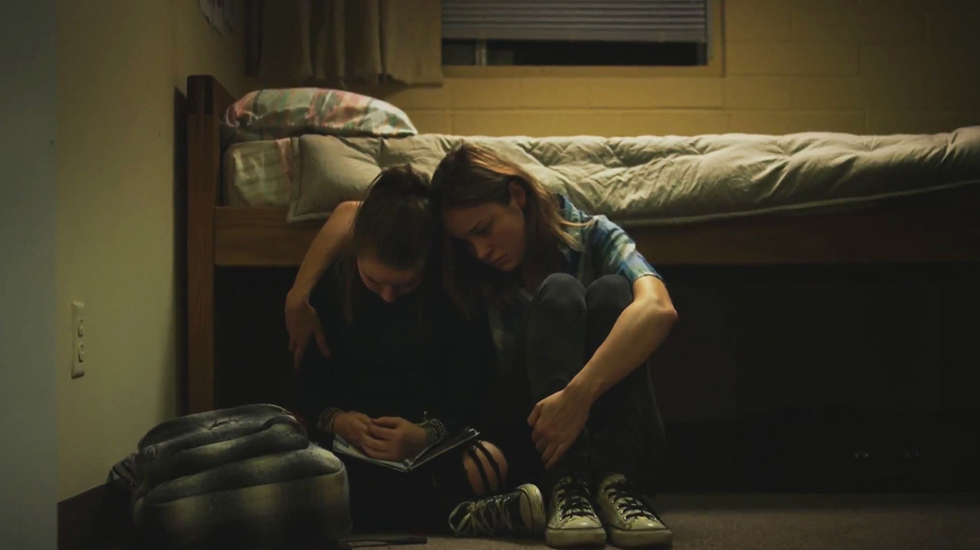
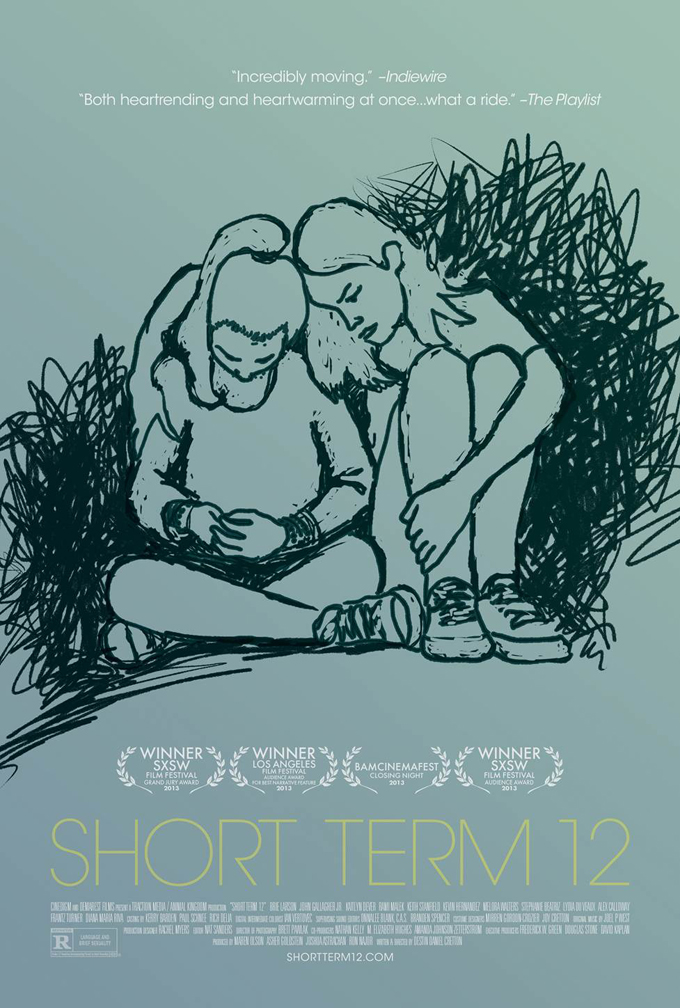
short-term-12-posterShort Term 12 – THE FILM OF MFF for me. Hands down. In the same ballpark as The Class. Nothing to nit pick. Nothing to write. WATCH IT NOW. Shed a tear or two in few scenes. What a depiction of a love relationship! And the teenagers are so good.

Heli – family getting caught up in extra judicial military forces ka atyachar. Quite liked it. I don’t know if this happens in Mexico, but it surely does in Kashmir & Dantewada.

For Those In Peril – this redemption tale set in the gloomy scotland (wish there were subtitles) lost me somewhere in the middle. And the bizzare ending just left me confounded. Koi samjha do kya hua.

Tonnerre – another doomed relationship film. Lovely. The lead is so good and ‘paavam’ (bechara). Was pleasantly surprised by the ending.

My Dog Killer – what an opening sequence. A tough guy training his dog, called by his dad for help. Stark, minimal, gritty, family social drama, this film left me wondering all the time where the hell this is going to go. And the dark ending nailed it for me. Don’t go by the title of the film!

A Long and Happy Life – a farmowner’s struggles to balance the shifting equations between his farmer community and the city council. Must start watching more Russian films after this one.

Kaphal (Wild Berries) – a sweet little funny children’s film set in the plush garwal, what a cinematic delight this one was. The kids(normally irritating in most hindi films) were so lovable, they carried the film on their shoulders. Ably supported by Subrat Dutta (Talaash), Pubali Sanyal (did she play Boti’s wife in Maqbool?) and cilemasnob‘s favorite under utilised Sunita Rajwar – who has a monologue and she rocks! Another movie which made me cry a couple of times. The audience loved it. Take a bow Batul Mukhtiar!

Good Morning Karachi – Slumdog Millionare meets Madhur Bhandarkar in Karachi. Was really disappointed. So were the fans of Khamosh Paani. Heard an editor friend laughing throughout at the unintentional hilarity at times.

Katiyabaaz – a very intresting film. Mazedaar. Somewhere between a documentary and a Dibakar Bannerjee-ish at times feature, this one digs into the power supply problems, a local hero (Loha Singh is the new Sagairaj!), the unpopular IAS Ritu Maheshwari – MD of Kanpur Electricity Board, the dwingling kaarkhanas of the industrial city, Indian ocean’s music and the superb background score. Lovely. Hats off to the full team. More power to apni Alice & apna Varun 🙂

Killer Toon – a web comic designer’s comic sketches potrayl of deaths, are carried out with precision of a serial killer. How? Why? Who? Is the designer responsible? What are the cops going to do about it? Who is that kid on the road? This excellent premise laden film begins with a arresting opening sequence and the horror-thriller tone is set. The repeated flashbacks and seamless transition to & from animation to reality itself is worth seeing this film – the chills down your spine while watching this one in a dark theater notwithstanding.

And an entire film can be made out the funeral business wala. What a character and what a performance by the actor (albeit in a role spanning less than half of the film). Would love to see that alternate film.

The Past – Asghar Farhadi’s superlative follow up ‘sequel’ of sorts to his brilliant A Seperation. This dysfunctional family drama is set in a almost Ramin Bahrani’s version of Paris, with characters bickering, coming to terms, confessing. It doesn’t get more ‘real’ than this and yet the situations are so dramatic. The lead from Seperation & Prophet nail it in this one, and the wife deserves all the accolades. Long takes, minimalist camerawork, terrific performances from the cast – Farhadi’s signature everywhere. I have been informed marriage-separation is the director’s favorite genre. He seems at home in this film with an objective eye on every one. The train sequence with the father son choked me up. And I loved Fohad – the little kid. MUST MUST WATCH.

You still haven’t seen Richard Linklater’s Before Midnight? Well, here’s the first thing to do. Click here to go to Mumbai Film Festival site and book your seat at Liberty Cinema for its screening on 23rd Oct at 5:30 pm slot.

And now come back to this post. Shubhodeep Pal watched the film and went meditative on Jesse and Celine’s two decade long love story – wonder, ponder, and all that jazz. Read on.

(I just have one question – they are not a couple in real life? Hawke and Delpy never fell for each other? Unbelievable, this cinema shit!)

Before Midnight2

In one of the many memorable scenes in Before Midnight, Celine watches the setting sun descend into the distant hills, and counts down to the moment when dusk will envelop Jesse and her. “Still there” she breathes. “Still there”. Until the inevitable moment when, of course, it’s no longer there.

But is it the sun that she’s referring to, or their love – spanning two decades – that her longing, slightly sad eyes see sailing into the dark? After all, doesn’t love too follow a similar arc to the sun? It is not a far cry to suggest that, in love too, there is a period of expectation akin to dawn, then the happy realisation of love that reaches a zenith, followed by a gradual disintegration until dusk arrives, and, finally, a darkness that marks the passing of love.

However, just as they expect the sun to, many people expect dead love to conquer the darkness in a dawn that’s imminent. Sadly, love is less predictable and more beguiling than the cycle of the sun. Indeed, love is often more like the stages of our lives than we’d like to admit, and, often, it mirrors our emotional state at that stage. Our best shot is perhaps to extend the middle period – from zenith to dusk – and try to make love oscillate between these two points. Or, at least, delay the inevitable.

In Before Midnight, Jesse and Celine occupy this middle period. The heady lightness of discovering love, followed by the more sombre loss of paradise, are now past. They are together, but saddled with age, children and responsibility. More importantly, in their story, they are separated from their first moment of love by two decades. Has their love actually survived that long, Celine frequently asks. Will it endure much longer? Or will competing interests tear them apart?

In another romantic classic, Eternal Sunshine of the Spotless Mind, Joel, one of the two protagonists, wonders: “What a loss to spend that much time with someone, only to find out that she’s a stranger”. Celine and Jesse find themselves in this spot too. Can they truly say they understand each other perfectly because of their love? Their differences, after all, are prodigious:

Celine is a strong-headed woman of the arts from post-feminist Paris and no pushover for men. Jesse is American and, despite being a moderately celebrated writer, by his own admission, lacks the cultured sophistication of Celine. Indeed, it is sometimes difficult to see Jesse’s virtues as anything other than an unremitting adoration for Celine and winning wit.

At this moment in their lives, more than anything else, they find themselves in need of re-affirming the love that binds them together. Celine and Jesse are living with their two children in Paris – but Jesse’s son from his previous marriage must spend most of his time with his mother. Jesse would prefer to be closer to him; Celine cannot think of moving to America on a whim, especially when she’s just secured a new job. Will these forces, tugging the two in opposite directions, tear them apart?

When the first feelings of love are a distant memory, what remains? Is it still love, or just a memory of love? Moreover, how does love cohabit a space in which our human frailties are eventually revealed from under the glare of the initial moments of love? In Eternal Sunshine of the Spotless mind, this thought finds succinct expression in a dialogue between the protagonists Joel and Clementine:

“Joel: I can’t see anything that I don’t like about you.

Clementine: But you will! But you will. You know, you will think of things. And I’ll get bored with you and feel trapped because that’s what happens with me.”

Similar concerns drive one of the major underlying currents of Before Midnight. In one scene, Celine asks Jesse whether, seeing as she is now, as a woman older by twenty years, would Jesse have still come up to talk to her. Jesse tries to give a reasoned answer, instead of the expected romantic one and that irks Celine. Does love survive on expected answers, instead of the truth?

The writer Alain de Botton, in his fine book, Essays in Love, writes: “To be loved by someone is to realize how much they share the same needs that lie at the heart of our own attraction to them. Albert Camus suggested that we fall in love with people because, from the outside, they look so whole, physically whole and emotionally ‘together’ – when subjectively we feel dispersed and confused. We would not love if there were no lack within us, but we are offended by the discovery of a similar lack in the other. Expecting to find the answer, we find only the duplicate of our own problem.”

In Before Midnight, both Jesse’s and Celine’s insecurities find expression in articulate, intelligent dialogues that play one’s insecurities off the other. Perhaps the finest set of dialogues written in recent memory belongs to the hotel set piece when Celine and Jesse’s differences clash violently and spill all over each other’s sore spots. And they react as all humans do – by hurting the other in order to find a balm for one’s own wounds. The genius of this movie lies in how we can easily see – like we have often seen in our lives and in our homes — how both Jesse’s and Celine’s arguments appear sound until the other returns with a counter-argument.

Each successive argument, however, shows an increasing pain and a withering appetite to hurt. Is this the mark of true love: The unwillingness to keep on hurting the other, even in a fierce argument? Jesse tries to make peace repeatedly but fails. Celine will have none of it. But when she says “I don’t love you” to Jesse, does she really mean it or is she trying to justify to herself the reason for her vituperation of Jesse (which is undermined by her obvious affection for him)? Elsewhere in his book, de Botton writes: “We fall in love because we long to escape from ourselves with someone as beautiful, intelligent, and witty as we are ugly, stupid, and dull. But what if such a perfect being should one day turn around and decide they will love us back? We can only be somewhat shocked-how can they be as wonderful as we had hoped when they have the bad taste to approve of someone like us?” More than anything, this middle stage of love – as we might as well call it – is a time for the recalibration of the love of Jesse and Celine, especially as they prepare to look beyond themselves into matters that will affect the lives of not just their own selves, but also the family as a whole.

Before Midnight illuminates both the comforting and disconcerting aspects of love and how it ages. Undoubtedly, love can be transcendental and offer the purest of joys to those under its spell. Equally true is that the mist of love can unravel just as quickly as it appeared. In such circumstances, it is an abiding respect for each other that offers the best anchor for saving that love. More importantly, it is an appreciation for the mundane aspects of love that might provide the most enduring memories – remember how Robin Williams, in Good Will Hunting, says how he remembers his dead wife the most at night, during which her farts while sleeping are missing.

Susan Sontag argued in her seminal essay “Against Interpretation”, that the new critical approach to aesthetics undermines the spiritual, transcendental importance of art, which, is, instead, being replaced by the emphasis on the intellect. Can we perhaps extend a similar argument to the interpretation of love? Are we witnessing a transformational age in which love becomes a means to an end, soon to be discarded for more “substantial” things such as a meeting of minds that is based on logic and compatibility? The illogic of love can barely withstand the logic of our personal wants.

 ~

before-midnight

As a movie, Before Midnight is an oddity. In an industry that pleasures itself by commissioning inferior sequels that can endlessly cash-in the goodwill earned by the first movie, Before Midnight offers arguably more than the previous two films in the series combined. Apart from its deep meditation on love, it also has much warmth and wit to offer – on asides as various as parenting; sex in the age of virtual reality; the difference in psychologies of men and women, and the interpretation of literature. Even the funniest gags are littered with meaning — a particularly amusing one has Celine acting a bimbo.

The only irksome facet of this movie – which is quite deeply feminist at heart – is how it often shifts the audience’s “sympathy” to Jesse’s predicament and portrays Celine as unrelentingly insensitive to his plaints. This does not appear unnatural as it is presented in the movie, but was a slight cause of concern to me. Why did I feel more sorry for Jesse? Is it just how the characters are, or was Celine’s constant rebuffing of Jesse a bit too exaggerated? That said the movie excels beyond your highest expectations.

But do the two characters find a resolution? In a masterstroke, the movie refuses to tell us. And, given how faithfully it mirrors the oscillations of love in most of our lives, that is how it should be. For, what is life but an endless search for answers, only to find that each answer leads to more questions? The moments of peace that must be snatched are those during which we know that right now, for a few minutes or seconds, everything is okay.

 – Shubhodeep Pal

And we are also back with our daily fest diary. As long as our brains keep working after 5 back to back shows, we will try to do a post daily. Here’s Kartik Krishnan‘s to Day 1 wrap.

matterhorn

Matterhorn – a normal middle class devout time table wala Ram Gopal Bajaj (Andaz apna apna – Paresh Rawal) character’s life changes when he takes a mentally challenged drifter as a ‘flatmate’. Dealing with themes of ‘मोह’, church, conformity, redemption, cognitive disability, pity, homosexuality, relationships and a dash of black humor – this dramedy is crisply directed with minimal flab. The usage of BGM is particularly striking.

Pussy Riot – A Punk Prayer – This documentary immediately reminded me of Ismat Manto Haazir hain & Howl (the brilliant film screened few years ago at MAMI). Bunch of girls perform anti establishment punk rock songs at the Sacred Cathedral in Moscow and the ‘orthodox’ residents are outraged – following which the administration slaps a case on them. And then we delve into the characters’ of the three girls and the courtroom drama that follows. Gandu-equivalent music (though with more political content), the girls claim they have not done anything blasphemous. Provocative, entertaining, subversive, satirical.

Blackfish – Docu on Killer whales exhibition and how the greed of Seaworld (no different from any of the conscience-less corporates ruling the roost we’ve seen before) led to the death of many trainers. The fondness & familiarity with which everyone talks about the ‘culprit’ whale – Tilakam almost makes this docu like a thriller with an unpredictable eccentric protagonist at the center. Candid videos of training gone wrong – there is a particularly chilling sequence with a trainer being forced entertain Tilakam’s ‘eccentric’ behaviour, and being dragged underwater for as long as 60 seconds – repeatedly.

Wajma – An Afghan Love Story – turned out exactly what the trailer promised. An Afghani Julie. Made with low budget & minimal production values, shot on HDV, candid shooting style. While the film lacked the ‘professional’ touch it had a lot of heart in it. The lead actress gave an arresting performance, and particularly the honor-beating scene stays in your memory more so perhaps due to the rawness of the film. Want to see more films from Afghanistan.

The Weight of Elephants – starts out on a promising note and a mis direction – I was wondering(hoping) perhaps it is going to go in Prisoners’ zone with kids gone missing. But this New Zealand film stays with the drifter protagonist – the young Adrian and his life in an around his school friends, next door neighbors and troubled home, and eventually becomes a coming of age film. The kids look so natural and impressive that their scenes alone tower over the nothingness which is so present in the film. Disappointing except for the lovely Kiwi locales and the Gulzar-ish/Masoom-ish kids.

Tales from an Organ Trade – This docu shot all over the eurasia, middle east, canada, thailand covers the complex nature of the Organ Trade, specifically the kidney racket. Why do slumdwellers in Manila happily become kidney donors for as little as 2000USD? How do the doctors performing such clandestine surgeries look at themselves in the mirror? Is only voluntary organ donation ethical ? What other option does a long suffering renal patient have if he/she has been waiting for 7-8 yrs for a ‘legal’ kidney? The docu puts forth these and many more important questions in an entertaining engaging manner.

The Armstrong Lie – This documentary focuses in detail on the confessions made by the cycling champ cancer survivor famous oprah interview. Slightly long and rambling, it turned out to be nevertheless an eye opener on the life of Lance (I must confess- knew little about him before this docu). How can one be so convincing as a liar for so many years ? Why is every genius a narcissistic aatm-mugdh asshole ? With lots of in depth interviews and candid conversations, this one really made my day. Another must watch.

Locke – Tom Hardy. Driving a car. One night in London. Travelling from one end of town to another. All the time on phone. The premise sounds like a thriller but it is a superlatively shot human drama about a man trying to face his demons. Doesn’t get repetitive despite being a single ‘setup’ film. Wish we could see a hindi film like this but which actor is confident and daring enough to pull off something like this ? I wish subtitles were there because the Brit accent sometimes flew over my head. Now I want to see the writer-director’s Humming bird.

Kartik Krishnan

(PS – If you are wondering how KK managed to watch 8 films on one day, well, he did his homework well. Watched three films from #youknowwhere)

Hansal Mehta should celebrate his birthday today. After Dil Pe Mat Le Yaar in 2000, he has been making one forgettable film after another. Forgettable might be too polite to describe them. And then he makes a comeback with such a strong film that it grabs you by the throat, makes you sit down, and wonder if he really directed those forgettable ones. A rare achievement that few filmmakers manage to do – to pull themselves out of what can be called “Bro-Filmmaking-In-Bollywood”. This is nothing less than a rebirth.

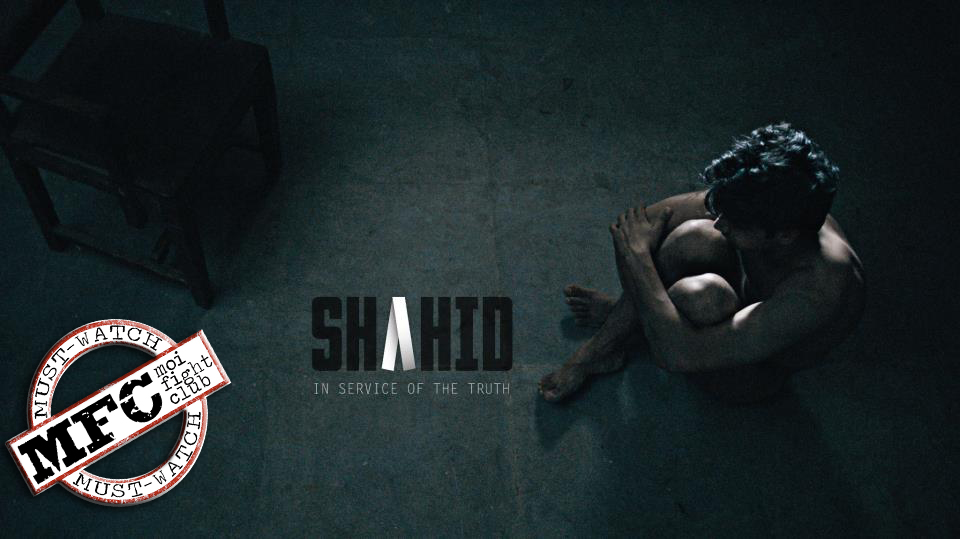
Fatema Kagalwala tells you why you should not miss this one. Mehta’s Shahid goes straight into MFC’s “Must-Watch” list.

Shahid MFC2

You’ve heard about the film. You might have read the raving reviews too. Some of you have watched it. But the film gets its real glorious moment now. Theatrical release. It’s every film’s Holy Grail. It’s the child bride’s gauna. It’s a validation that matters more than awards at times. Especially for a film like Shahid. One that dares to speak about a man who dared to himself. Especially in our regressive, repressive, intolerant times.

For a long time, I kept pronouncing the title of the film as ‘Shaheed’ as in martyr. And isn’t it so true of the story and the man at the centre of it? You will find a number of reviews telling you how good the movie is. It is. Powerful and uncompromising with the truth. So I will quickly chart down the reasons of why I think (in no particular order) you must watch this movie –

Rajkumar Yadav – We all know he is a defining talent of our times. And so far we have seen him only in multi-character movies. He carries this film entirely on his shoulders and it is not an easy task to sustain. The film is a story of a hero but has an incredibly un-melodramatic and non-manipulative story-telling. It maintains a strongly unemotional, non-manipulative tone, satisfied to observe the characters fighting, losing and winning their battles. Any other actor (except Nawaz maybe) would be torn between trying to underplay the heroism and emphasise the man behind it all. Not Rajkumar. He finds it equally easy to portray vulnerability as he portrays stoicism.

Hansal Mehta – Every film-maker has his or her own journey and mostly it is tough. It rarely depends on how original or independent minded he is. It also rarely depends on his reasons for making the films he does. Hansal Mehta has had his own downward spirals but the important thing is he bounced back when most give up. With this. Fighting a hiatus and a creative bankruptcy (in his words) maybe tough, but fighting an unforgiving, unsympathetic system is much worse. Shahid was not a subject that would be easy to make in a socio-political-artistic environment like ours. But it got made and got made well. That alone deserves applause.

Realism – That elusive, enigmatic bitch that takes talent to realise onscreen. From sets to actors to screenplay to dialogues to costumes to direction to acting to everything else in between. Shahid comes so close to reality it could be yours and mine story. As a Muslim it is mine and well, it was very uncomfortable watching it play out like it did. It must have been uncomfortable for Mehta as well, to choose to include the gory, debasing insult he was subject to after he made Dil Pe Mat Le Yaar. It takes guts to make an effort to heal such wounds through artistic means.

Casting – Hansal Mehta gives complete credit for finding the right actors to his casting director Mukesh Chhabra. All that matters to us though is that Mohd Zeeshan Ayub brings alive the part of the protective, fatherly elder brother and Baljinder Kaur is so good as a Muslim woman I was shocked to learn she was a Punjabi. Prabhleen Sandhu as Mariam, Tigmanshu Dhulia as Maqbool Memon and Vipin Sharma are deft touches in a carefully created canvas.

Zero melodrama – How often do we get to watch films about heroes, about controversial material, about polarising issues, about our social reality that comes without a Dolby surround sound moralising or 3D level emotional manipulation? Shahid loses out on deifying its central character, it may have become a ‘My Name is Khan’ financially if it had done that. But the choice to go strictly biographical in structure, objective in tone and let the man’s journey speak about itself makes this film this decade’s Black Friday.

Muslim as humans – This is not a movie championing Muslim rights. Very few people understand that the right response to bigotry on the basis of racism and sexism is not deifying the identity or struggles of the ‘other’. The right response is to bring humanism into the equation to balance it. The film, just like its protagonist, with a rare perspicacity, speaks for Muslims as humans and not as a religious identity, and the distinction is very important. Especially at a time when we are simply revelling in bracketing people according to class, caste, gender, race, colour, community, geography with a ‘hey, let’s find more reasons to discriminate’ glee.  If the victimised community was Hindu, Sikh or Christian, the film’s viewpoint would have been the same. In our times of muddled philosophies, faux intellectualism and confused, twitterisque moralising, walking this fine line perfectly is refreshing and heartening.

Shahid Azmi – A victim, a trainee terrorist, an imprisoned accused, a lawyer and a crusader of human rights of the wrongly accused. He finished his college degree while in jail awaiting release and in career spanning seven years e had a remarkable 17 acquittals. It is a sign of our times that his end came the way it did. It is also a sign of our times that someone thought his story important enough to be told despite the evident dangers. There is hope.

We keep screaming, we need more movies like these. And now we have one. Go watch.

LKF
Kenny Basumatary’s Local Kung Fu (with English subtitles) released this friday. Some of us had seen the film and quite enjoyed it. Here is a Baradwaj Rangan-ish bullet point movie recco post by Kartik Krishnan.
  1. Dash of Takashi Kitano humor and tribute to oranges-Andaz Apna Apna.
  2. Goon with the funny smile plastered on his face 24X7
  3. The 70 yr old grandfather who wields the stick with Kamal-Hassan-Thevar-Magan-ish dexterity.
  4. The superb tongue-in-cheek Guthka khaane se swasth ko haani pahunchti hai PSA cleverly forced in
  5. Candid out takes end credit sequence
  6. Fried Silkworms, Snail curry, rice pancakes ahhh the food
  7. The overweight Karate goon who sings Raagas
  8. Spirit of the cast and crew and a budget of less than a lakh
  9. Ekta Kapoor spoof
  10. Absolutely naturalistic performances
  11. The Number One U 18 goon – Bonzo !
  12. The energetic action sequences
  13. The girl with Assamese-Malayali roots
  14. The gallis and koochas of Assam
  15. The uncle who asks “You need to take a crap or something?”
  16. The music (Wish the songs were subtitled too) Sample this
  17. The Requiem-waala montage thrown in once or twice
  18. DLFG – Delhi Liberation Front For Gurgaon
  19. The stories told in each and every fight – kaun kispar kaise bhaari padta hai 
  20. The irreverence and non seriousness of it all – with the tone set from the the opening statement itself !
  21. The goons shaving & whiling away time when bikes enter in super slow motion!
  22. Even a small time thief fights back in Kung Fu-style
  23. The villain whose caller tune is the sound effect of kicks & punches
  24. No pretentiousness of an art film, No (ok, may be a little) filmy-pana of a commercial film
  25. The vision guts and passion of Kenny Basumatary who has acted, written, directed and edited the film

Do catch the film playing at the limited screens.

loval-kung-fun2

– To know more about the film, click here to read an old post by the film’s lead actor, writer an director Kenny Basumatary.

– For more info on the film, visit its Facebook page here.

– To watch its trailer, click here.

shuddh-desi-romance copy2

Since we have become a generation of Buzzfeed and because “listicles” are still not dead, am going to pick the easy route. Here are the top 10 reasons why i loved Shuddh Desi Romance and why you shouldn’t miss it.

1. Jaideep Sahni – I was wondering if he will deliver or not. This is a virgin territory for him – a full throttle romantic film. And more suspicious because he was talking like my another favourite screenwriter, Charlie Kaufman. Love versus love portrayed in films, expectations versus reality and all that jazz. Well, he not only delivers but pushes the envelope and sends it out of the park. Terrific lines all over, all that which seems so natural that it’s difficult to believe someone actually wrote it. And especially at a time when everyone is taking this dialogue route, at least in mainstream hindi cinema space.

2. Morality is Dead – A friend got a sms from a veteran journalist – SDR’s morality is falling faster and lower than the rupee. Not surprising. This film might be shocking for the conventional theatre going crowd and especially when it’s not set in any Tier-1 city. Aha, what fun, to piss of those old holy cows.

3. Marriage is Dead – Commitment is fine. But why do we need the shackles to remind us that we are “committed”. Ironically, this one comes from the same production house which is in shaadi-binness. U-Turn? Hell yeah! Mommy, are you listening?

4. Parineeti Chopra – Mommy, if you still insist, can you try her. I have been skeptical about her main-chulbuli-always-smiling-full-on-enthu avatar in the last two films of her. Are they going to typecast her? But three films down and i think we can easily brand her as “show stealer”. Put her in any film, she is bound to walk away with all the glory while making it look oh so easy. Girl, you are going far.

5. No Melodrama – It’s never been our strength. To keep it minimum, to keep it subtle and yet pack a punch. Now, just see what all can a “thanda” do in situations where there is huge scope for such drama. Am not going to explain the scenes here to kill the fun. But i wanted to get up and applaud in the first “thanda lao” scene. I don’t remember when was the last time someone played it so smoothly in such a loaded scenario.

6. So much silence – Again, another rarity in mainstream bollywood. What do you write on those blank pages where your characters look into each other and say nothing and give those strange expressions that is difficult to define. It comes only with those weird situations that you get into. SDR is full of those and director Maneesh Sharma knows how to capture them.

7. No dil-jigar-dard-tukda song – what a relief. Dil hi toh hai saala, tutne do. Devads is over and out. To quote Sahni from another favourite, Rocket Singh, bikhre nahi toh kaise nikhrogey, uljhe nahi toh kaise suljhogey.

8. Climax – 2 couples and 4 characters – what a masterstroke. The way 4 characters are stuck at the same crossroads and the dialogues were criss-crossing, it reminded me of my favourite scene in That Girl In Yellow Boots – two telephonic conversations going on at the same time. Also, the climax doesn’t try to follow the conventional route. It sticks to its core idea that its prescribing from the beginning.

9. The “repetitive” tool – I read some comments saying that lot of it is “repetitive”, especially the dialogues. I thought that was brilliant writing – to use the same stuff with different characters. You know the lines, the character doesn’t. It happens more than once and the funniest is when Sushant and Parineeti try to find out about each other from Rishi Kapoor.

10. Pigeons, Monkeys and Milieu – As the film started, i kept on smiling as it played the montage filled with these various creatures. It’s been a while since our kabootar did ja ja for Mister Saajan. They are not just props, they slowly construct that rare thing which is difficult to achieve – milieu. And being aware of the world around you always helps.

All hail Jaideep Sahni! At a time when the market is flooded with fucking remakes and sequels with the sole intention of making money, here’s the one with the original voice and daring content.

Chanchal mann, ati random
De gayo dhoka sambhal gayo re
Phisal gayo re…

– Posted by @CilemaSnob

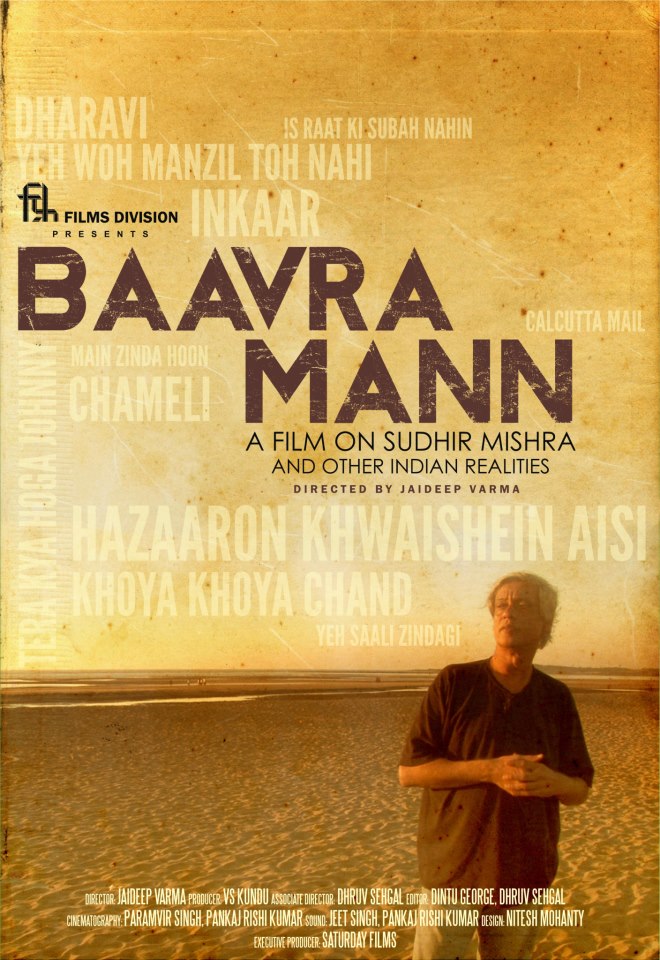
Jaideep Varma’s documentary Baavra Mann is yet to get a release in India. Karan Singh Tyagi saw it at New York Indian Film Festival earlier this year and wrote this post for us. Read on.

(We suggest you play the song in the background while reading the post)

Baavra MannWho is this long-haired Sanjay Dutt duplicate?

Duplicate nahi hai bhaiyya. Iska naam Nirmal Pandey hai. Kya acting kari thi isne ‘Is raat ki subah nahin’ me”, was my prompt reply, as my cousin and I stood in line with a dozen others, scanning movie posters outside Gaiety (Bandra) and booking our tickets for ‘Auzar’. As an 11 year old, I couldn’t contain my excitement, at having recognized Nirmal Pandey in the ‘Auzar’ poster, and went on this long rant about ‘Is raat ki subah nahin’. Much to my cousin’s chagrin, I told him everything about the movie – how it was violent and funny at the same time, how all the actors spoke a very different language, how the story finished in one night, and importantly, how Papa and I were lucky to see the movie on the big screen, as it had a single show in Bombay.

This innocuous little incident came back to me while watching Jaideep Varma’s documentary, ‘Bavra Mann and other Indian Realities’, in New York. For those who haven’t seen it yet, Jaideep’s movie traverses through the life and films of Sudhir Mishra, and somewhere in the middle of the movie, Mishra laments how ‘Is raat ki subah nahin’ was confined to a single show in Bombay and how many people didn’t get to see it. On hearing this, I silently smiled as my mind went back to watching the movie with Papa in the same show that Mishra was referring to. How I wanted to thank my father at that very instant! Not just for taking me to ‘Is raat ki subah nahin’, but for giving me the hereditary gift of love for movies and being the best companion I could have had while I nurtured  it.

There were numerous such nostalgia trips throughout Jaideep’s movie. The portions dealing with ‘Hazaron Khwaishein Aisi’ left me mesmerized. Listening to ‘Bavra mann dekhne chala ek sapna’ on the big screen again did my soul so much good; it stirred something deep within me, something in desperate need of stirring. My mind went back to when I first saw ‘Hazaaron..’ I remember crying tears of joy and sadness, laughing gleefully, feeling melancholic and empty, while ‘Bavra Mann’ played on loop and images from the movie interposed with flashes of my life didn’t leave me for days at end.  Probably, this is a uniform reaction that ‘Hazaaron..’ elicits. The movie strikes a deep chord somewhere, and makes one confront broken promises, failed dreams, and all those bittersweet memories, that we carry with ourselves. Right after watching Jaideep’s ‘Bavra Mann’, a friend who had accompanied me to the screening in New York forwarded me this by Avijit Ghosh who captures this sentiment beautifully:

There are a thousand reasons to watch Hazaaron Khwaishein Aisi. But enjoy it as a last anthem for a generation who knew how to believe. Watch it holding the hand of a woman you have loved and lost. And it would be nice if you have drunk some rotten whisky before.

As must be painfully evident by now, I am easily susceptible to bouts of nostalgia. However, these glorious nostalgia-filled moments were not the only reason why I enjoyed Bavra Mann. I have often wondered what drives filmmakers to make the kind of movies that they do. For example, at the risk of doing a Baradwaj Rangan here, I have been fascinated by two particular scenes from Black Friday and Gangs of Wasseypur.

Sample these dialogues:

Black Friday – “Jiske paas kuch nahi hai karne ke liye, dharam ke naam par chutiya banta rahega”. GOW2 – “Jab tak cinema hai log chutiye bante rahenge

I have often wanted to argue that we can discern in these dialogues a kind of master narrative, a collection of meanings, and, perhaps, a powerful leitmotif that runs through all of Kashyap’s movies, a kind of slavishness and hive mentality – towards religion in Black Friday, towards cinema and everything that one acquires from it in Gangs of Wasseypur. To take the analogy further, slavishness towards power in Gulal, towards self and personal ego in DevD and No Smoking. Therefore, Kashyap’s movies are magic on celluloid, because he lets characters with such aggressive spirit and slavish devotion face their internal conflicts and external surroundings. What we see on screen is the result of a bundle of contradictory aspects and motivations, a certain kind of dualism that everyone and everything in life has. I have repeatedly asked myself, what are the questions that Kashyap is trying to answer through his work? Has he found any answers yet?

Bavra Mann poses similar questions to someone whom Vikramaditya Motwane calls the “original Anurag Kashyap”. Despite the frequent and frenzied analysis of cinematic moves of all current directors’, I feel there is a strong lack of literature that provides us with enough resources to examine and study their work. This is where Bavra Mann triumphs. It gives enough resources to the audience to interpret Sudhir Mishra and his movies in a new light. Bavra Mann is a fascinating exercise in self-revelation and film lovers will revel in the personal anecdotes and casually delivered remarks that reveal layers and layers of information about Mishra and his body of work. The movie has a series of interviews with Mishra and people close to him, covering the length of Mishra’s career, beginning with his childhood, continuing through his education, his failed marriage with his first wife, his relationship with renowned film editor, Renu Saluja, his early film work, his breakthrough success with Dharavi, and his daring work in Hazaaron.., his most autobiographical Khoya Khoya Chand, and finally his recent movies. There is a treasure trove of diamonds in the movie. After all, who wouldn’t want to eavesdrop on Mishra and Shantanu Moitra’s recounting of how they got Swanand Kirkire to sing ‘Bavra Mann.’

A criticism often peddled against movies like Bavra Mann is that the director holds back, and is reverential towards his subject. Here, Jaideep is never in awe of Sudhir Mishra. His questions are probing and the discussions on films themselves are less about why they’re great and more about how they were put together. Jaideep knows that directors are not good at explaining motives behind making particular films. Movies, like many things else, begin with something very vague and abstract. Jaideep, therefore, never tries to look for definite answers and actual motives behind Mishra’s work. His aim is to allow the viewers the freedom to interpret the scene in the way they want, and depending on how their cinematic education (and earlier experiences of Mishra’s movies) has prepared them. Bavra Mann succeeds in bringing before us the greatest number of possibilities to reinterpret Mishra’s movies. After watching Bavra Mann, I realized that Sudhir Mishra’s movies (especially the earlier ones) resonated with me because they were being truthful about life – the movies expressed some deeper emotional experiences that Sudhir Mishra recognized in his own existence. This in and of itself was a reason for me to love Bavra Mann.

However, for me, the biggest strength of Bavra Mann is that it never wavers from admitting that Sudhir Mishra continues to be plagued with what is an inconsistent body of work. It subtly engages in criticism of some of Sudhir Mishra’s recent movies (the likes of Inkar, Calcutta Mail) to reflect on the present-day infertility of thought in India. By using Sudhir Mishra’s example, Jaideep exposes the dangers inherent in adopting a conformist and consensus-driven career. According to me, it is in this context that the movie makes a brutally frank attempt to unravel the intellectual decline of India and Indian movies (using Sudhir Mishra as a metaphor).  The movie, therefore, is an elegy of intellectual life not only of Sudhir Mishra but of us all. In a way, the movie tries to jolt us (Sudhir Mishra included) out of the dark recesses that we have allowed ourselves to fall in.

I do not know if Bavra Mann is getting a theatrical release anytime soon. However, I strongly hope that everyone gets a chance to see it. Watch it to revisit old times, to go back to your personal stories intertwined with Sudhir’s films, watch it to hear “Bavra Mann” on the big screen again, watch it as a student and lover of cinema, and most importantly, watch it because it is a powerful statement on the times that we live in.

Naseerudin Shah says the single most perceptive thing in the movie: “Mishra’s best work is yet to come.” Even though, I love ‘Hazaaron…’, I wouldn’t want it to be Mishra’s best work. I earnestly wish that it turns out to be just a teaser of what he (and by association) Indian cinema goes on to achieve and that no one is ever required to come to the rescue of this long-haired maverick director, like I had to once come to the rescue of his similarly long-haired leading man outside Gaiety.

– Karan Singh Tyagi

(Karan was born in Meerut, lived and studied in Bombay and Harvard, and after a brief stop in Paris, now finds himself in New York. He strongly feels that Ramadhir Singh was directly referring to him while saying, “Sab ke dimaag me apni apni picture chal rahi hai aur sab saale hero banna chah rahe hain apni picture me..” When he is not day-dreaming about movies or Real Madrid, he also works as a lawyer. You can find him on twitter here: @karanstyagi)