Archive for the ‘World Cinema’ Category

And we have come to the last day of the festival. Continuing with our daily reviews and reccos, here are the notes from the last of Mumbai Film Festival, 2015.

Our Day 1 Wrap is here, Day 2 is here, for Day 3 click here, Day 4 is herehere is Day 5, and Day 6 is here. And click here to read the post on Christopher Doyle’s Masterclass.

10f8fb1a-116c-4d9a-8c6e-98a6f6e190fe

Fassbinder – To love without demands by Christian Braad Thomsen

So implosive and concentrated, this one demands a second viewing and deserves a much longer post. The complexity and rich denseness of Fassbinder, the enfant terrible of New German cinema, is so attentively and contemplatively sketched, it is fascinating to delve into the mind and heart of the man and film-maker. It pieces together his life from childhood through rare interviews of Fassbinder and of his other associates and what emerges is an idea of a man as passionate, intense and complex as his films. I missed Junun for this but came back with no regrets at all.

Kothanadi – River of Fables by Bhaskar Hazarika

A German distributor of Bollywood films watching this Assamese gem called it the most original work he had seen in the fest and offered his contacts to the debutante director Bhaskar Hazarika. I couldn’t agree more. Brought up on Ukranian folk tales (like literally hugged the 1000 page book of fables to sleep for years), Kothanadi brought alive the magic realism and earthy ethos of folklore effortlessly. 5-6 stories intertwine with narrative threads and characters joining the dots weaving a mesh of parallel stories moving in the same direction. Rooted in its native and socio-political ethos, the film’s complete lack of need to comment or ‘share a message’ has been the most refreshing cinematic experience of recent times. This is my most favourite film at MAMI this year.

Mor Mann ke Bharam – Illusions of my mind by Abhishek Varma, Heer Ganjwala, Karma Takapa 

Whimsical, imaginative and cryptic, Mor is a delight in more ways than one. It’s a film about the illusions of the mind that creates its narrative for the experience of the illusions. Illusions have a vague form and shifting functions and through the treatment of its themes Mor does something similar. The mystification is not self-conscious and touch of humour is refreshing. Especially, the tongue-in-cheek reflection on difficulties of a film artist. Such a pleasant experience!

Tag by Sion Sono

In another dimension of reality I would have avoided a film like this like plague. But clearly, and true to the film’s premise, I wasn’t in that universe and quickly Tag replaced Microbe as winner of the indulgence of the fest award. Horror cum slasher cum acid trip hallucination turned out to be the most fun at cinema halls I have had in the long time. The premise is there is a world of women where each one is slashed to death by the wind and only one survives. Until she realises she is in a parallel reality and is someone else at some other time. The killing and running continues and in each time she has to save herself. No point writing more about this one, check it out when you can, you know where!

Body by Małgorzata Szumowska

Contemplative document on sadness, broken hearts and troubled relationships, Body, completely desentimentalises pain and anguish and simplifies it. It cannot help take a jibe at the Spiritist school of thought emphasising on emotional healing through spiritual techniques and energy principles to arrive at a very human element of laughter and letting go as the simplest road to love and connection. I was hoping I could end the fest with the much-touted Tangerine but then this wasn’t bad at all. See you next year MAMI.

Fatema Kagalwala

In the last few years, Mumbai Film Festival has become the top film event for the film buffs. What IFFI promised with Goa, it was never delivered. How much can cheap liquor compensate for the bad/old films showing in fest and sarkaari babus having a Goa holiday with no clue about films/festival. As IFFI went down the radar, MFF went up. Interestingly, many film buffs from outside the city also make their annual trip to Mumbai to see many new dreams unfold on the big screen. So we asked four film buffs if it was worth all the travel, effort and money. We asked them to pen down their memories of the fest, films they are taking back with them, and will they be back for the fest next year?

Over to them.

CTC_YyYUAAAb_pq

Leaving business, kids, pets, and your plants for over a week? Well, back home watching saneema FDFS on a working day, by leaving office by half-day, and putting the mobile on silent mode, even that’s not easy. So imagine the scenario for a week!

For all this, you have to do proper planning, and give extra hours, so that when you’re away from home, business doesn’t get suffered. But still some things always go wrong, like when I called my wife after watching Aligarh on Karwa Chauth, technically it was another day. Boom! 😦

Every year I felt very jealous while reading MAMI tweets by friends, but coming to the festival was another impossible dream. As it happened this year, here’s the film that I will always cherish. Many films affected my life but none like Satyajit Ray’s Aparajito. When Sujoy Ghosh tweeted about screening of restored Apu Trilogy at MAMI, that gave me the courage and motivation, and then there was no stopping.

This is one decision which I’ll never regret and it was worth all the risk and effort I put in for coming here. MAMI festival was so well organized – online booking by BookMyShow, Day wise schedule shared by friends, they made it all very smooth. Later on, with Mumbaikars, even this UP-wala started enjoying standing up for National Anthem. Watching films with celebrities and standing in queues with them is the most valuable memory which I’ll take back home.
Nothing is going to stop me from coming here next time जियो मामी.

This festival was for movies, and films which I loved and hated. This greedy bhaiyya watched 23 films and even managed to watch one outside the festival. You can see my reactions on those films which I tweet immediately after screening @rmanish1 ;-).

To quote Rana saab,

मिट्टी में मिला दे की जुदा हो नहीं सकता,
अब इससे ज़्यादा मैं तेरा हो नहीं सकता ! #MAMI

Manish Rathore, from Lucknow

मैं इस शहर का नहीं हूँ । यह शहर मेरा नहीं है, हालाँकि हमने कोशिश की दोस्ती करने की पर कुछ बात बनी नहीं। इस साल मैं यहां 7 दिन रहा, अकेले। कुछ ज़िन्दगी से ऊब गया था इसलिए, कुछ सिनेमा का प्यार खींच लाया । आज जब बम्बई की 12:40 की लोकल में बैठ के ये लिख रहा हूँ, तो एक कमी महसूस हो रही है। कल से जल्दी-जल्दी भाग के PVR JUHU नहीं पहुंचना पड़ेगा, दो फिल्मों के बीच में कुछ “खाने जाऊं या नहीं” नहीं सोचना पड़ेगा, अब किसी को भी पकड़ के ‘सिनेमा’ पे बात नहीं कर पाऊंगा, इतने हसीं twitter के लोगों से नहीं मिल पाऊंगा। शायद अगले साल MAMI फिर आऊंगा। इन सात दिनों में मैंने खुद को भी बहुत जाना है, दुनिया को भी। और सिनेमा को भी।
फिर मिलेंगे।

वैसे मेरी सबसे पसंदीदा फ़िल्म JUNUN रही। संगीत का सिनेमा में महत्त्व समझना है तो इसे देखिये, इन दोनों का संगम देखना है तो इसे देखिये, और जुनून देखना है तो इसे देखिये।

Bhaskarmani Tripathi , from Surat

Mumbai Film Festival is a revelation in many ways, and this is coming from a Hyderabadi, where we can boast of having a thriving movie-going culture on par with Chennai. So, I’m not lying when I say that the film festival is perhaps one of the very few reasons which would force me to come to Mumbai, at least once in a year. What I found really interesting was that not only was the crowd quite enthusiastic about what they are going to watch, but also the programming of movie content at MAMI to be top class. And it’s both a boon and a curse for the festival.

The number of screens (and also the seating capacity) allotted for the film fest are not enough to accommodate the crowd, and this time, I had to miss several highly-awaited films because there were like 10,000 people like me eager to get into the auditorium. This time, thanks to MAMI’s association with bookmyshow, it was quite easy to book a slot for a particular film; however, there’s only so much you can do given the number of shows for a particular film and more than that, the distance between the venues. It gets really really frustrating to stand in a queue for more than an hour only to find out, in the end, that you can’t get in like 2 minutes before the film begins. I would definitely recommend the fest to people back home, given its mix of content from India and abroad.

This year, I was gobsmacked when I saw Vetrimaaran’s Visaranai. It was a solid statement on how the innocent people in the country are used as pawns in a bigger game, and how fate is so twisted, for a lot of people. A lot of people were so moved by the film, after all the edge-of-the-seat action, that I’m guessing that they would keep raving about the film to all their friends back home, especially in Chennai. Since it’s backed by Vetrimaaran and Dhanush, it’s not a ‘little gem’, at least not in Tamil Nadu. That privilege goes to Raam Reddy’s Thithi, which is another good film to have been made in Kannada this year. I missed a lot of films this year; but I’m glad that I saw both Visaranai and Thithi.

I’ll be back next year. Hopefully, the organisers at MAMI will find bigger venues, which is the need of the hour given how much the fest has grown.

(P.S: The Versova-Andheri-Juhu gang, at the film fest, itself is the size of a small town. So, there’s your answer about how to accommodate such huge crowd at the fest)

–  Hemanth Kumar C R, from Hyderabad

I attended my first MAMI because the people who run the blog MOIFIGHTCLUB, they raved about the films/fest so much. So writing for it is a small full circle for me. 🙂

Having attended it for four times now, MAMI is one of the most anticipated events for me personally. Despite attending IFFI & PIFF every year, it still remains my personal favourite. To be a complete nobody and observe every famous person you’ve known either through films or twitter, to run through the schedule, and be glad to see TAXI & ANOMALISA have 5 screenings only to feel that the curators were genuinely concerned about bringing the best, to simply enjoy films in the land that bleeds with passion for it. MAMI is all this and more.

Film festivals are about films more than anything else. Though there were hiccups this year with the scheduling, screening quality, seating issues, it was all worth for that moment when Farhan Akhtar’s irritating voice urged us to get up for the national anthem. Anyway, festivals are about seeing cinema break and create new grammar. Its about acquainting with new voices who are pushing cinema forward, and after the festival is over, one walks home with a plethora of opportunities, possibilities and ultimately hope, to have rekindled the faith of a cinema lover that had the stench of mediocrity.

And it is the same reason why KAUL is the film of the festival for me. KAUL is among the very few films at the festival that brought in a brand new language and yet managed to strike a connect right from its first frame. KAUL is among those rare works of art where every aspect of the film reeks of the directors vision and sincerity. It isn’t easy to digest. Its dark and painstakingly truthful in ways it tells you about life, even if its guilt that you feel of living a life which seems worthless after the film. Among the many thoughts that the film manages to stir up, one of the most striking dialogues was ‘Culture is mankind’s revenge on nature’. A theory I believe about cinema states that every art, including cinema, is an attempt at coding culture to help viewers decode it for themselves. And what KAUL has done successfully, is it has coded enough culture for generations of people to decode and find meaning in accord to their life. While speaking to Aadish, he mentioned that he wishes that more young people see the film and that he has only told things in the films which everyone knows but have forgotten. It only fits for Aadish that the Young Critics Lab chose his film as the best one in India gold section. KAUL will remain with me for a long time and will be one of the films I go back to every once in a while, to know how I’m doing in life.

Suyash Kamat, from Goa/Pune

What are your MAMI memories? Do post in the comments section.

(Pic – Manish Rathore)

Now we have come to the last day of the fest. And continuing with our daily reviews and reccos, here are the notes from second last of Mumbai Film Festival, 2015.

Our Day 1 Wrap is here, Day 2 is here, for Day 3 click here, Day 4 is here and here is Day 5. And click here to read the post on Christopher Doyle’s Masterclass.

tag

Looks like this was my last day at MAMI as tomorrow is fully packed with deadlines and work-meetings. Always a sad feeling to see this week ending.  Kind of the same feeling i used to have when summer vacations ended during school.

And a good time to thank the people behind MAMI (including so many hardworking, lovely volunteers) for making it such a brilliant show this year. I know some filmmakers were unhappy with projection and tech issues but i don’t think in terms of management and movie options we’ve had a better year recently. A few things that worked big time for me this year:

– Hot Docs collaboration as well as other docs. The Pearl Button, Missing people, Junun, Monty Python, The Greenpeace doc, Sydney Lumet, Placebo, Fassbinder, Hong Kong Trilogy, The Arab Idol one.

– Half Ticket section. Did you know school kids were coming daily morning 8:30 am to watch films? And some really great films at play there.

 – The ticketing process. No SMS ka jhanjhat and very smooth handling by BMS people while delivering the delegate passes. Also the bags look lovely this year.
– Doyle Q&A and masterclass. Hope next year we have more of (crazy) legends coming to impart their madness.
Caught just 3 films today.

Junun By Paul Thomas Anderson

THE Paul Thomas Anderson last year filmed a documentary in (our) Rajasthan about a bunch of western musicians (Shye Ben Tzur and Jonny Greenwood) jamming for an album with local Managniyar singers (Chugge Khan group), a brass band (that band-leader Aamir is a magician), and some bawaal qawwals. The result is this most simple yet exhilarating documentary full of some stunning songs and visuals of the jamming process. It was almost like being in a live concert! BRILLIANT.

Sworn Virgin by Laura Bispuri

This Albanian film was a blind selection and it turned out to be very good. A slightly grim but always gripping look at female sexuality through a girl who starts living like a boy through a local village custom that would allow her an escape from the life of subjugation women have to face.

Monty Python – The Meaning Of Live by Roger Graef, James Rogan

What a way to end the festival’, I told myself as we were stepping out after watching this. Monty Python has been one of the huge influences of my life as a comedy writer, and to see this film about their reunion stage shows last year (which were the LAST TIME EVER they would get together) was an emotional journey. The finest, funniest men have still got their mojo and the film has great insights about comedy and performing live. (One of the original six, Graham Chapman is now dead so the reunion show was called ‘One down, five to go’. Haha.) The vintage footage from their world tours 40-years ago was a bonus. Of course this film is kinda niche, only for the fans of the group, but what a trip for the real fans!

Varun Grover

Schneider V/s Bax By Alex Van Warmerdam

Hitman V/S Hitman. Dead Pan Faces Delivering dark humour punches. In a very unusual lakeside universe set up by Warmerdam, he keeps shuffling the environment of the film from comedy to thriller without letting you know. Acting himself as bax, Warmerdam’s weird family This one has brilliant Performances and some unpredictably brilliant moments.

The Pearl Button‎ By Patricio Guzmán

Guzmán’s Pearl Button is a gem of a documentary. He connects nomadic indigenous ‎people living in water with political murders thrown in the same water. Both the subjects are very disparate and hence the documentary is somewhere a bit too ambitious. However, attractive images of water and equally intriguing discussions on Pinochet’s cruel documentary made the pearl button a gem worth watching.

Tag By Sion Sono

Sion sono’ love for undergarments continues in this upskirt horror. But there was more to this film than the usual mayhem. Tag is a completely pro feminist ‎action fantasy by Japanese legend Sino Sono. It was an experience to watch this film on large screen because it was way too extreme for the mainstream because in this gory madfest Mitsuko keeps tripping like Alice from wonderland. And she ends up attracting grindhouse style danger everywhere. Mitsuko later trips into keiko and izumi but still remains prone to danger.
‎The scene in the beginning where the wind splits the bus into two and the one where teachers start killing children with machine guns are complete Sion Sono signature styled scenes filled with excitement and thrill.

Tag has by far been one of the top films I have seen at the festival this year.

Victoria by Sebastin Schipper

Rest in peace, Birdman. The real deal is here. Victoria, a bank robbery thriller already sets hearts pacing as it is a 134 minute long single take. ‎Sounds like a stunt. Or a digitally manipulated virtual wonder but it is not. Victoria is an achievement. It is an exhilarating experience to watch this single take film across more than 20 loacations including some crazy nightclub scenes later leading to edge of the seat drama. The narrative is so tightly binded that the film moves from head spinning weird nighclub moves to composed and realistic scenes to breath taking robbery thrill. Actors, Cinematographer and others involved were in action for a continuous 2 hours and above.

There is no doubt as to why Sturla Grovlen’s name preceded the end credits in this mad mad mad film. Take a bow, Sturla. What presence of mind throughout.

Harsh Desai

Doyle

Legendary cinematographer Christopher Doyle is at Mumbai Film Festival this year. He screened his film Hong Kong Trilogy, and did a Masterclass as well.

Doyle is a complete performing artiste. And it’s great fun to watch him talk. As expected, he was in his true colours in both the Q and A, and the Masterclass. In his session, he showed clips and videos while he talked about his art, craft, life, and inspiration. As the security guys at the theatre kept panicking, Doyle didn’t give a fuck (with liberal use of the word in every second sentence) as he kept guzzling his beer.

Here are some of the interesting quotes from his Masterclass. The tweets are embedded, you don’t need to click the links. Just wait and let them load to see the text, or refresh.

https://twitter.com/NotSoSnob/status/661511232956993536

https://twitter.com/NotSoSnob/status/661510241155092480

https://twitter.com/NotSoSnob/status/661508078857138176

https://twitter.com/NotSoSnob/status/661505395563741184

https://twitter.com/NotSoSnob/status/661504573882810369

https://twitter.com/NotSoSnob/status/661503087069138944

https://twitter.com/NotSoSnob/status/661501835631460352

https://twitter.com/NotSoSnob/status/661500791455219712

https://twitter.com/NotSoSnob/status/661499435185102848

https://twitter.com/NotSoSnob/status/661497880520200192

https://twitter.com/NotSoSnob/status/661497528341303296

https://twitter.com/NotSoSnob/status/661497212912799744

(DivingBATB – The Diving Bell And The Butterfly. Blue is Derek Jarman’s film. HPotter – Harry Potter. WKW – Wong Kar-wai)

And here are some quotes from his post-screening Q and A of Hong Kong Trilogy.

https://twitter.com/NotSoSnob/status/661162562873110528

https://twitter.com/NotSoSnob/status/661162011124965376

https://twitter.com/NotSoSnob/status/661160540534915072

https://twitter.com/NotSoSnob/status/661158962780356608

https://twitter.com/NotSoSnob/status/661158493068632064

https://twitter.com/NotSoSnob/status/661134769867104256

Continuing with our series on daily reccos and reviews of the films at Mumbai Film Festival, here’s the post on Day 4.

Our Day 1 Wrap is here, Day 2 is here and Day 3 is here.

Untitled

Hong Kong Trilogy by Christopher Doyle

“Fuck the studios.”

Christopher Doyle’s latest documentary ‘Hong Kong Trilogy’ (Preschooled, Preoccupied, Preposterous) brought him to MAMI and what a joy it was for those 40-odd people who showed up to hear him talk pre and post the screening. Wish MAMI had advertised the fact more that he’ll be at the screening ‘cos each word of his Howard Beale-sque monologue about the studio system was a sword through makhmal. The highly experimental documentary, more like a poetry (running in voice-over) being interpreted in visuals is a collaboration between Doyle and Producer Jenny Suen and is bizarre and heartwarming in equal measures. BUT, the real fun was listening to Doyle saab – who has spent some time in Hazaribagh as a kid and thanked India for introducing him to a complex society that ultimately pushed him towards exploring arts.

He walked into the screening carrying a cricket bat (no idea how he got one!) and in the middle of replying to a query, he’d stop and play a shot or talk about fielding positions. That Aussie spirit is still kicking there inside him somewhere probably.

Some /highlights from his monologue (quoting from memory).

“Our tragedy is that we are stuck between a youtube on one side and a Harry Potter No. 75 on the other.”

“If you don’t make the film you want to make, Harvey Weinstein will enter your home and fuck your sister.”

“Fuck the studios.”

“Martin Scorsese stole our film and never even credited us.” (He was talking about Infernal Affairs.)

“Studios just want to make Fast and fucking Furious Number 68 and they don’t care about what you think.”

“How is your sex-life?” (On being asked how much Wong Kar Wai has influenced your style and vice versa.)

For more of these, try attending his Masterclass on 3th November, 4 pm. By hook or by crook.

KRISHA by Trey Edwards Shults

Winner of Grand Jury as well as the Audience Prize at SXSW, KRISHA is a fiercely indie family drama that starts as a comedy and quickly spirals into a grand collision of past secrets and tragedies. The highlights here are a super-experimental cinematography, background score, constant play with aspect ratios, and a breakneck edit in certain set-pieces. Though there is no connection whatsoever in terms of theme, this reminded me strongly of WHIPLASH. Brilliant.

Varun Grover

The Endless River by Oliver Hermanus

What happens when unexpected crime complicates life? Estev and Tiny suddenly find themselves in no man’s land when crude murder rocks their lives out of shape. Unconnected yet connected they try to assimilate it all, sometimes together, sometimes alone. There are million emotional strands to explore in this story and its characters but the film chooses to stay with the tried and tested one, making it a predictable journey both for the dramatic graph within the scene and overall. But one thing stayed with me, its music.

Hongkong Trilogy by Christopher Doyle

Maverick master DOP Doyle’s ‘HongKong Trilogy’ turned out to be as trippy as him. The film glimpses into the lives of regular Hongkong citizens, their stories told by them, in their own voices and through their individual stories painting a picture of contemporary Hongkong and its socio-political reality. The docu-fiction form and a heart bleeding for a certain ‘return to innocence’, gives the film a subdued charm. Also, the irregularity of the regular people highlighted through an intuitive selection of real-life stories casts a humane thread into the mix. Watching him speak with his theatrics galore was far more charming though 🙂

Francofonia by  Alexander Sokurov

Documentary on Louvre? Jump, click, book. I wish it was as grand as I had imagined it to be but it was far more than that. The documentary explores the creation, maintenance and importance of Louvre, France’s beloved symbol of heritage, arts, nationality, history and much more in light of the Nazi invasion of WW II. It is a lovingly told documentary that is as whimsical as it is sentimental while being equally committed to historical facts and present political scenario. And it was this particular whimsy, imagination meeting history approach plus the tender meditativeness that gives this one its colour.

Kaul – A calling  by  Aadish Keluskar

I wanted to know if it would hold the second time round, it did. Severe projection issues at PVR Juhu notwithstanding, the narrative had me hooked despite the second viewing. It is a difficult film to watch and the projection issues just made matters worse. But I took back what I came to know, whether it works second time round or not, for me, it did.

Fatema Kagalwala

Day 4 at MAMI was as surreal as the other three, and continues to be a culture shock for me.  I didn’t see any of the films that I booked, randomly walked into three of them (with some pointers from Varun Grover) and it turned out to be a hell of a day.

MISSING PEOPLE by David Shapiro

Director David Shapiro’s documentary is one of the best films I saw at the fest.  I wouldn’t want to reveal anything about what it is any more than you would already know. I found the Q & A with David Shapiro, that followed the film, an extension of the film. I understood it better, could relate to it better. It forms an unlikely trilogy with Searching for Sugarman and Finding Vivian Maier, similar human stories that chillingly give you an insight into something more than you were prepared for. There’s a screening on 3rd with Q&A, do not miss!

HONGKONG TRILOGY by Christopher Doyle

A docu fiction film that captures the lives and stories of people in Hong Kong, while being visually evocative (because Chris Doyle).  It is the same space as Chris Marker’s Sans Soleil, and there is a lot of empathy that the makers feel for the characters in the film and the happenings in Hong Kong. Christopher Doyle (who takes a Mise-en-scène and cinematography credit). The Q&A that followed with Doyle saab is now L-E-G-E-N-D-A-R-Y .

KRISHA by Trey Edward Shults

The last film that I saw was  an American indie Krisha, which continued the parampara of  the other two films I watched at night on Day 1 and 2. The parampara of being incendiary, shocking, brilliant and captivating.  Trey Edwards Shults’ portrait of a woman on the verge of a nervous breakdown (or already having one) and her grappling with mental disorders (like obsessive compulsion) is hypnotic, funny and disarming  to say the least. Pardon my adjectives (and these incessant brackets, I am not a big fan either) but please go watch this film, if there’s a screening left. If you guys were in awe of the music and the camerawork and the editing of Birdman, this would give you orgasm. It won the top awards at South by Southwest film fest, which is a very reliable benchmark.

Trivia: The guy started his career with Terrance Malick’s Voyage of Time and Tree of life, is an actor in the film (spot him!), and has used largely his family as the actors in the film.

Bhaskar Tripathi

Forbidden Room by Guy Maddin &  Evan Johnson

The easiest way to define Guy Maddin’s latest film is ‘कथा सरित् सागर’ on acid. On the surface, the film is about 4 seamen stuck in a submarine which cannot rise to the surface as the bomb inside it will blow up, and they are left with only limited oxygen to survive. Enter a lumberjack. When asked where he came from, the lumberjack starts his story which has multiple stories nested within it, and each story is more bizarre than the other. There is a story of a man who lives in an apartment which is inside a elevator, a woman kidnapped by a bunch of wolf-brotherhood-cave men, a man whose dying gift to his son is his mustache, and (especially) another man who breaks the 4th wall, and teaches bathing etiquette to the audience. In a conversation scene, where as one person talks normally, the other person’s dialogues are written on the screen, like in the silent era, or in the more recent ‘The Artist’. The film has some of the most maxed out trippy visual effects, with images from various stories juxtaposing. Every time a new character is introduced, the actor’s name (it also stars Mathieu Amalric and Charlotte Rampling) appears as they do in a credit roll. This film is not for someone looking for semblance of a plot , which is why people started walking out within 15 minutes, and by half an hour mark the theatre was more than half empty. The few who stayed back pretty much felt like Alice going down the rabbit hole.

Aditya Mattoo

(Pic by Varun grover)

Mumbai Film Festival – our annual movie ritual is on. And like every year, we are going to cover the festival like nobody else does it. moiFightClub regulars and readers will bring you all the day’s reccos and reviews.

Our Day 1 Wrap is here and Day 2 is here.

anomalisa-620x322

Impressions:
 
Anthem: Since we are watching the new version of National Anthem at least 4 times a day, why not a quick review of that too. Am talking about the 26/11 tribute themed National Anthem with a nearly-manipulative prompt in the beginning voiced by Farhan Akhtar. First of all, that 3-slide prompt has at least 9 spelling errors and one grammatical error. If we care about our martyrs so much, the attention to detail is clearly missing. Secondly, I also feel it’s a disrespect to the anthem if they allow every new cause/TV serial/film/segment of industry to make a version of their own. Why not a simple and straight one that doesn’t take away the attention from the original melody and words.
On the issue of playing it at a film fest, a longer rant some other day. (Probably after 10 years.)
Crowd: In spite of the weekend, the crowds were not much. May be due to more venues spread across the city, and side-bar events like Movie-Mela attracting some people, the usual maara-maari we associate with our film festival is missing. Good progress!

Managed to watch 4 films today, though the third one made me feel the pain.

ANOMALISA by Charlie Kaufman and Duke Johnson

The film whose inclusion alone in the programming made the festival safal for me was watched today. Can’t write anything about it except that Kaufman chacha is GOD. Like there’s observational comedy, this one is an observational tragedy meets existential comedy. Go in blank and come away internal-dancing.

APUR SANSAR by Ray saab

Too insignificant to talk about the film but the restoration work is fabulous. The grain, Subrata Mitra’s oblique frames, Sharmila Tagore’s eyes (aah!), and Soumitra’s shy smile – everything felt like you could stretch your hand and touch it. Pure bliss.

RISK OF ACID RAIN by Behtash Sanaeeha

Very interesting premise and lots of lovely moments and unexpected blasphemies for a film from Iran (hint at homosexuality, women protesting against Hijab, men smoking pot) but self-consciously arty and slow. Had the treatment been snappy or at least non-boiling-potato genre, it’d have been a great film.
LUDO by Q and Nikon
Horror is not my genre at all but had to watch this as was given the job of hosting the post-film Q & A – and this film surprised me. Both the horror and myth angles are very nicely done, and the best part – setting up for the horrors to begin was done in the most provocatively refreshing, damn-the-conventions, Q style. Slightly puzzling that they made it in Bangla as this tale is so universal and required no specific cultural/regional grounding for it to make sense. Though Q promised that they are looking at the possibilities of sequels in Hindi and other languages. Imagine, Q said, “A horror film in Urdu!”

Varun Grover

ANOMALISA by Charlie Kaufman and Duke Johnson
After Kaufman’s searing but over-bearing ‘Synecdoche, New York’ I decided I was done with films about depressed middle-aged white men – the collective weight of movies & novels churned out on the subject could probably sink the Titanic. It was then with a fair amount of skepticism that I ventured into Anomalisa, yet a part of me hoped that Kaufman’s screenplay would spring us a surprise.

I was surprised, but not by the writing. The script plays like a Kaufman greatest hit record, revisiting all his familiar concerns – loneliness, neurosis, the ephemeral nature of real love, the nightmares, the anthropophobia. But what is a revelation is the execution of these ideas in gorgeous stop-motion animation. In a long love making scene, which was the highlight of the film for me – Anomalisa depicts longing, tenderness, awkwardness, passion with a truth that live action films with terrific actors would struggle to emulate. Heck, for a moment it made me forget I was watching animation – any film that can do that is genius.

Without abandoning the melancholia that defines Kaufman’s work, this somehow feels warmer than his earlier work. It’s also a pithier film and rambles far less, though it has enough quirky homages & Easter eggs to send fanboys into a frenzy. An ostensibly simple story with several deeper layers to ruminate on – it’s perhaps the most grown up animation film I’ve ever seen.

A BIGGER SPLASH by Luca Guadagnino

A rock diva and her tightly wound boyfriend are in the midst of a sexy Italian vacation when her manic out-of-control ex turns up with his nymphet daughter and things get complicated. It’s obvious from the very beginning where this one is going, what you want to know is how it’ll get there.

If film festivals are a feast then this is the sort of film you want as your nightcap – beautiful famous people fucking in scenic Italy with lots of rock n roll music. Told with an intoxicating, pulsating energy the film works as a performance piece built around its four leads. While Tilda Swinton is reliably excellent as the rock-star, the real show stealer is Ralph Fiennes playing her ex-lover – a rock n roll producer who is completely obnoxious yet dollops of fun, a real force of nature. This is Fiennes’s best performance in a while & about as far from his somber Shakespearean staple as you can imagine, an Oscar nomination won’t be a surprise.

The lush, sexy drama and the strong performances paper over the essential lightness of the material and the somewhat unconvincing dark turn that the film takes in its latter half. Luca Guadagnino’s ability to sketch out messy relationships with a fevered, kinetic intensity, reminded me of Wong Kar Wai in his pomp.

Caveat- you’ll see more of Lord Voldermort’s phallus than you’ve bargained for.

THE BRAND NEW TESTAMENT  by Jaco Van Dormael

‘What if god exists and he’s actually as asshole?’

What a great premise to make a film on, why didn’t anyone think of it before?! This quirky, clever film re-imagines Christian theology and posits god as a terrible, angry lout who screws with people out of spite. His 10 year old daughter, also the victim of his menace, decides to get even and write her own version of the Testaments and the fun starts.

Throw Raju Hirani and Jean Pierre Jennet into a blender and you’ll get something like this. This hugely entertaining film delivers in equal parts broad comedy, stinging religious satire, whimsical fantasy, profundities about human nature and off-kilter plot twists. TBNT looks like a slick, lavishly produced studio film but has the soul of a blasphemous social agitator.

Constantly inventive, the film is packed with enough pleasurable bright ideas to make you overlook its unevenness and some logical inconsistencies. The loud laughs & whistles were evidence of the fact that this was an outright hit with the audience. The loudest hoots were reserved for when God gets his comeuppance (clearly he’s not as popular as he once was). Someone should immediately reverse engineer this film for Bollywood and give the right wingers even more to be upset about.

Sumit Roy

EVEN RED CAN BE SAD By Amit Dutta

Raamkumar’s words, paintings and childhood routes intermingled on‎ screen to blend into wonderful poetry. The 58 minutes documentary makes you connect to the innermost memories of Raamkumar across rusted houses and beautiful lanes of Shimla.
This sound design and research of Amit Dutta is so top notch that this documentary is a complete surprise at the festival. It is nothing like what you have seen before.

Harsh Desai

FOR THE LOVE OF A MAN  by  Rinku Kalsy

First day at MAMI and who better to make up for the 2 days missed than Thalaiva himself! ‘For the love of a man’, a very engaging and well-crafted documentary that throws an exploratory eye on the worship Rajnikanth evokes in his fans. Broken in five parts, it takes us into the heart of Tamil Nadu and peaks into the lives of Rajni’s fans to try and understand why they do what they do. We all know the stories of the milk bathing of posters, impromptu dances, instant riots and god-like worship but it is another thing altogether to hear the fans speak for themselves. And when I saw their eyes well up with tears enunciating the importance of their icon in their lives, I realised this is something a non-Tamilian like me, could hardly ever fully understand. But I sat there gaping in wonder and amazement at the power of one man. And the power of cinema. Like I said, what a start!

WIND SEED by Babu Eshwar Prasad

Indian films and documentaries is more the mood this time. I chose this because I am interested in knowing what is being made in India these days, the passion projects, not the market-oriented ‘indie’ films. Wind seed meanders its way through its observations on small-town and big-town people through the metaphor of the road and films, self-referencing itself through the other. It explores several ideas at once, of civilisation, of one’s man’s progress and another’s exploitation, of loneliness and cinema and so on. It casts an observation on these, opening up an idea and leaving it at that, and that is a satisfying approach yet the somewhat loose performances and pace gives a sense of, intentionally or unintentionally, a drag. But despite that, for the roads it takes, it’s quite a road movie. (I am also more in the ‘thought behind the film’ mood this time.)

INTERROGATION (Visaranai ) by Vetrimaaran

Raw, hard and loud, ‘Interrogation’ is a straight-from-the-heart film that speaks about how institutional corruption spares none. Based on a real life story, (‘Lock up’), it adds other events of systemic corruption and weaves a heart-rending tale of cold and cutting crime within the system. It operates at extremely high decibels and one only wishes that if only all that passion was channelised into more intensity than drama, more darkness than realism, more implosion than explosion than maybe it would have been a craftier film. Nonetheless, it scores completely in getting its emotional quotient right, stirring up our souls a wee bit more than we’d be comfortable with.

MICROBE AND GASOLINE by Michel Gondry

Despite my vow to stay away from films that shall be easily available ‘elsewhere’, I gave into some Gondry indulgence. And the fourth film of the (hard-working) day did not disappoint one bit. Two boys, both misfits, both from dysfunctional families strike a friendship, a kinship rather, that Gondry weaves into a wonderfully entertaining as well as endearing tale all at once. Their weird escapades, innovative Gondry-style yet as ordinary as their adolescence issues, bloom into a bitter-sweet story told with equal parts head-in-heart and tongue-in-cheek. After the visually stunning yet mildly disappointing ‘Mood Indigo’, Gondry is back, looks like!

Fatema Kagalwala

THE BRAND NEW TESTAMENT  by Jaco Van Dormael

It’s one of those “God a. comes down to Earth or b. Bestows power on some idiot to teach him lessons about humanity” movies, except not really.

In Mr. Nobody director Jaco Van Dormeal’s film, God is an alcoholic, abusive husband and father who mistreats humanity. The film posits that God is the author of all our problems and maladies. When his pre-teen daughter, Ea, finds out about this, she decides to rebel against him and sets out to write the new New Testament.

What follows is a film that straddles between heartwarming, bizarre and whimsical and some times all three at once. A scene transitions from comedy to tragedy quite suddenly but without jarring effect, similar to the comics that France and Belgium put out. Like in Franco-belgian comic books, the people in the story have distinct characteristics, distinct faces that border on the cartoonish. God, for example, has a pudgy nose on a scrunched up miserly face that looks as if it were made for scowling.

Most of the film explores the lives of Ea’s six apostles, all of them starkly different, most of them impeccably beautiful. It’s interesting that while Christ’s apostles were all men, of Ea’s six apostles, two are women, three are men, and one transgender kid.  They all have great fucking stories, each of them could command a sizable short film on their own but, sadly, Catherine Deneuve’s bit is the most bizarre and least impressive (or maybe it struck me so because I’m not French). However, it makes sense if you just assume that her character in the film is the same one she played in Belle De Jour. I think the feminist commentary of the film falls victim to the French peoples’ tendency to patronise feminity to borderline stereotype levels. God’s wife, for example, is portrayed as a mellow, fearful person, perennially befuddled, with eyes threatening to pop out of their sockets when she isn’t knitting.

If not entirely successful, it’s a fun flick, and inventive to boot, with gags such as God creating ordinary (but hellish) annoyances on his computer with absolute glee, and a recurring motif where Ea deduces what song plays in the heart of an individual (they range from “La Mer” by Trenet to Handel). Interspersed throughout out the film are the misadventures of God as he chases down his daughter, each of the segments ending with God getting beat up a lot.
So, yeah, if you’ve ever been fucked by life, this movie is for you.

ANOMALISA  by Charlie Kaufman and Duke Johnson

I’m still thinking about the film and what it had to say. Charlie Kaufman is never subtle. He’s pretty blunt, his writing totally on-point. But his bluntness never feels lazy or pedestrian, because he shrouds it in clever concepts and complications. Anomalisa is no different.

Originally a sound drama, Anomalisa is about a guy who’s fucking bored with people. He’s at that stage where people feel the same. The style of the film takes that and runs with it, placing it in the film quite literally. There’s David Thewlis as Mike Stone, Jennifer Jason Leigh as the eponymous Anomalisa, and Tom Noonan as everyone else. Except for Stone and his lady love, the other characters have the same face and the same voice, kind of like that scene in Kaufman’s first film, Being John Malkovich, where Malkovich enters inside his own head and meets people with the same face.

The film is in stop motion, a beautiful job that doesn’t try to hide the technique or the medium – you see the separations between the two plates (every puppet is made of two face plates, one for the forehead and one for the mouth, each of them replaced multiple times for the animation) that other studios like Laika usually wipe out with CGI.

Some of the expressions they manage to get out of the characters are simply fucking impossible. Some expressions are so subtle they wouldn’t usually work in animation. The film goes to great lengths to humanize these puppets.  We see Stone’s puppet stumble out of the shower, its genitals in full graphic view. Unlike the puppets of Aardman and Laika, Stone has a slight flush of red on his cheeks, adding to the subtle reality of the design. These things would, in an ordinary film, add to the uncanny valley effect, that if an object merely approaches reality, it will be more unnerving than an object that does not lay claim to reality at all. Anomalisa, however, isn’t an ordinary film by any means.

The voice acting is magnificent, with David Thewlis doing his finest work since Mike Leigh’s NAKED, and Tom Noonan, as (literally, in the end credits) “everybody else”, managing to make each character feel like an individual but also, not, as it befits the theme of the film. The film works so well it does because of him, and what he pulls off here is nothing short of genius. The voicework really helps imbibe these obviously unreal puppets with a great amount of humanity.
Another interesting thing that Kaufman does is “break” a stunningly beautiful moment with a comic beat, sometimes bowing down to the basest slapstick, topping the moment with profundity. He finds beauty in the pathetic, in our errors and mistakes, big and small. All of Kaufman’s heroes have been pathetic individuals, and one of the joys of his films has been to see him bore into their souls and dig out the beauty that is inherent in them. This is why his films are so human, because we consider ourselves pathetic and he tells us, through his characters, amplified versions of ourselves, that we are also beautiful. And he does the same with Michael Stone in this film, but then he does something absolutely cruel, tapping into the fleeting pointlessness of happiness.

Anomalisa is a great fucking film. And, like Kaufman’s other work, great fucking therapy.

– @psemophile

Mumbai Film Festival – our annual movie ritual is on. And like every year, we are going to cover the festival like nobody else does it. moiFightClub regulars and readers will bring you all the day’s reccos and reviews.

Our Day 1 Wrap is here.

201511112_5

Impressions:

Things looked way more organised today as no screenings got cancelled and in spite of the weekend, the crowd management was quite smooth. Quick tip for people watching movies at PVR Juhu – head over to Dakshianayan next to ISCKON temple (5-mins walking) for a quick bite or lunch if you are hungry. Very reasonably priced and the best South Indian food on the western line.

Caught three films today too. (While getting nostalgic about the days we would catch 5 films daily. Sher buddha ho gaya ab.)

DHEEPAN by Jacques Audiard

Audiard’s Palm d’Or winner is a continuation of his theme of looking at the French underbelly and the lives of migrant communities there and it’s as brilliant as we have come to expect from him. This time the focus is on Sri Lankan Tamils through the life of a defeated LTTE soldier and it’s easy to understand why it won him the top award at Cannes. The refugee crisis Europe is in the middle of right now finds an intimate reflection in the struggle of Dheepan, played with a breathtaking intensity by ABC, whose own life has many parallels with the fictional story. He moved to France from Sri Lanka 24-years ago, on an illegal passport, escaping from the life of a child-soldier for LTTE. Today he is a known Tamil writer in France but his sincerity in portraying the role probably comes from a line he said while replying to an audience question – “For a refugee, the closure never comes.”

THE IMMORTALS by Shivendra Singh Dungarpur

Shivendra Singh’s documentary feels more like a walk in a brilliantly curated museum of Indian Cinema History, complete with a very romantic audio-guide. It does give us a look at some rare pictures, equipment, stories, and relics from an era that seems to exist in a time thousand years ago, and not just 100. It’s shot like a dream with every frame looking like a master photographer’s creation but the missing names of interviewees, the poetic but rambling narration, and the abrupt narrative stop it from becoming a great film. It’s puzzling that the Director chose this route as he had some great material at hand. But then, every passionate lover has his/her own way of courting the muse. This one happens to be a bit too personal.

THITHI by Ram Reddy

A hundred-year old man (Century Gowda) dies in a village and his family and villagers prepare for the grand feast (Thithi) to celebrate the life of the grand old fucker. Very few Indian films portray village with as much irreverence, quirkiness and in shades of grey (instead of the standard glorification or demonization) as Thithi manages to and that is probably because of Raam Reddy’s writer and Casting Director Eregowda who hails from the same village.

The film is populated with “more than 100” characters, all non-actors casted locally and they bring so much novelty and weight to this occasionally uneven (the last chunk felt like going in too-many-directions) but very ambitious script. A must watch, not just for the humor but also for the philosophical undertones pulled off quite effortlessly.

– Varun Grover

CHAUTHI KOOT by Gurvinder Singh

Gurvinder Singh picks a potent premise – the everyday fears & paranoia of 1980s Punjab & yet delivers a film that feels mostly ineffectual. Singh eschews drama for mood & atmosphere but never quite seems to be in control of his craft enough to deliver the horror that the material intends. What doesn’t help is that the film is full of opaque characters who lack psychological depth – Tommy the dog (who is a crucial part of the narrative) feels like the best realized character. Slow, D.E.L.I.B.E.R.A.T.E.L.Y paced – the kind of film you can snooze through a couple of times without missing much. Underwhelming.

The Sky Trembles and the Earth Is Afraid and the Two Eyes Are Not Brothers by Ben Rivers

Since I’m not into vipasana & don’t plan to do the Iron Man triathlon anytime soon, I compensate by watching the occasional extreme art-house film as a feat of endurance. The reviews for TSTATEIAATTEANB (phew!) promised a tough, challenging watch and that’s exactly what the film delivers.

This visually striking film doesn’t have much of a narrative, instead it plays as a parable on control & the loss of it (or that’s what I think it’s about). It follows a French filmmaker trying to make a film in the majestic yet inhospitable Atlas mountains of Morocco (reminded me of Herzog & Fitzcarraldo) who is kidnapped & subsequently has graphic, painful misfortunes visited upon him. The film’s language is part surreal art project, part improvised documentary and is always destabilizing audience expectations.

Difficult to say that I liked it, though it does have some moments of amazing cinematic power. More appropriate to say that I’m proud I lasted the whole course. Many others in the hall didn’t – haven’t seen these many walk outs during a screening since Love Story 2050.

@Sumit Roy

PLACEBO by Abhay Kumar

Rarely a film hits you so hard, and that too at the right spot. An investigation of lives at the medical school which has one of the toughest admission process, Placebo is a brave, brave documentary film.

The film creates such a stark mood, and at times, it’s so funny and disturbing. The editing must have been crazy as Abhay shot the film over a period of 2 years.  Special mention for the sound design and background score.

Placebo shook me completely. It’s easily one of the best documentaries i have seen coming out of India in the recent times.
There is one more (last) screening on 3rd November at 6.30 pm (PVR ECX Screen 4) Please DO NOT miss it.

Prince Shah

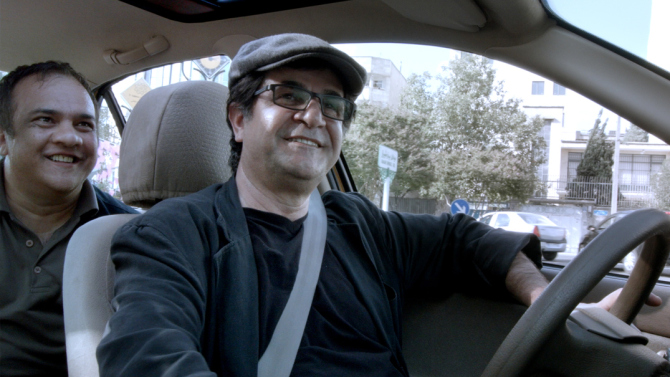
TAXI by Jafar Panahi

Film is Taxi, and its driver and director are the same person – Jafar Panahi.  As he roams around on the streets of Iran pretending to be a taxi driver, people get in/out of his taxi, and the film captures the changing society and it’s morality. Peter Bradshaw aptly described it as Anti-Travis Bickle.

For most part of the film, everything happens inside the taxi. And yet, it’s funny and poignant in equal measure. It’s great fun as passengers of different nature/social status get in and make their point. But it’s sad when you think about the extreme that Panahi has to go to make a film. It’s heartbreaking. Don’t miss the text end plates of the film. This one is a Must Watch.

DHEEPAN by Jacques Audiard

Audiard’s Dheepan reminded me so much of his earlier film, A Prophet. As a ex-LTTE soldier moves to France and tries to start a new life, we realise that it’s never going to be easy for him. Forgetting the turbulent past, making sense of the confusing present, and fear of the unknown future – he and his two unknown companions, who pretend to be his family, battle it everyday.

In the last half hour, the film takes a dramatic turn which is quite different from the tone of rest of the film. But it still remains a powerful film which has empathy for its characters. It completely belongs to his lead actor Antonythasan Jesuthasan who is there in almost every frame, and has a great screen presence.

Jesuthasan was at MAMI to present the film and for the post-screening Q and A. Interestingly, the film mirrors his journey as he was also a member of the LTTE, and later settled in France as a refugee. When i asked him if his life has changed for any better after the film got critical acclaim, bagged the Cannes top award, and he is being invited all over. He said earlier he wouldn’t buy the metro train tickets in France. Now people recognize him and he is forced to buy that 2 Euro train tickets. So that has changed for him – expense of extra 2 euros. And he is still a refugee in France. The difference between life and cinema. Do watch it.

NotSoSnob

Mumbai Film Festival – our annual movie ritual is on. And like every year, we are going to cover the festival like nobody else does it. moiFightClub regulars and readers will bring you all the day’s reccos and reviews.

FILM STILL - ROOM

Impressions :

So all Bombay-based movie buffs’ saalana urs, karvachauth, maah-e-ramzaan, navratri all rolled into one started today. The process of collection of badges and booklet/bag was very smooth and BookMyShow folks are doing a great job. Also the bag this year looks very aesthetic and sturdy. “Sabziyaan laane ke kaam aa sakta hai” in the long run.

On the screening front, films were on time and ran smoothly except for the morning slots where two films got postponed due to technical issues. But I don’t think many complained as they were replaced by additional-screenings of Sorrentino’s YOUTH.

In a way, YOUTH turned out to be the ‘Murder’ of Day 1. As the legend goes, many small town cinema halls in North India keep a print or ‘Murder’ with them always and whenever a big-film flops on Monday, they put up ‘Murder’ and it gets them the audience.

I managed to catch 3 films today.

Heavenly Nomadic (Original title: SUTAK) by Mirlan Abdykalykov

This Kyrgistani film was my random replacement option for the postponed Lobster (which I caught later in the day), and it wasn’t a bad choice. A tribal nomadic family of a little girl living with her mother and grandparents in the stunning rolling-plains of Kyrgistan, where every one is dealing with the death of the girl’s father in his/her own way made for a (film festival jargon mein kahein toh) ‘meditative’, quaint little film. The myths of nomads, the modernity knocking their ancient hills down, the collision of civilisations so to say – all was weaved in quite effortlessly here.

Realistic performances, great sound design and cinematography, and a script of simple ambitions. Not mind-blowing but nothing to dislike here.

Mountains May Depart (Original title: Shan He Gu Ren) by Jia Zhangke

Jia Zhangke’s last film – A TOUCH OF SIN – was very powerful so the expectations were high from this one. It didn’t leave me disappointed but quite dissatisfied. Divided in 3 parts, spanning 26-years in the lives of its characters (last part is set in 2025!) originating from small-town China, it again looks at the country’s social-political dilemmas (chasing America/Capitalism while trying to retain its own legacy) through Zhangke’s allegorical episodes. The first part involving a love triangle especially looked like a bad Hindi film from the 90s (‘Saajan’ instantly came to mind). The film gets better as it goes on and the third episode is the best, both technically as well as in its ambition.

The film keeps switching POVs and that’s a victory of sorts for the director to keep it all tied together in spite of this device, but it also keeps the viewer unsettled throughout.

The Lobster by Yargos Lanthimos

Simply brilliant! A futuristic dystopian look at relationships but via allegorical devices so twisted that it looks like a Kubrick-directed episode of SNL’s ‘Lowered Expectations’ sketch. Revealing anything of the plot will be an unnecessary hindrance to your experience so go into this one blank and be ready for a bullet through your brain & testicles/ovaries. Deeply funny, insightful, and subversive – and at the same time, a perfectly crafted relationship drama. Last chunk gets a bit drawn out, but all genius has space for (as Fabindia calls them) hand-crafted defects.

And ah, it stars some really big names in relatively minor roles. Unmissable.

– Varun Grover

The Train Leaves At Four (Train Chaar Baje Ki Hai) by Antariksh Jain
(Disclaimer – walked in 3-4 min late)

This slow minimal documentary spends maximum time allowing the protagonists – the villagers going about their daily lives, and is a candid capture of the atmosphere and mundaness in a remote village in Madhya Pradesh. The director seems to have let the family members be and dubbed their voices/conversations later. Many frames & scenes are particularly noteworthy – the two villagers talking about their children escaping the ‘trap’ of farming by studying; the child trying to quench her thirst somewhat inefficiently from the hand-pump while the lazy students are seated in the background in the run down school; the one scene where one of the brothers teaches his toddler the skill that has been passed on from generations to generations in his family – how to ensnare a murga using twigs & stones; the desire to escape someplace better than this village in which nothing happens; the women folk their food gathering activities; and the pre-climax sequence involving the overburdened train at the station. In the absence of a narration this does prove to be a difficult watch but the subject matter is so depressing that one cannot help not being moved by it. As we call it at mFC, this is Need-Some-Patience genre.

Mountains May Depart (Shānhé gùrén) by Zhanke Jia

Directed by Zhanke Jia who made the eccentric but arresting Touch Of Sin earlier, this one is divided into three chapters. Do NOT BE DISAPPOINTED BY the 1st chapter which turns out to be a 70s/80s Hindi film love triangle, but if you stay long enough, the other two chapters have enough drama & life to make up for the 1st one. People move on, relationships change, Life doesn’t have great occurrences but usually indifferent and cold instances/events, Parents & Children who almost never seem to be reciprocating their feelings/thoughts to one another simultaneously, an unusual romantic track – may be in retrospect I’m being too lenient to this film. But do watch it.

The Lobster by Yorgos Lanthimos

Something tells me this is one of the most f***ed up films of MAMI 2015. What a delightfully black humored watch from the director of Dogtooth. More an ‘exploration’ than a destination film, this one boasts of excellent writing, cinematography, performances from everyone. Shuru kaahaan hoti hai, aur kahaan se kahaan jaati hai – is incredible. DO NOT MISS THIS at any cost.

– @nagrathnam

Jia Zhangke: A Guy From Fenyang by Walter Salles

Walter Salles’s essay on the very personal roots of Chinese auteur Jia Zhangke’s cinema – Jia has won worldwide acclaim for his films yet most of them remain banned in China.

This film explores how the insularity & deprivation of Jia’s early years came to influence the social-realism of his cinema. This is a sparse & simply told documentary with a lot of Jia in it & a lot of clips from his old films. Luckily Jia is a warm, charming & humane presence & his personality dictates the tone of the film as well. I was engrossed & fascinated despite not being too familiar with his work. Unexpected pleasure was the sight of Jia singing ‘Awaara hunn’!

@sumit roy

From Afar (Desde allá) by Lorenzo Vigas

Debutant director Lorenzo Vigas’ strikes unique right from the first minute of the film. While the narrative is kept relatively simple and minimal, the distinct use of shallow focus to establish the alienated spheres of the characters is what makes it intriguing. Have hardly seen lensing used so uniquely to build scenes through the cumulative elements of each shot. Not once(hope my memory serves me right) does the focus shift from one character to the other, much like the dormant fear of relationships each character shares. Must watch!

@suyashkamat

Land And Shade (La tierra y la sombra) by César Augusto Acevedo

With all the fest-bait adjectives of long shot, languid pace, leisurely treatment, devoid of colours, this one is of uncompromising vision and an assured debut. The director César Augusto Acevedo channels his inner ghosts to bring out a poignant story of a family dealing with loss – of land and relationship. No wonder it picked up the Camera d’Or at Cannes.

Room by Lenny Abrahamson

A heartwarming tale of a mother-son duo who have been held captive in a “Room”. As you keep wondering where will the film move next, it keeps surprising you, and achieves the closure in a beautiful manner, raising some difficult moral questions along the way. Adapted from Emma Donoghue’s novel, this film belongs to child actor Jacob Tremblay who is absolutely stunning in every scene. This one is a Must Watch.

– @notsosnob

The much awaited line-up of this year’s Mumbai Film Festival is out. Have a look.

The festival has added few new sections like Half Ticket, After Dark and Experimental Cinema.

We will put out a recco post soon.


aligarh-03

It’s that time of the year again when we do our annual religious pilgrimage. That’s Mumbai Film Festival, one of our favourite city event and the biggest film festival in the country. Since a film festival is always about the films, let’s get that sorted first. So this is what we know so far about this year’s edition.

FILMS

First, our exclusive dope.

Our sources have confirmed that Mumbai Film Festival will screen Paolo Sorrentino’s Youth and Gurvinder Singh’s Chauthi Koot.

Sorrentino’s last film The Great Beauty was a big hit at the festival in 2012. Youth premiered at Cannes this year. This one is a big catch.

Gurvinder Singh is probably one of the finest filmmakers we have that the country doesn’t know about. So its great that we will get to see his new film here. His latest film Chauthi Koot (The Fourth Dimension) premiered at Cannes this year. Click here to know more about the film.

Hansal Mehta’s Aligarh will open the festival. The film just had its premiere at the Busan Film Festival and will be at London Film Festival. This is great news. A city fest needs to open it with a film from the city/country especially when we are produce the maximum number of films in the world. So congrats to everyone for pulling this one.

Here’s the official synopsis of the film –

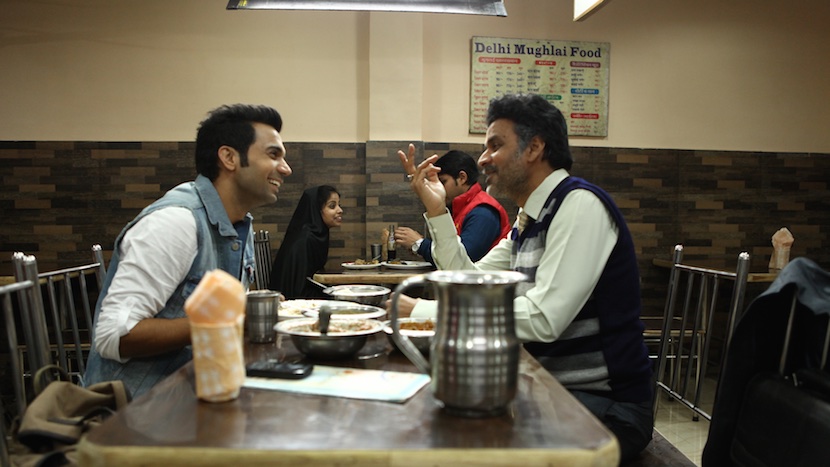
Set in a small town in Uttar Pradesh from which the film takes its name, ‘Aligarh’ is the story of a professor (Manoj Bajpayee) fired for his sexuality and a young journalist (Rajkummar Rao) who tells his story to the world. Based on true events, the film follows Dr. S R Siras, a professor at the Aligarh Muslim University who, when discovered to be homosexual, was fired from his position.  The film depicts the unlikely friendship between Dr. Siras and a reporter investigating his first big story, a relationship that will change them both forever.

Q’s Ludo will be in the newly introduced “After Dark” section

– The restored Satyajit Ray’s Apu Trilogy will also be showing at the festival. Woah! Click here to watch the trailer of its restoration.

Jacques Audiard’s Dheepan will be coming to the fest. It bagged the top award Palme d’Or at Cannes this year. And our very own Kartik Krishnan is also in it.

– Andrew Haigh’s critically acclaimed film 45 Years

Raam Reddy’s Thithi which bagged two top awards at Locarno Film Festival this year. More details about the film is here.

Jafar Panahi’s Taxi which picked up the Golden Bear and FIPRESCI Award at the Berlin Film Festival will be screened in World Cinema section.

Pani Nalin’s Angry Indian Goddesses will be in “Special Screening”

WHAT  ELSE

– Ava Duvernay of ‘Selma’ fame will head the International Jury at the fest.

– A R Rahman has composed the signature tune of the fest. Yay!

– Guardian’s well known film critic Peter Bradshaw will mentor the young reviewers in “Young Critics Lab”

– Fest has announced a new award category – the Book Award for Excellence in Writing on Cinema. This is for film writing and publishing in South Asia, written by authors from the sub-continent and published by an Indian publishing house. The Award covers works of fiction, graphic novel, creative non-fiction, reportage, analysis and screenplay, written in English or translated into English. The Award carries a cash prize of Rs 5 lakhs.

So what are you waiting for? Click here and register for the fest.

See you at the movies.