Posts Tagged ‘Mumbai Film festival’

Ruchika Oberoi’s debut feature Island City premiered at Venice Days, an independent parallel sidebar section at the Venice Film Festival, which is promoted by the Italian Association of Filmmakers and authors. It also won the FEDORA prize for the Best Young Director. The film had its Indian premiere at the recently concluded Mumbai Film Festival.

Here’s ThePuccaCritic‘s post on the film.
Island-City_Still_3_web-950x360


“6 AM. Good Morning.” Says an alarm clock.

“5th floor. Humidity is 38%.” Informs an elevator.

“Due to wastage of water, we have removed water filters. Thank you, Systematic Statistics. Fun. Frolic. Festivity.” Announces an automated electronic voice.

These are the voices we hear, while we follow this gentleman called Suyash Chaturvedi, which informs us about his daily routine. He is a part of the crowd which enters those tall, shiny glass buildings everyday sharp at 10AM and leaves at 7PM, as if their biological clocks are synchronized with that of a computer. The building he enters is of Systematic Statistics, which swallows numbers and data to churn out graphs and pie-charts, where, like any other corporate office, there is little difference between a man and machine. Where a man’s freedom, personality, and individuality are sucked out of him, and in those tidy, dull-colored formal shirt-pants, everyone look the same – rusted and worn out, like a cog wheel. Which he is. In the scheme of this mechanical system, and, in this quest of earning a livelihood, he has lost his liveliness.

If you’ve ever been a part of any corporate job, you would have cursed the Branding/HR department at least a hundred times during your course there. Every office has this “Fun Committee” that has the pressure on them to make their employees feel happy just because one corporate legend said ‘fun is necessary for productivity’. “Why are you not having fun?” yells his boss. Chaturvedi is now made to have fun. Obviously, he is not asked what he would like to do. A set of instructions – like how we program a computer – has to be “obeyed” by him to complete his mandatory procedure of fun. This satire on corporate culture then naturally grows into a whole commentary on the middle-class urban idea of fun. Chaturvedi is taken on the Bollywood’s kidnapping machine — a van, to a surrealistic dark chamber that leads to humankind’s most dreadful construction of all time that now exists on every other road-corner :a shopping mall!

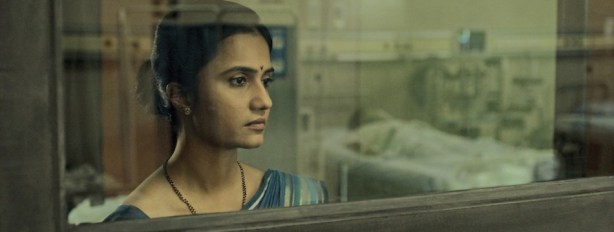
Island City, in its third short, Contact, which encompasses the time span of events occurred in both the earlier shorts, is about the people who is at the receiving end of the technology developed by companies for which people like Suyash works. The protagonist in Contact, Aarti Patel, in her daily job reads newspapers freshly printed off by machines. One day she starts receiving heartfelt, hand-written love letters. These letters make her hopeful of leaving her egoistic, disrespecting, and neglecting fiancé whom her family has chosen for her. But as one day doom strikes –(SPOILER ALERT) —we learn that these letters are no different than the newspapers she read…they have been written by some artificially intelligent machine. This is The-Lunchbox-meets-Her in a traditional space where technology is prospecting to invade. (SPOILER OVER) And as a consequence of the first story, Fun Committee, we see this (failed) technology pushes her back to the regressivity she wanted to escape. In this war of man v/s machine, both are losing out to each other. While we are trying to make machines that speak and feel like humans, we fail to realize that in the process machines are making us one of them.

These two shorts form an arc for man-as-machine and machine-as-man aspects of the narrative. In the second short, Ghost In The Machine, the patriarch father-husband of a Maharashtrian Joshi family is in coma, hospitalized, and is replaced by a TV at home. This replacement of man by a machine turns out not bad after all for the family. The kids, the mother, and the wife see the respective ‘spirit’ of the father, son, and the husband they wanted, in the lead hero of the daily soap, ‘Purushottam‘ (impeccably created) aired on this TV. Kids enjoy seeing him daily; the aged mother wishes well for him; the housewife (lovely Amruta Subhash) can now work as a school teacher which her real husband had denied. Satirical about our daily life and relationships, this is the most hopeful (and also the most “entertaining”) short in this portmanteau feature about the nature of men and the machines.

Technology’s primary aim has always been to advance humankind along with its culture. While the opening and the closing shorts (Fun Committee and Contact) critically looks at the despair it is causing to the human form of life, Ghost In The Machine’s hopefulness, with technology replacing the man of primitive thoughts by the virtual model of another mythological man, keeps the cycle and war of man versus machine going.

@ThePuccaCritic

(Anup Pandey is a corporate machine on weekdays but turns into a human on weekends at the movies. Writes film and Hindi music reviews at thepuccacritic.blogspot.com. Tweets at @ThePuccaCritic )

And we have come to the last day of the festival. Continuing with our daily reviews and reccos, here are the notes from the last of Mumbai Film Festival, 2015.

Our Day 1 Wrap is here, Day 2 is here, for Day 3 click here, Day 4 is herehere is Day 5, and Day 6 is here. And click here to read the post on Christopher Doyle’s Masterclass.

10f8fb1a-116c-4d9a-8c6e-98a6f6e190fe

Fassbinder – To love without demands by Christian Braad Thomsen

So implosive and concentrated, this one demands a second viewing and deserves a much longer post. The complexity and rich denseness of Fassbinder, the enfant terrible of New German cinema, is so attentively and contemplatively sketched, it is fascinating to delve into the mind and heart of the man and film-maker. It pieces together his life from childhood through rare interviews of Fassbinder and of his other associates and what emerges is an idea of a man as passionate, intense and complex as his films. I missed Junun for this but came back with no regrets at all.

Kothanadi – River of Fables by Bhaskar Hazarika

A German distributor of Bollywood films watching this Assamese gem called it the most original work he had seen in the fest and offered his contacts to the debutante director Bhaskar Hazarika. I couldn’t agree more. Brought up on Ukranian folk tales (like literally hugged the 1000 page book of fables to sleep for years), Kothanadi brought alive the magic realism and earthy ethos of folklore effortlessly. 5-6 stories intertwine with narrative threads and characters joining the dots weaving a mesh of parallel stories moving in the same direction. Rooted in its native and socio-political ethos, the film’s complete lack of need to comment or ‘share a message’ has been the most refreshing cinematic experience of recent times. This is my most favourite film at MAMI this year.

Mor Mann ke Bharam – Illusions of my mind by Abhishek Varma, Heer Ganjwala, Karma Takapa 

Whimsical, imaginative and cryptic, Mor is a delight in more ways than one. It’s a film about the illusions of the mind that creates its narrative for the experience of the illusions. Illusions have a vague form and shifting functions and through the treatment of its themes Mor does something similar. The mystification is not self-conscious and touch of humour is refreshing. Especially, the tongue-in-cheek reflection on difficulties of a film artist. Such a pleasant experience!

Tag by Sion Sono

In another dimension of reality I would have avoided a film like this like plague. But clearly, and true to the film’s premise, I wasn’t in that universe and quickly Tag replaced Microbe as winner of the indulgence of the fest award. Horror cum slasher cum acid trip hallucination turned out to be the most fun at cinema halls I have had in the long time. The premise is there is a world of women where each one is slashed to death by the wind and only one survives. Until she realises she is in a parallel reality and is someone else at some other time. The killing and running continues and in each time she has to save herself. No point writing more about this one, check it out when you can, you know where!

Body by Małgorzata Szumowska

Contemplative document on sadness, broken hearts and troubled relationships, Body, completely desentimentalises pain and anguish and simplifies it. It cannot help take a jibe at the Spiritist school of thought emphasising on emotional healing through spiritual techniques and energy principles to arrive at a very human element of laughter and letting go as the simplest road to love and connection. I was hoping I could end the fest with the much-touted Tangerine but then this wasn’t bad at all. See you next year MAMI.

Fatema Kagalwala

Thithi_Still1

The Mumbai Film Festival concluded with a closing ceremony on Thursday evening where the winners were announced.

Here’s the list of winners in different categories-

HALF TICKET

Golden Gateway Award for Children’s Feature – OTTAL

The Silver Gateway Award for Children’s Feature – Operation Category

Special mention for Acting – Hetal Gada and Krrish Chhabria

Special Mention for Direction : Morgan Matthews for X + Y

The Golden Gateway for Children’ Short – Dina Velikovskaya for Pro Mamu (About a Mother)

Silver Gateway for Children’ Short: Olga Poliektova and Tatiana Poliektova for My Grandfather Was a Cherry Tree

Jury Special Mention for Direction – Mari Sanders for “Daan Durft” (Go Daan Go!)

Excellence in writing in Cinema AWARD – Gaata Rahe Mera Dil” by Balaji Vittal and Anirudha Bhattacharjee

Film for Social Impact Award by Yes Foundation – Jayaraj for OTTAL

Young Critics Choice Award – KAUL

Audience Choice Award – TAXI

DIMENSIONS MUMBAI

The Silver Gateway Dimensions Mumbai Award – THE VOICE Disha Noyonika Rindani

The Golden Gateway Dimensions Mumbai Award – KUNAL Dhruv Saigal

Special Mentions for Dimensions Mumbai – I SHALL BOW Vedanti Chandrakant Dani

INTERNATIONAL COMPETITION

Jury Grand Prize for International Competition – THITHI by Raam Reddy

Silver Gateway Award for International Competition – Heavenly Nomadic by Mirlan Abdykalykov

Golden Gateway Award for International Competition – Volcano by Jayro Bustamante

Special Jury Mention for Achievement in Directing : Cesar Augusto Acevedo, LAND AND SHADE

Special Jury Mention for Achievement in Acting : Maria Telon of VOLCANO | “Mother Juana”

Special Jury Mention for Achievement in Acting : Farzana Nawabi of MINA WALKING | “Mina”

Special Jury Mention for Ensemble : Sleeping Giant Jackson Martin, Reese Moffat, Nick Serino

Special Jury Mention for Achievement in Screenwriting : Chloe Zhao, SONGS MY BROTHERS TAUGHT ME

INDIA GOLD

Jury Special Prize for India Gold : An Illusion of My Mind/ Mor Mann Ke Bharam by Karma Takapa, Heer Ganjwala and Abhishek Varma

The Silver Gateway Award for India Gold : Haraamkhor by Shlok Sharma

The Golden Gateway Award for India Gold : Chauthi Koot by Gurvinder Singh


In the last few years, Mumbai Film Festival has become the top film event for the film buffs. What IFFI promised with Goa, it was never delivered. How much can cheap liquor compensate for the bad/old films showing in fest and sarkaari babus having a Goa holiday with no clue about films/festival. As IFFI went down the radar, MFF went up. Interestingly, many film buffs from outside the city also make their annual trip to Mumbai to see many new dreams unfold on the big screen. So we asked four film buffs if it was worth all the travel, effort and money. We asked them to pen down their memories of the fest, films they are taking back with them, and will they be back for the fest next year?

Over to them.

CTC_YyYUAAAb_pq

Leaving business, kids, pets, and your plants for over a week? Well, back home watching saneema FDFS on a working day, by leaving office by half-day, and putting the mobile on silent mode, even that’s not easy. So imagine the scenario for a week!

For all this, you have to do proper planning, and give extra hours, so that when you’re away from home, business doesn’t get suffered. But still some things always go wrong, like when I called my wife after watching Aligarh on Karwa Chauth, technically it was another day. Boom! 😦

Every year I felt very jealous while reading MAMI tweets by friends, but coming to the festival was another impossible dream. As it happened this year, here’s the film that I will always cherish. Many films affected my life but none like Satyajit Ray’s Aparajito. When Sujoy Ghosh tweeted about screening of restored Apu Trilogy at MAMI, that gave me the courage and motivation, and then there was no stopping.

This is one decision which I’ll never regret and it was worth all the risk and effort I put in for coming here. MAMI festival was so well organized – online booking by BookMyShow, Day wise schedule shared by friends, they made it all very smooth. Later on, with Mumbaikars, even this UP-wala started enjoying standing up for National Anthem. Watching films with celebrities and standing in queues with them is the most valuable memory which I’ll take back home.
Nothing is going to stop me from coming here next time जियो मामी.

This festival was for movies, and films which I loved and hated. This greedy bhaiyya watched 23 films and even managed to watch one outside the festival. You can see my reactions on those films which I tweet immediately after screening @rmanish1 ;-).

To quote Rana saab,

मिट्टी में मिला दे की जुदा हो नहीं सकता,
अब इससे ज़्यादा मैं तेरा हो नहीं सकता ! #MAMI

Manish Rathore, from Lucknow

मैं इस शहर का नहीं हूँ । यह शहर मेरा नहीं है, हालाँकि हमने कोशिश की दोस्ती करने की पर कुछ बात बनी नहीं। इस साल मैं यहां 7 दिन रहा, अकेले। कुछ ज़िन्दगी से ऊब गया था इसलिए, कुछ सिनेमा का प्यार खींच लाया । आज जब बम्बई की 12:40 की लोकल में बैठ के ये लिख रहा हूँ, तो एक कमी महसूस हो रही है। कल से जल्दी-जल्दी भाग के PVR JUHU नहीं पहुंचना पड़ेगा, दो फिल्मों के बीच में कुछ “खाने जाऊं या नहीं” नहीं सोचना पड़ेगा, अब किसी को भी पकड़ के ‘सिनेमा’ पे बात नहीं कर पाऊंगा, इतने हसीं twitter के लोगों से नहीं मिल पाऊंगा। शायद अगले साल MAMI फिर आऊंगा। इन सात दिनों में मैंने खुद को भी बहुत जाना है, दुनिया को भी। और सिनेमा को भी।
फिर मिलेंगे।

वैसे मेरी सबसे पसंदीदा फ़िल्म JUNUN रही। संगीत का सिनेमा में महत्त्व समझना है तो इसे देखिये, इन दोनों का संगम देखना है तो इसे देखिये, और जुनून देखना है तो इसे देखिये।

Bhaskarmani Tripathi , from Surat

Mumbai Film Festival is a revelation in many ways, and this is coming from a Hyderabadi, where we can boast of having a thriving movie-going culture on par with Chennai. So, I’m not lying when I say that the film festival is perhaps one of the very few reasons which would force me to come to Mumbai, at least once in a year. What I found really interesting was that not only was the crowd quite enthusiastic about what they are going to watch, but also the programming of movie content at MAMI to be top class. And it’s both a boon and a curse for the festival.

The number of screens (and also the seating capacity) allotted for the film fest are not enough to accommodate the crowd, and this time, I had to miss several highly-awaited films because there were like 10,000 people like me eager to get into the auditorium. This time, thanks to MAMI’s association with bookmyshow, it was quite easy to book a slot for a particular film; however, there’s only so much you can do given the number of shows for a particular film and more than that, the distance between the venues. It gets really really frustrating to stand in a queue for more than an hour only to find out, in the end, that you can’t get in like 2 minutes before the film begins. I would definitely recommend the fest to people back home, given its mix of content from India and abroad.

This year, I was gobsmacked when I saw Vetrimaaran’s Visaranai. It was a solid statement on how the innocent people in the country are used as pawns in a bigger game, and how fate is so twisted, for a lot of people. A lot of people were so moved by the film, after all the edge-of-the-seat action, that I’m guessing that they would keep raving about the film to all their friends back home, especially in Chennai. Since it’s backed by Vetrimaaran and Dhanush, it’s not a ‘little gem’, at least not in Tamil Nadu. That privilege goes to Raam Reddy’s Thithi, which is another good film to have been made in Kannada this year. I missed a lot of films this year; but I’m glad that I saw both Visaranai and Thithi.

I’ll be back next year. Hopefully, the organisers at MAMI will find bigger venues, which is the need of the hour given how much the fest has grown.

(P.S: The Versova-Andheri-Juhu gang, at the film fest, itself is the size of a small town. So, there’s your answer about how to accommodate such huge crowd at the fest)

–  Hemanth Kumar C R, from Hyderabad

I attended my first MAMI because the people who run the blog MOIFIGHTCLUB, they raved about the films/fest so much. So writing for it is a small full circle for me. 🙂

Having attended it for four times now, MAMI is one of the most anticipated events for me personally. Despite attending IFFI & PIFF every year, it still remains my personal favourite. To be a complete nobody and observe every famous person you’ve known either through films or twitter, to run through the schedule, and be glad to see TAXI & ANOMALISA have 5 screenings only to feel that the curators were genuinely concerned about bringing the best, to simply enjoy films in the land that bleeds with passion for it. MAMI is all this and more.

Film festivals are about films more than anything else. Though there were hiccups this year with the scheduling, screening quality, seating issues, it was all worth for that moment when Farhan Akhtar’s irritating voice urged us to get up for the national anthem. Anyway, festivals are about seeing cinema break and create new grammar. Its about acquainting with new voices who are pushing cinema forward, and after the festival is over, one walks home with a plethora of opportunities, possibilities and ultimately hope, to have rekindled the faith of a cinema lover that had the stench of mediocrity.

And it is the same reason why KAUL is the film of the festival for me. KAUL is among the very few films at the festival that brought in a brand new language and yet managed to strike a connect right from its first frame. KAUL is among those rare works of art where every aspect of the film reeks of the directors vision and sincerity. It isn’t easy to digest. Its dark and painstakingly truthful in ways it tells you about life, even if its guilt that you feel of living a life which seems worthless after the film. Among the many thoughts that the film manages to stir up, one of the most striking dialogues was ‘Culture is mankind’s revenge on nature’. A theory I believe about cinema states that every art, including cinema, is an attempt at coding culture to help viewers decode it for themselves. And what KAUL has done successfully, is it has coded enough culture for generations of people to decode and find meaning in accord to their life. While speaking to Aadish, he mentioned that he wishes that more young people see the film and that he has only told things in the films which everyone knows but have forgotten. It only fits for Aadish that the Young Critics Lab chose his film as the best one in India gold section. KAUL will remain with me for a long time and will be one of the films I go back to every once in a while, to know how I’m doing in life.

Suyash Kamat, from Goa/Pune

What are your MAMI memories? Do post in the comments section.

(Pic – Manish Rathore)

Now we have come to the last day of the fest. And continuing with our daily reviews and reccos, here are the notes from second last of Mumbai Film Festival, 2015.

Our Day 1 Wrap is here, Day 2 is here, for Day 3 click here, Day 4 is here and here is Day 5. And click here to read the post on Christopher Doyle’s Masterclass.

tag

Looks like this was my last day at MAMI as tomorrow is fully packed with deadlines and work-meetings. Always a sad feeling to see this week ending.  Kind of the same feeling i used to have when summer vacations ended during school.

And a good time to thank the people behind MAMI (including so many hardworking, lovely volunteers) for making it such a brilliant show this year. I know some filmmakers were unhappy with projection and tech issues but i don’t think in terms of management and movie options we’ve had a better year recently. A few things that worked big time for me this year:

– Hot Docs collaboration as well as other docs. The Pearl Button, Missing people, Junun, Monty Python, The Greenpeace doc, Sydney Lumet, Placebo, Fassbinder, Hong Kong Trilogy, The Arab Idol one.

– Half Ticket section. Did you know school kids were coming daily morning 8:30 am to watch films? And some really great films at play there.

 – The ticketing process. No SMS ka jhanjhat and very smooth handling by BMS people while delivering the delegate passes. Also the bags look lovely this year.
– Doyle Q&A and masterclass. Hope next year we have more of (crazy) legends coming to impart their madness.
Caught just 3 films today.

Junun By Paul Thomas Anderson

THE Paul Thomas Anderson last year filmed a documentary in (our) Rajasthan about a bunch of western musicians (Shye Ben Tzur and Jonny Greenwood) jamming for an album with local Managniyar singers (Chugge Khan group), a brass band (that band-leader Aamir is a magician), and some bawaal qawwals. The result is this most simple yet exhilarating documentary full of some stunning songs and visuals of the jamming process. It was almost like being in a live concert! BRILLIANT.

Sworn Virgin by Laura Bispuri

This Albanian film was a blind selection and it turned out to be very good. A slightly grim but always gripping look at female sexuality through a girl who starts living like a boy through a local village custom that would allow her an escape from the life of subjugation women have to face.

Monty Python – The Meaning Of Live by Roger Graef, James Rogan

What a way to end the festival’, I told myself as we were stepping out after watching this. Monty Python has been one of the huge influences of my life as a comedy writer, and to see this film about their reunion stage shows last year (which were the LAST TIME EVER they would get together) was an emotional journey. The finest, funniest men have still got their mojo and the film has great insights about comedy and performing live. (One of the original six, Graham Chapman is now dead so the reunion show was called ‘One down, five to go’. Haha.) The vintage footage from their world tours 40-years ago was a bonus. Of course this film is kinda niche, only for the fans of the group, but what a trip for the real fans!

Varun Grover

Schneider V/s Bax By Alex Van Warmerdam

Hitman V/S Hitman. Dead Pan Faces Delivering dark humour punches. In a very unusual lakeside universe set up by Warmerdam, he keeps shuffling the environment of the film from comedy to thriller without letting you know. Acting himself as bax, Warmerdam’s weird family This one has brilliant Performances and some unpredictably brilliant moments.

The Pearl Button‎ By Patricio Guzmán

Guzmán’s Pearl Button is a gem of a documentary. He connects nomadic indigenous ‎people living in water with political murders thrown in the same water. Both the subjects are very disparate and hence the documentary is somewhere a bit too ambitious. However, attractive images of water and equally intriguing discussions on Pinochet’s cruel documentary made the pearl button a gem worth watching.

Tag By Sion Sono

Sion sono’ love for undergarments continues in this upskirt horror. But there was more to this film than the usual mayhem. Tag is a completely pro feminist ‎action fantasy by Japanese legend Sino Sono. It was an experience to watch this film on large screen because it was way too extreme for the mainstream because in this gory madfest Mitsuko keeps tripping like Alice from wonderland. And she ends up attracting grindhouse style danger everywhere. Mitsuko later trips into keiko and izumi but still remains prone to danger.
‎The scene in the beginning where the wind splits the bus into two and the one where teachers start killing children with machine guns are complete Sion Sono signature styled scenes filled with excitement and thrill.

Tag has by far been one of the top films I have seen at the festival this year.

Victoria by Sebastin Schipper

Rest in peace, Birdman. The real deal is here. Victoria, a bank robbery thriller already sets hearts pacing as it is a 134 minute long single take. ‎Sounds like a stunt. Or a digitally manipulated virtual wonder but it is not. Victoria is an achievement. It is an exhilarating experience to watch this single take film across more than 20 loacations including some crazy nightclub scenes later leading to edge of the seat drama. The narrative is so tightly binded that the film moves from head spinning weird nighclub moves to composed and realistic scenes to breath taking robbery thrill. Actors, Cinematographer and others involved were in action for a continuous 2 hours and above.

There is no doubt as to why Sturla Grovlen’s name preceded the end credits in this mad mad mad film. Take a bow, Sturla. What presence of mind throughout.

Harsh Desai

With just 2 days more to go, we are now coming close to the end of the festival. Continuing with our daily reviews and reccos, here are the notes from Day 5 of Mumbai Film Festival, 2015.

Our Day 1 Wrap is here, Day 2 is here, for Day 3 click here, and Day 4 is here. And click here to read the post on Christopher Doyle’s Masterclass.

MG_3600-chica1

THE CLUB by  Pablo Larraín

Pablo Larrain’s film starts with a Biblical quote about how god separated light and dark so that man could tell good from bad. That’s perhaps why this tale of moral ambiguity is shot in a foggy gray pallete – here the good men of god are upto some very bad bad things indeed.

Set in an sleepy sea-side town, The Club tells the story of a cabal of four delinquent priests and a fiercely twisted sister (their very own Nurse Ratched) living in a sort of hostel for damaged holy men. A violent incident related to the sexual abuse of children forces the harsh spotlight of the Vatican on them and brings a crisis counselor to their doors, tasked with deciding their fate.

This film is a kick in nuts of the Catholic Church. That in itself is ofcourse a proud cinematic tradition but The Club’s power lies in its ability to humanize the moral failings of the men of the Church while never shying away from revealing their depravity. In a way this is an intense psychological study of repression and its horrors – had me thinking about its grim design for hours after it had ended.

Easy to see why Larrain is so highly rated – this film is pitch perfect in its direction & its craft. The mood is terrific, perfectly capturing the insularity and foreboding of a house of secrets. The acting is uniformly strong, helped no doubt by the fact that the casting is excellent. From the pacing, to the background score – everything has the stamp of a master craftsman at work. Don’t miss it.

THE SECOND MOTHER by Anna Muylaert

Val is a loving, matronly housemaid in a posh Brazilian household – indispensable but taken for granted. Her sixteen year old daughter turns up to stay with her, only she refuses to live by the subservient code her mother has internalized for herself – thus setting the cat amongst the pigeons.

I went into this film with fairly low expectations & was pleasantly surprised by how good it turned out to be. Film Festivals are usually full of brain food but this was the most emotionally intelligent (and satisfying) film I’ve seen this MAMI. This warm film sketches its characters with an intuitive touch and asks insightful questions about our notions of familial relationships.

The film’s biggest strength is the performance of Regina Case as Val. This could easily have been material for weepy melodrama in the hands of a lesser actor, begging for the audience’s sympathy. Instead Val is funny, daft, flawed, loving & refreshingly real.

This study of class-relationships should be particularly relevant for an Indian audience (we are after all world leaders at being terrible to the help). We all know someone like Val, the trusted maid who is always expected to be there for us but never expected to have a life. Films like this might encourage us to be a lot nicer to her (at a point in the film Val’s daughter fed up with the way her masters treat her tells her ‘this is worse than India’!).

Sumit Roy

BELLADONNA OF SADNESS by Eiichi Yamamoto

This early ’70s animated erotica film was made by a bankrupt animation studio on a stringy budget, released unceremoniously into Japanese shores, unreleased anywhere further to the West, and never released on DVD except in Germany. It feels like a movie made by people who had just about nothing to lose. Long segments of the film involve the camera panning from one end of an artwork to another, a still frame is broken by the slight movement of a palm or blinking eyes. What it lacks for in movement, it makes up with style. Heavily influenced by Gustav Klimt, Aubrey Beardsley and Egon Schiele, Belladonna is a gorgeous sensory assault – probably the most beautifully vicious sensory overload I’ve ever faced in my life. A jazzy, trippy soundtrack by Masahiko Satoh breathes a sort of irresistable sensuality into the movie.

When I walked out of the film – and I’m not exaggerating – I literally felt a void inside my head, and I walked down the stairs in a daze, as if I would stumble and fall at any moment. It had an unusual physical impact on me that I can’t really place into words. What baffles me is how this movie is still so unknown and under-seen despite it’s groundbreaking animation, music and sheer visceral impact. Maybe it’s because of the general populace’s disposition towards animated films and Anime fans’ dismissal of classic anime for slicker modern animation. Prior to this, the only version of the film that existed was an inferior VHS rip that did little justice to the visuals. Cinelicious’s gorgeous restoration of the film makes it ripe for rediscovery, and places it, with little competition, in the ranks amongst one of best films ever fucking made.

The VHS rip is floating around online, but I strongly suggest that you wait for the restoration to come out on video. It’s very much worth the while.

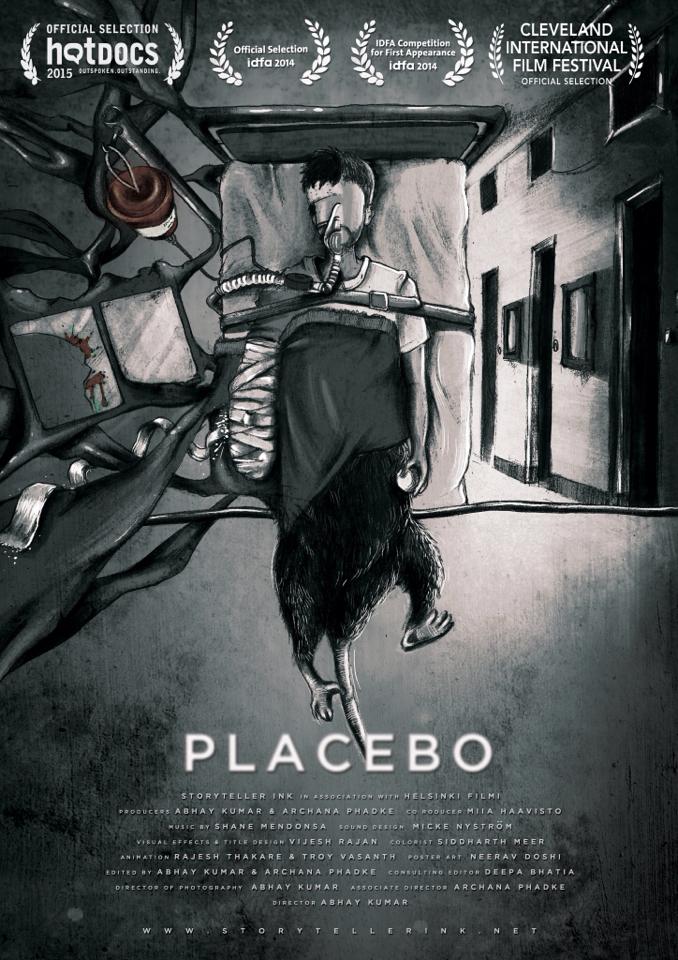
PLACEBO by Abhay Kumar

I’m sure more eminent, eloquent personalities have put their experience of this film into words better than I have so I’ll keep this snappy. Great fucking film. Probably the most remarkable – in style and content – film to come out of India in ages. It’s importance and relevance probably render it quite unreleasable in India. It’s a documentary about a certain educational institute but I shan’t name it. However, having spent two miserable years in an Engineering college, I can say that it perfectly encapsulates the sense of depression, isolation and nothingness that creeps into you as you gradually become a victim of the beast that is the Indian education system. And, moreover, it felt like two punches : one to my face, because I’ll probably never make anything as good as this in my life, and the second to my butt, because it really pushed me, more than anything else in a long while, to get off my ass, pick a camera and film.

– @psemophile

Day 5 MAMI : Yeah, surreal still. Saw filmmakers, actors (popular, lesser known everybody man!) walking around with gay abandon, struck conversations and then camaraderie with twitteratti   (this guy had to call security to rid of me), struck a conversation with  Vetri Maran and somehow told him that I did not like Visaaranai (he also remembered the question I asked in the first screening in the film) which then turned into a 20 minute conversation where he answered everything I asked (coolest guy, for sure). For somebody who is out of town, from a city of ‘dhandhe waale log’, attending his first film festival, this has definitely broadened my worldview. I think I have a better understanding of words like ‘condescending’, ‘pretentious’ and ‘one of the best filmmakers’.  Dimaag khul gaya!

Oh, yeh toh bhool hi gaya. Our ‘film festival’ audiences don’t know the art of laughing in a theatre. This one gentleman I was sitting beside said to me, ‘it would be very good if you did not talk during the film’ just as the film was about to start. And when he started to laugh during the film, it made me feel like someone whose food is falling off from the sides of their mouth. That’s how disgusting this is. It’s only etiquette and it can’t be taught (don’t let the phone ring, don’t laugh like a dog getting beaten up, don’t talk during a film because it’s not as important as gas pe rakkhi sabzi jo jal rahi hai etc). Mainstream audience ke saath naachoonga main next time theatre me, I guess.

PS:  I was with Ava Duvernay in the lift yesterday and didn’t realize it until just now when I opened the catalog. Sorry about that.

SONGS MY BROTHERS TAUGHT ME  by Chloe Zhao

Chloe Zhao’s debut  film follows a Native family in South Dakota, after the death of their father.  A family that has brothers and stepbrothers, and a troubled mother, it will definitely have someone who wants to escape. A brother that wants to escape to LA, a sister who’s disillusioned and melancholic after the death of her father and sets out to discover his world of Rodeos, drugs and cowboys forming unlikely friendships, and how they discover what it means to have a home. And have each other for company.  A Linklater-ish film that boasts of a few Terrance Malick shots, I liked it very much. It could have been more tightly knit, but then it’s a Slacker film.

PLACEBO  by Abhay Kumar

When I saw Abhay Kumar’s crowdfunding video for Placebo, I thought ‘hata bhaincho, scam saala’. No really, that’s how obscure it was. Mujhe laga aliens ko laake shoot kiya hai isiliye chhupa raha hai. The film, however, is something else.  It’s a documentary. Although it was introduced as Docu Fiction, and I did find some parts of the film scripted, and I did ask a question about that, and you obviously know the answer. It  captures the humor of the Indian colleges so well, I doubt it will ever get a release (I am an engineer, and I could relate to it). It starts of as an inquisitive brother’s quest to find out why did his brother indulge in an act of violence that ended him with a dysfunctional arm. In the process of being undercover for 3 years, Abhay finds himself in the midst of so many ‘unforeseen’ changes that the personal, intimate film he set out to make has to now take a stand and bring forth a happening in Indian colleges. A happening that’s shocking and heartbreaking, but so common that we take it for granted.  I am writing very vaguely about the film because I do not know if I should disclose anymore. But believe me when I say, that this film demands to be seen all across India. For the most part it was shot on a handycam, but you’ll marvel at how technically brilliant it is. The music of the film is a force to reckon with.  So is the film.

THE SLEEPING GIANT  by  Andrew Cividino

Entered into this film because this was the only option apart from the incendiary queue for El Club and Peddlers. A coming of age comedy drama that has very raw, shocking humor (especially a dining table scene, oh my), is brilliantly shot and so coolly edited (three Ship of Theseus, Bridge of Spies level cuts) and bhayanak music. There is a not so subtle homosexual undertone which drives the narrative, but the last 15 minutes are such a disappointment. Achhi film hai waise, dekh sako to dekh lo.

PS: Open ending is a cinematic device that is slowly becoming a festival film trope. Why are the filmmakers so afraid to resolve a film? Lunchbox deserved an open ending, that played with your dimaag. Warna toh yahaan chutiyaap hi tha. There are issues that plague new age films and that is sad because Milap Zaveri will continue calling a great/good film as a ‘festival film’.

Doyle

Legendary cinematographer Christopher Doyle is at Mumbai Film Festival this year. He screened his film Hong Kong Trilogy, and did a Masterclass as well.

Doyle is a complete performing artiste. And it’s great fun to watch him talk. As expected, he was in his true colours in both the Q and A, and the Masterclass. In his session, he showed clips and videos while he talked about his art, craft, life, and inspiration. As the security guys at the theatre kept panicking, Doyle didn’t give a fuck (with liberal use of the word in every second sentence) as he kept guzzling his beer.

Here are some of the interesting quotes from his Masterclass. The tweets are embedded, you don’t need to click the links. Just wait and let them load to see the text, or refresh.

https://twitter.com/NotSoSnob/status/661511232956993536

https://twitter.com/NotSoSnob/status/661510241155092480

https://twitter.com/NotSoSnob/status/661508078857138176

https://twitter.com/NotSoSnob/status/661505395563741184

https://twitter.com/NotSoSnob/status/661504573882810369

https://twitter.com/NotSoSnob/status/661503087069138944

https://twitter.com/NotSoSnob/status/661501835631460352

https://twitter.com/NotSoSnob/status/661500791455219712

https://twitter.com/NotSoSnob/status/661499435185102848

https://twitter.com/NotSoSnob/status/661497880520200192

https://twitter.com/NotSoSnob/status/661497528341303296

https://twitter.com/NotSoSnob/status/661497212912799744

(DivingBATB – The Diving Bell And The Butterfly. Blue is Derek Jarman’s film. HPotter – Harry Potter. WKW – Wong Kar-wai)

And here are some quotes from his post-screening Q and A of Hong Kong Trilogy.

https://twitter.com/NotSoSnob/status/661162562873110528

https://twitter.com/NotSoSnob/status/661162011124965376

https://twitter.com/NotSoSnob/status/661160540534915072

https://twitter.com/NotSoSnob/status/661158962780356608

https://twitter.com/NotSoSnob/status/661158493068632064

https://twitter.com/NotSoSnob/status/661134769867104256

We have been tracking Abhay Kumar’s films for quite some time now. We had written about his short on the blog, and in earlier edition of MFF, when his another short was in Dimensions section, we had predicted his win too. Interestingly, this year he is back with a feature-lengh documentary, Placebo. And what a joy it is see a filmmaker making an impressive debut as he graduates from shorts to feature. One can easily spot some of the similar patterns in all his shorts and documentary.

And here’s Achyuth Sankar‘s review post on the film. This is his first post here.

20718_862265573840672_2141757288841321904_n

We’ve all thought about the question, “What are the few things you absolutely cannot live without?”. For me, and all of them in equal importance (I’m not going to write the obvious things like food, water, air, etc), they are cinema, and a few really wonderful and beautiful people, some friends, some family. Cinema figures that high in my list, as it does in the lives of more than a few people I know.

At 6:30pm today, in a house full screening at MAMI, I gave 90 minutes of my life to that cherished thing which I can’t live without, cinema. It was a documentary called Placebo. It’s about the one of the most prestigious colleges in India (not any IIT, I’d rather not get into any more specifics), where the filmmaker’s brother is studying. The brother gets into a serious accident, and during his recovery, the filmmaker decides to stay in his brother’s hostel and document the lives being led there, in an attempt to understand what led to that accident (I won’t be referring to it as an accident any more, it was a self inflicted hurt, severe hurt). He follows the lives of four people in the said hostel, seemingly without any greater aim. Sometimes, a story chooses its storyteller, especially when it’s a story that needs to be told, and that is what happens to the documentarian here. The lives he begins to document shape up to be a small, but essential picture about the lives of students who have chosen the path of the elite by joining there. People are pressurized, or they’re not. Sometimes, they stumble into the doorstep of a revered institution with lofty dreams, but to many of them, simply making it there summarizes their dream. What does one do after that? What does one do when they have no idea where to go? What guidance does one get?

I was contemplating, while driving back home, why do most of the absolute greats of cinema talk about serious things like depression, disconnect, alienation, fear. Why not happiness? The question has come up many times before, but no answer till today. It is because.. when things are good, when we are happy, we are already ready to share. But when things are going down the shit hole, not even a handful of us can talk about it and admit “Hey, I’m fucked up and I need help”. That’s why it is so much more potent, when a film talks about things that nobody likes to, wants to or knows how to talk about. Suddenly, we feel a resonance within that isolated corner of our mind.

That’s what Placebo is.

That slight resonance, which reminds us of the importance of our own feelings. But more than that, it talks about something a lot more. It’s a documentary, with the filmmaker going to a college to understand why his brother hurt himself as badly. But a story that needs to be told chooses its own storyteller, and this college, and the stories of all the students who’ve lived there, chose this filmmaker. One shocking suicide after another, and it’s no longer just about a personal exploration, it’s about all of us. All of us who’ve studied, who’ve felt pressurized. All of us who, I dare say, can’t even begin to imagine the true extent of desperation, where the phrase “give up” doesn’t mean settle for lower grades or go to a less reputed institute. All of us who have been lost, at one point or the other, looking at the sea of people around us filled with genius, as we catch ourselves wondering “How the fuck am I going to make a mark in all of this?”.

There is one particular part in the film, where a character says something along the lines of “We are all isolated. You’re here talking to me, but I’m isolated inside and you’re isolated inside. My words aren’t my exact thoughts. But only I understand my isolation. You know the fucked up part? You think you understand, but you don’t.”

Placebo is truly a story that begs to be told. You can see it evolve in itself. The original intent of the filmmaker wasn’t to talk about student suicides or the casual indifference of college management or depression. It was merely an investigation, a very personal one at that. But as the story begins to tell itself through the storyteller, you won’t care about the change of course. Because the story needs to be told, and we all need to let it.

Romanticism aside, it took (in the filmmaker’s own words) a 1000 hours of handycam footage and constant questioning of intent to bring out this 90 minute long story. 1000 hours, vs 90 minutes. To look for that story which has revealed itself to you, and to do it justice, that’s no easy task. Because it’s not something you’ve concocted in your head, it’s all there. It’s all already there. The loss of aim, loss of hope and dreams, the crisis of faith and loss of ideals, the pressure, loneliness and depression that we students face. It’s all there. We don’t know how to talk about it. This film just showed us how to.

There was approximately a 3 minute standing ovation at the end of the film, followed by a Q&A session. In it, someone asked the filmmaker about how personal the subject was, and how he could keep filming while everything was so close, especially since his own brother was severely hurt. The filmmaker said that whether we like it or not, when we hold a camera, it will create a barrier. That’s the price one has to pay for the story. You’re in it, you’re affected by it, but you’re still separated by that invisible inch.

Abhay Kumar is that filmmaker, and he stayed in the hostel of that college for two whole years, filming as much as he could. He and his partner in crime (his own words, not mine), Archana Phadke then spent another year finding the needle in the haystack, and all the other needles too, in order to tell this hard hitting story. If there is one thing, and absolutely one thing I can learn from this, it’s “Get a camera and go make a fucking movie. It takes a lot of effort, but what’s stopping you?”

Abhay, you’re honestly one of the best filmmakers out there at the moment. I haven’t made a single piece of cinema, I don’t know how it’s done, I’m no authority. But films mean a lot to me, you’ve just made it mean more.

Thank you so much.

Achyuth Sankar

(PS – You can watch Abhay’s shorts here (Just That Sort Of A Day) and here (Life Is A Beach)

(Born in Trivandrum and having spent his last 8 years in Bombay, Achyuth discovered his love for cinema here, thanks to affordable unlimited internet plans. His pass times are blowing up all his savings on purchasing Blu Rays, going for a morning show at some PVR, or eating good food and having a cold Bud. He moonlights (or rather, daylights) as a final year Engineering student, with a severe love for Harley Davidson motorcycles. He fell in love with movies after watching Good Will Hunting. The only thing he loves as much as cinema is his Labrador, Cindy)

Mumbai Film Festival – our annual movie ritual is on. And like every year, we are going to cover the festival like nobody else does it. moiFightClub regulars and readers will bring you all the day’s reccos and reviews.

Our Day 1 Wrap is here and Day 2 is here.

anomalisa-620x322

Impressions:
 
Anthem: Since we are watching the new version of National Anthem at least 4 times a day, why not a quick review of that too. Am talking about the 26/11 tribute themed National Anthem with a nearly-manipulative prompt in the beginning voiced by Farhan Akhtar. First of all, that 3-slide prompt has at least 9 spelling errors and one grammatical error. If we care about our martyrs so much, the attention to detail is clearly missing. Secondly, I also feel it’s a disrespect to the anthem if they allow every new cause/TV serial/film/segment of industry to make a version of their own. Why not a simple and straight one that doesn’t take away the attention from the original melody and words.
On the issue of playing it at a film fest, a longer rant some other day. (Probably after 10 years.)
Crowd: In spite of the weekend, the crowds were not much. May be due to more venues spread across the city, and side-bar events like Movie-Mela attracting some people, the usual maara-maari we associate with our film festival is missing. Good progress!

Managed to watch 4 films today, though the third one made me feel the pain.

ANOMALISA by Charlie Kaufman and Duke Johnson

The film whose inclusion alone in the programming made the festival safal for me was watched today. Can’t write anything about it except that Kaufman chacha is GOD. Like there’s observational comedy, this one is an observational tragedy meets existential comedy. Go in blank and come away internal-dancing.

APUR SANSAR by Ray saab

Too insignificant to talk about the film but the restoration work is fabulous. The grain, Subrata Mitra’s oblique frames, Sharmila Tagore’s eyes (aah!), and Soumitra’s shy smile – everything felt like you could stretch your hand and touch it. Pure bliss.

RISK OF ACID RAIN by Behtash Sanaeeha

Very interesting premise and lots of lovely moments and unexpected blasphemies for a film from Iran (hint at homosexuality, women protesting against Hijab, men smoking pot) but self-consciously arty and slow. Had the treatment been snappy or at least non-boiling-potato genre, it’d have been a great film.
LUDO by Q and Nikon
Horror is not my genre at all but had to watch this as was given the job of hosting the post-film Q & A – and this film surprised me. Both the horror and myth angles are very nicely done, and the best part – setting up for the horrors to begin was done in the most provocatively refreshing, damn-the-conventions, Q style. Slightly puzzling that they made it in Bangla as this tale is so universal and required no specific cultural/regional grounding for it to make sense. Though Q promised that they are looking at the possibilities of sequels in Hindi and other languages. Imagine, Q said, “A horror film in Urdu!”

Varun Grover

ANOMALISA by Charlie Kaufman and Duke Johnson
After Kaufman’s searing but over-bearing ‘Synecdoche, New York’ I decided I was done with films about depressed middle-aged white men – the collective weight of movies & novels churned out on the subject could probably sink the Titanic. It was then with a fair amount of skepticism that I ventured into Anomalisa, yet a part of me hoped that Kaufman’s screenplay would spring us a surprise.

I was surprised, but not by the writing. The script plays like a Kaufman greatest hit record, revisiting all his familiar concerns – loneliness, neurosis, the ephemeral nature of real love, the nightmares, the anthropophobia. But what is a revelation is the execution of these ideas in gorgeous stop-motion animation. In a long love making scene, which was the highlight of the film for me – Anomalisa depicts longing, tenderness, awkwardness, passion with a truth that live action films with terrific actors would struggle to emulate. Heck, for a moment it made me forget I was watching animation – any film that can do that is genius.

Without abandoning the melancholia that defines Kaufman’s work, this somehow feels warmer than his earlier work. It’s also a pithier film and rambles far less, though it has enough quirky homages & Easter eggs to send fanboys into a frenzy. An ostensibly simple story with several deeper layers to ruminate on – it’s perhaps the most grown up animation film I’ve ever seen.

A BIGGER SPLASH by Luca Guadagnino

A rock diva and her tightly wound boyfriend are in the midst of a sexy Italian vacation when her manic out-of-control ex turns up with his nymphet daughter and things get complicated. It’s obvious from the very beginning where this one is going, what you want to know is how it’ll get there.

If film festivals are a feast then this is the sort of film you want as your nightcap – beautiful famous people fucking in scenic Italy with lots of rock n roll music. Told with an intoxicating, pulsating energy the film works as a performance piece built around its four leads. While Tilda Swinton is reliably excellent as the rock-star, the real show stealer is Ralph Fiennes playing her ex-lover – a rock n roll producer who is completely obnoxious yet dollops of fun, a real force of nature. This is Fiennes’s best performance in a while & about as far from his somber Shakespearean staple as you can imagine, an Oscar nomination won’t be a surprise.

The lush, sexy drama and the strong performances paper over the essential lightness of the material and the somewhat unconvincing dark turn that the film takes in its latter half. Luca Guadagnino’s ability to sketch out messy relationships with a fevered, kinetic intensity, reminded me of Wong Kar Wai in his pomp.

Caveat- you’ll see more of Lord Voldermort’s phallus than you’ve bargained for.

THE BRAND NEW TESTAMENT  by Jaco Van Dormael

‘What if god exists and he’s actually as asshole?’

What a great premise to make a film on, why didn’t anyone think of it before?! This quirky, clever film re-imagines Christian theology and posits god as a terrible, angry lout who screws with people out of spite. His 10 year old daughter, also the victim of his menace, decides to get even and write her own version of the Testaments and the fun starts.

Throw Raju Hirani and Jean Pierre Jennet into a blender and you’ll get something like this. This hugely entertaining film delivers in equal parts broad comedy, stinging religious satire, whimsical fantasy, profundities about human nature and off-kilter plot twists. TBNT looks like a slick, lavishly produced studio film but has the soul of a blasphemous social agitator.

Constantly inventive, the film is packed with enough pleasurable bright ideas to make you overlook its unevenness and some logical inconsistencies. The loud laughs & whistles were evidence of the fact that this was an outright hit with the audience. The loudest hoots were reserved for when God gets his comeuppance (clearly he’s not as popular as he once was). Someone should immediately reverse engineer this film for Bollywood and give the right wingers even more to be upset about.

Sumit Roy

EVEN RED CAN BE SAD By Amit Dutta

Raamkumar’s words, paintings and childhood routes intermingled on‎ screen to blend into wonderful poetry. The 58 minutes documentary makes you connect to the innermost memories of Raamkumar across rusted houses and beautiful lanes of Shimla.
This sound design and research of Amit Dutta is so top notch that this documentary is a complete surprise at the festival. It is nothing like what you have seen before.

Harsh Desai

FOR THE LOVE OF A MAN  by  Rinku Kalsy

First day at MAMI and who better to make up for the 2 days missed than Thalaiva himself! ‘For the love of a man’, a very engaging and well-crafted documentary that throws an exploratory eye on the worship Rajnikanth evokes in his fans. Broken in five parts, it takes us into the heart of Tamil Nadu and peaks into the lives of Rajni’s fans to try and understand why they do what they do. We all know the stories of the milk bathing of posters, impromptu dances, instant riots and god-like worship but it is another thing altogether to hear the fans speak for themselves. And when I saw their eyes well up with tears enunciating the importance of their icon in their lives, I realised this is something a non-Tamilian like me, could hardly ever fully understand. But I sat there gaping in wonder and amazement at the power of one man. And the power of cinema. Like I said, what a start!

WIND SEED by Babu Eshwar Prasad

Indian films and documentaries is more the mood this time. I chose this because I am interested in knowing what is being made in India these days, the passion projects, not the market-oriented ‘indie’ films. Wind seed meanders its way through its observations on small-town and big-town people through the metaphor of the road and films, self-referencing itself through the other. It explores several ideas at once, of civilisation, of one’s man’s progress and another’s exploitation, of loneliness and cinema and so on. It casts an observation on these, opening up an idea and leaving it at that, and that is a satisfying approach yet the somewhat loose performances and pace gives a sense of, intentionally or unintentionally, a drag. But despite that, for the roads it takes, it’s quite a road movie. (I am also more in the ‘thought behind the film’ mood this time.)

INTERROGATION (Visaranai ) by Vetrimaaran

Raw, hard and loud, ‘Interrogation’ is a straight-from-the-heart film that speaks about how institutional corruption spares none. Based on a real life story, (‘Lock up’), it adds other events of systemic corruption and weaves a heart-rending tale of cold and cutting crime within the system. It operates at extremely high decibels and one only wishes that if only all that passion was channelised into more intensity than drama, more darkness than realism, more implosion than explosion than maybe it would have been a craftier film. Nonetheless, it scores completely in getting its emotional quotient right, stirring up our souls a wee bit more than we’d be comfortable with.

MICROBE AND GASOLINE by Michel Gondry

Despite my vow to stay away from films that shall be easily available ‘elsewhere’, I gave into some Gondry indulgence. And the fourth film of the (hard-working) day did not disappoint one bit. Two boys, both misfits, both from dysfunctional families strike a friendship, a kinship rather, that Gondry weaves into a wonderfully entertaining as well as endearing tale all at once. Their weird escapades, innovative Gondry-style yet as ordinary as their adolescence issues, bloom into a bitter-sweet story told with equal parts head-in-heart and tongue-in-cheek. After the visually stunning yet mildly disappointing ‘Mood Indigo’, Gondry is back, looks like!

Fatema Kagalwala

THE BRAND NEW TESTAMENT  by Jaco Van Dormael

It’s one of those “God a. comes down to Earth or b. Bestows power on some idiot to teach him lessons about humanity” movies, except not really.

In Mr. Nobody director Jaco Van Dormeal’s film, God is an alcoholic, abusive husband and father who mistreats humanity. The film posits that God is the author of all our problems and maladies. When his pre-teen daughter, Ea, finds out about this, she decides to rebel against him and sets out to write the new New Testament.

What follows is a film that straddles between heartwarming, bizarre and whimsical and some times all three at once. A scene transitions from comedy to tragedy quite suddenly but without jarring effect, similar to the comics that France and Belgium put out. Like in Franco-belgian comic books, the people in the story have distinct characteristics, distinct faces that border on the cartoonish. God, for example, has a pudgy nose on a scrunched up miserly face that looks as if it were made for scowling.

Most of the film explores the lives of Ea’s six apostles, all of them starkly different, most of them impeccably beautiful. It’s interesting that while Christ’s apostles were all men, of Ea’s six apostles, two are women, three are men, and one transgender kid.  They all have great fucking stories, each of them could command a sizable short film on their own but, sadly, Catherine Deneuve’s bit is the most bizarre and least impressive (or maybe it struck me so because I’m not French). However, it makes sense if you just assume that her character in the film is the same one she played in Belle De Jour. I think the feminist commentary of the film falls victim to the French peoples’ tendency to patronise feminity to borderline stereotype levels. God’s wife, for example, is portrayed as a mellow, fearful person, perennially befuddled, with eyes threatening to pop out of their sockets when she isn’t knitting.

If not entirely successful, it’s a fun flick, and inventive to boot, with gags such as God creating ordinary (but hellish) annoyances on his computer with absolute glee, and a recurring motif where Ea deduces what song plays in the heart of an individual (they range from “La Mer” by Trenet to Handel). Interspersed throughout out the film are the misadventures of God as he chases down his daughter, each of the segments ending with God getting beat up a lot.
So, yeah, if you’ve ever been fucked by life, this movie is for you.

ANOMALISA  by Charlie Kaufman and Duke Johnson

I’m still thinking about the film and what it had to say. Charlie Kaufman is never subtle. He’s pretty blunt, his writing totally on-point. But his bluntness never feels lazy or pedestrian, because he shrouds it in clever concepts and complications. Anomalisa is no different.

Originally a sound drama, Anomalisa is about a guy who’s fucking bored with people. He’s at that stage where people feel the same. The style of the film takes that and runs with it, placing it in the film quite literally. There’s David Thewlis as Mike Stone, Jennifer Jason Leigh as the eponymous Anomalisa, and Tom Noonan as everyone else. Except for Stone and his lady love, the other characters have the same face and the same voice, kind of like that scene in Kaufman’s first film, Being John Malkovich, where Malkovich enters inside his own head and meets people with the same face.

The film is in stop motion, a beautiful job that doesn’t try to hide the technique or the medium – you see the separations between the two plates (every puppet is made of two face plates, one for the forehead and one for the mouth, each of them replaced multiple times for the animation) that other studios like Laika usually wipe out with CGI.

Some of the expressions they manage to get out of the characters are simply fucking impossible. Some expressions are so subtle they wouldn’t usually work in animation. The film goes to great lengths to humanize these puppets.  We see Stone’s puppet stumble out of the shower, its genitals in full graphic view. Unlike the puppets of Aardman and Laika, Stone has a slight flush of red on his cheeks, adding to the subtle reality of the design. These things would, in an ordinary film, add to the uncanny valley effect, that if an object merely approaches reality, it will be more unnerving than an object that does not lay claim to reality at all. Anomalisa, however, isn’t an ordinary film by any means.

The voice acting is magnificent, with David Thewlis doing his finest work since Mike Leigh’s NAKED, and Tom Noonan, as (literally, in the end credits) “everybody else”, managing to make each character feel like an individual but also, not, as it befits the theme of the film. The film works so well it does because of him, and what he pulls off here is nothing short of genius. The voicework really helps imbibe these obviously unreal puppets with a great amount of humanity.
Another interesting thing that Kaufman does is “break” a stunningly beautiful moment with a comic beat, sometimes bowing down to the basest slapstick, topping the moment with profundity. He finds beauty in the pathetic, in our errors and mistakes, big and small. All of Kaufman’s heroes have been pathetic individuals, and one of the joys of his films has been to see him bore into their souls and dig out the beauty that is inherent in them. This is why his films are so human, because we consider ourselves pathetic and he tells us, through his characters, amplified versions of ourselves, that we are also beautiful. And he does the same with Michael Stone in this film, but then he does something absolutely cruel, tapping into the fleeting pointlessness of happiness.

Anomalisa is a great fucking film. And, like Kaufman’s other work, great fucking therapy.

– @psemophile

Mumbai Film Festival – our annual movie ritual is on. And like every year, we are going to cover the festival like nobody else does it. moiFightClub regulars and readers will bring you all the day’s reccos and reviews.

Our Day 1 Wrap is here.

201511112_5

Impressions:

Things looked way more organised today as no screenings got cancelled and in spite of the weekend, the crowd management was quite smooth. Quick tip for people watching movies at PVR Juhu – head over to Dakshianayan next to ISCKON temple (5-mins walking) for a quick bite or lunch if you are hungry. Very reasonably priced and the best South Indian food on the western line.

Caught three films today too. (While getting nostalgic about the days we would catch 5 films daily. Sher buddha ho gaya ab.)

DHEEPAN by Jacques Audiard

Audiard’s Palm d’Or winner is a continuation of his theme of looking at the French underbelly and the lives of migrant communities there and it’s as brilliant as we have come to expect from him. This time the focus is on Sri Lankan Tamils through the life of a defeated LTTE soldier and it’s easy to understand why it won him the top award at Cannes. The refugee crisis Europe is in the middle of right now finds an intimate reflection in the struggle of Dheepan, played with a breathtaking intensity by ABC, whose own life has many parallels with the fictional story. He moved to France from Sri Lanka 24-years ago, on an illegal passport, escaping from the life of a child-soldier for LTTE. Today he is a known Tamil writer in France but his sincerity in portraying the role probably comes from a line he said while replying to an audience question – “For a refugee, the closure never comes.”

THE IMMORTALS by Shivendra Singh Dungarpur

Shivendra Singh’s documentary feels more like a walk in a brilliantly curated museum of Indian Cinema History, complete with a very romantic audio-guide. It does give us a look at some rare pictures, equipment, stories, and relics from an era that seems to exist in a time thousand years ago, and not just 100. It’s shot like a dream with every frame looking like a master photographer’s creation but the missing names of interviewees, the poetic but rambling narration, and the abrupt narrative stop it from becoming a great film. It’s puzzling that the Director chose this route as he had some great material at hand. But then, every passionate lover has his/her own way of courting the muse. This one happens to be a bit too personal.

THITHI by Ram Reddy

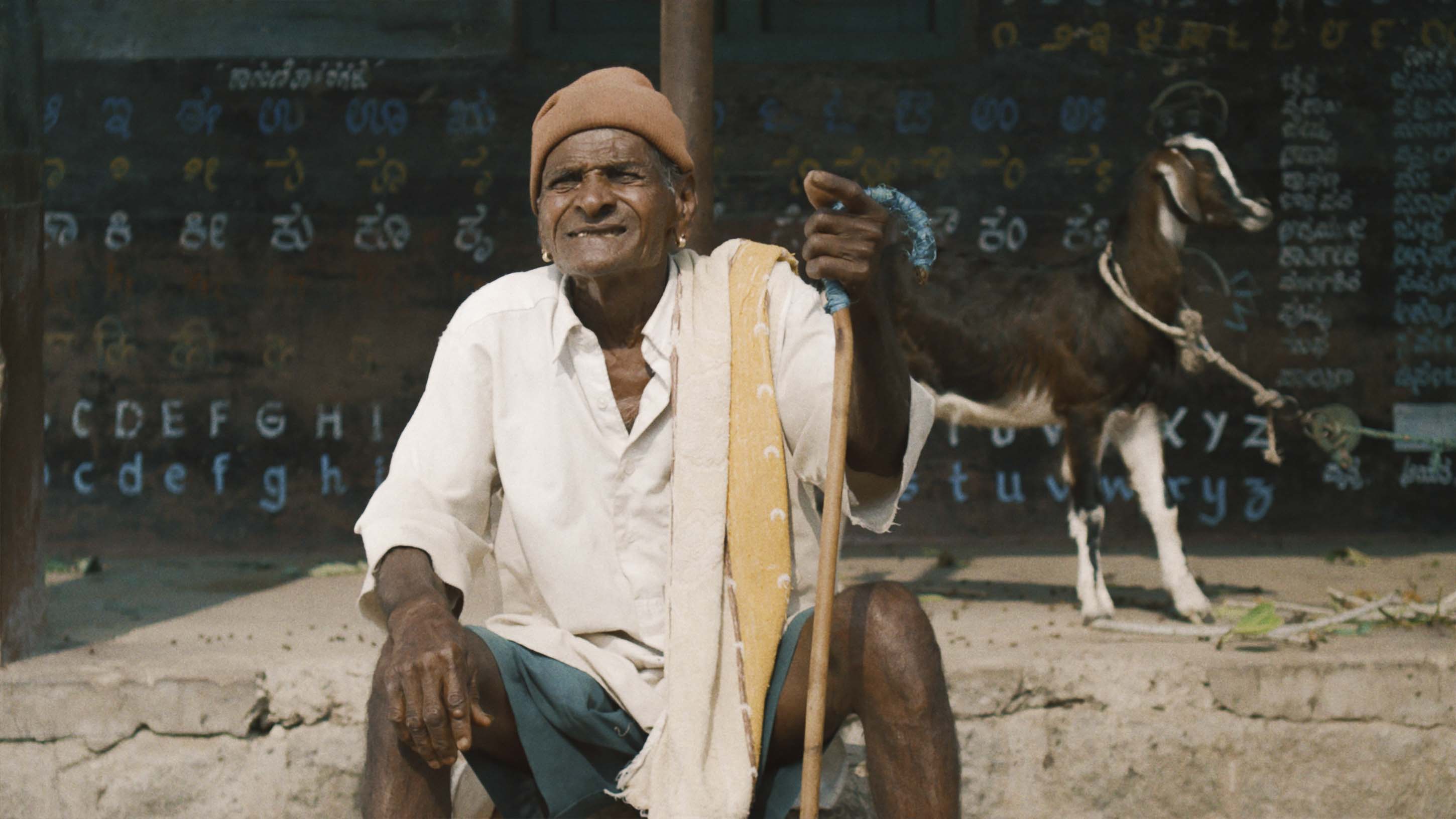
A hundred-year old man (Century Gowda) dies in a village and his family and villagers prepare for the grand feast (Thithi) to celebrate the life of the grand old fucker. Very few Indian films portray village with as much irreverence, quirkiness and in shades of grey (instead of the standard glorification or demonization) as Thithi manages to and that is probably because of Raam Reddy’s writer and Casting Director Eregowda who hails from the same village.

The film is populated with “more than 100” characters, all non-actors casted locally and they bring so much novelty and weight to this occasionally uneven (the last chunk felt like going in too-many-directions) but very ambitious script. A must watch, not just for the humor but also for the philosophical undertones pulled off quite effortlessly.

– Varun Grover

CHAUTHI KOOT by Gurvinder Singh

Gurvinder Singh picks a potent premise – the everyday fears & paranoia of 1980s Punjab & yet delivers a film that feels mostly ineffectual. Singh eschews drama for mood & atmosphere but never quite seems to be in control of his craft enough to deliver the horror that the material intends. What doesn’t help is that the film is full of opaque characters who lack psychological depth – Tommy the dog (who is a crucial part of the narrative) feels like the best realized character. Slow, D.E.L.I.B.E.R.A.T.E.L.Y paced – the kind of film you can snooze through a couple of times without missing much. Underwhelming.

The Sky Trembles and the Earth Is Afraid and the Two Eyes Are Not Brothers by Ben Rivers

Since I’m not into vipasana & don’t plan to do the Iron Man triathlon anytime soon, I compensate by watching the occasional extreme art-house film as a feat of endurance. The reviews for TSTATEIAATTEANB (phew!) promised a tough, challenging watch and that’s exactly what the film delivers.

This visually striking film doesn’t have much of a narrative, instead it plays as a parable on control & the loss of it (or that’s what I think it’s about). It follows a French filmmaker trying to make a film in the majestic yet inhospitable Atlas mountains of Morocco (reminded me of Herzog & Fitzcarraldo) who is kidnapped & subsequently has graphic, painful misfortunes visited upon him. The film’s language is part surreal art project, part improvised documentary and is always destabilizing audience expectations.

Difficult to say that I liked it, though it does have some moments of amazing cinematic power. More appropriate to say that I’m proud I lasted the whole course. Many others in the hall didn’t – haven’t seen these many walk outs during a screening since Love Story 2050.

@Sumit Roy

PLACEBO by Abhay Kumar

Rarely a film hits you so hard, and that too at the right spot. An investigation of lives at the medical school which has one of the toughest admission process, Placebo is a brave, brave documentary film.

The film creates such a stark mood, and at times, it’s so funny and disturbing. The editing must have been crazy as Abhay shot the film over a period of 2 years.  Special mention for the sound design and background score.

Placebo shook me completely. It’s easily one of the best documentaries i have seen coming out of India in the recent times.
There is one more (last) screening on 3rd November at 6.30 pm (PVR ECX Screen 4) Please DO NOT miss it.

Prince Shah

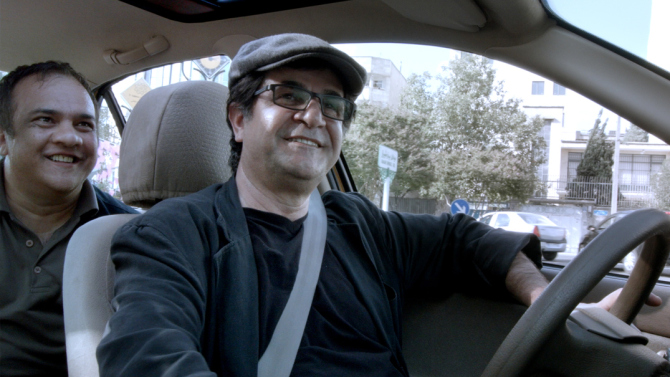
TAXI by Jafar Panahi

Film is Taxi, and its driver and director are the same person – Jafar Panahi.  As he roams around on the streets of Iran pretending to be a taxi driver, people get in/out of his taxi, and the film captures the changing society and it’s morality. Peter Bradshaw aptly described it as Anti-Travis Bickle.

For most part of the film, everything happens inside the taxi. And yet, it’s funny and poignant in equal measure. It’s great fun as passengers of different nature/social status get in and make their point. But it’s sad when you think about the extreme that Panahi has to go to make a film. It’s heartbreaking. Don’t miss the text end plates of the film. This one is a Must Watch.

DHEEPAN by Jacques Audiard

Audiard’s Dheepan reminded me so much of his earlier film, A Prophet. As a ex-LTTE soldier moves to France and tries to start a new life, we realise that it’s never going to be easy for him. Forgetting the turbulent past, making sense of the confusing present, and fear of the unknown future – he and his two unknown companions, who pretend to be his family, battle it everyday.

In the last half hour, the film takes a dramatic turn which is quite different from the tone of rest of the film. But it still remains a powerful film which has empathy for its characters. It completely belongs to his lead actor Antonythasan Jesuthasan who is there in almost every frame, and has a great screen presence.

Jesuthasan was at MAMI to present the film and for the post-screening Q and A. Interestingly, the film mirrors his journey as he was also a member of the LTTE, and later settled in France as a refugee. When i asked him if his life has changed for any better after the film got critical acclaim, bagged the Cannes top award, and he is being invited all over. He said earlier he wouldn’t buy the metro train tickets in France. Now people recognize him and he is forced to buy that 2 Euro train tickets. So that has changed for him – expense of extra 2 euros. And he is still a refugee in France. The difference between life and cinema. Do watch it.

NotSoSnob