Posts Tagged ‘Mumbai Film festival’

COFFEE_BLOOM_STILL_1


Manu Warrier’s debut feature Coffee Bloom is having its India premiere at the Mumbai Film Festival 2014 in the ‘New Faces of Indian Cinema’ section. Coffee Bloom stars Arjun Mathur, Sugandha Garg and Mohan Kapoor among others. We have the debut trailer for the film right here, take a look:

https://www.youtube.com/watch?v=vA3YKV8TTzc&feature=youtu.be

Here is the synopsis of the film, along with information on the cast and crew:

SYNOPSIS:

Dev sells his family coffee estate as a statement underlining his renunciation of the world. When his mother dies heartbroken, he vows to prove worthy of her before scattering her ashes, little realizing that that involves confronting the world he shunned and his turbulent past.

Directed by: Manu Warrier

Produced by: Harish Amin

Written by: Sharath Parvathavani and Manu Warrier

Cast: Arjun Mathur, Sugandha Garg, Mohan Kapoor, Nandini Sen, Ishwari Bose-Bhattacharya

Co-Producers: Sharath Parvathavani, Rajeev Acharya, Nitin Chandrachud, Tess Joseph

Music and BG score: Prasad Ruparel

Cinematography: Yogesh Jaan

Editor: Anand Subaya

Casting By: Tess Joseph

Sound Design: David Stevens

If you are attending MFF 2014, you can catch the film at 3:30 pm on Monday, October 20th at Cinemax Infiniti Mall, Versova and 10 am on Tuesday, October 21st at PVR Citi Mall, Andheri.

Mumbai Film Festival – Our annual movie ritual is on. And like every year, we are going to cover the Festival like nobody else does it. Team moiFightClub will bring you all the day’s reccos and reviews. We are also involved with the fest this year – helping wherever you can to make it better.

Killa

DAY 1

Two Days, One Night

Dardenne Brothers. Superb premise, stunning Marion Cotillard, Dardenne brothers venturing into a near-thriller zone, and managing to keep us hooked for most of its duration. The last act was a bit of a downer, but overall, another terrific, depressing, human drama on European working class. Just that as Indians (and cinema audience in general), seeing Marion Cotillard as a down with depression, stuck in poverty mother of two kids takes some amount of suspension of disbelief.

@varungrover

KILLA

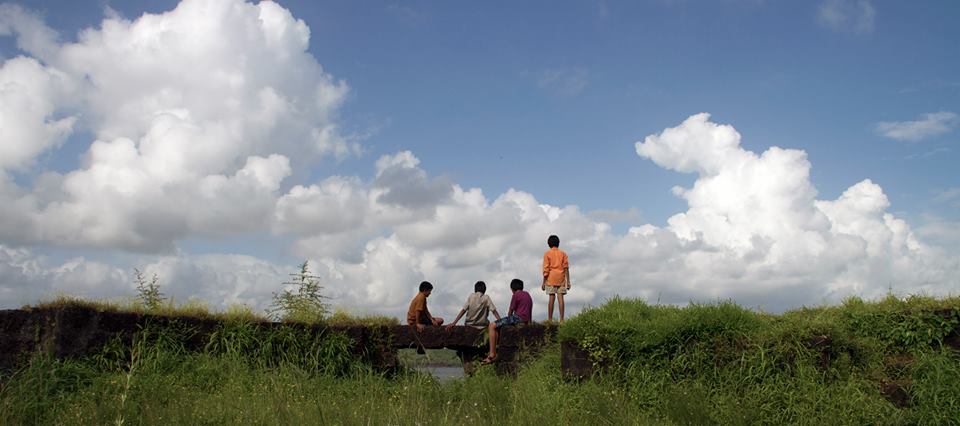
A stunningly assured directorial debut from cinematographer Avinash Arun. Nostalgia, childhood, parenthood, loss, friendship, school all captured in gorgeous detail. Never before has an Indian film about a bunch of kids been so immersive. Terrific performances from Archit Deodhar as a child trying to cope with constant change and Amruta Subhash as his single mother. Cherry on top is the minimalistic music by Naren Chandavarkar.

SCHIMBARE

What would you do if your loved one were terminally ill? How far would you go to save her? Would you take the life of someone else to save her’s? How noble would that be? These questions are explored to brutal levels in the Spanish film Schimbare. Through the eyes of a truly desperate couple (played by Candela Pena and Luis Zahera) we’re taken on an existential dilemma wrought with manic depression, blood, murder, illegal organ transplants and kidnapping. Not for the faint hearted, but certainly a feast for hard boiled film buffs.

@mihirfadnavis

In Between Worlds
The film tries to give a balanced portrayal of war-torn Afghanistan and succeeds to some extent. It is the story of a German commander torn between his conscience and the military protocol. The interwoven story of the Afghani brother and sister is touching. There are moments where one feel that there is also an unmistakable element of “white man’s burden”. An incident regarding the shooting of a cow by the German soldiers is particularly illustrative of the fact that they are trying to dictate terms on some else’s land. More than the story, it is the ragged visuals of the landscape that affect you. Those multiple shots of huge army tanks ravaging the terrain reminded me of Sahir’s lines:
खामोश ज़मीं के सीने में, खैमों की तनाबें गड़ने लगीं
मक्खन-सी मुलायम राहों पर बूटों की खराशें पड़ने लगीं
फौजों के भयानक बैंड तले चर्खों की सदायें डूब गईं
जीपों की सुलगती धूल तले फूलों की क़बायें डूब गईं

Schimbare

Set in a mansion for the most part – the film suffocates you. It’s a dark tale of a desperate couple going to extremes to save their child. The film sort of starts off by asking – Why are we okay to commit a morally ambiguous/wrong act as long as we don’t have to get our own hands dirty? What happens when we can no longer keep our hands clean? The grim setting, absence of background music and some rather depressing scenes (like the one involving a magic show by a criminal, or the little girl eating out of trash) make it a difficult watch. Unfortunately the scenes involving the couple and their struggle to come to terms with their decision are too long, slow and repetitive. They test your patience. The film, however, picks up towards the end and really delivers.

Killa

Stunning, moving and an absolute delight! It takes you back to your childhood, to those simpler times. It deals with multiple themes of loss, parenthood, friendship which are all part of growing up. I know it’s too early to say, but this is probably the best film you will see at MFF.

@NeerajaTurtle

She’s lost control

Lonely Ronah (Brooke Bloom) is doing her Masters in Behavioural Psychology and working with a psychiatrist to treat patients with intimacy issues. Sex is not our of bounds here, in fact the cultivation of an emotional and physical relationship is a part of the process of healing. Ronah’s life is strewn with such incidents and she is somehow managing her loneliness. Until one day. The slow progression of Ronah’s descent into breakdown is subtle yet feelingly traced. The minimalist and cold composition replete with burnt out or dark frames and myriad cutaways create the distance the characters feel between themselves. Ronah’s journey builds from a self assured woman to a battered one in smooth progression leaving us wondering what is in store for her now…

@Fattiemama

Over Your Dead Body

by Takashi miike – is probably something that both Miike fans and non Miike fans should watch. The film is about actors rehearsing a folklore story based play, who end up recreating the scenes into their real lives. Could’ have delivered more on the horror quotient, and laid less emphasis on the culture/subtext (which was lost on me I confess) but still – body horror fans and blood/gore lovers should be satisfied.

In Between Worlds
– I’m sure that the politics of the film will be questioned, but still the film works as a pure humane drama and a War thriller. A takedown of a car particularly & a couple of other scenes reminded me of Apocalypse Now’s puppy scene. Plus the detailing – an engineering clsss has 20 odd male students and 3 female students, etc. The lead is particularly effective sympathetic character and you feel sorry for the other guy (Tariq – the translator) too. Now that is something difficult to achieve in a War film. Nothing is black or white – that is the best part of this film

Schimbare

– a Robert De niro lookalike Hero & a brilliant self destructive heroine as the protagonists of this journey film, this is a slow intense film which tugs your patience but rewards you towards the last 20-30 min. The central premise is only spelled out in the last act, and if you forgive the film’s 60 minutes (setup and characters’ time) – it goes onto drag the rug beneath your feet; all the while establishing the ’cause’ as well. Not to forget – there are several single take scenes in this one. It’s a sad sad situation the world is in when ‘nice’ people have to resort to not so nice steps for a nice cause. Watch this film. Highly recco’d

Fever

– What a brilliant premise. Two teenagers murder an old woman. No motive, but aivain. And a young woman who happens to catch them running away. But then ? Disappointment at not being able to take the premise to fruit. Shot and performed well, this one makes you wonder – what was the point of the film ? Did the director cop out ? I’m sure the murder (not shown in the film) must have been a kickass scene in isolation. But even if the director had shown it, the film must have been a disappointment. No Sir. We want more than just the teenage killers mouthing references of famous historical figures killing off a person to achieve the victim list as a rounded off figure (from 69 to 70). We wanted more drama sir.

She’s Lost Control

– Another film with great premise. A student of masters in psychologist whose job is to resolve her clients’ ‘intimacy issues’ by eventually sleeping with them. That in itself is an arresting premise/character. But then the film tells you something that you already can guess. Despite the lead’s sparkling performance, you might feel disappointed after watching the film.

P.S – those injection shots were insulin or heroine ?
P.P.S – If you are an investigator/doctor – never get too involved with the subject/patient.

@nagrathnam

Charlie’s Country

This movie confirms the fact that Australian filmmakers can never disappoint. Easily the best of day (out of 2 Days, 1 Night and Boyhood) Charlie an Aboriginal man living in Australia starts feeling distant from his own land and is in constant struggle to adapt with the new way of things. The silence here works because of the well thought out cinematographic frames. At crucial points the way the character is presented (framed) says a lot about how the country treats aboriginals as outcasts and ‘foreigners.’ As grim as this may sound you will be surprised by the how the director injects humour in the darkest of situations. Finally, what really takes the film to a whole new level is David Gulpilil’s extraordinary performance. His Cannes best actor win is absolutely well deserved.

@mihirbdesai

The schedule of this year’s Mumbai Film Festival is out. Click here and go to SCHEDULE to access it. It’s according to the venues. And so like every year, good ol’ Kartik Krishnan spent hours and did the Date wise schedule for us. Trust us, date wise schedule is much easier to navigate if you are going to be regular at the fest. Try it. You will thanks us.

Click here to download it directly. Or click on the icon below.


If you have scribd account, we are uploading it on scribd too. Click here to go directly on the site.

(Btw here’s the scribd trick – You just need to upload any random document there to get downloading access)

First things first, we love Mumbai Film Festival, especially the way they have revamped it in the last few years. They get the best films from all all the top fests of the world. This year the fest seems to be in trouble because of sponsors. As of now, they fest is trying to gather fund via crowd funding. Some of us have already contributed as we want to see the fest alive and kicking. We hope that you do contribute too. Click here to go to make your contribution. If you have enjoyed films at MFF in last few years, we hope you will do your bit. This city needs a film fest.

Once you are done with your contribution, let’s move ahead. The fest gets the best films from across the world but there’s a whole lot scope for improvement. Here’s why and how.

10620583_10152780520086807_3535823921538186363_n

“Bhala hua mori gagri phooti, main paniya bharan se chhooti re”

 (Thank God my earthen pot got shattered. Spares me the job of filling water in it.)

Am sure most members of Mumbai Film Festival organizing committee felt like dancing to this old sufi qawwaali when this year’s festival got called off.

Of course it’s the best festival we have in terms of film selection and venues (as compared to the horribly inadequate auditoriums of Siri Fort in Delhi for OSIAN or sarkaari-babu horror story that IFFI-Goa is where one year old films which have already released in theatres are “premiered”) but still, it’s an open secret that MAMI/MFF is way behind in terms of professionalism when it comes to organizing.

Every year, like Tim Robbin’s Dufresne in Shawshank Redemption, film fans wade through piles of organizational shit to reach the freedom of festival movie-watching experience. It’s the most awaited annual event on a movie-buff’s calendar in India (film buffs fly down from various cities to attend it) and we all have that tacky-yellow sabzi-jhola (with MAMI logo on it) full of memories from the festival.

But nostalgia can be deceptive at times…making us forget the pains we took, thanks to the shortsightedness of the fest organizers in the last few years. And that’s why, when the news came of this year’s festival being called off, the first wave of reactions was sweet nostalgia with a cold sigh. People talking about the films they saw at the fest and friendships they made over the years. Now that, in my opinion, is a totally wrong reaction.

The valid reactions are:

  1. HOW FUCKING INEFFICIENT one has to be to bring a successfully running festival in the movie-capital of the biggest movie-consuming nation of the planet to an abrupt halt?
  2. HOW ABSOLUTELY OUTDATED one has to be to just give it up and not even try raising funds when one corporate has walked away, and just announce that festival is not happening this year? And…
  3. HOW FUCKING ARROGANT one has to be to not allow donations less than INR 10K for saving the festival? (OK, this has changed. Now they have cut it down to 5K and have given their reasons why and how)

Let’s analyze these three reactions in detail. Because therein lies the story of MAMI’s near-death-experience this year. And we are not even sure if it will survive, and if it does, then for how long.

HOW FUCKING INEFFICIENT:

The festival started in 1997 and barring a couple of years, it took place every year with changing venues inside Bombay. It manages to get a great selection of films and international filmmakers for master classes or discussions or just an ‘exotic holiday’ to India and I have rarely seen (in the last 6-7 years) a single show of even a half-way decent film going empty. There are always long queues, and especially for big ticket films (even hardcore art-house like Bela Tarr’s Turin Horse), people wait for 2-3 hours in the queue to get in. The point being – there is no reason this festival can’t be sold to the corporate or film fraternity for an annual contribution of just INR 5 Crores. But every year, the news of it running into cash crunch raises its head and we wonder how random engineering colleges manage to sell their annual fests for huge budgets year after year, while this film festival (with names like Karan Johar and Farhan Akhtar and Anurag Kashyap in trustees) runs out of sponsors regularly.

The difference, I think, lies in the lack of will. The festival is running in auto-pilot mode for a long time. With the exception of Festival Director (Mr. Srinivasan Narayan), who has always been hands-on and humble in trouble-shooting during the festival, the rest of the team is comprised of people who don’t want to learn anything from the world around or take the festival to the next level. Pure fossils or morons. You just have to attend some of the events planned and executed by them to realise they really have no clue – from opening ceremony to film/filmmakers introduction by college kids who have no clue about the film or the filmmaker, press conferences to masterclass to closing ceremony – almost every event embarrasses you. I know many friends who have stepped in and taken charge of the events before embarrassing the filmmaker any further.

As the rumor is doing the rounds – a very big corporate house was willing to step in and take over the festival reins but some of the festival’s members  couldn’t put together a PPT pitch in time and the deal fell through.

Yup, you read that right. The festival team was late on the PPT and hence we are not having our festival this year. I am hoping it’s not true and is just a rumour, but it brings me to…

HOW ABSOLUTELY OUTDATED:

The news of festival shutting came in at around 7 in the evening. By 8 pm, some of us had started tweeting individually that we will be happy to contribute money to save the festival. By 10 pm, Vivek Kajaria (producer of Fandry) started putting together a collaborative effort and tagging other producers, people with influence in the industry to contribute. Within 3 days, over INR 1.5 Crores were raised (thanks to contributions by Manish Mundra (producer of Ankhon Dekhi), Anand Mahindra (CMD of Mahindra Group), and Rajkumar Hirani-VVC-Anupama Chopra combine). All of this, just by people coming together.

And what does MAMI team do when faced with such a situation? Just nothing. They didn’t even make an announcement or appeal for help. Just let the news out through back channels that fest won’t happen. In this age, when kids are trying to crowd-source money even for their education and holidays, a worthy cause like MFF could have easily done that. But they didn’t. Mostly because they are a bunch of outdated people with no idea where the world has moved to in the last 17 years.

It seems even the ideas are crowd funded for the festival. Once the word spread, people were willing to contribute, and after then the MFF team has put together a page with all the details. Woah! That’s unheard of. You realise what I am talking.

And that’s why it’s difficult to get sponsors. Because they don’t how to create properties that can sell –  No star attendance, not even representation of respected filmmakers of the industry, no hyped event, so the press coverage is abysmal, and so no sponsors. Their film mart is a joke where filmmakers have been refunded money because nobody worthy enough came to see and buy the films. Learn it from NFDC Film Bazaar how they have built it up in the last few years. Learn from film fests across the world. Create properties, create your usp, create one thing that nobody has, make it attractive for the sponsors. why is it such a difficult thing to do?

In the last few years, they have been able to built only one property – the competition for under 25 filmmakers. But that’s limited in its reach. The topic is Mumbai centric, entries are only from mumbai. why so? Make it wide. Open it. You might discover the top best U-25 filmmaking talent of the country. And few years later when they make their feature,  people will say he was discovered at MFF. That’s how film fests brands are built worldwide. They discover the talent, nurture them and put them on the world map. why so myopic?

Once in a while they manage to get some good filmmaking talent from world cinema. But then, that’s it. No filmmaking event or hype around it. And mostly there are those who have past their prime and have nothing new to offer. Why will the sponsors come? Aim for one big filmmaker, just one to start with – make an event around him. Have a screening of his film with a masterclass, get a desi filmmaker who knows his films, put two of them together, make it the big attraction of the fest. What attraction MFF has now for sponsors? Nothing. Great films? Yes. Badly organised? Yes, Yes, Yes!

Also, moving the fest to South Mumbai is a terrible, terrible idea. You don’t cut off ties with your own industry. When the industry is in suburbs, all your filmmaking talent is in suburbs, nobody except the film buffs are going all the way to the other planet to watch films. You need the industry, they don’t need you. They are happily making bollywood films which makes shitload of money and have no connect with MFF, so no contribution either. Make MFF attractive to them as well. Don’t sell out, but there are ways to involve them. Just for the sake, here’s an idea – say sneak preview of 10 mins or 30 mins of RajKumar Hirani’s PK or any such one of the most anticipated films of the year. You will see how the media and sponsors will fall in line. There are million ideas to create that you will get it going. Learn from the ComiCons and CinemaCons of the world. And get the fossils out who are completely useless. The world is moving at the speed of light-years.

Another great proof that MFF team is full of inefficient, vile, completely out-of-touch-with-the-times nutjobs – look no further than Rajesh Kumar Singh, a man responsible for selecting films for the festival. A bitter, homophobic, misogynistic, censorship-loving guy who MFF refuses to let go of. Here’s his review of SLB’s Ramleela, or his open letter to Aamir Khan here. And the best – here‘s his call to people all over to protest against Ramleela. Why? Because “Had Sanjay Leela Bhansali abused prophet Mohammed and Quran, like what he has done to Ram and ‘Ramleela’, Islamists would have beheaded him”. There’s no end to his priceless gems. Google, you will be amazed. These are just the tip of the gigantic moronic iceberg.

 HOW FUCKING ARROGANT:

So the instant appeal to #SaveMFF helped and people started trying to find ways to collect money. Seeing this reluctance of people to let go of the festival easily, MFF started accepting money. INR 1.5 Crores came via 3 individual donations, and then MFF put up this page.

Screen Shot 2014-09-01 at 6.25.20 pm

Yes, look at it closely to see the mission statement, how much money they need, why they need it, and how they plan to spend it. Also see closely if you can find any rewards (as is the norm nowadays for even smallest of contributions to indie film projects – eg. “A shoutout on twitter for contributing Rs. 100 for our film”) on the page for giving money to MFF. And if you look real close, you will find a big bold lettered ‘thanks’ too. NOTHING. MFF just wants your money jaise ki uska haque hai.

(As I write this, the page has been updated with a 20-second video of festival director’s appeal and an FAQ, so may be they are still putting together this section of rewards and thank-yous and other logistics. But still, it’s just another symptom of the problem – they have either no clue or take things for granted or both.)

Screen Shot 2014-09-01 at 6.25.44 pm

Also, as you go to the next page to contribute, you realize they are taking contributions of only INR 10K or more. Why? (Now they have cut it down to 5K. FAQ says because time is less.) Should we ask why time is less? Whose fault it is? And this random arbitrary figure of 10K is a huge hindrance for people who would want to contribute 2K or 5K (fairly big numbers for somebody contributing in “such little time”.) Yet again, arbitrary people running a show with no regard for the viewers, who now want to become stakeholders too.

This was a great opportunity, this is a great opportunity – to make it a festival of the viewers, to involve us in raising funds and (maybe) curating the festival too. (We can chuck modesty and say with full confidence that we follow world cinema very closely and can suggest great hidden films from around the world without even being sent to big festivals on MFF money like Mr. Rajesh Kumar Singh. And nobody has covered MFF like we have done in the last few years. Here’s some proof.) But, if MFF wants my 10K, without even thanking me for it, at least show me some hope that things will improve, the outdated people and systems will be thrown out, the veil of vagueness about funding and expenditure will disappear.

Give us some stake and say in the festival, and see how more people will join happily. For starters, check out TIFF website and how many kinds of donations they allow and in how many ways they let the viewer interact with the festival. You got the films, that’s great, now get everything else sorted. It’s already too late. People won’t contribute every year if you guys remain lazy morons who can’t sell a film fest to sponsors.

All the best.

 – Nicolas Bourbaki

(PS: Now that my gyaan is done, let me make my contribution for MFF.)


MFF

– For more details (entry form, rules and regulations), click here.

– Reliance has pulled out of the film festival. MFF is now in final stages of talks with another entertainment group to come on board as principal sponsor for the fest.

Blue Is The Warmest Color has easily become the most talked about film of the year. With its release in US, the debate is still on. Fatema Kagalwala saw the film, ponders over it, and tries to understand the controversies and criticism surrounding the film. Read on.

blue-is-the-warmest-colour-alt-poster-600x937

I watched BITWC at MAMI and not without fighting a few battles for it. It included doing a town-to-Andheri trip in rush hour traffic, giving up watching ‘The Past’ after much deliberation, and other such sundry mad-hatter-ness over-enthu cuts are usually prone to. I had bought the hype completely and the third, on–request screening at the MAMI film fest was just way too precious to miss.

I watched the 3-hr long film and then began reading about it all. The criticism of the male gaze, the length of the sex scene, the book vs film, (It is based on Julie Maroh’s graphic novel ‘Blue Angel’), Kechiche’s treatment of the girls and so on. I was quite surprised to read the content of the criticism and notice that the intense film hadn’t moved the nay-sayers enough to be more forgiving. At the same time I was very surprised to see I felt much more for the film than I first realised.

At the outset, it seemed to be yet another coming-of-age European film, delving delicately into the inner life of its tremulous 15 yr old. It turned out to be quite so, except that it wasn’t delicate and it wasn’t a ‘yet another’ film. It was one of the most disturbing, hell-fire-raising films, which days later remains haunting, just like the sleepy eyes of its protagonist Adele.

From the time the film starts we know Adele is special. Just like Juno, in that other defining teenage film of the same name. And she is searching. Just like each one of us is at that age. We don’t know yet what exactly is she searching for, but she is expectant and anticipating. Almost holding a breath, waiting for life to surprise her as she pats her unruly hair in place and casually walks up to her school bus.

Adele’s first romantic encounter isn’t bad. In fact she seems to be enjoying the attentions of this nice guy who really seems to be interested in her. But her first heterosexual encounter leaves her cold. And confused. She wakes up in the middle of the night fantasising about this strange girl with blue hair she passed by on the street the other day and since then hasn’t been able to forget.

Suddenly, she is so restless we crave for her to find that blue-haired girl. She is completely unaware of what she feels though, when she kisses another girl in a fleeting moment of irrepressible passion. By then, we have an inkling of Adele’s journey and wonder if it is going to be easy. By now we know she is an intense person and at that delicate threshold of age where experiences can make or break her.

She meets that blue-haired girl soon enough. It is at a gay bar Adele goes to with her best friend and stays back in, exploring it on her own…almost intuitively, the same way she has decided to explore this new side of her. The girl with blue hair is called Emma and she has been drawn by Adele too. There is something to be said about unexplainable chemistry that all of us at some point have encountered, the same that has now drawn Emma and Adele into its net. It isn’t new for the older Emma, and soon Adele gives herself up to this new-found passion. She gives in because she senses this is the truth she has been seeking. It envelopes her completely and she lets it possess her with a consuming intensity.

As we suspected early on, it isn’t easy for her. The first attack comes from her girl gang back at school and we learn of the irrational, demonic homophobia the world is gripped in. Teenagers, before they turn rebellious, generally are the most prejudiced, most intolerant, most judgemental, operating from a world-view sharp in its blacks and whites. Adele also has a conventional, hetero-normative family, equally prone to the same discomfort with homosexuality her classmates share. It is this that makes Adele introduce Emma as her friend to her family.  But it does not provoke questions in her mind, she is consumed by the passion she feels for Emma. And Emma, for all her arty ambitions, is deeply involved as well, happy to devour Adele and be possessed by her.

They are famished for each other and satiated by each other. The two unprecedented sex scenes in the film, controversial but landmark, define the passion they feel for each other, a passion governed by an unbreakable bond and undeniable chemistry, stuff that made-for-each-others are made of. There have been several disconcerted noises about a straight film-maker making a lesbian film and the male gaze re-imagining a female sexual encounter to its own benefit. As much as my limited understanding of homosexual relationships, desire, love and togetherness goes, they aren’t any different from heterosexual ones. Desire after all, is an equaliser and passion is not partial; that fire consumes all of us equally. Kechiche captures Adele and Emma as raw and animal as possible. They WANT each other and want each other completely. There is something life-affirming in a passion like that and Kechiche and both the girls do complete justice in bringing it to life.

The carnality of the sex scenes, their raw lust for each other and unbridled nudity puts the question of the gaze in picture. Whose point of view the film is from and whose point of view is Kechiche trying to underscore? This (link) lambasts Kechiche for using lesbian sexuality to satisfy the male voyeurism for girl-on-girl action. This (link) criticises the un-emotionality of the scene and feels the 3rd person pt of view, the staginess and complete lack of the girls’ point of view takes away from their story. For the writer, the male gaze claim is somehow validated by the way the scene is staged. However, I find it difficult to imagine how close-ups would have escaped a similar criticism of exploitation. The staging of the film, one that includes the entwined nude bodies of both locked in lust but views it at a distance, could be seen as a documentary eye as well. Or observant. To my mind, if he had cut close, that would have rang false, and maybe then looked like the male gaze on a trip.

Someone asked me if, being a woman, the un-emotionality of the carnal scenes put me off. But being a woman, the scene wasn’t unemotional to my eyes. The lust was raw but it arose from a deep bond the two felt between themselves. And Kechiche’s portrayal seemed to be capturing that bond from a safe distance, hesitant to step in lest he interfere and become the unnecessary third person. I loved what I saw, the unabashed hunger of a female for another female, somehow affirming the yin and yang of ourselves and how we have enough of both in each one us irrespective of our genders.

What is important about the entire male gaze question is the question of protagonist. In a heterosexual sex scene, the action is almost always filmed from the male point of view, with the female framed as the object of vicarious desire for the film-maker and audience. But with both people involved being women and the camera being distant, I was left asking – who was the desired and who was the one lusting, and how was the audience meant to relate to it all? It was an interesting equation Kechiche threw up and I think he did away with the male gaze with his framing. The 3rd person point of view lens helped me watch and engage with a very intimate film without obstruction, without external baggage. It may not have been the intention, but it was liberating. It is worthy of note that in most other emotional scenes Kechiche goes and stays really close, so close it almost seems like he is desperate to peek into Adele and Emma’s souls…And it is important because that involves us intimately, without us really realising it.

Adele’s growing up from a student to teacher is glossed by. Suddenly, she is playing the dutiful, loving ‘wife’ to Emma and her party of arty friends whom we still don’t know if we can take seriously. I am indifferent to the jump in years because what matters most is the change in their relationship. They have settled into a regular live-in relationship and life has begun to fray the passion. Emma doesn’t seem to be as devoted as before and is it only the stress of a career going nowhere? Why the need to connect with Adele intellectually? Why the need for Adele to have a passion especially in the arts? Why isn’t Adele’s love for teaching, something she does intuitively very well, not enough? These questions are at the edge, because the film meanders aimlessly and stops at a lot of places it needn’t have. But after touching on all those uncomfortable questions lightly, it stops at a random encounter of Adele with a man. And Adele’s downward spiral begins. She is lonely and searching again. This time it hurts to watch.

Which was the most disturbing scene – the break-up or the sex scene? Which more agonising? Interviews (link) of the stars have mentioned the trauma they underwent while filming both. Adele speaks of being very raw from being being hit hard and of Kechiche screaming at Emma to hit her even harder. The scene was filmed for hours and hours on end, that and only that scene repeatedly. That I closed my eyes during the scene is probably evidence enough that Kechiche got what he wanted, a soul-searing portrait of heartbreak complete with tears, snot and blood.

When Adele was out on the streets, helpless and howling like a pup in pain, it was then that actually I began to feel for her character. I wanted Emma to take her back and say all was fine. I wanted their passion to be restored to its previous glory and I wanted Adele to be safe. Because after that we never see the Adele we had been watching till then. And as with all those heart-broken, Adele’s lowest point comes in the restaurant when she desperately begs Emma to take her back. We see Emma settled into a boring, conventional life without any of the spark she shared with Adele and it is not explained to us why chose that. Maybe it is age, maybe wisdom, maybe disillusionment. Heartbreaks can leave unrecognisable scars and change us unfathomably. Although she responds with long-repressed passion to Adele’s sexual overtures she chooses to walk away, finding the comfort of a homely twosome more reassuring than the wildfire of one with Adele.

Intentionally or not, the film pushes us to take sides. It is Adele who strays but it is Adele’s hurt we relate to the most. Infidelity in any relationship is traumatic, but in one as intense as this, can be much more; powerful enough to break spines. Irrespective of who strays, both bear the brunt and Emma must have too but we don’t have an opportunity to know her side. She arrives at ‘infinite tenderness’ for Adele by the end of the film and it is a stirring moment. Because after great passions have worn themselves off and great rages have tired, it is actually only infinite tenderness that remains. We do not see Emma’s reconciliation with the loss, nor her transition from anger to forgiveness. But in the fabric of the film, her journey is not important, only Adele’s is and the film seems to be mute about it from this point on. It hangs like Adele does, between the last vestiges of Emma’s memories and a present that refuses to bear a better tomorrow. Anyways, when does life move until healing liberates us? Stranded, life stagnates or goes round and round in circles, desperate to find that point where it all began and where it all ended. It is called moving on for that reason. Adele is stuck too but one day she will move on.

Kechiche’s universe is not dystopian but it isn’t dreamy either. He just leaves enough space for us to imagine and hope if we are optimistic. For Adele though, it’s an end, final. She has no choice but to move on and there is no more of that we can be a part of either. The film ends with her walking away from Emma’s fashionable, successful art show. Adele has grown up or maybe she hasn’t but knowing what we know of her, she will. Perhaps that is why the French title – “La Vie d’Adèle—Chapitres 1 et 2’ makes more sense.

There is so much sensuality in the film and not all of it is tactile. The camera caressing the forms of nude statues, the indulgent focus on food, the splash of blue everywhere, Emma’s nude paintings of Adele and so on. It makes for a voluptuous fabric, the lust seeping out of the seams and spreading across the entire canvas with a hedonistic glee. This focus on the nudes in art points at an attempt to subtly explore the relationship of sexuality and art, foregrounding Emma’s artistic pursuits heightened by Adele’s presence (she calls Adele ‘my muse, my inspiration’.) Adele isn’t gratified by this; modelling for Emma is just an extension of giving herself to Emma. But for Emma, this space isn’t seamless, there are brackets. If there weren’t, her flagging artistic ambitions wouldn’t be straining their relationship. There is a reason why she is an artist and Adele a teacher in the film.

To hear the story of the original novel the film birthed from, after having watched it, it seemed like a K serial re-envisioned by Ray. I am glad the film did not have any of the sentimentality of revisiting memories through diaries, having to deal with the angst of long-suffering bitter parents of your lover and so on. It dealt with the ‘now’ of Adele, with an honesty and temerity few can muster. Kechiche must be an extremely dark and intensely emotional person to have delved into the soul of love, desire and betrayal as he has. Blue, indeed was the warmest colour at Mumbai Film Festival.

As the festival got over last night, here comes our last post in the daily wrap-up series. Our earlier Mumbai Film Festival posts are here – Day 1, What was Leos Carax smoking, Anup Singh’s QissaDay – 2, 3, 4, and on Before Midnight.

And remember, we had put our bet on Qissa winning the top prize. Here’s the complete list of the winners. It got the second prize.

This one has notes by Kartik Krishnan and Varun Grover.

ilo-ilo-002

What’s Love Got To Do With It – An interesting documentary about arranged marriages, bharatmatrimony.com and matchmakers (ala that Savitri Bai tvc), men and women who had arranged & love marriages, candid wedding preparation & ceremonies, uncles & aunties performing embarrassingly at the party to Shammi Kapoor Rajesh Khanna romantic songs; nitpick – wish they had covered at least one middle/lower middle class couple’s marriage story.

Another House – An Old man suffering from Alzheimers, the now recovered alcoholic younger son, his musician girlfriend, and the selfish career oriented elder brother. Despite the fact that 60-70% of the action was set in an around the house, the film is visually appealing and the performance by the old man is reason enough to watch this one. I was just wondering as my friend said – What if the old man had been trolling his younger son ?

Vic+Flo Saw A Bear – A lesbian couple’s attempts to lead a reformed life. Could have been much better. Ati random tha. Do you think a flashback would have helped ?

Siddharth – a child is abducted. His father – a zip repairwala Rajesh Tailang (effective) attempts to find him and the toll it takes on the housewife (Tanistha Chatterjee) and their family. Well made and produced (did they actually get to shoot at Malviya Nagar Police Stn Int & Ext?) and deftly directed – this one touches upon a pretty relevant subject. Did you figure out who is the old man at the other end of the phone conversation in the end without reading the closing credits ? And that the kid is credited with 3 roles ?

The Rocket – Ahhh. It was raining ‘bachche as protagonist’ wali filmein this time. What a kickass performance by the boy and the girl. Thoda communism, thoda competition, thoda filmy climax but mazedaar film. Hats off for Uncle Purple and the grandma too. Though as a friend observed later that this Laos-Australian film is similar to the New Zealand film – Whale Rider. Kisi ne dekhi?

Ilo Ilo – Asfghar Farhadi jaisi film minus ‘thrill/mystery’ with some humor and social commentary, set in Singapore. Again, with a performance by the kid which will easily put anyone to shame, and some memorable sequences. MUST MUST WATCH.

Kartik Krishnan

Bekas : A modern-day, masala version of Turtles Can Fly. The most fun, light-hearted, uplifting film I saw at MFF this year. Two orphaned Kurdistan kids who want to go to America to meet Superman start on a donkey (with a BMW logo on its head) and face many adventures on the way. Irreverent, full of solid one-liners, super-smart filmy kids, and Iraqi folk music in BGM – this one is a must watch. Out #ykw already.

The Missing Picture : One of the most unusual, inventive documentaries i have seen ever. Very close to a literary graphic novel with its excellent poetic prose as narration over clay toys. With a monk-like calm, the narrator (director of the film), tells the story of how the oppressive Pol Pot regime went about making the leftist utopia in Cambodia. Solid, candid, detached kambal pitaayi of many leftist ideals through this very personal family story of the director. Reminded me of Art Spiegelman’s terrific novel ‘Maus’.

Son of Cain : This had an interesting premise – a father employs a chess player as a psychologist to help counsel his psycho, chess-lover son. But what followed was a passenger train derailing into a stampede caused by a cake-throwing match. Acting that screamed b-grade, plot twists that will make Abbas-Mustan’s white clothes red with shame, and characters (a pony-tailed ex-chess player who makes kids stand on a thin bar on one leg, to teach concentration) so whatthefuckfunny – it did end up being a so bad it’s good zone.

Varun Grover

And do VOTE for your favourite film. We have got two polls here. One is for the international films and the other one is for Indian films. You can vote for 2 films in both the polls.
If we have missed any film that should be included in the polls, do post in the comments.

Kartik Krishnan has got his internet back. So here’s one more round-up of Day 2,3 and 4. Our previous warp-up posts are here and here.

shortterm12_4

A Touch of Sin – Starts off as Dombivali Fast/Falling Down, switches onto a multiple protagonist story film – with each protagonist encountering death in one way or another in his/her journey. First story is God Bless America set in a small hamlet in China, the second one ends in a crime which looks shockingly ‘normal’ & commonplace, third one is a journey of a woman working in a spa, and the last one is ‘coming of age’ story of a teenager struggling to make ends meet by working in factories. A little long and may be slightly meandering but this one quite surprised me. Super fun.

Jadoo – Somewhat OTT but funny desi comedy set in UK, this one should be watched among other things, to see that Ibu Hatela urf Harish Patel still got it, though he may have put on some weight. Was laughing at quite a few places. Formulaic, food porn, feel good family coming together at crisis masala cliche very well utilized by the director and yet there is a soul somewhere in place. Nice.

Locke – I know we are mentioning this film again but ‘t’s worth it. Tom Hardy. Driving a car. One night in London. Travelling from one end of town to another. All the time on phone. The premise sounds like a thriller but it is a superlatively shot human drama about a man trying to face his demons. Doesn’t get repetitive despite being a single ‘setup’ film. Wish we could see a hindi film like this but which actor is confident and daring enough to pull off something like this ? I wish subtitles were there because the Brit accent sometimes flew over my head. Now I want to see the writer-director’s Humming bird.

Salinger – A solid docu on the life and works of JD Salinger – Catcher in the Rye wala. Always felt the book was overrated but I want to read more stuff by him. He had 4-5 novel manuscripts ready/work in progress and yet he didn’t publish them untill he died. His eccentric relationship with fame & adulation, and the fact that in three cases of assassination (including the guy who killed John Lenon) the accused used his book to defend himself. Insightful.

Autumn Blood – this Australian thriller’s plot may seem like a B Grade rape-revenge film but I was very quickly hooked in from the opening sequence. In the 90 plus minutes of it’s duration, it has BARELY 5 MINUTES of dialogue (reminded me of Amit Kumar’s terrific Bypass). The excellent sound design and BGM is used in addition to visual storytelling and what a feat this is to pull it off. Hats off!

The Keeper of Lost Causes – Scandinavia, Police procedural, old boy, mood piece, creepy and intense, investigative thriller. Everything perfect except may be the slightly filmy end.

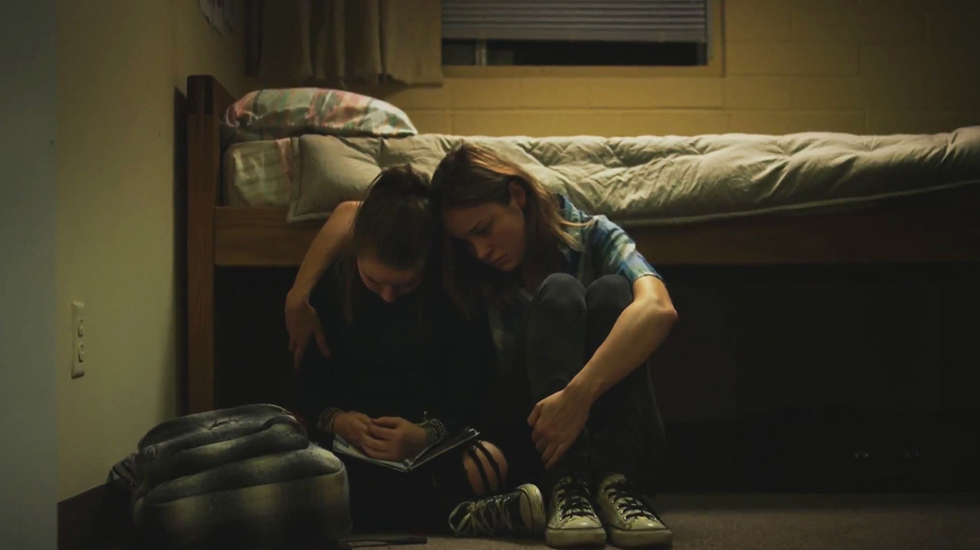
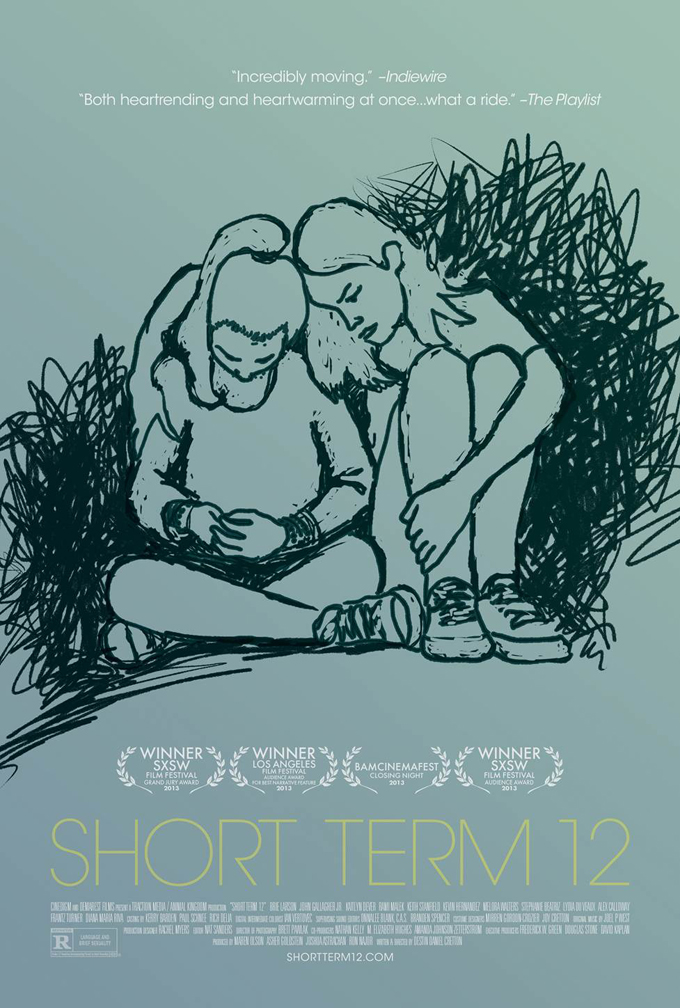
short-term-12-posterShort Term 12 – THE FILM OF MFF for me. Hands down. In the same ballpark as The Class. Nothing to nit pick. Nothing to write. WATCH IT NOW. Shed a tear or two in few scenes. What a depiction of a love relationship! And the teenagers are so good.

Heli – family getting caught up in extra judicial military forces ka atyachar. Quite liked it. I don’t know if this happens in Mexico, but it surely does in Kashmir & Dantewada.

For Those In Peril – this redemption tale set in the gloomy scotland (wish there were subtitles) lost me somewhere in the middle. And the bizzare ending just left me confounded. Koi samjha do kya hua.

Tonnerre – another doomed relationship film. Lovely. The lead is so good and ‘paavam’ (bechara). Was pleasantly surprised by the ending.

My Dog Killer – what an opening sequence. A tough guy training his dog, called by his dad for help. Stark, minimal, gritty, family social drama, this film left me wondering all the time where the hell this is going to go. And the dark ending nailed it for me. Don’t go by the title of the film!

A Long and Happy Life – a farmowner’s struggles to balance the shifting equations between his farmer community and the city council. Must start watching more Russian films after this one.

Kaphal (Wild Berries) – a sweet little funny children’s film set in the plush garwal, what a cinematic delight this one was. The kids(normally irritating in most hindi films) were so lovable, they carried the film on their shoulders. Ably supported by Subrat Dutta (Talaash), Pubali Sanyal (did she play Boti’s wife in Maqbool?) and cilemasnob‘s favorite under utilised Sunita Rajwar – who has a monologue and she rocks! Another movie which made me cry a couple of times. The audience loved it. Take a bow Batul Mukhtiar!

Good Morning Karachi – Slumdog Millionare meets Madhur Bhandarkar in Karachi. Was really disappointed. So were the fans of Khamosh Paani. Heard an editor friend laughing throughout at the unintentional hilarity at times.

Katiyabaaz – a very intresting film. Mazedaar. Somewhere between a documentary and a Dibakar Bannerjee-ish at times feature, this one digs into the power supply problems, a local hero (Loha Singh is the new Sagairaj!), the unpopular IAS Ritu Maheshwari – MD of Kanpur Electricity Board, the dwingling kaarkhanas of the industrial city, Indian ocean’s music and the superb background score. Lovely. Hats off to the full team. More power to apni Alice & apna Varun 🙂

Killer Toon – a web comic designer’s comic sketches potrayl of deaths, are carried out with precision of a serial killer. How? Why? Who? Is the designer responsible? What are the cops going to do about it? Who is that kid on the road? This excellent premise laden film begins with a arresting opening sequence and the horror-thriller tone is set. The repeated flashbacks and seamless transition to & from animation to reality itself is worth seeing this film – the chills down your spine while watching this one in a dark theater notwithstanding.

And an entire film can be made out the funeral business wala. What a character and what a performance by the actor (albeit in a role spanning less than half of the film). Would love to see that alternate film.

The Past – Asghar Farhadi’s superlative follow up ‘sequel’ of sorts to his brilliant A Seperation. This dysfunctional family drama is set in a almost Ramin Bahrani’s version of Paris, with characters bickering, coming to terms, confessing. It doesn’t get more ‘real’ than this and yet the situations are so dramatic. The lead from Seperation & Prophet nail it in this one, and the wife deserves all the accolades. Long takes, minimalist camerawork, terrific performances from the cast – Farhadi’s signature everywhere. I have been informed marriage-separation is the director’s favorite genre. He seems at home in this film with an objective eye on every one. The train sequence with the father son choked me up. And I loved Fohad – the little kid. MUST MUST WATCH.

You still haven’t seen Richard Linklater’s Before Midnight? Well, here’s the first thing to do. Click here to go to Mumbai Film Festival site and book your seat at Liberty Cinema for its screening on 23rd Oct at 5:30 pm slot.

And now come back to this post. Shubhodeep Pal watched the film and went meditative on Jesse and Celine’s two decade long love story – wonder, ponder, and all that jazz. Read on.

(I just have one question – they are not a couple in real life? Hawke and Delpy never fell for each other? Unbelievable, this cinema shit!)

Before Midnight2

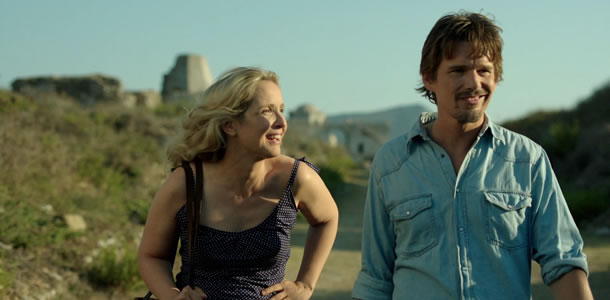
In one of the many memorable scenes in Before Midnight, Celine watches the setting sun descend into the distant hills, and counts down to the moment when dusk will envelop Jesse and her. “Still there” she breathes. “Still there”. Until the inevitable moment when, of course, it’s no longer there.

But is it the sun that she’s referring to, or their love – spanning two decades – that her longing, slightly sad eyes see sailing into the dark? After all, doesn’t love too follow a similar arc to the sun? It is not a far cry to suggest that, in love too, there is a period of expectation akin to dawn, then the happy realisation of love that reaches a zenith, followed by a gradual disintegration until dusk arrives, and, finally, a darkness that marks the passing of love.

However, just as they expect the sun to, many people expect dead love to conquer the darkness in a dawn that’s imminent. Sadly, love is less predictable and more beguiling than the cycle of the sun. Indeed, love is often more like the stages of our lives than we’d like to admit, and, often, it mirrors our emotional state at that stage. Our best shot is perhaps to extend the middle period – from zenith to dusk – and try to make love oscillate between these two points. Or, at least, delay the inevitable.

In Before Midnight, Jesse and Celine occupy this middle period. The heady lightness of discovering love, followed by the more sombre loss of paradise, are now past. They are together, but saddled with age, children and responsibility. More importantly, in their story, they are separated from their first moment of love by two decades. Has their love actually survived that long, Celine frequently asks. Will it endure much longer? Or will competing interests tear them apart?

In another romantic classic, Eternal Sunshine of the Spotless Mind, Joel, one of the two protagonists, wonders: “What a loss to spend that much time with someone, only to find out that she’s a stranger”. Celine and Jesse find themselves in this spot too. Can they truly say they understand each other perfectly because of their love? Their differences, after all, are prodigious:

Celine is a strong-headed woman of the arts from post-feminist Paris and no pushover for men. Jesse is American and, despite being a moderately celebrated writer, by his own admission, lacks the cultured sophistication of Celine. Indeed, it is sometimes difficult to see Jesse’s virtues as anything other than an unremitting adoration for Celine and winning wit.

At this moment in their lives, more than anything else, they find themselves in need of re-affirming the love that binds them together. Celine and Jesse are living with their two children in Paris – but Jesse’s son from his previous marriage must spend most of his time with his mother. Jesse would prefer to be closer to him; Celine cannot think of moving to America on a whim, especially when she’s just secured a new job. Will these forces, tugging the two in opposite directions, tear them apart?

When the first feelings of love are a distant memory, what remains? Is it still love, or just a memory of love? Moreover, how does love cohabit a space in which our human frailties are eventually revealed from under the glare of the initial moments of love? In Eternal Sunshine of the Spotless mind, this thought finds succinct expression in a dialogue between the protagonists Joel and Clementine:

“Joel: I can’t see anything that I don’t like about you.

Clementine: But you will! But you will. You know, you will think of things. And I’ll get bored with you and feel trapped because that’s what happens with me.”

Similar concerns drive one of the major underlying currents of Before Midnight. In one scene, Celine asks Jesse whether, seeing as she is now, as a woman older by twenty years, would Jesse have still come up to talk to her. Jesse tries to give a reasoned answer, instead of the expected romantic one and that irks Celine. Does love survive on expected answers, instead of the truth?

The writer Alain de Botton, in his fine book, Essays in Love, writes: “To be loved by someone is to realize how much they share the same needs that lie at the heart of our own attraction to them. Albert Camus suggested that we fall in love with people because, from the outside, they look so whole, physically whole and emotionally ‘together’ – when subjectively we feel dispersed and confused. We would not love if there were no lack within us, but we are offended by the discovery of a similar lack in the other. Expecting to find the answer, we find only the duplicate of our own problem.”

In Before Midnight, both Jesse’s and Celine’s insecurities find expression in articulate, intelligent dialogues that play one’s insecurities off the other. Perhaps the finest set of dialogues written in recent memory belongs to the hotel set piece when Celine and Jesse’s differences clash violently and spill all over each other’s sore spots. And they react as all humans do – by hurting the other in order to find a balm for one’s own wounds. The genius of this movie lies in how we can easily see – like we have often seen in our lives and in our homes — how both Jesse’s and Celine’s arguments appear sound until the other returns with a counter-argument.

Each successive argument, however, shows an increasing pain and a withering appetite to hurt. Is this the mark of true love: The unwillingness to keep on hurting the other, even in a fierce argument? Jesse tries to make peace repeatedly but fails. Celine will have none of it. But when she says “I don’t love you” to Jesse, does she really mean it or is she trying to justify to herself the reason for her vituperation of Jesse (which is undermined by her obvious affection for him)? Elsewhere in his book, de Botton writes: “We fall in love because we long to escape from ourselves with someone as beautiful, intelligent, and witty as we are ugly, stupid, and dull. But what if such a perfect being should one day turn around and decide they will love us back? We can only be somewhat shocked-how can they be as wonderful as we had hoped when they have the bad taste to approve of someone like us?” More than anything, this middle stage of love – as we might as well call it – is a time for the recalibration of the love of Jesse and Celine, especially as they prepare to look beyond themselves into matters that will affect the lives of not just their own selves, but also the family as a whole.

Before Midnight illuminates both the comforting and disconcerting aspects of love and how it ages. Undoubtedly, love can be transcendental and offer the purest of joys to those under its spell. Equally true is that the mist of love can unravel just as quickly as it appeared. In such circumstances, it is an abiding respect for each other that offers the best anchor for saving that love. More importantly, it is an appreciation for the mundane aspects of love that might provide the most enduring memories – remember how Robin Williams, in Good Will Hunting, says how he remembers his dead wife the most at night, during which her farts while sleeping are missing.

Susan Sontag argued in her seminal essay “Against Interpretation”, that the new critical approach to aesthetics undermines the spiritual, transcendental importance of art, which, is, instead, being replaced by the emphasis on the intellect. Can we perhaps extend a similar argument to the interpretation of love? Are we witnessing a transformational age in which love becomes a means to an end, soon to be discarded for more “substantial” things such as a meeting of minds that is based on logic and compatibility? The illogic of love can barely withstand the logic of our personal wants.

 ~

before-midnight

As a movie, Before Midnight is an oddity. In an industry that pleasures itself by commissioning inferior sequels that can endlessly cash-in the goodwill earned by the first movie, Before Midnight offers arguably more than the previous two films in the series combined. Apart from its deep meditation on love, it also has much warmth and wit to offer – on asides as various as parenting; sex in the age of virtual reality; the difference in psychologies of men and women, and the interpretation of literature. Even the funniest gags are littered with meaning — a particularly amusing one has Celine acting a bimbo.

The only irksome facet of this movie – which is quite deeply feminist at heart – is how it often shifts the audience’s “sympathy” to Jesse’s predicament and portrays Celine as unrelentingly insensitive to his plaints. This does not appear unnatural as it is presented in the movie, but was a slight cause of concern to me. Why did I feel more sorry for Jesse? Is it just how the characters are, or was Celine’s constant rebuffing of Jesse a bit too exaggerated? That said the movie excels beyond your highest expectations.

But do the two characters find a resolution? In a masterstroke, the movie refuses to tell us. And, given how faithfully it mirrors the oscillations of love in most of our lives, that is how it should be. For, what is life but an endless search for answers, only to find that each answer leads to more questions? The moments of peace that must be snatched are those during which we know that right now, for a few minutes or seconds, everything is okay.

 – Shubhodeep Pal

Our Day 1 report of the ongoing Mumbai Film Festival is here. And this post has reports of Day 2, 3, 4.

The-Great-Beauty

All Is Lost – Robert Redford has no name in the film. He is called “Our Man”. And we hardly know much about our man. He is stuck at the sea and struggling to survive. A one-man show, the film begins with a voice-over, and then has no dialogues except one “Help”. Not your usual fare, needs patience, and at 77, Redford shows he can still be the tour de force. The sea and survival never rarely looked so real and scary. This isn’t your pocorn-ish Life Of Pi.

Locke – Tom Hardy is our man here. He is stuck at the driving seat. A experimental affair in which he loses his wife, family, job in just 2 hours as he faces a personal crisis. Everything happens on the phone. Good fun.

Qissa – Strange, fascinating and ghostly tale. A detailed post here on this gender-bending and genre-bending film. One of the most exciting films at the fest. Must Watch.

Liar’s Dice –   Set in difficult weather and tough terrain, Kamala (Geentajali Thapa) is looking for her missing husband. From moutains to plains, from Delhi to a single-bed room in a shady hotel, her companion is a selfish and untrustworthy stranger Nawazuddin (Siddiqui). A stark, grim and almost unsentimental portrayal of urban migration. Has a charming kid too. Looking forward to Geethu Mohandas’s next.

Before Midnight – Linklater ends the third installment in the best possible way. A rare achievement where the third one is better than the second, and the second one was better that the first installment. He burns down every notion of ideal love and relationship that he sets in the first two parts. Linklater, Hawke, Delpy – it’s hard to believe that they actually “wrote” this film, and they were “acting’ the parts. You mean Hawke and Delpy are not a couple yet? That has to be the biggest cinematic lie ever told. Must Watch.

The Great Beauty (La Grande Bellezza) – Easily the best film of the fest. Smart, charming and entertaining. Of vacuous people amidst art, culture, history, and beauty of Rome. Decadence was never so poetic, caustic, beautiful and surreal at the same time. Or as friend described it “debauched shot of caviar existentialism”. Once you are out of the theatre, can bet that you are going to quote the lines non-stop. And if you could not figure out why the tourist dies in the opening scene, go here. MUST MUST WATCH.

Fandry – It’s Beasts Of The Maharashtrian Wild. The pains of growing up, of dreaming about the girl from upper caste, trying to get fair skin, and buy a pair of jeans. About a family of pig catchers who are considered untouchable in the village, and of adolescent days. The harsh reality might seem like poverty porn, but a line from The Great Beauty came to my mind – you can’t talk about poverty, you have to live it. A daring film where the entire film seems to be set-up for the powerful last 20 minutes.

Mood Indigo Gondry in top form with his insane ideas and visual madness on screen. The amount of creativity he has packed in one film, most don’t achieve in their entire filmography. My favourite game is what-prop-do-you-want-from-Mood-Indigo? Scientists should seriously pursue this one. I am booking the crawling alarm clock. Must Watch.

Mamay UmengPure vegetative porn. The 84 year old man wakes up, eats, walks, stares and sleeps. Only exciting thing in his life is skinny dipping. Long shots without any camera movement. There’s so much thehraav in every shot, i get lost in such vegetative porn films and get philosophical. That’s why i went for it even when i knew what exactly i was getting into.

The Immigrant – Marion Cotillard, Joaquin Phoenix – two great actors and just a boring dead film. Avoid.

The Past – Farhadi is still going strong after bagging the Oscar for The Separation. It’s not  a clear knock out like his last one, but still a strong film with all the usual Farhadi elements. A relationship drama which becomes a thriller, and as you get lost in the maze trying to find out the real culprit, he slowly peels his story, one layer at a time. Terrific opening credit and haunting closing shot. It’s worth the price. Must Watch.

Sulemani Keeda – Of versova, by versova, for versova. The bonafide Versova indie that doesn’t look like bhindi-indies. Honest, charming and funny, it’s best when it sticks to Versova tales, the romantic track is neatly done but am generally bored of boy-meets-girl-blah-blah-blah. Liquor in plastic glass, flat owner’s son asking for rent, kabootarkhana, no money for screenwriters, another Kapoor struggling for break – it gets some of the small details so bang on. So Versova-ities, do watch this one. Well acted and directed, a good CV for debutant Amit Masurkar to pitch a bigger film. More about the film here.

Blue Is The Warmest Colour – The explicit sex scenes in the film were so long that you could fall asleep while watching. And the moaning sounds were so loud, you could go deaf. Strangely, these sex scenes were the only scenes which seemed out of the place in this terrific coming of age tale of intimate first love, heart break and loneliness. And that impossible task of getting over it. To get all those emotions right without any background score, quite an achievement. Long takes, all conversations in close ups, and director in no hurry to wrap up things, this is uncompromising individualistic stamp of filmmaking which doesn’t mind going to the extreme. I guess that’s the reason why Spielberg and the jury members decided to hand Cannes Palm d’Or to it. Here’s the video where he explains. Adèle Exarchopoulos is a complete show stealer and owns the film. Remember, orgasm precedes essence. And sex and snot before Sartare. Must Watch.

– cilema snob

(ps – Kartik Krishnan managed to catch many more movies than us.  But his internet is down, or so he claims. So please pray for his internet connection. We will get more posts)