


All the details in the pics/documents attached. Do check it out.
 what we are reading – EightandHalf


All the details in the pics/documents attached. Do check it out.


A good music album is a blessing.
When we discovered the Israeli Qawwal Shyz Ben Tzur’s designs on Indian music scene sometime back, we couldn’t wait for more. However, we had to wait till 14 Nov 2015 for his new album.
Any fusion attempt involving Rajasthan runs the risk of ‘kesariya-oing/mharo dholna-oing‘ the sound and playing it safe. This album doesn’t fall in that trap. What you will come across is an innovative brass married to part funk and part pop sound, sprinkled with superlative lyrics. Take for example Junun, the song. The groove is familiar yet the entry of brass band is almost shocking. The singing in this song is slightly predictable. Yet, chances are you won’t be able to remind yourself of a similar song in a long time, watch out for the faint harmonium/organ on the left channel throughout the song! The brass version of the song is just a smart example of how you can mold the sound of any song with local flavor and ‘there are birds in the eho chamber’ was recorded when the brass version of Junun was being recorded with birds chirping. Great touch, that!
Roked, is a dance beat prayer to God almighty which might not be everyone’s cup of tea, yet it presents an alternative way to ascend in God. When Hu starts, you would be excused to think that a song of Kabir is about to start. However, what you get is an insightful offering about life in Hebrew. If language isn’t a barrier for you in relishing good music, you might even find yourself swaying like a dervish. The entire band is in top form in this song, yet – not a single loud note. Isn’t it fascinating to actually come across the varied sounds of far off lands and to see how they pay a tribute to the infinite, the creator? Hu is a drug. Simple!
In Chala vahi des, you will be amazed at the percussion with the ever so beautiful manjira and harmonium mesmerizing you. Razia Sultan & Afshana Khan are a delight, and my favorite part remains the effortless bringing in of ‘meera ke prabhu girdhar nagar‘. I cried when I heard this portion for the first time. This is why the creator has given us all humans faculties to hear. The infectious composition is impossible to unlike. Similarly in Kalandar, you would have made peace by the 5th minute of the composition, it’s a beautiful instrumental piece that requires nothing else. Wait for those simple 4 lines which will take your breath away before the flute reminds you to keep dancing, because after all you are a kalandar. Aren’t you?
A repetitive chanting like Eloha might weigh on the senses due to its psychedelic presentation with nearly silent musical arrangement. Julus (जुलूस) stays true to its title. This piece is all brass and the tune would remind you of your favorite roadside dance moment with the brass bands which are popular with marriage/Happy procession parties. Allah Elohim is a message of piece and reminds us that Hindu-Muslim look best when they stay peaceful and love each other. With excellent guitars in the background and splendid brass Razia and Shye Ben Tzur would surely make you sway. Ahuvi is a song of longing and the Sarangi by Asin Khan and Khamaicha by Dara Khan would make you forget that most of the song is in Hebrew, and then the last 1:20 mins of the song will pierce your heart. Hear it to know what I mean. Azov has a simple message of ‘let go’, and this flute dominated piece ends fairly quickly.
The element of finality in Mode, which is ‘thanks’ to the creator for giving us everything is infectious, thanks to the neat gayaki and yet again, the language won’t matter here.
I have to thank my mother for introducing me to ‘Chala vaahi des’ – the Lata Mangeshkar album, when I was in class 6th, which had the sounds of birds and animals in the background in most of the songs. No wonder this album uses real bird and their chirps to create a similar sense of calm that just adds to the beauty of the end product.
Barring few sparks of brilliance, the current music scene leaves a lot to be desired, and that is insulting to a country as culturally rich and varied as ours. With this album, we come across yet another good attempt at fusing languages with familiar music arrangement and treatment so sensitive, it would melt your heart.
This is an album which is produced with a lot of heart work and hard work and it dazzles! Thank you The Rajasthan Express, Shye Ben Tzur and Jonny Greenwood!
Good music is a blessing, it is the reason to live. If you don’t trust me, consult this album 🙂
– Rohwit
(P.S. – There is a delightfully decorated digital booklet along with the music @iTunes which is beautiful and has translation for all the songs. Grab it!)

There I lay my head on the pillow, snuggled into my blanket ready to surrender to the world of talking animals and strange beings my mother was about to conjure for me. It was delicious.
Then one day, I found my sister reading a 1000 page fat book with tiny font and pictures. Strange, I thought. In my world only children’s books (or textbooks and magazines) had pictures and never in tiny font. Tiny font was ‘meant for grown-ups’ territory, one to be stayed away from, so boring. But curiosity got the better of me and I went down the rabbit hole a-la Alice and landed in a wonderland of rolling peas, talking trees and 3/6/12-headed dragons. It was a much-to-be-thumbed Book of Ukranian Folk Tales.
None of it was incredulous; magic never is when you are a kid. Just curiouser and curiouser. It was a real world, with real people living in real houses and doing real things, but that world was full of strange phenomena. It brought magic right onto my doorstep. These weren’t Disney’s amusement park-like fairylands visiting me, but home-grown magic churned like butter from daily life with all its shades intact. Kothanodi – River of Fables is something like that.
It opens on the darkest tone possible. A man is burying a living infant in a mysterious forest full of strange, eerie sounds. Wails and whispers are all around, suggesting something sinister is on. And you are intrigued to know more. This seems like more than a fable, more than folklore, you say, when suddenly an elephant apple comes rolling along. It is following a woman, carefully, loyally. A loving father is taking leave of his young daughter as a suspicious-looking step-mother looks on. A python is stealthily being caught in the forest and next thing we know it is being welcomed into a household to be wedded to a human girl. The setting is tribal, somewhere deep in the interiors of Assam, along a river that carries the fables from the shore of one house to another, from one mother to another.
A narrative connect of four mothers weaves four different folktales into one solid film. The screenplay is based on events and characters described in popular Assamese folk tales compiled in the anthology ‘বুঢ়ী আইৰ সাধু’ or Grandma’s Tales, by Assamese literary luminary Lakshminath Bezbaroa, and first published in 1911 (source: link). Each story soaked in the ethos of its space and time, flows in and out of each other.
The mother-daughter thematic motif makes it tempting to dig deeper to look for hidden sub-text of social comment, only to find it is a formal element instead. This realisation dawns as the film draws towards its unique and dreadful conclusions and with it takes away the pressure of decoding it, replacing it with the pleasure of magic realism.
The joy of the film lies in its naturalistic setting and use of melodrama to suitably evoke earthy, home-grown environs of tribal India where witches and teachers, merchants and snake-grooms, mothers and talking dead bodies, live together. The emotional decibel of the film is tuned in balance, with a heightened measure of melodrama where required (in Tejimola and snake-groom stories), and controlled where necessary (the elephant apple story and buried babies stories.) The play then, of the baby burying scene (which plays out in all its eerie glory), cutting in between stories to unsettle the mood a bit, lest the fable become a dream removed from reality, becomes interesting. The joy of a fairy tale is in its mirth and that of a fable in its mystique, while folklore is rooted in common, realistic setting. The more rooted the setting the more absurd and mysterious does the magic seem. Yet, surprisingly more real. You can touch it, almost. And in River of Fables we don’t question the magic, we just let it happen, like we did when we saw it when we were young.
Perhaps, the biggest achievement of the film is bringing magic into the adult, mainstream language back by seizing it from children’s territory to a very adult world and adult problems and demystifying it by laying bare its darkest shades, without sugar-coating, something we don’t encounter often in children’s fables or popular folklore. And here the film does not differentiate or take sides with white or black magic, rather treats it like yin and yang. Exactly how it is. I hope this isn’t reduced to an over-simplified argument of fanning superstition.
The film would have been lesser if not for the gravitas that Adil Hussain, Urmila Mahanta and Seema Biswas lend to their characters and the story. They carry the inter-woven, longform narrative with assured grace and control that is a pleasure to watch.
Certain portions of the film, especially the eerie sequences, do have a tacky, under-done feel, partly in budget, partly in design and partly in imagination. Yet, it does not become a hindrance in enjoying an otherwise delectable fare much like that other gem in the same genre ‘Goynar Boksho’.
I lost my Ukranian folk tales book to a raddiwala because parents mistakenly thought I was too old to be interested in them anymore. River of Fables lessened the ache a little.
It’s always a great pleasure to hear the great directors. But it’s a pity that in our country we don’t have too many such events where one gets to hear the directors. And even if it happens, one hardly records the conversation.
At this year’s London Indian Film Festival, filmmaker Mani Ratnam was in conversation with director Peter Webber. And thankfully, they have recorded it too. So here’s the VOTD.
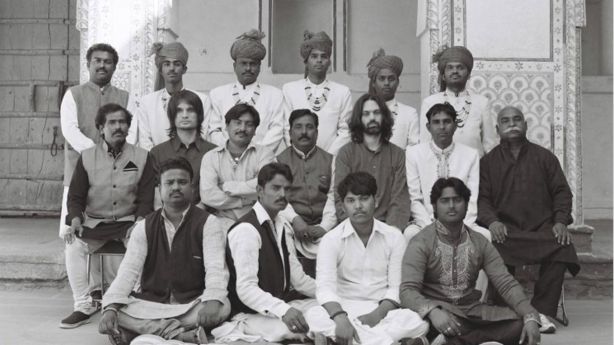
“जिसे जूनून ए मोहब्बत अता किया तूने”
मुझे कव्वाली से कुछ ख़ास लगाव रहा है। छुटपन में कुछ सुनी, अब याद नहीं कैसे कहाँ क्योंकि यादों पे बारिश की ओस जमी है। और बाद में तो ख़ैर शौक ही हो गया, इधर उधर सुन सुन के जैसे शौक बन जाते हैं। मैं आपको थोडा और अंदर ले चलता हूँ की क्यों मैं इससे इतना प्रभावित हुआ। दसवीं ख़त्म हुई थी, एक दोस्त का घर था जहाँ मैं अक्सर जाया करता था। “अबे ये सुन Stairway to heaven, इसे दुनिया का बेस्ट गाना माना जाता है”, इस तरह मेरा परिचय RocknRoll से हुआ। पिछले कुछ सालों से मेरा और कुछ दोस्तों का एक शौक रहा है, नए bands खोजना। और इसी का नतीजा है की एक दिन उसी दोस्त ने मुझे Radiohead के संगीत से मिलवाया। थोड़ी दिक्कत हुई इसे समझने में, पर कहीं न कहीं जुड़ गया मुझसे। Jonny Greenwood क्या चीज़ हैं यह मुझे PTA की ही THERE WILL BE BLOOD से पता चला। Shye Ben-Tzur के संगीत से मैं बिलकुल अंजान था, और जब मैंने उन्हें उर्दू में गाते सुना तो मेरे मन के सारे मेंढक मग्न हुए नाच उठे। मैं शायद आपको समझा न पाऊँ की क्यों मुझे कव्वाली पे नाचने के लिए जाम की ज़रुरत नहीं पड़ती, क्यों मुझे बिना नशा किये Pink Floyd सुनके अजीब ओ गरीब चीज़ें दिखाई देती हैं (और बेख़ुद कर देती हैं), क्यों मैं ISCKON के “प्रभुपाद प्रभुपाद” नाद पे झूम उठता हूँ, हालांकि न मैं उनके प्रभु को मानता हूँ न ही उन्हें। पर मैं यक़ीन से कह सकता हूँ की यह सब एक ही वजह से जुड़ी हुई हैं, मेरे विश्वास से की संगीत और सिनेमा खुद में पूरे हैं। उन्हें निरोध की ज़रुरत नहीं। आप संगीत को सिनेमा से मिला दीजिये और आपको एक पाक़ साफ़ फॉर्म मिलेगा। ‘JUNUN’ यही फॉर्म है।
मेरा मानना है की आर्ट को वैज्ञानिक की ज़रुरत होती है, पथ प्रदर्शन और नए प्रयोगों के लिए। मॉडर्न सिनेमा को जैसे मैंने जाना है, Paul Thomas Anderson मुझे इसके वैज्ञानिक मालूम हुए हैं। हर फ़िल्म एक दूसरे से जुदा, हर फ़िल्म तकनीकी तौर पे पिछली को पीछे छोड़ती हुई। शायद कोई फिक्स्ड स्टाइल न होना ही उनका स्टाइल हैं। तो मैं यह मानके तो गया ही था की JUNUN कुछ ख़ास होगी। Shye और Jonny Greenwood (Radiohead से एक अलग किस्म का प्यार है मेरा, उस band में सब individual genius भरे पड़े हैं) साथ में एक एल्बम बना रहे हैं, और PTA उसे फ़िल्म कर रहे हैं…अब इंसान बौराया नहीं ये सुनके तो दिल नहीं है उसके पास।
यहाँ हम जोधपुर के मेहरानगढ़ फोर्ट में इन कलाकारों को एक माँगणियार क़व्वाल समूह के साथ काम करते देखते हैं। मैं यह हलके में नहीं कहता, और मैं ये मानना चाहूँगा की मैंने काफी संगीत सुना है, पर मैंने ऐसा कुछ पहले कभी नहीं सुना। PTA के ड्रोन शॉट्स जोधपुर को एक नयी परिपक्वाता से देखते हैं। उनके हर फ्रेम में संगीत इस क़दर है की आप दोनों को जुदा करके नहीं देख पाएंगे। एक क़व्वाली, जिससे एल्बम का नाम मालूम हुआ है, ने थिएटर में बैठे सभी को उसी ताल पे ताली बजाने पे मजबूर कर दिया, उनमे से एक मैं भी था। सिनेमा और संगीत का संगम ऐसे बेकाबू कर देता है, मैंने अब जाना। 53 मिनट तक मेरे रौंगटे खड़े रहे, मैं इतना हल्का आदमी तो नहीं हूँ। बाहर निकल के नाचने का मन होने लगा। पर मैं नाच नही पाया, मैं कुछ हल्का आदमी हूँ। ख़ालिस तस्वीर जो होती है, उसमे आर्टिस्ट कहीं न कहीं खुद को बना देता है। यहाँ आपको एक अभिव्यक्ति दिखेगी जिसे आप PTA की पिछली हर फ़िल्म में देख सकते है, Shye aur Jonny के संगीत में देख सकते हैं, इन कव्वालों की ताल में देख सकते हैं। और यही जूनून है, यही मक़सद है, यही ख़ुदा है।
मैं बस इस बेमिसाल मेल को देख के, सुन के पागल सा हो गया, की मुझे अलफ़ाज़ नहीं मिले। अब आप कैसे बयाँ कर सकते हैं की कुछ चीज़ें आपके साथ क्या कर जाएँ ?
मैं तमाम उम्र शब्दों को चेहरा देते आया हूँ, हर शब्द मेरे ज़हन में एक तस्वीर उकेर देता है। अब मुझे कभी “जुनून” की तस्वीर नहीं बनानी पड़ेगी। मैंने उसे साक्षात देखा है। Shye, Jonny और मांगणियारों के संगीत में, PTA की नज़र से, JUNUN में।
कहाँ बुत गिरा, कहाँ चैन पाया
मैं कैसे सुकूँ को सहता हूँ,
बना फलसफा कुछ यूँ ही बड़बड़ाते
मुसलसल जुनूँ में रहता हूँ।
(Bhaskarmani Tripathi is a chronically depressed and दिलफेंक individual who wants to make his moments last. Has been called names more than he’s been called by his name, not that there’s anything wrong with it. Hates adjectives, loves Hindi and Urdu and Almost Famous. Believes Rock n Roll saved his life. Although never seen, this is one of his most favourite moments in cinema. Tweets at @bolnabey)
(You can watch the film at Mubi)
Kanu Behl’s Titli released few days ago. But we go busy with Mumbai Film Festival, and so haven’t been able to post anything on the absolutely brilliant debut feature of Kanu. The film premiered at Cannes last year.
Here’s Karan Singh Tyagi on Titli.

Delhi has always struck me as a suffocating city. It has no harbor, it’s main river lies dangerously polluted, it boils in summer and it freezes in winter. To an outsider it is also a distrusting city; the city has watched me without interest many times – suggestive of some harshness in the people.
I experienced this same feeling visiting Delhi last week. At the airport, I placed my backpack in the dedicated common section in the restroom for cabin-bags. The restroom attendant immediately turned around and gave me a mocking smile, as if poking fun at my naivety and suggesting what a fool I was to blindly trust the safety of my bag in that common enclosure.
I had arranged for a private cab to take me to the city. I had not even settled in the cab when the driver started telling me that he was an expert in beating the parking system – stationing the car a few kilometers away and waiting for the phone call from the passenger to drive to the pick-up spot. We passed a signpost to Dadri. I was naturally reminded of the lynching incident, and expressed shock at what had taken place. Pat came the reply from the cab driver, “U.P. Sarkar itne paise deti hai ki ye log khud hi kar lete hain ye sab drama. Do aur hindu bhi mare, unhe to kuch nahin mila.”
There seemed something savage and gluttonous in the manner in which he shifted the discourse from a humane level to a transactional level. I was left wondering where these thoughts had come from, and what is the prism through which he was viewing the world, looking past empathy to power and money.
As we advanced, garbage was being burnt on an open spot along the NH-58 highway. White smoke was rising from the burning trash.
It reminded me of Kanu Behl’s “Titli”, a film that burns with an intensity not matched on screen in a long time. It smells of hazy smoke that rises from burnt trash in the dusty by-lanes of Delhi. The film internalizes my growing feelings about Delhi (and this country) and spits out something dangerous, something macabre, even.
On the surface, the movie is about Titli’s (Shashank Arora’s) attempts along with his wife (Shivani Raghuvanshi) to escape his family that engages in violent carjacking. But, underneath the film holds up a brutal mirror that shows an unflattering reflection of our hypocrisy, patriarchy, mistrust, rage and sorrow. What spoke to me the most was how brilliantly it handles the subject of patriarchy.
“Titli” places the four male protagonists along a continuum of misogyny, ranging from the father (Lalit Behl) who is extremely hegemonic to Titli who is consciously trying to find a sense of agency. Vikram (Ranvir Shorey) and Bavla (Amit Sial) occupy spots in the middle. Each male protagonist has much to tell us about who we are.
The father is so deeply entrenched in patriarchy that he doesn’t even realize it; his Zen-like presence in a world where violence happens around him every day is devilish. Vikram, supportive of entrenched patriarchy, knowingly and on occasions unknowingly, finds rhetorical ways to contort his patriarchal gaze into expressions of compassion and sadness. See him in scenes where he is dealing with his divorce or where he is thrashing Titli while simultaneously crying and imploring: “Parivar vale narak lagte hain tujhe?” – his is a world of wretched and labile emotions in a patriarchal universe.
Bavla’s position on this continuum is the most unique that while on one hand he displays gay leanings, on the other hand he is an unobtrusive participant in the terror perpetrated by his father and brother. In contrast, Titli is trying to actively seize control of his life, but he soon finds himself engaged in praxis of futility as he discovers that morality and conscience is the price for freedom.
Viewed from a certain perspective, the film is also a peerless portrayal of our hypocrisy – our classic ability to extricate a problem from its context and deal with it symbolically. The movie spends an excessive amount of time showing the male characters brushing their teeth and clearing their throat, as if these acts of personal hygiene allow the male leads to purge their sins and soul, thus making them cleaner humans. The symbolism should not be bewildering as this is happening in a country where millions gather at the ghats of the Sangam every year to purge themselves of all sins by taking a dip in the waters.
Symbolism aside, where the movie soars is in its representation of the construct of the family in India. It deftly depicts how an Indian family can be something of an unforgiving structure for many – one which dedicates itself to the art of the self-inflicted wound (there is also a gut-wrenching scene in the movie that involves a literal depiction of a self-inflicted wound), and which, knowingly or unknowingly, is committed to acts of cruelty against its own kind rather too often.
The portrait of India that emerges from this examination shows a country that is broken, in a fundamental, probably irreparable way. But, to completely mangle Wright Thompson’s beautiful lines on India, “Titli” is both the riddle and the solution. One must understand today’s India to understand “Titli”, but one must understand “Titli” to understand today’s India. They created each other. They are the same.
(The writer, currently based in Mumbai, is a graduate of the L.L.M. program at Harvard Law School. You can find him on twitter here: @karanstyagi)
Ruchika Oberoi’s debut feature Island City premiered at Venice Days, an independent parallel sidebar section at the Venice Film Festival, which is promoted by the Italian Association of Filmmakers and authors. It also won the FEDORA prize for the Best Young Director. The film had its Indian premiere at the recently concluded Mumbai Film Festival.
Here’s ThePuccaCritic‘s post on the film.
“6 AM. Good Morning.” Says an alarm clock.
“5th floor. Humidity is 38%.” Informs an elevator.
“Due to wastage of water, we have removed water filters. Thank you, Systematic Statistics. Fun. Frolic. Festivity.” Announces an automated electronic voice.
These are the voices we hear, while we follow this gentleman called Suyash Chaturvedi, which informs us about his daily routine. He is a part of the crowd which enters those tall, shiny glass buildings everyday sharp at 10AM and leaves at 7PM, as if their biological clocks are synchronized with that of a computer. The building he enters is of Systematic Statistics, which swallows numbers and data to churn out graphs and pie-charts, where, like any other corporate office, there is little difference between a man and machine. Where a man’s freedom, personality, and individuality are sucked out of him, and in those tidy, dull-colored formal shirt-pants, everyone look the same – rusted and worn out, like a cog wheel. Which he is. In the scheme of this mechanical system, and, in this quest of earning a livelihood, he has lost his liveliness.
If you’ve ever been a part of any corporate job, you would have cursed the Branding/HR department at least a hundred times during your course there. Every office has this “Fun Committee” that has the pressure on them to make their employees feel happy just because one corporate legend said ‘fun is necessary for productivity’. “Why are you not having fun?” yells his boss. Chaturvedi is now made to have fun. Obviously, he is not asked what he would like to do. A set of instructions – like how we program a computer – has to be “obeyed” by him to complete his mandatory procedure of fun. This satire on corporate culture then naturally grows into a whole commentary on the middle-class urban idea of fun. Chaturvedi is taken on the Bollywood’s kidnapping machine — a van, to a surrealistic dark chamber that leads to humankind’s most dreadful construction of all time that now exists on every other road-corner :a shopping mall!
Island City, in its third short, Contact, which encompasses the time span of events occurred in both the earlier shorts, is about the people who is at the receiving end of the technology developed by companies for which people like Suyash works. The protagonist in Contact, Aarti Patel, in her daily job reads newspapers freshly printed off by machines. One day she starts receiving heartfelt, hand-written love letters. These letters make her hopeful of leaving her egoistic, disrespecting, and neglecting fiancé whom her family has chosen for her. But as one day doom strikes –(SPOILER ALERT) —we learn that these letters are no different than the newspapers she read…they have been written by some artificially intelligent machine. This is The-Lunchbox-meets-Her in a traditional space where technology is prospecting to invade. (SPOILER OVER) And as a consequence of the first story, Fun Committee, we see this (failed) technology pushes her back to the regressivity she wanted to escape. In this war of man v/s machine, both are losing out to each other. While we are trying to make machines that speak and feel like humans, we fail to realize that in the process machines are making us one of them.
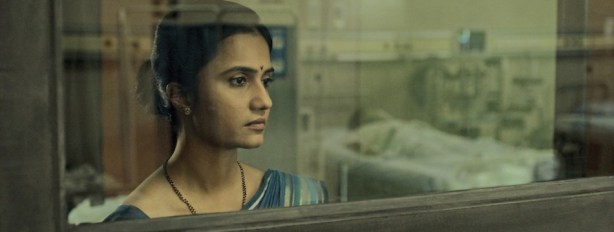
These two shorts form an arc for man-as-machine and machine-as-man aspects of the narrative. In the second short, Ghost In The Machine, the patriarch father-husband of a Maharashtrian Joshi family is in coma, hospitalized, and is replaced by a TV at home. This replacement of man by a machine turns out not bad after all for the family. The kids, the mother, and the wife see the respective ‘spirit’ of the father, son, and the husband they wanted, in the lead hero of the daily soap, ‘Purushottam‘ (impeccably created) aired on this TV. Kids enjoy seeing him daily; the aged mother wishes well for him; the housewife (lovely Amruta Subhash) can now work as a school teacher which her real husband had denied. Satirical about our daily life and relationships, this is the most hopeful (and also the most “entertaining”) short in this portmanteau feature about the nature of men and the machines.
Technology’s primary aim has always been to advance humankind along with its culture. While the opening and the closing shorts (Fun Committee and Contact) critically looks at the despair it is causing to the human form of life, Ghost In The Machine’s hopefulness, with technology replacing the man of primitive thoughts by the virtual model of another mythological man, keeps the cycle and war of man versus machine going.
(Anup Pandey is a corporate machine on weekdays but turns into a human on weekends at the movies. Writes film and Hindi music reviews at thepuccacritic.blogspot.com. Tweets at @ThePuccaCritic )
And we have come to the last day of the festival. Continuing with our daily reviews and reccos, here are the notes from the last of Mumbai Film Festival, 2015.
Our Day 1 Wrap is here, Day 2 is here, for Day 3 click here, Day 4 is here, here is Day 5, and Day 6 is here. And click here to read the post on Christopher Doyle’s Masterclass.

Fassbinder – To love without demands by Christian Braad Thomsen
So implosive and concentrated, this one demands a second viewing and deserves a much longer post. The complexity and rich denseness of Fassbinder, the enfant terrible of New German cinema, is so attentively and contemplatively sketched, it is fascinating to delve into the mind and heart of the man and film-maker. It pieces together his life from childhood through rare interviews of Fassbinder and of his other associates and what emerges is an idea of a man as passionate, intense and complex as his films. I missed Junun for this but came back with no regrets at all.
Kothanadi – River of Fables by Bhaskar Hazarika
A German distributor of Bollywood films watching this Assamese gem called it the most original work he had seen in the fest and offered his contacts to the debutante director Bhaskar Hazarika. I couldn’t agree more. Brought up on Ukranian folk tales (like literally hugged the 1000 page book of fables to sleep for years), Kothanadi brought alive the magic realism and earthy ethos of folklore effortlessly. 5-6 stories intertwine with narrative threads and characters joining the dots weaving a mesh of parallel stories moving in the same direction. Rooted in its native and socio-political ethos, the film’s complete lack of need to comment or ‘share a message’ has been the most refreshing cinematic experience of recent times. This is my most favourite film at MAMI this year.
Mor Mann ke Bharam – Illusions of my mind by Abhishek Varma, Heer Ganjwala, Karma Takapa
Whimsical, imaginative and cryptic, Mor is a delight in more ways than one. It’s a film about the illusions of the mind that creates its narrative for the experience of the illusions. Illusions have a vague form and shifting functions and through the treatment of its themes Mor does something similar. The mystification is not self-conscious and touch of humour is refreshing. Especially, the tongue-in-cheek reflection on difficulties of a film artist. Such a pleasant experience!
Tag by Sion Sono
In another dimension of reality I would have avoided a film like this like plague. But clearly, and true to the film’s premise, I wasn’t in that universe and quickly Tag replaced Microbe as winner of the indulgence of the fest award. Horror cum slasher cum acid trip hallucination turned out to be the most fun at cinema halls I have had in the long time. The premise is there is a world of women where each one is slashed to death by the wind and only one survives. Until she realises she is in a parallel reality and is someone else at some other time. The killing and running continues and in each time she has to save herself. No point writing more about this one, check it out when you can, you know where!
Body by Małgorzata Szumowska
Contemplative document on sadness, broken hearts and troubled relationships, Body, completely desentimentalises pain and anguish and simplifies it. It cannot help take a jibe at the Spiritist school of thought emphasising on emotional healing through spiritual techniques and energy principles to arrive at a very human element of laughter and letting go as the simplest road to love and connection. I was hoping I could end the fest with the much-touted Tangerine but then this wasn’t bad at all. See you next year MAMI.
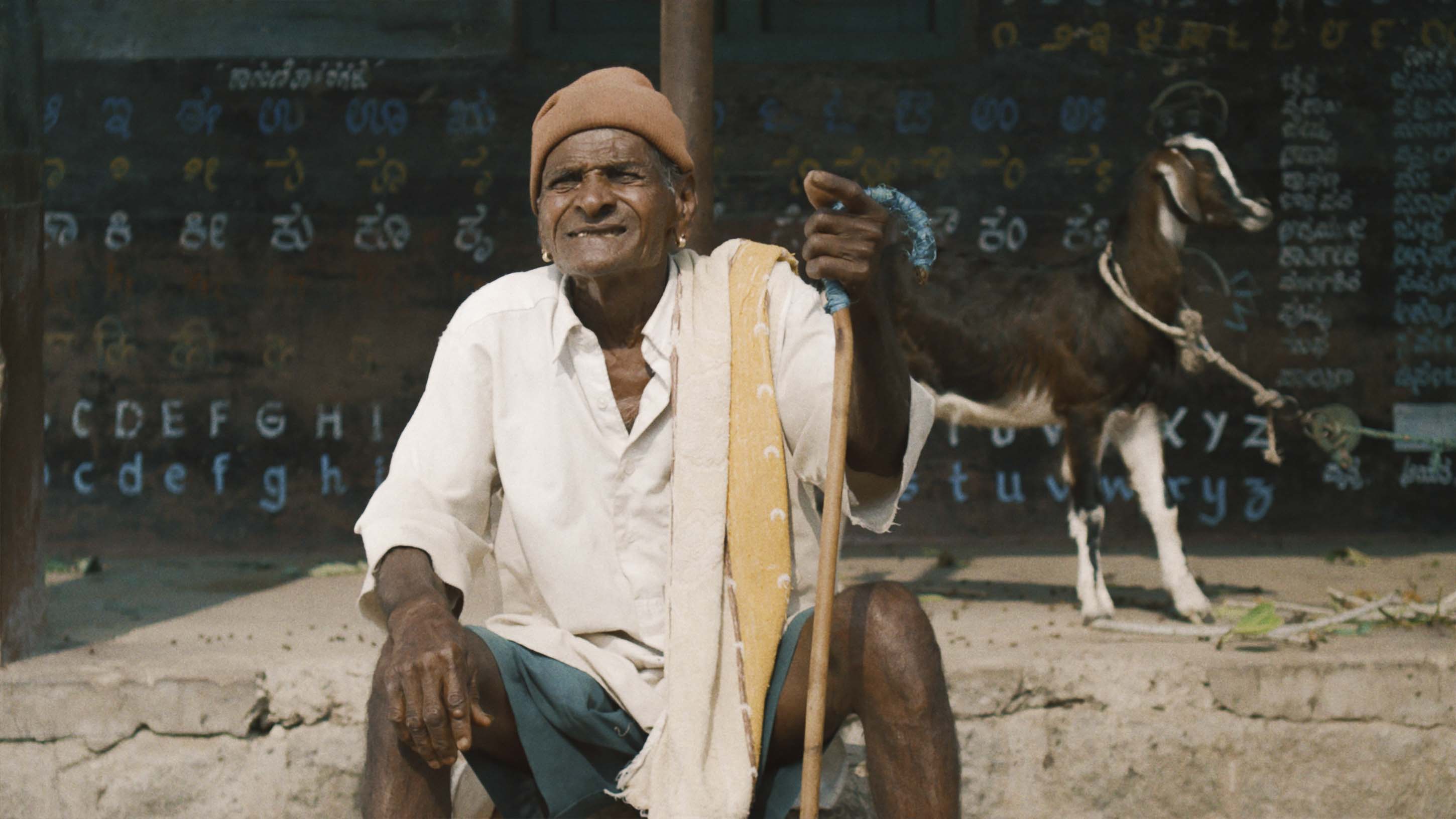
The Mumbai Film Festival concluded with a closing ceremony on Thursday evening where the winners were announced.
Here’s the list of winners in different categories-
HALF TICKET
Golden Gateway Award for Children’s Feature – OTTAL
The Silver Gateway Award for Children’s Feature – Operation Category
Special mention for Acting – Hetal Gada and Krrish Chhabria
Special Mention for Direction : Morgan Matthews for X + Y
The Golden Gateway for Children’ Short – Dina Velikovskaya for Pro Mamu (About a Mother)
Silver Gateway for Children’ Short: Olga Poliektova and Tatiana Poliektova for My Grandfather Was a Cherry Tree
Jury Special Mention for Direction – Mari Sanders for “Daan Durft” (Go Daan Go!)
Excellence in writing in Cinema AWARD – Gaata Rahe Mera Dil” by Balaji Vittal and Anirudha Bhattacharjee
Film for Social Impact Award by Yes Foundation – Jayaraj for OTTAL
Young Critics Choice Award – KAUL
Audience Choice Award – TAXI
DIMENSIONS MUMBAI
The Silver Gateway Dimensions Mumbai Award – THE VOICE Disha Noyonika Rindani
The Golden Gateway Dimensions Mumbai Award – KUNAL Dhruv Saigal
Special Mentions for Dimensions Mumbai – I SHALL BOW Vedanti Chandrakant Dani
INTERNATIONAL COMPETITION
Jury Grand Prize for International Competition – THITHI by Raam Reddy
Silver Gateway Award for International Competition – Heavenly Nomadic by Mirlan Abdykalykov
Golden Gateway Award for International Competition – Volcano by Jayro Bustamante
Special Jury Mention for Achievement in Directing : Cesar Augusto Acevedo, LAND AND SHADE
Special Jury Mention for Achievement in Acting : Maria Telon of VOLCANO | “Mother Juana”
Special Jury Mention for Achievement in Acting : Farzana Nawabi of MINA WALKING | “Mina”
Special Jury Mention for Ensemble : Sleeping Giant Jackson Martin, Reese Moffat, Nick Serino
Special Jury Mention for Achievement in Screenwriting : Chloe Zhao, SONGS MY BROTHERS TAUGHT ME
INDIA GOLD
Jury Special Prize for India Gold : An Illusion of My Mind/ Mor Mann Ke Bharam by Karma Takapa, Heer Ganjwala and Abhishek Varma
The Silver Gateway Award for India Gold : Haraamkhor by Shlok Sharma
The Golden Gateway Award for India Gold : Chauthi Koot by Gurvinder Singh
 F.i.g.h.t C.l.u.b