Archive for the ‘cinema’ Category

Labour of Love Poster #2-0

Aditya Vikram Sengupta’s debut feature “Labour Of Love” (Asha Jaoar Majhe) has been doing the fest rounds for quite some time. It premiered at Venice Days, an independent section at the Venice Film Festival which is promoted by the Italian Association of Filmmakers and authors. And recently, it picked up 2 National Awards too – Indira Gandhi Award for Best Film by a Debut Director and for Best Sound Designer.

The film is getting a limited release via PVR Directors Rare. It will release in Kolkata, Mumbai, Delhi and Bangalore on 26th June, 2015. The film is without any dialogues. Aditya Vikram not only directed the film but he also wrote, shot and edited it. Woah!

It features Ritwick Chakraborty and Basabdutta Chatterjee in lead roles.

Watch its trailer.

And here is the official synopsis :

Set in the crumbling environs of Calcutta, Labour Of Love is a lyrical unfolding of two ordinary lives suspended in the duress of a spiraling recession. They are married to a cycle of work and domestic routine, and long stretches of waiting in the silence of an empty house. They share each others solitude in pursuit of a distant dream that visits them briefly every morning.

Click here to read an interview of the director on the film’s making.

11059415_1579688872283054_2127473201120506844_n

If you follow this blog regularly, you know how much we love Avinash Arun’s Killa. And the good news is the film is finally ready for theatrical release. A new trailer of the film has just hit the internet. Have a look. And thanks to the smart producers of the film, it has English subtitles too.

Beautiful. And so lush, feast for eyes. This is almost a short in itself.

The film releases on 26th June. It’s easily one of the best films of the year.

Don’t miss it.

To know more about the film and its director, click here.

Film’s FB page is here.

After doing a double whammy at Cannes 2015, Masaan comes to Indian theatres on July 24th 2015! Produced by  Drishyam Films, Phantom, Sikhya Entertainment, MACASSAR films), and directed by Neeraj Ghaywan, we’ve written enough about Masaan by now for you to know about it, so here’s making it easy for both of us in case you don’t –

For Masaan trailer and photos go here

For the Cannes buzz and two awards go here

For the standing ovation video go here

Masaan

Blow our minds Neeraj Ghaywan!

(click on any pic to start the slide show)

Aha. It feels so good to write this post. And since Indian media is still busy covering gowns at Cannes, we feel like shouting out from rooftop that our Neeraj Ghaywan has bagged not one, but two-fucking-awards at Cannes! The first one is the FIPRESCI Award, which is given by the International Federation Of Film Critics. For other winners, click here.

The next win is in the Un Certain Regard section in which Masaan premiered and was in competition. The film won the Special Jury prize for Debut films/Promising Future (Prix de l’avenir). It shared the award with Ida Panahandeh’s Nahid. Click here for the video. For complete list of winners, click here.

Earlier, the film had received a standing ovation after its first screening. Click here for the video and all the pics. To check out film’s trailer and premiere pics, click here. And to know more about the film, its synopsis, cast & crew, click here.

(PS – whatever you think of Bombay Velvet, Anurag Kashyap still remains the best film school in India. Here is one more proof)

Finally! You have read about it, and now here is the video of that moment of glory – the long standing ovation for Neeraj Ghaywan’s Masaan, at its premiere on 19th May, 2015 at Cannes Film Festival. The claps continued long after the film got over. Cheers to the entire team of Masaan!


And click here to read an early and glowing review of the film by Screen Daily.

UPDATE : And we have got a small video of the presentation ceremony too. Do watch it.

Neeraj Ghaywan’s debut feature Masaan (Fly Away Solo) is premiering at the ongoing Cannes Film Festival. Written by Varun Grover and starring Richa Chaddha, Sanjay Mishra, Vicky Kaushal and Shweta Tripathi, the film is competing in Un Certain regard section of the fest. Click here for the official synopsis, cast and crew list.

Here’s the trailer of the film

Click here to check out a new clip from the film.

And here are some happy faces of the film at the fest. Click on any pic to start the slide show.

Bombay Velvet: A Dissection Of Its Allusions

Posted: May 17, 2015 by moifightclub in cinema
Tags: ,

It’s all deja vu here. Because Anurag Kashyap is not new to backlash. That Girl In Yellow Boots is not very old. And before that there was No Smoking. And these are part and parcel of the game – when you don’t want to be calculative about “what would audience like”, but try something new, package it with shiny things, and hope that they will come to your side. Sometimes they will, maybe they wont. The hullabaloo seems to be more this time because of a mainstream big actor and the budget. But when do they matter when you are watching a film as genuine film buff.

Keeping all those things aside, here is Arnab Sarkar trying to dissect Bombay Velvet.

Cinema is like a battleground: love, hate, action, violence, death. In one word, emotion.”

That is the reply Samuel Fuller, portrayed as an American director himself, gives in one famous scene of Godard’s Pierrot le Fou, when asked about the meaning of cinema.

2839_1

Being a critic of Cahiers du Cinema, Godard believed the very purpose of cinema, was to make the audience think, to introspect. So when he couldn’t tolerate it further, he went on to make movies, which were in a way thought-provoking, which catered to his instincts. These films, through which he hinted towards cinema, politics, America and wars, were heavily booed by the masses; each time one released, and they were tagged as nonsense.

Few years later, that same auteur would be hailed as one of the most influential movie-makers of all time, and his styles would be adopted and praised world over.

A Kashyap film has hidden layers in its stories. His earlier films No Smoking, Paanch, Gulaal had subtexts too, which were very beautifully disguised inside the outer skin of the script. Recently, a song ‘Taar bijli se patle humaare piya’ from his film Gangs Of Wasseypur was finally dissected on a social platform, to hint at such a subtext about the politics of India.

So while, the whole nation was busy criticising his recent release Bombay Velvet and leaving no stones unturned to make it a huge box-office failure, I interrogated myself: Can Kashyap do this to himself? Or is he simply playing with us?

The film which externally looks as the simplified love-story of Johnny Balraj and Rosie Noronha against the enmity between the media moguls Khambata and Mistry over the politics of Bombay is actually a film-study that points us to myriad conclusions.

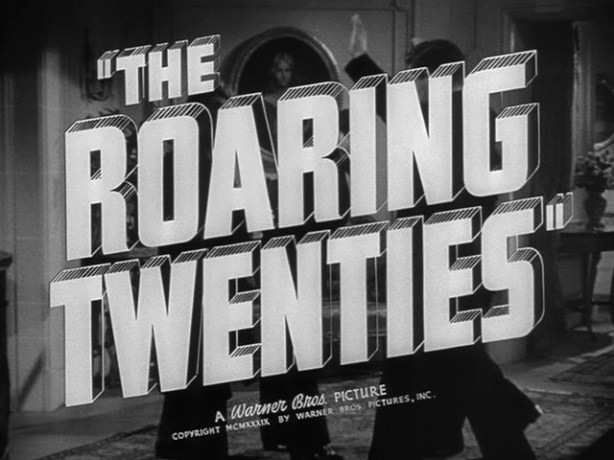
The Roaring Twenties

Yes, this James Cagney-starrer movie is referred to, quite at the beginning of Bombay Velvet, as an element of foreshadowing in the script through the line ‘He used to be a Big-Shot.’ But, very few know that The Roaring Twenties, per se, was actually a golden era in the United States and Europe, which had witnessed tremendous development from economic and cultural point of view.
roaring-twenties-trailer-title-still

During that glorious decade, America witnessed a change in its lifestyle post-World War I. Real-estate boomed, skyscrapers built and huge businesses were invested in. That was also the time when labour unions disintegrated due to the rising power of the politicians and employers. Number of strikes dwindled, and the poor became poorer. The fact how Khambata tries to change the face of Bombay post-Independence is a direct reference to this history of America.

Also, it was the same time when American government imposed its Prohibition Act on alcohol, and which led to the rise of ‘speakeasies’(cover-up bars selling illegal liquor) all over America. It was a huge money spinner, and many tycoons invested in that. For here in our film, Bombay Velvet is that very ‘speakeasy’ that is being referred to in the face of prohibition put up by the state.

At a time when the American culture was going through such changes, jazz was introduced for the first time along with dance forms like waltz, foxtrot, which has again been highlighted in the film from Bombay’s perspective.

Homosexuality was getting accepted, and people had started coming out, baring their desires out in open. Now, we know that typical gait, those subtle hints which Khambata gives to Johnny, were essentially, pokes by Kashyap at our numb consciousness.

Khambata’s wife was the perfect description of how females had started realizing their sexual freedom during the 1920s in America. They were not anymore confined to inside their homes. Wide kohl-rimmed eyes, new hair styles, freedom to drink and smoke were the trademarks.

Lastly, the newly found organized crime and gangsters flooded the cities of America, as they were hired by powerful people to get their work done. That led to rise in murders during that period, and thus a drastic enforcement of law and order on the streets. The emergence of Balraj, as a gangster is again an allusion to that episode.

There is one scene in the movie, when Khambata walks out of his room and secretly sniggers at Balraj’s naiveté. It is epic, and I so wish to wonder it’s actually Kashyap sneering at those who didn’t get his references. The film itself is a mock on clichéd cinema.

Bombay Velvet might be a tribute to Scorsese, De Palma, Tarantino for its styles, but it is a bigger tribute to America. In one of the scenes, where Mistry calls Khambata an ‘American agent’, Kashyap just throws it directly at your face to grab it.

The movie may have been based on Gyan Prakash’s Mumbai Fables, but here the rise of contemporary Mumbai has been compared to America.

Godard here?

This method of bringing out important issues about politics, cultures is quite pro-Godard. But the important thing to note here is the limited indulgence of the characters, like in the films of the New Wave auteur. Just before they are making the connections with you, they snap out of it. You do not get deeply involved into their emotions. It remains superficial, like Ferdinand and Marianne, in Pierrot le Fou.

And yet, for the masses, for those who don’t wish to go deep, Bombay Velvet has: Love, Hate, Action, Violence and Death. A perfect cliché-filled cinema.

Parallels to Kashyap in Bollywood

I know this may sound silly, but here I see Balraj as Kashyap’s alter-ego. His entry into Bollywood with nothing to lose, working up his way through the street noir (indies), laughing at his own (street fight) failures, fighting against the system, just to be a Big-Shot one day in the industry, until the industry smothers him.

ranbir-kapoor_640x480_51422517457

But, he still sees a hope that the ones who knew him well, whom he gave a platform to grow and spread their talent, would look up to him and exclaim that he was indeed a Big-Shot!

With that, I rest my views here. Only Anurag Kashyap can tell if these were a bit valid.

Arnab Sarkar

(Doctor during day time, and aspiring filmmaker during night, Arnab loves films more than medicines. Settled in Vadodara, he is currently studying for post-graduation)

(PS – Click here to read Anurag’s latest FB post and closing remark on the film and its making)

Terribly Tiny Talkies by Chintan Ruparel and Anuj Gosalia is a creative initiative which brings together a diverse pool of writers to create one tweet-sized story, everyday. Like their previous shorts centered on the theme of “Love”, this time they have produced 5 more shorts on the ocassion of “Mother’s Day”.

5 shorts, under 5 minutes, by 5 filmmakers.  L by by Amit Masurkar, Cuddly by Karan Shetty, Cheers by Piyush Raghani, Arey Baba by Surya Balakrishnan, and Mamta Tonic by Srinivas Sunderrajan. Do watch them and VOTE for your favourite one.

L by Amit Masurkar, stars Tanistha Chatterjee, Pankaj Tripathi and Svar Kamble. A mother’s dream of riding a scooter is not as easy as it seems.

CUDDLY by Karan Shetty stars Neena Kulkarni and Shruti Vyas. Necessity is the mother of invention. But can it replace mother’s love?

CHEERS by Piyush Raghani stars Ali Fazal and Anju Mahendru. 10 years ago, a boy abandoned his alcoholic mother. Now a man, he returns to meet her.

ARRE BABA by Surya Balakrishnan stars Girish Kulkarni and Gauri Deshpande. Little Devika has a problem her father may not understand.

MAMTA TONIC by Srinivas Sunderrajan stars Suhita Thatte. A travelling saleswoman. 3 potential customers. She weighs the pros of her homemade tonic against the cons of making tough choices in life.

VOTE for your favourite short!

Bombay-Velvet

There is so much that has already been ‘lectured’ to us on Bombay Velvet that I would refrain from saying anything else and just begin with whatever I thought of music of the film.

The film is 1960s and quite loudly so in whatever we have heard or seen so far and with whatever little I know, the words like tattu and nikhattu were surely not heard in the jazz of those days. To me, they dilute the feel of the song and even though it might go with the situation of the song, it is quite a put off for me. If you leave this slip aside, Aam hindustani is top class. Shefali has stressed on pronunciation a lot which is quite refreshing and goes with the attitude of the song. The tempo of the song varies teasingly and creates a great club like atmosphere.

Mohabbat buri beemari by Neeti Mohan is dominated by brass and even during the antraas, you can hear a faint notes of brass in the corner of your ear. The song is filled with tease which can, in terms of setting remind you of ‘mud mud ke na dekh’. Neeti mohan and her ‘come on!’ Is grey, purple and all shades of Stimulation. Another version of this song which is sung by Shefali Alvares is cute and sounds fancy but is not as aggressive as the one by Neeti Mohan. Both versions end with flourish and are of exact same duration.

Neeti Mohan’s Ka Kha Gha has an adorable tune but the words are a big let down. I am sure this would not be a common opinion but when you produce such a rich tune, you have got to have better choice of words than ‘sab bhula ke jo doob jaye kyu wo hee tair paata hai‘. Neeti Mohan cannot be praised enough for her exquisite singing. Sadly, she is stuck with ordinary lyrics in a song that has everything going for it otherwise. Easily the most ordinary song of the album and ONLY because of the lyrics.

An insightful guitar, quiet brass, whip-smart set of violins and a general evening-ish atmosphere is what makes up dhadaam dhadaam. Neeti Mohan has poured her heart out in the song and the part where she goes ‘malaal mein’ can actually be used as a ‘goosebumps checking device’ for all humans to see if their bodies are adequately producing goosebumps at right moments or not. Call me fussy, but the use dhadaam dhadaam is the only thing that put me off in the song. It sticks out like a sore thumb in an otherwise superlative song.

Naak pe jo gussa features a madly in love Neeti Mohan who is playful, yet stays within the ‘jazz’ brief of the song. Successful attempt is made to recreate a bar scene with the lead singer of the bar trying to cajole her love interest to give up anger. The lyrics of this song are terrific to say the least. A top class song.

Sylvia is an enjoyable song which has a generous pace and lyrics that tell us everything about a certain ‘Sylvia’ who enjoys a stranger’s touch more than someone who loves her. The song has a sad undertone to it in spite of being fast paced and that to me appealed a lot! Did I like the song? Yes. Will I hear it again and again? No.

Darbaan by Papon has a lot of sadness laced around a hummable tune. Generally the first hurdle between the disadvantaged and the rich of the society is the darbaan (gatekeeper) who doesn’t let the poor get as much as a peek inside the club where ‘mem log and babu sahabs‘ have fun, high society style. Singing wise, a strictly average song because the composition didn’t give much to Papon to play with. It might be a great spectacle on the screen (or not) but it is unlikely this would be a ‘repeat’ song in the playlist.

Shut up is an interesting song with Shefali Alvares asking the ‘lecturers’ to shut up. The bass lends good depth to the setting. Brass swivels along with Shefali and what we get is a thoroughly enjoyable song about something sinister, something vulnerable and someone being way too naughty.

Behroopia is perhaps the lightest song of the album, arrangement wise. Even here, you will find a quiet appearance of brass. The tune of the song is oddly familiar at times but nothing to complain here. In fact, it doesn’t sound like a typical Amit trivedi song and that is such a relief. An easy song, worth a play or two.

A nearly 5 minute Bombay Velvet theme is my favorite piece from the album without a doubt. Of course the film is touted, hyped, over propagated as noir and what not, and the theme heightens this feel to maddening levels! This could easily be one of the best theme music we have heard since Bombay Theme. The sense of occasion is palpable and the build up is magnificent. Kudos to Amit Trivedi for smartly using brass, clarinet and that Guitar…ooh la la! Such themes are the reasons we wait for films to be out! So filmy and so bloody good! You want ‘grand’? Here it is.

Conspiracy, like the name suggests has ominous written all over it. The violins build up the atmosphere and don’t be surprised if you start expecting a ‘twist’ in everything after you listen to this track. The clarinet keeps the track grounded and concludes it leaving an air of uncertainty. Nothing play worthy on repeat, but for film buffs, a track to re-live the film.

Tommy Gun in reality shuts up everyone forever so it isn’t surprising that a track with the same title will have nuanced presentation of the shut up song among other things. Again a film piece and good of makers to include it in the album.

There are two rather embarrassing remixes in the album and I would refrain from mentioning anything else about them. Perhaps, the makers wanted to see the name of McCleary in the film credits. In what is an extremely rare occurrence, McCleary makes you want to skip the tracks. The tracks are a misfit in the overall scheme of things and that is just what it is.

The film pertains to a set time period revolving around jazz music and to create the music of the film Amit Trivedi with his team have really given everything to the soundtrack and what’s more sound oozes the effort. My complaint is only with somewhat lazy lyrics and at times, the over produced sound. Unlikely that all the songs will remain in your playlist after the film goes out of theaters but a good effort which is worth an applause or two, club style!

For an ordinary music-booze lover and someone who is least bothered about jumping the ‘social class’, and who doesn’t care if it is a local, cheap beer or an expensive wine with an unpronounceable name, the songs might take a while to grow but they will grow for sure. The others are well, already busy revealing how they found the music to be ‘magnifique’.

Overall, a good album that fits the narrative.

@Rohwit

(Ps – Click here to get the credits for each song)


Court : On Celluloid and otherwise

Posted: April 24, 2015 by moifightclub in cinema, Indie
Tags: , ,

This post is by Mohamed Thaver, who has covered the Sessions Court proceedings for Hindustan Times for over a year. As he watched Chaitanya Tamhane’s Court, he could not stop himself from making some Court-notes. Blame it on good ol’ journalism.

Thaver is a former journo who still finds it difficult to keep his nose out of crime, movies and book. Over to him now.

11159558_365968360273957_2933551977579417576_n

It is easier to hate people if you do not see them in human form. Especially, if, with the help of stock phrases, you just have to reduce them to pre-moulded narratives. After moving to report on the Mumbai Sessions court from crime reporting, the first thing that hit me was the absolutely direct access to the accused. While though initially it gave me a kick, seeing all these accused about whom I had been writing, soon I realized it was a tricky position to be in. To see these ‘demons’ in human forms was a bit inconvenient.

Seeing them in full view of the pathetic condition, their wives-mothers squatting at one end of the courtroom, missing a much needed day’s salary on most occasions; trying to understand first the English and next the legal jargon from the expressions of the judge and the lawyers. One had to be heartless to not feel for them. The irony of women reporters telling a rape accused that he had ink smudged on his face and giving him a tissue to wipe it with was never lost on me.

I almost felt possessive about the domain that debutant director Chaitanya Tamhane’s court deals with. The other day I saw a former colleague covering sessions court say ‘Finally a movie about us’ on a social media platform. Court’s have always aroused curiosity, as it is on most occasions wrongly construed to be a place of high drama. However, the exclusive access to this beat, sometimes encouraged us to keep the myth going, as we would regale our colleagues and friends with stories from the court. I remember during the final stages of the Shakti Mills trail, several colleagues of mine reporting on other beats, had come to the court to ‘just see’.

Had I seen Court, as against other bollywood movies before I started covering the Mumbai sessions court, I would have been more at ease making the transition into the world of the black coats. Like the act of the Judge, repeating the just concluded arguments of the two lawyers for the stenographer to put in on record bizzarely worked as comic relief when it was screened at the MAMI film festival, so was it a bit amusing in my head when I first entered a courtroom in 2013. As days passed by, I realized how different the actual courts were as compared to their sexed up versions dished out in movies after movies. The heart at the most courtroom movies: drama, is reserved for handful of days in the court; mostly on the days the verdict is pronounced.  On most days, the court is like it is in Tamhane’s movie, slow, dreary, confused, boisterous and more than anything a distant soporific hum that continues with robotic monotony.

Such is the monotony, that in the nearly yearlong period that I was reporting on sessions court, I found a familiar cycle in most cases. Most cases began with the accused and family members initially trying to understand every word that their lawyers and judges were saying. However, with the innumerable repetitions of sometimes the same set of facts looked at differently from both sides, slowly but steadily their helplessness induced determination is hacked down by the sheer lifelessness of the trial till they go on auto pilot. They ultimately emerge during the crescendo of final arguments and wait for bated breath for the day of judgement.

To explain how taxing the process is in words itself,  the initial stage of the trial, framing of charges, is when the police produces a chargesheet in the court that carries the sections under which a person is to be tried in addition to a detailed account of the crime and the evidence against the accused. This is the point in court, when Vinay Vore (Vivek Gomber) argues before the judge that section 306 (abetment to suicide) of the Indian Penal Code  slapped against his client, the folk singer Narayan Kamble (Vira Sathidar) should not be applicable as there was no intention on his part to provoke people to commit suicide. Kamble is arrested after a sewerage worker’s body is found in a manhole. The police allege that Kamble’s ‘inflammatory’ poem ‘exhorting’ sewage workers to commit suicide outside the sewerage worker’s residence, led him to commit suicide two days later.

And since abetment to suicide it is the only charge his client is booked under, Vora asks for his client to be discharged from the case. Like in most court cases, the judge decides to go ahead with the trial and leaving the decision of whether the charge is applicable for a later starge after going through the evidence. What I found is that this stage would tend to get technical as lawyers quibble primarily on technical law points.

Then we come to that part of a trial, which, in movies, is normally seen as the be-all and end-all of all courtroom dramas. The public prosecutor (who represents the state) calls forth witness and then examines them, trying to extract information that can be used as evidence against the accused. Once the prosecutor finishes with his examination, the defence lawyer starts a cross examination or cross- as called in legal lingo – of the witness. Of the few technical glitches that I could spot in the movie as far as court room procedures were concerned, was the one in which the first police witness was not cross examined by Vora.

After the prosecution witness are examined and cross-examined, the trial them moves to 313 – in court lingo – which refers to the recording of the statement of the accused as ordained by section 313 of the Code of Criminal Procedure, 1973. While, it seems like an interesting phase, what it is, is, just a rough question – answer format document that the judge reads out before the accused, to which he has to reply in a yes or a no. This stage, in my humble opinion, which has not been shown in the movie, could have been exploited to get us a sneak peek into the mind of Kamble, who gives the impression of a person who has so much to say but has decided to turn his back to the world.

After the final arguments of the two lawyers are over, the judge will then allot a date for pronouncing of judgement. Like any god fearing person I thought that the ‘day of judgement’ was final. But the wheels of judiciary run a tad slower than organized religion. Because while on the day of judgement, the court may pronounce the guilty- not-guilty judgement, the quantum of sentence is still remaining. After the judgement, both sides argue about the quantum of sentence – which in the Shakti Mills gangrape case – stretched for  days on end – before the judge on most cases sets another date for the quantum of sentence.

On this date finally, when the judge pronounces the quantum of sentence, you approach the family of the accused – now either a convict or a free man– and one of them will tell you that they will approach the High court and failing which the Supreme court. The cogs of the machinery keep rolling. During the last few scenes of the movie, Vora pays Rs 1,00,000 as bail amount for Kamble. When Kamble – who earns a living by giving tuitions – questions Vora in the hospital about why he paid such a big amount, Vora’s who is also representing him in another case slapped against him by the police, replies, “Now you have just got bail. You case will go on for years. You can repay me the money by then.”

– Mohamed Thaver