Archive for the ‘film’ Category

Two new trailers are out recently. One is of Parched, the Leena Yadav film which premiered at the Toronto International Film Festival.  This has been online for some time now but got spotted recently.

Official Synopsis – Set in the heart of parched rural landscape of Gujarat, it traces the bittersweet tale of four ordinary women Rani, Lajjo, Bijli and Janaki. We see them unapologetically talk about men, sex and life as they struggle with their own individual boundaries.

The cast includes Tannishtha Chatterjee, Radhika Apte, Surveen Chawla, Adil Hussain and Lehar Khan.

Do check it out.

https://www.youtube.com/watch?v=pcVwe7W1brY&feature=share

The other trailer is of Hansal Mehta’s Aligarh. Based on the true life story of Professor Shrinivas Ramchandra Siras who faced abject humiliation and persecution at the hands of university authorities and other citizens for being gay, it stars Manoj Bajpayee and Raj Kummar Rao. It’s written by Apurva Asrani.

The film will release on 26th Feb, 2016.

Chauranga

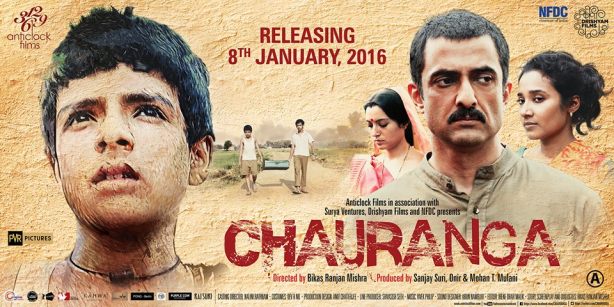
Bikas Mishra’s debut feature, Chauranga bagged the top prize in India Gold section at last year’s Mumbai Film Festival. Now, the film is all set to release on 8th January, 2016. The makers have released a new trailer of the film. Do have a look.

Trailer :

Cast :

The film stars Sanjay Suri, Tannishtha Chatterjee, Arpita Chatterjee, Soham Maitra, Riddhi Sen, Ena Saha, Anshuman Jha, Dhritiman Chatterjee, Delzad Hiwale and Swatilekha Sengupta.

About the film :

Fourteen-year-old Santu wants to go to school. But his destiny was pre-written in a village that’s steeped deep in caste-hierarchy, oppression and debauchery. Unaware of the consequences, Santu is nurturing defiance and a dangerous infatuation. How far will his defiance take him? What will be the price of his escape?

For more details about the film, its twitter handle is here and FB page is here.

Kothanodi

There I lay my head on the pillow, snuggled into my blanket ready to surrender to the world of talking animals and strange beings my mother was about to conjure for me. It was delicious.

Then one day, I found my sister reading a 1000 page fat book with tiny font and pictures. Strange, I thought. In my world only children’s books (or textbooks and magazines) had pictures and never in tiny font. Tiny font was ‘meant for grown-ups’ territory, one to be stayed away from, so boring. But curiosity got the better of me and I went down the rabbit hole a-la Alice and landed in a wonderland of rolling peas, talking trees and 3/6/12-headed dragons. It was a much-to-be-thumbed Book of Ukranian Folk Tales.

None of it was incredulous; magic never is when you are a kid. Just curiouser and curiouser. It was a real world, with real people living in real houses and doing real things, but that world was full of strange phenomena. It brought magic right onto my doorstep. These weren’t Disney’s amusement park-like fairylands visiting me, but home-grown magic churned like butter from daily life with all its shades intact. Kothanodi – River of Fables is something like that.

It opens on the darkest tone possible. A man is burying a living infant in a mysterious forest full of strange, eerie sounds. Wails and whispers are all around, suggesting something sinister is on. And you are intrigued to know more. This seems like more than a fable, more than folklore, you say, when suddenly an elephant apple comes rolling along. It is following a woman, carefully, loyally. A loving father is taking leave of his young daughter as a suspicious-looking step-mother looks on. A python is stealthily being caught in the forest and next thing we know it is being welcomed into a household to be wedded to a human girl. The setting is tribal, somewhere deep in the interiors of Assam, along a river that carries the fables from the shore of one house to another, from one mother to another.

A narrative connect of four mothers weaves four different folktales into one solid film. The screenplay is based on events and characters described in popular Assamese folk tales compiled in the anthology ‘বুঢ়ী আইৰ সাধু’ or Grandma’s Tales, by Assamese literary luminary Lakshminath Bezbaroa, and first published in 1911 (source: link). Each story soaked in the ethos of its space and time, flows in and out of each other.

The mother-daughter thematic motif makes it tempting to dig deeper to look for hidden sub-text of social comment, only to find it is a formal element instead. This realisation dawns as the film draws towards its unique and dreadful conclusions and with it takes away the pressure of decoding it, replacing it with the pleasure of magic realism.

The joy of the film lies in its naturalistic setting and use of melodrama to suitably evoke earthy, home-grown environs of tribal India where witches and teachers, merchants and snake-grooms, mothers and talking dead bodies, live together. The emotional decibel of the film is tuned in balance, with a heightened measure of melodrama where required (in Tejimola and snake-groom stories), and controlled where necessary (the elephant apple story and buried babies stories.) The play then, of the baby burying scene (which plays out in all its eerie glory), cutting in between stories to unsettle the mood a bit, lest the fable become a dream removed from reality, becomes interesting. The joy of a fairy tale is in its mirth and that of a fable in its mystique, while folklore is rooted in common, realistic setting. The more rooted the setting the more absurd and mysterious does the magic seem. Yet, surprisingly more real. You can touch it, almost. And in River of Fables we don’t question the magic, we just let it happen, like we did when we saw it when we were young.

Perhaps, the biggest achievement of the film is bringing magic into the adult, mainstream language back by seizing it from children’s territory to a very adult world and adult problems and demystifying it by laying bare its darkest shades, without sugar-coating, something we don’t encounter often in children’s fables or popular folklore. And here the film does not differentiate or take sides with white or black magic, rather treats it like yin and yang. Exactly how it is. I hope this isn’t reduced to an over-simplified argument of fanning superstition.

The film would have been lesser if not for the gravitas that Adil Hussain, Urmila Mahanta and Seema Biswas lend to their characters and the story. They carry the inter-woven, longform narrative with assured grace and control that is a pleasure to watch.

Certain portions of the film, especially the eerie sequences, do have a tacky, under-done feel, partly in budget, partly in design and partly in imagination. Yet, it does not become a hindrance in enjoying an otherwise delectable fare much like that other gem in the same genre ‘Goynar Boksho’.

I lost my Ukranian folk tales book to a raddiwala because parents mistakenly thought I was too old to be interested in them anymore. River of Fables lessened the ache a little.

Fatema Kagalwala

CR1oEBvXIAAZJsi

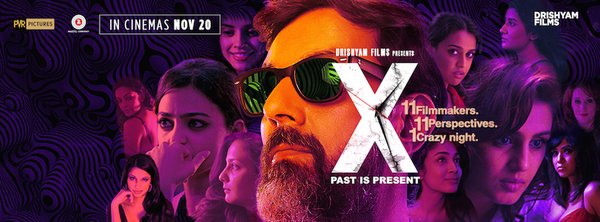
11 Storytellers. 11 Perspectives. One Crazy night!
11 eclectic filmmakers come together to bring you one exciting cinematic vision.

That’s how the makers of “X” have described their film. Interestingly, it’s one-of-its-kind film because eleven Indian filmmakers with disparate styles of filmmaking have come together for this one.

So what is it about? Here’s the official synopsis

A filmmaker with a mid life crisis meets a mysterious young girl who reminds him of his first girlfriend at first, and subsequently, of every woman in his life.

Who is she? Is she real or imaginary? A stalker or a ghost? His past catching up or a character from the script he is writing?

Do check out its new trailer. The film releases on 20th November, 2015.

Cast & Crew

Cast: Aditi Chengappa, Bidita Bag, Gabriella Schmidt, Huma Qureshi, Neha Mahajan, Parno Mitra, Pia Bajpai, Pooja Ruparel, Radhika Apte, Richa Shukla, Rii Sen, Swara Bhaskar, Anshuman Jha and Rajat Kapoor

Directed by: Abhinav Shiv Tiwari, Anu Menon, Hemant Gaba, Nalan Kumarasamy, Pratim D Gupta, Q, Raja Sen, Rajshree Ojha, Sandeep Mohan, Sudhish Kamath and Suparn Verma

Written by: Abhinav Shiv Tiwari, Anu Menon, Hemant Gaba, Pratim D Gupta, Q, Raja Sen, Rajshree Ojha, Sandeep Mohan, Sudhish Kamath, Suparn Verma and Thiagarajan Kumararaja

Directors of Photography: Anuj Dhawan, Aseem Bajaj, Dinesh Krishnan, Gairik Sarkar, Katyayani Mudholkar, Maeve O Connell, Q, Ravi K Chandran, Sandeep Mohan, Siddhartha Nuni, Sidharth Kay and Viraj Sinh Gohil

Edited by: Sreekar Prasad, Vijay Prabakaran, Vijay Venkataramanan, Biplab Goswami, Gairik Sarkar, Dhritiman Das, Shreyas Beltangdy, Ankit Srivastava, Ninaad Khanolkar

Post Production Management & Grading: Siddharth Meer

Sound Mix: Dipankar Jojo Chaki

Lyrics: Pratyush Prakash & Raja Sen

Music: Sudeep Swaroop

Additional Screenplay: Thiagarajan Kumararaja

Executive Producers: Shiladitya Bora & Sudhish Kamath

Produced by: Manish Mundra/Drishyam Films


aligarh-03

It’s that time of the year again when we do our annual religious pilgrimage. That’s Mumbai Film Festival, one of our favourite city event and the biggest film festival in the country. Since a film festival is always about the films, let’s get that sorted first. So this is what we know so far about this year’s edition.

FILMS

First, our exclusive dope.

Our sources have confirmed that Mumbai Film Festival will screen Paolo Sorrentino’s Youth and Gurvinder Singh’s Chauthi Koot.

Sorrentino’s last film The Great Beauty was a big hit at the festival in 2012. Youth premiered at Cannes this year. This one is a big catch.

Gurvinder Singh is probably one of the finest filmmakers we have that the country doesn’t know about. So its great that we will get to see his new film here. His latest film Chauthi Koot (The Fourth Dimension) premiered at Cannes this year. Click here to know more about the film.

Hansal Mehta’s Aligarh will open the festival. The film just had its premiere at the Busan Film Festival and will be at London Film Festival. This is great news. A city fest needs to open it with a film from the city/country especially when we are produce the maximum number of films in the world. So congrats to everyone for pulling this one.

Here’s the official synopsis of the film –

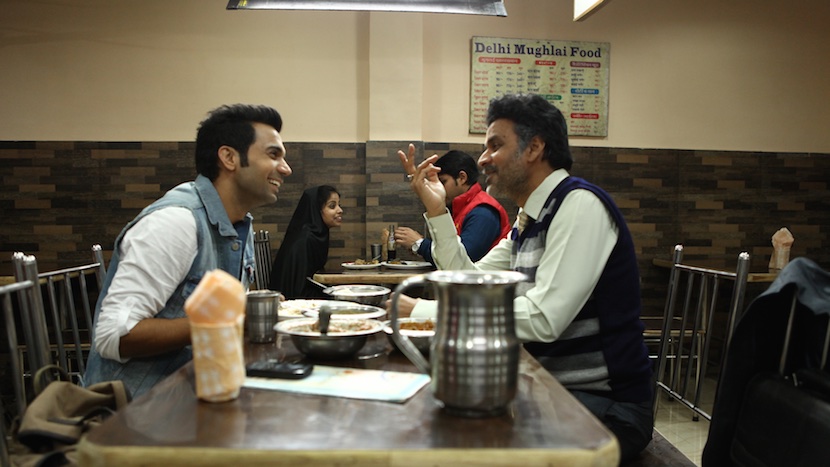
Set in a small town in Uttar Pradesh from which the film takes its name, ‘Aligarh’ is the story of a professor (Manoj Bajpayee) fired for his sexuality and a young journalist (Rajkummar Rao) who tells his story to the world. Based on true events, the film follows Dr. S R Siras, a professor at the Aligarh Muslim University who, when discovered to be homosexual, was fired from his position.  The film depicts the unlikely friendship between Dr. Siras and a reporter investigating his first big story, a relationship that will change them both forever.

Q’s Ludo will be in the newly introduced “After Dark” section

– The restored Satyajit Ray’s Apu Trilogy will also be showing at the festival. Woah! Click here to watch the trailer of its restoration.

Jacques Audiard’s Dheepan will be coming to the fest. It bagged the top award Palme d’Or at Cannes this year. And our very own Kartik Krishnan is also in it.

– Andrew Haigh’s critically acclaimed film 45 Years

Raam Reddy’s Thithi which bagged two top awards at Locarno Film Festival this year. More details about the film is here.

Jafar Panahi’s Taxi which picked up the Golden Bear and FIPRESCI Award at the Berlin Film Festival will be screened in World Cinema section.

Pani Nalin’s Angry Indian Goddesses will be in “Special Screening”

WHAT  ELSE

– Ava Duvernay of ‘Selma’ fame will head the International Jury at the fest.

– A R Rahman has composed the signature tune of the fest. Yay!

– Guardian’s well known film critic Peter Bradshaw will mentor the young reviewers in “Young Critics Lab”

– Fest has announced a new award category – the Book Award for Excellence in Writing on Cinema. This is for film writing and publishing in South Asia, written by authors from the sub-continent and published by an Indian publishing house. The Award covers works of fiction, graphic novel, creative non-fiction, reportage, analysis and screenplay, written in English or translated into English. The Award carries a cash prize of Rs 5 lakhs.

So what are you waiting for? Click here and register for the fest.

See you at the movies.


The first look of Meghna Gulzar’s Talvar is out. Starring Irrfan Khan, Konkona Sen Sharma, Neeraj Kabi, Sohum Shah, Atul Kumar, and Gajraj Rao, the film has been written by Vishal Bhardwaj who has also given the music. It has Gulzar’s lyrics and has been shot by Pankaj Kumar.

Do check out the trailer.

The film is based on Aarushi Talwar murder case and looks at it from the point of investigation.

Talvar will have its world premiere at this year’s Toronto International Film Festival.

Little Terrorist, a short film directed by Ashvin Kumar was nominated for Academy Award for Live Action Short Film in 2005. And if you haven’t seen the film yet, here’s the good news – the filmmaker has put the film online.

Here’s his note with the film –

The Gurdaspur Attack, the arrest of Mohameed Naved and escalation of hostilities on the LOC raise troubling questions about freedom and independence. Real people live real lives on either side of these fences. Barbed wire cuts the landscape of humanity, culture, civilisation; dividing children from their history. They stymie that very human touch that could resolve such a conflict. I don’t know which film-maker would say this, but I am almost dismayed that this film has aged so well. Its message of hope, my wide-eyed idealism for an even handed resolution feel a bit naive, given the hawkish, illiberal, imperialist impulses that have come to characterise public life today. Sigh. Anyway, suspend disbelief for fifteen minutes on the fifteenth of August and feel good.

Jeev-jantu.

SPOILER  ALERT

’मसान’ के बारे में बहुत कुछ लिखा जा चुका है, लिखा जा रहा है, सोचा कि लिखने के लिए कुछ बचा नहीं है, लेकिन इस फ़िल्म ने इतनी सहजता से दिल को छू लिया कि लिखे बिना नहीं रह सकता. लगभग दस दिन हो गए हैं फ़िल्म देखे हुए, लेकिन ना तो ज़हन से उतरी है, ना दिल से. एक अच्छी फ़िल्म, नज़्म, कहानी या किताब की शायद सबसे बड़ी ख़ासियत ही ये होती है कि वो देर तक आप के साथ बनी रहती है. दिनों तक, महीनों तक, सालों तक और कभी-कभी सदियों तक. और ’मसान’ भी इस में कोई अपवाद नहीं है. और यूं भी जिन जज़्बात और मुद्दों को ’मसान’ में दर्शाया गया है, वे सब शाश्वत हैं और आज के संदर्भ में, आज के परिप्रेक्ष्य में रचे गए हैं. और यही बात, इस फ़िल्म को, इस कहानी को, उन किरदारों को और अधिक ख़ास बना देती है. और जिस तरीके से लेखक वरूण ग्रोवर ने हिन्दी-उर्दू के कवियों, शायरों को इस फ़िल्म में याद किया है, वो इस शाश्वतता के पहलू को और अधिक प्रबल करता है.

चार अहम पहलुओं, शाश्वत पहलुओं से बख़ूबी रू–ब-रू करवाती है फ़िल्म. जिज्ञासा, प्रेम, मृत्यु और उम्मीद. ये सभी वो शाश्वत पहलू या जज़्बात हैं ज़िंदगी के, जिनके बिना जीवन लगभग असंभव है. कुछ-कुछ वैसे ही जैसे शाश्वत समय के बिना.

फ़िल्म शुरू ही देवी (रिचा चड्ढा) की जिज्ञासा से, या यूं कहें कि जिज्ञासा शांत करने की कोशिश से होती है. ठीक एक बालिग होते बच्चे की तरह, जिसे बहुत कुछ जानना है और इस जानने की प्रक्रिया में वो समाज के बनाए सही-ग़लत के पैमानों पर ज़्यादा ध्यान नहीं देता है. ये जिज्ञासा बिल्कुल वैसी है, जैसी कभी आदम और हव्वा को हुई होगी, जिस के चलते उन्होंने वो प्रतिबंधित फल चखा था, जिसे चखने का अंजाम हम सब जानते हैं. अब वो सच भी हो सकता है और मिथक भी, लेकिन है एक शाश्वत तथ्य. सदियों से इस और इसी तरह की अनेकानेक जिज्ञासाओं ने इंसान को उत्सुक बनाए रखा है और एक तरह की तरक्की के लिए प्रेरित भी किया है. आज हम जितना भी आगे बढ़ पाए हैं, उस में जिज्ञासा का बहुत बड़ा हाथ है. कुछ ऎसी ही तरक्की देवी भी करना चाहती है. और उस की ये तरक्की किसी भी तरह से भौतिकता से प्रेरित नहीं है. वो बस आगे बढ़ना चाहती है, शारिरिक तौर पर, मानसिक तौर पर, खुले दिमाग से. एक जगह वो अपने पिता विद्याधर पाठक (संजय मिश्रा) को जवाब भी देती है, “जितनी छोटी जगह, उतनी छोटी सोच”. वो इस छोटी सोच से तरक्की चाहती है. अपनी जिज्ञासा को शांत करने के सहारे, अपनी शाश्वत जिज्ञासा को शांत करने के सहारे.

दूसरा शाश्वत जज़्बात, प्रेम, जिसे ’मसान’ ना केवल छूती है, बल्कि उस में सराबोर होकर नाचती है, उत्सव मनाती है. प्रेम, जो जितना जिस्मानी है, दुनियावी है, उतना ही ईमानदार भी है, सच्चा भी है. कहीं कोई छल-कपट नहीं है. खालिस है. और यही खालिस प्रेम, आम तौर पर परिभाषित और दर्शित प्रेम से अलग है. इसीलिए पहुँच पाता है, और छू पाता है, अंतर्मन की उन गहराईयों तक जहाँ तक का रास्ता केवल असल प्रेम को मालूम है. वही असल में केंद्र है, हर एक इंसान का, और प्रेम का यही दृष्टिकोण, दीपक (विक्की कौशल) और शालू (श्वेता त्रिपाठी) का एक-दूसरे के प्रति (दुनिया के एतराज़ को ध्यान में रखते हुए भी), उस प्रेम को दर्शाता है, जो सुबह की ओस की बूंद की तरह साफ़ है, यही साफ़-पाक प्रेम है, जो असल में शाश्वत है.

अगर एक चीज़ है, समय के परे, जो उतनी ही शाश्वत है, और रहेगी तो वो है मृत्यु. और मृत्यु को इतने अलग-अलग दृष्टिकोण से देखा-दिखाया गया है, एक ही फ़िल्म में कि ताज्जुब होता है. एक ओर पियूष (सौरभ चौधरी) आत्महत्या करता है, सिर्फ़ डर के मारे, शर्म के मारे और अनजाने में ही देवी और पाठक की ज़िंदगियाँ दाँव पे लगा जाता है, दूसरी ओर नियति का हस्तक्षेप शालू को इतनी ख़ामोशी से मृत्यु के आग़ोश में ले लेता है कि एक झटका लगता है. गहरा झटका. तीसरा रूप है मृत्यु का, दिन-रात जलती चिताओं का, गंगा के घाट पे. जहाँ मृत्यु सिर्फ़ एक काम है, एक व्यवसाय है और है एक ’पारी’ का खेल. वो खेल जो दिन-रात के हर पहर में खेला जाता है, ठीक एक ज़िंदा आदमी की चलती सांसों की तरह. जब आख़िरी बंधन को खोपड़ी पर बांस मार कर आज़ाद किया जाता है, (जिसे कर्म कांड की भाषा में ’कपाल क्रिया’ कहते हैं), तो मृत्यु बस एक कर्म बन कर रह जाती है. और इसी मृत्यु का चौथा रूप दिखाई देता है, जब झोंटा (निखिल साहनी) एक लम्बा गोता लगा कर वापिस नहीं आता है देर तक. मृत्यु नहीं है उन क्षणों में लेकिन उस की मौजूदगी का एहसास इतना प्रबल है कि पल भर में मृत्यु के शाश्वत होने का एहसास हो जाता है.

महाभारत में जब यक्ष ने युधिष्ठिर से ये प्रश्न किया था कि क्या है जो सबसे हैरत-अंगेज़ है, तो उस ने जवाब दिया था कि सदियों से सब मृत्यु को प्राप्त होते आए हैं, लेकिन फिर भी जब तक जीते हैं, इस तरह से जीते हैं, जैसे अमर हों. मानव-जाति की यही बात सबसे हैरत-अंगेज़ है. और यहीं पर आकर हम अगले शाश्वत जज़्बात से मिलते हैं, उम्मीद, आशा. जिस के सहारे दुनिया तब से चल रही है, जब से ये असल में चल रही है. सब तरह की उम्मीदें, चाहे वो अपनी जन्म-जाति के बंधनों को शिक्षा के ज़रिए तोड़ कर, अपने मनपसंद जीवन-साथी के साथ एक अच्छा जीवन निर्वाह करने की दीपक की उम्मीद हो, या अपना सच्चा प्यार किसी भी तरीके से (घर से भाग कर भी) पा लेने की शालू की उम्मीद हो या फिर सब कुछ बिखर जाने के बाद भी एक नए साथ के साथ एक नया सफ़र शुरू करने की देवी की उम्मीद हो, जिसे अंत में एक नई भोर की तरह की दर्शाया गया है. वो भोर, जो ज़िंदगी, जिज्ञासा, प्रेम, मृत्यु और उम्मीद की ही तरह शाश्वत है.

और भी बहुत से शाश्वत जज़्बात हैं, जिन्हें फ़िल्म बहुत सहजता से पेश करती है. प्रेम के बिछोह से उपजा दर्द, सदियों से हिन्दुस्तान में प्रचलित जाति व्यवस्था, और बंधनों में जीने की देवी की छ्टपटाहट. और वो सब भी यूं घुले-मिले हैं पूरी कहानी में, जैसे आँसुओं में नमक. जो है भी, तक़लीफ़ भी देता है, लेकिन अलग से दिखाई नहीं देता है. इतनी ख़ूबसूरत और ख़ूबसीरत फ़िल्म लिखने और बनाने के लिए लेखक वरूण ग्रोवर, निर्देशक नीरज घायवान और डी.ओ.पी. अविनाश अरूण को गले लगा कर शुक्रिया देने का मन करता है. लेकिन वो फिर कभी सही.

फिलहाल ये एक ही गुज़ारिश है, अगर आपने अभी तक ये फ़िल्म नहीं देखी है, तो कोशिश कर के देखिए. ऎसी फ़िल्में बार-बार नहीं बनती.

 – मोहित कटारिया

(Mohit Kataria is an IT engineer by profession, writer & poet by passion, and a Gulzar fan by heart. He is based in Bangalore and can be reached at [kataria dot mohit at gmail dot com] or @hitm0 on twitter)

Through this blog, we have always tried to spread the good word about various crowd-funded (Kickstarter, wishberry and such) projects. Here’s one more film which looks interesting and you can contribute to its making.

HOPANTA POSTER 1

SYNOPSIS

Whether Hopanta is mad or not is not the question: his existence in the village is a story by itself. Hopanta is a very young man, he lives in a typical village of West Bengal with mud houses and thatched roofs. A village that is untouched by city life ; a village that is self-sufficient in growing and producing vegetables, crop and oil.

Hopanta may have come from some other village, no one has bothered to question and no one in the village cares, but these same villagers provide him with everything for his survival.

Hopanta, like any other person, has his own preferences and demands, the house he lives in is customized for his needs and daily chores, the food he begs from the villagers is eaten the way he prefers to. Hopanta likes to live his adventurous life in his own way, which is sometimes influenced by the world he sees around him.

Hopanta likes to worship gods, as he has seen people do so in their own houses. He does it not for what it is but for the way it is done. Similarly he is influenced in his take on politics, women and simpler things like the electric supply of the entire village. His innocence is his strength and source of happiness. He owns nothing but he probably believes he does, and maybe that’s why he is called mad.

FILM

The story of Hopanta is told through a Baul Song (a folk song form of Bengal). The film also depicts the story of the villagers who live with Hopanta, and how their lives entwine. It focuses on how Hopanta adopts a lifestyle from the village and the villagers, showing how every one of us is like him in our own way. We too do not bother to know anything about religion or politics etc. to follow them and live with them.

If you wish to donate, click here to go to film’s wishberry page, and make the donation. The page also has more details about the film, the director, the way they plan to spend the money and other info.

11209686_1614015845504959_7895198838584126626_n

On the 14th of July, 2015, the first thing in the morning, I found myself staring at a Times of India report that stated that The Government of India spends Rs. 12,00,000 per student per year at the Film and TV Institute of India or The FTII. I assume that the figure relates to the year 2011, as the report also mentions that the recovery from the students, as academic fees, is about 11% for the year 2011. There were 350 students… so 350 into 12,00,000 is equal to… wait let me check with the calculator.. is equal to.. 42 and seven zeros… is it eight… no, seven… 42 and seven zeros which is Rs 42,00,00,000. In words, forty two crores for the Film Institute, I presume, for the year 2011.

It is more than what the Government spends on students of Engineering, Management and Medicine, screamed the news item.

Is it? One part of me felt elated as it boosts ones ego to know that at some point of time in your life, your worth was more than that of other wannabe professionals. Another part of me was defiant, funding a film course is of course expensive; 10 minutes of film raw stock would cost more than Rs. 10,000 and a good camera with accessories Rs 30,000 per shift. A third part in me zoomed in, with sharp focus, to the words that Times of India used, ‘What comes as a shocker..’.

Buddy, I should not let this ‘shock’ unchecked – I got determined.

A quick investigative internet search with the help of my friend Google, got me to the ‘FTII Audit Report for the year 2013-14’ pdf file. It was not of the contentious year of 2011, but so what? My newly found investigative senses decided that I should study the 2014 year ending audited ‘Balance Sheet’ and ‘Income and Expenses Account’ of FTII because it was available to me. So what if it is of 2015? If people are waiting for seven years to complete their courses at FTII, I could as well jump three years ahead.

Suspense music begins. The ‘Balance Sheet’ talks about ‘Capital Fund’, ‘Endowment Fund’, ‘Fixed Assets’, ‘Current Assets, loans’ etc. Somehow, the accountant in me ticked me off saying that these are not the figures that one needs to cross check for the statistics reported in The Times of India.

For all those of you who are uninitiated with my flash back, I was supposed to complete a course in Chartered Accountancy, like my friends Gurunandan and Shanker Narayan did. But much to the dismay of my dad, I had donated the two fat blue books that came from the Institute of Chartered Accountants weighing a minimum of two kilos each, within three months of its arrival, because I got selected at the FTII.

The next page is the ‘Income and Expenditure’ statement. Ah, this could be it.

The expenditure for the year 2014 at FTII amounted to 26,41,22,380.69. Excess of expenditure over income that was transferred to the ‘Trust Fund’ account was 4,08,23,409.68. Which meant that income for the year 2014 was 26,41,22,380.69 minus 4,08,23,409.68 which is equal to .. wait… I’ll use a calculator… ah.. it is 22,32,98,971.01.

I will take the liberty and assume that there were 350 students studying at FTII in 2014, as in 2011. So, if I divide 22,32,98,971.01 by 350, the amount the Government of India spent on each student for the year 2014 would be 6,37,997.06 – which little more than half of what the Times of India report says the Government spent in 2011.

But remember, I am an amateur Accountant and I may be wrong. The advantages of being a non professional is that one can take liberties with certain things. I will also do so, henseforth I will deal with only round figures and forget the decimals and the odd numbers. But wait.. why only expenses? Maybe I should deal with income first. Didn’t The Times of India report say that the recovery via fees etc is just 11% of the costs incurred on film students?

Further down the pdf file is a page where in it is mentioned that ‘Fees and Subscription’ collected at FTII amounted to 1,22,50,000 in 2014. According to Times of India, in 2011, this figure is 11% of the total cost of running the Institute. So, what is this percentage for 2014? 100 into 1,22,50,000 divided by 26,50,00,000…. Oh my God, it is 4.62!!! The recovery of student fees of 1,22,50,000 is 4.62 % of the total expenditure of 26,50,00,000 in 2014. This is embarrassing. If it was 10 or 12, I could have understood, but 4.62? No, no… something must be wrong in my calculation or the calculator has run out of batteries.

I crack my accounting brain, as the suspense music intensifies. According to the report, of the 26,50,00,000 rupees mentioned as expenditure in 2014; 15,25,00,000 is ‘Establishment Expenditure’, 6,70,00,000 is ‘Administrative Expenditure’, ‘Subsidies to students’ is 5,50,000 and ‘Depreciation’ is 4,50,00,000. What if I calculate the percentage for 2014 minus the Depreciation? Again, for the uninitiated, Depreciation would mean a decrease in value of your property because of its usage.

Why the hell should it be passed on to the students? So, 26,50,00,000 minus the Depreciation figure of 4,50,00,000 is 22,00,00,000. Ah.. that means ‘Fees and Subscription’ collected from the students would be 5.56% of the total expenses. That is better, but still worrisome for it is far off from the dreaded 11%.

Now, hold it. Just, what is this ‘Establishment Expenditure’? It has fifteen crores of amount against it which is quite a large chunk of the total amount of twenty six crores mentioned against total expenditure; in fact it comes to 57.69%!!!. Further down the pdf file, another table shows the list of all the ‘Establishment Expenditures’. It all pertains to salary, wages, staff welfare expenses etc.

Holy shit!!! When I once went to conduct a short workshop at FTII, I was told that the pay scale of the teachers are not at par with other academic institutions in India because FTII does not come under the University Grants Commission or the UGC. And I know that UGC pay scales are damn good. And yet this salary thing is more than half of the total expenses of the institute. My investigative imagination took me to another page on the FTII web site that listed 160, as the number of employees at the institute for the year 2014. Hey, not bad man, roughly one staff for every two students.

I will now make a logic, if some of you find it bizarre I have no issues with it. If the ratio of staff and students is one is to two, the money spent on students should also be double the money spent on the staff. The money spent on staff is 15 crores, so the money spent on students should logically be 30 crores. The total expenditure in that case should be 45 crores. But we know that it is just 26 crores and more than half of it comes under the heading “Staff etc..” And the staff is actually under paid.

Now a few of you might question as to why things like the ‘Welfare activities’ to staff and ‘Provision for provident fund’ for the staff should be borne by the students and be reflected in the fees that is supposed to be calculated in a Government run Institution? After all, these are indirect expenses. Since most of the students who get admitted at FTII are from the middle class background, they can’t afford it. A few others of you could say that the students be made to pay some of the direct expenses incurred on them. That is also fair enough.

The money spent directly on the students is, I presume, under the ‘Administrative Expenses’ head located in another sheet on another page. These include ‘Production Expenses’, ‘Consumption of Raw stock’, ‘Repairs and Maintenance’, ‘Electricity and power’, ‘Conveyance’, ‘Taxes and water charges’ and the likes. Now, like it occurred to me, you can also say that some of these are not direct expenses. Let us not be mean, unreasonable, un-patriotic and reject everything.

So, adding up all the direct expenses ie.. ‘Administrative Expenses’ would come to 6,70,00,000. This is 25.28% of the total expenses incurred at the institute in 2014. But what the hell, shouldn’t it have been double, going by our ‘staff to student ratio’ logic that some of you might have called bizarre? Why is it just six point seven? Yaar, this is getting nowhere because as we all know that the pay scales of the staff at FTII is not at par with the UGC scales.

And then the moot issue – if the fees collected from the students is 1,22,50,000 and the amount spent on them is 6,70,00,000, what would be the percentage of cost recovery via fees? Wait… 100 into 1,22,50,000 divided by 6,70,00,000 which is equal to 18.28%. Then why the hell is Times of India saying 11%? Agreed, it is a 2011 figure, but shouldn’t it also be saying that there are lot of variants involved?

Variants are varied in nature. Like. some of you might argue as to why should students bear the cost of “Repairs and Maintenance”? So if you remove 1,70,00,000 from 6,70,00,000 the percentage would be as high as 24.5; more than double of 11%. And some others of you might say we should include only ‘Raw stock and Production’ expenses and ‘Library’ expenses. So, what would then happen to the percentage?

And there is another variant that I haven’t even looked into as a post modern investigative amateur accountant. Does this student figure of 350 mentioned in the Times of India report, include all the trainees who came to FTII to upgrade their vocational skills or does it excludes them? The FTII web site have numbers for such people in the ‘personnel trained’ chart – people who have come from Doordarshan, Films Division and the Indian Information Service Probationers from IIMC, New Delhi. All that is too much of an calculation for a person who had dropped out of his accountancy studies; but I suspect that if all that is included the percentage would figure would be different.

Maybe there should be a social audit. Maybe I am ‘massaging the data’ here, as that ‘commie’ called P Sainath referred to, albeit in another context. Or maybe, The Comptroller and Auditor General of India is the person who would know the best.

I wonder how does the Government fix the cost of a second class train ticket or the cost of making a one rupee coin or the amount spent on the production of a small post card. Hats off to those who sit and calculate, so that others can use.

Gosh!!! To borrow a Facebook phrase, ‘It’s complicated’. I wish I had not donated the two fat blue books that came to me from the Institute of Charted Accountants many years back. I am sure that Gurunandan and Shanker Narayan would break into wry smiles, if they read this piece.

Well, I will stop calculating post modern accounting figures that seem surreal and watch a Louie Bunuel film.

– Ramchandra P. N.

(Ramchandra P. N. is an award-winning filmmaker based in Mumbai. He dabbles in features, shorts, documentaries and TV programs in India. You can follow his blog here)