Archive for the ‘film review’ Category

Now we have come to the last day of the fest. And continuing with our daily reviews and reccos, here are the notes from second last of Mumbai Film Festival, 2015.

Our Day 1 Wrap is here, Day 2 is here, for Day 3 click here, Day 4 is here and here is Day 5. And click here to read the post on Christopher Doyle’s Masterclass.

tag

Looks like this was my last day at MAMI as tomorrow is fully packed with deadlines and work-meetings. Always a sad feeling to see this week ending.  Kind of the same feeling i used to have when summer vacations ended during school.

And a good time to thank the people behind MAMI (including so many hardworking, lovely volunteers) for making it such a brilliant show this year. I know some filmmakers were unhappy with projection and tech issues but i don’t think in terms of management and movie options we’ve had a better year recently. A few things that worked big time for me this year:

– Hot Docs collaboration as well as other docs. The Pearl Button, Missing people, Junun, Monty Python, The Greenpeace doc, Sydney Lumet, Placebo, Fassbinder, Hong Kong Trilogy, The Arab Idol one.

– Half Ticket section. Did you know school kids were coming daily morning 8:30 am to watch films? And some really great films at play there.

 – The ticketing process. No SMS ka jhanjhat and very smooth handling by BMS people while delivering the delegate passes. Also the bags look lovely this year.
– Doyle Q&A and masterclass. Hope next year we have more of (crazy) legends coming to impart their madness.
Caught just 3 films today.

Junun By Paul Thomas Anderson

THE Paul Thomas Anderson last year filmed a documentary in (our) Rajasthan about a bunch of western musicians (Shye Ben Tzur and Jonny Greenwood) jamming for an album with local Managniyar singers (Chugge Khan group), a brass band (that band-leader Aamir is a magician), and some bawaal qawwals. The result is this most simple yet exhilarating documentary full of some stunning songs and visuals of the jamming process. It was almost like being in a live concert! BRILLIANT.

Sworn Virgin by Laura Bispuri

This Albanian film was a blind selection and it turned out to be very good. A slightly grim but always gripping look at female sexuality through a girl who starts living like a boy through a local village custom that would allow her an escape from the life of subjugation women have to face.

Monty Python – The Meaning Of Live by Roger Graef, James Rogan

What a way to end the festival’, I told myself as we were stepping out after watching this. Monty Python has been one of the huge influences of my life as a comedy writer, and to see this film about their reunion stage shows last year (which were the LAST TIME EVER they would get together) was an emotional journey. The finest, funniest men have still got their mojo and the film has great insights about comedy and performing live. (One of the original six, Graham Chapman is now dead so the reunion show was called ‘One down, five to go’. Haha.) The vintage footage from their world tours 40-years ago was a bonus. Of course this film is kinda niche, only for the fans of the group, but what a trip for the real fans!

Varun Grover

Schneider V/s Bax By Alex Van Warmerdam

Hitman V/S Hitman. Dead Pan Faces Delivering dark humour punches. In a very unusual lakeside universe set up by Warmerdam, he keeps shuffling the environment of the film from comedy to thriller without letting you know. Acting himself as bax, Warmerdam’s weird family This one has brilliant Performances and some unpredictably brilliant moments.

The Pearl Button‎ By Patricio Guzmán

Guzmán’s Pearl Button is a gem of a documentary. He connects nomadic indigenous ‎people living in water with political murders thrown in the same water. Both the subjects are very disparate and hence the documentary is somewhere a bit too ambitious. However, attractive images of water and equally intriguing discussions on Pinochet’s cruel documentary made the pearl button a gem worth watching.

Tag By Sion Sono

Sion sono’ love for undergarments continues in this upskirt horror. But there was more to this film than the usual mayhem. Tag is a completely pro feminist ‎action fantasy by Japanese legend Sino Sono. It was an experience to watch this film on large screen because it was way too extreme for the mainstream because in this gory madfest Mitsuko keeps tripping like Alice from wonderland. And she ends up attracting grindhouse style danger everywhere. Mitsuko later trips into keiko and izumi but still remains prone to danger.
‎The scene in the beginning where the wind splits the bus into two and the one where teachers start killing children with machine guns are complete Sion Sono signature styled scenes filled with excitement and thrill.

Tag has by far been one of the top films I have seen at the festival this year.

Victoria by Sebastin Schipper

Rest in peace, Birdman. The real deal is here. Victoria, a bank robbery thriller already sets hearts pacing as it is a 134 minute long single take. ‎Sounds like a stunt. Or a digitally manipulated virtual wonder but it is not. Victoria is an achievement. It is an exhilarating experience to watch this single take film across more than 20 loacations including some crazy nightclub scenes later leading to edge of the seat drama. The narrative is so tightly binded that the film moves from head spinning weird nighclub moves to composed and realistic scenes to breath taking robbery thrill. Actors, Cinematographer and others involved were in action for a continuous 2 hours and above.

There is no doubt as to why Sturla Grovlen’s name preceded the end credits in this mad mad mad film. Take a bow, Sturla. What presence of mind throughout.

Harsh Desai

With just 2 days more to go, we are now coming close to the end of the festival. Continuing with our daily reviews and reccos, here are the notes from Day 5 of Mumbai Film Festival, 2015.

Our Day 1 Wrap is here, Day 2 is here, for Day 3 click here, and Day 4 is here. And click here to read the post on Christopher Doyle’s Masterclass.

MG_3600-chica1

THE CLUB by  Pablo Larraín

Pablo Larrain’s film starts with a Biblical quote about how god separated light and dark so that man could tell good from bad. That’s perhaps why this tale of moral ambiguity is shot in a foggy gray pallete – here the good men of god are upto some very bad bad things indeed.

Set in an sleepy sea-side town, The Club tells the story of a cabal of four delinquent priests and a fiercely twisted sister (their very own Nurse Ratched) living in a sort of hostel for damaged holy men. A violent incident related to the sexual abuse of children forces the harsh spotlight of the Vatican on them and brings a crisis counselor to their doors, tasked with deciding their fate.

This film is a kick in nuts of the Catholic Church. That in itself is ofcourse a proud cinematic tradition but The Club’s power lies in its ability to humanize the moral failings of the men of the Church while never shying away from revealing their depravity. In a way this is an intense psychological study of repression and its horrors – had me thinking about its grim design for hours after it had ended.

Easy to see why Larrain is so highly rated – this film is pitch perfect in its direction & its craft. The mood is terrific, perfectly capturing the insularity and foreboding of a house of secrets. The acting is uniformly strong, helped no doubt by the fact that the casting is excellent. From the pacing, to the background score – everything has the stamp of a master craftsman at work. Don’t miss it.

THE SECOND MOTHER by Anna Muylaert

Val is a loving, matronly housemaid in a posh Brazilian household – indispensable but taken for granted. Her sixteen year old daughter turns up to stay with her, only she refuses to live by the subservient code her mother has internalized for herself – thus setting the cat amongst the pigeons.

I went into this film with fairly low expectations & was pleasantly surprised by how good it turned out to be. Film Festivals are usually full of brain food but this was the most emotionally intelligent (and satisfying) film I’ve seen this MAMI. This warm film sketches its characters with an intuitive touch and asks insightful questions about our notions of familial relationships.

The film’s biggest strength is the performance of Regina Case as Val. This could easily have been material for weepy melodrama in the hands of a lesser actor, begging for the audience’s sympathy. Instead Val is funny, daft, flawed, loving & refreshingly real.

This study of class-relationships should be particularly relevant for an Indian audience (we are after all world leaders at being terrible to the help). We all know someone like Val, the trusted maid who is always expected to be there for us but never expected to have a life. Films like this might encourage us to be a lot nicer to her (at a point in the film Val’s daughter fed up with the way her masters treat her tells her ‘this is worse than India’!).

Sumit Roy

BELLADONNA OF SADNESS by Eiichi Yamamoto

This early ’70s animated erotica film was made by a bankrupt animation studio on a stringy budget, released unceremoniously into Japanese shores, unreleased anywhere further to the West, and never released on DVD except in Germany. It feels like a movie made by people who had just about nothing to lose. Long segments of the film involve the camera panning from one end of an artwork to another, a still frame is broken by the slight movement of a palm or blinking eyes. What it lacks for in movement, it makes up with style. Heavily influenced by Gustav Klimt, Aubrey Beardsley and Egon Schiele, Belladonna is a gorgeous sensory assault – probably the most beautifully vicious sensory overload I’ve ever faced in my life. A jazzy, trippy soundtrack by Masahiko Satoh breathes a sort of irresistable sensuality into the movie.

When I walked out of the film – and I’m not exaggerating – I literally felt a void inside my head, and I walked down the stairs in a daze, as if I would stumble and fall at any moment. It had an unusual physical impact on me that I can’t really place into words. What baffles me is how this movie is still so unknown and under-seen despite it’s groundbreaking animation, music and sheer visceral impact. Maybe it’s because of the general populace’s disposition towards animated films and Anime fans’ dismissal of classic anime for slicker modern animation. Prior to this, the only version of the film that existed was an inferior VHS rip that did little justice to the visuals. Cinelicious’s gorgeous restoration of the film makes it ripe for rediscovery, and places it, with little competition, in the ranks amongst one of best films ever fucking made.

The VHS rip is floating around online, but I strongly suggest that you wait for the restoration to come out on video. It’s very much worth the while.

PLACEBO by Abhay Kumar

I’m sure more eminent, eloquent personalities have put their experience of this film into words better than I have so I’ll keep this snappy. Great fucking film. Probably the most remarkable – in style and content – film to come out of India in ages. It’s importance and relevance probably render it quite unreleasable in India. It’s a documentary about a certain educational institute but I shan’t name it. However, having spent two miserable years in an Engineering college, I can say that it perfectly encapsulates the sense of depression, isolation and nothingness that creeps into you as you gradually become a victim of the beast that is the Indian education system. And, moreover, it felt like two punches : one to my face, because I’ll probably never make anything as good as this in my life, and the second to my butt, because it really pushed me, more than anything else in a long while, to get off my ass, pick a camera and film.

– @psemophile

Day 5 MAMI : Yeah, surreal still. Saw filmmakers, actors (popular, lesser known everybody man!) walking around with gay abandon, struck conversations and then camaraderie with twitteratti   (this guy had to call security to rid of me), struck a conversation with  Vetri Maran and somehow told him that I did not like Visaaranai (he also remembered the question I asked in the first screening in the film) which then turned into a 20 minute conversation where he answered everything I asked (coolest guy, for sure). For somebody who is out of town, from a city of ‘dhandhe waale log’, attending his first film festival, this has definitely broadened my worldview. I think I have a better understanding of words like ‘condescending’, ‘pretentious’ and ‘one of the best filmmakers’.  Dimaag khul gaya!

Oh, yeh toh bhool hi gaya. Our ‘film festival’ audiences don’t know the art of laughing in a theatre. This one gentleman I was sitting beside said to me, ‘it would be very good if you did not talk during the film’ just as the film was about to start. And when he started to laugh during the film, it made me feel like someone whose food is falling off from the sides of their mouth. That’s how disgusting this is. It’s only etiquette and it can’t be taught (don’t let the phone ring, don’t laugh like a dog getting beaten up, don’t talk during a film because it’s not as important as gas pe rakkhi sabzi jo jal rahi hai etc). Mainstream audience ke saath naachoonga main next time theatre me, I guess.

PS:  I was with Ava Duvernay in the lift yesterday and didn’t realize it until just now when I opened the catalog. Sorry about that.

SONGS MY BROTHERS TAUGHT ME  by Chloe Zhao

Chloe Zhao’s debut  film follows a Native family in South Dakota, after the death of their father.  A family that has brothers and stepbrothers, and a troubled mother, it will definitely have someone who wants to escape. A brother that wants to escape to LA, a sister who’s disillusioned and melancholic after the death of her father and sets out to discover his world of Rodeos, drugs and cowboys forming unlikely friendships, and how they discover what it means to have a home. And have each other for company.  A Linklater-ish film that boasts of a few Terrance Malick shots, I liked it very much. It could have been more tightly knit, but then it’s a Slacker film.

PLACEBO  by Abhay Kumar

When I saw Abhay Kumar’s crowdfunding video for Placebo, I thought ‘hata bhaincho, scam saala’. No really, that’s how obscure it was. Mujhe laga aliens ko laake shoot kiya hai isiliye chhupa raha hai. The film, however, is something else.  It’s a documentary. Although it was introduced as Docu Fiction, and I did find some parts of the film scripted, and I did ask a question about that, and you obviously know the answer. It  captures the humor of the Indian colleges so well, I doubt it will ever get a release (I am an engineer, and I could relate to it). It starts of as an inquisitive brother’s quest to find out why did his brother indulge in an act of violence that ended him with a dysfunctional arm. In the process of being undercover for 3 years, Abhay finds himself in the midst of so many ‘unforeseen’ changes that the personal, intimate film he set out to make has to now take a stand and bring forth a happening in Indian colleges. A happening that’s shocking and heartbreaking, but so common that we take it for granted.  I am writing very vaguely about the film because I do not know if I should disclose anymore. But believe me when I say, that this film demands to be seen all across India. For the most part it was shot on a handycam, but you’ll marvel at how technically brilliant it is. The music of the film is a force to reckon with.  So is the film.

THE SLEEPING GIANT  by  Andrew Cividino

Entered into this film because this was the only option apart from the incendiary queue for El Club and Peddlers. A coming of age comedy drama that has very raw, shocking humor (especially a dining table scene, oh my), is brilliantly shot and so coolly edited (three Ship of Theseus, Bridge of Spies level cuts) and bhayanak music. There is a not so subtle homosexual undertone which drives the narrative, but the last 15 minutes are such a disappointment. Achhi film hai waise, dekh sako to dekh lo.

PS: Open ending is a cinematic device that is slowly becoming a festival film trope. Why are the filmmakers so afraid to resolve a film? Lunchbox deserved an open ending, that played with your dimaag. Warna toh yahaan chutiyaap hi tha. There are issues that plague new age films and that is sad because Milap Zaveri will continue calling a great/good film as a ‘festival film’.

Continuing with our series on daily reccos and reviews of the films at Mumbai Film Festival, here’s the post on Day 4.

Our Day 1 Wrap is here, Day 2 is here and Day 3 is here.

Untitled

Hong Kong Trilogy by Christopher Doyle

“Fuck the studios.”

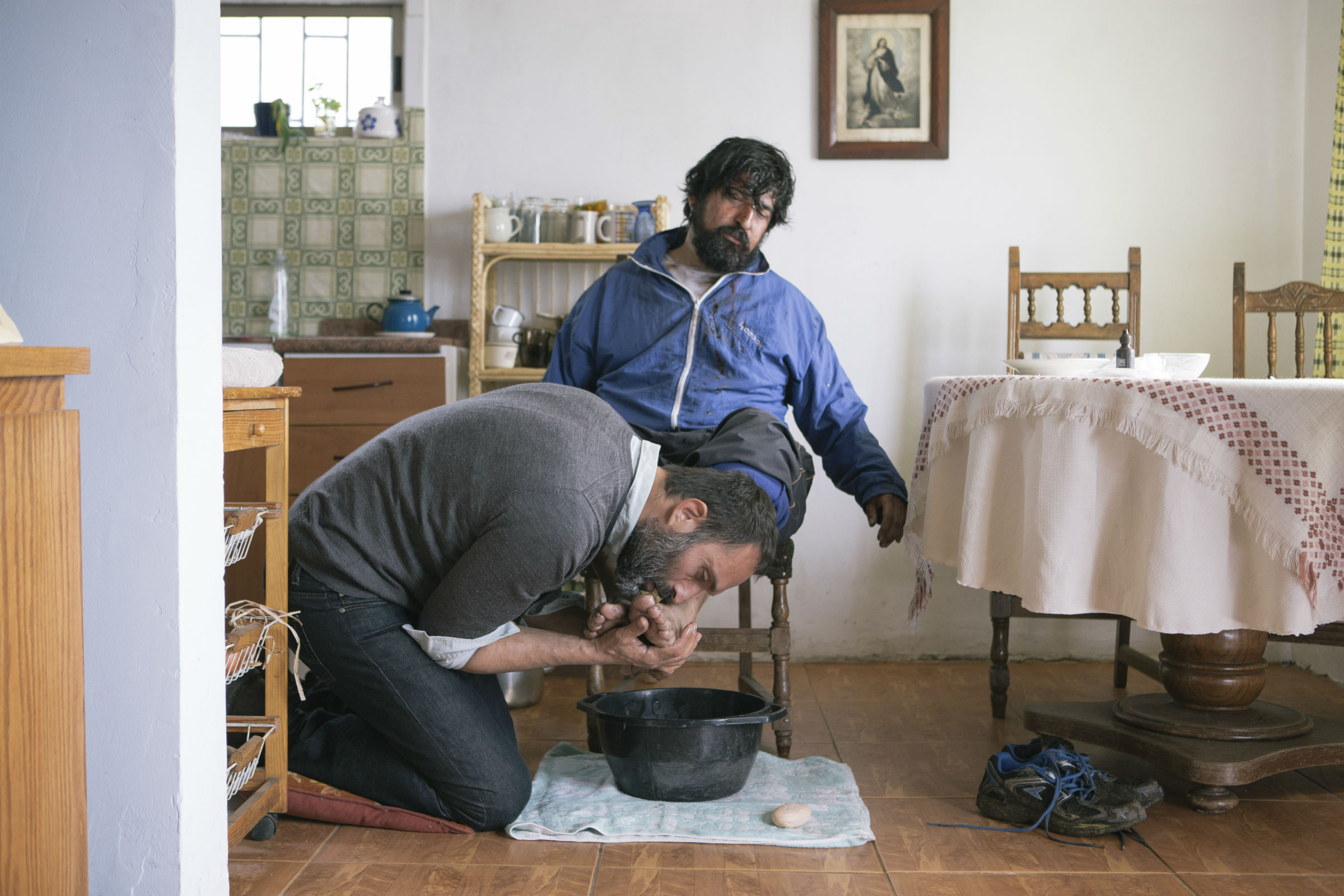
Christopher Doyle’s latest documentary ‘Hong Kong Trilogy’ (Preschooled, Preoccupied, Preposterous) brought him to MAMI and what a joy it was for those 40-odd people who showed up to hear him talk pre and post the screening. Wish MAMI had advertised the fact more that he’ll be at the screening ‘cos each word of his Howard Beale-sque monologue about the studio system was a sword through makhmal. The highly experimental documentary, more like a poetry (running in voice-over) being interpreted in visuals is a collaboration between Doyle and Producer Jenny Suen and is bizarre and heartwarming in equal measures. BUT, the real fun was listening to Doyle saab – who has spent some time in Hazaribagh as a kid and thanked India for introducing him to a complex society that ultimately pushed him towards exploring arts.

He walked into the screening carrying a cricket bat (no idea how he got one!) and in the middle of replying to a query, he’d stop and play a shot or talk about fielding positions. That Aussie spirit is still kicking there inside him somewhere probably.

Some /highlights from his monologue (quoting from memory).

“Our tragedy is that we are stuck between a youtube on one side and a Harry Potter No. 75 on the other.”

“If you don’t make the film you want to make, Harvey Weinstein will enter your home and fuck your sister.”

“Fuck the studios.”

“Martin Scorsese stole our film and never even credited us.” (He was talking about Infernal Affairs.)

“Studios just want to make Fast and fucking Furious Number 68 and they don’t care about what you think.”

“How is your sex-life?” (On being asked how much Wong Kar Wai has influenced your style and vice versa.)

For more of these, try attending his Masterclass on 3th November, 4 pm. By hook or by crook.

KRISHA by Trey Edwards Shults

Winner of Grand Jury as well as the Audience Prize at SXSW, KRISHA is a fiercely indie family drama that starts as a comedy and quickly spirals into a grand collision of past secrets and tragedies. The highlights here are a super-experimental cinematography, background score, constant play with aspect ratios, and a breakneck edit in certain set-pieces. Though there is no connection whatsoever in terms of theme, this reminded me strongly of WHIPLASH. Brilliant.

Varun Grover

The Endless River by Oliver Hermanus

What happens when unexpected crime complicates life? Estev and Tiny suddenly find themselves in no man’s land when crude murder rocks their lives out of shape. Unconnected yet connected they try to assimilate it all, sometimes together, sometimes alone. There are million emotional strands to explore in this story and its characters but the film chooses to stay with the tried and tested one, making it a predictable journey both for the dramatic graph within the scene and overall. But one thing stayed with me, its music.

Hongkong Trilogy by Christopher Doyle

Maverick master DOP Doyle’s ‘HongKong Trilogy’ turned out to be as trippy as him. The film glimpses into the lives of regular Hongkong citizens, their stories told by them, in their own voices and through their individual stories painting a picture of contemporary Hongkong and its socio-political reality. The docu-fiction form and a heart bleeding for a certain ‘return to innocence’, gives the film a subdued charm. Also, the irregularity of the regular people highlighted through an intuitive selection of real-life stories casts a humane thread into the mix. Watching him speak with his theatrics galore was far more charming though 🙂

Francofonia by  Alexander Sokurov

Documentary on Louvre? Jump, click, book. I wish it was as grand as I had imagined it to be but it was far more than that. The documentary explores the creation, maintenance and importance of Louvre, France’s beloved symbol of heritage, arts, nationality, history and much more in light of the Nazi invasion of WW II. It is a lovingly told documentary that is as whimsical as it is sentimental while being equally committed to historical facts and present political scenario. And it was this particular whimsy, imagination meeting history approach plus the tender meditativeness that gives this one its colour.

Kaul – A calling  by  Aadish Keluskar

I wanted to know if it would hold the second time round, it did. Severe projection issues at PVR Juhu notwithstanding, the narrative had me hooked despite the second viewing. It is a difficult film to watch and the projection issues just made matters worse. But I took back what I came to know, whether it works second time round or not, for me, it did.

Fatema Kagalwala

Day 4 at MAMI was as surreal as the other three, and continues to be a culture shock for me.  I didn’t see any of the films that I booked, randomly walked into three of them (with some pointers from Varun Grover) and it turned out to be a hell of a day.

MISSING PEOPLE by David Shapiro

Director David Shapiro’s documentary is one of the best films I saw at the fest.  I wouldn’t want to reveal anything about what it is any more than you would already know. I found the Q & A with David Shapiro, that followed the film, an extension of the film. I understood it better, could relate to it better. It forms an unlikely trilogy with Searching for Sugarman and Finding Vivian Maier, similar human stories that chillingly give you an insight into something more than you were prepared for. There’s a screening on 3rd with Q&A, do not miss!

HONGKONG TRILOGY by Christopher Doyle

A docu fiction film that captures the lives and stories of people in Hong Kong, while being visually evocative (because Chris Doyle).  It is the same space as Chris Marker’s Sans Soleil, and there is a lot of empathy that the makers feel for the characters in the film and the happenings in Hong Kong. Christopher Doyle (who takes a Mise-en-scène and cinematography credit). The Q&A that followed with Doyle saab is now L-E-G-E-N-D-A-R-Y .

KRISHA by Trey Edward Shults

The last film that I saw was  an American indie Krisha, which continued the parampara of  the other two films I watched at night on Day 1 and 2. The parampara of being incendiary, shocking, brilliant and captivating.  Trey Edwards Shults’ portrait of a woman on the verge of a nervous breakdown (or already having one) and her grappling with mental disorders (like obsessive compulsion) is hypnotic, funny and disarming  to say the least. Pardon my adjectives (and these incessant brackets, I am not a big fan either) but please go watch this film, if there’s a screening left. If you guys were in awe of the music and the camerawork and the editing of Birdman, this would give you orgasm. It won the top awards at South by Southwest film fest, which is a very reliable benchmark.

Trivia: The guy started his career with Terrance Malick’s Voyage of Time and Tree of life, is an actor in the film (spot him!), and has used largely his family as the actors in the film.

Bhaskar Tripathi

Forbidden Room by Guy Maddin &  Evan Johnson

The easiest way to define Guy Maddin’s latest film is ‘कथा सरित् सागर’ on acid. On the surface, the film is about 4 seamen stuck in a submarine which cannot rise to the surface as the bomb inside it will blow up, and they are left with only limited oxygen to survive. Enter a lumberjack. When asked where he came from, the lumberjack starts his story which has multiple stories nested within it, and each story is more bizarre than the other. There is a story of a man who lives in an apartment which is inside a elevator, a woman kidnapped by a bunch of wolf-brotherhood-cave men, a man whose dying gift to his son is his mustache, and (especially) another man who breaks the 4th wall, and teaches bathing etiquette to the audience. In a conversation scene, where as one person talks normally, the other person’s dialogues are written on the screen, like in the silent era, or in the more recent ‘The Artist’. The film has some of the most maxed out trippy visual effects, with images from various stories juxtaposing. Every time a new character is introduced, the actor’s name (it also stars Mathieu Amalric and Charlotte Rampling) appears as they do in a credit roll. This film is not for someone looking for semblance of a plot , which is why people started walking out within 15 minutes, and by half an hour mark the theatre was more than half empty. The few who stayed back pretty much felt like Alice going down the rabbit hole.

Aditya Mattoo

(Pic by Varun grover)

Mumbai Film Festival – our annual movie ritual is on. And like every year, we are going to cover the festival like nobody else does it. moiFightClub regulars and readers will bring you all the day’s reccos and reviews.

Our Day 1 Wrap is here and Day 2 is here.

anomalisa-620x322

Impressions:
 
Anthem: Since we are watching the new version of National Anthem at least 4 times a day, why not a quick review of that too. Am talking about the 26/11 tribute themed National Anthem with a nearly-manipulative prompt in the beginning voiced by Farhan Akhtar. First of all, that 3-slide prompt has at least 9 spelling errors and one grammatical error. If we care about our martyrs so much, the attention to detail is clearly missing. Secondly, I also feel it’s a disrespect to the anthem if they allow every new cause/TV serial/film/segment of industry to make a version of their own. Why not a simple and straight one that doesn’t take away the attention from the original melody and words.
On the issue of playing it at a film fest, a longer rant some other day. (Probably after 10 years.)
Crowd: In spite of the weekend, the crowds were not much. May be due to more venues spread across the city, and side-bar events like Movie-Mela attracting some people, the usual maara-maari we associate with our film festival is missing. Good progress!

Managed to watch 4 films today, though the third one made me feel the pain.

ANOMALISA by Charlie Kaufman and Duke Johnson

The film whose inclusion alone in the programming made the festival safal for me was watched today. Can’t write anything about it except that Kaufman chacha is GOD. Like there’s observational comedy, this one is an observational tragedy meets existential comedy. Go in blank and come away internal-dancing.

APUR SANSAR by Ray saab

Too insignificant to talk about the film but the restoration work is fabulous. The grain, Subrata Mitra’s oblique frames, Sharmila Tagore’s eyes (aah!), and Soumitra’s shy smile – everything felt like you could stretch your hand and touch it. Pure bliss.

RISK OF ACID RAIN by Behtash Sanaeeha

Very interesting premise and lots of lovely moments and unexpected blasphemies for a film from Iran (hint at homosexuality, women protesting against Hijab, men smoking pot) but self-consciously arty and slow. Had the treatment been snappy or at least non-boiling-potato genre, it’d have been a great film.
LUDO by Q and Nikon
Horror is not my genre at all but had to watch this as was given the job of hosting the post-film Q & A – and this film surprised me. Both the horror and myth angles are very nicely done, and the best part – setting up for the horrors to begin was done in the most provocatively refreshing, damn-the-conventions, Q style. Slightly puzzling that they made it in Bangla as this tale is so universal and required no specific cultural/regional grounding for it to make sense. Though Q promised that they are looking at the possibilities of sequels in Hindi and other languages. Imagine, Q said, “A horror film in Urdu!”

Varun Grover

ANOMALISA by Charlie Kaufman and Duke Johnson
After Kaufman’s searing but over-bearing ‘Synecdoche, New York’ I decided I was done with films about depressed middle-aged white men – the collective weight of movies & novels churned out on the subject could probably sink the Titanic. It was then with a fair amount of skepticism that I ventured into Anomalisa, yet a part of me hoped that Kaufman’s screenplay would spring us a surprise.

I was surprised, but not by the writing. The script plays like a Kaufman greatest hit record, revisiting all his familiar concerns – loneliness, neurosis, the ephemeral nature of real love, the nightmares, the anthropophobia. But what is a revelation is the execution of these ideas in gorgeous stop-motion animation. In a long love making scene, which was the highlight of the film for me – Anomalisa depicts longing, tenderness, awkwardness, passion with a truth that live action films with terrific actors would struggle to emulate. Heck, for a moment it made me forget I was watching animation – any film that can do that is genius.

Without abandoning the melancholia that defines Kaufman’s work, this somehow feels warmer than his earlier work. It’s also a pithier film and rambles far less, though it has enough quirky homages & Easter eggs to send fanboys into a frenzy. An ostensibly simple story with several deeper layers to ruminate on – it’s perhaps the most grown up animation film I’ve ever seen.

A BIGGER SPLASH by Luca Guadagnino

A rock diva and her tightly wound boyfriend are in the midst of a sexy Italian vacation when her manic out-of-control ex turns up with his nymphet daughter and things get complicated. It’s obvious from the very beginning where this one is going, what you want to know is how it’ll get there.

If film festivals are a feast then this is the sort of film you want as your nightcap – beautiful famous people fucking in scenic Italy with lots of rock n roll music. Told with an intoxicating, pulsating energy the film works as a performance piece built around its four leads. While Tilda Swinton is reliably excellent as the rock-star, the real show stealer is Ralph Fiennes playing her ex-lover – a rock n roll producer who is completely obnoxious yet dollops of fun, a real force of nature. This is Fiennes’s best performance in a while & about as far from his somber Shakespearean staple as you can imagine, an Oscar nomination won’t be a surprise.

The lush, sexy drama and the strong performances paper over the essential lightness of the material and the somewhat unconvincing dark turn that the film takes in its latter half. Luca Guadagnino’s ability to sketch out messy relationships with a fevered, kinetic intensity, reminded me of Wong Kar Wai in his pomp.

Caveat- you’ll see more of Lord Voldermort’s phallus than you’ve bargained for.

THE BRAND NEW TESTAMENT  by Jaco Van Dormael

‘What if god exists and he’s actually as asshole?’

What a great premise to make a film on, why didn’t anyone think of it before?! This quirky, clever film re-imagines Christian theology and posits god as a terrible, angry lout who screws with people out of spite. His 10 year old daughter, also the victim of his menace, decides to get even and write her own version of the Testaments and the fun starts.

Throw Raju Hirani and Jean Pierre Jennet into a blender and you’ll get something like this. This hugely entertaining film delivers in equal parts broad comedy, stinging religious satire, whimsical fantasy, profundities about human nature and off-kilter plot twists. TBNT looks like a slick, lavishly produced studio film but has the soul of a blasphemous social agitator.

Constantly inventive, the film is packed with enough pleasurable bright ideas to make you overlook its unevenness and some logical inconsistencies. The loud laughs & whistles were evidence of the fact that this was an outright hit with the audience. The loudest hoots were reserved for when God gets his comeuppance (clearly he’s not as popular as he once was). Someone should immediately reverse engineer this film for Bollywood and give the right wingers even more to be upset about.

Sumit Roy

EVEN RED CAN BE SAD By Amit Dutta

Raamkumar’s words, paintings and childhood routes intermingled on‎ screen to blend into wonderful poetry. The 58 minutes documentary makes you connect to the innermost memories of Raamkumar across rusted houses and beautiful lanes of Shimla.
This sound design and research of Amit Dutta is so top notch that this documentary is a complete surprise at the festival. It is nothing like what you have seen before.

Harsh Desai

FOR THE LOVE OF A MAN  by  Rinku Kalsy

First day at MAMI and who better to make up for the 2 days missed than Thalaiva himself! ‘For the love of a man’, a very engaging and well-crafted documentary that throws an exploratory eye on the worship Rajnikanth evokes in his fans. Broken in five parts, it takes us into the heart of Tamil Nadu and peaks into the lives of Rajni’s fans to try and understand why they do what they do. We all know the stories of the milk bathing of posters, impromptu dances, instant riots and god-like worship but it is another thing altogether to hear the fans speak for themselves. And when I saw their eyes well up with tears enunciating the importance of their icon in their lives, I realised this is something a non-Tamilian like me, could hardly ever fully understand. But I sat there gaping in wonder and amazement at the power of one man. And the power of cinema. Like I said, what a start!

WIND SEED by Babu Eshwar Prasad

Indian films and documentaries is more the mood this time. I chose this because I am interested in knowing what is being made in India these days, the passion projects, not the market-oriented ‘indie’ films. Wind seed meanders its way through its observations on small-town and big-town people through the metaphor of the road and films, self-referencing itself through the other. It explores several ideas at once, of civilisation, of one’s man’s progress and another’s exploitation, of loneliness and cinema and so on. It casts an observation on these, opening up an idea and leaving it at that, and that is a satisfying approach yet the somewhat loose performances and pace gives a sense of, intentionally or unintentionally, a drag. But despite that, for the roads it takes, it’s quite a road movie. (I am also more in the ‘thought behind the film’ mood this time.)

INTERROGATION (Visaranai ) by Vetrimaaran

Raw, hard and loud, ‘Interrogation’ is a straight-from-the-heart film that speaks about how institutional corruption spares none. Based on a real life story, (‘Lock up’), it adds other events of systemic corruption and weaves a heart-rending tale of cold and cutting crime within the system. It operates at extremely high decibels and one only wishes that if only all that passion was channelised into more intensity than drama, more darkness than realism, more implosion than explosion than maybe it would have been a craftier film. Nonetheless, it scores completely in getting its emotional quotient right, stirring up our souls a wee bit more than we’d be comfortable with.

MICROBE AND GASOLINE by Michel Gondry

Despite my vow to stay away from films that shall be easily available ‘elsewhere’, I gave into some Gondry indulgence. And the fourth film of the (hard-working) day did not disappoint one bit. Two boys, both misfits, both from dysfunctional families strike a friendship, a kinship rather, that Gondry weaves into a wonderfully entertaining as well as endearing tale all at once. Their weird escapades, innovative Gondry-style yet as ordinary as their adolescence issues, bloom into a bitter-sweet story told with equal parts head-in-heart and tongue-in-cheek. After the visually stunning yet mildly disappointing ‘Mood Indigo’, Gondry is back, looks like!

Fatema Kagalwala

THE BRAND NEW TESTAMENT  by Jaco Van Dormael

It’s one of those “God a. comes down to Earth or b. Bestows power on some idiot to teach him lessons about humanity” movies, except not really.

In Mr. Nobody director Jaco Van Dormeal’s film, God is an alcoholic, abusive husband and father who mistreats humanity. The film posits that God is the author of all our problems and maladies. When his pre-teen daughter, Ea, finds out about this, she decides to rebel against him and sets out to write the new New Testament.

What follows is a film that straddles between heartwarming, bizarre and whimsical and some times all three at once. A scene transitions from comedy to tragedy quite suddenly but without jarring effect, similar to the comics that France and Belgium put out. Like in Franco-belgian comic books, the people in the story have distinct characteristics, distinct faces that border on the cartoonish. God, for example, has a pudgy nose on a scrunched up miserly face that looks as if it were made for scowling.

Most of the film explores the lives of Ea’s six apostles, all of them starkly different, most of them impeccably beautiful. It’s interesting that while Christ’s apostles were all men, of Ea’s six apostles, two are women, three are men, and one transgender kid.  They all have great fucking stories, each of them could command a sizable short film on their own but, sadly, Catherine Deneuve’s bit is the most bizarre and least impressive (or maybe it struck me so because I’m not French). However, it makes sense if you just assume that her character in the film is the same one she played in Belle De Jour. I think the feminist commentary of the film falls victim to the French peoples’ tendency to patronise feminity to borderline stereotype levels. God’s wife, for example, is portrayed as a mellow, fearful person, perennially befuddled, with eyes threatening to pop out of their sockets when she isn’t knitting.

If not entirely successful, it’s a fun flick, and inventive to boot, with gags such as God creating ordinary (but hellish) annoyances on his computer with absolute glee, and a recurring motif where Ea deduces what song plays in the heart of an individual (they range from “La Mer” by Trenet to Handel). Interspersed throughout out the film are the misadventures of God as he chases down his daughter, each of the segments ending with God getting beat up a lot.
So, yeah, if you’ve ever been fucked by life, this movie is for you.

ANOMALISA  by Charlie Kaufman and Duke Johnson

I’m still thinking about the film and what it had to say. Charlie Kaufman is never subtle. He’s pretty blunt, his writing totally on-point. But his bluntness never feels lazy or pedestrian, because he shrouds it in clever concepts and complications. Anomalisa is no different.

Originally a sound drama, Anomalisa is about a guy who’s fucking bored with people. He’s at that stage where people feel the same. The style of the film takes that and runs with it, placing it in the film quite literally. There’s David Thewlis as Mike Stone, Jennifer Jason Leigh as the eponymous Anomalisa, and Tom Noonan as everyone else. Except for Stone and his lady love, the other characters have the same face and the same voice, kind of like that scene in Kaufman’s first film, Being John Malkovich, where Malkovich enters inside his own head and meets people with the same face.

The film is in stop motion, a beautiful job that doesn’t try to hide the technique or the medium – you see the separations between the two plates (every puppet is made of two face plates, one for the forehead and one for the mouth, each of them replaced multiple times for the animation) that other studios like Laika usually wipe out with CGI.

Some of the expressions they manage to get out of the characters are simply fucking impossible. Some expressions are so subtle they wouldn’t usually work in animation. The film goes to great lengths to humanize these puppets.  We see Stone’s puppet stumble out of the shower, its genitals in full graphic view. Unlike the puppets of Aardman and Laika, Stone has a slight flush of red on his cheeks, adding to the subtle reality of the design. These things would, in an ordinary film, add to the uncanny valley effect, that if an object merely approaches reality, it will be more unnerving than an object that does not lay claim to reality at all. Anomalisa, however, isn’t an ordinary film by any means.

The voice acting is magnificent, with David Thewlis doing his finest work since Mike Leigh’s NAKED, and Tom Noonan, as (literally, in the end credits) “everybody else”, managing to make each character feel like an individual but also, not, as it befits the theme of the film. The film works so well it does because of him, and what he pulls off here is nothing short of genius. The voicework really helps imbibe these obviously unreal puppets with a great amount of humanity.
Another interesting thing that Kaufman does is “break” a stunningly beautiful moment with a comic beat, sometimes bowing down to the basest slapstick, topping the moment with profundity. He finds beauty in the pathetic, in our errors and mistakes, big and small. All of Kaufman’s heroes have been pathetic individuals, and one of the joys of his films has been to see him bore into their souls and dig out the beauty that is inherent in them. This is why his films are so human, because we consider ourselves pathetic and he tells us, through his characters, amplified versions of ourselves, that we are also beautiful. And he does the same with Michael Stone in this film, but then he does something absolutely cruel, tapping into the fleeting pointlessness of happiness.

Anomalisa is a great fucking film. And, like Kaufman’s other work, great fucking therapy.

– @psemophile

Mumbai Film Festival – our annual movie ritual is on. And like every year, we are going to cover the festival like nobody else does it. moiFightClub regulars and readers will bring you all the day’s reccos and reviews.

Our Day 1 Wrap is here.

201511112_5

Impressions:

Things looked way more organised today as no screenings got cancelled and in spite of the weekend, the crowd management was quite smooth. Quick tip for people watching movies at PVR Juhu – head over to Dakshianayan next to ISCKON temple (5-mins walking) for a quick bite or lunch if you are hungry. Very reasonably priced and the best South Indian food on the western line.

Caught three films today too. (While getting nostalgic about the days we would catch 5 films daily. Sher buddha ho gaya ab.)

DHEEPAN by Jacques Audiard

Audiard’s Palm d’Or winner is a continuation of his theme of looking at the French underbelly and the lives of migrant communities there and it’s as brilliant as we have come to expect from him. This time the focus is on Sri Lankan Tamils through the life of a defeated LTTE soldier and it’s easy to understand why it won him the top award at Cannes. The refugee crisis Europe is in the middle of right now finds an intimate reflection in the struggle of Dheepan, played with a breathtaking intensity by ABC, whose own life has many parallels with the fictional story. He moved to France from Sri Lanka 24-years ago, on an illegal passport, escaping from the life of a child-soldier for LTTE. Today he is a known Tamil writer in France but his sincerity in portraying the role probably comes from a line he said while replying to an audience question – “For a refugee, the closure never comes.”

THE IMMORTALS by Shivendra Singh Dungarpur

Shivendra Singh’s documentary feels more like a walk in a brilliantly curated museum of Indian Cinema History, complete with a very romantic audio-guide. It does give us a look at some rare pictures, equipment, stories, and relics from an era that seems to exist in a time thousand years ago, and not just 100. It’s shot like a dream with every frame looking like a master photographer’s creation but the missing names of interviewees, the poetic but rambling narration, and the abrupt narrative stop it from becoming a great film. It’s puzzling that the Director chose this route as he had some great material at hand. But then, every passionate lover has his/her own way of courting the muse. This one happens to be a bit too personal.

THITHI by Ram Reddy

A hundred-year old man (Century Gowda) dies in a village and his family and villagers prepare for the grand feast (Thithi) to celebrate the life of the grand old fucker. Very few Indian films portray village with as much irreverence, quirkiness and in shades of grey (instead of the standard glorification or demonization) as Thithi manages to and that is probably because of Raam Reddy’s writer and Casting Director Eregowda who hails from the same village.

The film is populated with “more than 100” characters, all non-actors casted locally and they bring so much novelty and weight to this occasionally uneven (the last chunk felt like going in too-many-directions) but very ambitious script. A must watch, not just for the humor but also for the philosophical undertones pulled off quite effortlessly.

– Varun Grover

CHAUTHI KOOT by Gurvinder Singh

Gurvinder Singh picks a potent premise – the everyday fears & paranoia of 1980s Punjab & yet delivers a film that feels mostly ineffectual. Singh eschews drama for mood & atmosphere but never quite seems to be in control of his craft enough to deliver the horror that the material intends. What doesn’t help is that the film is full of opaque characters who lack psychological depth – Tommy the dog (who is a crucial part of the narrative) feels like the best realized character. Slow, D.E.L.I.B.E.R.A.T.E.L.Y paced – the kind of film you can snooze through a couple of times without missing much. Underwhelming.

The Sky Trembles and the Earth Is Afraid and the Two Eyes Are Not Brothers by Ben Rivers

Since I’m not into vipasana & don’t plan to do the Iron Man triathlon anytime soon, I compensate by watching the occasional extreme art-house film as a feat of endurance. The reviews for TSTATEIAATTEANB (phew!) promised a tough, challenging watch and that’s exactly what the film delivers.

This visually striking film doesn’t have much of a narrative, instead it plays as a parable on control & the loss of it (or that’s what I think it’s about). It follows a French filmmaker trying to make a film in the majestic yet inhospitable Atlas mountains of Morocco (reminded me of Herzog & Fitzcarraldo) who is kidnapped & subsequently has graphic, painful misfortunes visited upon him. The film’s language is part surreal art project, part improvised documentary and is always destabilizing audience expectations.

Difficult to say that I liked it, though it does have some moments of amazing cinematic power. More appropriate to say that I’m proud I lasted the whole course. Many others in the hall didn’t – haven’t seen these many walk outs during a screening since Love Story 2050.

@Sumit Roy

PLACEBO by Abhay Kumar

Rarely a film hits you so hard, and that too at the right spot. An investigation of lives at the medical school which has one of the toughest admission process, Placebo is a brave, brave documentary film.

The film creates such a stark mood, and at times, it’s so funny and disturbing. The editing must have been crazy as Abhay shot the film over a period of 2 years.  Special mention for the sound design and background score.

Placebo shook me completely. It’s easily one of the best documentaries i have seen coming out of India in the recent times.
There is one more (last) screening on 3rd November at 6.30 pm (PVR ECX Screen 4) Please DO NOT miss it.

Prince Shah

TAXI by Jafar Panahi

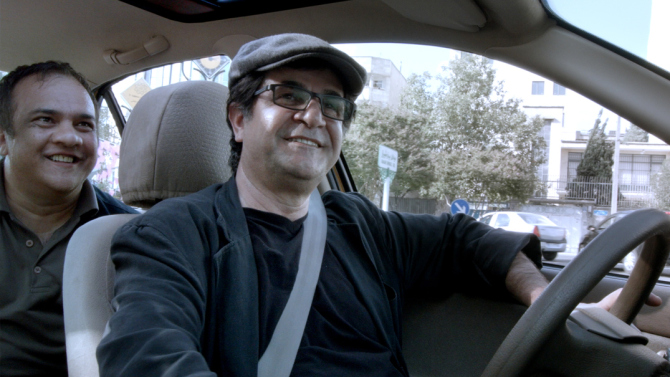
Film is Taxi, and its driver and director are the same person – Jafar Panahi.  As he roams around on the streets of Iran pretending to be a taxi driver, people get in/out of his taxi, and the film captures the changing society and it’s morality. Peter Bradshaw aptly described it as Anti-Travis Bickle.

For most part of the film, everything happens inside the taxi. And yet, it’s funny and poignant in equal measure. It’s great fun as passengers of different nature/social status get in and make their point. But it’s sad when you think about the extreme that Panahi has to go to make a film. It’s heartbreaking. Don’t miss the text end plates of the film. This one is a Must Watch.

DHEEPAN by Jacques Audiard

Audiard’s Dheepan reminded me so much of his earlier film, A Prophet. As a ex-LTTE soldier moves to France and tries to start a new life, we realise that it’s never going to be easy for him. Forgetting the turbulent past, making sense of the confusing present, and fear of the unknown future – he and his two unknown companions, who pretend to be his family, battle it everyday.

In the last half hour, the film takes a dramatic turn which is quite different from the tone of rest of the film. But it still remains a powerful film which has empathy for its characters. It completely belongs to his lead actor Antonythasan Jesuthasan who is there in almost every frame, and has a great screen presence.

Jesuthasan was at MAMI to present the film and for the post-screening Q and A. Interestingly, the film mirrors his journey as he was also a member of the LTTE, and later settled in France as a refugee. When i asked him if his life has changed for any better after the film got critical acclaim, bagged the Cannes top award, and he is being invited all over. He said earlier he wouldn’t buy the metro train tickets in France. Now people recognize him and he is forced to buy that 2 Euro train tickets. So that has changed for him – expense of extra 2 euros. And he is still a refugee in France. The difference between life and cinema. Do watch it.

NotSoSnob

It’s known as the Noida Double Murder Case. And it’s easily one of the most talked about murder case in recent history. More so, because it happened in a middle class locality in Noida, a city adjoining to India’s capital.

Shazia Iqbal saw the film Talvar, which is based on the same case, and writes about the big picture that concerns all of us as a society, and as part of the system. And why a filmmaker’s bias is completely fine.

Guilty2

23rd May 2008.

‘Its starting now. Quick, come here’, my mother loudly screamed as soon as the press conference was about to start.

The Delhi police was making the big announcement of the perpetrators in the Noida double murder case in which the 14 year old Aarushi Talwar and Hemraj, the house help were brutally murdered a week ago. I almost didn’t hear my mother because of the noises ringing in my ears since two days. That morning when I left home for a meeting, the police van and the media outside the building opposite to mine seemed like the crime scene outside the Talwar society.

A day ago, Maria Susairaj, an aspiring actress had confessed to Malad Police that her fiancé, Emile Jerome had killed Neeraj Grover, a TV executive in a fit of rage when Jerome found Grover in Maria’s bed. Susairaj stayed in the building opposite to my house. On the night of May 7th, and the morning after, I had a party in my house and I was awake the whole night. After Susairaj’s confession and the gory details of cutting the body into 200 pieces and dressing up the crime scene, that story played in my head enough number of times to make me believe that I was there in that house that night and it all happened in front of me, and that I was a dumb mute spectator.

Neeraj Grover was close to the industry I worked in and we had common friends. His face haunted me, I hadn’t slept for a minute for over 48 hours. With all the drama that was happening outside the building, I didn’t want to step out. The media called the Neeraj Grover murder case as the face of changing India, the young India where relationships are fragile, infidelity is part of commitment and casual sex is no more a ‘man’ thing.

A week before this, the Noida double murder case made headlines as the murder involved a young teenage girl from an affluent family and an older servant who worked in the house. This did not happen 200 meters away from my house but the media made sure that it was very much part of my life. Everyone was talking about the murder and that press conference seemed like the episode from a popular TV soap in which the whole country freaked out when the main protagonist dies. Aarushi’s murder was presented like a high TRP whodunit thriller. Everyone wanted to know who killed her.

I went to the living room where my parents and sister were waiting for the press conference to start on the TV. IGP Gurdarshan Singh began the conference by calling Aarushi as Shruti.

‘How will he solve the murder, if he doesn’t even know the name of the kid’ my mother mused. And once wasn’t enough – Singh kept calling Aarushi as Shruti throughout the conference.

But that wasn’t the only eyebrow raising behaviour from him and his department. They claimed Rajesh Talwar killed his daughter in order to save his ‘honour’, gave details of Talwar’s extra marital affair, their involvement in wife swapping and the deplorable character assassination of a child who was murdered.

“Rubbish”, my father responded shocked, “They can’t find the killer and are making up these implausible stories. He is her father!” He couldn’t believe what was happening. Fathers don’t kill their children because of their affairs, he said. He was afraid this revelation could make every girl distrust her father. A silent tear rolled as I went back to my room.

None of what the IGP said made any sense. Last night when I watched Meghna Gulzar’s movie Talvar based on the case, I was glad it resonated with what I thought during that press conference. I just wanted to know the parents didn’t kill her. I wanted to know this young new ruthless India of frivolous relationships that people keep bringing up with every sensational murder case, is a farce. But, apparently, that India is very much prevalent and so is the antiquated patriarchal India where a police officer blames the Internet for ruining the cultural fabric of the country and 14 year olds having a boyfriend and ‘Sleep’-overs.

Lawyers ML Sharma and AP Singh became the face of this primitive regressive patriarchal India after the Brit docu India’s Daughter was released by BBC. It featured a man who believes he would gladly burn his daughter if she has premarital sex – how would he react to a society where girls tell their fathers about their boyfriends? People who believe that honor killing is right, they also assume that the society also harbors such beliefs. And the effort that the government took in banning India’s Daughter is not as half as much as the combined effort of the local police, the assigned CBI team and the courts took to convict the Talwars.

So what happens when such men raised with such regressive values try to understand a culture belonging to the modern upper class allegedly corrupted by the internet? Talvar.

What more can you say about a murder case where every minute detail has been public for 7 years now. Talvar, written by Vishal Bhardwaj and directed by Meghna Gulzar presents us those details and engages us, without any melodrama or manipulation, mildly tilting in the favour of Talwars. Of course some might use the latter point to brand the film as being biased. I’d like them to know that a film is a writer/ filmmaker’s point of view/opinion on what disturbs them long enough to get up and say something. And that’s why Talvar happened. And I am glad it did.

What can this movie talk about about that you haven’t already read in the papers, news, from the police, CBI officers, from your parents, next-door uncles? ‘Human reaction’, for one. In the last 20 minutes of the film, in a round table sequence that is a master class in writing, the CBI officer who acquitted the Talwars says no two humans can have a pre-conceived reaction to an incident, specially a ghastly cold blooded murder of their only child. The side that files the charge sheet against the parents questions their unemotional façade post the murder and during the trial. Nupur Talwar appeared on a TV show and didn’t cry while talking about her daughter’s death. What kind of a mother is she? In a society with history of rudaalis, where being loud is part of our culture, melodrama is not just for the TV sets but an inherent way to express our emotions specially when it comes to matter of death, how can a mother not cry? Everyone questioned. Every logical person went against the Talwars with this one question.

‘She looks numb. Seeing your kid’s dead body can do that’, said my mother. It takes empathy and humanity to realize that. No other human can reason or understand inner doings of another’s mind. So how can human reaction be even discussed as a generic emotional response?

Watching a dark and disturbing story can be difficult but watching a dark and disturbing story based on real people’s lives can be very painful, especially with the way most of us are attached to Aarushi’s case. Bhardwaj, however, with his straight-faced dry wit makes it easier for you to watch Talvar.

That way Talvar is more than a movie. It is an important film, about the sword of justice that claimed not two but four lives. One of the slain was a child accused of being involved with a man thrice her age. The men who publicly assassinated her character are the ones who are responsible for the law and judiciary in this country. This movie needs to be seen. For Aarushi. To open our eyes and discover a system that failed a child. And as the movie says, it’s up to you to decide what the truth is.

Shazia Iqbal

(To read previous posts by the same author, click here)

Guilty9

(Disclaimer – One of our editors is closely associated with ‘Talvar’)

Labour Of Love

She takes the tram, bus. He takes the bicycle.

She cooks the fish. He buys it.

She has no company for lunch. He has no company for dinner.

She opens the house. He locks it.

She cleans the clothes. He dries them.

She uses the water. He fills it up.

She has no sounds for company. He has the machines and the music.

She stitches his pant. He keeps it aside for stitching.

She counts the money. He withdraws it from the bank.

She lights up the morning agarbatti. He does the evening one.

She eats the local bakery cake for breakfast. He eats the same.

She sleeps on right side of bed. Alone. He sleeps on left side of bed. Alone.

Because she does the morning shift. And he does the night shift.

Aditya Vikram Sengupta’s Asha Jaoar Majhe (Labour Of Love) is about a middle class couple living in Calcutta, and their daily boring ordinary life. Nothing is exciting in this mundane routine, life is almost fifty-fifty in their chores. But the director captures the sight and sound of this ordinariness in almost meditative gaze, making it look gorgeous. Especially the soundscape of the city is captured in all its beauty. Close your eyes and you can hear everything which leaves strong visual impressions too – blaring loudspeakers, rattling wheels, waffling music, creaking doors, rumbling trams, a rustle here, a clank there, and few Bengali golden oldies.

A few sequences seem odd and jarring, like the one of cereals pouring in glass containers, so advertising-wala that it stood out from the rest of the mood of the film. But apart from that it’s a brave film and quite an extraordinary cinematic achievement for a first time filmmaker, much like Chaitanya Tamhane’s Court which released earlier this year. And Aditya Vikram has not only directed the film, but he has also written, edited, and shot it! Waoh! Seems like this year, the new kids are leaving the veterans far behind.

Also, since my last post on Court created quite a stir and i was accused of many things including having an agenda to pull it down, let me admit it that Labour Of Love also felt like fest-bait. But thankfully, it’s not selling a desi exotica story for the west. Though i never understood why fest-bait was a bad word. If you know the trick and it lends to the grammar of your story naturally, why not. A brave new voice with a beautiful film will disarm every criticism.

Coming back to the film, the Bengali title of the film Asha Jaoar Majhe (In between arrival and departure) is more apt than the English one – Labour Of Love. Because as the day ends and a new one begins, in between there’s magic hour for the characters. It’s so rare that it has become almost surreal. And this is where the film turns magical too. It’s heartbreaking as Ritwick Chakraborty’s eyes stare at Basabdutta Chatterjee leaving for work. That’s when it hits you. The price of recession, the hard work that goes in everyday boring, ordinary life – just for a cup of tea together. Love and longing in the time of recession.

i might be wrong but it seems like this is Basabdutta’s debut feature. Haven’t seen her before. And what a find! That serene face, those expressive eyes, she doesn’t need dialogues to convey anything. And there are no dialogues in the film.

i had tried to watch the film during Mumbai Film Festival. But as the sun was setting in real time on screen, i almost felt asleep, and then decided to walk out of the film. Was too tired. And this film needs all your patience and attention. Because the atmosphere is immersive. Like the sequence where you see on the wire, in close-up, the clothes are moving one by one, you know that Ritwick is hanging them for drying. But why and how are they moving. The mystery is solved later in the film – why and how the clothes moved. It’s simple, and beautiful. With meticulous detailing, Aditya Vikram captures many such moments of everyday routines. Like the way she tucks the bus ticket in her bangle, it bought a smile on my face. Aha, Calcutta, you beauty! So if you don’t get into it, try it later. Give it a chance. It might not be everyone’s cup of tea but try it – you won’t know the taste till you try it. A rare experimental beauty, this one has got a limited release. But if you are among the lucky ones where it has released, catch it.

11038076_1612938935652887_1457324766814610140_n

Kaaka Muttai – it’s a small film that’s winning hearts and making headlines. Thanks to the makers and distributors of the film, it has released with subtitles in Mumbai. Here’s a recco post of the same by @Navjot Gulati.

Danushs-Kakka-Muttai-feature

My favourite pizza topping is onion, capsicum, mushroom with extra cheese. For those people who are familiar with Delhi’s famous Nirula’s pizza, they would remember it as OCP. The pizza from Nirula’s remains my favourite but that’s only if it’s outside the home. The best pizza that i have ever eaten is the one which my mom used to make when we were kids. Me and my brother used to save up money for it by selling raddi (scrap). I’m talking about the days when making a pizza in the house was nothing less than an event, unlike today when its available everywhere, and at a cheap price. It was like you are eating something very important today. Back in the nineties, much before the Domino’s and Pizza Huts came to the country, Pizza was a luxury for every middle class household.  The movie Kakka Muttai made me time travel to that era.

It’s the story of two brothers who make money by selling coal that drops from the trains which passes through their slum area, and with that money they support their family. The kids like to call themselves Big crow egg and Small crow egg. The film centers around the story of these two kids struggling and trying all means to buy a pizza. The fact that two kids are struggling to buy a pizza worth Rs 300 even in 2015, tells us that not much has changed. Acche Din maybe here but only for the privileged ones like us who are reading this on a fast internet connection in the comfort of our air-conditioned homes. There is an India outside our internet which we seem to have forgotten. And films like these connect you humanely with lives and emotions that we don’t even realise. A strange guilt, a bit of happiness and a dip of nostalgia.

The movie pretty much sums up the state of this country through the eyes of these two slum kids – wanting to eat pizza from a new fancy shop which has come up in place of their playground where they used to drink yolk from the crow’s egg. It makes you wonder what our kids deserve more – playground or pizza shops? Long live consumerism.

And the kids are considerate enough to leave one for the crow. Yeah. Check. As i look back, it feels i was also considerate as a kid. Maybe all kids are. Adulthood spoilt me. Now i’m even mean sometimes. But aren’t we all then. And i hate that. Anyway, coming back to the movie. Though it starts with the struggle of these two trying to get and eat a pizz but then it becomes much more. It becomes about our society and how each person here is trying to use the situation to their advantage – be it the politician, the middleman, or the women from the slums protesting against what happened to the kids. These situations might read cliched on paper but the way director M. Manikandan has handled the scenes and his actors, it make you overlook that. The best thing about the film is that it never goes overboard trying to exploit your emotions. Lets face it. Two-poverty-stricken-kids-wants-a-pizza has a lot of scope for that as we have seen in many movies in the past.

I generally used to associate Tamil cinema with loud scape and over dramatic tones, but with Kaaka Muttai my perspective has got a paradigm shift. Next time someone recommends me a Tamil film, i won’t make a face but instead make the effort to give it a fair chance. A special mention to my friend Niren Bhatt (co-writer of the Gujrati smash hit BeYaar and the upcoming All is Well)  who insisted that i watch this movie at any cost. This post is nothing but me insisting all of you to give Kaaka Muttai a chance before it goes out of the cinemas.

Please go see this film. And this film recco comes from someone who is not a great fan of manipulative poverty porn. This one is not. It is much more. It is in-fact the Salaam Bombay of this generation. Don’t miss this gem. Go see it.

Navjot Gulati

(ps – If you watched and liked the movie, then do tell me which is your favourite scene. Mine is the one in which our Kaaka Muttais meet two rich kids outside City Centre)

COURT_Pic1_©Zoo_Entertainment copy

I was in two minds about writing this post. Knowing how it goes, how it is received, and how it ends up with any criticism here, it feels futile and exhausting after a point. Mainstream or indies, the tactic remains the same – a new nomenclature, a new way of shaming, a new email, a new threat, or just a new guilt of killing-my-baby. Knowing too many people from both sides, i always get to know what’s coming, how and when. In the last few years, i have discovered that there is nothing bigger than a filmmaker’s ego. And i would surely worship that ego the day I get to know that a film is cure for AIDS or some serious disease like that. Till then, it’s just a film, a fucking film. And since the love for being a vacuous versovian overrules everything, you wonder if you should pick that weary self again, and do it once more, pick one more fight, for old times sake.

As far as films are concerned, I don’t know anyone who is so difficult to please. He never used to like anything. And I mean ANYTHING. Not a single damn film. That used to be our running joke. Maybe a Kusturica on a good day. He was the cinema snob. At least he used to be one few years ago when we used to have interaction. For his young age, he had seen lot of films from across the world.

During a late night cycle-wala-kaafi, once he was discussing whether he should assist any director and start his career as an AD. And then the bigger question came – which director? For him, no one was worthy enough to assist, and there’s not really enough to learn from them. After much deliberation, he came to the conclusion that in the last few years, he has liked just one Hindi film. Maybe he is the only director he can try, but still he wasn’t sure looking at his other films.

So we would always wonder what kind of films would Chaitanya Tamhane make since he doesn’t like (almost) anything – big, small, cult, legends. And I am happy to say that he is the snob who delivered. ‘Court’ shows confidence and bravery. With no film school or AD-ing anyone, CT went ahead by himself. So much international acclaim and national award for your first film, it’s a stupendous achievement and a dream debut. A big, big Congrats!

But if it wasn’t Chaitanya, maybe i would have been happy with this much. Since it’s CT at the helm of affairs, i expected more, much more. And so I am having second thoughts on it – does it deliver anything new? A new cinematic language? A new/hidden India that we weren’t aware of? A new art? A new craft? The answer is no. It’s a new voice that’s assured, makes brave choices but is still following the diktats set by the Top 5-fest-selection-committee.  It felt like what an European art-house director would do if he is asked to direct the film. Even when the lights are switched off one by one in the Court, you knew at that moment that the film won’t be over there. He would go back to the mundane life of one of the characters. And he exactly did that – its predictable in that way, you know whom the film is trying to please. And my fear is coming from that corner. Not specific to Court, but it gives a starting point to ponder over. I see a new generation of filmmakers who have grown up on world cinema culture – from dvd-wallahs to torrents, easy access changed the rules. And so before they get behind the camera, they know what the Cannes-to-Tribeca likes. You know the norms well, breaking away from the desi formula has sadly become another world-cinema-loved-by-fests formula in itself – take Non-actors, take long takes, unnecessarily stay back and hold the shot even when action is over, use no background music, say ok only on 897654897th take of the shots, show no emotional hook, cut it dry, nobody can cry their heart out, keyword is subtle, and other such routine stuff. It’s the Dogme 2015. And when you can see through the formula applied to achieve the desired result, you know where it’s heading. Not saying that all that is easy or not organic, but the calculative means to target in a specific way and to please a few has started worrying me.

I fear a day will come soon when if a character dies in our film, other characters will come in black suits, and would read eulogies. All formal. Nobody will cry their heart out, no wailing, no rudaalis. Because Remember, subtle! Remember, drama is bad. Remember, melodrama is NEVER. Even though that’s what we would do in real life. Death in our society has nothing formal about it. But we would go that suit-and-eulogy route because that’s the accepted norm by the west, by the film fests whose endorsement we crave for. If being feted by them because you are passing the exams on their terms and conditions, we are surely moving away from what was ours. And it reminds me of this incident which I keep quoting. I was in school then. There was a death in the family. My Granny started wailing, she came out, sat on the elevated platform just outside the door, and continued to do so. Neighbors joined in. And i was feeling so embarrassed. How can she do it?  Why is she crying like that? Can’t she do it more formally? It reminds me that we are in similar scenario – we are embarrassed to show our true colours. We are decorating our stories in the colours they like. Even if a woman is dealing with her dead husband, she remains calm and quiet. Felt bit strange. So give me ‘Fandry’ any day.

Nobody confronts the raw emotions of “Dada, aami banchbo” of Ritwik Ghatak’s ‘Meghe Dhaka Tara’ anymore. It’s so loud, they new-gen cringe at it, how can you have it? Song and dance are strictly no-no even when we really learn and choreograph steps at many occasions in our life and culture. Why? Because another diktat of the west-fest. If their cinema reflects their stories and culture, why our cinema can’t do the same? And am not talking about mainstream Bollywood here. That’s on different tangent. That’s why i like what a Bhardwaj, Kashyap and Ratnam does with their songs. Or what a Q tries in Tasher Desh.

I believe this was long due. Our cinema getting noticed at the top five film fests of the world. But can we push our envelopes now – our stories in a new cinematic voice? One that doesn’t follow the fest-diktats. Hopefully the new gen kids will lose the fear of rejection by west. A ‘Hazaaron Khwaishein Aisi’ or a ‘Vihir’ didn’t really crack the top fest code but they remain an all time favourite. And who doesn’t love those voices when they break the fest-diktats at the biggest fests, be it as fluff and pop as QT’s.

(PS – FOR THOSE WHO THOUGHT WE HAVEN’T WRITTEN ENOUGH ABOUT THE MERITS OF “COURT”, CLICK HERE, and HERE. In Caps, because many seems to be going blind while reading this page)

NH10 : Girl, Interrupted

Posted: March 14, 2015 by moifightclub in bollywood, film review, reviews
Tags: , , ,

NH10

SPOILER  ALERT

So i watched NH10 at the 2:50 show at PVR Phoenix mills yesterday. The hall was almost 60% full.  I was extremely excited about Navdeep Singh’s second directorial venture after Manorama Six Feet Under, so i armed myself with a large popcorn and coke, i munched my way through the national anthem and the anti tobacco campaign waiting with impatience and anticipation for the movie to begin.

A RED CENSOR CERTIFICATE set up the mood for what was to come.

Before everyone is up in arms about similarities with Eden Lake, the plot line is applied to a completely different context and therefore doesn’t account as plagiarism because artists are allowed to steal because  “its not about where things are taken from, but where things are taken to” (Jim Jarmusch said it so you can take it up with him),  From utopia to dystopia, Navdeep takes us for a creepy drive through Haryana, the experience of which we are unlikely to forget for a long time to come. All the moments are familiar yet original and the result is a stylish, contemporary and brilliant piece of storytelling.

Navdeep creates  a  mature modern Indian heroine that one can relate with and look up to.
Anushka’s look is fresh, dewy,  her face does not look ducky and she has taken this role by the balls and performed the hell out of it. I have never been an Anushka fan per say, initially, put off by all her bubbly cockiness.
But i am a true blue convert now because she makes the rest of the lot of the leading ladies look childish, glossy and superfluous. With one bold stroke she has knocked Kangana down to number two in the list of brilliant  mainstream female actors.

Anushka’s portrayal of Meera was so nuanced and balanced, and her descent into darkness was so effortless and easy that it is truly laudable. She was vulnerable yet steely, sensitive yet power packed. She is a heroine you are rooting for from the word GO. In comparison, her husband’s character makes me want to whack him a few times for being so silly and immature.  I hated the villians, which means there were absolutely effective.

It is fantastic to see a film of this caliber coming from a  “male director”. Especially in the wake of  all the high brow debates , Navdeep sets an example  with this work.
Now the people who are stereotyping and generalizing all Indian men, can shut up. The film entirely dealt with the idea of male gaze and yet there was no male gaze in the showing of the film at any point. There was respect for every character from its creators which is rare to find in a Hindi film.

The starkness of the rural urban divide, and the multiple manifestations of patriarchy are handled in an almost video game kind of manner.
Things get progressively harder and harder for Meera’s avatar, its almost like she takes on a virtual reality in the film, the banal is bizarre and things are just about hanging between real and surreal at all times. The moments are hellishly entertaining and suspenseful with just the right amount of comedy (mama-ji gets left behind!) which truly is a superb achievement in the Hindi film context.

I loved that there was minimal dialogue and great use of sound, all the information was relayed and never spoon fed and the images looked just right. Everything looked authentic and beautiful and dark- almost to a Hitchockian pitch.The added bonus was that the interval point came at the right time. The pace of the film was maintained with finesse through the second half and the film ended on the right pitch, without going into the “melodrama and maatam” over her husband’s death that could have followed.The loose reference to republic day where the cross-dressers are performing (to a homophobic audience), which is also Meera’s birthday in the story, and references to Ambedkar and the constitution, are interesting. Meera is a Salim Sinai kind of character. Everything revolves around her in a nationalistic kind of way, though i am glad that all this information  is just there and wasn’t pressed further. I didn’t think it was a matter of convenience on the part of the director as some reviewers have put it, but cleverness, this is a great example of a pulp film, a true ode to anime and Amar Chitra Katha.

I was not a huge fan of the music, apparently it is a demand of the industry, but one could’ve totally done without it, or maybe something other than what was.

In the end, i was happy that she got to kill those bastards with relish, i am happy she mowed them with her own car and beat them with their own sticks. There was karmic retribution, tragedy, hope, albeit it was bleak and dark but real life is much worse. I was sucked into the zone, and i’m yet to shake it off.
My experience as an average film viewer was truly satisfying,  and as a hopeful film maker, it was inspirational. The cast and crew deserve every accolade and more!

Sakshi Bhatia