Archive for the ‘film review’ Category

Blue Is The Warmest Color has easily become the most talked about film of the year. With its release in US, the debate is still on. Fatema Kagalwala saw the film, ponders over it, and tries to understand the controversies and criticism surrounding the film. Read on.

blue-is-the-warmest-colour-alt-poster-600x937

I watched BITWC at MAMI and not without fighting a few battles for it. It included doing a town-to-Andheri trip in rush hour traffic, giving up watching ‘The Past’ after much deliberation, and other such sundry mad-hatter-ness over-enthu cuts are usually prone to. I had bought the hype completely and the third, on–request screening at the MAMI film fest was just way too precious to miss.

I watched the 3-hr long film and then began reading about it all. The criticism of the male gaze, the length of the sex scene, the book vs film, (It is based on Julie Maroh’s graphic novel ‘Blue Angel’), Kechiche’s treatment of the girls and so on. I was quite surprised to read the content of the criticism and notice that the intense film hadn’t moved the nay-sayers enough to be more forgiving. At the same time I was very surprised to see I felt much more for the film than I first realised.

At the outset, it seemed to be yet another coming-of-age European film, delving delicately into the inner life of its tremulous 15 yr old. It turned out to be quite so, except that it wasn’t delicate and it wasn’t a ‘yet another’ film. It was one of the most disturbing, hell-fire-raising films, which days later remains haunting, just like the sleepy eyes of its protagonist Adele.

From the time the film starts we know Adele is special. Just like Juno, in that other defining teenage film of the same name. And she is searching. Just like each one of us is at that age. We don’t know yet what exactly is she searching for, but she is expectant and anticipating. Almost holding a breath, waiting for life to surprise her as she pats her unruly hair in place and casually walks up to her school bus.

Adele’s first romantic encounter isn’t bad. In fact she seems to be enjoying the attentions of this nice guy who really seems to be interested in her. But her first heterosexual encounter leaves her cold. And confused. She wakes up in the middle of the night fantasising about this strange girl with blue hair she passed by on the street the other day and since then hasn’t been able to forget.

Suddenly, she is so restless we crave for her to find that blue-haired girl. She is completely unaware of what she feels though, when she kisses another girl in a fleeting moment of irrepressible passion. By then, we have an inkling of Adele’s journey and wonder if it is going to be easy. By now we know she is an intense person and at that delicate threshold of age where experiences can make or break her.

She meets that blue-haired girl soon enough. It is at a gay bar Adele goes to with her best friend and stays back in, exploring it on her own…almost intuitively, the same way she has decided to explore this new side of her. The girl with blue hair is called Emma and she has been drawn by Adele too. There is something to be said about unexplainable chemistry that all of us at some point have encountered, the same that has now drawn Emma and Adele into its net. It isn’t new for the older Emma, and soon Adele gives herself up to this new-found passion. She gives in because she senses this is the truth she has been seeking. It envelopes her completely and she lets it possess her with a consuming intensity.

As we suspected early on, it isn’t easy for her. The first attack comes from her girl gang back at school and we learn of the irrational, demonic homophobia the world is gripped in. Teenagers, before they turn rebellious, generally are the most prejudiced, most intolerant, most judgemental, operating from a world-view sharp in its blacks and whites. Adele also has a conventional, hetero-normative family, equally prone to the same discomfort with homosexuality her classmates share. It is this that makes Adele introduce Emma as her friend to her family.  But it does not provoke questions in her mind, she is consumed by the passion she feels for Emma. And Emma, for all her arty ambitions, is deeply involved as well, happy to devour Adele and be possessed by her.

They are famished for each other and satiated by each other. The two unprecedented sex scenes in the film, controversial but landmark, define the passion they feel for each other, a passion governed by an unbreakable bond and undeniable chemistry, stuff that made-for-each-others are made of. There have been several disconcerted noises about a straight film-maker making a lesbian film and the male gaze re-imagining a female sexual encounter to its own benefit. As much as my limited understanding of homosexual relationships, desire, love and togetherness goes, they aren’t any different from heterosexual ones. Desire after all, is an equaliser and passion is not partial; that fire consumes all of us equally. Kechiche captures Adele and Emma as raw and animal as possible. They WANT each other and want each other completely. There is something life-affirming in a passion like that and Kechiche and both the girls do complete justice in bringing it to life.

The carnality of the sex scenes, their raw lust for each other and unbridled nudity puts the question of the gaze in picture. Whose point of view the film is from and whose point of view is Kechiche trying to underscore? This (link) lambasts Kechiche for using lesbian sexuality to satisfy the male voyeurism for girl-on-girl action. This (link) criticises the un-emotionality of the scene and feels the 3rd person pt of view, the staginess and complete lack of the girls’ point of view takes away from their story. For the writer, the male gaze claim is somehow validated by the way the scene is staged. However, I find it difficult to imagine how close-ups would have escaped a similar criticism of exploitation. The staging of the film, one that includes the entwined nude bodies of both locked in lust but views it at a distance, could be seen as a documentary eye as well. Or observant. To my mind, if he had cut close, that would have rang false, and maybe then looked like the male gaze on a trip.

Someone asked me if, being a woman, the un-emotionality of the carnal scenes put me off. But being a woman, the scene wasn’t unemotional to my eyes. The lust was raw but it arose from a deep bond the two felt between themselves. And Kechiche’s portrayal seemed to be capturing that bond from a safe distance, hesitant to step in lest he interfere and become the unnecessary third person. I loved what I saw, the unabashed hunger of a female for another female, somehow affirming the yin and yang of ourselves and how we have enough of both in each one us irrespective of our genders.

What is important about the entire male gaze question is the question of protagonist. In a heterosexual sex scene, the action is almost always filmed from the male point of view, with the female framed as the object of vicarious desire for the film-maker and audience. But with both people involved being women and the camera being distant, I was left asking – who was the desired and who was the one lusting, and how was the audience meant to relate to it all? It was an interesting equation Kechiche threw up and I think he did away with the male gaze with his framing. The 3rd person point of view lens helped me watch and engage with a very intimate film without obstruction, without external baggage. It may not have been the intention, but it was liberating. It is worthy of note that in most other emotional scenes Kechiche goes and stays really close, so close it almost seems like he is desperate to peek into Adele and Emma’s souls…And it is important because that involves us intimately, without us really realising it.

Adele’s growing up from a student to teacher is glossed by. Suddenly, she is playing the dutiful, loving ‘wife’ to Emma and her party of arty friends whom we still don’t know if we can take seriously. I am indifferent to the jump in years because what matters most is the change in their relationship. They have settled into a regular live-in relationship and life has begun to fray the passion. Emma doesn’t seem to be as devoted as before and is it only the stress of a career going nowhere? Why the need to connect with Adele intellectually? Why the need for Adele to have a passion especially in the arts? Why isn’t Adele’s love for teaching, something she does intuitively very well, not enough? These questions are at the edge, because the film meanders aimlessly and stops at a lot of places it needn’t have. But after touching on all those uncomfortable questions lightly, it stops at a random encounter of Adele with a man. And Adele’s downward spiral begins. She is lonely and searching again. This time it hurts to watch.

Which was the most disturbing scene – the break-up or the sex scene? Which more agonising? Interviews (link) of the stars have mentioned the trauma they underwent while filming both. Adele speaks of being very raw from being being hit hard and of Kechiche screaming at Emma to hit her even harder. The scene was filmed for hours and hours on end, that and only that scene repeatedly. That I closed my eyes during the scene is probably evidence enough that Kechiche got what he wanted, a soul-searing portrait of heartbreak complete with tears, snot and blood.

When Adele was out on the streets, helpless and howling like a pup in pain, it was then that actually I began to feel for her character. I wanted Emma to take her back and say all was fine. I wanted their passion to be restored to its previous glory and I wanted Adele to be safe. Because after that we never see the Adele we had been watching till then. And as with all those heart-broken, Adele’s lowest point comes in the restaurant when she desperately begs Emma to take her back. We see Emma settled into a boring, conventional life without any of the spark she shared with Adele and it is not explained to us why chose that. Maybe it is age, maybe wisdom, maybe disillusionment. Heartbreaks can leave unrecognisable scars and change us unfathomably. Although she responds with long-repressed passion to Adele’s sexual overtures she chooses to walk away, finding the comfort of a homely twosome more reassuring than the wildfire of one with Adele.

Intentionally or not, the film pushes us to take sides. It is Adele who strays but it is Adele’s hurt we relate to the most. Infidelity in any relationship is traumatic, but in one as intense as this, can be much more; powerful enough to break spines. Irrespective of who strays, both bear the brunt and Emma must have too but we don’t have an opportunity to know her side. She arrives at ‘infinite tenderness’ for Adele by the end of the film and it is a stirring moment. Because after great passions have worn themselves off and great rages have tired, it is actually only infinite tenderness that remains. We do not see Emma’s reconciliation with the loss, nor her transition from anger to forgiveness. But in the fabric of the film, her journey is not important, only Adele’s is and the film seems to be mute about it from this point on. It hangs like Adele does, between the last vestiges of Emma’s memories and a present that refuses to bear a better tomorrow. Anyways, when does life move until healing liberates us? Stranded, life stagnates or goes round and round in circles, desperate to find that point where it all began and where it all ended. It is called moving on for that reason. Adele is stuck too but one day she will move on.

Kechiche’s universe is not dystopian but it isn’t dreamy either. He just leaves enough space for us to imagine and hope if we are optimistic. For Adele though, it’s an end, final. She has no choice but to move on and there is no more of that we can be a part of either. The film ends with her walking away from Emma’s fashionable, successful art show. Adele has grown up or maybe she hasn’t but knowing what we know of her, she will. Perhaps that is why the French title – “La Vie d’Adèle—Chapitres 1 et 2’ makes more sense.

There is so much sensuality in the film and not all of it is tactile. The camera caressing the forms of nude statues, the indulgent focus on food, the splash of blue everywhere, Emma’s nude paintings of Adele and so on. It makes for a voluptuous fabric, the lust seeping out of the seams and spreading across the entire canvas with a hedonistic glee. This focus on the nudes in art points at an attempt to subtly explore the relationship of sexuality and art, foregrounding Emma’s artistic pursuits heightened by Adele’s presence (she calls Adele ‘my muse, my inspiration’.) Adele isn’t gratified by this; modelling for Emma is just an extension of giving herself to Emma. But for Emma, this space isn’t seamless, there are brackets. If there weren’t, her flagging artistic ambitions wouldn’t be straining their relationship. There is a reason why she is an artist and Adele a teacher in the film.

To hear the story of the original novel the film birthed from, after having watched it, it seemed like a K serial re-envisioned by Ray. I am glad the film did not have any of the sentimentality of revisiting memories through diaries, having to deal with the angst of long-suffering bitter parents of your lover and so on. It dealt with the ‘now’ of Adele, with an honesty and temerity few can muster. Kechiche must be an extremely dark and intensely emotional person to have delved into the soul of love, desire and betrayal as he has. Blue, indeed was the warmest colour at Mumbai Film Festival.

As the festival got over last night, here comes our last post in the daily wrap-up series. Our earlier Mumbai Film Festival posts are here – Day 1, What was Leos Carax smoking, Anup Singh’s QissaDay – 2, 3, 4, and on Before Midnight.

And remember, we had put our bet on Qissa winning the top prize. Here’s the complete list of the winners. It got the second prize.

This one has notes by Kartik Krishnan and Varun Grover.

ilo-ilo-002

What’s Love Got To Do With It – An interesting documentary about arranged marriages, bharatmatrimony.com and matchmakers (ala that Savitri Bai tvc), men and women who had arranged & love marriages, candid wedding preparation & ceremonies, uncles & aunties performing embarrassingly at the party to Shammi Kapoor Rajesh Khanna romantic songs; nitpick – wish they had covered at least one middle/lower middle class couple’s marriage story.

Another House – An Old man suffering from Alzheimers, the now recovered alcoholic younger son, his musician girlfriend, and the selfish career oriented elder brother. Despite the fact that 60-70% of the action was set in an around the house, the film is visually appealing and the performance by the old man is reason enough to watch this one. I was just wondering as my friend said – What if the old man had been trolling his younger son ?

Vic+Flo Saw A Bear – A lesbian couple’s attempts to lead a reformed life. Could have been much better. Ati random tha. Do you think a flashback would have helped ?

Siddharth – a child is abducted. His father – a zip repairwala Rajesh Tailang (effective) attempts to find him and the toll it takes on the housewife (Tanistha Chatterjee) and their family. Well made and produced (did they actually get to shoot at Malviya Nagar Police Stn Int & Ext?) and deftly directed – this one touches upon a pretty relevant subject. Did you figure out who is the old man at the other end of the phone conversation in the end without reading the closing credits ? And that the kid is credited with 3 roles ?

The Rocket – Ahhh. It was raining ‘bachche as protagonist’ wali filmein this time. What a kickass performance by the boy and the girl. Thoda communism, thoda competition, thoda filmy climax but mazedaar film. Hats off for Uncle Purple and the grandma too. Though as a friend observed later that this Laos-Australian film is similar to the New Zealand film – Whale Rider. Kisi ne dekhi?

Ilo Ilo – Asfghar Farhadi jaisi film minus ‘thrill/mystery’ with some humor and social commentary, set in Singapore. Again, with a performance by the kid which will easily put anyone to shame, and some memorable sequences. MUST MUST WATCH.

Kartik Krishnan

Bekas : A modern-day, masala version of Turtles Can Fly. The most fun, light-hearted, uplifting film I saw at MFF this year. Two orphaned Kurdistan kids who want to go to America to meet Superman start on a donkey (with a BMW logo on its head) and face many adventures on the way. Irreverent, full of solid one-liners, super-smart filmy kids, and Iraqi folk music in BGM – this one is a must watch. Out #ykw already.

The Missing Picture : One of the most unusual, inventive documentaries i have seen ever. Very close to a literary graphic novel with its excellent poetic prose as narration over clay toys. With a monk-like calm, the narrator (director of the film), tells the story of how the oppressive Pol Pot regime went about making the leftist utopia in Cambodia. Solid, candid, detached kambal pitaayi of many leftist ideals through this very personal family story of the director. Reminded me of Art Spiegelman’s terrific novel ‘Maus’.

Son of Cain : This had an interesting premise – a father employs a chess player as a psychologist to help counsel his psycho, chess-lover son. But what followed was a passenger train derailing into a stampede caused by a cake-throwing match. Acting that screamed b-grade, plot twists that will make Abbas-Mustan’s white clothes red with shame, and characters (a pony-tailed ex-chess player who makes kids stand on a thin bar on one leg, to teach concentration) so whatthefuckfunny – it did end up being a so bad it’s good zone.

Varun Grover

And do VOTE for your favourite film. We have got two polls here. One is for the international films and the other one is for Indian films. You can vote for 2 films in both the polls.
If we have missed any film that should be included in the polls, do post in the comments.

Kartik Krishnan has got his internet back. So here’s one more round-up of Day 2,3 and 4. Our previous warp-up posts are here and here.

shortterm12_4

A Touch of Sin – Starts off as Dombivali Fast/Falling Down, switches onto a multiple protagonist story film – with each protagonist encountering death in one way or another in his/her journey. First story is God Bless America set in a small hamlet in China, the second one ends in a crime which looks shockingly ‘normal’ & commonplace, third one is a journey of a woman working in a spa, and the last one is ‘coming of age’ story of a teenager struggling to make ends meet by working in factories. A little long and may be slightly meandering but this one quite surprised me. Super fun.

Jadoo – Somewhat OTT but funny desi comedy set in UK, this one should be watched among other things, to see that Ibu Hatela urf Harish Patel still got it, though he may have put on some weight. Was laughing at quite a few places. Formulaic, food porn, feel good family coming together at crisis masala cliche very well utilized by the director and yet there is a soul somewhere in place. Nice.

Locke – I know we are mentioning this film again but ‘t’s worth it. Tom Hardy. Driving a car. One night in London. Travelling from one end of town to another. All the time on phone. The premise sounds like a thriller but it is a superlatively shot human drama about a man trying to face his demons. Doesn’t get repetitive despite being a single ‘setup’ film. Wish we could see a hindi film like this but which actor is confident and daring enough to pull off something like this ? I wish subtitles were there because the Brit accent sometimes flew over my head. Now I want to see the writer-director’s Humming bird.

Salinger – A solid docu on the life and works of JD Salinger – Catcher in the Rye wala. Always felt the book was overrated but I want to read more stuff by him. He had 4-5 novel manuscripts ready/work in progress and yet he didn’t publish them untill he died. His eccentric relationship with fame & adulation, and the fact that in three cases of assassination (including the guy who killed John Lenon) the accused used his book to defend himself. Insightful.

Autumn Blood – this Australian thriller’s plot may seem like a B Grade rape-revenge film but I was very quickly hooked in from the opening sequence. In the 90 plus minutes of it’s duration, it has BARELY 5 MINUTES of dialogue (reminded me of Amit Kumar’s terrific Bypass). The excellent sound design and BGM is used in addition to visual storytelling and what a feat this is to pull it off. Hats off!

The Keeper of Lost Causes – Scandinavia, Police procedural, old boy, mood piece, creepy and intense, investigative thriller. Everything perfect except may be the slightly filmy end.

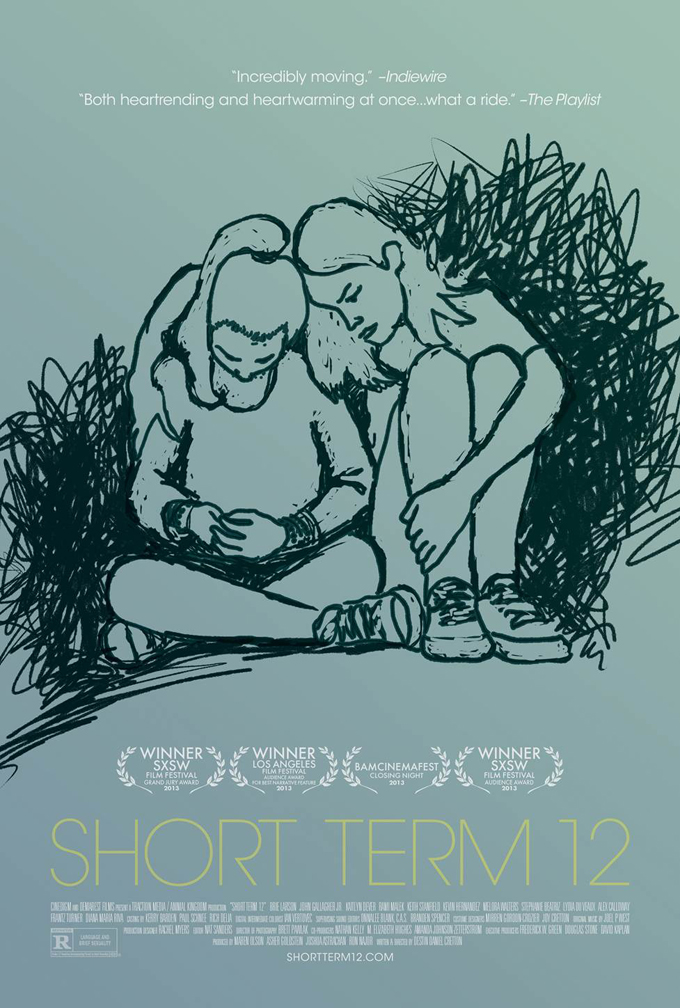
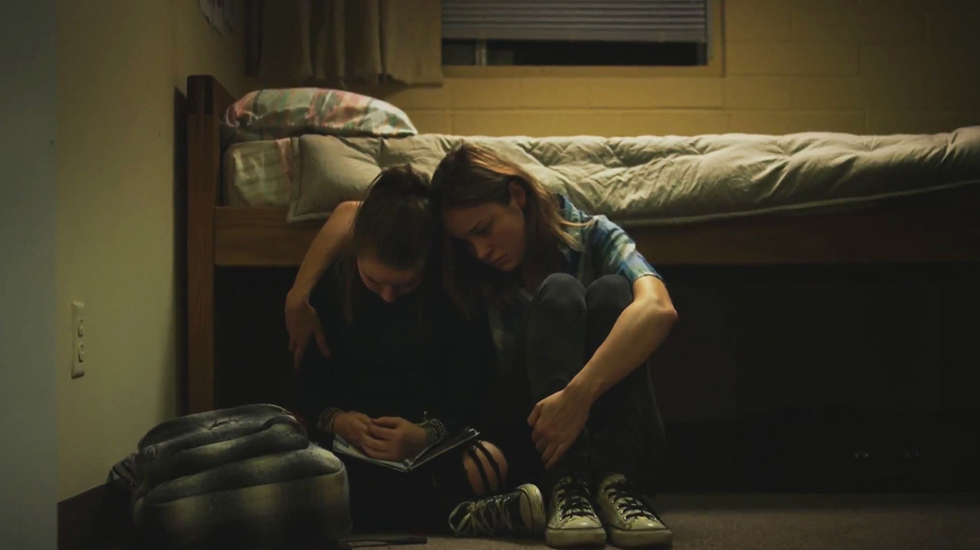
short-term-12-posterShort Term 12 – THE FILM OF MFF for me. Hands down. In the same ballpark as The Class. Nothing to nit pick. Nothing to write. WATCH IT NOW. Shed a tear or two in few scenes. What a depiction of a love relationship! And the teenagers are so good.

Heli – family getting caught up in extra judicial military forces ka atyachar. Quite liked it. I don’t know if this happens in Mexico, but it surely does in Kashmir & Dantewada.

For Those In Peril – this redemption tale set in the gloomy scotland (wish there were subtitles) lost me somewhere in the middle. And the bizzare ending just left me confounded. Koi samjha do kya hua.

Tonnerre – another doomed relationship film. Lovely. The lead is so good and ‘paavam’ (bechara). Was pleasantly surprised by the ending.

My Dog Killer – what an opening sequence. A tough guy training his dog, called by his dad for help. Stark, minimal, gritty, family social drama, this film left me wondering all the time where the hell this is going to go. And the dark ending nailed it for me. Don’t go by the title of the film!

A Long and Happy Life – a farmowner’s struggles to balance the shifting equations between his farmer community and the city council. Must start watching more Russian films after this one.

Kaphal (Wild Berries) – a sweet little funny children’s film set in the plush garwal, what a cinematic delight this one was. The kids(normally irritating in most hindi films) were so lovable, they carried the film on their shoulders. Ably supported by Subrat Dutta (Talaash), Pubali Sanyal (did she play Boti’s wife in Maqbool?) and cilemasnob‘s favorite under utilised Sunita Rajwar – who has a monologue and she rocks! Another movie which made me cry a couple of times. The audience loved it. Take a bow Batul Mukhtiar!

Good Morning Karachi – Slumdog Millionare meets Madhur Bhandarkar in Karachi. Was really disappointed. So were the fans of Khamosh Paani. Heard an editor friend laughing throughout at the unintentional hilarity at times.

Katiyabaaz – a very intresting film. Mazedaar. Somewhere between a documentary and a Dibakar Bannerjee-ish at times feature, this one digs into the power supply problems, a local hero (Loha Singh is the new Sagairaj!), the unpopular IAS Ritu Maheshwari – MD of Kanpur Electricity Board, the dwingling kaarkhanas of the industrial city, Indian ocean’s music and the superb background score. Lovely. Hats off to the full team. More power to apni Alice & apna Varun 🙂

Killer Toon – a web comic designer’s comic sketches potrayl of deaths, are carried out with precision of a serial killer. How? Why? Who? Is the designer responsible? What are the cops going to do about it? Who is that kid on the road? This excellent premise laden film begins with a arresting opening sequence and the horror-thriller tone is set. The repeated flashbacks and seamless transition to & from animation to reality itself is worth seeing this film – the chills down your spine while watching this one in a dark theater notwithstanding.

And an entire film can be made out the funeral business wala. What a character and what a performance by the actor (albeit in a role spanning less than half of the film). Would love to see that alternate film.

The Past – Asghar Farhadi’s superlative follow up ‘sequel’ of sorts to his brilliant A Seperation. This dysfunctional family drama is set in a almost Ramin Bahrani’s version of Paris, with characters bickering, coming to terms, confessing. It doesn’t get more ‘real’ than this and yet the situations are so dramatic. The lead from Seperation & Prophet nail it in this one, and the wife deserves all the accolades. Long takes, minimalist camerawork, terrific performances from the cast – Farhadi’s signature everywhere. I have been informed marriage-separation is the director’s favorite genre. He seems at home in this film with an objective eye on every one. The train sequence with the father son choked me up. And I loved Fohad – the little kid. MUST MUST WATCH.

Our Day 1 report of the ongoing Mumbai Film Festival is here. And this post has reports of Day 2, 3, 4.

The-Great-Beauty

All Is Lost – Robert Redford has no name in the film. He is called “Our Man”. And we hardly know much about our man. He is stuck at the sea and struggling to survive. A one-man show, the film begins with a voice-over, and then has no dialogues except one “Help”. Not your usual fare, needs patience, and at 77, Redford shows he can still be the tour de force. The sea and survival never rarely looked so real and scary. This isn’t your pocorn-ish Life Of Pi.

Locke – Tom Hardy is our man here. He is stuck at the driving seat. A experimental affair in which he loses his wife, family, job in just 2 hours as he faces a personal crisis. Everything happens on the phone. Good fun.

Qissa – Strange, fascinating and ghostly tale. A detailed post here on this gender-bending and genre-bending film. One of the most exciting films at the fest. Must Watch.

Liar’s Dice –   Set in difficult weather and tough terrain, Kamala (Geentajali Thapa) is looking for her missing husband. From moutains to plains, from Delhi to a single-bed room in a shady hotel, her companion is a selfish and untrustworthy stranger Nawazuddin (Siddiqui). A stark, grim and almost unsentimental portrayal of urban migration. Has a charming kid too. Looking forward to Geethu Mohandas’s next.

Before Midnight – Linklater ends the third installment in the best possible way. A rare achievement where the third one is better than the second, and the second one was better that the first installment. He burns down every notion of ideal love and relationship that he sets in the first two parts. Linklater, Hawke, Delpy – it’s hard to believe that they actually “wrote” this film, and they were “acting’ the parts. You mean Hawke and Delpy are not a couple yet? That has to be the biggest cinematic lie ever told. Must Watch.

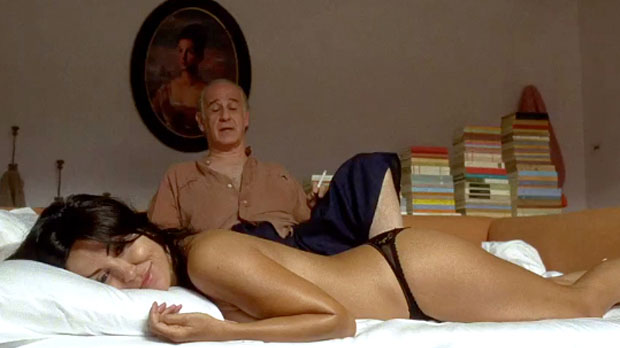
The Great Beauty (La Grande Bellezza) – Easily the best film of the fest. Smart, charming and entertaining. Of vacuous people amidst art, culture, history, and beauty of Rome. Decadence was never so poetic, caustic, beautiful and surreal at the same time. Or as friend described it “debauched shot of caviar existentialism”. Once you are out of the theatre, can bet that you are going to quote the lines non-stop. And if you could not figure out why the tourist dies in the opening scene, go here. MUST MUST WATCH.

Fandry – It’s Beasts Of The Maharashtrian Wild. The pains of growing up, of dreaming about the girl from upper caste, trying to get fair skin, and buy a pair of jeans. About a family of pig catchers who are considered untouchable in the village, and of adolescent days. The harsh reality might seem like poverty porn, but a line from The Great Beauty came to my mind – you can’t talk about poverty, you have to live it. A daring film where the entire film seems to be set-up for the powerful last 20 minutes.

Mood Indigo Gondry in top form with his insane ideas and visual madness on screen. The amount of creativity he has packed in one film, most don’t achieve in their entire filmography. My favourite game is what-prop-do-you-want-from-Mood-Indigo? Scientists should seriously pursue this one. I am booking the crawling alarm clock. Must Watch.

Mamay UmengPure vegetative porn. The 84 year old man wakes up, eats, walks, stares and sleeps. Only exciting thing in his life is skinny dipping. Long shots without any camera movement. There’s so much thehraav in every shot, i get lost in such vegetative porn films and get philosophical. That’s why i went for it even when i knew what exactly i was getting into.

The Immigrant – Marion Cotillard, Joaquin Phoenix – two great actors and just a boring dead film. Avoid.

The Past – Farhadi is still going strong after bagging the Oscar for The Separation. It’s not  a clear knock out like his last one, but still a strong film with all the usual Farhadi elements. A relationship drama which becomes a thriller, and as you get lost in the maze trying to find out the real culprit, he slowly peels his story, one layer at a time. Terrific opening credit and haunting closing shot. It’s worth the price. Must Watch.

Sulemani Keeda – Of versova, by versova, for versova. The bonafide Versova indie that doesn’t look like bhindi-indies. Honest, charming and funny, it’s best when it sticks to Versova tales, the romantic track is neatly done but am generally bored of boy-meets-girl-blah-blah-blah. Liquor in plastic glass, flat owner’s son asking for rent, kabootarkhana, no money for screenwriters, another Kapoor struggling for break – it gets some of the small details so bang on. So Versova-ities, do watch this one. Well acted and directed, a good CV for debutant Amit Masurkar to pitch a bigger film. More about the film here.

Blue Is The Warmest Colour – The explicit sex scenes in the film were so long that you could fall asleep while watching. And the moaning sounds were so loud, you could go deaf. Strangely, these sex scenes were the only scenes which seemed out of the place in this terrific coming of age tale of intimate first love, heart break and loneliness. And that impossible task of getting over it. To get all those emotions right without any background score, quite an achievement. Long takes, all conversations in close ups, and director in no hurry to wrap up things, this is uncompromising individualistic stamp of filmmaking which doesn’t mind going to the extreme. I guess that’s the reason why Spielberg and the jury members decided to hand Cannes Palm d’Or to it. Here’s the video where he explains. Adèle Exarchopoulos is a complete show stealer and owns the film. Remember, orgasm precedes essence. And sex and snot before Sartare. Must Watch.

– cilema snob

(ps – Kartik Krishnan managed to catch many more movies than us.  But his internet is down, or so he claims. So please pray for his internet connection. We will get more posts)

And we are also back with our daily fest diary. As long as our brains keep working after 5 back to back shows, we will try to do a post daily. Here’s Kartik Krishnan‘s to Day 1 wrap.

matterhorn

Matterhorn – a normal middle class devout time table wala Ram Gopal Bajaj (Andaz apna apna – Paresh Rawal) character’s life changes when he takes a mentally challenged drifter as a ‘flatmate’. Dealing with themes of ‘मोह’, church, conformity, redemption, cognitive disability, pity, homosexuality, relationships and a dash of black humor – this dramedy is crisply directed with minimal flab. The usage of BGM is particularly striking.

Pussy Riot – A Punk Prayer – This documentary immediately reminded me of Ismat Manto Haazir hain & Howl (the brilliant film screened few years ago at MAMI). Bunch of girls perform anti establishment punk rock songs at the Sacred Cathedral in Moscow and the ‘orthodox’ residents are outraged – following which the administration slaps a case on them. And then we delve into the characters’ of the three girls and the courtroom drama that follows. Gandu-equivalent music (though with more political content), the girls claim they have not done anything blasphemous. Provocative, entertaining, subversive, satirical.

Blackfish – Docu on Killer whales exhibition and how the greed of Seaworld (no different from any of the conscience-less corporates ruling the roost we’ve seen before) led to the death of many trainers. The fondness & familiarity with which everyone talks about the ‘culprit’ whale – Tilakam almost makes this docu like a thriller with an unpredictable eccentric protagonist at the center. Candid videos of training gone wrong – there is a particularly chilling sequence with a trainer being forced entertain Tilakam’s ‘eccentric’ behaviour, and being dragged underwater for as long as 60 seconds – repeatedly.

Wajma – An Afghan Love Story – turned out exactly what the trailer promised. An Afghani Julie. Made with low budget & minimal production values, shot on HDV, candid shooting style. While the film lacked the ‘professional’ touch it had a lot of heart in it. The lead actress gave an arresting performance, and particularly the honor-beating scene stays in your memory more so perhaps due to the rawness of the film. Want to see more films from Afghanistan.

The Weight of Elephants – starts out on a promising note and a mis direction – I was wondering(hoping) perhaps it is going to go in Prisoners’ zone with kids gone missing. But this New Zealand film stays with the drifter protagonist – the young Adrian and his life in an around his school friends, next door neighbors and troubled home, and eventually becomes a coming of age film. The kids look so natural and impressive that their scenes alone tower over the nothingness which is so present in the film. Disappointing except for the lovely Kiwi locales and the Gulzar-ish/Masoom-ish kids.

Tales from an Organ Trade – This docu shot all over the eurasia, middle east, canada, thailand covers the complex nature of the Organ Trade, specifically the kidney racket. Why do slumdwellers in Manila happily become kidney donors for as little as 2000USD? How do the doctors performing such clandestine surgeries look at themselves in the mirror? Is only voluntary organ donation ethical ? What other option does a long suffering renal patient have if he/she has been waiting for 7-8 yrs for a ‘legal’ kidney? The docu puts forth these and many more important questions in an entertaining engaging manner.

The Armstrong Lie – This documentary focuses in detail on the confessions made by the cycling champ cancer survivor famous oprah interview. Slightly long and rambling, it turned out to be nevertheless an eye opener on the life of Lance (I must confess- knew little about him before this docu). How can one be so convincing as a liar for so many years ? Why is every genius a narcissistic aatm-mugdh asshole ? With lots of in depth interviews and candid conversations, this one really made my day. Another must watch.

Locke – Tom Hardy. Driving a car. One night in London. Travelling from one end of town to another. All the time on phone. The premise sounds like a thriller but it is a superlatively shot human drama about a man trying to face his demons. Doesn’t get repetitive despite being a single ‘setup’ film. Wish we could see a hindi film like this but which actor is confident and daring enough to pull off something like this ? I wish subtitles were there because the Brit accent sometimes flew over my head. Now I want to see the writer-director’s Humming bird.

Kartik Krishnan

(PS – If you are wondering how KK managed to watch 8 films on one day, well, he did his homework well. Watched three films from #youknowwhere)

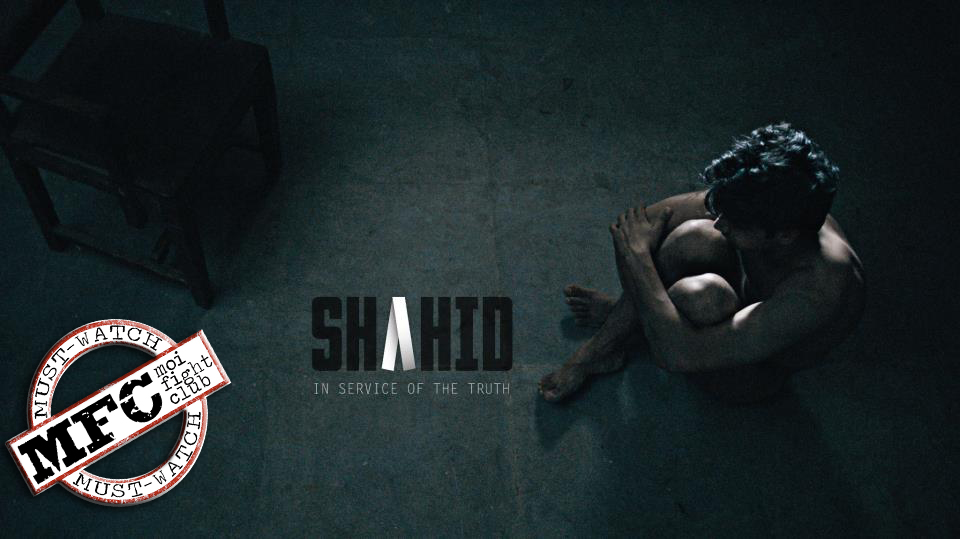
Hansal Mehta should celebrate his birthday today. After Dil Pe Mat Le Yaar in 2000, he has been making one forgettable film after another. Forgettable might be too polite to describe them. And then he makes a comeback with such a strong film that it grabs you by the throat, makes you sit down, and wonder if he really directed those forgettable ones. A rare achievement that few filmmakers manage to do – to pull themselves out of what can be called “Bro-Filmmaking-In-Bollywood”. This is nothing less than a rebirth.

Fatema Kagalwala tells you why you should not miss this one. Mehta’s Shahid goes straight into MFC’s “Must-Watch” list.

Shahid MFC2

You’ve heard about the film. You might have read the raving reviews too. Some of you have watched it. But the film gets its real glorious moment now. Theatrical release. It’s every film’s Holy Grail. It’s the child bride’s gauna. It’s a validation that matters more than awards at times. Especially for a film like Shahid. One that dares to speak about a man who dared to himself. Especially in our regressive, repressive, intolerant times.

For a long time, I kept pronouncing the title of the film as ‘Shaheed’ as in martyr. And isn’t it so true of the story and the man at the centre of it? You will find a number of reviews telling you how good the movie is. It is. Powerful and uncompromising with the truth. So I will quickly chart down the reasons of why I think (in no particular order) you must watch this movie –

Rajkumar Yadav – We all know he is a defining talent of our times. And so far we have seen him only in multi-character movies. He carries this film entirely on his shoulders and it is not an easy task to sustain. The film is a story of a hero but has an incredibly un-melodramatic and non-manipulative story-telling. It maintains a strongly unemotional, non-manipulative tone, satisfied to observe the characters fighting, losing and winning their battles. Any other actor (except Nawaz maybe) would be torn between trying to underplay the heroism and emphasise the man behind it all. Not Rajkumar. He finds it equally easy to portray vulnerability as he portrays stoicism.

Hansal Mehta – Every film-maker has his or her own journey and mostly it is tough. It rarely depends on how original or independent minded he is. It also rarely depends on his reasons for making the films he does. Hansal Mehta has had his own downward spirals but the important thing is he bounced back when most give up. With this. Fighting a hiatus and a creative bankruptcy (in his words) maybe tough, but fighting an unforgiving, unsympathetic system is much worse. Shahid was not a subject that would be easy to make in a socio-political-artistic environment like ours. But it got made and got made well. That alone deserves applause.

Realism – That elusive, enigmatic bitch that takes talent to realise onscreen. From sets to actors to screenplay to dialogues to costumes to direction to acting to everything else in between. Shahid comes so close to reality it could be yours and mine story. As a Muslim it is mine and well, it was very uncomfortable watching it play out like it did. It must have been uncomfortable for Mehta as well, to choose to include the gory, debasing insult he was subject to after he made Dil Pe Mat Le Yaar. It takes guts to make an effort to heal such wounds through artistic means.

Casting – Hansal Mehta gives complete credit for finding the right actors to his casting director Mukesh Chhabra. All that matters to us though is that Mohd Zeeshan Ayub brings alive the part of the protective, fatherly elder brother and Baljinder Kaur is so good as a Muslim woman I was shocked to learn she was a Punjabi. Prabhleen Sandhu as Mariam, Tigmanshu Dhulia as Maqbool Memon and Vipin Sharma are deft touches in a carefully created canvas.

Zero melodrama – How often do we get to watch films about heroes, about controversial material, about polarising issues, about our social reality that comes without a Dolby surround sound moralising or 3D level emotional manipulation? Shahid loses out on deifying its central character, it may have become a ‘My Name is Khan’ financially if it had done that. But the choice to go strictly biographical in structure, objective in tone and let the man’s journey speak about itself makes this film this decade’s Black Friday.

Muslim as humans – This is not a movie championing Muslim rights. Very few people understand that the right response to bigotry on the basis of racism and sexism is not deifying the identity or struggles of the ‘other’. The right response is to bring humanism into the equation to balance it. The film, just like its protagonist, with a rare perspicacity, speaks for Muslims as humans and not as a religious identity, and the distinction is very important. Especially at a time when we are simply revelling in bracketing people according to class, caste, gender, race, colour, community, geography with a ‘hey, let’s find more reasons to discriminate’ glee.  If the victimised community was Hindu, Sikh or Christian, the film’s viewpoint would have been the same. In our times of muddled philosophies, faux intellectualism and confused, twitterisque moralising, walking this fine line perfectly is refreshing and heartening.

Shahid Azmi – A victim, a trainee terrorist, an imprisoned accused, a lawyer and a crusader of human rights of the wrongly accused. He finished his college degree while in jail awaiting release and in career spanning seven years e had a remarkable 17 acquittals. It is a sign of our times that his end came the way it did. It is also a sign of our times that someone thought his story important enough to be told despite the evident dangers. There is hope.

We keep screaming, we need more movies like these. And now we have one. Go watch.

alfonso-cuaron-sandra-bullock-george-clooney-gravity-set-970x0

Was I worried?” Cuarón says. “Yeah!” He and Lubezki would watch their footage, “and depending on the day, you’re just in a room laughing, like, What the heck are we doing? Chivo’s (Lubezki) favorite phrase was, ‘This is a disaster.’ Some days you’d just have bits and pieces of Sandra Bullock in a box, floating around, surrounded by robots with cameras and lights on them, and you’d think, This is going to be a disaster.

James Cameron said he was stunned, absolutely floored. He called it the best space photography ever done, best space film ever done, and it’s the movie he has been hungry to see for an awful long time.

Rian Johnson tweeted something more interesting…

https://twitter.com/rianjohnson/status/385301804365279232

Michael Moore also pitched in and asked people to watch it in 3D.

Tarantino has already put it in his Top 10 of the year. And the best one comes from Edgar Wright.

SO WHAT’S THE BIG DEAL ABOUT GRAVITY?

Well, watch it. To see, feel, float, and experience.

CuaronAnd it’s entirely possible that even after watching the film you might not get its brilliance – why and how. Twitter has made me realise that. And i am not going to try – argue and make you understand. There are many things that many pea-sized brains might not grasp and understand, and i have made peace with it. This post is for those who were blown by it. If you watch movies like i do, can bet that you will come back home and start googling about it. So i am going to make your life easy and putting all the best articles/features/videos on Cuaron and Gravity here. The links are divided into two parts – filmmaking and sci-fi.

FILMMAKING – How and Why

I have to say that I was a bit naïve; I thought making the film would be a lot simpler…

– Digital Trends has got an interesting feature titled “Before Alfonso Cuarón could make ‘Gravity,’ he had to overcome it”. It tells you all about the problems they faced and what they did to find new technology. Click here to read.

– Cuaron is known for his magical long uncut takes. And as we all know Gravity has some 17-minute long jaw-dropping opening sequence. Here’s a video essay on his “Cinematic Canvas”.

Has voice-over by Cuaron.

I’m going to tell you something, the reality is that the movie was so new that when we finished a shot we would get so excited people would scream on set—probably me before anybody else. There were moments when we were shooting and Alfonso said ‘cut’ we would all just jump and scream out of happiness because we’d achieved something that we knew was very special.

– The Credits have done a feature titled “One of the Greatest Cinematographers Ever: Gravity‘s Emmanuel Lubezki”. This one is an interview with Lubezki. Click here to read.

Both of them—along with a number of other Mexicans who would go on to achieve success in Hollywood—were expelled before graduation. “In Mexico, there are a lot of conspiracy theories” about why, Cuarón told me, “and I’m sure that a lot of them are true. The truth of the matter is that I think we were pains in the asses. We disagreed with the ways of the school.” He laughed. “Even if they had their reasons, we were right.

– Vulture has posted a great piece on Cuaron’s career and filmography. It’s titled “The Camera’s Cusp: Alfonso Cuarón Takes Filmmaking to a New Extreme With Gravity”, and this one is a must read. The story of “a Mexican auteur who’d just made a tiny foreign erotic ­comedy-drama being handed the biggest, most fantastical franchise in movie history.” Click here.

– Cuarón sat down with George Stroumboulopoulos to talk directing, George Clooney and Sandra Bullock, and new voices in world cinema. This one is a funny interview.

Experiencing this film in 2-D is only getting about 20 percent of the experience of Gravity,” says Cuarón.

– The Daily Beast has also done a feature on Cuaron and his film. It took four and a half years to bring the magnificent 3-D film to the screen. The director retraces the journey for Marlow Stern, from Robert Downey Jr. and Angelina Jolie’s departures to creating the most groundbreaking cinematic voyage ever put to film. Click here to read it.

Still, it was a massive culture shock. “I had more toys to play with, but the crew was three times bigger than my Mexican film, with producers giving me notes, which I never had before.

– DGA has also covered Cuaron’s entire career – from Mexico to big Hollywood studios. Click here to read.

Did even this historically auteur-friendly studio (Kubrick, Eastwood, Nolan, et al.) wonder if they’d just gambled away $100 million on the most expensive avant-garde art movie ever made?

– Variety has done an interesting piece saying Gravity’ could be the world’s biggest avant-garde movie and drawn comparisons with Michael Snow’s films. Click here to read.

– And to know how the sound masters of ‘Gravity’ broke the rules to make noise in a vacuum, click here. Another must read.

SCI-FI – Science or Fiction

 From my perspective, this movie couldn’t have come at a better time to really stimulate the public. I was very, very impressed with it.

– The Hollywood Reporter has got Astronaut Buzz Aldrin, the second man on the moon, to review the film. Click here to read.

George Clooney’s character, in a rare and fleeting quiet moment says to Sandra’s character, “Beautiful, don’t you think?” And the scene is the sunrise in space. Hold on to that.

– The Time got another astronaut, Marsha Ivins, a veteran of five shuttle flights, with a total of 1,318 hours—or 55 days—in space, to review the film. Click here to read what she thought – how much is real and what all looked fake.

– And there are some rants too. If they can float, can’t they rant? Vanity Fair has put it all together. Click here.

– So how Realistic is the movie? The Atlantic has interviewed the film’s science advisor. Click here to read.

In India, the film has currently released only on IMAX 3D screens. It should be out in normal 3D screens from this friday. And do remember what Mister Moore said.

If you are in Mumbai, i would suggest you watch it at PVR IMAX screen in Lower Parel. No, they haven’t paid me. This is from my experience across various 3D screens in the city. The glasses at PVR, Lower Parel don’t make the screen dark. Also, they are bigger, better and light in weight. So if you already wear one set of glass, this is the best possible option. Rest, as they say, haath kangan and all that jazz.

If you have read or seen any interesting feature, interview, or video related to Gravity or Cuaron’s film, do post in the comments section.

@cilemasnob

(ps – due apologies to Woody Allen for stealing half of his title for the post and even turning it into a category)

shuddh-desi-romance copy2

Since we have become a generation of Buzzfeed and because “listicles” are still not dead, am going to pick the easy route. Here are the top 10 reasons why i loved Shuddh Desi Romance and why you shouldn’t miss it.

1. Jaideep Sahni – I was wondering if he will deliver or not. This is a virgin territory for him – a full throttle romantic film. And more suspicious because he was talking like my another favourite screenwriter, Charlie Kaufman. Love versus love portrayed in films, expectations versus reality and all that jazz. Well, he not only delivers but pushes the envelope and sends it out of the park. Terrific lines all over, all that which seems so natural that it’s difficult to believe someone actually wrote it. And especially at a time when everyone is taking this dialogue route, at least in mainstream hindi cinema space.

2. Morality is Dead – A friend got a sms from a veteran journalist – SDR’s morality is falling faster and lower than the rupee. Not surprising. This film might be shocking for the conventional theatre going crowd and especially when it’s not set in any Tier-1 city. Aha, what fun, to piss of those old holy cows.

3. Marriage is Dead – Commitment is fine. But why do we need the shackles to remind us that we are “committed”. Ironically, this one comes from the same production house which is in shaadi-binness. U-Turn? Hell yeah! Mommy, are you listening?

4. Parineeti Chopra – Mommy, if you still insist, can you try her. I have been skeptical about her main-chulbuli-always-smiling-full-on-enthu avatar in the last two films of her. Are they going to typecast her? But three films down and i think we can easily brand her as “show stealer”. Put her in any film, she is bound to walk away with all the glory while making it look oh so easy. Girl, you are going far.

5. No Melodrama – It’s never been our strength. To keep it minimum, to keep it subtle and yet pack a punch. Now, just see what all can a “thanda” do in situations where there is huge scope for such drama. Am not going to explain the scenes here to kill the fun. But i wanted to get up and applaud in the first “thanda lao” scene. I don’t remember when was the last time someone played it so smoothly in such a loaded scenario.

6. So much silence – Again, another rarity in mainstream bollywood. What do you write on those blank pages where your characters look into each other and say nothing and give those strange expressions that is difficult to define. It comes only with those weird situations that you get into. SDR is full of those and director Maneesh Sharma knows how to capture them.

7. No dil-jigar-dard-tukda song – what a relief. Dil hi toh hai saala, tutne do. Devads is over and out. To quote Sahni from another favourite, Rocket Singh, bikhre nahi toh kaise nikhrogey, uljhe nahi toh kaise suljhogey.

8. Climax – 2 couples and 4 characters – what a masterstroke. The way 4 characters are stuck at the same crossroads and the dialogues were criss-crossing, it reminded me of my favourite scene in That Girl In Yellow Boots – two telephonic conversations going on at the same time. Also, the climax doesn’t try to follow the conventional route. It sticks to its core idea that its prescribing from the beginning.

9. The “repetitive” tool – I read some comments saying that lot of it is “repetitive”, especially the dialogues. I thought that was brilliant writing – to use the same stuff with different characters. You know the lines, the character doesn’t. It happens more than once and the funniest is when Sushant and Parineeti try to find out about each other from Rishi Kapoor.

10. Pigeons, Monkeys and Milieu – As the film started, i kept on smiling as it played the montage filled with these various creatures. It’s been a while since our kabootar did ja ja for Mister Saajan. They are not just props, they slowly construct that rare thing which is difficult to achieve – milieu. And being aware of the world around you always helps.

All hail Jaideep Sahni! At a time when the market is flooded with fucking remakes and sequels with the sole intention of making money, here’s the one with the original voice and daring content.

Chanchal mann, ati random
De gayo dhoka sambhal gayo re
Phisal gayo re…

– Posted by @CilemaSnob

Baandhon is the first Jahnu Barua film to get a multi-city release outside Assam. Thanks to PVR Directors Rare. For cities and show timings, do check the poster below. And here’s Pradeep Menon on the film.

943271_470624503025894_1991809589_n

The media, social and otherwise, has been abuzz with the latest Hindi release; an exciting, talented director’s sophomore feature, one that is making critics and audiences alike gush over gorgeous frames, celebrate the coming of clean cinematic craft, and most importantly, reminisce about romances of the days of old.

Indeed, sometimes one can’t help but feel that, in this day and age, we’ve all forgotten how to fall in love. We’ve forgotten what it is like to drown oneself in that heady rush of a new romance, embrace unbridled passion today like there isn’t a tomorrow and push the limits of rational behaviour in the pursuit of real life moments that make us feel like we’re living a movie.

But here’s the thing about romance – it always dies away. No question about it. So what remains then? What happens when you spend years, or even decades, with a person? Hopefully, once the romance, the passion and the giddy joy of the other’s company gradually ebb away, what you’re left with is respect, stability, comfort, and, if you’re extremely lucky, a lifelong friendship.

That, precisely, is what Jahnu Barua’s ‘Baandhon’ (“Waves of Silence”) is about. On the surface, it appears to be about the complex relationship shared by a married couple; a man and a woman who’ve spent nearly their entire life together. But if you really pause to think about it, it is quite simple. Their love has evaporated perhaps, but they are left with the next best thing – companionship.

Baandhon spends more than half its run-time soaking itself in a single fight between an aged husband and wife; a couple that has already been bereaved of its offspring, and is now solely alive for their grandson, who studies in IIT Mumbai. However, right from the outset, we know that this fight isn’t for real. They’ve done it to death umpteen times before, and it is perhaps the only thing that keeps them going on a daily basis. One ticks because the other is.

But, before we even see the couple for the first time, we are told the date of the fight. 26th of November 2008; a day that sent waves of silence of its own, all around the country. And immediately, you know that this is a story that is always going to end in some sort of a tragedy.

Barua, then, with his decades of filmmaking experience and multiple National Awards, chooses to douse his narrative in such minimalism and sparseness that not only is there never a twist, but there also isn’t even the anticipation of one. The terse inevitability of the path the film traverses is always writ large over the goings-on, and yet, Baandhon gently attempts to reaffirm faith in humanity while admitting that somewhere along the way, humanity has failed.

Reminiscent more than once of Mahesh Bhatt’s ‘Saaransh’, yet largely steering clear of some of the harsh questions and issues that Bhatt’s film raises, ‘Baandhon’ roots itself in economy of craft and storytelling. Even the background score of the film tries its best to camouflage itself behind the visuals; so rare for Indian cinema today, which nearly always attempts to elevate every emotion with over-the-top mood music embellishment.

There isn’t an overt attempt at displaying craft or technique here. Baandhon could easily have been a play. It is set mostly in Guwahati, before the climax, if I can call it that, shifts to Mumbai. Yet, there is no attempt to give the film a texture that sets it in a particular time or place. It could be happening anywhere, at any time. The 26/11 backdrop gives it a real world context perhaps, but even that could just as easily have been a fictional human tragedy that only needed Mumbai to be the place it occurs in. This of course, is clearly intentional on Barua’s part. If you’ve watched ‘Maine Gandhi Ko Nahin Mara’, you know that he’s fully capable of creating a perceptible flavour of place and time.

Baandhon also has no solutions on offer. In fact, it hardly asks any questions. All the film does is give us a brief window of a few days, into the life of a man and woman who, after 73 years of their life, have only each other, even if their journey brings in their path a few kind souls who unselfishly look out for them. It is in these side characters, the ones that attempt to show you that humanity has hope after all, where the film really falters. Our cynical selves will find it hard to swallow the genuine goodness that the peripheral characters go out of their way to shower on our protagonists.

It doesn’t help that most of these side characters aren’t particularly well performed either. Even Bina Patangia, who plays one half of our couple, has an adorable character to fall back on, but her performance itself is mostly functional. Only Bishnu Kharghoria, who plays the husband, truly manages to turn in a memorable performance.

Despite some almost naïve writing and characterization, it is in its silences and pauses that Baandhon’s honesty shines through. This honesty draws you in and makes you want to sit right next to the couple as they deal with loss. Yet, just before your hand reaches out to caress them, you realize that they still have each other. And as you draw your hand back and walk away from them, all you really tell yourself is that perhaps that is all one needs – another person to fall back on, forever.

( To read more posts by Pradeep, you can check out his blog here)

Filmmaker Anurag Kashyap did AMA on Reddit yesterday. Someone asked him about the state of Indian film criticism. His reply in one word was “terrible”. Well, it doesn’t take much brains to figure this out. Open the papers on Friday and you can see it all over. Not to mention the reviews by trade analysts which industry endorses most vehemently, and who then manipulates box office updates accordingly, the ones with agendas other than films, and then there are the paid and the plugged ones. It’s routine now. Nobody is shocked or surprised. And that’s the worst thing to happen – to get used to it.

With social media getting prominence and becoming at least some kind of parameter to get audience reaction, the game of making a “perceptive hit or classic” starts days before the release. You are blinded by the blitzkrieg, a kind of emperor’s new clothes. And journos who are suppose to tell you otherwise, they are happy to get their pictures clicked with the stars. Well, why am i ranting? Because today is friday. Because a bigger rant follows this one. And because we have always been accused of being biased for/against some films and filmmakers. Not to mention being branded contrarian for the sake of it. From saying Talaash works best when you know the spoiler to defending Shyamalan’s latest to liking Raanjhanaa’s 2nd half more to Ghanchakkar being not that bad what critics are saying. Here’s the latest one in the series – on Lootera. And am saying this even though i liked lot of things in the film, especially the 2nd half. And you have to watch it because it’s made by the same filmmaker who gave us Udaan.

So watch the film and come back to the post. Though it’s a spoiler free and you can read before watching the film too. This one is by a new author called Nicolas Bourbaki. Familiar? You will get to know him soon.

Lootera

Warning – this is NOT a review of the film. This is a rant. A wannabe brilliant piece in support of brilliant cinema and stemming from the rangat of self conceit. And even though it doesn’t have spoilers, it is recommended to not read this piece of crap before watching the film.

It’s 1.30 am in my bedroom. I’m alone sitting by the almirah with the king sized mirror. I look at my reflection. I have pain anguish angst remorse guilt redemption realization hope despair despondency writ all over my face. The fan whirls 7 ft above my head. It’s a second hand cheap 800 rupees fan which makes a whirrring noise. No PSPO unlike the film I saw. Bedbugs trouble me. I look at my freckled face. Time stands still unhealed by pain and unfettered by the nocturnal twists and turns of a solitary night. Half a drop of tear rolls over my eyelid, brimming over, somewhat reluctant to fall down. Yet it knows, and it can feel my melancholia. It knows it must fall down. But will it or will it not ?

आँसुओं की किंकर्तव्यविमूढ़ता हो तो ऐसी हो

Please bear with me dear reader. This is not another synopsis of Ship of Theseus.

What a brilliant film!

Brilliant cinematography. Such gorgeous frames. Color schemes which would guarantee taciturn unconditional approval by Kie-slow-iski. Yellow when the mood is prosperous. White when characters are fighting inner demons. Dark interiors for people with dark circles. Transitions from Puja/Ramleela fervor to fever-ish asthma attacks that Baradwaj Rangan would love to write thesis & books on. Aesthetics which are carefully calibrated to the exact precision so well that Light appears to meticulously obey both Particle & Wave theory simultaneously at the director (and DOP’s) will.

When the characters come to kiss each other in a Terrance Malick-ian way, there is just about enough background flare to make the moment surreal, yet real without the hyper reality of the scene underscoring the cinematic liberties. Equality Fraternity. That’s the French revolution all the way till 2008’s Entre Les Murs (Class) – maybe the director’s favorite film that year. Sheer class!

Breaths. Pauses. Stays. Beats. Playback songs. Measured. Sure. Nimble footed. Sometimes hurried. Sometimes slow. Asphyxiating. Liberating. Gesticulating. Pontificating. Prepossessing. Repossessing.

“चार बाल सामने चाहिए. सिर्फ़ चार बाल! मुझे एकदम Natural look चाहिए. बिल्कुल made up नही”.” – Steven Kapoor said.

“मैं पिछली picture का print Tirupati (Balaji) ले जाना भूल गया था. इसी लिए नही चली थी” – the producer from Ludhiana reasoned with him.

I suddenly observe. Snowflakes are falling on me. यारी रोड में बर्फ बारी ? हौले हौले धीमे धीमे. I quickly wear my color co-ordinated sweater and stand up with my arms folded out like Andy Dufrene. Epiphany striked, symphony plays – Costume Design and Art Direction should have had top billing over writer/director’s credit.

I scribble my review on a piece of paper with a Chinese fountain pen dipped in a दवात. Then tear it apart. Then do a for-next loop until fade out.

What a performance by the father (Barun Chanda). Ranveer Singh restrains in restraining himself while Sonakshi Sinha has all the reasons to have my sympathy. But for some strange reason my sympathies lie with my bums, which have been lying motionless for over the 2 hours, uninvolved, dis interested, dazed, waiting for a jump in my seat moment, a lump in the throat, a mournful sigh. They perhaps demand too much as they get only assiduously created multi-textured verisimilitude along with a velvet touch of a fabric. Kora kagaz tha yeh bum mera…..

I wanted to cry, to laugh, to be angry, nervously bite my nails, fight with the irritating uncle with the kid asking them to shut up instead of searching for adjectives to define the craft. Even some of the later films directed by Santosh Sivan were … (space left intentionally for background music).

Even a gunshot wound has been brilliantly (decorated) created with 50 shades of grey. Nerolac Nerolac Nerolac! Waah miyaan Henry! Life is a tale told by an idiot. All sound and fury. Signifying nothing. Like this rant perhaps.

As the song goes – (har ek frame ko) Sanwaar loon, Sanwaar loon.

(PS – And now the media blitzkrieg begins. All I can muster up is this –

लबों के सिलवटों से उप्पर सिकुड़ी हुई छोटी सी एक नाक है

रूह ही ना डाली पिक्चर पोस्टकार्ड में तो फिर खुजली मज़ाक है)

(PPS – what’s well shot, needs editing, slow pace and blah blah blah? Here you go.