Archive for the ‘Indie’ Category

TOWPOS2(COMP)

Few months back, we had put a post on “The Other Way“, a film by Aniket Dasgupta and Swathy Sethumadhavan documenting the indie filmmaking scene in India, and they were trying to raise funds for it through crowd-funding. Good news is they have managed to raise the funds for it and have just released its first look.

I have always felt that we have a terrible record when it comes to documenting our cinema and the stories surrounding them. A film like this one, Dungarpur’s Celluloid Man, Jaideep Varma’s film on Sudhir Mishra – we need many more such docus.

So check out the first look.

To know more about the film, click here and to read about he making of the film, you can click here for their blog.

We continue our “Rewind 2012” series with a music post this time. To read our previous post in the series, click here (Coming of age for desi indies – Miss Lovely and Ship Of Theseus), here (So what happened to Agent Vinod? Part 2. Now read the script), here (What kind of bird are YOU?) and here (A for Allah duhayee hai, B for Bakchodi, C for Chutiyapa).

And if you are regular reader of the blog, you probably know that if it’s music, it’s over to Rohit. The only rule we followed here is “NO BOLLYWOOD” because there is nothing left to explore there as we have heard everything possible that Bollywood had to offer in terms of music. So over to Rohit and see if you have heard these gems. If not, do check out all the audio/video links and let us know what gem you discovered this year.

_6793580_orig-1

So its another ‘top this’ ‘2012 that’ post. Yes, you are right. This year though, we have tried to move out of our shell and yet stay there. Confused? So were we, so we decided to look around for music that hasn’t been tweeted much, shared much and made much noise on the otherwise ‘forever active’ social networks/forums.

1. Faran Ensemble, the band – is a 3 player group who got together and are exploring music via some of the best teachers around the world. With a distinct Arabic sound, the group plays mostly instrumental music. We are putting a link to one of their music presentations titled ‘Dune’ (click on the link, go to youtube page and click “show more” under “About” section)

Faran, is a dry desert wadi, which fills with water and life only in rainy winters; and in the hot season, otherwise silent. It crosses Israel on its way from Sinai, ignoring all borders. More on the group on the link. Explore and you shall not be disappointed. For their FB page, click here.

2. Safar, the band – Their single ‘Khoye hain’ came out earlier this year. Granted, the video was a little too cute but the song is light and easy on ears. We would ideally like to listen more from them. Their webpage has been surprisingly static since months (this in spite of the fact that they have got over 90,000 youtube hits since April 2012 which is a big deal!). Click on the play button and check out the song/video. You can visit their home page here. Go check!

3. Thumri Funk, the album – Pandit Ajay Pohankar and Abhijit Pohankar might not have given us the ‘pia bavri’ again but with this album, they gave a contemporary touch to Thumris. A delightfully innovative album to bring thumris to the masses. The album sadly wasn’t publicised much (but can be bought for a mere INR 63 from Flipkart, you can play the sample audio tracks also), features good tracks all around, our special picks remain – Ab ke sawan ghar aaja (that’s a mix of 2 thumris in one), Ras ke bhare torey nain, Yaad pia ki aaye and Balamwa tum kya jaano.

4. Tera Bayaan Ghalib, the album – Taking the trademarked and owned style of recitation along with some intelligent use of ghazals/songs, Gulzar saab presented this gem to us. Those familiar with his book (Mirza Ghalib by Gulzar) and the T.V. Serial would quickly identify with the text of this presentation (in which Gulzar saab recites some letters posing as Ghalib) and for the others, it’s a fantastic peep into the life and times of Ghalib and India. The album is put here only because of the fact that this genre has been revived by Gulzar sahab this year and we are hoping some more albums like these are on their way to our iPods/Music players.

5. Chakwal Group, Pakistan – Gifted to us by Coke Studio Pakistan (Season 5) and hailing from Chakwal, Pakistan, this is typically a 16 member group that stands and sings to a single dhol almost every time. Powerful poetry and excellent rendition is their trademark. Be it collaborating with the wonderful Meesha shafi or Bohemia, he group stood it’s ground effortlessly. A treat to hear 16 men singing and emoting so well without missing out a single beat. (Hear the Kandyaari Dhol Geet and you will know what we mean) Thank God for music, really! Can’t wait to hear more from them in the coming years.

6. Mauje Naina, the song – performed by Bianca Gomes, Shadab and Altamash and was featured in the BIG BANG season 2 Episode 1 of the cokestudio India version that was orchestrated by Clinton Cerejo. The song deserves a mention because it marries the mood so dangerously! A song about a man who is pulled by the dark yet tempting persona of the ‘other lady’. For us, this was the song of the year for Coke Studio India (Yes, including Amit trivedi’s excellent episode, but then no points to Amit Trivedi because his second name is excellence anyway!). What mood! A song that scares you, literally.

7. Neray Aah, the song – Performed by the wonderful Rachel Viccaji & Farhad Humayun, this song (Via CokeStudio Pakistan, Season 5) is a case study on how to ‘reinvent’ a filmy song to the fusion/new age setting. The original song is here  that was launched in 1998 and this version by Rachel and Farhad is embed here  – Do we remember any filmy songs being ‘adapted’ by Coke Studio India so well? We give up. Oh wait! We remember the near disgusting ‘Jugni ji’ that Cocktail ‘borrowed’ from Coke Studio (Without Meesha Shafi) and how bad it fell on our ears. Case. Study. This. Discovery? HELL YEAH!

8. Somrass, the album – Remember Pankaj Awasthi? Remember khuda ka wasta? Remember ‘Tera hee karam’? Blessed with a powerful voice, Pankaj doesn’t stop at that. Experimenting with jazz, electronica, Sant Kabir, poetry recitation, old Hindu mantras and so much more, he gives us arguably the BEST Indi-pop album of the year. Surprisingly, Times Music decided to leave the music album on Flipkart and may be a music shop or two. Do check it out!

9. Thagni, the album – Launched by SaReGaMa, Shreyas and Abhas gave a beautiful twist to age old poems/bhajans by Sant Kabir and Kamali. The album takes a fresh look at bhajans like ‘Udd jayega hans akela’, ‘jheeni re’ and ‘Moko kahan dhundhey re bandey’ among others. Superlative strings and percussions coupled with soothing singing style of the duo, this album, we feel needs to be heard and publicised. Not surprisingly, the album hasn’t been publicised much. Flipkart Link.

10. Reidi Gul, the song – showcased first by Ufone (Pakistan) in their reality show, Yasir & Jawad Khan were eventually asked to make a music video of this beautiful pashto poem by Abdul Ghani Khan saab. The tune is typically pashto but the affectionate style of singing and a clever tune of the song stays with you for a long time. We discovered it earlier this year, hence this features in the list. Here is the entire episode (11 minutes, including the song)  We hope Yasir and Jawad come back with many more gems!

If the title of the post doesn’t make any sense, please don’t blame us. We are also trying to connect the dots. Since we started the “2012 Rewind” series on the blog, we have been getting many guest posts on our blog mail id. This one comes from an anonymous account. And the writer wanted the same title for the post. If you are not familiar with allah duhayee hai, click here. So over to Mister Anonymous and his A,B,Cs of the year. or should we call him good ol’ Mr Screeny (here & here)?

(PS – It also includes a very embarrassing mention of the blog. Spare us. Had no choice, so letting it go.)

Chaalis Chaurasi

A – AgneepathCry cry cry itna cry karte kai ko hum. I expected to see a power packed revenge drama but got Hrithik’s cheeks shaking in slo-mo in bargain and Sonu Nigam’s melodramatic & painful song (Ab mujhe). Agneepath turned out to be Pursuit of Happyness masquerading as 300! But good to see Brijendra Kala and Pankaj Tripathi in meaty roles.

B -Barfi – Original or not, loved how they made the film such a meandering one. Quite an achievement to make the movie go all over the place and yet hold its own. And what visuals (though I believe the DoP was ‘instructed’ to reciprocate the referencing). And can all those people stop praising PC ? As Raja Sen says, she shouldn’t have played it full retard (ala Tropic Thunder)

CChaalis Chaurasi – No Sir. It is not good to make fun of Blueberry Hunt when you act in movies like 4084. Loved you smoking the pot in ZNMD, sleepwalking in Dirty Picture and even the marathi lines in Deool but sir why why why? Why 4084? And though you may be offended by me being offended at your selections, but sir, with humble hands folded, I concede “ANYBODY I CARE ABOUT IS MY BUSINESS!!!”

D3D wala D, Dheele वाला D. Disaster वाला plot, Dazzling visuals वाला Life of Pi. Dubbing वाला D. Shobhna ही ले लेते? या फिर Tabu से मद्रासी बुला लेते जैसे Kandukondein & Iruvar में किया. And Dhakkan वाला इरफ़ान who claims he is in the 1000 Crore league. Cummon Yaar. Even Naseerudin Shah never took the ‘League’ of Extraordinary Gentlemen seriously. But Richard Parker ने definitely नय्या पार करा दी sir.

EEditing. Did Aarti Bajaj (aided by the Background Score) save Pan Singh Tomar? Only those who had seen the early cut which premiered in 2010 would tell.

And another ‘Yeah’ for Namrata Rao for having edited Kahaani & Shanghai (one of my personal favs). I’m tempted to see Jab Tak Hai Jaan purely for her. No doughnut (but lots of dough) this year for Deepa Bhatia who edited SOTY.

P.S – Also Akiv Ali for Barfi. Now if only I can lay my hands on the script of the film.

P.P.S – Pure Promotion of the sexy mashup videos by Sumit Purohit. Do watch if here you haven’t

Fफर्जी Morality, फ्रॉड फंडे – FUCK YOU Censor Board for screwing up my movie watching experience with the Family Friendly Disclaimer “Ciggarette Smoking is Injurious to Health” in English & Hindi, everytime a character smokes on screen. Fuck you! You might as well, like William H Macy does in Thank You For Smoking, go ahead and ‘tastefully update’ history by putting a Disclaimer like “अनचाही संतान प्राप्ति से बचने के लिए, कृपया संभोग के समय, निरोध का प्रयोग करें” in the jaw droppingly gorgeous Roop Tera Mastana Song from Aaradhna. Hippo-Cracy की औलादें साले !

Gघोटाला (Dilliwai bhasha) or घोची (Bambaiyya) or what the hell happened (Universal). Why is Balki grating us with his irritating pun-figure-of-speech lyrics (Manhattan from Engish-Vinglish) in an otherwise Gauri Shinde film (which even has a marathi equivalent of Alay Payuthe Kanna in Navrai Majhi, or may be I’m glad we’re not made to suffer another Dhol Beats wala Punju Bhangra Folk song for that ocassion)? Why did Homi Adjania (ahhh Being Cyrus) make the infinitely regressive Cocktail? What gun did the industry to point to the takla sir of the very talented Naveen Kaushik (Rocket Singh) and force him to do what he did in KLPD & Ferari ki Sewari? Why does Naaser need to do a Rowdy Rathore (Pritam Pyare mein baincho kar kya raha hai woh? Aur kyun? What happened to Kabeer Kaushik (this time none of the Deols or Warsis were interfering were they?)? When will iRock Sid Jain stop uploading random photos and actually produce his 2nd film (with due payments to the crew) and actually ROCK a Shaadi ? Why did Sanjay Khanduri remake Ek Chalis and set it in Dilli (‘Balaatkar karwayengi‘ Jaats in Tempo seems so ridiculously relevant now in wake of the Dilli Gang Rape)? And of course, what happened with Agent Vinod?

HHaggaBai Halla machaye re – Loud maharashtrians who went Wakda (and as apna भाऊ invokeanand says, he has never heard the term in his entire marathi middle class life), there is something curiously wrong with Aiyya. Subtlety out of the window as a lavani would do away with sharam-o-haya. Kai chaleel? Tula mahatiyi hai ka? Or did you too like us went dreamam wakeupum? Agar batti ukhaadni thi toh Sai Paranjpe ki tarah ukhaadthey Bhau….Bhandarkar kyun ghola beech beech mein ? Raat ki Raani ki Gandha subah morning shift pe ‘differences’ le ke aati hai kya set pe?

Iइंकलाब. Independent Cinema. PVR Director’s Rare? A good initiative but 250 bucks for The Last Act at PVR Juhu (Reduced prices)? And wow Shahid, Ship of Theusus, Miss Lovely, Peddlers, and the released ones like Love Wrinkle Free, Supermen of Malegaon, Kshay.

बस यारों इन्तेजाम ऐसा हो की Inzamam-Style रिलीस हो बडे परदे पर. Ignoble या Ignorable तरीके से नही. कहीं ये इल्जाम ना लगे audience पे की इंक़लाब शुरू होने से पेहले Single Screen भाई लोगो ने उसे indoctrinate कर दिया है.

P.S – Dear director of the awesome looking Mizo film Khawnglung run. Can you please provide English subtitles for your film (Which is already uploaded on youtube by the way).

JJoker. How we missed him when we saw Bane in TDKR. TDKR was even more disappointing than the existential heist Inception. Probably for the first time, I didn’t want to see a Nolan film again. Although Skyfall made up for it to quite an extent with a (Bisexual?) Bardem. The rat story goes up there right there with the Jokers’s ‘Scars’ one. और साला क्या single shot intro है. If the father was a “drinker & a fiend” then, “Mommy was not good” in this one.

KKamal Swaroop‘s FB status. Even though it might take me a lifetime to appreciate his much ‘cultified’ Om Dar Ba Dar, the man’s FB statuses are legendary. And of course he shares some of the most mindfuck photos/articles you could find.

“ftii cinema began with bonga.met kudan today”

“if you are bad at every thing,.join films”

“The best firecrackers are always sold by people with 3 fingers.”

The stuff of nightmares! 15 Creepy Images of Ventriloquist Dummies

This bizzare photo

Kamal’s conversation with a certain Mr X filmmaker –

“Mr X. Aap 7 janmon mein film nahi bana sakte hain”

Reply from Mr X – “Agar aap filmmaker hain toh main filmmaker banna bhi nahi chahta hoon”

And because he is on FB & not twitter, you must be-Friend him even if you don’t follow him (Oh God!)

L Lingo, लेहजा, लिबास. Ishaqzaade’s ‘Musalli”, Kahaani’s ‘daknaam’, Vicky Donor’s Chadhdha, GoW’s ‘Kasai mohalla’ & ‘Kalkutta’, Shanghai’s handling of multiple worlds of lingo correctly and the mother of them – Pan Singh Tomar with the Chambal key ‘Mooda-Moodi’. Bhai Waah! Now if only a Vishal Bhardwaj written film had released this year as well.

M Maniratnam. Rangan’s Book. Hands down must read. Buy now! Read now. Even if it is non controversial and tries to read too much, but Rangan gets it 70% right (the subtext). The book is littered with trivia, insights, anecdotes, and gems like this

Rangan – How come the heroes in your films never use swear words ?

Ratnam – May be I save them for real life instead

N – Another Zimply south ‘controversy of sorts’ with the Kamal first calling the producer of NAYAGAN as ‘old school‘ and later the poor man retaliating by downplaying Kamal’s contributions. And eventually an extract from Ratnam’s book with Maniratnam saying “Kamal too didn’t expect much from the film”. Full on Rashomon in Rameshwaram.

O Obituary – (Mandatory Serious & Obligatory point) This year saw its fair share of filmy personalities passing away. Jagjit Singh, Pt Ravi Shankar, Jaspal Bhatti, Yash Chopra, Dinesh Thakur, AK Hangal, Ashok Mehta, Rajesh Khanna, Dara Singh, Mehdi Hassan, Achla Sachdeva, Raj Kanwar, Nikhat Kazmi, Anthony Gonsalves, Ravi, Joy Mukherjee and yesterday we lost Bobby Singh. RIP

Irrfan Khan (4)

PPAKAU – Every once in a while comes a world wide acclaimed BORING PAKAU JHELU film which wows everybody everywhere. If earlier it was ‘Uncle Bonhomee Who Can’t Remember The Film Title’ or Kinatay (the one QT loved and wrote this letter for), or Adaminte-Gareeb-Mallu-Abu, then this year it is AMOUR, hands down. Though it was well recieved even by the intelligent bloggers, critics all around, I however tend to agree more with this piece. ‘VAPID’ & ‘BANAL’ are right words for this film

And if there any Amour fans around, please do pass on my message to Mr Haneke – (NOTHING HAPPENS IN THE REAL WORLD?)

Q – ‘Q-tiyapa Hai‘ guys who do all those viral videos (TheViralFever led by Arunabh Kumar). It began with one on Roadies (must watch), Guide to Bollywood Balaatkaar and later created the Gaana wala song. Also in line are The Golden Kelas and The Bollywood Ghantas (hopefully the one for 2013 is better)

R – for all the Rajesh Sharmas of the year! (Bakwaas Na Kar Titu) from Luv Shuv (Along with an inspired Vinod Nagpal & restrained Rajendir Sethi); the often under utilized Anant Jog & Pitobhash Tripathy (in Shanghai), Jahangir Khan(Irrfan’s Dadda), Ravi Bhushan Bhartiya (his bhatija), the Corrupt Cop (Rajeev Gupta – who also apparently owns a mechanics shop in Delhi apart from being a Tishu regular since Dil Se, Charas, SBG) all in Paan Singh Tomar; Gauhar Khan in Ishaqzaade; Pankaj Tripathi in Agneepath (Cilemasnob‘s new Yashpal Sharma – who is good in every bad film), the entire cast of GoW; Sheeba Chadhdha (someone cast this woman in a big role now please) & Aditi Vasudeva (unrecognizable in Talaash, stellar in Do Dooni Chaar) from Talaash; – this year boasted of some awesome ‘chhipey huey actors’ performances. And of course Bob-Nomashkaar-Ek-minute-Biswas.

P.S – the heart goes out to talented actors like Ashraf-ul-Haque who unlike the Adil Hussains, Nawaz, Irrfan have been struggling since ages but are always relegated to Sujit Kumar type roles even in ‘art house’ films. One wonders who is the next Nawaz ?

SSci Fi film of the year – Rian Johnson’s Looper. After the disappointing Prometheus by Ridley Scott, the Brick director (No Brothers Bloom doesn’t count) made Joseph Gordon Levitt as the younger Bruce Willis, with both men in the hunt for each other, over a span of 20 odd years. Way more inventive than Inception, it goes for a repeat viewing. I’m sure there must be a logical flaw somewhere, I just haven’t found it. Reminded me a lot of Source Code (which was pretty good though more accessible).

And as the year ends, we are treated to the trailer of Shane Carruth’s Upstream Colour. The guy who made the mind boggling Primer on a budget close to 7,000$ 12 yrs ago, is now back. Even if this one disappoints, I’m sure it won’t be disappointing! If only we made better Sci Fi films than Ra-One & Love Story 2050.

T – Did the Twist destroy Talaash? Did the audience Talaash for a Thriller but got a Drama-Horror instead? There’s been a post on this already and I’ve met my share of rabid detractors of the film who yell at the ‘Ghost’ element in it. “Horror/Thriller बना रहे हो तो Horror/Thriller ही बनाओ ना. रोते हुए पती पत्नी की boring slow paced film क्यूं? क्या मॅर मॅर के रो रो के investigate कर रहा है Aamir?”

Does that imply that –

a)(Noir?) Procedurals unlike ‘Detective’ films, are tough to please to some of us? (Remember Manorama Six Feet Under? Police Adjective, MOM ya Anatolia toh marr hi daalenge humein?)

b)Never betray your ‘pitch’. The audience won’t forgive you. OR vice versa – we don’t like being betrayed by our film experiences.

UUkhaad Lo Jo Ukhaadna hai! Dev Saab often said it to the critics before releasing films like Mr Prime Minister & Chargesheet. Ed Wood simply picked up and moved on from film to film. Ram Gopal Varma continues to ignore us. We’ve beaten his films, lampooned his statements, had dispirin at his vodka fuelled twitter-isms (Samples below), and even pretended we don’t care. Yet the man goes onto make films as if nothing happened. Kudos sir. And I mean it with complete honesty & sincerity. You are a living example of how to continue doing work with a ‘Ukhaad Lo‘ attitude towards detractors. I hope someday someone makes a film on you with you delivering an Aviator-ish Climax, chastising everybody in the industry. Move over Pan Singh Tomar, Milka Singh & Mary Kom, you are the role model for us.

“A common man is a common man becos he thinks commonly nd thats why he very rightfully deserves to both live and die commonly”

“Was Gandhiji a gujju?”

“I rate Karan johar far far more higher than Mehboob khan v.shantaram Rajkapor guru Dutt and Bimal Roy”

“I honestly think either the mosquito or the cockroach should be declared as the national insect”

VVaalgey Tamil Vaalgey (Glory to The Tamils). The DMK rhetoric apart, this year two films made in the ‘commercial’ bracket by short filmmakers who regularly uploaded their well made shorts onto youtube, and somehow cracked into the Tamil Film Industry. Kadhalil Sodhapavudu Epidi (How to mess up in Love) by M Balaji, showed his short film (can be seen here) to Siddarth, who immediately decided to act and co-produce the short into a full fledged feature. Hopefully our Hindi Film Heroes can learn a thing or two.

Pizza, a horror-thriller by Karthik Subbaraj is even more audacious in it that it doesn’t have a single ‘known face’, and was made on a low budget. I can’t remember the last good Tamil Horror film. The film is out #YouKnowWhere with English subs. Do watch these films.

Karthik Subbaraj’s short films can be viewed here and M Balaji’s other short can be seen here.

W WTF Versova. The erstwhile ‘struggler Barista’ patrons have graduated to this place, and you will find tons of filmy people hanging out here at nights. And even among the ‘established’, you will always spot the ‘struggling established’ class here – the Sudhir Mishras, Abbas Tyrewalas, RGV, the not so famous Journos, ‘Bandiyaan’, and various well to do Chief ADs (advertising waley). A Mallu Beef Fry worth dying for, and general coteries of cake-painted-faces worth strangulating, that is if you can find space to do that!

X – The ‘XX’ chromosome. Female Power – Along with the two editor’s we have Reema Katgi, Zoya Akhtar (ok, ok, ZNMD was last year but she co-wrote Talaash), Juhi Chaturvedi, Urvi Jurvekar, Sneha Khanwalkar, (no Pooja Bhatt’s Jism 2 doesn’t count), Gauri Shinde. Call me a sexist but Kya baat hai!!! Can we get more such talented women in the industry ?

Yये भी बिकता है. This year saw the announcement/release of tons of ‘literature’ being picked up by movies. Life Of Pi (By Pandit Ang Lee), Reluctant Fundamentalist (Fodu Namesake aur Monsoon Wedding wali Mira Nair), Midnight’s Children (I-Am-Born-To-Sell-India Deepa Mehta), Kai Po Che (if 3 Mistakes of My Life can be considered Literature that is), Oh My God (Paresh Rawal co-produces another Gujju Play into a movie after the disappointing James Hadley Chase Maharathi), and the Realistic Shanghai (from somewhat slapstick Z). Here’s Cilemasnob‘s recco to all filmmakers – The Illicit Happiness of Other People by Manu Joseph. Btw, when is that film on White Tiger coming out?

Z – And finally ZehNaseeb – A self congratulatory, mutual mastrubatory, admirational clique wala Hi-Five to moifightclub for being the coolest Desi Film Blog of the Yr !

कांटो को मुर्झाने का खौफ नही होता,

और MFC का HAT हर एक फिल्म के लिये DOFF नही होता.

Lilaah!

Sam: [In the women’s dressing room] What kind of bird are you?
Sparrow: [Starting to point to the other actresses] I’m a sparrow, she’s a dove…
Sam: [Cutting her off] No. I said…
[Points to Suzy]
Sam: What kind of bird are YOU?
Suzy: I’m a raven.
what-kind-of-bird-are-you

I have stood in front of the mirror, pointed my index finger at my image, just like Sam points at Suzy in that delicious Wes Anderson film, and have asked the same question quite a number of time, using all kind of possible emotions. And whenever i think about the scene, it still makes me smile. Bit of Googling tells me that am not the only one who loves this dialogue so much. Though it’s quite difficult to dissect why such a simple line from the film has turned out to be one of my favourite quotes of the year and has stayed back with me for such a long time.

So i thought about doing a collaborative post on similar lines. Quickly mailed some of the friends/films buffs for a simple exercise –

1. Close your eyes

2. Think of all the films you have seen in 2012…released/unreleased/long/short/docu/anything

3. Think what has stayed back with you…impressed/touched/affected/blew

4. Write on it and tell us why.

And i didn’t tell anyone else what the other person was writing about. Got some very interesting responses on all kinds of films and i have put it all together in this collaborative post – 15 film buffs on 17 movies (memories) of the year. The post has turned out to be bit long but hopefully you will enjoy it. And it can also serve as a movie recco list if you haven’t seen the films.

@CilemsSnob

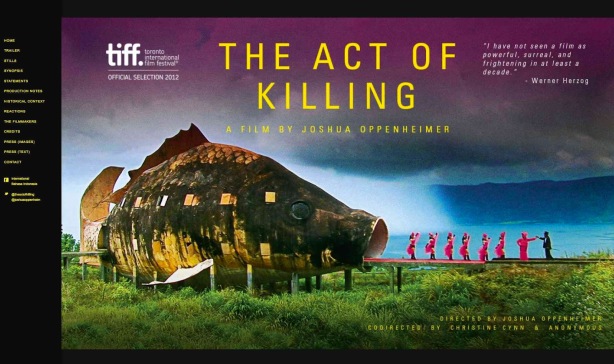
Joshua #TheActOfKilling

—–> Kushan Nandy on The Act of Killing

I saw this two and a half hour-plus documentary at the Toronto International Film Festival in September 2012 and was blown away. Long after the film got over, after Joshua Oppenheimer spoke about it, even much after, weeks later, the film haunted me. It did to me what Incendies had done to me a couple of years back. But much more.

Never before have I seen a film or documentary, where, during the process of film making, the characters go through a life changing process. They metamorphosize into better beings, and this becomes a part of the actual film.

For example, what would happen if someone video interviewed Modi, his political associates or even the people who were the actual executioners of the 2002 Gujarat massacres? And they all accepted their crimes and celebrated this with glee? But suddenly, one of them changed, understanding the repercussions of what he had done?

Anwar, from The Act of Killing, is a person I will never forget. He had butchered thousands. But it was this documentary, and the process of filming it, that showed him who he actually was. He can’t sleep anymore, he stutters, he throws up. He will never be the same again.

And after watching this film, I wont either.

SRK JTHJ1

—–> Varun Grover on Shah Rukh Khan/Jab Tak Hai Jaan

Setting: 7 degree centigrade. Fog. Railway station. A small town in North India where Shatabdi/Rajdhani trains don’t stop.

My fingers are numb and typing out each letter is like feeling the power of it. For some strange reason, the 1st image from Cinema of 2012 that comes to my mind is SRK’s bike rising above the horizon as AR Rahman’s strings go crazy in the background. The theme music of JTHJ (the one they used in promos) it is. Call it the power of music, and it can’t be anything else ‘cos I didn’t even bother to watch the film, or call it my latent romanticism.

My friends from Lucknow – who were there alongside me, fighting for tickets outside Anand cinema hall in 1997 when Dil To Paagal Hai released – watched JTHJ on 1st day in Lucknow and sent me an excited SMS telling me – “Don’t believe the reviews. It’s as good as any Yash Chopra – SRk film you’ve seen. The crowd at Novelty loved it.”

The crowd at Novelty. I was that crowd once. My life’s biggest joys came from being that crowd. Especially on being among the select few who had the matinee show ticket on the 1st day. (1st show was for loafers, matinee was for civilized middle class.)

For Dil Toh Paagal Hai, our friends’ group of 5 was split into 2. Three of us got the evening show, while two fortunate ones got the matinee show. They were clearly the winners – getting to see Maya and Rahul and a new-look Karishma before us. Also they’d get to tease us on their way out, may be telling a couple of spoilers too. So we tried our best to avoid them as their show got over and we were allowed in.

But as it turned out – the theatre owner had cut the film by 15 mins in the 1st and 2nd shows. Apparently he didn’t think the Karishma outrage scene by the river had any merit. But when he saw the audience going crazy with whatever they saw in 1st two shows, he added the cut footage back. And we, the losers till just a few hours ago, were the 1st bunch in Lucknow to watch the entire film.

This scene, Karishma blaming God for complications in love, is almost the crux of Jab Tak Hai Jaan. Though that doesn’t explain why that image of SRK is the 1st that comes to mind. My nostalgia does.

Paan Singh Tomar4

—–> Varun Grover on Paan Singh Tomar

Now inside the train. Cozy and warm. Time to think clearly.

I can’t be a cinema buff by just noting down SRK/ARR as the lasting memory of 2012. But of course there are more. Neeraj Kabi’s intellectual-saint from Ship of Theseus, Denis Lavant and Kylie Minogue singing the existential song of the year (Who Were/Are We) in a post-apocalyptic shopping mall, Sridevi’s eyes full of tears (sprinkled throughout EV), Pi’s uncle swimming in what appears to be sky, the big-screen film print grainy look on Naseer’s face as he looks in the mirror half-seduced, half-confused by Bhakti Barve’s reflection in JBDY (which re-released this year), the spaceship landing smoothly in waters next to a dense mountain in Cloud Atlas, the sad, spent face of Dimple Kapadia at Rajesh Khanna’s funeral (in contrast to a 21-year old Dimple asking Khanna which color sari she should wear for the wedding reception party in the excellent BBC docu resurrected this year due to once-superstar’s death), Gael Garcia Bernal walking away silently, amused and (maybe) depressed amidst the emotionally charged crowds of his nation in Pablo Lorrain’s excellent NO, the trailer of Nikhil Mahajan’s ‘Pune 52’ (though the film didn’t live up to the high expectations and made the trailer look like a red herring), Faisal Khan’s eyes as he lets his gun go crazy on Ramadhir Singh while singer-composer Sneha Khanwalkar screams ‘Teri kah ke loonga‘ in the background……. and I can go on and on.

But one image that will shake me for many more years, the one that is so depressing that I haven’t seen the film again even though it is, for me, one of the best films of the year – Paan Singh Tomar’s sadness at seeing his worst enemy Bhanwar Singh dead. The man who had forced Paan Singh to end his international sporting career to become a dacoit had died. And instead of being relieved, Paan Singh was left purpose-less. The cries of Paan Singh, telling Bhanwar Singh’s dead body that he will chase him in another world and get his answers still give me chills. Those lines are the best lines of the year for me, resonating so much with the cynicism and depression of our times, where one fine morning, without any notice, all good turns into hopeless, impossible bad by the apathy of the system and resident evil of vengeful human kind we are, making Paan Singh Tomar the film, a kind of socio-political version of unrequited love stories.

Talaash

—–> @Anand Kadam on Talaash

This year we saw a gamut of movies from the hilarious yet fresh Vicky Donor, violently poetic Gangs Of Wasseypur,  and a mystery with a pregnant femme fatale  – Kahaani . But the movie that has stayed with me, which still sneaks into my mind and cuddles me, is a strange one. I call it a strange choice since this movie isn’t a great one (to be honest), and i didn’t think of it much when i watched it. But the grief stricken Shekhawat and his wife refuse to leave me. Talaash is like “Rabbit hole” with more guilt. When you lose someone very close to you, really really close, his or her or its memories sticks to you like a parasite, sucking every notion of happiness from you. You become a robot going through your daily chores with only one thing playing inside your head – how things could/would have been different. And when a small ray of hope or redemption comes into your life, even if it defies common sense, you cling on to it, not for a closure which comes later (or does it really comes) but for confronting the loss and accepting life as it is.

This is Talaash for me, not the twist, not Kareena or Aamir Khan, or the underbelly of Mumbai. And as i had said it earlier – A movie is never about its twist and if it is, it’s not worth it.

Kumki

—–> @Vasan Bala on Kumki

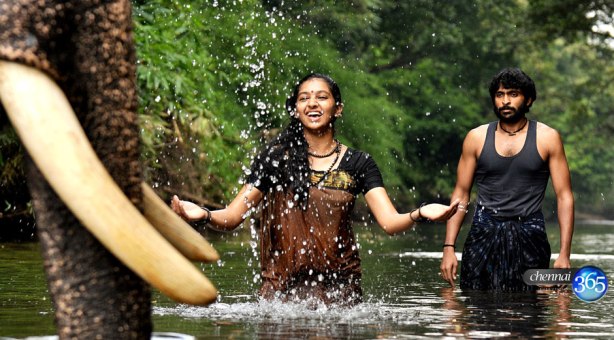
This year, I guess, without much fuss some low budget sleeper hits happened down south. Sundarapandian, Pizza, Naduvula Konjam Pakkatha Kaanom (a few pages missing in between). This year’s Paruthiveen-set-in-the-Jungles-with-an-Elephant marked the debut of Sivaji Ganeshan’s grandson, KUMKI! Breathtakingly shot. Directed by Prabhu Solomon, the guy who made Mynaa.

The film was earlier called “Komban” (Big Tusker). It’s about a mahavat and his “timid” Elephant Kumki, which is supposed to keep a wild elephant Komban from straying into the fields. The film is basically Kumki v/s Komban. It almost reads like a Pixar film, doesn’t it? BUT….Like any south RURAL “hit” this too has it’s rugged faced man with a toothy grin walking behind a shy girl “LOU STORY”, this one too has endless walks and shy glances and grins and predictably ends in a bloody tragic battle. An epic elephant battle! and it boils down to Computer Generated Blood and Dust (hmmm..ummmm). It’s a bona fide formula now, it’s a dream debut for any Star before he graduates into City “Criminal and Cop” roles, mouthing punch lines and beating up Telugu Villains. Loved the music though.

take-this-waltz04

—–> Jahan Bakshi on The Sarah Polley Double Bill : Take This Waltz & Stories We Tell

Sarah Polley delivered a double whammy this year with two diametrically different but intrinsically linked films. The first was Take This Waltz, her deeply sensual and feminine take on love, longing and those gaps in life that we try to fill in vain, and those questions about relationships that never have easy answers. Once you get over the affectedness: the overtly twee touches and some clunky dialogue at the start, Take This Waltz is in turns both superbly seductive and devastating. Michelle Williams once again, brilliantly owns her character and her mousy imperfection, and it’s clear that Margot could only spring from the mind of a filmmaker with a distinctive voice, and one who is a woman. And it contains two of the most exhilarating (musical) sequences I’ve seen at the movies this year.

In Stories We Tell, Sarah turns the camera on her own family with a brave, deeply felt documentary/personal detective story about her discovery of her real biological father, but more importantly, the meaning of family, secrets, memory and the very nature of storytelling. This must have been an impossibly hard and emotionally testing project to put together, but Polley pulls it off- life might be messy but Stories We Tell holds together very well as a rich document, revelatory in unexpected ways. Watch it when you can, and you’ll see where Take This Waltz comes from.

Shanghai-Movie-2012-Review

—–> Kartik Krishnan and Fatema Kagalwala on Shanghai

Kartik’s take

He gets to know that the system is rotten, that the investigation he was heading was flawed to start with from beginning, that beyond the scattered red herrings lay the actual ‘villain’, who incidentally is the same person who gave him the power & ‘support’ to start the investigation in the first place, that the ‘villain’ is the CM of the State.

So easy for any protagonist to become an Anna Hazare/Kejriwal in such a case, or to become a whistle blower and later face the inevitable martyrdom (ala the Satyendra Dubeys & Manjunath Shanmughams). What else can a cog in a wheel in such a scenario do? Pickup the gun like Eddie Dunford in Red Riding 1974 and blaze away? Become corrupt like Micheal Corleone or Ram Saran Pandey (Mihir Pandya has written an awesome article on Dil Pe Mat Le Yaar) ? Or run away into overexposed light like Vijay in Pyaasa? Should he accept defeat and get down to some other profession like learning Medicine (like KK Menon in HKA), or resign hopelessly like Vikas Pande in The New Delhi Times? Even Z didn’t have an answer.

He goes to the party and plays a ‘Prisoner’s Dillema‘ of sorts with his Paneer tikka-munching Boss and the other Powerful man. Eventually he somehow manages to ensure that the guilty get their comeuppance. But this ‘victory’ is hollow. As his Boss asks him “Yeh hai tumhari Justice?”, he gives a reply which was there in the promos but sadly cut out from the film – “Justice Ka Sapna Maine Chhod Diya Hai”.

And this was probably my moment of the year which is not there in the film, but there in my memory, for a long time!

Fatema’s take

The cutaway from Dr. Ahmadi’s murder to the item song. It was a stroke of brilliance. Not only technically, but as a comment on our conscience in itself. Physically it’s a jolt, meant to unsettle us and shake us up. We’ve just witnessed a murder we’ve seen hundreds of times before but what we expect to come next is NOT an item song. And so we sit up and take notice. Besides, there is the juxtapositioning of the two warring factions of the film itself, one (the ‘good’) killed like a dog on the street and the other (the ‘bad’) celebrating his decadent power in all its ugliness. And then there is that tenuous mirror to our own conscience – what’s our rtn to this cutaway? Are we glad we are back into an indulgent song-n-dance setting and away from boring Dr Ahmadi? Or gratified by our own lust? Or guilty about feeling so? Or disgusted to watch such sharp contrasts unfolding in front of us? Or do we feel the cut is an over-sighted mistake? That the director doesn’t know what he is doing? The answer to this is a huge part of our response to the film and to think AND achieve something like this is no less than genius.
Beasts of the Southern Wild - 6—–> Shripriya Mahesh on Beasts Of The Southern Wild

The movie of the year for me was Beasts of the Southern Wild. I saw it in Sundance in January 2012 at it’s premier. I knew very little about the movie going in because the filmmakers were careful about not even putting out a trailer before the premier.

It was instantly captivating. I love the world Benh Zeitlin creates. It is constantly surprising, always engaging. All the actors are local and that lends significant authenticity to the world (bigwig directors would do well to take note). It tackles such powerful themes, but all from the perspective of the little girl, Hushpuppy, played to perfection by the adorable Quevenzhané Wallis.

There are no long speeches about government control, environmental disasters or about the right to live freely in a manner you choose. No sermonizing. The visuals speak and the magical realism is very nicely done. The music (also composed by Zeitlin) and the the production design really elevate this movie.

And it’s a debut feature. It won the Camera d’Or and Sundance.

Since the film’s theatrical release, there has been a fair share of haters. But for me, it just worked. Eleven months later, I still think about it.

ScreenShotAlma
—–>Mihir Desai on Fjögur Píanó

There are times when I can’t put things in words, I feel the need to express and communicate in visuals. Visuals stick with me and this year one such visual experiment has been playing in my head for the longest time. Directed by Alma Har’el, the Sigur Rós music video, Fjögur Píanó.

Har’el, director of last year’s surreal documentary Bombay Beach creates this gorgeous portrait about the painful pleasures of love. The couple, addicted to each other only really ‘feel’ the pain when separated. The edit juxtaposes the bruises on the girl with the boy softly touching the butterfly. This image stuck with me and Alma Har’el’s quote sums it up so perfectly, “For me it’s about not knowing how to get out of something without causing pain to somebody else.” Without lyrics Alma Har’el has created this beautiful story which I feel was one of the best, cinematic experiences of the year. Due credit to Sigur Rós’ music that inspired Alma Har’el to create this world. Click here to watch the video if you still haven’t seen it.

Other Picks: Celluloid Man, Last Ride, Rampart, Once Upon A Time In Anatolia, Holy Motors, Your Sister’s Sister.

Supermen Of Malegaon

—–> Neeraj Ghaywan on Supermen Of Malegaon

At the surface it may be about the lives of people dreaming about film-making with empty stomachs and hearts full of passion, it could be about an accidental hero, about a world we have never seen but still seems so close. The director is never interested in milking the tragedy of the crew’s limitations, their poverty or the tragic loss of the lead character. Instead, she turns it all into a celebration of life, we smile along with the characters who are making the film, in a way we reflect upon our own personal constraints and learn to laugh at them. It is a comment on the Bollywood system of over-produced film-making, it is paying homage to films of the 80s/90s, it’s also a drawing lessons about how to keep going at it even when there is no hope, it is philosophical at times, it is laughing at itself too.

A film that is so simple in its structure and still speak at so many levels is remarkable. And above everything, it inspires you to take the plunge without thinking twice. When I saw the film, I wanted to get out of the hall and start shooting a film immediately. The biggest achievement of this film is that it goes beyond the confines of being a documentary and touches you more than a big budget fiction based feature.

 Koormavathara

—–> Ranjib Mazumder on Koormavatara and Makkhi

Be it a random blogger or a certified critic, everyone is Noah on internet and takes no time to float the boat of top ten lists. Like the middle-class father comparing his kids among themselves or with other families, we always manage to make a list of ten best films every year, irrespective of their debatable qualities. I am no exception.

However, when I was asked to contribute for this collaborative piece after shutting the eyelids, a bald man appeared in front of my eyes, riding a fly. So, here I am, writing (only because I have been threatened with sarcasm) on two of the most remarkable Indian films of 2012.

Koormavatara

It starts late at MFF 2012. I am almost certain that I would leave it midway because Hansal Mehta’s Shahid is right after it and almost everyone from my group is going for it. The film opens, Godse shoots Gandhi and my doubts evaporated in no time. This is the world of an old man, disinclined to show emotions and engrossed only in his mundane office work and his little grandson. A Gandhi lookalike, when he is approached to play Gandhi in a TV show, he vehemently opposes but gives in due to the greedy family tentacles. Gandhi, like the fourth passenger in Mumbai locals, slowly invades his life, brings him down to the level of helpless co-passengers. Like a master of swift attack, Girish Kasaravalli breaks down the middle-class system and releases the Gandhi in him, leaving him in the midst of incessant disintegration of his surroundings. Rajkumar Hirani’s Munnabhai MBBS was a joy to behold, but Lage Raho Munnabhi, despite a splendid screenplay, offended the adult in me, with its preachy attitude. Without making him God, Koormavatara makes Gandhi accessible showing the mighty repercussions it can have in a typical family in independent India. As far as breaking down the myth of Mahatma, this is the best we have seen so far.

Makkhi

With scenes dipped in liquid cheese, a boy constantly stalks a girl with trite expressions; Makkhi was loathsome in the first 20 minutes. I wanted that boy to just die. Thankfully he did thanks to the overdramatic villain, soon after I wished. Little shaky special effects took charge. And I witnessed the most inventive revenge drama this year. A fly killing a mighty man is simply an impossible idea! But the way this little soldier choreographs his action scenes in the concrete fort of the villain, you can’t help but root for an insect that you have always detested. The triumph of S S Rajamouli’s film lies in the sheer leap of faith. We are yet to have our Jaws, but this is the one that comes closest to the idea of a fantastically executed concept film.

Kahaani2

—–> Pratim D. Gupta on Kahaani

Parineeta did the same thing for me in 2005. Celebrate Calcutta! And how. It reminded me of the way Mira Nair shot Delhi in Monsoon Wedding and Taj Mahal in The Namesake, almost pausing the narrative to just soak in the sensuality of the space. You sexy! Also what Sujoy Ghosh did brilliantly was inculcate his love for cinema in the many myriad moments of the movie in a way that they never became copie conformes but rambunctious references that served those respective scenes just fine. From Satyajit Ray to Salim-Javed to Bryan Singer. And those eyes of Bidya Balan when she looks up in the twist-revealing scene before unleashing her real self. Eyes filled with hurt, vengeance and rage…Our own Beatrice Kiddo? Present please!

Ship Of Theseus

—–> Svetlana Naudiyal on Ship Of Theseus

I don’t see all films that release in the year (and I am kind of unabashedly arrogant about it; can’t spend moneys contributing to someone’s 100 crores or out of sympathies to so called indie/different films), so my opinion from the very beginning of it, is skewed. The indie film movement (or whatever there is of it) took a whole new leap with PVR Director’s Rare creating a platform for their release. And even though in my personal opinion, indie films are becoming the cinema equivalent of DSLR carrying people with so & so photography facebook pages (read opinion as – ‘people should be banned, either from making films or from expecting people to watch’), there have been moments of pure delight at the movies in 2012 than years before that, much thanks to the few Indie films that released this year.

Some of the favourites this year are Supermen of Malegaon (one of the best, a documentary so delightful, hard hitting and yet nowhere remotely close to being poverty porn), Kshay (for Chhaya), Gattu (for finally bringing to the screen an unpolished, bratty, clever, naive and most importantly, real kid), Shanghai (for creating that discomfort that exists in our world and we do not see) , Anhey Ghorhey Da Daan (for creating a cinema experience like no other, for delving into time space and making the silences speak)

The most favorite of all that I managed to see in 2012 would be Ship of Theseus for its language, for its being able to be so unique, so evolved in thought and yet not have an iota of pretentiousness and be accessible to just anyone. For the benchmark it creates not just for indie filmmakers but Indian cinema, in general. I am dying to point out and quote every single nuance I loved, but that should be saved for the film’s release. For the smallest of elements it picks and for the whole it creates. For repeating itself like a poem long after you’ve seen it. This is Cinema!!

anhey ghorey da daan

—–> Mihir Pandya on  “अन्हें घोड़े दा दान” (पंजाबी), निर्देशक – गुरविंदर सिंह

एका – कदमों का, कराहों का, नांइसाफ़ियों का, नकार का। एका – दुख: का, संघर्ष का, सपनों का, समता का। वही इंसानी पैरों का जत्था जिसकी मूक कदमताल में पलटकर मेलू सिंह के पिता शामिल हो जाते हैं। किसी अभ्रक से चमकते इंसानी इरादों का जत्था, जिसका सीधा मुकाबला समाजसत्ता अौर राज्यसत्ता के मध्य हुए भ्रष्ट समझौते से तैयार हुई दुनाली दुरुभिसंधि से होना है। किसी ख़ास दिशा में सतत बढ़ते चले जा रहे वे कदम कोरी भीड़ भर नहीं, वे जनता हैं। एक अात्मचेतस समूह। निर्देशक गुरविंदर सिंह की ‘अन्हें घोड़े दा दान’ के इस विरल संवादों से बने विस्मयकारी दृश्य में, जिसके अन्त में सरपंच की दुनाली के सामने गाँव के दलित फ़कत लाठियाँ किए खड़े हैं, अाप सोचते हैं कि अाख़िर वो कौनसी अात्महंता चेतना है जिसने उन्हें वहाँ साथ अा खड़े होने का यह गर्वीला माद्दा दिया है?

बराबरी का सपना। समता का सपना। यह खुद अपने में पूरा मूल्य है। गैरबराबरी के अंधेरी सुरंग रूपी वर्तमान के अाख़िर में न्याय अौर समानता रूपी किसी उजले सिरे के होने का यूटोपियाई स्वप्न। बराबरी स्वयं ऐसा मूल्य है जिसके लिए लड़ा जा सकता है, जिसके लिए मरा जा सकता है। अौर जिस दिन एक दलित दूसरे के लिए खड़ा होता है, एक शोषित दूसरे शोषित के हक़ की अावाज़ का साझेदार बनता है, वह सदियों से जड़वत इस सत्ता व्यवस्था के लिए अंत का बिगुल है। यह दलित चेतना सबक है जानने का कि हमारी देश के भीतर की तमाम पुरानी संरचनाएं कहीं गहरे बदल रही हैं। यह शोषित की साझेदारी है। यह दुख का एका है। वो बस एक फ्रेम भर है ़फ़िल्म में। गाँव के सरपंच की दुनाली के सामने डटकर खड़े मेरी पिता की उमर के ये निहत्थे भूमिहीन किसान। लेकिन इस एक फ्रेम में अक्स है मणिपुर की उन तमाम माअों का जिन्होंने अपनी उस एक बेटी के लिए खुद को विद्रोह में उठे जिंदा माँस के झंडों में बदल लिया था। इनमें अक्स है सशस्त्र सेना का सामना पत्थरों से करने का दम रखने वाली उस नौजवान पीढ़ी का जिनकी ज़बान पर बस यही गूँजता रहा, “हम क्या चाहते… अाज़ादी”। इनमें अक्स है खंडवा मध्य प्रदेश के उन किसानों का जिनकी सामूहिक जल समाधि ने एक बहरी सरकार को भी सुनने अौर अपना फैसला बदलने पर मजबूर कर दिया। अौर इनमें मेरी ही उमर के उन दो नौजवान साथियों का भी अक्स है जो रविवार की उस रात उस बस में इंसानी जिस्म की हदों के पार जाकर भी अंत तक लड़ते रहे, एक-दूसरे के लिए। बराबरी के उस अप्राप्य दिखते स्वप्न के लिए जो सदा ‘फेंस के उधर’ रही इन अाँखों ने अब देख लिया है।

So this was our list. Do comment and share your movie memories/thoughts/opinions of this year.

Film critic turned filmmaker Sudhish Kamath is planning his next film. And he is trying something new with this one. He has put out the script of his film along with the instrumental theme track on his blog even before he has started shooting. Why and how? Over to him.

EK NAYI DUNIYA / APOTHEOSIS

The END is here.

In an ideal world, I would have had enough money to have shot and released my new film called Ek Nayi Duniya/Apotheosis today. But for now, I would like to share the script and the instrumental theme composed by Sudeep Swaroop with supporters of independent cinema in the hope that some of you like it and spread the word.

By the time the film is ready for release next year, you will know if you want to watch it or save your money.

After Good Night | Good Morning, I wanted to do a film at the opposite end of the spectrum.

If GNGM was new age romance in an old-world setting, I wanted to deal with an old-world arrangement in a futuristic setting.

If GNGM was conversational, I wanted to make a film that was largely atmospheric.

If GNGM was claustrophobic, I wanted to make one on a huge canvas and a lot of space.

If GNGM was shot indoors in an air-conditioned studio, END will be shot in the middle of the Indian Ocean during the monsoon mid 2013.

Why am I then putting the script out?

Could someone steal it?

Sure. They are most welcome to. Only that I am 100 per cent certain that they wouldn’t dare.

Besides, I have taken care of the legalities to protect myself in the unlikely event that someone figures a way out to monetise this script without really making the film. But if you want to go ahead and make the film, please go ahead. I promise I won’t sue…as long as you credit and pay me, of course.

But I am certain that wouldn’t happen. Because nobody wants to invest money on anything without a precedent.

I am pretty sure that nobody would have made Good Night Good Morning even if I had put the script out before making it. Nobody would have thought it was possible to make a feature with two people on the phone for its entire duration. But it worked. I couldn’t have asked for a better launch as a filmmaker.

EK NAYI DUNIYA (Apotheosis is the English working title) is a modern day Adam and Eve relationship drama that plays out like a science fiction psychological thriller.

Like Good Night | Good Morning, I have tried to keep things simple: a two-character film once again. Something I can shoot in three weeks even in the most difficult of conditions. As an independent filmmaker who really likes his day job (I’m a film critic), I don’t want to make films that take too much time to shoot. But I compensate by spending months writing the film.

We have been writing this since mid-March.

END didn’t start out as a science fiction film. But today, it’s just impossible to even imagine it as any other genre.

I started writing this as a simple film about a couple on honeymoon dealing with the pangs of arranged marriage – as an antithesis to Woh Saat Din or Hum Dil De Chuke Sanam.

We did a lot of research, got over a 100 respondents for a sex survey to figure out what happens during the honeymoon in an arranged marriage set-up. It seemed like India’s best-kept secret.

But after the first draft, I felt I was exploring a few relationship issues that I had already covered in GNGM. Besides, I felt claustrophobic…every morning, the couple would wake up on the same bed during their honeymoon!

One of the exercises I used to make students do when I was teaching screenwriting was to make them rewrite the logline as different genres, just to check if they had indeed chosen the best genre to tell the story. It helps to practice what you preach. We hit a goldmine when we transported the idea of an incompatible odd couple into science fiction.

To cut a long prologue short, take a look at what the film/script tries to do and a brief synopsis below.

If you like it, maybe you want to give the script a read. It’s an early draft and the script is likely to change a lot more in the next six months. So if you have any ideas, criticism or any words of appreciation… or better still, MONEY to collaborate and co-produce this film, mail me at madeinmadras@gmail.com.

It would be refreshing to see someone put money on the table reading the script and not looking at the star cast.

I don’t want to announce our actors at the moment so that you can visualise the characters just the way you want them to be.

Thanks for your time and interest in my work.

EK NAYI DUNIYA: WHAT IT SEEKS TO DO

The Indian Arranged Marriage presents a fascinating dynamic and a unique equation between the sexes. It’s an arrangement, a match that’s put together by a system that expects the marriage to work simply because it is tried and tested. Over centuries. It has worked. And continues to work. The divorce rates in India are among the lowest in the world.

Yet, it isn’t exactly ‘And They Lived Happily Everafter’ situation that we have seen in most Indian films about the arranged marriage. In the conventional Hindi film narrative, a couple bound in matrimony inevitably falls in love. This cannot be further from reality today as couples in metros are falling apart, unable to reconcile their differences, especially when the woman is strong-minded, truly liberated and fiercely independent.

This isn’t because culture, tradition or society is to be blamed. This is because men and women are built so differently that even if they were the last people left on the planet, they would still have issues living with each other IF they were equals.

After the first draft of this idea, I realised that no matter how I played it, it would seem like I am criticising the Hindu arranged marriage system simply because the film chooses to highlight conflict and the tension that’s bound to rise.

To ensure that the conflict takes centre-stage and does not get hijacked or distracted by the cultural and socio-political subtext that isn’t intended, I decided to explore this dynamic of the arrangement through the lens of science fiction.

What if this was a story of the modern day Adam and Eve? Two people who are products of the world that was. Two people who are the only survivors of an apocalypse triggered by man’s disregard for nature. What if they got a chance to start afresh? Would they go nature’s way or want to stick to what years of nurture taught them?

Man, a soldier of the system, is a survivor who would do anything to feel safe, inexplicably attached to the concept of a home. Or the nurturing of the mother. (Though the character will never be referred to by name in the film, I call him RUDY, short for RUDRA KAILASH SINGH – a name borrowed from God of destruction – Shiva.)

Woman, an explorer always questioning the world, is a preserver who would do anything to protect, and is too wild to be tamed by any boundary, man-made or otherwise. She’s nature herself. (Though she will never be referred to by name in the film either, I call her BHAIRAVI, short for BHAIRAVI KUMAR – a name borrowed from the fierce Goddess, the other half of SHIVA/RUDRA.)

Can these opposites really fall in love? What is this home and the world they want to start together? A unit of the system that will lay down rules on how things must play out for the future? Or an unending quest? Is it a physical place? An emotional state? Or a mental space?

To understand who they are, we need to understand what made them – the system. Is there someone who’s controlling what’s happening to them? Or can they beat this system?

There are no easy answers. Hence, this is a film that hopes to provoke you into thinking about what we really want, how we want to live and where? This is a puzzle of a film that can be interpreted according to your own faith and belief system. But it also assures you that there may be other possibilities too. Equally real. The only truth, after all, is that there is no one truth.

The film tells you the story of the modern day Adam and Eve and their post-apocalyptic world that may or may not exist physically but we see the pattern. It’s almost cyclical – The Wild, The Cradle of Invention, Civilization & Escape – and through these four chapters of history, we see it repeat itself. The film then becomes the story of our world itself and its life cycle.

SYNOPSIS

Fourteen years after a global catastrophe, a spaceship on a mission returns home to an accident.

RUDY and BHAIRAVI fall out of the sky and are probably the only ones to survive. They manage to land on a pristine island in the Southern Hemisphere.

This modern day Adam and Eve need to create a new world together. It was a match made in heaven. Just not right for earth.

As the male and female energies clash and the opposites repel, the couple thrown into this unlikely marriage must survive the odds.

And each other.

Read the full script here:

@SudhishKamath

Miss Lovely

It’s that time of the year again. You sit back, relax, remember the titles, ponder over it and decide what has stayed back with you.  I have been thinking about writing a post on Ashim Ahluwala’s Miss Lovely and Anand Gandhi’s Ship Of Theseus for a long time. But something or other came along and it kept on getting postponed. Now that am thinking about year-end posts, these two films stand out completely from the rest. And strangely, both have many things in common, starting from redefining the “indie” cinema space in its truest nature.

The term “indie” has become quite convoluted in India and we have started using the term broadly for any film which isn’t exactly mainstream. Also, because by conventional rule book, bollywood’s studio system used to be quite different till few years ago. Now, these two films – Miss Lovely and Ship Of Theseus, can be called true blue indies. They have been financed and produced independently, not only outside the studio system but even completely outside the bollywood network. Forget being big stars, the lead actors are not even known faces except for Nawazuddin who was nowhere on the cinema map when he shot Miss Lovely. And most importantly, both the films tell “our” stories – rooted and distinct to the core.

Once you have seen both the films, you realise that it’s finally coming of age moment for desi indies which mostly either look tacky because of lack of budget, or at most we end up giving grace marks and credit to them for at least trying something new. These two films stand strong on their own merit and doesn’t want you to give them “indie sympathy” for just trying to making a different film. They deliver it and how! May i add that these two are easily the best desi films of the year i have seen and they stand on par with the world cinema titles of the year.

As most of you know by now that Miss Lovely is set in the underbelly of Bombay where people churn out B-movies full of sex and horror. The story, as evident from its trailer,  is about rivalry of two brothers as a new actress joins the industry. But the film is so much more than that. It doesn’t follow the conventional narrative rule book, it’s more of an “atmospheric” film. You can smell the walls and feel claustrophobic because of the mood it manages to create with its visuals. It’s documentation of an era, of a time, of history and culture. It’s indulgent with minimal dialogues and will test your patience too, but i don’t remember seeing something so brilliantly crafted on indian screen in a long time.

Ship Of Theseus

Ship Of Theseus is on the other end of the spectrum. It’s verbose but never dull. It’s philosophical but not pretentious. It questions life, death, morality, religion, humanity, existential issues, and if all that makes it sound like a boring and serious film much like its title, then let me assure you that it isn’t. Even though it doesn’t have a known face but Gandhi’s direction is so assured that it keeps you engaged throughout the film. And what impressed me the most was that the filmmaker had so much “empathy” for the characters. That’s quite rare quality in our films.

I have been following Gandhi’s work since his short film, Right Here Right Now which i first saw at a film club in a cafe. He followed it up with brilliant short called Continuum, and i have been hearing about this feature since last 4-5 years. No wonder it took him so long to put it out finally because the film is completely uncompromised, much like Ashim’s film. Gandhi’s producer is one of the actors in the film, and Ashim managed funding through co-production deals in various countries. But unlike their previous generation, these two represents a new breed of filmmakers who are not willing to find a balance between bollywood and the cinema they associate with and want to make. They want to sail in only one boat and am glad that they could find producers who backed them in their vision.

Though Ashim had made the docu John and Jane earlier but Miss Lovely can be counted as a narrative debut of Ashim. And SoT is the first feature of Gandhi. Desi debut film which is ambitious, assured, and shows so much maturity is a rare find. And in a year when we get to see two such films, i think our cinema future is not very bleak.

To quickly check where these two debut films will stand in comparison to others, i tweeted and asked people to name some of the best desi debut films. I got all kind of replies – DCH, KKHH, Udaan, Masoom, Aaranya Kaandam, Makdi, Munnabhai MBBS, Sarfarosh, Socha Na Tha, Salaam Bombay, Ankur, Ishqiya, Khosla Ka Ghosla, Ek Haseena Thi, Black Friday, Ab Tak Chappan, DDLJ, Luck By Chance, Bhavni Bhawai, Hyderabad Blues, Jaane Bhi Do Yaaron, Neecha Nagar, Dharti Ke Laal, Uski Roti, Musafir, Khamoshi, MPK, Pather Panchali, Ghatashraddha, Om dar-ba-dar and many more.  This was just a fun exercise for me – if i am saying these two are such great films, would they fit in the company of some of these debut films? I think they will and will stand out too because of their distinct narrative and treatment.

But test of time?

Well, that also depends on what they do next. I keep on hearing from people that both of them sound so cocky in their interviews, and are completely dismissive when it comes to bollywood and other kind of films. I think it’s good to be cocky as long as you can deliver a good film, and especially so when you do it by remaining completely outside the system. Or maybe there’s other way, as a filmmaker once said, it’s a great film but just don’t tell the director for his sanity.

It’s also great that both these films managed to get a good round of fest selections and screenings. Our cinema desperately need to go beyond the corporates obsessed with box office numbers and coke-corn-crap movie going audience. We need to tackle new territories and gain new markets on the world cinema map. But it would be sad if these two films don’t get a release in India. If not this year, am hoping it will happen next year because otherwise the loss will be entirely ours.

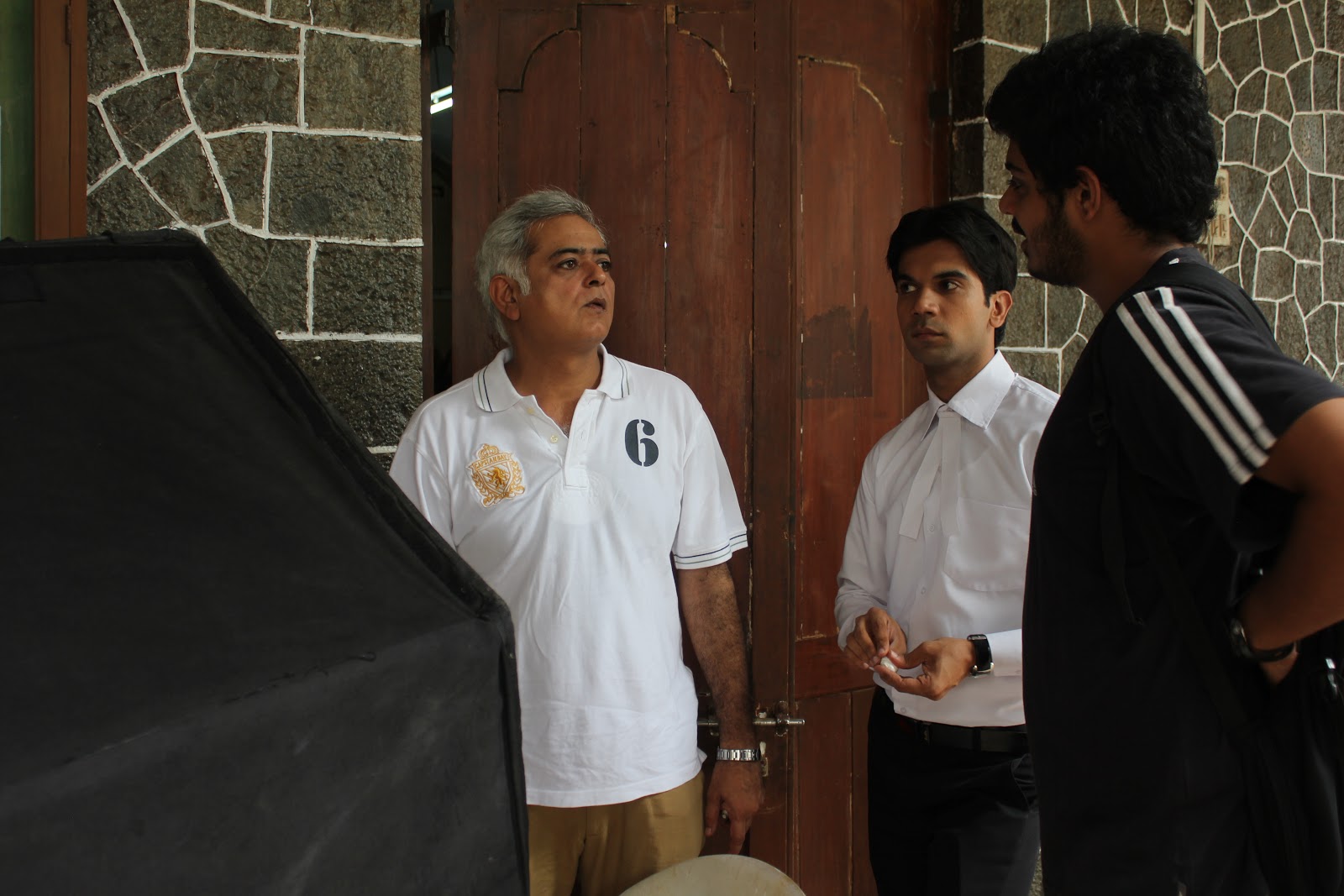
Ad film maker and FTII alumni Ravi Deshpande writes on Hansal Mehta’s Shahid and its journey so far. (Disclaimer – Hansal says he has been a guide and friend.)

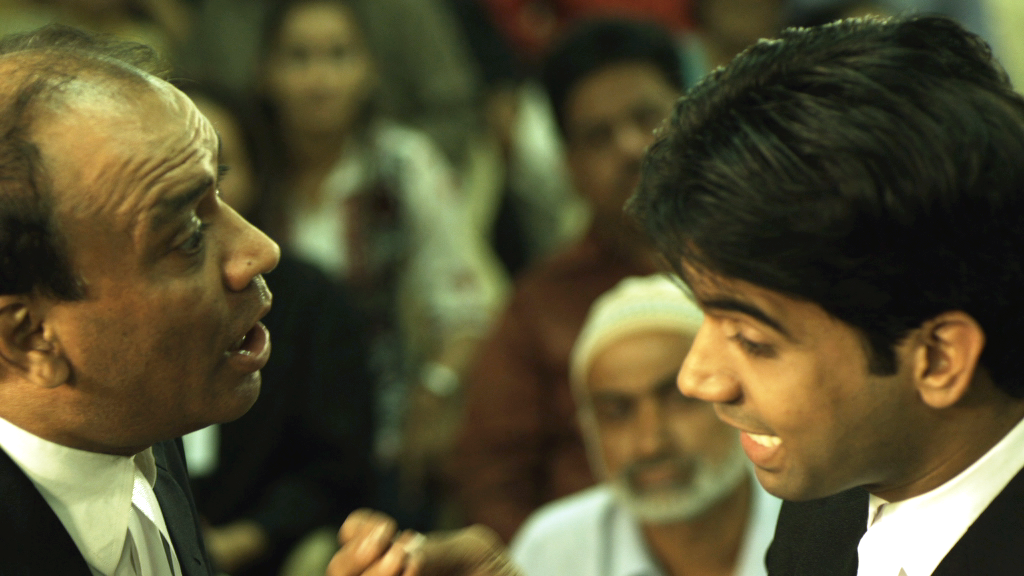
“From reluctant jihadist to crusading lawyer, the life of Shahid Azmi was a remarkable one. Gunned down while defending accused Mumbai bomber Fahim Ansari, Azmi was transformed into an unlikely martyr. But Hansal Mehta’s new film is much more than a biopic; Shahid captures the zeitgeist of a generation.

Shahid’s story began in the slums of Govandi in eastern Mumbai amid violent riots between Hindus and Muslims. A young witness to injustice, Shahid fled his home to a jihadist camp deep in the mountains but, never a dedicated soldier, he deserted as a teenager and returned home — only to be imprisoned on terrorist charges. Tutored by older political prisoners, he resolves to fight injustice upon his release. Finding work in a law office, Shahid struggles against a system steeped in contradictions and hypocrisies, defending clients labelled “anti-nationalist,” “radicals” or “terrorists.”

Hansal Mehta’s Shahid is as much a testament to a remarkable life cut tragically short as it is a cathartic journey through a city filled it seems with equal measure grave injustice and great idealism.”

– Cameron Bailey, Artistic Director, Toronto International Film Festival.

Consider this : By the time he was gunned down, Shahid Azmi had at least 17 acquittals to his credit, a great benchmark for the small span of time he was an advocate.

So why am I writing about this film? Or rather, why am I compelled to write about the experience of this film? Because the film is as close to a real tale as I have seen. The real story of the film concluded with Shahid’s death but just 2 years ago. His strife is still fresh in our minds. It is a Mumbai tale that Mumbaites know. Difficult to satisfy a critical Mumbaite filmmaker’s mind with a Mumbai story.

In the film, the protagonist is a young lad from the FTII stable of actors, Rajkumar Yadav. Leave aside the fact that the bloke does not age through the 2 decades that the narrative unfolds. This fact does not bother me and has not bothered others while watching his stunning underplayed performance. All the other characters (Casting Director Mukesh Chabra) move through the fabric of the film story with finesse (Prableen Sandhu, Mohd Zeeshan Ayyub, Baljinder Kaur, Tigmanshu Dhulia, Kay Kay Menon, Vipin Sharma, Shalini Vatsa, Vinod Rawat, Suvinder Pal, Pawan Kumar, Vivek Ghamande, Paritosh Sand, Prabal Panjabi, Yusuf Husain)

Their mannerisms and expressions are palpable, the interactions are humanly common stance, and the scenes make me angry, make me cry, make my blood rush through my temples, and sometimes make me smile, even squirm with discomfort.

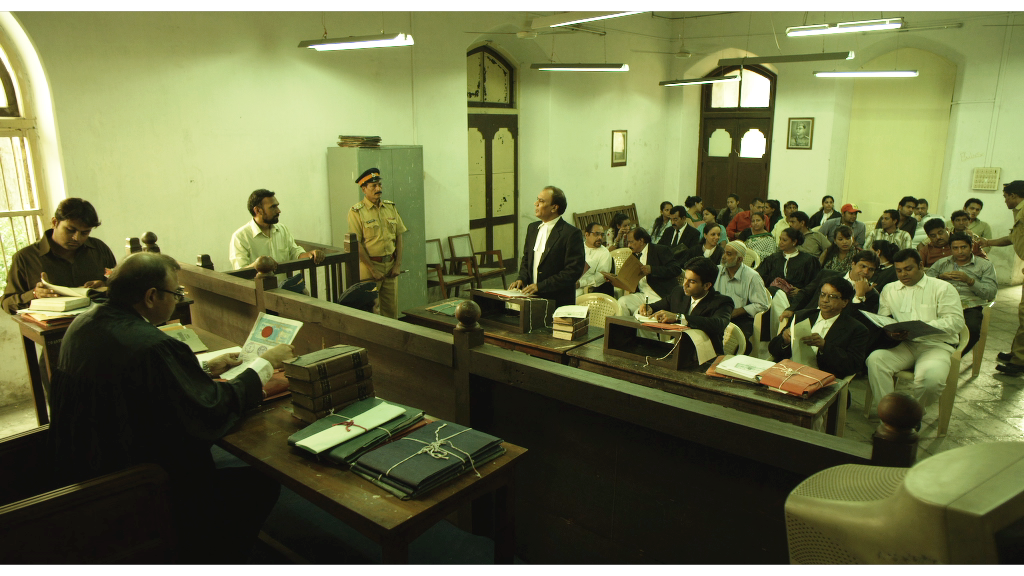
Hansal’s approach to acting as well as most things in the film has been organic in nature, and bereft of conventional method. Many scenes, even dialogues have often been reworked on location. It is a dangerous terrain for a Director to operate because an actor can easily bend a scene in a fashion that could alter the earlier intent. Hansal chose a difficult route to extract from artists what they felt was the most honest delivery. So in the court scene, when the judge too becomes argumentative with the advocates and the accused, the theatre split into laughter, or when the naked Shahid is tortured in the Lodhi Police Station Cell, the viewer in the next seat clenched his fists.

There are other reasons too why this impact is astounding. The Cell is lit by a single tube, and does not light up the protagonist in agony.


Consider this: The DOP (Anuj Dhawan) saw the location (A friend’s godown in Andheri) and said, “Perfect! Lets shoot!” And Hansal as a Director had the balls to do exactly that. Hence the spaces become volumes that the viewer can relate to and inhabit.

Consider this: Shahid’s house in the film is Shahid’s own house, and Shahid’s office in the film where he was shot dead, is in actuality Shahid’s office. A year after his murder, when they were shooting in her house, Shahid’s real mother asked to meet the actor. She just wanted to see him…for her, Shahid was still a part of her ‘present continuous’. Her other son, Khalid Azmi (Played by Vaibhav) has gone on record to say that the film is 95% close to the real story.

So Hansal’s choices, or democratically speaking the crew’s and the cast’s choices were nakedly honest. Hansal was able to guide them through to keep the story of Shahid alive and true. It is one thing to say, fine, I do not care that the actor’s face is not lit up in a scene, and yet another to accept that different digital cameras will land on the shoot on a regular basis.

Consider this: They get a RED MX camera one day, a Red One on another and the next day an Alexa. On some days all they had was a Canon 5D. Hansal and his DOP (Anuj Dhawan) have the guts and gumption to mount it and shoot, to make the most of the time available with the given location and the cast on roll call. What a nightmare for the DI artist and the post-production technical crew.

It looks like a film about the Muslims, for the Muslims, by the Muslims. However, there is not a single crewmember except the artist Arif and the Professor (Played by Mohd. Zeeshan Ayyub and Yusuf Husain respectively) who are muslims. Not the protagonist, neither the director, nor any of the artists, nor even the writers. And the film is about the plight of the Muslims in India. Or perhaps anywhere and everywhere in the world. Simple folk who are pious, righteous, and who wean through the hard struggle of life. Muslims who are wronged for the only reason – that they are Muslims.

And yet, the story could be of any community, as one never becomes conscious of the ‘religion’ in the story but is sensitized only to the situation and the events. Go see any other film about the Muslim community made with adequate or handsome funds and compare – which is the more engaging, which is more honest, which is the tougher film to make, which is bringing a truer story for the audience’s appetite in today’s time of the RTI, which has more layers, which sets you thinking, which churns your bowels, which makes you feel guilty, helpless, angry, which is the one not biased, which is the one that makes you more aware, more empowered, which is the one non-exploitative?

So there is no definite genre that the story can be pinned by. It is neither a courtroom dram, although the crucial scenes are set in courts, neither is it a romantic tragedy, although Shahid’s supportive wife leaves him and then he dies, nor is it a martyr heroic film, although Shahid ends his life as a martyr for a cause. In fact, it is all this and more, because Hansal does not steer it to a dramatic fictional tale but insists steadfastly to narrate the story of an individual with all the truisms intact.

Consider this: Shahid was supposed to be a well-funded film by a corporate production house with a star in place. Hansal and Sunil Bohra (Producer) chose the other route lest the shenanigans of the star system or the numbers game shackle them. And they embraced the hardship with a tougher stance of honesty to make a moving, compassionate film.

For any Director to touch and mould his material with a humanitarian approach is one of the most difficult directing tasks. Hansal has not just immersed himself with the material but internalized it, forgotten his leanings, left aside the grammar of filmmaking that he learnt through his earlier seven feature films, as well as rid himself of easy shooting or post production solutions.

Consider this: The editor Apurva Asrani also co-wrote the film. The earlier decision was to make a non-linear narrative as the world over, the traditional linear narrative is considered to be passé and not smart enough for today’s times. Apu is also known for drastic usage of NGs (No-good takes), jump cutting, and edgy editing styles. With the material in front of them, they both opted to be dumb but true to the material and formed a linear narrative! Apu’s edit does not leap out of the screen at you but lets you immerse yourself in the development of the story unhindered.

Consider this: A veteran artist has reservations because her role seems to be just 3 pages in the courtroom. So she decides nearly 8 hours before the shoot to decline. She has doubted the director because he has said that we will improvise the scene and the dialogues as we shoot. But that is the organic way that Hansal wanted to make the film by involving everyone concerned with the scenes.

Consider this: When the village in the hills threw up extras that were Hindus, the lead actor Raj Kumar Yadav had to train them stepwise (12 steps) on how to do Namaaz. The Director read numbers in order to get shots with movements in cohesion from the group. The sound recordist had but just one assistant for the schedule. That is brave for a film with live sound (Sound Recordist: Mandar Kulkarni).

Although the temptation to turn voyeuristic is huge, Hansal’s camera does not try to barge close to the man who is in flames in the riot filled streets of 1993 Mumbai to sensationalize it, nor does it travel from sunset silhouettes to a frontal of the twosome’s faces up North in POK as they share a happy repartee moment, nor does it underline the most significant moment of Shahid’s assassination in the office with a close up or a long shot. Hansal and the DOP refrain from the usual temptations of over dramatizing the situation. The screenplay (Sameer Gautam Singh and Apurva Asrani), the Mise en scène, the acting, and the editing too blends the subtle manner of telling, aided by a music track that does not interfere with the realism. During the depiction of the love story, the dialogues are as matter of fact as can be, and so are the situations.

Hansal’s ingenious shot division helps us see to events in a seamless fashion. This Spartan style of filmmaking lends way to a new language that is close to real life, and not the crafted, arranged carefully kind of a story, spoon fed by loud, crass everything-to-be-said-through-dialogue and underlined by music. The proximity to the material increases manifold and the viewer relates to the unfolding of the story in a much more integral, much more organic manner. No wonder that audiences in Canada (At the Toronto Film Festival) and at the MAMI waited in long ques due to ‘word of mouth’ to see the film. And no wonder that Hansal has had standing ovations at both places.

Consider this: While Music was being discussed for the film, the sound Engineer was asked what ought to be the music. “Sparse, minimal, hardly there types”, he said. His diktat was followed. (Music: Karan Kulkarni)

Hansal’s directorial abilities were never questioned, and infact lauded several times (Dil Pe Mat le Yaar, Chhal, Jayate, etc.) Nor were his sensibilities (it was his own decision to stay away in ‘Wanvas’ at Lonawala for so many years). He meandered just about everywhere in the Mumbai Bollywood terrain of storytelling. This film has cemented his road. Hansal has to start walking on this path which will lead him to greater heights and us as viewers to greater experiences that he will invoke as a refined old-wine director.

I just hope that the film sees the light of the day and does not but just roam the festivals of discerning viewers across the globe. And hoping against hope that the authorities and political parties do not intervene with their typical horse blinds on release or before.


Consider this: Hansal and Sunil Bohra (Producer) have refrained from censoring the film and releasing it because they want audiences to see the film in this form; the more the better – wonder what will transpire at the censor board.

It is a significant film of our times about our times. There, I have said it.

(It was first posted on Ravi Deshpande’s blog here)

There should be a film festival equivalent of  jet lag – let’s call it filmfest-lag, or just fest lag. Many of us were in the same state in the last seven days. Get up, forget the newspapers, run, catch the 10am show, one more show, quick lunch, another show, or squeeze in office hours in between ( for paapi pet-waale), run back for evening shows, stand in queues, do some jugaad, try to catch two more evening films, and if the body and mind survives, go out for dinner with your gang of usual suspects and return back home with a dead body to start the same cycle all over again the next morning. And if you are a film buff, there’s no other way to enjoy a film fest. This was a week in fast forward mode, at least that’s what it felt – the fastest week in this calendar year.

With the main venue being shifted to NCPA, we, the poor suburbanites, had to travel a lot. But the good part was Tata Theater’s 1100 seats. So once you reach there, one thing was for sure – you will get in. INOX started ticketing system to sort things out but it was more of a headache. We will try to cover the fuckups in a different post. The aim was to see four films everyday. But with so much traveling and paapi-pet responsibility, had to miss two days of the fest. Quick reviews/reccos of the films i saw in the last seven days.

After Lucia : A father and a daughter trying to come to terms with a tragedy in which both were involved. They start their life in a new place, both pretending to be strong but get into situations which go out of their control and ends on a very unsettling note – the baggage of guilt. It gets scary when you are not sure about right and wrong but take a drastic step to justify it. Brilliantly written, acted, and directed, the film starts randomly – a man leaves his car in the middle of the road and walks away. And slowly, over the next one hour you connect the dots. The last shot – a man with a deadpan face and…well, that will be spoiler…is going to stay with me for  long. Must Watch.

Beasts Of The Southern Wild : Aha, another father-daughter story. There is magic, there is fantasy and there’s harsh truth of life and survival. This one is quite an ambitious debut film which creates a terrific new world which is rarely explored on the big screen. A sense of community, that pull of your own land even when the physical “land” doesn’t exists, or it’s all submerged underwater, still you want to return – this one touches upon many interesting themes, see which one works for you. This is what you call a daring debut! Must Watch.

Throw Of Dice : This 1929 silent film was screened with live orchestra and it was my first time in such a screening. Though it was hard to see one musical instrument on-screen and hear the sound of something else, it was quite a unique experience. While the film was rated “Universal”, i kept on counting the number of smooches – three for sure. Where are we now?

Shahid : The first 40 mins or so of the film made me quite restless. All i saw was montage which looked disjointed, not sure where the story was going, and the background score was repetitive and loud. Maybe there was some problem with the projection too. But once it settles down, it flies and how! The best scenes of the film are without any background music – the court room and family scenes. Raj Kumar Yadav is there in almost every frame of the film and he makes you believe that he is Shahid Azmi. A top notch performance, he holds the film together, and am willing to bet my money on him. The strength of the film is the way Shahid is portrayed – it’s not black and white, sometimes you are with him, and sometimes you are not sure about him, his intention or his work. Welcome back, Mister Mehta!

Like Someone In Love : The film has been getting some cold reviews so far but i still took a chance. Early morning show, and a Japanese old man who is not sure what to do with a hooker. With a slow pace that i was prepared for, i was feeling so sleepy that i could have gone to bed with the old man too. I thought it’s better to walk out and get ready for the next one.

Miss Lovely : WOW! The film has brilliant written all over it and in every department. But it’s not an easy watch because Ashim uses the story/plot as merely a prop here. It’s documentation of a time, of a world that deserves much more attention, and it tries to slowly soak you into it, sometimes to the point of suffocation. Money, nudity, sex and exploitation in those smoke filled dingy rooms – it all looks so real that you can even get the stench. It’s indulgent. It’s cocky. It doesn’t want to follow the convention and ends with a brilliant sequence where blood is not scary. Get into this world if you are interested, otherwise don’t even walk in. Easily one of the best directed films in India in the last few years. Must Watch.

From Tuesday to Tuesday – A rape happens, someone sees it, that someone is into bodybuilding and he tries to sort out the lives around him – all in seven days. Just another film that you can easily skip.

Rust & Bone – Aha, this was disappointing. Or maybe i was expecting too much from it. Two lonely people find comfort in each other but their problems and priorities are different. Few sub-plots here and there which really doesn’t contribute much and it ends up saying or showing almost nothing new. On the other hand, this is what i call “cinema for gender equality” because both the male and female leads are hot and sexy and there is ample nudity – time for some good ol’ eye-gasm.

Shameless – A film on incest which sounds like another one on the same topic – Shame. And as Varun mentioned in his post, this was like prequel of Shame. If Shame was minimalistic in his approach with European sensibility and mostly about character sketches, Shameless was completely amreekan in its approach. If you have seen Shame, don’t bother.

The Wall – I knew what i was getting into – a women goes to a jungles and leads a lonely life surrounded by a dog, a cow and a cat. She writes her diary everyday and we get to hear her thoughts on daily life, death, company – philosophy through voice-over. That’s it. Yes, that’s it. Looking at the scenario here, i do wonder if the biggest achievement for these films is that they get made! We love to call it “meditative” genre and sometimes you feel like trying that. The film can also be described as vegetation porn – you either watch so much green onscreen to soothe you eyes or you turn vegetative watching all that for 2 hours. For me it was the former.

Kauwboy – A kid, his father, a jackdaw and a tragedy. Simple things, simple joys of childhood and an effort to simplify life – aha, if only it was all that simple. The director handles the kid and his story with so much empathy that you wonder if it was all written or he just handed the bird to the kid and started following him. Beautiful.

The Hunt – A teacher is accused of molestation by a kindergarten kid. We all know the truth but the kid doesn’t know or understand anything. So? The film started a debate on Twitter because few people thought it’s a simple story of prosecution. I felt that’s NOT the film, it’s about kids psychology, how it works and how the family can change things accordingly – it’s blood scary. Must Watch.

Paanch Adhyay – Film reviewer Pratim D Gupta makes his debut with this bengali film. Though the film has some nice moments and Pratim tries to play around with the structure as well, the film doesn’t really gel well. The second female lead has a squeaky voice which makes things worse and the love story with her feels weak and unconvincing. The songs create a good mood but too much use of the same tunes in background makes it look forced and jarring.

Electrcik Children : A Mormon teenager gets pregnant and thinks its because of a song she heard on a tape. And so begins the search for the singer who has sung the song. The premise actually sounds much more interesting than the film. This is more of a journey film rather than a destination one. And the journey seems short and fast because of the liberal dose of funny moments and dialogues.

Beyond The Hills : Another disappointment. But this one is again brilliantly directed. It slowly builds up a scary scenario as two teenage girls tries to find some comfort in their lives which is all about poverty, loneliness and strict rules of a Monastery. Problem is it takes too long to makes its point and keeps on moving in loop. This one needs patience. On a lighter note, it felt like Gossip Girls set in a monastery. Gir1 wants sex. Girl2 wants Jesus. Rest of the girls are having fun trying to figure out the drama.

Ship Of Theseus : Another desi, another true blue indie, and another WOW! Anand Gandhi’s debut feature is ambitious, assured, and tackles some heavy philosophy on life, death and moral dilemmas but without being pretentious. The first story feels weak compared to other two. It slowly unravels the three stories one by one but never bores you. Also, it’s remarkable that how without any known actor in its cast, it manages to pull it off so smoothly. The background music is unlike other desi stuff and is subtle and haunting. The “humane” factor at its core stays with you for long. Easily one of the best desi debut films. Must Watch.

Pune 52 : Was eagerly looking forward to it because of its trailer. But first things first – trailer is NOT the film. Liked it in bits and parts but as a whole it felt like two films trying to fit into one. It’s more about a married man who is detective rather than a detective who also has wife.  Girish Kulkarni and Sonali Kulkarni holds it together though some of the sequences are suddenly so abrupt and out of the blue. The makers are still working on the film.

Holy Motors – Popular opinion at the fest was that bizarre is the keyword here. But if you scratch the surface and connect the dots, it’s not that bizarre. The treatment makes it look so weird but it’s more of a symbolic representation of themes and thoughts which has been put together like a mixed media art installation. Or just google and read a bit, it will all make sense. It’s great fun till it lasted but don’t think it’s going to stay with me for long. This is cinema of audacity. Must Watch.

(PS – Wanted to start the fest with Sarah Polly’s Stories We Tell. Since that could not happen, i thought at least the header should have some bit of it.)

And what all you saw? Please do let us know your reviews/reccos in the comment section.

@CilemaSnob


With every independent film release, we hear the same questions again and again – why are the tickets priced so high? Why there are no shows in my city? Why there’s no show at my time of preference? It’s always the story from our side. So here’s Shiladitya Bora of PVR Director’s Rare telling us the story from the other side. And the bigger question – why haven’t we seen a breakout indie in a long time? Are we just making indies and not the good ones? (Maybe we need to learn it from the French on how to do this. More here). Over to him.


I am a film programmer.

I earn my livelihood by handpicking independent films for theatrical release.

As a part of my job, I receive, on an average, 3-4 independent feature film submissions/requests every week. Out of these 12-16 films we receive every month, about 90-95% films are very bad and do not even deserve a release on DVD-release, forget theatrical release.

With the advent of digital technology, making an independent film has almost become child’s play. So this 90-95% films that I refer to, are mostly experiments by amateurs in the digital medium. They record footage that is more than 60 minutes in length and feel they have made a feature, and a theatrical release is their birth right.

If every man with a video camera is Steven Spielberg, then I am surely Harvey Weinstein. But, then, I am not.

The remaining 5% of indies that make the cut, they get a small theatrical window in the form of a limited release in selected cities.

Now, an indie getting a limited release does not imply that it is the next best thing to happen after Citizen Kane, all it means that…

1. It is one of the better ones of what is available

2. There is a little bit of awareness of the film

3. It simply got lucky

4. It is backed with very strong recommendation. This may sound unfair but this is how the world functions. Otherwise, how do you think some of the disastrous films make it to the prestigious festivals?

And then, there are some genuinely good indie films that are unlucky.

What I consider my biggest failure was not being able to get a show for Kshay at a regular multiplex in Delhi during its theatrical run.

If Good Night Good Morning was made with Ranbir Kapoor and Priyanka Chopra, it would have been a super-hit. This doesn’t mean that Seema Rahmani and Manu Narayan are any less talented but this is how things are.

In addition to the above, there is one more type of indie films in our country.

These are made by people who started their careers as members of the crew/technicians and finally graduated into directing. Such indies mostly have known cast, technically and quality wise also are superior to the first timers, and when it comes to release, they generally get more number of shows than the others.

Now the big question is
..

How many shows per day a multiplex should give to an independent film?

If we go by the thumb rule of any business – that profit making should be the primary objective of the business –  indies should NOT get a single show in multiplexes.

A mainstream film will any day earn more than an indie programmed at the same slot. Then why do multiplexes take initiatives to showcase indie cinema even by incurring losses?

The answer is corporate Social Responsibility. It’s a way of saying thanks to your ecosystem. It’s a goodwill gesture. Most of the independent filmmakers whom I have interacted with, they all loathe the mainstream, but one thing we all fail to realize is that indies can even think of getting a theatrical release only because multiplexes earn their revenues from the mainstream.

Now, let’s have a look of the costs involved in running one show at a multiplex in Mumbai irrespective of whether one person is sitting inside or a houseful show.

1. Mall Rental Charges

2. CAM – Common Area Maintenance charges

3. Electricity Charges

4. Xenon Lamp charges – this is calculated on the average life of the projector lamp

5. Human resource costs

6. Miscellaneous costs – this may include the huge volume of complimentary tickets that needs to be given to law enforcing agencies every month for running a multiplex.

In addition to the above we should also note the 31.03% applicable tax (Mumbai) on Gross Box Office (45% of Net Box Office receipts).

As per the data available, the occupancy percentage for the best performing/well-known indie films is not more than 25%, making screening of indies a direct loss making proposition for multiplexes.

The setting up of a multiplex is a highly CAPEX driven business and tax rebate/holiday is given as in the case of other infrastructure based industries.

The main idea is to attract investors/foster entrepreneurship and I am not very sure how much valid a reason it is to demand a dedicated auditorium showing indie cinema only.

Initiatives to support the cottage film industry of the country should be voluntary decisions and demanding it from corporates who are already doing their bit, seems unfair. I am sure we do not want reservations in our highly talent-driven film industry.

The next big question : Is there a scope of dedicated theatres screening independent films only?

To be honest, I do not have an answer to the same right now. The answer lies in finding the latent demand for indies. Instead of emotionally supporting anything that sounds like a rebel, sometimes without a cause, we need figures to arrive at an answer.

How many DVDs of independent films actually sell? How many legal and torrent downloads? How many actual tickets sell when these films get a limited theatrical release?

What needs to be our primary focus is how to make good/great indies. This is where we are lacking the most. Films that breakout through important international festivals, win awards and accolades which will automatically lead to buyers in other countries too. Crack that code and we will survive here too. Still in doubt? Scroll up and read the French link again.

Shiladitya Bora manages Director’s Rare, a PVR initiative to promote Independent Cinema.

Pic Courtesy – Independent Film Festival of Boston 2009


After its premiere at the Telluride Film festival, Shivendra Singh Dungarpur’s documentary, Celluloid Man will soon be screened at the Mumbai Film Festival. Here’s the first teaser of the film.

Here’s more on the film from its official FB page…

Celluloid Man is a tribute to an extraordinary man called Mr. P.K. Nair, the founder of the National Film Archive of India, and the guardian of Indian cinema. He built the Archive can by can in a country where the archiving of cinema is considered unimportant.

The fact that the Archive still has nine precious silent films of the 1700 silent films made in India, and that Dadasaheb Phalke, the father of Indian cinema, has a place in history today is because of Mr. Nair. He influenced generations of Indian filmmakers and showed us new worlds through the prism of cinema.

As Mr. Nair speaks, we see the history of Indian cinema unfold. What emerges is a portrait of a man so in love with cinema that even his family had to take a backseat to his obsession. Mr. Nair is not just the founder of the National Film Archive, but a living, breathing museum of cinema. Even in retirement, he chooses to stay across the road from the Archive watching over his legacy. The fact that India has a cinematic heritage at all is the singlehanded achievement of this man.

He is truly India’s Celluloid Man. There will be no one like him again.

Cinematography: Santosh Thundiyil, K.U. Mohanan, Avik Mukhopadhyay, P.S. Vinod, H.M. Ramachandra, R.V. Ramani, Vikas Sivaraman, Mahesh Aney, Kiran Deohans, Ranjan Palit, V.Gopinath

Editor: Irene Dhar Malik

Sound Design: Mohandas

Music: Ram Sampath

Titles/Online: Huzefa Lokhandwala, Santosh Sabherwal

Associate Director & Research: Manju Parvathy Iyer

Post Production: Pixion, Prime Focus. Processing: Kodak, EFX Prasad

– 35mm; English with Subtitles; Duration: 163 mins

Aspect Ratio: 1.85:1; Dolby 5.1; Colour / B&W

To know more about the film, click here for its Facebook page.