The brief was the same this year. A mail was sent to the usual cinema comrades who watch almost all the films, write about them, or contribute and help in running this blog. Pick a film (released/unreleased/long/short/docu/any language/anything) that stood out and has stayed with you, whatever is the reason. Since the idea was that we cover maximum films, so no two people were allowed to write on the same film. And nobody was told who was writing on which film. Also, this year, writers were asked to pick underrated ones. The more underrated it is, better was the choice.
So here is the final list – a mixed bag of few usual suspects and some underrated ones.
We are closest to the voices within us, multiple voices that reside within us, our emotions that talk to us, maneuvers specially through life’s complicated phases. Pete Doctor personifies these complex emotions in Pixar’s Inside Out. It starts with Kaufman-esque question that most of us have asked ourselves, whether it is possible to get a peak inside somebody’s head and wonder what’s going on. Doctor’s pre teen daughter was the inspiration behind the idea when he wondered about her changing emotional behaviour, which was reminiscent of his own memory of moving out of his childhood home.
In the film the 11-year-old Riley goes through an emotional turmoil when her family moves from a quaint idyllic life in a small town to the hustle bustle of a city. The five emotions in her mind’s headquarters, Joy, Sadness, Anger, Disgust and Fear struggle to help Riley maintain a balance.
The genius of the film lies in the interplay between Riley’s physical and emotional world where it tells us depression is not just a state of absence of Joy and Sadness but the role sadness plays as a heroic emotion to connect us to our closed ones. Inside out moves you to the extent that you will find yourself talking and empathizing with the running emotions of your own control room.
The images are soaked in nostalgia.
And eventually coming of age and growing up. Open Tee Bioscope is all that and more.
sukanya verma on Crimson Peak
Watching Guillermo del Toro’s Crimson Peak is like securing a privilege pass inside the ambitious imagination of a dark genius inhabited by fanciful monsters and imprinted by a mammoth knowledge of art, literature and cinema.
Every corridor opens into wonderment but macabre and mystery occupy a place of prominence.
Crimson Peak relates the fanboy influences and how he’s manifested them to fashion an exquisite gothic romance.
In this spellbindingly atmospheric tale where production design is king, ghosts aren’t merely to terrify but provide gruesome clues leading up to a reality that’s far more creepier.
And yet its seductive narration isn’t concerned with revelations as much it is with dedicatedly fanning our morbid fascination for everything forbidden and murky. All this time testing if his viewer can recognize the hat tips to all the innumerable classics del Toro’s inspired by.
Gratifying if you do, educating if you don’t.
bhaskarmani tripathi on Phoenix
Talking about a dreadful and painful event, instead of considering it sacred, helps healing. That must be the reason why Holocaust is a very well documented event in European culture. It has been the premise of some of the greatest films ever made. Agar apne girebaan mein dekhein, we’ve not given Partition its due. A Holocaust survivor returns to Berlin after her wounded face is reconstructed, and searches for her husband only to come of age with the dynamics of the society that’s now a radically different one. An atmospheric, twisted story about the trauma, conflicts, loss and identity crisis in a post war Germany where Nazis and survivors now have to live together. But most importantly, it’s also about a love compromised. The title Phoenix serves as a metaphorical reference to the tragedy. The pain can be seen as a constant shade in Nina Hoss’s eyes in the film, especially in that gut wrenching climax that renders a different meaning to Goosebumps.
mihir pandya on मुज़फ़्फ़रनगर बाक़ी है / इन दिनों मुज़फ़फ़रनगर
पच्चीस अगस्त 2015। वो गाढ़ी ऊमस से कुचला हुआ उदास दिन था। जब मैं गांधी शान्ति प्रतिष्ठान के उस परिचित अंधेरे हॉल में घुसा तो फ़िल्म शुरू हो चुकी थी आैर मुझे भीतर परदे पर चलती फ़िल्म की रौशनी के अलावा कुछ आैर दिखाई नहीं दिया। संयोग नहीं कि वो फ़िल्मकार शुभ्रदीप चक्रवर्ती की पहली बरसी का दिन था। वही दिन जब उनकी फ़िल्म की कैम्पस में स्क्रीनिंग करना चुनौती बन गया था। यहाँ कैम्पस को दिल्ली पढ़ें आैर दिल्ली को पूरा देश। पृष्ठभूमि: एक अगस्त 2015 को दिल्ली के किरोड़ीमल कॉलेज में फ़िल्मकार नकुल सिंह साहनी की दस्तावेज़ी फ़िल्म ‘मुज़फ़्फ़रनगर बाक़ी है’ की स्क्रीनिंग को सत्तारूढ़ दल से जुड़े छात्र संगठन ने जबरन रुकवा दिया था। नया निज़ाम अपने डैने फैला रहा था। जिस कॉलेज से मैंने अपना मास्टर्स किया, जिस विश्वविद्यालय ने मुझे वो बनाया जो मैं आज हूँ, आज इनके नाम सार्वजनिक समाचारों में अजनबी लग रहे थे। शुभ्रदीप की मुज़फ़्फ़रनगर पर निर्मित दस्तावेज़ी फ़िल्म ‘इन दिनों मुज़फ़्फ़रनगर’ की स्क्रीनिंग नहीं हो सकती, हमें साफ़ बता दिया गया था। ‘देखा नहीं क्या हुआ’, छात्रसंघ चुनाव सर पर थे आैर नकुल की फ़िल्म का उदाहरण सामने था। आखिर शुभ्रदीप की एक अन्य फ़िल्म की स्क्रीनिंग हुई, मुश्किल से 15-16 दर्शकों के साथ, लेकिन सच कहूँ, हम हर आहट पर चौंक रहे थे।
पच्चीस अगस्त 2015। वो बारिश की उम्मीद से भरा उर्वर दिन था। परदे पर चलती फ़िल्म की चमक कुछ कम हुई तो मेरी नज़रें अंधेरे की अभ्यस्त हुईं। खचाखच भरा जीपीएफ़ का हॉल मेरे सामने था। दिल्ली में अगस्त की ऊमस भरी शाम बिना किसी एसी या पंखे के तीन सौ चार सौ लोग सिनेमा देख रहे थे, जिनमें ज़्यादातर के पास बैठने को कुर्सियाँ भी नहीं थीं। उस एक अगस्त की घटना के बाद, जहाँ दर्शकों की गवाही के बाद भी अन्तत: ‘मुज़फ़्फ़रनगर बाक़ी है’ की स्क्रीनिंग रुकवा दी गई थी, बहुत सारे सिनेमा को चाहनेवालों आैर ‘प्रतिरोध का सिनेमा’ के दोस्तों ने कौल लिया था फ़िल्म की सार्वजनिक स्क्रीनिंग का। पच्चीस अगस्त को, शुभ्रदीप की पहली बरसी पर यह स्क्रीनिंग हुई, लेकिन सिर्फ़ दिल्ली में नहीं। बाइस राज्यों के पचास से ज़्यादा शहरों आैर कस्बों में अस्सी से ज़्यादा स्क्रीनिंग्स हुईं ‘मुज़फ़्फ़रनगर बाक़ी है’ की। कहीं पचास दर्शक थे तो कहीं पाँच सौ। हज़ारों लोग साथ देख रहे थे उस सच्चाई को जिसे निज़ाम नहीं चाहता की आप देखें। भले ही यह शुभ्रदीप की फ़िल्म नहीं थी (उस पर सेंसर की रोक जारी है आैर मामला कोेर्ट में है) लेकिन उन्हीं के संघर्ष की साझेदार फ़िल्म थी। मृत फ़िल्मकार जिसके रचनाकर्म को निज़ाम कहीं गहरे गाड़ देना चाहता है, फ़िर राख़ से उठ खड़ा होता है।
अरुंधति अपने निबंध में एक जगह लिखती हैं कि लेखकों को यह भ्रम है कि वे सुनाने के लिए अपनी कथाएं चुनते हैं। दरअसल यह कथाएं हैं जो अपने लेखकों को चुनती हैं। समय भी अपनी कथाएं खुद चुनता है आैर एक ऐसे साल में जब सिनेमा की बात करना दरअसल प्रतिबंधों, राजनैतिक नियुक्तियों, जीवट भरी छात्र हड़तालों, पुरस्कार वापसी की प्रतिरोधी कार्यवाहियों आैर ‘संस्कारी फ़िल्मों’ की आेर नियंता संस्थानों के बढ़ते कदम की बात करना हो, 2014 के मुज़फ़्फ़रनगर दंगों पर निर्मित इन दो वृत्तचित्रों से ज़्यादा ज़रूरी आैर कुछ मुझे नज़र नहीं आता। सिनेमा कला के लिहाज़ से शायद यह साल की सर्वश्रेष्ठ फ़िल्में नहीं हैं। धर्म-जाति-जेंडर-वर्ग के भेदों बीच उलझे समकालीन यथार्थ को समझने के क्रम में शायद यहाँ कुछ सरलीकरण भी मिलें। लेकिन यह हमारे दौर को समझने के लिए सबसे ज़रूरी जीवित दस्तावेज़ हैं। शुभ्रदीप की फ़िल्म जहाँ बड़ी बारीक़ी से आकस्मिक लगती घटनाआें के पीछे के षड़यंत्र को उजागर करती है, नकुल दिखाते हैं कि कैसे इन दंगों के फलितार्थ वृहत चुनावी परिदृश्य से सीधे जुड़ते हैं। फ़िल्म के एक प्रसंग में जहाँ एक युवा अपनी जला दी गई हलेवी के नष्ट अवशेष दिखाने फ़िल्मकार को भीतर ले लाया है, नकुल पृष्ठभूमि में ‘गरम हवा’ की दादी अम्मा की अपनी हवेली को याद करती आवाजें पिरो देते हैं। आैर मुझे याद आते हैं स्वयं प्रकाश की कहानी ‘पार्टीशन’ के कुर्बान भाई, “अाप क्या ख़ाक हिस्ट्री पढ़ाते हैं? कह रहे हैं पार्टीशन हुअा था! हुअा था नहीं, हो रहा है, ज़ारी है…”
anand kadam on Killa
Killa was cathartic. It ripped through my memories. That craving for a MTB cycle which we couldn’t afford, that desire to visit a city, sunday mornings watching Rangoli on neighbour’s television and friday nights with Philips top ten with Chitrahaar in somewhere between, Mowgli and Leela and Bagheera, those rainy days with gumboots, those unheard words, those unspoken sorrows, lost friendships and broken relationships without understanding any of those. It made me want to go back in time and hug my 12 year old self and let him know that it’s going to be a fuck up full of heartaches and scars but you’ll manage, you’ll survive, you’ll be all right. Killa did all this to me while being absolutely beautiful. Drop dead gorgeous. Each frame dripping with nostalgia and melancholy.
karan anshuman on Taxi
After This is Not a Film, one would expect Jafar Panahi to take it easy. Closed Curtain was a subject like many other Iranian films, a melancholic metaphor about the state of affairs except the parable here, was his own personal persecution.
But with Taxi, the moment you realize it’s him driving the titular car and that unassuming smile that he breaks into when one of his customers – a DVD bootlegger – recognizes him, you can’t help but salute the spirit of a man who will give up every personal freedom to make a small film to bring us within touching distance of life in theocratic Iran. And do it with such panache, humility, and sharpness!
And it is not only using filmmaking as a political vehicle, a point to prove. His life is his love for filmmaking itself. Look at the sheer craft of Taxi. Look at that flawless writing, casting, and performances. For those of us who’ve chosen a path where film is fantasy, Taxi comes as an awakening, to go back to our roots, to what inspired us in the first place. And that human rights lawyer who proffers us viewers a flower, keeping it on the dash and says “Here is a rose for the people of cinema, because the people of cinema can be relied on.” We must live up to her expectations.
silverlight gal on Kumiko, the Treasure Hunter and Experimenter
Anyone who has had film-related conversations with me (online or offline) will know that I’m an unabashed Coen brothers fan. So, in early 2015, when I got to know from a film news website that a Coen brothers movie Fargo forms a crucial part in a new indie movie, I knew I had to see it. While Kumiko The Treasure Hunter may not count as one of the year’s best, it has stayed with me and will stay so for a long time to come. First shown at Sundance in 2014 and later released widely in 2015, this film by the writer-director-actor Zellner brothers tells the story of the titular Kumiko, an office lady in Tokyo who finds her everyday life and job increasingly mundane and decides to leave everything in search of a supposed hidden treasure in the American midwest. To what extreme this journey takes her and what happens to her along the journey forms the premise of the film.
***
Experimenter (with leads Peter Sarsgaard and Winona Ryder) is one of the underrated films of 2015. A biographical drama, it tells about the experiments conducted in the 1960s by Stanley Milgram, an American social psychologist. Called as the Obedience experiments, they first generated some controversy due to the ethics involved in the experiments. Years later, the experiments were widely acknowledged and his book based on them went to win awards and accolades. The findings of his experiments are timeless and relevant even in this day and age, especially in the field of politics. With a bravura performance by Sarsgaard and an offbeat storytelling approach by Michael Almereyda, the film packs a neat punch.
rahul desai on The Threshold
I wandered into this film on a drowsy Mumbai Film Festival morning without any expectations. Pushan, the DOP-director, is a popular playwright, and the son of famous stage/TV actor Jayant Kripalani; this is his first feature-length film, which, rightfully, is a simple chamber-piece that seems to have found its origins on stage. It is entirely set in a cabin in the mountains, where a newly-retired Delhi couple are beginning the last phase of their lives. The husband (Rajit Kapoor) is shocked to discover that his wife (Neena Gupta) wants to leave him, a day after their only son gets married. “What do I tell others?” is a line that keeps popping up – representative of the form of many unions – sustained only through habit and comfort, instead of old-school passion and love. The film happens over one tumultuous, argumentative day – where, through their bickering and desperate pleading, we are left to imagine their 30 previous years of ‘wedded bliss’.
Perhaps I find myself writing about this film again and again because it hit me while I wasn’t looking. It isn’t a masterpiece, or even the best film I’ve seen all year; it’s just one I cannot forget, because it happens to touch upon a phase that I’ve always been very afraid – and increasingly curious – about. It shows me two very familiar characters I’ve seen in almost every Indian household, and gives me an intimate, uncomfortable peak into what happens behind closed doors. The two actors cultivate such a weathered, lived-in feel about them, and together, they prove that love is traditionally a subset of dependence, and that escaping isn’t the same as breaking free.
manish gaekwad on Bajirao Mastani
Period films are full of bombast – fire and brimstone. Some of the best achieved films of the genre this year – Baahubali and Katyar Kaljat Ghusli suffer from hammy content – characters often roar like bruised lions and run amok like musth elephants – as ill-behaved as the past comes through period dramas – since we couldn’t know better. And so amidst the general helter-skelter Sanjay Leela Bhansali’s Kashibai gently burns the screen reflecting the ill-fated lovers, sits down in absolute silence – notice there is no hysteria and ham slips, or rather burns with the screen before us. A screen-burning intermission follows. This mute elegance (if fire can soothe), something Bhansali has himself floundered to reach over the hammy years, sab maaf hai. Despite its stiff or vapid leading lady, its hero engaging in simian behaviour, Bajirao Mastani – a pale version of Mughal-E-Azam deserves to be this era’s period film to beat. Writer Prakash Kapadia ko bada salaam.
kushan nandy on Victoria
A heist film that starts in a basement pub at presumably an hour before dawn, rockets to a terrace, travels through underground parkings and hotel rooms as night turns into dawn, love into desperation, a Linklater-ish tale into a Hadley Chase thriller, erasing from our minds the fact that this is all happening in a real-time and single shot sequence giving little space to actors or technicians to err, turning into a schoolbook of cinematic execution and improvisation, finally leaving us with the haunting image of Laia Costa, playing the protagonist Victoria, and successfully pulling off that rare blend of content and technique that cinema is all about.
varun grover on Junun
It was a rare event – watching JUNUN at MAMI-2015. I don’t think I’ve ever listened to an entire (virgin) album AND seen its making process together at the same time. Generally one looks for the ‘making of’ after one has experienced & liked the film or album, but in this case the process was reversed. (I think Imtiaz Ali knows that such a reversal works as he always releases the making of his songs before the very song.) The album was being launched to us through the film. We had no idea what to expect (except of course a ‘good’ film, as Paul Thomas Anderson’s name is attached) when we walked in & the first surprise was to know that Shye Ben-Tzur was present at the screening. What followed was an hour long session of madness – Jonny Greenwood and Shye Ben-Tzur jamming with local qawwals from Rajasthan as lots of shaky handy-cam/drone-cam movements took us into the emotional as well as real bylanes of the artists’ lives. (IMDB says PTA’s real cameras got confiscated at the airport so he had to make do with handycams and cheap drone cams. What a blessing!) The music, of course you’ve heard it by now, hit the flesh like a hot-red nail & the ultra-casual footage elevated the illusion of being in the same room of Mehrangarh Fort as the musicians. By the end, I had even forgotten that it was a PTA film. It was, but it was way more a Shye Ben-Tzur, Jonny Greenwood, Aamir Bhiyani (my fav musician in the film), Zaki Ali Qawwal, Asin and Afshana Khan (what voices!) film. (click here to see some deleted footage)
neeraja sahasrabudhe on Badlapur
If they have Fargo, we have Badlapur. Dark, twisted and extremely riveting. Delving deep into the psyche of what makes a crime/criminal. Is a cold-blooded murder worse than a crime committed in the heat of the moment?
The intended crime itself was flimsy – robbing a small bank, but nothing is that simple when you know that the director is Sriram Raghavan. So, as the film warns you – don’t miss the beginning!
As the film introduces us to its protagonists – I couldn’t help but think how much the idea of black and white has changed from the 80s, 90s cinema, when the hero was almost always lower/lower middle class – they had the moral high ground. I was soon proven wrong, for there is no black and white in Badlapur. The film shifts its perspectives and audiences shift their loyalties. The story moves through false leads, uncomfortable encounters, and some extremely tense scenes. Badlapur is uncompromising, and one of the most original films to have come out of Hindi film industry in recent times.
ranjib mazumder on Aferim!
We love to crib, criticise and abuse, because it’s easier than being objective or exercising compassion. History that retains all the seeds of our present dystopia is hardly present in our discourses, and our films, too, avoid any dialogue with the past. History is conveniently mauled in our cinema, because filmmakers find a shortcut to research in the name of serving popular entertainment. Just like it took a non-Indian to make the definitive film on Gandhi, the authoritative film on slavery in America, 12 Years A Slave, too, was made by Steve McQueen, a non-American.
In such a context, Radu Jude’s 2015 film Aferim! was a beautiful surprise. A Romanian director making a film on slavery, one of the grim realities of his country’s past, with anger so informed, it made me wonder whether we would be capable of such a feat in our cinema, without getting swayed by nationalistic fervour. Set in Wallachia of the early 19th century, and shot in crisp black and white, this costume drama sends a father-son duo in search of a fugitive slave. Masked as a road trip film, their journey reveals the ugly side of racism in a key historical period through the prism of black humour, and never for a moment, does the director let his contempt for the past come in the way of objectivity. It doesn’t wish to set the record straight, and makes you stand at the hapless space between the perpetrator and the perpetrated, something that J. M. Coetzee does most brutally in his novels. I wasn’t surprised a bit when I read about the backlash it received in its home country since its release. For those who are historyless, the past is a foreign country. And yes, the word ‘aferim’ is Turkish for ‘bravo’, and the director uses it several times in the film to lay the irony bare. Aferim, Mr Jude.
sudhish kamath on Kaaka Muttai
When a pizza outlet comes up where their playground used to be, two kids who make a living picking and selling coal off the railway tracks need to figure out a way to sink their teeth into this appetizing mouth-watering new dish called pizza.
Except that it costs 300 rupees. What they would make in 30 days of selling coal. Manikandan’s Kaaka Muttai, is the Slumdog Millionaire the world never saw. It shows us an India that’s happy and comfortable in its slums despite the growing gap between the haves and the have-nots.
Kaaka Muttai is set in a slum at the edge of civilization where good and evil is simply a choice for kids. Having grown up with kids next door who steal phones (they wait for speeding trains to pass them and knock off phones from the hands of train passengers sitting at the door… all it takes is the swing of a stick), the two young heroes of Kaaka Muttai, in the middle of their adventure to buy a pizza through honest means, hit a dead end.
And the older kid picks up the stick and waits for the speeding train. He sees a guy engrossed on his phone sitting at the door. He stands ready to strike… and he realises. That it’s wrong. It’s not him. He drops the stick and walks away. This is India too.
(P.S: This is not how the film ends and there’s no way I would ruin the film for you but enough to say, it’s got one of the best endings of the year.)
suyash kamat on Lal Bhi Udhaas Ho Sakta Ha
Amit Dutta’s cinematic world isn’t what we are used to. We must submit ourselves, consciously as well as subconsciously. As he begins to guide us through his seemingly abstract narrative, we begin to lose our usual selves, and start living his sense of time and space. A rush of feelings engulfed me as I chose to walk back home after the screening instead of driving. I wanted to stay there, in his time, in his spaces. Contemplate a little more, meet myself. A written post couldn’t have possibly done justice to what his film had done to me. Following are the lines/poem that I noted as the feelings rushed past me, hazy and unclear.
It began.
A house, a bulb, a phone call and him.
Lost. Surrendering unknowingly to its world.
Valleys of Shimla echoing with the chants of Varanasi.
Mani Kaul’s Siddheshwari, perhaps,
We were now living his childhood
Strokes of green, red too.
Leaving his world, time lost its count
And I wonder, what changed by the end?
jahan bakshi on The Diary of a Teenage Girl
“This is for all the girls when they have grown.”
Dramedies about coming-of-age and dysfunctional families have become such a tired cliche, especially among American indies- and yet, once in a while comes a film that surprises you and gives the genre a fresh shot in the arm. Debutant Marielle Heller directs this adaptation of Phoebe Gloeckner’s illustrated novel with astonishing confidence, sensitivity and poise. It’s genuinely risky and dark material, morally complex, not politically correct by any measure, and the film doesn’t take any easy stances or routes. It’s a daring portrayal of budding female sexuality- 15 year old Minnie Goetz (Bel Powley in a staggeringly good performance) is horny as fuck and yet aching for intimacy, vulnerable yet equally manipulative. She wants to be touched- in every sense of the word. The film is brave and astute enough not only to not judge her, but even her mom’s boyfriend who she falls into a torrid affair with. Her experience, sexual or otherwise change her, but don’t define her… she is more than the sum of them. A film critic remarked that ‘no man could have ever gotten away with adapting Phoebe Gloeckner’s novel in such frank terms.’ But isn’t that the whole point? This is a story about a woman, (which had to be) told by a woman… and we sure as hell need more of that.
PS: Marielle Heller and Andrea Arnold have both individually directed some episodes of the amazing second season of Transparent (if you still haven’t checked out this show, change that NOW) and it was quite interesting to realise this funny coincidence between their two (otherwise very different) films.
shubhodeep pal on Me, Earl and The Dying Girl
Where did movies with heart go? It seems that as Hollywood progresses through the years — or regresses, depending on which side of the glass you’re looking at — there is very little space left for small films to make a big impact, outside of film festivals. In fact, if you look at the top grossing movies of 2015, you inevitably find a sorry pattern in the films that made it big — franchises (Star Wars, Hunger Games, Spectre); action entertainers (Jurassic World); a combination (Furious 7); and, of course, the nearly unbearable Marvel factory (Avengers, Ant Man). Then, of course, there are also films that have grand ideas — science fiction / fantasy films generally fall under this umbrella: for instance, The Martian; Mad Max.
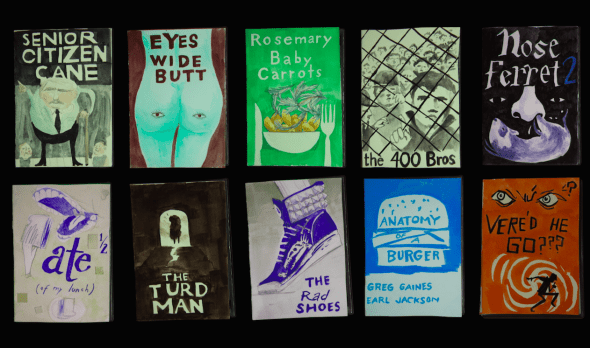
Inside Out is perhaps the only exception, but that too follows a relatively well-set formula of animated movies made painstakingly by Pixar. Of the major films released this year, it is only the last one that left me (and possibly everyone else) with a warm, fuzzy feeling. A feeling that was brought back in surprising ways by this year’s Me and Earl and the Dying Girl, a film whose title says everything and nothing about the film. Forget the dying girl; forget the characters; forget the well-worn plot of evoking sympathy for an endearing character who is about to die (Rachel). Me and Earl and the Dying Girl is about films; the joy of making them; the underpinning madness of it all; the tropes, and overturning the tropes (a tattooed, weed-smoking teacher; the ending of the film). Nothing is what it seems. Through the medium of parody film-making, Greg and Earl, show a madness for films that finds its pinnacle in the life (or what remains of it) of the dying girl. The final fifteen minutes are perhaps the most surreal and touching moments I’ve experienced through a film in recent times — a combination of sorrow and pathos that only film can engender. And, at the end, when the film — and the film within a film — is winding down, you discover that you knew nothing at all about the Dying Girl.
And that is why films never end, and the madness never fades. Because even after the final fade out, the story is still unwinding, and there are more scenes and lines to discover.


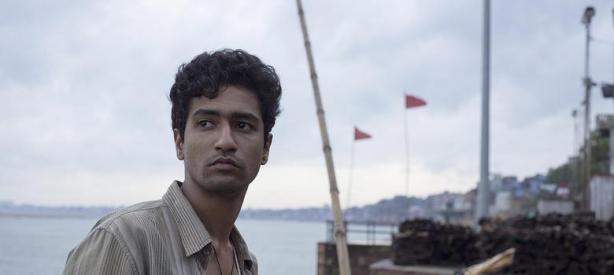
 Aditya Vikram Sengupta made an impressive debut with his feature film,

 F.i.g.h.t C.l.u.b