Archive for the ‘Movie Recco’ Category

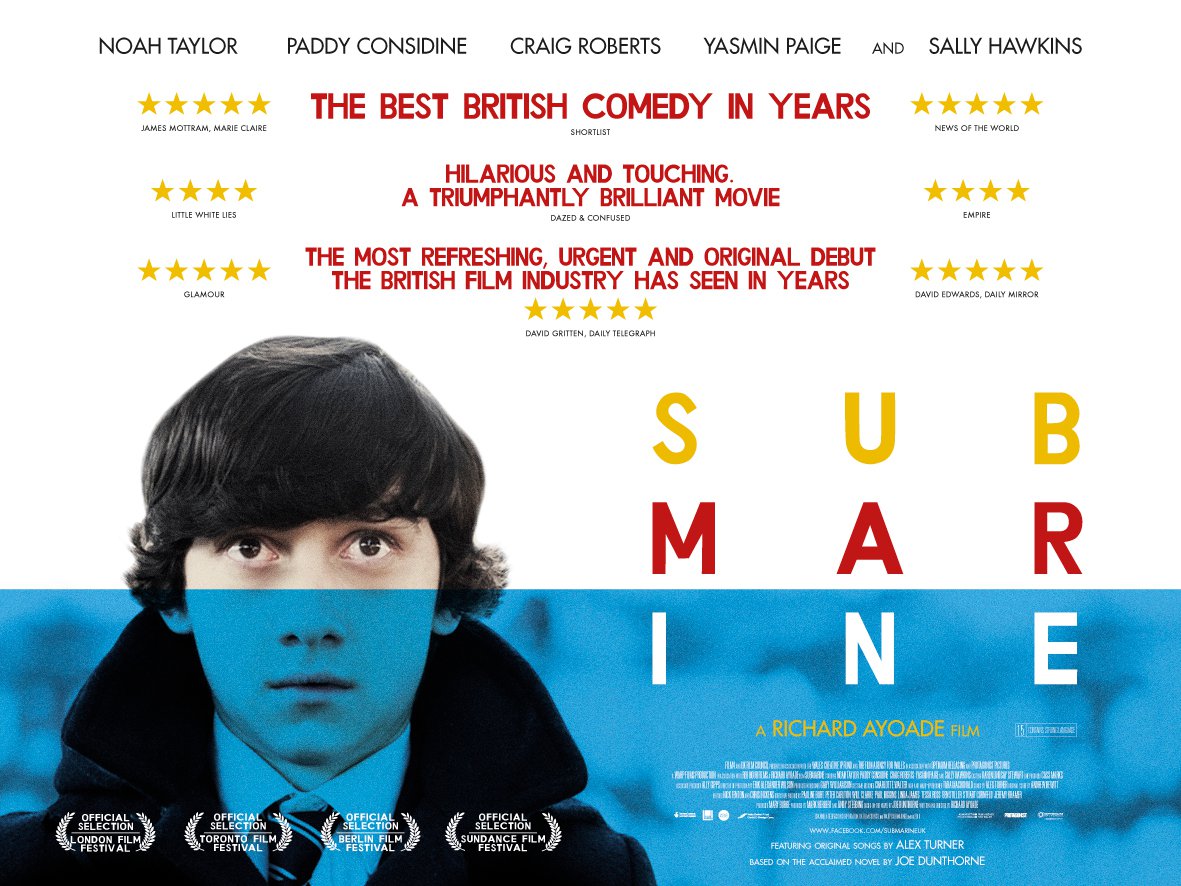
Don’t worry if you are not sure what exactly is the meaning of ATAVISTIC. Just read the post and then watch the film. Submarine is a small British film that none of us had heard about. And then came the first trailer (scroll down) of the film. Whatever they say about making the first impression, Submarine managed to do all that. New faces, new visuals, delightful sound (do check out the music too) and a debutant director.  So here’s our recco post, written by writer-filmmaker Neeraj Ghaywan.  The film is based on Joe Dunthorne’s novel by the same name.
The physics teacher would never leave when the bell rang. She would always borrow five more minutes. I’d grow impatient, check my digital watch, pack my books, tie my shoe laces and then ride my bicycle like a bat out of hell. 8 kilometers of a ride back home. My mother would scream from the kitchen, asking me to wash my feet. I would hurl the shoes in a corner, put the bag on the sofa and run for the remote.  The Wonder Years on television was the best time of my day. Everyday 4:30. I almost grew up with Kevin Arnold. I even tried to impersonate his attempts to impress Vinnie Copper, his high school sweetheart. Not that any of the impersonation worked but The Wonder Years has been a part of my formative years, of coming of age sitting by a sea of fireflies brimming on a creek.  And I reclaimed that part of childhood watching Submarine.

Every classroom has this guy who would be quiet in the class, make drawings with no meanings in his history book, watch his mates play from the class window, go mute before making up a coherent sentence but would write eloquently about a spaceship dream.  Ayoade’s Submarine explores the mind of such a person, Oliver Tate, by being that person as a narrative.  Set in Swansea, we are lead into Oliver Tate’s adolescence; the first love, the first kiss, taking a blow on his nose when asked by bullies to call his girlfriend a slut, his attempt to save his parent’s marriage and his coming of age.  We never see Oliver Tate as a viewer from outside of his world but we become him and that is the most beautiful thing about Submarine. Rarely does the narrative veer off Oliver but in a deeper subtext, Submarine is about those people, who live in a shell.  If they walk by a street, you’d hear guffaws and dry giggles from around the corner but they’d scuttle away and then talk to themselves when no one’s around, which is most of the time.  Oliver’s girlfriend, Jordana has bouts of eczema, doesn’t talk much, mostly in half sentences. She lights match sticks to calm herself.  They both meet in abandoned warehouses, under rusted iron bridges and playing with fireworks, signifying their unspoken rejection towards accepted social norm and the bourgeois that surrounded the 80s. Oliver’s parents haven’t had sex for seven months. Oliver makes a graph of the light dimmer’s intensity every day, which is how he arrived at this number of 7 months. His mother works in an office where you bring your own cake for your birthday.  Consumed by repressed love for an ex-boyfriend who’s just moved in next door, she turns more distant towards her husband. Oliver’s father is a marine biologist, completely uncool and looks like a black and white image of an old book called “Human Impacts on the ancient marine ecosystems”.  It is a story of social freaks trapped in their submarines of consciousness, cocooned by denial and ceasing to resurface.

As children we would go in to disconnected reality being heroes in our own land of imagination. Oliver has exaggerated visions of what it would be like when he is dead; the candle light tributes, the news channels covering the most important death since Lennon, pretty girls from the class crying and he would suddenly return to life with a cape strung on his back. These subtle moments, abled by an outstanding score by Alex Turner and visually arresting photography by Erik Wilson, make Submarine a film you’d want to go back to those yesteryears. It’s set in the 80s but looks timeless almost like a utopian world. Craig Roberts as Oliver Tate emotes volumes with his restrained poker face, throughout he has a face of a kid who is just get caught stealing father’s money. Yasmin Page playing Jordana Bevan has great screen presence enough to intrigue you with questions about what is eating her from inside, why lighting a match calms her and not to forget the red over coat. Sally Hawkins as a confused wife with a fractured past, emotes histrionically but never goes over the top, although it takes a while to adjust to her jumpy demeanor. Noah Taylor as the quiet father performs with aplomb being a caring father and a carefree husband at the same time.

The film’s greatest strength is its seamless writing, making it undecipherable where drama ends and where humor begins, although the quasi-horror chapter titles seemed out of place.  The ability to marry pathos with humor is an art and that shows best in the scene where Oliver confesses about having a girlfriend. The parents don’t express it but we know from their measured pauses that they are happy that he is not gay. The mother fashions a deplorable thumbs up at him while the father gives him a tape to listen to music for various stages of love. He also mentions that there is a track for break up (Reminded me of Nicholson in As Good As It Gets).It’s hilarious but it is also meant to convey how the parents see their son from their own psychological baggage.

May be because it has been adapted from a book but I was impressed with the character detailing of Oliver. If he is about to have a sex date, he dresses up like a gentleman and plans everything in detail. He reads The Catcher In The Rye, sports a Woody Allen poster on his wall and his idea of a date movie is The Joan Of Arc.   His mother thinks he is a mentally retarded and reads psychology books to deal with him. Oliver spies on his parents and blurts lines from that book just so that the mother feels glad about her assertions.  Never does the narrative binge into self-conscious melodrama. The only sad moment was the dinner at Jordana’s place and when her father screams at him “You’re family”.

As we reach the climax of the film we see Oliver dealing with a dilemma: whether to attend Jordana’s crisis, which would ensure that she stays his girlfriend or go break into that guy’s house where he thinks his mother is cheating on his dad. The dilemma is enacted deftly by Roberts holding the restraint on melancholy and Ayoede depicting the fear with that awe-inspiring bridge dream. I would have loved it even more had the film ended just before the ‘epilogue’. It would make it a different film altogether. I know not many wouldn’t agree to it. To keep this post spoiler free, I am not detailing it here.  However, such a thing can be ignored for what a great film it is. Watch it if you want to take a trip back to those wonder years of adolescence.  Looks like the Brits found their Udaan 🙂

Neeraj Ghaywan | @ghaywan | My Blog

( PS – Click here to read how Joe Dunthorne learned some of the interesting lessons in life. And click here to read Richard Ayoade’s list of AntiHeroes – From A to H)

Most of you might not have even heard about the film Videokaaran. We also had no clue. A video link on someone’s FB wall and it quickly spread all over. Varun Grover saw the film, loved it and strongly recommends it. Read on…

“Nahin boloonga – Mera secret hai yaar yeh” – Videokaaran

Before the film: The trailer hit like a bolt. “A film about a slightly unusual film buff” it said, and gave me the biggest blood rush that week. It looked dark, candid, grungy, and very passionate. Aur Hindustan mein film lovers pe film kaun banaata hai? It looked like a story from our own backyard, an original story. The trailer was shared, RTed, discussed, and we all were very curious. A screening at Vikalp, Alliance Francaise Mumbai came up. Not on a weekend, hence only I from among the Mumbai group could make it. And mighty glad that I did. Baaki ki kahaani…cut to.

After the film: Starting with a question. How many of us remember the title song, with antara, of Amitabh Bachhan’s 1992 film ‘Khuda Gawah’ (probably his last good act as a ‘hero’ in Hindi cinema). Think a bit. I am sure some can come close to remembering ‘Ho koi ghulaam…ya ho baadshaah…ishq ke bagair, zindagi gunaah’ lines. (Or was it ‘zindagi tabaah’?) But how many will remember, AND relish, the casually thrown in repeat-phrase ‘wai-wai’ throughout the song? Videokaaran is about a group of film-lovers who not only remember this ‘wai-wai’ bit but also sing it (over a doped out night at one point in the film) with as much respect as the rest of the song. In fact, a lone voice keeps singing ‘wai-wai’ even after the rest of the group has faded off.

Now this may sounds like a frivolous start – especially when the claim is that Videokaaran is the most definitive work you will see on the very complex cinema-fan relationship in India. But the example, much like a zen puzzle, is an answer in itself. It’s about passion for something some of us may consider unpassionworthy. It’s about people, who while living on the edge in their day to day existence, find a bond with moving images, words, tunes, stories, and to use an Arundhati Roy-esque term ‘the collective hysteria of larger-than-life’.

And it’s not a ‘look, they are so unique/ weird/ curio-pieces’ narrative the director goes for at all (the easiest way out, taken by many including the ‘B-Movie-Club’ of Mumbai which shows 80’s films to a group ‘for laughs’, or Anuvab Pal’s latest book on ‘Disco Dancer’ which reads the film as campy fun at its best). The subjects, with Sagai Raj in focus mostly, have been treated with as much respect as a serious film lover/observer deserves.

And the best part – Videokaaran (Video-waalah), doesn’t just stop at cinema. It very incidentally, mostly through the conversations, paints a picture of a world within Mumbai which seems not only time-removed from us, but plane-removed too. The characters, their pains, days, uninhibited laughter seem to hang in a surreal space-time we never cared to check. (But don’t mistake it for an ‘activist’ take on ‘two Indias’ or such. It’s as much fun as you will ever have at the movies.) A real, brass-and-nails world where Rajnikanth is God, and with a very strong reason.

And it helps that the Rajnikanth fan Sagai Raj, the central character of Jagannathan Krishnan’s debut docu-feature, has a unique, intelligent opinion on almost everything to do with cinema. Sagai used to run a Tamil video parlor in Chembur, in the shanties by the railway tracks, and is the kind of Thalaivar fan we have come to smirk at. But the smirk fades off with every passing minute, replaced by friendly warmth.

Sagai talks non-stop, loves porn and slasher flicks, has a quirky tangential mind (“I can’t fool a mad dog by pretending that I am not afraid. Dog’s sixth sense will interact with my sixth sense to let out the truth”), a weirdly original thought process (“porn films are the best indicator of a girl’s mind”), lives in a shady locality where police-raids and death by local trains is a norm, and has a life-story straight out of City of God. But above all, and in the context of Videokaaran, he is the brand ambassador of a class of people who consume cinema differently. And a brand-ambassador who not only was a regular viewer, but somebody who sourced porn to be exhibited, edited out films according to audience tastes at his own machine, marked out escape routes and strategies in case of a police raid, and indulgently, heartbreakingly filmed (on his DV cam) the bulldozer destruction of the very video-parlor he helped grow.

Interspersed with film footage (‘Subramaniapuram’, primarily) and Hindi songs sung by the group of Sagai’s friends on a trippy night in Karjat, Videokaaran is as intimate a piece of documenting a vanishing history as it comes. The astonishing thing is, Jagan had not initially planned to make the film around Sagai. Sagai was just going to be the camera-person for the documentary, and the story was supposed to be about this bunch of Chembur guys who are the standard target audience of single-screen and/or video parlor cinema. And this bunch is equally interesting – comprising of a professional juggler and clown, whom Jagan calls ‘an evolved soul’, a DJ and painter who even designed a camera rig for the shoot on his own instinct, a sadhu baba they chanced upon who loves singing sappy songs from the 90’s hindi films (and whatay voice he has!), and a couple of other friends from the locality. (“We even thought up a sequence where the juggler-clown (name: Alisha) stands outside SRK’s bungalow, wearing an SRK mask, and does the juggling act.”)

But while filming, Jagan stumbled upon Sagai’s story and the camera changed hands. (The film still retains many portions shot by Sagai too.) From then on, it’s Sagai and his worldview – filled with anecdotes that shock, regale, and in a few surprise moments pierce through the hard skins of our snobbery to treat him as an equal, if not greater film lover.

The 70-minute film, culled from 40-hrs of footage, is edited (by Jagan’s life-partner Pallavi Singhal) unconventionally too. No voice-overs, no time-stamps or location-stamps (you won’t see many documentaries this confident about their content), and no fixation with linearity – Indian docus just took a huge leap ahead with Videokaaran.

Watch it wherever you can – jaise bhi. A film this passionate deserves some passion from each and every film lover out there. Options? At a film club or festival screening, by buying the DVD straight from Jagan, or waiting for someone to rip it off and put it up online.

As a final important word – Jagan hopes the film helps Sagai get more work as a photographer and photoshop artist. He is a brilliant, natural artist, as per Jagan. He can be contacted through his FB page: http://www.facebook.com/profile.php?id=100002362315963. And Jagan at: http://www.facebook.com/profile.php?id=781940706. So if any of you have any photoshop or photography gig in Chembur or around, try Sagai.

This movie recco post is by Gyandeep Pattnayak.

I ask, “Have you seen The Proposition?”, I get replies like, “Yeah man, that Reynolds guy and Bullock have smoldering chemistry even though she is a bit more…”. I interrupt, “Umm, no, no. The Proposition is a Western starring Guy P…”. My turn to get interrupted, “Western? You mean cowboys and stuff? Man, I thought you were talking about that romantic comedy.” “It is The Proposal.” “Oh, is it? Okay. But, hey man, who watches westerns anymore, anyway?” In a way, the other person is not just speaking for himself/herself; he/she is speaking for a bunch. And it is a fact.

Western is a done-to-death genre which typically involves a plot built on the grounds of retribution. How more can you change it when everything has been done and said by Peckinpah, Eastwood and Leone? What innovation can you bring to these films if there isn’t room for any? The answer is simple – you take the poetic route.

John Hillcoat’s The Proposition is not only the best Western I have seen since Eastwood’s Unforgiven, it is also easily one of the best films ever made. The Hopkins family is brutally massacred by the Burns brothers gang. It is the 1880s and the place is the arid Australian wilderness. The climate is harsh and the dust is as much a character as any other present in the frame. A gunfight ensues between the local police and the Burns gang and Captain Stanley (Ray Winstone) succeeds in overpowering Charlie Burns (Guy Pearce) and his younger brother Mikey. The whole gang is wiped out leaving these brothers Burns in the clutches of Captain Stanley. Stanley knows Charlie and Mikey are not the ones who were involved in the Hopkins massacre. Stanley gives Charlie a choice, “Kill your elder brother Arthur and all will be forgiven. You have 9 days. If you do not, little Mikey here, will hang from the gallows on Christmas Day.” Charlie reluctantly gives in. He hasn’t talked with his elder brother in a long, long time. You see, he hates him as much as anybody else. Why? Because, Arthur not only has a penchant for stomach-churning violence but also has a thing for poetry – which makes him all the more scarier. What kind of a man will maim, rape and murder a lady who is pregnant? Well, welcome to the world of Arthur Burns. This is a ghastly crime, not to be tolerated at any cost. That is the reason why Captain Stanley resorts to this method – one that of partial blackmail.

I think this is one of the key points in the film. Stanley wants to make the place more ‘civilized’. He has just been transferred here and with him is his beautiful wife Martha (Emily Mortimer). It is more than evident that he wants no harm done to her. And for her sake, this place must be swept clean of people like Arthur Burns. And in order to get this done, Stanley has to play it a bit discordant, a bit harsh, a bit like the outlaws. It is easier having an outlaw kill another, right? Captain Stanley, however, has no idea. There are no ideal deals in life; perhaps, he should be aware of that.

Things do not go as planned and word gets around in town – word about the deal which Stanley has made with Charlie. Eden Fletcher, (David Wenham) Captain Stanley’s superior, orders Mikey be given a hundred lashes on his bare back for the heinous crime which he has committed against the Hopkins family. Stanley stands aghast as he watches the entire townsfolk, his wife included, support this punishment. “He committed a horrible crime. This cannot be excused.”, she tell him. But how does he, a lone man, against a town, (no less) make them understand? It is very important to note that Ray Winstone is an actor who is extremely restrained and disciplined. The casting helps here. The portrayal of Captain Stanley giving in to the demands of the public is poignant and is masterfully played by Winstone. It is at this point, that Stanley knows intuitively that the dark clouds have dawned upon them. He knows Arthur will come for them. And he prepares himself for a Christmas dinner with his wife, gun in hand, manners in place and fear in heart. And then terror arrives.

The director John Hillcoat, working from a screenplay by Nick Cave, evokes as much a sense of place and time as much as he exploits violence in these lands. Which is why an actor like Danny Huston is needed to portray Arthur Burns, who is more of a savage than an outlaw. Arthur is a poet. He believes in good things. He believes, letting a man complete his part of a poem, before the man dies, is essential. He believes in violence and his violence is immediate and invisible. Rarely have I seen a film in which the antagonist is as fearsome and as loathsome as Arthur Burns without the film actually showing us the crimes he is committing. That Huston manages to play his part so excellently is commendable in the sense that he brings a sense of calm while he lets us know that something bad is about to happen. Watch that scene in which he comes to know that Mikey is no more alive. And the violence that follows is inevitable. It all comes down to this. You kill mine, I kill yours too.

Guy Pearce who plays Charlie is everything that Stanley and Arthur are not. On finding out that his younger brother died for no fault of his, Charlie takes a decision which, in a sense, is predictable. But it is also necessary. There must be an end to all of this. John Hurt has a cameo and I will not speak about it. Let me just go ahead and say this – at this age, Hurt plays a role which requires him to do some physical action and Hurt nails it. His is a bravura performance and if I were to single out a performance in this movie which was both humorous and scary, it would be this one.

There are violent films and then there are some. The Proposition is savagely brilliant and poetic, both at the same time. Beautifully shot, performed, scored and directed, this is what any filmmaker should be having wet dreams about. It had me pondering, “Is violence a part of these lands or does it come from within?” The more I thought about it, the surer I was of the former. Some places just get the better part of you and don’t let go easily.

PS – For more posts by Gyandeep, click here – The ‘I’ in Cinema.

Abhay Kumar – the name sounds familiar. Little bit of searching and i realised that it’s the same Abhay whose short Udaan was in the news when Dibakar Bannerjee’s LSD released. His short was suspiciously similar to one of the stories in LSD and we wrote about it earlier here.

Abhay is ready with his new film and it’s titled Just That Sort Of A Day. Well, when i first heard the title, it felt like just that sort of a title that doesn’t say anything. No emotions attached, no nothing attached. And then i read the official synopsis…

.. Just that sort of a day is a 14 minute short film which follows seemingly random characters as they go about their day to day activities, watching the dense cloud of nothingness which surrounds their lives…

Aha, nothingness again!

And the IMDB synopsis tells you little more or just say, little more about the objects in the film…to quote…

Peeps into the lives of random characters, with their doubts, quirks and misgivings. As these characters hang in a timeless space- they gaze at the universe through letters, galaxies, parapets, and fishbowls

Finally saw the film and it was love at first sight. Quickly wanted to watch it again because it’s just BRILLIANT.

No actors, no names, random characters, all moving around in that very familiar atmosphere with those very familiar emotions. Difficult to put a finger where exactly you connect with them and start flowing with their emotions because it moves fast and jumps from one character to another. Add to that, some biutiful images and you are easily lost in that maze called life.

Made over a period of 9 months and shot on a handycam with zero budget, the film is a Must-Watch for those who have been cribbing about the death of new ideas. Without explaining much, will just say that it also works as mixed art form installation, and i was grinning from ear to ear while watching it. Pure joy!

The film premiered at the Rotterdam Film Festival, is also in competition at the IFFLA and has now been selected for the Tribeca Film Festival.Watch it, whenever you can.

Congrats Abhay. Way to go!
Click here to go to its Facebook Group.

If your answer to the question in the header is NO, then Gyandeep Pattnayak feels awful about it. He really does.  And so, here is a recco post by him, why you should watch it and make Gyandeep feel better when he asks the same question next time. Read on…..

Every time, I used to hear someone say, “You should see this murder mystery. It’s damn bleak, man.” – I was reminded of 36 China Town. I don’t know why. No, it doesn’t mean that I considered 36 China Town to be CINEMA at all. It doesn’t even qualify to be a tele-serial which Ekta Kapoor can produce in order to re-invent herself. Anyway, I digress.

What is a good murder mystery, in your opinion? Something which is plausible, something which makes you go, ‘Whoa’ and something which ties up all the loose ends neatly. But most importantly, a better murder mystery is one which lures you all along and just when you think you’ve figured it all out, it pulls the rug from beneath your feet and makes you think, “Christ, only if there were more movies like this.”

Guillame Canet’s Ne le dis à personne or Tell No One is exactly that kind of a film. And more than just that, if you will.

Let me try to be as brief and as careful as possible while I try to give you an idea of what this film is all about. The film opens with a terrific scene in which our protagonist Alexandre, a doctor by profession, drives along with his wife Margot to a lake. They swim, have fun, make love, bicker and eventually get into a heated argument. Margot, hurt and angry, jumps into the lake and swims to the other side. Alexandre waits for a while longer and senses something is wrong. As he gets ready to take a jump into the lake, somebody knocks him unconscious. He wakes up to find his wife brutally murdered.

The story cuts forward to eight years later. Alexandre carries on with his mundane life, still haunted by the memories of that fateful night. One day, suddenly, too many things happen at once. Alexandre is implicated in a double homicide. All evidence pins him down as the one and only suspect. Simultaneously, he gets a mail from his “wife” Margot – the very same Margot who has been dead for eight years. The mail has a video link in which “Margot” can be seen, hale and hearty – although, it isn’t very clear enough to determine whether or not she is his dead wife. The mail also contains a note which is chillingly mysterious and reads – “Tell no one. They’re watching.” Before Alexandre can piece together what’s happening, he finds himself running – from the law and from someone who doesn’t want him to find the truth.

So much for being as brief as possible.

Adapted from author Harlan Coben’s bestselling novel of the same name, this movie remains largely unseen by audiences. It would not be unfair if I said this is the rare case in which the film excels the novelization of the same story. The climax has been tweaked or rather, has been made more reasonable. Why Hollywood wasn’t first in the queue to adapt this book beats me. That a French guy named Guillaume Canet (actor, husband of the very gorgeous Marion Cottilard) has gone ahead and done it is not only laudable but also a befitting reminder, if we needed any, of the fact that the very finer aspects of cinema lie in the writing. Canet , along with Philipe Lefebvre, has written the screenplay which could serve as a tutorial for budding writers. He also enacts a small but integral character in the movie. If the word multitasking were to be used in this context, it suits him to the T. Multitasking and efficient.

Murder mysteries like these not only tend to be formulaic and ordinary, 99 times out of 100, they actually ARE formulaic and ordinary. Red herrings, cheating climaxes, a random murderer (here’s where the butler and housekeeper in 36 China Town come into the frame) – you name it.

So, how different is Tell No One? Different isn’t the word you would normally like to associate with a movie as restrained and as suspenseful as Tell No One. Trust me, I want to tell you every bit of the film but that would not make a whole lot of sense. As I sit here, typing out this recommendation, my fingers want to point out why this film is more recommendable than others in this done-to-death genre. And that would be a sacrilege. That would mean giving the movie away.

Let’s just say, Things are not as simple as they seem to be in the movie. Everything happens for a reason and everything is deeply rooted in the family, its past, its actions and the reverberations of those actions. The suspense in this movie is not crafted; it ties its own knots and weaves the fabric of an intricately laid out tale of love, lies and deceit.

I hate talking about movie climaxes but Tell No One compels me to write something about it. I will give you one piece of advice. Don’t try thinking too much about what is happening. There are people, who, while seeing the movie along with me, were trying to second-guess the whole time. Please. Don’t. Do. That. Relax, watch the movie and let the twists catch you off-guard. That way, the impact will be brutal. And yes, don’t let any douchebag tell you the ending. That will stink.

Francois Cluzet beautifully underplays his part but really it would be a crime to say so little about the man who makes melancholia his own. When we see him eight years later, his eyes are saggy, drooping and we forget that it is Cluzet. We forget that he is an actor. Such is the hypnotic power of his performance. Marie-Josee Croze, as Margot, is hauntingly beautiful and she brings certain believability to her part, which is entirely to her own credit. What is it about these French actors? Why are they always so good even if they are in an equally bad film?

To make a film half as good as this one is an achievement. I hope you can figure what it would be like to make a fuller such film. This film stands right there – amongst the great, modern murder mysteries such as Mystic River, The Secret in Their Eyes and Gone Baby Gone. Now, when people recommend me a good murder mystery, I promptly ask them, “Have you seen Tell No One?” It feels awful when they say no. It really does.

The header is from one of the tweets of Varun Grover. He has posted a long comment on this post also. Just when we thought that we all agree on one film finally, Varun felt otherwise – Aha, the joy and beauty of cinema! One film but so many things for so many souls.  He gives a strong recco for Vishal Bhardwaj’s 7 Khoon Maaf – Poetry, pain, darkness, more than a bunch of crackling performances, and quirks that stab you lovingly. Read on…

‘७ खून माफ’ के बारे में बहुत कुछ कहा जा रहा है. बोरिंग, कच्ची, बचकानी, और ना जाने क्या क्या! इन सब रंग-बिरंगे इल्जामों का जवाब देने में वक्त बर्बाद किये बिना मैं बस यही कहूँगा कि  जिसे ‘७ खून माफ’ बोरिंग लगी उसे गज़लें नहीं सुननी चाहिए और ना ही ठंडी-अँधेरी रातों में बाहर निकलना चाहिए. उन लोगों को गज़लें भी बोरिंग लग सकती हैं, और ठंडी अँधेरी रातें बेमतलब.

फिल्म के अंदर का मैं कुछ भी नहीं बताऊँगा…और मुझे भी फिल्म शायद इसलिए बहुत पसंद आई क्यूंकि मैं खुद बहुत बच के रहा था पिछले दिनों फिल्म के बारे में कुछ भी जानने से. अच्छा-बुरा कुछ भी नहीं. तो अगर आप सिर्फ ये जानने के लिए पढ़ रहे हैं कि देखनी है या नहीं – तो अभी कह दिया – देख लो जा के! और बाकी का वापस आकर पढ़ो.

अगर फिर भी कीड़ा है, और अभी पढ़ना ही है तो भी वादा है कि आगे कोई spoiler नहीं है. लेकिन उसके बावजूद – जो भी है, फिल्म से ही जुड़ा हुआ है ना! आगे आपकी श्रद्धा.

मैं यहाँ बस यही बताऊँगा कि फिल्म देख कर मुझे क्या-क्या याद आया. कौन-कौन सी चीज़ें याद आयीं. और वो चीज़ें, यादें, कितनी गहरी हैं. क्यूंकि याद बहुत कुछ आया. सबसे पहले तो याद आया विशाल का गुलज़ार से इतना लंबा रिश्ता. फिल्म शुरू होने के १० मिनट में ही भाषा ने पकड़ लिया. इतनी साफ़, नपी-तुली ज़बान सिर्फ विशाल की फिल्मो में ही कैसे मिलती है? उनकी फिल्म यू.पी. की हो, या बंबई की, या कश्मीर की – सब जगह की ज़बान का वज़न बराबर रहता है. और ‘७ खून माफ’ में तो उन्होंने ‘ग़ालिब’ से लेकर ‘मीर’ तक सबको याद कर लिया है….साथ में गुलज़ार साब के लिखे गाने!

इसके अलावा याद आयीं दो फिल्में जिनका इस-से कोई सीधा लेना-देना नहीं है (फिर भी treat this as a spoiler) – पहली Lars Von Trier की Dogville, और दूसरी ‘साहिब बीबी और गुलाम’. दोनों में प्यार से जुडी उदासी, manipulations, cruelty, अंतहीन खोज, और अधिकतर शांत (या reaction-mode में) central female character है. और इन दोनों फिल्मों का याद एक ही फिल्म देखकर याद आना मेरे हिसाब से बहुत बड़ी उपलब्धि है.

फिर याद आये विशाल के पुराने गुरु Shakespeare और inevitably, मकबूल. फिल्म में बार बार यही लगता है कि विशाल ने रस्किन बोंड की कहानी को शेक्सपियर वाली बोतल में डाल के जमा दिया. किरदारों की भीड़, नौकरों का कहानी में बहुत बड़ा रोल, quirky characters, और लंबे-लंबे dialogue…सब उसी कमरे के थे जिसमें मकबूल लिखी गयी थी. और भी बहुत सी वजहों से मकबूल याद आई…पर यहाँ नहीं बताऊँगा. देखो और सोचो.

इसके अलावा भी बहुत कुछ याद आया – बहुत सी कविताएं, गज़लें, सपने, डर, और गीत. एक बार ‘मेरा नाम जोकर’ भी याद आई.

और अंत में बाहर निकलते हुए, जब आगे चल रहे दो लड़के बोल रहे थे ‘यार ठीक थी…पर कहानी कुछ पूरी नहीं हुयी…’ तो याद आया कि थोड़े दिन पहले कहीं और भी बात हो रही थी (‘दायें या बाएं’ देखने के बाद) – कि हम लोगों ने कहानी को इतना सर पे चढ़ा लिया है कि सिनेमा के बाकी मतलब कभी ढूंढते ही नहीं. परदे पर कई बार एक साथ १०-१२ चीज़ें चल रही होती हैं….और हम लोग सिर्फ ये खोजते रह जाते हैं कि कहानी कहाँ आगे बढ़ी? मुझे तो खैर इसमें कहानी भी हर वक्त आगे बढती हुयी ही दिखी (सिर्फ एक जॉन अब्राहम वाला किस्सा थोड़ा out of place लगा) – लेकिन जो सिर्फ कहानी देख के आ जायेंगे, उनको इस फिल्म का असली प्रसाद नहीं मिलने वाला. एक-एक फ्रेम, एक-एक लफ्ज़, एक-एक किरदार का मतलब है…और वो मतलब गज़ल की तरह ही, कई बार हौले से बोला गया है….कई बार उर्दू या फ़ारसी में, जो हमें समझ तक नहीं आती. उसे दोबारा सुनो, या जोड़-घटा के समझो, या गुज़र जाने दो…किसी अच्छी गज़ल के उस हिस्से की तरह जो समझ आये बिना भी हम गुनगुनाते रहते हैं.

PS – To copy-paste another tweet of his – All you good folks, falling for bad-reviews of 7KM, just one piece of advise – GO WATCH IT! VB IS STILL THE DADDY.

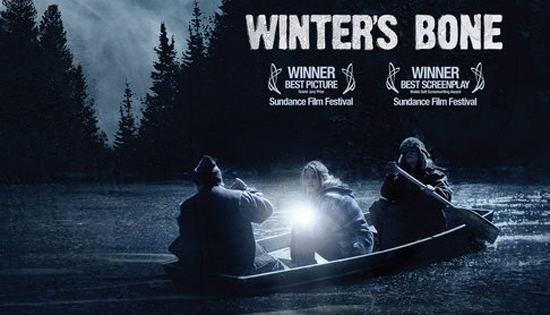
The real battle in storytelling is with the cliches. You sit down to write a different ‘coming of age’ story. You pick a female protagonist, an unlikely location and you paint a grim picture of life addled with addiction, poverty and a fierce sense of kinship. You think that’s distinct – the trunk and branches that should hold the narrative seem real – so, you start arranging the leaves of the tree. It is then the hard work begins. These leaves look no different from the leaves you have seen on many other trees. Then begins your battle with the cliches. Fortunately for us, this is a battle that Debra Granik wins with aplomb in Winter’s Bone. In her dual role as writer and director, she scripts and brings to life on screen a searing coming of age story that’s original, disturbing and filled with arresting details.

There are two templates of coming of age story in modern literature. The most famous of them is Salinger’s Catcher in the Rye. Holden Caulfield’s three days in New York after being expelled from his school where he confronts his sexuality, reconciles to his delusions of being the saviour of his generation, deepens his relationship with his sister and discusses life with his former teacher is the most adapted mould. There is no specific external event that triggers Caulfield’s actions. In fact, most of the external world is actually inert to his condition. The strife of Caulfield is internal as his soft idealism dashes against the granite hard reality that is the world outside. As Caulfield hurtles through the three days, the reader is constantly searching for a motive for his martyr without a cause behaviour. There’s none except you discover at the end that the motive was to have him accept adulthood – that living for cause than dying for it is the mark of coming of age.

The simplest example of the other template is ‘Barn Burning’, a short story by Faulkener. Here the catalyst to the coming of age of Sarty Snopes is his disgust at the life of crime and pyromania his father leads. Sarty has to question the only way of life he has known, discover his moral compass and break free. Again, there’s no added motive to Sarty’s actions. It’s his journey of self discovery; of finding his innate idealism in conflict with the principles (or the lack there of) that have reared him.

The second template is the closest that Winter’s Bone gets to as a coming of age tale. It’s a template that Udaan, one of the finest coming of age tales in Indian cinema, follows as well. What Winter’s Bone does beyond the template is to invest in a motive that would have been a story in itself.

Ree Dolly, the seventeen year old protagonist, has her hands full managing her two younger siblings and her ‘not quite there’ mother. There’s a certain elan and economy with which the Granik eases you into the film. There’s a folk song about Missouri that’s playing at the back as the film opens and the radio cackles with the newscast talking about a spell of really cold weather in the area. The stark landscape of Ozarks is quickly established as is the poverty of the families living there through the opening montage of run down houses, disposed cars and the lack of options for feeding the Dolly family dog. Ree is a woman too early – as she takes charge of the breakfast for her siblings, combs her mother’s hair and then walks the siblings to the school while testing them on their spelling and math. This is unlike any America you have seen on screen for a long time. There’s poverty of the kind where the next meal is uncertain, lurking lawlessness around and the class that’s running when the teenaged Ree reaches her school is on parenting which sums up the social environment. There’s also a strange kind of kinship that’s established quite early when the neighbour brings in meat and potatoes for the Dollys with the purpose of knowing why the police (or the law as it’s referred to through the film) had visited them that afternoon. There’s benevolence in here as also a fierce instinct of self preservation; two forces that drive the story forward. Ree accepts both these forces with a line that sums up her own view about the kinship – ‘never ask for what ought to be offered.’

The arrival of the law sets the things in motion. Ree’s father, Jessup, who’s out on bond on charges of ‘cooking’ meth has gone missing a week before his court date. This wouldn’t have meant much to the family except he has pledged the house and the farm to the court. Finding Jessup is the only thing that will keep the family from being out in the cold. The motive for Ree is established. She has to find her father before the week’s up.

This isn’t an easy task. As Ree goes looking for him, she finds an almost mafia-like code of silence pervading the community. She’s constantly advised to stop looking for him for her own good. There are ruses set up to leade her to believe he may be dead including a burnt barn (that’s when you first think of Faulkener) which seems to have gone up in flames because of the meth exploding while cooking. The reactions to her search range from angry but well meaning advice from her uncle Teardrop to active support from her friend (a teenager who already has a baby which makes the parenting class shown earlier in the film quite appropriate), threat of violence from others involved in the meth trade and finally, violence at the hands of women of the house of the local ringleader. Through all this Ree doggedly pursues in her quest. On the surface this is for her family and for a roof on their heads in this particularly harsh winter. But underlying it is Ree’s desire to understand the lives around her and her own life as it would be. By the time Ree finds her father you know she won’t remain the girl she was before she started this search.

This is an incredibly nuanced film. The cold weather and the landscape of Ozarks are used to create a cold, detached mood through the film. Meth is an all pervading character in the film. You see people addicted to it, dying of it, peddling it and living off it. There’s a matter of fact acceptance that eventually everyone will take to it when you find Teardrop asking Ree if she’s developed any taste for it. There is also chauvanism of the kind that would make khap panchayats proud. The distinct sense of discomfort is not only from the nature of Ree’s questions but the fact that she is a woman who is going about seeking such information. And, when things come to a pass, it is the women of Thump Milton’s house (the local ringleader) who get violent with Ree. The men couldn’t bring themselves to be harsh on a girl.

The film rests on Ree’ shoulders and, this is, quite possibly, the best written female character seen on screen for a long time. Ree is remarkably assured and level headed for the kind of world she lives in. It was easy to make her precocious but she isn’t. She has preserved a set of ideals that she lives by and they give her the fortitude to shoulder on as well as the vulnerability to break down when she finds the seizing of the house by court imminent. You could almost see they way life could have turned out for her when she goes to the Army recruitment centre. The singularity of purpose in the face of odds and the moral courage that she demonstrates would have been attributes of a fine young soldier. Those attributes aren’t lost. They eventually help her discover the truth in a test of grit that’s almost mythical.

Winter’s Bone is a poetic film. There’s lyricism amidst dirt, hunger and betrayal. There’s hope and optimism at the end that juxtaposes with an eerie sense of what Ree might become eventually. It’s poetry because it doesn’t wait to explain. It flows and takes you along till the final sequence. Ree on a rowboat on a pond on an inky cold night along with Thump Milton’s women. There’s a surreal beauty around that pond that hides the macabre truth that Ree already knows but is about to ascertain.

The water’s icy cold and the moment the chainsaw cuts to the bone, you know why this is a mould-breaking coming of age film. You also discover why it’s titled Winter’s Bone.

“This is how a working class love story should be”, Subrat messaged after watching Blue Valentine. “Wow! Post ?” I replied back. And here it is. If you have seen it, read the post to fall in love with it, all over again. If you haven’t, do watch it. Was also wondering how in the last few years there has been a constant flow of good cinema thats exploring the “couples’ code” – all about man, woman and child. Away We Go, Revolutionary Road, Blue Valentine, Rabbit Hole and The Kids Are All Right. Where’s our code ?

Read on…

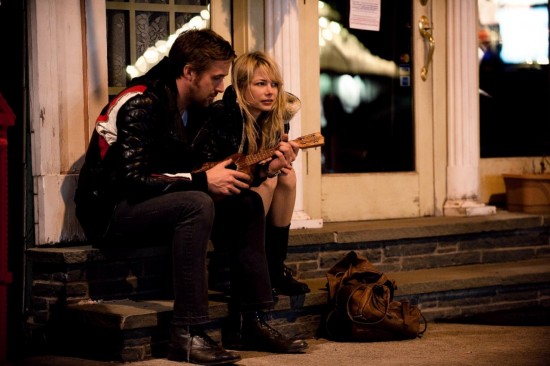
You are left stranded at the end. Fireworks go up in the sky. The closing credits come on with a tune that sounds familiar. It takes you a while to figure it’s the same tune that Dean (Ryan Gosling) played on his ukulele years ago while serenading Cindy (Michelle Williams) who dances at the doorway of a shop. And, you return to Apollinaire’s query – does joy always come after pain? Or, as you have just discovered in Blue Valentine, does pain inevitably follow joy? The title places ‘Valentine’ after ‘Blue’ which suggests the filmmaker nodding in assent to Apollinaire. But that’s deceiving.

On the surface, you see two stories in Blue Valentine. These are stories you’ve seen often. Of falling in love and falling out of it. Yet, in examining this over familiar terrain, in twisting and turning it under a steady unemotional gaze, Blue Valentine succeeds in creating compelling cinema.

There’s the present day story of Dean and Cindy. Seemingly, of everyday domesticity on an early summer morning. Their daughter is searching for their pet dog which has run off. You notice the house, the instant breakfast that Cindy rustles up and you sense indifference. Soon, you find the dog dead and Dean doesn’t have the heart to break the truth to his daughter. ‘She must have moved to Hollywood to become a movie dog. She had the looks’, he says.

You are then transported 6 years back in time. There is no reference though to this switching back. With the screen brightening up a touch more, you see a younger Dean looking for a job in a house-moving company. You are in the familiar boy-meets-girl-and-they-fall-in-love territory now. From here on, the film moves back and forth between these two stories of love blossoming and souring, the sweet to the tart without showing us anything that happened in the intervening years.

How does love seep away from a relationship? There’s never a single reason for it. It’s natural erosion. When you see Dean and Cindy falling in love, you might spot the seeds of future discord. Cindy’s desire to study and move up in life is in contrast to the slacker Dean who seems to be good at things but is bereft of ambition. There’s undeniable chemistry between the two but there’s something uncomfortable as you watch them. As the film flips between the two stories, you conclude that all the old adages about love are exactly the reasons why love sours. That love makes you a better person, that love can reform, that love conquers all – each one of them bites the dust. These are all predicated on a colossal lie – of people being made for each other. The film helps you with the benefit of hindsight to see through this lie. But leaves it for the protagonists to discover it as they live through it. That’s the beauty of this script.

As you watch Dean winning his daughter’s love and trust, you see the lie being played all over again. And you can’t help but pity the human impulse. Of deceit forming the premise for all love. We have all lived through it yet when the opportunity presents itself again, we willingly submit ourselves to another lie. Why, come to think of it, even that anthem of first love in Hindi cinema, ‘Pehla Nasha’, is a charade. Nothing is quite as it seems for the three characters in that song.

What aids this clinical exposition of love is the way the characters are etched in Blue Valentine. There’s a visible streak of misogyny that runs through the film. The emotional stack is loaded in favor of Dean. He marries Cindy despite knowing the truth at the abortion clinic. it’s Dean who is shown to be perfectly in sync with his daughter’s hopes and desires. And, he is expressly demonstrative about making the marriage work. You are emotionally invested in Dean from the very beginning. The artless way he admits to not being good enough for Cindy when he proposes to her at her home to his helplessness at the end when he asks Cindy – ‘how should I be’? The story ends too with a definite sense of loss for Dean that tugs at your heartstrings. This is a departure from how a typical marital discord story unspools where the emotional cards are equally dealt to make sure both the protagonists have a good hand (take Kramer vs Kramer as an example). However, if you look closer, you will find the prime mover through the entire film is Cindy. She is the one who makes all the choices in the film. She is willing to live through the consequences of those choices and is unafraid of confronting the truth. While on one hand it’s a subtle inversion of roles, on the other, it’s very clever scripting.

Blue Valentine is a film of deft touches. You almost feel there’s deliberate foolish manner in which love is depicted through the film. The scene of Dean strumming on his ukulele and singing while Cindy dances is not romantic for the viewers. The singing is bad and the dancing pedestrian. You almost feel embarassed to watch the silly couple falling in love there. The motel sequence with its space age suite where Dean and Cindy go to reignite the sparks in their marriage is clumsy and makes you squirm. There’s nothing grand about love and you are constantly reminded about it. The irony of the relationship between Dean and their daughter while you know of Cindy’s backstory is again never once brought up. The playing up of the father-daughter relationship is done so naturally that you forget the truth about their daughter in the last scene of the film.

You will find a similar trick played on you in Rabbit Hole, another film this year that had a beautiful subtle ending. You also sense the way fate mocks at Cindy – from wanting to study medicine, to making that life changing choice at the abortion clinic to ending up as a nurse at a maternity center.

It’s easy to call Blue Valentine a film that’s rich in subtext. That would, however, be simplifying things. Blue Valentine is not an ambitious film. Our ambitions are always an imagined superlative form of what we actually are. Instead, Blue Valentine, is a introspective film. It chooses to pose uncomfortable questions about our normal selves. It shows you the truth once the varnish wears off.

“Love is the longing for the half of ourselves we have lost.” You will find that line in Kundera’s ‘The Unbearable Lightness of Being’. You can read that line many times over today and still not get what he meant there. Then one day you find yourself in a old Mumbai home on Napean Sea Road. You see two sepia tinted photographs of a couple. Both shot at the same location – the now closed Cafe Naaz with the iconic Queen’s Necklace as the backdrop. May be ten years apart. You look closely at the two pictures. And, you understand what Kundera meant.

Or, you can watch Blue Valentine.

(Ed – Click here to read all about the making of the film. It’s a must read!)

This film recco post is by Jahan Bakshi who loved ILUPM for its sheer irreverence & light-footed, breezy direction. For more, read on…

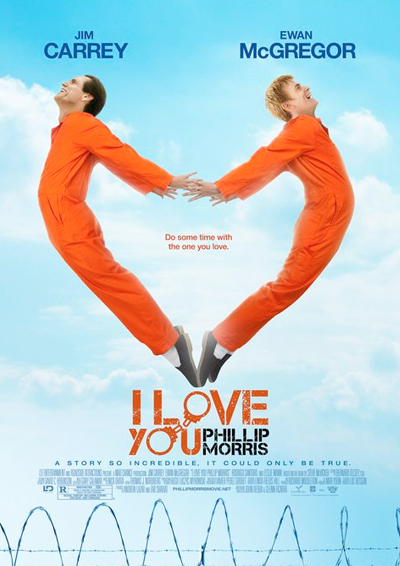
Nearly 22 months after it premiered at the Sundance Film Festival in January 2009, I Love You Philip Morris finally managed to get a somewhat shoddy release towards the end of last year. Sad, because this is probably one of the most fun, under-recognized and daring Hollywood films of the year gone by.

The story of how and why this huge delay happened (despite the starry presence of Jim Carrey and Ewan McGregor) is pretty interesting in itself, but not quite as fascinating as the story of Steven Jay Russel, a con-man who’s currently serving a 144-year jail sentence for assorted charges, including felony escape and embezzlement.

I’m lazy and bad with summaries, so I’ll just supply the one from IMDb here:

Steven Russell is happily married to Debbie, and a member of the local police force when a car accident provokes a dramatic reassessment of his life. Steven becomes open about his homosexuality and decides to live life to the fullest – even if it means breaking the law. Steven’s new, extravagant lifestyle involves cons and fraud and, eventually, a stay in the State Penitentiary where he meets sensitive, soft-spoken Phillip Morris. His devotion to freeing Phillip from jail and building the perfect life together prompts Steven to attempt- and often succeed at- one impossible con after another.

Now, replace Philip Morris with- say, Phyllis Morris, and this would be perfectly wholesome Hollywood fare- a regular romantic con-caper. Well, at first glance, at least. When filmmakers Glenn Ficarra and John Requa pitched the film, they were asked ‘Could Philip Morris be a girl?’

Of course he couldn’t. Because this is a true story. As incredible and ridiculous as the events in the film seem, it’s actually fairly accurate, save for the usual cinematic liberties (and in a year that has seen The Social Network, who cares about accuracy anyway?). No wonder then, that the film starts with a header to remind us: ‘This really happened. It really did.

But instead of peddling this as the ubiquitously sensitive ‘gay film’, the film is terrifically nonchalant and absolutely blasé about the sexuality of its characters. It’s that rare film that never falls prey to the sentimentality and melancholic self-pity that accompanies mainstream portrayals of homosexuality. By being blissfully coarse, non-conformist and lacking any political correctness, I Love You Philip Morris subtly pushes cinematic and social boundaries, but without any self-conscious fuss; it remains quietly subversive and calmly assured throughout its schizophrenic, hyper-kinetic narrative. It derives quirky comedy from a few homosexual stereotypes (‘Being gay is expensive’, remarks Steven hilariously), but never stoops to making cheap shots; we laugh along with its lead characters: refreshingly and unapologetically amoral, yet full of heart, humor and vibrancy. The dignity with which the characters are portrayed, including Steven’s hilariously orthodox Christian wife, makes sure that none of them feel like cardboard caricatures.

The wide tonal range of this film- from slapstick, borderline farcical to tenderly romantic to achingly tragic- might unsettle many viewers, but the unconventional treatment worked very well for me. And just like Alejandro González Iñárritu’s Biutiful (okay, really strange comparison but) this is another film that couldn’t have worked if not for its leading man, who holds it together and keeps it from falling apart. Jim Carrey is outstandingly good here, his rubber-faced glib persona serving as the perfect bouncing board for Steven’s wild, unpredictable character. He’s absolutely no-holds-barred and such a pleasure to watch, lending his character both charisma and believability. And Ewan McGregor is a delight as his timid, blonde lover; the perfect innocent foil to Carrey’s incorrigible rogue. Together, they make for a charming pair.

‘I Love You Philip Morris’ is not a flawless film. It’s imperfect by design, a tad exhausting and certainly one that will polarize viewers. But it makes for really interesting cinema and deserves to be seen, because quite simply- it defies categorization. Like Steven Russel himself, the film fits into so many guises that by the end, you don’t know what it really is. Which for me, far from being bad, was quite remarkable. After all, what better thing could a film do, than embody the very unputdownable free spirit of the man it is about?

Catch it, for sure.

To read the story of the real Steven Russell & Phillip Morris, click here. And read a super interview of the filmmakers Glenn Ficarra and John Requa right here at ION Cinema.

Rabbit Hole – Film Recco by Kartik Krishnan

I have interacted with kids in my limited life experience. Cute ones, silly ones, irritating ones, relentlessly curious ones. Haven’t been so fond of most of them but of some of them. The ‘nice’ ones.

Needless to say that is a very biased perception. Because I’m sure the day I become a father, regardless of how cute, ugly, nagging, constantly pottying-pissing, relentlessly crying my kid will be, to put in a cliche he’ll always be “the apple of my eye”.

There are some losses that are irreplacable – that of a loved one. A mother, father, spouse, brother, dear friend. Somehow to me the death of a child has always seemd to be the most painful one.

And somehow, I have always prayed (which is very infrequent and rare) that such a tragedy may never befall on anyone.

How does an urban well to do couple cope up with that loss?

How does the couple cope up with it even after months have passed, since the event?

How much of alcoholism, weed, food, gyming, squash, binging or any of the ‘cathartic’ activities one can do to evade the pain, is enough ?

How does it affect you in the every single most unimaginable way – the conversations with random strangers, your family, your spouse, your daily routine, the most mundane aspects of your life ?

Do you cling on to the memories or do you move on ?

Is it easy to move on ?

Do you still play the blame game even when you know it is pointless to play it since no matter who wins, both have lost?

Do you blame God and say “If my son was such an angel, then why did God take him away from us ? Why didn’t he make one up ? He is God after all”.

Do you drift apart from you spouse and hide the ways you cope up with your depression from him/her – eventually feel guilty as though you were not an aggrieved parent but an infidel ?

There are some films which cease to be films. Which suck you in and you are not thinking about what the director would have said to get such a brilliant performance from the leads, where he would have placed the camera, what the writer wrote and how, who produced the film, how come the film doesn’t have a ‘story’ and yet it is so powerful.

No sir/madam, those questions come after you finish watching this film.

As for me, after I finished watching this film, only one thing came to my mind.

I wanted to go and hug my parents.

Highly highly reccomended this film. Just relax and let the film win you over.

( P.S – I love you Nicole Kidman, for acting in and producing this film. )

( P.P.S – I love the rest of the team associated with this film too 🙂