Archive for the ‘Must Watch’ Category

The brief was the same this year. A mail was sent to the usual cinema comrades who write, contribute, and help in running this blog. It went like this – a) Close your eyes b) Think of all the films you have seen in 2013 – released/unreleased/long/short/docu/anything c) Think what has stayed back with you – impressed/touched/affected/blew d) Write on it and tell us why. Ponder like Jep Gambardella in right gif, and write about the joy you experienced like the left gif.


        

Almost everyone wanted to write about The Great Beauty. It has emerged has a clear favourite this year. But since the idea is to cover as many films as we can, so only one person was allowed to write on a specific film. Though we ended up having two writers on TGB. Finally, here’s the massive list of 17 terrific films picked by 15 film buffs, and they tell us why these films stood out from the rest. If they don’t look familiar, click on their handles. It’s linked to their twitter accounts.

(Our earlier post in the same series – 20 Things We Learnt At The Movies and 13 Unanswered Questions is here, Top 10 Musical Gems We Discovered This Year is here)

——————————————————————————————————-

@kushannandy   on   I L O    I L O

What do you do when a bald, tipped-hat wearing character, straight-out-of-Jeevan’s gang, writes to you and his other Versovian gang-members an underground email in which he threatens to squash your sperms, a la Uma Thurman did to the eyeballs in Kill Bill, unless you close your eyes, think of your favorite film of 2013 and some such shit…?

You shit. And you sit on your laptop.

My pick: the best film that stayed back.

A spoilt schoolboy, his unemployed father and pregnant mother, who tries in vain, to survive her pre natal pangs and the annoying habit of the males in the house leaving urine on the toilet seat, form a small middle-class family of three in a quiet province called Ilo Ilo in Singapore. Well, not three. Actually four. Terry, a modern and resilient maid, walks into this family and battles the boy-bully, combats the mother’s territorial jealousy and earns the respect she deserves from the senior-most member of the family.

There is nothing innovative about the plot. No melodrama. In fact, zero drama. Yet, Anthony Chen’s debut film left me spellbound. The unbelievably realistic performances, the emotional nuances, take it right into Asghar Farhadi territory. And what holds the film together, is Angeli Bayani’s portrayal of the Filipino maid. Chen’s silent close-ups of Bayani’s deeply emotive face and haunting eyes stay with you, long after the lights come on.

@sudhishkamath   on   Q I S S A

I’m not sure we’ve seen a better film about the fluid nature of identity and sexuality, that too from India. And this complex question of who we are is explored through a simple nature versus nurture plot.

A story of a girl raised as a boy. Because the father (Irrfan Khan) has always wanted a boy and is in absolute denial about who she really is. Tillotama Shome is just the kind of ballsy woman for the role and casting an actress in the stereotype-defying gender-bending character is just one of the many triumphs of Qissa, which is full of twists that are introduced not to shock but to explore the question of identity, layer by layer. Saying anything more may just ruin the film for you. You might have issues with the titular ghost that pops up but that’s exactly the kind of ingenuity that makes you think about the question raised in the film. With Tisca Chopra and Rasika Duggal in the cast, this is as solid as an Indian film has got in ages, especially from the arthouse circuit!

@krnx    on   R U S H

Since, I suspect, no one is going to write on a Hollywood movie being their choice of best film on MFC, I will. And also because Rush was one kick-ass film that literally gave me a rush and had me applauding at the end of it: physical reactions that no other film in 2013 managed to evoke.

There really isn’t much to say about Rush that hasn’t already been said. I used to be a fervent F1 fan (less now but still enough to be in the grandstands of the first Indian GP) and for sure that’s contributed to my admiration of Ron Howard’s expertly crafted drama. He is a director, I admit, I find hugely inconsistent (only cared for Apollo 13 and Frost/Nixon besides epic television Arrested Development) but with Rush, the slate’s wiped clean.

Just unearthing the story – James Hunt vs Niki Lauda – must’ve been a moment of triumph for screenwriter Peter Morgan. But some scripts are expensive to tell and it was an arduous journey for Morgan’s spec(!) effort before Howard got involved.

Besides the incredible rivalry that Howard’s captured in moments of pure cinema, the authenticity of period F1, and spectacular visuals (especially those of the final race in Japan in high-speed rain) that haven’t made a home in my mind for all these months; Rush encapsulates everything that Formula 1 is about – adrenaline and utter disdain for subtlety. Not the usual qualities in, what we have come to expect, a “good” film.

@sukanyaverma   on    W A J D A

For someone who watches movies for a living, it’s very hard to pick ONLY one great movie from a pile of superlatives. More so, since 2013 fared rather well in my eyes and I didn’t ‘ummm’ even once on being asked for my pick of the lot. Wadjda, with its inspiring theme and touching simplicity, is that shiny gem from Saudi Arabia that gets my vote. Ever since I saw its first trailer among a hoard of others nominated by their respective countries, vying for a place under Oscar’s Best Foreign Film category, I was drawn to the beatific smile of a 10-year-old (an extraordinary Waad Mohammed) essaying the title role. Notably, Wadjda is the first film to be shot entirely in Saudi by filmmaker Haifaa Al Mansour who directed outdoor scenes from inside a van using a walkie-talkie adhering to the country’s stern filming restrictions for a woman/filmmaker and the first film from the nation to send an entry to the Academy.

 Right from the first scene where Wadjda steps forth sporting a pair of Converse sneakers in a crowd of Mary Janes, you know she stands out in a conservative, controlled society. Set in suburban Riyadh, Wadjda deals with a young girl’s determination to realise her dream of buying a bicycle after her mom refuses to do so. How she chooses to achieve her seemingly defiant goal by appeasing the same society and its doctrinal requirements is deftly portrayed in Mansour’s lovingly crafted feature. Also heartwarming are the interactions between Wadjda and her best friend, Abdullah. Unlike the grown-ups in the story, their friendship is untouched by the discrimination of their environment. Wadjda offers a palpable glimpse in Riyadh’s daily life, the anxieties and facades of its striking women, the deep-rooted conditioning of its self-engrossed men as well as the innocence of its blithe children without trying to be overtly cynical or judgmental. Through Wadjda’s mini triumph, Mansour astutely endorses a message of hope and her personal belief that change might be slow but it is steadfast and most imminent.

@varungrover     on    T H E    G R E A T    B E A U T Y

This was a year of turbulence for me. Lots of emotional ups and downs, fights, illnesses, personal and professional extremes, and a feeling of ‘ab hum bade ho gaye hain’. Mid-life crisis started hitting its opening notes this year, that slideshow of ‘80s/90s kids will remember this’ left me sadder rather than happier, some very good friends got separated from their better halves, some others got lost in the black-hole of their corporate jobs and/or parenthood, a favorite relative passed away, a cricketer I loved as a kid retired and I didn’t feel a thing, and a pet parrot flew away leaving me heartbroken.

And may be that’s why, no other film moved me as much as ‘The Great Beauty’ this year. A film about passage of time and people, relations disintegrating, dissolving into the great circus of bizarre the life is. Paulo Sorrentino’s latest, which I watched twice on big screen during this year’s MAMI (god bless Mister Narayanan, the festival director), had everything I would ideally like to associate my ‘end of days’ with –humor, acidic care-a-damn criticism of (modern) ideas of success and art, deep nostalgia, detachment, quest for beauty, spiritualism, and an affirmation that it’s all, after all, just a trick.

Films next year:

@varungrover   on   D I S A P P E A R A N C E    O F    E L E A N O R    R I G B Y    :   H I M    A N D    H E R     and    T I T L I

2 films that I saw this year (one at TIFF and another at IFFI viewing room) should be the most talked about international and Indian films respectively next year in my humble brag opinion. Ned Benson’s ‘Disappearance of Eleanor Rigby: Him and Her’ is a delicate, sensitive, brilliantly written and acted, mind-bending drama of a couple’s separation shown through the perspectives of him and her in two films of 90 minutes each. Think of it as Sam Mendes meets Asghar Farhadi. The layers of interpretation become thicker and mindboggling if you change the order of viewing from ‘him followed by her’ to ‘her followed by him’. And that, you’ll see, is a masterstroke.

The best Indian film I saw this year, and hopefully the whole of world will see soon, is Kanu Behl’s ‘Titli’. Seeing it on a desktop computer in IFFI, Goa’s ‘viewing room’ should be counted as an underwhelming, far from ideal setting, and still, this very dark very funny very depressing dastaavez on patriarchy BLEW ME AWAY like nothing this year. Stunning is the word. Breathless is another. Writing so sharp (Kanu Behl and Sharat Kataria co-wrote it) and performances so bang-on, not to mention excellent edgy-gritty cinematography (Siddharth Dewan), this is our best bet for world cinema honors next year.

@invokeanand   on   B O M B A Y    T A L K I E S

The Lunchbox made me long for the days gone by, Ship of Theseus made me feel guilty for merely existing, Chennai Express made me a philosopher, but the film that reached me this year was a story about identity and liberation -Ajeeb Dastan hai yeh (Bombay talkies). The film mainly dealt with identity – sexual and personal both, but what worked for me was the depiction of today’s charulata – hiding her loneliness and emptiness in sensuous saris wrapped in raw sexuality. It was her story, her struggle and in the end, her liberation. Trapped in a relationship moving slowly towards it’s end and feeling guilty for it’s eventual demise. Use of Lag Ja Gale was genius to say the least and felt like it was specifically written for this character. And in what eloquent ease does Rani Mukherjee carries herself throughout the film. And Johar, from loving your parents to hitting your parents has come a long way and we can only hope he keeps this bravado intact.

jagten1

@diaporesis    on    T H E    H U N T

Before Midnight is the loveliest film I’ve seen all year but I’ve already written about it at length. My second favourite film this year stands in stark contrast to the occasionally sunny, sometimes stormy, yet entirely endearing story of Richard Linklater’s finest film. “The Hunt” is a little-known Danish film — despite it winning an award at Cannes 2012 — that stars the reliably excellent Mads Mikkelsen in a mesmerising performance as an upright schoolteacher, and occasional hunter, who is hounded and ostracised by the small community he lives in, after a child wrongly, but not maliciously, accuses him of a criminal act he did not commit.

Without talking about the accusation itself, nor of the movie’s very finely shot and acted scenes, it’s worth examining two key themes of the movie briefly. The first is banal but has several important interlinked parts — children are impressionable, difficult to understand, and can react unpredictably when spurned or angered. In the movie, the child is shown a porn clip by her brash teenaged elder brother. Later, when angered by the schoolteacher, she uses details seen in it to accuse him of an act he did not commit, without being aware of the fallout of her innocent anger. For some reason, while watching the movie, I was constantly reminded of another disturbing film in which an older child wreaks havoc on his family and schoolmates: “We Need to Talk About Kevin”. That movie should perhaps be watched in accompaniment to The Hunt for it sheer contrast in material. Second, perceptions and influence work in strange, and sometimes troubling ways. It is assumed that the child must obviously be speaking the truth while making such serious accusations. The teacher-in-charge, instead of trying to verify the story, literally puts words into the mouth of the child in her haste to get “justice” for the child. It must be noted that, in general, everyone knows that children are notorious liars; yet for serious accusations this is often overlooked. Moreover, the “epidemic” — of accusations of similar acts committed with other children — that breaks out soon after the initial accusation points to how impressionable children are, how vulnerable their minds and the paradox that must exist to protect them: to ensure their safety there must be inordinate power vested in their words. The hunt for truth and justice often leads to the bloodshed of those who only happened to cross the firing line at the wrong time. For a schoolteacher this lesson was hard to swallow; for the hunter, it could not have been more obvious.

@manishgaekwad     on    C H I T R A N G A D A

At the Kashish Mumbai International Film Festival this year, the closing film Chitrangada was also one of the festival’s most difficult films to sit through. Three days later, actor-director Rituparno Ghosh was dead. The film, which is inspired by a Tagore play, is about a transsexual choreographer undergoing sex-reassignment surgery. In a way, it mirrors Rituparno’s own battles, as he began to express himself more as a woman in the public eye.

This confusion in the audience to be able to identify with him, is also the moot point the film makes when he steps into the role of the agonising choreographer. Festival audience moved quickly; the deadweight of the film’s slow treatment, and watching this pouty, greasy, unattractive man blur the boundaries between art and life, freaked most people. By the end of the screening, the theatre was near empty. Which is clear how people do not want to see filmmakers indulge in self-flagellation. Keep your private parts, private, don’t turn it into something prosaic. Perhaps, Rituparno over-shot his license.

It is however, a film, one must return to, for the artist who holds a gun to his own head. The film bored me, made me uncomfortable, there were long and dull portions, but what never left me, was that in his role as ‘deus ex ghosh’, he was trying to say something really, really important; about gender and bias and fluid sexuality, and what films should do and tell us about ourselves (sometimes). As Aparna Sen wrote about the film, in his obit, ‘Without sending out a message, within quotes, as a lesser filmmaker might have done, Ritu managed to bring the hitherto marginalized into the domain of the mainstream, to an extent.’ His timing was right, his exit wrong.

 @nagrathnam     on    S O O D H U    K A V V U M

Every year there is ‘the’ Tamil film which crosses boundaries and turns out to be a benchmark. From previous years’ Paruthiveeran, Subramaniapuram, to Aaranya Kaandam and this year’s Soodhu Kavvum. This one shows how to do a Guy Ritchie-ish film with dollops of quirky characterizations, outlandish situations, kickass dialogues, and amazing usage of music. And the best part is that the film is made with no stars (unless you count Sanchita Shetty & Pizza’s Vijay Sethupathy- the Abhay Deol equivalent, as ‘stars’), and is a realistic, ambitious, sensible film with zero pretension, with a dose of commercial masala tadkas. Ambition needn’t be limited by a budget. One might argue that the 2nd half was more ‘plot’ & less character as compared to the 1st half, but still, no one can take away the fact that the film surprises you at multiple levels without insulting your intelligence.

[SPOILERS]- Ironically the only two ‘honest’ men in the film end up as losers and most of the bent characters end up victorious. This one also has the greatest subversive ‘stalker’ scene in the history of tamil cinema (the IT guy with the lover girl office situation). Now waiting and hoping the hindi remake matches upto the original.

@damoviemaniac     on     N E W    W O R L D

Who said the gangster genre is dead?

Trust the Koreans to make actors dressed in black suit and assaulting each other with knives and baseball bats look poetry in motion. The film explores the power politics within a gang, primarily dealing with structures and mechanisms. It has unusual emotional depth for a gangster film and often feels like a tale of bromance and loyalty.

It is the perfect onion, unwrapping one layer at a time as the film progress. The film teases the viewer to a game of one-upmanship, trying to outdo each other. And just as we think we have solved the maze, the climax flips everything upside down and we gasp at the sheer brilliance of storytelling. But the film does not rely on the last minute plot twist for the viewer to appreciate. It acts as the cherry on top.

@lordmeow    on    T H E    G R E A T    B E A U T Y

Jep Gambardella claims that he was destined for sensibilities, whereas his friends cared only for inner lips of women. He has walked a long path, arriving at a view of life that gives him a panoramic display of the human comedy, broad and unambiguous. He has lost love, but his nature hasn’t undergone a brutal upheaval. He has been at war with himself; he’s the man who has been different men at different points of time. He has emerged from the uncertainties of life, remade, and illuminated by new feelings. Now, whatever its worth, is fairly settled, and he knows how to express it clearly, facing the camera, without a shadow of doubt, in true Italian style.

Paolo Sorrentino’s The Great Beauty witnesses the decadence of Rome again, seething with tragic irony of a Gibbonesque spectacle. It flings literature giants at you so elegantly that you are waiting to be damned by its words. But unlike Woody Allen (whom you actually expect to pop up at any moment in the film) whose intellectual adventures merely give a half-formed philosophy in an autobiographical fashion, Sorrentino’s characters reveal the inner labyrinth of life, rather a satire of life, on life everywhere, the struggle of its aspirations to fructify, the madness that follows it, and the disillusionment that awaits at the far end of the journey. The observations are sharp, but it is not cruel, rather it looks at poor folks, baffled and lost, rarely comforted, with a distant sympathy. With a rhythmic rise and fall of images (that gliding camera), Jep is the voice of a time going by. He utters inconsistent wisdom, not because of the character’s infidelity with truth, but because he has outgrown his preceding selves. To know him, unquestionably one must know him entire, and I can only fancy the aching romantic pain that sweeps his memory. As 2013 is flying by, I would rather settle for his terrace party, swinging to ‘Mueve La Colita’.

@ghaywan    on    T H E    C O N G R E S S

“Nazis and holocaust bring awards” says the head of ‘Miramount Pictures’ as he convinces Robin Wright, an ageing star, to surrender her youth to a pile of codes.

Ari Folman’s The Congress is a dizzy concoction of commoditization of cinema, the dystopian bleakness of our future that is bereft of choice, the blazing bohemia of a century full of animated characters and our relentless questioning of where we came from. It’s a giant fuck you to the Hollywood’s studio system, an ode to animation and eventually, an allegory of what our future holds for us with all it’s decaying art.

Robin Wright plays herself as the star who has to sign a contract with her studio to sell her image to digital restoration turning her real self completely obsolete. 20 years later she is called to the futurist congress, a convention of an animated world, where she is forced to lend her image to the capitalistic franchise of Mirmaount Hotel. The studio boss asks her for an extension of her contract where she “can now be eaten in an omelette or a Crème brûlée… you’re now a substance”. He even suggests her of a world where people will pay royalty to fantasize about a star. More ambitious than Waltz With Bashir but limiting in it’s cohesiveness of a singular theme, The Congress, has to be devoured for it’s vision and craft. As it goes with life, you may not understand this film completely but it is worth the trip, with all its spot-the-reference moments. This is Sunset Boulevard on acid!

@fattiemama    on    B E K A S

Innocence is difficult to portray without sentimentalising. Much more difficult is to weave in that rare brotherly bond amidst poverty ridden circumstances yet steer clear of patronising. Using children as children and letting their light shine through requires talent, one which Bekas, a delightfully pleasing and touching film, does without fanfare.

The story of two orphaned Kurd children who dream of going to America and meeting Superman thereby uplifting their impoverished lives, Bekas keeps coming back to me as the most memorable film I have watched this year solely for its tone – bantery humour with controlled drama underlining the narrative. Cleverly drawing the line between sentiment, drama and comedy, Bekas turns a feel-good narrative into a story of familial bond while set in the harsh reality of war-torn Iraq. It has one of the most delightful and sharply written lines, warmly etched characters and deeply insightful social references of life in a small town in Kurd and the impact of the war with US. The ghost of US merchandise symbolising the ‘arrived’ life looms large in everything the two hold dear; Superman, Coke and Michael Jackson become much more telling symbols of US supremacy globally.

All its little joys and the wonderful child actor playing the younger, spirited brother apart, Bekas is dear to me for its one brilliant achievement – of letting children be children. From Majidi we have learnt, they tell their own story. All we need to do is allow them to speak. And then just sit back and listen.

@miyaamihir    on    J A I     B H I M    C O M R A D E

तय है कि अापने इस तीन घण्टे दस मिनट लम्बी वृत्तचित्र फिल्म का नाम ज़रूर सुना होगा अौर अगर अाप थोड़े भी जागरुक पाठक हैं तो अब तक इस फिल्म की तमाम घोर राजनीतिक समीक्षाएं भी पढ़ चुके होंगे. लेकिन अानंद पटवर्धन की ‘जय भीम कॉम्रेड़’ मेरे लिए अपने मूल में नितान्त व्यक्तिगत फिल्म है. यह एक मित्र के अचानक चले जाने के बाद उसके मित्र के अात्मसंशय से उपजी फिल्म है. अात्मसंशय, कि कहीं अपने दृढ़ राजनीतिक विचारों की घटाटोप सामूहिकता के बीच हमने अपने दोस्त को अकेला रह जाने दिया. यह फिल्म वो ईमानदार सवाल है जिसे अानंद स्वयं से पूछ रहे हैं अौर यहाँ उनके ‘स्व’ में कहीं न कहीं हिन्दुस्तान का पूरा प्रगतिशील विचार शामिल है. प्रगतिशील विचार जिसने ‘पहचान’ के सवाल को वर्गसंघर्ष की महती लड़ाई के मध्य द्वितीयक पायदान पर रखते हुए सदा अप्रासंगिक मान खारिज किया लेकिन स्वयं उसके बीच मौजूद भिन्न पहचान वाले कॉमरेड का अकेलापन नहीं देख पाया. यह एक रचनाकार-फिल्मकार के ईमानदार अात्मसंशय से उपजी फिल्म है अौर स्वयं पर सवाल खड़े करने की अौर उन सवालों के साये में खुद अपने विचार को खुर्दबीन से परखने की यह ईमानदारी हमारे समय में दुर्लभ है. इसी संशय के चलते अानंद अपने प्रगतिशील साथियों के सामने कुछ वाजिब सवाल खड़े करते हैं अौर शायद एक पूरी विचारधारा के लिए अात्मपरीक्षण का वह दरवाज़ा खोलते हैं जिसकी सांकल अभी तक उन्होंने स्वयं भीतर से बन्द कर रखी थी.

गौर से देखें तो सामयिक हिन्दुस्तान में मार्क्सवाद अौर अम्बेडकरवादी विचार के मध्य के तनावपूर्ण अंत:संबंध को परखते इस घोर राजनीतिक वृत्तचित्र के मूल में एक मित्र के असमय चले जाने की कसक मौजूद है. मित्र, जो चला जाता है लेकिन अपने पीछे सवालों का एक बियाबान ख़ालीपन छोड़ जाता है. सन सत्तानवे में कवि विलास घोगरे की अात्महत्या फिल्मकार अानंद पटवर्धन को झकझोर देती है. लेकिन इस बियाबान ख़ालीपन का सामना अानंद रचनात्मक विकल्प तलाश करते हैं. एक प्रतिबद्ध फिल्मकार अपने साथी की मृत्यु के बाद उसकी मुकम्मल पहचान की तलाश में निकलता है, उसके जनगीतों के पीछे के असल कंठ को जानने निकलता है, उसकी कविताअों के दृश्य ‘हम’ में मौजूद अदृष्य ‘मैं’ को खोजने निकलता है. यह एक दोस्त के चले जाने के बाद भी उसके मित्र की अनवरत तलाश है जो अानंद को खैरलांजी तक लेकर जाती है. ‘कबीर कला मंच’ तक लेकर जाती है. शीतल साठे अौर उनके क्रांतिकारी गीतों तक लेकर जाती है. एक दोस्त के खुद को अकेला समझ चले जाने के बाद भी उसका मित्र उसका हाथ नहीं छोड़ता अौर अस्सी के दशक में बनी अानंद की पहली फिल्म ‘बॉम्बे: हमारा शहर’ की शुरुअात में “एक व्यथा सुनो रे लोगों…” गाते नवयुवक विलास घोगरे की उस छवि को अानंद मिटने नहीं देते. ‘कबीर कला मंच’ के शीतल साठे अौर सचिन माली जैसे नौजवान उसी खो गये मित्र विलास की प्रतिछवि हैं. प्रेम जिसकी सीमाएं जात-धर्म के पार जाती हैँ अौर अन्याय के खिलाफ प्रतिकार की वही साझा कॉमरेडशिप जिसका सपना विलास घोगरे की कविताअों में झलकता था. अौर जब एक अाततायी सरकार द्वारा उन्हें नक्सलाइट कहकर जेल में बन्द किया जाता है तो अानंद उसके खिलाफ डटकर लोहा लेते हैं. अापको पता है, शीतल अौर सचिन ने अपने नवजात बच्चे का नाम क्या रखा है? ‘अभंग’. अभंग – जैसे वह दोस्ती जिसे मृत्यु तोड़ती नहीं, सदा के लिए वापस जोड़ देती है.

‘अात्मसंशय’ हमारे समय के लिए एक नायाब पदबंध है अौर बेहद ज़रूरी भी. सच यह है कि वर्तमान समय में विचारों का ऐसा एकवचनी कोलाहल मौजूद है कि शायद कभी एक सवर्ण होने के नाते, कभी एक हिन्दू होने के नाते, कभी एक पुरुष होने के नाते अौर कभी एक विषमलिंगी होने के नाते हमें सदा खुद से यह असुविधाजनक सवाल पूछना चाहिए कि ऊपर से बराबर दिखते सामूहिकता के इस तुमुल कोलाहल के बीच वो एक कंठ चुप क्यूं है? ‘जय भीम कॉम्रेड़’ उसी अकेले कंठ की समाज में वाजिब हिस्सेदारी की चाह का दस्तावेज है मेरी नज़र में.

@cilemasnob     on     G O Y N A A R    B A K S H O

The Great Beauty, Inside Llewyn Davis, Francis Ha, Before Midnight and Gravity must be the top five reasons to fall in love with the movies this year. Wrote about Llewyn Davis and Frances Ha here. So am picking a bengali film for this post.

This is my favourite story about the oldest lady i know and i keep repeating it. She keeps reminding me that on her deathbed she might ask for some non-vegetarian dish and she might even force me to get it. She has seen people doing that. But she says i should not let her eat that, not even offer anything remotely non-vegetarian. She hasn’t tasted it in last 70-75 years. She doesn’t want to change that in her last minutes. She says these things happen on deathbed. When you haven’t tasted something for so long, that intense craving comes back in your last moments and it feels like that’s the only door to salvation. She married young, widowed young, and since then it’s been like that – white saree, no non-vegetarian, and some more restrictions. Because of social and religious norms initially, and then you accept it and refuse to let it go. And i keep joking that i will get her the best kebabs she wants, she should die peacefully at least.

Aparna Sen bravely went ahead and gave her character something more to chew on in her film, Goynaar Baksho (GB). A story involving three generations of women, and the one that stood out is about a widow with a bitter tongue, who becomes ghost and returns to her house to guard her jewellery box. Our cinema has made some people completely invisible. Once upon a time, the woman in white saree used to be there for ornamental purpose at least. But they are completely extinct from screen these days. In GB, the old widow with her acidic tongue and funny bone encourages the young woman to look for real love by breaking all the social norms, even though it’s 1940s rural Bengal. But when she gets emotional and talks about the love that she has missed, has forgotten what cuddling with lover feels like, that physical intimacy, and how she was fooled into believing that materialistic pleasure was enough when the men of the house enjoyed life to the fullest, you can’t help but feel guilty and teary-eyed. For being conditioned by the same society norms in such a way that you never thought about this aspect of that lady in white.

It’s a ghostly tale told in a funny tone with freedom movement in the background, and has terrific performances by Moushumi Chatterjee and Konkona Sen Sharma. At a time when gender crime is making headlines every day, and when most of our films still treats female leads as T&A prop, this one stands so tall. Get the dvd and watch it.

Gif source here
Kartik Krishnan has got his internet back. So here’s one more round-up of Day 2,3 and 4. Our previous warp-up posts are here and here.

shortterm12_4

A Touch of Sin – Starts off as Dombivali Fast/Falling Down, switches onto a multiple protagonist story film – with each protagonist encountering death in one way or another in his/her journey. First story is God Bless America set in a small hamlet in China, the second one ends in a crime which looks shockingly ‘normal’ & commonplace, third one is a journey of a woman working in a spa, and the last one is ‘coming of age’ story of a teenager struggling to make ends meet by working in factories. A little long and may be slightly meandering but this one quite surprised me. Super fun.

Jadoo – Somewhat OTT but funny desi comedy set in UK, this one should be watched among other things, to see that Ibu Hatela urf Harish Patel still got it, though he may have put on some weight. Was laughing at quite a few places. Formulaic, food porn, feel good family coming together at crisis masala cliche very well utilized by the director and yet there is a soul somewhere in place. Nice.

Locke – I know we are mentioning this film again but ‘t’s worth it. Tom Hardy. Driving a car. One night in London. Travelling from one end of town to another. All the time on phone. The premise sounds like a thriller but it is a superlatively shot human drama about a man trying to face his demons. Doesn’t get repetitive despite being a single ‘setup’ film. Wish we could see a hindi film like this but which actor is confident and daring enough to pull off something like this ? I wish subtitles were there because the Brit accent sometimes flew over my head. Now I want to see the writer-director’s Humming bird.

Salinger – A solid docu on the life and works of JD Salinger – Catcher in the Rye wala. Always felt the book was overrated but I want to read more stuff by him. He had 4-5 novel manuscripts ready/work in progress and yet he didn’t publish them untill he died. His eccentric relationship with fame & adulation, and the fact that in three cases of assassination (including the guy who killed John Lenon) the accused used his book to defend himself. Insightful.

Autumn Blood – this Australian thriller’s plot may seem like a B Grade rape-revenge film but I was very quickly hooked in from the opening sequence. In the 90 plus minutes of it’s duration, it has BARELY 5 MINUTES of dialogue (reminded me of Amit Kumar’s terrific Bypass). The excellent sound design and BGM is used in addition to visual storytelling and what a feat this is to pull it off. Hats off!

The Keeper of Lost Causes – Scandinavia, Police procedural, old boy, mood piece, creepy and intense, investigative thriller. Everything perfect except may be the slightly filmy end.

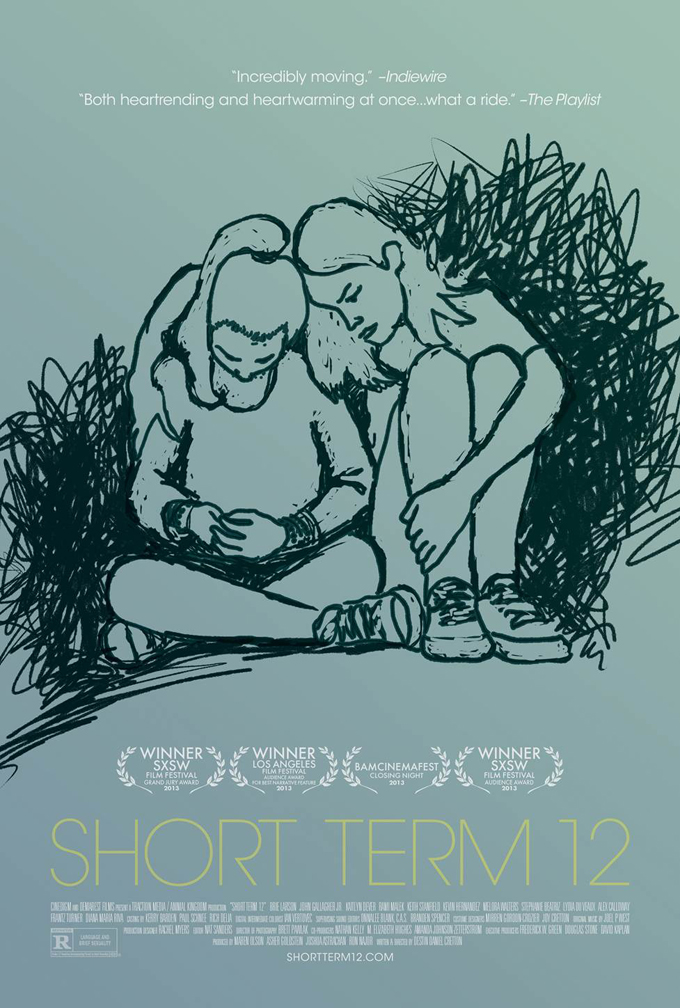
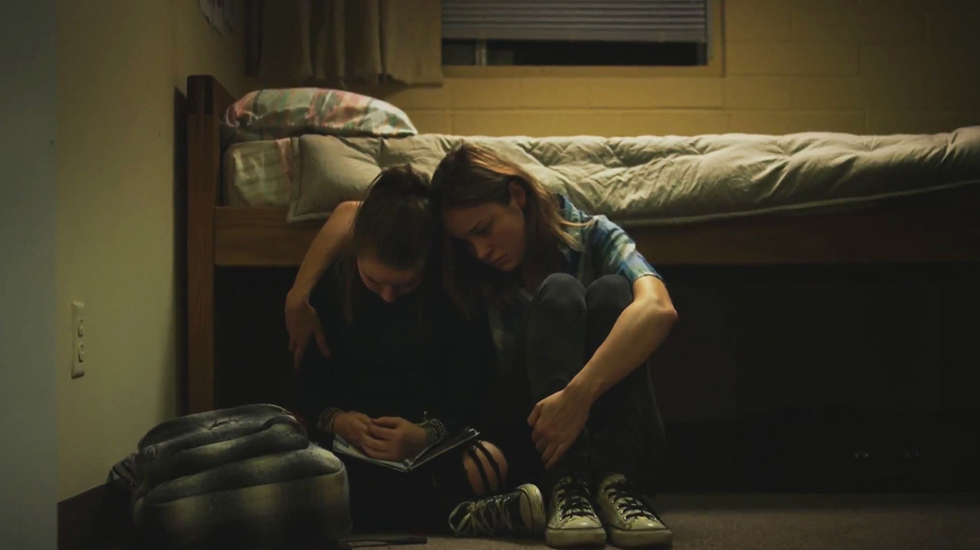
short-term-12-posterShort Term 12 – THE FILM OF MFF for me. Hands down. In the same ballpark as The Class. Nothing to nit pick. Nothing to write. WATCH IT NOW. Shed a tear or two in few scenes. What a depiction of a love relationship! And the teenagers are so good.

Heli – family getting caught up in extra judicial military forces ka atyachar. Quite liked it. I don’t know if this happens in Mexico, but it surely does in Kashmir & Dantewada.

For Those In Peril – this redemption tale set in the gloomy scotland (wish there were subtitles) lost me somewhere in the middle. And the bizzare ending just left me confounded. Koi samjha do kya hua.

Tonnerre – another doomed relationship film. Lovely. The lead is so good and ‘paavam’ (bechara). Was pleasantly surprised by the ending.

My Dog Killer – what an opening sequence. A tough guy training his dog, called by his dad for help. Stark, minimal, gritty, family social drama, this film left me wondering all the time where the hell this is going to go. And the dark ending nailed it for me. Don’t go by the title of the film!

A Long and Happy Life – a farmowner’s struggles to balance the shifting equations between his farmer community and the city council. Must start watching more Russian films after this one.

Kaphal (Wild Berries) – a sweet little funny children’s film set in the plush garwal, what a cinematic delight this one was. The kids(normally irritating in most hindi films) were so lovable, they carried the film on their shoulders. Ably supported by Subrat Dutta (Talaash), Pubali Sanyal (did she play Boti’s wife in Maqbool?) and cilemasnob‘s favorite under utilised Sunita Rajwar – who has a monologue and she rocks! Another movie which made me cry a couple of times. The audience loved it. Take a bow Batul Mukhtiar!

Good Morning Karachi – Slumdog Millionare meets Madhur Bhandarkar in Karachi. Was really disappointed. So were the fans of Khamosh Paani. Heard an editor friend laughing throughout at the unintentional hilarity at times.

Katiyabaaz – a very intresting film. Mazedaar. Somewhere between a documentary and a Dibakar Bannerjee-ish at times feature, this one digs into the power supply problems, a local hero (Loha Singh is the new Sagairaj!), the unpopular IAS Ritu Maheshwari – MD of Kanpur Electricity Board, the dwingling kaarkhanas of the industrial city, Indian ocean’s music and the superb background score. Lovely. Hats off to the full team. More power to apni Alice & apna Varun 🙂

Killer Toon – a web comic designer’s comic sketches potrayl of deaths, are carried out with precision of a serial killer. How? Why? Who? Is the designer responsible? What are the cops going to do about it? Who is that kid on the road? This excellent premise laden film begins with a arresting opening sequence and the horror-thriller tone is set. The repeated flashbacks and seamless transition to & from animation to reality itself is worth seeing this film – the chills down your spine while watching this one in a dark theater notwithstanding.

And an entire film can be made out the funeral business wala. What a character and what a performance by the actor (albeit in a role spanning less than half of the film). Would love to see that alternate film.

The Past – Asghar Farhadi’s superlative follow up ‘sequel’ of sorts to his brilliant A Seperation. This dysfunctional family drama is set in a almost Ramin Bahrani’s version of Paris, with characters bickering, coming to terms, confessing. It doesn’t get more ‘real’ than this and yet the situations are so dramatic. The lead from Seperation & Prophet nail it in this one, and the wife deserves all the accolades. Long takes, minimalist camerawork, terrific performances from the cast – Farhadi’s signature everywhere. I have been informed marriage-separation is the director’s favorite genre. He seems at home in this film with an objective eye on every one. The train sequence with the father son choked me up. And I loved Fohad – the little kid. MUST MUST WATCH.

Hansal Mehta should celebrate his birthday today. After Dil Pe Mat Le Yaar in 2000, he has been making one forgettable film after another. Forgettable might be too polite to describe them. And then he makes a comeback with such a strong film that it grabs you by the throat, makes you sit down, and wonder if he really directed those forgettable ones. A rare achievement that few filmmakers manage to do – to pull themselves out of what can be called “Bro-Filmmaking-In-Bollywood”. This is nothing less than a rebirth.

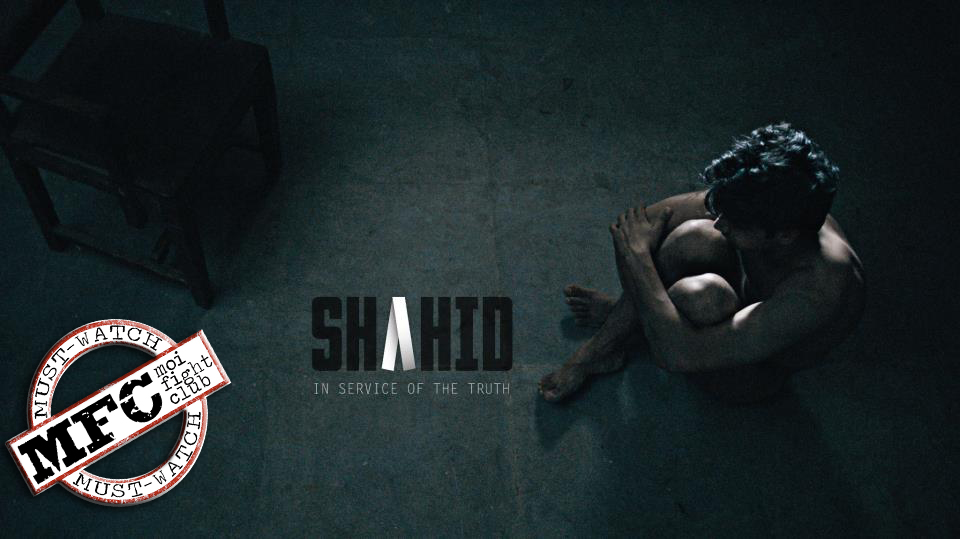
Fatema Kagalwala tells you why you should not miss this one. Mehta’s Shahid goes straight into MFC’s “Must-Watch” list.

Shahid MFC2

You’ve heard about the film. You might have read the raving reviews too. Some of you have watched it. But the film gets its real glorious moment now. Theatrical release. It’s every film’s Holy Grail. It’s the child bride’s gauna. It’s a validation that matters more than awards at times. Especially for a film like Shahid. One that dares to speak about a man who dared to himself. Especially in our regressive, repressive, intolerant times.

For a long time, I kept pronouncing the title of the film as ‘Shaheed’ as in martyr. And isn’t it so true of the story and the man at the centre of it? You will find a number of reviews telling you how good the movie is. It is. Powerful and uncompromising with the truth. So I will quickly chart down the reasons of why I think (in no particular order) you must watch this movie –

Rajkumar Yadav – We all know he is a defining talent of our times. And so far we have seen him only in multi-character movies. He carries this film entirely on his shoulders and it is not an easy task to sustain. The film is a story of a hero but has an incredibly un-melodramatic and non-manipulative story-telling. It maintains a strongly unemotional, non-manipulative tone, satisfied to observe the characters fighting, losing and winning their battles. Any other actor (except Nawaz maybe) would be torn between trying to underplay the heroism and emphasise the man behind it all. Not Rajkumar. He finds it equally easy to portray vulnerability as he portrays stoicism.

Hansal Mehta – Every film-maker has his or her own journey and mostly it is tough. It rarely depends on how original or independent minded he is. It also rarely depends on his reasons for making the films he does. Hansal Mehta has had his own downward spirals but the important thing is he bounced back when most give up. With this. Fighting a hiatus and a creative bankruptcy (in his words) maybe tough, but fighting an unforgiving, unsympathetic system is much worse. Shahid was not a subject that would be easy to make in a socio-political-artistic environment like ours. But it got made and got made well. That alone deserves applause.

Realism – That elusive, enigmatic bitch that takes talent to realise onscreen. From sets to actors to screenplay to dialogues to costumes to direction to acting to everything else in between. Shahid comes so close to reality it could be yours and mine story. As a Muslim it is mine and well, it was very uncomfortable watching it play out like it did. It must have been uncomfortable for Mehta as well, to choose to include the gory, debasing insult he was subject to after he made Dil Pe Mat Le Yaar. It takes guts to make an effort to heal such wounds through artistic means.

Casting – Hansal Mehta gives complete credit for finding the right actors to his casting director Mukesh Chhabra. All that matters to us though is that Mohd Zeeshan Ayub brings alive the part of the protective, fatherly elder brother and Baljinder Kaur is so good as a Muslim woman I was shocked to learn she was a Punjabi. Prabhleen Sandhu as Mariam, Tigmanshu Dhulia as Maqbool Memon and Vipin Sharma are deft touches in a carefully created canvas.

Zero melodrama – How often do we get to watch films about heroes, about controversial material, about polarising issues, about our social reality that comes without a Dolby surround sound moralising or 3D level emotional manipulation? Shahid loses out on deifying its central character, it may have become a ‘My Name is Khan’ financially if it had done that. But the choice to go strictly biographical in structure, objective in tone and let the man’s journey speak about itself makes this film this decade’s Black Friday.

Muslim as humans – This is not a movie championing Muslim rights. Very few people understand that the right response to bigotry on the basis of racism and sexism is not deifying the identity or struggles of the ‘other’. The right response is to bring humanism into the equation to balance it. The film, just like its protagonist, with a rare perspicacity, speaks for Muslims as humans and not as a religious identity, and the distinction is very important. Especially at a time when we are simply revelling in bracketing people according to class, caste, gender, race, colour, community, geography with a ‘hey, let’s find more reasons to discriminate’ glee.  If the victimised community was Hindu, Sikh or Christian, the film’s viewpoint would have been the same. In our times of muddled philosophies, faux intellectualism and confused, twitterisque moralising, walking this fine line perfectly is refreshing and heartening.

Shahid Azmi – A victim, a trainee terrorist, an imprisoned accused, a lawyer and a crusader of human rights of the wrongly accused. He finished his college degree while in jail awaiting release and in career spanning seven years e had a remarkable 17 acquittals. It is a sign of our times that his end came the way it did. It is also a sign of our times that someone thought his story important enough to be told despite the evident dangers. There is hope.

We keep screaming, we need more movies like these. And now we have one. Go watch.

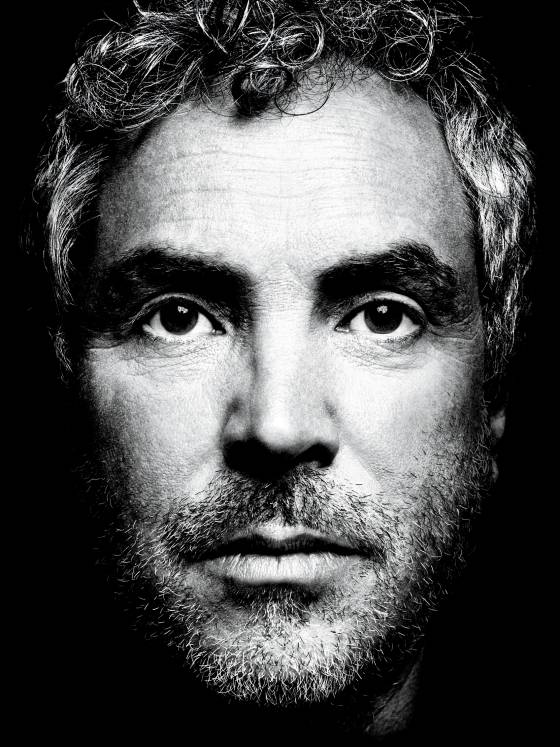
alfonso-cuaron-sandra-bullock-george-clooney-gravity-set-970x0

Was I worried?” Cuarón says. “Yeah!” He and Lubezki would watch their footage, “and depending on the day, you’re just in a room laughing, like, What the heck are we doing? Chivo’s (Lubezki) favorite phrase was, ‘This is a disaster.’ Some days you’d just have bits and pieces of Sandra Bullock in a box, floating around, surrounded by robots with cameras and lights on them, and you’d think, This is going to be a disaster.

James Cameron said he was stunned, absolutely floored. He called it the best space photography ever done, best space film ever done, and it’s the movie he has been hungry to see for an awful long time.

Rian Johnson tweeted something more interesting…

https://twitter.com/rianjohnson/status/385301804365279232

Michael Moore also pitched in and asked people to watch it in 3D.

Tarantino has already put it in his Top 10 of the year. And the best one comes from Edgar Wright.

SO WHAT’S THE BIG DEAL ABOUT GRAVITY?

Well, watch it. To see, feel, float, and experience.

CuaronAnd it’s entirely possible that even after watching the film you might not get its brilliance – why and how. Twitter has made me realise that. And i am not going to try – argue and make you understand. There are many things that many pea-sized brains might not grasp and understand, and i have made peace with it. This post is for those who were blown by it. If you watch movies like i do, can bet that you will come back home and start googling about it. So i am going to make your life easy and putting all the best articles/features/videos on Cuaron and Gravity here. The links are divided into two parts – filmmaking and sci-fi.

FILMMAKING – How and Why

I have to say that I was a bit naïve; I thought making the film would be a lot simpler…

– Digital Trends has got an interesting feature titled “Before Alfonso Cuarón could make ‘Gravity,’ he had to overcome it”. It tells you all about the problems they faced and what they did to find new technology. Click here to read.

– Cuaron is known for his magical long uncut takes. And as we all know Gravity has some 17-minute long jaw-dropping opening sequence. Here’s a video essay on his “Cinematic Canvas”.

Has voice-over by Cuaron.

I’m going to tell you something, the reality is that the movie was so new that when we finished a shot we would get so excited people would scream on set—probably me before anybody else. There were moments when we were shooting and Alfonso said ‘cut’ we would all just jump and scream out of happiness because we’d achieved something that we knew was very special.

– The Credits have done a feature titled “One of the Greatest Cinematographers Ever: Gravity‘s Emmanuel Lubezki”. This one is an interview with Lubezki. Click here to read.

Both of them—along with a number of other Mexicans who would go on to achieve success in Hollywood—were expelled before graduation. “In Mexico, there are a lot of conspiracy theories” about why, Cuarón told me, “and I’m sure that a lot of them are true. The truth of the matter is that I think we were pains in the asses. We disagreed with the ways of the school.” He laughed. “Even if they had their reasons, we were right.

– Vulture has posted a great piece on Cuaron’s career and filmography. It’s titled “The Camera’s Cusp: Alfonso Cuarón Takes Filmmaking to a New Extreme With Gravity”, and this one is a must read. The story of “a Mexican auteur who’d just made a tiny foreign erotic ­comedy-drama being handed the biggest, most fantastical franchise in movie history.” Click here.

– Cuarón sat down with George Stroumboulopoulos to talk directing, George Clooney and Sandra Bullock, and new voices in world cinema. This one is a funny interview.

Experiencing this film in 2-D is only getting about 20 percent of the experience of Gravity,” says Cuarón.

– The Daily Beast has also done a feature on Cuaron and his film. It took four and a half years to bring the magnificent 3-D film to the screen. The director retraces the journey for Marlow Stern, from Robert Downey Jr. and Angelina Jolie’s departures to creating the most groundbreaking cinematic voyage ever put to film. Click here to read it.

Still, it was a massive culture shock. “I had more toys to play with, but the crew was three times bigger than my Mexican film, with producers giving me notes, which I never had before.

– DGA has also covered Cuaron’s entire career – from Mexico to big Hollywood studios. Click here to read.

Did even this historically auteur-friendly studio (Kubrick, Eastwood, Nolan, et al.) wonder if they’d just gambled away $100 million on the most expensive avant-garde art movie ever made?

– Variety has done an interesting piece saying Gravity’ could be the world’s biggest avant-garde movie and drawn comparisons with Michael Snow’s films. Click here to read.

– And to know how the sound masters of ‘Gravity’ broke the rules to make noise in a vacuum, click here. Another must read.

SCI-FI – Science or Fiction

 From my perspective, this movie couldn’t have come at a better time to really stimulate the public. I was very, very impressed with it.

– The Hollywood Reporter has got Astronaut Buzz Aldrin, the second man on the moon, to review the film. Click here to read.

George Clooney’s character, in a rare and fleeting quiet moment says to Sandra’s character, “Beautiful, don’t you think?” And the scene is the sunrise in space. Hold on to that.

– The Time got another astronaut, Marsha Ivins, a veteran of five shuttle flights, with a total of 1,318 hours—or 55 days—in space, to review the film. Click here to read what she thought – how much is real and what all looked fake.

– And there are some rants too. If they can float, can’t they rant? Vanity Fair has put it all together. Click here.

– So how Realistic is the movie? The Atlantic has interviewed the film’s science advisor. Click here to read.

In India, the film has currently released only on IMAX 3D screens. It should be out in normal 3D screens from this friday. And do remember what Mister Moore said.

If you are in Mumbai, i would suggest you watch it at PVR IMAX screen in Lower Parel. No, they haven’t paid me. This is from my experience across various 3D screens in the city. The glasses at PVR, Lower Parel don’t make the screen dark. Also, they are bigger, better and light in weight. So if you already wear one set of glass, this is the best possible option. Rest, as they say, haath kangan and all that jazz.

If you have read or seen any interesting feature, interview, or video related to Gravity or Cuaron’s film, do post in the comments section.

@cilemasnob

(ps – due apologies to Woody Allen for stealing half of his title for the post and even turning it into a category)

It’s that time of the year again. Time for a new season of Coke Studio India. That time when we will again become hopeful about it, and then finally give up, and go back to the edition of Pakistan. Aha, still not there.

Rohwit earlier wrote this post wondering if this new edition will finally deliver what Coke Studio really stands for in our neighboring country. This season opened with A R Rahman. And then? Well, play the songs and keep reading. And let us know in comments section if you agree with our views or not.

Coke Studio1

The much awaited Season 3 of the Indian Version of Coke Studio kickstarted with a bang on August 17, with none other than ARRahman and his team of musicians. The anticipation was 2 inches above sky high because of the hype that MTV successfully created with systematic ‘leaks’ and a million teasers. Let’s see if it did what it has to do and must do!

ZariyaAni Choying Drolma sets the pace with superb bass accompanying the arrangement. She chants, and enchants! Not before long the backup girls spring into action (One of them is the Indian Idol Season 1 contestant Prajakta shukre as well). Couldn’t help but feel the girls were singing on that all too familiar ‘ishwar allah’ (1947 The Earth) tune. But that’s when Farah Siraj makes an entry and stays till the end of the song. A typical ‘hook’ in the song is missing and arrives just 2 mins before the song ends. It’s not a ‘typical’ song. It’s a prayer, a call for love and we have never experienced Tibetan chants the way this song makes you experience them. There are 3 vocal characters in the song – Ani, Back up vocals, and Farah Siraj. Farah is the ‘hook’ and she soon infects the backup girls to sing to her tune as Ani goes about with the chants. Music equivalent of the word ‘heaven’ was explored with this song and HOW! The percussion is spot on, ARR on fingerboard was spot on so much so that he was smiling, swaying, something we thought we would never see! The arrangement feels studio, Coke Studio!

Naan yen – Rayhanah calls out and while the call in itself sounded a little rough, AR Rahman brings in polish with this free flowing composition that gives the soul some rest the same way Nenjukulle soothed us in Unplugged. We would have liked a bite more from Reyhanah though. A Tamil track that makes the entire ‘language barrier’ incidental and almost insignificant. Highly recommended!

Aao Balma – Padma Bhushan Ustad Ghulam Mustafa Khan (one of the doyens of Indian classical music and the uncle of Ustad Rashid Khan) in all his glory takes the dias in this song. A Hindustani classical piece that flirts melodiously with Carnatic. The song starts delicately giving an overall feel of a beloved welcoming her lover. The sargam in between was arranged well and even though at times the arrangement dominated the voice, nothing went out of sync. The percussion in between did very little to lift the song and in my view it broke the continuity of the song. Towards the end it felt a little scattered. Will I hear it again? Not much. Will I see it again? YES! perhaps a million times! The visual delight that we have come to associate with Coke Studio is there for all to see in it’s full glory in this song. Be it the Juganbandi between Ustad and Prasanna (who makes the electric guitar sound like an electric bulbul tarang at times in the song). The grandson Faiz Mustafa sounds promising along with Murtuza, Qadir, Rabbani and Hasan Mustafa.

Ennile Maha Oliyo – The shortest offering from the episode and we wish that was longer. Issrath and Rayhanah sing the song together and you can make out easily how well prepared they are. Easy on ears, the tune will lead you to play this on repeat (just like Naan Yen) and I am referring to people who don’t understand Tamil (like me). That’s what ARR does and does it in style! The guitar man (Prasanna) flirts with carnatic notes yet again and does a huge favor on our senses. The percussion by Sivamani is fragile yet perfect!

Jagao mere desh ko – AR Rahman tries his hand in Bangla in the opening part of the song and does rather well. However, the continuous descending tone of the opening notes is what will catch your attention first. It is from there, the song goes up up and away! Fusion at its (Coke Studio) best! It is quite tough what to praise most. The superb arrangement, the excellent Suchi, the superlative backups or Blaaze. Back in Pakistan they used bohemia in turns and not together with the singers but here, ARR gets Blaaze to sing along and boy does it sound good! Of course there were some pronunciation issues and towards the end you feel the song if going a bit off track, but when you can live with someone pronouncing ‘ghut ke’ as ‘gutkhe’ here, you can certainly let go of these minor glitches. We did! And it felt superb! Try it.

Soz O Salaam – Again the three generations team up to present this song. The magician Ustad Ghulam Mustafa Khan sahab welomes us to the composition and his grandson Faiz Mustafa holds his ground well. The song could have done slight better had the words been clearer. The tune makes up for it though. Tune wise (even though the rest of the season remains to be seen), this would be one of the best this year. The ‘ARR’ continuum fingerboard adds an overall feeling of a spaced out composition which is unmatched by any other song from this episode. Ironical that this song wasn’t featured on August 17 episode (but is available here). Word has it that this will be featured on T.V. in the ‘sum up’ episode that will have one song from each producer.

With so much already being said (rightfully so, most of it) about Coke Studio India, this episode has set the right tone and it looks like we are in for a cracking season, finally! With the promising line up ahead, we have all the reasons to believe so.

It also reinforces the new formula that a lot of music shows would want to imitate….’When in trouble, call Allah-Rakha Rahman’

Internet is a great place, especially if you are looking for under-rated gems. Varun Grover stumbled upon this documentary called The World Before Her. Mihir Fadnavis got in touch with the director and we managed to watch the film. So over to Fatema Kagalwala and her ramblings on this stunning and important film. We are putting this in our “Must Watch” film recco List. Watch it.

The World Before Her copy

We love living in extremes. Grey areas aren’t appealing because they force us to think. They are meant for individual assessment whereas black and white are fit for mass consumption. So we’ve draped ourselves with stark definitions of tradition and modernity and live a bipolar existence, merrily swinging between both. Sometimes, we find solace in middle ground but one that is obfuscated with the overpowering implications of the extremes that are tradition and the modernity.

Prachi, Ruhi, Ankita, Pooja – the central protagonists, of ‘The World before Her’, a stunning, award-winning documentary by Nisha Pahuja, are all products, or shall we say victims, of our collective need to ideologically belong somewhere, even if it is within an ideology that seeks to subjugate them. They are perfect lambs for factories manufacturing daily definitions of the traditional and modern according to their convenience.

The struggle between tradition and modernity is ancient. The documentary examines these two polarities with a clear understanding of all its inherent ironies. Let’s take a look at the two worlds it straddles to make its point –

World 1 – Miss India contest 2011 20-day training camp. Of beauty, botox and bikinis.

World 2 – Vishwa Hindu Parishad’s Durga Vahini Camp. Of Hindutva, weapon training and military discipline.

Nisha takes us through both the camps, laying bare their belief system, process and the little dreams behind it all. We see training procedures up-close and peek into the lives of trainees. What makes the ambitious Ms India contestants tick and what drives the fierce Durga Vahinis? Through a thoughtful juxtapositioning, the two opposite worlds collide and before we know, melt into one voice. On the face of it, both espouse contrarian views on female identity. Beyond the façade of the titles of ‘modernity’ and ‘traditionalism’, both bind the very subjects they aim to set free, victimising the very subjects they aim to empower, treating the women they are pretending to liberate as cattle to be branded. The beauty of it all is the film doesn’t state it, but makes it clear with an intuitive stitching together of the narrative.

Nisha delves into both the worlds with care, aware of the mine of uneasy answers she is exploring, mindful of the dust her questions will raise. There is no attempt to impose a comment or paint a particular ideological picture. What makes the documentary a brilliant experience is the careful expose of truths and myths we live in, and the questing female mired in it.

In Ruhi, Ankita and Pooja, we see semi-urban, middle-class young women, very well aware of their social status as females, out to beat the system even if it is through succumbing to it. They are aware of the compromises they have to make and are fine with the cost to their dignity, if it transforms them, like Pooja puts it, ‘from a person to a personality’. The irony of their entire quest for identity within a system out to objectify them, seems to be lost on them. To my mind, Pooja Chopra, the girl whose father insisted on killing her at birth because she was female, almost seems like a tragic figure, bitterly fooled by an arrogant system laughing at her for believing she had carved a separate identity of her own and on her own terms. Ruhi, a young 19 yr old, feels obliged to her parents for bringing her up and feels the need to pay them back by becoming ‘something’, so that their creation is worth it…she never questions the route to fame she has chosen. Nor are her future plans of marriage and children at an appropriate age seem to clash in anyway with her present teen plans of becoming a beauty queen. ‘I can do all this now as I am young, later I won’t be able to do all this’, she says (quote not verbatim). There is no ideology at work here nor a tussle between the old and new. It is simple conditioning speaking but Ruhi doesn’t question any of it, for her her parents support for her contest participation is an empowering, liberating sign of modernity enough. For these women, the shine of glamour and the pain of centuries of repression are too blinding to see anything under or beyond.

At the other extreme is Prachi, the alpha female trainer at Durga Vahini, who has found a purpose and outlet in Hindu fundamentalism to escape the vulnerabilities her gender status thrusts on her. She is a single child of an orthodox Hindu family who feels her father is justified in hitting her (even brutally) because as a female child he let her live. She loves the power being a Durga Vahini trainer gives her, flaunts her dislike for ‘girlie girls’, is proud of being tough and is absolutely against marriage. Like the Ms India contestants, this Aurangabad-based girl too is looking to establishing her worth as a female in all-male world, but by embracing and perpetuating the orthodox mores of Durga Vahini. Unlike the other girls though, she is fully aware that the system she advocates aims at curbing her own freedom, yet, it remains her chosen vehicle to empowerment. Yet, I wondered if there was a glint of wishful-ness, an unacknowledged longing behind the façade of derision as she watched the Ms India contest. I don’t know if it was the artfully calculated shot lingering on her tad longer or my over-wrought zeal to understand her better or an actual fact.

I read criticism of the film saying this isn’t the reality of entire India and that the film does not reflect upon the middle path. It is possible I imagined the subtle jingoism in the criticism, but that apart, what it missed was the fact that these two extremities inform the lives of every woman (and men too) traversing the so-called middle path. Maybe they exist but I am yet to meet a person truly liberated from gender complexities and its socio-economic implications that the film so starkly defines. In fact, I saw Prachi, Ruhi, Ankita and Pooja as sharp and accurate spokespeople of the entire India, irrespective of class distinctions. Trapped in the half-baked definitions made by a commerce-driven, power-hungry, alpha male world, they languish confused in the debris of the shattered female identity they struggle to resurrect. Just like you and me.

As I mull over the needs of these girls, (and they are very familiar, they are around me and inside me) I see their quest with compassion. They have little choice other than adhering to a corrupt system to beat another equally corrupt one, to gain whatever semblance of self-respect they can garner for themselves. Patriarchy hasn’t left much for women to call their own or celebrate in the truest sense, has it? And if that wasn’t enough we have religious fundamentalism adding to the fire. Nisha doesn’t shy from showing news clips of Hindu fundamentalists beating up women in pubs and iterating the fact that Hindu terrorism is a bigger threat to India than Islamic fundamentalism. Not only is this a well-informed, deeply introspective, objective, exploratory documentary but it is very brave as well. One simply wishes the film does not get targeted by pressure groups if and when it comes to India.

As I watched the documentary and later, I wasn’t surprised by the ironical truths about female existence staring at me. It was all seen before, read before, said before. Yet, I couldn’t define the film in words and that is not because of the complexity of the film but of its theme. Which at one level is almost self-explanatory, but dig deeper and it will leave you distraught at the number of knots or rather untied ends it waves at you.

Why have we made the question of women’s identity so complex, almost impossible to unravel? Is it because we fear if we find the answers the world around us will no longer be recognisable? We are all slaves to gender equations and roles. Breaking free is scary because it means starting from scratch for human existence. Without the context of male and female roles and boundaries where would we be? What would we adhere to and what would we fight? Coz isn’t that exactly what gives all of us our purpose? The ‘shoulds’ our gender is supposed to wear? We either wear them with pride or fight them with gusto, satisfied in the purpose we’ve found to base our lives on. We then spend our entire lives empowering the very cycle the protagonists of this film believe/imagine they are fighting. We are no different from them, really. Gender politics apart, men and women, we are all in this together and for once, it isn’t a happy thought.

I realise I can go on writing about this film, such is the subject matter and beauty with which the story has been told. As I pull down the windows on my brains because I really want you to watch it with a fresh curiosity, let me leave u with a few moments that struck me with their irony, pathos and horror.

Pageant diction coach Sabira Merchant (proudly or matter-of-factly?) calling the Ms India training camp “a little factory … where you’re polished like a diamond. The modern Indian woman.” (Did the irony of what she was saying escape her or had she, like the contestants, made peace with it long back?)

Uma Bharti, while protesting against the 1996 Ms World contest to be held in India, “We are against a system that presents women as pieces of meat and judges them based on the size of their chest, waist and hips.” (I never thought I’d appreciate Uma Bharti in this lifetime.)

Prachi, with misty eyes, excusing her father for hitting her, “Knowing that I’m a girl child, he let me live … That’s the best part. In a traditional family, people don’t let a girl child live. They kill the child.” (I don’t think there was anyone among us who didn’t shiver on hearing her say this and actually mean it.)

The Miss India contestants parading in hip-length sacks and denim shorts in a round that judges who has the hottest legs.

Marc Robinson, the organiser, laughing off the indignity of the sack-round.

News clips of Hindutva louts beating up women in pubs.

Little girls at Durga Vahini camps being taught India and Hindutva was under threat from two main sources – Islam and Christianity.

Little girls lapping it up and regurgitating it like it was the only truth.

Chinmayee, a smart 14-yr old, proudly declaring at the end of the camp, ‘No, I don’t have a single Muslim friend. I did when I was younger but then I didn’t know that we are different.’ I didn’t know if I felt horror for India or pity for the little girl.

At the end of the Durga Vahini camp, girls getting sashes to wear identifying them as Durga Vahinis and the (gleeful?) exclamations of, ‘This is just like Miss India, Miss World!’

Touché.

Fatema Kagalwala

– FB page is here.

– If you are in Canada or USA, you can order it here and here.

The Act of Killing

This was long before Tehelka had done any expose. I think the year was 2006. A junior from college had gone on to become a yogi of sorts – a spiritual guru who over the next few years would gather a bunch of powerful politicos as his disciples and put an Orkut profile photo showing Narendra Modi reading Time Magazine with him, in his Yogi costume, on the cover.

I had shifted to Bombay to become a writer and his phone call started with respect for this ‘brave’ decision of mine. Over the next few phone calls during the week he told me about his vision for India and his love for cows, both quite reasonable, and I listened out of curiosity and courtesy. Then, after his self-praise ran dry after multiple ejaculations over 4-5 days, he came to the asli mudda.  He wanted me to head the national cultural wing of some organization/movement he was launching soon, in association with Bajrang Dal or VHP (my memory fails). I asked him what are his views on allegations on these organizations being responsible for Gujarat riots, and pat came his monologue which came back to me right after I started watching Joshua Oppenheimer’s The Act of Killing.

He said of course it’s a matter of pride and an act whose time had come. It’s a happy situation that we still have youth who can put their lives on line for their nation. He said he is in fact sitting with two bhai jis who murdered a few people, including a pregnant lady and her child, with their own hands. Sensing my shock he said he and bhai jis can explain everything if I meet them in person just once. And then he handed the phone to one bhai ji when I cut the call in horror. College junior/Yogi called back saying he can understand the fear of rationals over such acts but he is sure that once I know the full story, I will not just accept but hug and applaud these people who murdered muslim women and children on the streets. A more heroic me would have gone to the cops or some TV channel, but I just cut the phone and never took his call again. (He called a number of times over the next month or so.)

This nonchalance puzzled me, kept me awake for many days. I rationalized that he might have been bluffing only, or trying to test me on something. It was too difficult to believe that people could boast about their crimes so easily, that too to almost strangers.

While watching The Act of Killing, in which gangsters hired by Indonesian military regime to kill more than 15 Lakh alleged ‘communists’ in the country revisit their acts with pride and glossy rationalization, I kept swinging between the two extreme emotions. One was the feeling of shock at this bizarre scenario – gangsters were told to re-enact the murders in whatever cinematic genre they want to and they obliged by enthusiastically recounting the methods, madness (sitting on a table placed on victim’s neck and jumping while singing), and ‘reasons’ (“God hates communists”) behind via many genres including musical, war film, crime drama, and comedy. The other was the feeling of familiarity – the feeling of having lived among such people, known them (and we all have known them in India who say ‘Sahi kiya Modi ne!’), and hence feeling no shock at this kind of behavior. It was like looking into the future if we have a Hindu-Military regime someday. The same guys I spoke to on the phone might be calling me   again to write songs for the film they would be making to celebrate their own acts of 2002.

So yes, there was a third feeling too. Feeling of ‘Is it okay if I laugh at this scenario?’ Very few films can put you in that space, that uncomfortable space between humaneness and detachment. I did laugh in a few scenes, in spite of being brain-shocked by it.  It was farce performing cunnilingus on reality.

The story unfolds through Anwar Congo and his sidekick Herman Koto. Anwar was a gangster (he says gangster means a ‘free man’) in 1965 and killed more than 1000 people in his ‘office’ by his own admission. He loved watching movies, looked like Sidney Potier, and ran the ticket business of cinema halls, and hence appears most earnest about this project presented to him by Oppenheimer. His sidekick, a present day gangster, clearly has acting ambitions as he puts his soul and direction skills in this fractured, b-grade production they are making. The film keeps switching between extremely violent and surreal recreations of 1965 killings, present day life of these gangsters (sometimes watching and critiquing their day’s work like big stars would), and moments of serene silence. And the silences are the most uncomfortable, as they should be.

Is there some moral redemption at the end of this “high-fever dream”? I don’t think there is much. Though director in an interview said of Anwar and his friends’ casual justifications for killing while recreating the scenes as their “desperate attempt to justify what they have done,” and thus, we see their ultimate humanity. If they have to cover it, they must know they have something to cover. In the recognition is the humanity. But redemption is not what the film seeks to achieve. Its attempt, in my opinion, is a much simpler one. It just wants to push these bad men into doing something decent (making cinema), and us into doing something bad (watching murder in a lighter vein, almost like they watched when they committed them). A two-way documentary, in a sense.

Not for the faint-hearted, but this is as explosive a mix of documentary, cinema, human condition, and horrors of prejudice as you will ever see. GUT-WRENCHING is an understatement.

– by Varun Grover

Booked your tickets yet? Do it first. Then come back to this post. This isn’t the usual hyperbole. It’s really good and rare chicken soup for your soul. And so the film straight goes into our list of “Must Watch” films.

Our regular contributors Varun Grover, Svetlana Naudiyal, Mihir Desai and Sumit Purohit tells you what the film meant to them, why it spoke the way no other Indian film has done in a long time, and why you should not miss this one at any cost.

And as the norm goes with most of our posts, these are not formal reviews. Just ramblings. Why four? Well, we are going with the theme of of the film – three for three stories and one to connect it all. or something like that. Aha, call it cheap thrill and read on.

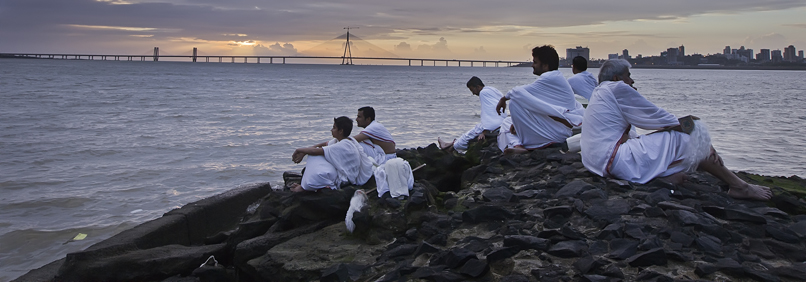
Ship MFC

Cinema of duality

by Varun Grover

I have been struggling with this scenario for some time now, this concept of duality. Not in a spiritual sense (that is still many years away I think) but in a very daily-life sense. Have been swinging between left and right ideologies, between Arundhati Roy and her detractors,  between hedonism of sab chaat lo/bator lo and nihilism of sab chootiyapa hai, between the urge to document every travel trip through photographs/ticket stubs  and the need to live in the moment making the concept of posterity sound like a well-manufactured fraud, and many other, similar conundrums.

Anand Gandhi picks up three such stories of duality, set in three different worlds, and binds them together through the philosophical paradox of Ship of Theseus. If that sounds heavy then yes, ambition-wise the film is this heavy. But the beauty is that the team has pulled-it off with great cinematic value in each frame and line of writing. It’s refreshing, beautiful, insightful, and as gripping as a well-made thriller.

The philosophical moorings never get in the way of entertainment or storytelling, the two core elements people safely assume missing from any film termed an ‘Indie’.  And that, I think, is the greatest success of Ship of Theseus. Here’s an Indie that appeals to the mind as well as the heart. We don’t need to love it out of some guilt for the poor filmmaker who sold his house and ate only vada-paav for 1008-days non-stop to fund the film. We don’t need to love it because it’s arbitrary and arty and we don’t get it but ‘Mint Lounge or Caravan are loving it so we must too’ pressure.  We can love it with all our understanding, ego, and guiltlessness intact, like we love any mainstream film.  It’s like health food that doesn’t taste like health food.

The 3 stories – a visually-impaired photographer about to get new eyes, an atheist monk and stand-up comic cum lawyer sparring on about the relative value of an animal’s (and human’s) life, and a man with a new kidney having doubts about the legality and ethics of the transplant – explore one genuine doubt each (माकूल शक़  as KK Raina said in Ek Ruka Hua Faisla) about existence and mortality.

The characters are talking a language rarely heard before on Indian cinema’s screens.  The language of loaded words and of a life lived in knowledge. Though I’ve met some people who found the language to be faux-intellectual and the 2nd story a bit too verbose.  I think it’ll come down to how invested in the basic conflict of the story you are. Do you want to know more about the layers of conflict at hand or are just happy seeing the surface and are now mumbling ‘Haan samajh gaye…ab aagey story bataao na!’ Like after watching a great film, I spend hours reading about it on the internet. Director’s interviews, googling ‘<film name> explained’, trivia, theories, hate it generated – everything.  Sometimes I know how much I liked the film only after realizing I have spent 2 days reading up on it. I think same theory works here – if you find the core debate interesting, you will enjoy the शास्त्रार्थ going on between the monk and stand-up comic. (And what is a stand-up comic if not a modern-day version of debate-loving, analyzing, theorizing monks we read about in stories from mythology, people who debate just for the heck of it. So in a way, 2nd story is a debate on morality between two monks/comics from two different time periods.)

If a film’s merit is in showing a new world with great authenticity and insight, then Ship of Theseus shows us three. And to top that, terrific performances, excellent background score, one brilliant song in Prakrit, and consistently sharp photography throughout made this most-awaited Indian film of the year for me absolutely worth the hype.

Ship Of Theseus

“You chose your journey long before you came upon this highway”

by Svetlana Naudiyal

I really don’t know what to say amidst the deluge of opinions and interviews and reviews. Social media is flooding with them and here I am, adding my own two bit to that. Will saying that I’ve seen it thrice already at different occasions and will happily (and surely) see it again, suffice?

Quite lazily and shamelessly, I am kind of reiterating something I wrote earlier this year for this very same blog. Primarily because, I think kisne padha hoga. And secondly, what I think about the film, it hasn’t changed a bit.  (Also, maybe now I can add some of those so-called spoilers.)

Ship of Theseus invents a language. Not just in terms of cinema, but in terms of thought. It compels you to go home and read. If not read, then at least think.  (At times when we spend our lives not thinking, you may discover that ‘thinking’ is a wonderful exercise). It takes you closer to your own self and yet far away from it, where almost unintentionally you find yourself objectively pondering over your own self and its relationship with the world around.

It is so evolved in thought and yet so accessible. Sophisticated, mature and nowhere in the remote vicinity of pretentiousness. And yet it is light like a feather, a pleasant watch replete with humour. (And in case I haven’t yet reiterated enough in indirect phrases, the film stems from life itself.)

The blind photographer’s search for meaning in being able to see, the monk’s dilemma and the stockbroker’s quest for purpose in his own life. You may like a story little less and another a little more, but it is the whole they construct that runs like a background score for you after you’ve seen the film.  In our Cinema, where do we see references to something like Unilateralis Cordyceps,  Charvak and Church of the Flying Spaghetti Monster anyway? Or to introduce a blind photographer, to have a song in ‘Prakrit’, to choose Sweden (Sweden is rated to be one of the most fair and just social systems in the world – this little piece of info comes from the filmmaker, not my discovery. I just crosschecked a bit.)

I also love how the film resorts to traveling. (More of a personal connect, may be, for a firm believer of the idea that any meaning that can ever be found is during a journey). From wandering to a far off valley in Himachal to cave diving in Manipur, a journey into the infinite and open world within.

[May be next week, we could compile a post listing the brilliant moments of the film. There are many. The only one I would probably want to mention for now is Maitreya’s encounter with what seems like death. In each viewing, at that particular moment and in every reflection about that moment, I’ve found myself come to a standstill. Needless to mention, if a film can capture that particular feeling, that moment in all its freezing cold reality, one can imagine how close to life the film is.]

Having said that, I must also admit that I’ve wondered if I’m breathing too much meaning into the film for its (and my) own good. I’ve refuted my own thoughts, with reasons ranging from beauty in lack of perfection to the subjectivity of what we call perfect. I’ve oscillated between “if this is a very well done pop philosophy” to “if this could have been deeper, darker” or something else, something more. Whether it is too much on words or too little on silence? But then again, those questions are personal, subjective and could be irrelevant to someone else who might not or might appreciate the film in a very different way for very different reasons.

Here’s where I found a bit of my answer –

Quoting Anand

An early treatment scribble

I’ve made a conscious choice of dialogue over action in several scenes in the script. I felt a strong urge to revert the “show, don’t tell” thumb rule, to the extent that many scenes cut abruptly at their most dramatic high point, and then in the following scenes, the characters narrate, through casual conversation, their experience of the dramatic moment. I analysed this urge to distance myself from the heart of the action. I discovered that I find some human experiences too deep, intimate and emotionally stirring to try and capture on camera. Also the immediacy and the drama of the experience end up fogging the essence, which seems to come out more honestly in the objective after-experience reflection. When a character talks about a moment experienced in the previous scene, it is not intended as a guide for the audience, but rather as an experiential lens, through which the audience lives the moment twice – once through the speculation of the dramatic high point of the moment led towards by the author, which being never shown, is experienced in the imagination, and then, the moment redefined through a tinted world-view of the character.”

It is in being the narrow, delicate bridge between simplicity and complexity, the singularity and duality of the quest for meaning, that Ship of Theseus is poetry reinstating itself as cinema, or vice versa.

Will it change your life? Maybe not. Life changing events and experiencing deep meaningful literature or cinema, are known to be mutually exclusive. But the film is sure to rekindle a little hope and a little faith or maybe a little more.

(p.s. In the 100 years of Indian Cinema brouhaha all around, Ship of Theseus arrives as a perfect anti-tribute and thankfully so! Here’s to The New!)

Ship Of Theseus

Let It Sail

by Mihir Desai

I didn’t want Ship of Theseus to end. The philosophical depth and visual beauty put me in a mind space that movies don’t tend to these days. I didn’t want to come out of it, back to mediocrity where filmmakers take their audience for granted. SoT treats the audience as equal, it gives an opportunity to reflect and interact with the thoughts presented in the film. Anand Gandhi very carefully crafts a film that raises questions about identity, ethics and evolution. The three stories within the film come together in what could be the best closing shot of the year! The film doesn’t take the easy route of leaving things up to ‘audience interpretation,’ instead it gives its audience some food for thought, without being preachy.

Ship of Theseus is truly made with an independent spirit. This is an example of what DSLRs are capable of doing. The visuals will prove once again that for DIY and low budget filmmakers, DSLRs are still a worthy investment. Pankaj Kumar’s (Director of Photography) brave cinematic choices takes the core idea of Theseus’ paradox to a whole new level. Three different looks and specific choice of camera movements for each story adds a new dimension to the characters. Technically this is a perfect film.

I look forward to a second viewing of the film as it opens to public. We’ve always been cynical about audiences rejecting new kind of films. The evolution of Indian cinema is in its prime, it’s not the audience that needs to carry this forward, it’s us, the filmmaking community that shouldn’t shy away from taking such risks.

Ship Of Theseus2

Kyunki Gandhi Bhi Kabhi Soaps Likhta Tha

– by Sumit Purohit

It was a rainy morning of July 2011. The Enlighten Film Society’s Naya Cinema Festival was going to screen Aaranya Kaandam as the closing film. I had heard lot about it, so I went despite the rain and the morning. I had no idea then that I will get introduced to another very special film there. It was announced that post the film screening the excerpts from three upcoming films will be played. I decided to stay back. One of these three films was SHIP OF THESEUS. That was the first time I heard about it. Anand Gandhi was present there with his team. He spoke briefly about the film.  But the few minutes of visuals that were played on screen were enough to tell everyone in the theatre that they were witnessing something exceptional. It probably was a film that will change Indian Independent cinema forever.

Almost a year later, Ship of Theseus was screened at Mumbai International Film Festival and it went beyond all expectations. It was not only the best Independent film to come out of India; it was a film which could compete with the finest from around the world. It was a master class in filmmaking. It was technically superior to most Indian films and it explored the stories significant to our times.

To realise that Anand Gandhi is a genius you need not watch his films. You just need to listen him talk for five minutes. He can talk about most things under the sky with great expertise. It seems he is less of a filmmaker and more of a cross between a mad scientist and a philosopher. No wonder he calls his production house a lab and writes research papers too. May be he is the monk from his film, or may be he is the young man who keeps arguing with the monk. Actually, he could be both of them at the same time.

Ship Of Theseus in a way is reflection of what Anand has experienced and learnt over the years. Though what’s wonderful about the film is that it communicates all those ideas and beliefs simplistically yet beautifully when it could have easily become pretentious, preachy or gone all abstract. Ship of Theseus is not what we usually associate with Indie films that have been to film festivals. It’s entertaining, at times humorous and very accessible. It respects its audience, and is intelligent.

The three stories in the film are all set in present Bombay and yet they look like they could be worlds separated by time and space. It’s interesting to notice how Anand uses certain elements in his film. The 1st story is about a blind photographer. Some of the gadgets she uses are straight from science fiction as if the story was taking place in the near future. At the same time the background song with Prakrit lyrics in the 2nd story makes the soundscape feel ancient. It’s a story about a monk who is fighting a court case to ban animal testing in India. He seems to connect with the most unlikely person, a young lawyer who sports long curly hairs and shares Internet jokes with him. In the 3rd story a young stockbroker’s obsession forces him to travel to Stockholm, a place away from his comfort zone. This coming together of contrasting elements makes Ship Of Theseus such an intriguing cinema.

Recently I read that the three films Anand suggested that everyone should watch are – Du Levande (You, the Living), The Turin Horse and Underground. If you look closely, you might find that these films could have influenced Ship Of Theseus conceptually and technically (Gábor ifj. Erdélyi, the sound designer of SOT has also worked on The Turin Horse). SoT has lot of non-actors in the cast, similar to what Roy Andersson prefers. Then there is a scene in the film where a fat man gets stuck in a narrow alley. One can easily imagine it to be a scene from an Emir Kusturica film.

SoT is a great example of how a filmmaker uses his experiences – things he has seen, stories he has heard, films he has watched, books he has read, and gels them together into something new. And at times referring back to them amusingly in the film.  This is a good reason why Ship Of Theseus can be seen again – to search for such references, to find those connections and see how they have changed in this process. Isn’t it similar to the Ship of Theseus paradox?

You will not hear or read any negative criticism of Ship of Theseus, so let me try it (for the sake of an argument and for fun). Strictly speaking it’s not a feature film. I will consider it an anthology of three short films that are thematically connected. The three films are visually and stylistically distinctive.  It’s deliberate but then you can’t overlook the clear dissimilarity between the writing, the way actors approach their roles, the language used and the impact it creates.  But then, for a debut filmmaker this really is not a negative thing. It only shows how talented Anand and his team are and how capable they are at creating these different worlds. It would be really interesting to see what Anand does when he decides to make a feature length film that follows one storyline. What narrative techniques he will use? What cinematic style he will adapt? He is an exciting filmmaker to follow. The best way to start stalking him is by watching Ship Of Theseus.

(PS – If you still need more reason to watch the film and you are a TV soap fan, then you should know that at once upon a time Anand used to write Kyunki Saas Bhi Kabhi Bahu Thi and Kahaani Ghar Ghar ki. Now, that should excite some of you.)

– And if these four writers have not been able to convince you so far, click here to read what Dibakar Banerjee has to say about it. Not everyone has the guts to say such good things about someone else’s film.

For small and regional films, social networking platforms can be quite a boon. If anything is good, one doesn’t need to worry about its audience. When people become your ambassador, you don’t need advertising or pr. I discovered the wonderful trailer of Bhooter Bhobishyot on FB and was instantly hooked. Have been following it since then and it’s finally getting a limited release in Mumbai today. So here’s a recco post on the film by Aniruddha Chatterjee. But first watch the trailer. Wish they had released it with subtitles.

Imagine this. Two ghosts, one a zamindar who got killed by the dacaits, and the other, a British officer who served in pre-independent India, are auditioning other ghosts to fill the zamindar’s abandoned mansion. This is because most old mansions and houses are demolished and turned to shopping malls and multiplexes by money hungry promoters and are ruining the culture and heritage of the city. So the ghosts all over the world, especially in Kolkata, are finding it very difficult to find a place to live in. Interestingly, even the ghosts are worried about their food, entertainment and security. The selections in the audition are made accordingly. This is the crux of debutant director Anik Dutta’s delicious bengali film Bhooter Bhobishyot.

Siraj-ud-Daulah’s trusted cook who gave his life in the Battle of Plassey, an Indian army officer who got killed during the Kargil war, an actress cum singing Kanan Devi-isque sensation of the 1940s who committed suicide after her producer boyfriend ditched her and married someone else, a Bangla rock band member who overdosed himself to death, a Bihari rickshaw puller who was killed due to reckless driving by a rich brat, a Hindu refugee from Bangladesh who was killed during partition, and a modern day city girl who jumped from her apartment terrace when her industrialist father refused to let her marry a Muslim boy – all of them get selected after the audition. The thread connecting all the ghosts is that they all died unusual deaths.

The ghosts sing, dance, romance, go to picnic, argue over hilsa and prawn, and when endangered, unite to fight against a promoter who wants to destroy Choudhury mansion and build a mall.

The script is unique and original, and is one of the most satisfying satirical comedies of late. The filmmaker takes a dig at everything that is Bengali – the intellectual filmmakers who only prefer Godard, Fellini and Ray, the pseudo communist rebel who thinks wearing Che Guevara t-shirt proves everything, the Dada and Didi of Bengali politics including the Rizwanur Rahman incident, and the everlasting fight between ghoti and bangal. It is refreshing to see usage of Spookbook, Facebook for ghosts, to find a suitable match for an item number.

Interestingly, the narrative is a tribute to Ray’s Hirak Rajar Deshe, as almost every character in the film speaks by rhyming their lines. The humour is subtle and situational. Literal and political references are plenty, and so it needs to be seen whether non-Bengalis find the humour appealing or not.

Another aspect that must be mentioned is the music. Raja Narayan Deb has created one of a kind soundtrack with influences from every genre possible – rock, pop, rabindra sangeet, jazz, folk or qawwali, and also from the different eras the characters belong to. (Click here to watch a terrific song medley from the film)

Also, it has excellent performances by the entire ensemble cast, but Sumit Samaddar as the Bangladeshi refugee and Swastika Mukherjee as Kadalibala, the actress cum singer of the black and white era, are the scene stealers.

Anik Dutta, the writer-director of the film is a renowned ad-filmmaker. This is his first feature film and for that he deserves every bit of accolade he is receiving for creating such an entertaining film.

Currently, the film is playing in theaters all over West Bengal. It’s getting a limited release in Mumbai on 27th April. Don’t miss it!

For more details, film’s Facebook page is here. For Bombay’s theatre listing, click here.

The year was 1994. I was in class 9th. It’s the year when the world starts reminding you that life and death will be based on your next year’s results. So, this is the year before you are crucified for the board exams. Have as much fun as you can have.

My class found its first official couple that year – those who declared their love without saying anything. Boy from middle-class. Girl from Officers’ colony. In a small coal town in Jharkhand (it was Bihar then) where dating wasn’t part of our dictionary, it was a big thing. Quite daring too. Because unlike in big cities, we all knew how many chappatis our neighbours had for lunch and how many they finished in dinner. Everyone knew everyone else and every affair related to them. Love in a small town was a risky business.

So for the rest of us, it was a teasing game – oh, she is with him and he is with her. The peer pressure that makes you imagine weird things. It was all just in the head. But for the couple, i was the middle man. The boy used to sit on my right as we shared the desk. The girl, on my left, had a separate desk. And between the boring classes, writing and passing love chits was their favourite activity. Being a good friend, i had no choice but to spice up the chits when asked by my friend. And help her in  studies too. She is your friend’s girlfriend. If not you, for the first time someone in your life has a girlfriend. You have no other choice.

The first chit, the first letter, the first chocholate that was shared – it was all before my eyes.  And like all small town love stories, this also ended with a Jagjit Singh ghazal. He came back from Benaras and told me that he did exactly what Jagjit Singh sang in Arth – Tere khusboo me base khat mein jalata kaise….Pyaar me doobe huye khat mein jalata kaise…Tere haathon ke likhe khat mein jalata kaise…Teri khat aaj mein ganga me baha aaya hun….Aag behete huye paani me laga aaya hun.

We never discussed this later on. But sometimes i still do think about the entire episode and a big smile appears on my face. For two hours i had the same smile on my face as i watched Sujay Dahake’s directorial debut Shala.

Based on Milind Bokil’s novel by the same name, this is an assured debut. And believe it or not, the filmmaker is just 25 year old.

The film doesn’t state anything new. It’s a trip down memory lane that you have seen many times before. Just the set-up is different and the faces are new. But everything is captured so well – it’s all about the silences, glances, moments and the memories. School, best friends, love, heartbreaks, first rush of hormones, crush on your favourite teacher and that first introduction to politics which tells you that the real world is not what it looked like so far – say it, and it’s all there.

Best thing about Shala is that it doesn’t look like a film at all. The acting is so natural, the camera is so non-intrusive and lingers on frames with so much ease that it feels as if someone just put a camera in a school. There is not a single false note in the family affairs too where the scenes are quite delightful.

The story is set in the backdrop of the emergency. Though it doesn’t add much political colour to the main story and which seems like a tokenism, but Sujay belongs to “subtle school of filmmaking”.

A common factor in any good film is that you will always remember a character who is there in just 2-3 scenes. Mr Joshi (lead character’s father) played by Nandu Madhav is that character in Shala. Watch him in the scene when he receives the letter from the school – knowing some of my friends and their strange equation with their dads, can bet that many people will wish that they had a father like him.

The lead actors played by Anshuman Joshi and Ketaki Mategaonkar have such a terrific and delicate chemistry between them that it’s impossible to believe that it’s just onscreen love. They do nothing heroic about their love story but those tender moments filled with soulful music are so powerful that they will stay with you long after you have left the theater.

Another place where it scores a high point is that the film doesn’t aim for the big bang climax. It’s all about the journey, it’s not a “destination movie”. Because the pain of growing up can’t have a happy ending. Nothing prepares you for the cynicism. The joy is in the journey. Shala celebrates that. This is what pure and uncompromising cinema looks like. And since that’s a rare genre in this country, i suggest you don’t miss this one.

Watch it. Watch it because nostalgia is a bitch, and when the bitch is so beautiful, there is no way out.

And what’s your class 9th story? Do tell us.

The film is playing at Mumbai’s 24 Karat Theater (Jogeshwari) with Subtitles. They have only one show at 3:30pm. If you know about any other show with subtitles, do let us know.

Click here to check out the official website of the film.