Archive for the ‘News’ Category

After Mahindra’s Mumbai Mantra ended their tenure with Sundance, Producer Manish Mundra’s company Drishyam has tied up with them to bring the first edition of Drishyam-Sundance Screenwriters Lab. What Mahindra could not do – convert the scripts into films, hopefully Drishyam will be able to do. Otherwise just selecting the scripts and mentoring them becomes useless if there is no funding for such scripts.

Sundance Institute and Drishyam have announced the 7 scripts selected for this year’s lab which will run from April 12-16. The Lab supports emerging filmmakers in India, as part of the Institute’s sustained commitment to international artists, which in the last 25 years has included programs in Brazil, Mexico, Jordan, Turkey, Japan, Israel and Central Europe.

The projects and fellows selected for the 2015 Drishyam | Sundance Institute Screenwriters Lab are:

Geetu MohandasGeetu Mohandas / Mulakoya

From the Lakshadweep Islands of the Arabian Sea, a young boy sets off on an adventure to the mainland in order to find his older brother.

Geetu Mohandas’ debut feature Liar’s Dice, premiered in competition at the 2014 Sundance Film Festival. Liar’s Dice has currently played 35 film festivals and won 5 international awards for best film and 2 National Awards, the highest honor in India. It was also the official Indian entry for the 2015 Oscars. Mohandas, along with filmmaker Rajeev Ravi, formed  the production company Unplugged in 2009, which produced her short film, Kelkkunnundo? The film premiered at Rotterdam International film festival and won 3 International awards for Best International Short Film and the National Award for the Best actor in India.


Raj Rishi MoreRaj Rishi More / Pirates

Amidst the economic downturn, a young illustrator struggles to balance supporting his struggling family with his dream of becoming a professional cartoonist.

Raj Rishi More started his film career as an assistant director on RiteshBatra’s Sundance Institute-supported The Lunchbox (winner of Grand Golden Rail, Cannes Film Festival 2013, nominated for BAFTA 2015). He worked as First Assistant Director to RiteshBatra on his short Masterchef, a commission by the Bill and Melinda Gates Foundation that premiered at the 2014 Sundance Film Festival. Currently Raj is working with RiteshBatra on the feature film Khoya, while developing Pirates, his first feature as director.


Atanu MukherjeeAtanu Mukherjee / Unknown Faces

When eighteen year old Dhruv returns home from boarding school, eager to reunite with his family and friends, he instead finds that his father has disappeared after a bankruptcy scandal. While his mother attempts to protect him from discovering his family’s hardships, Dhruv decides to find his father himself.

Atanu Mukherjee is an alumnus of Satyajit Ray Film and Television Institute Kolkata. He has worked as Editor on four feature films: Achal (The Stagnant), Blemished Light, Shortcut Safari and Monsoon Shootout, the last of which premiered at Cannes in 2013. He has directed the documentary My House Is Not So Far, and has also written, directed and edited short films Ekanko (The Monologue), The Gatekeeper and Stray Dogs, which won Best Short Film at the 2014  Cinema City Film Festival in Serbiaand was a part of the 2014International Documentary And Short Film Festival in Kerala. Most recently, he participated in the 2015 Berlinale Talents Program.
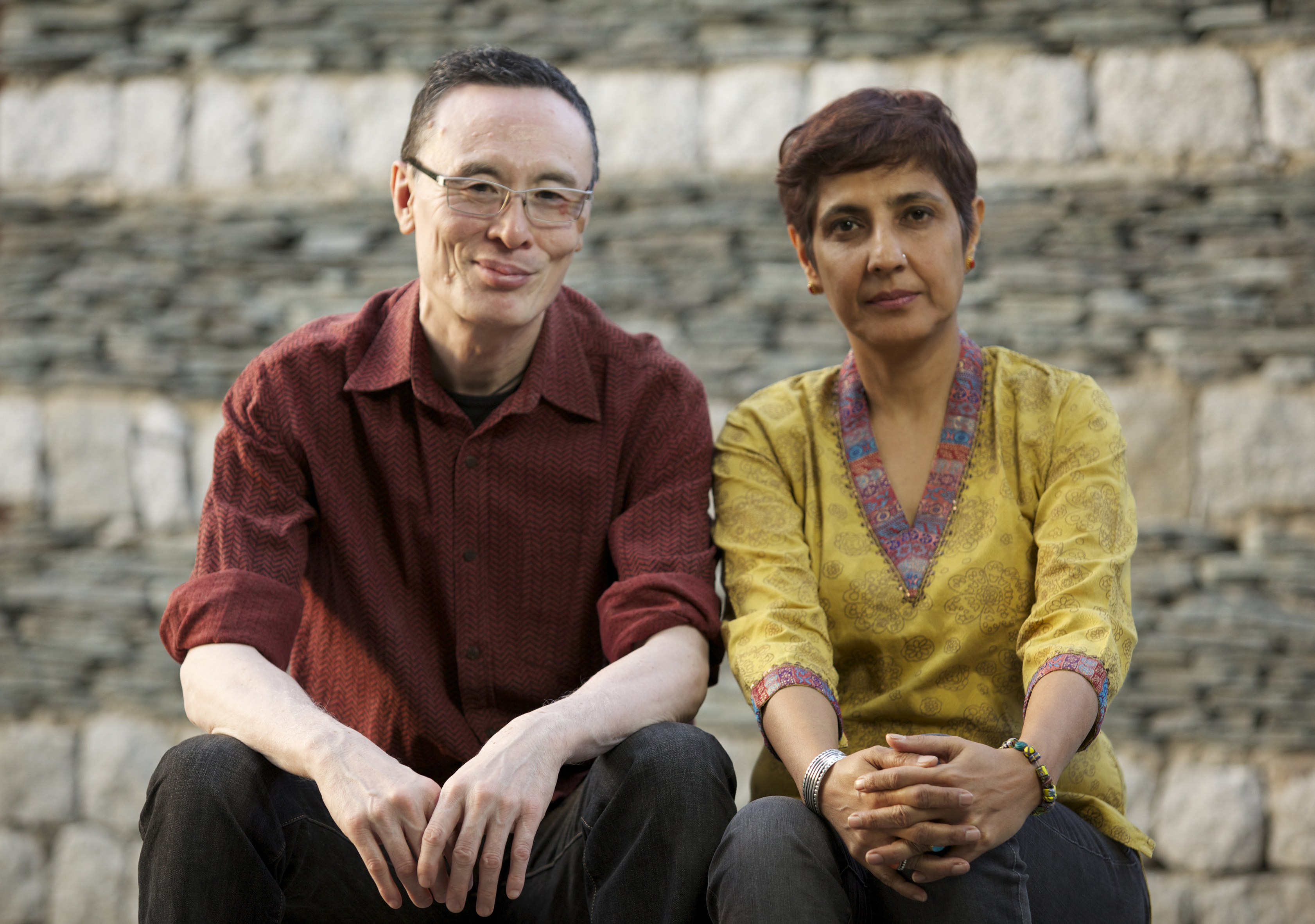
 

Tenzing & Ritu against wallRitu Sarin & Tenzing Sonam / The Sweet Requiem

A young Tibetan woman living in exile in New Delhi unexpectedly sees the man she holds responsible for her father’s murder on a high Himalayan pass. Long-suppressed memories of her traumatic escape from Tibet are reignited and she is propelled on an obsessive search for reconciliation and closure.

Ritu Sarin and Tenzing Sonam have been making films on Tibetan subjects for more than 20 years. Through their work they have attempted to document, question and reflect on the issues of exile and cultural identity that confront the Tibetan diaspora. Working through their film company, White Crane Films, they have produced and directed several documentaries, including: The Reincarnation of Khensur Rinpoche (1991); The Trials of Telo Rinpoche (1993); A Stranger in My Native Land (1997); and The Shadow Circus: The CIA in Tibet (1998). In 2005, they completed a dramatic feature film, Dreaming Lhasa. The Sun Behind the Clouds: Tibet’s Struggle for Freedom. Ritu and Tenzing are married and have two children.

 

 Sandhya SuriSandhya Suri / Santosh

When a widow receives a “compassionate assignment” and assumes her husband’s former role as a police investigator, she confronts a brutal case of gang rape of a young woman.

After graduating with a first class honours degree in Mathematics and German, Sandhya Suri received a scholarship to study documentary at The National Film and Television School. Her graduation film “SAFAR” was shown at a number of international film festivals, receiving the Jury’s special mention at Cinema du Reel and the award for Best Short Film at the British Film Institute’s Imagine Asia festival. Currently based in London, she has lived in Germany, India and Japan and worked on documentary projects in Africa, South America and Polynesia. In 2005 she directed I for India, her first feature length documentary, which played at the 2006 Sundance Film Festival and won Best Documentary at the Asian Festival of First Films.
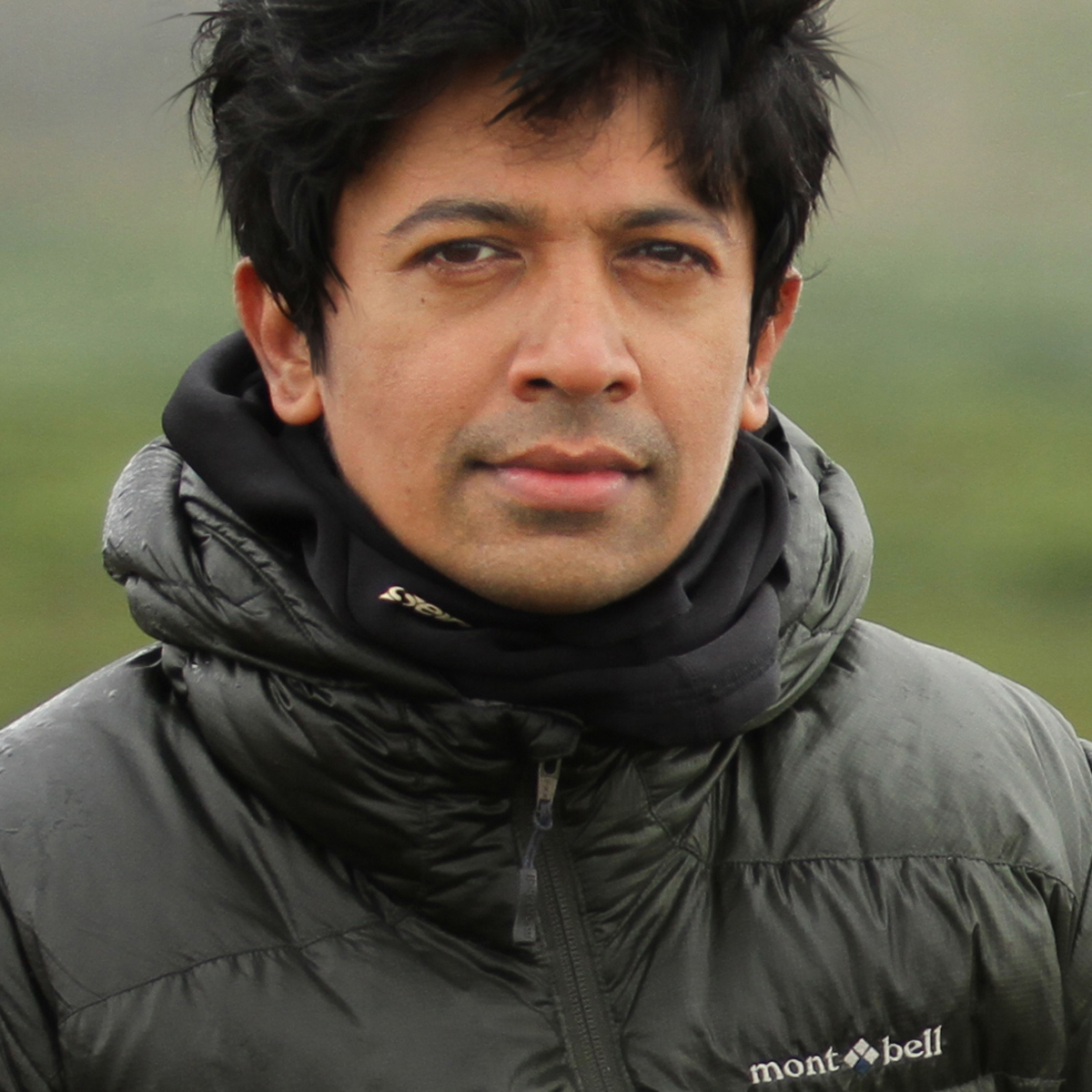
 

Anay Tarnekar headshotAnay Tarnekar / Untitled Tiger Project

In southwest China, animal trader Jin, struggling to support his family, works in the potentially lucrative but illegal private market of young male tigers. In central India, former poacher Raghav now works at a small reserve where he protects the wildlife. Their two stories converge with the appearance of a new pair of tigers on the reserve.

A mechanical engineer turned filmmaker, AnayTarnekar has worn several hats as a writer, director, producer, editor and director of photography. In 2002 he moved to the US to pursue a Masters degree in Cinema from San Francisco State University. After graduating, he co-produced and edited a documentary calledCachao: Uno Mas that premiered on the multiple Emmy-winning PBS series, American Masters. He is currently producing the TV interview series Hollywood Masters, which examines the careers of filmmakers including Alfonso Cuaron, David O. Russell, Michael Mann, Sean Penn and Clint Eastwood. Anay is also an amateur painter and wildlife photographer.
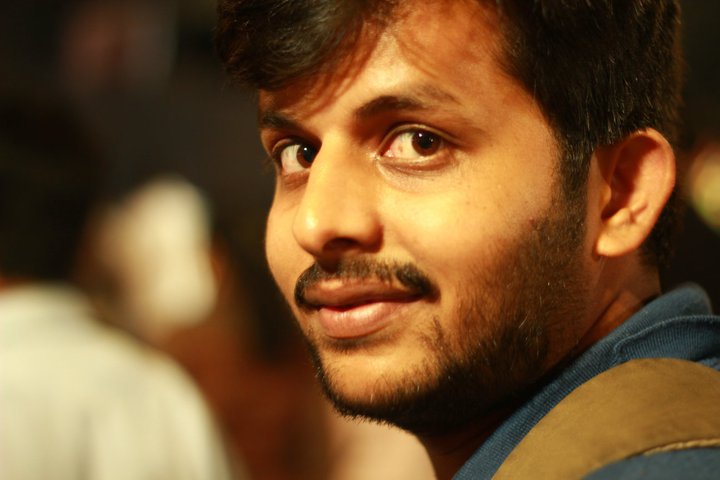
 

Dnyanesh ZotingDnyanesh Zoting / The Monster

When a young girl’s father goes missing while on a documentary film shoot in a tribal village, she and her mother go to the jungle to find him, relying on clues from the Raakshasfairytale in order to find him.

DnyaneshZoting assisted Satish Manvaron the Marathi film The Damned Rain. He is presently assisting film director Satish Manvar as co-writer for the Hubert Bals funded film projectWhat’s Your Religion?Zoting holds a degree in video-production from the University Of Pune.

– The Lab is a five-day writer’s workshop that gives independent screenwriters the opportunity to work intensively on their feature film scripts in an environment that encourages innovation and creative risk-taking. The Lab is centered around one-on-one story sessions with the creative advisors. Screenwriting fellows engage in an artistically rigorous process that offers lessons in craft, a fresh perspective on their work and a platform to fully realize their material.

– Creative advisors for this year’s Lab represent a diverse mix of Indian and international filmmakers, including: Srdan Golubovic (Circles), Erik Jendresen (Band of Brothers), Rose Troche (The Safety of Objects, The L Word), Habib Faisal (Do Dooni Char), Sriram Raghavan (Badlapur, Ek Haseena Thi), Shridhar Raghavan (YennaiArindaal) and Kasi Lemmons (Eve’s Bayou, Talk To Me).


WWI-FWA Workshop 2015

WHAT : 5-Day Screenwriting Workshop

by Anjum Rajabali

and

Vishal Bhardwaj (Haider) , Sriram Raghavan (Badlapur), Jaideep Sahni (Chak De India), Juhi Chaturvedi (Vicky Donor), Ritesh Batra (Lunch Box), Vikramaditya Motwane (Udaan, Producer: Queen), Shridhar Raghavan (Dum Maro Dum), Akshat Verma (Delhi Belly), Sharat Kataria (Dum Laga Ke Haisha), Anand Gandhi (Ship of Theseus), Navdeep Singh (Director: NH-10), Sudip Sharma (NH-10)

WHEN : April 29 – May 3, 2015

WHERE  : At Whistling Woods, Film city, Goregaon (East), Mumbai – 65

Presented by Whistling Woods
(in association with FWA & Living Bridge Pune)

WORKSHOP : The last few years have marked the beginning of an exciting era for Indian screenwriters! More films are breaking the conventional mold, based on bold scripts. Badlapur, Udaan, Haider, Dum Lagaa Ke Haisha, Queen, The Lunch Box, Vicky Donor, Ship of Theseus, Delhi Belly, Chak de India, NH-10.. the list goes on. What’s more, the audience is welcoming these with pleasure.

Gradually but steadily, the scriptwriter seems to be moving centre-stage!

This workshop will not only cover all the basics of the screenwriting craft, encouraging you to develop competence as a screenwriter, but also expose you to how these stalwarts let their imagination fly with conviction. So, here’s your best chance to learn, via rich interactive sessions with writers who are redefining Indian screenwriting today!

WORKSHOP INSTRUCTOR: Anjum Rajabali (Drohkaal, Ghulam, The Legend of Bhagat Singh, Raajneeti): Heads the screenwriting departments at Whistling Woods Mumbai and FTII Pune, and is an activist with FWA. Conducts screenwriting workshops, and script labs and fellowships for screenwriters.

FEE: For FWA members: Rs. 7500/- (Inclusive of taxes, tea/coffee, lunch)
For non-FWA members: Rs. 10000/- (Inclusive of taxes, tea/coffee, lunch)
*If you wish to become an FWA member, please visit www.fwa.co.in

REGISTER : To register for the workshop, please call 30916003 or email: kanchi.parikh@whistlingwoods.net

11070030_356409741229819_2812840506227432298_o

Here’s the good new for film buffs. If you missed Chaitanya Tamhane’s much acclaimed debut feature, Court, at Mumbai Film Festival, you can catch it in theatres now. The film is all set to release on April 17th, 2015.

A new terrific trailer of the film is out too. Have a look.

It’s been doing the fest rounds for quite some time and bagged some of the international prestigious awards at Venice and other fests. At the recently announced National Awards, the film has been adjudged the Best Feature Film. For a debut feature filmmaker, this is a dream run and it can’t get better than this.

Cast & Crew

Cast: Vira Sathidar, Vivek Gomber, Geetanjali Kulkarni, Pradeep Joshi, Usha Bane
Directed by: Chaitanya Tamhane
Produced by: Zoo Entertainment
World Sales: Memento Film International – Artscope

Official Synopsis:

A sewerage worker’s dead body is found inside a manhole in Mumbai. An ageing folk singer is tried in court on charges of abetment of suicide. He is accused of performing an inflammatory song which might have incited the worker to commit the act. As the trial unfolds, the personal lives of the lawyers and the judge involved in the case are observed outside the court.

qissa_01

We at mFC have been vocal supporter of Anup Singh’s Punjabi film Qissa. We not only loved and recommended the film, but we put it in our mFC’s Must-Watch list also. So it was bit shocking to us when he was accused of not crediting the original source of the story. A Facebook post by theatre actor and co-founder of Why Loiter? Mumbai, Neha Singh, has gone viral in the last few days. We are copy-pasting the post here –

It’s disappointing that the makers of the film Qissa forgot to give credit to the marvelous Rajasthani writer Vijaydan Detha on whose short story ‘Dohri Zindagi‘ the film is based. Vijaydan Detha (1926-2013) is a par excellent Indian writer who wrote in Rajasthani and on whose stories filmmakers Mani Kaul (Duvidha), Amol Palekar (Paheli) and Prakash Jha (Parinati) have made films. Dohri Zindagi is a story of a man who raises his daughter like a boy, hides the fact that she is a girl from everyone is the village and then marries her off to another girl. When the bride realizes her husband is a woman, she is devastated, but she decides to stick with her. Both of them run away, while the villagers try to kill them, and a ghost comes as their saviour. When the girl that was raised as a boy pleads with the ghost to turn her into a man, he does so. As soon as the girl turns into a boy, she tries raping the wife.

It is unfortunate that the credit wasn’t given, because the filmmakers are depriving the young audiences in getting acquainted with this literary stalwart. When I went to see the film, the young film buffs sitting besides me exclaimed ‘what a concept’, ‘how revolutionary’, without knowing that this story was written by a simple Rajasthani writer in a village many decades ago. Vijaydan Detha is a Padma Shri and Sahitya Academy award recipient as was nominated for the Nobel Prize in 2011. He wrote over 1300 poems and over 300 short stories. His works have been translated in Hindi and English but its a pity hardly anyone knows about him. But everyone knows about Chetan Bhagat.

The original post is here.

Anup Singh has now clarified his stand on this credit controversy in another Facebook post. This is his post –

Anyone who has seen Qissa must feel the intimate, personal nature of the tale. It’s a thing difficult for me to mention, but please keep in mind that I grew up a Sikh in Africa. The long hair and the frail body of a teenaged boy in a culture unfamiliar with Sikhism often led, as you might imagine, to traumatic experiences. And surrounding that, the refugee tales of my grandfather of lost relatives, of old ghosts coming alive in the telling — these are the real secret threads of Qissa.

It’s always wondrous how these little threads of a personal lived experience, the tales of our forefathers lead us to weave stories that evoke and dialogue with other intense experiences become tales in other cultures. There are African tales of girls living as men, there are similar Egyptian and Moroccan and Turkish tales. And tales in Spain …

Qissa is my childhood, my response to the violence of our time, my putting the ghosts of my grandfather and other relatives to rest.

Please do not reduce our imagination to a single reading or a single tale. We are all many tales, many possibilities.

You can read the post on FB here.

screenwriting-215x300WHAT : Manish Mundra’s film production company, Drishyam, in partnership with Sundance Institute, is organising Drishyam – Sundance Institute Screenwriters Lab 2015 to be held in Goa April 12-16.

The Drishyam Sundance Screenwriters Lab will provide an opportunity for writers to develop their work under the guidance of accomplished international advisors in an environment that encourages storytelling at the highest level. Srinivasan Narayanan, the former Festival Director of Mumbai Film Festival (MAMI) will be heading this initiative in India.

The Lab is inviting applications as part of its Open Submission Process.

LAST DATE :

The deadline for submission of scripts is March 5, 2015.

ELIGIBILITY :

– The Lab is for filmmakers making their first or second narrative feature;

– Co-writers, writer/directors, or writer/director teams will be considered, and the scripts should be independent in terms of story and spirit, and also in terms of budget.

LANGUAGE :

The film can be in any Indian language. However, for the lab, the screenplay should be submitted in English only.

APPLICATION:

– In order to apply, filmmakers must submit a complete draft of a screenplay as well as supporting materials (cover letter, artistic statement, bio, synopsis, and directing sample if applicable).

– There is no word limit or format requirements.

– Directing sample, if any, should be submitted as an online link

– Send complete application docket to drishyamsundancelab@sundance.org

CONTACT :

– For any queries/doubts, do write to – drishyamsundancelab@sundance.org. Or you can check their FB page here.

So happy writing!


2015 seems to have started on a great note for desi indies. After Umrika’s win at Sundance, Nagesh Kukunoor’s film Dhanak bagged top awards at the 65th Berlin Film Festival.

The film was competing in Generation Kplus category. In this section, the jury members are no older than those of the audience. Eleven children and seven teens award the best films with Crystal Bears. Special Mentions are given for outstanding achievements. Two international juries present further prizes in the Generation Kplus and Generation 14plus competition.

Dhanak has bagged two awards – In the the Children’s Jury, it has been given a “Special Mention” – This year, we chose a colorful, touching and humorous film. The story and the performances of the young protagonists impressed us deeply.

And in the International Jury, it has bagged the Grand Prix of the Generation Kplus for the best feature-length film, endowed with € 7,500 by the Deutsches Kinderhilfswerk:

This dynamically-directed film delivers joy and heartbreak in equal measure – the young brother and sister at its heart and the unbreakable love between them are irresistible. As we journey across the country with these two young people, we become deeply invested in their quirky “against all odds” quest. We were constantly surprised by the twists and turns in their journey, and the unusual, eccentric characters that awaits them at each and every juncture! Filled with color, magic, music, spontaneity and a plenty of emotion, this film lives up to its name and delivers a celebration of life to savor long after the end credits roll!

Directed by Nagesh Kukunoor, the film stars child actors Hetal Gada and Krrish Chhabria in the lead. It’s produced by Manish Mundra, Elahe Hiptoola and Kukunoor.

The film is about an eight-year-old blind boy whose 10-year-old sister promises him that he will get his vision back before he turns 9. The film follows the duo on a magical journey through the sand dunes of Rajasthan.

Last year, Avinash Arun’s Killa had won the Crystal Bear in the same category.

WTF! XXX Rated Adult Sex Comedy!

Posted: February 4, 2015 by moifightclub in News
Tags: , , ,

The headline is just to grab your attention. Because we are the #clickwhore generation. What else do you expect? And to see if sex still sells. And hopefully it will get Panditji’s attention too.

(The video links in this article are on an adult nature)

 A few weeks ago, All India Bakchod, a group of stand ups who also have a highly popular Youtube channel decided to organise a celebrity roast, hosted by Bollywood’s darling Karan Johar, the AIB team and a few invitee roasters.

The main guests to be roasted that night were actors Ranveer Singh and Arjun Kapoor.

The evening was a sellout crowd of 4000 people, all tax paying adult citizens of Bombay who laughed their guts out and came back home.

A few months later AIB put a censored version of this roast online on their channel and served up 4 million views in a matter of a few days.

From its very inception everyone who went to the evening and everyone who clicked the link knew it was a comedy of a highly adult and risqué nature.

Today some unknown Brahman Sena head got up and filed a complaint against Karan Johar, Ranveer and Arjun and AIB.

The government of Maharashtra’s minister for culture is now ‘probing’ criminal charges against this group.

Before they embark on this highly moronic venture, I would like to point out why AIB is very much part of Indian culture and actually show you the proof.

I will not talk about Khajurao, Konark and Kamasutra etc as that is too passé.

I shall talk about comedy or ‘vyang’ as it is called in Hindi, which is the ‘national’ language.

Many centuries ago people realized civilized society is not the true face of its people. It is only a mask of civility that they wear and sometimes that mask needs to come off where everyone let out their true feelings and be themselves and then life went back to being normal the next day.

It started as Madanotsav where people would crack highly sexual jokes as well as indulge in extremely sexual behavior, let it all out off the system and go back home. This later became Vasantotsav and today it is known as Holi.

Then and today you have people singing loudly Kabira and Phag (Holi songs) with clear sexual innuendos. I am everyone has heard one of them sung by Amitabh Bachchan in Silsila ‘Rang barse bheegi chunarwaali rang barse’

‘Hasya Kavi Sammelans’ are held al over India were poets regale pubic with humour ranging from very civil to bawdy.

Here is an example from our prime minister Mr Modi’s contistuency of Varanasi

In fact stand up is big in Mr Modi’s hometown of Ahmadabad too, here is a young lady reciting some sexually laced funny ones

In Haryana, women aren’t any less this is a small sample

Also specially for our Maharshtraian custodians of culture a lovely double meaning qawalli in Marathi and I am sure you have heard of the huge local stand up talent that exists whose brilliant stand up in the Marathi language has had audiences holding their sides for years now as well as the Lavani performances.

Weddings are as Indian as it can get I am sure you will agree. Please ask your wives or any women in the family about the culture of sangeet especially in the North, where the ladies from the girls side during sangeet sing out the choicest abuses and laced songs about every member of the boys family and let out steam.

The minister of culture knows this for a fact because he must have read Tulsidas’s Ramayan which talks about the songs actually referred to as ‘gaalis’ which the women were singing during Lord Rama’s marriage.

I am sure you have heard of the famous Tepa Samelan held every year in Ujjain. This is the complete video for your perusal of the howlarious event in 2013.

We used to have a poet called Chirkin who used to write civilized shers but when that didn’t sell he decided to write about sex and everything that was best left in toilets. Here is an example of Chirkin shayari famous all over India.

The AIB roast that took place had Karan Johar headlining it and his mother sat in the front row. I have a question for our governmental machinery, are you bigger than his mother? Or has the state taken on the role of parents to govern the behavior of its adult citizens?

Each and every member on the stage and of the audiences was an adult who went in knowing what they were about to experience and they had no complaints.

But Akhilesh Tiwari, president of this organization called the Brahman Ekta Seva Sanstha decided to watch it on Youtube knowing its adult nature and decided to press criminal charges, like cockroaches who crawl out off the woodwork every time there is a political or financial opportunity or simply scapegoats of their masters who have decided to don the mantle of protectors of Indian culture and values.

If the government is really bothered about saving Indian culture then stop the culture of rape, stop the culture of corruption, stop the culture of goondaism, stop the culture of burning churches and mosques, the state has no right to come into our homes and teach us lessons in moral science and Indian values.

But this time I hope this case goes to court and I hope the lawyers of all accused shame these so called moral guardians who know nothing about Indian culture or history and it is time that they got a tongue lashing in public by the courts so that the next time a Tiwari sees something that offends him he stays home.

To all those who have a problem with things that offend you, I have only one thing to say…Don’t watch it!

Suparn Verma

 (The article was first posted on Rediff)

Here’s some good news. Prashant Nair’s Umrika won the Audience Award in World Cinema Dramatic section at the Sundance Film Festival. The film had its world premiere at the festival.

Produced by Manish Mundra and Swati Shetty, the film’s cast includes Suraj Sharma, Tony Revolori, Smita Tambe, Adil Hussain, Rajesh Tailang and Prateik Babbar.

And here’s the official synopsis – When a young village boy discovers that his brother, long believed to be in America, has actually gone missing, he begins to invent letters on his behalf to save their mother from heartbreak, all the while searching for him. 

Umrika’s announcement from 01:39:15

Jaideep SahniFWA (Film Writers Association) members are cordially invited to a masterclass with the popular screenwriter-lyricist Jaideep Sahni, in which he will talk about the why (the socio-political concerns which motivated him) and the how (the art and craft of writing, the practicalities of getting people on board, creative collaboration) of the films he has written. Jaideep will be in conversation with Rajashree.

We would suggest that the people who want to attend the masterclass revisit the films written by Jaideep Sahni – their understanding of the points which Jaideep makes about his films would be much sharper if they have watched these films recently.

Jaideep Sahni is an eminent screenwriter, songwriter and creative producer. He has written thought-provoking popular entertainers like Chak De! India, Khosla Ka Ghosla, Company, Bunty Aur Babli, Rocket Singh: Salesman of the Year and Shuddh Desi Romance. He won the Filmfare Awards for Best Dialogue and Best Story for Company, followed by the Filmfare Award for Best Screenplay for Khosla Ka Ghosla. He also won the IIFA award for Best Story for Chak De! India.

Rajashree, who will be moderating the event, studied at FTII before assisting Mansoor Khan and Sanjay Bhansali. She has written and directed a film called The Rebel which won a National Award. Her debut novel, Trust Me, is the biggest-selling Indian chick lit book. She is a member of the Executive Committee of the Film Writers’ Association and the convenor of the Events Committee.

Entry Fees : Free. 

The admission is restricted to FWA Members. First-Come-First-Seated.

Time: 1:30 pm to 4:30 pm

Day/Date: Saturday, 31st January, 2015

Venue: Film Writers’ Association Office
2nd Floor, Richa Building,
Plot no B – 29,
(In the lane opposite Citi Mall),
Off New Link Road,
Andheri (West),
Mumbai – 400 053.
Phone: 022-2673-3027/ 022-2673-3108

The Censor Board chief, Leela Samson, has quit. And then the entire Board members have also followed her steps. Reason? A new film titled MSG : Messenger of God, by a controversial religious leader who plays himself in the film. Not only that, according to reports, the Baba of MSG can cure AIDS, bring a dead man back to life, and so on. So why exactly did the Censor Board Chief and the members quit? Because going by the way the film was cleared, it made them completely useless.

The Tribunal has all the rights to clear a film which the Board objects to. But there is a protocol to be followed – how the film goes from where to where, who is informed, who is kept in the loop, the issues Board members had with the film, and many more. In the case, none of the guidelines were followed. Again, going by reports, seems the Board Chief wasn’t even kept in the loop about how things went. And the film quickly got a clearance. Pulling strings always works, right? Especially when there is a political connect and clout. In that scenario, the Censor Board chief really has no role to play. The Board members followed the same route soon.

Yes, they were appointed during the previous Government. But the members had major issues with the previous Government too, in terms of transparency and making the system better. Every Government tries to put their people at various capacities. The members had given many recommendations to make it better and more independent. But none of it was followed. Their letter sent to previous Government is also embedded. That issue was going on, and then the final nail in the coffin by this Government. All gone with the wind!

Hail Baba’s film! Hail Babas rule!

The Minister of State,

Ministry of Information & Broadcasting

Government of India

Shastri Bhavan

New Delhi


Respected Minister,

With this letter, we the undersigned are submitting our resignation from our position as Board Members of the Central Board of Film Certification with immediate effect.

The events that led to the Chairperson Ms. Leela Samson resigning from her position are merely the proverbial last straw. Since the time that we first occupied seats on the Board, we have been asking for some critical changes, which are imperative if the functioning of the CBFC has to be reformed. However, in spite of sending numerous recommendations and appeals, and having several meetings with the Secretaries and senior officials of the ministry, and even one with an earlier Minister, not a single positive step has been taken by the Ministry. We had also sent a letter to the then I & B Minister in December 2013 making several recommendations that would strengthen CBFC as an institution, and that we were willing to work on with the government. The earlier letter is attached to this mail. None of the recommendations that we made in that letter have been taken on board, and there has been no engagement with us on crucial issues that we were raising.

The Advisory Panel continues to be filled up with people of questionable credentials appointed directly by the Ministry, without taking the Board’s recommendations into account. No funds have been released for conducting orientation workshops for the panel members. Officers from other departments, who have no understanding or experience in cinema are appointed as officials. Furthermore, there are several positions in the regional offices that do not have regular appointments There has been no Board meeting for the last one year for us to discuss developments and make recommendations, as we were told that there are no funds to organize it! It seems that the CBFC Board is not required at all.

This Board has consistently attempted to make the certification process more uniform, transparent, consistent and sensitive to the freedom of filmmakers’ right to expression with responsibility. The struggle to do so has been extremely frustrating and disappointing.

It is our firm position that given the cavalier and dismissive manner in which the CBFC is treated by the government, it is impossible to perform this duty with even a modicum of efficacy or autonomy. We also object to the way in which the Chairperson has been treated by the Ministry which we feel has been humiliating for us all. This is not the way in which the head of an organization ought to be treated, and it is certainly not one that is conducive to any productive relationship.

We do hope that the new Board will find the government more responsive than we have.

With regards.

Ira Bhaskar

Lora Prabhu

Pankaj Sharma,

Rajeev Masand,

Sekharbabu Kancherla

Shaji Karun,

Shubhra Gupta,

T.G.Thyagarajan

And here is their letter to previous Government