Archive for the ‘writing’ Category

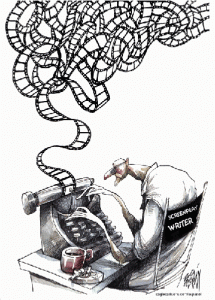
screenwriting-215x300There have been some changes in NFDC’s Screenwriters Lab this year. And also there’s a new partner – Toronto International Film Festival. Scroll down for further details.

WHAT : In keeping with the mandate of promoting the development of the Cinemas of India, the National Film Development Corporation of India (NFDC) conducts the Film Bazaar Screenwriters’ Lab. The 2013 Lab will be in partnership with Toronto International Film Festival.

LAB : The Screenwriters’ Lab 2013 gives an opportunity to six independent screenwriters to develop their skill under the guidance of a variety of industry experts from across the globe. Through one-on-one sessions with their Mentors, the Screenwriter Fellows are advised on tools and techniques required to improve their scripts and methods to pitch the same in the international domain.

—> Selected screenwriters attend the first part at the Toronto International Film Festival and the second part at NFDC’s Film Bazaar, Goa.

The Screenwriters’ Lab is specially re-designed to prepare screenwriters with original Indian stories for working with the international filmmaking market.  The Screenwriters’ Lab also creates a unique opportunity for these scripts to gain a direct entry to the Film Bazaar Co-Production Market.

(Revised) Application Process :

– Apply before March 1, 2013 with your synopsis.

– Short listed participants will then be asked to submit their scripts by June 2013.

– Six participants will be declared in the month of August 2013.

General Rules

– This Lab is open only to Indian passport holders

– The selection process is in two parts. This is the first part of the selection procedure where participants will be shortlisted based on the submitted synopsis.

– Participants shortlisted for the second stage will be given a scheduled duration to submit completed scripts.

– Submission via email only as a single pdf/doc file. Do not send requisite material as separate attachments. No hard copy submissions are to be sent.

– Applications are to be sent to screenwriters-lab@fimbazaarindia.com

– Application Fee for the lab is INR 1000/- only. It is payable by Demand Draft made in favour of National Film Development Corporation Ltd payable at Mumbai or by Wire Transfer.

—> To know more about the rules, regulations, application form and the rest, click here.

Saif, Sriram - Agent Vinod

For many of us, Sriram Raghavan’s Agent Vinod was one of the most anticipated films of the year. After two thrill-pills – Ek Haseena Thi and Johnny Gaddar, we all were waiting for a hat-trick. But somehow it didn’t work out. And that leads us to a bigger question – how do you know what’s working and what’s not at the script stage. It’s quite a difficult task.

I had read the script first and then saw the film. And this (So what happened to Agent Vinod?) was the post that i wrote after watching the film. At that time many of you had tweeted and sent mails asking for the script of Agent Vinod. I didn’t have the permission then. Now, as we look back, and are compiling year-end posts, i thought it would be a nice idea to share the script with you all. And we must thank Sriram Raghavan for it who quickly agreed and gave a go-ahead to post it.

So here it is, read, share and have fun! It’s written by Sriram Raghavan and Arijit Biswas.

(PS – Don’t forget to check out Sriram’s footnotes in the script 😉

(PS1 – The script shared here is only for educational purpose and is completely non-commercial initiative.)

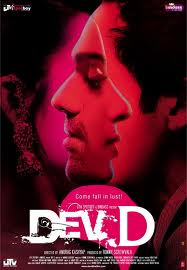
(PS2 – To check out other scripts that we have posted on the blog, click here for Vikramaditya Motwane’s Udaan script, click here for Anurag Kashyap’s Dev D script and click here for Dev Benegal’s Road, Movie script.)

If you religiously follow the movement of film scripts in blogosphere, you must be aware that the script of QT’s Inglourious Basterds was out almost a year before he started shooting. He did the same with Django Unchained. And that’s not a rare case. There are blogs and websites dedicated to script reviews/news/sales. And since last few years they have the Black List too.

Compare this to the script scenario here. Writers/directors guard it as if it’s life and death scenario. Almost scared to give it out to anyone even after the film has released. And then we find it difficult to churn out even some five good films in a year. I still haven’t been able to figure that out. Though most would happily brag about sending their scripts to Oscar library which is another stupid achievement if you know the truth.

We keep on asking many filmmakers and screenwriters to share their scripts so that we can put it online. Some do, some never get back, most don’t give a fck. If you have missed, we had earlier put the script of Vikramaditya Motwane’s debut feature Udaan (click here) and now we are sharing the script of Anurag Kashyap’s Dev D. Thanks, AK.

Dev D got almost every possible reaction from critics – it was rated everything between 1 and 5 stars. Everything. If you don’t believe me, google. Some of the reviews are listed here .

Interesting thing about Kashyap’s films are that they are never the same which you see on paper. They go through some drastic changes while shooting. Plus, music played a big role in Dev D. So, it will be interesting if you compare the script to the film. Though am not sure which draft/version of the script i have got. It’s written by Anurag Kashyap and Vikramaditya Motwane. Read and have fun.

(PS – Was feeling lazy. Copy-pasted the intro from Udaan script post. Sorry about that)

So what happens in a script lab? Does it really help? If so, in what way? – These are few questions that i have been asked many times since i attended the NFDC-Locarno script lab. Have been thinking about writing a post for a long time but never managed to do so. And so here’s Vikas Chandra‘s post about his experience at Mahindra-Sundance script lab. His script Toothache was one of the eight scripts selected for the lab this year.

To give you a better sense of  this post, am putting a synopsis of his script from the official release – Toothache is a bittersweet tale of a North Korean expat wife named Kim who lives in Delhi during the Emergency of 1976 with her husband – the couple yearns to be back in North Korea, but struggles to find a new and different idea of home in Delhi. Toothache celebrates of the tenacity of the human spirit, and re-affirms that the dawn approaches only after you have lived the darkest hour.

It’s bit long but a great insightful post. Read on.

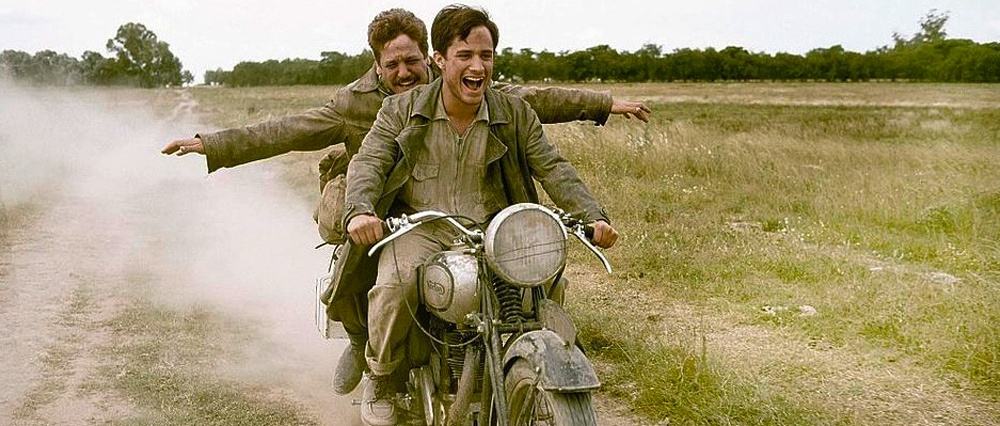
When he was hired by director Walter Sallas to adapt Che’s memoirs into a film, Jose Rivera began, as he always does, by searching for an image that would propel him into the screenplay. Finally he got one, of a young Ernesto swimming across the river that separated the two societies of the San Pablo leper colony, which led to the central question of The Motorcycle Diaries – Which side of the river do you want to be on?

                                                                         * * * *

This year saw the launch of the prestigious Sundance Screenwriters’ Lab in India with the support of Mumbai Mantra, the media &entertainment division of the Mahindra group. (details here)

After a rigorous evaluation of more than 550 applications from Indian screenwriters across the world, 8 screenplays were selected to be mentored at the lab. The writers of these screenplays along with 11 highly distinguished advisors were then whisked away to an enchanting resort overlooking the Pavna lake near Lonavla, to lead a cocooned existence where the only thing that mattered was an unbridled exchange of ideas.

Over a span of 5 days, the screenplays were discussed threadbare by the advisors and the fellows in one-on-one meetings. Each fellow or writer was assigned 6 mentors, who would go on to give detailed feedback and initiate free-flowing discussions with the writer about their story.

It’s tough to encapsulate everything that transpired in those 5 days, but here I will try to give a brief lowdown on my experience at the lab.

Your donkeys are not carrying enough load!

In the beginning I had no clue on how to prepare or even what to expect from the lab. Worse, I was gripped with the fear that in no time I would be exposed as a writer!

What’s the inner motivation of your character? What’s her outer motivation? Can you draw the Story vs Character Arc graph? Who plays the Shadow archetype? Where is the Belly of the Whale scene? Where have you done foreshadowing in the script?

I expected to be bombarded with questions I had no answers to, at least not at that moment. With such apprehensions, I approached my first session, which was with Audrey Wells.

Thankfully nothing of the above happened.

We started talking about the central character in my script. Why did I choose my protagonist? What do I like about her? Can I connect her to my personal life?

Soon it became clear that the exercise was only about finding the spine of the story – my story. The discussion was rigorous. We went back to the genesis of the idea, the news article that sparked the film in the first place, and how it evolved over various drafts.

I am here to help you tell the story you want to tell

Once we managed to pin down the spine of the story in one line, it became a filter to sieve through the scenes and decide which of them were not working.

Audrey has a simple thumb rule for scene construction. Each scene is like a donkey, which has to carry the load of your plot.

“Is this scene giving me any new information about the character… Is it progressing the plot”

Well…umm….it further shows the cute husband-wife relationship

“It’s a beautifully written scene… but it doesn’t deserve to be here”

In a Kitty Party scene – What should the secondary characters chat about so that the scene doesn’t meander and remain relevant to the plot?

The protagonist’s problems. Other women will talk about their son’s achievements while your protagonist misses her son, they will talk about their wonderful marriages while your character puts up a brave smile. Whatever the others say has to drive another nail in the coffin of your main character.

Audrey is the writer of The Truth About Cats & Dogs &The Kid and writer/director of Under The Tuscan Sun, starring Diane Lane. Most of her stories have been about “sick people getting well”, in some way or the other.

The most valuable advice she has to offer to upcoming writers is – “Be kind to your back. Stand and write.”

Audrey is slated to begin shooting for her next film The Fugees, about a team of refugee soccer players coached by a Jordanian woman, and who go on to become an unlikely success. I cheekily told her that we already have a Bollywood version on similar lines!

What’s the last thing you would change about your story?

Asif Kapadia is a BAFTA award winning filmmaker, known for the visually striking The Warrior and the beautifully crafted biopic Senna. He describes himself as an outsider, making films that explore the live of “outsiders” living in time less, unforgiving landscapes.

“Why a North Korean couple? Why can’t they be a Punjabi refugee couple living in Delhi?”

This is the question I dreaded the most. My script Toothache is about a North Korean expat wife named Kim who lives in India with her husband – the couple yearns to be back in North Korea, but struggles to find a new and different idea of home in Delhi.When I had begun to write it, the question for me was not why.. but why not!Gradually though, as my investment in the story increased, I realized what an uphill task it is to get this kind of a film made.

So when Asif asked the same, I started to buckle..

Umm.. may be.. it’ll definitely make it easier to get produced…

                                                                    * * * *

If the city of Delhi is under curfew, what can you show to convey that effectively..?

For a writer/director its important to breakdown the screenplay into images that imply more than what’s necessarily said in the plot and give the required emotional thrust to the narrative.

In The Warrior, there is a sequence when the army of warriors led by Ir(r)fan Khan attacks the village that had requested for waiver of loans. The otherwise frantically paced sequence ends with a long-ish shot of an earthen pot smashing into the ground and water seeping into the parched earth. Kapadia chanced upon this shot through pure logic – the most precious thing in a desert is water, and hence the loss of water signifies the real extent of loss.

For Kapadia, it is a string of images like these that helped him craft a minimalist film like The Warrior. The genesis of the film itself lay in a solitary image that was derived from a footnote in a short story about a samurai kid who is shown a severed head and asked if it was his father’s.

Before ending the session Asif threw his final salvo at me –

“What is the last thing in your script you would compromise on?”

I hesitated. I knew I had to take a stand. I went back to the beginning, to figure why I had even wanted to tell this particular story.

The fact that the couple is North Korean… is the last thing I would change in my story.

“Good.. that’s a beginning at least”

What do you mean by a hopeless, pathological optimist?

I hate it when I have to describe my characters. I would rather you read my script and draw your own inferences. And I also hate to admit it, but articulation is not one of my strongest points. I still haven’t figured what my primary language is… Hindi? English? Hinglish?

Shekhar caught me not once but several times.

“Yeh teri bhasha nahin lagti..”

“Tu apne hi shabdon mein ulajh raha hai”

                                                                * * * *

Would you like to watch a film like this?

“That’s irrelevant. Would you want to make a film like this?”

Yes.

Then go ahead and make it.

Shekhar Kapur has directed Masoom, Mr India, Bandit Queen & Elizabeth, apart from other films. He was the only Indian advisor I had on my panel.

                                                                      * * * *

Research. Research. Research.

“Which school in Delhi does the Korean kid go to?”

Umm.. she stays in Jangpura.. but definitely can’t afford Bluebells International.. then.. may be.. Kendriya Vidyalaya.

“Then she should be speaking fluent and not broken Hindi.. Every student from KV is good with Hindi”

“What car did the Korean ambassador to India use.. was it an ambassador or an Impala?”

“How long did it take to get an Indian passport in 1976.. how long did it take to get a phone connection?”

“Why do your protagonists have a landline in their house.. why can’t you make them dependent on the neighbor’s phone for receiving their calls, which was a common practice in those days..”

                                                         * * * *

God lies in the details.

What do characters talk about in a scene?

Themselves.

It helps to know the back stories of each of your character, even beyond the scope of the script, in as much detail as possible, as those back stories will tell you what the character will say in any damn situation.

What does a man who’s been shot and thinks he’s going to die, say?

“Main jaa raha hun Phoolan, tu apna khayaal rakhna..” OR “Meri chinta chhod, tu bhaag, apni jaan bacha..”..?

In Bandit Queen, when Vikram Mallah is grievously injured near the pond, he falls into Phoolan’s arms and sensing that his death is near, blurts out,

“Maa se kahi, doodh pee liyo maine..”

You are a land of cobras and tigers.. your country is fierce.. where’s the ferocity in your story..?

I sat across Guillermo Arriaga, author of Amores Perros & Babel, while he drew 9 concentric circles on the title page of my screenplay.

“Where is your protagonist right now?”

Arriaga was referring to Dante’s 9 circles of hell as laid out in Inferno, the first part of his epic poem Divine Comedy.

I hesitated… maybe in the 2nd circle.. at the max 3rd..

“Why can’t you push her to 7th.. 8th.. 9th..?”

But she’s such a nice person…

Nice is boring

The deeper your protagonist is inside the circles of hell, the stronger will be her journey back, and the greater will be the pay off.

Arriaga is a hunter who works as a writer. He doesn’t believe in the 3 Act structure. He hates outlining his story. He doesn’t do research. He draws mostly from his own life, and keeps re-writing drafts of the story till the story has found itself.

Drafts – NOT revisions. Each draft is a draft from scratch.

The Babel that we saw on screen was his 72nd draft.

“Who wants to see the story of a 60 year old woman looking for a medicine.. That’s boring.. I want to see a 19 year hot chick on screen..”

He asked me to rewrite the screenplay with the husband’s POV. Then another draft with their son’s POV. Then another, this time changing the protagonist to a 19 year old girl. Then another…

My heart sank.

Be rigorous with your story. Kill the dearest. Only then the truth in the story will come out

                                                          * * * *

Our meeting did have a silver lining for me though.

Arriaga admitted that he liked my dialogues, and said that my writing has a sense of rhythm. I couldn’t have asked for a better return gift from him. It was March 13, his birthday. I gifted him a DVD of Manirathnam’s Yuva – albeit with a poker face.

This is the story about a woman WHO…

Howard Rodman’s was the 5th advisor meeting I had on my schedule, and he stressed that he wouldn’t want to repeat what the others had already said. Each morning the creative advisors had an extensive meeting where they recounted the sessions of the previous day and shared notes among each other. So, even though each one of them brought their unique perspective to the individual sessions, they also took care to build upon what had already been discussed.

Rodman is a screenwriter, novelist, and educator. His feature adaptation of the book Savage Grace, starring Julianne Moore, premiered at the Cannes Film Festival, and was nominated for the Spirit Award for Best Screenplay. Rodman is also the Vice President of the Writers Guild of America, West.

“Who do you write your screenplays for?”

The Actor. They are a writer’s best friend and the most important medium – who will project your scene.

Write your scenes for an actor – not necessarily for any particular actor. Get into an actor’s shoes and the re-read your scenes to figure out how they might approach the scene.

Take acting workshops – to understand actors’ motivations, to see what they seek from a scene, what’s going on in their minds while acting.

Rodman is 61. Conversations with him are delicious, peppered with a lethal sense of humor.

“Let’s play a game.. Finish the sentence – This is the story about a woman WHO..”

He sums up movies in one line – Bad things happen to not-so-good people so that they become good.

I countered that.. in Hindi cinema, goodness is a virtue heroes are born with – they don’t need character transformation. Apart from other things I also gave him the example of a future blockbuster during the shoot of which the superstar refused to run after the baddies, saying the goons need to come to him to be bashed up.

Quick came the repartee,“I would take that as – Bad things happen to good people and they become better!”

                                                        * * * *

As a writer, I often get stuck after a scene wondering what scene to conjure up next. Is there a formula that can help you decide that?

Rodman let out a secret that was shared with him by the creators of South Park – In every screenplay, there are only three bridges that connect the scenes.

Therefore.

But.

And then.

Sc 1. Therefore. Sc 2. But. Sc 3. And then. Sc 4. Therefore…

If you find that there are more “And then” in your screenplay than “Therefore” and “Buts”, you know your pace is sagging.

Elementary, I now say!

In any situation, where she puts her attention – is her personality

Malia Scotch-Marmo wrote Steven Spielberg’s fantasy Hook, and also served as associate producer on the film. She is an adjunct professor at Columbia Graduate Film School. Recently she co-wrote a script with Sundance Institute Lab alumna, Sabiha Sumar. The film, Rafina, was shot on location in Karachi in 2011.

With Scotch-Marmo, I had the last of the 6 advisor meetings, and surprisingly, the longest one. Even at this stage, when a lot of water had already flown under, she had something new to offer.

                                                     * * * *

I asked her the same question I had been asking everyone.

Would you like to watch a film like this?

“Of course. Why do you even ask?”

                                                      * * * *

The Screenwriters’ Lab has been a core program of the Sundance Institute since its inception. Spearheaded by Founding Director Michelle Satter and Associate Director Alesia Weston, the lab is about their support of writers’ community that embraces originality, risk taking and exploration of common humanity in authentic and distinctive ways.

Bringing the Sundance Screenwriters’ Lab to India is indeed a laudable initiative by Rohit Khattar, Chairman of Mumbai Mantra. Rohit, along with his team led by Aparna Purohit, ensured that this experience was an unforgettable one for all of us.

I missed having one-on-ones with other advisors like Jose Rivera, Anjum Rajabali, Kasi Lemmons, Michael Goldenberg & Marcos Bernstein, but even post-film-screening & dinner-table interactions with them were enriching. It’s humbling to see such stalwarts offer their valuable time and insights into their craft so generously and unconditionally. In a profession where people customarily wear their oh-so-fragile egos on their sleeves, it was liberating to be in the same room as them. It made me look within the petty me – a couple of years in the profession, hardly any achievement to write home about, and yet shards of arrogance had already been creeping up inside me.

I could do nothing but cringe.

                                                                       * * * *

It’s hard to put in words the feeling you get when you see someone else’s eyes light up for your story. That’s why we want to make movies in the first place – to make connections with some stranger in some god-forsaken part of the world, to light up his eyes, to make his day. For me, this lab was about learning to make those connections. It isn’t about scripting the next blockbuster, or finding the right film for the market. It’s about finding the right choices for the stories you’ve been dying to tell. And realizing that somewhere along the line you’d forgotten that these were the stories you’d been dying to tell.

Jose Rivera has a simple explanation for what is known as a Writer’s Block – It’s your inner-self telling you that you lied somewhere in your writing. You have to go back and fix it.

I would like to extend it further to something that can be termed as a Filmmaker’s Block – when I know I’m stuck in the middle, stagnated at a point, not sure of the choices I’ve made in the past, don’t know what choices to make next…It’s time probably to go back and fix my share of lies.

It’s time to swim to the side of the river I want to be on.

(PS – To know more about the Mahindra-Sundance script lab, click here. To know the details of next year’s call for entries, click here.)

WHAT:  Following the template of the world renowned Sundance Institute Screenwriters Lab, that is held at Park City, USA, the Indian Screenwriters Lab is a five-day writer’s workshop that gives independent screenwriters the opportunity to work intensively on their feature film screenplays with the support of established screenwriters. Mumbai Mantra has collaborated with the Sundance Institute and established India’s annual Mumbai Mantra | Sundance Institute Screenwriters Lab.

Project Selection :

—> 6-8 projects shall be selected for the Screenwriters Lab. All Indian nationals as well as Indians living overseas, people of Indian origin and mixed Indian parentage are eligible to apply.

– Only those who are working on their first or second feature film project shall be eligible. However, they may have worked on documentaries, shorts, advertising films in the past

– The screenplay can be for a film in any Indian language including English. However, the application must be in

– English, as it is the medium of communication at the Lab.

– Incase there are two writers working on a a screenplay, or a writer-diretor working together on a project, both would be invited to the Lab if selected.

HOW : All you need is 1. A synopsis 2. First five pages of your screenplay 3. An artistic statement 4. A cover letter for the first round.

ADDRESS :   You have to send your submission via post. Materials will NOT be accepted electronically.
Mumbai Mantra | Sundance Institute
Screenwriters Lab Application March 2013
Mumbai Mantra Media Ltd.,
Mahindra Towers, 5th Floor, Worli, Mumbai-400018.

DATE : Last Date for Open Submission: June 2, 2012.

– Date for submission of Complete Draft of Screenplay (next round) shall be informed later to selected candidates.

CONTACT :  If you have any more queries related to Mumbai Mantra| Sundance Institute Screenwriters Lab 2013, you can contact them at labqueries@mumbaimantra.com

– For more info on the lab, selection process and all other details, click here.

Bit bored and tired today, so just copy pasting the release.

Unlike a few years ago, filmmakers today readily and repeatedly admit that without a good script, a good film is impossible. In fact, talent hunts and script contests are announced every other month. Every producer and studio is on the lookout for good scripts and competent writers.

While writing well is hard work, a sound knowledge of basic storytelling principles combined with an understanding of the form & rhythms of the screenplay help free up the writer’s imagination. This gives him the confidence to follow his intuition, helping him uncover interesting aspects of the characters, which in turn make the screenplay more nuanced, fresh and engrossing.

The Workshop will tackle all aspects that go into the construction of a script, starting with the basic central idea that drives the story.

Five intensive days of six hours each will cover the entire journey of the script from theme, premise, character, and plot, to structure, scene construction, and dialogue, and the use of music and song in Indian script. Plus, there will be a substantial session on mythology, with particular reference to the Ramayana and the Mahabharata which have had such a lasting influence on Indian cinema. The final session will deal with writers’ rights, model contract, copyright matters, and other professional issues.

Questions like

  • What makes for a compelling idea?
  • How does one know if a story could make a good script?
  • Can a great story turn into a weak screenplay?
  • How does one figure out the appropriate structure for a script?
  • What makes for an interesting character?
  • How can one write scenes that are crisp, compact and yet dramatically meaty?
  • Is there a technique to writing good dialogue?
  • What is the difference between Hollywood style of screenwriting and what we have here in India?
  • How relevant is the navras theory to modern Indian screenwriting?
  • What is the relevance of songs in modern Indian script?

and other relevant concerns of the Indian screenwriter will be discussed in depth.

About the Workshop Instructor : Anjum Rajabali has been a professional screenwriter for 20 years with films like Drohkaal, Ghulam, The Legend of Bhagat Singh and Raajneeti to his credit. He is the Head of Screenwriting at Whistling Woods, as well as Honorary Head of Screenplay Writing at FTII, a course that he began in 2004. Apart from being a script consultant on several films, he also conducts workshops and seminars on screenwriting in India and abroad.

According to him, “Screenwriting is an exceedingly interesting and rewarding craft. Learning it should be an enjoyable process. It is with that aim that I conduct screenwriting workshops.”

Three Guest Faculty will be invited from among Vishal Bhardwaj, Jaideep Sahni, Sriram Raghavan, Shridhar Raghavan, Saket Chaudhury.

Venue :  Whistling Woods International, Film City, Goregaon (E), Mumbai.

Dates :  April 25-29 (both days inclusive)

Timings : 10 AM – 1 PM and 2-5 PM

(Film viewing : 5.30-8 PM, April 25, 26, 27)

Fee : Rs. 6000/- (inclusive of lunch and tea/coffee on all days)

– The workshop is open to all.

– To Register for the workshop, please call 30916003 or e-mail: kanchi.parikh@whistlingwoods.net

WHAT:  Screenwriter’s Lab 2012, a 2-part workshop is designed to prepare screenwriters with original Indian stories for working with the international filmmaking market place. It aims at improving a completed screenplay in its final stages and to increase the international marketability of the same.

The Lab is organised in partnership with Binger Filmlab, Netherlands, and the Venice International Film Festival, Italy.

LAB : The 1st Session will be held during the Venice International Film Festival in Venice (31st August- 4th September, 2012) where participants will get first-hand experience of the workings of the international film community and get to train with their screenplay mentors.

The 2nd session at Film Bazaar, Goa from 24–27 November, 2011 is where participants will apply their training and pitch their revised screenplays to participants at the film market. (dates are subjected to change)

MENTORS : The workshop will be conducted by Marten Rabarts, Artistic Director, Binger Filmlab, aided by experienced international guest mentors. It is organized in association with Binger Filmlab, Netherlands and Venice International Film Festival.

DATES : Last date for submitting complete application forms : 31st May 2012.  Results : August 2012

FEES : Application will not be considered complete without the Submission fee of Rs. Three Thousand Only [Rs. 3000/-]. The fee can be paid through cheque/demand draft/electronic transfer. For more details, click here.

CONTACT: For any doubts, you can check out the FAQ and other details here or can write to  screenwriters-lab@filmbazaarindia.com

Rules & Regulations : Do carefully read the Rules and Regulations page as there has been some changes this year.

Happy writing!

Salik Shah on filmmaker Frank Capra’s relationship with screenwriter Robert Riskin.

The last day of December demands introspection, and I sense a now all-too-familiar pressure to choose the right words for this end note. The year on the calendar upsets my plans. These plans have now become ‘old plans’; plans that stopped my time a long ago. And to watch Frank Capra now means to freeze this time even further.

Capra’s world is the one of hope—often, the oldest hopes of man. There’s a childlike simplicity that characterizes these men. His women are strong-willed and independent. In this world the greatest villain is self-centeredness. Honesty and kindness come across as something worth striving for, and because you want to believe so. ‘Be nice.’ ‘Be good.’ That seems to be at the heart of his best-known films: It Happened One Night (1934), Mr Deeds Goes to Town (1936), Lost Horizon (1937), Mr Smith Goes to Washington (1939) and Meet John Doe (1941), among others.

It’s a shocking discovery then: the voice in these films doesn’t belong to its director Frank Capra. This voice that we admire so much belongs to the writer of his films who could sympathize with the underdogs, who sailed the boats for Columbus but never got their due share of credit or recognition. Sadly, his partnership with the writer of his best films, Robert Riskin, can be described as the relationship that D.B. Norton had with John Doe in Meet John Doe.

Even the choice of the title of Frank Capra’s autobiography, The Name Above The Title, clearly propels his reckless attitude. The star director refused to visit the lowly writer who was slowly dying in a hospital. Throughout his life, Capra attempted to shroud the genius of the great scenarist. The truth is that Capra eschewed the funeral of a man whose creative vision and distinct voice was widely mistaken to be Capra’s own. Nothing could be more ironical for the man who reaffirms the Christian doctrine of forgiveness in his works.

Robert Riskin seems to have no problem with accepting the true nature of the director-writer relationship in the studio era. Riskin helped to set up the Screen Writers’ Guild and fought as a screenwriter for the screenwriters, and the fight still continues. Riskin needed Capra as much as Capra needed him, or any writer needs a director unless they are both one. The collaboration, between the man with an idea and the man with the means to sustain it, couldn’t be less lopsided:

                         JOHN DOE

Do you mean to tell me you’d try to kill the John Doe movement if you can’t use it to get what you want?

                        D.B. NORTON

You bet your bottom dollar we would!

Such a reading of Meet John Doe’s text then adds an autobiographical quality, on Riskin’s part, to this last collaboration. And it seems Meet John Doe is nothing short of a triumph of Riskin the individual over Capra the institution. Yet it cannot be denied that the brief marriage between Riskin’s idealism and Capra’s pragmatism was responsible for the birth of some of the finest classics in Hollywood.

In the beginning of the last year or was it the year before that, I left the oblivion of a film that I had co-written to return to the oblivion of advertising. The oblivion grows on you, no matter whether you’re a director-in-the-making or a director who’s made many films.  Capra did his best films with Riskin, and Riskin did his with Capra. On the first viewing, a Capra film is a dialog film—hence a Riskin film. It’s all drama, and then when you keep playing back your favorite scenes over and again, you begin to notice the mise-en-scène. Capra clearly knew how to translate the text on to the silver screen, and all so well. Only if he were less ‘mean.’

                                                                           ***

Postscript from In Capra’s Shadow: The Life and Career of Screenwriter Robert Riskin by Ion Scott:

Jo Swerling, a mutual friend and colleague of Riskin and Capra, and himself a wonderful Hollywood screenwriter, once paced around Riskin’s wheelchair while he was ill, complaining that Capra’s reluctance to visit his old friend was just not right. In the end, however, Riskin lost his temper with Swerling and revealed a deep-seated loyalty to his former partner by dismissing what seemed to be a reasonable claim with the comment, “You’re talking about my best friend.”

It started with this post. And then the arguments continued in the comments box. Then the coincidence happened – details about Charlie Kaufman’s latest film Frank Or Francis appeared and it seems it has little bit of all of us. Here’s Anurag Kashyap on what we are doing and what we should be doing instead…

Quoting “Gandhi” here seems the only relevant argument i can make now. This post is in response to all the acid i have been seeing flowing on the blogs and social networking sites from those very people who have it in them to change the state of things.

I know i have become the system and i am not the same anymore and the endless “what happened to me argument” .. but this is not about me, this is about all you people who are constantly frustrated with the system, and vitriolic and angry. If you are waiting for an Anna Hazare to come and save the cinema, well the system knows how to work even around an Anna Hazare. And Anna spoke of an issue that was closer to the masses, the change that all of you want in Cinema is not closer to masses, its closer to you, because masses have the cinema they want. Fight is not to end one kind of cinema, Fight is to co exist, Fight is to be allowed to make the cinema one believes in. Fight is for the survival of that cinema one believes in. A Francis can go on abusing and cribbing but he will affect only those who allow themselves to be affected by him, once they are affected by him, that Frank also becomes a vestigial organ to the system, which the system amputates.

I have fought too. Fought while working in the system. And do not expect me to carry on the fight. I fought for myself and made my space and now i am doing what i wanted to do. And helping those who can help themselves to do it. I have done my bit, A lot of us have done our bit and now its your turn.

This specifically to that one person i have always had lots of hopes from, someone who still lives a dual identity – @moifightclub. Its been years that you have been complaining (wishing) if i may say so for things to be the way you want. Well stop wishing, its been long. Step up to the challenge and take it on and write .

I don’t say this to people who are the critics and are film buffs and cinema lovers, who are often disappointed and criticise. They have every right to criticise and be vitriolic. Its up to us (criticised) to decide whose criticism we want to pay heed to. I write this for the ones who want to write and create cinema and complain about no one reading their script or understanding what they bring to the table. ref (i will read your fucking script).

No one, (read NO-ONE) is obligated to read your script, no one is obligated to understand your need to create, its your need and you have to fullfill it. You have to get in there and do it. A producer is a businessman and he is there to do business, he will make films which are star driven and will not care about the content till those films start to do the business for him. The day content starts bringing in the audience and, IF he starts to understand content, he will start to make your films. That IF is a very big IF. He is not you , like you are not him, because if you were him, you will not understand the content either and if you, you will make a bad businessman who is sure to shut down (Ramu). In order to have the freedom a director often becomes a producer, and the day he becomes a producer, a sort of slow creative decline begins, because he starts to understand the requirements of a producer. Be it a Yashraj, or a Ramu or a Mani Ratnam or a Ketan Mehta or even a small-timer like me. Which is why we become better producers than directors and yes, we struggle a hell of a lot to make our way in the system and try and keep our creative honesty intact. Its a lot of struggle. You have to be both a whore and a virgin, because here only a whore can create space for the virgin and not for all of them, its tougher trying to be both. So a whore (me) goes about choosing her virgins, Virgins who work hard at remaining one. Who toil and slog and sweat and go hungry, and often alone, and focused. I will not choose some one who does not have the courage to stick to it so will not the others.

Change will be brought by people who are at it and not AT THEM. Change will be a Q who goes out and does what he wants to and, yes, his GANDU might never be allowed by the system to come out and yes, i don’t completely feel comfortable with a GANDU in its entirety but then there is an uncompromising vision and that vision allows him to make his next film. and he goes on to make that rather than sit and complain about GANDU not releasing. Change will be a Vasan Bala who does not care about my approval of his script or even yours @fightclub. He puts his neck on line and not under a pseudonym. He will learn some and also teach us some. Change will be a Sandeep Mohan who went ahead and raised his money and convinced enough number of people to allow him to and participate in and finished his movie. Yes, he learnt some things and he also taught us something. He taught us that it is possible and you don’t need an Excel or UTV or me to read a script. He also learnt about things he shouldn’t have done and he is ready with two more scripts. Change will be a Shlok Sharma, who is not articulate enough to be on a blog or a social networking site, whose every answer to any questions asked in English at the festivals, where his shorts won awards for, was “Yes Yes No”. Change will be a Ghaywan, who goes and borrows money and does it despite of no faith put in him. Change will be @chillicrabmovie, who is going on raising money on the net to make what he believes in and not waiting for the “Existing” to understand him. Stop revelling in what other writers have to say about the state of the Studios and their creativity. At least those who say it have been through it and came out flying and deal with it on a daily basis and teach you how to deal with them. They are not vitriolic. Be grateful for what they say and don’t use what they say to justify your unemployment or your not yet being there. Ever since the world was here, wisdom has been gained by experience and its passed on. The ball has been passed to you and you are in the game, and you are not invited, no body wants you here, but your being here will bring change and your bring here will bring a new wisdom which will have to be passed on. When you (Fightclub & Manu Warrier) justify having the right to have read a script of an unreleased film like Game, then you also can not use the non release of your existing film that you have done to not write about how was the experience and how what you envisaged didn’t turn out to be and do not fucking use the excuse that we only wrote to the directors expectation. Because if you have that excuse then bloody well stop complaining. To bring change you need BALLS and you don’t need balls to fight them, you need most balls to be bloody honest about yourself first, to be able to look at your own selves and analyse and understand it before looking at others. And here you can not play that congress game,”but he is corrupt too”. When you guys can do that you can have that change. Be the Change you seek. If you want to be Frank, then do not hide behind Francis. If you don’t want to be Frank, then being a Francis is fine and great and i will listen to you.

Frankly i am slowly getting weary. I am weary of all those from the days of PFC who do not participate. I admire a Katrthik Krishnan who retains his anger and struggles to find balance between what he expects from others and what he needs to do. He understands when one fails and why one fails and has his remarks about it and then also tries to find objectivity vis a vis his bad experiences and try not to repeat them, all that along with trying to survive and be on his own. It is not a clear cut path made out for anyone. Some chose to step in. How you come out of it is another matter? But atleast you tried. I will always listen to and would want to look at the man who is in the arena than be one from the sides. It does not mean that people can not chose to be on the sides. You can, but then you don’t know anything about the fight. You just like the idea of winning and you know how to cheer and how to be disappointed. You have never known the pleasure of fighting. You might as well pick up the flowers and wear the tights and start dancing to the beats like they do at the IPL games, when a boundary has been scored and sit and yawn when nothing happens then cheer again when one is bowled out.

Cinema is dear to me, and if i can say so, more dear than it is to anyone. I am a bigger filmbuff than anyone and i go and watch a film to see “what someone has done” than going to see “whether they have done what i expected them to do or not”. I have earned a lot of money in life, enough to build me whatever one wishes to but i haven’t after being 19 years in this industry. Because all of it was spent watching and acquiring cinema. I never had access to internet and never understood it like you do and before i did discover it, i had developed a habit of watching it like the filmmaker intended his audience to watch it in, one of HIS chosen formats. You guys today have more access to it, and you can do what you seek from others to do. If others (Producers) understood you, or what you have to offer, your struggle would have been four times than it is now because there expectations would have been much higher than what you have from them now. Because then it would have been a different cinema atmosphere and you would be one of many thousands and you really would have to be “the Charlie Kaufman” or “the John August” for them to give you an audience. And if you think a Charlie Kaufman is there because someone up there understood what he had to say and why the fuck there is no body like that here than really go back home. Because he also found his way in and because even a Michel Gondry struggles more than you to have his film green lit, because an ANG LEE waited three years after BrokeBack Mountain to get a greenlight on “Life of Pi”. Because even a Slumdog Millionaire was going straight to DVD and a Hurt Locker was ignored by all. Each of these individuals and there story is about self belief and determination and focus and the overwhelming desire to do it. A desire thats far more stronger and forceful than the frustration you have. Having been around the world and being friends with some of the greatest directors of today, you will be shocked to know that a Danis Tanovich (No Man’s Land) is having a tough time getting his film funded, Fatih Akin came to india last year to find funding , and he had the balls to say no to big hollywood studio (that did not understand him and is actually the biggest alternate label in hollywood) that pretended to get him. You will be shocked to know that whatever little resources I have, i am in a better position than most of the filmmakers that i admire to keep making films, in a country like India that they sometimes seek me to raise money. I say this because, whether you believe me or not you are blessed to be in a country like India which is so film obsessed that you can actually go out and make your own film. Your struggle starts after having made it.

And here everyone wants to finance films and be part of it, most of the films from Europe and South America and UK and Africa and China (not HongKong) are institution funded films. They come with their own set of artistic restrictions. Barring India, Hollywood, Japan, HongKong, Italy, France most countries don’t have the crew quoting fees. They have fixed percentage based on the budget. You would be very happy , if your film just go made in those countries. Take advantage of being in this country. Something i have learnt the hard way. DO IT.

And for the last time stop quoting Charlie Kaufman to justify yourself or defend your argument, because Charlie Kaufman not just writes for himself but he also has the patience and perseverance to find the right director to collaborate with. He did not just write it and gave it to anyone who wanted to take it and then blame it on him. He is never in a hurry to get it made. Unlike most of you who will give your script to anyone or write to the director’s requirement. If you do then find someone else to quote and put forth your argument for not having tried enough. Film is a director’s medium yes, but writer is also the part of the creation, he creates before the director comes in and uses his material, his job is also to inspire the director enough to use his imagination, to live up to the writing or just go and do dialogues and be a hack like i was in all those 7 years writing to what was expected of me and then not bother about it and stay out of the process of shooting and really do something to bring a change where you can stop being a hack.

I write this because i do not want to fight any of you anymore, because i am not your enemy. And it worries me that it all might just amount to nothing. I want the change as much as you want but i feel disheartened seeing all you forming a coterie only complaining. Complaining is fine for sometime, but when the same set of people go on about it, forever and for beyond the time they should have then something else is wrong. You need to find courage to quit the security of your job and if you can’t, then you need to find a way to work along with having a job, and that can only happen with little bit of constructivism, and it can not happen with identifying your misery with what other bonafide people have to say from their experiences because they are not haing the same experiences in the same world that you are trying to be part of.

I think i have tried to explain and asked you to see what i really want to say and hope that it did mean something. Baki ..

Jo Bhi main Kehna Chaahoon, Barbaad karein alfaaz mere…

(PS – The Motorcycle Diaries pic is added by us. Not sure if AK endorses it. Apologies if he doesn’t)

I Will Read Your Fucking Script!

Posted: September 24, 2011 by moifightclub in cinema, writing
Tags: , , , ,

Charlie Kaufman: There are no rules, Donald. And anyone who says there are is just, you know…

Donald Kaufman: Not rules, principles. McKee writes that a rule says you *must* do it this way. A principle says, this *works* and has through all remembered time.

The header is a homage to this brilliant post by screenwriter Josh Olson. If you haven’t read it yet, click here and do read.

So i was lucky to get the script of Mausam(don’t ask how), read it and wrote this post. (Should i have or shouldn’t, well, that’s a topic for another discussion. You can join the debate on John August’s blog) And what i wrote about Mausam, it seems the film turned out to be the same. I would have been happy to be proved wrong but then, i guess, i can at least read scripts. And this wasn’t the first time. I also managed to read the terrible scripts of Luck and Game much before the films released. Had put an open bet on Luck, and it turned out to be exactly the same. Did the same with Game but we had to remove the post on Game because the makers threatened us with legal notice and God knows what all! But heard that thing about shakti ka santoolan? Read Maqbool. Nothing could save the film. There you go! The point is I am not trying to boast about my great skills at reading scripts and predicting how shitty they are. Trust me, anyone with some serious interest in screenwriting can do so. The point is the complete disregard for the script and screenwriting. As if it just doesn’t matter. As if weekend is all we have, make something with stars and songs, package it well, sell it, and you are done. Shit can work at the box office and it will continue to do so but that’s no excuse to start making a film with just unadulterated shit.

Charlie Kaufman: I’ve written myself into my screenplay.

Donald Kaufman: That’s kind of weird, huh?

As i struggle with my script in this Bollylalaland, i have been trying to find out how scripts get selected and funded by producers and directors. And in this quest, i chanced upon these three film scripts. It left me wondering if anyone really reads the scripts here, and if so, who are these people? I haven’t been able to find the answer yet. If you have the answer, do let me know.

The easy route is to design “projects”. If you have access (say friends, relatives) to the stars (Salman, Shah Rukh, Akshay, Imran, Ranbir), make them agree to your “story idea”, and then quickly write a film and you get the funds easily. Strangely that’s the way most stars prefer to work here. That’s why you would rarely see a star coming out of his comfortable cocoon of friends/coterie and acting in a newcomer’s film. May be Aamir is the only exception. And it has worked wonders for him. SRK is the smartest guy in B-town but i don’t know why his choices are so bad. May be because he prefers to work only with friends.

Now, if this is the only way, then why do we shout out from roof top that we don’t have good scripts or screenwriters. Sometimes people like Akshat Varma get lucky after some nine years. Read here.

So coming back to Luck, Game and Mausam – who read those scripts? And if someone did, can they really, really read it? So how they got made? Let’s try.

Charlie Kaufman: You sound like your in a cult.

Donald Kaufman: No, it’s just good writing technique. Oh, I made you a copy of Mckee’s ten commandments, I posted it over both our work stations.

[Charlie tears the page from over his work area]

Donald Kaufman: [in threatening tone] You shouldn’t have done that.

[smiles]

Donald Kaufman: ‘Cause it’s extremely helpful.

Luck – directed by Soham Shah. Produced by Ashtavinayak and Studio18. Stars Imran Khan. That makes it a family affair. Easy to get funded.

Game – It seems one of the Excel guys were super impressed with the script written by air hostess-turned-screenwriter Althea Delmas Kaushan. Bingo! Farhan read it? Abhinay Deo read it too? Of course we all can go wrong in our judgement but to separate the shit from the rest, that doesn’t need much talent. I’m lost here.

Mausam – Pankaj Kapoor had a script. Pankaj Kapoor has a son called Shahid Kapoor. Pankaj Kapoor wants to direct a film. That’s simple.

Even with all the possible permutations and combinations it’s hard to believe that the producers are willing to spend Rs 30-50 crore on these scripts just on the basis of stars or “projects”. Let’s dissect Game.

Stars – Abhishek Bachchan, Kangana Ranaut, Shahana Goswami.

Director – Abhinay Deo. Debut film. But a well known name in advertising.

Banner – Excel Entertainment & Eros Entertainment. The producer and the financier. Excel : Well established banner known for making sleek and smart films catering to urban audience. Supposedly the coolest guys in B-town.

Budget – Rs 40 crore.

BO Collection – Rs 4.8 crore (1st week). Verdict – Disaster.

Not sure what kind of proposals Excel made to woo Eros with that script of Game. We got stars, we got hit music directors Shankar, Ehsaan and Loy. Let’s roll it baby? Or was there some black magic involved? Enlighten me please! If the starting point for making the “project” was the same script that we read, am not sure why would anyone like to go ahead with it.

[to Charlie]

Robert McKee: I’ll tell you a secret. The last act makes a film. Wow them in the end, and you got a hit. You can have flaws, problems, but wow them in the end, and you’ve got a hit. Find an ending, but don’t cheat, and don’t you dare bring in a deus ex machina. Your characters must change, and the change must come from them. Do that, and you’ll be fine.

The other argument (and possibly the strongest) that has emerged this year is we don’t need anything. Fck scripts, we have Salman Khan. Agree. But not everyone is Salman. And not every film can be saved by Salman either. Remember Veer, London Dreams, Main Aur Mrs Khanna, Yuvraj? The flop list is long too. Salman has to be that cinematic comfort food as Anupama Chopra points out in this esaay. Try anything else with him and you are not sure what will happen. And you are also not sure how long will people still enjoy that comfort food. That’s the reason why everyone is desperately looking down South to find the next movie in which Bhai can “act” and they can make money. It’s the Rajnikant-isation of Bhai.

And that’s a lazy ass logic. As Mark Kermode points out in this essay, blockbuster doesn’t have to be dumb. Why be Michael Bay when you could be Nolan? Or in desi context, why be Bazmee when you can be Hirani? Even in hindi mainstream films there are filmmakers like Mani Ratnam, RajKumar Hirani, Sriram Raghavan, Imtiaz Ali, Dibakar Bannerjee, Shimit Amin, Vishal Bhardwaj, Anurag Basu who always try to find that perfect balance. The result might not be satisfactory always, but you can’t blame them for not trying. We have turned the genre of “mainstream masala” as an excuse for making bad films. Slumdog Millionaire is bollywood mainstream masala and so is Main Hoona Na. And i enjoyed both (except that Indo-Pak bit in MHN). Masala done well is also cinema. We are not being purists when we dismiss the bad ones, the masala or the arty-farty. But let’s stop giggling every time someone farts onscreen and calls it “mainstream masala” that entertains.

Donald Kaufman: Hey, Charles. I pitched my script to mom.

Charlie Kaufman: Don’t say pitch.

I have realised that the biggest problem here is to make people read. 120 pages? Nobody has the patience. Narrate it to us. It’s a unique place where people don’t read but make films. Herzog surely would have committed suicide. And i used to think that this culture of narration is only for the stars. Because they are the “stars”. They don’t have the time and you can’t make films without them, so you don’t have a choice but to narrate. But now i have realised that even the producers and directors wants a narration. Nobody wants to read. Some big directors even glorify the way they narrate their films with all band-bajaa-baraat. I think that culture of “not reading” scripts led to the culture of “no readers” at any production house.

[first lines]

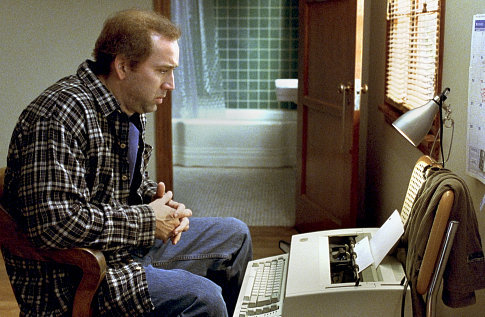
Charlie Kaufman: [voiceover] Do I have an original thought in my head? My bald head. Maybe if I were happier, my hair wouldn’t be falling out. Life is short. I need to make the most of it. Today is the first day of the rest of my life. I’m a walking cliché. I really need to go to the doctor and have my leg checked. There’s something wrong. A bump. The dentist called again. I’m way overdue. If I stop putting things off, I would be happier. All I do is sit on my fat ass. If my ass wasn’t fat I would be happier. I wouldn’t have to wear these shirts with the tails out all the time. Like that’s fooling anyone. Fat ass. I should start jogging again. Five miles a day. Really do it this time. Maybe rock climbing. I need to turn my life around. What do I need to do? I need to fall in love. I need to have a girlfriend. I need to read more, improve myself. What if I learned Russian or something? Or took up an instrument? I could speak Chinese. I’d be the screenwriter who speaks Chinese and plays the oboe. That would be cool. I should get my hair cut short. Stop trying to fool myself and everyone else into thinking I have a full head of hair. How pathetic is that? Just be real. Confident. Isn’t that what women are attracted to? Men don’t have to be attractive. But that’s not true. Especially these days. Almost as much pressure on men as there is on women these days. Why should I be made to feel I have to apologize for my existence? Maybe it’s my brain chemistry. Maybe that’s what’s wrong with me. Bad chemistry. All my problems and anxiety can be reduced to a chemical imbalance or some kind of misfiring synapses. I need to get help for that. But I’ll still be ugly though. Nothing’s gonna change that.

I don’t know any production house which has some sensible and professional readers whose job is to read and understand scripts and  to say why the film should be made or shouldn’t be. Forget sensible and professional, there is no system in place anyway. Black List? That’s Utopia! Plus, there are few more issues –

a) Almost every director wants to write.

b) Almost everyone feels that just directing is not creative enough. They want credits even for giving feedback on scripts.

c) Everyone has ten great ideas but writing 120 pages is too much work.

I also find it very strange the way most directors and writers are so secretive about their scripts as if it’s the next big thing. If it’s a high-concept film, it’s easy to understand the madness to keep it under wraps. But when was the last time someone made a concept film in Bollywood? Look at the films we are making every year, I find it’s a funny situation the way we want to hide these scripts. Feels like it’s more of an insecurity. Imagine if someone reads the scripts and tells that it sucks, the film will not get made then? Nobody takes the feedback in positive way – someone says it’s shit. Ok, let’s work on it. Make it better. What do you tell the producer who has spent money on films like Rakht Charitra, Rann, Jhootha Hi Sahi and Mausam? Hire someone who can read scripts!

Charlie Kaufman: To begin… To begin… How to start? I’m hungry. I should get coffee. Coffee would help me think. Maybe I should write something first, then reward myself with coffee. Coffee and a muffin. Okay, so I need to establish the themes. Maybe a banana-nut. That’s a good muffin.

Look at QT. He leaked the script of Inglourious Basterds almost a year before he started shooting. Same with his latest one Django Unchained. When you are confident that it’s a good script, am not sure what’s the reason to hide. Think, people will read it, spread the good word and will eagerly wait for it to arrive. And if you are interested to read the script reviews of Hollywood films, click here.

Trying to source the  scripts post-release seems to be a difficult game too. And i ask for it so that the script can be shared here on the blog, and anyone who is interested in screenwriting, can read it. Thanks to Vikramaditya Motwane, have managed to put only Udaan’s script so far. I guess the rest loves tom-toming about their scripts going to Oscar library.

I have also been told that since the script reviews appeared on this blog, many production houses have become more strict with their scripts. No soft copies, no working from home, come to office and write. Someone even described a funny scene at one of the production house whose script we had got. But as long as you have disgruntled ADs in your team, i think we don’t need to worry. And knowing the way most people behave with their ADs, disgruntled is not a very hard emotion to achieve. And if not us, then someone else. I just hope that they devote more time working on the scripts rather then trying to save it from getting leaked.

We do get to read many scripts written by our friends who are writers and filmmakers. Believe it or not there are people who value our opinion. We don’t go to town tom-toming about it. Only when it is ridiculously bad and you get to know that someone is spending shitload of money on it, it’s difficult to control yourself and sit silent. You feel like shouting that it’s shit and you feel happy when you are proved right. Should we celebrate a Hattrick?! Just some cheap thrills. Nobody is paying us to do so. And you can do the same when you get our scripts. Dissect it the way you want. Till then it’s time to go back to a new draft of the script which nobody wants to read. Or to moifightclub@gmail.com let’s see if we have got some new scripts.

Charlie Kaufman: [voice-over] I am pathetic, I am a loser…

Robert McKee: So what is the substance of writing?

Charlie Kaufman: [voice-over] I have failed, I am panicked. I’ve sold out, I am worthless, I… What the fuck am I doing here? What the fuck am I doing here? Fuck. It is my weakness, my ultimate lack of conviction that brings me here. Easy answers used to shortcut yourself to success. And here I am because my jump into the abysmal well – isn’t that just a risk one takes when attempting something new? I should leave here right now. I’ll start over. I need to face this project head on and…

Robert McKee: …and God help you if you use voice-over in your work, my friends. God help you. That’s flaccid, sloppy writing. Any idiot can write a voice-over narration to explain the thoughts of a character.