Archive for the ‘cinema’ Category

Ever since the Sairat jukebox has hit YouTube, music aficionados can’t seem to rave enough about the duo for an outstanding soundtrack. And both of them truly deserve all the praise that they are getting. What marks Ajay-Atul (henceforth, A-A) distinct from rest of the Marathi composers is their ability to bring fresh sounds in Marathi music consistently.

Sairat seems to have taken them to new heights of popularity, noticeably among the non-Marathi crowd. This post is my tribute to both of them, whose music I have followed since 2002, even before they made it big in Marathi.

A-A became a household name with their song  Man Udhaan Varyache, from the film ‘Aga Bai Arrechya!’ The entire soundtrack was topnotch and something that Marathi music hadn’t heard before. Man Udhaan was the Roja moment for Marathi music scene. Since then, they have produced some amazing soundtracks in Marathi (and I am a bit put off by their Hindi songs). This is my list of must listen Ajay Atul songs that will give listeners an idea of the range of genres and styles that A-A have worked with. The songs are listed in no particular order.

(all songs hyperlinked. click on the titles, will open in new window)

Ajat Atul

Kunjavanachi Sundar Rani (Aga Bai Arrechya, 2004) – This song is a historic tribute to Marathi film music, that traces its evolution from the early B&W days to 90s. The first section is a tribute to early days of Prabhat films. The second section moves to the next phase in Black and White era of Marathi films, which distinctly reminds of the era made popular by actors like the iconic Jayshree Gadkar. The third is perhaps a tribute to the then neo-color era that had a lot of OP Nayyar-ish sound. Next the song moves into the Dada Kondake era, where double meaning songs and comedy ruled the Marathi cinema industry. The last section is a definite reminder of the era of Marathi cinema that was ruled by Laxmikant Berde and Ashok Saraf.

Khel Mandala (Natrang – 2010) – Listen to this for Ajay’s soul stirring voice. Actually, the entire Natrang OST was a musical masterpiece and a must listen for those who want to get glimpse of Tamasha styled Marathi music. This music was so famous once upon a time that in 80s and 90s, doing Tamasha based films had become a genre. Ajay, in an interview, recounted that during his struggle days, he used to sing as a chorus in Tamshas, also doing the high pitched voices for the effeminate male characters called the Nachyas. The protagonist of Natrang, Guna Kagalkar, was one such famous Nachya.

Lallati Bhandaar (Jogwa – 2010) – Again, playing in their familiar terrain of folk, Lallati Bhandaar was an iconic song, drawing influences from the Jogtin community, or the group of females in service of God in areas of Karnataka Maharashtra border. The other song from this was Jiv Rangala (sung by Hariharan and Shreya Ghoshal) and won A-A a national award.

Navari Ali (Tujhya Majhya Sausarala Ani Kay Hava – 2008) – Navari Ali is a wedding song that borrows influences from Gujarati folk repertoire. A-A used claps and an instrument called Daaka to give a unique texture for the rhythm used in this song. Also, do checkout Chang Bhala and Swarg Ha Nava from the same film.

Chimb Bhijlele (Bandh Premache – 2007) – A sweet romantic song sung by Shankar Mahadevan and Priti Kamath.

Ghe Sawarun (Ringa Ringa – 2010) – This another soul stirring song, sung by Sukhwinder Singh and reminds of the Punjabi folk song genre made popular by singers such as Surinder Kaur.

Cycle Ekki (Shock – 2006) – A perfect dance number by A-A from a telugu film Shock. The film was produced by RGV. RGV has been a great admirer of A-A and had said that though he is an atheist, listening to A-A’s album Vishwa Vinayakam made him feel like a devotee to almighty.

Malhar Vaari (Aga Bai Arechya – 2004) – Malhar Vaari is song based on the Gondhal singing tradition in Maharashtra. The Gondhal troupes are invited to perform during auspicious occasions like wedding.

Morya Morya (Uladhaal – 2008) – Perhaps the most famous song from Uladhaal and from overall Ajay-Atul repertoire, Morya Morya was the timely reminder that Ajay-Atul would rule the Marathi music scene with their eclectic sounds. This song was such an adrenaline booster! Also, listen to De Na Paisa, sung by Kunal Ganjawala, which is quite a departure from A-A’s usual style.

Kalabha (Vishwa Vinayaka – 2001) – People going crazy over the western symphonies that A-A have used must listen to the entire Vishwa Vinayaka soundtrack. This was A-A’s first commercial album and one which slowly surged to popularity. Their much loved song, Shree Ganeshay Dheemahi, which was later used in Viruddh was originally from this album.

Sajavun Sanj Ashi (Aata Ga Baya – 2001) – An acapella from Ajay Atul sung by Hariharan and Mahalaxmi Iyer.

Mauli Mauli (Lai Bhari – 2014) – The only song that stood apart in this otherwise mediocre album. If one has seen the ‘vaari’ or been a part of it, one can instantly relate to this song. Also, though it is the usual bhakti music genre, the rhythm pattern that Ajay Atul used in this song was quite a departure from the stereotypical bhakti songs in Marathi.

– Kaustubh Naik

There is a nice little picture of Roger Ebert (or Ebert saab, as we call him) which keeps getting featured. He is looking into the camera with his head turned, smiling, holding the Sun-Times newspaper in his hand. It has the headline, Our Ebert Won Pultizer. It’s one of those images that stays with your for eternity. That “Our” in the headline puts such a strong sense of pride and belonging. If you haven’t seen the image, click here. And that’s the inspiration for our header too.

Masaan has been doing the festival rounds since its premiere at Cannes. And it has also been bagging a lot of awards, again starting from Cannes. But National Awards has its own charm and it feels like a perfect homecoming. Neeraj Ghaywan won the Swarna Kamal for Best Debut Film Of A Director. And Varun Grover won the award for Best Lyrics, for Dum Laga Ke Haisha’s Moh moh ke dhaage. Here are some pics from the D-day.

(click on any pic to enlarge and  start the slide show)

UPDATE – Here’s some more update from our Masaan boys. Both Neeraj Ghaywan and Varun Grover have decided to donate their cash prize towards relief work for farmers. All in their tweets.


https://twitter.com/ghaywan/status/727726335049777153

https://twitter.com/ghaywan/status/727728843960795137

https://twitter.com/varungrover/status/727726285741563904

https://twitter.com/varungrover/status/727727001302380544

https://twitter.com/varungrover/status/727728003996893184

Nobody knew Nagraj Manjule when his debut feature, Fandry, released. It got rave reviews and made it to our “Must Watch” list. Our recco post on Fandry is here. But this time there was lot of expectations from him as Sairat is his second feature. He delivers and how! Here’s our recco post on the film by Dipti Kharude.

The film has released all over with English subs. Don’t miss.

sairat-hero copy

As I write this, I’m listening to the heady soundtrack of Sairat. The feeling of being in a music video with a bright Dupatta fluttering behind is hard to shake off. That is the naivety of love and that is our good, old desi way of spinning a yarn. We have perhaps forgotten that song and dance can make important contributions to the narrative of our films. They can accentuate agony and ecstasy, introduce characters, and allow them to express themselves in a way that would sound contrived as dialogue. In that vein, Ajay-Atul are to Sairat what Irshad Kamil has been to Imitiaz’s films, and more. (They have composed the music, written the lyrics and sung songs for the film).

In Sairat, the boy gets a song, the girl gets another and then there’s a duet. The last song, which is a prelude to the ugly turn of events is also a subtle nod to the Romeo-Juliet balcony scene where the protagonist, Archie, daughter of the powerful upper caste Patil is dancing in the veranda upstairs and Parshya, a fisherman’s son from the Pardhi community is dancing outside the house. This, like many other visuals establishes a hierarchy without screaming ‘caste’. Manjule uses this dreamy narrative to set us up. He pulls us in with promises of hackneyed romantic epics only to shows us the realities that were missing in films like QSQT and Saathiya.

Films are not about issues but about people living their lives. Good stories are the ones where the theme is subliminal. Sairat doesn’t go gently into the night, though. Manjule’s fiery outrage is muted in the first half only to smack us in the gut at the end. Its triumph lies in the fact that Manjule doesn’t depend on an art house aesthetic to create this impact. He relies on mainstream cinema to do the job.

In the most familiar tropes, he manages to question norms.

It is refreshing to see a girl in a rural set-up drive a tractor and be the knight in shining armour spouting quips like “Marathit samjat nai, tar English madhe sangu?” (If you don’t understand what I’m saying in Marathi, should I repeat it in English?) If the first half were a Bhai film, she would be Salman. Manjule subverts by making Sairat more about the heroine’s quest than that of the hero’s. This film makes you revise your image of small-town/rural girls. They want to take agency over their own lives. The female gaze in Sairat is not the terrible flip side of the usual hetero male gaze, which typically fetishizes women. It is like a celebration of female desire.

He creates joyous moments in the hinterlands of the Solapur district of Maharashtra. This milieu is almost conspicuous by the lack of it in Bollywood – a ladder to climb the makeshift pavilion during a match, the privileged son cutting his birthday cake with a sword, a lady barging unapologetically on the field during a cricket match and yanking her son away to keep watch over the livestock and the unfurling of a courtship against the backdrop of wells and sugarcane fields.

In Sairat, the issue of ‘casteism’ is not at the forefront but its consequences are. The privilege of being the daughter of an upper caste strongman empowers Archie to be badass. Despite the entitlement, Archie endears with her rebellion. She is unabashedly flirtatious and brandishes a raw frankness. She reprimands Parshya for referring to his physically inadequate friend as ‘langda’, in jest. Manjule is interested in dismantling many other structures where the contours of discrimination may change but the hierarchical outlook stays the same. It is this advantage that Archi struggles to relinquish in the second half. Once she frees herself of the power that comes with privilege and strives on an equal footing with Parshya, she evolves.

While doing all of this, Manjule does not strike a single false note. Archie may have valiantly used a gun while escaping but that doesn’t prepare her to drink unfiltered water. The scene where Archie and Parshya quench their thirst after disembarking the train is telling.

In the gritty second half, the main characters come undone with their frailties. Even the charming Parshya succumbs to his insecurities. Slow motion sequences are traded in for rapt stillness and silences. They begin to realize their happily-ever- after dream and are even economically empowered to buy a flat in a more egalitarian city.

Apparently, class inequality is surmountable but it is the caste inequalities that cast a long shadow.

SPOILER ALERT

Honour killing is a common narrative but Manjule draws you in and makes you drop your guard. You can sense the robust command over his craft when you laugh during an awkward scene just before the ghastly climax.

ALERT ENDS

The more diverse ways we have of telling mainstream stories, the more likely audiences will find something that speaks to them. What better way to spur a discourse?

Dipti Kharude

image1Film Heritage Foundation has announced the debut of its “Do You Speak Cinema” programme with a two-day workshop for children.

Venue : Chhatrapati Shivaji Maharaj Vastu Sangrahalaya (CSMVS), Kala Ghoda, Fort, Mumbai

Dates : May 27th and 28th, 2016.

Workshop : “Do You Speak Cinema” is aimed at immersing children in the magic of cinema, transforming the experience from mere passive viewing to actively engaging with this art form and teaching them the language of the moving image. The idea is to make children a more discerning audience in a world where they are constantly bombarded with images.

Highlights : A rare opportunity to see, touch and watch films on vintage film projectors. Learning about the pioneers of cinema from Melies to Chaplin to Phalke. Touching and feeling film strips and drawing frames.

Age Group : First two workshops are for children from ages 8 – 12

Contact : To register, call 022-22844484 or email – education@csmvs.in

“Do You Speak Cinema” is a part of Film Heritage Foundation’s educational initiatives based on the belief that cinema is an art form and that the moving image is an important visual document of our heritage and the times we live in.

When it comes to screenwriting, Anjum Rajabali is probably the best teacher/mentor in B-town. He organises a screenwriting workshop almost every year. We had posted about this workshop on our blog. Our friend Dipti Kharude attended the workshop this year. Here’s her extensive notes from the workshop.

Do read and thank her for putting it all together.

DSC06307 (1)

In the early 2000s, I had a juvenile blog. I remember blogging about how, if there were one extravagant thing I’d want in my own house; it had to be a space for screening films. Another stray line from that same blog comes to mind. It was more like an affirmation – Wish I could make a film that would be an expression of the explosion in my heart. The bang I was referring to was a visceral reaction to incandescent instants on the silver screen. Filmmaking seemed nothing short of wizardry.

Movie clubs were magical places then. They made the idea of cinema palpable and more importantly accessible. The most spellbinding moments on screen could be traced back to a web of words on paper – the script or the screenplay – that sacrosanct document where imagination flourished.

Once I began ‘adulting’, this curiosity got sidetracked and the searing zeal waned into a tepid fascination. It was only after rupturing the shackles of a job that I submitted myself to the lure of cinema again. This time though, I decided to approach it scientifically and registered for the 5-day Screenwriting Workshop by Anjum Rajabali.

Despite the academic approach, it upheld the movie mojo. When you don’t miss your phone for 5 straight days, in a world where you are willingly tethered to your devices, you know the workshop instructor has done a stellar job.

In the interactive master classes, Jaideep Sahni, Sriram Raghavan, Juhi Chaturvedi, Himanshu Sharma, Shridhar Raghavan, Varun Grover, Neeraj Ghaywan, Sudip Sharma, Navdeep Singh, Saiwyn Quadros, Sanyuktha Chawla-Shaikh, shared their creative and professional struggles, explained their style and approach to writing, and offered a wealth of tips for new writers.

Though not without its faults, the workshop was enlightening and enthusing. Replete with Anjum’s personal stories of failure, it encouraged participants to write. ‘Till the age of 34, I didn’t know the meaning of screenplay. I had only written articles. It is possible to reinvent yourself. Get the junk out of the way, which is usually the first draft. Write what you enjoy seeing on screen and no joy equals to that of writing ‘FADE OUT’.

Without further ado, here’s a rundown of what happened at the workshop. It is a gist at best.

Day 1

Session 1: The Importance of Stories and Storytelling

After a quick introduction, we were handed writing pads with Stanley Kubrick’s quote – If it can be written or thought, it can be filmed. Anjum delved into how stories help us make sense of the chaos of life. We are constantly battling the senselessness of life and stories help us find meaning. They unravel the complexity of lived reality.

When it comes to story ideas, we were told that, just the way you don’t marry the first person you date, you don’t commit to the first idea that comes to mind. Spend time in building a trove and the one that stays is worth looking into, the prerequisite being that it should move you profoundly in a sad or joyous way. Once that idea is discerned, live, breathe and fornicate with it.

Meaningful stories are the ones that address human condition. They offer a lifelike experience and make viewers suspend their judgments. Reality takes a backseat. Lions may not speak in real life but Lion King makes the viewer suspend this disbelief.

After a bout of anecdotes, the interactive session snowballed into a volley of irrelevant questions that lasted much beyond the time allocated for the same. Future participants should be careful about asking pertinent questions to avoid this debacle. While a participant pointed out that Sholay didn’t take into account the ‘greys’ of characters and how she had a problem that Gabbar Singh was depicted as pure evil, Anjum quipped, “You can’t screw up a film like Sholay with greyness. It is not about understanding evil. It is about destroying it, as opposed to Satya.” This exchange turned into a debate about whether the workshop would be ‘democratic’. Though it was a delight to see Anjum field questions with his special brand of humour and irreverence, he was forced to downsize some other germane discussions.

Session 2 – Premise : The Dramatic Centre/ Expansion into Plot

If you can’t say it in one sentence, you don’t know what it’s about.

This one kickstarted the workshop in the real sense of the word. Premise is the interplay between the protagonist and the central situation (conflict). The energy of the story comes from these one or two sentences that form the premise. Everything else is a sub-plot.

We deciphered the premises of different films. Most of the participants were surprised when they discovered that though Dil Chahta Hai’s theme is friendship, the premise is about Aamir Khan’s failure to understand adult love.

Anjum went on to explain how the specificity of the premise is directly proportional to the effectiveness of the screenplay. In case of the film Neerja, participants deduced– It is the story of an airhostess grappling with a plane hijack and responding with courage. Anjum explained how Neerja is the story of an ordinary girl finding extraordinary courage. The particularity of the ordinariness of the character is of significance. If the airhostess were a woman trained in martial arts, the story wouldn’t have worked.

The plot is the dramatic progression of the character and the central situation. The premise generally kicks in during ACT II. While setting up the story in Act I, the character should reveal characteristics or peculiarities that lead to the premise. In Sholay, though Thakur has lost both his hands, the emotion the story evokes is only anger and not sympathy since the premise involves revenge. There is not a single scene in the film where Thakur is shown in a pitiful state.

We watched the short film, Le Poulet, inferred its premise, discussed the purpose of every scene and analysed the point where the premise was activated. Anjum helped us examine the way in which the protagonist’s struggle is visually depicted (your film should cover action, not activity). There was also a discussion on how ‘twists’ work in films. A good twist is the one that surprises you but in retrospect it’s inevitable.

Takeaway: Once an idea arrives, you need to hit upon it with a premise. The premise is like a lighthouse. If you’re ever stuck while writing a scene, look to the logline and it will push you in the right direction.

Stories fraught with failure were more revealing. Anjum candidly gave references of his own films Pukar and Arakshan and how they moved away from the premise and suffered. Pukar was to be a love story based on Samson and Delilah but the love story turned into a sub-plot when the screenplay advanced and Arakshan dealt with reservation in the first half and the second half became about commercialization of education.

Constant references to films like Sholay, Deewar and the likes were definitely helpful to those who have grown up on that fare but to a large extent the grammar of films has changed. If there were more references to contemporary films, the juxtaposition would have been more pertinent.

Session 3 – Character, Characterisation, Character Arc, Transformation.

Discovering the Character’s personality, qualities relevant to your plot.

The protagonist is defined by her/his struggle and her/his steadfast commitment.

When it comes to characterisation, imagine the vulnerabilities and unmet desires of the character. Being vulnerable is a sign of being alive. Explore the physiology (paunch, looks, etc.), sociology (caste,class,neighbourhood) and psychology of the main characters (fears, vices, early memories etc.)

Place the character in multiple ‘what if’ situations and reflect on her/his reactions. Anjum warned us about digressing and crafting character sketches that run into pages with immaterial details like the brand of toothpaste the character uses. (Precisely – Bhaad mein gayi uski chaddi/ Bhaad mein gayi uski toothpaste).The premise serves as a beacon at this stage too. The characteristics of the protagonist should propel the premise.

At the heart of any good story is character evolution. A character arc is the transformation or inner journey of a character over the course of a story.

Ask two questions of your character with regard to the character arc:

What does s/he want?

What does s/he really want?

In case of Airlift, Ranjit Katiyal initially wants to ensure the safety of his family and then includes his employees in its ambit.

The most interesting stories are the ones where the characters have lost the battle but won the war.

Film Screening: Little Miss Sunshine

Takeaway: A character sketch is not a biography. Brevity is your best friend.

Despite Anjum repeating countless times about questioning the main characters in relation to the premise, a participant was hell-bent on deconstructing the character of Samba in Sholay.

Day 2

Session 4 – Script Analysis of Little Miss Sunshine (with emphasis on characters and their arcs)

After diving into the vulnerabilities of each character and discussing how each character was introduced on screen, we dissected the 14-minute dinner scene which exhausts all the possibilities of dissonance.

Dissonance lends the plot the essential dramatic vigour.

For a rewarding character arc, put your characters in the worst situations and dire places. Let them dig deep and find their way out.

We traced the journey of all the characters – how each of them started and how their arcs blended with the resolution of the film.

In Little Miss Sunshine, Richard tells his daughter, “If you win, we will go.” In the climax we see him joining her with jubilation as she loses. This flip makes for a good character arc.

While there have been films with a few exceptions, your scripts should have at least one major character who goes through a change in his belief or behavior.

Takeaway: Ironies and paradoxes make for good stories.

Session 5 – Structuring the Screenplay

A screening of the short film, The Lunch Date, shined a light on how prejudice operates through generalization. It is dissolved by treating the person as an individual. Hence a personal experience can help one overcome prejudice. This led to the premise of a rich lady encountering a poor, black, homeless man.

Anjum explained how it is important to exploit every single frame in a short film. The film just like Hitchcock’s Psycho sways your perspective. Irrespective of rationality or morality, viewers feel sympathy towards characters that are vulnerable and struggling.

Before plunging headlong into the three act structure, a disclaimer is in order. This popular structure is not a formula or a model to follow consciously. It is meant to be imbibed and forgotten.

Act I – Setup – Introduce characters. Establish their situations. Begin your sub-plots.

Act II – Confrontation – The plot goes into second gear and the premise blooms here.

Act III – Resolution

Takeaway: Treat the knowledge of the 3 act structure as scaffolding. Knowledge transforms to wisdom when it becomes second nature. Thought can be the enemy of creativity. Too much thinking leads to contrivances in the plot. Write and when you find yourself faltering, evaluate your screenplay with the help of the 3 act structure.

Session 6 – Scene Design

“The structural unity of the parts is such that, if any one of them is displaced or removed, the whole will be disjointed and disturbed. For a thing whose presence or absence makes no visible difference is not an organic part of the whole.” – Aristotle

The questions to explore before writing a scene:

What is the purpose of the scene? Is the scene related to the rest of the story? How does it advance the story? Does it reveal something important about the character? Are you introducing a character? Does the dialogue reflect character? Do your characters have something to do – any activity?

We scrutinized a scene from the film, Amadeus against the parameters mentioned above.

Screening of Incendies

Day 3

Session 6: Scene Design Continued

We studied the opening scene of The Godfather where the aim was to introduce the Godfather and his system. Anjum explained how the scene exploits the discord created by an emotional reaction. A monologue at the start of the film is generally considered as suicide but this one weaves in intrigue since it is structured like a story. This scene is a master class on how an organic quality of the character lends a dramatic touch. This drama is a rich device to bring to the fore, the hidden.

Takeaway: This was the most gratifying session since we analysed every frame of the scene and tracked its progression. While Anjum deconstructed the scene, it dawned upon me that this is the part I like most about the whole process of screenwriting – crafting the nuances of a scene. It also elevated my capacity to savour aspects of films that I had earlier mindlessly consumed.

Thanks to questions that only served to stoke the pseudo intelligence of some participants, the session on analysis of the film Incendies had to be deferred. Another purpose of questioning seemed to be name-dropping.

Dipti Kharude

Master class with Sudip Sharma and Navdeep Singh – To be continued.

The first look of Anurag Kashyap’s new film, Raman Raghav 2.0, is out. The film stars Nawazuddin Siddiqui, Vicky Kaushal and Sobhita Dhulipala in the lead.

The film will have its world premiere at the Cannes Directors’ Fortnight.

Do check out the poster and the stills.

(click on any image to enlarge and start slide show)

Radhika Apte

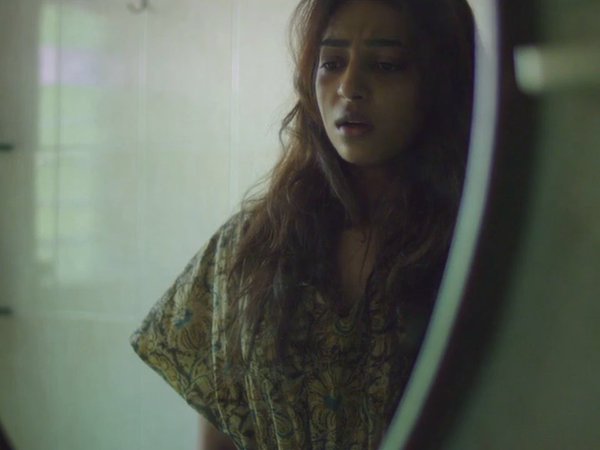
Good news has come from the ongoing Tribeca Film Festival in New York. Radhika Apte has bagged the Best Actress Award in International Narrative Feature section for her performance in Anurag Kashyap’s Clean Shaven.

The award was given by Jean Reno. And here’s the Jury comment on her performance :

“This award goes to an actress who has conveyed bravery and emotional depth in different relationships around her. A contemporary story that breaks through established culture.”

For complete list of winners, click here.

‘Madly’ is an international anthology of short films exploring love in all its permutations. Directed by Gael García Bernal, Mia Wasikowska, Sebastian Silva, Anurag Kashyap, Sion Sono and Natasha Khan, the six stories in Madly portray contemporary love in all its glorious, sad, ecstatic, empowering, and erotic manifestations.

Tribeca Film Fest will run till 24th May, 2016.

To watch Madly’s trailer, go here and click on the play button.

More about ‘Madly’ from Tribeca

Madly explores love in all its permutations in six short films from a vibrant group of filmmakers representing Japan, Argentina, the UK, the US, India, and Australia. All forms of love are on display in this anthology. And all manners of feelings expressed from jubilance to depression are done so strongly. In Afterbirth, actress Mia Wasikowska goes behind the camera to tell the story of a young mother’s postpartum struggles; Gael García Bernal explores how pregnancy affects one couple’s already ambivalent relationship in Love of My Life; and ghosts of past relationships are resurrected in Natasha Khan’s I Do. These stories of love never shy away from taboo either: Sion Sono’s Love of Love delves into underground sex clubs in Japan, and Anurag Kashyap’s Clean Shaven uncovers the social relevance of a woman’s pubic hair. Love can even be delightfully irreverent at moments, Dance Dance Dance from Sebastian Silva features an eye-roll from Jesus. Madly, after all, is a contemporary portrait of love in all its glorious, sad, ecstatic, empowering, and erotic manifestations.


(click on the image to enlarge and start slide show)

Cannes Film Festiva’s Classics section has unveiled its line-up for this year’s edition. Indian filmmakers Shirley Abraham and Amit Madheshiya’s doucmentary ‘The Cinema Travelers’ will be screened in the section.

Here’s the description according to official synopsis – The portrait of a traveling movie theater in India, which continues to bear the magic of the images to a stunned audience, is faced with technological, numerous and complex changes. A projector repairman narrates film changes with poetry, philosophy and pragmatism.

The film is 1hr36 min long. To know more about the film, click here.

The Classics section will also screen eight other documentaries about cinema. For complete line-up of Classics section, click here.

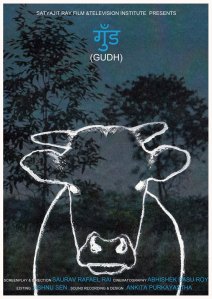
GudhThe year’s fest has another Indian film – Saurav Rai’s short film Gudh (Nest) in Cinefoundation selection. Rai is a graduate of Satyajit Ray Film & Television Institute, Kolkata, and this 28-min short is his diploma film.

To know more about Rai and his short, click here.

To mark its 19th year, the Cinéfondation Selection has chosen 18 films (14 works of fiction and 4 animations), from among the 2,300 works submitted this year by film schools from all over the world. Fifteen countries from three continents are represented. Seven of the films selected come from schools taking part for the first time, and it is also the first time that a film school from Venezuela has reached the selection stage. More than half of this edition’s movies are directed by women, with 10 out of the 18 films selected. The complete list of selection is here.

The three Cinéfondation prizes will be awarded at a ceremony preceding the screening of the prize-winning films on Friday 20th May in the Buñuel Theatre.


UPDATE  (24-04-16) – The teaser posters are just out. We have updated the post with 2 teaser posters of the film.

Anurag Kashyap is ready with his new film which is interestingly titled, Raman Raghav 2.0. And here is the good news – as expected, Anurag will be back to the Cannes with the premiere of the film in Directors Fortnight segment.

The films stars Nawazuddin and Vicky Kaushal in the lead roles. Not sure why, but the film is titled ‘Psycho Raman’ in press release.

To check out the complete list of 2016 selection, click here.

The Directors’ Fortnight (French: Quinzaine des Réalisateurs) is an independent section held in parallel to the Cannes Film Festival. It was started in 1969 by the French Directors Guild after the events of May 1968 resulted in cancellation of the Cannes festival as an act of solidarity with striking workers. (via wiki)

After doing the fest rounds, Raam Reddy’s debut feature Thithi is all set to release in India on 6th May, 2016. And its trailer is out today.

Recently, the film bagged the National Award for Best Film in Kannada. Last year, it also won two Golden Leopards at the  Locarno Film Festival.

According to official release, Thithi is a realistic, light-hearted Kannada-language film about how three generations of sons react to the death of their patriarch, Century Gowda: a locally renowned, highly cranky 101-year-old man.

Cast & Crew

Director: Raam Reddy
Writers: Eregowda, Raam Reddy
Producers: Pratap Reddy, Sunmin Park
Director of Photography: Doron Tempert
Editors: John Zimmerman, Raam Reddy
Sound Design: Nithin Lukose
Lead Cast: Thammegowda S., Channegowda, Abhishek H.N., Pooja S.M.
Production Companies: Prspctvs Productions (India), Maxmedia (USA)