KAUFMAN - "Or cramming in sex, or car chases, or guns. Or characters learning profound life lessons. Or characters growing or characters changing or characters learning to like each other or characters overcoming obstacles to succeed in the end. Y'know ? Movie shit."
Kaufman is sweating like crazy now. Valerie is quiet for a moment - from "Adaptation".
We are all about CINEMA. That movie shit.
NOTHING is sacred.
NOBODY is spared.
Because we talk about films, dammit.
Not your sex life.
Films, fests, unsung, indies, undiscovered - all that and some fun. If you have dope on anything related to cinema or you would like to share something, do write to us at moifightclub@gmail.com.
The views, opinions, reviews, articles, or positions, expressed by the authors and those providing comments are theirs alone, and do not necessarily reflect the views, opinions, positions or strategies of ANY OF THE EMPLOYERS, FRIENDS, RELATIVES, PR agencies, Production houses, Media group and such third parties associated with the authors. The latter make no representations as to accuracy, completeness, currentness, suitability, or validity of any information on this site and will not be liable for any errors, omissions, or delays in this information or any losses, injuries, or damages arising from its display or use.
In short, if you have an issue with us or any post we've written, write to us at moifightclub@gmail.com
As Mumbai Film Festival is all set to start, we are back with our film recco post. But this year, we have not made our list. We have taken the easy way out – compiled the list of all the film reccos done by others. So here you go…
– Rediff film reviewer and festival programmer Aseem Chhabra’s pick – 10 movies you must see at MAMI (The Apu Trilogy, The Club, From Afar, Junun, Mia Madre, Placebo, Virgin Mountain, The Second Mother, Sworn Virgin, Youth)
– Mint Lounge’s reviewer Uday Bhatia list of 10 Films – by First time directors (Ixcanul Volcano, Land And Shade, Thithi, Cities Of Sleep, Interruption, Island City, The Head Hunter, Turbo Kid, Kaili Blues, Mina Walking)
– First Post reviewer Mihir Fadnavis on fest’s new segment,After Dark – a list of bizarre horror movies (Ludo, Stung, American Burger, Deathgsm, Tag)
– Fadnavis also has a list of 10 Films You Must Watch + Some More (The Forbidden Room, Mountains May Depart, The Lobster, Dheepan, Room, Taxi, Heavenly Nomadic, Tangerine, Ixcanul Volcano, He Named Me Malala)
– MAMI Chairperson and filmmaker Kiran Rao’s pick of 5 Must Watch Films (Dheepan, The Boy And The World, Blue, Mountains May Depart, Restored copies of Pyaasa and all Chetan Anand films)
– Writer and blogger Satyanshu Singh’s long list of film recco is here. Has info on many fest winners.
If you have googled the films and made your list, or found a good list than we haven’t mentioned, do let us know in the comments section. We will update the post.
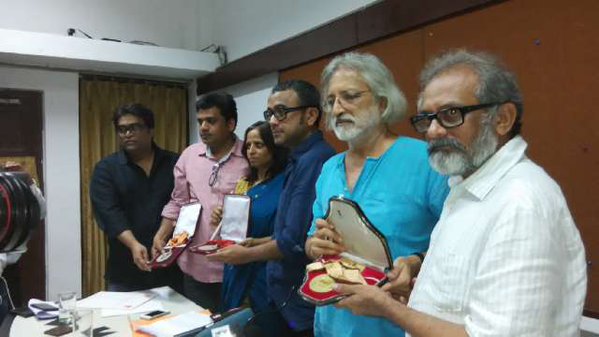
After writers and scientists, filmmakers have joined the protest in raising their voice against the murders of rationalist author MM Kalburgi, activist Govind Pansare, and in support of FTII students. The 10 filmmakers include Anand Patwardhan, Dibakar Banerjee, Nishtha Jain, Paresh Kamdar, Kriti Nakhwa, Harshvardhan Kulkarni, Hari Nair, Rakesh Sharma, Indraneel Lahiri and Lipika Singh Darai.
And here’s the full text of their letter to the President and PM.
To,
The President and the Prime Minister of India,
New Delhi
Dear Sir,
It is with a deep sense of dismay that we write to you. Many of the undersigned had written a letter to you barely a month ago in support of the demands of the students of FTII. We had urged you to intervene and ensure that FTII continues to be a stellar educational institution with a commitment to freedom of expression.
The student strike has entered the 4th month. The issue remains unresolved and our sense of apprehension about the fate of the institute has only grown. We have seen the students conduct their protest in a democratic manner with utmost dignity. We have also seen an attack on their credibility mounted in the most disgraceful manner in the press by the very people who were meant to be their guardians on campus- the director and the registrar. The ministry has seemingly offered a patient hearing to the students no less than 5 times over 4 months yet have made no attempt to put into place a transparent process to make key appointments to the people who are meant to give vision to the institute. They have expressed an inability to reverse the process that provoked this strike. We see this as a blatant disregard for the voice of these students.
It has also become imperative that we see the government’s stone walling of the students’ protest in a context. The Information and Broadcasting Ministry has appointed people with a narrow vision in the institutions under them. FTII, Children’s Film Society and CBFC are examples that the film fraternity has objected to.
Meanwhile, we have watched the murders of rationalists and writers like Dr. Narendra Dabholkar, Govind Pansare and M.M.Kalburgi with dismay. These are clearly not random acts of violence. People are being murdered for their beliefs and opinions. There seems to be no attempt to unravel the larger picture and bring to book extremist groups that believe in ruthless violence to eliminate those who hold a counter view from theirs. There has been no official condemnation of these groups and we question this silence.
The lynching and murder of an ironsmith, Mohammed Akhlaq, in a village at the edge of our national capital has shattered our faith in the spirit of tolerance that is the core of our robust democracy. The mob that stood at this poor Muslim man’s house had been empowered by the belief that this was an acceptable way to express rage. The current climate has validated this sentiment. Those who stand outside the circle drawn by the ruling elite are vulnerable in the most appalling manner. It has now come to light that members of the party that rule at the Centre led the mob. It is imperative that we take note of the impunity with which the mob was instigated. No condemnation is complete without naming the politically powerful who scripted this attack.
We are filmmakers who have been awarded by your most esteemed office. We hold that to be a high honour. Our cinema represents a rich diversity of political opinions and aesthetic expression. It was a matter of great pride for us that the government of India had awarded this plurality. If we do not stand up and register our protest now we are in the danger of being a part of the process that is flattening out our beautiful landscape of diversity. Freedom of expression are not mere words for us, it is a way of life we hold dear. Each life led differently from the mainstream is precious, we must fight for this right to pray, eat, love, work as we wish.
We feel compelled to return the honour that the State had bestowed on us. This is not an attempt to undermine your office but a heartfelt plea. Condoling deaths without interrogating the forces that scripted those murders reveals a tacit acceptance of the ugly forces distorting our country. The Government of India must urgently reveal its commitment to protect the freedom of expression of each citizen. We, the undersigned, stand alongside the writers who have returned the country’s highest literary honour and hereby return our National Awards. As filmmakers we stand firmly with the students of FTII and are determined to not let them shoulder the entire burden of their protests. They have mounted a historic struggle and we urge others within our fraternity to come forward and carry this protest forward.
6. Harshavardhan Kulkarni
Film: Lost & Found (2008)
7. Hari Nair
Film: Sham’s Vision (1997)
8. Rakesh Sharma
Film: Final Solution (2006)
9. Indraneel Lahiri
Film: Aamar Katha, Story of Binodini (2014)
10. Lipika Singh Darai
Film: Gaarud (2009)
Film: Eka Gachha Eka Mainsha Eka Samudra ( a tree a man a sea) (2012)
Film: Kankee O Saapo ( dragonfly and snake) (2013)
Drishyam Films is organising The Masters, a monthly series of exclusive learning sessions with India’s finest cinematic talents.
Kickstarting this series will be a screening of Sriram Raghvan’s film Raman Raghav, followed by a master class with him. The film, at its first-ever public screening, will be introduced by filmmaker Atul Sabharwal, director (Aurangzeb, In Their Shoes), who will also be the moderator of the Q and A to be followed.
Raman Raghav is a two-part made-for-video series made by Raghavan in 1991. It is based on the successful investigations of the Stoneman murders that took place in the 1960s, drawing from official police case files. However, these films were never distributed and this will be their first theatrical outing, exclusive to early bird registrations.
– The event is free and open to all, based on a first-come-first serve basis.
‘Bring me a dish to satiate my mind and I am happy.’
No, no one great said that, I just made it up coz I wanted to begin with a bang. But that doesn’t mean it is untrue.Kaul, a feature length indie film has had me quite, quite excited since a few days now.
It’s rare a film excites me so much, makes me think so much. So exploring, enquiring, digging, labelling, un-defining…it goes.
Kaul, in several cultures, means a call to the divine. It also means higher order or social class. It also means a man of high breed. It also means a purpose or profession. It also means a promise.
How simple is simple?
We live in a world where everything is codified perfectly into two neat brackets, cause and effect, black and white, this or that. Human existence today, is an argument of versus. But simple is a unifying agent, it is a unifying philosophy and has no place for duality. Then?
The task of our times then is to deconstruct. And integrate. To arrive at the core that is simple. Kaul is something like that.
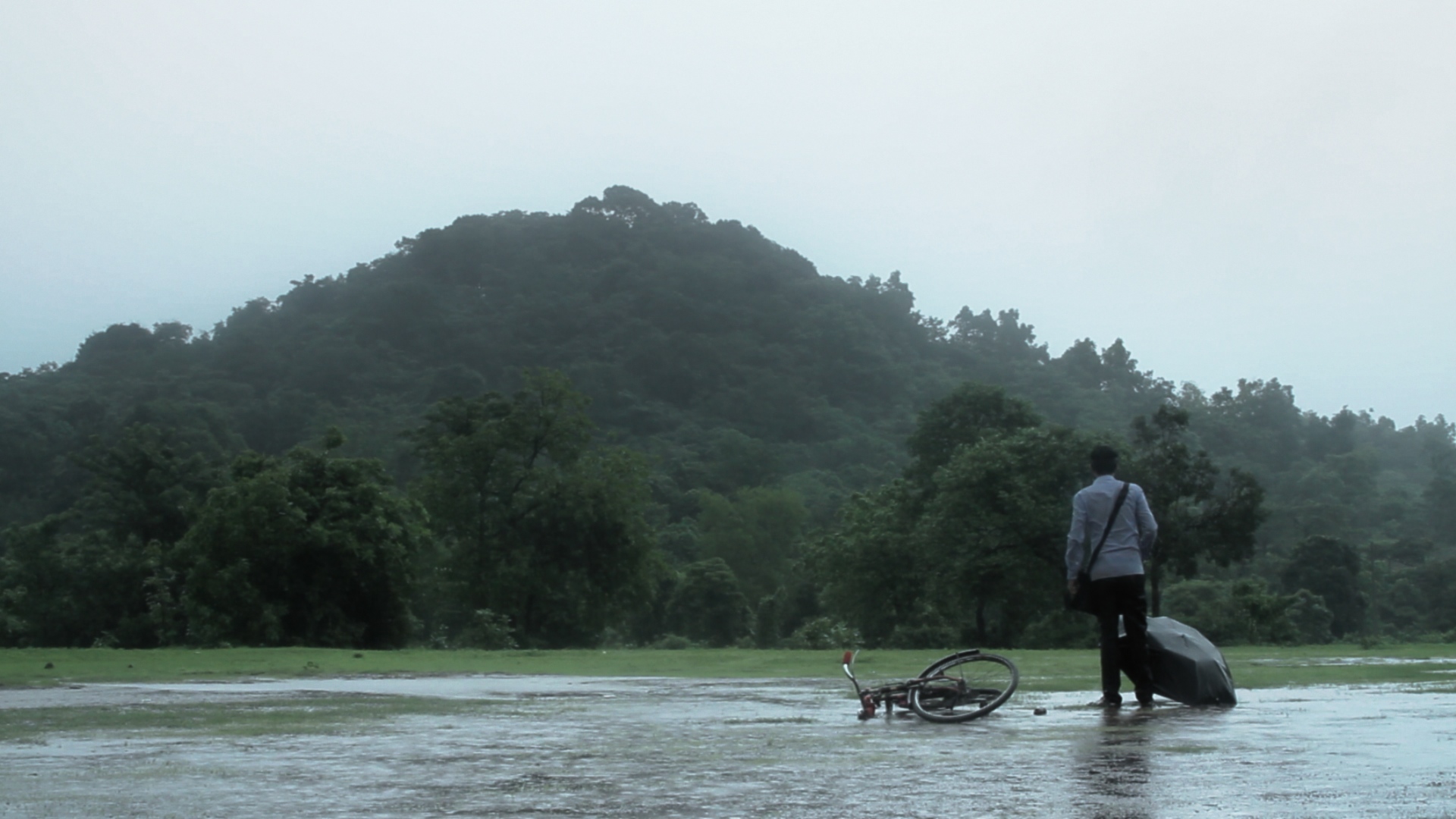
A young man in a small town in Konkan murders a woman and moves to a smaller village. He takes up a job as a teacher, marries and is living a seemingly uneventful life when he undergoes an experience he cannot accept or reject. It is something he cannot define; it is surreal and drives him to the edge of sanity (as defined by common majoritarian understanding). He sets out seeking answers, peeling layers until he arrives at the core.
Mystical? Maybe, but this is not a saintly story of a man’s enlightenment and struggles with it. It is the story of Nietzsche’s ‘Ubermensch’, Camus’ ‘Outsider’, and the 21st century common man experiencing the dark night of his soul fraught with anxiety.
If he kills like Camus’ Stranger and goes off like a being in search of his super-hood, then like our 21st century man he veers towards the confines of psychiatric classifications, depending on the only rules he seems to be made of. ‘Shut me up if I become a threat to the society’, he pleads earnestly, believing himself to have gone bonkers; his classification of insane and normal as binary as the debate between the physical and the metaphysical. In this honesty lies the thread of his search, the honesty that compels him to ensure his road must not end in annihilation of others also leading him to explore the power that lies in that very thought of violence. Is that where ultimate freedom lies?
What if you could just snap your fingers and the world would come to an end?
And what if your redemption lay in it? Through it?
That kind of power is threatening. Life-threatening. Two moves and the torture would end. And it would be a good deed. Or would it be? We are back to polarising.
But it is touch and go, this playing with polarisation, because as is essential, one must quickly leap to integration, from linear to the cyclical, from separation to unification, if one has to arrive at the meaning of existence. In the womb of birth is the seed of death and in the heart of death the first call for creation. Something cannot be destroyed until completely built and cannot be created until it is not completely annihilated. The pendulum has to swing to both extremes to arrive at its true balance. Let me drop the ‘true’ and just say balance. It is simple.
To peel off the layers of our consciousness and definitions of art then, the film throws off layers after layers of myths and faux-labels, crystallising the knowledge, the visual and sound (literally and metaphorically!) in an attempt to integrate sensory experience with emotional resonance in the audience. As the protagonist starts his journey in search of answers we are taken into another world where the physical echoes the metaphysical. The play of day and night, darkness and light, sounds and silences create a universe that is tactile and immersive, daylight exposing the extreme dullness of the regular and darkness the mysteries of the obvious. With this, Kaul gently plays on our senses as it tantalises us to follow the protagonist to find out what is this bat-shit craziness that has descended upon him suddenly.
Do we need the Master?
Needless to say, he finds a guru; the film evoking a Campbell-like mono-myth pattern of a hero’s journey, from afar a simplistic narrative principle, from close quarters simple. As he tries to seek the tutelage of one seemingly mysterious old man another layer of polarity opens up. Along with several other myths the old man also rejects the myth of the ‘guru’, hinting at the infiniteness of the self to find its own way out of this ultra-real world. The role of the seeker as a primary school teacher suddenly gains credence. ‘This whole Guru-Disciple thing is bogus’, roars the old man in defiance, decrying the tradition of looking outward, and by that pushing the protagonist to look within.
He urges him to listen to birds for messages decoding his path.
‘And what will I find?’ the seeker asks in anticipation.
‘Nothing. You will find nothing. But only after knowing that will you be able to accept it. There is nothing to find.’
A group of philosophers, writers and artists were once asked, ‘Why are we here?’ John Cage famously replied, ‘No why, just here’. Let’s pause here a bit.
Integration is not mathematics, but then maybe it is.
From a distance, there is a danger of viewing and interpreting Kaul as a fable, it is anything but that. Rather it could almost be interpreted as a pataphysical take on the business of spirituality. With a firm belief in the power of self, the film almost cocks-a-snook at the common dialectical understanding of experiential truth and the mysterious secret of man as super-being.
Even though interpreting Kaul as a fable would be reductive, there is a certain temptation to do so, given the structure and form it chooses to take. It’s magic realism is Kafkaesque, dark, mysterious and anxious, very anxious. It is mystical and formless, evolving as we go, but it is in enquiry that our existence and the film lies, as embodied by the seeker and that which is being sought. That is the spirit of the film hence its fable-like veneer dismantles before it is fully built as the Kafkaesque intensity deepens, unshackling the viewer from the fluff of fantasy immersing him in the surreality of reality instead. Enquire don’t accept, seek don’t give up, trust your power do not let go of it; some of the ideas the film seems to be urging us to follow with little cushioning.
While merging the hero’s mono-mythical external journey with his internal one, the film adapts and adopts from several theisms and philosophies. Rooted in ancient Hindu philosophy is our mysterious old man, who suggests neti netiis the only path for the insane. In a caustic sweep he derides the modern-day formalist man steeped in illusory materialism and its limited definitions. Neti is a yogic path to enlightenment, propounded in Gnana Yoga and Advaita Vedanta, which emphasises on the rejection of all that is not the Soul and thus coming in touch with it. It is a path of deconstruction, one that nudges the shedding of layers of illusion and belief that we are mere mortals, to reach that germ of immortal within us.
‘Do what you feel like’ is the only answer the old man has for our angst-ridden protagonist. Hear the calling of honesty. From songs of experience the return to innocence.
It is believed that knowledge or ‘gnana’ was handed down through the alleys of memory, both physical (smriti) and divine (sruti). The Vedas, believed to be central canon of Hindu philosophy, are said to have been written through the assistance of divine memory. The oral tradition of India, (where sagely as well as worldly wisdom was disseminated through stories), and the guru-shishya codification of the same task, then seem to be derivatives of a deeper tradition born of the belief in sruti and smriti.
It is from these traditions that director Aadish Keluskar draws his narrative, borrowing a phrase T S Eliot used to describe the style of metaphysical poets, ‘yoking together’ the content with form in a meta-fictive universe. True to the oral tradition the old man hands down ancient knowledge to the protagonist. Is it from sruti or smriti? The film, like the old man, (its spokesperson almost), gives no ready answers. But there are answers embedded within, for which enquiry is required.
Kaul, bases its world-view, or rather other-world view on prominent philosophies and beliefs, collecting them together to make a base, a context. It then plays within this context of beliefs, pitting one against another to find a middle way. It’s almost like an examination, or experiment rather, of mating the best DNA of Nietzsche’s nihilism, Camus’ absurdism and Hindu spiritualism to free their core and it’s own. What emerges is the distilled idea of the Self. And the absoluteness of its power. From a dot we emerge and into the dot we dissolve, ending where we begin. Again and again, we just need to know it.
The atmosphere of darkness lies like a heavy pall on the film. It is full of bated breaths, the frames holding still in limbo, as anxious and paralysed as its protagonist who doesn’t know where to go from here. Just like neti neti, the structure of the film to arrive at its point is not this, not that. A constant negative reaffirmation. In an admirable example of metafiction, the physical form the film takes is to reflect the essence of its content. In many ways it subverts what we popularly know of the relationship between form and content and how it is practiced. In other ways it is the distilled approach of marrying both, the essence of simple. The old man refuses to provide easy answers to the protagonist pushing him on the path of neti neti and the film does the same to the audience. It is exciting to say the least, to catch clues and link up a path to the centre of the film.
When I reached there, the deepest I could, I found something interesting at the centre of the film. It pretends to be dystopian while it is very utopian and optimistic. Behind the obfuscating mystique, behind the nihilistic violence, behind the weariness of regular life, the film thrusts forth a strong belief in personal power, almost urging us to claim ours. Using violence, it liberates it from the baggage of destruction, leaving only the creative force behind.
Perhaps, the richness of the form and content is what I find so exciting in Kaul. The boldness of night photography allowing darkness to rule, the image crystallising as though in response to the call of plot, the soundscape reverberating with enigma, hinting at larger mysteries while guiding through them. It is with a certain intensity that the soundscape plays on the subconscious, informing the world of the film through vibrations, through variations, through space and vacuum, through noise and silence and through the gross and fine. This intensity and vastness of variation melts in with the world of the film, creating a supra-natural, almost physical experience of the protagonist’s journey for the audience.
‘Truth is rarely pure and never simple’ proclaimed Oscar Wilde. Neither is Kaul. It isn’t pure, it isn’t perfect and it isn’t simple. But it wins in nudging us to ask, in our lives and in films, what is simple?
It’s one of the most awaited films of the year. And in an interesting promotional strategy, the makers of ‘Titli’ have roped in Anurag Kashyap to introduce the cast and crew of the film. The first video has Kashyap and Dibakar taking about the state of our films, their careers, and producing films. In the second video, Kanu joins them. And then the cast and crew talk about making the film in different videos. Do watch.
NFDC Film Bazaar 2015 has announces the final selected projects for its main segment – the Co-production Market which will be held between 20 – 24 November in Goa.
– This year, 19 projects have been selected to participate in the Market, including one invited project from IFP (Independent Filmmaker Project).
– The Market has gained added leverage in 2015 with the introduction of Open Pitch where selected filmmakers will be pitching their projects to a curated audience of national and international producers, financiers and sales agents.
The selected projects for 2015 are:
Bombay Rose (Hindi)
Directed by Gitanjali Rao (her short animation film Printed Rainbow won three prizes for the best short film in Cannes Critic’s Week 2006 and was short-listed for the Oscars in 2008) and produced by Clara Mahieu, Les Films D’ici
Pirates (Hindi)
Directed by Raj Rishi More (An associate and assistant director on films like The Lunchbox) Pirates, his first feature, was part of Sundance ScreenWriters’ Lab, India 2015 and produced by Lunchbox director Ritesh Batra’s Poetic License Motion Pictures. It is his maiden production.
Newton (Hindi)
Directed by Amit V Masurkar (of Sulemani Keeda fame) and produced by Manish Mundhra, Drishyam Films
Manto (Urdu/Hindi)
Directed by Nandita Das and produced by Chhoti Production Company
Agra (Hindi)
Directed by Kanu Behl (writer director of Titli) and produced by UFO Films
A Goat’s Life (Malayalam, Hindi, Arabic)
Directed by Fahad Mustafa (of Katiyabaaz fame) and produced by Globalistan Films
Unread Pages (Assamese, English)
Directed and produced by Jahnu Barua, a twelve time National Award winner filmmaker as well as a Padma Bhushan recipient.
Aasai Mugam (Tamil)
Direced by Arun Karthick and produced by Prabhu Ramasamy, Dream Warrior Pictures
Bhavarth (Konkani, Portuguese)
Directed by Laxmikant Shetgaonkar and produced by Entertainment network of Goa (ENG)
Children of the Sun (Sinhala)
Directed and produced by Prasanna Vithanage, a Sri Lankan filmmaker whose film,Oba Nathuwa Oba Ekka With (You Without You) is the first Sri Lankan film to have commercially released in India.
Dhaar (Hindi, English)
Directed and produced by Salil Jason Fernandez
Meeting the Sumdees (English, Urdu)
Directed by Michael McNamara and produced by Markham Street Films
Memories and My Mother (Bengali)
Directed by Aditya Vikram Sengupta (his debut film Labour of Love premiered at the Venice Film Festival 2014 where it won the FEDEORA award for Best Debut Film) and produced by Vikram Mohinta, Jonaki Bhattacharya – For Films
Nigudha Manushyaru (Kannada)
Directed by M S Prakash Babu (His directorial debut, Attihannu mattu Kanaja (Fig Fruit and The Wasps) is co-produced by NFDC) and produced by Bayalu Chitra Productions
Sandhya (Marathi, Hindi)
Directed by Mukti Krishnan and produced by 7Seas Films, Ravi Kambhoj
The Poacher (Hindi, Bengali, English)
Directed by Suman Ghosh (his first feature film Footsteps won two National Awards)and produced by Colin Burrows, Beautiful Bay Entertainment
The Sweet Requeim (Tibetan)
Directed by Ritu Sarin (her debut feature Dreaming Lhasa premiered at Toronto International Film Festival) and produced by White Crane Films
Unromantic Woman (English, Hindi)
Directed by Joan Carr-Wiggin, a former economist who specializes in woman-centric films and produced by David Gordian, Paragraph Pictures Inc.
– A few notable films that were represented at the Co-Production Market over the years are Chaitanya Tamhane’s Court, Anand Gandhi’s Ship of Theseus, Aushim Ahluwalia’s Miss Lovely, Umesh Vinayak Kulkarni’s Deool and Highway and Mostofa Farooki’s Television.
About Film Bazaar
– Film Bazaar in its 9th edition is exclusively created to encourage collaboration between the international and South Asian film fraternities. The market aims at facilitating the sales of world cinema in the region. The 2014 market saw an attendance of 1042 delegates from 38 countries with country delegations from Canada, South Korea and Poland.
– Film Bazaar will be held from 20-24 November 2015 at Goa Marriott Resort in Goa (India).
– FilmBazaar Co-Production Market Team can be reached at – coproduction@filmbazaarindia. com
It’s that time of the year again when we do our annual religious pilgrimage. That’s Mumbai Film Festival, one of our favourite city event and the biggest film festival in the country. Since a film festival is always about the films, let’s get that sorted first. So this is what we know so far about this year’s edition.
FILMS
First, our exclusive dope.
Our sources have confirmed that Mumbai Film Festival will screen Paolo Sorrentino’s Youth and Gurvinder Singh’sChauthi Koot.
Sorrentino’s last film The Great Beauty was a big hit at the festival in 2012. Youth premiered at Cannes this year. This one is a big catch.
Gurvinder Singh is probably one of the finest filmmakers we have that the country doesn’t know about. So its great that we will get to see his new film here. His latest film Chauthi Koot (The Fourth Dimension) premiered at Cannes this year. Click here to know more about the film.
– Hansal Mehta’s Aligarh will open the festival. The film just had its premiere at the Busan Film Festival and will be at London Film Festival. This is great news. A city fest needs to open it with a film from the city/country especially when we are produce the maximum number of films in the world. So congrats to everyone for pulling this one.
Here’s the official synopsis of the film –
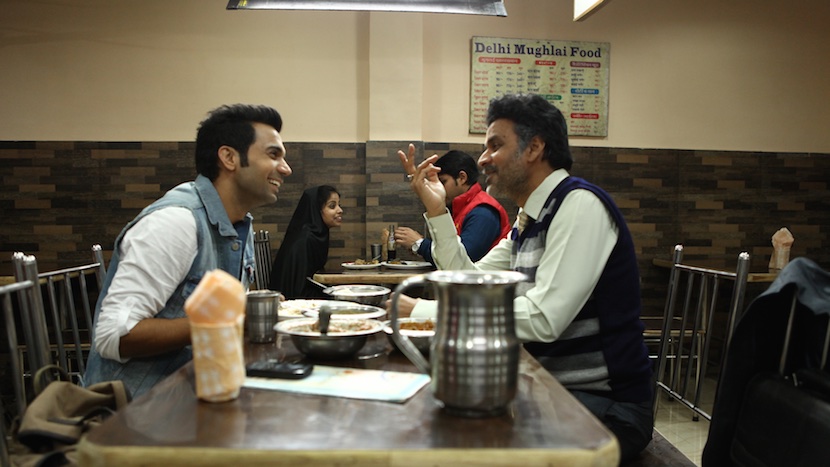
Set in a small town in Uttar Pradesh from which the film takes its name, ‘Aligarh’ is the story of a professor (Manoj Bajpayee) fired for his sexuality and a young journalist (Rajkummar Rao) who tells his story to the world. Based on true events, the film follows Dr. S R Siras, a professor at the Aligarh Muslim University who, when discovered to be homosexual, was fired from his position. The film depicts the unlikely friendship between Dr. Siras and a reporter investigating his first big story, a relationship that will change them both forever.
– Q’s Ludo will be in the newly introduced “After Dark” section
– The restored Satyajit Ray’s Apu Trilogy will also be showing at the festival. Woah! Click here to watch the trailer of its restoration.
– Jacques Audiard’s Dheepan will be coming to the fest. It bagged the top award Palme d’Or at Cannes this year. And our very own Kartik Krishnan is also in it.
– Andrew Haigh’s critically acclaimed film 45 Years
– Raam Reddy’s Thithi which bagged two top awards at Locarno Film Festival this year. More details about the film is here.
– Jafar Panahi’s Taxi which picked up the Golden Bear and FIPRESCI Award at the Berlin Film Festival will be screened in World Cinema section.
– Pani Nalin’s Angry Indian Goddesses will be in “Special Screening”
WHAT ELSE
– Ava Duvernay of ‘Selma’ fame will head the International Jury at the fest.
– A R Rahman has composed the signature tune of the fest. Yay!
– Guardian’s well known film critic Peter Bradshaw will mentor the young reviewers in “Young Critics Lab”
– Fest has announced a new award category – the Book Award for Excellence in Writing on Cinema. This is for film writing and publishing in South Asia, written by authors from the sub-continent and published by an Indian publishing house. The Award covers works of fiction, graphic novel, creative non-fiction, reportage, analysis and screenplay, written in English or translated into English. The Award carries a cash prize of Rs 5 lakhs.
So what are you waiting for? Click here and register for the fest.
It’s known as the Noida Double Murder Case. And it’s easily one of the most talked about murder case in recent history. More so, because it happened in a middle class locality in Noida, a city adjoining to India’s capital.
Shazia Iqbal saw the film Talvar, which is based on the same case, and writes about the big picture that concerns all of us as a society, and as part of the system. And why a filmmaker’s bias is completely fine.
23rd May 2008.
‘Its starting now. Quick, come here’, my mother loudly screamed as soon as the press conference was about to start.
The Delhi police was making the big announcement of the perpetrators in the Noida double murder case in which the 14 year old Aarushi Talwar and Hemraj, the house help were brutally murdered a week ago. I almost didn’t hear my mother because of the noises ringing in my ears since two days. That morning when I left home for a meeting, the police van and the media outside the building opposite to mine seemed like the crime scene outside the Talwar society.
A day ago, Maria Susairaj, an aspiring actress had confessed to Malad Police that her fiancé, Emile Jerome had killed Neeraj Grover, a TV executive in a fit of rage when Jerome found Grover in Maria’s bed. Susairaj stayed in the building opposite to my house. On the night of May 7th, and the morning after, I had a party in my house and I was awake the whole night. After Susairaj’s confession and the gory details of cutting the body into 200 pieces and dressing up the crime scene, that story played in my head enough number of times to make me believe that I was there in that house that night and it all happened in front of me, and that I was a dumb mute spectator.
Neeraj Grover was close to the industry I worked in and we had common friends. His face haunted me, I hadn’t slept for a minute for over 48 hours. With all the drama that was happening outside the building, I didn’t want to step out. The media called the Neeraj Grover murder case as the face of changing India, the young India where relationships are fragile, infidelity is part of commitment and casual sex is no more a ‘man’ thing.
A week before this, the Noida double murder case made headlines as the murder involved a young teenage girl from an affluent family and an older servant who worked in the house. This did not happen 200 meters away from my house but the media made sure that it was very much part of my life. Everyone was talking about the murder and that press conference seemed like the episode from a popular TV soap in which the whole country freaked out when the main protagonist dies. Aarushi’s murder was presented like a high TRP whodunit thriller. Everyone wanted to know who killed her.
I went to the living room where my parents and sister were waiting for the press conference to start on the TV. IGP Gurdarshan Singh began the conference by calling Aarushi as Shruti.
‘How will he solve the murder, if he doesn’t even know the name of the kid’ my mother mused. And once wasn’t enough – Singh kept calling Aarushi as Shruti throughout the conference.
But that wasn’t the only eyebrow raising behaviour from him and his department. They claimed Rajesh Talwar killed his daughter in order to save his ‘honour’, gave details of Talwar’s extra marital affair, their involvement in wife swapping and the deplorable character assassination of a child who was murdered.
“Rubbish”, my father responded shocked, “They can’t find the killer and are making up these implausible stories. He is her father!” He couldn’t believe what was happening. Fathers don’t kill their children because of their affairs, he said. He was afraid this revelation could make every girl distrust her father. A silent tear rolled as I went back to my room.
None of what the IGP said made any sense. Last night when I watched Meghna Gulzar’s movie Talvar based on the case, I was glad it resonated with what I thought during that press conference. I just wanted to know the parents didn’t kill her. I wanted to know this young new ruthless India of frivolous relationships that people keep bringing up with every sensational murder case, is a farce. But, apparently, that India is very much prevalent and so is the antiquated patriarchal India where a police officer blames the Internet for ruining the cultural fabric of the country and 14 year olds having a boyfriend and ‘Sleep’-overs.
Lawyers ML Sharma and AP Singh became the face of this primitive regressive patriarchal India after the Brit docu India’s Daughter was released by BBC. It featured a man who believes he would gladly burn his daughter if she has premarital sex – how would he react to a society where girls tell their fathers about their boyfriends? People who believe that honor killing is right, they also assume that the society also harbors such beliefs. And the effort that the government took in banning India’s Daughter is not as half as much as the combined effort of the local police, the assigned CBI team and the courts took to convict the Talwars.
So what happens when such men raised with such regressive values try to understand a culture belonging to the modern upper class allegedly corrupted by the internet? Talvar.
What more can you say about a murder case where every minute detail has been public for 7 years now. Talvar, written by Vishal Bhardwaj and directed by Meghna Gulzar presents us those details and engages us, without any melodrama or manipulation, mildly tilting in the favour of Talwars. Of course some might use the latter point to brand the film as being biased. I’d like them to know that a film is a writer/ filmmaker’s point of view/opinion on what disturbs them long enough to get up and say something. And that’s why Talvar happened. And I am glad it did.
What can this movie talk about about that you haven’t already read in the papers, news, from the police, CBI officers, from your parents, next-door uncles? ‘Human reaction’, for one. In the last 20 minutes of the film, in a round table sequence that is a master class in writing, the CBI officer who acquitted the Talwars says no two humans can have a pre-conceived reaction to an incident, specially a ghastly cold blooded murder of their only child. The side that files the charge sheet against the parents questions their unemotional façade post the murder and during the trial. Nupur Talwar appeared on a TV show and didn’t cry while talking about her daughter’s death. What kind of a mother is she? In a society with history of rudaalis, where being loud is part of our culture, melodrama is not just for the TV sets but an inherent way to express our emotions specially when it comes to matter of death, how can a mother not cry? Everyone questioned. Every logical person went against the Talwars with this one question.
‘She looks numb. Seeing your kid’s dead body can do that’, said my mother. It takes empathy and humanity to realize that. No other human can reason or understand inner doings of another’s mind. So how can human reaction be even discussed as a generic emotional response?
Watching a dark and disturbing story can be difficult but watching a dark and disturbing story based on real people’s lives can be very painful, especially with the way most of us are attached to Aarushi’s case. Bhardwaj, however, with his straight-faced dry wit makes it easier for you to watch Talvar.
That way Talvar is more than a movie. It is an important film, about the sword of justice that claimed not two but four lives. One of the slain was a child accused of being involved with a man thrice her age. The men who publicly assassinated her character are the ones who are responsible for the law and judiciary in this country. This movie needs to be seen. For Aarushi. To open our eyes and discover a system that failed a child. And as the movie says, it’s up to you to decide what the truth is.
The much awaited trailer of Kanu Behl’s debut feature ‘Titli’ is finally out. The film has been doing the fest rounds for quite some time, and has been talked about since its Cannes premiere last year. Finally, it’s all set to release on October 30th, 2015.
Produced by Dibakar Banerjee Productions and Yash Raj Films, Titli features Ranvir Shorey, Amit Sial, Lalit Behl, and newcomers Shashank Arora and Shivani Raghuvanshi in lead roles. And here’s the official synopsis of the film –
In the badlands of Delhi’s dystopic underbelly, Titli, the youngest member of a violent car-jacking brotherhood plots a desperate bid to escape the ‘family’ business.
His struggle to do so is countered at each stage by his indignant brothers, who finally try marrying him off to ‘settle’ him.
Titli, finds an unlikely ally in his new wife, caught though she is in her own web of warped reality and dysfunctional dreams. They form a strange, beneficial partnership, only to confront their inability to escape the bindings of their family roots. But is escape, the same as freedom?
The makers also released a new poster of the film for its India release.








 F.i.g.h.t C.l.u.b