Archive for the ‘cinema’ Category

Court

Finally, the Film Federation Of India Jury has made a choice that most people will agree with. The FFI has been getting lot of criticism in the last few years for their weird choices. When it comes to picking films for Oscar, it’s not only about the best film, but also about the right film – one which has made international noise, got some awards, got rave reviews, local subject with global appeal (glo-cal), and little bit of desi exotica that white Academy members can watch and get. And Chaitanya Tamhane’s debut feature Court ticks all the right boxes.

Court premiered at Venice Film Festival where it picked up two important awards, a rare achievement for a desi film/filmmaker. The film went to complete a dream festival run and also picked up the top prize at Mumbai Film Festival.

The film was picked up by 16 member jury of FFI which was headed by Amol Palekar. The other films which were in running included Masaan, PK, Haider, Kaakaa Muttai, Haider.

The kind of spotlight an Oscar win brings, in the last few years, this section has become the toughest one with some of the best films from across the world. 53 films have been officially entered in this year’s foreign-language Oscar race so far. The number is expected to go 80 plus. The first shortlist will be out in January next year.

All the best to Chaitanya Tamhane and his ‘Court’ team!


Never seen before photographs of the early Indian film industry from the late German cinematographer Josef Wirsching are being compiled into a photobook

(This is one of the rarest and earliest images of Himanshu Rai, Devika Rani and Ashok Kumar, the early doyens of the “Bombay Talkies” Film studios, together in one single image. Taken during a lunch break on an outdoor shoot from the filming of “Izzat” in 1937)

 The Wirsching family, who are the only heirs to the late German cinematographer Josef Wirsching, have been in possession of Josef’s extensive personal photographic collection comprising of thousands of photographic negatives and prints from Josef’s years of work in the German and Indian film industries and many hundreds of images specifically depicting the early years of “Bollywood”. They want to compile these into a one of a kind photo book.

The family is crowd funding this project through the Mumbai based crowd funding website “Wishberry” and they are looking to raise funds to publish and print a minimum production run of 500 collector’s edition books which will be launched at a public exhibition in Goa by December 2016. The exhibition will comprise of 100 A1 sized Art prints of the best images which will be included in the book.

“After years of inventorying and archiving the images in the collection; we are now putting together a highly detailed and visually rich collector’s edition picture book which will have never seen before images of publicity and production stills from most of the “Bollywood” related movies that my Grandfather has worked on through his film making career.” Georg Wirsching, Grandson and artist elaborates.

These images span right from Josef’s work in the iconic silent film “The Light of Asia” shot in 1925 continuing on through the start of the talkies era with “Bombay Talkies” Film studios in Bombay during the mid 30’s till the last production he was involved with for “Kamal Amrohi” Film studios’ landmark film “Pakeezha”.

The images in the book will be supported by detailed historically accurate essays being contributed by a trio of writers who are well versed with the history of this genre. These essays will touch upon the personal aspects of Josef’s life as detailed by his only son Wolfgang Peter Wirsching, while the renowned former editor of the Times of India- Dileep Padgaonkar will be detailing the history of Josef’s work, life and times based on his years of extensive research into the genre. Assistant professor of Asian studies at New York’s Columbia University- Debashree Mukherjee will be detailing Josef’s cinematic contributions and how his work decades ago helped influence our present view of “Bollywood”.

– For further details regarding the project please check out the family’s web site www.wirschingarchive.com and their Facebook page www.facebook.com/wirschingarchive Or their twitter account at www.twitter.com/WirschingArch

 – The crowd funding project is currently live until 14th Nov 2015 at this link www.wishberry.in/campaign/bollywoods-german-origins/

(Pic Courtesy – From Wirsching Archive FB page)

WHAT : NFDC Film Bazaar 2015 is calling for entries for the third edition of Producer’s Lab, a training platform introduced in 2013 to help emerging producers cultivate a sense of vision and learn the art of balancing the creative and financial aspects of filmmaking.

WHEN/WHERE : This year, the NFDC Film Bazaar will be held from November 20-24, 2015 at the Goa Marriott Resort alongside the International Film Festival of India 2015.

DEADLINE : The deadline for submission of application is 30th September 2015.

LAB : Multiple sessions on the different facets of producing films are conducted by key industry experts and professionals at the lab which is aimed at providing training and networking opportunities to upcoming Independent Producers from across the world.

FEES : The application fee for the Producers’ Lab is INR 25,000 (Rupees Fifty Thousand). Only applicants who have been shortlisted to participate at the Lab will need to pay the fees (which excludes cost of travel and accommodation, but includes the registration fees for Film Bazaar). NFDC will intimate the shortlisted applicants via email by the end of October 2015.

QUALIFICATION : Applicants should have worked as Producers or Line/Supervising/Executive producers in either one of the following and completed the same: Feature-length film | Short film | Documentary film | Television Commercial | Television Serial. The Lab is open to applicants from across the world but they should be proficient in English.

HIGHLIGHTS :

The highlights of Producer’s Lab 2014:

In 2014, Kirsten Niehuus, Managing Director, Film Funding, Medienboard Berlin-Brandenburg and Isabel Davis, Head of International, British Film Institute discussed the dynamics of public funding in and co-production with Germany and the United Kindgom, respectively. Viola Fugen, Head of Co-Productions at The Match Factory conducted a session on working with international co-producers and brought in her perspective of what an international co-producer looks for in a project creatively. Also present at the Lab was Marco Muller, the Artistic Director of Rome Film Festival who conducted a session on the importance of film festivals and how they can shape the journey of a film.

Another session, focusing on newer modes of engaging audiences through non-conventional platforms, was conducted by Aanchal Bahadur, Youtube Partner-Manager at Google India and Manan Singhi, Head of Music Partnerships, Youtube — India & South Asia. Pratiksha Rao, Head of TV & Entertainment, Twitter was present to speak about newer, more creative ways of reaching audiences through Twitter and the power of storytelling that transcends duration and medium of exhibition.

The 2014 edition of Producers’ Lab also witnessed sessions on film marketing by Rudrarup Datta, Head of Marketing and Operations, Viacom 18 India and on content creation for youth audiences by Ashish Patil, Business and Creative Head, Youth Films, Brand Partnerships, Talent Management, Yash Raj Films.

CONTACT : Participants can write to producerslab@filmbazaarindia. com to apply. Please visit http://www.filmbazaarindia.com for the Application Form and more details.

1438930662

A bunch of festival news about Indian films from across the world.

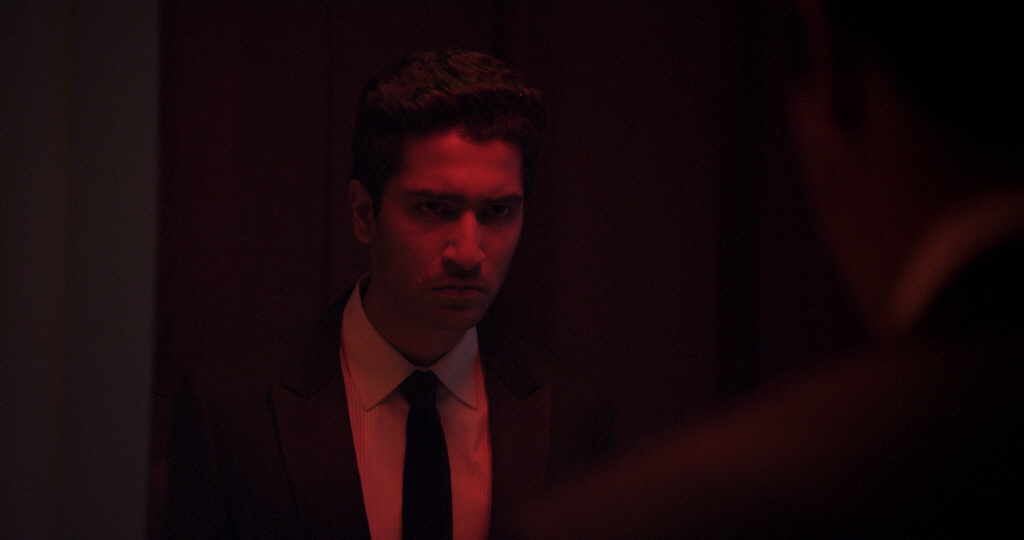
Busan International Film Festival will open with Mozez Singh’s debut feature, Zubaan this year. The film has Vicky Kaushal, Sarah Jane Dias, Manish Chaudhary, Meghna Malik and Raaghav Chanana in lead roles. For more details about the film, click here.

Aprt from Zubaan, Busan will also have a bunch of Indian films in various categories. In its ‘A Window On Asian Cinema’ section, there is Meghna Gulzar’s Guilty (Talvar), Hansal Mehta’s Aligarh, Bhaskar Hazarika’s Kothanodi, Biju Viswanath’s Orange Candy, Mani Ratnam’s O Kadhal Kanmani, Neeraj Ghaywan’s Masaan, and Suman Ghosh’s Peace Heaven.

The “New Currents” section has Hari Viswanath’s Radio Set and the “Cinekids’ section will screen Nagesh Kukunoor’s Rainbow (Dhanak). The fest also has few Indian films in docu and shorts categories. The festival will run from 1-10th October, 2015.

Also, Filmmaker Anurag Kashyap is on the Jury for “New Currents” section of the fest.

1(1)

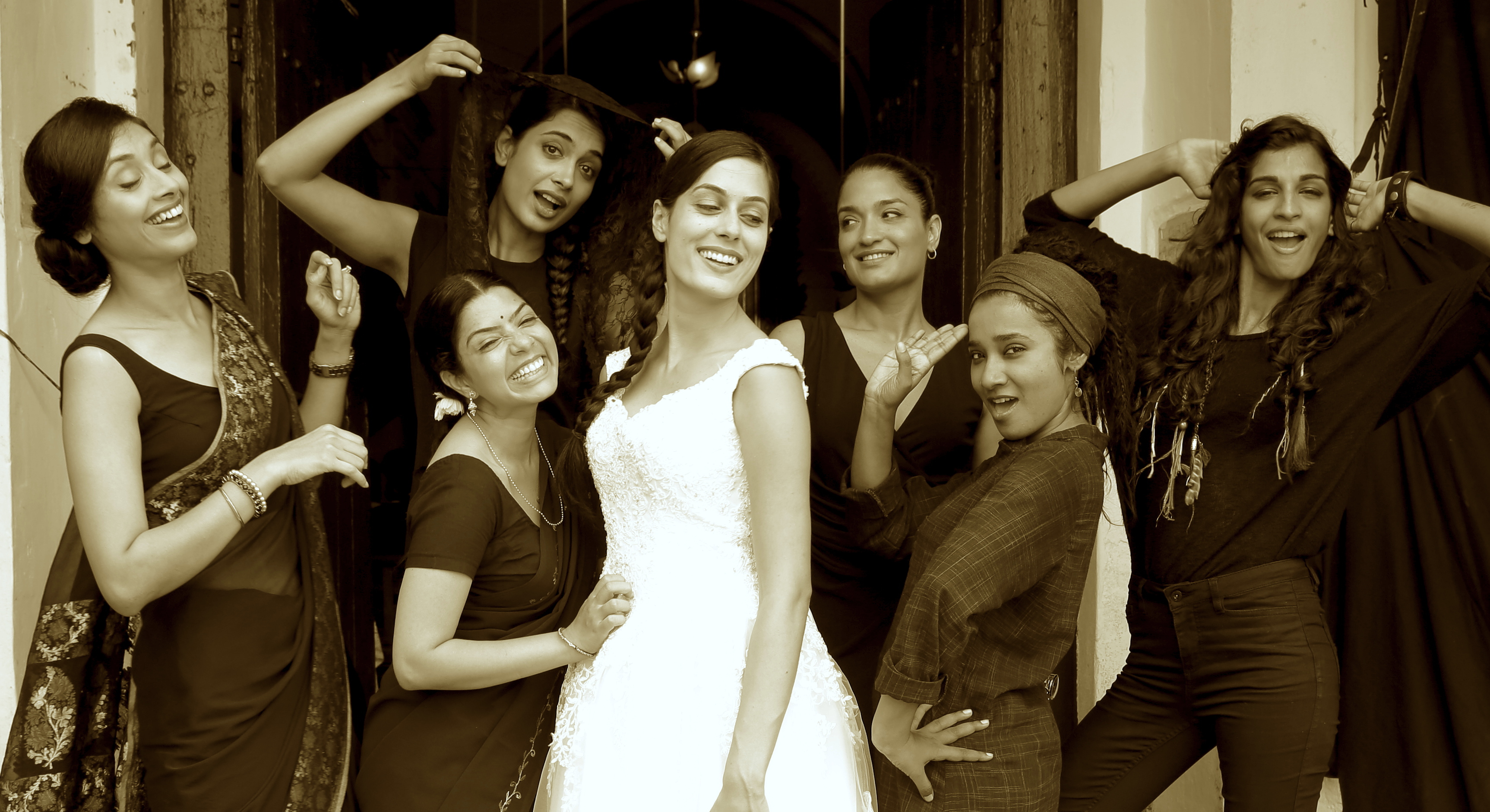
Toronto International Film Festival has few more Indian titles to their 2015 edition. Apart from Meghna Gulzar’s Guilty (Talvar) and Leena Yadav’s Parched, it also has Pan Nalin’s Angry Indian Goddesses in the same ‘Special Presentations’ section. The film stars Tannishtha Chatterjee, Sandhya Mridul, Sarah Jane Dias, Pavleen Gujral, Anushka Manchanda, Rajshri Deshpande and Amrit Maghera

Here’s a short description of the film from the fest site – On the eve of their friend’s wedding in Goa, a group of women discuss everything under the sun — from their careers, sex lives, and secrets to nosy neighbours and street harassment — in this largely improvised and refreshingly frank depiction of contemporary Indian society from award-winning director Pan Nalin.

TIFF will also screen Shambhavi Kaul’s Fallen Objects, Shai Heredia & Shumona Goel’s An Old Dog’s Diary in “Wavelenths” section, and Megha Ramaswamy’s Bunny in “Short Cut” section.

NFDC Film Bazaar

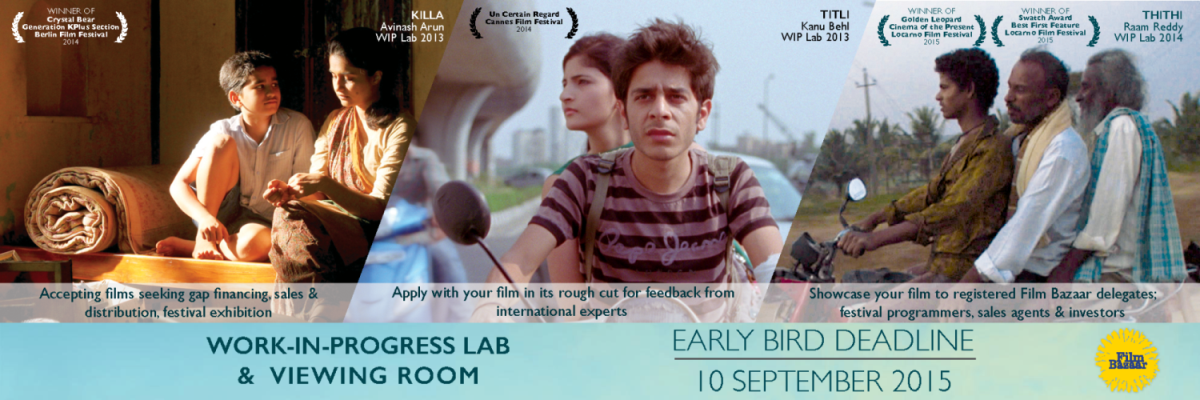
NFDC Film Bazaar, 2015, is calling for entries for the Work-in-Progress (WIP) Lab and the Viewing Room (VR). This year, the Film Bazaar will be held from November 20-24, 2015 at the Goa Marriott Resort, alongside the International Film Festival of India (IFFI) 2015.

Films previously in the Work-in-Progress Labs at Film Bazaar have had their world premieres at leading international films festivals, often winning awards as well as enjoying successful theatrical runs.

WIP Labs

– Submissions are invited for the two WIP Labs: WIP Fiction and WIP Documentary.

– In each WIP Lab, upto five projects in their rough-cut stage will be selected for mentoring and presentation to a panel of international film experts.

– The WIP Documentary Lab is only accepting feature-length creative documentaries in the rough-cut stage, aiming for a theatrical release.

– Feature-length films of any genre in the rough-cut stage are invited to apply to the WIP lab.

Viewing Room

– Films of all genres and lengths, in rough or final cut, are invited to apply to the Viewing Room where films seeking finishing funds, world sales, distribution partners and film festival exhibition are presented.

– The Viewing Room hosts individual computer terminals in private booths, where investors, world sales agents and film festival programmers attending the Film Bazaar can watch submitted films via specially designed software. This allows them to contact the director or the producer directly through email.

– Feature length films in the rough cut stage are eligible to apply to both WIP Lab and Viewing Room.

– This year, NFDC Film Bazaar has introduced an Early Bird Deadline of 10th September 2015 for application to the WIP Lab and Viewing Room, which offers a discount on application fees.

– The regular deadline is 30th September 2015.

– Please visit www.filmbazaarindia.com for Application Forms and more details.

– For further queries, write to: films@filmbazaarindia.com.

– The most recent successes of the Film Bazaar WIP Labs are:

  • Raam Reddy’s Thithi(Premiered at Locarno Film Festival 2015 and Winner of ‘Golden Leopard, Filmmakers of the Present Competition’ as well as ‘Best First Feature Film Award’)
  • Avinash Arun’s Killa(Premiered at Berlin Film Festival 2014 where it won the ‘Crystal Bear Award’ and National Award winner)
  • Kanu Behl’s Titli(Premiered in the ‘Un Certain Regard’ section at Cannes Film Festival 2014)
  • Ashim Ahluwalia’s Miss Lovely(Premiered in the ‘Un Certain Regard’ section at Cannes Film Festival 2012 and National Award winner)
  • Anand Gandhi’s Ship of Theseus(Premiered at the Toronto Film Festival 2012
  • Gyan Correa’sThe Good Road (National Award winner and India’s selection for the Oscars)
  • Ajay Bahl’s BA Pass(Premiered at and won Best Film at the 12th Osian’s Cinefan Film Festival
  • Sange Dorjee Thangdok’s Crossing Bridges(National Award winner)

11889612_1628033344103209_9087625749038085119_nSome facts about the FTII director issue.

It was not a gherao. It was a meeting between students faculty and the director. The meeting can go on for any number of hours.

The students had asked only one question that why do you think the assessment is valid? It was the director’s whim that he did not answer us for 7 to 8 hours. He kept repeating that he has orders. Let us also ask him how can it take him so long to answer the question.

Students were not carrying any guns or bombs. He could have easily gone out. He was operating his mobile in the room. Nobody had snatched the mobile from him. If he wanted to call security, if he felt so threatened he could have called the police immediately. Why did he chose to remain in the room without calling anyone to rescue him? The point to be noted here is he chose to sit there evading the question for 8 hours so that he could build a case against students.

The police got involved late. Why did he call the police only at 10 pm? And why the commotion started as soon as the police entered the room? A student was thrown on a chair so the chair got broken. A police fell on a glass door so the door broke. We have video footage to substantiate this.

Immediately after this incident the director talked to media and said that there was no case of violence and he was not mistreated. He said he will get back to the students tomorrow morning.

Then next day he did not show up at all. He went to the police and wrote an FIR stating that the students held him captive for more than 8 hours, mistreated him and vandalized the property. Why did he do that when he had already told the media day before that he was not mistreated by the students? Why is he lying?

So the police came to the campus after midnight as if terrorists are hiding there and takes away only 5 students with them who are our main spokespersons.

A. Why after midnight? They could have easily requested the registrar that these are the students and ask them to report to the police station tomorrow morning. The students could have reported to the police station on their own. Why waste 3 vans full police force?

B. when the police came why the registrar did not pick the phone, did not get up and stayed with the students after repeated knocks on his door?

C. Why only 5 students taken when the fir is against 15. All the students were present there. It is because the next day they can say that other students ran away and hiding somewhere. They do not leave any opportunity to turn students into criminals.

D. If they really came to arrest 15 students and there were names of three girl students in the fir how can they forget to bring ladies constables with them? So did they really come to arrest all the students? Or just wanted to terrorize us.

Finally after all this drama the faculty had to intervene, and Mr Kedarnath Awaty, who is the President of FTII Teachers Association wrote a letter to the Ministry saying that they were present in the meeting till the last moment and there was no incident of violence!

We also have a 5 to 6 hour long footage of the meeting. The director too has it.

So when the director of such reputed institute lies so blatantly in front of the students, faculty and the nation we know that something is terribly wrong with the government.

– Kshama Padalkar

FTII Student

Raam Reddy2

And the good news for the desi indies continues. This time it’s from Locarno Film Festival. Raam Reddy’s debut feature Thithi has bagged 2 top awards at the just concluded festival.

The First award is Pardo d’oro Cineasti del presente (Golden Leopard Filmmakers of The Present) – Premio Nescens worth 40,000 CHF, to be shared equally between the director and the producer. The second award is in the category of First Feature – Swatch First Feature Award (Prize for Best First Feature) 15,000 CHF to be shared equally between the director and the producer awarded to the Best First Film screened in the Piazza Grande, Concorso internazionale, Concorso Cineasti del presente, Fuori concorso or Signs of Life segment.

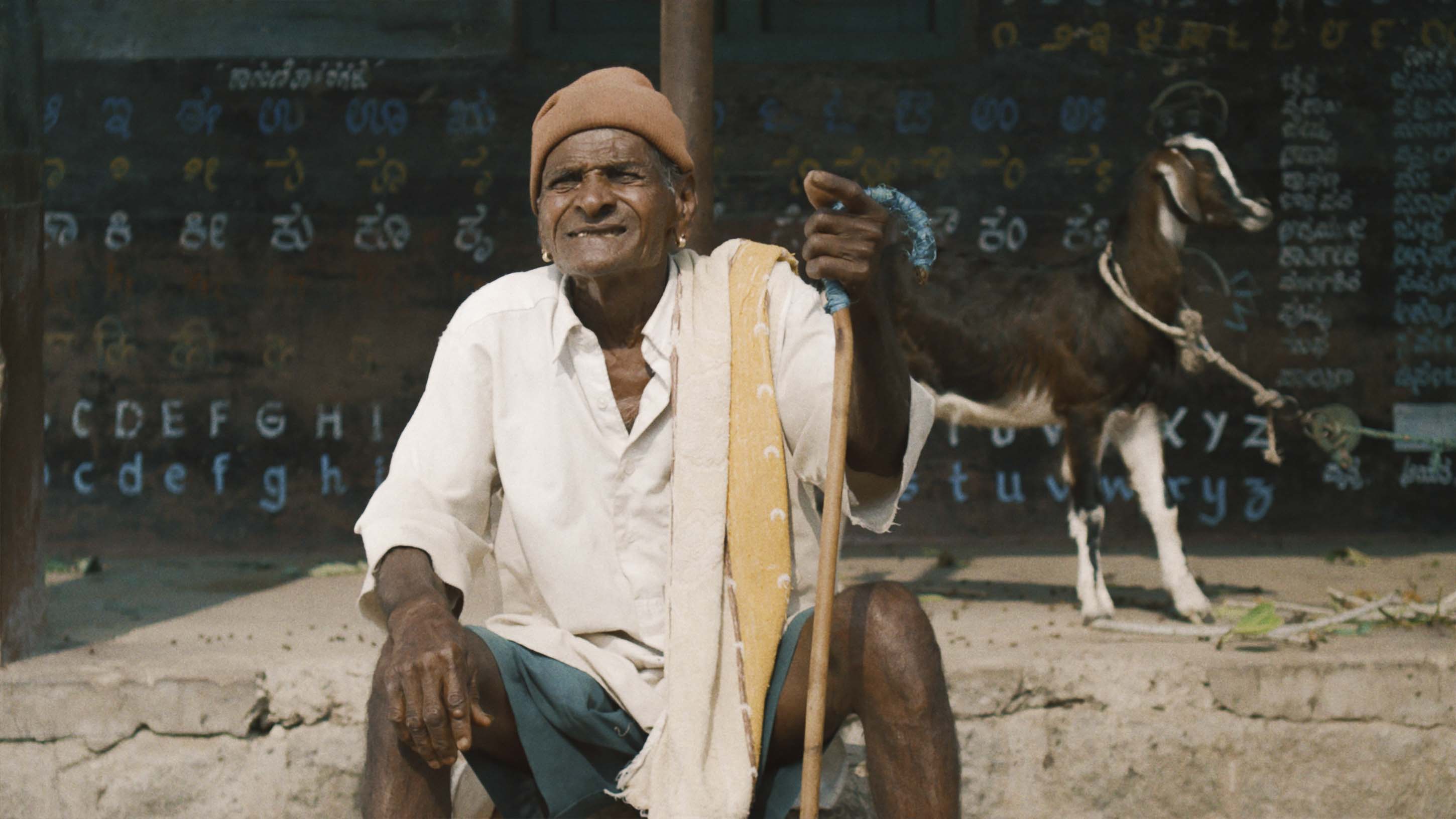
The film is a dramatic comedy about how three generations of sons react to the death of Century Gowda, their great grandfather, who is a locally renowned, and is a highly cranky 101-year-old man. Set in a village in the Mandya District of Karnataka, the three storylines intertwine before converging at Century Gowda’s thithi, the final funeral celebration 11 days after a death.

Shot in the Mandya district of Karnataka, this was co-written and developed along with Eregowda, who spent most of his childhood in the same village that the film was shot in. The cast of the film comprises of completely non-professional actors.

Filmmaker Raam Reddy is a graduate of St. Stephen’s College, Delhi and Prague Film School. Previously, he directed a critically-acclaimed short film called Ika (Feather). He has also published a novel titled It’s Raining in Maya.

Thithi_Still1

Little Terrorist, a short film directed by Ashvin Kumar was nominated for Academy Award for Live Action Short Film in 2005. And if you haven’t seen the film yet, here’s the good news – the filmmaker has put the film online.

Here’s his note with the film –

The Gurdaspur Attack, the arrest of Mohameed Naved and escalation of hostilities on the LOC raise troubling questions about freedom and independence. Real people live real lives on either side of these fences. Barbed wire cuts the landscape of humanity, culture, civilisation; dividing children from their history. They stymie that very human touch that could resolve such a conflict. I don’t know which film-maker would say this, but I am almost dismayed that this film has aged so well. Its message of hope, my wide-eyed idealism for an even handed resolution feel a bit naive, given the hawkish, illiberal, imperialist impulses that have come to characterise public life today. Sigh. Anyway, suspend disbelief for fifteen minutes on the fifteenth of August and feel good.

Jeev-jantu.

SPOILER  ALERT

’मसान’ के बारे में बहुत कुछ लिखा जा चुका है, लिखा जा रहा है, सोचा कि लिखने के लिए कुछ बचा नहीं है, लेकिन इस फ़िल्म ने इतनी सहजता से दिल को छू लिया कि लिखे बिना नहीं रह सकता. लगभग दस दिन हो गए हैं फ़िल्म देखे हुए, लेकिन ना तो ज़हन से उतरी है, ना दिल से. एक अच्छी फ़िल्म, नज़्म, कहानी या किताब की शायद सबसे बड़ी ख़ासियत ही ये होती है कि वो देर तक आप के साथ बनी रहती है. दिनों तक, महीनों तक, सालों तक और कभी-कभी सदियों तक. और ’मसान’ भी इस में कोई अपवाद नहीं है. और यूं भी जिन जज़्बात और मुद्दों को ’मसान’ में दर्शाया गया है, वे सब शाश्वत हैं और आज के संदर्भ में, आज के परिप्रेक्ष्य में रचे गए हैं. और यही बात, इस फ़िल्म को, इस कहानी को, उन किरदारों को और अधिक ख़ास बना देती है. और जिस तरीके से लेखक वरूण ग्रोवर ने हिन्दी-उर्दू के कवियों, शायरों को इस फ़िल्म में याद किया है, वो इस शाश्वतता के पहलू को और अधिक प्रबल करता है.

चार अहम पहलुओं, शाश्वत पहलुओं से बख़ूबी रू–ब-रू करवाती है फ़िल्म. जिज्ञासा, प्रेम, मृत्यु और उम्मीद. ये सभी वो शाश्वत पहलू या जज़्बात हैं ज़िंदगी के, जिनके बिना जीवन लगभग असंभव है. कुछ-कुछ वैसे ही जैसे शाश्वत समय के बिना.

फ़िल्म शुरू ही देवी (रिचा चड्ढा) की जिज्ञासा से, या यूं कहें कि जिज्ञासा शांत करने की कोशिश से होती है. ठीक एक बालिग होते बच्चे की तरह, जिसे बहुत कुछ जानना है और इस जानने की प्रक्रिया में वो समाज के बनाए सही-ग़लत के पैमानों पर ज़्यादा ध्यान नहीं देता है. ये जिज्ञासा बिल्कुल वैसी है, जैसी कभी आदम और हव्वा को हुई होगी, जिस के चलते उन्होंने वो प्रतिबंधित फल चखा था, जिसे चखने का अंजाम हम सब जानते हैं. अब वो सच भी हो सकता है और मिथक भी, लेकिन है एक शाश्वत तथ्य. सदियों से इस और इसी तरह की अनेकानेक जिज्ञासाओं ने इंसान को उत्सुक बनाए रखा है और एक तरह की तरक्की के लिए प्रेरित भी किया है. आज हम जितना भी आगे बढ़ पाए हैं, उस में जिज्ञासा का बहुत बड़ा हाथ है. कुछ ऎसी ही तरक्की देवी भी करना चाहती है. और उस की ये तरक्की किसी भी तरह से भौतिकता से प्रेरित नहीं है. वो बस आगे बढ़ना चाहती है, शारिरिक तौर पर, मानसिक तौर पर, खुले दिमाग से. एक जगह वो अपने पिता विद्याधर पाठक (संजय मिश्रा) को जवाब भी देती है, “जितनी छोटी जगह, उतनी छोटी सोच”. वो इस छोटी सोच से तरक्की चाहती है. अपनी जिज्ञासा को शांत करने के सहारे, अपनी शाश्वत जिज्ञासा को शांत करने के सहारे.

दूसरा शाश्वत जज़्बात, प्रेम, जिसे ’मसान’ ना केवल छूती है, बल्कि उस में सराबोर होकर नाचती है, उत्सव मनाती है. प्रेम, जो जितना जिस्मानी है, दुनियावी है, उतना ही ईमानदार भी है, सच्चा भी है. कहीं कोई छल-कपट नहीं है. खालिस है. और यही खालिस प्रेम, आम तौर पर परिभाषित और दर्शित प्रेम से अलग है. इसीलिए पहुँच पाता है, और छू पाता है, अंतर्मन की उन गहराईयों तक जहाँ तक का रास्ता केवल असल प्रेम को मालूम है. वही असल में केंद्र है, हर एक इंसान का, और प्रेम का यही दृष्टिकोण, दीपक (विक्की कौशल) और शालू (श्वेता त्रिपाठी) का एक-दूसरे के प्रति (दुनिया के एतराज़ को ध्यान में रखते हुए भी), उस प्रेम को दर्शाता है, जो सुबह की ओस की बूंद की तरह साफ़ है, यही साफ़-पाक प्रेम है, जो असल में शाश्वत है.

अगर एक चीज़ है, समय के परे, जो उतनी ही शाश्वत है, और रहेगी तो वो है मृत्यु. और मृत्यु को इतने अलग-अलग दृष्टिकोण से देखा-दिखाया गया है, एक ही फ़िल्म में कि ताज्जुब होता है. एक ओर पियूष (सौरभ चौधरी) आत्महत्या करता है, सिर्फ़ डर के मारे, शर्म के मारे और अनजाने में ही देवी और पाठक की ज़िंदगियाँ दाँव पे लगा जाता है, दूसरी ओर नियति का हस्तक्षेप शालू को इतनी ख़ामोशी से मृत्यु के आग़ोश में ले लेता है कि एक झटका लगता है. गहरा झटका. तीसरा रूप है मृत्यु का, दिन-रात जलती चिताओं का, गंगा के घाट पे. जहाँ मृत्यु सिर्फ़ एक काम है, एक व्यवसाय है और है एक ’पारी’ का खेल. वो खेल जो दिन-रात के हर पहर में खेला जाता है, ठीक एक ज़िंदा आदमी की चलती सांसों की तरह. जब आख़िरी बंधन को खोपड़ी पर बांस मार कर आज़ाद किया जाता है, (जिसे कर्म कांड की भाषा में ’कपाल क्रिया’ कहते हैं), तो मृत्यु बस एक कर्म बन कर रह जाती है. और इसी मृत्यु का चौथा रूप दिखाई देता है, जब झोंटा (निखिल साहनी) एक लम्बा गोता लगा कर वापिस नहीं आता है देर तक. मृत्यु नहीं है उन क्षणों में लेकिन उस की मौजूदगी का एहसास इतना प्रबल है कि पल भर में मृत्यु के शाश्वत होने का एहसास हो जाता है.

महाभारत में जब यक्ष ने युधिष्ठिर से ये प्रश्न किया था कि क्या है जो सबसे हैरत-अंगेज़ है, तो उस ने जवाब दिया था कि सदियों से सब मृत्यु को प्राप्त होते आए हैं, लेकिन फिर भी जब तक जीते हैं, इस तरह से जीते हैं, जैसे अमर हों. मानव-जाति की यही बात सबसे हैरत-अंगेज़ है. और यहीं पर आकर हम अगले शाश्वत जज़्बात से मिलते हैं, उम्मीद, आशा. जिस के सहारे दुनिया तब से चल रही है, जब से ये असल में चल रही है. सब तरह की उम्मीदें, चाहे वो अपनी जन्म-जाति के बंधनों को शिक्षा के ज़रिए तोड़ कर, अपने मनपसंद जीवन-साथी के साथ एक अच्छा जीवन निर्वाह करने की दीपक की उम्मीद हो, या अपना सच्चा प्यार किसी भी तरीके से (घर से भाग कर भी) पा लेने की शालू की उम्मीद हो या फिर सब कुछ बिखर जाने के बाद भी एक नए साथ के साथ एक नया सफ़र शुरू करने की देवी की उम्मीद हो, जिसे अंत में एक नई भोर की तरह की दर्शाया गया है. वो भोर, जो ज़िंदगी, जिज्ञासा, प्रेम, मृत्यु और उम्मीद की ही तरह शाश्वत है.

और भी बहुत से शाश्वत जज़्बात हैं, जिन्हें फ़िल्म बहुत सहजता से पेश करती है. प्रेम के बिछोह से उपजा दर्द, सदियों से हिन्दुस्तान में प्रचलित जाति व्यवस्था, और बंधनों में जीने की देवी की छ्टपटाहट. और वो सब भी यूं घुले-मिले हैं पूरी कहानी में, जैसे आँसुओं में नमक. जो है भी, तक़लीफ़ भी देता है, लेकिन अलग से दिखाई नहीं देता है. इतनी ख़ूबसूरत और ख़ूबसीरत फ़िल्म लिखने और बनाने के लिए लेखक वरूण ग्रोवर, निर्देशक नीरज घायवान और डी.ओ.पी. अविनाश अरूण को गले लगा कर शुक्रिया देने का मन करता है. लेकिन वो फिर कभी सही.

फिलहाल ये एक ही गुज़ारिश है, अगर आपने अभी तक ये फ़िल्म नहीं देखी है, तो कोशिश कर के देखिए. ऎसी फ़िल्में बार-बार नहीं बनती.

 – मोहित कटारिया

(Mohit Kataria is an IT engineer by profession, writer & poet by passion, and a Gulzar fan by heart. He is based in Bangalore and can be reached at [kataria dot mohit at gmail dot com] or @hitm0 on twitter)

11027461_436351463218440_3692015792177484215_n
“Mann kasturi re,
jag dasturi re,
baat hui na poori re.”
 
— Varun Grover, Masaan
 
“Every beginning
is only a sequel, after all,
and the book of events
is always open halfway through.”
 
Wislawa Szymborska, “Love at First Sight”
 
It’s always a moment too early or too late. Too early to die; too late to have lived. In between life and death we survive in fragments, as parts of ourselves, piecing ourselves together into new selves, recovering from past pains, shielding ourselves from hurt. And all the while, we’re asking ourselves one question: What if? 
 
What if, five years ago, we had taken my grandmother to hospital an hour earlier than we did. Would she have recovered from her stroke? What if the attendant at the CT scan lab hadn’t made us wait for a seemingly interminable time? Do hours actually matter when minutes can change your life? 
 
Sixteen years ago, would my father have escaped being hit side-on by two drunk motorists, if he had started crossing a dimly-lit street — just outside a Durga Puja pandal — only a minute later? But does a minute matter when an error in judgement — made in seconds by a doctor — almost takes someone’s life a few years later? 
 
The year is 2000, and I remember oxygen cylinders; my mother’s pained breathing; the look of desperation in her dim eyes — all the result of a botched operation from a few years ago. A few months later, my grandfather passed away after suddenly slipping into dementia, upon seeing my mother gasping for her life in hospital. 
 
Is there a mapping to these sequences — a faint, cold logic of destruction that must be wrought, will be wrought? Every personal history is littered with these tribulations — of moments missed, chances dropped. But the mirror has two sides. Every personal history is also lit with chance meetings that change lives; sudden epiphanies that resound for decades; a random good turn that restores lost faith. 
 
Just as we shiver at the thought of love lost, we must also thrill at the thought of love — and friendship — gained. That friend whom you met sixteen years ago in one of the many schools you could have attended, in one of the many cities you could have been born into. That friend who is still there, a call or message away, to listen, to console. In his book, Two Lives, Vikram Seth writes:
 

Behind every door on every ordinary street, in every hut in every ordinary village in this middling planet of a trivial star, such riches are to be found. The strange journeys we undertake on our earthly pilgrimage, the joy and suffering we taste or confer, the chance events that leave us together or apart, what a complex trace they leave: so personal as to be almost incommunicable, so fugitive as to be almost irrecoverable.

 
What if, twelve years ago, my father had not read to me the poem that would change my life, and begin a love for reading (and writing poetry) that continues unabated? That poem, I now realise, is perhaps the antidote to ‘ye dukh kaahe khatam nahi hota be?’
 

All you who sleep tonight
Far from the ones you love,
No hand to left or right
And emptiness above —
Know that you aren’t alone
The whole world shares your tears,
Some for two nights or one,
And some for all their years.

 
What if, five years ago, I hadn’t been refused an internship in an Investment Bank in Singapore on sketchy grounds? That rejection allowed me to seek an internship — and later get a job — at a company that allows me to work from anywhere I wish. That rejection was the only way I could have spent the final two months of my grandmother’s life with her. She is gone, but I now spend time at home with my parents that would have been a distant fantasy in a usual corporate job. I know she would have willed it thus. 
 
Perhaps we are closing loops all the time. 
 

Umar ki ginti haath na aai
Purkho ne ye baat batai
Ulta kar ke dekh sakey to
Ambar bhi hai gehri khai


We are lost. We will find a way.

Shubhodeep Pal