KAUFMAN - "Or cramming in sex, or car chases, or guns. Or characters learning profound life lessons. Or characters growing or characters changing or characters learning to like each other or characters overcoming obstacles to succeed in the end. Y'know ? Movie shit."
Kaufman is sweating like crazy now. Valerie is quiet for a moment - from "Adaptation".
We are all about CINEMA. That movie shit.
NOTHING is sacred.
NOBODY is spared.
Because we talk about films, dammit.
Not your sex life.
Films, fests, unsung, indies, undiscovered - all that and some fun. If you have dope on anything related to cinema or you would like to share something, do write to us at moifightclub@gmail.com.
The views, opinions, reviews, articles, or positions, expressed by the authors and those providing comments are theirs alone, and do not necessarily reflect the views, opinions, positions or strategies of ANY OF THE EMPLOYERS, FRIENDS, RELATIVES, PR agencies, Production houses, Media group and such third parties associated with the authors. The latter make no representations as to accuracy, completeness, currentness, suitability, or validity of any information on this site and will not be liable for any errors, omissions, or delays in this information or any losses, injuries, or damages arising from its display or use.
In short, if you have an issue with us or any post we've written, write to us at moifightclub@gmail.com
UTV is on a roll this year. First, they gave a big platform to Ship Of Theseus, made it visible enough, and got screens for it even when Chennai Express was running. Second, repeat the same act with The Lunchbox. And now, they have picked up another terrific film – Hansal Mehta’s Shahid. The film has got a new trailer too. Have a look.
Some of us saw the film at Mumbai Film Festival last year, and can easily bet that it’s another “must watch”. It also has one of the year’s best and break out performance by Raj Kumar Yadav. The film rides entirely on his shoulder and he makes you believe that he is Shahid Azmi.
The film is scheduled to release on 18th October.
Official synopsis
“Shahid” traces the story of a slain human rights activist and lawyer Shahid Azmi. Set during the communal violence that was unleashed in the city of Mumbai since 1993. We see a remarkable tale unfold. From attempting to become a terrorist to being wrongly imprisoned under the anti-terrorism law to becoming a lawyer, a champion of human rights (particularly the Muslim minorities in India), “Shahid” traces the inspiring personal journey of a boy while following the rise of communal violence in India. The story of an impoverished Muslim struggling to come to terms with injustice, inequality and rising above his circumstances is an inspiring testament to the human spirit.
The cast includes Raj Kumar, Prabhleen Sandhu, Baljinder Kaur, Tigmanshu Dhulia, K K Menon, Yusuf Husain, Prabal Panjabi, Vinod Rawat, Vipin Sharma, Shalini Vatsa, Paritosh Sand, Pavan Kumar, Vivek Ghamande, Akash Sinha, Mohd Zeeshan Ayyub and Mukesh Chhabra.
If you follow this blog and twitter feed of our regular contributors, you know that we have been plugging, writing and tweeting about Ritesh Batra’s debut feature ‘The Lunchbox’ for a long, long time. The film is finally releasing this friday. Thanks to UTV and Karan Johar who came on board and made it happen.
And Dear UTV, for Ship Of Theseus, The Lunchbox and Shahid, sau khoon maaf (or Chennai Express maaf) this year from our side. Do continue the good work, or at least just the balancing act will do.
Over to Fatema Kagalwala who tells you why ‘The Lunchbox’ is a must watch and is easily one of the best films of the year.
Cinema is a big lie. Loneliness isn’t as poetic as it pretends to be on celluloid. And nostalgia is a double-edged sword, its pain bitter-sweet but pain after all. Not many have the courage to show it as it is and we keep buying those lies, keeping the pretence going. Good things happen to good people in films but not real life. But who are we to conclude that? Definitely, not Ritesh Batra. Because, he is not pretending, nor bull-shitting us. He is simply throwing two situations, two people very real and painfully so, together and asking ‘what if’? And also, ‘what now’? And that is beautiful.
There is loneliness everywhere in the film. In every frame, every character. Accompanied by that unshakeably loyal bitch of a companion – longing. And along with it disillusionment, resignation and valiant attempts to overcome. In all the three central characters of the film played by Irrfan Khan, Nimrat Kaur and Nawazuddin Siddique.
I don’t know how to write a recco post without divulging too much. So free-wheeling it will be. In a Q and A, Ritesh Batra said there is a lot of nostalgia in every character, yearning for a time long past. And nostalgia is the step-child of loneliness, undesired yet cannot be shaken of. Always around to remind you the good times have long gone. But they needn’t stay gone. And as humans we will always wish for better times, strive for better times. And so do these three characters. Just like Georges in Amour. Or Salma of Lemon Tree.
How do you write about a film that you just liked and liked? No, there is nothing to dislike in the film. At least, there wasn’t to my eyes. Unless you are that guy who thinks old people and middle-class, married women with children cannot be protagonists of a film because their stories are drab. Had Ritesh Batra thought so, we wouldn’t have had Lunchbox, a deceptively feel-good film that goes just this much beyond feel-good, opening a world that is so ours yet painted with a warm, tender, home-grown, understated sensibility that till now we saw only in Iranian films.
So Irrfan Khan is an old man, Saajan Fernandes, who is about to retire from his job at the Claims Department in what I presume must be LIC, given it looks like a Govt organisation. He is a widower, childless, lonely and prickly like how the emotionally un-nurtured sometimes get. Work-wise he is punctilious, much respected and almost clock-work, again almost like how the emotionally un-nurtured sometimes get. He just might easily become Carl from Up in a few years. Or a middle-class Isak of Wild Strawberries.
One day, Saajan receives an unusually well-prepared lunch and then the next day a letter. He responds and a story grows out of those little bits of interactions that happen at lunch-time via a now-defunct medium – hand-written letters. The film packs such old-world symbols with aplomb, while just slipping them in casually. Letters, VCR with ‘Yeh Jo Hain Zindagi’ playing (Yes, sigh!), a song from Saajan; celebrating nostalgia with its characters and nudging us to try it too. Who knows we might like it too? And yes, I did. (Btw, is Yeh Jo Hain Zindagi on #YKW?)
The person on the other side of the letters is Ila, a young, middle-class housewife and mother, maybe in her late twenties or early thirties, who is already spent fulfilling the thankless responsibilities of a home-maker for a long time now. A few years older and she will become Francesca of Bridges of Madison County. But she isn’t there yet so she is conspiring with her neighbour aunty, present only in voice (the awesome Bharti Achrekar with her distinct voice), to win back the attentions of her husband, which, as they do, have eroded over time. Special lunches with special masalas are prepared in the hope that her husband will notice her again. But the first tiffin she sends him doesn’t reach him. Nor does the last. And by then it is too late. Maybe, that is better because what happens otherwise is what we want for Ila, not the dregs of a dead romance rekindled with wet wood.
And then there is Sheikh, played by that annoyingly smooth and frustratingly effortless actor Nawazuddin Siddique. An orphan who has come up on his own in this tough world and loves saying ‘Maa kehti thi’ because it adds ‘vazan’ (weight) to his quotes. He is looking for an anchor too and under his lisping, people-pleasing, yes-man, we see that vulnerable and achingly lonely man longing for someone elder he could call his own. He influences Saajan’s life as much as Saajan does his. (SPOILER – The scene where NS asks Saajan to represent him at the wedding may seem cheesy and clichéd but when Saajan actually does, the heft of emotion actually weighs you down. Suddenly, you realise this is what it meant to him. This is how much having someone you can call family can mean. By then, our Saajan has begun thawing too and we revel in it. SPOILER ENDS)
The way to a man’s heart is through his stomach, if there is a film that personifies this, it is Lunchbox. Ila is trying to win her husband back through it, Saajan’s tough crust begins to melt in it and we also see Sheikh trying to woo Saajan’s confidence by his own culinary talent, but along with suitable pride he takes in his wife’s cooking. If at all food was a central motif in a film it was this. Nourishment. We all need it. Physical and emotional. After a point, the physical nourishment and the loveliness that comes with the excitement of change just becomes a symbol of emotional nourishment.
It is as tender as it gets, almost as tender as ‘Mary and Max’ was. The characters could just be Indianised versions of that touchingly, understated and very well-written film. The promises in Lunchbox are slightly more populist, a wee dream-like to really compare. But that is where it scores. In maintaining that thin line between selling dreams and mirroring reality while infusing hope. And if not for the ending, it could have killed the film, or dragged it down the much-beaten path of ‘potential thi, expore nahi kiya.’ Because, in the end, try as we might to resist it, suddenly it becomes our story, we are pulled in, by force. Forced to commit to it, engage with it at a deeper level because our own catharsis depends on it. How? Experience it and then we will talk.
I haven’t watched a movie on old age more painful than Sarah Polley’s ‘Away From Her’, which shows the pain of growing old in all its nakedness. Irrfan as Saajan is brilliant as he wears that pain as a daily accessory, treating it almost as a part of life. Yet, there is a balance in tone, where we never indulge in his sorrow vicariously, yet it touches us as we see him being rough with little kids and then staring longingly into other people’s houses, watching them eating noisily together. We worry what will happen to him now that he is retiring and from the looks of it, it seems he is worrying too. Just that his worries are masked with a longing he himself doesn’t want to admit.
Ila on the other hand has been brave enough to admit it. And brave enough to do something about it. She has a confidante in her neighbour aunty who has been taking care of her bed-ridden husband for fifteen years without complaint. And she has a mother who, instead of being in pain, feels empty and relieved, the day her husband dies. All she feels is hungry she says and it is a stunning metaphor of nourishment again. What comes out after the cork is removed on years of repression, years of living with an extinguished relationship? Maybe, Ila sees her future in her mother because, we surely do.
A lot of the film is editing. Ritesh Batra admitted it too. The stories of Saajan and Ila are inter-cut with an intuitive sense of excitement. It is all repetitive, everything the two do, they can’t help it, their lives are like that, mundane, boring and same always. What’s worse, ours is the same but the story-telling takes care of that, there is no boredom or ennui hitting us. Slightly mismatched voice-overs, visual exploration of possibilities and a sense of control in scenes showing Saajan and Ila alone transports the film out of monotony so much that the deliberately cultivated tedium becomes part of the fabric of the film without becoming an obstacle.
There is a refreshing un-self-consciousness about the film that is so rewarding, one is wonderstruck to know it is the director’s debut film. Irrfan Khan, we know isn’t a self-conscious actor, repetitive and uninspiring he maybe at times but never self-conscious. Nimrat Kaur isn’t either and it is a pleasure to watch two actors who know the meaning of restraint and understatement. Nimrat Kaur takes the staid and plaid Ila out of her very common characterisation and infuses so much warmth in her that we cannot but help root for her. All this without any manipulation. However, while the world was busy adoring Irrfan I gave away my awe and jaw to Nawazuddin Siddique. The man is something else. Would it be blasphemy if I say watch the film for him above all?
Mumbai is a silent character as well, looking on at its victims, as they grapple with their lives in this big, sprawling city of faceless people full of dreams waiting for a miracle to transform their lives. Do Saajan, Ila and Sheikh find theirs uplifted? Do their dreams find wings and their desires expression? Does loneliness consume them or release them to fly on? Is loneliness on celluloid different than it is for you and me? There is only one way to find out and that is by watching this delectable film this Friday. If only we got fare like this more often, we’d be feeding off the cinemas more often too. Here’s wishing Lunchbox a dream run at the BO.
Toronto International Film Festival has come to an end, and has announced the winners for this year.
Here’s the good news – An Indian co-production, Anup Singh’s Qissa has bagged the NETPAC Award at this year’s fest. The film stars Irrfan Khan, Tillotama Shome, Rasika Dugal and Tisca Chopra. This Punjabi film is written by Anup Singh and Madhuja Mukherjee. And here’s what the official release says –
As selected by a jury from the Network for the Promotion of Asian Cinema, the NETPAC Award for World or International Asian Film Premiere goes to Anup Singh’s Qissa. Jury members include Jay Jeon (Korea), Intishal Al Timimi (Abu Dhabi) and Freddie Wong (Hong Kong). The jury remarked: “The NETPAC Award for the best Asian film at Festival 2013 goes to Qissa, directed by Anup Singh, for its sensitive portrayal of the issues of identity and displacement that affect people not only in India, but in all parts of the world and for brilliance of cinematic craft and the choice of metaphor that has been employed to tell a moving story that is bound to provoke thoughts, spark debate and give its viewers an intense experience.
TRAILER
TIFF NOTE & SYNOPSIS
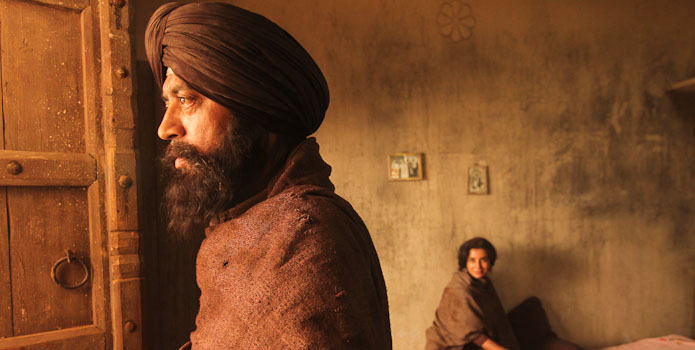
Set amidst the ethnic cleansing and general chaos that accompanied India’s partition in 1947, this sweeping drama stars Irrfan Khan — also appearing at the Festival in The Lunchbox — as a Sikh attempting to forge a new life for his family while keeping their true identities a secret from their community.
Beautiful, timeless, and touching the deepest of human impulses, Qissa carries the spirit of a great folk tale. Although it’s set in a particular time and place — the Punjab region that straddles India and Pakistan in the years immediately after partition — it is both deeper and broader than any one moment. As this eerie family drama progresses, it cuts to the heart of eternal desires for honour, empathy, and love.
One of India’s best actors, Irrfan Khan (Life of Pi, Festival premiere The Lunchbox, and a feature guest in this year’s Mavericks programme) plays Umber Singh, a Sikh uprooted by the religious violence that came with partition in 1947. He and his family move to a safer locale, and it is here that the story takes a remarkable turn. Having already fathered daughters, Singh now wants a son. When his next child is born he celebrates his wish come true, but there is one problem: the baby is in fact a girl.
“Qissa” is originally an Arabic word meaning folk tale. Both the word and the idea migrated from the Gulf into the Punjab, still connected by the ancient oral narratives handed down in communal settings. Working within this tradition, director Anup Singh gives his film both the grand themes and elemental emotions of classic storytelling. As Umber’s daughter is raised as a boy, the characters are propelled with greater and greater urgency towards their inevitable fates.
Part of a new generation of directors with feet firmly planted in India and far beyond, Singh has delivered a film immediately accessible to anyone sensitive to the conflicts that drive classic stories: fear versus hubris, individual need versus social codes. Qissa is a Punjabi story for the whole world.
DIRECTOR
Anup Singh was born in Dar es Salaam, Tanzania. He has written film reviews for Sight & Sound, directed Indian television, and consulted for BBC Two. His features as director are The Name of a River (02) and Qissa (13).
CAST & CREW
Director: Anup Singh
Countries: Germany / India / Netherlands / France
Year: 2013
Language: Punjabi
Runtime: 109 minutes
Rating: 14A
Producer: Johannes Rexin, Bettina Brokemper
Production Co.: Heimatfilm, National Film Development Corporation of India, Augustus Film, Ciné-Sud Promotion
Principal Cast: Irrfan Khan, Tillotama Shome, Rasika Dugal, Tisca Chopra
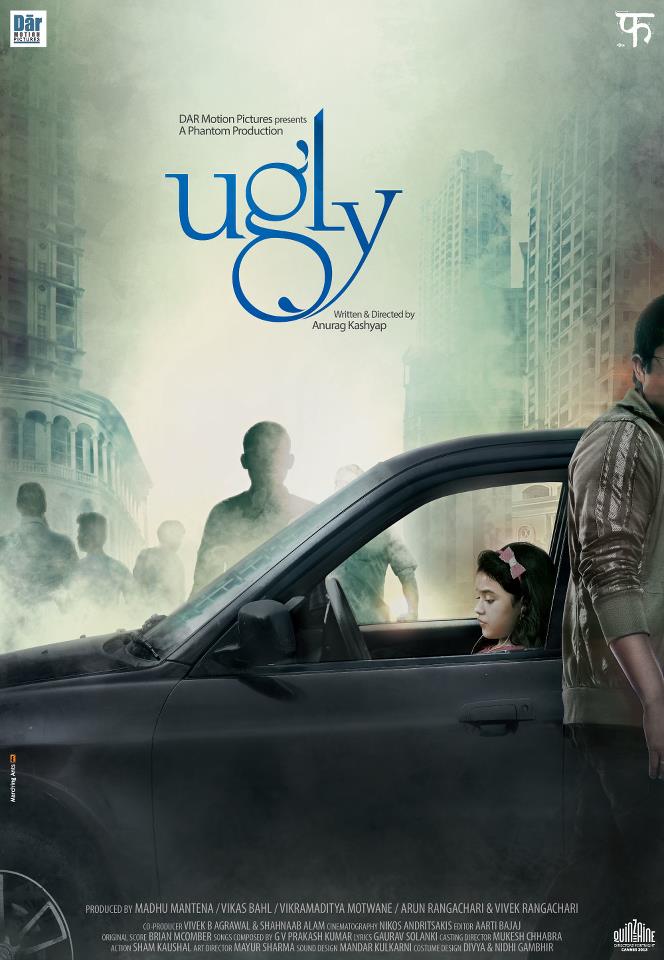
Produced by Dar Motion Pictures and Phantom Films, it has music by G V Prakash.
The film had its premiere at the Cannes Film Festival in the Directors Fortnight section.
Official Synopsis
Bose, an Additional Commissioner of Police, is an extremely straight-forward professional. However, these lines are a bit blurred in his relationship with his wife Shalini. Shalini is a clinically depressed person and an alcoholic. Shalini was first married to Rahul, a struggling actor and also has a daughter with him, called Kali. The story starts on a Saturday, which is the day when Rahul is allowed to meet Kali as per court custody arrangements. Rahul leaves her in the car as he goes to meet his friend, and Kali goes missing.
What follows is an endless series of blame game and one up-man ship. A dark psychological thriller on the surface, Ugly is an emotional drama within.
To know more about the film, you can follow its FB page here.
We have always tried to highlight interesting crowdfunding projects on our blog. So far most of the posts have been on films. This one is a film related project. Over to Nandita Dutta (Associate Editor of DC) for more on it.
DearCinema, India’s leading independent cinema portal, is crowdfunding to become faster, smarter and more resourceful for its readers.
Our crowdfunding campaign started on September 6 and so far we have been supported by 43 contributors from 17 cities, and 61% of the target amount has been raised.
We’re sure you want to know why we are going the crowdfunding way, so here you go-
In its lifespan of seven years, DearCinema has never compromised on its independence. We are sitting on several offers for sponsorship and acquisition but we prefer to be a user-funded website so that we can remain true to the interests of our readers.
With your contributions, we plan to introduce these new features:
India’s first Indie film and project database :
We have been dedicatedly covering all news related to Indian independent films and projects. Now our aim is to go a step ahead and launch India’s first Indie film and project database so that your films get discovered easily by festival programmers and distributors.
Festival and funding guide :
A new service that will guide Indian filmmakers in finding the perfect festivals, labs, markets and funds for their projects. You will no longer need to hunt for information; it will all be up-to-date and listed for you.
Faster and smarter website :
With time our readership has increased to such an extent that our current server isn’t able to cope with the kind of traffic we attract. We need to upgrade so that you don’t ever have issues accessing our website. Also, to keep pace with technology, we intend to launch DearCinema Apps for iPhone, iPad and Android devices.
Rewards :
We appreciate the support of every contributor and so, we have some very cool rewards to offer :
– DearCinema Festival guide, a comprehensive directory of 100 film festivals
– DearCinema Market and Funding Guide
– An exclusive workshop on pitching your film and international funding by industry experts
– Invites for the opening or closing ceremony of the prestigious Mumbai Film Festival 2013
– A thank you video clip from one of our celeb friends in the film fraternity
– Having your name on the masthead of our website for one whole week and a host of other rewards!
So, what are you waiting for? Support the indie film movement by contributing to DearCinema.com. Click here and do your good deed for the day.
And this list comes from Aniruddh Chatterjee, the self-declared biggest Korean movie fanatic on this side of the planet. Do read the post, and do watch the films. If you have come across some interesting Korean movies recently, do let us know in the comments.
Over to Aniruddh.
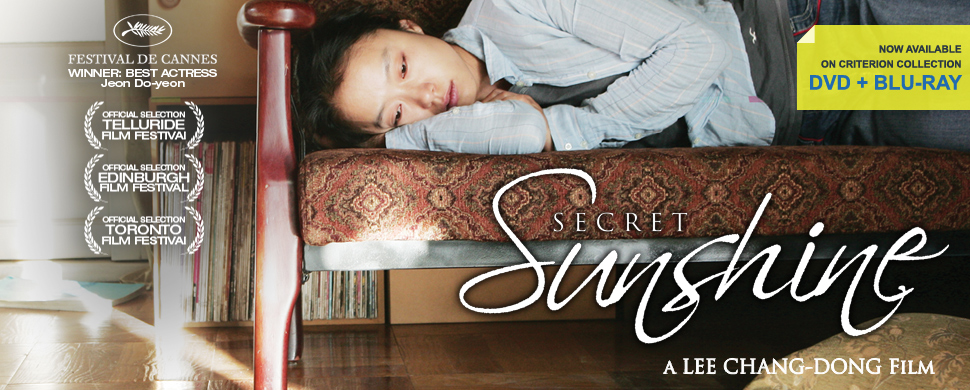
SECRET SUNSHINE
Jeon Do-yeon relocates alongwith her young son to the village where her recently deceased husband grew up. And tragedy strikes again. The film is not so much about the tragedy itself, as about its aftermath. Jeon Do-yeon’s performance is as raw and naked as it can get.
Note: Jeon Do-yeon won the Best Actress award at Cannes Film Festival for Secret Sunshine.
Lee Chang-dong is fairly underrated when it comes to the big league of Korean directors. His last film Poetry is an absolute gem. Do watch his entire filmography which includes Oasis, Peppermint Candy and Green Fish.
Secret Sunshine is now available on Criterion DVD/Blu-ray.
CASTAWAY ON THE MOON
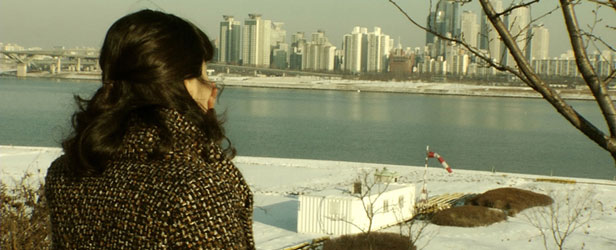
A failed suicide attempt results in Jeong Jae-yeong play Robinson Crusoe in a conservation island in the middle of Han River. The only person who can see him is Kim Jung-yeon, an agoraphobic, who has shut herself in one of the city’s high rises.
Offbeat, quirky, bizarre yet immensely endearing take on romantic comedy.
PAJU
The opening scene in the film sees Seo Woo traveling in a taxi through dense fog. From the first shot director Park Chan-ok is preparing the audience for the ride. Paju is about the complicated relationship between a young girl and her brother-in-law and complications that follow. Gorgeously shot by Kim Woo-hyung and a brilliant and emotionally nuanced performance by Seo Woo in her breakout role.
This is what we call a mood-piece!
TREELESS MOUNTAIN
A tender, almost meditative tale of resilience, while facing constant abandonment from family. Heartbreaking real performance from both leads, Kim Hee-yeon and Kim Song-hee.
THE DAY HE ARRIVES
Hong’s films are very Woody Allen-esque. His characters aren’t as neurotic as Allen but definitely immature and self centered fools. Beautifully shot in monochrome, highlighting the winter, the film is about Yoo Jun-sang, a retired film director, currently teaching film studies, and his encounter with friends, acquaintances and strangers over the next few days when he visits Seoul.
Note : Hong Sang-soo is criminally underrated when it comes to the big league of Korean directors.
He is a Cannes Film Festival regular with five of his films nominated for either Palme d’Or or Un Certain Regard. His film Hahaha won the Un Certain Regard award in 2010.
Do check out his filmography which includes Woman on the Beach, Tale of Cinema, Night and Day, Hahaha and the recent In another Country.
JUVENILE OFFENDER
A beautiful film about a couple of lost souls trying to fit into society, knowing it is difficult for them to change at all.
Terrific performances by Seo Young-joo and Lee Jung-hyun.
DANCE TOWN
The struggle of a North Korean refugee trying to cope with her new life in South Korea as she’s constantly under the radar of South Korean intelligence alleging her to be a spy.
Note : The final chapter in director Jeon Kyu-hwan’s town trilogy, other two being Mozart Town and Animal Town.
BLEAK NIGHT
Bleak Night is post-mortem of a suicide. Three high school friends, their loyalty, betrayal, guilt and despair leading to and post the suicide. Touches the important topic of bullying and violence in high school.
Yoon Sung-Hyun makes one of the most assured directorial debuts in recent times.
Kolkata becomes Kolikata. And this avatar is for the 1st Independent Film Festival in the city.
Organisers note – Kolkata (spelt intentionally here as Kolikata, like the old vernacular version of the city’s name) adds another feather to its cap, by hosting an informally, and therefore, impartially organized independent film festival – the first for any Indian city. Nationally awarded films will be screened alongwith short films made by non-film school students. The filmmakers will be interacting with both film academicians and aspiring filmmakers who are still in college.
Dates : 11-13 September 2013
Films :Independent Short Films, Documentaries and Feature Films.
Initiative : by Chalachchitra Sansad & Leela-Mochchhob
Associate Partner: Guruchandali, an anti-establishment Little Magazine from Kolkata.
Venue: Derozio Hall, Presidency University, College Street, Kolkata
ENTRY : FREE
SCHEDULE
D A Y – I
11:30am: Inauguration
12:00pm: Sa Re Ga Ma Pa by Sankar Karmakar (Fiction, 45 mins)
1:00pm: Plus by Joydip Dam (Fiction, 10 mins)
1:25pm: Chura Liya by Saurav Chattopadhyay (Fiction, 24 mins)
Break, 10 mins.
2:15pm: Students’ Films (4 short films by the students of Presidency University)
Break, 5 mins.
4:00pm: Replica by Sriparna Dey (Fiction, 20 mins)
4:35pm: Memories of a Dead Township by Anamitra Roy (Fiction, 20 mins)
5:10pm: Discussion- Exploring the language of Independent Film.
Panelists:
Moinak Biswas (HOD of Film Studies, Jadavpur University),
Shyamal Karmakar (HOD of Editing, SRFTI),
Amitava Chakraborty (Filmmaker, known for Kaal Abhirati, Cosmic Sex etc.)
& Sankar Karmakar (Filmmaker, known for documentaries like Anya Andhar & Poramatir Mukh)
Break, 5 mins.
6:15pm: Without a Notch of Blue by Sumantra Roy (Fiction, 18mins)
6:50pm: Bilal by Saurav Sarangi (Documentary, 60 mins)
D A Y – 2
11:30am: Swapno Satyokam by Som Chakraborty (Fiction, 20 mins)
12:05pm: Iswar O Protipakhkho by Arupratan Ghosh (Fiction, 15 mins)
12:35pm: Musalmaner Kotha by Soumitra Ghosh Dastidar (Documentary, 60 mins)
1:50pm: Students’ Films (4 short films by the students of Presidency University).
Break, 10 mins.
3:40pm: Ekoda Ek Bagher Golay by Jishnu Mukherjee (Fiction, 16 mins)
4:10pm: Fairy Tales for High School Children by Sayak Shome (Fiction, 5 mins)
4:15pm: This is Not Funny by Sounak Kar (Fiction, 78 mins)
Break, 5 mins.
5:45pm: Tomay Notun Kore Pabo Bole by Kaushik Chakraborty & Arko Kar (Documentary, 60 mins)
7pm: Nothing Unusual by Twish Mukherjee (Docu-fiction, 72 mins)
D A Y – 3
11:30am: Bom by Amlan Dutta (Documentary, 117 mins)
1:30pm: Sand Animation (5 mins)
2pm: Discussion- Alternative Economy & Politics of Independent Film and Power Structure.
Panelists:
Amlan Datta (Filmmaker, known for Bom: One Day Ahead of Democracy),
Q (Filmmaker, known for Gandu, Tasher Desh etc.),
Madhuja Mukherjee (Professor of Film Studies, Jadavpur University; Director, Carnival)
Anamitra Roy (Filmmaker known for Jean Luc Godard Had No Script & The One Rupee Film Project)
Break, 10 mins
3:10pm: Many Stories of Love and Hate by Shyamal Karmakar (Docu-fiction, 55mins)
4:45pm: Priyo Morphine by Atanu Singha (Fiction, 63 mins)
6pm: Kal Abhirati by Amitava Chakraborty (Fiction, 120 mins)
8:20pm: Closing with Sahajiya
– To know more about the fest, click here to go to its FB page.
The 70th Venice Film Festival has just concluded and the winners have been announced.
And here’s the good news – Indian filmmaker Shubhashish Bhutiani’s film Kush has won the Orizzonti Award For The Best Short film. This was the only desi entry at this edition of Venice fest.
Orizzonti section puts the spotlight on new trends in cinema. This year 31 films from all over the world were selected in this competitive section. The Orizzonti Jury was chaired by Paul Schrader and composed of Catherine Corsini, Leonardo Di Costanzo, Golshifteh Farahani, Frédéric Fonteyne, Kseniya Rappoport and Amr Waked. after screening the 31 films in competition has decided to award:
The film features Sonika Chopra, Shayaan Sameer and Anil Sharma in the lead.
Synopsis
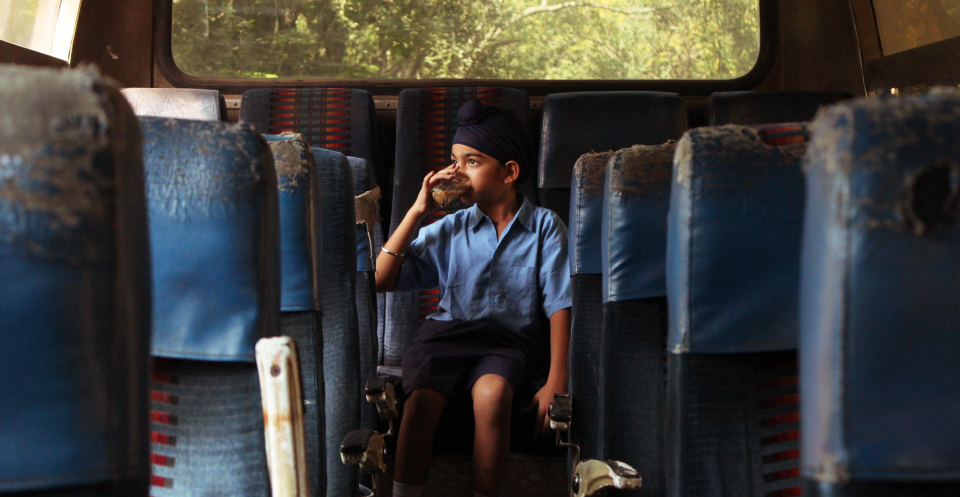
Inspired by a true story, Kush takes place in 1984, surrounding Indian Prime Minister Indira Gandhi’s assassination. Anti-Sikh riots erupt throughout the country. A teacher traveling back from a field trip with her class of 10-year-old students now struggles to protect Kush, the only Sikh student in the class, from the growing violence around him.
Since we have become a generation of Buzzfeed and because “listicles” are still not dead, am going to pick the easy route. Here are the top 10 reasons why i loved Shuddh Desi Romance and why you shouldn’t miss it.
1. Jaideep Sahni – I was wondering if he will deliver or not. This is a virgin territory for him – a full throttle romantic film. And more suspicious because he was talking like my another favourite screenwriter, Charlie Kaufman. Love versus love portrayed in films, expectations versus reality and all that jazz. Well, he not only delivers but pushes the envelope and sends it out of the park. Terrific lines all over, all that which seems so natural that it’s difficult to believe someone actually wrote it. And especially at a time when everyone is taking this dialogue route, at least in mainstream hindi cinema space.
2. Morality is Dead – A friend got a sms from a veteran journalist – SDR’s morality is falling faster and lower than the rupee. Not surprising. This film might be shocking for the conventional theatre going crowd and especially when it’s not set in any Tier-1 city. Aha, what fun, to piss of those old holy cows.
3. Marriage is Dead – Commitment is fine. But why do we need the shackles to remind us that we are “committed”. Ironically, this one comes from the same production house which is in shaadi-binness. U-Turn? Hell yeah! Mommy, are you listening?
4. Parineeti Chopra – Mommy, if you still insist, can you try her. I have been skeptical about her main-chulbuli-always-smiling-full-on-enthu avatar in the last two films of her. Are they going to typecast her? But three films down and i think we can easily brand her as “show stealer”. Put her in any film, she is bound to walk away with all the glory while making it look oh so easy. Girl, you are going far.
5. No Melodrama – It’s never been our strength. To keep it minimum, to keep it subtle and yet pack a punch. Now, just see what all can a “thanda” do in situations where there is huge scope for such drama. Am not going to explain the scenes here to kill the fun. But i wanted to get up and applaud in the first “thanda lao” scene. I don’t remember when was the last time someone played it so smoothly in such a loaded scenario.
6. So much silence – Again, another rarity in mainstream bollywood. What do you write on those blank pages where your characters look into each other and say nothing and give those strange expressions that is difficult to define. It comes only with those weird situations that you get into. SDR is full of those and director Maneesh Sharma knows how to capture them.
7. No dil-jigar-dard-tukda song – what a relief. Dil hi toh hai saala, tutne do. Devads is over and out. To quote Sahni from another favourite, Rocket Singh, bikhre nahi toh kaise nikhrogey, uljhe nahi toh kaise suljhogey.
8. Climax – 2 couples and 4 characters – what a masterstroke. The way 4 characters are stuck at the same crossroads and the dialogues were criss-crossing, it reminded me of my favourite scene in That Girl In Yellow Boots – two telephonic conversations going on at the same time. Also, the climax doesn’t try to follow the conventional route. It sticks to its core idea that its prescribing from the beginning.
9. The “repetitive” tool – I read some comments saying that lot of it is “repetitive”, especially the dialogues. I thought that was brilliant writing – to use the same stuff with different characters. You know the lines, the character doesn’t. It happens more than once and the funniest is when Sushant and Parineeti try to find out about each other from Rishi Kapoor.
10. Pigeons, Monkeys and Milieu – As the film started, i kept on smiling as it played the montage filled with these various creatures. It’s been a while since our kabootar did ja ja for Mister Saajan. They are not just props, they slowly construct that rare thing which is difficult to achieve – milieu. And being aware of the world around you always helps.
All hail Jaideep Sahni! At a time when the market is flooded with fucking remakes and sequels with the sole intention of making money, here’s the one with the original voice and daring content.
Chanchal mann, ati random
De gayo dhoka sambhal gayo re
Phisal gayo re…
Film Bazaar, the promotional arm of NFDC (National Film Development Corporation) has announced call for entries for its the Work-in-Progress (WIP) Lab and Viewing Room programs of the year.
– The submission deadline for entries is September 30th 2013.
– Film Bazaar will be held from November 20-24, 2013 at the Goa Marriott Resort, alongside the International Film Festival of India 2013.
Work-in-Progress (WIP)
– In the WIP Lab, five projects in their rough cut stage are selected to be presented to a panel of international film experts for their feedback. Feature length films and documentaries at the rough cut stage are invited to apply.
Viewing Room
– The Viewing Room aims at presenting films seeking finishing funds, world sales, distribution partners & film festivals to investors, world sales agents and film festival programmers. Films of all genres and lengths in rough or final cut are invited to apply.
– Here films are viewed on individual computer terminals in private booths.
– These terminals provide details of the film as well as contact the director or producer.
– The films that were a part of the previous Work-in-Progress Labs have had their world premier at leading international films festivals and some even successful theatrical releases.
– Some of the films which were part of earlier editions of WIP and VR include Ashim Ahluwalia’s Miss Lovely (World Premiere, Cannes Film Festival in official competition section-Un Certain Regard), Manjeet Singh’s Mumbai Cha Raja and Anand Gandhi’s Ship of Theseus (World Premiere, Toronto Film Festival 2012), and Ajay Bahl’s BA Pass (World Premiere, 12th Osian’s Cinefan Film Festival), Gyan Correa’s The Good Road (National award for Best Gujarati Film)
– For more details and application forms, click here, and for further queries you can write to: films@filmbazaarindia.com











 F.i.g.h.t C.l.u.b