Archive for the ‘cinema’ Category

goopiandbagha_01

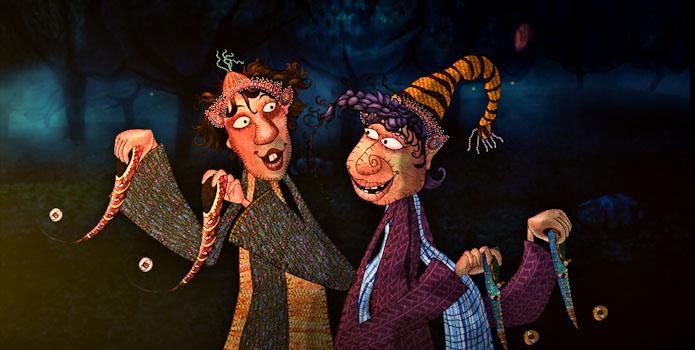
Thanks to TIFF’s announcement, we got to know about this animation film. Satyajit Ray’s acclaimed and an all time favourite film across the generations, “Goopy Gyne Bagha Byne” has now been animated into “Goopi Gawaiiya Bagha Bajaiiya”. It will have its world premiere at this year’s Toronto International Film Festival.

The first trailer of the film is out.

Official synopsis – A captivating animated adaptation of a cherished children’s classic by Satyajit Ray, this timeless fable is the story of Goopi and Bagha, a pair of musicians gifted with magical powers by the King of Ghosts.

Credit and other details

Director: Shilpa Ranade

Country: India

Orig. Work Title Goopy Gyne Bagha Byne

Year: 2013

Language: Hindi

Runtime: 78 minutes

Rating: G

Exec. Producer: Soumitra Ranade

Producer: Shravan Kumar

Production Co.: Children’s Film Society, India

Screenplay: Soumitra Ranade

Source Author: Upendra Kishore Roychowdhury

Animator: Paperboat Animation Studios

Editor: Avinash Walzade

Sound: Narayan Parasuram

Music: Narayan Parasuram

Prod. Designer: Shilpa Ranade


“Tagore-on-an-acid-trip” – that’s how Qaushiq Mukherjee, or Q, as he is popularly known, has described his latest film, Tasher Desh. We discovered Q with his last film Gandu which still remains unreleased in India. And we have been following all his work since then – shorts, music, documentaries.

Here’s the director’s note on his new film which is set to release on 23rd August in Mumbai and Kolkata. It’s based on one of the popular musical dramas of Rabindranath Tagore.

This slideshow requires JavaScript.

(Click on any pic to enlarge and watch the slide show)

Since I was five, Tasher Desh has been on my mind. It’s that fantasy that I always knew I wanted to touch. That elusive texture of human existence, devoid of transient truth. Reality is indeed transient; shifting all the time yet every civilization holds on to its truth till whatever time they can, always leading to antagonism and discontent. The cycle of time makes sure that periods of extreme confusion and chaos happen to alter realities, and we are at the thresholds of such a time.

Tagore wrote Tasher Desh as a mythical utopian expression against the backdrop of a violent turbulence. India was in the process of forming an individual and collective identity. Shaking off a history of oppression and forging a modern society. Tagore saw it as an opportunity perhaps, to tell a story removed so far from reality that it forced the listener to be objective. Modern society is marked by one overwhelming human condition. Of melancholia or depression. Slowly becoming one of the most important issues of our daily reality.

Depression is a symptom of a gloom caused by social system and its invariable ability to isolate individuals.

The film is not about the narrative of the fairy tale. It is but a reflection of how I see the world right now. As it was then, when the piece was written, the world is in a flux. India is changing radically, along with the politics of the world, and these changes are essentially driven by system driven violence. My storyteller, therefore, is a lost soul. Unable to deal with the cacophony of his circumstances, he dives into the fable, as if to save himself. The characters of the fairy tale are all extensions of the storyteller, and the story itself has a life of its own. Every story is the same. And it is always the telling that shifts the paradigms.

In the film, it’s his story that helps the storyteller overcome his ennui and to take a decision that would change his life.

The prince is depressed, because the storyteller is. A deep isolation caused by the sense of loss, of one’s self. Stagnant and paranoid. Stuck in a space and time that is almost a cocoon, with the appearance of a prison. While the storyteller is confined within the two parallel railway tracks, the prince is in his palace, a hopeless fortress, as it seems to him.

Tasher Desh is also about belief and magic. The oracle, the fairy watching over our prince, is needed because impetus is external. This is what connects us to the world outside our mind. Instead of drawing inspiration from the mundane reality, the storyteller as the concerned friend of his protagonist invokes the fairy. The prince’s transformation is immediate. Touched by the power of illusion, he suddenly begins to realize that his emancipation is in movement. He needs to go away. One of the most important things holding him back was his broken mother. He comes out to his mother, and then dives into his fantasy. The storyteller also jumps the wall of his reality.

It could be argued that social governance and its monotheistic, patriarchal nature cause collective depression. Tagore’s utopia is bizarre, with masked beings, strange rules and social paranoia of change. The cards in the film seem to have lost all human tendencies.

When the prince and the friend meet them. But the prince, newly liberated, is impatient to try out the power he has been given. A demi god now, devoid of intrinsic human folly, he delivers the message to the ace of hearts.

The storyteller travels the path he has often traveled in his fantasy, and when he arrives at the palace of his dreams, he finds her. The ace of hearts, a widow living in the shadows of a ruined structure. Mystical, magical, she is the one he was waiting for. Suddenly he has someone to tell the story to. Get it out of his soul. The widow and the ace of hearts merge in his story, and a revolution begins.

Tasher Desh symbolizes the triumph of a pagan form of ritualistic cleansing through love and identification of the self, in a postmodern society. it’s a vision of the man cleansed pure by the woman, and the seed of identity being sexual in nature. The ace of hearts takes away the storyteller’s attention, at the same time making his story more palpable, more intense, and more romantic. The film turns a sharp corner therefore, and begins to intensify on finding that one point, the spark. It’s a feminine revolt that the story narrates now, no longer a tale of male neurosis. A non-­‐violent revolution fuelled by love. In utopia. Tagore was a pure romantic, and i have tried to place his sensibilities in the confusion of our time. a violent world without any screen violence. A fairy tale without any fabrication and frills. I have tried to find the unreal right beside me. All the art properties in the film were objects we can find easily. The locations were live. The look, inspired heavily by Japanese forms, from kabuki to manga, had to be basic. There are no visual effects used, apart from layering two or three visuals together, to find an image that allows all the realities to exist together, form a relationship. And a video game reference that was done with video moshing, a very low fi technique. The idea was minimalist. Within that apparent reality, we would try to find the sublime. The magical.

The film is a musical. Following an ancient oral form, we have retained the songs as they were, written eighty years back. Associating with some of the finest musicians across the world, I have tried to place the sound of Tagore’s time with the current ones. The words of the songs, so eloquent, emerging from a romantic poet of the highest standard, are actually lines for the characters that sing them. With the use of music, the reality is broken time and again, but every song contains a message so intrinsic to the character, one can lose one’s self in them. Sound and colour play crucial roles in the film, creating the environment and the tension of the spaces explored.

Tasher Desh is an experiment in form and structure, using one of the most popular scripts of India’s recent history. I wanted to remain as faithful to the original idea as I could, and then use my treatment to bring the seed of the story out of its stagnancy, caused by the sterility of my culture. It is a story about revolution after all, and magic, and I strongly believe in both.

Q

What’s Tagore’s Tasher Desh is all about

A king banishes the older queen and his son to a palace where they lead a life of luxury and decadence. An oracle whispers the secret words to the prince and he leaves the palace with his friend, the merchant’s son. Their boat sinks and they arrive at the land of cards where the inhabitant cards are governed by a military regime. The prince and his friend get caught and bring about a change in the women cards with music and prophecies of love. The woman cards revolt. The king surrenders and the prince finds the meaning of life.

What’s Q’s Tasher Desh is all about 

Once upon a time, there was a storyteller. In a lonely railway station, somewhere in Kolkata, he spoke to trains. He wanted to tell a story. It was not a new story. But for him, it was the only story to tell. Inside the darkness of his mind, his story unfolds, a kaleidoscope of fantasy.

Once upon a time, there was a prince. a victim of his destiny, he was banished with his mother to a dark and distant prison palace. Here he grows up, without hope, without a future, with his mother drowning herself in alcohol. His depression countered only by his friend, the merchant’s son, who argues that it was indeed the prince’s choice to remain locked in. realizing the extent of his despair, the friend invokes the oracle. A mysterious figure, the oracle passes on a message of liberation. The prince realizes that he is indeed a prisoner of his mind. He takes a decision, to leave. He has a final moment with his mother, who lets him go. The prince takes hold of his destiny, and sets off on a voyage with his friend, searching for an adventure.

The storyteller begins his journey as well, leaving the city, and traveling to a ruined palace, which is where we had found the prince. Here, he encounters a strange woman, a widow, living alone, as if waiting for him to turn up. He is mesmerized by her, and soon, begins to tell her the story. She is his muse, the one who he was waiting for. Finally having found the listener, the storyteller launches into an even more intense narrative.

Shipwrecked on a paradise island, the prince and the friend encounter a strange culture. The islanders are all soldiers, who call themselves the cards, and live by a code of rules that outlaws any human behavior. Before they know it, an aggressive party of the islanders, holds the visitors captive. Presented at court, and having angered the cards by defying their court customs, they are pronounced guilty, and banished. But before he leaves, the prince asks for a last word, and takes the opportunity to whisper the same message of liberation he received from his guardian angel to a few of the card women. The result is chaos. The women are completely shaken, and soon the land of cards sees dissent for the first time.

– For more info on the film and release schedule, click here for its FB page.

NFDC Screenwriter's Lab

NFDC has announced the list of finalists for NFDC-TIFF Screenwriters Lab which will be held during the Toronto International Film Festival, 2013.

Here are the six finalists  for NFDC Screenwriter’s Lab 2013.

1. Chingari (The Spark) by Rajesh Jhala

2. Dainik (The Daily) by Nikhil Mahajan 

3. Kaalapani (Dark Waters) by Bela Negi

4. Maa Bhagwatiya IIT Coaching  (Mother Goddess IIT Coaching) by Varun Grover

5. My Brother the Salesman and I by Shanker Raman

6. T se Taj M se Mahal (T for Taj M for Mahal) by Ashish Srivastav

Yay! Especially for Varun Grover. Those of you who regularly follow our blog, must be aware that he is one of our regular writers. Some of us have read the script and it’s a terrific one. Hopefully it will get made soon.

All the best to to all the finalists.

MFF1

If you have been attending the Mumbai Film Festival in the last few years, you must have realised that it has emerged as the premier fest in the country. At least in terms of the cinema it manages to get every year. If not, you must. Do a quick search on our blog to know more about the previous editions of the fest. The registration for this year’s fest has just opened and has some early bird incentives. Details below.

(from official release)

Showcasing the best films of international and Indian cinema, the 15th edition of the Mumbai Film Festival is officially open for delegate and media registrations. Held from the 17th to 24th October 2013, the festival will showcase a stellar lineup of over 200 films from about 60 countries.

The registration process can be made online on the film festival’s website here. The delegates registering online will subsequently receive a confirmation through e mail.

– This year the Festival has made arrangements for sms and e-mail alerts about delegate card pickups, on-line seat reservation system for screenings during the festival and important festival communication for registered delegates.

– EARLY BIRD DISCOUNTS for various categories of delegates are as under:

  1. Students – Rs. 600/-
  2. Film industry associations & Film Societies – Rs. 750
  3. General Delegates – Rs. 1150

– Early Bird Registrations will close at 1900 hrs on 1ST October, 2013.

– Media registration can also be done online by visiting the Mumbai Film Festival site here.

– If you have a problem with on-line registration please contact registration@mumbaifilmfest.com.

– The registration form can be downloaded and later submitted along with fees at the Mumbai Film Festival office till 1st October, 2013, between 11 am to 6 pm at the following address:

Mumbai Academy of Moving Image (MAMI),
49/50, Maruti Chambers, 5th Floor,
Fun Republic Lane, Off Veera Desai Extn. Road,
Andheri (W), Mumbai – 400 053, India.

– Delegates must carry their college ID card, film industry card or film society membership cards for verification at the time of catalogue fee payment/collection of delegate cards.

– The 15th edition of the Mumbai Film Festival will be held at National Centre for the Performing Arts (NCPA), Nariman Point and Metro Cinema as the main festival venues and Cinemax, Andheri (West) as the satellite venue.

The Act of Killing

This was long before Tehelka had done any expose. I think the year was 2006. A junior from college had gone on to become a yogi of sorts – a spiritual guru who over the next few years would gather a bunch of powerful politicos as his disciples and put an Orkut profile photo showing Narendra Modi reading Time Magazine with him, in his Yogi costume, on the cover.

I had shifted to Bombay to become a writer and his phone call started with respect for this ‘brave’ decision of mine. Over the next few phone calls during the week he told me about his vision for India and his love for cows, both quite reasonable, and I listened out of curiosity and courtesy. Then, after his self-praise ran dry after multiple ejaculations over 4-5 days, he came to the asli mudda.  He wanted me to head the national cultural wing of some organization/movement he was launching soon, in association with Bajrang Dal or VHP (my memory fails). I asked him what are his views on allegations on these organizations being responsible for Gujarat riots, and pat came his monologue which came back to me right after I started watching Joshua Oppenheimer’s The Act of Killing.

He said of course it’s a matter of pride and an act whose time had come. It’s a happy situation that we still have youth who can put their lives on line for their nation. He said he is in fact sitting with two bhai jis who murdered a few people, including a pregnant lady and her child, with their own hands. Sensing my shock he said he and bhai jis can explain everything if I meet them in person just once. And then he handed the phone to one bhai ji when I cut the call in horror. College junior/Yogi called back saying he can understand the fear of rationals over such acts but he is sure that once I know the full story, I will not just accept but hug and applaud these people who murdered muslim women and children on the streets. A more heroic me would have gone to the cops or some TV channel, but I just cut the phone and never took his call again. (He called a number of times over the next month or so.)

This nonchalance puzzled me, kept me awake for many days. I rationalized that he might have been bluffing only, or trying to test me on something. It was too difficult to believe that people could boast about their crimes so easily, that too to almost strangers.

While watching The Act of Killing, in which gangsters hired by Indonesian military regime to kill more than 15 Lakh alleged ‘communists’ in the country revisit their acts with pride and glossy rationalization, I kept swinging between the two extreme emotions. One was the feeling of shock at this bizarre scenario – gangsters were told to re-enact the murders in whatever cinematic genre they want to and they obliged by enthusiastically recounting the methods, madness (sitting on a table placed on victim’s neck and jumping while singing), and ‘reasons’ (“God hates communists”) behind via many genres including musical, war film, crime drama, and comedy. The other was the feeling of familiarity – the feeling of having lived among such people, known them (and we all have known them in India who say ‘Sahi kiya Modi ne!’), and hence feeling no shock at this kind of behavior. It was like looking into the future if we have a Hindu-Military regime someday. The same guys I spoke to on the phone might be calling me   again to write songs for the film they would be making to celebrate their own acts of 2002.

So yes, there was a third feeling too. Feeling of ‘Is it okay if I laugh at this scenario?’ Very few films can put you in that space, that uncomfortable space between humaneness and detachment. I did laugh in a few scenes, in spite of being brain-shocked by it.  It was farce performing cunnilingus on reality.

The story unfolds through Anwar Congo and his sidekick Herman Koto. Anwar was a gangster (he says gangster means a ‘free man’) in 1965 and killed more than 1000 people in his ‘office’ by his own admission. He loved watching movies, looked like Sidney Potier, and ran the ticket business of cinema halls, and hence appears most earnest about this project presented to him by Oppenheimer. His sidekick, a present day gangster, clearly has acting ambitions as he puts his soul and direction skills in this fractured, b-grade production they are making. The film keeps switching between extremely violent and surreal recreations of 1965 killings, present day life of these gangsters (sometimes watching and critiquing their day’s work like big stars would), and moments of serene silence. And the silences are the most uncomfortable, as they should be.

Is there some moral redemption at the end of this “high-fever dream”? I don’t think there is much. Though director in an interview said of Anwar and his friends’ casual justifications for killing while recreating the scenes as their “desperate attempt to justify what they have done,” and thus, we see their ultimate humanity. If they have to cover it, they must know they have something to cover. In the recognition is the humanity. But redemption is not what the film seeks to achieve. Its attempt, in my opinion, is a much simpler one. It just wants to push these bad men into doing something decent (making cinema), and us into doing something bad (watching murder in a lighter vein, almost like they watched when they committed them). A two-way documentary, in a sense.

Not for the faint-hearted, but this is as explosive a mix of documentary, cinema, human condition, and horrors of prejudice as you will ever see. GUT-WRENCHING is an understatement.

– by Varun Grover

VOTD : Ask a Filmmaker – Adoor Gopalakrishnan

Posted: July 24, 2013 by moifightclub in cinema, VOTD
Tags: ,

Thanks to BFI for making this possible because we hardly get to see and hear Adoor Gopalakrishnan.

Info from BFI account – Only two filmmakers from India have won the BFI’s Sutherland Trophy for most original and imaginative film — Satyajit Ray and Adoor Gopalakrishnan. Adoor has won the International Film Critics Prize six times, and in 2002 the Smithsonian Institution honoured him with a complete retrospective of his work.

Adoor pioneered the film society movement in Kerala and formed India’s first film co-operative for production, distribution and exhibition. Here he answers questions from Twitter, Facebook and email, as part of our Ask an Expert series.

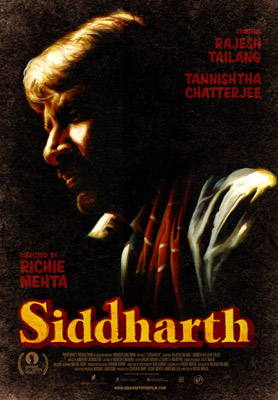
The first look of Richie Mehta’s new film, Siddharth, is out. The film will have its premiere at the 10th edition of Venice Days Program of the Biennale.

Venice Days is a separate festival within the Venice Fest and it runs during the entire duration of the main fest (August 28-Sept. 7). Its lineup includes 12 feature films, two shorts, three special events and two special screenings.

Here’s the trailer and synopsis of the film

SiddharthSIDDHARTH by Richie Mehta

With Rajesh Tailang, Tannishtha Chatterjee, Anurag Arora, Shobha Sharma Jassi, Geeta Agarwal Sharma, Naseeruddin Shah

India/Canada, World Premiere

Production: Poor Man’s Productions Ltd.

Mahendra works on street corners as a chain-wallah (a zipper-fixer), while his wife Suman stays at home with their two young children, twelve-year-old Siddharth and his sister. To contribute to the family budget, the boy is sent far away from home, from New Dehli to Ludhiana, where a relative has a job for him and a place to sleep. It seems like a dream come true to his father, until he realises that his son has vanished into thin air: kidnapped, perhaps, or dead. Mahendra learns how confusing the world beyond his front door really is, but that doesn´t stop him from stubbornly seeking Siddharth all over India, its cities and countryside combined. Co-written by its star and the director (who now lives in Canada), the film builds on the emotions of one man´s painful awakening, and shows a different, almost neorealist India, described with that ingredient of universal humanity that is Italian film´s gift to the world.

Lunchbox

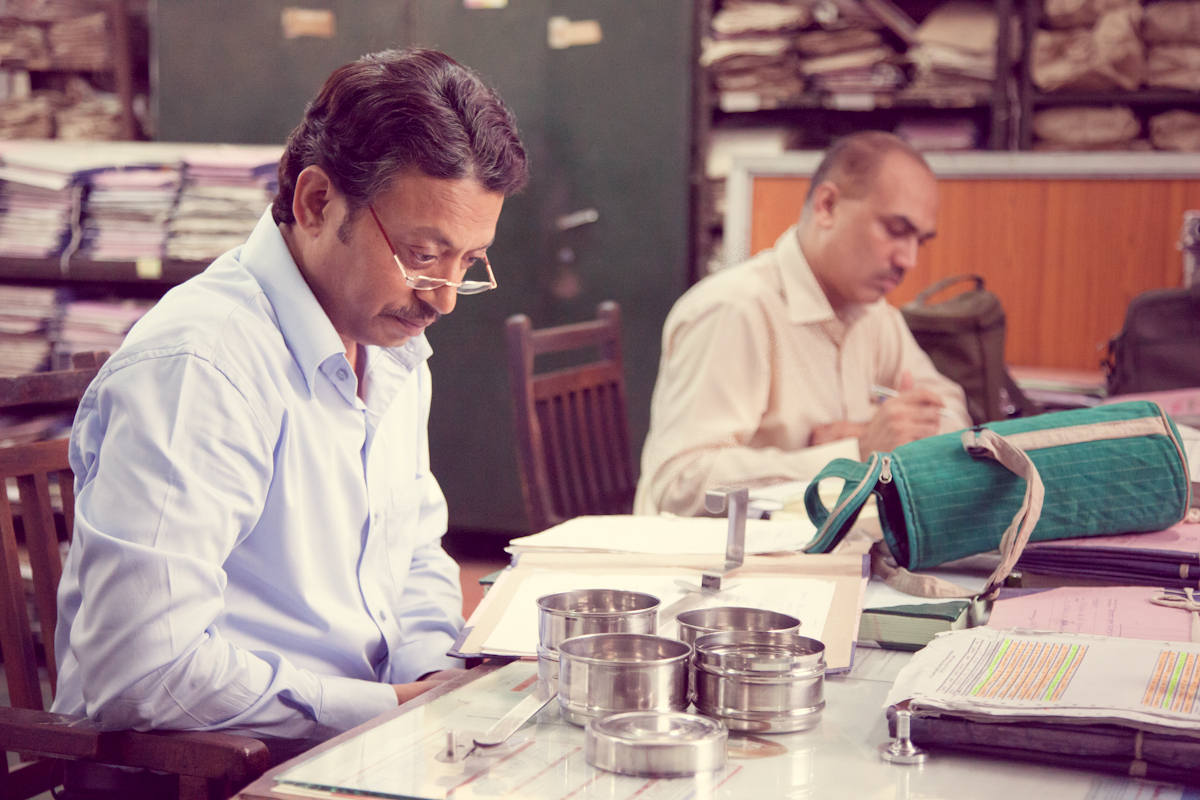
Here’s the good news about one of the best films of the year, The Lunchbox. Producer-director Karan Johar has come on board to present the film and it will be released by UTV on September 20th. This is exactly what we need – big faces should attach themselves with brilliant indies and make them reach the theatres. Otherwise distribution is a pain in the current scenario. After Kiran Rao came on board to help Ship Of Theseus’ release, this is another step in right direction.

Some of us have seen the film and let us assure that it’s a simple and solid film. Directed by Ritesh Batra, it’s not only one of the best debuts of the year, it also has two of the best performances of the year – Irrfan Khan and Nimrat Kaur.

– You can read more about “The Lunchbox” here (on Sony Classics deal) and here (all the Cannes buzz)

And now another bit of news – The Toronto International Film Festival has announced its first list of films selected for the 2013 edition of the festival. And two desi films feature in the list – Ritesh Batra’s The Lunchbox and Maneesh Sharma’s Shuddh Desi Romance. Here’s more on both the films (from the official release) :

The Lunchbox Ritesh Batra, India/France/Germany North American Premiere

– Middle class housewife Ila is trying once again to add some spice to her marriage, this time through her cooking. She desperately hopes this new recipe will finally arouse some kind of reaction from her neglectful husband. Unbeknownst to her, the special lunchbox she prepared is mistakenly delivered to miserable office worker Saajan, a lonely man on the verge of retirement. Curious about the lack of reaction from her husband, Ila puts a little note in the following day’s lunchbox which sparks a series of exchanged notes between Saajan and Ila. Evolving into an unexpected friendship between anonymous strangers, they become lost in a virtual relationship that could jeopardize both of their realities.

Shuddh Desi Romance Maneesh Sharma, India Canadian Premiere

– Shuddh Desi Romance follows a fresh and very real love story about the hair-raising minefield between love, attraction and commitment. A romantic comedy that tells it like it is, providing a candid look at the affairs of the heart in today’s desi heartland. Starring Rishi Kapoor, Sushant Singh Rajput, Parineeti Chopra and Vaani Kapoor.

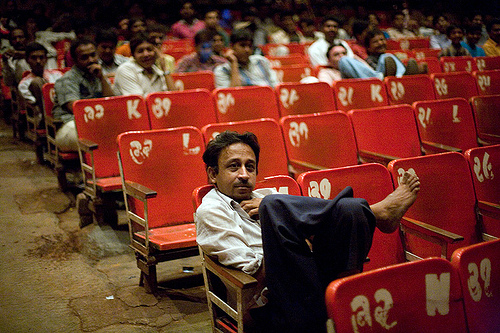
With the release of Ship Of Theseus, we are not only debating its merit (here and here) but another conversation has started on social media – about ticket prices. Why is it so expensive? Should indie tickets be less expensive? Is it even possible? Well, we do believe that if a film is great, it’s worth the ticket price. But if you are still bothered about the price, here’s Shiladitya Bora on why it isn’t so easy to control ticket prices.

cinema

To be brutally honest, no one (and that includes me as well) genuinely knows what is the best way to distribute an Indian Indie in India. The revival of Indian Independent film industry has just started and it is currently in a very nascent stage. We all are experimenting and trying to identify the best case scenario factoring all the constraints (read quality of the film, limited appeal, limited marketing budget and resources etc). There is no one single formula applicable for all Indies and each film requires a customized plan. While owning theatres/ screens (like in case of PVR) helps a bit to screen indie content; other distributor(non cinema owners) mostly rely on relationships built over years with programmers and cinema chains to be able to screen indies.

Whenever an indie releases we see people starting endless debates on the social media platforms with respect to shows, show-timings, ticket prices etc. In order to make the most out of these debates it is of pivotal importance to first have our basics right.

1. So who actually decides how many shows to be allocated to an indie and in which theatres?

For an indie releasing on a Friday, on the preceding Monday the distributor send show requests (wish list in terms of cities, theatres, number of shows, show timings) to the programming teams of various cinema chains. The concerned programming teams then works out a tentative showcasing plan based on factors like the number of films releasing on that particular Friday, performance of last week releases, expected target audience of the film, past performance of similar indies etc. This tentative schedule is then shared with Cinema Operations Team for final approval.

Cinema Operations – Each theatre is managed by a cinema manager who has a target to achieve in terms of number of admits, ATP (average ticket price), SPH (sales per head) – a daily target, weekly target, monthly target, quarterly target and annual target. The career of a cinema manager is directly proportional to these targets and hence all his/her efforts are focused on optimizing the same.

Statistics show that the performance of Indian Indies is abysmally poor in all the three parameters – admits, ATP and SPH and hence not many cinema managers are keen on showcasing Indies at his/her property. So if we want Indies to be released in as many theatres as possible, we need to make the people who run the cinemas confident about the product and this is possible only when a few Indies start performing.

So we come to the next big question on ticket pricing.

2. How is ticket pricing decided?

Every cinema has to operate within price bands pre-approved by the government and no theatre can sell tickets below the lowest price band. The best thing an indie distributor can do is to request the respective cinemas to run the film on the lowest price band and it’s at the discretion of the individual cinemas/ Operations to agree to the request or not.

In addition to the above there is a regular pricing and a blockbuster pricing. Blockbuster pricing is applicable during weeks of tentpole/ big releases and in case an indie is releasing in a week with a tentpole film, blockbuster pricing is applicable to the indie as well in most cases.

We are trying to work out a special discounted price band for Indies released through Director’s Rare.

Another solution can be government waiving off the E.Tax for Indies but for that we need clear cut guidelines to define a film as an independent film.

 3. At PVR Director’s Cut, Vasant Kunj, Delhi, the ticket price of an Indie is above Rs. 1000. Why?

First of all I would like to clarify that PVR Director’s Cut and PVR Director’s Rare are 2 different things. PVR Director’s Cut is a super luxury premium theatre located at Vasant Kunj, New Delhi where as PVR Director’s Rare is a banner for theatrical distribution/ showcasing of niche content.

Director’s Cut being a premium theatre, not only Indies but every film is at a premium price. This is like the Business class of an airline and we have a dedicated clientele for this property.

Now the question is if Director’s Cut is a premium property, what is the point of releasing an Indie there?

There are a few reasons for the same.

First it has always been a struggle to get screens for an Indie in Delhi as most of the multiplexes in Delhi have 3-5 screens which is not enough when compared to the number of films releasing in a particular week unlike that in Mumbai, Bangalore, Pune etc.

In PVR Director’s Cut, there is one dedicated auditorium for showing alternate content and hence we always get a show there. And I have always believed that it is better to release the film in Director’s Cut rather than not releasing the film in Delhi at all. In most of the cases we release the film simultaneously in PVR MGF Mall/ PVR Ambience Mall etc, which are regular priced cinemas.

Also if we analyze the total box office earnings of an indie in most cases (not all), a major percentage of the collections is from PVR Director’s Cut. This is because the producer’s earnings on a ticket of Director’s Cut after tax are almost 3-4 times as compared to a regular cinema.

4. In Delhi, the spread of theatres for Indies are mostly limited to South Delhi. Why is this so?

We have to understand one thing that when a film is released, there is a cost attached to it.  For releasing a film in one show in one theatre, the total expense on content comes to around INR 18000 per property per week ( INR 14000 Virtual print fee + 12.3% tax + INR 2000 for cloning and cargo). For a producer to recover this cost on content, we need net box office sale of close to INR 40-45000 for that particular property. So as of now it is really not a very good decision to release such niche content in theatres other than in South Delhi. May be in future once the market matures, we will be able to spread the reach all over Delhi NCR.

All said and done we must rejoice on the fact that this is perhaps one of the best phases to  be in for an Indian Indie filmmaker and the future will be better.

A few observations/ suggestions which may be useful for aspiring Independent filmmakers.

Make a kickass Indie. There is no substitute to that. No amount of support, gyaan, strategy, patronizing, social media buzz can save a bad/mediocre indie. Do not compare with Rowdy Rathores of the world because that industry works on a completely different dynamics.

When you are planning an indie, in case you do not have access to marketing and distribution budget of around INR 1.5-2 crores, the production cost of your indie should not exceed a few lakhs at any cost. But is it possible to make a good film with such minimal amount? Read about Karan Gour’s KSHAY, which I consider as a classic case study of a successful Indian Indie.

Do not try to do everything yourself. Not every one of us is a Robert Rodriguez. I know we have budget constraints but it is always better to rope in professionals wherever possible and do pay them a fee (whatever best you can afford). Know your weak spots. For e.g if you are not very good at writing, it is always advisable to hire a screen writer to write the screenplay for you. You will find many talented screenwriters willing to help you out. Roping in professionals will definitely help in raising the quality of the final output.

Once you have made a good film, invest some money in hiring a good intelligent publicist who will help with creating the much required aura around the film. Rope in a good designer and get some good artwork ready. Invest in a professional promo editor. These are few small things but if done properly will go a long way in packaging the film well which in turn may yield better results during distribution phase.

(Shiladitaya Bora manages PVR Director’s Rare and has been actively involved with the theatrical distribution of more than 30 independent films)

Pic Courtesy 1 / 2

What’s the fun if a film doesn’t get its share of contrarian views? And with all honesty, not for the sake of it. So over to Aditya Sudarshan who ponders over the latest indie film which is the toast of the town.

SoT

(Contains plot information)

By now, Ship of Theseus is a phenomenon. From UK critics to Bollywood directors, from Dibakar Bannerjee to Karan Johar, it has been hailed as an absolute, once-in-a-blue-moon work of genius. That these opinions are honest, that the film genuinely spoke to people, is not being questioned here. The question I am asking is: Why? How? And what does this say about us- sociologically?

I say ‘sociologically’, because as art goes, I am going to argue that Ship of Theseus features a level of thought that can at best be termed ‘half-baked’, and a level of storytelling which is strictly average. And perhaps if either of these elements had been different- for better or worse- the flaws of the movie would have become indisputably clear. It’s easy to recognize that a film which has nothing to say and says it badly, is bad- take any example from mainstream Bollywood. It’s also easy to recognize ‘grand failures’- for example, Terrence Malik’s Tree of Life, grounded as it is in actually deep philosophy, shows up its failed story-telling. But deception arises when a movie has nothing particular to say and says it not too badly. In the case of SoT, this multiplication of mediocrity has passed as good- and then, wedded to the truly beautiful cinematography, has passed as genius.

Why is the thought in SoT mediocre? Because name-dropping is not the same as knowledge. Because being enamoured of philosophy is not the same as doing philosophy. In the history of human thought, the Grecian paradoxes, like Theseus’, and Zeno’s (who asked how a man could cross a room, when he must first cross half the room and before that half of the half and so on infinitely), have actually been tackled. Understanding what infinity really implies is a part of the answer. Getting to grips with ‘God’ is a part of the answer.

But I am getting ahead of myself. I am starting to engage seriously  with questions that SoT does not even seriously raise. And the key word here is seriously. If SoT had seriously put forth a vision of a Godless universe where karmic causality is the only truth (as in the lines from the monk’s chant, Naham Janami), of a world without boundaries where we are really not individuals but colonies, where there is no intrinsic right or wrong but only consequences to actions- had the movie had this power, then it would have made sense to plunge into such discussions.

The very fact that these discussions seem unwarranted and ‘too much’ here, is testimony to SoT’s half-heartedness. After all, enjoying a mantra is not the same as understanding its meaning. The mystery of free-will is not disposed off because a long-haired lawyer has read an anecdote about the behaviour of ants. Our moral sense of right and wrong is not shown to be illusory because an old woman with a broken leg has probably read ‘The Secret’.

What such scenes and dialogues do, is flatter viewers into believing they have engaged with deep and significant truths, when really they have merely gawked at them- from a very, very safe distance.

I have less to write about the story-telling, because as I said earlier, had it not been for their supposed philosophical weight, I doubt these stories would in any case have been so praised. Without doubt, the three stories in SoT all feature interesting, meaningful premises and strong performances. But the film fails to confront a single great crisis in any of them. All together, they are a bundle of beginnings. The story of the blind photographer reaches her crisis- and rests there. Why and how the monk’s faith alters, and what the alteration really means to him- is untold. And humour and stock cliches (the ‘fat sidekick’, the ‘hapless slum-dweller’) become means to escape engagement with the real moral realities of ‘do-gooding.’ When the grandmother says the line that closes the third story (prior to the epilogue)- ‘itna hi hota hai‘- she could well be talking about the whole movie. So you thought Ship of Theseus would really say something? Arre bhai- ‘itna hi hota hai‘.

I hope it will be noted here that I’m not heaping any insults whatsoever on this film. I don’t say it’s pretentious. I don’t say it’s dishonest. It is, in my opinion, almost touchingly honest- the way an adolescent enamoured of big ideas- and unequal to them- is touchingly honest. Unconsummated ideas, unconsummated stories, there are all the honest expressions of an over-awed and wonder-struck mind.

What is not ok, is for such an un-rigorous and adolescent piece of work (and ‘adolescent’ here, I emphasize, is not a pejorative, but a term of description), to pass as a mature masterpiece. This brings me to the question I started with and am also closing with, because I am going to think about it further myself. (And this is the only real food for thought SoT left me with). Why is this movie a phenomenon? Are we such suckers for beautiful cinematography? Surely not. Or are we so starved for any spiritual ideas in our lives whatsoever, that we can’t recognize cooked material from uncooked? I think perhaps this is close to the answer. Perhaps we have kept ourselves so desperately stranded from the big questions- the meaning of life, religion, morality, God- that even a child-made raft, passing by our desolation, can be hailed by us as our flag-ship.

(Aditya Sudarshan is the author of two novels, A Nice Quiet Holiday (Westland Books, 2009) and Show Me A Hero (Rupa and Co., 2011) and several plays, including The Green Room, winner of the Hindu Metroplus Playwright Award for 2011.)