KAUFMAN - "Or cramming in sex, or car chases, or guns. Or characters learning profound life lessons. Or characters growing or characters changing or characters learning to like each other or characters overcoming obstacles to succeed in the end. Y'know ? Movie shit."
Kaufman is sweating like crazy now. Valerie is quiet for a moment - from "Adaptation".
We are all about CINEMA. That movie shit.
NOTHING is sacred.
NOBODY is spared.
Because we talk about films, dammit.
Not your sex life.
Films, fests, unsung, indies, undiscovered - all that and some fun. If you have dope on anything related to cinema or you would like to share something, do write to us at moifightclub@gmail.com.
The views, opinions, reviews, articles, or positions, expressed by the authors and those providing comments are theirs alone, and do not necessarily reflect the views, opinions, positions or strategies of ANY OF THE EMPLOYERS, FRIENDS, RELATIVES, PR agencies, Production houses, Media group and such third parties associated with the authors. The latter make no representations as to accuracy, completeness, currentness, suitability, or validity of any information on this site and will not be liable for any errors, omissions, or delays in this information or any losses, injuries, or damages arising from its display or use.
In short, if you have an issue with us or any post we've written, write to us at moifightclub@gmail.com
The 52nd Cannes International Critics Week unveiled its lineup today.
Among the 11 features screening in the sidebar, which showcases first and second films, there’s one film from India – debutant director Ritesh Batra’s Dabba (The Lunchbox). The film stars Irrfan Khan, Nawazuddin Siddiqui and Nimrat Kaur.
And here’s the official synopsis from the site of one of the co-producers, Cine Mosaic
A mistaken delivery in Mumbai’s famously efficient lunchbox delivery system connects a young housewife to an old man in the dusk of his life as they build a fantasy world together through notes in the lunchbox. Gradually, this fantasy threatens to overwhelm their reality.
The Lunchbox is the story of the life we dream of versus the life we live in, and of the courage it takes to turn out fantasies into reality.
Apart from Dabba, Cannes will also screen Bombay Talkies and Monsoon Shootout.
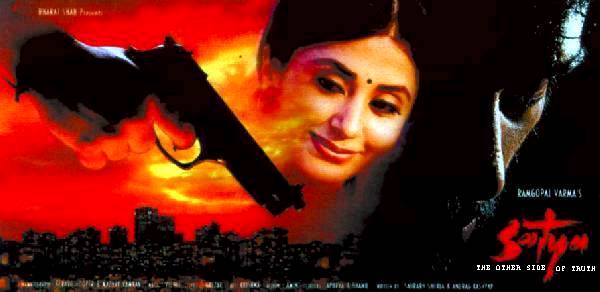
One of the best things about your favoutite film is that you are never tired of reading about them. And if it’s a landmark film, then with every passing year as its cult grows bigger, stories surrounding those films became urban legends. Satya is one such film. And though we have heard so many stories about its making, one is always interested to read more. So as its editor Apurva Asrani started writing about its making on his blog, we thought it would be nice to share the post here too. Over to him.
My name is Apurva Asrani. I am a film editor. My job profile includes receiving shooting rushes and putting together a cohesive film. I attempt to choose the most honest moments in the material to string together a tableau of scenes. I try to work at proper punctuation. i.e moving around silences, action, music and dialogue to flow rhythmically. I try to clean up the rough edges in performances, sometimes cheating moments to bring on the desired effect. ‘There is no one above the film’ is a motto that I have tried to follow in a career spanning 17 years, 13 films, 5 tele-films & 3 theater productions, often confronting ego’s that were infinitely bigger than the film.
When factors bigger than the film were in control, i.e stars, marketing gimmicks and/or producers with no real love for cinema, the films found no audience. Some were appreciated in part, but not in whole. But several times, the power of the story was above all involved, and the crew worked selflessly, leveled under the radiance of good intention. For me, Satya , Snip!, Chhal, Jalpari-The Desert Mermaid & the yet to release Shahid are all examples of good teamwork.
I spent my 20’s thrilled like a kid in a celluloid store. I have had intimate creative relationships with incredible film personalities like Ramgopal Varma, Hansal Mehta, Anupam Kher, Basu Bhattacharya Bhupen Hazarika & Nagesh Kukunoor. My joy knew no bounds when I spent days with legends like Mehmood & Shammi Kapoor while putting together a show for TV. I have even worked with some incredible people who I could never relate to, like Vashu Bhagnani. This blog is my attempt at documenting memories from some of those relationships.
Ramgopal Varma & Satya
In 1997, when I was a teenage promo producer, a mad-man named Ramu asked me to edit a film called Satya. Mani Rathnam’s Iruvar was about to release and I had heard that it had been cut digitally, i.e on Avid. I had already befriended the digital editing system through my TV & promo work and found that I had an ally in Ramu in going digital. Ramu was high from the failure of Daud and the man mesmerized me. Instead of getting crushed by rejection of his biggest budget film to date he was reveling in its failure. He knew that he was garnering a cult following, and was being admired for making the offbeat comedy the way he wanted to. He carried the creative air of a man who had produced & directed the biggest musical hit of those days, Rangeela, and soon his revelry was to became rebellion against the popular grain.
Ramu, me & Avid Media Composer spent one year in a 6 by 8 foot cabin while editing Satya. I met a man who gambled with life and had a mischievous disposition while doing it. ‘Ramu’ truly wanted to tell Satya’s story. He was living vicariously through the character. The South Indian producer penetrating the Bombay market was a striking parallel with Telegu cinema’s Chakravarti penetrating Manoj Bajpai & Saurabh Shukla’s underworld in the film. In the film, Chakravarti ordered the sudden killing of ‘Bollywood star’ commissioner Paresh Rawal, and Ramu had made his point. The fact that the film found cult status only cemented the man’s journey thus far.
The Team
Ramu had put together an incredible team for Satya. There was the unlikely writing duo of Saurabh Shukla & Anurag Kashyap, both chipping into the film with more than just their writing roles. There was the American director of photography Gerard Hooper, who closely collaborated with his Indian counterpart Mazhar Kamran to bring us grit like never before. There was the Industry veteran Krishna who has over a 100 film titles to this credit, but only one as Art Director–for Satya. There was Vishal Bharadwaj, at the start of his juiciest creative phase.
I remember riding with Ramu in his red Maruti Esteem and we were listening to the songs of the Chandrachur Singh starrer, Betaabi. The film was a wash-out but Vishal’s powerful music fueled this car to the Versova sea side office, where Ramu was putting together a team for his underworld film. ‘You like this, Apurva?’ Ramu had asked me, a gawky 19 year old, still numb from the opportunity that had been presented to him. Having been a fan of Vishal since Maachis, I vehemently supported his decision to go with him. I was beginning to feel the onset of a magical phase in my life.
Anurag Kashyap was the irreverent mischievous kid on the set, often getting into sulks with Ramu about Saurabh’s involvement. I remember this huge stand-off about whose name should appear on top, when I had cut the first promo of Satya. Ramu used good humor and leveraged the awe each team member had for him, to manage the ‘children’ on set. I was younger than Anurag, but I was the more serious kind. Diligently trying to prove myself on-set and in the editing room. I knew nothing about film editing, but I would trip-out on the wild material in the darkened room, sometimes not going home for hours and days on end. I seemed to enjoy telling stories & after writing, I found only editing to be an uncorrupted creative space. Besides, the rushes for Satya were honest and ‘ballsy’, unlike the cinema of the day. You couldn’t help but become consumed by the material.
Editing Satya
‘Stay out of the room’, I’d shout, sending my assistant Pradnya to stand as a barricade to the studio door, so that Ramu’s curious eyes couldn’t see what I was cutting. I had a desire to shock and I knew early on that directors must wait till the cut is complete, before they can see it. The Ramu of 1997 was a humble man. Like a child, he would plead to watch it, try and peer through a small window in the door, but he would wait outside till he was allowed in. Most often, the results would please him to no end, and there would a deluge of film personalities who would be invited to see the brewing magic.
Two meetings that I will never forget are with Gulzar, also the lyricist of the film & with Shekhar Kapoor, high on the success of Bandit Queen. When Gulzar walked in, a nervous Ramu forgot to introduce me to him (Ramu always introduced me to his guests), I was also very nervous to turn around and look at the legendary kurta-pyjama clad auteur. Then I distinctly remember there was a soft touch on my shoulder, I turned to see Gulzar who smiled at me and said hello. I was floored. Shekhar Kapoor was all chatty and excited. He couldn’t stop raving about his editor Jill Bilcock who had just cut his film Elizabeth and I was already feeling jealous.
Ramu allowed me break up, re-align, mold and reshape the film the way I wanted to. I believe that’s how he dealt with the writers, actors and camera crew as well. Allowing everyone he trusted to interpret his vision. I never really understood then, how rare it was to find great teamwork. I think Ramu also soon forgot.
Satya was never intended to open the way it did. The opening scene was written with Satya’s character’s arrival in Mumbai. I remember thinking that the opening was flat. What was needed was a fiery and sinister set-up, the correct atmosphere for the silent Satya’s arrival. I wrote an opening voice over about the city of Mumbai and cut it to a montage of city shots. I got actor Aditya Srivastav to correct my Hindi and dub a VO on the avid. I used climatic shots of the long-haired gangster Sabir Masani shooting angrily at a newspaper right at the start of the film, and inter-cut shots from Vidya’s (Urmila Matondkar) fathers funeral pyre (from later in the film).
The sequence got its desired reaction. Ramu jumped up from his seat and clapped in awe. I knew in that moment, that there was no other industry I’d rather work in.
(To Be Continued)
( You can follow Apurva Asrani on Twitter here and his blog is here)
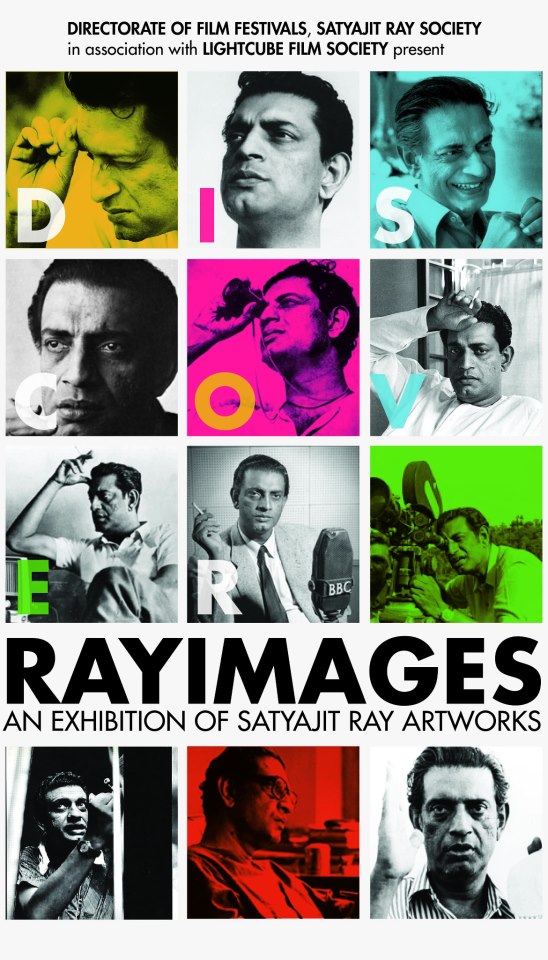
As part of the centenary year of cinema in India celebrations, the Directorate of Film Festivals, Satyajit Ray Society and Lightcube Film Society are working together to organise a Retrospective of the director responsible for more masterpieces than any other great in Indian cinema; illustrator, painter, visualiser, author, musician, photographer, film society activist and filmmaker, Satyajit Ray.
For long, Satyajit Ray’s been thought of as being symbolic of the ‘alternative’, or ‘the other’ – the notion that despite the existence of the bludgeoning mainstream industries across the country exercise almost vulgar control over markets and minds alike, there is still the possibility that a figure like Ray may exist and make films that resemble personal visions over forty years. In that, the existence of Satyajit Ray has throughout been of a figure who existed in spite of the system, instead of because of it – this evaluation of him as an artist whose being is carved out primarily through opposition or perversion is, however, terribly reductive and unmindful of the fact that after all, Ray films made not against someone, but in favour of the medium he so loved. To highlight Ray’s status as a cineaste and film-lover over his status as a ‘parallel filmmaker’, the Directorate of Film Festivals, Satyajit Ray Society and Lightcube Film Society are collaborating to organise a three-day long Retrospective of his work at Sirifort Auditorium, this runs from the 26th April to 28th April 2013.
– The Retrospective will feature both Satyajit Ray’s long-form work and his shorts, alongwith Mr. Shyam Benegal’s 1984 documentary on him, entitled Ray (this film opens the Retrospective).
– The vision behind the programming of the festival, where all films will be exhibited on 35mm, is to represent as a whole Ray’s career – both in terms of its various phases (from the autobiographical musings of the first era, to the politically charged films of the middle and his assimilation into the larger culture of the world in the final) and the various ideas contained within it.
– These films will be discussed at length in panel discussions that will feature close associates of Satyajit Ray, colleagues and members of the Ray Society who have worked actively for the past twenty years to preserve Ray’s artistic legacy.
– The screenings at the Retrospective will also be accompanied by an exhaustive exhibition which will have on display a wide selection from Ray’s numerous artistic work, such as ad-artworks, book jacket designs, posters, booklets, set and costume designs, sketches from shooting scripts, as also still photographs of people and places.
– The Retrospective runs as part of the Centenary year of Indian Cinema celebrations organised by the Directorate of Film Festivals.
DATE : 26th to 28th April 2013
VENUE : Sirifort Auditorium, New Delhi
ENTRY : Free
SCHEDULE :
Friday, 26 April 2013
2 pm: Satyajit Ray / Shyam Benegal
4:45 pm: Pather Panchali
Saturday, 27 April 2013
11 am: Jalsaghar
1.30 pm: Charulata
4 pm: Pratidwandi
7.30 pm – 8.30 pm: Dhritiman Chaterji, in a Q/A session with members of the audience; moderated by Shantanu Ray Choudhury.
Sunday, 28 April 2013
11 am: Rabindranath Tagore, Sadgati and Pikoo’s Diary
1:30 pm: Sonar Kella
3:45 pm: A multimedia presentation tracing the etymology/origins of Feluda, the character.
4 pm: Ghare Baire
6:25 pm: Panel Discussion: ‘On Ray’s Oeuvre’featuring Mr. Dhritiman Chatterjee, Mr. Shantanu Ray Choudhury and Ms. Swati Joshi.
The Cannes Film Festival recently announced its 2013 official list, and it features two Indian films – Bombay Talkies and Monsoon Shootout. Guess what’s common between the two? Nazauddin Siddiqui. It was the same scenario last year, he was at Cannes for Gangs Of Wasseypur and Miss Lovely. That’s quite an achievement – to have four films at Cannes in two years. And that’s not all. If our sources are to be believed, there’s more. Keep watching this space.
So we thought it’s a good time to look back and search for Mister Siddiqui. It started on Twitter, as a cheap thrill – to spot him in all those blink and miss roles that he has done over the years. Thanks to internet and youtube, it’s all just “click and play” game now. Try it. You will be surprised, and it’s great fun. Also, it defines what “perseverance” really means. Over to @SilverlightGal who went searching for Siddiqui and wrote this post.
In 1999, he was featured in a scene, that of a waiter, sharing screen space for a few seconds with Manoj Bajpayee. That 13 years later, he would feature as a leading man in a movie, playing Manoj Bajpaee’s son, and dominate the screen space was perhaps something that no one had envisioned. Not even the guy himself. That’s Nawazuddin Siddiqui for you.
It was on this blog, MFC (moifightclub), that I first heard of his name. Nawazuddin Siddiqui? Sure didn’t sound like the names we’d been used to hearing in Bollywood in recent times. Year after year it was either a Kumar or a Khan that made news in Bollywood. But this new guy was being written about with awe and respect. Curious, I read up as much as I could about him and that’s when I understood why he was being awed, despite not having a single release at that time. With unbridled excitement, I looked forward to seeing him on the silver screen, in Gangs of Wasseypur. And he didn’t disappoint. Gow-I, Gow-II, Kahaani, Talaash, it was just one powerhouse performance after another.
By now, reams have been written in media about his struggle from the days he worked as a watchman to now when he is acting alongside the likes of Aamir Khan and Vidya Balan. So, this post will not cover any of that. For those unfamiliar with his back story or his long struggle or his various media interviews, there is a bunch of links at the bottom of this post.
This article instead attempts to list all his work from 1999 to the present. (Note, at Wikipedia, there are just 23 listings. At MFC, we have discovered 46, collated from various sources on the Net) And you can spot him in some of the clips listed here.
VIDEOS
Sarfarosh
He played a criminal named Nawazuddin and was featured in a police lock-up scene that lasted for approximately 130-140 seconds. That was the first time he shared screen space with Aamir Khan. 12 years later, he played the second lead in an Aamir Khan movie, Taalash. Notice how scrawny and nervous he looks back then. But, far more than that, notice the way he gets under the skin of the character. It may have been a miniscule role but one that he can still be proud of.
Jungle
He played one of the dacoits in Sushant Singh’s gang. This again was a very short role, lasting a few seconds.
Black Friday
He played the role of Asgar Muqadam, Tiger Memon’s manager. In the movie, he is arrested shortly after the bomb blasts and is beaten in the lockup until he provides whatever information he has about the bomb blasts, which then leads to a police inquiry. Again, despite the extremely short time he got on screen, Nawazuddin managed to put in his best and make a mark for himself. Legend has it (okay, I just couldn’t resist this starter) that Anurag Kashyap saw his Sarfarosh scene and also a few of his plays and then signed him up for Black Friday.
Munnabhai MBBS
Remember, the thief who stole Sunil Dutt’s wallet and was good-naturedly hauled to beta Sanjay Dutt’s “clinic”? That was Nawazuddin Siddiqui. He was very lean back then and his face still looked young and fresh.
“OP” Stop Smelling Your Socks (short)
In this little-known short film, he plays one of the production guys.
The Bypass
In this award-winning 2003 short film, he played the role of a desert robber, who in conjunction with another guy, killed and looted people travelling on the bypass route.
Summer of 2007
(Trailer, between 1:59 to 2.00)
Again a blink and miss role, that of a villager in the village the protagonists go to fulfill their internships. The movie was a box office disaster.
Firaaq
He played the role of Hanif, a young Muslim man who finds his home looted and burned in the aftermath of the 2002 Gujarat riots and wants to retaliate against the violence.
********************
If you are interested to know more about him, here’s the list of some of the news reports and features.
– “Now Starring NS : The life and struggle of an unlikely hero” Open magazine feature is here
– “The late but unstoppable rise of Nawazuddin Siddiqui” Caravan magazine’s feature is here
And these listings are not in exact order of his appearances, they are just sorted by year
Sarfarosh 1999
Shool 1999
Jungle 2000
Bindiya Mange Bandook 2000
The Bypass 2003
Mudda 2003
Munnabhai MBBS 2003
Black Friday 2004
Elephant Boy 2005 (short)
Adharm 2006
Family – Ties of Blood 2006
Manorama Six Feet Under 2007
EK Chaalis ki last local 2007
Salt N Pepper 2007
Recycle Mind 2007
Aaja Nachle 2007
Safar 2008
Black and White 2008
Summer 2007 2008
Dev D 2008
Meridian Lines 2009
New York 2009
Firaaq 2009
New York 2009
OP Stop Smelling Your Socks (short) 2010
Peepli live 2010
Mehfuz (short) 2011
Dekh Indian Circus 2011
Kahaani 2011
Paan Singh Tomar 2012
Miss Lovely 2012
The Owner 2012
Talaash 2012
Chittagong 2012
Patang 2012
Gangs of Wasseypur 2012
Liar Dice 2012
Gangs of Gardulley 2013
Black Currency 2013
Monsoon Shootout 2013
Mountain Man 2013
Dabba 2013
Aatma 2013
HaraamKhor 2013
Bombay Talkies 2013
Anwar Ka Ajab Kissa Filming
If we have missed anything interesting or if you managed to spot him in some film, do let us know in comment section.
(@SilverlightGal is passionate about cinema and is always eager for any discussions pertaining to cinema.)
PS – To make life bit simpler, now you don’t need to fill in all the details to post comments. If you are already logged into Facebook or Twitter, just log in with your FB/T account. Click on comment box, you can see the small (FB/T) icon below the comment box, click on FB/T, a pop up will appear, authorize the app and you are done)
Amit Kumar’s debut feature Monsoon Shootout has been selected to have its premiere at the Cannes Film Festival this year. Apart from Bombay Talkies, which is part of tribute to 100 years of Indian cinema, Amit’s film is the only Indian film to be in the official list so far.
We thought it’s a good time to look back at his work. So here’s a terrific short film by him – The Bypass. It stars Irrfan Khan and Nawazuddin Siddiqui. Made in 2003, it did quite a bit of fests round then when both the actors were really not so big on films radar.
(PS – To make life bit simpler, now you don’t need to fill in all the details to post comments. If you are already logged into Facebook or Twitter, just log in with your FB/T account. Click on comment box, you can see the small (FB/T) icon below the comment box, click on FB/T, a pop up will appear, authorize the app and you are done)
Cannes Film Festival has just announced its official selection list. And as expected not too many Indian films at fest this year.
As part of tribute to 100 years of Indian Cinema, Bombay Talkies will have its Gala premiere at the fest. It’s a collection of four short films directed by Dibakar Banerjee, Anurag Kashyap, Karan Johar and Zoya Akhtar.
Another selection is Amit Kumar’s Monsoon Shootout which is in Midnight Screenings section. It stars Vijay Varma, Nawazuddin Siddiqi, Tannishtha Chatterjee, Neeraj Kabi, Geetanjali Thapa.
And here’s the official synopsis – A rookie cop faces a suspected gangster in a dead-end alley and has to decide whether to shoot or not to shoot. Three separate scenarios explore the impact of his decision on other people’s lives.
Amit had earlier directed a terrific short called Bypass which won many awards. Click here and here to watch the film in two parts.
Also, Indian actor and director Nandita Das is part of the CineFoundation and Short Film Jury.
We don’t have a culture of documenting our history.
We don’t have a history of making great documentaries.
We don’t have documentaries on our “real heroes”.
And this is why Shivendra Singh Dungarpur’s Celluloid Man is such an important film, which stands tall on those three parameters. It’s about a real hero who has documented our cinematic history, and it’s a documentary on his life and passion.
I had missed the screening few times in the past and finally managed to catch it recently. The name is P.K.Nair. His designation sounds even boring – Archivist. Sounds almost clerical – someone who archives stuff. What separates Mister Nair from his designation and the rest is just one thing – passion. And this film does complete justice to that man and his undying passion for cinema.
Chances are you might not have heard his name if you have not been to FTII or not friends with FTII graduates. He is the man responsible for National Film Archive Of India, popularly known as NFAI. Starting literally from scratch, P K Nair built it up slowly – reel by reel, can by can, film by film. No wonder that you ask him about a scene and he can tell you which reel and which can has it. Celluloid Man is his story – how he built NFAI, the way he travelled to various places in search of those rare films which most didn’t care about.
The film runs on two tracks. One traces Nair’s personal story – starting from Nair’s childhood in Kerala to how he wanted to become filmmaker and how he landed up at FTII and started NFAI. Some of the well known faces from FTII recount their younger days at the Institute and talk about Nair saab. And then you realise that his contribution is much more than just being an archivist. It’s about shaping up those young bright minds.
The other one is about building NFAI – this has intersecting anecdotes about collecting those precious films by travelling to remote places, and sometimes even opting for illegal routes for a greater cause. Dungarpur balances it well by scratching the uncomfortable surface too – was it one-upmanship, why NFAI is hostile to Nair now and such.
It feels bit long at the running duration of more than 2 hours (2:24 exactly i think, not sure which version is releasing), and the director’s sudden voice-over feels odd which doesn’t gel well with the film as the rest of it is through Nair saab’s words. But those are just minor issues in this mammoth task of documenting this important part of our cultural history so beautifully. If you are film lover, WATCH IT. If you are not, watch it just to know how to define Passion and Commitment.
The initial portions of the film is shot gorgeously, almost like a dream, feels some kind of daze. And then there’s a heartbreaking surreal sequence of silver being extracted from film reels by those who understand only commerce. The horror! Horror! i shouted in my head.
And this film could not have come at a better time. If there’s one person who needs to be celebrated at the occasion of 100 years of cinema, it’s Nair saab. If nothing else, at least this documentary serves that purpose. Thanks, Shivendra.
– The film is being released by PVR Directors Rare on May 3rd. Don’t Miss this one.
WHAT: Following the template of the world renowned Sundance Institute Screenwriters Lab, that is held at Park City, USA, the Indian Screenwriters Lab is a five-day writer’s workshop that gives independent screenwriters the opportunity to work intensively on their feature film screenplays with the support of established screenwriters. Mumbai Mantra has collaborated with the Sundance Institute and established India’s annual Mumbai Mantra | Sundance Institute Screenwriters Lab.
Project Selection :
—> 6-8 projects shall be selected for the Screenwriters Lab. All Indian nationals as well as Indians living overseas, people of Indian origin and mixed Indian parentage are eligible to apply.
– Only those who are working on their first or second feature film project shall be eligible. However, they may have worked on documentaries, shorts, advertising films in the past
– The screenplay can be for a film in any Indian language including English. However, the application must be in English, as it is the medium of communication at the Lab.
– Incase there are two writers working on a a screenplay, or a writer-diretor working together on a project, both would be invited to the Lab if selected.
HOW : All you need is 1. A synopsis 2. First five pages of your screenplay 3. An artistic statement 4. A cover letter for the first round.
ADDRESS : You have to send your submission via post. Materials will NOT be accepted electronically.
Mumbai Mantra | Sundance Institute
Screenwriters Lab Application March 2014
Mumbai Mantra Media Ltd.,
Mahindra Towers, 5th Floor, Worli, Mumbai-400018.
DATE : Last Date for Open Submission: June 1, 2013
– Date for submission of Complete Draft of Screenplay (next round) shall be informed later to selected candidates.
CONTACT : If you have any more queries related to Mumbai Mantra| Sundance Institute Screenwriters Lab 2014, you can contact them at labqueries@mumbaimantra.com
– For more info on the lab, selection process and all other details, click here.
– If you are wondering what exactly happens at the lab and if at all it’s helpful or not, click here to read Renuka Shahane’s blog where she has written 5 posts on her experiences. Her script was in the lab this year.
– You can also click here to read Vikas Chandra insightful post. His script was in last year’s lab.
First, the good news – Derek Cianfrance’s new film The Place Beyond The Pines is releasing in theatres this Friday. His last release was the heartbreaking drama, Blue Valentine. If you still haven’t seen it, DO WATCH. Click here to read a terrific recco post by Subrat.
Starring Ryan Gosling, Bradley Cooper an Eva Mendes, it’s released by PVR Pictures. Also, we have been informed that there are no Censor cuts in the film. And do check out the embedded document where director Derek Cianfrance gives an introduction to his film.
Recently I watched a documentary film where Mrinal Sen is quoted. Mrinal Sen? It left me wondering when was the last time I heard his name. Honestly, not sure. In which discussion? Well, really not sure. We talk so much about world cinema, but we rarely get to hear the desi names beyond the few obvious ones.
People like us, who could easily be branded as the fest-fuckers, are bigger culprits. Even before fests became kind of cool for kids here, Sen had been there, done that. Apart from many other international awards, his Kharij was in Cannes Official Competition and bagged the Jury Prize in 1983. His another film Akaler Shandhaney (In Search Of A Famine) was in cometition at Berlin Fest where it bagged the Silver Bear in 1981, and at Venice Film Festival, Ek Din Achanak got an Honourable Mention. Do watch the films if you haven’t.
Back to Sen, and we have a new segment – Just A Page. The film reminded me of his memoir, Always Being Born. I had read it long back. As soon as i came back home, i took out the book and read few pages. Ironically, even at the risk of it being used to poke fun at me for obvious reasons (by friends and well-wishers mostly), am going to quote a page from this book. Quite a terrific one. Do read.
Suddenly, from behind a boulder on which I was seated, appeared a boy, hardly ten, the external anatomy giving the appearance of a beggar. He stood before me, but unlike a hungry beggar, his eyes were bright. I smiled and he smiled back. I pulled out a ten-rupee note, quite a fat amount in those days, and gave it to him. He could not believe that the amount was meant for him. I drew him close, patted him on the shoulder and gave him the push with a smile. The boy ran away with the money, looked back from a distance, his eyes beaming, and disappeared. Instantly, I felt I was a different man altogether. I sprang to my feet and, with nobody around, i shouted at the top of my voice and in ecstasy uttered a few Bengali words, Dekh-re Shala’ra, Kemon Aami Nirbaashan’e Aachhi! (Look bastards, I’m an exile here!) And there was nobody around. Bengali, for the first time in last three days, because it was Greek in Jhansi. Could there be a streak of madness in me? Or, to quote Jacques Tati or getting a kick from Chaplin, Inspired Nonsense?
I, then, returned to my hotel, shut myself up in my small room and moved towards the tall mirror. Standing before the mirror, I could see myself from top to toe, head to foot. Watching me, I enjoyed looking at “it”. As I looked deep into the eyes of my ‘double’, I wanted to see more of ‘it’, the whole of ‘it’. Without caring to behave myself, I made a violent move to strip myself.
There stood my ‘double’, stark naked, face to face with me. Was the look menancing? The double’s? Or mine? I did not remember. I remembered the ‘talk’ I had with ‘him’. I said, hugely intrigued:
There you are, Mr Mrinal Sen, one who read a lot on cinema, wrote substantially on its aesthetics and made frantic efforts to impress others! Now, here you are, Mr Sen, a dawai-walla (medicine-seller), who once wanted to be a filmmaker! Didn’t you, Mr Sen, manage to hook a money-backer and finally backed out for fear of making lousy film? Oh, no! Serve your bosses well, rot here and try to get an increment. To feel bored is not your business, you cannot afford it, can you?
So saying, I made faces, muttered words in languages I know, then giggled and laughed and made all kinds of absurd gestures and finally, unable to control myself, I cried. Cried like a child. All alone in a hotel room in Jhansi!
After three days, I sent a long telegram to the management in Bombay and I resigned.
(PS – To make life bit simpler, now you don’t need to fill in all the details to post comments. If you are already logged into Facebook or Twitter, just log in with your FB/T account. Click on the small (FB/T) icon below the comment box, a pop up will appear, authorize the app and you are done)








 F.i.g.h.t C.l.u.b