Archive for the ‘cinema’ Category

kai-po-che3

Berlin International Film Festival have added few new titles to its programming list in the last few days. And it includes some Indian films as well.

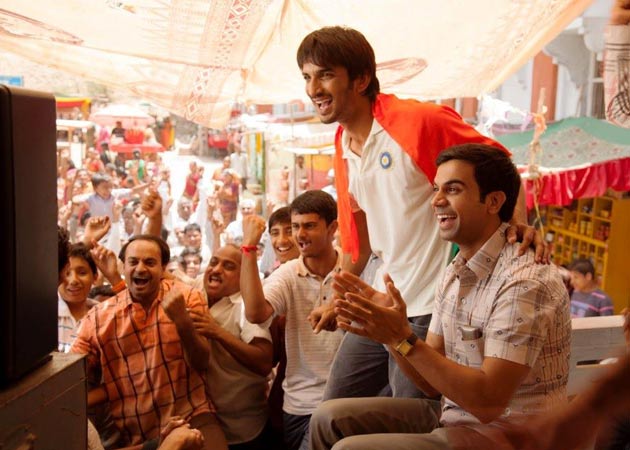
Abhishek Kapoor’s new film Kai Po Che will have its International premiere in the Panorama section. It stars With Sushant Singh Rajput, Raj Kumar, Amit Sadh, Amrita Puri and is based on Chetan Bhagat’s book 3 Mistakes Of My Life. And here’s the official synopsis of the film…

Best friends Ishaan, Omi and Govind – young, ambitious and restless – are trying to make a mark in the India of the early 2000’s. These are exciting times – a new millennium has just dawned, India is a nuclear power and ostensibly shining – a perfect place for the 3 Ahmedabad boys to start a business that could be their ticket to fame and riches. In a country where cricket is religion, they hit upon a brilliant plan – to start a training academy that could produce India’s next sporting superstars! What follows is without doubt the greatest adventure of their lives, as they attempt to navigate the big hurdles in the path of fulfilling their dreams.     Based on Chetan Bhagat’s bestselling novel “The Three Mistakes of My Life”, Kai Po Che (meaning a triumphant yell in Gujarati) is an unforgettable ode to friendship and the magical moments one shares with one’s closest pals – celebrating festivals, drunken dancing, watching cricket matches together, strategizing on how to catch the attention of the cute neighborhood girl, being there to watch each other’s back in troubled times and to celebrate one’s successes by screaming “Kai Po Che”!

The other Indian films include Sourav Sarangi’s Char…The No Man’s Island and Powerless by Fahad Mustafa and Deepti Kakkar which will be screened in Berlinale Forum. DearCinema has more details about these two documentaries –

Powerless is set in Kanpur, a city with 15-hour power cuts, where a nimble young electrician provides robin-hood style services to the poor. Meanwhile, the first female chief of the electricity supply company is on a mission to dismantle the illegal connections, for good. The documentary recently received a grant from Sundance Institute’s Documentary Film Program and Fund.

Char…The No Man’s Island,about a fourteen year-old boy who smuggles rice from India to Bangladesh, recently won a Special Mention in Muhr Asia Africa Documentary category at Dubai film festival 2012.

The 63rd Berlinale will be held from February 7-17, 2013.

MKBKM

Vishal Bhardwaj is a disturbed man.

At least that’s what it seems. And that’s a good starting point. Filmmakers and artists should feel disturbed by their environment. Great art always comes out of that disturbance. So while rest of the bollywood seems to be living in Tumbuktoo with no connect to the issues that matters, and want you to remain equally stupid, blind and deaf with their corn-cola-crap combo, Matru Ki Bijlee Ka Mandola is Vishal Bhardwaj’s first reaction to the changing world around us.

At a recent presser, Bhardwaj said that wo jo ugly malls…meri saansein aani band ho jaati hai wahan…uske andar…wahan ke shor se. As i watched the film where Pankaj and Shabana talk about his dreams on a hill top with dark clouds hovering over them, and a surreal sequence involving giant cranes, industries and malls comes up, it was eerie (wish they had avoided those tacky interior shots of the malls though). That’s the core of this whimsical film by Vishal Bhardwaj – development at what cost?

Land.

That doesn’t feature in our dictionary. The ones who are born and bought up in city never knew that it existed. We, the kids of small towns who moved to smaller houses in bigger towns, used to hear about it from our previous generation. Now, we are either comfortably numb, or understand the size of 1BHK – space is our only connect with “land”. And in this scenario, it’s quite easy to understand how difficult and daring it is to make a film like Matru Ki Bijli Ka Mandola. Land, farmers, farming, rainfall, pesticides, gobar, anaaz, anaaz ka bhav – they don’t exist in our films anymore. Not that it deserves all the credit just for the dare act.  But, then, the industry and this country doesn’t understand “satire” either. We are still stuck at Jaane Bhi Do Yaaron. Even on the day when the film is out, the makers are selling it as “massy comedy drama”, like they did with the trailer and tried to hide the film. Massy comedy drama? Paincho paincho!

And that’s the tragedy of Vishal Bhardwaj and his films – audience. Maybe the blame lies with him too. Intention is always honest, filmmaking is always top notch, but he wants big budgets. Big budgets means only one thing – big stars. Doesn’t matter if they can act or not. With big stars and big budgets, you need the big box office numbers too. So? Package it as “vitamin ki goli“, or massy comedy drama, as they would like you to believe.

Last time when he made a film without any compromise, he delivered two of the best films of his career which are classics in more than one way – The Blue Umbrella and Maqbool. Since then it’s always been a slippery ground. This balancing act is a tough business. Emir Kusturi-ca’s absurdity is full throttle. Bhardwaj’s absurdity is bollywoodised where every solution lies in hero-heroine ki shaadi. Some of the best cinema across the world never looks for solutions, and trying for a quick fix is unpardonable. Problems/issues – that’s the muse of a true artist. And this is what i found completely indigestible in Matru – how suddenly everything comes together in the end. Maybe they meant it’s “massy comedy drama” by its climax. Aha, the trappings of commerce when the film has an anti-commerce stand. Irony! And watching this film funded by a corporate giant in a multiplex inside a mall. Irony ka baap!

But other than its hurried and hotchpotch climax, the film has so much more to offer and is deliciously wicked. Sit back, relax, and chew it bit by bit like Gulaabo does. This one needs jugaali. (i hope you know what it is) Make sure you watch the film in a theatre which has good audio system. Miss one line and you will miss the joke. But wait, if your idea of being funny is 50 plus actors making faces on the tune of pon pon, this movie is not for you. Call it quirky, whimsical or absurd, i wonder if Mao and moo moo will ever get together in one film. Or you can just buy some species because you like their music. Or a Gulaboo bhains in such a pivotal role. It’s Cattle-ship Communism!

The story is simple – man has a daughter. man has a servant. daughter has a lover with a corrupt mother. It’s a hindi film and so you know the end. In the illustrious filmography of Bhardwaj, this is his first political film. i remember an interview of his where he said script aapko nanga kar deti hai…aap kya sochte ho, wahan sab dikhta hai. And if that’s so, am happy to tell that one of my favourite filmmaker looks smart even when his soch is stark naked. He makes other filmmakers of his generation who are still busy doodling with matters of heart, look like nursery kids. Paincho, ab toh duniya dekho! 

And hand over all, i mean ALL the trophies to Pankaj Kapur. A slur here, a sigh there, a blank stare in this direction – this actor is pure delight on screen. He owns it and how! Forget his Jekyll and Hyde avatar, he is 100 times the Jekyll hidden in one Mr Hyde! The film belongs to him and it’s no wonder that Bhardwaj calls him his most favourite actor on this planet. It’s been ages since an actor made everyone look like lilliput. Even if nothing interests you, just watch the film for him. Actors of his age are put in a bracket called “character actors” in this country and you never know when someone like him can get another terrific role like this one and will do full justice to it. Shabana Azmi is the Politician-who-licks-Lollypop and is a perfect match for Kapur as his footsie partner. And like any other Bhardwaj film, this one also has the entire supporting cast setting up a great ambience and a distinct world where the story unfolds. Any film which has great performances by actors in small roles, or even just for one dialogue – that’s my kind.

Book your tickets now!

– by @CilemaSnob

(PS – Dear VB, why this big dhokha this time?)

Matru Ki Bijlee Ka Mandola

This is weird. Don’t remember Vishal Bhardwaj mentioning about the Brecht’s play, Mr Puntila and his Man Matti, in any of his interviews. But the basic plot seems to be quite similar.

To quote from wiki page of the play

The story describes the aristocratic land-owner Puntila’s relationship to his servant, Matti, as well as his daughter, Eva, who he wants to marry off to an Attaché. Eva herself loves Matti and so Puntila has to decide whether to marry his daughter to his driver or to an Attaché, while he also deals with a drinking problem.

 In his essay “Notes on the Folk Play” (written in 1940), Brecht warns that “naturalistic acting is not enough in this case” and recommends an approach to staging that draws on the Commedia dell’Arte. The central relationship between Mr Puntila and Matti—in which Puntila is warm, friendly and loving when drunk, but cold, cynical and penny-pinching when sober—echoes the relationship between the Tramp and the Millionaire in Charlie Chaplin’s City Lights (1931).

Now, if you have seen the trailers of MKBKM, it’s easy to guess the basic plot. To quote from its IMDB page

Harry is an industrialist who loves his daughter Bijlee, and the bond they share with Harry’s man friday, Matru. Bijlee’s plan to wed the son of a politician, however, brings twists and turns in the lives of Matru, Bijlee and Mandola.

Though the IMDB synopsis might not be accurate but one thing we are sure about – Pankaj Kapur’s character trait is the same as Puntila in the play. And as mentioned in the wiki page, City Lights is on similar tangent.

Also, if you see the title of the play and the film, both swings the same way. And as a friend mentioned on twitter, VB’s love for giving subtle hat-tips in names/titles is not really new – Iago/Tyagi, Desdemona/Dolly etc.

So what’s the real deal?

If the film is an adaptation of the play or even the basic idea is the same, why is Vishal hiding it? Especially when he is known for doing great adaptations. If not, what are we missing? Enlighten us please! Otherwise friday is not really far.

We are back to our “movie recco” posts and will try to be regular this time. This recco post is by lyricist and screenwriter Varun Grover. And let me warn you that by the time you will finish reading this post, you will be desperately searching for the film. So please start your search (#youknowwhere) now. And read on.

searching-for-sugar-man-poster copy

Polite Disagreement of the Sugar Man

Weird connections

Most of the times, how powerful a film (or any piece of art) is can be judged by the simple test of what and how many things it reminds you of. Things that you have read, seen, experienced, or heard about. Like this excellent, meditative Russian film The Return reminded me of my mother’s old Buaa whose husband had returned after 30-years of having gone missing and she didn’t know how to deal with it. She had been living the life of a widow at her brother’s (my Nana’s) house for almost all her life and here was this man she had even forgotten the face of too, standing in front of her shocked, crying face, talking in broken English for some reason, and telling her ‘It’s okay. It’s okay.’ (What happened with Buaa and her husband after that is even more surreal, but that’s for another day.)

Similarly, Terrence Malick films remind of the world I imagined as a child, Vihir reminded me of dealing with a recent death in the family, Holy Motors reminded me of Werner Herzog’s Enigma of Kasper Hauser, Kaufman’s Being John Malkovich, Billy Wilder’s Sunset Blvd., and many others, and Anish Kapoor’s recent exhibition in Bombay reminded me of Waltz with Bashir and Mughal-E-Azam.

I watched Malik Bendjelloul’s 2012 documentary Searching for Sugar Man last night and the list of things it reminded me of is probably the greatest ever. From Gurudutt’s Pyaasa to Charles Bukowski and Shiv Kumar Batalvi’s poetry and persona, to Bob Dylan (“Bob Dylan was mild to this guy” says one character in the film), to Mirza Ghalib, to many of my friends struggling with the whole commerce-vs-art, indie-vs-massy question hanging over their futures – everybody/thing has flashed past my eyes in the last 12-hours. (And one more man, but about him, later.)

There could be a specific reason, not within the film but within me, that it reminded me of so many things. May be I myself am struggling with the questions of immortality or otherwise of art and my place in the creation process.

Synopsis:

(Spoiler free. Though I’d say watch the film without even reading the synopsis.)

Detorit, 1970s. A construction worker called Rodriquez, who writes poetry of the streets and is a struggling musician, cuts an album. Album sells just “6 copies in all of America” and he goes back to a life of obscurity. Word goes around that he killed himself later after singing some iconic, depressing words like “But thanks for your time and then you can thank me for mine.” But soon after him receding back into the shadows, bootlegged copies of his album reach South Africa, to a people locked away from the world due to apartheid. There, in SA, his songs gain a cult following and a couple of fans decide to find the truth behind his death.

The man who walks

One recurring motif in the film, used brilliantly even in animated portions, is that of a man walking relentlessly – through snow and streets, in a city past its prime (or may be a city that never reached its prime like Rodriguez himself). My guess is this motif, of all the brilliant things this film shows, will stay with me for the longest. Rodriguez was a man who poured his suffering and his observations of the city into his music. (His songs and voice alone are the reasons enough to revere him as one of the greatest musicians ever.) This motif captures the slow rhythm, the effort, and imagery of his music just perfectly.

But another reason, as my wife pointed out after the film, this motif captures Rodriguez’s essence is because his was a life of polite disagreements – with the rules of society, norms of success, recognition and copyright. His lyrics were angry but not bitter in a Pyaasa/Sahir Ludhianvi or Bukowski way nor pessimistic like Ghalib/Batalvi – his anger too was like his persona – easy, sweet, and with a dash of hope. I am sure unknowingly, but he lived by the Gandhian principle of सविनय अवज्ञा (Savinay Avagya ­– polite non-cooperation), and hence the walking motif gets another layer of Gandhi connection. (There’s one more, even bigger Gandhi connection but giving that out will be a spoiler.)

The unsaid

Since it’s a reco-post, there are so many things I am tempted to write but not writing. So will give you a quick ‘10-reasons to watch this film ASAP’ and wrap this up.

  1. A musical docu (with some of the best music you’ll hear in a film) narrated like a thriller. The search for Sugar Man (Rodriguez) is as surprising and twisted as any good, genuine thriller.
  2. An underdog story with so many uplifting moments. Better than in any similar-genre fiction film I have seen last year.
  3. Technically top-notch. Animation, frames, footage from the 70s and 80s, all pieced together absolutely seamlessly.
  4. A mysterious central character that may have been lost to the history forever.
  5. Some of the most articulate interviewees in a docu. One man (called Clarence Avant) looks and talks straight out of a Tarantino film.
  6. In spite of being an almost-thriller, the pace is languorous and easy – like Rodriguez’s music. Very difficult to achieve and done very well.
  7. A terrific statement on the real value of art and artist, and the eternal tussle between business and creative.
  8. One real chunk of footage of a Rodriguez concert. If you don’t have a lump in your throat in that portion of the film, please get your species-test done.
  9. Poetry. Both visual and verbal. (One frame with smoke billowing out of a factory chimney across the river and merging into clouds above while Cold Fact plays in the background is cinema at its ethereal best.)
  10. The message it conveys, subtly but powerfully.

Note: It’s out #youknowwhere. And thanks to documentary lover @AuteurMark for recco-ing this to some of us.

The following TRAILER has SPOILERS. So we would suggest that you should AVOID it and watch the film directly.

Gangoobai stars Sarita Joshi, Purab Kohli, Meeta Vasisht, Raj Zutshi, Gopi Desai, Rushad Rana, Nidhi Sunil, Behram Rana, Ankita Shrivastav & Aparna Khanekar. It’s written, edited & directed by Priya Krishnaswamy. The film is produced by NFDC.

The script was among the six short listed scripts for NFDC’s screenwriting lab at Locarno Film Festival in 2009.

And here’s the official synopsis…

GangoobaiGangoobai, a childless, elderly widow, has lived her whole life in the tiny colonial hill station of Matheran, set in the spectacularly beautiful Sahyadri mountain range about 4 hours’ drive from Mumbai.

Her world consists of tending to her beloved flowers and working as domestic help in a few homes, among them that of the wealthy Hodiwala family who own a weekend bungalow in Matheran, an eco-sensitive zone where no vehicles are allowed, not even bicycles.

Gangoobai’s quiet life is suddenly disrupted when, one day, she sees the Hodiwala’s teenage daughter wearing a magnificent designer Parsi sari of white Chinese motifs embroidered on a background of purple silk.

The old woman falls instantly in love with this exotic, expensive, custom-made creation — and longs to own one herself.

Driven by this unlikely obsession, Gangoobai manages, against all odds, to save the money over 4 years of hard work and despite some wrong judgments, and finally finds herself in the big, polluted, overcrowded city of Mumbai — an urban nightmare she is utterly unprepared for.

Here, filled with fears and misgivings, she is pleasantly surprised to find that people are the same everywhere, despite all outward appearances to the contrary, and that even the hardest heart can be transformed by kindness and love.

Finally, one day, Gangoobai collects her designer sari and attains her dream, only to face ultimate failure and betrayal at home by one whom she holds closest to her heart.

Yet, her essential goodness and unfailing generosity to life redeem the destruction of her dreams, and set her life on a path that surpasses anything that she could ever have imagined.

With this post we come to the end of the year and it’s the last post in our “2012 Rewind” Series. Hope you guys enjoyed the series. To give a quick recap, you can click here (for “Coming of age for desi indies – Miss Lovely and Ship Of Theseus”), here (So what happened to Agent Vinod? Part 2. Now read the script), here (What kind of bird are YOU?), here (A for Allah duhayee hai, B for Bakchodi, C for Chutiyapa), here (Top 10 Musical gems that you probably haven’t heard), Script of Kahaani is here and Ek Main Aur Ekk Tu is here, and “20 Things we discovered at the movies and 10 unanswered questions” post is here.

So over to Sumit Purohit now who has created this video and whom you most probably know because of all his famous mash-up videos.

I started creating mash-up videos for fun, and to brush up my editing skills, but this year, it seems it got serious. Never thought that something you upload on YouTube casually, at least in India, can get you serious jobs.

So, I thought it would be fitting to end the year by creating a mash-up of the Hindi films I enjoyed watching in 2012. There are many films that I haven’t seen this year, so they might be missing from the mash-up, and like any other list the films in the mash-up are open for debate. The reasons why I liked them are entirely random – great story telling, wonderful visuals, brilliant performances or because friends or people I know were involved in the making.

Of the 17 films in the mashup, Peddlers, Shahid and Ship of Theseus are yet to get theatrical release. But this year they represented the best of Indian cinema in the major film festivals internationally. Hope they get as big a release as possible in 2013. I have included Eega/Makkhi too even though it’s a Telugu film because I saw it in Hindi and also because it was one of the most unique films of the year. And you can kill me for adding those few visuals from Jab Tak Hai Jaan, but then no list is complete without an honorary mention. Also, the mash-up gives little tribute to the finest actor this year who was seen everywhere possible – in a blink-and-you-will-miss role to being the lead.

Hope you enjoy looking back at some of the finest films from 2012.

Watch it in HD.

MUSIC CREDIT:

“He Lives” – Shanghai Film Soundtrack by Mikey McCleary 

“Jiya ho” opening instrumental portion – Gangs Of Wasseyur by Sneha Khanwalkar

Emraan-Hahmi-in-Shanghai

Like the last few years, we are back with the wrap-up post of the year – things we discovered at the movies and the unanswered questions.

20 Things we discovered at the movies

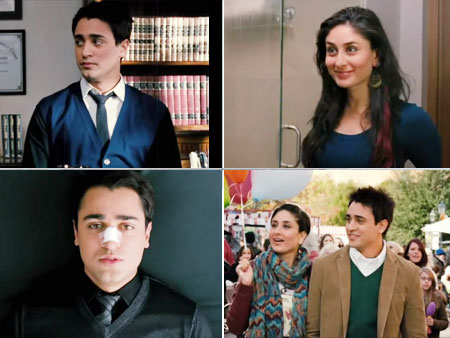
1. Emraan Hashmi CAN act. From lips-that-have-kissed-every-co-star to buck teeth, this was the transition of the year.

2. A Don who asks for “permishan” and cries like a baby. He must be the one who goes to Mumbai, becomes “Mumbai Ka King”, but when he comes home, he gets slapped by his wife.

3. Kids as Kids – the charming Gattu and Sridevi’s son. Dear Balki, you don’t need to make them “sexy” or kill them. Ask Gauri.

4. Ranbir Kapoor doesn’t even need dialogues. At a time when every hero is going for southern remakes loaded with seeti-wala punch lines, he goes in the opposite direction. Barfi!

5. Raj Kumar Yadav is poor man’s Ranbir Kapoor. And i say this with much respect. Apologies if it sounds condescending. Unlike others he has no qualms about appearing in small roles (GoW2, Talaash, Chittagong) but he has so much honesty in his performance that he always leaves a mark. Wait till you see Shahid, you will feel he is Shahid Azmi. So betting my money on this guy.

6. All About My Mother – English Vinglish. Gauri’s Mother. Lyricist Swanand’s mom Neelambari voicing navrai majhi. Vicky Donor’s mom and her mother-in-law.

7. We were wrong about Tigmanshu Dhulia. See point no. 8 in our 2011 post. Plus, he is a terrific actor.

8. Pregnancy before marriage is a blockbuster idea. Kahaani. Vidya Balan.

9. “Slow and Steady” Raghvan can also go wrong. But Raabta has great repeat value.

10. Cliches can be fun too. We define our “cliches” and there’s a way to get it right. Punju. Bong. Marriage. Vicky Donor.

11. Sharman Joshi is not the next Shah Rukh Khan as VVC and company would have liked the world to believe. Also, VVC, Hirani and Co have started talking more about writing than the actual writing they do. Ferrari Ki Sawari.

12. A Don in his bare minimum can become the eye-candy for a bangalan. Talk about reverse commodification. Far far away from the days when gaon ki gori would go to the kuwan to pani bharo and get cheroed.

13. Deepika Padukone can act. Cocktail.

14. We knew nobody can beat Bhai-porn. Add Bhabi and you have the “Fastest 100 crore” orgasm – in just 5 days. Aditya Chopra knows where the money is.

15. Prakash Jha is the new Madhur Bhandarkar.

16. It took as more than two decades to prove Mohnish Behl and Sooraj Barjatya wrong. Ek Ladka aur ek ladki finally dost ho sakte hain. Ek Main Aur Ekk Tu.

17. Your friendly LIC agent can be a closet serial killer. Irony could not have been more delicious. Bob Biswas.

18. Sehar was an accident. Kabir Kaushik scores his hattrick – Chamku, Hum Tum Aur Ghost and Maximum this year.

19. Rab will make the jodi but Jesus will break it – Aditya Chopra’s Filmy Funda No. 786.

20. Aditya Chopra exists. Saw him at the last rites of Yash Chopra.

players-blog_thumb1

10 Unanswered Questions

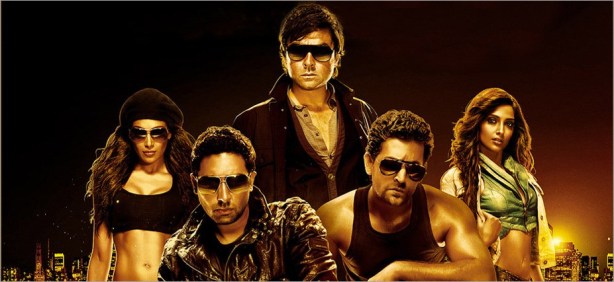
1. Who thought you can “Go For Gold” with Abhishek Bachchan, Sonam Kapoor, Bipasha Basu, Neil Nitin Mukesh, Bobby Deol, Omi Vaidya, Sikander Kher? Red and White Bravery Award nomination please.

2. What were they trying to do in Aiyyaa?

3. If it’s neither sequel nor franchise, what do you call them? Same name, new numbers. Bhatts? Murder/Raaz/Jism/Jannat – 2,3,4,5…..infinity.

4. Ekk Deewana kyun Tha?

5. What was Madhavan’s weight in Jodi Breakers? Especially when he goes underwater in his suit and is surrounded by bikini babes all round.

6. Why did Gulshan Devaiya say yes to “Hate Story”?

7. Who is still giving money to RGV to make films whatever-you-want-to-call-them?

8. What will be Madhur Bhandarkar’s next?

9. Did Aamir Khan count the average number of tears he shed in each episode of Satyamev Jayate?

10. Finally, Has Ishq In Paris released? (PS – Preity’s name is Ishq in the film)

Do let us know about the things that you discovered at the movies this year and the questions that baffled you.

Ek Main Aur Ekk Tu

As i mentioned in the previous post, our endeavor has always been to make some of the Hindi film scripts available online. Though we try to contact all the filmmakers/writers behind some of the best reviewed films of the year, most of them still have a strange and myopic view of the film making world.

Shakun Batra’s debut feature Ek Main Aur Ekk Tu was a refreshing change in the mainstream romantic space that went beyond the norm in its ending. Debut film, with big stars, big production house and still not sticking to the formula – it’s not easy.

Thanks to the producers UTV & Dharma Production, and director Shakun Batra for sharing the script with us. It’s written by Ayesha Devitre and Shakun Batra.

The script is shared only for educational purpose and is a completely non-commercial initiative.

Kahaani2

Sujoy Ghosh‘s Kahaani was easily one of the best reviewed films of the year. Also, a rare Hindi film with a female character in the lead, and that too a pregnant one. And the best part – it proved the trade pundits wrong by scoring a big number at the box office.

Unlike most Bollywood directors who run away or go into hiding once their film has released, Sujoy happily took all the criticism and presented his side of the story when we met him post-release. I hope more directors will learn how to talk post-release and not just pre-release.

Since we don’t have any culture of “script database” in this country (and some like VVC want to make money out of it! Remember 3 Idiots? ), we have been trying to put as many scripts online as we can. So Dear Bollywood, make money from films and share the script! Learn from the greatest filmmakers of the world. Nobody has lost anything by sharing knowledge. Forget the masterclasses, this is the least you can do.

And thanks to Sujoy again for sharing the script of Kahaani with us. This one is very early draft and has been improved  upon many fold by adding and deleting many scenes. Once you read it, you will get to know.

The script shared here is only for educational purpose and is a completely non-commercial initiative.

(PS – If you missed it earlier, click here for the notes on origin of Kahaani’s Bob Biswas)

I know nothing about editing. I don’t even understand how people get it by just watching films. But recently i read a wonderful piece on editing by Deepa Bhatia. I requested her if it can be shared on the blog so that it can reach more people. She agreed instantly and so here it is. Thanks to her, and hope you guys enjoy it as much as i did.

Deepa BhatiaDeepa has edited films like Hazaar Chaurasi Ki Maa, Thakshak, Dev, Maine Gandhi Ko Nahin Mara, Taare Zameen Par, Rock On!!, Stanley Ka Dabba, My Name Is Khan, Ferrari Ki Sawaari, Student Of The Year, Kai Po Che, and has directed the documentary Nero’s Guest. Over to her – @CilemSnob

A media school requested me to put down a note on my process of editing for fresher film students. ‘A ready-reckoner sort of thing’, they said. Of course, I didn’t offer the short cut document they were looking for, but the idea set me thinking. Let me attempt expressing; if only for myself, the delicacy, the intricacy and the nuances of editing.

As I sit to try and articulate my thoughts, my know-it-all- son prompts, ‘joining?’ Having made his share of little videos, edited mostly on i movie, it’s a fair shot. But not good enough, I answer. My mother in long shot contributes, ‘Like Stitching?’ ‘Somewhat Mum…Stitching together a design (read scene) visualized by the designer (read director), darning over its flaws, cutting it correctly so it fits into the larger landscape of the garment. (Read film)’

Not bad, but still not bulls eye.  Agnes Guillemot’s description comes to my mind. “I discovered that cinema is music and editing is like being a conductor. I don’t invent the themes but I can produce orchestrations- I can adapt therefore I can edit.”

So there are shots, and each shot has multiple takes. To pick then, the right take, from the right shot and arrange it in that perfectly right way for the magic to happen.

That’s the moment I seek. A shot placed differently to change the meaning of the narrative. 6 frames off a cut and the moment transforms drastically. A sequence rearranged to create a new truth.

In the quiet of my empty editing room, my heart shrieks with joy.

The heart thumps at the discovery…a day well spent.

SEEING THE MATERIAL

The moment of ‘magic’ is within reaching distance of those interested in ‘listening’ to the material. More than the script, more than the director, it is the material that speaks. It reaches out, hoping you see it with care and attention, not missing a detail…a tear, a quiver in the voice, an actor trying something new, hoping you will catch on to his or her little secret, a camera lingering that extra second or a surprise shift focus that adds a delicious taste to the scene.

So the key lies in seeing. Really seeing with all your senses alive and focused. When that happens, the director usually appreciates the cut. ‘Great, that’s exactly as I saw it’.  Or ‘That’s more interesting than the way I saw it.’ That’s when you know that you saw with your soul and intellect in perfect harmony.

HARMONY AND RHYTHM

Harmony is of utmost significance.

Soul and Intellect.

Reason and Instinct.

Listening and Dictating.

Following and Leading.

It’s a tight rope. I often realize that, when I am guiding my young team through their scene cuts, and helping them achieve that harmony.  ‘You are ignoring the actor’s rhythm; you are imposing your own rhythm on the material. WHY ARE YOU NOT LISTENING TO THE VOICE OF THE MATERIAL?’ At other times, I implore, ‘didn’t you see the pauses are too much and the performance is lagging? USE YOUR SKILL AND BRING RHYTHM INTO THE SCENE.’’

Contrary advice because editing demands that you react differently to different kinds of material and give it form in response to its ‘personality’. Like parenting. As a mother, I know for a fact, no single rule applies to all children and all situations, so your ear better be on the ground. Listening when the child needs to speak, but speaking when it is his time to be quiet and listen.

Asserting, yet leaving room for dialogue.

A little of this and a little of that.

And in that delicate balance, lies the art of editing.

RUMINATION

And how will you find the magic? Craft helps, no doubt. Experience too wizens you. But, in the end, for me, it boils down to integrity. Integrity in watching the material, in seeking the truth from it, in devoting complete time to a project so the process becomes instinctive and not merely physical.  I am inspired by the devotion of classical musicians, and I believe editors must have the same quiet soulful relationship with the material.  If you are running from one editing ‘job’ to another, where is the time to ruminate, to mull, and to contemplate? Writing and Editing, the two ends of the filmmaking spectrum, that allow you time to think, we editors insist on rushing through.

When I lock the edit of a film, I often embark on yet another journey of watching and revisiting all the rush again. When a scene is edited, it is in the context of the script and of the film, as you know it then.

Once it is edited, it is an all-together different entity, a full-blooded  organism. You will be amazed at how you find bits of film that didn’t seem relevant at first cut or even final edit, that worm their way into the film. So processes are critical. Give yourself time to think and contemplate. It’s my golden rule: the answer to most cinematic problems lies in the rushes.

LATERAL VISION

The script makes an imprint. Then the material follows with its own voice. And yet, the editor must be able to see things differently, to be able to flip the visual on its head if the need arises, to relook at material all the time, with new eyes and new imagination. I call it the Little Prince approach. ‘Is it a hat, or an animal swallowed by a boa constrictor?’ Keep your heart and mind open to discover that.

SYNERGY

When you enjoy the material, and editor-director sensibilities match, that’s the film that’s going to work best.

When you sleep thinking about the film, and wake up, raring to go to the editing room, that’s the film that’s going to work best.

When your director respects that you have a point of view; that may or may not be his/her view, that’s the film that’s going to work best.

When you work like co-parents to protect, nurture and raise the child, without ego, without doubt, always, always aware, that the child is bigger and more important than anyone, that’s the film that’s going to work best.

I also feel it is important to develop your own relationship with the material. A director lives with his film for years. He starts with the germ of the idea; it simmers in his heart and mind, is then poured out into the script and finally filmed with effort, time and money. If you are to be of some use to the director, it is important to own the film as much as he does, to know it as intimately, so you can do your best for it. A mother can touch the head of her child and sense that the temperature is different from usual. She can sense that because she knows her child so intimately and deeply and dearly. This innate knowledge helps her sense something amiss and find the right and timely solution for her baby. An editor must be committed and sensitive enough to find the same deep relationship with the material, to be equipped to do the best possible to it, for it.

My son pops his head in and brings me back to base. ‘You started by wanting to explain what editing is. That hasn’t happened yet mum…

Why is it so important to explain what I do? Because very few, even in the business of filmmaking, seem to recognize it for what it is.

There are some simple ways of judging editing.

Anything short is usually good editing.

Anything fast too is good editing.

Anything with razzmatazz is of course good editing.

DAMN, IS THIS FILM WELL CUT OR NOT?

As an academic exercise, I looked into recent films that I liked and didn’t, and studied the critical response to them, particularly to the edit. The truth stares out clearly.

 Somehow, no one is able to separate the film experience from the editing. The two are deeply linked.  It’s easy to spot good cinematography, art direction, costumes, but can you ‘see’ an edit, beyond the film?

Almost never.

And so it follows, have you ever read about an editor being praised for a film that the reviewer did not like? It’s impossible! This facet of cinema is so deeply linked to the final outcome, to the way the film finally shapes up, that we, as editors must accept that burden completely.  Very recently, I edited “Student of the Year” for Karan Johar. One critic found it ’20 minutes too long’, while another said the editing was ‘fantastic’.  On Stanley Ka Dabba, one critic commented, ‘Let me warn you that Stanley Ka Dabba is slow. In places, the story seems stretched’ Another felt its ‘very-well sliced together…the pacing really works’

 ‘The truth is that their reaction to the edit is linked directly to their reaction to the film.

So can a bad film be cut well?

Or is every good film well cut?

I believe both are true. I believe if you like a film, or if it ‘works’, it means the editor has done the job well. The fact that a film comes together and the spell works, implies a good editor at work. (A recent example being English Vinglish, that I thought was beautifully edited by Hemanti Sarkar).

Being an editor, I often see the craft and emotional tenor in the work of some of my peers. Not a single review of Paa, for example, spoke of the breakthrough scene cutting, where jump cuts were used within a dialogue scene to create a certain pace and energy. Not many people appreciated the use of freeze frames in a film about speed and motion, a device Aarti Bajaj employed with great effectiveness in Paan Singh Tomar.

PROCESSES

In terms of processes too, some films fly out of you with very little effort. Rock On, for example, is really one the simplest films I have cut and we completed the edit in a relatively short time span.  Taare Zameen Par required more work and application because people in test screenings were resistant to its philosophy and we needed to get the balance of the edit delicately right to achieve a certain aesthetic portrayal, while telling a story.

Stanley Ka Dabba, in particular, was a labour of love. Certain processes were followed while filming, that defied conventional grammar, and yet we had to achieve a narrative that was acceptable to an audience. Amole and me spent many hours playing with footage; reinventing the story and its telling, and literally carved out the purest film possible from the material. Yet, I’ve rarely been complimented on its editing, the way I have been for say, Rock On. And yet in my mind, it remains my best work!

I’ve finally concluded that films that have form to fall back on are much easier to edit than stark plainer films. The editing is in the face, easy to notice and therefore easy to appreciate.

The hitch is when the film needs work on the table. That’s the time when director and editor need to recognize and accept that work is needed, reinterpretation is needed, a fresh approach is needed. It’s a very delicate process, for makers are deeply attached to their material. Editing out a chunk is heartbreaking. Editors must be deeply sensitive at such times and accept that the process will take time and effort. And sometimes you hit a deadlock because directors are too headstrong and sometimes, we ourselves, as editors lack clarity and vision. I try my hardest; I fight with my entire being if I am convinced something should go out of the film. I explain, try to convince, scream, shout, bully and finally beg and implore if I am dead sure! I don’t always succeed but I try my best.

I personally felt a sense on failure while editing My Name is Khan. We had some issues with the unfolding of the second half. (I took about a year to edit the film). We slogged to get it right and at one point, I felt that I had achieved the balance. My director was totally supportive of me shaping the film, and was completely open to shortening and re-interpreting, and yet I didn’t get it bang on. A dear critic friend met me and dug the nail deep. ‘I thought it was a super film, and then the Hurricane came’.

So obviously, we were unable to curb the excesses that bothered both critics and audiences and I take the blame completely. Somewhere, in working overtime to get the second half right, I lost objectivity and I feel it took a toll on the film. I failed on the one benchmark I set for myself. Make the film the best it can be. Whatever the material, whoever the director, make sure the film reaches its own ‘potential’.

In the end, the truth about editing lies buried in an editing room, known best to only the director and the editor. The director, of course knows the contribution and role of the editor, regardless of the outcome of the film. But it is the editors and the editors alone that know how committed and focused they were, how truthfully they engaged in the ‘process’ of editing. For in the process lies the fruit. In the effort lies the reward. And in a truthful approach, lies a good, peaceful night’s sleep… That you did everything possible to make the film the best it could be, without short-changing it, without judging it, without giving up on it, regardless of how good or bad it was.