Archive for the ‘Documentary’ Category

After doing the fest rounds, Nisha Pahuja’s critically acclaimed documentary, ‘The World Before Her’ is all set to release on May 16th, 2014. Filmmaker Anurag Kashyap is presenting it and PVR Directors Rare is releasing the film. Moving between the worlds of a Durga Vahini training camp and the beauty boot camp of the Miss India Pageant, the film is a powerful story that could not have come at a better time. Some of us managed to watch the film earlier and we have put it in MFC’s Must Watch recco list. Click here to read our recco post on the film.

We are posting two clips from the film – one from the film, and one that did not make the cut. We also got Nisha to write on these two clips.

1. Pooja’s story

Director’s Note – I remember when Pooja told me the story of almost being killed at birth for being a girl..that moment became a turning point for me in terms of the focus of the film. I knew it had to be about the struggles that so many Indian women continue to face. It also changed the way I looked at Miss India–suddenly it was no longer passe or just simply derogatory..it was so much more complex. I had to ask myself “Given the Indian context, can I disregard my Western prejudices and see a beauty pageant as “empowering.” It’s something I still grapple with..

2. Tulsi’s story

Director’s Note – When I began the research in 2008, I was determined to find a young woman from a village who harboured dreams of becoming a Miss India.  Somehow I did. Meet Tulsi – achingly lovely..a symbol of “aspiring India.” Tulsi’s story was incredible, she comes from a village in UP that got electricity in 2009, and that only intermittently. Her grandfather was a freedom fighter and and there was a temple that had been built in his honour. Tulsi’s mother did not want to get married but was forced to.  So in an act of defiance on her wedding night she chopped off all her hair and began to dress like a man. Somehow she was accepted. She decided she would allow her daughter to do as she wished. When Tulsi told her parents she wanted to move to Bombay and pursue her Miss India dream, they sent her off with the money they had been saving for her dowry.  The Miss India team never responded to her application or her pics and when I last saw her in 2010 she was having a hard time and it seemed clear to me that she was being exploited, but didn’t want to talk about it in too much detail. I still get the odd email from her but she never responds when I write her back. I had always wondered how her grandfather, who had fought for India’s freedom would feel about Tulsi’s dream of winning a beauty pageant. Was this the freedom he was prepared to die for?

TRAILER

FUND-A-FILM Project

The makers of the film are also running a kickstarter campaign with the goal of taking the film to a wider audience – schools, colleges, public screenings. Click here to read about their plan and do contribute if you want to support the initiative. The aim is to raise US$ 50,000 out of which they have already got $ 41,000. Now they have just a week left to achieve the target. So if you feel for it, do contribute generously. The film needs your support.

1658720_566365606793453_343484244_o

As we have said before, it’s a great time for desi documentaries. And while this one is not an Indian production, it does have a desi connection. Amma & Appa is a personal documentary about the cross-cultural marriage of director Franziska Schoenenberger and her fiancé and co-director Jayakrishnan Subramaniam. It was warmly received when it showed recently at the Berlin Film Fest in the Perspektive Deutsches Kino section. Check out the trailer and synopsis below:

Franziska comes from Bavaria and is in love with Jayakrishnan from southern India. When the couple decide that their love should lead to marriage and a life in Germany, both sets of in-laws find that cultural customs they took for granted are now suddenly subjected to scrutiny.

Whilst Franziska’s parents chose to marry of their own free will, the marriage of Jayakrishnan’s parents was arranged within their own caste, as is customary in Caddalore in southern India. As far as they are concerned, their son’s intention not only to marry a foreigner but to marry for love represents a cruel act of revenge on the part of the gods, since the match calls into question their whole traditional way of life.

Hoping to overcome cultural barriers, the parents of the Bavarian bride-to-be decide to travel to India to visit their future son-in-law’s parents. Interspersed with delicate animation sequences, Amma & Appa is a personal documentary which tells the story of one intercultural union — and in doing so humorously explores the familiar in the unfamiliar, and the unfamiliar in the familiar.

For more info on the film, check out the FB page or the website.

Some of us had the privilege of watching Nisha Pahuja’s critically-acclaimed, controversial and undoubtedly brilliant documentary “The World Before Her” last year, and had nothing but praise for it. In fact, we even wrote about it at length and put it on our Must Watch film recco list. We’re now delighted to announce that after having a theatrical release in US and Canada, and winning accolades and top awards in the prestigious International film festivals, the film will get a release in India via PVR Director’s Rare in 6 cities — Bombay, Delhi, Kolkata, Pune, Ahmedabad and Bangalore — on April 25. More about the film below.

the-world-before-her-copy

Synopsis

The World Before Her tells the story of girls competing in the Miss India Pageant and those taking part in the VHP’s Durga Vahini camps. It is a tale of two Indias. In one, Ruhi Singh is a small-town girl competing in Bombay to win the Miss India pageant—a ticket to stardom in a country wild about beauty contests. In the other India, Prachi Trivedi is the young, militant leader of a fundamentalist Hindu camp for girls run by Durga Vahini, where she preaches violent resistance to Western culture, Christianity, and Islam. Moving between these divergent realities, the film creates a lively, provocative portrait of the world’s largest democracy at a critical transitional moment—and of two women who hope to shape its future. The film also features former Miss India Pooja Chopra who was a near victim of female infanticide. Watch the trailer below:

The writer and the director of the film, Nisha Pahuja who is the first filmmaker to get inside a Durga Vahini camp says,

“I am thrilled to finally present the film to audiences in India!  Although we’ve had a great run with it abroad, I’ve always felt that it needs to be seen in India because it is first and foremost an Indian story.  And sharing it now is key since women’s rights has become an issue that is front and centre in the public consciousness.”

The award winning film is shot by the ace cinematographer and FTII graduate, Mrinal Desai and Derek Rogers.

Apart from the theatrical release, the film will be screened in various cities, villages, schools and colleges across the nation as a part of its ambitious nation-wide campaign. The film is being shown at the prestigious educational institutes including Symbiosis,  IIT and IIM institutes across the country. Joining the campaign are women’s rights activist and some of the incredible women featured in the film including the former beauty queen Pooja Chopra.

Awards and Accolades

The award winning film which premiered at Tribeca Film Festival in 2012 has been screened in more than 125 film festivals across the world and has won over 19 awards including best documentary feature at the Tribeca Film Festival 2012, best Canadian Feature, 2012 Hot Docs Film FestivaL, best Foreign Film, 2012 Traverse City Film FestivaL, best Canadian Documentary, 2012 Vancouver Film Critics Circle Awards. It was recently featured in the ‘Film Forward’ program of the prestigious Sundance film festival and was part of Indiana University Cinema program where Pahuja was invited to present and speak about the film along with other speakers including Meryl Streep, Abbas Kirostami and Roger Corman.

About the director

Nisha Pahuja is a freelance filmmaker, writer, producer, and researcher who was born in India, but grew up in Toronto. Her third film, The World Before Her won the World Documentary Competition Award at Tribeca Film Festival, where it premiered. Though she grew up in Toronto, this is her second film focusing on India. She makes films that deal with social and political issues and are driven by character and narrative.

For further information on the film please log onto the website.

gulabi

It’s a great time for desi documentaries. In the recent past we have seen some pretty terrific ones- Malegaon Ka Superman, The World Before Her and Katiyabaaz to name just a few. Which is why it’s a pity that Nishtha Jain’s powerful documentary Gulabi Gang hasn’t quite got the audience it deserves- yet.

Perhaps the makers ought to have employed the Gulabi Gang themselves to whack our lazy, torrent-savvy audiences into theaters. 😉   The film is now running in its second week in a select few theaters/cities with ticket rates further slashed. There’s no good excuse to miss this one, really.

Anyway, here we have an interesting post by Prashant Parvatneni on Gulabi Gang and how genres usually associated with (fiction) cinema can find their way into the documentary format as well. Over to him:

Gulabi Gang by Nishtha Jain is undoubtedly a rigorous study of a women’s movement in the deep interiors of Bundelkhand where a group of women networked between several villages have formed a ‘gang’ to fight against the oppression of women and dalits. They drape themselves in Pink sarees and carry pink lathis that becomes an image of the identity that binds these women. There are complex issues that these women are dealing with and fighting. Young brides are being burnt, dalit activists murdered and certain high-caste Choudharies have concentrated all power in their hands suppressing any and every dissent using gun and muscle power. It is this nexus of power and oppression that the Gulabi Gang is trying to tear apart under their feisty leader Sampat Pal.

Sampat Pal inevitably becomes the ‘hero’ of this film, her infectious zest and fearlessness naturally grabs the attention and it’s hard not to root for her like we would for the angry underdog taking on the system in a Bollywood film. It only helps that Jain adopts a form of narrative that is simple in structure but quite inventive. It follows 2-3 cases that Gulabi Gang encounters and as it does so, quite curiously these cases turn to a kind of whodunit with the Gang acting as detectives trying to uncover the truth behind the violence inflicted on women.

pink

Like in one of the cases, a young wife is found burnt inside the house. When Sampat reaches the spot, the in laws of the woman claim that she got burnt while making rotis but Sampat in true detective spirit, deduces that it cannot be a mere mishap. There wasn’t any stove at the spot, nor was any other part of the house burnt or even charred. Sitting in the audience even we also could start the process of knitting the clues together and deducing while also being acutely aware of entire machinery which includes the panchayat and the police trying to push this crime under the carpet. Sampat Pal’s own relative burns his wife but she wants the truth to come out. When the director’s voice asks her will you fight against your kin as well, she replies inspiringly ‘I just want to find out the truth’. Quite fittingly then, Anand Gandhi (director, Ship of Theseus) called this film a ‘reinvention of detective genre’.

This is a welcome change as the problem with most documentary films dealing with social evils, people’s movements, subaltern issues etc. is that they have sort of reached a saturation of form. While they do deal with a variety of issues, they follow the same old form – interview of key players, a bit of commentary, a bit of field action all merged seamlessly to ‘illustrate’ and ‘explain’ and thereby ‘document’ the problem. Such a form has turned even more uninteresting with its derivatives populating news channels through their ‘human stories’.

Thankfully the film doesn’t stop short of also pointing towards the limits of such genres that evidently end with a resolution a climax arrived at through carefully plotted series of events. Unlike in a detective genre film, we do not get to know whether the culprit was caught or not. Often the battles are lost and the guilty gets away. But like the truest of detective stories, the importance lies in questioning what one gets on face value rather than solving the puzzle and Gulabi Gang does point our attention towards the need to inquire and shakes up the static status quo.

Instead of a gradual convergence towards a resolution of problem, the film starts to spread in and out of such inquiries of cases and looks at the varied other forms of struggle that a people’s movement engages in – organization, activism, mobilization, planning etc. One of the most charming and equally thought provoking sequences involves the meetings and the practice sessions of the Gulabi Gang. As a ritual Gulabi Gang practices lathi fights with a playful zest as two women take on each other while others on the periphery cheer and clap. It quite casually points towards a ritual- even a ritual of violence (though more for protection in this case) that is involved in any people’s movement.

The entire movement also resembles a theatrical performance. There is backstage practice and rituals and there are costumes and props – the pink sarees and pink lathis juxtaposed against the dry, arid brown and gray landscape is an image that gives tremendous gravitas to the Gang and binds them into a community. In fact the saree and the lathi are the first things that are given to the women who join Gulabi Gang and they have to change into the ‘costume’ right away. There is a slightly comic cut in the film where we see Sampat Pal encouraging the mother of the burnt bride to fight her case and in the next shot the frail creature of the mother is draped in bright new pink saree as she is on her way to the court with the Gang. It’s a terrific reminder of how a bit of theatre and performance is a part of every movement or revolution. It also reminds us how such performativity can be appropriated for contradictory causes – for assertion of justice or for religious or political fanaticism.

Gulabi Gang ends with tragic human drama as the documentary manages to trace a character arc of sorts of one of the Gang’s members – Husna. Husna, a hardworking and passionate activist and member of Gulabi Gang takes a position completely contradictory to the movement when her own brother kills her sister for marrying out of love. When she supports him instead of condemning in the name of culture and tradition, one is hit by the extent to which such fundamental, patriarchal ideas can deride compassion and human justice and what a difficult battle Gulabi Gang is fighting – not just externally but internally. For me, the film was special because it shows how certain genres – like detective, political, social drama, human drama genres – can seep into documentary also; in-fact they come from the reality that the documentary often deals with. But, it also shows how cinema can avoid using genre as a trope and move in an out of genres to question the complexity instead of using such genre games to manipulate sentiment and to take an easy position of a sympathizer. The last sequence shows Gulabi Gang members waiting for a train on the platform and few men looking at these women clad in Pink Sarees with contemptuous humor. For them they look nothing short of fancy dress. One of the men asks the man who moves around with the Gang – ‘kuch milta hai issse’. The director shows amazing empathy here as she cuts to the image of Sampat Pal staring into the camera or perhaps into the far horizon, sitting amidst other women with eyes filled with acceptance of difficulty but shining with a rare honest hope. All the contempt of the scene just washes away and we are filled not with sentiment but with emotion – an unsaid but urgently felt hope and a desire at least to think.


(This post was originally published here.)

After the success of Pancham Unmixed, the National Award-winning film on RD Burman, filmmaker Brahmanand Siingh is now working on another feature length biopic, this time on legendary ghazal maestro, Jagjit Singh, titled “Kagaz Ki Kashti…”

“Kaghaz Ki Kashti…” is planned to be an evocative account of a down-to-earth small town boy from Rajasthan who became a legend in no time, but not without his share of struggle. In the process, the film will capture that extra something in his music that gave his compositions a certain polish and a soul at the same time which delighted millions of listeners across countries, cultures and age segments.

Through visual and sensory experiences, the film intends to take us on a journey of his choice of poetry — simple but touching world of Urdu lyrics that he chose to sing (sometimes nazms, sometimes ghazals), setting them to soulful tunes and introducing western instrumentation to make them textured, contemporary, and rich. The film will also take us back in time and trace the zigzag marathon run by a man with passion, fire, and soulful melodies within him, which kept him alight all through his luminous career as well as in some difficult personal times, all with a seamless and gripping narrative.

The lyrical film aims to use his music and the poems he chose to tell his own story of love and loss, of tribulations and triumphs. In the process, the film creates a warm portrayal of the man behind the visible, and the artist behind his creations.

Brahmanand’s previous film “Pancham Unmixed” went on to become a big success at film festivals and won two National Awards, among many others, and was a big draw at over 40 International film festivals.

– For all the updates on the film, click here to go to its FB page.

(via press release)

Gulabi Gang

So far we have been hearing about Madhuri Dixit and Juhi Chawala starrer Gulaab Gang directed by Soumik Sen. And now, there’s a twist in the tale. A documentary film titled Gulabi Gang by Nishtha Jain is all set to release before the Bollywood feature. Interestingly, both the films explore the same subject. Our guess is the bollywood film will have much more to it than just the story of Sampat Pal and her Gulabi Gang.

Gulaab Gang is set to release on 7th March, 2014. And PVR Cinemas is releasing the documentary Gulabi Gang on 21st February. Its presented by Sohum Shah, actor-producer of Ship Of Theseus. The film has been doing the festival rounds for quite some time. It also won the Best Director Award in the International Competition section of the recently concluded Mumbai International Film Festival (MIFF) of Shorts, Docus and Animation.

Here’s the trailer of the film –

With the comparisons being made, recently Nishtha clarified few things on her FB post. We are copy-pasting it here –

I’m dismayed and partially amused with a lot of wrong reporting in the print and audio-visual media about my views on the Bollywood film Gulaab Gang, about my own film and it’s theatrical release. I guess I should have expected that nuances will get lost but some of the stuff the media has been putting in my mouth is blatant lies. I just want to clarify that:

1. I have not given the name Gulabi Gang to this group of women. They have been working in Bundelkhand since 2006 under this banner. I’ve only made a documentary about their work. This is not the first or the last film on them. There have been many before and I’m sure there’ll be more. And Budelkhand is not a village it’s a linguistic region of UP and MP.

2. Also I’ve never said that the Bollywood film Gulaab Gang is based on my film. I’ve not seen the film, only their trailer. The makers of Gulaab Gang didn’t need to take permission from me but from the real group called Gulabi Gang for using their name, concept etc.

3. I have never said that mine is the first documentary to be released in India, there have been many before.

4. I have never said my film is entertaining. Yes it is in parts but the words I have been using are engaging, engrossing, disturbing, grey, complex etc. Maybe in common parlance that makes the film entertaining.

5. And this quote which is being curculated bereft of it’s original context “I’m not an ‘activist-filmmaker’. Nor am I ‘woman-filmmaker”. This is what I had said in answer to the question by Dear Cinema:

Dear Cinema: In India, most documentary filmmakers are also activists in their own right. How do you see yourself in that light?

Nishtha Jain: I’m not an ‘activist-filmmaker’. Nor am I ‘woman-filmmaker’. I don’t like all these labels. I’m a filmmaker, a feminist and when the need arises, an activist. My films grow out of my world view and interests.

– To know more about Gulabi Gang, click here.

– To read Nishtha Jain’s interview on the film, click here.

A documentary film titled ‘Beyond All Boundaries’ directed by Sushrut Jain will have its Indian premiere at the Mumbai Film Festival this year. The film is produced by Kunal Nayyar (of Big Bang Theory fame) who also helped Sushrut raise funds for the project.

TRAILER

OFFICIAL SYNOPSIS
This 98 minute documentary tells three true life stories of cricket lovers and fanatics who gave up everything to pursue their passion. Woven through the tale of India’s progress in the 2011 World Cup are three separate story arcs that speak of the roles cricket can play in the lives of ordinary Indians, for whom the game becomes a source of aspiration, desperation and devotion.
BABPosterFinalsmallDETAILS
Beyond All Boundaries takes a look at the life of three people
1. Sudhir Kumar Gautam, the well known Indian cricket fan who loves his team, his stars, and at the heart of it, eventually the game.  He is India’s most recognizable fan who turns up at matches, his torso and face painted in the colours of the Indian flag, and “Tendulkar” and the number 10 on his back.
2. Prithvi Shaw, a 12-year-old batting prodigy from one of Mumbai’s distant suburbs, whose life and career are driven by the prototype sporting parent – a single father obsessed with turning his son into a professional cricketer.
3.  Akshaya Surve, an 18-year-old girl trying out for the Mumbai Under-19 team. Cricket is the centre of her existence and a potential exit for her and her mother, trapped in a single room in one of Mumbai’s many narrow bylanes.
– To know more about the film, click here for its website

FITB Pvr StandeeThe documentary film, Fire in the Blood, which was selected for the World Cinema Documentary Competition at the Sundance Film Festival, one of the most prestigious and competitive festival for independent films, is releasing today (Oct 11).

Directed by Punjabi-Irish filmmaker Dylan Mohan Gray, the doumentary is an intricate tale of ‘medicine, monopoly and malice’ and tells the story of how Western pharmaceutical companies and governments aggressively blocked access to low-cost AIDS drugs for the countries of Africa and the global south in the years after 1996 – causing ten million or more unnecessary deaths – and the improbable group of people who decided to fight back.

Shot on four continents with contributions from global figures such as Bill Clinton, Desmond Tutu and Joseph Stiglitz, Fire in the Blood ultimately celebrates the remarkable coalition which came together to stop ‘the Crime of the Century’ and save million of lives in the process. The narration is done by Academy Award winner William Hurt.

The film is released by PVR Directors Rare in India.

INFO

To know more about the film, click here to go to its official website.

TRAILER

REVIEW

To read the review of the film by Mihir Fadnavis, click here.

SCHEDULE

FIRE IN THE BLOOD/ WEEK 1/ OCT 11-15


Delhi NCR


PVR Director’s Cut Vasant Kunj

6:20 PM


PVR Select Citywalk Saket

9:00 PM


DT Cinemas Saket

8:40 PM


DT Cinemas Vasant Kunj

8:50 PM


PVR MGF Mall Gurgaon

9:00 PM


Mumbai


PVR Juhu

6:00 PM


PVR Phoenix Mills Lower Parel

8:35 PM

10:45 PM

Cinemax Versova

6:30 PM


Bangalore


PVR Forum Mall Koramangala

10:00 PM


Pune


PVR Koregaon Park

5:35 PM


Kolkata


PVR Diamond Plaza Jessore Road

1:45 PM


Ahmedabad


PVR Acropolis Mall

4:50 PM


Releasing in Chennai on October 18


slide4

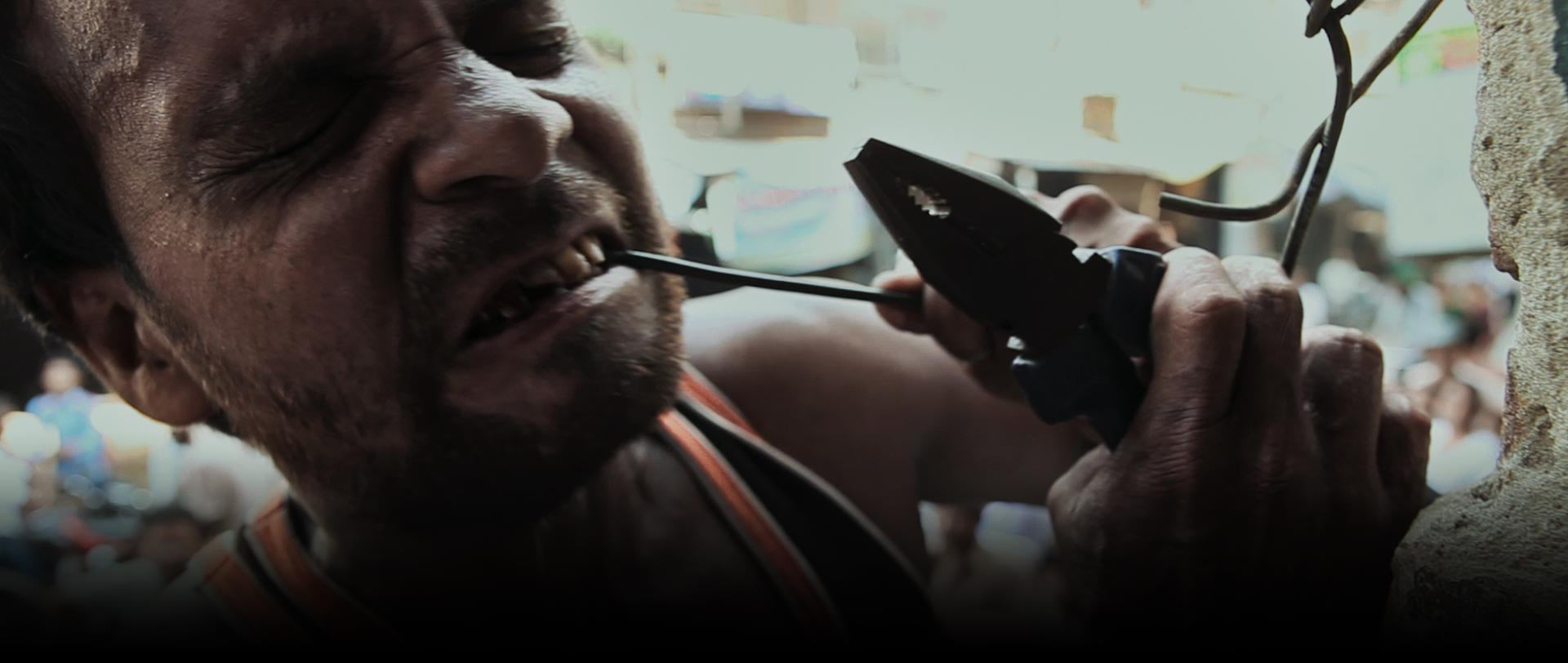
Fahad Mustafa and Deepti Kakkar’s documentary Katiyabaaz (Powerless) was selected for Berlin and Tribeca Film Festival. The film will have its screening at this year’s Mumbai Film Festival. Ahead of the fest, it has got a new trailer. Have a look.

The song in the trailer is sung by Indian Ocean and is written by Varun Grover who is also a regular contributor to this blog.

About the film :

In Kanpur, India, Loha Singh is the local robin-hood, stealing electricity so that homes and businesses could function normally in the face of day-long power-cuts. Meanwhile, the first female chief of the electricity supply company has vowed to rid the town of illegal connections and increase supply. In a summer of crisis, sparks will fly.

Description :

Powerless is a documentary film about the electrical supply shortage in an industrial suburb of Kanpur, India. The story unfurls along miles of tangled copper wires which mirror the diabolical complexity which unfolds in several towns and cities across the country. A picture emerges of a modern dystopia encompassing urban decay and desperation due to the lack of electricity. Underlying the localized crisis in Kanpur is the glaring energy poverty in India, where a third of the population is often without power and the rest grapple with frequent power-cuts that dictate their own terms. Powerless points to the universal need for dependable electrical power while exploring this theme in one of the world’s most ascendant economies.

– To know more about the film, click here to go to its official website.

– To read the Hollywood Reporter’s review of the film from Berlin fest, click here.

London Film Festival (LFF) has announced its schedule for this year. The 57th edition of the festival will run from 9-20 October and will screen 234 feature-length films & 134 shorts from 74 countries.

India seems to have a good score at LFF this year as seven desi films have been selected for the fest. The titles include Buddhadeb Dasgupta’s Anwar Ka Ajab Kissa, Ritesh Batra’s fest favourite The Lunchbox, Nagraj Manjule’s Fandry, Richie Mehta’s Siddharth, Shaina Anand and Ashok Sukumaran’s From Gulf To Gulf, Rituparno Ghosh’s Jeevan Smriti and Uday Shankar’s Kalpana. The Lunchbox is in official competition section of the fest.

But the one that we are most excited about is Anwar Ka Ajab Kissa (Sniffer). We have been hearing about it for sometime and now more details have come out.

ANWAR KA AJAB KISSA
sniffer-002

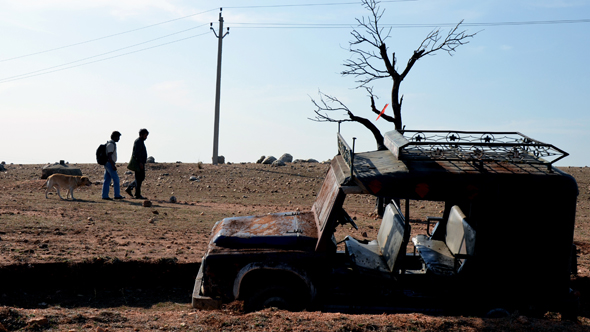
Master Bengali filmmaker Buddhadeb Dasgupta teams up with India’s hottest indie actor Nawazuddin Siddiqui in this richly textured black comedy, set against a magical, surreal tableaux of the Bengali city and countryside that’s typical of Dasgupta’s eye. Anwar (Nawazuddin Siddiqui) is a well meaning if clumsy private detective, or ‘sniffer’, who can’t help getting personally embroiled with the clients he is spying on. His only true companion is an old dog. His pet and his regular drunkenness put him at odds with the local orthodox Muslim housing block, who want him out. At the same time, Anwar increasingly struggles to cope with his small-time sleuth work that shows him that, in the modern world, even love is for sale. When a case takes Anwar back to his rural homeland, he’s forced to confront his own love tragedy. Siddiqui lights up the screen, displaying a talent for deft comic timing that makes Sniffer a joy to watch.

– Director-Screenwriter : Buddhadeb Dasgupta

– Producers : Ajay Sharma, Archismaan Sharma

– With Nawazuddin Siddiqui, Pankaj Tripathi, Ananya Chatterjee

– Duration :132 mins

FANDRY
fandry

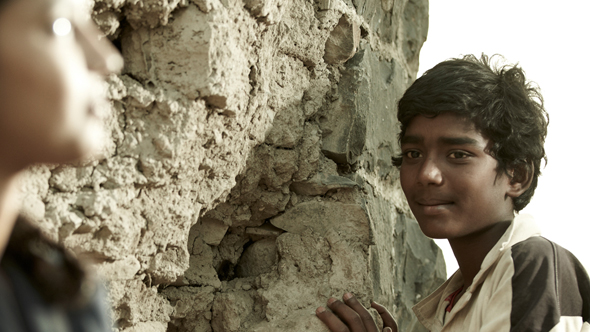
The ‘untouchable’ Jabya struggles to reconcile his status with his dreams in Nagraj Manjule’s uncompromising indictment of India’s caste system.

– Director-Screenwriter : Nagraj Manjule

– Producers : Vivek Kajaria, Nilesh Navalakha

– With Somnath Avghade, Suraj Pawar, Kishor Kadam

– Duration : 105 mins

– Production company Navalakha Arts and Holy Basil Combine

Nagraj Manjule’s film is a scorching indictment of the caste system that persists in modern India despite legislation introduced since independence. It is depicted through the eyes of an intelligent Dalit (untouchable) teenager, Jabya, who has a deeply rooted inferiority complex about his looks, caste and his family’s staggering poverty. These feelings prevent him from expressing his affection for his fellow classmate and cherished love, the fair-skinned Shalu, who is the daughter of a higher-caste family. His father is against him going to school and aspiring too highly and fellow villagers expect him to do menial work like the rest of his clan.

SIDDHARTH

siddharth-002

A modern-day quest to find his missing son leads Delhi tailor Mahendra on a perilous journey into the unknown in Richie Mehta’s cautionary tale.

– Director-Screenwriter Richie Mehta

– Producers Steven N Bray, David Miller

– With Rajesh Tailang, Tannishtha Chatterjee, Anuray Arora

– Canada-India 2013

– Duration 96 mins

– Production company Poor Man’s Productions

– Sales : Fortissimo

Director Richie Mehta returns to London with a powerful tale that is all too sadly a common story in today’s Indian cities. In Delhi, a door-to-door tailor, Mahendra, and his long-suffering wife, played by Tannishtha Chatterjee (Brick Lane), are struggling to make ends meet. They send their 12-year-old son Siddharth off to work illegally in a factory in Punjab, but when he doesn’t arrive back on the agreed date, the couple go to the middle men who arranged their son’s job and then the police. As they don’t have a photo of their son, identification is near impossible. As tales of child abduction are raised the desperate father borrows money from his fellow local street vendors and sets off on a quest to trace his son’s journey into the unknown.

FROM GULF TO GULF

from-gulf-to-gulf-to-gulf-002

Mobile phone video from the sailors who brave the routes between India and the Persian Gulf form the basis of grassroots true-life adventure.

– Directors : Shaina Anand, Ashok Sukumaran

– Producer CAMP

– India-United Arab Emirates 2013

– Duration : 81 mins

– Production company : Sharjah Art Foundation

‘A film based on actual events, and videos of actual events.’ Four years ago the Indian artists’ collective CAMP started to work with the boats that crisscross the Arabian Sea from the Gulf of Kutch between India and Pakistan to the Persian Gulf. This film draws from these years of dialogue, friendship and video exchange with sailors, most of whom are from Gujarat in India, Southern Iran and Pakistan. Rather than directing, the filmmakers act as editors, deftly compiling from the sailors’ mobile phone footage an authentic grassroots picture of the experiences of these usually invisible sea workers. But, with the impressive wooden boats and the joyous soundtrack (chosen by the sailors themselves), this humble material is ultimately transformed into a modern adventure on the high seas.

 JEEVAN SMRITI

jeevan-smriti-002

The swansong of the late Rituparno Ghosh is a fittingly personal take on the LFF favourite’s own inspiration, the poet-artist Rabindranath Tagore.

– Director-Screenwriter : Rituparno Ghosh

– Producer : Sanjoy Nag

– With Sanjoy Nag, Samadarshi Dutta, Raima Sen, Anirban Ghosh

– Duration 78 mins

– Sales : National Film Development Corporation

This is a sumptuous, very personal docu-drama about his own inspiration – the legendary poet and artist Rabindranath Tagore. Flamboyant Rituparno, with his camera team, set off from Kolkata in the monsoons to Tagore’s country birthplace, on a journey of love and poetic admiration. On the way they uncover the lesser-known personal life of this Bengali hero. A stunningly photographed dramatic story, backed by great actors like Raima Sen, depicts the inner struggles of the young, introvert Tagore who, in spite of his comfortable background, was constantly tortured but also inspired by love and terrible loss.

Kalpana is Uday Shankar’s classic which has been restored by World Cinema Foundation at Cineteca di Bologna/ L’Immagine Ritrovata laboratory in association with the National Film Archive of India.

Info and pics courtesy : BFI