KAUFMAN - "Or cramming in sex, or car chases, or guns. Or characters learning profound life lessons. Or characters growing or characters changing or characters learning to like each other or characters overcoming obstacles to succeed in the end. Y'know ? Movie shit."
Kaufman is sweating like crazy now. Valerie is quiet for a moment - from "Adaptation".
We are all about CINEMA. That movie shit.
NOTHING is sacred.
NOBODY is spared.
Because we talk about films, dammit.
Not your sex life.
Films, fests, unsung, indies, undiscovered - all that and some fun. If you have dope on anything related to cinema or you would like to share something, do write to us at moifightclub@gmail.com.
The views, opinions, reviews, articles, or positions, expressed by the authors and those providing comments are theirs alone, and do not necessarily reflect the views, opinions, positions or strategies of ANY OF THE EMPLOYERS, FRIENDS, RELATIVES, PR agencies, Production houses, Media group and such third parties associated with the authors. The latter make no representations as to accuracy, completeness, currentness, suitability, or validity of any information on this site and will not be liable for any errors, omissions, or delays in this information or any losses, injuries, or damages arising from its display or use.
In short, if you have an issue with us or any post we've written, write to us at moifightclub@gmail.com
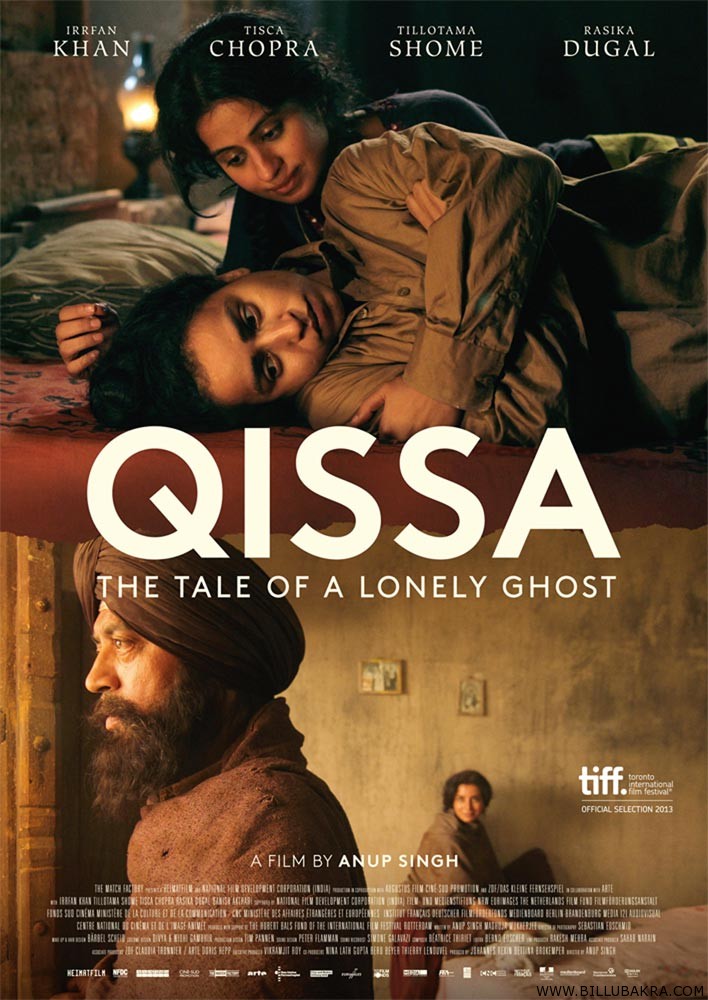
If the header of the post seems loaded, you will be surprised more when you watch the film. Yes, there’s gender-bending, it’s genre-bending, and a ghostly tale. Add partition, identity crisis, sexuality, female foeticide, sibling rivalry. It’s a baffling cocktail that you have never tasted before.
The ghostly part might be considered a spoiler, but since the film’s title already tells you that, am not sure if it should be counted as one. The film is titled “Qissa – The Tale Of A Lonely Ghost”. I think that’s a smart choice to let the audience know what they are getting into, and be prepared for it. On a similar tangent, it was a mistake which Talaash makers did by not getting the spoiler out.
Varun Grover saw the film at TIFF where it premiered, and reccoed it in a post here – “A film based on partition, in Punjabi, starring Irrfan and Tillotama Shome and Rasika Duggal and Tisca Chopra! I was already sold. And though it deals with partition in a more symbolic, metaphoric, allegorical way – I was moved immensely by it. Many friends had issues with the logic and amount of suspension of disbelief it demands (basic premise of a father who brings up his daughter as a son without letting anybody else know is a bit of a stretch, yes) – but it still managed to disturb and involve me probably because of the magic realism zone it enters in the 2nd half. And also because of Rasika and Tillotama’s terrific performances. Probably it’s only me but I think the film gives a solid theory on why Punjab has the maximum cases of female foeticide/infanticide. (Qissa won the NETPAC Award at TIFF)”
So i was already prepared for it. But i had no clue that it will be such a fascinating ride. The film starts with a voice-over that feels like a folktale. But it soon jumps into the reality of partition and ethnic cleansing which forms its backdrop. In the aftermath of partition, Umber Singh (Irrfan Khan) is forced to move to Punjab with his family. A loss of identity, roots and that place you call home. Do you ever get that back?
And from the politics of the land the film moves to gender politics. Having already three daughters, Irrfan forces the forth daughter to grow up like a son. The gender identity part is strange and you might question its believability factor. But i have always felt that never let the truth (or logic/reason/whatever you call it) come in the way of a great story telling. Let the filmmaker be your guiding torch in this new dark room that you have never entered. Just hold his hand tightly and enjoy the ride. Leave him only if he trips over something. In that dark room, the only thing that matters is the conviction with which the filmmaker guides you, and how much are you willing to trust him. I live to enjoy this cheap thrill, and trust me, most of the times the experience has been rewarding. It’s easy to spot the ones who know their craft and can direct. Qissa is one such dark room which you have never entered. It’s strange, it’s weird, it’s unique. You need that torch and that trust. So as you buy into the premise of its gender politics, you realise that this strange tale is becoming weird, and you keep wondering where it will end up.
Then comes the magic realism bit which wraps up the story and completes the circle. The sudden tonal shift feels slightly jerky but it’s a minor quibble in an otherwise brilliant film. Anup Singh captures the sights and sounds of the land beautifully. The arid landscape, the rustic rituals, the folksy sound, and the dialect of the region, there’s not a single false note in Qissa. Backed by strong acting talents – Irrfan Khan, Tilottama Shome, Rasika Dugal and Tisca Chopra, they manage to pull off this difficult film with much ease. Describing anything more of the film will spoil the fun for you.
Qissa is an audacious film, and all credit must go to Anup Singh for stepping into this rare territory which we hardly explore, and for delivering such a brilliant film. This is the reason why it might alienate some audience too. You are not sure how to tackle this film. So remember the dark room and hold that torch. You will be fine. Don’t miss this one. It’s rare to find such a gem. Because it’s rare to find a desi filmmaker who takes such an untrodden path.
So far I have seen only two films in India Gold section of Mumbai Film Festival, but i wouldn’t be surprised if Qissa walks away with the top prize.
(ps – It also reminded me of a strong Peruvian film, Undertow which was a strange mix of a ghostly tale and gay love story. Do watch this one too if you haven’t seen)
Hansal Mehta should celebrate his birthday today. After Dil Pe Mat Le Yaar in 2000, he has been making one forgettable film after another. Forgettable might be too polite to describe them. And then he makes a comeback with such a strong film that it grabs you by the throat, makes you sit down, and wonder if he really directed those forgettable ones. A rare achievement that few filmmakers manage to do – to pull themselves out of what can be called “Bro-Filmmaking-In-Bollywood”. This is nothing less than a rebirth.
Fatema Kagalwala tells you why you should not miss this one. Mehta’s Shahid goes straight into MFC’s “Must-Watch” list.
You’ve heard about the film. You might have read the raving reviews too. Some of you have watched it. But the film gets its real glorious moment now. Theatrical release. It’s every film’s Holy Grail. It’s the child bride’s gauna. It’s a validation that matters more than awards at times. Especially for a film like Shahid. One that dares to speak about a man who dared to himself. Especially in our regressive, repressive, intolerant times.
For a long time, I kept pronouncing the title of the film as ‘Shaheed’ as in martyr. And isn’t it so true of the story and the man at the centre of it? You will find a number of reviews telling you how good the movie is. It is. Powerful and uncompromising with the truth. So I will quickly chart down the reasons of why I think (in no particular order) you must watch this movie –
Rajkumar Yadav – We all know he is a defining talent of our times. And so far we have seen him only in multi-character movies. He carries this film entirely on his shoulders and it is not an easy task to sustain. The film is a story of a hero but has an incredibly un-melodramatic and non-manipulative story-telling. It maintains a strongly unemotional, non-manipulative tone, satisfied to observe the characters fighting, losing and winning their battles. Any other actor (except Nawaz maybe) would be torn between trying to underplay the heroism and emphasise the man behind it all. Not Rajkumar. He finds it equally easy to portray vulnerability as he portrays stoicism.
Hansal Mehta – Every film-maker has his or her own journey and mostly it is tough. It rarely depends on how original or independent minded he is. It also rarely depends on his reasons for making the films he does. Hansal Mehta has had his own downward spirals but the important thing is he bounced back when most give up. With this. Fighting a hiatus and a creative bankruptcy (in his words) maybe tough, but fighting an unforgiving, unsympathetic system is much worse. Shahid was not a subject that would be easy to make in a socio-political-artistic environment like ours. But it got made and got made well. That alone deserves applause.
Realism – That elusive, enigmatic bitch that takes talent to realise onscreen. From sets to actors to screenplay to dialogues to costumes to direction to acting to everything else in between. Shahid comes so close to reality it could be yours and mine story. As a Muslim it is mine and well, it was very uncomfortable watching it play out like it did. It must have been uncomfortable for Mehta as well, to choose to include the gory, debasing insult he was subject to after he made Dil Pe Mat Le Yaar. It takes guts to make an effort to heal such wounds through artistic means.
Casting – Hansal Mehta gives complete credit for finding the right actors to his casting director Mukesh Chhabra. All that matters to us though is that Mohd Zeeshan Ayub brings alive the part of the protective, fatherly elder brother and Baljinder Kaur is so good as a Muslim woman I was shocked to learn she was a Punjabi. Prabhleen Sandhu as Mariam, Tigmanshu Dhulia as Maqbool Memon and Vipin Sharma are deft touches in a carefully created canvas.
Zero melodrama – How often do we get to watch films about heroes, about controversial material, about polarising issues, about our social reality that comes without a Dolby surround sound moralising or 3D level emotional manipulation? Shahid loses out on deifying its central character, it may have become a ‘My Name is Khan’ financially if it had done that. But the choice to go strictly biographical in structure, objective in tone and let the man’s journey speak about itself makes this film this decade’s Black Friday.
Muslim as humans – This is not a movie championing Muslim rights. Very few people understand that the right response to bigotry on the basis of racism and sexism is not deifying the identity or struggles of the ‘other’. The right response is to bring humanism into the equation to balance it. The film, just like its protagonist, with a rare perspicacity, speaks for Muslims as humans and not as a religious identity, and the distinction is very important. Especially at a time when we are simply revelling in bracketing people according to class, caste, gender, race, colour, community, geography with a ‘hey, let’s find more reasons to discriminate’ glee. If the victimised community was Hindu, Sikh or Christian, the film’s viewpoint would have been the same. In our times of muddled philosophies, faux intellectualism and confused, twitterisque moralising, walking this fine line perfectly is refreshing and heartening.
Shahid Azmi – A victim, a trainee terrorist, an imprisoned accused, a lawyer and a crusader of human rights of the wrongly accused. He finished his college degree while in jail awaiting release and in career spanning seven years e had a remarkable 17 acquittals. It is a sign of our times that his end came the way it did. It is also a sign of our times that someone thought his story important enough to be told despite the evident dangers. There is hope.
We keep screaming, we need more movies like these. And now we have one. Go watch.
It’s that time of the year again. Mumbai Film Festival is about to start and here’s our recco list for the fest.
At first glance this year’s selection doesn’t look as strong as last year’s. After much research and googling, here’ what we recommend.
MUST WATCH
1. Inside Llewyn Davis – Coen Brothers. Great reviews. New York’s folk music scene in the 60s. And a cat. Yes, a cat.
2. Blue Is The Warmest Colour – The film that the world is talking about. Bagged the Palme D’Or at Cannes, got unanimously superb reviews, the lead actors hate the director, and is in news for explicit lesbian sex scene. Plus, you can’t say the name of the director and both the lead actors name in one go. If you can, spot me at the fest and ask for a 5 star.
3. The Past – Asghar Farhadi’s latest one after The Separation. Not a clean winner like the last but still a solid film. Farhadi peels the story slowly as you keep wondering who is the culprit.
4. Mood Indigo – Michel Gondry goes on another fantastic visual journey. Everything is deliciously crazy in this one. Every frame is packed so much, you blink and you will miss some elements.
5. The Great Beauty – Peter Bradshaw initially gave it 4 stars and then made it full 5 after watching it again. He described it as a swooning love letter to Roman decadence, La Grande Bellezza is the Paolo Sorrentino’s greatest film yet. We trust what Unkle Peter says.
6. Ilo Ilo – brims with love, humor and heartbreak. 15 minutes standing ovation at Cannes (for real, not what Indian media says about desi films at every fest) and the prestigious Camera d’Or prize. TRAILER.
7. All Is Lost – One-man-stuck-in-one-place cinema. Chandor’s film has been getting great rave reviews since it premiered at Cannes. Robert Redford’s one man show.
8.Before Midnight – Linklater’s last film in the trilogy in which he blows up every notion of ideal love that he sets in the first two parts.
9. The Missing Picture – Won the Un Certain Regard prize at this year’s Cannes. This film uses handmade clay figurines and detailed dioramas to recount the ravages that Pol Pot’s regime visited upon the people of Cambodia following the communist victory in 1975.
10. Heli – Amat Escalante bagged the Best Director’s award at Cannes. Drugs, violence, corruption, and Mexican.
11.Parde (Close Curtain) – Panahi. Naam hi kaafi hai. It premiered at Berlin Fest. Panahi won the Silver Bear for Best Script. The film was shot secretly at Panahi’s own beachfront villa.
12.The Act Of Killing – One word – Terrific. Our previous recco post is here.
13.Fandry – If the film is as good as its soothing 30 second teaser, it should be fine. Looks like Shala redux. And just when we were wondering about it, Nikhil Mahajan, director of Pune 52, came to our rescue. He tweeted, straight up there with Vihir. An immensely, immensely powerful film.
14.Taak Jhaank (Sunglass) – Rituparno Ghosh’s film which is yet to get a release and we are not even sure when it will. “When she wears her sunglasses, Chitra can picture what the other person is thinking”, knowing that it’s Ghosh’s film, that line in the synopsis was suffice. Add to that the strong acting talents like Jaya Bachchan, Naseeruddin Shah and Konkona Sen Sharma in the lead.
15. Katiyabaaz – The docu of a desi and unique superhero that you probably haven’t heard about. After Berlin, Tribeca and Berlin, it comes to Mumbai. The trailer is good enough to sell the film. Go here.
MOOD INDIGO
If you like to take a chance and experiment a little at film fests, this list is for you. These films can swing either way – from offbeat, non-mainstream and meditative to outrageously experimental. Go with some patience.
1.Halley – Contemporary Gothic story with an unusual twist. A disturbingly stylish and surrealistic drama, Sebastian Hofman’s impressive Halley is hard to define and very much a niche sale, but it could well attract critical support given its strangely compelling story, impressive performances and strange sense of the grotesque – SD. Got it? More – a zombie film without the horror of the zombies and, but its core story of physical decay and deathly illness would fit into any perverse horror film, with the film’s ‘hero’ essentially one of the walking dead. And TRAILER.
2.Matterhorn – Absurd Dry Humour. A strict old man has lost his wife and son. Gets an unexpcted guest. TRAILER
3.The Selfish Giant – The Telegraph gave it 5 stars and called it Clio Barnard’s brilliant, sour-scouring fable about growing up in Britain today. TRAILER.
4.Qissa – A film based on partition, in Punjabi, starring Irrfan and Tillotama Shome and Rasika Duggal and Tisca Chopra! I was already sold. And though it deals with partition in a more symbolic, metaphoric, allegorical way – I was moved immensely by it. Many friends had issues with the logic and amount of suspension of disbelief it demands (basic premise of a father who brings up his daughter as a son without letting anybody else know is a bit of a stretch, yes) – but it still managed to disturb and involve me probably because of the magic realism zone it enters in the 2nd half. And also because of Rasika and Tillotama’s terrific performances. Probably it’s only me but I think the film gives a solid theory on why Punjab has the maximum cases of female foeticide/infanticide. (Qissa won the NETPAC Award at TIFF) – Varun Grover’s recco post.
5. Stray Dogs (Jiayou) – Tsai Ming-Liang bagged the Grand Jury Prize at Venice Film Festival. TIFF described it as “Imbued with mystery, sly humour, and an enormous heart, the latest film from visionary director Tsai Ming-liang links together a series of sumptuously composed scenes that tell the story of a broken family living on the margins of Taipei society.”
6. A Touch Of Sin – Bagged the Best Screenplay Award at Cannes Film Festival. Based on four shocking true events that examines the current fabric of Chinese society. TRAILER
7.Tom At The Farm – That talented kid at the world cinema scene keeps on making movies. The latest one is on same tangent. Xavier Dolan’s film was in competition at Venice Fest. A grief-stricken young ad copywriter who visits his dead lover’s parents — only to get drawn into a savage game rooted in the rural family’s dark past.
8.Shield Of Straw – Takashi Miike’s latest one. Naam hi kaafi hai.
9.Faith Connections – Pan Nalin goes to Kumbh and gets all the exotic sights and sounds. Again, the Trailer is good enough to sell the film.
10.Locke – Another one-man-stuck-in-one-place cinema. This one belongs to Tom Hardy as he takes the driver’s seat. Premiered at Venice Fest. Minimal in approach.
11.For Those In Peril – The strikingly original maritime fable examines the aftermath of a fishing accident – THR. Mark Kermode has given it 4 stars. Was at Cannes Critics Week. Trailer is here.
12.Mamay Umeng – In a quaint provincial town, an elderly man awaits his inevitable fate – death. If you love posters, here. TRAILER.
13. The Voice of The Voiceless (La voz de los silenciados) – Seems scary and interesting. Based on a true story of a modern day slavery. Trailer.
14. The Strange Little Cat – Loosely inspired by Kafka’s The Metamorphosis, this enchanting, minimalist gem by first-time feature director Ramon Zurcher has won admiring comparisons to the work of such masters as Jacques Tati, Robert Bresson and Chantal Akerman – TIFF. Click here for its very strange and very funny trailer.
15.The Japanese Dog – A satisfying, unexpectedly upbeat film, superbly played, in which hope is always just about visible through the tragedy – THR. And trailer looks interesting. Gentle and charming.
50/50
And then there are few more which looks interesting. But either we are not completely sure how good they are, or they have been getting mixed reactions.
1. The Rocket – It got Best debut film at Berlin and Audience Award at Tribeca. A kid is cursed for everything that goes wrong, and then he claims it all back. Rite-of-passage film
2. The Immigrant – The film has been getting some extreme reviews. But with Joaquin Phoenix and Marion Cotillard in the lead, hopefully they might be worth the time.
3. La jaula de oro – Powerful yet unsentimental thriller keeps audiences guessing as four Central American kids head to the U.S. by train – Variety. Was at Cannes Un certain regard. In Sin Nombre space.
4.Autumn Blood – Quiet. Serene. Young brother and sister in the mountains. And then things go wrong. Trailer
5.Liar’s Dice – Rajeev Ravi’s wife Geetu Mohandas goes behind the camera. About a young mother and her 3-year old daughter’s journey to find her missing husband. Has Nawazuddin Siddiqui and Geetanjali Thapa in the lead.
6.The Only Real Game – Heard about baseball in Manipur? No? Here you go. Aseem Chhabra’s column on this one.
7.Siddharth – Richie Mehta’s film was at Toronto and Venice. More about the film here.
8. Suleimani Keeda – Desi slacker comedy involving two bollywood screenwriters. More about it here.
9.The Armstrong Lie – What was Armstrong thinking? The film tries to tackle that million dollar question.
If you have seen anything interesting and would like to recco it, do let us know in the comments.
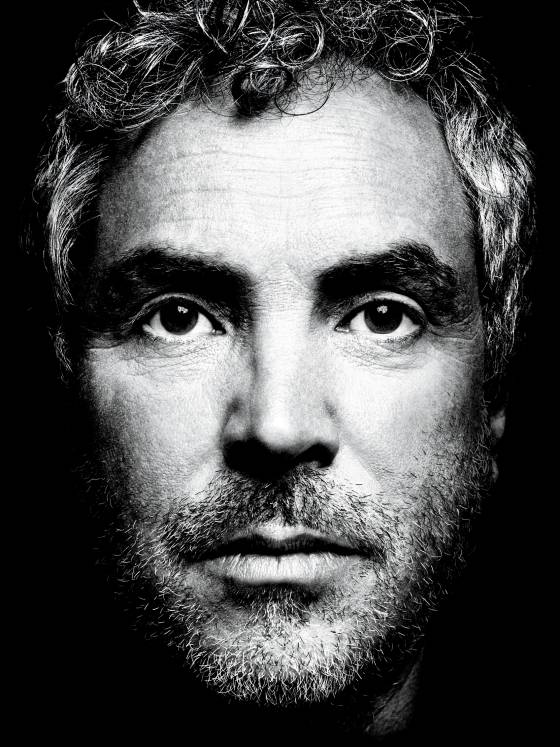
Was I worried?” Cuarón says. “Yeah!” He and Lubezki would watch their footage, “and depending on the day, you’re just in a room laughing, like, What the heck are we doing? Chivo’s (Lubezki) favorite phrase was, ‘This is a disaster.’ Some days you’d just have bits and pieces of Sandra Bullock in a box, floating around, surrounded by robots with cameras and lights on them, and you’d think, This is going to be a disaster.
James Cameron said he was stunned, absolutely floored. He called it the best space photography ever done, best space film ever done, and it’s the movie he has been hungry to see for an awful long time.
Well, watch it. To see, feel, float, and experience.
And it’s entirely possible that even after watching the film you might not get its brilliance – why and how. Twitter has made me realise that. And i am not going to try – argue and make you understand. There are many things that many pea-sized brains might not grasp and understand, and i have made peace with it. This post is for those who were blown by it. If you watch movies like i do, can bet that you will come back home and start googling about it. So i am going to make your life easy and putting all the best articles/features/videos on Cuaron and Gravity here. The links are divided into two parts – filmmaking and sci-fi.
FILMMAKING – How and Why
I have to say that I was a bit naïve; I thought making the film would be a lot simpler…
– Digital Trends has got an interesting feature titled “Before Alfonso Cuarón could make ‘Gravity,’ he had to overcome it”. It tells you all about the problems they faced and what they did to find new technology. Click here to read.
– Cuaron is known for his magical long uncut takes. And as we all know Gravity has some 17-minute long jaw-dropping opening sequence. Here’s a video essay on his “Cinematic Canvas”.
Has voice-over by Cuaron.
I’m going to tell you something, the reality is that the movie was so new that when we finished a shot we would get so excited people would scream on set—probably me before anybody else. There were moments when we were shooting and Alfonso said ‘cut’ we would all just jump and scream out of happiness because we’d achieved something that we knew was very special.
– The Credits have done a feature titled “One of the Greatest Cinematographers Ever: Gravity‘s Emmanuel Lubezki”. This one is an interview with Lubezki. Click here to read.
Both of them—along with a number of other Mexicans who would go on to achieve success in Hollywood—were expelled before graduation. “In Mexico, there are a lot of conspiracy theories” about why, Cuarón told me, “and I’m sure that a lot of them are true. The truth of the matter is that I think we were pains in the asses. We disagreed with the ways of the school.” He laughed. “Even if they had their reasons, we were right.
– Vulture has posted a great piece on Cuaron’s career and filmography. It’s titled “The Camera’s Cusp: Alfonso Cuarón Takes Filmmaking to a New Extreme With Gravity”, and this one is a must read. The story of “a Mexican auteur who’d just made a tiny foreign erotic comedy-drama being handed the biggest, most fantastical franchise in movie history.” Click here.
– Cuarón sat down with George Stroumboulopoulos to talk directing, George Clooney and Sandra Bullock, and new voices in world cinema. This one is a funny interview.
Experiencing this film in 2-D is only getting about 20 percent of the experience of Gravity,” says Cuarón.
– The Daily Beast has also done a feature on Cuaron and his film. It took four and a half years to bring the magnificent 3-D film to the screen. The director retraces the journey for Marlow Stern, from Robert Downey Jr. and Angelina Jolie’s departures to creating the most groundbreaking cinematic voyage ever put to film. Click here to read it.
Still, it was a massive culture shock. “I had more toys to play with, but the crew was three times bigger than my Mexican film, with producers giving me notes, which I never had before.
– DGA has also covered Cuaron’s entire career – from Mexico to big Hollywood studios. Click here to read.
Did even this historically auteur-friendly studio (Kubrick, Eastwood, Nolan, et al.) wonder if they’d just gambled away $100 million on the most expensive avant-garde art movie ever made?
– Variety has done an interesting piece saying Gravity’ could be the world’s biggest avant-garde movie and drawn comparisons with Michael Snow’s films. Click here to read.
– And to know how the sound masters of ‘Gravity’ broke the rules to make noise in a vacuum, click here. Another must read.
SCI-FI – Science or Fiction
From my perspective, this movie couldn’t have come at a better time to really stimulate the public. I was very, very impressed with it.
– The Hollywood Reporter has got Astronaut Buzz Aldrin, the second man on the moon, to review the film. Click here to read.
George Clooney’s character, in a rare and fleeting quiet moment says to Sandra’s character, “Beautiful, don’t you think?” And the scene is the sunrise in space. Hold on to that.
– The Time got another astronaut, Marsha Ivins, a veteran of five shuttle flights, with a total of 1,318 hours—or 55 days—in space, to review the film. Click here to read what she thought – how much is real and what all looked fake.
– And there are some rants too. If they can float, can’t they rant? Vanity Fair has put it all together. Click here.
– So how Realistic is the movie? The Atlantic has interviewed the film’s science advisor. Click here to read.
In India, the film has currently released only on IMAX 3D screens. It should be out in normal 3D screens from this friday. And do remember what Mister Moore said.
If you are in Mumbai, i would suggest you watch it at PVR IMAX screen in Lower Parel. No, they haven’t paid me. This is from my experience across various 3D screens in the city. The glasses at PVR, Lower Parel don’t make the screen dark. Also, they are bigger, better and light in weight. So if you already wear one set of glass, this is the best possible option. Rest, as they say, haath kangan and all that jazz.
If you have read or seen any interesting feature, interview, or video related to Gravity or Cuaron’s film, do post in the comments section.
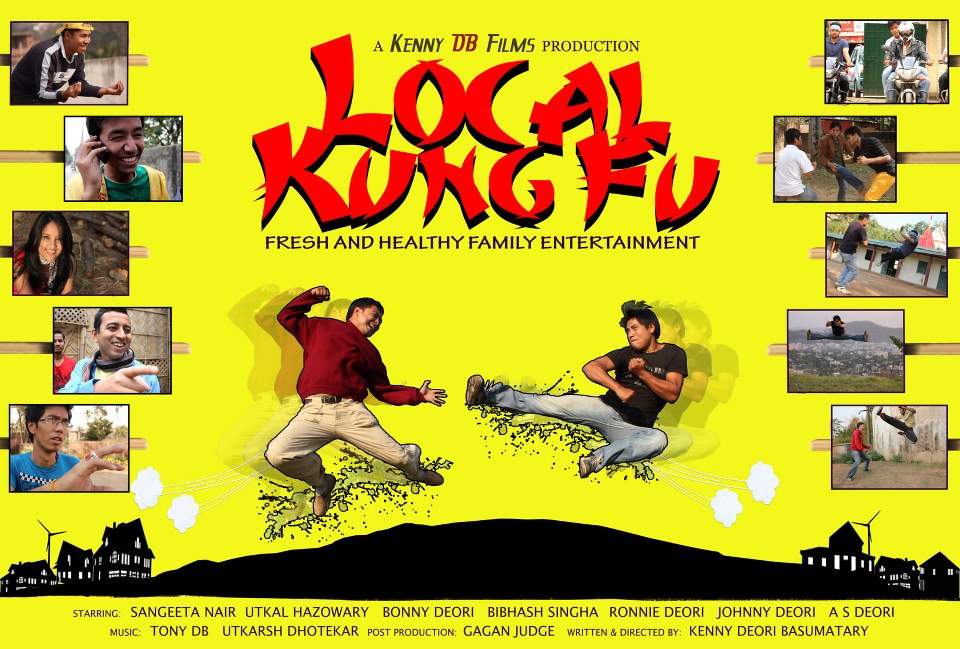
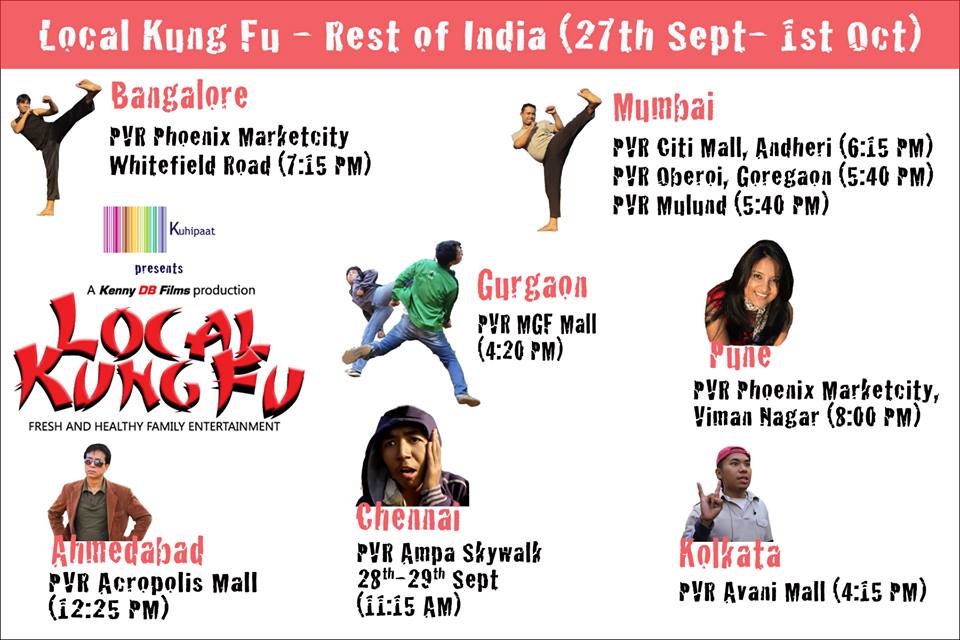
Kenny Basumatary’s Local Kung Fu (with English subtitles) released this friday. Some of us had seen the film and quite enjoyed it. Here is a Baradwaj Rangan-ish bullet point movie recco post by Kartik Krishnan.
Dash of Takashi Kitano humor and tribute to oranges-Andaz Apna Apna.
Goon with the funny smile plastered on his face 24X7
The 70 yr old grandfather who wields the stick with Kamal-Hassan-Thevar-Magan-ish dexterity.
The superb tongue-in-cheek Guthka khaane se swasth ko haani pahunchti hai PSA cleverly forced in
Candid out takes end credit sequence
Fried Silkworms, Snail curry, rice pancakes ahhh the food
The overweight Karate goon who sings Raagas
Spirit of the cast and crew and a budget of less than a lakh
Ekta Kapoor spoof
Absolutely naturalistic performances
The Number One U 18 goon – Bonzo !
The energetic action sequences
The girl with Assamese-Malayali roots
The gallis and koochas of Assam
The uncle who asks “You need to take a crap or something?”
The music (Wish the songs were subtitled too) Sample this
The Requiem-waala montage thrown in once or twice
DLFG – Delhi Liberation Front For Gurgaon
The stories told in each and every fight – kaun kispar kaise bhaari padta hai
The irreverence and non seriousness of it all – with the tone set from the the opening statement itself !
The goons shaving & whiling away time when bikes enter in super slow motion!
Even a small time thief fights back in Kung Fu-style
The villain whose caller tune is the sound effect of kicks & punches
No pretentiousness of an art film, No (ok, may be a little) filmy-pana of a commercial film
The vision guts and passion of Kenny Basumatary who has acted, written, directed and edited the film
Do catch the film playing at the limited screens.
– To know more about the film, click here to read an old post by the film’s lead actor, writer an director Kenny Basumatary.
– For more info on the film, visit its Facebook page here.
Screenwriter and lyricist Varun Grover‘s script Maa Bhagwatiya IIT Coaching was selected for NFDC-TIFF’s ScriptLab this year. He not only went to the lab but also managed to catch some of the interesting films at the fest. So over to him for all the dope on the fest and some film reccos.
Thanks to NFDC’s script lab in association with Toronto International Film Festival (TIFF), I got to attend this year’s fest (from 5th to 15th September) in Toronto. Though the first 5 days were devoted mostly to the script lab sessions (with our excellent mentors – Marten Rabarts, Olivia Stewart, and Esther van Driesum – who got the nuances and layers of our scripts so bang-on in spite of being from a culture far removed from ours), I stayed for 5 more days to watch cinema. And I think Toronto has been getting the best line-up of films for the last few years. Oscar season is close-by, TIFF Director Cameron Bailey’s film-hunting/sourcing skills are legendary, and TIFF doesn’t shy away from seemingly non-festival stuff like Gravity and The F Word (on two ends of commercial spectrum) – resulting in a film fest with so many options (with ample repeat screenings) that out of the 16 films I could catch, at least 10 were absolutely stunning and another 3 in #MustWatch category. And I missed at least 7 big films, in addition to many small ones, that I so badly wanted to see. (People’s Choice winner ‘12 Years a Slave’, FIPRESCI winner ‘Ida’, Cannes winners ‘Blue is the warmest color’ and ‘A Touch of Sin’, Richard Ayoade’s ‘The Double’, Reitman’s ‘Labor Day’, and Miyazaki’s last ‘The Wind Rises’.)
But what a smooth fest it was. Never seen volunteers this organized, informed, helpful, cheerful, and above all passionate for cinema! Most of them were students who chose to volunteer because for every 6 hours of work they used to get one movie ticket free. And then there were some who had been doing it for many years – and some (like this 80-year old lady scanning barcodes on our cards outside the venue) who loved being part of the buzz. Every volunteer inside the venue I went to (Scotiabank) knew which movie was playing on which screen, who had directed it, and what was the duration. And they would make a human-chain in the theatre gallery for really crowded screenings (like Gravity’s) so that no one jumps the queue. Met two young filmmakers while waiting in a queue who had volunteered at the fest 3 years ago and they said the recruitment for next year’s volunteers will start soon after this is over, and they prepare for close to 10-months for this level of professionalism.
So here’s the list of films I watched and my 2-line reactions to them:
The Fifth Estate (Bill Condon): Hugely underwhelming. No insights into Assange’s mind or workings or flaws, and more like a Madhur Bhandarkar attempt at cashing-in on the hype around the man. Wannabe Social Network, but with writing so clichéd that even Cumberbatch couldn’t save this one. And later I realized the director, Bill Condon, had made 2 Twilight films before this. That figures.
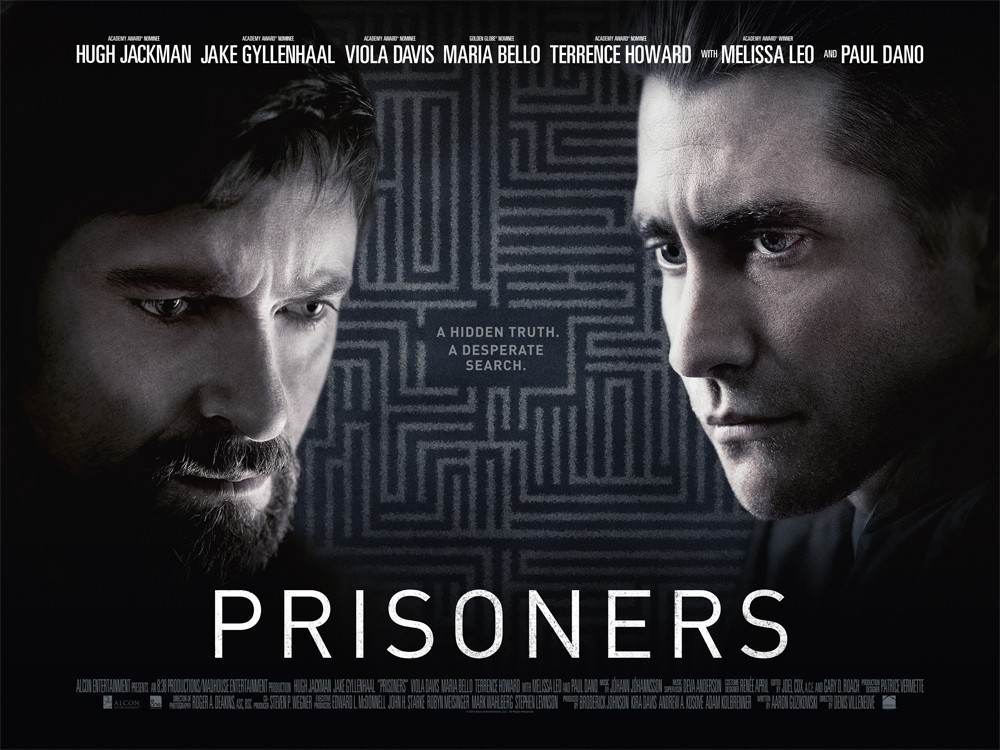
Prisoners (Denis Villeneuve): Sirf naam hi kaafi hai. Villeneuve’s last (Incendies) was one of the best, most explosive film 2 years ago, and hence was really looking forward to this. Turned out it had (my fav) Paul Dano too in it, with (Prestige-faced) Hugh Jackman and Jake Gyllenhaal. And what a spine-chilling film it was! Definitely among the top 3 I saw at TIFF. Villeneuve (with his writer Aaron Guzikowski) enters a David Fincher world but brings much more art-house sensibility (with a Korean psycho fetish angle) and Roger Deakins’ absolutely gorgeous aesthetics to it. Won’t talk about the plot as this film is best savored with a blank slate mind. Doubt we will see a better thriller this year.
Gravity (Alfonso Cuaron): This one was a safe bet – and it still managed to exceed my expectations. By around a 100 light-years. I don’t think I breathed for the 90-minutes it played. Best use of 3-D, green-screen, Sandra Bullock, and space debris yet in cinemas. Watch it on the biggest screen in 3-D please.
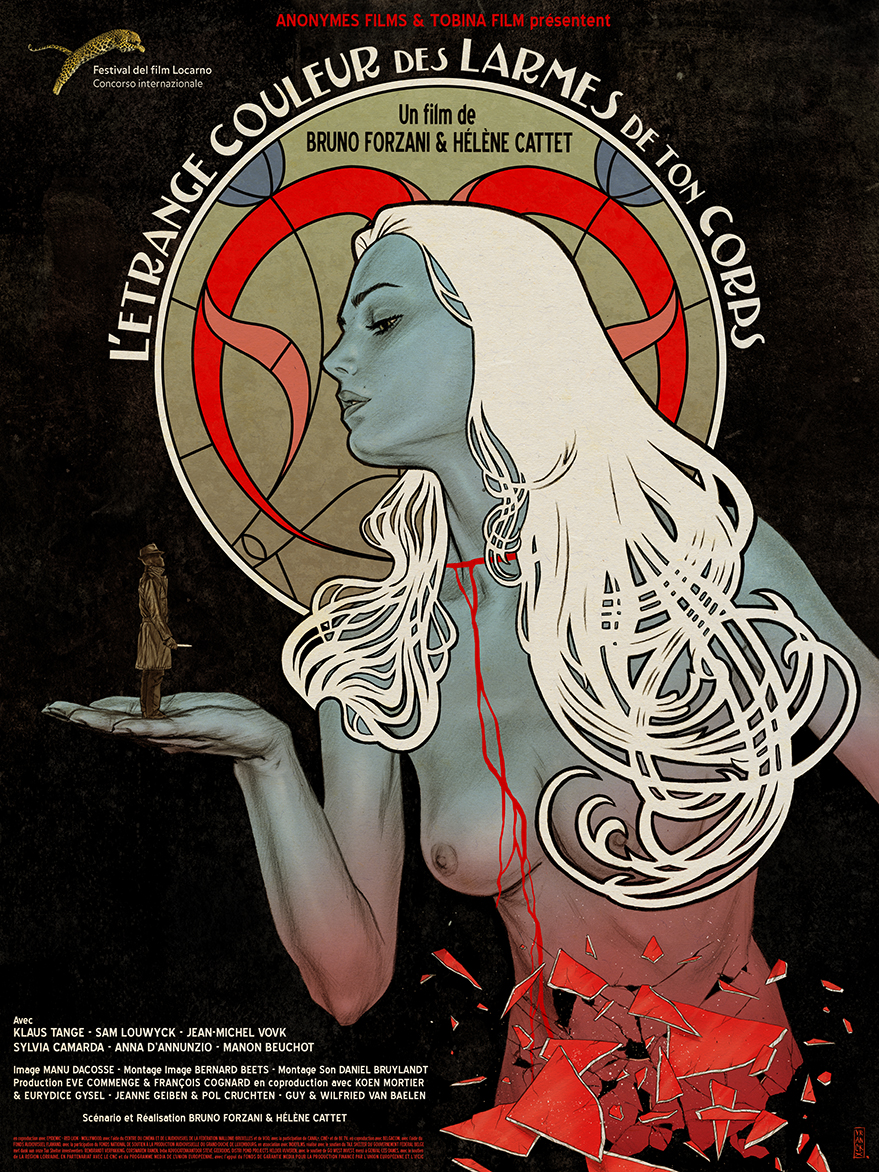
The Strange Color of Your Body’s Tears (Helene Cattet, Bruno Forzani): I don’t really know what I saw. 4-5 people walked out every 5 minutes and by the time the film ended, only 30-35 of us were left. Something that would make the much acclaimed mad-duo of Belgian cinema happy. Weirdia of the highest order. Lots of blood, nudity, absurdism, zero narration or attempt at it, but everything done with so much class and aesthetic value that difficult to dismiss it. Colors, mood, performances – all screamed ‘installation art’ of highest order.
R100 (Hitoshi Matsumoto): One of the best discoveries at TIFF. Directed by Japan’s most absurdist filmmaker and leading comedian, this was weird, funny, cutting-edge satire, and sexual fantasy in equal measures. Brilliantly, genuinely subversive. (And he called it R100 to take a swipe at censor boards who’d give it a rating ‘suitable only for 100-years or older’). Wait for this one!
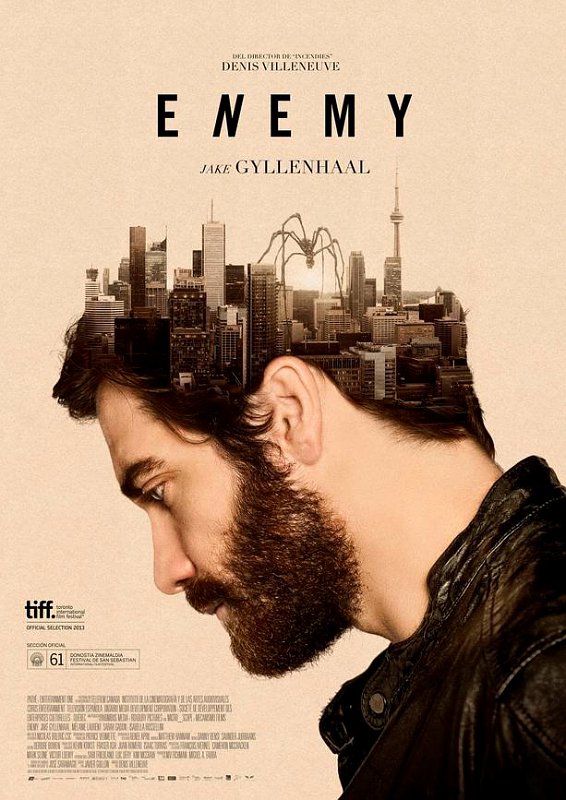
Enemy (Denis Villeneuve): Yup, DV had two films at the fest. Both with Jake Gyllenhaal in a major role. He apparently shot them back to back and then edited parallel – and seeing how different the genres and mood was, he has to be having two separate brains to do it with so much perfection. Enemy, based on a Jose Saramago novel (yup!) though reminding me of a Satyajit Ray short story ‘Ratan Babu’, has terrific Melanie Laurent and Sarah Gadon giving company to Jake finding his exact double accidently, and is so moody that it feels like a tarantula spider creeping up your back. Just a bit underwhelming when compared to ‘Prisoners’, but is comparison even valid?
Moebius (Kim ki Duk): You walk into a Kim ki Duk film expecting bizarre but this one, as far as I know, is bizarre level max he has ever reached. This one is bizarre level ‘eating a dick after cutting it’. This one is bizarre level ‘mom eating son’s dick after cutting it’. (No, it’s not a spoiler, just a warning. This particular sequence is right in the beginning of the film.) And it’s a silent film – completely silent. And it could have been called ‘Dick of Theseus’. And it was the funniest, goriest, sexiest, most disturbing, and thrilling, and taali-seeti worthy film I saw at TIFF. And somehow, Duk manages to push his Buddhist agenda through all this weirdness too. Takes a genius for that. Also among my top 3 there. Must watch if you can handle bleeding dicks.
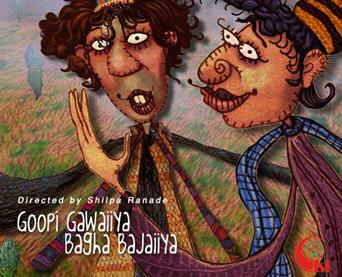
Gopi Gawaiyya Bagha Bajaiyya (Shilpa Ranade): The only film at the fest that left me disappointed. Had high hopes with this one – and the art of the film is top-notch. Beautiful frames, decent level of animation, but where it faltered badly was in the dialogues and technicalities of animation. Lines written in clunky, orthodox Hindi and making the background out-of-focus to give depth (in a 2-D animation!) made the film look way tackier than it should have been.
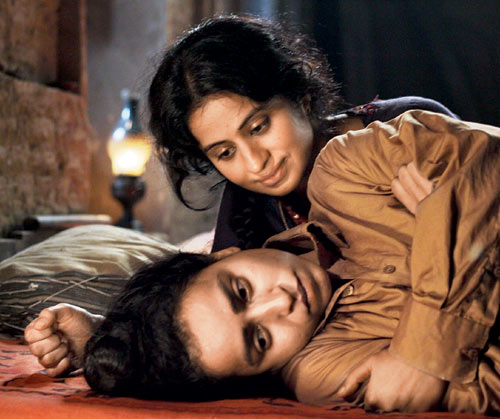
Qissa (Anup Singh): A film based on partition, in Punjabi, starring Irrfan and Tillotama Shome and Rasika Duggal and Tisca Chopra! I was already sold. And though it deals with partition in a more symbolic, metaphoric, allegorical way – I was moved immensely by it. Many friends had issues with the logic and amount of suspension of disbelief it demands (basic premise of a father who brings up his daughter as a son without letting anybody else know is a bit of a stretch, yes) – but it still managed to disturb and involve me probably because of the magic realism zone it enters in the 2nd half. And also because of Rasika and Tillotama’s terrific performances. Probably it’s only me but I think the film gives a solid theory on why Punjab has the maximum cases of female foeticide/infanticide. (Qissa won the NETPAC Award at TIFF.)
Why Don’t You Play In Hell(Shion Sono): Shion Sono of Cold Fish fame is a rockstar already and this film (recommended strongly by my script lab friend Nikhil Mahajan who wanted to watch all the films in Midnight Madness section, a section devoted to all the mad-horror-slasher-campy films, with titles like ‘All Cheerleaders Die’) came with huge expectations. And the first 15-minutes just raise your expectations to the skies. A spoof on Yakuza cinema of Japan, film sags a bit in the middle with spoofs being so subtle that it starts looking serious, but the last 30-minutes or so Sono comes back full-steam and blows your head. And the very last shot adds another magical layer to the entire film! Super-ambitious and super-welldone. (WDYPIH won the best film in Midnight Madness section.)
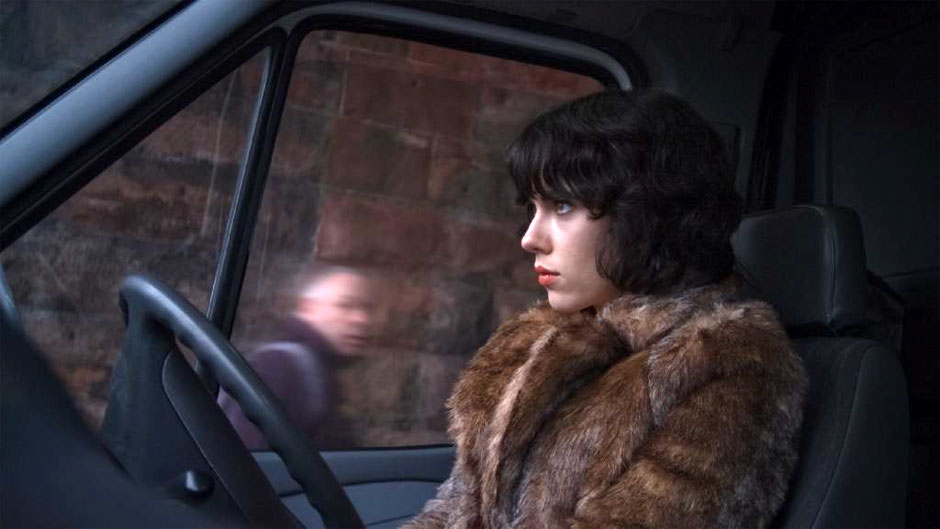
Under the Skin (Jonathan Glazer): The creepiest film at TIFF, in spite of it being non-gory, non-gross. Scarlett Johansson plays an alien (nudity is there, perverts) and nothing much happens beyond a pattern (which may be a minor spoiler so avoiding), but the mood, location (cloudy, wet Scotland), Glazer’s solid craft, and Mica Levi’s trance-type BG score make it a super-juicy watch.
Half of a Yellow Sun (Biyi Bandele): Knew nothing about this film but then Aseem Chhabra recommended it and I found out it’s based on a novel by Chimamanda Adichie (always a big plus for me when a film is based on a book). And it was like a fulfilling novel – a sprawling, excellently recreated epic of 2 sisters and their 2 lovers in the middle of Nigeria-Biafra conflict of the late 60s. Would have been a strong Oscar contender in many categories if it didn’t have an all-black cast and ethos and history. And to make it even more worth it – Thandie Newton and flavor of the season Chiwetel Ejiofor (of 12 Years A Slave fame) hit it out of the park with their excellent performances.
Walesa: Man of Hope (Andrzej Wajda): Another of my favorite genres – biopics. And this one is as solid as any I’ve ever seen. Based on the life of Lech Walesa, a man I knew nothing about except vague memories from GK books that he won a Nobel Peace Prize, the film is a bit too political-jargon heavy, but none of it stops it from being a great, engaging film with some godlevel period-recreation detailing. And the use of Polish punk-rock music as a thematic narration device adds so much to the mood of the era. Plus the main lead Robert Wieckiewickz has the charm and power of early Robert De Niro and the actress playing his wife (Danuta Walesa), Agnieszka Grochowska, had a face with so much beauty, pain, and understanding ki mujhe us-se pyaar ho gaya. Triple Ace!
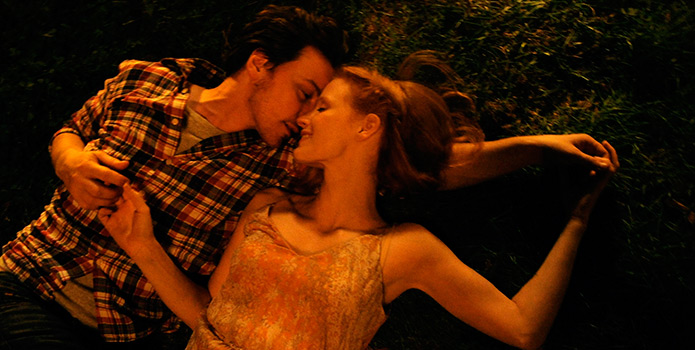
The Disappearance of Eleanor Rigby – Him and Her (Ned Benson): A mouthful of a title, a seemingly simple drama about a couple’s separation but dive into the film and realize it’s almost as ambitious as Gravity. Two films (of 90 mins each) showing the perception of events through husband’s and wife’s perspective – and so many layers added by just one more perspective to a particular event. And the best part – the film showed as Him-Her and then in another show as Her-Him (the order of perspectives reversed) and that changed the meaning of many scenes for viewers, including the climax. So in a way, it’s a film as well as a perception game! Interactive cinema done so simply. And I’ve not even started on how sensitive, brilliant, and insightful Ned Benson’s writing is. This one too, among my top 3 at TIFF.
Thou Gild’st The Even (Onur Unlu): Shot in crisp 35 mm black and white and great to look at, but kuchh samajh nahin aaya so walked out after 30 minutes. Read more about it here and go WTF.
The F Word(Michael Dowse): Don’t even ask me why I went to see this one. (There wasn’t anything else playing at that time, mainly that’s why. Also ‘cos Dowse made the terrific ‘It’s All Gone Pete Tong’.) A standard rom-com, most likely to make profit if it releases during Christmas or Valentine’s Day, with some very funny lines, and some very average clichés, but done well. Zoe Kazan is excellent, crush-worthy, yet again after Ruby Sparks (which she by the way wrote too), and Daniel Radcliffe is stuck in that odd place/age where Kunal Khemu and Jugal Hansraj have already been.
And this list comes from Aniruddh Chatterjee, the self-declared biggest Korean movie fanatic on this side of the planet. Do read the post, and do watch the films. If you have come across some interesting Korean movies recently, do let us know in the comments.
Over to Aniruddh.
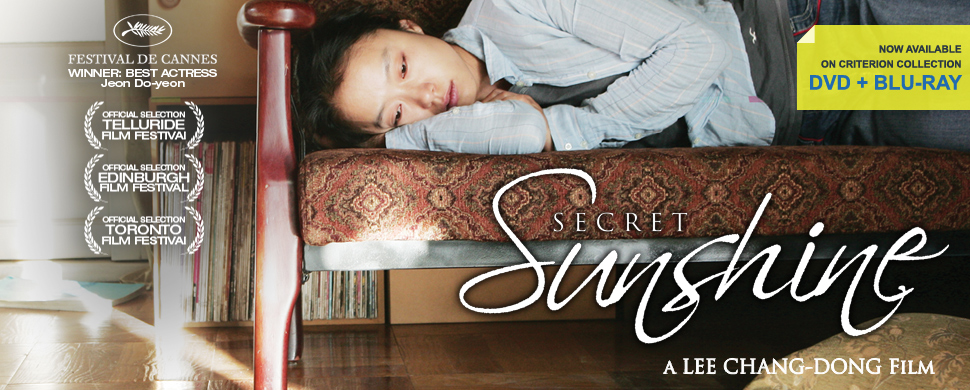
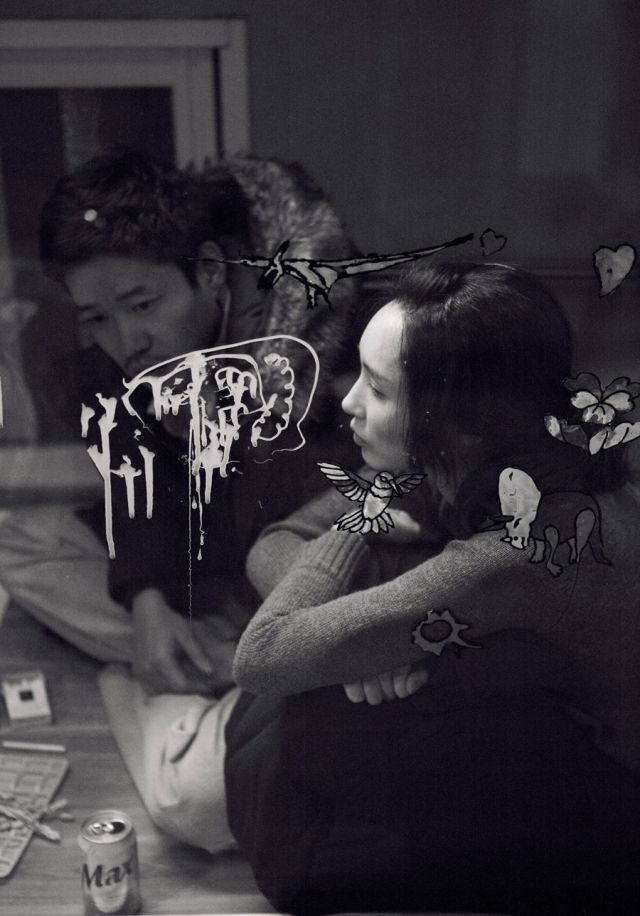
SECRET SUNSHINE
Jeon Do-yeon relocates alongwith her young son to the village where her recently deceased husband grew up. And tragedy strikes again. The film is not so much about the tragedy itself, as about its aftermath. Jeon Do-yeon’s performance is as raw and naked as it can get.
Note: Jeon Do-yeon won the Best Actress award at Cannes Film Festival for Secret Sunshine.
Lee Chang-dong is fairly underrated when it comes to the big league of Korean directors. His last film Poetry is an absolute gem. Do watch his entire filmography which includes Oasis, Peppermint Candy and Green Fish.
Secret Sunshine is now available on Criterion DVD/Blu-ray.
CASTAWAY ON THE MOON
A failed suicide attempt results in Jeong Jae-yeong play Robinson Crusoe in a conservation island in the middle of Han River. The only person who can see him is Kim Jung-yeon, an agoraphobic, who has shut herself in one of the city’s high rises.
Offbeat, quirky, bizarre yet immensely endearing take on romantic comedy.
PAJU
The opening scene in the film sees Seo Woo traveling in a taxi through dense fog. From the first shot director Park Chan-ok is preparing the audience for the ride. Paju is about the complicated relationship between a young girl and her brother-in-law and complications that follow. Gorgeously shot by Kim Woo-hyung and a brilliant and emotionally nuanced performance by Seo Woo in her breakout role.
This is what we call a mood-piece!
TREELESS MOUNTAIN
A tender, almost meditative tale of resilience, while facing constant abandonment from family. Heartbreaking real performance from both leads, Kim Hee-yeon and Kim Song-hee.
THE DAY HE ARRIVES
Hong’s films are very Woody Allen-esque. His characters aren’t as neurotic as Allen but definitely immature and self centered fools. Beautifully shot in monochrome, highlighting the winter, the film is about Yoo Jun-sang, a retired film director, currently teaching film studies, and his encounter with friends, acquaintances and strangers over the next few days when he visits Seoul.
Note : Hong Sang-soo is criminally underrated when it comes to the big league of Korean directors.
He is a Cannes Film Festival regular with five of his films nominated for either Palme d’Or or Un Certain Regard. His film Hahaha won the Un Certain Regard award in 2010.
Do check out his filmography which includes Woman on the Beach, Tale of Cinema, Night and Day, Hahaha and the recent In another Country.
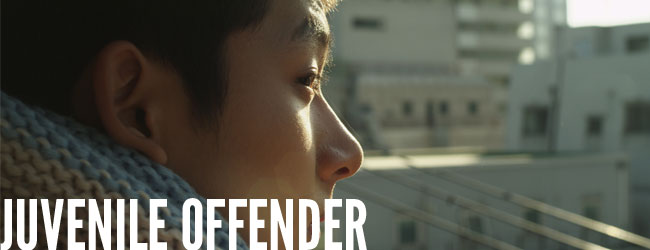
JUVENILE OFFENDER
A beautiful film about a couple of lost souls trying to fit into society, knowing it is difficult for them to change at all.
Terrific performances by Seo Young-joo and Lee Jung-hyun.
DANCE TOWN
The struggle of a North Korean refugee trying to cope with her new life in South Korea as she’s constantly under the radar of South Korean intelligence alleging her to be a spy.
Note : The final chapter in director Jeon Kyu-hwan’s town trilogy, other two being Mozart Town and Animal Town.
BLEAK NIGHT
Bleak Night is post-mortem of a suicide. Three high school friends, their loyalty, betrayal, guilt and despair leading to and post the suicide. Touches the important topic of bullying and violence in high school.
Yoon Sung-Hyun makes one of the most assured directorial debuts in recent times.
Since we have become a generation of Buzzfeed and because “listicles” are still not dead, am going to pick the easy route. Here are the top 10 reasons why i loved Shuddh Desi Romance and why you shouldn’t miss it.
1. Jaideep Sahni – I was wondering if he will deliver or not. This is a virgin territory for him – a full throttle romantic film. And more suspicious because he was talking like my another favourite screenwriter, Charlie Kaufman. Love versus love portrayed in films, expectations versus reality and all that jazz. Well, he not only delivers but pushes the envelope and sends it out of the park. Terrific lines all over, all that which seems so natural that it’s difficult to believe someone actually wrote it. And especially at a time when everyone is taking this dialogue route, at least in mainstream hindi cinema space.
2. Morality is Dead – A friend got a sms from a veteran journalist – SDR’s morality is falling faster and lower than the rupee. Not surprising. This film might be shocking for the conventional theatre going crowd and especially when it’s not set in any Tier-1 city. Aha, what fun, to piss of those old holy cows.
3. Marriage is Dead – Commitment is fine. But why do we need the shackles to remind us that we are “committed”. Ironically, this one comes from the same production house which is in shaadi-binness. U-Turn? Hell yeah! Mommy, are you listening?
4. Parineeti Chopra – Mommy, if you still insist, can you try her. I have been skeptical about her main-chulbuli-always-smiling-full-on-enthu avatar in the last two films of her. Are they going to typecast her? But three films down and i think we can easily brand her as “show stealer”. Put her in any film, she is bound to walk away with all the glory while making it look oh so easy. Girl, you are going far.
5. No Melodrama – It’s never been our strength. To keep it minimum, to keep it subtle and yet pack a punch. Now, just see what all can a “thanda” do in situations where there is huge scope for such drama. Am not going to explain the scenes here to kill the fun. But i wanted to get up and applaud in the first “thanda lao” scene. I don’t remember when was the last time someone played it so smoothly in such a loaded scenario.
6. So much silence – Again, another rarity in mainstream bollywood. What do you write on those blank pages where your characters look into each other and say nothing and give those strange expressions that is difficult to define. It comes only with those weird situations that you get into. SDR is full of those and director Maneesh Sharma knows how to capture them.
7. No dil-jigar-dard-tukda song – what a relief. Dil hi toh hai saala, tutne do. Devads is over and out. To quote Sahni from another favourite, Rocket Singh, bikhre nahi toh kaise nikhrogey, uljhe nahi toh kaise suljhogey.
8. Climax – 2 couples and 4 characters – what a masterstroke. The way 4 characters are stuck at the same crossroads and the dialogues were criss-crossing, it reminded me of my favourite scene in That Girl In Yellow Boots – two telephonic conversations going on at the same time. Also, the climax doesn’t try to follow the conventional route. It sticks to its core idea that its prescribing from the beginning.
9. The “repetitive” tool – I read some comments saying that lot of it is “repetitive”, especially the dialogues. I thought that was brilliant writing – to use the same stuff with different characters. You know the lines, the character doesn’t. It happens more than once and the funniest is when Sushant and Parineeti try to find out about each other from Rishi Kapoor.
10. Pigeons, Monkeys and Milieu – As the film started, i kept on smiling as it played the montage filled with these various creatures. It’s been a while since our kabootar did ja ja for Mister Saajan. They are not just props, they slowly construct that rare thing which is difficult to achieve – milieu. And being aware of the world around you always helps.
All hail Jaideep Sahni! At a time when the market is flooded with fucking remakes and sequels with the sole intention of making money, here’s the one with the original voice and daring content.
Chanchal mann, ati random
De gayo dhoka sambhal gayo re
Phisal gayo re…
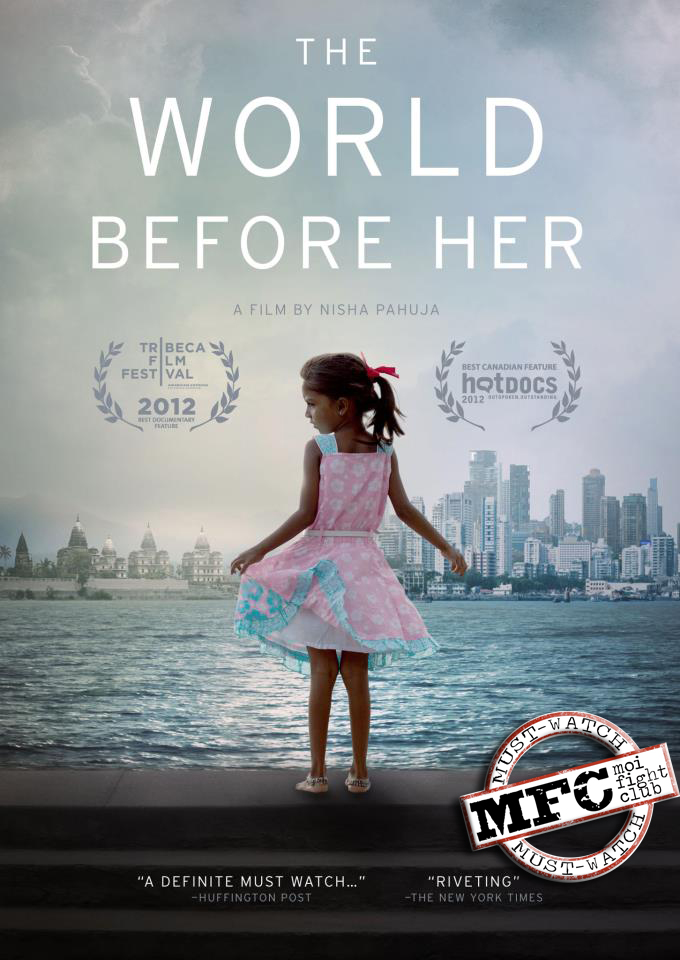
Internet is a great place, especially if you are looking for under-rated gems. Varun Grover stumbled upon this documentary called The World Before Her. Mihir Fadnavis got in touch with the director and we managed to watch the film. So over to Fatema Kagalwala and her ramblings on this stunning and important film. We are putting this in our “Must Watch” film recco List. Watch it.
We love living in extremes. Grey areas aren’t appealing because they force us to think. They are meant for individual assessment whereas black and white are fit for mass consumption. So we’ve draped ourselves with stark definitions of tradition and modernity and live a bipolar existence, merrily swinging between both. Sometimes, we find solace in middle ground but one that is obfuscated with the overpowering implications of the extremes that are tradition and the modernity.
Prachi, Ruhi, Ankita, Pooja – the central protagonists, of ‘The World before Her’, a stunning, award-winning documentary by Nisha Pahuja, are all products, or shall we say victims, of our collective need to ideologically belong somewhere, even if it is within an ideology that seeks to subjugate them. They are perfect lambs for factories manufacturing daily definitions of the traditional and modern according to their convenience.
The struggle between tradition and modernity is ancient. The documentary examines these two polarities with a clear understanding of all its inherent ironies. Let’s take a look at the two worlds it straddles to make its point –
World 1 – Miss India contest 2011 20-day training camp. Of beauty, botox and bikinis.
World 2 – Vishwa Hindu Parishad’s Durga Vahini Camp. Of Hindutva, weapon training and military discipline.
Nisha takes us through both the camps, laying bare their belief system, process and the little dreams behind it all. We see training procedures up-close and peek into the lives of trainees. What makes the ambitious Ms India contestants tick and what drives the fierce Durga Vahinis? Through a thoughtful juxtapositioning, the two opposite worlds collide and before we know, melt into one voice. On the face of it, both espouse contrarian views on female identity. Beyond the façade of the titles of ‘modernity’ and ‘traditionalism’, both bind the very subjects they aim to set free, victimising the very subjects they aim to empower, treating the women they are pretending to liberate as cattle to be branded. The beauty of it all is the film doesn’t state it, but makes it clear with an intuitive stitching together of the narrative.
Nisha delves into both the worlds with care, aware of the mine of uneasy answers she is exploring, mindful of the dust her questions will raise. There is no attempt to impose a comment or paint a particular ideological picture. What makes the documentary a brilliant experience is the careful expose of truths and myths we live in, and the questing female mired in it.
In Ruhi, Ankita and Pooja, we see semi-urban, middle-class young women, very well aware of their social status as females, out to beat the system even if it is through succumbing to it. They are aware of the compromises they have to make and are fine with the cost to their dignity, if it transforms them, like Pooja puts it, ‘from a person to a personality’. The irony of their entire quest for identity within a system out to objectify them, seems to be lost on them. To my mind, Pooja Chopra, the girl whose father insisted on killing her at birth because she was female, almost seems like a tragic figure, bitterly fooled by an arrogant system laughing at her for believing she had carved a separate identity of her own and on her own terms. Ruhi, a young 19 yr old, feels obliged to her parents for bringing her up and feels the need to pay them back by becoming ‘something’, so that their creation is worth it…she never questions the route to fame she has chosen. Nor are her future plans of marriage and children at an appropriate age seem to clash in anyway with her present teen plans of becoming a beauty queen. ‘I can do all this now as I am young, later I won’t be able to do all this’, she says (quote not verbatim). There is no ideology at work here nor a tussle between the old and new. It is simple conditioning speaking but Ruhi doesn’t question any of it, for her her parents support for her contest participation is an empowering, liberating sign of modernity enough. For these women, the shine of glamour and the pain of centuries of repression are too blinding to see anything under or beyond.
At the other extreme is Prachi, the alpha female trainer at Durga Vahini, who has found a purpose and outlet in Hindu fundamentalism to escape the vulnerabilities her gender status thrusts on her. She is a single child of an orthodox Hindu family who feels her father is justified in hitting her (even brutally) because as a female child he let her live. She loves the power being a Durga Vahini trainer gives her, flaunts her dislike for ‘girlie girls’, is proud of being tough and is absolutely against marriage. Like the Ms India contestants, this Aurangabad-based girl too is looking to establishing her worth as a female in all-male world, but by embracing and perpetuating the orthodox mores of Durga Vahini. Unlike the other girls though, she is fully aware that the system she advocates aims at curbing her own freedom, yet, it remains her chosen vehicle to empowerment. Yet, I wondered if there was a glint of wishful-ness, an unacknowledged longing behind the façade of derision as she watched the Ms India contest. I don’t know if it was the artfully calculated shot lingering on her tad longer or my over-wrought zeal to understand her better or an actual fact.
I read criticism of the film saying this isn’t the reality of entire India and that the film does not reflect upon the middle path. It is possible I imagined the subtle jingoism in the criticism, but that apart, what it missed was the fact that these two extremities inform the lives of every woman (and men too) traversing the so-called middle path. Maybe they exist but I am yet to meet a person truly liberated from gender complexities and its socio-economic implications that the film so starkly defines. In fact, I saw Prachi, Ruhi, Ankita and Pooja as sharp and accurate spokespeople of the entire India, irrespective of class distinctions. Trapped in the half-baked definitions made by a commerce-driven, power-hungry, alpha male world, they languish confused in the debris of the shattered female identity they struggle to resurrect. Just like you and me.
As I mull over the needs of these girls, (and they are very familiar, they are around me and inside me) I see their quest with compassion. They have little choice other than adhering to a corrupt system to beat another equally corrupt one, to gain whatever semblance of self-respect they can garner for themselves. Patriarchy hasn’t left much for women to call their own or celebrate in the truest sense, has it? And if that wasn’t enough we have religious fundamentalism adding to the fire. Nisha doesn’t shy from showing news clips of Hindu fundamentalists beating up women in pubs and iterating the fact that Hindu terrorism is a bigger threat to India than Islamic fundamentalism. Not only is this a well-informed, deeply introspective, objective, exploratory documentary but it is very brave as well. One simply wishes the film does not get targeted by pressure groups if and when it comes to India.
As I watched the documentary and later, I wasn’t surprised by the ironical truths about female existence staring at me. It was all seen before, read before, said before. Yet, I couldn’t define the film in words and that is not because of the complexity of the film but of its theme. Which at one level is almost self-explanatory, but dig deeper and it will leave you distraught at the number of knots or rather untied ends it waves at you.
Why have we made the question of women’s identity so complex, almost impossible to unravel? Is it because we fear if we find the answers the world around us will no longer be recognisable? We are all slaves to gender equations and roles. Breaking free is scary because it means starting from scratch for human existence. Without the context of male and female roles and boundaries where would we be? What would we adhere to and what would we fight? Coz isn’t that exactly what gives all of us our purpose? The ‘shoulds’ our gender is supposed to wear? We either wear them with pride or fight them with gusto, satisfied in the purpose we’ve found to base our lives on. We then spend our entire lives empowering the very cycle the protagonists of this film believe/imagine they are fighting. We are no different from them, really. Gender politics apart, men and women, we are all in this together and for once, it isn’t a happy thought.
I realise I can go on writing about this film, such is the subject matter and beauty with which the story has been told. As I pull down the windows on my brains because I really want you to watch it with a fresh curiosity, let me leave u with a few moments that struck me with their irony, pathos and horror.
Pageant diction coach Sabira Merchant (proudly or matter-of-factly?) calling the Ms India training camp “a little factory … where you’re polished like a diamond. The modern Indian woman.” (Did the irony of what she was saying escape her or had she, like the contestants, made peace with it long back?)
Uma Bharti, while protesting against the 1996 Ms World contest to be held in India, “We are against a system that presents women as pieces of meat and judges them based on the size of their chest, waist and hips.” (I never thought I’d appreciate Uma Bharti in this lifetime.)
Prachi, with misty eyes, excusing her father for hitting her, “Knowing that I’m a girl child, he let me live … That’s the best part. In a traditional family, people don’t let a girl child live. They kill the child.” (I don’t think there was anyone among us who didn’t shiver on hearing her say this and actually mean it.)
The Miss India contestants parading in hip-length sacks and denim shorts in a round that judges who has the hottest legs.
Marc Robinson, the organiser, laughing off the indignity of the sack-round.
News clips of Hindutva louts beating up women in pubs.
Little girls at Durga Vahini camps being taught India and Hindutva was under threat from two main sources – Islam and Christianity.
Little girls lapping it up and regurgitating it like it was the only truth.
Chinmayee, a smart 14-yr old, proudly declaring at the end of the camp, ‘No, I don’t have a single Muslim friend. I did when I was younger but then I didn’t know that we are different.’ I didn’t know if I felt horror for India or pity for the little girl.
At the end of the Durga Vahini camp, girls getting sashes to wear identifying them as Durga Vahinis and the (gleeful?) exclamations of, ‘This is just like Miss India, Miss World!’
This was long before Tehelka had done any expose. I think the year was 2006. A junior from college had gone on to become a yogi of sorts – a spiritual guru who over the next few years would gather a bunch of powerful politicos as his disciples and put an Orkut profile photo showing Narendra Modi reading Time Magazine with him, in his Yogi costume, on the cover.
I had shifted to Bombay to become a writer and his phone call started with respect for this ‘brave’ decision of mine. Over the next few phone calls during the week he told me about his vision for India and his love for cows, both quite reasonable, and I listened out of curiosity and courtesy. Then, after his self-praise ran dry after multiple ejaculations over 4-5 days, he came to the asli mudda. He wanted me to head the national cultural wing of some organization/movement he was launching soon, in association with Bajrang Dal or VHP (my memory fails). I asked him what are his views on allegations on these organizations being responsible for Gujarat riots, and pat came his monologue which came back to me right after I started watching Joshua Oppenheimer’s The Act of Killing.
He said of course it’s a matter of pride and an act whose time had come. It’s a happy situation that we still have youth who can put their lives on line for their nation. He said he is in fact sitting with two bhai jis who murdered a few people, including a pregnant lady and her child, with their own hands. Sensing my shock he said he and bhai jis can explain everything if I meet them in person just once. And then he handed the phone to one bhai ji when I cut the call in horror. College junior/Yogi called back saying he can understand the fear of rationals over such acts but he is sure that once I know the full story, I will not just accept but hug and applaud these people who murdered muslim women and children on the streets. A more heroic me would have gone to the cops or some TV channel, but I just cut the phone and never took his call again. (He called a number of times over the next month or so.)
This nonchalance puzzled me, kept me awake for many days. I rationalized that he might have been bluffing only, or trying to test me on something. It was too difficult to believe that people could boast about their crimes so easily, that too to almost strangers.
While watching The Act of Killing, in which gangsters hired by Indonesian military regime to kill more than 15 Lakh alleged ‘communists’ in the country revisit their acts with pride and glossy rationalization, I kept swinging between the two extreme emotions. One was the feeling of shock at this bizarre scenario – gangsters were told to re-enact the murders in whatever cinematic genre they want to and they obliged by enthusiastically recounting the methods, madness (sitting on a table placed on victim’s neck and jumping while singing), and ‘reasons’ (“God hates communists”) behind via many genres including musical, war film, crime drama, and comedy. The other was the feeling of familiarity – the feeling of having lived among such people, known them (and we all have known them in India who say ‘Sahi kiya Modi ne!’), and hence feeling no shock at this kind of behavior. It was like looking into the future if we have a Hindu-Military regime someday. The same guys I spoke to on the phone might be calling me again to write songs for the film they would be making to celebrate their own acts of 2002.
So yes, there was a third feeling too. Feeling of ‘Is it okay if I laugh at this scenario?’ Very few films can put you in that space, that uncomfortable space between humaneness and detachment. I did laugh in a few scenes, in spite of being brain-shocked by it. It was farce performing cunnilingus on reality.
The story unfolds through Anwar Congo and his sidekick Herman Koto. Anwar was a gangster (he says gangster means a ‘free man’) in 1965 and killed more than 1000 people in his ‘office’ by his own admission. He loved watching movies, looked like Sidney Potier, and ran the ticket business of cinema halls, and hence appears most earnest about this project presented to him by Oppenheimer. His sidekick, a present day gangster, clearly has acting ambitions as he puts his soul and direction skills in this fractured, b-grade production they are making. The film keeps switching between extremely violent and surreal recreations of 1965 killings, present day life of these gangsters (sometimes watching and critiquing their day’s work like big stars would), and moments of serene silence. And the silences are the most uncomfortable, as they should be.
Not for the faint-hearted, but this is as explosive a mix of documentary, cinema, human condition, and horrors of prejudice as you will ever see. GUT-WRENCHING is an understatement.


 If the header of the post seems loaded, you will be surprised more when you watch the film. Yes, there’s gender-bending, it’s genre-bending, and a ghostly tale. Add partition, identity crisis, sexuality, female foeticide, sibling rivalry. It’s a baffling cocktail that you have never tasted before.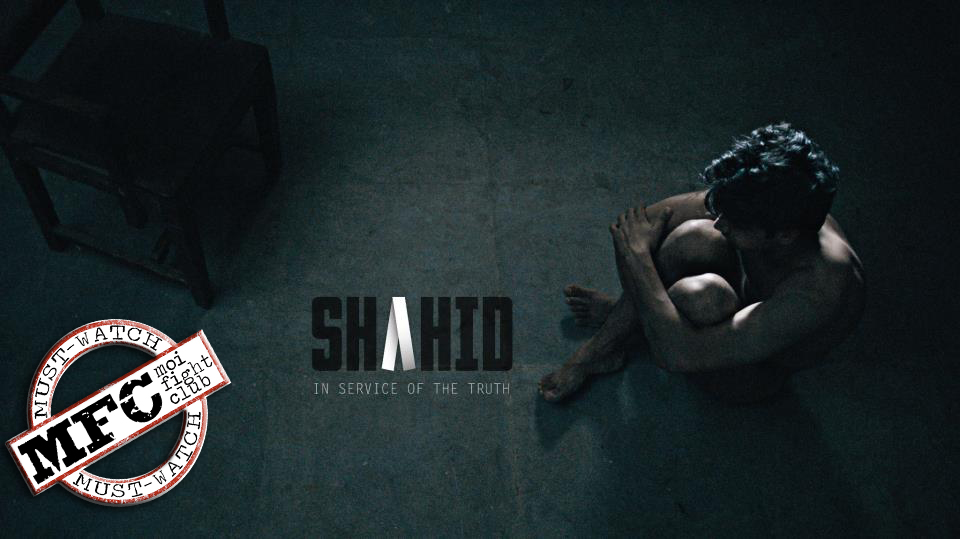














 F.i.g.h.t C.l.u.b