Archive for the ‘reviews’ Category

Though the music CDs are still to hit the stores, the music of Gangs of Wasseypur – 2 is out online. Our regular (almost in-house) music critic Rohit has sent in this post. Padho aur suno!

(Rohit wrote on GoW-1 music too, here. And a recent post on GoW-2 lyrics by Varun Grover, here.

Over to Rohit…

***********

Even Apple isn’t so tight lipped about their new products! We don’t know if it was the music company or the production house but the fact remains, the music being released 3 odd weeks before the film is to be released isn’t a great idea no matter what logic is thrown at us. The songs need some space of their own as well. Anyway, let’s get down to business.

1. Chicha ledar – The song starts with that familiar sound that all the people who lived near a cotton extracting/beating shop would easily identify. (Those huge sitar-like equipments) and then with appropriate ‘building up’ the song launches into a constant beat arrangement and in comes Durga. Backed by extremely good lyrics the song grabs you and runs and runs. Special mention of the amazing use of words like ‘cheecha ledar, sarau, word play (whether i like the weather)’. The constant ‘joota joota joota’ gives the song a ‘remixed’ feel and then the ‘dub step’ comes in. Maha-amaJing! My grouse with the song is that it is JUST 4 minutes. Clearly a GAJJJJAB start to the album! (Varun insists that the usage of ‘sarau’ is a tribute to Lucknow, I must add).

Special mention of Durga (the 12-year old singer), listen carefully how she says ‘dil’ in the song. Everytime. That’s called hugging the lyrics and not just singing it. Kudos!

2. Kaala re – Sneha khanwalkar. at. her. best. If the ‘keh ke loonga’ made us all hear Sneha launch into her ‘catty’ avatar, this one explores the playful undertones (with a very dark and haunting cello/bass arrangement). Saiyyan kartey ji coal-bazari. A song that’s helped a great deal by excellent lyrics. (Kaala bilkul surmey wala). All shades of black, explored. very. well. Perhaps some parallel will be drawn with the sound of A.R. Rahman.

3. Electric piya – Rasika D Rani starts off (and must say the pronunciation of ‘elektric’ is very very ‘chic’!’), then a very bhojpuri (Trinidad Tobago also?) music setting takes over (aided by ‘casio’like sound, harmonium, dholak and manjeeras). Dholak and Harmonium are quite prominent in addition to the vocals. A very naughty (in a very un-womaniya way) song. This is more like leg pulling of your ‘piya’. The words are pronounced in a flow and might not be able to get into the mind immediately. Repeat the song and you will find yourself smiling.

4.  Bahut Khoob – I am VERY interested to see the way this is going to be filmed. Very theatrical in the way it uses the voice of the kids (And at times Sneha in between). Hear it to make an opinion on the song. Mix and scratch and mix and scratch again and again!

5. Taar bijli – Harmonium with a lot of female backup singers (and some ‘chammach’ on dholak) leaves us with Padamshree Sharda Sinha to weave magic. The setting is very playful. Lyrics full of gentle banter directed towards her in-laws by the bride. ‘Na idhar na udhar hi sihaare piya’…! excellent lyrics. The song is NOT another ‘womaniya’. While Womaniya was more ‘intimate, naughty and personal’, this one puts out the banter in open and poses some questions to the entire family about the bridegroom. The song is actually a satire on the worsening condition of Bihar in 80s and 90s. Perhaps the most conventional song of the pack. Sweet and melodious.

6. Aabroo – Starts with bulbul tarang and dholak. The setting is very ‘gali mohalla’ style. Piyush mishra (and you can picture him sitting on a ‘chowk’ surrounded by people. A little different from his normal style, Piyush Mishra emotes ‘ekdam ghus key’. Bhupesh singh very smartly contests Piyush Mishra (not teams up, contests). An election campaign song, it’s the ‘compteesan’ that has been got music as a background. Kudos to Piyush Mishra! Hilarious to the core. A genre that has resurfaced after a long time,

7. Perpendicular theme – Using a mix of brass band and other sounds, this less than a 2 minute track ends too soon (May be weird just for me, because I am used to the ‘themes’ being longer). A kid’s playful voice a shehnai (may be) and drums at times. Also, the brass band plays a tune in between. I have heard it somewhere and can’t put a finger to it. Who can remember it? I liked the song but disliked the fact it’s too short. The theme is paced so well that you would want to listen to it for a longer duration but then, it ends.

8. Moora – Guitar and mandolin together and you know the song will make you smile. Sneha khanwalkar gives a whispering start to the song. Chiefly using Mandolin and Guitar (just ‘by the side’ arrangement), the beauty of the song is that the vocals are also understated. Would have liked a little more ‘energy’ in the vocals. The lyrics anyway talk of hope so found this version a little dim. The interesting part of this version is a faint male voice. It’s the voice of Robbie styles from Trinidad who played cuatro and mandolin in the song. Best part – he doesn’t know Hindi.

9. Tunya – Bulbultarang’s excellent use with the members of ‘Baal party’ (and if you hear attentively I guess there is a bit of Sneha in the background too). This is just 1:22 minutes track and boy is it sticky or what? As I continue to complain about the duration of this track I can’t help but feel this will make a great ringtone too!

10. Bahut Khoob (8 Bit dubstep) – Excellent use of the 8 bit dubstep arrangement has made this piece (which is still less than 3 minutes!) breezy and intriguing at the same time. From 1:50 minutes, Sneha uses Super Mario music (with altered tempo) and then constructs a bit of her own tune around it. This is sheer brilliance! (90s kids, rejoice!). Although in the lyrics post, it was mentioned that the words are random, I am quite sure that the kids are referring to the movements of a train. Varun (the lyricist) points out that the song refers to the movement of ‘Ganga, the river’. Hear hear and then let’s discuss?

11. Electric piya (Fused) – Not remixed, Fused! Pretty straight forward ‘fused’ version. Harmonium remains and is aided by uniform beats and at times echo. Didn’t like this version much. May be you will. Try it out.

12. Moora (Morning) – Compared to the previous version of ‘Moora’, this one starts with more instruments and the mandolin makes way for  The ‘Humni ke chori ke nagariya’ boy Deepak gets behind the microphone again to give us a more soulful rendition of this song. Lyrics, excellent. Energy (and music arrangement) – Up to the mark! No guitar. Some echo. Some trance like sound. Kabir-sque lyrics. Ends very very techno istyle! My pick of the album, this.

13. KKL – Sneha! Sneha! echoes ‘KKL’ which is nothing but Keh ke loonga. This version will tickle all the ‘techno junkies’ at the right places. If we remember right, the ‘loonga loonga keh ke’ (from part 1 isn’t used in Gangs of Wasseypur part 1, the film). This track features the all male chorus from the song and then mixes up with tiny bits of Sneha’s voice. Sneha has used the bits from the part 1 song superbly! This is what you can easily call as a ‘ball busting ass kicking’ music arrangement. (Try getting the ‘चीख’ of sneha out of your head when she goes ‘Teri keh ke longaaaaaaa’.) What I shudder thinking about is – our reality TV shows will kill this song by ‘performing’ on this.

 A lot of talk has happened pointing directly towards how some of the tracks in Gangs of wasseypur sound like ‘Sound trippin’. If we are to go back in time by say 2 years (when Gangs of wasseypur’s music was being made), MTV had no idea of Sound trippin. Could it not be a possibility that Sound trippin came AFTER viacomm heard the music and sounded off their Music channel to make a show around these ‘unique’ songs and sounds that Sneha accumulated? Think about it.

With the Music of Gangs of Wasseypur 1,  sitting pretty already and other credentials in her bag (rather backpack!), Sneha Khanwalkar delivers a different sound with this album. While the Gangs of Wasseypur 1 album was tilted heavily towards the folk sound, this one is more contemporary. The selection of singers and lyrics continue to play a smart role in the overall feel of the album. Piyush mishra appears for just one song and hits a home run. Varun Grover should probably start preparing for a speech already because kala rey will cause a lot of cheecha ledar and might make a moora of a lot of lyricists this year. All we shall do is just celebrate the arrival of a deeply rooted (to the story line and narration) lyricist and yes the words bahut khoob will be incidental.

Our pick – Entire album. With so much prem pritam pyare and bro-jid-esque music around, if any album is worth your full time, it is this.

SPOILER ALERT

Not again, I said. Bhartiya naari gets the guy. Boozie naari gets converted to bhartiya nari as she tries to get the guy. And the guy is desi at heart who is also Mama’s boy- will sleep with boozie, will fall in love with bharatiya. Imtiaz Ali, Sajid Ali and Homi Adjania took bollywood’s oldest and most favourite formula of love traingles and did just one brilliant thing – remove the communication gap between the three which has always been a bane in desi love triangles. So all three of them sat together and discussed it openly – tum mujhse, main isse pyaar karta hoon. And then? Nobody had any clue what to do – writers, characters, makers. As the formula goes, cool and confused lovers will travel a distance to discover true love. London —-> Cape Town —-> Delhi.

Fatema disagrees. She says there’s more to it. So, over to Fatema Kagalwala and Nadi Palshikar for the rest. We are going with the Cocktail trend. This post is also by 1 guy + 2 women –  @CilemaSnob

Cinema feeds us so many stereotypes. Loudly, brazenly, irresponsibly. In the race for finding the formula, women characters have been brutally pigeonholed in our cinema for ages, making us believe there isn’t anything more. The curse of populist feminism as well as quick mass appeal has given us generations of blanket portrayals of loud, gender role-defying women as ‘strong’ and shy, silent and traditional women as helpless wimps. It is easy for us to see a gun-toting Zoya and the sassy Veronica as perfectly liberated but is it a true portrayal of liberation or is there more? Are we missing something because the definitions we are fed are shaky themselves and years of gender polarisation have left us no gaps to sieve characters that don’t fit in? Is Meera as wimpy as she comes across and is Veronica as care-a-damn as she looks? Let’s uncover the world behind the characters of Veronica and Meera discovering what makes them tick and different in Imtiaz Ali’s and Homi Adajania’s Cocktail. First, over to Nadi

Veronica’s Parents. They send her money but do not really care. So our girl is a wild child. An attention-seeking child. She breezes into places and then behaves brazenly. Look at me, I am being bad. The loud music gets faster and faster until towards the end she says, “I can’t do this anymore” Tantrums are tiring. The tantrums have not worked either. Kya hai mere paas, she asks- not once saying “what did I get after loving you so much?” There has been no question of that anyway. There was supposed to be no question of that anyway. But that she is fatigued, exhausted. Going round and round like a child having a fit. Having banged her head against a wall to seek attention and then complaining that her head hurts to the same person that never saw anyway. For now that she knows that the love she wants can never be had, does she want to gain bliss by being child to this couple? This couple, who unlike her own parents, will stay together. This woman who has given her house a feeling of ‘Home’, this man for whom, what started as a superficial thing has turned into a love so deep that he has to be clung to- whatever maybe the rules of the game. Like Martin who does not mind being scolded like a child and then comforted by his wife Antonia when he finds her with Palmer in iris Murdoch’s A Severed Head. Like Anais Nin in some moments, felt about Henry Miller and his wife. And in our own cinema- my favourite ‘triangle- Gulzar’s Ijaazat (based on  Jatugriha by Subodh Ghosh)  where Maya says  about Sudha, her lover’s wife- “Didi maarengi toh nahi” while Mahender has said – I will put you in Sudha’s care. She will know what is to be done with you. And the bitter words between Sudha and Mahender that Maya hears over the phone- which remind her of the fights between her parents. And she goes away-

But coming back to Veronica-

Outside the club, Gautam glances at Meera- like an adult signalling to another about taking care of a child who is sick. Veronica quiet easily slides into the role of child being taken care of by parents. Two people who love each other, and yes she knows that, but are responsible for her well being. Deep, difficult, this. The scene – Lest we do not recognize that this has gone beyond mere two friends taking care of a drunk friend, is the explicitly spelt out – “Why can’t Gautam take me to the bathroom?” The tantrum of “Why can’t Daddy take me to the bathroom?” which is usually explained by a “Because you are a big girl now, and so you go with the women.” Which usually appeases the child.

But here the script goes dangerously close to the enactment of incest or rather an incest –like fantasy with the shocking “There isn’t anything you haven’t seen before.”And how easy it is to sink into fantasies. (Maybe this is the way he need not give this girl up?) Sink together near Veronica’s bed after tucking her in and ask a very adult, really caring. Are you okay? Parents saying thank God, the children have finally slept.

The next day- while Meera who is good and kind has done what she thinks is the right thing – gone away, we have veronica trying to win Gautam back. Not like an adult woman. But emphasizing the imitation of Meera – See, I got the recipe off the net – I will cook – just like her. The apron almost a disguise – poised with a ladle in hand. Saying defiantly – I sent her away. The simulation of the fantasy of mother being banished – I’ll look after father – I can even make ‘the yoghurt salad thing’ and the difficult biryani. And here, thankfully, I thought, Gautam does the responsible thing. He is angry, rightfully so. From somewhere far away there was more than money coming for this neglected child at last. Sensible, stern ‘parenting’?

And ‘stern’ I do not think she would mind. For looking back, we now remember that comic scene with Gautam’s Mama telling her how to sit properly, for Kavita Kapoor would surely disapprove. This comic scene in retrospect, seems poignant as this is what Veronica has never had – a gentle reprimand for the way she has been dressing and behaving wilder and wilder.

Here, when Gautam does the right thing- reprimands her for this silly behavior, looks for Meera, I saw hope for Veronica. After that  little relief that is awarded to her – Gautam looking after her- making her laugh, feeding her. Plaiting her hair- (reminding me of that other film – Sadma which too hinted at a kind of quasi-incestuous relationship), I hoped Veronica would realize the situation that she was in.

And so we are okay with Meera ordering Gautam to take care of Veronica, this being agreed to. Sure. Sometimes the writer would like to provide just a little succour for a character he can’t help but love.

And Veronica did not let us down. Being cared for a while- like someone blowing softly on all those wounds the crazy girl carried on herself- the hospital-bed scene actually bringing out the wounds, making visible, the scars of Veronica. This almost dying and then being given a chance to make a new beginning- and she does realize what the situation is. And decides to restore the rightful couple to each other. It is here that the script is not very kind to this, its most lovable character. And we see that although the character arc of Veronica seems to be on the way to something good, Gautam has not become adult enough. So there’s the jumping out of autorickshaw and dialogue like “My best friend’s marrying my other friend” or something as corny as that! And our photographer girl who has put them in the rightful frame and would have liked to click and walk away, is pulled into the frame- collective hugs all around. Once again, she is let down. You can’t really blame the Kapoors for not knowing the right thing to be done of course – after all, the D’costas didn’t.

For this is where she should have been restored to her place, the door shut in her face, so to speak. However traumatic it might be for her, the script should have left her behind while Gautam goes to India (Meera’s located nicely in this other separate world to where he can go ‘leaving’ Veronica to her own resources of which she has quite a few, considering her realization etc).

But even as the potential darkness is broken by a loud song, as the screen fulfils the Indian fantasy of both these girls dancing with the hero,  I say to myself – once again a ‘not really my type of movie’ has connected in a way I cannot describe. Once again, just a love story – good looking people in pretty locales – written by Imtiaz Ali has gone beyond – has shown me the painful journey, the remarkable transformation of a character. And just like that other time, Homi Adajania has very subtly gone dangerously close to taboos, hinted at the terrible hurts that lie behind our ‘bad’ behavior.

And now Meera. Nadi Palshikar’s intuitive post on Veronica made Fatema want to delve deeper into Meera. She was intrigued to uncover the world behind her character because something told her there was more to her. She felt Imtiaz hadn’t written a stereotype howmuchever our sensibilities may push us to believe… Read on.

Meera – In our cinematic landscape where women characters have to be one of a few ‘types’, on first glance Meera seems to be your regular chhui-mui, sacrificing goat because she knows no better. The first time we see her she is dressed in a demure salwar kameez, with jhumkas and a mangalsutra, extremely uncomfortable sitting close to a garrulous gent on a cramped flight to London. She manages her luggage awkwardly while she waits for a husband who doesn’t show up. We see her as a reserved and simple girl from the heartland of India (assumed by her dress and demeanour) and think she will be the dependant, helpless type as we are generally shown such girls to be. Soon after a long wait at the airport of a foreign land where she knows no one, has no place to stay and whose ways are completely unfamiliar to her, she heads to the police station to seek her husband. Her first action when she meets trouble is to look for a solution. Her first thought is not a victimised ‘oh what will I do?’ something we’d expect a character like hers to automatically do. She breaks down only after her husband brutally rejects her. We see her hiding in the bathroom of a store sobbing away…It is only later that we understand she wasn’t sobbing because she was feeling helpless at her plight but because she was deeply hurt. If by then we have already typecast her in our heads we are likely to miss out on more that we learn of her later…

Meera is a product of her upbringing. An upbringing that is rooted in values very Indian across the spectrum of positives and negatives. She does not understand live-in relationships and relationships without commitment. She is a self-respecting girl, one who is a little out of her depth in this foreign land but who does not let that become an excuse to wallow in self-pity. She willingly looks for and takes up a job to support herself, as if it is the most natural thing to do. Yes, she blames herself for her husband leaving her and that hints at a typically low self-esteem but how many of us haven’t blamed ourselves for our partners leaving us? Especially if you come from a space where marriages are sacred and a world where women’s identities are closely linked to their house-bound roles…Actually even without either…

One would expect Meera to ‘Indianise’ the rootless Veronica and Gautam, and the film to an extent. Any other film would have done so and that’s where Meera’s character becomes independent of the demands of the story. It does not use her character to sell Indian values, which is what we are used to seeing. She is who she is but she also lets the two stay who they are. She draws the limits of her comfort but does not impose her will. Yes, she does lack a confidence in herself in relation to the larger world but not in her own values; hence, she does not shy from praying to her gods in the irreverent household she lives in but refuses to give friendly hugs to Gautam, even after they become friends. Yet, she straddles both worlds beautifully, allowing herself to change some and then drawing her boundaries tight. She keeps emphasising ‘Main aisi hi hoon’. She rejects an idea not because it scandalises her but because that is who she is and that is what she identifies with. That is what she does not want to change… She does not flee at the first hint of trouble, but then we know she is not the fleeing type. She leaves when she thinks that is the right thing to do. Right not because she believes sacrifice is a great virtue and as a woman she is supposed to be so, but because that is what she sees as doing the right thing by her friend Veronica, someone she has come to love like a sister.

It is a thin line Imtiaz Ali and Homi Adajania tow in keeping Meera just this side of stereotyping but they do it with an intuitiveness and maturity we aren’t used to. It is another thing that a lot of this is swept by in dialogues and the compulsive yuppie-ness of the film. Some more is in the over-weaning need of romantic films to be dreamily so. Extrapolating a bit, it is this strength of character that must have made the flighty Gautam fall in love with her, something the film should have emphasised rather than go on a romantic trip of ‘you are this’ and ‘you are that’. She grounded him, something Veronica (or any other girl) couldn’t do for him. Isn’t love after all, about finding a home for our souls to rest in? Gautam had to find it in Meera because she always chooses to remain who she is not because she cannot go beyond her boundaries but because she won’t. Choice is empowerment and what better symbol of strength than the ability to make it?

It is for this that despite her shy exterior, Meera comes across as a woman stronger than cinema would have us believe. Because being true to oneself requires far more strength than we can imagine, in cinema as much as in life. It isn’t an exciting thing many times, hence Meera is a boring character and Veronica is attractive. But isn’t the foundation of ‘self’ far more solid than colourful antics and a glossy exterior that barely manage to hide the chinks inside? As a film, Cocktail didn’t strike me as anything more than a warm romance but all its superficiality couldn’t hide the worlds of its characters…created with a subtlety we aren’t used to watching.

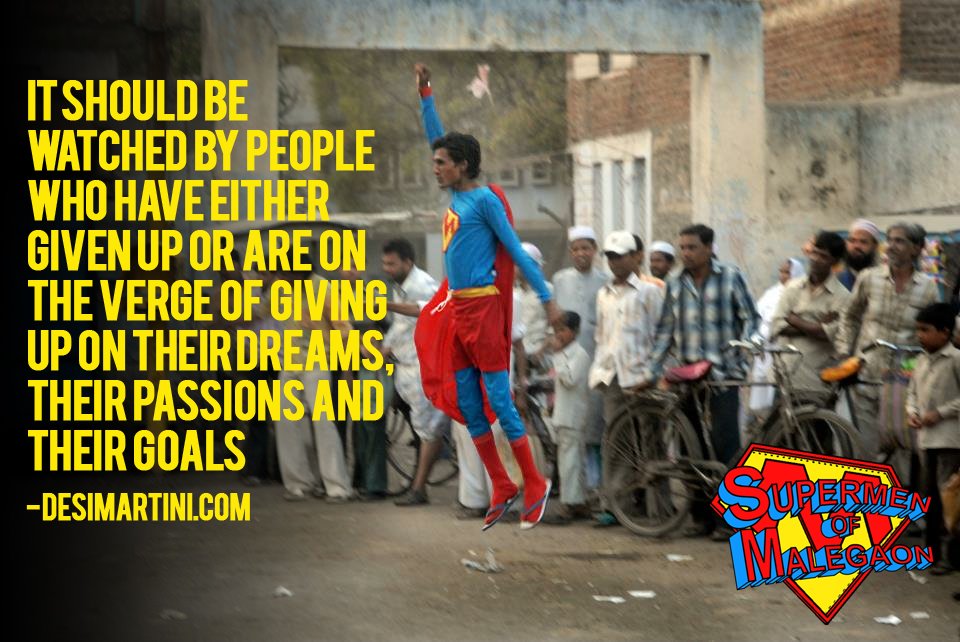
Indian cinema turns 100 this year. And there’s a great film currently playing in the theatres which celebrates this magic of cinema. It’s a small film which you might not have heard about because it has no ads on tv, no chartbuster songs on radio and no hoardings to boast about. The film is Supermen Of Malegaon (SoM). And indian cinema can’t get a better homage than this documentary made by Faiza Ahmad Khan.

The film has been doing the festival rounds since last few years. But good or bad, we don’t watch docus in theatres. We don’t even release them to give it a chance. Thanks to PVR Directors Rare, SoM has got a limited release across few PVR properties. Make sure you watch it. And if you have any doubts, we are giving you not one or two, but 50 reasons to watch it. And since “crowd-funding” for indie films is in vogue these days, we crowd-funded this post to go with the same spirit.

Do watch and do contribute your reason in the comments section. Will start with mine.

1. Because Vijay and Ravi can finally move on. Mere paas ma nahi, cinema hai! It has one of the best, unrehearsed and unscripted scene between two brothers – one consumed by the addiction called cinema and the other……well, watch it. Poignant.

2. If you watch or love or make cinema and you miss SoM in theatres, you’d miss the cinema equivalent of finding the G-spot – @varungrover

3. Because 1hr of supermen of malegaon is more fun than 2hrs of Spiderman – @ronyd

4. Because even Brando would be appreciative of Jor-El and the ‘method’ here – @krnx

5. Because it blurs the line between fiction & docu. It was more entertaining than a commercial Hindi feature –  @ghaywan

6. Because SoM doesn’t sell itself on sympathy like the recent “indie” filmmaking fad – @auteurmark

7. Because these people have not collaborated on the film : Samir, Sajid, Bhansali, Shetty, Bellary, Ekta, RGV, Bhatts, Kohlis, Kapoors – @mihirfadnavis

8. Because it’s a better (hate the term but…) Love Letter to Cinema than ‘The Artist’ or ‘Hugo’ could ever be… @jahanbakshi

9. You’ll laugh a lot, being fully aware that there’s a lot of grimness in the tale as well. Its a unique feeling   @RangbadluGirgit

10. ‘Pairon ki bediyaa khwabo ko bandhe nahi re..’ Madhyam ki garibi sabse badi prerna kaise banti hai @koripaati

11. See Pic

12. Why else do we watch films ? To get entertained ! And entertained you shall be !! – @z_maahir

13. Location is not Switzerland and the lead would not look like a million bucks even with plastic surgeries STILL SoM is Beautiful – @humHeroine

14. Superman with a 24″ waist. A costume that involves rubber chappals. A film that is inspired and inspiring – @ashish_mehta_

15. Because it celebrates the simple human notion that if you are passionate about something then no one can stop you. There is always a way around. Always. Equipments, technology, know-how, resources etc just don’t matter. As long as you want it badly enough – @ghantaguy

16. You should watch SOM because it will make you pick up a camera and shoot – @varunvarghese

17. Bolchaal mein itne achhey Urdu shabd bahut dinon baad sun-ne ko miley – Rakhi (on FB)

18. That cinema by all other names would still be magical! – Suhel Banerjee (on FB)

19. Kyuki bhai ise ‘naa dekhne ka’ ek bhi reason nahi hai ! Puneet Sharma (on FB)

20. Which was the last film you saw that you wished you could see more of? – @gyandeep4a

21. For one poem Chand. Just that is worth the ticket money – @shubhas

22. Because it gets over in about an hour and you won’t get bored. Forget all the irony and the film about a film business blah blah – Swati Trivedi

23. Kyuki aisi filme dekhkar khud se ye sawaal poochhne ka man karta hai…. Ab to bahana banaane chhod de, ja aur kuch man ka bana !!!! Puneet Sharma (on FB)

24. It makes us feel that good filmmakers still exist. Faisal Numan (FB)

25. See pic

26. The one reason that counts – it is paisaa vasool – Vinay Jain (FB)

27. Simple. Because its one of the best films you will see this year –  Anant Raina (FB)

28. Because it makes you smile. The passion for Cinema in India is equivalent to religion. This 60 minute beauty inspires everyone to do something even if you cannot afford it – Abhinav Bhatt (on FB)

29. kyonki yehi Cine-Maa hai!! – Nitin Baid (FB)

30. “Life is full of sorrow, so it is very important to dream. No one should ever stop dreaming,” says the narrator of #Supermen of Malegaon, the funniest, sweetest movie I have seen in a long time. The writer in the movie says things like “Most of the films you see is only 20% output. Imagine being a writer and having to live with 80% of the angst. It’s hard. But it doesn’t stop you.” In an age of multi-crore promotion budgets for glitz, here is an honest movie with a soul, a story of dreams and passion, a movie that you won’t see ads and promos of, as they have no money for them. It’s playing at PVR Juhu at 6.20 pm. I am going back for the lines. Who is coming? – Lalita Iyer (FB)

31. Because tragedy brings out the best comedy – @ronyd 

32. Because it completes the Unique distinction of having watched Superman, Spiderman and Batman in the same year – @nitinnair81

33. Because its a RICH film made by POOR people which you get to see in a POSH theater for CHEAP price. Rs 110. Pvr Juhu. 6.20pm – @navjotalive

34. Because despite it being a documentary avoids all the docu cliches and still becomes accessible for just about every man jack who likes movies – @mihirfadnavis

35. See pic

36. Have you ever seen a superman wearing naadewala kachha and slippers, and ppl wiping their face with his red cape? @thepuccacritic

37. Because, in fact more than Hazanavicius’ film, Supermen Of Malegaon could actually be called ‘The Artist’ and *earn* that title – @jahanbakshi

38. As a filmmaker, it made me want to get out and start shooting my first. Thoroughly inspiring! @ghaywan

39. Not everyday you see a film where the hero is flying on one hand and paddling on a float in the river the next min @HumHeroine

40. FUN ke beyond, sach aur jhoot se pare , ek khula maidan hai.. Superman Of Malegaon tumhe waha milega @AmritaThavrani

41. Well, one reason is definitely that writer, Farokh. He had more personality than half the film industry combined –  @pradeep_smenon

42. Because it really does take supermen only to make films – Malhar Salil (on FB)

43. Because if you believe in your dreams, it can happen. Passion for cinema = SoM = Simply Superb!!  – Himanshu Vora

44. Without a VO, the film is spoken from the residents’ pov which makes it experiential than being a hawk eyed narrative – @ghaywan

45. Because some guy in a small town made his film Undaunted by BO, ratings, festivals,100crs or twitter trends. And that’s rare – Vasan Bala

46. Because it’s the best rated film of the year. See pic

47. The writter in Supermen ka Malegaon, Hamid Faroghi – Kya bhaari awaaz aur kya personality, jab bhi koi baat kehte the toh har baat me ek gehri baat hoti thi! – Yogesh Dube (on FB)

48. It just made me extremely happy and uplifted. Not even hint of manipulation, morality or design. They just let it be..the protagonists just do their thing only because they love doing it, not to prove anything. Only complain was it ended too soon – Apan Singhal

49. Because it celebrates that aspect of a film which most of the people have just a surface-level idea of – filmmaking itself. – Gyandeep Pattnayak (on FB)

And here’s the most important reason…

50. To support PVR director’s Rare so that it can continue to bring more such quality cinema to you – @ShiladityaBora

So what’s your reason for not watching it?

He is a certified boob-yist. Well, i remember he won a contest on twitter where you had to figure out the faces from just the cleavage pics. And he got all six of them spot on! But that story is for some other day. Shivam Sharma masquerades as GhantaGuy on twitter (#FF) and describes himself as “Passionate movie-buff. Not a critic”. Over to him. on Gangs Of Wasseypur.

Even after seeing the movie twice I could not bring myself to review it because there was so much in it, so much to take in all at once and I was not sure from where to start. The following post started out as about some amusing reactions and things that I have observed in the last week regarding Wasseypur. Things that surprise me and make me laugh at the same time. Though there is a lot that I still want to write, it’s still a start. Read on.

‘गैंग्स ऑफ़ वासेपुर’ को रिलीज़ हुए एक हफ्ता हो चुका है. समीक्षाएं पढ़ी जा चुकी हैं. पिक्चर को पसंद-नापसंद किया जा चुका है. पर वासेपुर अभी भी दिमाग पे छाई हुई है, ज़ाहिर है कि और कुछ हो न हो, ये एक ज़रूरी फिल्म है.

“The Magic of Cinema”.शायद वही.

पर कुछ बातें जो मुझे खटकी हैं वो हैं audience के अलग और कुछ अजीब reaction. मैंने ये फिल्म नागपुर के एक ठसाठस भरे पिक्चर हॉल में देखी थी (गौरतलब है कि नागपुर सलमान खान का गढ़ माना जाता है और ‘दबंग’ के all-India collections में नागपुर सबसे आगे था.) पिक्चर में करीब ७०-८० बार गालियाँ आती हैं. फिल्म सच्ची घटनाओं पर आधारित है और गालियाँ ज़रूरी हैं क्योंकि वासेपुर कि गलियों में घूमने वाले, बात-बात पर कट्टा चलाने वाले जिन लोगों की ये कहानी है वो गालियों का प्रयोग रोज़मर्रा में करते हैं. आप और मैं भी गरमा-गर्मी में इनका प्रयोग करते हैं और कुछ अपने मन में ही देकर सुकून का अनुभव कर लेते हैं.

बहरहाल, फिल्म में जितनी बार भी गालियाँ आयीं, लोग जोर से हँसे. जोकि मुझे खटका क्योंकि ये लोग भी आपस में गालियाँ देते है पर हर बार उसे मज़ाक के तौर पे नहीं लिया जाता और न ही ठहाका मार के हंसा जाता है. फिल्म में भी सब जगह इन्हें मज़ाक के तौर पर नहीं डाला गया. जहाँ हैं वहां सही हैं. पर शायद हमें सच्चाई को मज़ाक में और मज़ाक को सच्चाई की तरह लेने की आदत पड़ गयी है.

ये कहानी उस जगह की है जहाँ की ख़बरें ‘अमर-उजाला’ और ‘दैनिक जागरण’ के क्षेत्रीय पन्नों पर छपती हैं. अर्नब गोस्वामी और राजदीप सरदेसाई के आदी शायद उससे relate न कर पायें और क्योंकि हम उनसे काफी दूर हैं इसीलिए वो गालियाँ हमें या तो हंसाती हैं या discomfort महसूस कराती हैं.

क्या एक normal reaction देना इतना मुश्किल है? शायद हाँ.

कुछ लोगों का कहना है कि पिक्चर बहुत vulgar और cheap है.

हमें ‘शीला की जवानी’ और ‘मुन्नी बदनाम हुई’ आदि, जोकि सिर्फ अंग प्रदर्शन के लिए बनाये हुए item songs हैं, उनसे कोई आपत्ति नहीं है. अगर कोई शब्द अपने आपको सबसे आसानी से explain करते हैं तो वो है “item song”. साफ़ तौर पर ये वो गाना होता है जिसका प्रयोग सिर्फ लोगों को खींचने के लिए किया जाता है और उसके लिए अधनंगे खुले प्रदर्शन से बेहतर हथकंडा नहीं है. (ऐसे गाने ज़्यादातर उन फिल्मों में होते हैं जिनकी कहानी लोगों को खींचने के लिए काफी नहीं होती. यहाँ मेरा उद्देश्य इन गानों को बनाने वालों के विरोध में नहीं है पर हमारा दोगलापन दर्शाना ज़रूरी है.) जितना बड़ा स्टार उतना बड़ा गाना. और ‘aesthetically shot’ होने के कारण इन्हें public domain में accept कर लिया जाता है और ‘vulgar’ tag तो दूर-दूर तक नहीं दिया जाता.

इस समय मेरे मन में एक गाली ज़रूर आ रही है पर उससे मेरे अभिप्राय पर कुछ ख़ास फर्क नहीं पड़ेगा. छोडिये.

खैर, वासेपुर में कोई item song या kissing scene नहीं है. क्योंकि गाँव और छोटे कस्बों में मुंह पर चूमना कोई आम या ज़रूरी बात नहीं होती. बल्कि, kissing भी एक तरीके से यहाँ western (या french कहें) phenomenon है और पिक्चर में दिखाए गए उस २०-३० साल पहले के fridge की तरह ये भी अभी तक अंदरूनी भारत में पूरी तरह पैठ नहीं कर पाया है.

अगर तब भी आपको फिल्म ‘vulgar’ लगी हो, तो इसका मतलब है के आपका दिमाग स्क्रीन पर चल रहे scene से आगे निकल गया है. निर्देशक और किरदार, और किसी को न सही पर आपको उत्तेजित करने में सफल हो गए हैं और ‘vulgar’ शायद आपके दिमाग में बनी वो image है जिसे अब आप guilty-feeling के तौर पर बाहर उलटी करके निकाल रहे हैं. निकालते रहिये.

शायद कुछ देर बाद आपको अच्छा लगे.

और एक बड़ा मुद्दा उठाया जा रहा है के फिल्म में बदला तो हुआ ही नहीं, सरदार खान बाकी कामों में लग गया और यूँही बिना बदला लिए मर गया. दर्शक को उसके किरदार से कोई sympathy नहीं हुई और इसलिए फिल्म भी मात खा गयी.

जनाब, ये एक सच्ची कहानी पर आधारित है. फिल्म में कोई हीरो नहीं है. मतलब, conventional defintion वाला तो कतई नहीं. सरदार खान निहायती कमीना, शातिर, ठरकी और एक हत्यारा है. राह-चलते आदमी को जो चाक़ू गोद-गोद के मारने में हिचकी नहीं लेता उससे आपको बहुत sympathy तो नहीं होनी चाहिए.

अगर आप ऐसे इंसान को ढूंढ रहे हैं जो किसी महिला की इज्ज़त लुटने से बचाता है, या किसी गाँव को डाकुओं के आतंक से या फिर जिसकी बहन की हत्या हो गयी है और ऐसी ज़बरदस्ती थोपी हुई sympathy आपको चाहिए तो साहब ये गलत फिल्म है आपके लिए. यहाँ कहानीकार आपको ज़बरदस्ती कुछ “feel” करवाने की कोशिश नहीं कर रहा है. ये वो manipulative सिनेमा नहीं है जहाँ हीरो के आंसू निकलते ही पीछे से १०० violin मेघ-मल्हार बजाने लगते हैं और आपकी रुलाई फूट पड़ती है. वो काम आजकल के prime-time TV shows बेहतर कर लेते हैं.

इसे एक new-wave कह लीजिये या फिर सालों से चली आ रही इस तरह की फिल्मों का mainstream हो जाना कह लीजिये कि आज की हर फिल्म आपको manipulate नहीं करती बल्कि काफी कुछ आपकी judgment पर छोडती हैं और वासेपुर इस मामले में मील का पत्थर साबित होगी. आज से कई साल बाद तक इसका नाम याद रखा जायेगा जिसने सही मायने में unconventional और conventional के बीच की रेखा को पूरी तरह मिटा दिया.

वासेपुर भारत की underbelly को दर्शाता एक दर्पण है जिसमें हम झांकते हैं और हमें गंदगी दिखाई देती है. हमें दिखाई देते हैं रेलगाड़ियों का पाखाना साफ़ करते हुए छोटे बच्चे और एक ऐसा नर्क जहाँ इंसान की जान की कीमत कोयले से कम और कौड़ियों के भाव है. शायद इसलिए हम इसे देखकर या तो हँसते हैं या घिनौना समझ कर नज़रंदाज़ करने की कोशिश करते हैं.

ये कहानी बड़े शहरों को जोड़ते हुए किसी चौड़े highway की नहीं है, बल्कि उस highway से उतर के पांच मील अन्दर, इधर-धर दौड़ती हुई पगडंडियों और टूटी सड़कों की कहानी है.

Problem आपको तब होगी जब आप highway पर अपनी air-conditioned कार में बैठे हुए ही अन्दर की तरफ देखेंगे.

थोडा सा धूप में बाहर निकलिए और अन्दर जाकर देखिये..

क्योंकि ये भी ज़रूरी है.

(PS – Shivam blogs here and here)

Growing up in a small colliery town in Dhanbad district, the first tax that i learnt about was called rangdaari tax. That was much before the “tax and debentures” chapter in school. As a kid it seemed fun. You demand and someone pays you. Also, everything was related and dictated by coal there. The two important trains to Calcutta, the closest metro town, were Coalfield Express and Black Diamond Express. With so much coal dust floating all around, all the trees in our area were black in colour. My aunts and relatives would even compare Dad’s dark complexion with coal mines to tease us when we were kids. (Similar emotions are there in a terrific song in part 2 of Gangs Of Wasseypur). Vishwakarma puja – celebration of God of architecture and engineering was a household thing. Have rarely seen that anywhere. Worshipping your bicycles and scooters!

The area had a local don called D N Singh. That rangdaari tax! And as filmy legends go, the guy was good at heart too. Donating generous amounts for Durga Puja and other local festivities. And had a filmy end too. With the posting of a new police chief, he was attacked and beaten up in the middle of the market on a broad day light and was literally stripped off his power.  Since Dad was posted as Welfare Officer there, we used to hear all kind of stories revolving around miners welfare. And film conversations with Dad or his friends meant someone will surely talk about Amitabh Bachchan starrer Kala Patthar. Everyone used to claim that it was shot in their area and they had seen its shooting. I never bothered to check where exactly it was shot. There is no fun in killing that joy of nostalgia with little bit of knowledge.

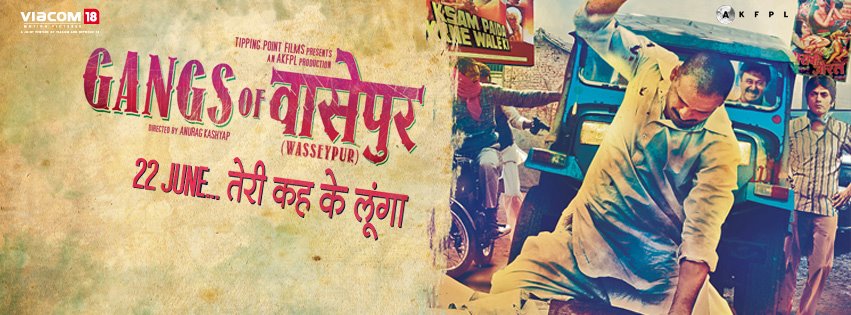
But Anurag Kashyap’s two-parter Gangs of Wasseypur is more than just nostalgia for me. Though i was happy that finally we have some new tales beyond the legend of Kala Patthar. We moved out of Dhanbad after Dad’s retirement but am going to call him and tell about a new film from the land of Bharat Coking Coal Limited (BCCL).

Gangs Of Wasseypur is quite an ambitious film in every possible way and Kashyap is in top form with his craft. He was never this good! To tame and deliver a beast of this epic proportion is a mammoth task.

I first saw the film when it was in edit. Still don’t have the talent to gauge the final film from its rough cut. Could figure out that individual scenes and humour was working. After that, me and some others have been pestering him to screen the film before he left for Cannes. And unlike others, he scores quite high there. Has no insecurity about showing his films, no matter what you think about it. I hated That Girl In Yellow Boots and wrote about it here.

Then a call at 1am.

Film dekhega? Dikhao. Kab se bol raha hoon.

Abhi dekhega? Abhi? Kahaan?

PVR aa ja. 10 min me. Kya? Haan. aa ja.

It started around 1:30 am and got over by 4:30 am or so. In an empty cinema hall with just 10-12 of us and Manoj Tiwari’s voice blasting in the early morning hours, my morning never started on such a high note. It was pure cinematic orgasm on big screen! Jiya ho bihar ke lala kept on playing in loop in my head.

I saw the film today again. The opening credits still looked the coolest in the B-town! It still felt bit long and indulgent. But as i have often believed and contradicted myself too – if filmmakers and artists don’t indulge, who will? My kiranawala? Finally it all depends on you – what indulgence by which artists you can connect to.

Piyush Mishra’s voiceover still sounds bad. The beginning is too hotchpotch. Too many characters criss-crossing each others paths and confusing at times. Hopefully we will put a family chart soon to have more clarity there.

But what an epic filmmaker’s masterclass is this!

With the terrific talents of Rajeev Ravi and Wasiq Khan, Kashyap has managed to create a whole new world all together. A world where men are beasts but are stripped down to their bare minimum and are eyed and hunted by the womaniyas! I don’t remember seeing a Gang leader in his underwear and eyed by the woman in any film. Or when they need to take permishan to even touch the girl. Playing with gangs and guns but tears roll down when denied permishan. There are many such cinematic kinks, flavours and reasons why this film by Kashyap stands out easily. And like others, he doesn’t even claim to write strong female characters.

The humour is distinct like in any other Kashyap film. I still laugh thinking about that No Smoking scene – tum ja rahe ho? Tum aa rahi ho? Main aa rahi hoon. Main ja raha hoon. Here, a woman in labour pain while delivering the baby gets you a chuckle. Or an impromptu race between two people after a loot, when the older person shouts out hum phirst, hum phirst. I am not going to write about the rest and spoil it for you. You will be left wondering about them because these are people from a different world that we have never seen on our screen.

Now, I guess everyone knows that GoW i’s a revenge saga spanning across few generations in the backdrop of coal mafia. Having seen both the parts, what i can tell you is that the first part takes time to set up as everyone is doomed and is busy sowing the seeds for their ends, either with love or hate. 2nd part is more action, more drama and more revenge. First is like wine, you can’t treat it like junk food. You need time to savour it. There’s no takeaway from it. In the business of guns and groins, coal is just the excuse. Enjoy it till it lasts. Kyunki yahan last me kuch nahi hota hai! Because the beginning is the end. Kyunki Saans Bhi Kabhi Bahu Thi – That’s it! And in that way it’s unlike other desi films we see these days. So even in your viewing, you can’t treat it like any other film – start, beginning and end!

Nothing makes me more cringe that seeing a bad scene on screen. That breakdown scene by Kumud Mishra in TGIYB still haunts me because it’s atrociously bad. In Gangs Of Wasseypur, you can’t point a single scene which is badly acted or directed. The actors, each one of them, from the main lead (Manoj Bajpayee, Tigmanshu Dhulia, Nawazuddin, Richha Chaddha, Jaideep Ahlawat, Piyush Mishra, Jameel Khan, Huma Quereshi, Reema Sen and rest) to the extras, they all make it look so real. They don’t act, they *are* the characters. Once inside their world, you forget the real world that you belong to – that’s a rare achievement. But my favourite is Pankaj Tripathy. He has such a strong presence and am happy that he finally gets his due.

But it would have been better if it was bit shorter, no?

Why only shorter, it should have been just one film. Right.

And if there was no voice-over in the beginning. True.

And would have been better without all that history of Bihar and Jharkhand.

It’s also so self indulgent!

And you don’t emotionally connect with the characters.

May be then it would have been my film and not a film by Anurag Kashyap. Having seen all his film in the last few years, i have made peace with his art and craft. You can’t beat him in craft and in the budget that he delivers, it’s almost impossible. As for his art, it’s not easy to digest. It’s never going to be your regular fare. And i hope it remains that way. Once in a while I like being restless. There’s a thrill in getting out of your comfort zone and figuring out things in the dark – where the wild things are! It’s time you do the same. It will take some time but you will get used to it. If you can afford, why should your cinema be just for escapism? And if you are worried, don’t think because we have enough Imtiaz Alis and Raj Kumar Hiranis to take us back to those comfort zones.

(Update – I hate it when people like a film but forget to mention the writing credits. And i just did the same. So here it is – Zeishan Quadri, Akhilesh, Sachin Ladia and AK.  This is via wiki, so am not sure about the right credits. Deadly lyrics by Varun Grover and Piyush Mishra & Music – Sneha Khanwalkar. Background –  G V Prakash. And all of them contribute immensely to this experience)

If the header is not self-explanatory, then over to Navjot Gulati for the rest. Read on.

THIS POST CONTAINS SPOILER. DO NOT READ, No, wait. READ IT IF YOU ARE PLANNING TO WASTE YOUR MONEY ON THIS FILM.

I often hear an argument by filmmakers and film Buffs that masala films generate money for the smaller (better) films to be made, and they provide good time pass fun. Not so very long ago I also believed that, but on 1st June my belief went for a toss – from Andheri to Malad to Filmcity to some studio in the outskirts of Bombay(that’s where the most of this piece of crap was shot). I wasn’t mighty impressed by Rowdy Rathore’s (RR) promos but somewhere I could see the wickedness which Prabhudeva portrayed in Wanted and that gave me a hope that RR might be a good fun, but alas.

I firmly believe that staying true to the genre is the most difficult thing to do, and if you succeed in doing that, then a Singham or a Wanted is born. For me, Singham and Wanted are true to the genre. I have been using this word too much I guess. Yes, I’m. I like to call it the Punjabi Dosa (ok, I just coined it).

The ingredients are as follows :

1. An emotional story ‘inspired’ or ‘lifted’ or ‘officially bought’ from a Southie Film.

2. A big star who is famous in North India, has six packs to show and shirts to take off.

3. 5 well-directed action sequences.

4. Humorous dialogues.

5. An item number.

6. Peppy Music.

7. A very strong villain.

8. Standout performances by supporting cast.

By no means I’m endorsing these kinds of films. I’m just stating a fact. Now, let’s analyze Raddi Rathore on these parameters.

1. Emotional Story

A pickpocketeer doppelganger of a cop takes revenge from a crime lord in Devgarh. This revenge is for the cop’s murder after he is tricked into becoming the guardian of cop’s little daughter, who still has a walkman in 2012! Because? Precisely, there’s no reason. Nostalgia, i say. Well, whatever rest happens in the film is because of only one reason – that is what happens in the original film which they have got the right to remake.

And they also have a homage to Jadu, the alien from Koi Milgaya, as the Cop is suffering from a tumor and can only fight like a Hulk when water is sprayed on his head.

2. A big star with six packs who takes his shirt off.

I disappoint. No Bhaai. No Duggu. No Devgn. No Shirt off. Probably Akki was not prepared since this is his 1st action film in AGES (CCTC, Tasveer,Tashan, Singh is King, Family had NO ACTION).

3. 5 well directed Action sequences.

I will give a 5star to anyone who can point out those to me I as was busy yawning throughout the slow-mo punches and the blasting cars in CG, all lifted from the original film (Vikramarkudu).

4. Humorous dialogues.

An example of film’s humor?

Well, it was nonexistent.

5. An item number

Wanted and Dabbang had better. Even Singham for that matter.

6. Peppy Music

The music by Sajid-Wajid is functional. Won’t last beyond the weekend of the film.

7. A very Strong Villain

They cast a guy from Southie films called Nasseer, who is trying to hard do a Prakash Raj, and he is playing a Bihari guy whose voice has been dubbed. #Enoughsaid

8. Standout performances by supporting cast

The guy who played the photographer, he has made a living out of the phrase, Bhaiyya Ji Ismile. Singham had Prakash Raj’s comic act towards the end. I crack up whenever he says, “Yeh Cheating hain”. Wanted had Prakash Raj again. Also, it had Vinod Khanna in an unintentionally funny performance. In this film, we have Yashpal Sharma visiting Baapji, played by Nasseer, with his kids and begging him to help find his wife. Later on he sees her as the sex slave of the son of Baapji, and keeps quiet to avoid his irk. As pointed by Karan Anshuman in his Mumbai Mirror review, this has to be the most regressive scene in hindi cinema history. For me, the character of Yashpal Sharma defines the film.

Now, coming to my biggest problem with the film – the ‘sur’ of the film. The reason all the films I have mentioned have worked is because they didn’t take themselves seriously, but strangely for good 50 minutes Rowdy Rathore is cringe worthy with its stupid take on all sorts of regressive films that Dharam Paaji used to do with B-grade directors. And suddenly towards the last 30 minutes, it becomes a goof ball comedy where the villain is now scared of the Police Inspector, and it miserably fails while trying to pull off a Prakash Raj.

Why It should Flop.

If this film also goes on to have a steady run from Monday, then it will give rise to many clones which will take our cinema nowhere. The ‘virus’ started with Bhaai, moved to Devgn, and now has reached Akki. I won’t be shocked if we see SRK doing such a film and making an ass of himself soon. Shahid Kapoor is already doing the remake of Vettai. And even bigger fear I have is that somewhere an aspiring filmmaker, after seeing the success of the film, will believe that the film is not about the script but the star (although it’s true but there are many who are trying to change that).

The day is not far away when Tushar Kapoor will ask Ekta Kapoor to ‘relaunch’ him in a southie remake, or for that matter, even, ‘Uday Chopra’. Be prepared for it or spread the word and make Raddi Rathore a weekend phenomenon which tanks Monday onwards.

(P.S – I’m not against masala films but the ones made ‘Badly’ like Buddha Hoga Tera Baap and now Raddi Rathore. Also, I have intentionally left out many points mentioned in other reviews/posts because I am also trying to be original 😉

Ashim Ahluwali’s Miss Lovely and Anurag Kashyap’s two-parter Gangs of Wasseypur premiered at Cannes Un Certain Regard and Directors Fortnight section respectively.

This post is to track all the buzz from the Cannes – reviews, interviews, videos and more. For the Cannes buzz of Vasan Bala’s Peddlers, click here.

Starting with some generic news links.

– Edouard Waintrop, Artistic Director of the Directors’ Fortnight, talks about the new wave of Indian cinema. Click here.

– VIDEO : Tom Brooks’ Cannes edition of Talking Movies starts with Indian films. Click here.

MISS LOVELY

– Review published in the Screen International is here.

– The Hollywood Reporter’s review is here, which describes it as Bollywood meets Boogie Nights in stylized retro-sleazy thriller.

– Variety’s review is here. You need account to read it. But if you are too curious, go close to the screen, squint your eyes and you will be able to read through the black screen.

– A small review in Sight and Sound is here which says the film is mesmerising for the first hour or so, during which, the echoes of Boogie Nights aside, I found myself thinking of Wong Kar-Wai, Scorsese, Matteo Garrone’s Gomorrah and even Irma Vep. Unfortunately the film then palls somewhat – director Ashim Ahluwalia can’t hold onto a story, or develop characters. But while it’s good it’s very good indeed, and had it been that touch better (and shorter) it could have been a game-changer for Indian cinema.

– A french review is here which is not too complimentary. Use Google Translate (GT).

– Ahluwalia makes ‘Lovely’ impact, says Saibal Chatterjee in The Sunday Indian. Click here.

– New York Times piece on the film is here.

– Ashim’s interview in Another mag is here.

– Ad Vitam has picked up the French rights of the film. News link is here.

– VIDEO : Anupama Chopra’s interview of Ashim Ahluwalia is here.

GANGS OF WASSEYPUR

– Review in Screen International is here which says, this Tarantino-tinged Bihari take on The Godfather has what it takes to cross over from the Indian domestic and Diaspora markets to reach out to action-loving, gore-tolerant theatrical and auxiliary genre audiences worldwide.

– The Hollywood Reporter review is here which calls it a dizzying explosion of an Indian gangster film, whose epic structure and colorful, immoral killers capture the imagination for over five hours..

– Review on desi site DearCinema is here.

– In Italian. click here. Use Google Translate (GT).

– Long piece in french edition of Huffington Post is here. Use GT.

– Coverage on BBC website.

– Saibal Chatterjee’s report in The Sunday Indian is here.

– VIDEO : Anupama Chopra’s interview with Kashyap and Bala is here.

– Click on the play button to watch the official video of the screening

If we have missed any links, do post it in the comments section. We will keep on updating the post with new links.

If you have been following this blog for sometime, you will know that music review means it’s time for Rohit to take over. So over to him. But before you read the review, you can check out all the songs here.

Also, click here to read our earlier post in which lyricist Varun Grover introduced the two hit songs of the album – jiya ho Bihar ke lala and I am a hunter, the foot-tapping and fun song, which i feel, is dying to have a music video. Mr Kashyap, do it. The song has great potential. You are sitting on a goldmine. Explore it!

The post also has lyrics of six songs – Jiya ho Bihar ke lala, I am a hunter, Ek bagal, Keh ke loonga, O Womania and Humne ke chhori ke.

Back to the music review.

Music – Sneha Khanwalkar

Lyrics – Varun Grover, Piyush Mishra

इतना दिन से इन्तेज़ार था. पूरा उत्तर प्रदेश और बिहार में लोग बाग कोई गाना नहीं सुन रहे थे. चलो ज़रा देखें ससुरा इन्तेज़ार के लायक था या नहीं?

1. Jiya ho Bihar – The song starts with faint ‘thaaps’ as if a traditional song but soon is joined by electric guitars and then the techno arrangement leads us to the very desi Manoj Tiwari. The song makes no bones, thanks to excellent Manoj Tiwari and some real catchy lyrics (Tani Taan kheech ke taansen kehlawo rey bhaiyya, for example). The backup vocals are excellent. Somewhere in the background you will hear shehnai as well. Yes. The marriage of techno sound with Manoj Tiwari is just brilliant. There is a constant ‘bhaiyya bhaiyya’ in the background! Just too good a touch!

There is always that song from which you associate a movie, This one will be the image of Gangs of Wasseypur).

If interested, you can get the lyrics here.

2. I am a hunter – (पापी लोग का नाम है – वेदेश सोकू, मुन्ना ओर रजनीश) The song starts with a ‘Heyllllo’(and TRUST ME!, you will repeat the ‘heylllo’ to hear if it is actually said the way it is said) and then something that we all have done while growing up! (Listen and tell me if you can find it, not telling it here). Special mention must be made for Sneha. This is a fun song and trust me, the song has 2 funny moments per second. Be it the laughter in the background, be it the interplay between vocals along with the constant Caribbean beats the song has ‘fun’ written all over it. Yes, it’s a tad naughty. Still, the words like ‘bhokali’ will ensure that this is played by guys (And girls, may be!) in bonfires. Yes. Up till now Patti rap was THE song that got guys (and sometimes girls together) in a gathering. Now, that place belongs, rightfully to ‘I am a hunter’. Best.Bakchod.Song.Ever.

You can check out the lyrics of the song here.

3. O Womaniya Live (Performed by – Khushboo Raj, Rekha Jha ओर उनकी सहेलिया) Singers start this song in a way that will remind the people who have grown up in north India, those ‘sangeet’ settings that happen during marriages wherein the ‘ladies’ (pronounced as – lay-deej) sing and poke fun at the new bride or may be her ‘in laws’ or may be her ‘bridegroom’. The words are pure ‘North’ and are laced with lot of fun (and naughty-ness). People who will have tough time trying to find the meaning of the songs will get the ‘fun quotient’ when the backup vocal singers will go ‘o o o ho ho ho’ Very naughty! The music setting is very ‘drawing room’ like and even when backup singers giggle you get the feel that they are sharing a joke! Singing is just incidental to the setting. Kudos Sneha! Kudos for reading this very rare, Very, very rare genre. The words of this song in particular have a flavor of north. Big time. Varun Grover, take a bow! Also the singer will remind you of that one character in such family settings who is the ‘leader’ and repeats certain words in order to poke fun at the bride, डबल अर्थ wala fun. (case in context – Patna and satna. ‘Satna’ means when someone sits uncomfortably close to someone else)

4. Keh ke loonga – Night. That’s what the ‘itchy’ start of this song reminds you of. Sneha gets behind the microphone and gets on with it. Accompanied by Amit Trivedi, the ‘graveyard’ feeling of the song gets scarier when the intentions are reflected in words. No matter where you are, I will dig you up and ‘teri keh ke loonga’. It has a very ‘Ghar mein ghus ke maroonga’ feel. Still, it’s not loud. The song just stares at you with the coldness of a dead body. We need Sneha Khanwalkar to sing more. Much more. Much, much more. She is THAT good in the song. Composed by Piyush Mishra and arranged by Sneha. Amit Trivedi is in his usual brilliant self! The resonating sound of howling might not be liked by all. Dark. Scary. This sums up the song.

5. Bhoos ke dher mein – Manish J. Tipu and Bhupesh start the song and will actually lead you into believing that it’s a sad song. Suddenly, an ‘all male’ group of backup singers (accompanied by harmonium and brass band), get into your ears shouting ‘Na milihey’ (you shall not get). This song has a message. More like the songs that you associate with the wanderers who gives out message about life in their songs. The difference? There are way too many singers (and at times a barking dog in the background if I heard it right!). Situational song. Has a very ‘chadhta suraj dheerey dheerey dhalta hai dhal jayega’ (A qawwali-sque song by Aziz Naza, very popular up North). Won’t be a chartbuster. May be that’s exactly what is needed. Let’s see.

6. Ek Bagal – Flute and Sitar talk between themselves and put you at ease immediately and then the strong bass creates a perfect platform for Piyush Mishra (PM) to start what is probably the most powerful song (in terms of effect that it will leave on you) of the film. The excellent use of electric flute deserves a repeat mention. It is THAT good. There is no doubt that this song is penned by PM himself and composed by him as well. The song has a little ‘jis raat sheher mein khoon ki baarish aayi thee’ feel in between. I suspect this song will find a place in the second part of the film as well. Minimalistic ‘arranged’ music. Authentic is the word. 2 thumbs up!

For lyrics, click here.

7. Bhaiyya – This track, performed by the musahars of Sundapur, is another avtaar of a folk song but is music heavy. My guess, this is a background song again. It ends too soon. Didn’t touch me. May be you will like it.

8. Tain Tain – A good harmonium along with at least 10 other sounds suddenly start this song. Then it all settles down. The beat continues and so does a siren! And then Sneha Khanwalkar goes ‘tey tey tey’. Before you figure out what’s happening, the brass band arrests your attention! Ok, too much happening at the same time! This has to be a background sound. This track is just a mix of a lot of sounds (whistles, vocal ‘ta ta ta chu chu ley ley lu li’ and so much more!). Remember the track ‘dol dol’ from ‘Yuva’? This track, in principal is the same, BUT is very DESI. This track grow on you and somehow satisfies the ‘constant casio synthesizer beats wali bhookh’ in me.

9. Suna kar ke Gharwa – performed by Sujeet (From Gaya ओर उनके दोस्त भाई लोग). The song uses a slow tabla and ‘manjeera’. Very folk. But too short. सब लोगों को नही समझ आएगा. It has a sound of a ‘folk singer’ closing his eyes as he connects with self and the powers that be via his singing.

10. Aey Jawanon – Yes, some shayari. Some ‘UP-Bihar’ style shayari about how people are selfish. The stop-and-go and stop-and-run music arrangement completely reminds a ‘northie’ like me of the roadside ‘nautanki’ music. To you, it might remind of ‘pintya gela’ (from shaitaan) in essence, because the instruments used are completely different but the linear tune is somewhat ‘pintya gela’ like.

11. Womaniya (Remix) – Starts exactly like the ‘live’ version but the bass and trance effects soon take over. Something that I haven’t heard ever. Something Desi…real wala desi mixed with ‘mehengai dayan’ like remix (from Peepli Live). The naughty feel of the song is retained. At times I felt some excessive instruments were used but I won’t be surprised if this is played in pubs and people go ‘OMG OMG’! There is a brief romantic exchange of words between shehnai and electric guitar…Just too damn good! मुहझौंसा and what not! This remix grew on me!

The pronunciation of ‘womaniya’ as ऊमनिया is just too adorable (in both the versions)

12. Mann Mauji – Probably one of the best romantic songs this year. Iktaara, algoza and so many other beautiful sounds along with the singer Usari Banerjee is a touch of pure genius. Even the singing style has a touch of vintage in it! ‘Khula hai bajuband phata hai kaaj sambhal ke chalna hoga’. Composed and penned by Piyush Mishra, arranged excellently by Sneha, this song has a sweet vintage feel. Hear it. The ‘secondary vocal’ (at times algoza, at times violin) that constantly accompanies the singer is so so so vintage. Brings back the days of कुएँ के किनारे गाना और नाचना.

13. Loonga loonga (Remix) – The roadside shayari about life (Along with constant beats and ‘loonga loonga’ in the background) starts the song. A faint ‘siren’ (The one that you associate with IPL when a bowler bowls a No-ball and free hit is about to be executed. This is a short version and thankfully so, because the music arrangement and the overall sound of this song is in contrast to the theme of the album. Passable.

14. Humni ki chhoree ke – (Sung by Deepak Kumar – मुजफ्फरपुर वाले) – With just the harmonium and very पक्का ओर रिसा हुआ गला the singer gives us a flavor of a very, very touching song. It’s a folk bhojpuri song and many a singers have sung it already. We could come across Pawan Singh and few others (Check them out on youtube) but this version, with minimalistic music arrangement, has everything that will make you very sad, lump in throat stuff. Even if you don’t understand the meaning of it. Magic of good music, isn’t it? Highly recommended!

Overall a fantastic album! The music stays true to the overalls of the film. Even though 2 remixes are included (to make the album appeal to the ‘non small town’ पब्लिक) फिर भी, This will go down as a फसाद मचाने वाला album by Sneha Khanwalkar and Piyush Mishra. Comparisons will be made with the OST of Omkara, Dev D, Gulaal and so on, but this album will stand it’s ground. Quite easily.

The backdrop is more or less same (in terms of geography), so the sound influences could overlap. Still, inclusion of some pure folk songs of the region is a superb idea and makes the album more relatable. The effort in terms of penning the right lyrics (Piyush Mishra, Varun Grover and Vikas (for hunter – english lyrics), arranging and composing music (Piyush Mishra and Sneha Khanwalkar), singers and the sheer research about it all is praiseworthy.

Rough around edges, raw and melodious in equal measure, here is an unputdownable power album that deserves a listen.

In the days of ch**** Studio (इंडिया) and all those wannabe ‘EXPERIMENTAL page 3 types’, here is an album that gives you a sound and taste of what the sound of those places is like. Those places are called ‘Chowk’ in small towns – an open market area in a city at the junction of two roads.

Chowk Studio. Anyone?

वूफेर फाड़ दिया भैय्या!

My Picks – Entire album.

माने की पूरा एल्बमवा सुनियेगा एक बार. चीन जायेंगे आप, की हम का कह रहे हैं.

(PS – You can order the album on Flipkart also. click here.)

Has SPOILERS. DON’T read if you haven’t seen the film.

We are running a week late on this one. A new film by Ramu has already released this week and as expected, it’s call-it-whatever-you-want-to-call. Because of Do Dooni Chaar and the way the first promos of Ishaqzaade played out, we were really looking forward to Habib Faisal’s film. I liked lot of things in the film but it had the same problem which most desi films suffer from – 2nd half. It was the same story with his Band Bajaa Baraat and Do Dooni Chaar. And then a thanda climax. If it had to end that way, i would have liked to see them jumping from the roof with guns blazing from every side on the beats of the romantic title song and freeze!   say Thelma and Louise kind. The other criticism that the film received was of being sexist. Habib tried to defend it here.

And we have someone who is on the same page – Neeraja. She is from one of the many Almodas of India. She loves to think and her priorities in life includes books, cinema, mathematics, philosophy, politics and arguing about the same, in no particular order.

Ishaqzaade is an interesting film because it throws up interesting questions and reactions. I wouldn’t call it a love story but then what one takes away from a film is very subjective. After all, there are people who enjoy bodyguard and wanted.

Ishaqzaade is a story of a girl born in a society where violence is a way of life. There is not a single character in the film that is averse to violence. It is shocking and from what I know pretty close to truth. Upper-caste gun-toting warring political families is a cliche in real life…and not only in these parts (UP/Bihar) but in most parts of the world. Modern Politics at grass-root level is bullet-ridden and blood soaked. Patriarchy is a common feature of politically influential families across the world. Power flows from the barrel of the gun. Everywhere. In india, it has its own flavour blended with caste, religion and feudalism.

The film is a “love story” set in the backdrop of warring political families (hindu and muslim) in a small town somehwhere in north India. The kind of families that perpetuate honour killings, where only women worth loving are either prostitues or mothers and domestic violence is culture. To have a female character that defies all this and comes out a winner at the end would have been awesome but very unreal. The film portrays an honest and ugly picture of patriarchy that exists in it’s most violent form in some parts of our country.

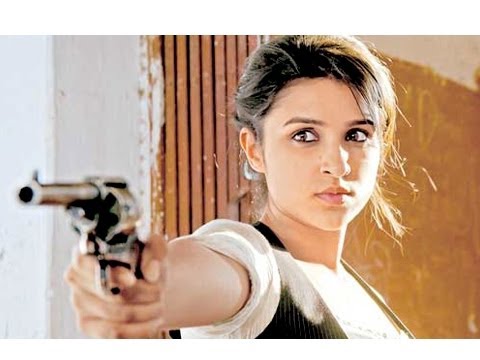
Zoya is a spirited girl. She owns a gun (which she buys by selling her jhumkas) and she can address a crowd like true blue small town sharp-tongued politician but she is also naive. What she doesn’t understand is that most of this freedom has been handed out to her for she is the youngest and the only girl in a moderately progressive family. Most of her strength is inherited. It comes from the fact that she was brought up in a politically influential family. A family where everyone carries a gun in their hands and a dhamki on their lips all the time. She gets to do things that perhaps other girls in the neighbourhood cannot and won’t even dream of doing. Her peers see her as a strong young woman who makes her way while her family just sees her as a spoilt little girl who wants to be like her father but will be married off to a nice muslim boy soon enough.

What’s a strong female character really? According to most of the reviews/opinions that I have been reading, it is someone who subscribes to feminist ideas of urban women. Zoya’s world however is very different from that of ours. She lives in a society where for young boys to visit prostitutes is coming of age (and is even encouraged by their fathers/grandfathers). Where a woman’s opinion is non-existant and her body is only for abuse. Where young adolescent girls do not learn about love by reading romantic novels. They watch crappy hindi movies where the hero is usually a stalker and a charmer. So, when they experience the hormonal rush of emotions when a boy touches them or claims to be in love with them – they are smitten and they get foolish. So, it is not a surprise that when Zoya falls in love, she falls hard. An outspoken, argumentative Zoya at home transforms into a blushing and smiling girl when she is with Parma. The boy, on the other hand, knows love, sex and manipulations all too well to succumb to any emotion.

Her values come from the society that she lives in and in some sense helps to perpetuate them (she tells her mother to shut up because she didn’t understand politics but she wouldn’t dare to talk to her father like that. It just shows how women are treated in the family and how this treatment is considered acceptable by other women members of the family). She wants to be a part of the very system that treats women like that. She wants to be an MLA like her father and agrees with the power hungry, violent politics that surrounds her. She just wants to be one of the boys but at some level she is aware of the fact that no matter how many shots she fires, she is a woman at the end of the day. She knows that being seen with Parma in college bathroom will bring dishonour to her and therefore to her family because she is a girl and a girl’s honour is attached to her family’s honour. She doesn’t however agree with the concept which is what makes her different from other women in her place. She is not angry at Parma for having sex with her under the pretext of a fake marriage (which is technically rape), she is mad at him for betraying her. She cannot stand the fact that she was stupid enough to fall for someone who betrayed her and made her look like a fool in front of the whole community which is why instead of attempting a suicide, she tries to kill him. The fact that in her mind her honour is not attached to her body makes her different. That is also why she is able to forgive him later on.

In the end, what do people really want to see? A khoon bhari maang like woman who wields a gun and seeks revenge? Is that liberated enough? Will that change the fact that no matter what she had done, she would have to die in the end because there is no place for a spirited independent woman in that society.

My biggest problem with the movie is that there is no emotional involvement. There are very few moments where you get to feel what the characters are feeling. None in case of Parma which is why the change in his attitude towards Zoya is unbelievable. There is a lot of running around, shooting and lost and found moments but you hardly ever get to feel what the characters are feeling. The Romeo-Juliet-esque death scene is hilarious and almost spoiled the film for me.

What makes it work is Parineeti Chopra’s Zoya and the small town ambience. Zoya’s character is so close to reality, it hurts to watch her. If you have lived in a small town, if you have met spunky, street-smart, sharp-tongued girls from conservative families, it would do you good to go back and check what happened to them. How and when they were tamed. It’s not always cruel. Most of the girls believe that it’s the right way…just like most of well educated independent girls believe that no man can dominate them but at the end of the day they must marry someone who is smarter or more educated or at least earns more than them. There traps after traps and you succumb somewhere and justify it to yourself using your brilliant analytic skills that you acquired through higher education. We have all fixed boundaries for ourselves according to the freedom and strength granted to us. There are few who venture beyond and try to break the status quo. Lets not judge them for not breaking your boundaries.

Just because a woman wields a gun and talks like a boy, doesn’t mean she is liberated and just because she fails to challenge the patriarchy on all fronts (in the way we want her to) doesn’t mean she is not strong.

Just for the sake of irony, I leave you with this poem by Meena Kandasamy

Paracetamol legends I know
For rising fevers, as pain-relievers—

Of my people—father’s father’s mother’s
Mother, dark lush hair caressing her ankles
Sometimes, sweeping earth, deep-honey skin,
Amber eyes—not beauty alone they say—she
Married a man who murdered thirteen men and one
Lonely summer afternoon her rice-white teeth tore
Through layers of khaki, and golden white skin to spill
The bloodied guts of a British soldier who tried to colonize her. . .
Of my land—uniform blue open skies,

Mad-artist palettes of green lands and lily-filled lakes that
Mirror all—not peace or tranquil alone, he shudders—some
Young woman near my father’s home, with a drunken husband
Who never changed; she bore his beatings everyday until on one
Stormy night, in fury, she killed him by stomping his seedbags. . .


We: their daughters.
We: the daughters of their soil.
We, mostly, write.
PS: I wonder if one can make the same film with a muslim boy and a hindu girl? Won’t that be a blasphemy in our shining secular nation!

For small and regional films, social networking platforms can be quite a boon. If anything is good, one doesn’t need to worry about its audience. When people become your ambassador, you don’t need advertising or pr. I discovered the wonderful trailer of Bhooter Bhobishyot on FB and was instantly hooked. Have been following it since then and it’s finally getting a limited release in Mumbai today. So here’s a recco post on the film by Aniruddha Chatterjee. But first watch the trailer. Wish they had released it with subtitles.

Imagine this. Two ghosts, one a zamindar who got killed by the dacaits, and the other, a British officer who served in pre-independent India, are auditioning other ghosts to fill the zamindar’s abandoned mansion. This is because most old mansions and houses are demolished and turned to shopping malls and multiplexes by money hungry promoters and are ruining the culture and heritage of the city. So the ghosts all over the world, especially in Kolkata, are finding it very difficult to find a place to live in. Interestingly, even the ghosts are worried about their food, entertainment and security. The selections in the audition are made accordingly. This is the crux of debutant director Anik Dutta’s delicious bengali film Bhooter Bhobishyot.

Siraj-ud-Daulah’s trusted cook who gave his life in the Battle of Plassey, an Indian army officer who got killed during the Kargil war, an actress cum singing Kanan Devi-isque sensation of the 1940s who committed suicide after her producer boyfriend ditched her and married someone else, a Bangla rock band member who overdosed himself to death, a Bihari rickshaw puller who was killed due to reckless driving by a rich brat, a Hindu refugee from Bangladesh who was killed during partition, and a modern day city girl who jumped from her apartment terrace when her industrialist father refused to let her marry a Muslim boy – all of them get selected after the audition. The thread connecting all the ghosts is that they all died unusual deaths.

The ghosts sing, dance, romance, go to picnic, argue over hilsa and prawn, and when endangered, unite to fight against a promoter who wants to destroy Choudhury mansion and build a mall.

The script is unique and original, and is one of the most satisfying satirical comedies of late. The filmmaker takes a dig at everything that is Bengali – the intellectual filmmakers who only prefer Godard, Fellini and Ray, the pseudo communist rebel who thinks wearing Che Guevara t-shirt proves everything, the Dada and Didi of Bengali politics including the Rizwanur Rahman incident, and the everlasting fight between ghoti and bangal. It is refreshing to see usage of Spookbook, Facebook for ghosts, to find a suitable match for an item number.

Interestingly, the narrative is a tribute to Ray’s Hirak Rajar Deshe, as almost every character in the film speaks by rhyming their lines. The humour is subtle and situational. Literal and political references are plenty, and so it needs to be seen whether non-Bengalis find the humour appealing or not.

Another aspect that must be mentioned is the music. Raja Narayan Deb has created one of a kind soundtrack with influences from every genre possible – rock, pop, rabindra sangeet, jazz, folk or qawwali, and also from the different eras the characters belong to. (Click here to watch a terrific song medley from the film)

Also, it has excellent performances by the entire ensemble cast, but Sumit Samaddar as the Bangladeshi refugee and Swastika Mukherjee as Kadalibala, the actress cum singer of the black and white era, are the scene stealers.

Anik Dutta, the writer-director of the film is a renowned ad-filmmaker. This is his first feature film and for that he deserves every bit of accolade he is receiving for creating such an entertaining film.

Currently, the film is playing in theaters all over West Bengal. It’s getting a limited release in Mumbai on 27th April. Don’t miss it!

For more details, film’s Facebook page is here. For Bombay’s theatre listing, click here.