Archive for the ‘Special’ Category

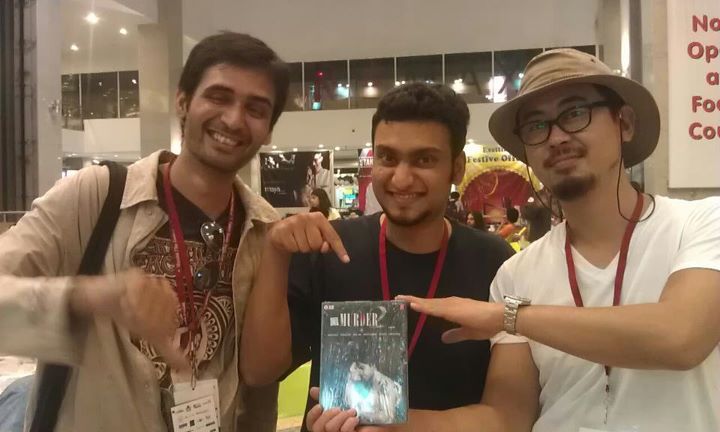
This has to be the height of cheap thrill. Hong-jin Na, director of the Korean film Chaser, is in Mumbai for the Mumbai Film Festival. And since he has no clue about our Bhatt Factory, which specialises in importing films from across the world to give it a desi makeover, our good friends Mihir Fadnavis and Sudhish Kamath decided to burst the bubble.

Murder 2 was copied from Chaser and so Hong-jin Na was gifted an “original” dvd of the “plagiarised” film.

Sumit Purohit, who has been doing some interesting sketch work based on films, also gifted him a sketch based on Chaser.

Mumbai Dimensions is a unique initiative to spot the young and the emerging talents in the city. And the rules are simple – 1. You have to be Under-25. 2. Duration can’t be more than 5mins. 3. The film should be about the city. The prizes include Silver Gateway trophies and cash prize of Rs. One Lakh and Rs. 50,000/- for the best two shorts. This year’s jury includes Kiran Rao, Vikramaditya Motwane, Nishikant Kamat, Onir and Renuka Shahane.

Shorts are always challenging. And when there is a restriction on duration and subject, it’s bound to get tougher. Surprisingly there was a long queue for the shorts too. But thanks to some last minute smartness, some of us managed to get in at the right time. This year there are 20 films in this section. I have a film theory called U-25 which i generally use to dismiss the views of kids ( read U-25) when we are discussing cinema. Well, it’s a joke, but after watching all the 20 films, i think there is some truth in my U-25 theory. The simple logic is if you haven’t seen/lived/experienced life enough, you can’t make a good film. And 25 is just too little to do that. Of course age is just a number, and a theory is a theory. But why are we making such terrible films and telling bad stories with such a cliche treatment? We all do shitty stuff but as long as you can separate the shit from the rest, I think you are in right direction.

For many young filmmakers this must have been a big news that their short is selected for MFF but if this is the best we got, we seriously are not telling them the difference between good and bad cinema. I may be completely wrong but here’s my reactions to the shorts and the bets on the best.

1. Unearthed – Split screen is not experimental, it’s passe. Montage is NOT a film.

2. The Few Unfortunates – Parallel stories criss-crossing each other. Nice idea but better execution could have taken it to another level.

3. Aakra-man – A mockumentary on a superhero who speaks in Marathi,  loves the Mumbai city but can’t do much. Smart and easily stands out from the rest.

4. Ek Titli Ka Aks – You hear a voice-over and can make out that it’s by an old person but you see a young man on screen. Credit roll tells us it’s Tom Alter’s voice. So Alter recites a poetry and a young man tries to experience Mumbai. There is no sync, no emotion.

5. Krishanna – A monologue shot as a dialogue where characters are narrating their experience about the city. Great idea, very badly made.

6. Bombay Snow – Pure cinema, pure joy! This one stands out and how! Miles ahead of the rest. Unlike others, it doesn’t even try to force the “Mumbai” factor in the narrative but touches upon so many subjects beautifully – displacement issue, rural versus urban, and a young kid trying to understand the equation between dad, mom and a prostitute. Director is Chinmay Nagesh Dalvi. Dear Festival Programmers, if you are looking for shorts, pick this one!

7. Vani – The city through its sounds and visuals. Another montage.

8. This Circle Is Mine – A documentary on the guy who stands at Mumbai’s Juhu Circle holding a placard to spread the message of love and peace. Many of us have often wondered about the old man. The film tells us bit more about him. A straight narrative that doesn’t do much justice to the man’s mission or life. Great idea to pick this interesting character but a great opportunity lost too as it keeps on repeating the same things.

9. Life Is A Beach – A love story between a geek and a ship (or aliens). Very interesting take, nicely executed but this one reminds me of Abhay’s previous short Just That Sort Of A Day – similar mood, same style of voice-over.

10. Face To Face – A funny little story in this big bad Mumbai city.

11 The Waiting City – Blasts happens. People wait. Badly done.

12. Facelift – A silent short which beautifully captures the issue of mills turning into malls. The film is DOP’s show-reel for sure.

13. ‘O’ Brother??? What Art Thou.. – Finally, a short with political context. Perhaps the only city in this country where “Bhaiyya” is an abuse. And those who have never visited Mumbai, will never understand this weird problem. Nice attempt.

14. Mehrooni – This could have been set in any other city and it wouldn’t have mattered. A saccharine love story of a couple that’s says everything it shows and shows everything it says. The voice-over is unnecessary, it’s too sweet, too fake and overtly sentimental. Even Rekha Bhardwaj’s vocals could not help. Only good point – it’s well shot.

15. Adrak – A nice little love story between a photographer and a tourist that happens at the Gateway of India.

16. Khawacha – Tries to capture the politics of the game that kids play. Good idea, bad treatment.

17. Duplicate – Captures the life of three duplicates – Anil Kapoor, Govinda and Devanand’s lookalikes. But doesn’t say/discover much beyond what we all know. Also, the subject has been covered million times. If only it could have tried to dig deeper.

18. 2733-see You On The Other Side – Works at the idea level but very tacky production.

19. Life Line – Story of Trains. It just doesn’t translate what the director is trying to say. Bad.

20. Rastaa – Story of two street urchins that doesn’t say anything new or in any new way.

And here’s my pick –

1. Bombay Snow – The best. Has no competition.

2. Aakra-Man and Life Is A Beach.

3. Facelift

Let’s see what the jury decides to go with. And if the best one doesn’t win, always remember that any cinema award always says more about the jury and less about the films. Waiting and how!

Since the day MAMI unveiled its line-up for the Mumbai Film Festival 2011, we all have been waiting eagerly for it to start. Just back from the screenings of Day 2, more cinema, better company and some more conversations. Today’s score – five films, five burgers, tea-coffee, cold drinks and few gallons of water. Dead tired now and so it will be mostly short and sweet ( read copy-pasting the tweets). Here’s the good, the bad and the ugly report of Opening ceremony, Day 1 and Day 2.

Registration  – The online system worked fine. Even the registration desk at the venue is quite efficient. Though heard about some bad experience on the first day but when i went, it just took 5 minutes to get my registration done. Also, good job with all the updates through the festival twitter handle – @mumbaifilmfest.

Opening Ceremony – Whoever came up with the idea of this shortest possible opening ceremony in the history of film festivals, he/she deserves applause. Late year it was a mess. This year the venue was Cinemax Versova. There is no place for the ceremony other than the lobby. So a small dais was created at the centre and sitting arrangements were made in all three directions. By the time we entered the lobby there was no place to sit or stand. But since the wait wasn’t long, we were happy. The main issue was the pass – opening film Moneyball was by invitation only. But thanks to those good souls who helped us out. All of us managed to watch it.

Moneyball – Good film to open the fest with. You have the stars but not completely hollywood and there’s a good buzz around it. The film was so little about Baseball and more about one man’s persistence. Jonah Hill stole the show. With such a fine command over his craft director Bennett Miller is surely going to have a long run. Capote and Moneyball – there is no common ground but both brilliantly directed. The best part of the film was the way it’s shot. Not sure how you define it technically, it was dark, moody, half-lit frames, atmosphere that you can breathe in. Or as Ebert wrote, this is a melancholy movie.

Opening Day Highlight – We suddenly saw that Hong-jin Na, director of Chaser and The Yellow Sea, was sitting in front of us. Varun Grover almost kissed him.

Post-film – Thanks to those good souls again, we went to Sun n Sand, Juhu for the opening ceremony party. As expected, it was too crowded. And the cinema bakchodi continued till late hours.

Day 1

Recruited Love (Zwerbowana Milosc) – Police, prostitution, politics and the politics of love. It’s like Polish version of Lives Of Others which is absolutely brilliant and do watch it if you still haven’t. This one turned hollywoodish thriller mid-way and then redeemed itself a bit in the end.

The Turin Horse (A Torinoi Lo)- We managed to catch the first 20 mins, some without subtitles, bit of it in wrong aspect ratio and then it stopped suddenly. The Horse was killed. We had no choice but to walk out. It was re-scheduled for 10pm.

Deool (Temple) – It was the opening film of the Indian Frame and its director Umesh Kulkarni is one of my favourite filmmakers. He goes to the other extreme with this one, far departure from all his shorts and features. Revolves around the madness, mess and marketing of religion, and Godly affairs in a small village. The stamp of Kulkarni is very much there – characters, humour, plot, but with item numbers and dhol-nagadas going dhoom-dhaam-dhadaap, it went into the Peepli Live zone. Always thought that Kulkarni loves playing with silence, this time it was the opposite. It could have been another kind of Ghabricha Paus too (a brilliant black comedy on farmers suicide issue) but Deool is too ambitious, wants to deal with too many affairs, reflect too many sides and it’s too noisy. It’s easy to understand what the film is trying to do but it’s difficult to endorse this one completely. It’s releasing soon in the theatres. Do watch it.

The Salesman (Le Vendeur) – There is something surreal about an old white man with white hair struggling in a completely white background (snow + sun) on a sunny day. But it could not go beyond the obvious. Too long and offers too little. The lead actor carries the film on his shoulder. By the time it ends, you just want to hug and comfort him.

The Turin Horse (A Torinoi Lo) – We tried our luck again. This time it was a bad copy with time code running on it. The subtitle was correct but it again stopped suddenly after 30mins or so. They killed the dead horse again. We had no choice but to leave. It was re-scheduled again for Day 2 at 10pm.

There was problem with the screening of My Little Princess too. The technical head of the screenings needs to wake up, smell the coffee and check the prints and the projection before showing the films. Don’t embarrass yourself so badly! Day 1 and major problems in three screenings – wow, that’s some score!

DAY 2

The Slut (Hanotenet) – With a title like this, it’s bound to get some attention. But with a female director who also plays the lead role, the gaze is completely different. Takes its own sweet time to unfold and the worst thing you fear, the director goes for it, ending it on a very disturbing note. Has male and female nudity and a long sex scene.

Distance (Distancia) – I thought NSP (Needs Some Patience) genre will be enough to describe some of the films selected for the fest. But this one is NLP where L is for Lots, and lots and lots more. There is so much story that you just hear but don’t see on screen. Was dead by the time it got over.

Generation P  – Quite a heady cocktail of art, culture, religion, pop, politics, philosophy, advertising, consumerism and Che Guevara. Who better than Che to answer some advertising questions. After all who sells more T-shirts than him? A trippy experience where it’s difficult to get all the religious and political context but worth a watch. It’s like an installation art of our pop-culture.

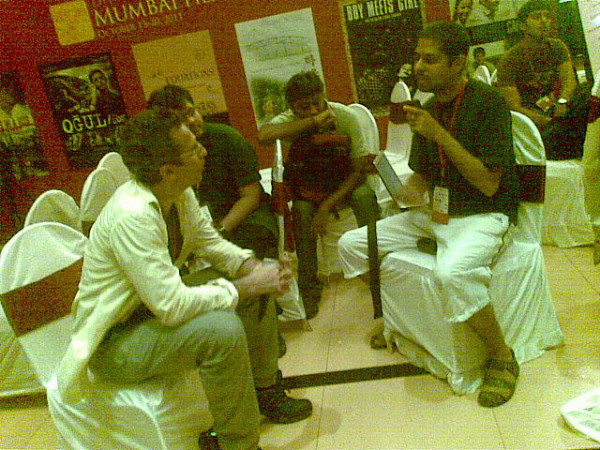
Generation P – Q & A – A QnA session with Victor Ginzburg, director of the Generation P was scheduled after the film. But since the poor soul was lost as there was nobody to do the Q and A, we decided to do an informal discussion. We tried our luck at The Artist but the queue was so long that it went up to the Landmark store on the next floor. We thought QnA was a better idea. The Artist was given another screening at 10pm. The director of the film VG told us that big brands (Coke, Nike and many others which feature in the film) gave him money to make fun of the brands in the film. That’s rare and what a fun it was. He was also unhappy about the bad projection of his film.

Chinese Take Away – We wanted to watch it but it has been re-scheduled on Monday 10am Screen 3.

Michael – We knew that this was the Uneasy film of the fest but had no clue that it would turn out to be so bloody brilliant. Waited in queue for almost 1 hour and it was worth it. Inspired by real life incidents, Michael looks at the day-to-day life of a paedophile who has locked up a 10 year old in a cellar. It sounds creepy and disturbing but the film is completely non-judgmental. Who are these paedophiles? How do they look? Do they come from a different planet? The director doesn’t go for the shock value but gives it a human face and captures the predatory relationship in a unique way that will stay with you for a long time after the film gets over. Easily the best of the fest so far. Must watch.

The Artist– We tried our luck again. As soon as Michael got over, we ran through the exit to be in the queue for the film. But by the time we reached, the queue was already about a kilometer long. This time we managed. A delicious love letter to the silent era, the film not only sets the story in that period and captures the era beautifully, but it also uses all the film-making tools of that era to tell a simple love story that we have seen million times. But the magic is in “how” and not “what”. With almost no dialogues, the lead actors don’t just act, they make you fall in love with them. Easy to understand why it was the Cannes favourite earlier this year. Aha, the magic of movies!

DAY 2 HighlightKartik Krishnan suddenly spotted a actor who had played the role of a Don in Bobby Deol’s Bichhoo. Remember? Nobody does. But we still tried to capture him. Varun went to him and asked him about Bichhoo. Kartik was right. Check out the pic – the bald guy in the background.

Enough for today. Tomorrow is another day. Mihir Desai‘s film Aakra-Man is playing with George Clooney and Ryan Gosling’s The Ides of March, and he is trying to copy their act as you can see in the picture. Good luck, Aakra-Man!

See you at the movies!

(PS – It’s been great fun meeting all those people whom we know only by their twitter handles. The world is indeed small and round.)

( PS1 – To read more about the festival films, click here to read Varun’s blog who is trying to write a fest diary.)

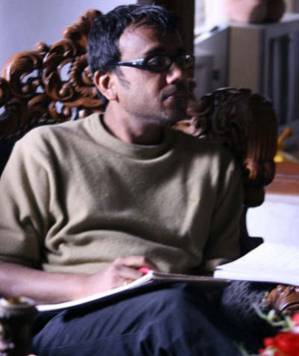
Suresh Mathew caught up with filmmaker Dibakar Banerjee on the sets of his forthcoming film “Shanghai”. While all the questions and answers relating to “Shangai” will be out closer to the film’s release, here Dibakar speaks about his previous films, chasing stars, the craft of filmmaking and more.

Q: Do you always manage to make the film that you set out to make, or do pressures from the producer and the market finally work their way into your film?

DB: You see market is wavy kind of flag that’s waved in front of you; I generally don’t know what the market is. You see when the film is made, the biggest truth is at the point of making and selling a film, it is made for two markets, one is for the audience that will pay the ticket price and one is for the distributors and producers and exhibitors who will buy the film off you and exhibit it to people, so sometimes you have to keep the sensibilities of the people who are buying from you to sell it to the audience in mind but generally the way I survive is this that I have definitely a clear idea of what I am trying to do.

I am under no illusion that I am not selling any kind of happy utopian dream. Most of my films have something grey about them; most of my films have something which is positive and negative about them. So their is a certain amount of grayness involved in it, there are no heroes, there are no heroes abject heroes, abject villains, when you tell it like that to an audience, you know that it is not going to be all is well. You essentially understand that your audience basically slightly more interested in a typical romantic comedy or a nice melodrama about how our lives are the best that we can have. My audiences therefore are the kind of people that have time to think and yet be entertained.

Therefore the trick that I employ to my films is that I keep the budget as low as possible and within that budget with planning and with our own inventiveness, give the maximum production values as possible and keep your narrative, keep the subject, keep the treatment as engaging, as relating, as entertaining as possible because I want my films to be seen by as many people as possible. I don’t want to live in an ivory tower or in a bubble and think that I am creating some piece of inert art, no I am not. I want to earn money from my films which I have. So therefore what I say has to immediately relate to the ordinary Joe on the streets who sees those films. The rest is the luck of the film, which I can’t control so I don’t think about that. Fortunately its not that I impose upon myself, because of the way I have been brought up, or what ever it is, I haven’t had a very elitist kind of an upbringing or an existence. I know what the man on street thinks, how he speaks, I know the behaviour of people, the general common man of India so I relate to that and I make films about that and I hope that gets seen by the maximum number of people.

Q: How do you feel when films like “Singham”, “Ready” and “Bodyguard” set records at the box-office? Are you happy that there is an audience out there that is expanding, so a film can rake in so many crores at the end of the day, or are you disheartened about the sensibilities of the audience that you have to cater to?

DB: It’s like saying that when I am driving around my Innova and somebody passes by in a Porsche; do you feel happy or sad? I mean of course you wish that I could have that Porsche but to have that Porsche you will have to do something that you don’t want to do. So ultimately it becomes the same thing. The fact is that I would love to have my films earn 300 crores at the box office if I didn’t have to change my film. Till the time that I don’t want to change the way I make my films, I will wish for a 300 crores box office but I will be very happy with 30.

So I am very happy because that way I exercise the discipline on myself, make my films in a budget that always return a profit and that’s the way I have learnt to survive. So the kind of figures that you are talking about is the result of star power and stars. True, stars who bring in that kind of money at the box office exist because even now in India, cinema and the urge to watch cinema is not to go and see a story unfold in front of your eyes, its also to see a star, become a star and behave like a star and put up a starry spectacle in front of your eyes and that’s because most of our ordinary lives are so tough and so unbearable to be with that those 2-3hrs in an air conditioned cinema hall, Salman saves our lives, Aamir and Shahrukh save our lives so that life saving experience can only happen with a star. So if I ever find a film where the right star meets the right role and I am assured of a 100 crore plus box office, I will definitely go for it till that time I will go on making what I can and make a profit out of it.

Q: Do you also first go after saleable stars after you finish writing your script?

DB: Absolutely, otherwise how do you survive? When I cast Anupam kher for “Khosla Ka Ghosla”, he was not just a good actor, he was the character star. When I cast Abhay for “Oye Lucky Lucky Oye”, he was an upcoming face that people were interested in and I knew that Anurag and I were making “Oye Lucky” and “Dev D” together and we knew that one film will rub off on the other and something will come out of it. Whenever you make something that earns its commercial existence out of people’s interest in the central character, of course you will have to go for a star.

The fact remains that whether the star matches your narrative and your character as you have designed it or are you designing your story around the star? That I refused to do currently, so therefore I meet every star available and every star available meets me and they meet every other director because its an ongoing principle in our industry, we meet each other, we ask each other, ok what are you doing, I like your work, can we work together, what suits us and therefore out of every 10 meetings only 1 converts because everybody is hearing different stories, a multiple choice of narratives and they are making their choices according to their careers. So the fact is that I will always go to stars and I will always go to character actors and I have always have new people introduced in my films as I have constantly done in all my films, “Khosla Ka Ghosla”, “Oye Lucky” and “LSD”, each gave actors to the industry who are now carving their own careers, basis their debuts, same way in Shanghai. So it’s a mix of everything and if you give me a star who matches my character and who fits the narrative as I have designed it, I’ll take him any day.

Q: Are you happy with the way your films have done commercially? Of your three films (Khosla Ka Ghosla, Oye Lucky Lucky Oye, LSD) which is the one you are most happy with?

DB: To tell you truthfully, as far as how it’s done commercially, I’m reasonably ok. I couldn’t, you know… hope for more because for someone like me who had no film background and film experience, to come out and make a film like “Khosla Ka Ghosla” as your debut film and you know people all over the country liking it, and me going over and making another maverick kind of film like “Oye Lucky…” and then downscaling my budget to make something even more maverick like “Love Sex aur Dhokha” and it being appreciated and being very good commercial success again. I really think I can’t complain and I have been lucky.

As far as my own satisfaction with my own execution of my film, you know I mean… I am very reluctant to tell you this, but actually I hate them because what happens is, that a film happens over a period of a year, 12 months, 14 months and the moment it finishes you realize that you have grown in that one year. And the moment the film is released you can’t do anything to it. You can’t change it, you can’t edit it, you can’t improve it, it becomes inert. It becomes this piece of inert stone, you can’t think about any change. You have grown in the meantime, you have left the film behind and when I see my own old films, all I see is mistakes. So I therefore generally don’t have a very comfortable relationship with my earlier films because I’m slightly embarrassed to look at them, infact one of the reasons why I make my next film is because I’m slightly embarrassed with my last film. And in the next film I am trying improve and you know kind of set right the mistakes that I thought that I have committed in the last movie. This is truth because on the other day I was watching “Oye Lucky…” on a flight and couldn’t watch it, because I knew every cut that was going to come and I could see the mistakes and I just looked away from it. So I don’t have a very comfortable relation with what I have done.

Q: How involved are you with your films’ technical aspects? You are known to be completely absorbed with your script, music and actors – the emotional content of your films, does the same apply to the technical side as well?

DB: Well, if you don’t have technique, then you don’t have anything, that’s what I believe, that’s my school of filmmaking. I don’t think its enough for a director to feel that emotions and then be at the set and feel that by some divine intervention what he feels is what he will be able to translate to the audience and the audience will feel that… that’s actually bullshit…. films don’t get made that way. Without the knowhow and essentially a technical knowhow of which shot to take and how to take it and which piece of sound and which piece of music to put to which shot to get that emotion that you want the audience to feel. And translate what’s here to what’s there, you need technique so as far I’m concerned that technique and emotion cannot be separated.

The tool by which you translate your emotion to the audience is technique. And the better your technique is the better you translate. All the greatest directors are the greatest technicians. Kubrick could actually tell each and every lens of each and every shot that he ever took in his life and he started shooting still pictures really early, by the time he got to making his 1st film he’d had a good understanding of optics and lenses. Unless and until you understand that, how will you understand where to put the camera and where to take the close-up from to have the most telling effect of the actors’ emotion? So I generally don’t believe that as a director you have to feel something and not have the technique. I think you must have the technique, I’m totally involved in everything that I do… having come up from the world of advertising and promo-making and all that, having edited, having painted my own set, having plotted each and every move of the camera, having choreographed this move or dance or whatever it is and learning from other people, filmmaking is a kind of school for me so I’m still learning. And I think there is no other way to get around it.

Q: There have been so many Hindi film teasers out recently, any that have caught your eye?

DB: Don 2, I saw it on a big screen and the music and the way Shahrukh’s character enters, it was a nice kick, very interesting, and I liked that.

Q: Which was the last Hindi and English film that you saw that impressed you?

DB: Last impressive Hindi film was “Zindagi Milegi Na Dobara”, it’s extremely pretty candy floss and the three characters have to go either below the surface of the water or above the surface of atmosphere or braving the bulls to come up with their own catharsis and the coming of age experiences. But in spite of those rather big thematic set pieces, the film is amazingly heartfelt and in spite of all the glamour and the all plethora of good visuals and good life style and every thing, it was not artificial. You will really get engaged in the crossfire of these three friends, you know Hrithik’s character reminds me of a friend that I still have from my school days, who is a system analyst in New York. I mailed him in the other day, you know… another character reminds, I mean, Farhan’s character reminds of myself, I always used to be the cynical buffoon in my group of friends, you know so its a very interesting look into the nature of friendship, and I thought that bit came out with extreme candor and with out any artificiality and that’s very difficult to achieve in the framework of a very typical Hindi commercial film with stars and extremely glamorous lighting and look and all that because a Hindi commercial film basically what its trying to do, is to sell a kind of Utopian life style to the Indian audience. It’s very difficult to portray a real relationship according to me within the framework of that kind of necessity, and that “Zindagi…” did very very interestingly, very convincingly. While I was watching the film I was totally drawn in to the world of these three friends, that I think is very impressive, I told Zoya that.

My favorite foreign film has been “Gomorrah”, an independent Italian film which is made on the mafia, though they are not called mafia… the underworld of Central Italy and they are called Camorra. Its a very interesting look into how the underworld permeates every strata of society in that region of the world and I don’t understand a word of Italian, I saw the whole film in subtitles but the treatment of the film and the way it brings those people alive, I thought I knew them, I could understand each and every bit of emotional change that those character in that film went through and it is a multi-character multi-strand film and I think the camera work the technique the invisibility of the director, and the camera and the making is par excellence. And I got really inspired and intimidated at the same time because I hope to be able to make films like that but I don’t think that I rate up to that kind of skills yet so that was a very inspiring film.

( The interview was first posted on Suresh Mathew’s blog Word Of Mouth)

It started with this post. And then the arguments continued in the comments box. Then the coincidence happened – details about Charlie Kaufman’s latest film Frank Or Francis appeared and it seems it has little bit of all of us. Here’s Anurag Kashyap on what we are doing and what we should be doing instead…

Quoting “Gandhi” here seems the only relevant argument i can make now. This post is in response to all the acid i have been seeing flowing on the blogs and social networking sites from those very people who have it in them to change the state of things.

I know i have become the system and i am not the same anymore and the endless “what happened to me argument” .. but this is not about me, this is about all you people who are constantly frustrated with the system, and vitriolic and angry. If you are waiting for an Anna Hazare to come and save the cinema, well the system knows how to work even around an Anna Hazare. And Anna spoke of an issue that was closer to the masses, the change that all of you want in Cinema is not closer to masses, its closer to you, because masses have the cinema they want. Fight is not to end one kind of cinema, Fight is to co exist, Fight is to be allowed to make the cinema one believes in. Fight is for the survival of that cinema one believes in. A Francis can go on abusing and cribbing but he will affect only those who allow themselves to be affected by him, once they are affected by him, that Frank also becomes a vestigial organ to the system, which the system amputates.

I have fought too. Fought while working in the system. And do not expect me to carry on the fight. I fought for myself and made my space and now i am doing what i wanted to do. And helping those who can help themselves to do it. I have done my bit, A lot of us have done our bit and now its your turn.

This specifically to that one person i have always had lots of hopes from, someone who still lives a dual identity – @moifightclub. Its been years that you have been complaining (wishing) if i may say so for things to be the way you want. Well stop wishing, its been long. Step up to the challenge and take it on and write .

I don’t say this to people who are the critics and are film buffs and cinema lovers, who are often disappointed and criticise. They have every right to criticise and be vitriolic. Its up to us (criticised) to decide whose criticism we want to pay heed to. I write this for the ones who want to write and create cinema and complain about no one reading their script or understanding what they bring to the table. ref (i will read your fucking script).

No one, (read NO-ONE) is obligated to read your script, no one is obligated to understand your need to create, its your need and you have to fullfill it. You have to get in there and do it. A producer is a businessman and he is there to do business, he will make films which are star driven and will not care about the content till those films start to do the business for him. The day content starts bringing in the audience and, IF he starts to understand content, he will start to make your films. That IF is a very big IF. He is not you , like you are not him, because if you were him, you will not understand the content either and if you, you will make a bad businessman who is sure to shut down (Ramu). In order to have the freedom a director often becomes a producer, and the day he becomes a producer, a sort of slow creative decline begins, because he starts to understand the requirements of a producer. Be it a Yashraj, or a Ramu or a Mani Ratnam or a Ketan Mehta or even a small-timer like me. Which is why we become better producers than directors and yes, we struggle a hell of a lot to make our way in the system and try and keep our creative honesty intact. Its a lot of struggle. You have to be both a whore and a virgin, because here only a whore can create space for the virgin and not for all of them, its tougher trying to be both. So a whore (me) goes about choosing her virgins, Virgins who work hard at remaining one. Who toil and slog and sweat and go hungry, and often alone, and focused. I will not choose some one who does not have the courage to stick to it so will not the others.

Change will be brought by people who are at it and not AT THEM. Change will be a Q who goes out and does what he wants to and, yes, his GANDU might never be allowed by the system to come out and yes, i don’t completely feel comfortable with a GANDU in its entirety but then there is an uncompromising vision and that vision allows him to make his next film. and he goes on to make that rather than sit and complain about GANDU not releasing. Change will be a Vasan Bala who does not care about my approval of his script or even yours @fightclub. He puts his neck on line and not under a pseudonym. He will learn some and also teach us some. Change will be a Sandeep Mohan who went ahead and raised his money and convinced enough number of people to allow him to and participate in and finished his movie. Yes, he learnt some things and he also taught us something. He taught us that it is possible and you don’t need an Excel or UTV or me to read a script. He also learnt about things he shouldn’t have done and he is ready with two more scripts. Change will be a Shlok Sharma, who is not articulate enough to be on a blog or a social networking site, whose every answer to any questions asked in English at the festivals, where his shorts won awards for, was “Yes Yes No”. Change will be a Ghaywan, who goes and borrows money and does it despite of no faith put in him. Change will be @chillicrabmovie, who is going on raising money on the net to make what he believes in and not waiting for the “Existing” to understand him. Stop revelling in what other writers have to say about the state of the Studios and their creativity. At least those who say it have been through it and came out flying and deal with it on a daily basis and teach you how to deal with them. They are not vitriolic. Be grateful for what they say and don’t use what they say to justify your unemployment or your not yet being there. Ever since the world was here, wisdom has been gained by experience and its passed on. The ball has been passed to you and you are in the game, and you are not invited, no body wants you here, but your being here will bring change and your bring here will bring a new wisdom which will have to be passed on. When you (Fightclub & Manu Warrier) justify having the right to have read a script of an unreleased film like Game, then you also can not use the non release of your existing film that you have done to not write about how was the experience and how what you envisaged didn’t turn out to be and do not fucking use the excuse that we only wrote to the directors expectation. Because if you have that excuse then bloody well stop complaining. To bring change you need BALLS and you don’t need balls to fight them, you need most balls to be bloody honest about yourself first, to be able to look at your own selves and analyse and understand it before looking at others. And here you can not play that congress game,”but he is corrupt too”. When you guys can do that you can have that change. Be the Change you seek. If you want to be Frank, then do not hide behind Francis. If you don’t want to be Frank, then being a Francis is fine and great and i will listen to you.

Frankly i am slowly getting weary. I am weary of all those from the days of PFC who do not participate. I admire a Katrthik Krishnan who retains his anger and struggles to find balance between what he expects from others and what he needs to do. He understands when one fails and why one fails and has his remarks about it and then also tries to find objectivity vis a vis his bad experiences and try not to repeat them, all that along with trying to survive and be on his own. It is not a clear cut path made out for anyone. Some chose to step in. How you come out of it is another matter? But atleast you tried. I will always listen to and would want to look at the man who is in the arena than be one from the sides. It does not mean that people can not chose to be on the sides. You can, but then you don’t know anything about the fight. You just like the idea of winning and you know how to cheer and how to be disappointed. You have never known the pleasure of fighting. You might as well pick up the flowers and wear the tights and start dancing to the beats like they do at the IPL games, when a boundary has been scored and sit and yawn when nothing happens then cheer again when one is bowled out.

Cinema is dear to me, and if i can say so, more dear than it is to anyone. I am a bigger filmbuff than anyone and i go and watch a film to see “what someone has done” than going to see “whether they have done what i expected them to do or not”. I have earned a lot of money in life, enough to build me whatever one wishes to but i haven’t after being 19 years in this industry. Because all of it was spent watching and acquiring cinema. I never had access to internet and never understood it like you do and before i did discover it, i had developed a habit of watching it like the filmmaker intended his audience to watch it in, one of HIS chosen formats. You guys today have more access to it, and you can do what you seek from others to do. If others (Producers) understood you, or what you have to offer, your struggle would have been four times than it is now because there expectations would have been much higher than what you have from them now. Because then it would have been a different cinema atmosphere and you would be one of many thousands and you really would have to be “the Charlie Kaufman” or “the John August” for them to give you an audience. And if you think a Charlie Kaufman is there because someone up there understood what he had to say and why the fuck there is no body like that here than really go back home. Because he also found his way in and because even a Michel Gondry struggles more than you to have his film green lit, because an ANG LEE waited three years after BrokeBack Mountain to get a greenlight on “Life of Pi”. Because even a Slumdog Millionaire was going straight to DVD and a Hurt Locker was ignored by all. Each of these individuals and there story is about self belief and determination and focus and the overwhelming desire to do it. A desire thats far more stronger and forceful than the frustration you have. Having been around the world and being friends with some of the greatest directors of today, you will be shocked to know that a Danis Tanovich (No Man’s Land) is having a tough time getting his film funded, Fatih Akin came to india last year to find funding , and he had the balls to say no to big hollywood studio (that did not understand him and is actually the biggest alternate label in hollywood) that pretended to get him. You will be shocked to know that whatever little resources I have, i am in a better position than most of the filmmakers that i admire to keep making films, in a country like India that they sometimes seek me to raise money. I say this because, whether you believe me or not you are blessed to be in a country like India which is so film obsessed that you can actually go out and make your own film. Your struggle starts after having made it.

And here everyone wants to finance films and be part of it, most of the films from Europe and South America and UK and Africa and China (not HongKong) are institution funded films. They come with their own set of artistic restrictions. Barring India, Hollywood, Japan, HongKong, Italy, France most countries don’t have the crew quoting fees. They have fixed percentage based on the budget. You would be very happy , if your film just go made in those countries. Take advantage of being in this country. Something i have learnt the hard way. DO IT.

And for the last time stop quoting Charlie Kaufman to justify yourself or defend your argument, because Charlie Kaufman not just writes for himself but he also has the patience and perseverance to find the right director to collaborate with. He did not just write it and gave it to anyone who wanted to take it and then blame it on him. He is never in a hurry to get it made. Unlike most of you who will give your script to anyone or write to the director’s requirement. If you do then find someone else to quote and put forth your argument for not having tried enough. Film is a director’s medium yes, but writer is also the part of the creation, he creates before the director comes in and uses his material, his job is also to inspire the director enough to use his imagination, to live up to the writing or just go and do dialogues and be a hack like i was in all those 7 years writing to what was expected of me and then not bother about it and stay out of the process of shooting and really do something to bring a change where you can stop being a hack.

I write this because i do not want to fight any of you anymore, because i am not your enemy. And it worries me that it all might just amount to nothing. I want the change as much as you want but i feel disheartened seeing all you forming a coterie only complaining. Complaining is fine for sometime, but when the same set of people go on about it, forever and for beyond the time they should have then something else is wrong. You need to find courage to quit the security of your job and if you can’t, then you need to find a way to work along with having a job, and that can only happen with little bit of constructivism, and it can not happen with identifying your misery with what other bonafide people have to say from their experiences because they are not haing the same experiences in the same world that you are trying to be part of.

I think i have tried to explain and asked you to see what i really want to say and hope that it did mean something. Baki ..

Jo Bhi main Kehna Chaahoon, Barbaad karein alfaaz mere…

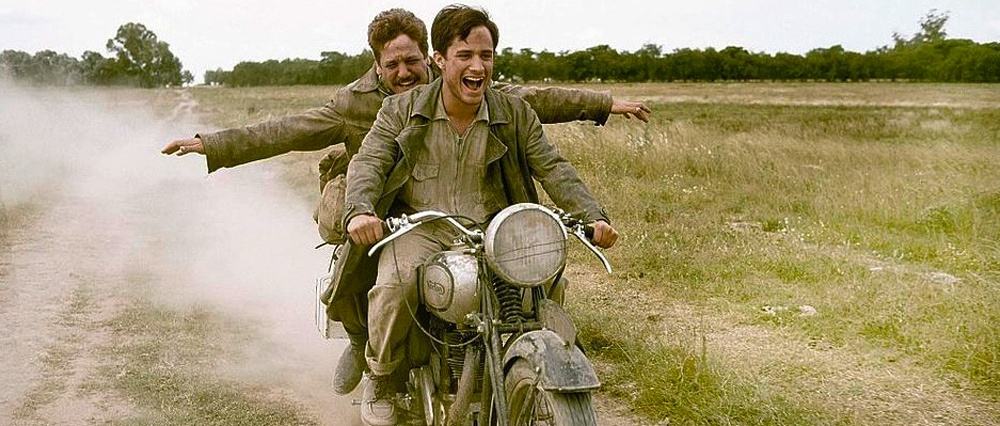
(PS – The Motorcycle Diaries pic is added by us. Not sure if AK endorses it. Apologies if he doesn’t)

This is an old post by Pavan Jha. And since it’s Gulzarsaab’s birthday, we thought it would be nice to revisit it with the post. All thanks to @p1j who also runs the website GulzarOnline. Experience it NOW!

Libaas remains one of the most special Gulzar movie for me. Its an Unseen film for me, still I can feel the film like any other films that I have seen. I have read the film [It is based on a short story of Gulzar titled “Seema” published in Ravi Paar] and I have also “heard” the film [thru the songs and dialogues on cassettes]. It was almost as good as seeing the film…

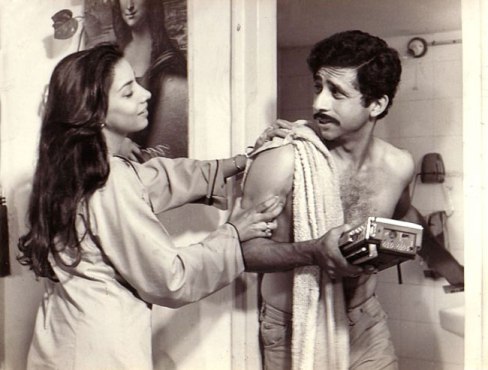
The intensity of script and characters can be felt in the dialogues. Three main characters Sudhir [played by Naseeruddin Shah.. brilliant again as a Theater Director who puts work as the top priority and treat relationships as secondary], Seema [Shabana Azmi, the rebel wife of Naseer, She is more of a character for his director husband than a wife] and TK [Raj Babbar, an old friend of Naseer, [total contrast to Naseer’s character] who visits Naseer after a long time and woos Shabana. He is more of a bubbly and charming character].

The story starts with a theater group, which Naseer is struggling to setup. Shabana is Naseer’s wife and is also the leading lady in his production. The film starts on a lighter mood with a few funny moments with Utpal Dutt (dubbed by Johnny Lever after his death), Anu Kapoor and Naseer.

Utpal Dutt introduces the leading characters in the opening scene…

Drame me bhi miyaan-biwi ke role karate hain aur ghar pe bhi wahi..bore nahin ho jaate ek hi role karte karte”…

For Naseer, Theatre is life, much more than anything else..

Khana banana bhool jaaogi to bardasht kar loonga par apni line bhool jaaogi to kabhi maaf nahin karoonga..”..

Though Shabana behaves like a subordinate all the time, she has other demands too from the life.. One of the most important scene of the film speaks all….

Shabana (at home) : Main baal katwa loon.. chhote karwa loon, achhi lagoongi..

Naseer : to hayvadan ki padmini ka kya hoga, aur khamosh adalat ki leela bainare ka?

Shabana : Matlab Padmini aur Bainare mujh se jyada important hain..Mujh mein hamesha apne characters hi dekhte ho.. Kabhi mujhe bhi dekha hai?

Naseer : Are tumhare andar to saara jahaan dekhta hoon

Shabana : Dialogue mat bola karo har waqt.. tumhare liye to mujh se jyada theater important hai na.. I know if you have to choose between theater and me.. you would choose theater.

Naseer : Seema, theater sirf tumse hi nahin, mujhse bhi jyada important hai.. ham dono baad me aate hain, aur theater pahle

..an introduction to the characters completes with the entry of Raj Babbar, a businessman and an old friend of Naseer…

Shabana : Bada hi betakalluf dost tha aapka, is tarah to pahale kisi ko nahin dekha aapke saath…theater me to sab subordinates ki tarah behave karte hain

The story develops and restricts to the three main characters, their egos, the bondage and the break in relationships. The focus is on the character of Shabana.

Naseer : Ghar me rahti to ghar bore karta tha, theater me ho to theater bore karta hai.. Hamesha wahaan rahna chahti ho jahaan nahin ho, aur jahaan ho usase kabhi khush nahin ho.. You always want to be somewhere else, not where you are.. and you even don’t know where you want to be

Shabana stops doing theater and starts spending time with Raj Babbar..

Gulzar saab like a master craftsman draws parallels between the characters of his film and Mohan Rakesh’s Adhe Adhure using the play being prepared by Naseer and his theater group..

Also the scene where Naseer comes to know about the affair between Shabana and Raj Babbar, and he talks about it with Raj-Shabana is brilliantly handled.. (atleast it “sounds” so).. What happens next should be left undiscussed, hoping the film would release some day..

Music makes Libaas more special film.. It was the last film that Panchamda did with Gulzar saab… Also it was only the second and the last time Panchamda sang with Lata [for kya bura hai kya bhala]…Music of libaas is a kind of a sequel to Ijaazat. The album contains only 4 songs, all top class, including a superb Pancham composition “Sili Hawa Choo Gayee”, a typical gulzarish song, beautifully rendered by Lata. “Khamosh sa afsana” a duet by Suresh and Lata, “Phir kisi shaakh” is the next version of “Khali haath shaam aayee hai” in the mood and rendering, and “Kya bura hai kya bhala” is a lively group number [a bit of qawwali touch]…

Libaas was never released in theaters though it was shown in a International film festival of India in 1992.

Jitne bhi tay karte gaye, Badhte gaye ye faasle

Meelon se din chhod aaye, saalon si raat leke chale

We all hope it will see the light of the day.. some day… amen!

The cynic in me often wonders, “why do we need cinema with social message?” Don’t we have enough of Moral Education in the schools? Why can’t I just See The Devil? Or as a friend says, “why this NGO film-making?”  I guess the scenario is not the same always. Not with Amole Gupte at least. As far as I know, cinema is by-product for him. In his office room, where they have their editing machine, the most visible picture hanging on the wall is of Nikumbh Sir, his art teacher who inspired the character played by Aamir Khan in Taare Zameen Par. I don’t know many people who have portraits of their favourite teachers hanging on their walls. Do you? The “by-product” must really be the key factor. Nikumbh Sir, kids and then the film.

And it’s something similar with Amole’s directorial debut too. Well, you may argue that why should you bother about the filmmaker’s story and not just see the film. You surely can but then it will only be half the story. The other half is always with the filmmaker/writer if it’s something sincere and honest. For every film that I love, I make sure to figure out why a filmmaker/writer could manage to tell that specific story so well, and trust me, there’s always an interesting story there.  Watch Stanley Ka Dabba and if you are willing to scratch the surface, read on…

With a little help from my friends

After ‘Taare Zameen Par’, what? Many ideas cooked into scripts, many producer meetings and budgets discussions. Many encounters with stars, trying to convince them of scripts I felt certain would work. I guess fate’s way of saying don’t follow the rulebook! Somehow, everything that goes in making a film, actually takes you further away from making the film.

So ‘Stanley Ka Dabba’. I had a story but I wanted to explore the journey more spontaneously, with a mind open to inputs and ideas of children. I approached Mrs. Asha Kapoor, Ex-Principal of Holy Family High School (where I studied) The idea was to conduct an open door, 4 hour theatre and cinema study sessions, and extract something out of that process. But the boundary was defined. NOT MORE THAN 4 HOURS, NO MUGGING DIALOGUES, NO LIGHTS, NO HEAVY DUTY EQUIPMENT. And most important, children would be the centre of the filming process. Whatever, I do, my film, my crew and me will be second to their needs and their comforts.

The plan felt far-fetched to Deepa. To add to her stress, I wanted the option of leaving it as a workshop in the event it didn’t work! I couldn’t very well tell a producer, give me money but I don’t promise you a film. That would be mighty cheeky. So we decided not to approach a studio, or a financier. Borrowed money from a generous friend, acted in a few films and ‘Stanley Ka Dabba’ got on the road.

The family (I don’t dare call them Unit) was great. Faraz Ansari, dedicated, never-say-die executive producer, Archana Phadke, a bundle of creative energy, Nyla Masood, on costume, Sheetal Bapardekar on production design, Dwarak Warrier and Madhu Apsara on sound, Nilufer Qureshi, our media consultant, my actors and my genius cameraman, Amol Gole, as instinctive as my children! All of them were generous and giving with their time, energy and most importantly their faith. This film was not possible without the faith and I am indebted to them for helping me create an atmosphere conducive for children to do their best.

Saturday to Saturday, at 4 hours pace, we built on the story. Children grew into their parts, and teachers too. Six months into this process, Deepa started putting the material together. And slowly the film emerged. How delicately my children had performed, how carefree they were! Once the edit was locked, I mustered up the courage the show the film to Vishal Bhardwaj, a man I trust and respect immensely. Vishal’s reaction gave me strength and courage to continue.

At each stage of this ‘vada-pao’ production, a friend came and helped push the cart forward. Anil Girkar gave us sound equipment never asking for dues, Mrs. Asha Kapoor, Ex-Principal of Holy Family and Fr. Swamy S.J. Principal of Holy Family High School who opened the doors of their school for the workshop, the teachers of the school who willingly participated and played their parts, Karan Johar who literally made the entire team of Dharma Productions available to us, Apoorva Mehta, counselor, guide and friend, and finally my soul-mate Deepa Bhatia,. She’s the master weaver of this dabba…anyone can tell that it took shape on her edit table.

I am also grateful to Fox Star Studios for coming on board and bringing the film out to the nation. But my biggest, biggest hugs for the children…Partho, Abhishek, Numaan, Monty, Leo, Ganesh, Tijo, Sai Sharan Shetty and Walter…my little friends.

Three Cheers to my extended dabba family…Hip Hip Hurray!

Amole Gupte

(PS – Click here to read the post which Amole wrote during the release of Taare Zameen Par)

On July 3, 2003, Deepanker Gohain, the 23-year old student of the College of Visual Arts, Baroda (India), committed suicide, which shocked the campus.

What saddened the students was the way the college authorities handled the matter, shielding the facts from the media.

Deepanker’s batch-mate Amitabh Pandey witnessed the suicide, capturing all of it on his Handycam. Pandey came from a well-connected political family. When college sided with him on this incident, the other half of the story got buried in police records.

Watch it.

As always, thanks to Pavan Jha.


Those of you who religiously follow the movement of film scripts in blogosphere, must be aware that the script of QT’s Inglourious Basterds was out almost a year before its release. And that’s not a rare case. There are blogs and websites dedicated to script reviews/news/sales. And since last few years they have the Black List too.

Compare this to the script scenario here. Writers/directors guard it as if it’s life and death scenario. Almost scared to give it out to anyone to read. The fear of bad (or honest) feedback  is too much to bear! If only someone can explain it to them that you cant hang your film on your drawing room walls like you treat your paintings! Plus, there is no concept of professional readers.

Even after the film has released, there is no way to source the script online. So we are trying to change the scenario with a small intiative. Asking directors of all the best reviewed films of 2010 to share their scripts with us. Its purely for non-commercial and educational purpose.

The first in the series is the script of Vikramaditya Motwane’s Udaan – the much loved and one of the best reviewed films of 2010. You can read it and download it too. We have attached three drafts – shooting script (in Roman Hindi ), the second one is slightly polished draft ( In English – 2004/2005) and the last one is the very first raw draft ( In English – 2003 ).

We will soon be putting out the script of Goal too. It’s also written by him and has always baffled us that how can a filmmaker go so wrong with a sports genre film! Till then, enjoy Udaan.

Shooting draft –

Slightly polished draft –

First raw draft –

PS – We are also trying to source the scripts of LSD, Peepli Live, Ishqiya, Do Dooni Chaar, Phas Gaye Re Obama, Striker, Band Bajaa Baarat, Tere Bin Laden and more. If you have the script and want to share it with our readers, do write to us at moifightclub@gmail.com. This is stritcly for non-commercial purpose.