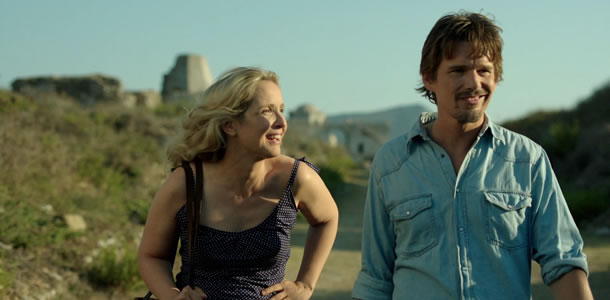
Archive for the ‘World Cinema’ Category

Kamal Swaroop’s cult film Om Dar-B-Dar has been restored and its finally in the theatres. Don’t miss it.

DON’T .  MISS.   IT.

And we are going with the mood of the film, so recycling an old post by Varun Grover which was written 3/4 years ago. Don’t worry, it still reads new just like the film and its ideas. If you have seen the film and are still wondering what the real story is, this post got all your answers.

ODBD

Death and mythology in a small town

बबलू बेबीलॉन से, बबली टेलीफोन से  (Bablu calling from Babylon, Babli listening on telephone)

Om Dar-B-Dar.  Om here and there. Or more precisely, Om here and there, helpless. That’s the name of a film I first heard about around 10-years back. It sounded like a typical wannabe ‘Indian Parallel Cinema Movement’ film of the 80’s. Though the ‘movement’ never went beyond the occasional film festival screening in India then (and now, much later, beyond the difficult-to-find DVDs in malls with bad architecture and heavy security) – it did give the otherwise angry-for-no-reason 70’s and colored-clay-pot strewn 80’s some credibility. Shyam Benegal, Govind Nihalani, Basu Chatterjee, Mani Kaul, Kumar Shahani and with a much lighter hand, Sai Paranjape made cinema which was sometimes as local as a small stretch of highway in north India (Uski Roti (Our Daily Bread), Mani Kaul, 1970) or a residential chawl in a Bombay suburb (Katha (The story), Sai Paranjpe, 1983). In fact, they were the only people making cinema with a very strict sense of time and place – love letters which started with a date and place on top.

But then, art cinema movement too had groupies trying to pass off as the real rockstar. Films with dim lights, grim faces, and half a social issue (invariably leftist in thought) would instantly be termed as ‘parallel’, get the government of India funding, and be sent to film festivals abroad. Om Dar-B-Dar sounded like that kind of film, especially after one article I had read which described the film as some kind of existential study into the life of a teenager in a small town of Rajasthan.

Watching it recently for the first time, I realized, it is anything but me-too. Or even close to ‘art cinema’, as we know it. It exists in a league of its own. And though that may not be intended as a high praise, but that’s the only way it can be described.

मिथ्या है संसार – माया है संसार  (The world is a lie – the world is an illusion)

Kamal Swaroop, a scientist with DRDO (Defense Research and Development Organization) of India, turned a filmmaker, graduating from FTII, Pune, to debut with Om Dar-B-Dar. He calls his only feature film to date a kind of spoof on ‘art films’ of the time. “If anything, I wanted to make an anti-intellectual film. I didn’t want to make a film on some social issue or sad people. I just wanted to make a film about a small town”, said Swaroop in a personal interaction after the screening a few months ago. Having stayed in Pushkar in Rajasthan, famous for its annual Hindu mela (fare), probably helped him nail the setting of the film. His love for science and mythology admittedly helped in deciding the next two important aspects – the central character of teenaged Om and the basic conflict points in the story.

But is there a story in Om Dar-B-Dar? Kamal Swaroop insists there is – though the group with which I watched the film was clueless. Swaroop calls it bad conditioning – looking for story and only story in cinema. He says cinema is not necessarily mass communication, it can be a personal expression too; a painting or a poem. Though many were not convinced, Swaroop claims that the film, when screened in small villages of Rajasthan, was completely ‘understood’ and enjoyed by the simple villagers. Reasons being – less conditioning and more connection to the vibes and idiosyncrasies of a small town.

Next question – does the film have a form, a structure? Swaroop’s crisp answer – even deform is a form. What about accessibility? Comprehension? Head and tail? Again – Swaroop’s answer – why should cinema be objective? Why a film should be only one of the two things – I got it or I didn’t get it?

That raises some very valid debate points – story, form, and accessibility in cinema. Indian cinema, traditionally has been a story-driven exercise in videography. Starting off with mythological tales in the 30’s and 40’s, and evolving into equally simplistic good vs. evil (Hero vs Villain) cinema of the 60’s and 70’s – there is a long and deeply ingrained history of accessible stories pushing ‘cinema’ more and more into the ever-expanding space of ‘mass-media’. Rumor has it, two of the greatest films of Hindi cinema (Mughal-e-Azam, Guide) had their endings tweaked to accommodate popular tastes. (Anarkali being given a safe passage by the emperor and rains arriving on Raju’s death respectively).

The third aspect – form or structure, was also rarely played with in popular cinema, with the most adventurous of the lot taking the ‘flashback’ route as the only standout narrative element. It can be noted here that most of the art cinema movement films too had a strong focus on story-accessibility couple – they differed majorly in the structure/form department. In addition to having more realistic settings and acting, they succeeded in creating a new cinematic-clock for themselves – a form where time moves slower and hence more details are visible, and vice versa.

And here lies the most distinct element of Om Dar-B-Dar – cinematic clock, here, moves as fast, if not faster than a regular commercial Hindi film while the other two aspects (story and accessibility) are given the least respect. In fact, it would be much enjoyable to watch it as 20 short films (a lot of them very funny, and an equal number completely nonsensical) about Om’s family and friends, stitched together with music, surreal dreams and a mythological back-story. So, for the math-minded – ODBD is an anti-art, anti-commercial film moving at the pace of a commercial film and having the details of an art-film.

टैडपोल से हम (We are like Tadpoles)

After the film screening is over, and after heated debates on whether it can even be called a film in the first place are done with, Kamal Swaroop smiles and asks whether anybody still wants to know the story. A few hands go up and Swaroop relents.

(SPOILERS) Om, a teenager, is blessed with a magical power and he can hold his breath for any desired duration of time. This results in him putting up a show at the holy place of Pushkar (ascribed as the only heaven on Earth in Hindu mythological texts), where he goes inside water and holds his breath. Once, to protest against Brahma, the Hindu God credited as the creator of the world, who has decided to remove the ‘heaven’ status of Pushkar, the locals decide to put up a non-cooperation movement against Brahma. The only non-cooperation they can do to Brahma is to stop breathing, as that’s the only gift he has given. But since Om’s natural tendency is to not breath, for him, the non-cooperation would be the act of breathing. At the time of protest, Om happens to be inside the pond where he puts up his show. He breathes, to support the non-cooperation, and dies. (spoilers end)

But then, one has to watch the film many times to get this story – and as I said, there are at least 20 more stories, all equally layered, and delivered at a crazy pace. At times, it looks like an MTV Production, with the kind of visual liberties, caricatures, and abrupt cutting involved. (No wonder, Swaroop later helmed the launch of Channel V in India, playing a crucial role in defining the ‘funky’ auro-visual space it’s known for now.)

 कसप (How do I know)

In a crucial scene in Hindi novelist Manohar Shyam Joshi’s ‘Kasap’, the male protagonist’s naada (thread of pajamas) gets stuck in a knot in front of the girl he is wooing. In Om Dar-B-Dar, a similar thing happens when a young man is about to start making love to his girlfriend. Funny, sad, frustrating, and deeply observational at the same time – moments like these make ODBD a watch to remember.

Whether it’s a film with story, structure, accessibility, or (latest buzzword) ‘take-homes’ is a debate worth drunken nights with friends. The film released in 1988, and has been getting buzz (positive, negative, both) at regular intervals. Though that doesn’t guarantee a great, path-breaking, or cult status to any work of art (or mass-media) – it surely means there are enough cinema crazies in the world.

As for whether you will like it, the only answer is ‘कसप’.

Thanks to PVR, we were running a contest for Inside Llewyn Davis. The ticket winners were announced on daily basis. The poster contest was aimed at having some more fun and for true lovers of the film.

We asked people to pose like Llewyn Davis – with their cat, dog, parrot, snake, dinosaur, or any pet they have, and if nothing, props will also do. Some entries were genuine, some just copy-pasted from net (so no prize), and some for fun which have been sent by friends. We are sharing some of the pics here.

Click on any image to start the slide show. You can see the person’s name/handle on left bottom. Or just right click to open individual pics in new window, you can see the contributor’s name on top. or just hold the cursor on the pic, you can see the names.

And here are the winners –

@adityamattoo

@AratiKadav

@cinemawalah

@kafucka and @sashaBCC  – one poster. Because love is all about sharing Coens film poster.

@psemophile

@nusratjafri and @sumit_roy_ – one poster. Because same reason as mentioned above.

@stwta

@varungrover

Congrats to everyone! Thanks for participating.

Here’s another good news. If you still haven’t seen the film, it is still in theatres in select cities in its second week.

PVR Ambience Mall Gurgaon 5:45 pm
PVR Forum Mall Koramangala Bangalore 4:10 pm
PVR Phoenix Lower Parel Mumbai 12:10 pm

Do watch and do spread the word so that we get to see more Coens films in our theatres.

Aseem Chandaver, or Baba Jogeshwari or Gina Kholkar on Twitter or Neelouli on youtube, or by whatever name you might know him, he is hands down the baap of all B-C Grade movie buffs that we know of. Working in Mumbai as a copywriter, the man is responsible for sifting through tons and tons of campy movies, selecting clips, uploading and sharing them in his spare time, purely for the joy and love of B-C Grade cinema. We thought it would be fitting to post what he thought of Miss Lovely and requested him for a review. So here it goes, Aseem on Ashim’s film –

Miss Lovely1

Since the global connection of interconnected computer networks is presently imploding with acute interest, unanticipated awe and limitless curiosity for the once shadowy genre of B, C & D-grade films, I thought since the past one and a half years that director Ashim Ahluwalia’s film Miss Lovely will uphold a sense of equilibrium by retaining the novelty, cleansing the category of all its amassed gloss and prolonging fandom through unseen and unheard tales of cinematic obscurity.

Well, I was wrong. Miss Lovely is definitely a new brand and flavor of soda pop, but without any strong hallmark fizz. An incredibly well-researched and chronicled film that leans on its experiential past without ever paying attention to the evidently weak screenplay and character extinguishes. A stalwart and his coerced unenthusiastic brother who falls in love with the struggling actress, asphyxiated in a subterranean world is not only captivating, but a ticking calm bomb set to explode when you least expect it. Instead of a pensive postmortem or even seeing the world through seedy filmmaking eyes, it does a staccato job of introducing you to half-baked and sometimes clichéd characters with anticlimax dialogues that literally deflate moments of visual narrative and accomplished story.

The film starts with a brilliant spook sequence, which even incorporates cleverly reconstructed POV shots from Director Baby’s B-Grade magnum opus House No. 13, a slight Desi rendition of the movie ‘The Poltergeist’. Ahluwalia’s profound knowledge of what the audience wanted and what psychoactive levels the filmmakers went to entertain those fantasies can be unmistakably seen here.

House No. 13 scene. Watch from 1:00:55 –

In the House No. 13 intro scene, just as the audience gets bored with the ghost being charred to flesh and dust, Ahluwalia reveals years old secret that made some of these films a runaway success. As the House No. 13 reel ends, there begins a Double X rated film which were in the 80s and intermittently in the 90s cut pasted all throughout the film. These double X films were either shot separately with a completely different cast or with the film’s cast continuing a lovemaking scene in the same film but with topless or semi-naked shots. Some insider moments like these keep springing in the first half of the film; two of the most memorable ones being the scenes from Wohin Bhayaanak Raat and a motleyed recreation of Khooni Panja & Hatyarin, where Ahluwalia unveils yet another fascinating tale of fetish based cinematic excellence – Spectrophilia/Necrophilia.

Wohin Bhayanak Raat – From 3.27 –

I think Ashim has been a lot around the sets of B-Auteur Vinod Talwar – The Dulhan Scene particularly motif from these two movies –

Khooni Panja – From 1:02:28

Hatyarin – From 11:23

In one scene, a newlywed bride is being ravished by a monstrous aberration in a sexually charged hypnotic trance which is depicted by Ahluwalia with a hysterical and precise recreation of the shooting style of Camp filmmakers; while in the other we have Kiran Kumar’s deep-fried chicken pakora avatar who ferociously sucks the blood out of female victims is superbly incorporated in the film as if it is made by the film’s lead pair The Duggal Bros (assuming it is made to sound like The Dhillon Bros, a famous B-movie duo).

There are several triumphs like these where the Director outshines and puts a wide smile on enthusiasts and novices alike. The entire movie is laced with a ‘Green Room-esque’ motif, and when you combine the moody direction with ace cinematographer Mohanan’s virtuosity, you are inadvertently left with a princely smack of Cuticura, the mentally depressing lights of the backstage and the impending doom of a wrathful breakdown from the funding Underworld Dons and unpredictably sinister Distributors. The music of the film is absolutely mind-blowing. Instead of lackadaisical 80s guitars and off-tune keyboard sonatas by less known music directors, the music has been perceptively compiled containing the best of post-disco pop such as Nazia Hassan & Biddu and even contains psychedelic compositions by Maestro Ilaiyaraja and Italian exploitation composers Egisto Macchi and Piero Umiliani of Manha Manha fame.

Dum Dum Dede – Miss Lovely Official Song

The musketeers of Miss Lovely are its stylized treatment, costumes, production design and lastly, Da Man Nawazuddin Siddiqui, an actor who rises like a phoenix from a deadpan screenplay and heightens his character even when he stands still, traumatized and sickeningly numb after a prison term, watching his heartless brother’s wife beseeching him not to enter her newly started life. An unforgettable scene where Nawazuddin lifelessly stands still and simply gives a smile, flummoxed at the heartlessness of the world. What masquerades as a dense narrative is actually an intensive lack of scenario. The story is about a forlorn and discontented bloke Sonu (Nawaz) who joins his slightly established B-movie filmmaker Vicky (Anil George) in the Camp movie-making business. After initial shocks and frustrations, he meets Pinky (Niharika Singh), an innocent struggler who hails from a strict family. Sonu pretends to be a filmmaker who promises her a lead role in his upcoming film titled Miss Lovely. After a brutal clash from the underworld and sundry financiers, Vicky lures Sonu into a last resort plan that forever exiles him to oblivion.

Even with the leading characters’ galling complexities, insecurities and their escapades, the film battles between two worlds whether to tell the story of the B, C & D-Grade World through the eccentric mentation of Vicky and Sonu or try to salvage the maladroit storyline impediments of all three characters, leading to an inevitable Bhandarkar-esque situation. And yet the movie is sandwiched by some of the most painstakingly showcased cultural phenomena and developments of the late 80s and early 90s.

With all its narrative faults, Miss Lovely proved to be a commendable watch due to its spectacularly rich recreation of the first ever D-Grade Era, its uncompromisingly Pulp and Psychedelic 80s settings, the Behind-The-Scenes of extremely paltry budget films, dark humor of its characters and of course for the glory for Camp/Cult fanaticism.

P.S – I’m extremely angry as someone flagged my Qatil Chudail video as inappropriate and pulled it out from youtube.

(Editorial Team note – You can check out Aseem’s videos collection here, here and here. And click here for our 2012 rewind post in which we’d written about Miss Lovely)

1507938_10152164416485350_1695984920_n

Few years back when i was searching for a copy of Om Dar B Dar, every search ended in disappointment. Everyone had heard about the film, few had seen it and nobody had a copy. As the chain spread through friends, and their friends and more friends, we finally got to know someone who had a copy of the film. But he wasn’t willing to give it to us for the screening. He said he will come with the copy, screen the film and take it back. And that made sense because who would part away with something so rare. This is what you call a cult classic.

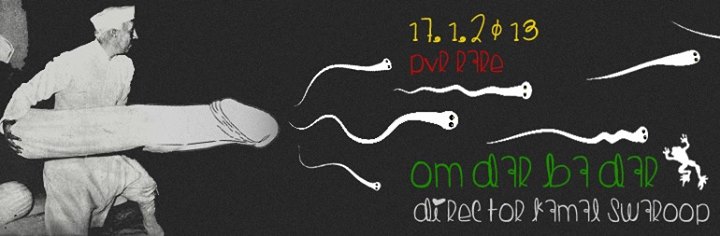
Thanks to NFDC and PVR Directors Rare, the film has been restored and is getting a release this friday. Don’t miss this one in theatres. Can bet that you haven’t seen anything like this in Indian cinema. As i keep repeating myself, i remember it as mixed media art installation. It’s esoteric, funny, trippy and yet completely accessible. If you have any apprehensions, don’t worry, just enjoy the ride. And remember, Kamal Swaroop made frogs cool much before P T Anderson discovered them.

Recently Kamal Swaroop posted a status on FB asking for fan posters. And entries have been pouring since then. We are sharing some of the fan posters. The last one is the official poster of the film. Click on any pic to start the slide show.

– To check out more fan posters, click here to go to its FB page.

– To check out the film’s new trailer and more info about it, click here.

If you have read this earlier post on 17 terrific films of the year, the brief was the same for this new post. And this one is collaborative too. Only film has been replaced with scenes. So here are the 16 most memorable and powerful scenes of the year as picked by 16 film fanatics.

(If you missed our earlier post in this 2013 flashback series, here’s the list – 20 Things We Learnt At The Movies and 13 Unanswered Questions is here, Top 10 Musical Gems We Discovered This Year is here, 15 Film Fanatics on 17 Terrific Films That Have Stayed With Them is here, and 14 Bollywood Song We Played in Non-stop Loop Is here.)

——————————————————————————

@kushannandy on Fandry’s climax

[SPOILER ALERT]

Fandry, Nagraj Manjule’s charming story of Jabya, a young boy battling his inner turmoil of being born a Dalit, whose only source of income is rescuing the village from droves of pigs by chasing them out, and only happiness is a teenage infatuation and perhaps a non-existent bird, reaches an inevitable, satirical climax that can truly be described as the successor of the Mahabharata scene from Jaane Bhi Do Yaaro.

Cruelly hilarious and dripping with pathos, the last scene of Fandry is a portrayal of who we truly are. As Jabya is forced to help his aging parents chase the pigs down, the village gathers to celebrate this humiliation, almost like spectators at a T20 match.

At one point, one of the characters uploads Jabya’s plight on his Facebook page. That one moment points out how technology has invaded us and yet human values remain absent.

However, Manjule’s masterstroke is Jabya doing exactly what the viewer had been wanting to do all along. He gathers his frustration and desperation to plant a sounding kick into the belly of the very society that was trying to hold him down. Match over.

Sadly though, Jabya’s non-existent bird somewhere stands for the freedom from society’s humiliation that he shall never ever get.

vlcsnap-2013-12-27-03h04m46s153

@mihirfadnavis on Don Jon’s confrontation scene

Joseph Gordon Levitt’s hilarious Don Jon is the single greatest commentary piece on porn. It isn’t about porn but it’s a guy’s perspective on the necessity of porn. Early in the film in Don Jon explains why he watches porn despite scoring chicks whenever he pleases. He watches porn simply because it is more exciting and entertaining than actual sex. Real women don’t do the things that the ones in the porn videos do. Which is why always slips off the bed in the middle of the night, turns on his computer, rubs one out, and returns to snuggle with the girl in his bed.

Later in the film he falls in love with the Hollywood rom-com buff Scarlett Johnasson’s character Barbara who does everything with him except have sex. This tortures him. She becomes his porn. Whenever he opens his laptop he browses FB photos of her instead of looking at porn websites. After a lot of torment Don finally has sex with her. But as he lies in his bed, his voiceover tells us that he’s in love with Barbara, and he finally got to have sex with her after weeks and weeks of waiting, and that he’s sorry to say that it was STILL not as good as porn. Don skulks off to his computer and proceeds to rub one out.

The scene that brought down the house was the one where Barbara confronts Don about his porn addiction and calls it sick. He enlightens her that firstly, every guy watches porn and those who say who don’t are lying, and she refuses to believe him. And secondly they have sex all the time, whenever she wants, and it’s not like he’s cheating on her. When she asks him how he can even watch that shit, he replies by asking how she can watch those stupid unrealistic romcoms all day. Shell-shocked, she tells him that movies and porn are different things. And they give awards for movies. He tells her they give awards for porn too.

It was a beautiful and hilarious clash of irony, ideals and cultural norms. With one single scene JGL brought down the accepted definitions of ‘decency’ and ‘addiction’. He’s addicted to enjoying a perfect and unrealistic view of fulfilment and emotional satiation. She’s addicted to enjoying a perfect and unrealistic view of fulfilment and emotional satiation. And yet he is called a sicko and is dumped.

And most importantly, JGL pulled this off without coming across as sexist. That makes him a fucking great filmmaker.

@invokeanand  on The Lunchbox’s VCR scene

I always believed that the past is truly yours and no one can deny you that. It’s like a drug which you crave for (un)knowingly. And this drug called nostalgia, like a termite, can eat through your present, one moment at a time. How many times have we watched that same video from 90s on youtube just to scrape whatever little memory you can from that time and place. When Sajan Fernandez watched Ye Jo Hai Zindagi on an old VCR, it killed something inside me. There is a sweetness to it and melancholy, still, a man lost in time trying to live his present through scraps from his past. That scene has stayed with me ever since i watched the film. Like those scenes where he smoked on his balcony, Irrfan Khan here emotes with minimal muscles and no words, and yet the entire back story of the character, his pain and his longing is laced before you.

@krnx on Short Term 12’s rap song scene

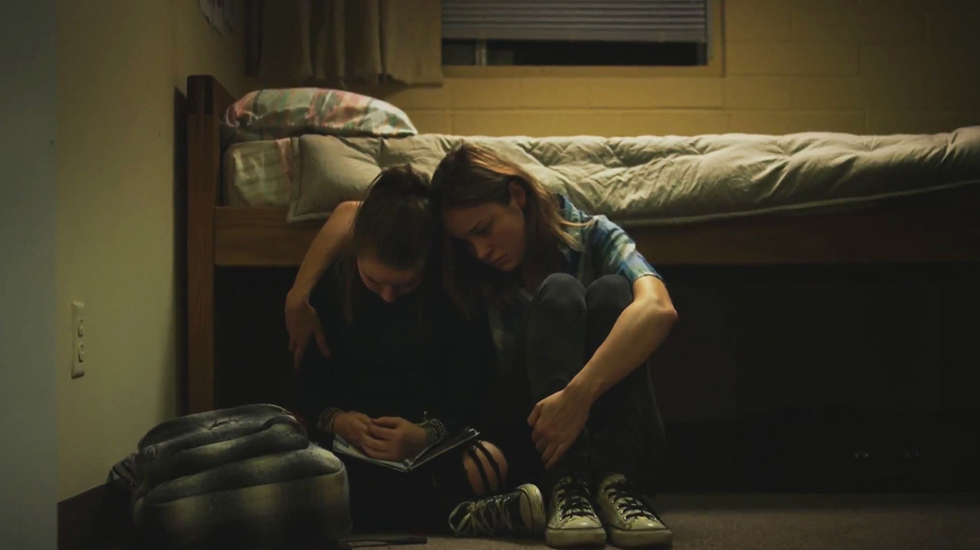
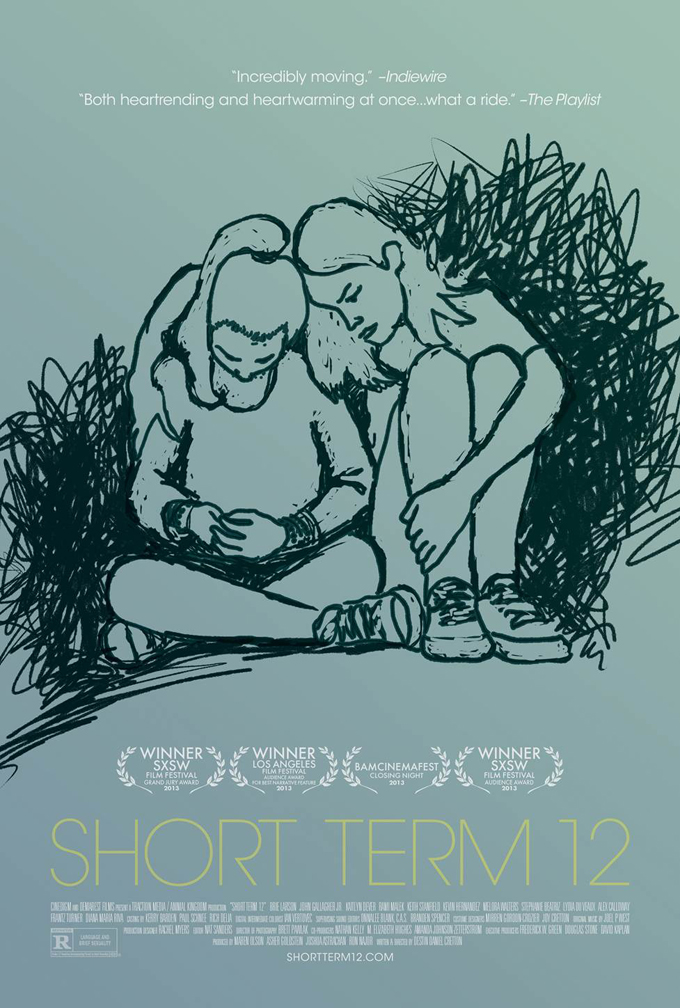
The most powerful, stand out scene for me in any movie in 2013 – after careful deliberation – is from Short Term 12. Surprisingly, it doesn’t involve the lead characters, but one from the ensemble. Marcus – played by Keith Stanfield – is the standoffish kid on the verge of turning 18 and getting ‘released’ from the foster-care center for teens. He’s brooding, strong, and intense for most part of the story and, until the moment, paints himself as if pushed into a corner. When he does lash out, he does it – incredibly – with poetry. In a single, long take as his supervisor sits him down to talk, he unleashes a rap song no one knew he had the capacity to write or perform – heartfelt, expletive-ridden, and delivered with a gumption that’d give Tupac goose bumps. It is a remarkable piece of writing – not just the scene itself – but the build up to it. It is so carefully constructed, you will never see the character’s revelation coming. It leaps out at you from the pages, the screen, and yet goes with the grain of the narrative. Stanfield’s steely-yet-vulnerable performance and Destin Cretton’s choices as director only serve to heighten the experience and leaves you forgetting to breathe.

@sukanyaverma on Lootera’s father-daughter scene

Scenes are like souvenirs an audience walks out with after a gratifying, enriching or, heck, even a revolting, experience. 2013 at the movies left me wowed, tongue-tied, startled, nostalgic, affected, bored, disgusted, thrilled, the works.  But the one scene that stayed with me for all the right reasons and in all probability always will is from Vikramaditya Motwane’s Lootera. Resembling O Henry’s short story The Last Leaf only in the third act, Motwane creates a unique emotional history around Sonakshi Sinha and Ranveer Singh’s star-crossed romance. It’s this melting moment between an ethereal Sonakshi and her on-screen father (played by a brilliantly benign Barun Chanda) that resonates most with me:

Following a bad bout of asthma, the concerned dad is seen comforting his sickly daughter, gently waving a fan on her recumbent frame. They share a lighthearted joke, which leads him to innocuously thwack her wrist and promptly ask, “Laga kya?” Her made-up frown quickly drowns in peals of laughter (and coughing). On cue, with the opening strain of Amit Trivedi’s mesmerising Ankahee playing in the background, he begins to recount the story of an invincible, much feared Bhil King who just wouldn’t die no matter how fiercely the British attacked him. “Phir ek din pata chala ke Raja ne apni jaan ek tote mein chhupa ke rakhi hai.”  To find the whereabouts of this peculiar parrot, the British sent out a beautiful spy who lured the King in her romantic trap and the two got married. One day she discovered the truth behind the King’s immortality and smothered the parrot to death without a second’s thought.  “Phir?” quizzes his only child, somewhat, uneasily. “Phir…woh mar gaya. Beta, aap mera tota ho. Agar aap ko kuch ho gaya na…,” he doesn’t complete his sentence. He doesn’t have to. There’s so much more at its core though. Apart from highlighting the hearty father-daughter bond, it constructs a context to understand the magnitude of Sonakshi’s consecutive loss, heartbreak and need for retaliation.  One has to possess a certain level of sensitivity to convey tenderness that doesn’t feel manufactured. Motwane does. And he lends it to this scene, which works beautifully even as a standalone.

@varungrover on Fandry’s national anthem scene

Only in a state like Maharashtra, where right-wing is so strong that even after the death of their biggest ideologue I don’t feel confident and safe mentioning his name in a post that has no direct criticism of his easily-criticizable styles of functioning, where newspaper offices get ransacked for faintest of hurt sentiments, where people get beaten up for not standing up during the mandatory National Anthem before the film –  a film like ‘Fandry’ is possible. (Just like BR Ambedkar and Vijay Tendulkar couldn’t have been anywhere else.) A state of oppression breeds an inventiveness and ferocity of protest like nothing else.

And in a protest film (though treated like a coming of age for the most part) like ‘Fandry’, comes a scene that makes all the protest scenes in the history of our cinema look tame in comparison. A Dalit family is trying to catch a pig next to a school, the Dalit kid is feeling humiliated ‘cos his friends might be watching the reality of his caste he has so carefully hidden from them, the pig evading them like a pro. After lots of chasing the pig finally seems to be cornered. The family now just has to move closer and catch it and end the misery on both sides of this hunter-hunted divide. The kid seems slightly relieved that the ordeal may be over as they encircle the pig. But, just before they could swoop down, the national anthem starts playing in the school assembly next door. Nobody can move now, except of course the pig. As the Dalit family stands in attention, paying ‘due respects’ to the nation they are equal citizens of, the pig walks away into the free morning.

The whole cinema hall jumped up and applauded the scene wildly. I guess the irreverence, cheekiness, and metaphor it stood for connected with all of us, so used to standing awkwardly before the film, one hand carrying smartphone, another carrying popcorn, thinking ‘Pandit Bhimsen Joshi ji, aalaap mat lo itna lamba. 56 second mein khatam hona chaahiye ideally!

 @ghaywan on Post Tenebras Lux’s opening scene

My pick for the best scene of the year (apart from every other scene from The Great Beauty) is the 9 minute opening scene of Carlos Reygadas’ Post Tenebras Lux ( I wasn’t too impressed by the film).  Reygadas has outdone the brilliant time-transition shot from his previous film, Silent Light. Here we have a little girl left out in the open in the middle of barking dogs and horses, running around merrily, unaware of the ominous shift in the sky. Shot almost through the girl’s eye level, the 4:3 frame and the blurry edges shows the constricted world of the girl and in effect, take us closer to her experience. Watch and get hypnotized.

@diaporesis on Goynar Baksho’s scooter ride scene

Towards the end of the Bengali movie “Goynar Baksho” a young woman in her 20s rides a scooter to meet a lover who has been incommunicado for a few months. The scene, in which she is accompanied on the scooter by one of the film’s protagonists – another headstrong woman who asks her to drive faster – is remarkable for a number of reasons. It’s a starkly happy contrast from one of the first scenes of the film (dated about 50 years earlier) where a 12 year-old child was married to a man much older than her; was widowed soon after and subsequently had to endure three indignities: of wearing white for the rest of her life, of remaining unmarried and of having her lustrous mane of hair chopped off. Moreover, startlingly, the year is 1971, around the time of the creation of Bangladesh; not 2011. Lastly, it’s a bittersweet reminder of progressive Bengali literary thought and the once ostensibly modern, well-educated and relatively prosperous society that influenced it. Sadly, the great Bengali dream, a burgeoning reality till the late 70s, was crushed by decades of preposterous Communist rule, aided by a general lethargy in the Bengali bhadralok. That one scene holds a mirror to our present, where many observers rightly despair about the position of women in India. In an increasingly intolerant and regressive Indian society, one can only wonder where the next well of inspiration will spring from?

@nagrathnam on Soodhu Kavvum’s confrontation scene

[SPOILER ALERT]

For me, it’s the confrontation scene between the honest minister’s errant son and the Tamilnadu Chief Minister. Only a veteran like Radha Ravi could pull off the dead pan humor with which he dispenses shakti-ka-santulan and casually hands over the mantle to his son, forcing the irritatingly honest minister into retirement. That is the turning point of the film. Fair is foul and foul is fair, Welcome to Kalyug. And followed by the kickass retro montage.

“See how he shakes his head. A minister should like him!”

@sudhishkamath on last scene of  The Past

Don’t worry about the spoiler. Because this isn’t a plot twist. Or a big reveal.

A man who has been told that his ex-wife who is in a coma hasn’t reacted to the smell of perfumes, carries the box out of the hospital room. We follow him out in the corridor. Moments later, he changes his mind. He comes back to the bedside. Takes a bottle of perfume out of the box. His. The one she used to like. He sprays a little on him and leans towards her face and says: “If you can smell this, squeeze my hand.” He holds her hand. We see a solitary tear roll down a still woman’s face. He doesn’t see it. The camera is not interested in that. The camera takes us to a close up of his hand in hers and it’s waiting for the squeeze. The camera lingers on that beautiful composition. The entire film is constructed to arrive at this scene.

This ladies and lads, is the story of modern relationships. We all think we are so bloody mature to move on but the first instance when someone tells us it’s possible to revive the romance, we are quick to go and revisit it. We hold on to the undead person from the past, waiting for signs of life but are rarely in a position to see it.

Absolutely beautiful. Heartbreaking. Depressing. But also reassuring. We are not alone. This is the story of our times. Of fucked up relationships and messed up choices. I liked this film because it gave me the courage to put it all behind and let go. Completely. Cut off. And respect the dead.

ram leela
@manishgaekwad  on RamLeela’s colourful kiss scene

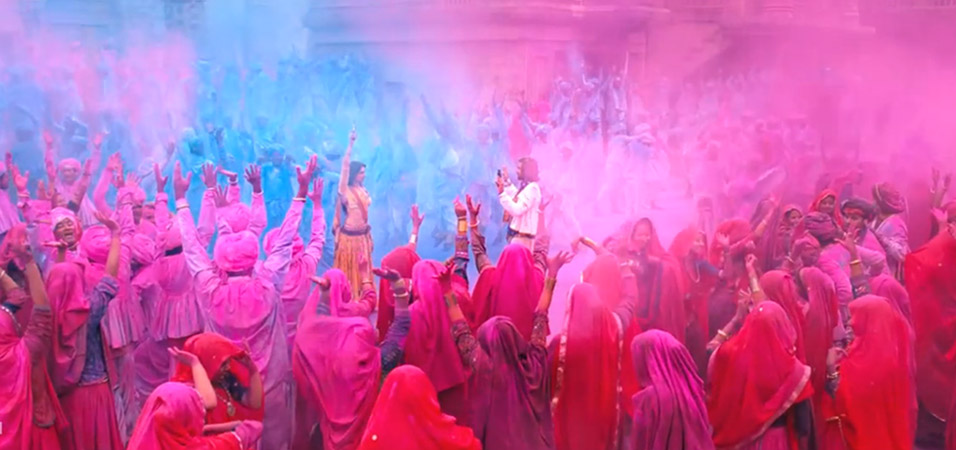
When Deepika runs into Ranveer, and they draw out their guns. That frame, that shot, those colours. Wow! The one time I must have cinegasmed at the movies this year. The song that follows. The kiss. Lahoo mooh lag gaya! Truly breathtaking. It jogged me back to how Balam Pichkari was shot in YJHD. The same Deepika, the same sort of boisterous set up, the same use of riotous holi colours, and yet, you can tell the difference in how a film-maker frames his shot. Balam was youthful, zany, messy and the colours were ‘khacha-khach bhara hua’ – no sense of symmetry in it. Look at how Bhansali co-ordinates/’arranges’ his colours – the blues, the pinks, the reds – all evenly sectioned for each one hue to stand out. This is how you separate the men from the boys.

@shripriya on 12 Years A Slave’s roll Jordan scene

To say “12 Years A Slave” is a powerful film is an understatement. Some of the scenes are very hard to watch and that is the point. But of all the scenes, a short scene, with no violence, is, perhaps, the most powerful.

What happened right before:
Solomon (Chiwetel Ejiofor) has just been betrayed by a white farm hand and had to burn a letter he very painstakingly wrote to his wife and with that, his last hopes of ending his bondage.

A slave collapses in the field due to overwork and Solomon and two others bury him. Solomon goes about the task mechanically. He’s even mildly surprised/annoyed when one of the other grave diggers wants to say a few words for the dead man.

The scene:
A group of slaves stand near the grave and start singing “Roll, Jordan, Roll”. Solomon is part of the group, standing right in front, but emotionally apart from the rest of the slaves, as he as been through most of the movie. Solomon, who was not born a slave, has always maintained his distance – protected himself by maintaining a distance.

We then switch to a shot of Solomon’s face. His face is anguished, full of despair and desperation, overwhelmed by the recent events. The camera just stays on his face as slowly, Solomon starts to sing. It is almost like the song is his lifeline and he grasps onto it, at first just mumbling the words. As he sings, his voice gets stronger and his face changes. The song powers him and finally, he accepts that he is a slave. He starts singing even louder and seems to embrace the group with whom he sings as his brothers. And finally, you can hear his voice stand out, powerful. Despite what he is acknowledging, it feels like a positive self-affirmation. Yes, I am a slave, but I will survive. Even as a slave, I will survive.

The shot of Solomon’s face lasts a minute and fifteen seconds. There is no dialog. Just the singing. For this scene alone, for all the complex emotions conveyed, Chiwetel Ejiofor needs to be a front runner for the Oscar. Brilliant.

@fattiemama on Blue Is The Warmest Colour’s break-up scene

I looked away. For a good ten minutes, I kept my eyes away from the scene. I would have loved to shut my ears too but not understanding the language helped. She kept hitting her and she kept crying, pleading for forgiveness. Tears, snot, blood all became one as the searing pain of betrayal and guilt broke through the barriers of language. I have felt all of it and in not a small degree to not acknowledge it, yet the sheer rawness was so testing I wanted to be relieved of it. They were so good together, so happy, so carefree, so intense and so young…young, I think that hurt the most…All of us love ‘happily forever afters’. The most cynical of us too, somewhere in the corner of their hearts they too believe and yearn. And to watch a love so young and so deep break in a moment hurts. It shatters all that we hold dear, dream of. Was it the beautiful performances of the two young actresses? Was it the single long take? Was it the unbridled tears and blows? Was it the resounding thud of a featherlite dream breaking? Was it my own connection to a story that wasn’t my own? The reasons could be all or any but that scene refuses to leave me. Someday it will be replaced with the eternal tenderness she feels towards her. At the end of great love does not lie emptiness or hate. At the end of great love lies great tenderness. Had the scene not escalated to that intensity the end would not have mattered as much as it did. Had the violence not been so visceral, the wound of the soul would not have been bared. Because a love as deep has to hurt as much too. I just wish the blows had not travelled beyond the screen to sear me.

@jahanbakshi on Spring Breakers: In which Alien and the Girls become ‘Soulmates’

Harmony Korine’s Spring Breakers was certainly one of the most divisive films of the year, lauded and loathed in equal measure. Some found it provocative, others called it puerile. For me, it was certainly one of the most hypnotic and immersive cinematic experiences of the year, and at the center of the film were 2 of the most memorable scenes of the year, one segueing into the other seamlessly.

The first scene begins with a gun-toting Alien jumps around his bed, Brit and Candy kneeling before him, seemingly in awe.

“You like it? You like my shit? Look at you fucking bitches. You fucking love it, don’t you? You a couple of bad bitches, ain’t you?”

He thrusts and rubs wads of money in their hungry faces and then begins to kiss both the girls. One of them picks up a pistol from the bed.

“Careful with that, it’s loaded.”

We see a look on Alien’s face we haven’t seen before. It’s the look of genuine terror. Suddenly, out of nowhere, both the girls have pistols pointed at Alien. The get him down on his knees and shove a pistol in his face, then another.

“Sick motherfucker, aren’t you? You think that you can just fucking own us? Open your mouth. Open your fucking mouth…. You’re a nasty little fuck. Yeah, you are. Do you like that? You like that in there?”

Alien is shitting concrete by now. You can see it in his eyes, almost closed shut out of fear.

“We have everything we need right here. We don’t need you, Alien. What if we just used you to come here? And in five seconds we just shoot you? Blow your brains out. And you’re dead… What do you think, Brit, should we kill him?”

And just then, something happens. Alien opens his eyes and stares into the girls faces. And starts to fellate the gun with unnerving glee. First one, then two loaded guns, and he’s going at them like a seasoned pornstar.

It’s a stunning scene- sexy, shocking, gender-bending, nail-bitingly tense and unpredictable- all at once. That’s what makes it so great, apart from how crucial it is in building the characters, their relationship(s) and the trust that forms the basis of their truly twisted love story.

“Y’all my motherfuckin’ soul mates, swear to god. I just fell in love with y’all…”

This flows into what is the most talked-about scene from the film, in which Alien sings Britney Spears’ Everytime, playing a piano as the girls do a ballet around him in pink ski-masks, bikinis and sweatpants, wielding shotguns like toys. As Franco’s voice fades into Britney’s, the scene cuts to a blizzard of hedonistic violence as Alien and his Angels perform their dance of destruction.

The use of contrasting music as a counterpoint to violence in cinema is nothing new, but Spring Breakers does it exceptionally well, managing to transform Britney Spear’s pop ballad not just into something darkly humorous but also a strangely beautiful elegy to the loss of innocence. It’s one of those scenes that lift the viewer into a trance and the film into transcendence. True to his name, Mr. Korine achieves that rare thing in cinema: Absolute Harmony.

@miyaamihir on last scene of Star (Bombay Talkies)

हिन्दुस्तान की ही नहीं, शायद विश्व की सबसे प्रामाणिक ग्रामीण फिल्मों में से एक बनाने वाले निर्देशक सत्यजित राय मूलत: एक शहरी फिल्मकार थे। हमारे वर्तमान महानगर के चितेरे। उसकी अाकांक्षाअों के, उसके अपमानों के। मुझे श्याम बेनेगल के उन पर बनाये उस प्रामाणिक वृत्तचित्र का अंतिम दृश्य याद अाता है। राय अपने घर में अपने घर में, अपने कमरे में अपनी वर्किंग डेस्क पर बैठे हैं अौर अपना वही मशहूर सिगार पी रहे हैं। अौर फिर कैमरा ज़ूम-अाउट होता है। एक ही सिंगल शॉट में हम देखते हैं कि कैमरा पैन-अाउट होता हुअा खिड़की से बाहर निकलता है, अौर हालांकि राय अब भी हमारे सामने हैं लेकिन उनके साथ अब अन्य बहुत कुछ इस फ्रेम में है। एक पूरा शहर इस एक सिंगल शॉट में जैसे राय के साथ चला अाता है। एक ही फ्रेम में हम बीच में उनका घर देख रहे हैं जिसकी बीचोंबीच खिड़की में अब भी राय बैठे दिखाई दे रहे हैं, वही सिगार के साथ। लेकिन अब इस वाइड एंगल में चारों अोर से कलकत्ता की बहुमंजिला इमारतें अौर बाज़ार भी चले अाये हैं। यह एक दृश्य फिल्मकार को उसके सबजेक्ट के ठीक बीचोंबीच स्थापित करता है अौर शायद हमें यह भी बताता है कि किसी भी रचना को जैसे उसके समय से निरपेक्ष नहीं पढ़ा जा सकता, ठीक वैसे ही किसी भी रचना को उसके स्थान से निरपेक्ष  रख के पढ़ना भी मुश्किल है।

दिबाकर की ‘स्टार’ के उस अंतिम पोर-पोर जादू से भरे दृश्य में जहाँ पुरंदर (नवाजुद्दीन सिद्दीक़ी) अपनी बेटी को अपने जीवन का एक दिन पुन:रचकर सुना रहे हैं, दिखा रहे हैं, ठीक ऐसे ही एक पैन-अाउट होते हुए कैमरे के साथ पूरा शहर उनके दृश्य की सीमा के भीतर चला अाता है। यहाँ वो नायकत्व है जिसका दायरा अपनी चाल की बालकनी से अागे नहीं बढ़ पाया। यहाँ वो पिता है जो अपनी बेटी के लिए रची कहानियों में भी कभी नायक नहीं हो पाया अौर उसे कल्पना की दुनिया में भी सदा किसी ‘िहृतिक’ का सहारा लेना पड़ा। यहाँ वो इंसान है जिसकी असफलता अगर गौर से देखें तो हमारे वर्तमान शहर की वो बची-कुची ईमानदारी अौर असलीपना है जिसके होने के चलते ही पुरंदर अाज भी इस शहर में मिसफिट है।

‘स्टार’ सही मायनों में बम्बई की कथा है। यहाँ मुम्बई की बन्द हुई मिलें हैं अौर बेरोज़गार हुए मजदूरों के घरों का ठंडा चूल्हा है। तमाम सिनेमा की पृष्ठभूमि पर ऊँची चिमनियाँ है उन मिलों की जिनका धुअाँ जीवन की अग्नि की तरह कब का बुझ चुका है। यहाँ कुछ सर्वश्रेष्ठ अदाकार हैं जो विदर्भ से मुम्बई तक कुछ सौ किलोमीटर की दूरी अपने जीवनकाल में कभी पाट नहीं पाये। फाकों पर होता थियेटर है अौर उसमें फिर बराबरी का स्वप्न है। यहाँ अपने बाप की पेंशन पर जीता अौर समाज की नज़रों में एक असफ़ल इंसान है, अौर फिर एक निर्णायक क्षण है जब वह खुद पिता हो जाता है। सिनेमा के दायरों से परे एक अौर दुनिया है जिसमें अाज संतुष्टि को असफलता अौर असफलता को अयोग्यता का मूल मान लिया गया है। ऐसे समय में जहाँ अापके होने से ज़्यादा दिखाई देने का महत्व हो, ‘स्टार’ इशारा करती है कि सफल-असफल के खांचों के परे भी एक संसार होगा जिसमें योग्यता प्रदर्शन की मोहताज नहीं होगी। ‘स्टार’ उस जीवन के बारे में है जिसे अपने दायरे की पहचान करनी है, अौर जानना है कि उसका ‘स्टार’ होना, न होना दुनिया की स्वीकार्यता पर नहीं, सिर्फ एक बच्ची की हंसी पर निर्भर है। अौर इसके साथ ही यह हमें समझना है कि महत्वाकांक्षा का जयगान गानेवाले इस दुर्दांत समय में ‘संतुष्टि’ एक दुर्लभ मूल्य है।

@NotSoSnob on The Great Beauty’s opening party scene

The two most memorable scenes of the year for me are the climax of Frances Ha and Ilo Ilo. Frances Ha’s climax wraps up the film beautifully as its lead character gets what she wants from a relationship. Guess? It’s simple, unusual and still profound. Ilo Ilo’s climax is bitter sweet, as a kid gets slapped, you laugh at the scene first and then you realise what the filmmaker has done – completed the loop between two strangers who fought initially, bonded later and then had to separate. But am writing about another absolute favourite scene of the year. This one is from The Great Beauty.

When you are watching the film for the first time, you keep wondering what’s happening. Where is it going? It seems like a non-stop party music video. And all you see is bodies shaking vigorously in every possible way interrupted by chants of a bald man shouting, I’ll screw you, while looking at a lady dancing on top of the table. You see striptease, a woman shouting for her lost mobile, a dog in a purse, a very short woman lost in the crowd while sipping her drink, and then a tv showgirl appears with 6-5 written on her boobs. As Jep Gambardella turns back, you realise this is his birthday party. It continues for few more minutes, and then everyone starts dancing while matching their steps on the beats of Mueve la colita. After some time the music slows down, Jep gets out of the queue slowly, looks into the camera, the camera zooms in, slowly everyone gets out of the frame and we see only his face as his voice-over starts – To this question, as kid, my friends always gave the same answer – “pussy”. Whereas i answered, “the smell of old people’s houses”. The question was :

TGB

This scene not only sets up the film but also sums it up well. As Gambardella’s search continues through Rome’s rich and boring men and fashionable women, the only word that comes to your mind is decadence. I have gone back to the film many times and specially this scene. Just to hear the opening voice-over. But the impact is lost if you don’t watch the entire party scene – the dancer number, the slowing down of music and Jep moving out of the crowd. Because that’s where the separation begins. Jep and the rest. You are going to encounter all these characters in the film through Jep only. To go back to the madness of the scene, i have even saved this image as my computer screensaver. But i still can’t get enough of Mister Jep Gambardella, his voice-over and the insane beginning of his search for The Great Beauty.

Do let us know about your favourite scenes of the year in the comments section.

The brief was the same this year. A mail was sent to the usual cinema comrades who write, contribute, and help in running this blog. It went like this – a) Close your eyes b) Think of all the films you have seen in 2013 – released/unreleased/long/short/docu/anything c) Think what has stayed back with you – impressed/touched/affected/blew d) Write on it and tell us why. Ponder like Jep Gambardella in right gif, and write about the joy you experienced like the left gif.


        

Almost everyone wanted to write about The Great Beauty. It has emerged has a clear favourite this year. But since the idea is to cover as many films as we can, so only one person was allowed to write on a specific film. Though we ended up having two writers on TGB. Finally, here’s the massive list of 17 terrific films picked by 15 film buffs, and they tell us why these films stood out from the rest. If they don’t look familiar, click on their handles. It’s linked to their twitter accounts.

(Our earlier post in the same series – 20 Things We Learnt At The Movies and 13 Unanswered Questions is here, Top 10 Musical Gems We Discovered This Year is here)

——————————————————————————————————-

@kushannandy   on   I L O    I L O

What do you do when a bald, tipped-hat wearing character, straight-out-of-Jeevan’s gang, writes to you and his other Versovian gang-members an underground email in which he threatens to squash your sperms, a la Uma Thurman did to the eyeballs in Kill Bill, unless you close your eyes, think of your favorite film of 2013 and some such shit…?

You shit. And you sit on your laptop.

My pick: the best film that stayed back.

A spoilt schoolboy, his unemployed father and pregnant mother, who tries in vain, to survive her pre natal pangs and the annoying habit of the males in the house leaving urine on the toilet seat, form a small middle-class family of three in a quiet province called Ilo Ilo in Singapore. Well, not three. Actually four. Terry, a modern and resilient maid, walks into this family and battles the boy-bully, combats the mother’s territorial jealousy and earns the respect she deserves from the senior-most member of the family.

There is nothing innovative about the plot. No melodrama. In fact, zero drama. Yet, Anthony Chen’s debut film left me spellbound. The unbelievably realistic performances, the emotional nuances, take it right into Asghar Farhadi territory. And what holds the film together, is Angeli Bayani’s portrayal of the Filipino maid. Chen’s silent close-ups of Bayani’s deeply emotive face and haunting eyes stay with you, long after the lights come on.

@sudhishkamath   on   Q I S S A

I’m not sure we’ve seen a better film about the fluid nature of identity and sexuality, that too from India. And this complex question of who we are is explored through a simple nature versus nurture plot.

A story of a girl raised as a boy. Because the father (Irrfan Khan) has always wanted a boy and is in absolute denial about who she really is. Tillotama Shome is just the kind of ballsy woman for the role and casting an actress in the stereotype-defying gender-bending character is just one of the many triumphs of Qissa, which is full of twists that are introduced not to shock but to explore the question of identity, layer by layer. Saying anything more may just ruin the film for you. You might have issues with the titular ghost that pops up but that’s exactly the kind of ingenuity that makes you think about the question raised in the film. With Tisca Chopra and Rasika Duggal in the cast, this is as solid as an Indian film has got in ages, especially from the arthouse circuit!

@krnx    on   R U S H

Since, I suspect, no one is going to write on a Hollywood movie being their choice of best film on MFC, I will. And also because Rush was one kick-ass film that literally gave me a rush and had me applauding at the end of it: physical reactions that no other film in 2013 managed to evoke.

There really isn’t much to say about Rush that hasn’t already been said. I used to be a fervent F1 fan (less now but still enough to be in the grandstands of the first Indian GP) and for sure that’s contributed to my admiration of Ron Howard’s expertly crafted drama. He is a director, I admit, I find hugely inconsistent (only cared for Apollo 13 and Frost/Nixon besides epic television Arrested Development) but with Rush, the slate’s wiped clean.

Just unearthing the story – James Hunt vs Niki Lauda – must’ve been a moment of triumph for screenwriter Peter Morgan. But some scripts are expensive to tell and it was an arduous journey for Morgan’s spec(!) effort before Howard got involved.

Besides the incredible rivalry that Howard’s captured in moments of pure cinema, the authenticity of period F1, and spectacular visuals (especially those of the final race in Japan in high-speed rain) that haven’t made a home in my mind for all these months; Rush encapsulates everything that Formula 1 is about – adrenaline and utter disdain for subtlety. Not the usual qualities in, what we have come to expect, a “good” film.

@sukanyaverma   on    W A J D A

For someone who watches movies for a living, it’s very hard to pick ONLY one great movie from a pile of superlatives. More so, since 2013 fared rather well in my eyes and I didn’t ‘ummm’ even once on being asked for my pick of the lot. Wadjda, with its inspiring theme and touching simplicity, is that shiny gem from Saudi Arabia that gets my vote. Ever since I saw its first trailer among a hoard of others nominated by their respective countries, vying for a place under Oscar’s Best Foreign Film category, I was drawn to the beatific smile of a 10-year-old (an extraordinary Waad Mohammed) essaying the title role. Notably, Wadjda is the first film to be shot entirely in Saudi by filmmaker Haifaa Al Mansour who directed outdoor scenes from inside a van using a walkie-talkie adhering to the country’s stern filming restrictions for a woman/filmmaker and the first film from the nation to send an entry to the Academy.

 Right from the first scene where Wadjda steps forth sporting a pair of Converse sneakers in a crowd of Mary Janes, you know she stands out in a conservative, controlled society. Set in suburban Riyadh, Wadjda deals with a young girl’s determination to realise her dream of buying a bicycle after her mom refuses to do so. How she chooses to achieve her seemingly defiant goal by appeasing the same society and its doctrinal requirements is deftly portrayed in Mansour’s lovingly crafted feature. Also heartwarming are the interactions between Wadjda and her best friend, Abdullah. Unlike the grown-ups in the story, their friendship is untouched by the discrimination of their environment. Wadjda offers a palpable glimpse in Riyadh’s daily life, the anxieties and facades of its striking women, the deep-rooted conditioning of its self-engrossed men as well as the innocence of its blithe children without trying to be overtly cynical or judgmental. Through Wadjda’s mini triumph, Mansour astutely endorses a message of hope and her personal belief that change might be slow but it is steadfast and most imminent.

@varungrover     on    T H E    G R E A T    B E A U T Y

This was a year of turbulence for me. Lots of emotional ups and downs, fights, illnesses, personal and professional extremes, and a feeling of ‘ab hum bade ho gaye hain’. Mid-life crisis started hitting its opening notes this year, that slideshow of ‘80s/90s kids will remember this’ left me sadder rather than happier, some very good friends got separated from their better halves, some others got lost in the black-hole of their corporate jobs and/or parenthood, a favorite relative passed away, a cricketer I loved as a kid retired and I didn’t feel a thing, and a pet parrot flew away leaving me heartbroken.

And may be that’s why, no other film moved me as much as ‘The Great Beauty’ this year. A film about passage of time and people, relations disintegrating, dissolving into the great circus of bizarre the life is. Paulo Sorrentino’s latest, which I watched twice on big screen during this year’s MAMI (god bless Mister Narayanan, the festival director), had everything I would ideally like to associate my ‘end of days’ with –humor, acidic care-a-damn criticism of (modern) ideas of success and art, deep nostalgia, detachment, quest for beauty, spiritualism, and an affirmation that it’s all, after all, just a trick.

Films next year:

@varungrover   on   D I S A P P E A R A N C E    O F    E L E A N O R    R I G B Y    :   H I M    A N D    H E R     and    T I T L I

2 films that I saw this year (one at TIFF and another at IFFI viewing room) should be the most talked about international and Indian films respectively next year in my humble brag opinion. Ned Benson’s ‘Disappearance of Eleanor Rigby: Him and Her’ is a delicate, sensitive, brilliantly written and acted, mind-bending drama of a couple’s separation shown through the perspectives of him and her in two films of 90 minutes each. Think of it as Sam Mendes meets Asghar Farhadi. The layers of interpretation become thicker and mindboggling if you change the order of viewing from ‘him followed by her’ to ‘her followed by him’. And that, you’ll see, is a masterstroke.

The best Indian film I saw this year, and hopefully the whole of world will see soon, is Kanu Behl’s ‘Titli’. Seeing it on a desktop computer in IFFI, Goa’s ‘viewing room’ should be counted as an underwhelming, far from ideal setting, and still, this very dark very funny very depressing dastaavez on patriarchy BLEW ME AWAY like nothing this year. Stunning is the word. Breathless is another. Writing so sharp (Kanu Behl and Sharat Kataria co-wrote it) and performances so bang-on, not to mention excellent edgy-gritty cinematography (Siddharth Dewan), this is our best bet for world cinema honors next year.

@invokeanand   on   B O M B A Y    T A L K I E S

The Lunchbox made me long for the days gone by, Ship of Theseus made me feel guilty for merely existing, Chennai Express made me a philosopher, but the film that reached me this year was a story about identity and liberation -Ajeeb Dastan hai yeh (Bombay talkies). The film mainly dealt with identity – sexual and personal both, but what worked for me was the depiction of today’s charulata – hiding her loneliness and emptiness in sensuous saris wrapped in raw sexuality. It was her story, her struggle and in the end, her liberation. Trapped in a relationship moving slowly towards it’s end and feeling guilty for it’s eventual demise. Use of Lag Ja Gale was genius to say the least and felt like it was specifically written for this character. And in what eloquent ease does Rani Mukherjee carries herself throughout the film. And Johar, from loving your parents to hitting your parents has come a long way and we can only hope he keeps this bravado intact.

jagten1

@diaporesis    on    T H E    H U N T

Before Midnight is the loveliest film I’ve seen all year but I’ve already written about it at length. My second favourite film this year stands in stark contrast to the occasionally sunny, sometimes stormy, yet entirely endearing story of Richard Linklater’s finest film. “The Hunt” is a little-known Danish film — despite it winning an award at Cannes 2012 — that stars the reliably excellent Mads Mikkelsen in a mesmerising performance as an upright schoolteacher, and occasional hunter, who is hounded and ostracised by the small community he lives in, after a child wrongly, but not maliciously, accuses him of a criminal act he did not commit.

Without talking about the accusation itself, nor of the movie’s very finely shot and acted scenes, it’s worth examining two key themes of the movie briefly. The first is banal but has several important interlinked parts — children are impressionable, difficult to understand, and can react unpredictably when spurned or angered. In the movie, the child is shown a porn clip by her brash teenaged elder brother. Later, when angered by the schoolteacher, she uses details seen in it to accuse him of an act he did not commit, without being aware of the fallout of her innocent anger. For some reason, while watching the movie, I was constantly reminded of another disturbing film in which an older child wreaks havoc on his family and schoolmates: “We Need to Talk About Kevin”. That movie should perhaps be watched in accompaniment to The Hunt for it sheer contrast in material. Second, perceptions and influence work in strange, and sometimes troubling ways. It is assumed that the child must obviously be speaking the truth while making such serious accusations. The teacher-in-charge, instead of trying to verify the story, literally puts words into the mouth of the child in her haste to get “justice” for the child. It must be noted that, in general, everyone knows that children are notorious liars; yet for serious accusations this is often overlooked. Moreover, the “epidemic” — of accusations of similar acts committed with other children — that breaks out soon after the initial accusation points to how impressionable children are, how vulnerable their minds and the paradox that must exist to protect them: to ensure their safety there must be inordinate power vested in their words. The hunt for truth and justice often leads to the bloodshed of those who only happened to cross the firing line at the wrong time. For a schoolteacher this lesson was hard to swallow; for the hunter, it could not have been more obvious.

@manishgaekwad     on    C H I T R A N G A D A

At the Kashish Mumbai International Film Festival this year, the closing film Chitrangada was also one of the festival’s most difficult films to sit through. Three days later, actor-director Rituparno Ghosh was dead. The film, which is inspired by a Tagore play, is about a transsexual choreographer undergoing sex-reassignment surgery. In a way, it mirrors Rituparno’s own battles, as he began to express himself more as a woman in the public eye.

This confusion in the audience to be able to identify with him, is also the moot point the film makes when he steps into the role of the agonising choreographer. Festival audience moved quickly; the deadweight of the film’s slow treatment, and watching this pouty, greasy, unattractive man blur the boundaries between art and life, freaked most people. By the end of the screening, the theatre was near empty. Which is clear how people do not want to see filmmakers indulge in self-flagellation. Keep your private parts, private, don’t turn it into something prosaic. Perhaps, Rituparno over-shot his license.

It is however, a film, one must return to, for the artist who holds a gun to his own head. The film bored me, made me uncomfortable, there were long and dull portions, but what never left me, was that in his role as ‘deus ex ghosh’, he was trying to say something really, really important; about gender and bias and fluid sexuality, and what films should do and tell us about ourselves (sometimes). As Aparna Sen wrote about the film, in his obit, ‘Without sending out a message, within quotes, as a lesser filmmaker might have done, Ritu managed to bring the hitherto marginalized into the domain of the mainstream, to an extent.’ His timing was right, his exit wrong.

 @nagrathnam     on    S O O D H U    K A V V U M

Every year there is ‘the’ Tamil film which crosses boundaries and turns out to be a benchmark. From previous years’ Paruthiveeran, Subramaniapuram, to Aaranya Kaandam and this year’s Soodhu Kavvum. This one shows how to do a Guy Ritchie-ish film with dollops of quirky characterizations, outlandish situations, kickass dialogues, and amazing usage of music. And the best part is that the film is made with no stars (unless you count Sanchita Shetty & Pizza’s Vijay Sethupathy- the Abhay Deol equivalent, as ‘stars’), and is a realistic, ambitious, sensible film with zero pretension, with a dose of commercial masala tadkas. Ambition needn’t be limited by a budget. One might argue that the 2nd half was more ‘plot’ & less character as compared to the 1st half, but still, no one can take away the fact that the film surprises you at multiple levels without insulting your intelligence.

[SPOILERS]- Ironically the only two ‘honest’ men in the film end up as losers and most of the bent characters end up victorious. This one also has the greatest subversive ‘stalker’ scene in the history of tamil cinema (the IT guy with the lover girl office situation). Now waiting and hoping the hindi remake matches upto the original.

@damoviemaniac     on     N E W    W O R L D

Who said the gangster genre is dead?

Trust the Koreans to make actors dressed in black suit and assaulting each other with knives and baseball bats look poetry in motion. The film explores the power politics within a gang, primarily dealing with structures and mechanisms. It has unusual emotional depth for a gangster film and often feels like a tale of bromance and loyalty.

It is the perfect onion, unwrapping one layer at a time as the film progress. The film teases the viewer to a game of one-upmanship, trying to outdo each other. And just as we think we have solved the maze, the climax flips everything upside down and we gasp at the sheer brilliance of storytelling. But the film does not rely on the last minute plot twist for the viewer to appreciate. It acts as the cherry on top.

@lordmeow    on    T H E    G R E A T    B E A U T Y

Jep Gambardella claims that he was destined for sensibilities, whereas his friends cared only for inner lips of women. He has walked a long path, arriving at a view of life that gives him a panoramic display of the human comedy, broad and unambiguous. He has lost love, but his nature hasn’t undergone a brutal upheaval. He has been at war with himself; he’s the man who has been different men at different points of time. He has emerged from the uncertainties of life, remade, and illuminated by new feelings. Now, whatever its worth, is fairly settled, and he knows how to express it clearly, facing the camera, without a shadow of doubt, in true Italian style.

Paolo Sorrentino’s The Great Beauty witnesses the decadence of Rome again, seething with tragic irony of a Gibbonesque spectacle. It flings literature giants at you so elegantly that you are waiting to be damned by its words. But unlike Woody Allen (whom you actually expect to pop up at any moment in the film) whose intellectual adventures merely give a half-formed philosophy in an autobiographical fashion, Sorrentino’s characters reveal the inner labyrinth of life, rather a satire of life, on life everywhere, the struggle of its aspirations to fructify, the madness that follows it, and the disillusionment that awaits at the far end of the journey. The observations are sharp, but it is not cruel, rather it looks at poor folks, baffled and lost, rarely comforted, with a distant sympathy. With a rhythmic rise and fall of images (that gliding camera), Jep is the voice of a time going by. He utters inconsistent wisdom, not because of the character’s infidelity with truth, but because he has outgrown his preceding selves. To know him, unquestionably one must know him entire, and I can only fancy the aching romantic pain that sweeps his memory. As 2013 is flying by, I would rather settle for his terrace party, swinging to ‘Mueve La Colita’.

@ghaywan    on    T H E    C O N G R E S S

“Nazis and holocaust bring awards” says the head of ‘Miramount Pictures’ as he convinces Robin Wright, an ageing star, to surrender her youth to a pile of codes.

Ari Folman’s The Congress is a dizzy concoction of commoditization of cinema, the dystopian bleakness of our future that is bereft of choice, the blazing bohemia of a century full of animated characters and our relentless questioning of where we came from. It’s a giant fuck you to the Hollywood’s studio system, an ode to animation and eventually, an allegory of what our future holds for us with all it’s decaying art.

Robin Wright plays herself as the star who has to sign a contract with her studio to sell her image to digital restoration turning her real self completely obsolete. 20 years later she is called to the futurist congress, a convention of an animated world, where she is forced to lend her image to the capitalistic franchise of Mirmaount Hotel. The studio boss asks her for an extension of her contract where she “can now be eaten in an omelette or a Crème brûlée… you’re now a substance”. He even suggests her of a world where people will pay royalty to fantasize about a star. More ambitious than Waltz With Bashir but limiting in it’s cohesiveness of a singular theme, The Congress, has to be devoured for it’s vision and craft. As it goes with life, you may not understand this film completely but it is worth the trip, with all its spot-the-reference moments. This is Sunset Boulevard on acid!

@fattiemama    on    B E K A S

Innocence is difficult to portray without sentimentalising. Much more difficult is to weave in that rare brotherly bond amidst poverty ridden circumstances yet steer clear of patronising. Using children as children and letting their light shine through requires talent, one which Bekas, a delightfully pleasing and touching film, does without fanfare.

The story of two orphaned Kurd children who dream of going to America and meeting Superman thereby uplifting their impoverished lives, Bekas keeps coming back to me as the most memorable film I have watched this year solely for its tone – bantery humour with controlled drama underlining the narrative. Cleverly drawing the line between sentiment, drama and comedy, Bekas turns a feel-good narrative into a story of familial bond while set in the harsh reality of war-torn Iraq. It has one of the most delightful and sharply written lines, warmly etched characters and deeply insightful social references of life in a small town in Kurd and the impact of the war with US. The ghost of US merchandise symbolising the ‘arrived’ life looms large in everything the two hold dear; Superman, Coke and Michael Jackson become much more telling symbols of US supremacy globally.

All its little joys and the wonderful child actor playing the younger, spirited brother apart, Bekas is dear to me for its one brilliant achievement – of letting children be children. From Majidi we have learnt, they tell their own story. All we need to do is allow them to speak. And then just sit back and listen.

@miyaamihir    on    J A I     B H I M    C O M R A D E

तय है कि अापने इस तीन घण्टे दस मिनट लम्बी वृत्तचित्र फिल्म का नाम ज़रूर सुना होगा अौर अगर अाप थोड़े भी जागरुक पाठक हैं तो अब तक इस फिल्म की तमाम घोर राजनीतिक समीक्षाएं भी पढ़ चुके होंगे. लेकिन अानंद पटवर्धन की ‘जय भीम कॉम्रेड़’ मेरे लिए अपने मूल में नितान्त व्यक्तिगत फिल्म है. यह एक मित्र के अचानक चले जाने के बाद उसके मित्र के अात्मसंशय से उपजी फिल्म है. अात्मसंशय, कि कहीं अपने दृढ़ राजनीतिक विचारों की घटाटोप सामूहिकता के बीच हमने अपने दोस्त को अकेला रह जाने दिया. यह फिल्म वो ईमानदार सवाल है जिसे अानंद स्वयं से पूछ रहे हैं अौर यहाँ उनके ‘स्व’ में कहीं न कहीं हिन्दुस्तान का पूरा प्रगतिशील विचार शामिल है. प्रगतिशील विचार जिसने ‘पहचान’ के सवाल को वर्गसंघर्ष की महती लड़ाई के मध्य द्वितीयक पायदान पर रखते हुए सदा अप्रासंगिक मान खारिज किया लेकिन स्वयं उसके बीच मौजूद भिन्न पहचान वाले कॉमरेड का अकेलापन नहीं देख पाया. यह एक रचनाकार-फिल्मकार के ईमानदार अात्मसंशय से उपजी फिल्म है अौर स्वयं पर सवाल खड़े करने की अौर उन सवालों के साये में खुद अपने विचार को खुर्दबीन से परखने की यह ईमानदारी हमारे समय में दुर्लभ है. इसी संशय के चलते अानंद अपने प्रगतिशील साथियों के सामने कुछ वाजिब सवाल खड़े करते हैं अौर शायद एक पूरी विचारधारा के लिए अात्मपरीक्षण का वह दरवाज़ा खोलते हैं जिसकी सांकल अभी तक उन्होंने स्वयं भीतर से बन्द कर रखी थी.

गौर से देखें तो सामयिक हिन्दुस्तान में मार्क्सवाद अौर अम्बेडकरवादी विचार के मध्य के तनावपूर्ण अंत:संबंध को परखते इस घोर राजनीतिक वृत्तचित्र के मूल में एक मित्र के असमय चले जाने की कसक मौजूद है. मित्र, जो चला जाता है लेकिन अपने पीछे सवालों का एक बियाबान ख़ालीपन छोड़ जाता है. सन सत्तानवे में कवि विलास घोगरे की अात्महत्या फिल्मकार अानंद पटवर्धन को झकझोर देती है. लेकिन इस बियाबान ख़ालीपन का सामना अानंद रचनात्मक विकल्प तलाश करते हैं. एक प्रतिबद्ध फिल्मकार अपने साथी की मृत्यु के बाद उसकी मुकम्मल पहचान की तलाश में निकलता है, उसके जनगीतों के पीछे के असल कंठ को जानने निकलता है, उसकी कविताअों के दृश्य ‘हम’ में मौजूद अदृष्य ‘मैं’ को खोजने निकलता है. यह एक दोस्त के चले जाने के बाद भी उसके मित्र की अनवरत तलाश है जो अानंद को खैरलांजी तक लेकर जाती है. ‘कबीर कला मंच’ तक लेकर जाती है. शीतल साठे अौर उनके क्रांतिकारी गीतों तक लेकर जाती है. एक दोस्त के खुद को अकेला समझ चले जाने के बाद भी उसका मित्र उसका हाथ नहीं छोड़ता अौर अस्सी के दशक में बनी अानंद की पहली फिल्म ‘बॉम्बे: हमारा शहर’ की शुरुअात में “एक व्यथा सुनो रे लोगों…” गाते नवयुवक विलास घोगरे की उस छवि को अानंद मिटने नहीं देते. ‘कबीर कला मंच’ के शीतल साठे अौर सचिन माली जैसे नौजवान उसी खो गये मित्र विलास की प्रतिछवि हैं. प्रेम जिसकी सीमाएं जात-धर्म के पार जाती हैँ अौर अन्याय के खिलाफ प्रतिकार की वही साझा कॉमरेडशिप जिसका सपना विलास घोगरे की कविताअों में झलकता था. अौर जब एक अाततायी सरकार द्वारा उन्हें नक्सलाइट कहकर जेल में बन्द किया जाता है तो अानंद उसके खिलाफ डटकर लोहा लेते हैं. अापको पता है, शीतल अौर सचिन ने अपने नवजात बच्चे का नाम क्या रखा है? ‘अभंग’. अभंग – जैसे वह दोस्ती जिसे मृत्यु तोड़ती नहीं, सदा के लिए वापस जोड़ देती है.

‘अात्मसंशय’ हमारे समय के लिए एक नायाब पदबंध है अौर बेहद ज़रूरी भी. सच यह है कि वर्तमान समय में विचारों का ऐसा एकवचनी कोलाहल मौजूद है कि शायद कभी एक सवर्ण होने के नाते, कभी एक हिन्दू होने के नाते, कभी एक पुरुष होने के नाते अौर कभी एक विषमलिंगी होने के नाते हमें सदा खुद से यह असुविधाजनक सवाल पूछना चाहिए कि ऊपर से बराबर दिखते सामूहिकता के इस तुमुल कोलाहल के बीच वो एक कंठ चुप क्यूं है? ‘जय भीम कॉम्रेड़’ उसी अकेले कंठ की समाज में वाजिब हिस्सेदारी की चाह का दस्तावेज है मेरी नज़र में.

@cilemasnob     on     G O Y N A A R    B A K S H O

The Great Beauty, Inside Llewyn Davis, Francis Ha, Before Midnight and Gravity must be the top five reasons to fall in love with the movies this year. Wrote about Llewyn Davis and Frances Ha here. So am picking a bengali film for this post.

This is my favourite story about the oldest lady i know and i keep repeating it. She keeps reminding me that on her deathbed she might ask for some non-vegetarian dish and she might even force me to get it. She has seen people doing that. But she says i should not let her eat that, not even offer anything remotely non-vegetarian. She hasn’t tasted it in last 70-75 years. She doesn’t want to change that in her last minutes. She says these things happen on deathbed. When you haven’t tasted something for so long, that intense craving comes back in your last moments and it feels like that’s the only door to salvation. She married young, widowed young, and since then it’s been like that – white saree, no non-vegetarian, and some more restrictions. Because of social and religious norms initially, and then you accept it and refuse to let it go. And i keep joking that i will get her the best kebabs she wants, she should die peacefully at least.

Aparna Sen bravely went ahead and gave her character something more to chew on in her film, Goynaar Baksho (GB). A story involving three generations of women, and the one that stood out is about a widow with a bitter tongue, who becomes ghost and returns to her house to guard her jewellery box. Our cinema has made some people completely invisible. Once upon a time, the woman in white saree used to be there for ornamental purpose at least. But they are completely extinct from screen these days. In GB, the old widow with her acidic tongue and funny bone encourages the young woman to look for real love by breaking all the social norms, even though it’s 1940s rural Bengal. But when she gets emotional and talks about the love that she has missed, has forgotten what cuddling with lover feels like, that physical intimacy, and how she was fooled into believing that materialistic pleasure was enough when the men of the house enjoyed life to the fullest, you can’t help but feel guilty and teary-eyed. For being conditioned by the same society norms in such a way that you never thought about this aspect of that lady in white.

It’s a ghostly tale told in a funny tone with freedom movement in the background, and has terrific performances by Moushumi Chatterjee and Konkona Sen Sharma. At a time when gender crime is making headlines every day, and when most of our films still treats female leads as T&A prop, this one stands so tall. Get the dvd and watch it.

Gif source here

And who is surprised? Well, i guess esteemed members of the FFI jury who selected it as India’s entry for the Foreign Language Oscar and some other gyaani journalists who were fighting for it. This blog has always been critical about the film’s selection as a wrong choice. So i guess we are not surprised here at least.

So who all made it to the shortlist? The following 9 films.

– Belgium, “The Broken Circle Breakdown,” Felix van Groeningen, director;

– Bosnia and Herzegovina, “An Episode in the Life of an Iron Picker,” Danis Tanovic, director;

– Cambodia, “The Missing Picture,” Rithy Panh, director;

– Denmark, “The Hunt,” Thomas Vinterberg, director;

– Germany, “Two Lives,” Georg Maas, director;

– Hong Kong, “The Grandmaster,” Wong Kar-wai, director;

– Hungary, “The Notebook,” Janos Szasz, director;

– Italy, “The Great Beauty,” Paolo Sorrentino, director;

– Palestine, “Omar,” Hany Abu-Assad, director.

And do you guys spot a familiar name there? Danis Tanovic. He is one of the co-producers of The Lunchbox who had proudly said that if I could give my place to The Lunchbox, I would give it. His film was selected as Bosnian entry for the same.

I guess FFI Jury members and some of the journalists understand the Oscar game plan better than Oscar winner Tanovic.

To quote a report, “You just blew it,” he said about India’s chance at the Oscar.

As the festival got over last night, here comes our last post in the daily wrap-up series. Our earlier Mumbai Film Festival posts are here – Day 1, What was Leos Carax smoking, Anup Singh’s QissaDay – 2, 3, 4, and on Before Midnight.

And remember, we had put our bet on Qissa winning the top prize. Here’s the complete list of the winners. It got the second prize.

This one has notes by Kartik Krishnan and Varun Grover.

ilo-ilo-002

What’s Love Got To Do With It – An interesting documentary about arranged marriages, bharatmatrimony.com and matchmakers (ala that Savitri Bai tvc), men and women who had arranged & love marriages, candid wedding preparation & ceremonies, uncles & aunties performing embarrassingly at the party to Shammi Kapoor Rajesh Khanna romantic songs; nitpick – wish they had covered at least one middle/lower middle class couple’s marriage story.

Another House – An Old man suffering from Alzheimers, the now recovered alcoholic younger son, his musician girlfriend, and the selfish career oriented elder brother. Despite the fact that 60-70% of the action was set in an around the house, the film is visually appealing and the performance by the old man is reason enough to watch this one. I was just wondering as my friend said – What if the old man had been trolling his younger son ?

Vic+Flo Saw A Bear – A lesbian couple’s attempts to lead a reformed life. Could have been much better. Ati random tha. Do you think a flashback would have helped ?

Siddharth – a child is abducted. His father – a zip repairwala Rajesh Tailang (effective) attempts to find him and the toll it takes on the housewife (Tanistha Chatterjee) and their family. Well made and produced (did they actually get to shoot at Malviya Nagar Police Stn Int & Ext?) and deftly directed – this one touches upon a pretty relevant subject. Did you figure out who is the old man at the other end of the phone conversation in the end without reading the closing credits ? And that the kid is credited with 3 roles ?

The Rocket – Ahhh. It was raining ‘bachche as protagonist’ wali filmein this time. What a kickass performance by the boy and the girl. Thoda communism, thoda competition, thoda filmy climax but mazedaar film. Hats off for Uncle Purple and the grandma too. Though as a friend observed later that this Laos-Australian film is similar to the New Zealand film – Whale Rider. Kisi ne dekhi?

Ilo Ilo – Asfghar Farhadi jaisi film minus ‘thrill/mystery’ with some humor and social commentary, set in Singapore. Again, with a performance by the kid which will easily put anyone to shame, and some memorable sequences. MUST MUST WATCH.

Kartik Krishnan

Bekas : A modern-day, masala version of Turtles Can Fly. The most fun, light-hearted, uplifting film I saw at MFF this year. Two orphaned Kurdistan kids who want to go to America to meet Superman start on a donkey (with a BMW logo on its head) and face many adventures on the way. Irreverent, full of solid one-liners, super-smart filmy kids, and Iraqi folk music in BGM – this one is a must watch. Out #ykw already.

The Missing Picture : One of the most unusual, inventive documentaries i have seen ever. Very close to a literary graphic novel with its excellent poetic prose as narration over clay toys. With a monk-like calm, the narrator (director of the film), tells the story of how the oppressive Pol Pot regime went about making the leftist utopia in Cambodia. Solid, candid, detached kambal pitaayi of many leftist ideals through this very personal family story of the director. Reminded me of Art Spiegelman’s terrific novel ‘Maus’.

Son of Cain : This had an interesting premise – a father employs a chess player as a psychologist to help counsel his psycho, chess-lover son. But what followed was a passenger train derailing into a stampede caused by a cake-throwing match. Acting that screamed b-grade, plot twists that will make Abbas-Mustan’s white clothes red with shame, and characters (a pony-tailed ex-chess player who makes kids stand on a thin bar on one leg, to teach concentration) so whatthefuckfunny – it did end up being a so bad it’s good zone.

Varun Grover

And do VOTE for your favourite film. We have got two polls here. One is for the international films and the other one is for Indian films. You can vote for 2 films in both the polls.
If we have missed any film that should be included in the polls, do post in the comments.

Kartik Krishnan has got his internet back. So here’s one more round-up of Day 2,3 and 4. Our previous warp-up posts are here and here.

shortterm12_4

A Touch of Sin – Starts off as Dombivali Fast/Falling Down, switches onto a multiple protagonist story film – with each protagonist encountering death in one way or another in his/her journey. First story is God Bless America set in a small hamlet in China, the second one ends in a crime which looks shockingly ‘normal’ & commonplace, third one is a journey of a woman working in a spa, and the last one is ‘coming of age’ story of a teenager struggling to make ends meet by working in factories. A little long and may be slightly meandering but this one quite surprised me. Super fun.

Jadoo – Somewhat OTT but funny desi comedy set in UK, this one should be watched among other things, to see that Ibu Hatela urf Harish Patel still got it, though he may have put on some weight. Was laughing at quite a few places. Formulaic, food porn, feel good family coming together at crisis masala cliche very well utilized by the director and yet there is a soul somewhere in place. Nice.

Locke – I know we are mentioning this film again but ‘t’s worth it. Tom Hardy. Driving a car. One night in London. Travelling from one end of town to another. All the time on phone. The premise sounds like a thriller but it is a superlatively shot human drama about a man trying to face his demons. Doesn’t get repetitive despite being a single ‘setup’ film. Wish we could see a hindi film like this but which actor is confident and daring enough to pull off something like this ? I wish subtitles were there because the Brit accent sometimes flew over my head. Now I want to see the writer-director’s Humming bird.

Salinger – A solid docu on the life and works of JD Salinger – Catcher in the Rye wala. Always felt the book was overrated but I want to read more stuff by him. He had 4-5 novel manuscripts ready/work in progress and yet he didn’t publish them untill he died. His eccentric relationship with fame & adulation, and the fact that in three cases of assassination (including the guy who killed John Lenon) the accused used his book to defend himself. Insightful.

Autumn Blood – this Australian thriller’s plot may seem like a B Grade rape-revenge film but I was very quickly hooked in from the opening sequence. In the 90 plus minutes of it’s duration, it has BARELY 5 MINUTES of dialogue (reminded me of Amit Kumar’s terrific Bypass). The excellent sound design and BGM is used in addition to visual storytelling and what a feat this is to pull it off. Hats off!

The Keeper of Lost Causes – Scandinavia, Police procedural, old boy, mood piece, creepy and intense, investigative thriller. Everything perfect except may be the slightly filmy end.

short-term-12-posterShort Term 12 – THE FILM OF MFF for me. Hands down. In the same ballpark as The Class. Nothing to nit pick. Nothing to write. WATCH IT NOW. Shed a tear or two in few scenes. What a depiction of a love relationship! And the teenagers are so good.

Heli – family getting caught up in extra judicial military forces ka atyachar. Quite liked it. I don’t know if this happens in Mexico, but it surely does in Kashmir & Dantewada.

For Those In Peril – this redemption tale set in the gloomy scotland (wish there were subtitles) lost me somewhere in the middle. And the bizzare ending just left me confounded. Koi samjha do kya hua.

Tonnerre – another doomed relationship film. Lovely. The lead is so good and ‘paavam’ (bechara). Was pleasantly surprised by the ending.

My Dog Killer – what an opening sequence. A tough guy training his dog, called by his dad for help. Stark, minimal, gritty, family social drama, this film left me wondering all the time where the hell this is going to go. And the dark ending nailed it for me. Don’t go by the title of the film!

A Long and Happy Life – a farmowner’s struggles to balance the shifting equations between his farmer community and the city council. Must start watching more Russian films after this one.

Kaphal (Wild Berries) – a sweet little funny children’s film set in the plush garwal, what a cinematic delight this one was. The kids(normally irritating in most hindi films) were so lovable, they carried the film on their shoulders. Ably supported by Subrat Dutta (Talaash), Pubali Sanyal (did she play Boti’s wife in Maqbool?) and cilemasnob‘s favorite under utilised Sunita Rajwar – who has a monologue and she rocks! Another movie which made me cry a couple of times. The audience loved it. Take a bow Batul Mukhtiar!

Good Morning Karachi – Slumdog Millionare meets Madhur Bhandarkar in Karachi. Was really disappointed. So were the fans of Khamosh Paani. Heard an editor friend laughing throughout at the unintentional hilarity at times.

Katiyabaaz – a very intresting film. Mazedaar. Somewhere between a documentary and a Dibakar Bannerjee-ish at times feature, this one digs into the power supply problems, a local hero (Loha Singh is the new Sagairaj!), the unpopular IAS Ritu Maheshwari – MD of Kanpur Electricity Board, the dwingling kaarkhanas of the industrial city, Indian ocean’s music and the superb background score. Lovely. Hats off to the full team. More power to apni Alice & apna Varun 🙂

Killer Toon – a web comic designer’s comic sketches potrayl of deaths, are carried out with precision of a serial killer. How? Why? Who? Is the designer responsible? What are the cops going to do about it? Who is that kid on the road? This excellent premise laden film begins with a arresting opening sequence and the horror-thriller tone is set. The repeated flashbacks and seamless transition to & from animation to reality itself is worth seeing this film – the chills down your spine while watching this one in a dark theater notwithstanding.

And an entire film can be made out the funeral business wala. What a character and what a performance by the actor (albeit in a role spanning less than half of the film). Would love to see that alternate film.

The Past – Asghar Farhadi’s superlative follow up ‘sequel’ of sorts to his brilliant A Seperation. This dysfunctional family drama is set in a almost Ramin Bahrani’s version of Paris, with characters bickering, coming to terms, confessing. It doesn’t get more ‘real’ than this and yet the situations are so dramatic. The lead from Seperation & Prophet nail it in this one, and the wife deserves all the accolades. Long takes, minimalist camerawork, terrific performances from the cast – Farhadi’s signature everywhere. I have been informed marriage-separation is the director’s favorite genre. He seems at home in this film with an objective eye on every one. The train sequence with the father son choked me up. And I loved Fohad – the little kid. MUST MUST WATCH.

You still haven’t seen Richard Linklater’s Before Midnight? Well, here’s the first thing to do. Click here to go to Mumbai Film Festival site and book your seat at Liberty Cinema for its screening on 23rd Oct at 5:30 pm slot.

And now come back to this post. Shubhodeep Pal watched the film and went meditative on Jesse and Celine’s two decade long love story – wonder, ponder, and all that jazz. Read on.

(I just have one question – they are not a couple in real life? Hawke and Delpy never fell for each other? Unbelievable, this cinema shit!)

Before Midnight2

In one of the many memorable scenes in Before Midnight, Celine watches the setting sun descend into the distant hills, and counts down to the moment when dusk will envelop Jesse and her. “Still there” she breathes. “Still there”. Until the inevitable moment when, of course, it’s no longer there.

But is it the sun that she’s referring to, or their love – spanning two decades – that her longing, slightly sad eyes see sailing into the dark? After all, doesn’t love too follow a similar arc to the sun? It is not a far cry to suggest that, in love too, there is a period of expectation akin to dawn, then the happy realisation of love that reaches a zenith, followed by a gradual disintegration until dusk arrives, and, finally, a darkness that marks the passing of love.

However, just as they expect the sun to, many people expect dead love to conquer the darkness in a dawn that’s imminent. Sadly, love is less predictable and more beguiling than the cycle of the sun. Indeed, love is often more like the stages of our lives than we’d like to admit, and, often, it mirrors our emotional state at that stage. Our best shot is perhaps to extend the middle period – from zenith to dusk – and try to make love oscillate between these two points. Or, at least, delay the inevitable.

In Before Midnight, Jesse and Celine occupy this middle period. The heady lightness of discovering love, followed by the more sombre loss of paradise, are now past. They are together, but saddled with age, children and responsibility. More importantly, in their story, they are separated from their first moment of love by two decades. Has their love actually survived that long, Celine frequently asks. Will it endure much longer? Or will competing interests tear them apart?

In another romantic classic, Eternal Sunshine of the Spotless Mind, Joel, one of the two protagonists, wonders: “What a loss to spend that much time with someone, only to find out that she’s a stranger”. Celine and Jesse find themselves in this spot too. Can they truly say they understand each other perfectly because of their love? Their differences, after all, are prodigious:

Celine is a strong-headed woman of the arts from post-feminist Paris and no pushover for men. Jesse is American and, despite being a moderately celebrated writer, by his own admission, lacks the cultured sophistication of Celine. Indeed, it is sometimes difficult to see Jesse’s virtues as anything other than an unremitting adoration for Celine and winning wit.

At this moment in their lives, more than anything else, they find themselves in need of re-affirming the love that binds them together. Celine and Jesse are living with their two children in Paris – but Jesse’s son from his previous marriage must spend most of his time with his mother. Jesse would prefer to be closer to him; Celine cannot think of moving to America on a whim, especially when she’s just secured a new job. Will these forces, tugging the two in opposite directions, tear them apart?

When the first feelings of love are a distant memory, what remains? Is it still love, or just a memory of love? Moreover, how does love cohabit a space in which our human frailties are eventually revealed from under the glare of the initial moments of love? In Eternal Sunshine of the Spotless mind, this thought finds succinct expression in a dialogue between the protagonists Joel and Clementine:

“Joel: I can’t see anything that I don’t like about you.

Clementine: But you will! But you will. You know, you will think of things. And I’ll get bored with you and feel trapped because that’s what happens with me.”

Similar concerns drive one of the major underlying currents of Before Midnight. In one scene, Celine asks Jesse whether, seeing as she is now, as a woman older by twenty years, would Jesse have still come up to talk to her. Jesse tries to give a reasoned answer, instead of the expected romantic one and that irks Celine. Does love survive on expected answers, instead of the truth?

The writer Alain de Botton, in his fine book, Essays in Love, writes: “To be loved by someone is to realize how much they share the same needs that lie at the heart of our own attraction to them. Albert Camus suggested that we fall in love with people because, from the outside, they look so whole, physically whole and emotionally ‘together’ – when subjectively we feel dispersed and confused. We would not love if there were no lack within us, but we are offended by the discovery of a similar lack in the other. Expecting to find the answer, we find only the duplicate of our own problem.”

In Before Midnight, both Jesse’s and Celine’s insecurities find expression in articulate, intelligent dialogues that play one’s insecurities off the other. Perhaps the finest set of dialogues written in recent memory belongs to the hotel set piece when Celine and Jesse’s differences clash violently and spill all over each other’s sore spots. And they react as all humans do – by hurting the other in order to find a balm for one’s own wounds. The genius of this movie lies in how we can easily see – like we have often seen in our lives and in our homes — how both Jesse’s and Celine’s arguments appear sound until the other returns with a counter-argument.

Each successive argument, however, shows an increasing pain and a withering appetite to hurt. Is this the mark of true love: The unwillingness to keep on hurting the other, even in a fierce argument? Jesse tries to make peace repeatedly but fails. Celine will have none of it. But when she says “I don’t love you” to Jesse, does she really mean it or is she trying to justify to herself the reason for her vituperation of Jesse (which is undermined by her obvious affection for him)? Elsewhere in his book, de Botton writes: “We fall in love because we long to escape from ourselves with someone as beautiful, intelligent, and witty as we are ugly, stupid, and dull. But what if such a perfect being should one day turn around and decide they will love us back? We can only be somewhat shocked-how can they be as wonderful as we had hoped when they have the bad taste to approve of someone like us?” More than anything, this middle stage of love – as we might as well call it – is a time for the recalibration of the love of Jesse and Celine, especially as they prepare to look beyond themselves into matters that will affect the lives of not just their own selves, but also the family as a whole.

Before Midnight illuminates both the comforting and disconcerting aspects of love and how it ages. Undoubtedly, love can be transcendental and offer the purest of joys to those under its spell. Equally true is that the mist of love can unravel just as quickly as it appeared. In such circumstances, it is an abiding respect for each other that offers the best anchor for saving that love. More importantly, it is an appreciation for the mundane aspects of love that might provide the most enduring memories – remember how Robin Williams, in Good Will Hunting, says how he remembers his dead wife the most at night, during which her farts while sleeping are missing.

Susan Sontag argued in her seminal essay “Against Interpretation”, that the new critical approach to aesthetics undermines the spiritual, transcendental importance of art, which, is, instead, being replaced by the emphasis on the intellect. Can we perhaps extend a similar argument to the interpretation of love? Are we witnessing a transformational age in which love becomes a means to an end, soon to be discarded for more “substantial” things such as a meeting of minds that is based on logic and compatibility? The illogic of love can barely withstand the logic of our personal wants.

 ~

before-midnight

As a movie, Before Midnight is an oddity. In an industry that pleasures itself by commissioning inferior sequels that can endlessly cash-in the goodwill earned by the first movie, Before Midnight offers arguably more than the previous two films in the series combined. Apart from its deep meditation on love, it also has much warmth and wit to offer – on asides as various as parenting; sex in the age of virtual reality; the difference in psychologies of men and women, and the interpretation of literature. Even the funniest gags are littered with meaning — a particularly amusing one has Celine acting a bimbo.

The only irksome facet of this movie – which is quite deeply feminist at heart – is how it often shifts the audience’s “sympathy” to Jesse’s predicament and portrays Celine as unrelentingly insensitive to his plaints. This does not appear unnatural as it is presented in the movie, but was a slight cause of concern to me. Why did I feel more sorry for Jesse? Is it just how the characters are, or was Celine’s constant rebuffing of Jesse a bit too exaggerated? That said the movie excels beyond your highest expectations.

But do the two characters find a resolution? In a masterstroke, the movie refuses to tell us. And, given how faithfully it mirrors the oscillations of love in most of our lives, that is how it should be. For, what is life but an endless search for answers, only to find that each answer leads to more questions? The moments of peace that must be snatched are those during which we know that right now, for a few minutes or seconds, everything is okay.

 – Shubhodeep Pal