मुसाफिरखाना

Posted: January 11, 2011 by moifightclub in etc, life, Special
Tags: ,

This was suppose to be a private conversation. Screenwriter & lyricist Varun Grover wrote something for Pavan Jha and mailed it to few of us. Loved it, and think am good in convincing (or call it threatening) people, and so, putting it as a post here. By the way, if you know Pavan Jha, you will get the context. And if you don’t know him, then you must. For everything thats hindi film music, Pavan knows it all. He also run the website http://www.gulzaronline.com/, and as friend once joked, if it’s a quiz on Gulzar, may be he wouldn’t know all the answers but Pavan will.

पवन जी के जन्मदिन पर, एक छोटी सी कोशिश…
*************
मुसाफिरखाना
*************

जब कोई गीत बन रहा होगा,
किसी स्टूडियो में, १९५० के आस-पास,
(जहाँ नौशाद साब होंगे माँझा पकड़े, और रफ़ी साब पतंग उड़ा रहे होंगे)

या उसके २० साल बाद भी,
(पंचम और गुलज़ार शीशे के इस पार बैठे, आशा जी और ‘शीशे में आशा जी की
परछाई’ को साथ साथ देखते)
उसे नहीं पता होगा आके जुड़ेगा एक दिन,
वो एक ऐसे खजाने में,
जहाँ उसके साथ होंगे, कई और स्टूडियो,
कई और साज़ और उन्हें बजाने वाले,
कई नामी, कई गुमनाम,
शब्द-सुर-टेम्पो…

और साथ होंगे,
कई किस्से, उनके बनने के, खोने के, फिर मिल जाने के,
उनके बनाने वालों के, पागलपने के,
किसी तूफानी रात में, किसी शहर की सड़क पर, कोने में,
उनके चुपचाप पड़े पाए जाने के,
जनमने के, दफनाते दफनाते बचा लिए जाने के,

आप पवन जी हैं वो जगह,
जैसे एक पूरा नया देश…या एक सराय..
सिर्फ अलग-अलग स्टूडियो से निकले,
दुनिया घूम कर आये गीतों की…

कई बरस बज कर, थक कर,
उनके आराम करने का मुसाफिरखाना,
जहाँ हर गीत, भले ही वो पूरी बाजू वाला हो,
या थोड़ा सा लंगड़ा,
बेधड़क आता है…

बैठता है, सुस्ताता है,
मुसाफिरखाने के बाकी राहगीरों से बतियाता है,
या खुद ही खुद में, शौकिया, गुनगुनाता है…

कह नहीं सकते, कितने गीत हैं,
जो आजतक मुसाफिरखाने से गुज़रे हैं,
किसी ने गिना नहीं आज तक,
लेकिन ये तय है कि,
हर गीत हिंदुस्तान का,
गुज़रा ज़रूर है.

आपकी खातिरदारी से, पवन जी.

******************************

Subrat, who ? If you know him, great. If not, Kartik Krishnan has an intro for him – He is The Guru-Mahaguru encyclopedia of film knowledge, pop (and other) culture, literature connoisseur from the Raymond Chandlers, Oscar Wildes to Ibn-e-Saafis, and expert on music, quizzing, food & alcohol (One would think in that order). Unlike most professors, his musings on cinema are non pedantic and yet rich with layers of subtle meaning (and humor). And as he says himself – he’s more a consumer than producer of creative output. He’s even introduced us to two of his legendary colleagues. Prof ATM Yadav – whom KRK so shamelessly copied saying , “Yadav kabhi Bhikhari nahi hota, hamesha raja hota hai raja“. And Prof Arthashastri. We do hope to see both of them soon. And if you thought that’s all the man does, his day job has nothing to do with any of his aforementioned passions.

Woohoo! Quite a long one! And since the intro has managed to over-hype the author, please read on….

It was an opening sequence that filled me with dread. A tiny sapling being planted into the soil by a female hand soon to be trampled over by an insensitive passerby. Was this “Rabbit Hole” or will I now espy a Guru Dutt sprawled in a park morosely observing the world go by? Is this Pyaasa with the oft talked about symbolic opening sequence of a bee hovering over flowers in an ‘all’s well with the world’ sort of a manner till a surprisingly careless foot precisely squashes it away? Thankfully, that was a minor aberration in Rabbit Hole as it went on to depict a heartrending yet understated story of loss and longing. Pyaasa, on the other hand, for all its hallowed position in the classics of Indian cinema, would go onto show an overwought story of poet who riles against this soulless world with barely a nod to subtlety barring Sahir’s poetry. Maybe I am being harsh to Pyaasa. In my opinion it was the subtler of the Guru Dutt films and it showcased his limited acting abilities rather well. The rest of Guru Dutt ‘tragic’ oeuvre has often left me wondering. When it comes to raw display of emotions, why do we love going over the top and then staying there. As the lawyer pleads NOKJ – kab tak chhat pe rahega. Ab to neeche aaja.

And, this is Guru Dutt – widely held to be one of our more understated filmmakers.

I have lost my appetite for melodrama. As more life happens to me (as opposed to I seeing more life), I realize nothing dramatic happens in ordinary life. And, nothing dramatic happens in things around ordinary lives. The background score to our lives is the drone of the whirring fan above our heads. You will be lucky to discern melody there if you hear closely and start humming to it. But, trust me, there’s no Salilda doing an Anand in that drone. But, why has this discovery eluded our filmmakers who claim to show ordinariness in our lives? Or, why do we as audience love melodrama so much that it is a ‘fix’ we need in every movie watching experience?

These are questions that crop up in my mind as I see the audience reactions around me on No One Killed Jessica. Admittedly, the film fell short of my expectations – an inconsistent screenplay, an over the top Rani and a poor supporting cast. However, what surprised me was the commonest reason cited for disappointment – the way the movie closed. Apparently, there wasn’t enough drama; a spectacular last reel of monologue, rousing emotions and the deliverance to all of us who invested our emotions in Sabrina.

We must love melodrama dearly to expect such a denouement and then be bitter about not finding it. Why do over the top portrayals win our hearts and then the awards? How does one bear Rani Mukerji in Black? Or, why should the last sequence of Sadma be so iconic? In my mind it spoils an, otherwise, remarkably restrained film. Or, take Dilip Kumar’s shtick through the decade of the 60s. How was it great acting? And, since I am getting these things off my chest, let me not forget the cringeworthy Karishma throwing stones into the lake while cursing her creator in Dil To Pagal Hai and finding a Filmfare and a National Award being thrown at her in return for display of such histrionics.

The reason I am often given is a version of ‘we are like this only’. That we love our emotions, the rona-dhona and our movies reflect them. I find this hard to accept. Firstly, we are not the most emotionally expressive race. I am sure the Italians, Spaniards or the Latinos will concur. Secondly, the arts that precede filmmaking like theatre and literature hardly betray any signs of our future love affair with melodrama. Read Premchand, Tagore or even the relatively pedestarian Devdas (that marker in melodramatic history of Hindi cinema). You will be surprised by the restraint, by what’s left unsaid. Even the early years of Hindi cinema rarely had the protagonist declaiming for long periods on social ills or the mythical mother with her gajar ka halwa.

So, where did we go wrong? I don’t know. May be the answer lies in the transformation of Dilip Kumar from a genuine brooding actor in intense portrayals in the early 1950s to a caricature of the ‘tragedy king’ that lazy directors made out of him in the 1960s. Is it any surprise that the most restrained of the directors of that era, Bimal Roy, didn’t direct Dilip Kumar after late 50s? And, once you had accepted Gunga Jumna, Dil Diya Dard Liya or Aadmi as great dramatic performances, how far is Rajendra Kumar banging the door down in Dil Ek Mandir and Manoj Kumar grating on and on about Indian culture in Purab Aur Paschim. Follow that linear process and you will reach Sunny Deol with a handpump and Shah Rukh Khan’s quivering lips in Devdas. And,eventually, to the million TV serials where each emotion is amped up a million times with the camera going berserk being lapped up by millions of us.

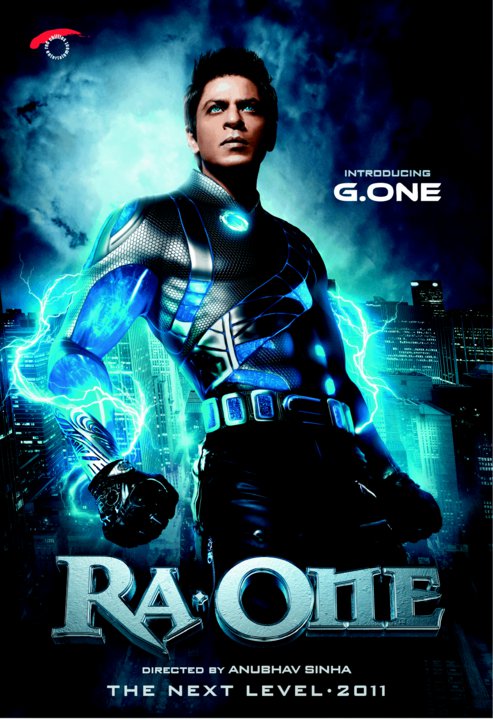
There have been signs of improvement though. Movies like Johnny Gaddar, Oye Lucky, Kaminey and, lately, Udaan, all had great drama without going over the top. Just as I was letting a sigh of relief, I find everyone around me sorely missing that dramatic closure in NOKJ. And, then I saw the Ra.One poster. Out went subtlety through the window.

One more film awards ? NO! But we are different. SO ? Everyone says so! Am sure that must be the initial reaction after you read the header of the post. But just give me few minutes and let me try to explain it once. If you like it, great. And if not, that’s ok.

Ask yourself –

Q. Do you have any respect for any of the current hindi film awards ?

Q. Do you even know how they are selected ? Who votes for whom and who is selected how ?

Q. Do you remember who won what awards in which year ?

If answers to all the questions are in negative, and if you are branded as a cynic for wondering why we don’t have a single credible film awards in the country, then let’s join hands and try to do something.

Honestly, we all know that the film awards in our country are just “tv shows”. The tv shows needs TRPs and so they need stars.  Event companies get involved, they are asked to get the stars, and its all about the negotiation power of the star. Every year new categories are added to suit the need of the “star”. Debutant, Best comic role, Best villain , Best Jodi of the year, Best Jodi of the decade,  Hottest couple, Best Child Artist, Power List Topper and blah blah blah. You name it and they have it.

There are awards by film magazines, production houses, movie channels, event management companies and some more. Scratch the surface and you get to know everything. Every year they come out with their nominations, we read and crib, they host the awards, we see and crib some more and then forget it completely.

It started in the same manner this year. Nomination lists of awards came out and we started cribbing about it. Only difference, the platform was new – Twitter. Nikhil Taneja suggested that we should try to do something. Enough of cribbing! Is it possible ? Yes, let’s give it a try.

Some of us came on board and we started discussing the Do’s and Don’ts. It all emerged from Tweet-discussions A twitter handle ( @twi_fi_awards) was created and more debates and discussions followed. Someone suggested the name TwiFi Awards and others loved it. TwiFi ? Twitter Film Awards. The idea is use to the vast and unique platform of Twitter and get everyone involved to spot the best of the cinema talent.

And everyone agreed that let’s keep it free, fair, independent and most importantly, Transparent. Whatever we do, should be visible to everyone….who is voting for whom and who is getting how many votes.

But who will decide ?

A. To filter out the best from the rest, a Jury consisting of country’s top critics and bloggers will vote to select the nominations.  Critics because they see almost every film and you may agree or not, but their opinion matters. And bloggers because they do it just for the love of it. So if we get the best of the both, we might be heading in right direction. Also, the jury for music nominations is different.

To read the full list of critics who are on jury, click here. You name them and they are there! Bet you won’t be disappointed.

Once they submit their nominations, we will compile it all and put it out for voting. And everyone can vote. All you need is a twitter account.

Q. Who will decide which blogger will vote ?

A. Everyone. We asked people to nominate their favourite bloggers by just tweeting his/her name to the official account (@twi_fi_awards). Believe it or not, we got names of 70 bloggers to be part of the jury. Pavan Jha designed an application where people can cast their vote to select their favourite blogger. Voting is still open. Click here and access it through your twitter account. And to keep it transparent, your vote will appear on your Timeline too. ( We are not storing any data. Its used only for the purpose of voting)

To read the full list of 70 bloggers, click here.

And if you have any more doubts, click here to know all about the TwiFi Awards.

To know more about the TwiFi Awards, click here. To know more about how to vote for the jury, click here.

We are not sure where and how far we will reach, we are not even sure if we are heading in the right direction. But one thing is for sure – we are trying to make a change. And the intention is entirely honest. Only because we are sick, bored and tired of “tv shows” masquerading as film awards.

About 1500 people on Twitter, more than 500 on FB, about 30 critics, 70 bloggers and some 800 voters have already joined us. Will you contribute too ?

Let’s give cinema a chance.

Or you can go back and cheer for Golmaal. Or may be you can try and crack this puzzle – Omkar Das Manikpuri ( Peepli Live) is nominated for Best Performance In A Comic Role.

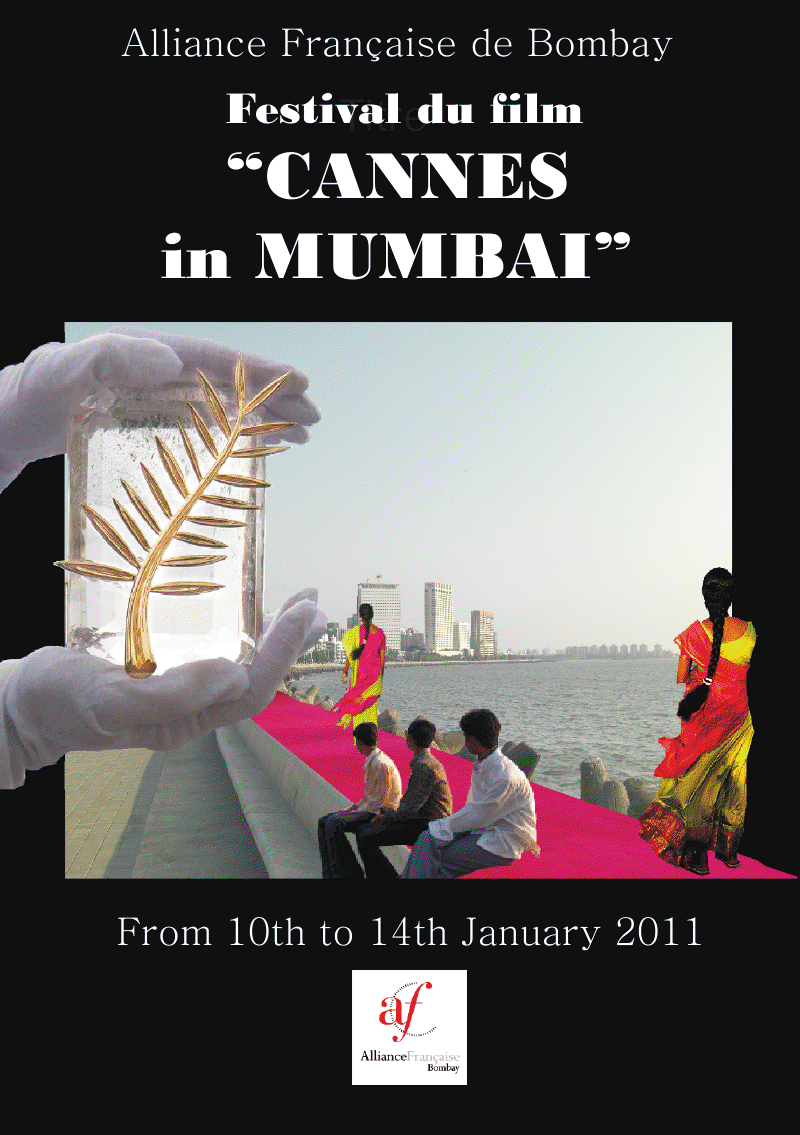
WHAT : “Cannes in Mumbai” film festival programme at the Alliance Francaise Bombay. It is a selection of Indian films that have been selected by the Cannes Film Festival over the years. It includes shorts, animation films, diploma and feature films.

WHERE : Alliance Francaise, Opp USIS/American Center, Theosophy Hall, 40 New Marine Lines (near Churchgate railway station)

DATES : January 10-14, 2011

Q n A : There will be a question-answer session with the films’ team members after the daily screenings. The guests include Vikramaditya Motwane (director of Udaan), Sooni Taraporevala (screenwriter of Mira Nair’s Salaam Bombay), Gitanjali Rao, director of the animation film Printed Rainbow (which won many prizes at Cannes) and Shubho Shekhar Bhattacharjee, head of Planman, producer of Rituparno Ghosh’s Dosar.

Discussion : The festival concludes with a round table discussion on Friday Jan 14 on “Making the most of Cannes: Maximising opportunities at the film festival” with Vikramaditya Motwane and Sunil Doshi (who has bought world cinema films at Cannes), and will be  moderated by Meenakshi Shedde ( curator of the fest).

ENTRY : FREE and Open to all. First come first served basis.

TIME : The screenings are daily at 6pm

CONTACT : 022 – 22036187/22035993.

SCHEDULE :

Monday 10th Jan 2011 : A Very Silent Film – Manish Jha ( 2001. 5′). Udaan – Vikramaditya Motwane ( 2010. 138′)

Tuesday 11th Jan 2011 : Tetris by Anirban Datta ( 2006. 30′). Salaam Bombay by Mira Nair (1988. 110′)

Wednesday 12th Jan 2011 : Printed Rainbows by Geetanjali Rao ( 2006. 15′). Khoj by Tridip Poddar ( 20o2. 26′). Piravi by Shaji N Karun ( 1988. 110′)

Thursday 13th Jan 2011 : Chinese Whispers by Raka Datta ( 2006. 28′). Dosar by Rituparno Ghosh ( 2006. 120′)

Friday 14th Jan 2011 : Marana Simhasanam by Murali Nair ( 1997. 57′) & Round table discussion

Our Recco – If possible, do catch all the films. If not, Printed Rainbows is a must watch. We do make gorgeous animation films.

Message from fest Curator Meenakshi Shedde : Above all, I’d like to emphasise that most of the films are FIRST FILMS by Indians–and include feature films (some of which won the Camera d’Or for best debut feature), shorts, an animation film and student diploma films. The idea is, I wanted young people to know you don’t have to be old and grey in the hair for your film to be selected at Cannes. You can make your first film and–BOOM!–end up at Cannes, as these other Indian directors have. Also, I specially chose films from all over the country–in Hindi, Bengali and Malayalam, including Shaji Karun’s Piravi (the Birth) and Murali Nair’s Marana Simhasanam (Throne of Death), both in Malayalam, Rituparno Ghosh’s Dosar (The Companion, Bengali) and Vikramaditya Motwane’s Udaan (Flight, Hindi).

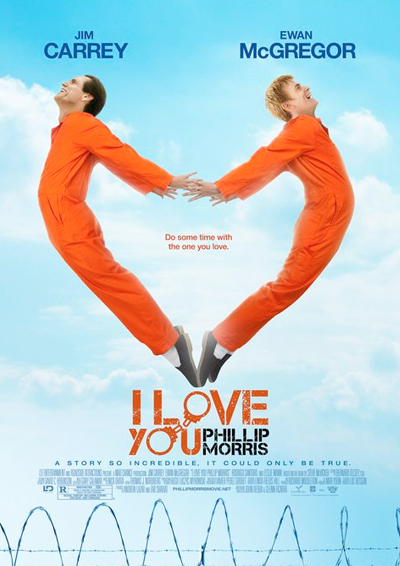
This film recco post is by Jahan Bakshi who loved ILUPM for its sheer irreverence & light-footed, breezy direction. For more, read on…

Nearly 22 months after it premiered at the Sundance Film Festival in January 2009, I Love You Philip Morris finally managed to get a somewhat shoddy release towards the end of last year. Sad, because this is probably one of the most fun, under-recognized and daring Hollywood films of the year gone by.

The story of how and why this huge delay happened (despite the starry presence of Jim Carrey and Ewan McGregor) is pretty interesting in itself, but not quite as fascinating as the story of Steven Jay Russel, a con-man who’s currently serving a 144-year jail sentence for assorted charges, including felony escape and embezzlement.

I’m lazy and bad with summaries, so I’ll just supply the one from IMDb here:

Steven Russell is happily married to Debbie, and a member of the local police force when a car accident provokes a dramatic reassessment of his life. Steven becomes open about his homosexuality and decides to live life to the fullest – even if it means breaking the law. Steven’s new, extravagant lifestyle involves cons and fraud and, eventually, a stay in the State Penitentiary where he meets sensitive, soft-spoken Phillip Morris. His devotion to freeing Phillip from jail and building the perfect life together prompts Steven to attempt- and often succeed at- one impossible con after another.

Now, replace Philip Morris with- say, Phyllis Morris, and this would be perfectly wholesome Hollywood fare- a regular romantic con-caper. Well, at first glance, at least. When filmmakers Glenn Ficarra and John Requa pitched the film, they were asked ‘Could Philip Morris be a girl?’

Of course he couldn’t. Because this is a true story. As incredible and ridiculous as the events in the film seem, it’s actually fairly accurate, save for the usual cinematic liberties (and in a year that has seen The Social Network, who cares about accuracy anyway?). No wonder then, that the film starts with a header to remind us: ‘This really happened. It really did.

But instead of peddling this as the ubiquitously sensitive ‘gay film’, the film is terrifically nonchalant and absolutely blasé about the sexuality of its characters. It’s that rare film that never falls prey to the sentimentality and melancholic self-pity that accompanies mainstream portrayals of homosexuality. By being blissfully coarse, non-conformist and lacking any political correctness, I Love You Philip Morris subtly pushes cinematic and social boundaries, but without any self-conscious fuss; it remains quietly subversive and calmly assured throughout its schizophrenic, hyper-kinetic narrative. It derives quirky comedy from a few homosexual stereotypes (‘Being gay is expensive’, remarks Steven hilariously), but never stoops to making cheap shots; we laugh along with its lead characters: refreshingly and unapologetically amoral, yet full of heart, humor and vibrancy. The dignity with which the characters are portrayed, including Steven’s hilariously orthodox Christian wife, makes sure that none of them feel like cardboard caricatures.

The wide tonal range of this film- from slapstick, borderline farcical to tenderly romantic to achingly tragic- might unsettle many viewers, but the unconventional treatment worked very well for me. And just like Alejandro González Iñárritu’s Biutiful (okay, really strange comparison but) this is another film that couldn’t have worked if not for its leading man, who holds it together and keeps it from falling apart. Jim Carrey is outstandingly good here, his rubber-faced glib persona serving as the perfect bouncing board for Steven’s wild, unpredictable character. He’s absolutely no-holds-barred and such a pleasure to watch, lending his character both charisma and believability. And Ewan McGregor is a delight as his timid, blonde lover; the perfect innocent foil to Carrey’s incorrigible rogue. Together, they make for a charming pair.

‘I Love You Philip Morris’ is not a flawless film. It’s imperfect by design, a tad exhausting and certainly one that will polarize viewers. But it makes for really interesting cinema and deserves to be seen, because quite simply- it defies categorization. Like Steven Russel himself, the film fits into so many guises that by the end, you don’t know what it really is. Which for me, far from being bad, was quite remarkable. After all, what better thing could a film do, than embody the very unputdownable free spirit of the man it is about?

Catch it, for sure.

To read the story of the real Steven Russell & Phillip Morris, click here. And read a super interview of the filmmakers Glenn Ficarra and John Requa right here at ION Cinema.

Karan Johar announced his new film with full page ads in today’s newspapers. Its called Student Of The Year. Huh! The film is going to launch three new faces – Siddharth Malhotra (ahem..ahem! Hot topic these days), Alia Bhatt (Mahesh Bhatt’s daughter) and Varun Dhawan (David Dhawan’s son). The film will also star Shah Rukh Khan in a key role.

Rabbit Hole – Film Recco by Kartik Krishnan

I have interacted with kids in my limited life experience. Cute ones, silly ones, irritating ones, relentlessly curious ones. Haven’t been so fond of most of them but of some of them. The ‘nice’ ones.

Needless to say that is a very biased perception. Because I’m sure the day I become a father, regardless of how cute, ugly, nagging, constantly pottying-pissing, relentlessly crying my kid will be, to put in a cliche he’ll always be “the apple of my eye”.

There are some losses that are irreplacable – that of a loved one. A mother, father, spouse, brother, dear friend. Somehow to me the death of a child has always seemd to be the most painful one.

And somehow, I have always prayed (which is very infrequent and rare) that such a tragedy may never befall on anyone.

How does an urban well to do couple cope up with that loss?

How does the couple cope up with it even after months have passed, since the event?

How much of alcoholism, weed, food, gyming, squash, binging or any of the ‘cathartic’ activities one can do to evade the pain, is enough ?

How does it affect you in the every single most unimaginable way – the conversations with random strangers, your family, your spouse, your daily routine, the most mundane aspects of your life ?

Do you cling on to the memories or do you move on ?

Is it easy to move on ?

Do you still play the blame game even when you know it is pointless to play it since no matter who wins, both have lost?

Do you blame God and say “If my son was such an angel, then why did God take him away from us ? Why didn’t he make one up ? He is God after all”.

Do you drift apart from you spouse and hide the ways you cope up with your depression from him/her – eventually feel guilty as though you were not an aggrieved parent but an infidel ?

There are some films which cease to be films. Which suck you in and you are not thinking about what the director would have said to get such a brilliant performance from the leads, where he would have placed the camera, what the writer wrote and how, who produced the film, how come the film doesn’t have a ‘story’ and yet it is so powerful.

No sir/madam, those questions come after you finish watching this film.

As for me, after I finished watching this film, only one thing came to my mind.

I wanted to go and hug my parents.

Highly highly reccomended this film. Just relax and let the film win you over.

( P.S – I love you Nicole Kidman, for acting in and producing this film. )

( P.P.S – I love the rest of the team associated with this film too 🙂

Here it is…

What do you think ? A. G .One   B. B. One   C. Ok. One    D. D.One

Its that time of the year again. The only time when we love making, reading and sharing lists. We decided to compile all the filmy lists and compare them. So here it is – all the year-ender lists . And any critic who puts I Hate Luv Storys and Khelein Hum Jee Jaan Sey in his/her list of  Top 10 films of the year, needs to stop reviewing films. Now.

Anupama Chopra (NDTV)

Top 5 – 1. Udaan 2. LSD  3. Peepli Live  4. Ishqiya  5. Robot

For the video, click here

Rajeev Masand ( CNN IBN)

Hits – 1. Udaan 2. LSD 3. Ishqiya 4. Peepli Live 5. Phans Gaye Re Obama & Do Dooni Chaar

Pits – 1. Anjaana Anjaani 2. No Problem  3. Action Replayy 4. Teen Patti 5. Raavan

For the video click here.

And for The Five Lessons We Learnt At The Movies this year – click here .

Raja Sen (Rediff)

Best Actors –  1. Ranver Singh 2. Rishi Kapoor 3. Anshuman Jha 4. Naseeruddin Shah 5. Nawazuddin Siddiqui 6. Satish Kaushik 7. Arshad Warsi 8. Ronit Roy 9. Pradhuman Singh 10. Shah Rukh Khan

For why and how, click here.

Best Actresses – 1. Vidya Balan 2. Neetu Singh 3. Anushka Sharma 4. Shruti 5. Katrina Kaif 6. Vishaka Singh 7. Amrita Puri 8. Aditi Vasudev

Click here for details.

Best Trailers – 1. Dabangg  2. Yamla Pagla Deewana  3. Road, Movie   4. Ishqiya  5. Yeh Saali Zindagi  6. Love Sex Aur Dhokha   7. Once Upon A Time In Mumbai   8. Tere Bin Laden  9. Peepli Live 10. Udaan.

To know why and how, click here

Film Soundtracks – 1. Ishqiya 2.  No One Killed Jessica 3. Love Sex Aur Dhokha 4. Aisha  5. Udaan For details, click here .

Sukanya Varma ( Rediff)

Best Films ( In no particular order) – Peepli Live. Ishqiya. Robot.  LSD .  Tere Bin Laden.  Pas Gaye Re Obama.  Udaan. Do Dooni Char. Band Baaja Baarat. Dabangg

For more, click here

Mayank Shekhar (Hindustan Times)

Golden Trophies – 1. Peepli Live 2. Do Dooni Chaar 3. Love Sex Aur Dhokha 4. Ishqiya 5. Udaan 6. Rajneeti 7. Tere Bin Laden / Phas Gaye Re Obama / Well Done Abba 8. Dabangg / Guzaarish / My Name Is Khan 9. Kartik Calling Kartik 10. Striker / Antardwand

To read in detail, click here

Best Of The Worst – 1. It’s A Wonderful Afterlife 2. Krantiveer 3. Knock Out 4. Mumbai To India 332 5. Teen Patti 6. Accident On Hill Road 7. Sadiyaan 8. Bum Bum Bole 9. Hiss 10. Dunno Y… Na Jaane Kyon. In details Click here

Namrata Joshi (Outlook) : And the one that touched the heart: Ab bhool gaye hain joote kahan utaare the…

For Liberalisation’s Children, click here and for a very personal recap, click here.

Shubhra Gupta (Indian Express) : Can you tell a story, Mr Fink? Can you make us laugh? Can you make us cry?” Onwards, to 2011.

Click here

Harneet Singh (Indian Express)Y: YRF – The return of the banner with the sleeper hit Band Baajaa Baaraat.

For  A to Z of Bollywood 2010.  Click here

Nikhil Taneja ( MTVIndia.com): WTF English of the Year – Shahid Kapoor’s attempts at tweeting

For more WTF Moments of The Year ( The Bad, The Ugly and The Good in 2 parts), click here and here.

And Best Reviewed film of the year ? Well, thats easy. Udaan. To see all the four stars rating, click here

VOTD : Sheila Ki Jawani – Chipmunks Version

Posted: December 28, 2010 by moifightclub in VOTD
Tags: , ,

Though we love Badnaam Munni more than Jawan Sheila, but this version had us ROFLOL.

Tip – Vaibhav Mehta