As we have done in the past, this year too we are trying to source the scripts of some of the best bollywood films of the year. As most of you know, the scripts of Hollywood films are easily available online, even the unreleased ones. But we don’t have any such database of Hindi or Indian films. So that has been the primary reason for this initiative. And it has been possible only because some of the screenwriters and filmmakers have been very supportive about it. It’s only for educational purpose and much like the spirit of the blog, is a complete non-commercial exercise.

To read the scripts of best bollywood films of last few years, click here. We are starting this year’s series with Ram Madhvani’s Neerja.

neerja

Not many remember that Neerja isn’t Ram Madhvani’s debut film. He made his debut in 2002 with a small underrated film, Let’s Talk. It’s good to have him back after more than a decade.

The film broke an important bollywood myth – a Hindi film with a solo heroine in the lead that can work wonders at the box office and can get critical acclaim too. Yes, it’s possible. And there is lot to learn from the film’s writing and direction. Ram’s direction and Saiwyn’s story/screenplay showed us how to build a 2-hour film revolving around a single incident. Everyone knew the story, the act of bravery, and even the climax. But still how do you hold audience’s attention? This one did the magic from the opening scene. Sanyuktha’s dialogues in just one monologue (by Shabana) showed us the power of the words that made us reach for the tissues. So here it is, the script of Neerja.

Happy reading!

Film : Neerja

Director : Ram Madhvani

Story & Screenplay : Saiwyn Quadras

Dialogues : Sanyuktha Chawla Shaikh

We are bit late on this, but here it is – our recco post on Damien Chazelle’s new film, La La Land. It’s written by Percy H Bharucha.

la-la-land

La La Land is a movie devoted to a single word – ache.

The ache of Nostalgia.
The ache of a city like L.A.
The ache of dreams unfulfilled.
The ache of lost musicals and movies.
The ache of love lost.
The ache of what could have been.
And the ache of time spent apart.

As a child I used to watch musicals with my grandfather. My introduction to Hollywood was An American In Paris, Singing In The Rain, Easter Parade, Hello Dolly. Those were my first movies and I loved them dearly. As I grew up, so did Hollywood. Things got complicated for all of us and I yearned for a movie so simple, so removed from reality, that it wouldn’t want me to return from it.

La La Land brings back that ache for all of us. It brings with it a refusal to detach from its world. It is astonishing to watch a movie where the failures of the characters seem yours. The viewer takes that emotional burden upon himself just as I did. I rooted for them to fail, yes I did. Just to embrace the feeling it would bring. To feel through them.

There have been movies of recent that have relied on catering to a sense of wonder whether through visual aesthetics or intellectual curiosity, but La La Land is different. It holds itself to a different pedestal, though shot beautifully, it holds itself to the standards of emotion. Few movies have had such an impact on me. It has brought my pen out of hibernation This article is driven by personal catharsis, as much as it is, about this movie being an influence. I write this, as words tear themselves eager to be set on paper.

La La Land reflects a choice every one of us has had to make at least once in life. The choice between love, between relationships we share with ourselves and our dreams. I am glad, for once, there is a movie that prioritises dreams over love, the self over the other. Too many movies are tied to the illusion of the characters walking away with it all. La La Land is fierce enough to show its wounds, our wounds, the costs we pay to be at peace with ourselves.

Which brings me to the last part of the movie, the ache of what could have been, that’s reflected in the alternate flashback between the couple when she walks into his bar. It brings with it the realisation, of the characters being fully aware of their own losses, the pain they’ve endured and so is the viewer too, aware of what he has given up. No one is spared the pain of knowing the ideal, the best case scenario and yet the brilliance of this movie lies in how willingly I, the viewer, could embrace that pain, the burden and the ache the characters bring with them, as my own.

Like a wounded bird we nurse that emotion only because it’s been a long time since any of us felt this strongly about anything at all and even the emotion of absolute loss is better than feeling nothing at all.

La La Land offers an escape from the dark abyss of emotional numbness, it makes us ache in places we didn’t know were capable of expressing emotion. And the final proof of its own success is that a film that reminds us of these aches, becomes an ache by itself. La La Land makes us ache, and departure from the movie is no less painful than the character’s departure from each other.

I wish there was more heartbreak to be felt.

Percy Bharucha

(The author is a Young India Fellow, and has been writing since he discovered he couldn’t draw. He has a full time job in advertising and hopes to keep it that way. He has been previously published in eFiction and eFiction India, Asia Lit, Reading Hour, Gratis and The Madras Mag. He infrequently tweets @Sab_Bakwaas_Hai)

amdavad-ma-famous

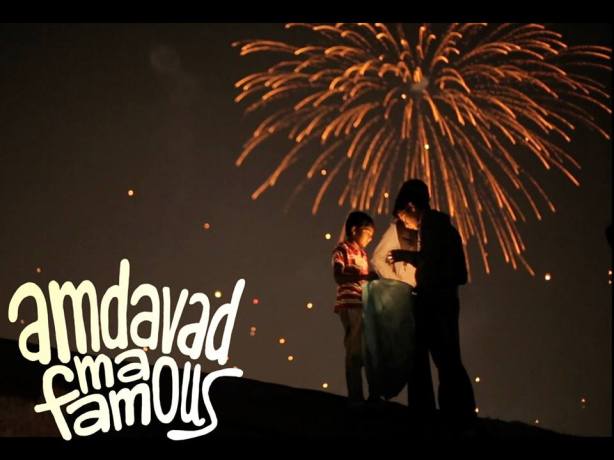
For some reason or other, we have been missing all the screenings of Hardik Mehta’s doc, Amdavad Ma Famous (Famous in Ahmedabad). The film has been doing the fest rounds and we have been reading a lot about it. And if you are in the same boat like us, here’s the good news – the film is out on Netflix now. Watch it.

Here’s a new trailer of the documentary

With Netflix’s acquisition for streaming this doc, hopefully it’s a start that will open more doors for good content without bothering about the length (short/full length) or format (non-fiction/doc). And that’s important because currently we don’t have any platforms where we can watch such films/docs.

Here’s Hardik Mehta looking back at the film’s inception and its journey so far –

Amdavad Ma Famous happened when I was in between assignments and quite restless with the AD life. I had assisted on Road Movie, Mausam, Lootera and Queen, and was desperate to explore my filmmaking skills. I’d directed a fiction short, Skin Deep. But what next? I didn’t want to sit around waiting for some inspiration or opportunity to strike; I just had to shoot.

So in January 2014, I thought of going to Ahmedabad to capture the old city pols (lanes) in stills, it wasn’t a commissioned assignment but a personal one, to rekindle the lost love of photographing a city.

Once there, I witnessed the euphoria that engulfs the whole city during the festival of Uttrayan. From six-year old kids to 60 year old seniors, everyone walking around with their eyes glued to the sky buzzing with hundreds of colorful kites. It was a surreal experience. It brought people from across age, class and community, on the same playing field, the terraces of old pol! That’s where I spotted Zaid. He was this skinny short boy in his gang, but his transformation into the leader of the pack when it came to chasing, catching and flying kites was fascinating. I asked him if it was okay if I shoot him. ‘Just don’t get in my way and stop me from chasing after kites!’ he quipped!

I had to catch up. I roped in ace cinematographer and dear friend Piyush Puty and we decided to follow him – see what it is like to be Zaid, running on the streets, scaling terraces, risking life and limb with single minded focus on his beloved kites!

We managed some great footage and cut a teaser, still looking for our story and funding. But with a little push from our friends, Puty’s enthusiasm and Producer Akanksha Tewari, we went back to Ahmedabad in 2015 with a bigger crew, a second unit cinematographer Harshbir Singh, location sound Pranav Kothi and Line Producer Nachiket Desai went back to Ahmedabad in 2015 with a bigger crew, a second unit cinematographer, and location sound. So for the 30-minute short, we shot for two years (2014-2015), following Zaid for three days each year during the festival of Uttarayan, and came home with some incredible footage.

But the edit was a bigger challenge in the film. It was during the five month process that I experienced how editing a documentary is like writing a screenplay for a fiction film. We had lot of visually appealing footage, but deciding what to keep out and the ‘right’ length of the film, was where I learnt (and grew) the most as a filmmaker.

I wanted to re-look at things I’ve grown up with, as if it was a story and I was trying to explore this fluidity of format when a real-life setting is presented as a narrative. I was lucky to have great advice from Nishant Radhakrishnan (Editor, Dhobi Ghat) and Vikramaditya Motwane (Director – Udaan, Lootera).

An insight that particularly worked for me was to edit the film like Zaid himself is telling his story to the world – his world through his eyes, using the craft, music and narrative true to his world.

Speaking of the learnings from Amdavad Ma Famous’ journey.

Firstly, the importance of good post-production – right from music to sound design to even a poster and film stills used for promotion, all of it matters and more so for a short! Because even a good short film can fall into the trap of amateur work if the post-production is not right.

For our film, we were sure to treat it as important as one would treat a fiction feature. I had an incredibly talented team – Alokananda Dasgupta’s music, Manoj Goswami’s Sound Design, and Arya A Menon coming on board as Producer, every bit contributed.

But my biggest learning has been the boldness to just go out there, get your hands dirty, shoot and make your film – The Werner Herzog rule. Duration, formats don’t matter, only the heart of the content does. And there are more ways than one to make your film reach out to its audience. There are global platforms willing to look at all kinds of content.

It was the same boldness that made us take our film to a global giant like Netflix, when no one was sure if they would even consider or take up a short doc like ours. Netflix showing faith in our content and picking it up has reinstated our belief in independent filmmaking. Thrilled to share that Amdavad Ma Famous is now streaming on Netflix, globally and continues its international film festival run.

I’m as much of an outsider as anyone wanting to make a film in our industry. I’ve seen talented ADs who keep waiting for producers and hovering around actors for the big break, but there is no point in wasting your life’s precious young years in Mumbai cafes. The big break will come, but when digital cameras have given us so much confidence and independence that it is an insult to this democratization of technology if you are not utilizing it in the meantime. There’s no point waiting your time, when your time is really now.

The Film Festival Journey:

We had limited exposure to the documentary festival circuit, and not many avenues to learn more from either. We started submitting the film and decided that wherever we get the first call from, we will take it up.

We started with Budapest International Documentary Festival, a fairly medium sized festival being put together by an incredible group of Filmmakers and film lovers. They loved the film and invited us to attend. That was the world premiere for us, and also our first win – we won the Best Documentary Jury Award at 2015 BIDF.

2015 Al-Jazeera International Documentary Film Festival, Doha, Qatar, was next and we won Best Documentary Jury Award there too. Followed by an amazing reception at 2016 MIFF, Mumbai where we won the Best Documentary and Best Editing Award. The double win at MIFF gave us a lot of confidence.

Of course, there were rejections from some prominent North American and European documentary festivals, but we kept at it. What really charged us up was the selection at HotDocs, Toronto and winning the National Award – Swarn Kamal as Best Non Feature Film for 2015.

As of now, Amdavad Ma Famous has travelled to film festivals spread across six continents over fifty cities and been lucky enough to pick up twelve awards on the journey too.

Hardik Mehta

The Humma Song vs Humma Humma of 90s

Posted: December 20, 2016 by moifightclub in music
Tags: , , ,

humma

Humma Humma, Bombay (1994) – Constrained spaces, two lovers unsure of what they have got into and where they have landed. A Muslim girl who has come to a strange place with a Hindu boy. She does not see the familiar green fields in this big city that does not allow one inch of privacy. Here they cannot hug and perhaps steal a kiss without a bunch of eyes looking at them.

Cut to – night. Hormonally charged souls moving around and somehow the constrained space becomes a propeller rather than a deterrent. And then they hear a celebration where a viking and a beautiful lass indulge in a musical foreplay and mind you, the girl is not singing. Her moves are not fake; they don’t need her to wear shorts.  She can make you pant just by exchanging a look with you. The man has to woo her, so the man tries. There is not a hint of ‘hotness’ in the voice of Remo Fernandes. What you hear is pure energy that isn’t auto-tuned or sanitized to sound just perfect in the earphones. This song is for big bad music systems, where the sound will hit your heart in a way you will feel you are getting a heart attack and you thank God when the song ends, because you will rewind and wait for the ‘dhichak dhichak dhik dhik aah‘ that launches you into space and you feel like you haven’t felt before, perhaps like when you felt someone you love for the first time, breathing out on your neck.

The Humma Song, Ok Jaanu (2016) – Cut to an India where a young couple cruising around on a bike, where the guy is not applying brakes ‘strategically’ so that he could feel his pillion’s body against him. The pillion is already ‘one’ with the rider. They do the snake-moves driving instead. Why? ‘We float-on-the-road-babeh’ that’s why! Meeting and finding a place for meeting isn’t a cause of worry.

We aren’t in a dim lit room, our rooms have mood lighting. The song isn’t humma humma, it is The Humma Song. The sense of occasion and anticipation is moaning from the title of the song. It is 2017, the man needs to be wooed too, so the woman sings as well. She has to. It is not a bad thing, Shashaa Tirupati is brilliant. The song starts too self-aware; there is an excellently written rap portion which perhaps captures the mood of the original song to the T. The only time the shehnai sounds like lovers climaxing is when the rap ends and leads you right to it. There is greater bass; this one is for the headphones of smart-phones. This one is for the silent clubs in London. No-one has run away from their village, no one is dying to ‘do it’, they want to do it right. Of course they love each other; their filter-rich Instagram will have you believe that. They might not have the sexual energy of Manisha-Arvind which was more driven because the couple reached a place of certainty from an uncertain past, but what Shraddha-Aditya have is a surety about how their love will be expressed in that place where they don’t have to ‘steal’ a kiss or a hug.

It is easy to chug the new one away saying the earlier one was a classic and frankly if that would have been a way of life, we would have never heard Indian classical music’s gift to us that is called a Thumri. We re-create, we laugh at purists, for they don’t know the delicious taste of fusion. Is all this wrong? No, it is just the spirit of times where we now exist. If we oldies are unable to search chemistry in them, may be we should stop looking at the The Humma Song and look at Humma Humma again, because while the latter had liberation written all over it and the former has self-aware celebration tattooed on its neck. Both are fine. Let us leave it at that.

The Humma Song is targeted at the generation that has grown up listening to and watching Humma Humma on Boogie Woogie and other dance shows. This was all much before they were hit by the highs of wifi, 1080p videos. Post-wifi the world spiraled down to booze parties with songs and gentle gyration to the tunes of Humma Humma and other such songs. The way you hear Jubin hum The Humma Song is a perfect example of that. Booze parties or not, we need just the right amount of thrust to float and while we are at it, a new video with fresh colors and high resolution won’t harm either. The old one, till the last I checked looks pixelated on all YouTube channels it is available.

Finally (and this is where my music reviewing is coming in the way), let us look at the composer of the song. He had a promising future at the time when the song came out. He had to prove himself with every beat that made way from his studio to the music stores that the promise bestowed on him was right. He is comfortable now. What did you expect? Same energy? Na! This is a self-assured way of showcasing to ‘YOLO’ folks – “Look, I can be hip too!”

Personally, I would take raw, unfiltered energy any day, to carefully constructed noise. Passion is best expressed uninhibited, where you break a glass or two while you are at it, forget the mess it will create. Let me rewind (not ‘repeat’) Humma Humma, but I won’t judge you if you like The Humma Song, in fact I would try and hum the song like Jubin, as I sit and reminisce about how The Humma Song would look like with the visuals of Humma humma, isn’t that lovely?

Rohwit

(P.S. – I still haven’t seen the video, I would like to see it when the film comes out to find out if it fits the narrative like those baggie pants of 1990s or does it look super chic like ‘tights’ we see today. Both are fine, been there did that)

ae-dil-hai-mushkil-lyrics-title-song

SPOILER ALERT

First let me make it clear, Ae Dil Hai Mushkil (ADHM) is about love not unrequited love. But I don’t want to talk about ADHM the film, as much as I want to talk about love. Not relationships, just love.

Just like Karan Johar (and many of us), defining love has been a pet preoccupation most of my life too. Having seen around me disastrous outcomes of the passionate / possessive kind of love and its long-term damage, I grew up wanting to avoid those kind of experiences. Passionate romantic relationships would leave you wrecked and changed for life – was the message etched in my head. Until I turned 21 and dutifully took charge, to define love once and for all.

Just like our man Karan Johar, I quipped in an epiphany, ‘Love is friendship!’

You see, I had just met the love of my life, the man I wanted to have children with and grow old with but neither our bond nor relationship fitted into the YRF model (any other model was either too outdated or too modern) and it was important to me that I define. Imtiaz Ali had not debuted then, otherwise he may have helped. Left to my own wits, I decided that the best and most enduring expression of love is friendship. And that is the best form for your romantic relationship to take, keeps the politics of love from infecting its beauty. Because the butterflies-in-the-stomach, sleepless nights, restless ardour and passionate sex kind of romance is mere gender role-play, political, skin-deep and temporary while long-lasting relationships are made of soul connect, on the basis of an equal companionship. My understanding of the emotional complexity of relationships and love then was limited to these polarities. The many faces of love were mere ‘types’ for me.

There was a gap of a good 15 years between me naming my chapter of love and watching Ae Dil Hain Mushkil. My Mughl-e-Azam level romance was behind me for good and whereas it did leave me wrecked and changed for life while I was at it, it wasn’t the passion or possession of love that did it. Rather, as I came to see, to some extent, it was a lack of it. Love as friendship was the culprit. That left me flummoxed. But not surprised.

There was something very familiar in the story I was not telling myself. The story behind the story of why I had forced love into the mould of friendship when I wanted more and different. I had faced it but with Alizeh I faced it again. I was Alizeh, without the experience, but with the knowledge of how deeply love can scar, hence friendship was the safest and best form of love. I was Alizeh who has fully filmy dreams but didn’t really believe they would ever come true while she really wanted them to. I was Alizeh who has felt so vulnerable in love that putting on a don’t-care-a-damn attitude is the best defense, the best way to protect herself from it again. I was Alizeh who believes only friendship lasts because she has seen love crumble in front of her eyes. Her helplessness at the altar of love, at once scared and wise was mine. So in fear, I scrambled to firmly place love in the safe universe of friendship. The only difference was, she did it after her first heartbreak, I did it before, to avoid one. She found her home and I was lost. But the fear of pain that spawned it was the same.

And it this very fear of pain Alizeh overcomes when she lets her last dream be fulfilled. She allows love back into her life but with the wisdom of experience. ‘I friend you’ she says to Ayan’s helpless ‘I love you’, telling him she accepts his love and wants to love him back just that her favourite form of expression is different. And Ayan accepts, not because she is dying and he is desperate, but out of a largesse that naturally comes out of deep passion. Suddenly, love becomes formless even though both remain adamant on its form. Because it is within Alizeh’s choice to return and Ayan’s acceptance of her as is, that lies the real expression of love, formless and boundless. It no longer matters what they say, their actions have spoken.

That is why, even though she is dying in the film, for me, she wins. And so does Ayan, even though he doesn’t seem to get what he wanted. Because love wins. They may not have had their love fulfilled in the way they wanted but they had their love returned. To be requited, love just needs love, itself, not form. It’s when we get lost in the form we miss seeing the love that is happy being outside. To me, the film’s end signified a fresh start to Ayan and Alizeh’s quest for exploring a different form of love, this time together and with more wisdom. Time would tell if they would find a meeting ground or conclusions, but in their acceptance of each other’s love was the acknowledgment of its formlessness. To my mind, her “I friend you’ didn’t seem like a stubborn quibble but simply a reiteration of not having to define love at all. Let’s keep it as undefined as a friendship is, and let it blossom. And take it from there, she seems to be saying.

But what had turned Alizeh off in the first place? It was the neediness of love, the soul-scorching neediness of love and not its heady passion that she had experienced. She had seen its destructive face, not its procreative desire. Maybe she mistook both but love wasn’t a happy place for her to be in anymore. And so for Saba. But for Ayan, this very attachment is the Holy Grail he was seeking. His heart has passed the flower pot test. And so has Tahir Khan’s. But Ayan is still struggling under the weight while Tahir wears it with pride, not as a badge of honour, but as something life-affirming because it keeps him connected to the one he loves even without her presence in his life. I have my love, if not her…he says, and we are back to the formlessness of love, one that doesn’t seek possession, one that doesn’t need validation by the others’, it is valid in itself by its own presence.

Among the four, we are left feeling that it is only Saba who remains unfulfilled. Is it because that she unknowingly craved again for the same form of love she had left behind? The small interaction with her ex-husband shows she has not forgiven or forgotten yet. That is why she is steering clear of love, it can only be no strings attached especially emotional ones coz the earlier form did not quite work. Just like Alizeh, she too is still yearning and it is this that draws her to Ayan but she doesn’t know that until later. And when she does, she sees she has been seduced by love in the same form again. She wants to give in but cannot see the same light in his eyes. Letting Ayan go seems the rightest thing to do to her. If Ayan has already given away his love to someone else does she have a right to ask for it? She moves away with dignity. Despite clinging to a particular form of love she unfetters her love from its demands without knowing. No longer possessive, her love protects them both as much as it hurts. She goes back to her home, poetry. A more sublime form of the expression of love? Does she really remain unfulfilled? Is love letting go?

I wish Saba’s character had been given more attention and screen-time for very selfish reasons. If the girl in me related to the awkward young girl in Alizeh, the woman in me empathised with the poised middle-aged woman in Saba. I was Saba, too fearful to give love a chance again. I was Saba, fooling herself she is strong when it was just a façade. I was Saba, with wounds still raw, inviting more wounds pretending she is trying to heal them, almost as a punishment. I was Saba whose pain had a certain stillness about it, it did not roar and burn. I was Saba who has now found letting go is as easy as getting attached used to be.

Her meeting with Alizeh in Ayan’s presence was one of the sequences in the film that seemed to be dealt with quite an intuitive hand, in writing, performance, and direction. There is a hierarchy, ever-so-subtle, where age and looks play a significant part but no politics. The girl in Saba (which Ayan’s attentions has stirred, him being younger) recognises the girl in Alizeh and the older and wiser woman inside her responds, she is not only graceful she is gracious too. Alizeh’s awe and awkwardness in front of Saba’s self-assured poise is not only a reflection of her own discomfort with her femininity (and hence love too, to an extent) but also the girl yet to acquire the wisdom of womanhood, looking at what she would like to grow up to be after a couple of years. Or something so unattainable she never hoped to attain it anyways. The scene lays bare everyone’s insecurities and strengths without needing to politicise them.

If the girl inside Saba hurts to see Ayan loving someone else the way she wants him to love her, the woman in her knows letting go is the wisest thing to do. Love will find a way, KJo said in one of his earlier (and lesser) films.

As is inherent in the human condition, there is a constant tussle between the possessive and transcendental aspects of love, aspects most films aspire to portray but fail at evoking. ADHM does not pretend to, caught as it is, despite its best efforts, in the limitations of its emotional language and landscape. But it does pit these aspects against each other fairly well. If love as passion (junoon) is transcendental for Tahir, for Saba it is possessive. If love as friendship is transcendental for Alizeh, for Ayan it is immaterial. He craves transcendence through possession.

Yet, in the end, it is Ayan who takes the biggest leap of faith in the film, out of sheer love; he simply cannot help it. In doing so, he opens a window within to a love that does not seek to possess, love that liberates. It is not difficult to imagine him, few years down the line, wearing it with pride, this new-found joy in the junoon of love, like Tahir does. It’s like he amalgamates everyone’s journeys, even though it is they who spur him on to his. His emotional journey is Alizeh, Saba and Tahir’s catharsis, bringing together four people happy to fly solo in love. I loved him for being helplessly passionate showing me its ok to believe in the junoon of love, that’s a form of expression too. But I loved him more for being the very vulnerable boy he was, almost saying is there any other way to love really?

What seems so brave in the film is the atypicality of the portrayal of love. It does not pretend to be grandiose, or lofty (like KANK) it’s rather earnest, the unabashed love for Bollywood adding an almost unconscious subtext of Bollywood romantic models to the film. It’s like we know what these kids have grown up on, setting the context of their influences, behaviour and beliefs, in a certain sense too. And in a wider sense encompassing all those film lovers and filmy lovers who brought up on Bollywood too, make films and love what it is – friendship, passion, commitment, relationship or plain confusion.

And probably that is why, inspite of myself, I was Alizeh, Saba, Ayan and Tahir, separately and all at once. I didn’t understand them, I just recognised them in me, struggling between having love and being it. And like all of them beginning to realise love is not a goal to be met, it is a state of mind and if Rumi were asked, ‘state of the soul’. And isn’t there something about non-separation there?

Love is coming home, whichever route you choose to take.

Fatema Kagalwala

ae-dil-hai-mushkil-shubhodeep-pal

In the first section of Amitav Ghosh’s The Great Derangement, a mind-opening book on the climate crisis, he traces — with great depth and clarity — why fiction has been unable to accommodate the present and impending crisis. He posits how, from origins of high fantasy, where the imagination soared and took acceptable leaps and bounds, fiction gradually evolved into its current avatar, with a single-minded focus on realism, and “individual moral adventure”. The extraordinary was relegated to the background — and there it lies currently. As a result, science fiction and fantasy were torn away from mainstream fiction, of which both were once soul and sap.

A gold rush for internet activists

In Ghosh’s thesis, and in our internet culture, we can find a diagnosis for our age of activism-affliction. While thinking about these two, I realised I would find no better pillar to lean on than a recently-released Bollywood film,  Ae Dil Hai Mushkil. After all, some Bollywood films are loyal to a certain fantastical vision that successfully draws the ire of the internet elite (no doubt unaware of the irony of calling a film “sooo filmy”). And in this ire, I believe we can find the symptoms of a different derangement.

Ghosh writes:

If literature is conceived of as the expression of authentic experience, then fiction will inevitably come to be seen as ‘false’. But to reproduce the world as it exists need not be the project of fiction; what fiction — and by this I mean not only the novel but also epic and myth — makes possible is to approach the world in a subjunctive mode, to conceive of it as if it were other than it is: in short, the great, irreplaceable potentiality of fiction is that it makes possible the imagining of possibilities.”

I suspect a similar project is underway in the world of films as well. After all, films are fiction; and many of them are adaptations of novels — hence, they are literature themselves.

In addition, along with the suspicion of fiction itself, and its ever-closing boundaries, we now also have an internet generation  that is feeding itself on half-baked knowledge. (The other half is internet memes.) As a result, we’re flooded with opinions — attached to worthy causes, no less — that nonetheless exhibit a startling blindness to the necessity of argumentation and contextualisation.

It is deemed progressive enough to have loudly demonstrated loyalty to a certain belief system (say feminism) with a rash of generic, chest-thumping statements, and then to comfortably retire into a cocoon of smugness and self-satisfaction. It can be no coincidence that companies looking to create popular advertisements are pressing writers to include groan-worthy angles of women power. Depth is unnecessary; abiding by certain tired tropes is good enough.

This mad rush to demonstrate a certain progressivism is now turning into a mass blindness (and hypocrisy) of  the internet elite.

In some reviews of Ae Dil Hai Mushkil, for instance, there is a familiar disapproval — a carefully practiced, holier-than-thou disavowal of a story about unrequited love. All this has been largely centred around how the characters behave. Unsurprisingly, many wonderful subversions of tired Bollywood tropes were lost in the mad dash to be the first to call the film out for various behavioural crimes.

Blindness or hypocrisy? 

First, can we please accept that we live in a world of complexity, and messy relationships, especially when it comes to romance? Often, at the level of the individual, morals and social mores break down when two people are “in love”. We know this from our past relationships, and those of others around us. Accepting this reality is not to condone such turbulence in relationships, but to acknowledge that they exist, and that — despite our best efforts — they will remain messy. Moreover, unravelling the many threads in romantic relationships is almost impossible no matter how progressive one’s outlook might be, especially because romance involves sex.

Think about the objections to Lisa Haydon’s character because she’s apparently with Ayan (Ranbir Kapoor) due to his wealth. Such straight-slamming is ironic. Largely because, in the garb of feminism, it would have you believe that there are no complex realities in romantic relationships. I suggest more research into the thriving world of sugar-daddies, ably aided by women with undeniable agency.

In How to Think More About Sex, Alain de Botton writes:

“Despite our best efforts to clean it of its peculiarities, sex will never be either simple or nice in the ways we might like it to be. It is not fundamentally democratic or kind; it is bound up with cruelty, transgression and the desire for subjugation and humiliation. It refuses to sit neatly on top of love, as it should. Tame it though we may try, sex has a recurring tendency to wreak havoc across our lives… Sex remains in absurd, and perhaps irreconcilable, conflict with some of our highest commitments and values.

…This is not to say that we cannot take steps to grow wiser about sex. We should simply realize that we will never entirely surmount the difficulties it throws our way. Our best hope should be a respectful accommodation with an anarchic and reckless power.”

Even as we grow wiser and kinder, we must not forget that taking a moral high ground on someone else’s love story is the ultimate act of hypocrisy. Most of us have said and heard, and have forgiven, and been forgiven for, saying and doing cruel things in love (and obviously I do not mean physical assault).

Real life — and love — is difficult business. And nowhere can this be experienced more than in this book review about the lives of two very famous people, one of whom is a feminist icon:

Many of the myths that surrounded Jean-Paul Sartre and Simone de Beauvoir in their lifetimes were demolished when their private letters and journals were published after their deaths. Even Beauvoir’s legions of feminist admirers could no longer view them as role models for new forms of free love. By their own accounts, Sartre and Beauvoir were often selfish, callous and cruel, not least to third parties caught in their web.”

Have we not fought angrily and thrown around things, and then made up later? Has nobody ever sulked after being turned down by a girl, or a guy? How many people have actually asked before kissing someone? Should trying to kiss someone and then stopping (which happens in the film) when rebuffed — yet display some hurt — be called sexual assault? I worry then that many or most of us could be accused of some form of sexual assault. If donning the mask of feminism closes our eyes to the possibilities and complexities of human interactions, we might as well not wear it. The complexity of human interactions is the reason why it’s difficult to sue for emotional torture.

Context matters

It must be a sign of the times that opinions attached to admittedly worthy causes can be handed out with argument or attention to context. For instance, isn’t it a worthy subversion that Alizeh, who is not in love with Ayan has agency, and isn’t, ultimately, forced into loving the guy? Or, that the entry of the third other is not an exercise in mindlessly demonstrating that women are always keen to undermine each other? The sautan of Hindi films died in this film and nobody applauded. Neither did anyone notice a man admitting, of his own accord, that his ego was hurt at the unresponsiveness of the woman.

Of course, it’s a small matter that Ranbir Kapoor’s nuanced performance was one of the most extraordinary portrayals of a leading character well in touch with his feminine side. Look at the film again — look at his babydoll dance; his bag when he’s at the airport (did anyone even notice?); his gait at Alizeh’s wedding; the mehendi on his hands; his pretending to be a bride; his easy tears; his non-embrace of a macho indifference in the face of tumult. Karan Johar’s obvious influence is strong here, but it’s easy to miss when you’re looking for ways to rip apart a Bollywood love fantasy. In fact, it has been reduced to characterising Ayan as a man-child. Five years ago we would have said “kitna rota hai, ladki ke jaise”. Irony?

So barren is our imagination, and so dedicated are we to the task of claiming virtue for ourselves, that we’ve rid ourselves of the possibility of examining whether “he acts like a child / he cries too much / he is too emotionally needy / he acts like a girl” are precisely the acts of assigning a behavioural trait to a gender / age that is an easy escape from understanding others. When “maturity” is measured by arbitrary, and ever-changing, social diktats, how easy does it become to disparage those who don’t fall into our chosen moulds?

“You see I love you better each time and I want you worse each time, and I bruise more heart strings each new time I go away, until finally you’ll just have to realize my life means you always near, and I can’t be nice and unsarcastic and happy when you aren’t near…

When I sometimes think that someday you may be married to someone else and I may be lying awake at night when it’s dark and still and deep and thinking of you, I wonder how I can stand to realize your blue eyes belong to someone else and that I can’t even have so much as the touch of your hand… Please don’t be mad at me, Eve, and like me more than a little bit. Please, please, please, please, Eve.”

James Thurber’s letter to an unrequited love could have been Ayan’s words, but since this is a Bollywood film, we are contemptuous of the latter. (Let me not even explain that the exaggerated crying of Ayan after a break-up is actually a humorous jibe at those who take the idea of love too seriously. That would ruin the fun of an easy jibe at him.) I am sure some bright person might suggest that the letter, with its forceful words, could be tantamount to sexual harassment as well. Such are the times.

The unwillingness to look at, or uncover, nuance, is a new derangement. So is the blindness to fiction — and our hard-headed efforts to examine fiction against reality. But what is reality? Some moan that the characters are too rich, they have private jets, they party too much. What is reality? Our reality, we of the internet, who belong to maybe the top 10% of this country? I don’t remember the last time the help at home, or the man who drives our car said he didn’t like a film because people were too rich. For them, the 90%, it’s fantasy that works. Which reality is real? The reality we seek in films is also fiction for many. I wonder if the reason we rail against opulence in films is because we have enough money to aspire to — and grudge — such possessions.

The great internet derangement

What is it about our internet-addled lives that closes even the most intelligent minds to possibilities other than those they’ve declared as final? I have three reasons to offer.

First, in a time of excessive information, skimming is the easy way out. Learning something appears overwhelmingly difficult. Therefore, we learn a little of everything, but not much of anything. Second, we are seized by an overwhelming desire to create a progressive personality online, because it is the right thing to do. It is sufficient in this case to loudly affirm allegiance to a cause; often, without knowing much about it. Third, people on social media behave like a mob — a much more insidious form of peer pressure can be observed here — and we’re afraid to be on the wrong side of internet opinions. Therefore, we refrain from seeking answers when in doubt, and clutch at the lowest hanging opinion.

Ghosh argues that the word “moral” which has transcended its Protestant origins and entered literature as a secular force, defines much of fiction now, compelling us to pay attention to “individual moral adventures”. As a result, “sincerity and authenticity” have become “the greatest of virtues”.

I suspect this is why we now seek a greater understanding of ourselves as individuals, but are loath to offer any acceptance to alternatives. Ghosh says “just as novels have come to be seen as narratives of identity, so too has politics become, for many, a search for personal authenticity, a journey of self-discovery”. I wonder if this makes us blind to fantasy, to other thoughts, and to other people and their opinions. No suffering, no love, no opinion matters until it is conveniently straitjacketed into a moral framework of our choosing.

Today, it’s easy to dismiss Ayan’s behaviour as that of a man-child, despite his obvious difficulties in dealing with rebuffed love that is not alien to anyone. (If I were cruel enough, I’d point to the personal lives — and some choice incidents — of some people who have called him that.)

We are now doctors with a ready diagnosis — but without a remedy — for other people’s failings. After all, on the internet, preaching is practice.

Shubhodeep Pal is a Mumbai-based freelance writer and photographer.

NFDC Screenwriter's Lab

The 10th edition of NFDC Film Bazaar will run from November 20th to 24th 2016. It’s  a development bazaar created exclusively to encourage collaboration between the international and South Asian film fraternity. The Bazaar is focused on discovering, supporting and showcasing South Asian content and talent, in the realm of filmmaking, production and distribution.

 – The Film Bazaar Recommends (FBR) 32 films out of 164-feature length films (131 fiction features and 33 documentaries) submitted to the Viewing Room this year.

– It includes 5 feature length documentaries and 27 fiction features in 14 languages (including Hindi, English, Malayalam, Arabic, Marathi, Bengali, Punjabi, Nepali, Sinhalese, Tamil, Assamese, Dari, Pahadi and Japanese).

– This year Viewing Room has received films in 6 rare language films (including 3 rare language FBR Films) in Film Bazaar. The 6 rare languages are The Gold-Laden Sheep & The Sacred Mountain in Pahadi, The Bioscopewala in Dari, Sonar Baran Pakhi in Rajbangshi, Dongar Dei Paribi Naahin in Kui, Kho Ki Pa Lu in Chokri, and River Song in Shertukpen. There is also a silent film, The East Wind submitted to the Viewing Room.

– The 32 FBR filmmakers will pitch their trailers at the ‘Investor’s Pitch’ held on 22nd and 23rd November.

– The films submitted in Viewing Room are either just completed or still in progress, to be completed in 2017. Almost a 100 films presented at the Viewing Room are awaiting a world premiere and 60 are still in progress. Many of these films are looking for world sales agents, film festivals, buyers and distributors and also gap financing through co-producers and investors.


Viewing Room (VR) – 202 films in 19 different languages 

– 202 films in 19 different languages are presented in the Viewing Room reflecting the exciting diversity of South Asia as a cinema-producing region. In 2015, a total of 156 films were presented in the ‘Viewing Room’.

– 202 films in VR include 164-feature length films (131 fiction features and 33 documentaries) and 38 short films.

– The film bazaar is also giving a platform to a record number of over a 100 debut directors, thus is the largest showcase of fresh budding directorial talent from South Asia.

– There are also 38 short films, with duration under 60 minutes, which are available to watch in the Viewing Room.

– Out of the 32 FBR films, 4 films are also selected in the WIP Lab. These are Nimmo by Rahul Shanklya, Once Again by KanwalSethi, The Bioscopewala by Deb Medhekar and The Gold-Laden Sheep & the Sacred Mountain by RidhamJanve

– The FBR films are as following:

FICTION FILMS

1) Nimmo by Rahul Shanklya

Language- Hindi (Also in WIP Lab)

2) Once Again by Kanwal Sethi

Language- Hindi (Also in WIP Lab)

3) The Bioscopewala by Deb Medhekar

Language- Hindi/Bengali/English/Dari (Also in WIP Lab)

  4) The Gold-Laden Sheep & the Sacred Mountain by Ridham Janve

Language- Pahadi (Also in WIP Lab)

5) Izahaq-Smoke on the Altar by Charles Kollannoor Chakkunny  (Malayalam,Arabic)

6) Lathe Joshi by Mangesh Joshi (Marathi)

7) Mehsampur by Kabir Chowdhry  (Punjabi, Hindi, English)

 8) Newton by Amit V Masurkar (Hindi)

9) Ottayaal Paatha(The Narrow Path) by Santosh Babusenan, Satish Babusenan (Malayalam)

10) Ralang Road by Karma Takapa  (Nepali)

11) Rukh (Unknown Faces) by Atanu Mukherjee (Hindi)

12) Sahaj Paather Gappo (Colours of Innocence) by Manas Mukul Pal (Bengali)

13) Sexy Durga by Sanal Kumar Sasidharan (Malayalam)

14) Sonar Baran Pakhi (The Golden Wing) by Bobby SarmaBaruah (Rajbanshi)

 15) The Color of Loss or Blue by Aakash Bhatia (English)

 16) Village Rockstars by Rima Das (Assamese)

 17) Walking With The Wind by Praveen Morchhale (Hindi, English, Japanese)

18) Whithered Leaf by Duminda Sanjeewa (Sri Lanka) (Sinhalese)

19) Rathu Samanala Sihinayak (A Red Butterfly Dream) by Priyantha Kaluarachchi

(Sri Lanka) (Sinhala)

20) Bhasmasur by NishilSheth (Hindi)

21) Kadvi Hawa (Dark Wind) by Nilamadhab Panda  (Hindi)

22) Lapachhapi (Hide and Seek) by Vishal Furia (Marathi)

23) Idgah by PiyushPanjuani  (Hindi)

24) Matir Projar Deshe (Kingdom of Clay Subjectsby Imtiaz (Bijon) Ahmed (Bangladesh-Bengali)

25) Revelations by Vijay Jayapal (Tamil, English)

26) Ghode Ko Jalebi Khilane Le Ja Riya Hoon (Taking The Horse to Eat Jalebis) by AnamikaHaksar (Hindi)

DOCUMENTARIES

27) A Dream Document by Rupak Das (Hindi)

28) Buddhagram by Kabir Mehta (English)

29) Remembering Kurdi by Saumyananda Sahi (English)

30) The Karma Killings by Ram Devineni and Tushar Prakash (Hindi, English)

31) Wayfare to the Night by Rinku Kalsy  (English)

32) Limitless by Vrinda Samartha  (English)

We have always tried to spread the good word about various crowd-funded projects through our blog. Here’s one more film which looks interesting and you can contribute to its making. In today’s Fund A Film (FaF) initiative, we are putting the spotlight on renowned cinematographer Ranjan Palit’s film, Orphan.

ranjan-palit

Orphan is a English-Bengali bilingual feature film. It is the story of a family-clan spread over 5 generations and 150 years. Check out the pitch video.


About the project

Orphan – Award winning Cinematographer’s directorial debut that chronicles the lives of members of a clan in West Bengal over the last 100 years. This feature film promises to be a never seen before epic saga.

What is Orphan all about? 

Orphan is a story of my wacky and historically unique family. It will showcase the lives of my family members through the last century, go on to show my life in the present day and a glimpse of my daughter’s life who is the last member in the Palit clan.

It will take the viewers on a unique journey with a family that has a river pirate, a yogini, a World War soldier, a naxalite and more!

-Ranjan Palit (from wishberry.in)

To read more about it and to contribute, click here.

VOTD : Dangal Meets Stranger Things

Posted: October 29, 2016 by moifightclub in VOTD
Tags: , ,

Just watch the mashup video. We don’t need to write anything else.

Done by @SumitPurohit.

For most of us who are based in Bombay, the Mumbai Film Festival is an annual ritual. And since the fest always has a strong programming line-up, we keep telling our film fanatic friends who are based in other cities, that they must visit during the fest. Anand Kadam attended the fest for the first time this year. As he is back to conference calls and office emails, he looks back at the madness of those few days.

“Tonight I Can Write the Saddest Lines”

I wait for an hour in the queue, legs bent, shoulders slumped, sweat on my forehead, a water bottle and a jacket by my side – both to counter the air conditioner in the auditorium. This is not the sad part. The sad part is that I miss it. I miss the early rush. I miss the struggle of booking the slots. I miss the anxiety of missing other films. It was as if the universe decided to carve four days out of my life and paint them Neon. The screen lights up with snow and the name comes up – Pablo Larrain. Claps and whistles. Goosebumps. A biopic turned inside out where non-fiction and fiction intertwine and where the literal and the poetry marry to create beauty.

“Beauty is not everything, it’s the only thing”

Nicolas Winding not only believes it but lives through it as if this very line is his gospel; why else would he put everything aside in Neon Demon, from logic to rationality, to dazzle you with images that burn your retina and sound that pulsates your heart. Early morning dose of lesbian necrophilia and cannibalism. Yum. I am awestruck and angry at the same time. My stomach grumbles for breakfast. I eat a sandwich. The images keep disturbing me, and Jesse, who isn’t ashamed of her body, refuses to leave me.

“Shame isn’t a strong enough emotion to stop us doing anything at all.”

I count the number of people ahead of me. The counter on the screen reads thirty two. Touch and go. I feel restless as the queue starts moving. I reach the entrance but I am stopped. My heart breaks. I wait there. Hundred options run through my head as I scan the schedule. I am about to leave when I am allowed in. Beauty is not everything, it’s the only thing. Paul Verhoeven finds beauty in perversion. My brain in unable to process what it had witnessed. Elle is the exact opposite of everything I had ever seen. It challenged every notion I held of morality. It’s not immoral but it makes morality irrelevant.

“A stew needs time for the flavors to sink in and so do people”

What if there isn’t enough time or you have all the time in the world but something is amiss, like the flame is too slow or the wind is unaccounted for? How does he do it? Koreeda. How does he do it? I am exhausted. My eyes are heavier. My jacket feels heavier. The film starts. It ends. I don’t blink. A family drama that makes you laugh and is profound, where melancholy hides behind the surface. The constant struggle of not ending up like your father. It’s all there, rolled up into a bittersweet film.

“Why are there so many crying scenes? This isn’t a funeral”

I stand up for National Anthem for the umpteenth time as I prepare myself to watch a documentary where the citizens, in fear of being killed, must cry at the funeral of their leader. Weirdly though, I never thought I would be, in some sense, similar to Kim Jong-il. He loved movies and disliked his country’s cinema. What he does next is downright bizarre, hilarious, and tragic at the same time. He kidnaps South Korea’s Shin Sang-ok and his ex-wife Choi Eun-hee to fulfill his dream – to make better cinema. The irony of it all, Shin Sang-ok gets more freedom to create his cinema in North Korea than in South Korea. This entire story would have been unbelievable only if it weren’t a fact. North Korea, a country that needs to be saved.

Another country in Chaos. Egypt. I watch with my mouth wide open as the entire film is being shown from within a police van. Clash is an ultimate depiction of chaos and riots. No matter the ideology, people suffer. It’s an attempt to make us realize the only solution is for people to learn to coexist with people they hate.

Then there is India where child labor is abundant facilitating child traffickers.

Cecilia, a heartbreaking story of a tribal woman whose teenage daughter has died in mysterious circumstances. Apart from being a brilliant investigative journalism, the documentary also deals with moral dilemmas – would you rather accept monetary compensation or fight for your daughter’s justice? Pankaj Johar successfully shows the apathy of the entire system and makes you question your role in its contribution. By the end of it I feel absolutely numb. How can I break this vicious cycle when I myself am a spoke helping it rotate?

“I like to bring a bulldozer and ruin all of this city.”

“They ruined this city once, they built it again and now this is it.”

After traveling for more than an hour, I am stuffed up to my chest with Baghdadi’s daal gosht and fried aloo. The premier is late by an hour. I sit there in the stall of Regal wrapping myself with my jacket as if it were a blanket. The Director apologies for the delay and introduces the star-cast. Then it starts. The story moves in a leisure pace giving you ample time to absorb and soak in it. It slides through mundane parties and games. Then something strange happens. I see myself on the screen. I am twelve, asked to babysit my nephew who is all but four. I am busy watching something on the television as my nephew gulps down half a glass of old monk left on the table by my dad. I am to be blamed. Of course. I feel humiliated, families can do that, they can smother you. I am scarred and scared. Like Shutu, I am to carry everyone’s guilt. I want to scream at the screen and tell him to survive this. This will pass and will only be a distant memory. You will grow out of it. Great genius blooms late, remember?

“I want to witness your death and I’ll be the main character.”

My last show ends. It feels like an end of a pilgrimage. Where else do you find people, from eighteen to seventy, discussing films and only films, and a bit of gossip? Be it during lunch or dinner, in the queue, in the theater, in the loo. Discussing films with unknown people.

Heaven.

Films, Food, and beer.

What else do you want from life?

Just one slot a year dedicated to films. Isn’t much to ask.

(Based in Pune, Anand is a software engineer working in a bank. Priorities in life – Mutton, Wine and Cinema, in that order. He tweets @invokeanand)