Jeev-jantu.

SPOILER  ALERT

’मसान’ के बारे में बहुत कुछ लिखा जा चुका है, लिखा जा रहा है, सोचा कि लिखने के लिए कुछ बचा नहीं है, लेकिन इस फ़िल्म ने इतनी सहजता से दिल को छू लिया कि लिखे बिना नहीं रह सकता. लगभग दस दिन हो गए हैं फ़िल्म देखे हुए, लेकिन ना तो ज़हन से उतरी है, ना दिल से. एक अच्छी फ़िल्म, नज़्म, कहानी या किताब की शायद सबसे बड़ी ख़ासियत ही ये होती है कि वो देर तक आप के साथ बनी रहती है. दिनों तक, महीनों तक, सालों तक और कभी-कभी सदियों तक. और ’मसान’ भी इस में कोई अपवाद नहीं है. और यूं भी जिन जज़्बात और मुद्दों को ’मसान’ में दर्शाया गया है, वे सब शाश्वत हैं और आज के संदर्भ में, आज के परिप्रेक्ष्य में रचे गए हैं. और यही बात, इस फ़िल्म को, इस कहानी को, उन किरदारों को और अधिक ख़ास बना देती है. और जिस तरीके से लेखक वरूण ग्रोवर ने हिन्दी-उर्दू के कवियों, शायरों को इस फ़िल्म में याद किया है, वो इस शाश्वतता के पहलू को और अधिक प्रबल करता है.

चार अहम पहलुओं, शाश्वत पहलुओं से बख़ूबी रू–ब-रू करवाती है फ़िल्म. जिज्ञासा, प्रेम, मृत्यु और उम्मीद. ये सभी वो शाश्वत पहलू या जज़्बात हैं ज़िंदगी के, जिनके बिना जीवन लगभग असंभव है. कुछ-कुछ वैसे ही जैसे शाश्वत समय के बिना.

फ़िल्म शुरू ही देवी (रिचा चड्ढा) की जिज्ञासा से, या यूं कहें कि जिज्ञासा शांत करने की कोशिश से होती है. ठीक एक बालिग होते बच्चे की तरह, जिसे बहुत कुछ जानना है और इस जानने की प्रक्रिया में वो समाज के बनाए सही-ग़लत के पैमानों पर ज़्यादा ध्यान नहीं देता है. ये जिज्ञासा बिल्कुल वैसी है, जैसी कभी आदम और हव्वा को हुई होगी, जिस के चलते उन्होंने वो प्रतिबंधित फल चखा था, जिसे चखने का अंजाम हम सब जानते हैं. अब वो सच भी हो सकता है और मिथक भी, लेकिन है एक शाश्वत तथ्य. सदियों से इस और इसी तरह की अनेकानेक जिज्ञासाओं ने इंसान को उत्सुक बनाए रखा है और एक तरह की तरक्की के लिए प्रेरित भी किया है. आज हम जितना भी आगे बढ़ पाए हैं, उस में जिज्ञासा का बहुत बड़ा हाथ है. कुछ ऎसी ही तरक्की देवी भी करना चाहती है. और उस की ये तरक्की किसी भी तरह से भौतिकता से प्रेरित नहीं है. वो बस आगे बढ़ना चाहती है, शारिरिक तौर पर, मानसिक तौर पर, खुले दिमाग से. एक जगह वो अपने पिता विद्याधर पाठक (संजय मिश्रा) को जवाब भी देती है, “जितनी छोटी जगह, उतनी छोटी सोच”. वो इस छोटी सोच से तरक्की चाहती है. अपनी जिज्ञासा को शांत करने के सहारे, अपनी शाश्वत जिज्ञासा को शांत करने के सहारे.

दूसरा शाश्वत जज़्बात, प्रेम, जिसे ’मसान’ ना केवल छूती है, बल्कि उस में सराबोर होकर नाचती है, उत्सव मनाती है. प्रेम, जो जितना जिस्मानी है, दुनियावी है, उतना ही ईमानदार भी है, सच्चा भी है. कहीं कोई छल-कपट नहीं है. खालिस है. और यही खालिस प्रेम, आम तौर पर परिभाषित और दर्शित प्रेम से अलग है. इसीलिए पहुँच पाता है, और छू पाता है, अंतर्मन की उन गहराईयों तक जहाँ तक का रास्ता केवल असल प्रेम को मालूम है. वही असल में केंद्र है, हर एक इंसान का, और प्रेम का यही दृष्टिकोण, दीपक (विक्की कौशल) और शालू (श्वेता त्रिपाठी) का एक-दूसरे के प्रति (दुनिया के एतराज़ को ध्यान में रखते हुए भी), उस प्रेम को दर्शाता है, जो सुबह की ओस की बूंद की तरह साफ़ है, यही साफ़-पाक प्रेम है, जो असल में शाश्वत है.

अगर एक चीज़ है, समय के परे, जो उतनी ही शाश्वत है, और रहेगी तो वो है मृत्यु. और मृत्यु को इतने अलग-अलग दृष्टिकोण से देखा-दिखाया गया है, एक ही फ़िल्म में कि ताज्जुब होता है. एक ओर पियूष (सौरभ चौधरी) आत्महत्या करता है, सिर्फ़ डर के मारे, शर्म के मारे और अनजाने में ही देवी और पाठक की ज़िंदगियाँ दाँव पे लगा जाता है, दूसरी ओर नियति का हस्तक्षेप शालू को इतनी ख़ामोशी से मृत्यु के आग़ोश में ले लेता है कि एक झटका लगता है. गहरा झटका. तीसरा रूप है मृत्यु का, दिन-रात जलती चिताओं का, गंगा के घाट पे. जहाँ मृत्यु सिर्फ़ एक काम है, एक व्यवसाय है और है एक ’पारी’ का खेल. वो खेल जो दिन-रात के हर पहर में खेला जाता है, ठीक एक ज़िंदा आदमी की चलती सांसों की तरह. जब आख़िरी बंधन को खोपड़ी पर बांस मार कर आज़ाद किया जाता है, (जिसे कर्म कांड की भाषा में ’कपाल क्रिया’ कहते हैं), तो मृत्यु बस एक कर्म बन कर रह जाती है. और इसी मृत्यु का चौथा रूप दिखाई देता है, जब झोंटा (निखिल साहनी) एक लम्बा गोता लगा कर वापिस नहीं आता है देर तक. मृत्यु नहीं है उन क्षणों में लेकिन उस की मौजूदगी का एहसास इतना प्रबल है कि पल भर में मृत्यु के शाश्वत होने का एहसास हो जाता है.

महाभारत में जब यक्ष ने युधिष्ठिर से ये प्रश्न किया था कि क्या है जो सबसे हैरत-अंगेज़ है, तो उस ने जवाब दिया था कि सदियों से सब मृत्यु को प्राप्त होते आए हैं, लेकिन फिर भी जब तक जीते हैं, इस तरह से जीते हैं, जैसे अमर हों. मानव-जाति की यही बात सबसे हैरत-अंगेज़ है. और यहीं पर आकर हम अगले शाश्वत जज़्बात से मिलते हैं, उम्मीद, आशा. जिस के सहारे दुनिया तब से चल रही है, जब से ये असल में चल रही है. सब तरह की उम्मीदें, चाहे वो अपनी जन्म-जाति के बंधनों को शिक्षा के ज़रिए तोड़ कर, अपने मनपसंद जीवन-साथी के साथ एक अच्छा जीवन निर्वाह करने की दीपक की उम्मीद हो, या अपना सच्चा प्यार किसी भी तरीके से (घर से भाग कर भी) पा लेने की शालू की उम्मीद हो या फिर सब कुछ बिखर जाने के बाद भी एक नए साथ के साथ एक नया सफ़र शुरू करने की देवी की उम्मीद हो, जिसे अंत में एक नई भोर की तरह की दर्शाया गया है. वो भोर, जो ज़िंदगी, जिज्ञासा, प्रेम, मृत्यु और उम्मीद की ही तरह शाश्वत है.

और भी बहुत से शाश्वत जज़्बात हैं, जिन्हें फ़िल्म बहुत सहजता से पेश करती है. प्रेम के बिछोह से उपजा दर्द, सदियों से हिन्दुस्तान में प्रचलित जाति व्यवस्था, और बंधनों में जीने की देवी की छ्टपटाहट. और वो सब भी यूं घुले-मिले हैं पूरी कहानी में, जैसे आँसुओं में नमक. जो है भी, तक़लीफ़ भी देता है, लेकिन अलग से दिखाई नहीं देता है. इतनी ख़ूबसूरत और ख़ूबसीरत फ़िल्म लिखने और बनाने के लिए लेखक वरूण ग्रोवर, निर्देशक नीरज घायवान और डी.ओ.पी. अविनाश अरूण को गले लगा कर शुक्रिया देने का मन करता है. लेकिन वो फिर कभी सही.

फिलहाल ये एक ही गुज़ारिश है, अगर आपने अभी तक ये फ़िल्म नहीं देखी है, तो कोशिश कर के देखिए. ऎसी फ़िल्में बार-बार नहीं बनती.

 – मोहित कटारिया

(Mohit Kataria is an IT engineer by profession, writer & poet by passion, and a Gulzar fan by heart. He is based in Bangalore and can be reached at [kataria dot mohit at gmail dot com] or @hitm0 on twitter)

Through this blog, we have always tried to spread the good word about various crowd-funded (Kickstarter, wishberry and such) projects. Here’s one more film which looks interesting and you can contribute to its making.

HOPANTA POSTER 1

SYNOPSIS

Whether Hopanta is mad or not is not the question: his existence in the village is a story by itself. Hopanta is a very young man, he lives in a typical village of West Bengal with mud houses and thatched roofs. A village that is untouched by city life ; a village that is self-sufficient in growing and producing vegetables, crop and oil.

Hopanta may have come from some other village, no one has bothered to question and no one in the village cares, but these same villagers provide him with everything for his survival.

Hopanta, like any other person, has his own preferences and demands, the house he lives in is customized for his needs and daily chores, the food he begs from the villagers is eaten the way he prefers to. Hopanta likes to live his adventurous life in his own way, which is sometimes influenced by the world he sees around him.

Hopanta likes to worship gods, as he has seen people do so in their own houses. He does it not for what it is but for the way it is done. Similarly he is influenced in his take on politics, women and simpler things like the electric supply of the entire village. His innocence is his strength and source of happiness. He owns nothing but he probably believes he does, and maybe that’s why he is called mad.

FILM

The story of Hopanta is told through a Baul Song (a folk song form of Bengal). The film also depicts the story of the villagers who live with Hopanta, and how their lives entwine. It focuses on how Hopanta adopts a lifestyle from the village and the villagers, showing how every one of us is like him in our own way. We too do not bother to know anything about religion or politics etc. to follow them and live with them.

If you wish to donate, click here to go to film’s wishberry page, and make the donation. The page also has more details about the film, the director, the way they plan to spend the money and other info.

11209686_1614015845504959_7895198838584126626_n

On the 14th of July, 2015, the first thing in the morning, I found myself staring at a Times of India report that stated that The Government of India spends Rs. 12,00,000 per student per year at the Film and TV Institute of India or The FTII. I assume that the figure relates to the year 2011, as the report also mentions that the recovery from the students, as academic fees, is about 11% for the year 2011. There were 350 students… so 350 into 12,00,000 is equal to… wait let me check with the calculator.. is equal to.. 42 and seven zeros… is it eight… no, seven… 42 and seven zeros which is Rs 42,00,00,000. In words, forty two crores for the Film Institute, I presume, for the year 2011.

It is more than what the Government spends on students of Engineering, Management and Medicine, screamed the news item.

Is it? One part of me felt elated as it boosts ones ego to know that at some point of time in your life, your worth was more than that of other wannabe professionals. Another part of me was defiant, funding a film course is of course expensive; 10 minutes of film raw stock would cost more than Rs. 10,000 and a good camera with accessories Rs 30,000 per shift. A third part in me zoomed in, with sharp focus, to the words that Times of India used, ‘What comes as a shocker..’.

Buddy, I should not let this ‘shock’ unchecked – I got determined.

A quick investigative internet search with the help of my friend Google, got me to the ‘FTII Audit Report for the year 2013-14’ pdf file. It was not of the contentious year of 2011, but so what? My newly found investigative senses decided that I should study the 2014 year ending audited ‘Balance Sheet’ and ‘Income and Expenses Account’ of FTII because it was available to me. So what if it is of 2015? If people are waiting for seven years to complete their courses at FTII, I could as well jump three years ahead.

Suspense music begins. The ‘Balance Sheet’ talks about ‘Capital Fund’, ‘Endowment Fund’, ‘Fixed Assets’, ‘Current Assets, loans’ etc. Somehow, the accountant in me ticked me off saying that these are not the figures that one needs to cross check for the statistics reported in The Times of India.

For all those of you who are uninitiated with my flash back, I was supposed to complete a course in Chartered Accountancy, like my friends Gurunandan and Shanker Narayan did. But much to the dismay of my dad, I had donated the two fat blue books that came from the Institute of Chartered Accountants weighing a minimum of two kilos each, within three months of its arrival, because I got selected at the FTII.

The next page is the ‘Income and Expenditure’ statement. Ah, this could be it.

The expenditure for the year 2014 at FTII amounted to 26,41,22,380.69. Excess of expenditure over income that was transferred to the ‘Trust Fund’ account was 4,08,23,409.68. Which meant that income for the year 2014 was 26,41,22,380.69 minus 4,08,23,409.68 which is equal to .. wait… I’ll use a calculator… ah.. it is 22,32,98,971.01.

I will take the liberty and assume that there were 350 students studying at FTII in 2014, as in 2011. So, if I divide 22,32,98,971.01 by 350, the amount the Government of India spent on each student for the year 2014 would be 6,37,997.06 – which little more than half of what the Times of India report says the Government spent in 2011.

But remember, I am an amateur Accountant and I may be wrong. The advantages of being a non professional is that one can take liberties with certain things. I will also do so, henseforth I will deal with only round figures and forget the decimals and the odd numbers. But wait.. why only expenses? Maybe I should deal with income first. Didn’t The Times of India report say that the recovery via fees etc is just 11% of the costs incurred on film students?

Further down the pdf file is a page where in it is mentioned that ‘Fees and Subscription’ collected at FTII amounted to 1,22,50,000 in 2014. According to Times of India, in 2011, this figure is 11% of the total cost of running the Institute. So, what is this percentage for 2014? 100 into 1,22,50,000 divided by 26,50,00,000…. Oh my God, it is 4.62!!! The recovery of student fees of 1,22,50,000 is 4.62 % of the total expenditure of 26,50,00,000 in 2014. This is embarrassing. If it was 10 or 12, I could have understood, but 4.62? No, no… something must be wrong in my calculation or the calculator has run out of batteries.

I crack my accounting brain, as the suspense music intensifies. According to the report, of the 26,50,00,000 rupees mentioned as expenditure in 2014; 15,25,00,000 is ‘Establishment Expenditure’, 6,70,00,000 is ‘Administrative Expenditure’, ‘Subsidies to students’ is 5,50,000 and ‘Depreciation’ is 4,50,00,000. What if I calculate the percentage for 2014 minus the Depreciation? Again, for the uninitiated, Depreciation would mean a decrease in value of your property because of its usage.

Why the hell should it be passed on to the students? So, 26,50,00,000 minus the Depreciation figure of 4,50,00,000 is 22,00,00,000. Ah.. that means ‘Fees and Subscription’ collected from the students would be 5.56% of the total expenses. That is better, but still worrisome for it is far off from the dreaded 11%.

Now, hold it. Just, what is this ‘Establishment Expenditure’? It has fifteen crores of amount against it which is quite a large chunk of the total amount of twenty six crores mentioned against total expenditure; in fact it comes to 57.69%!!!. Further down the pdf file, another table shows the list of all the ‘Establishment Expenditures’. It all pertains to salary, wages, staff welfare expenses etc.

Holy shit!!! When I once went to conduct a short workshop at FTII, I was told that the pay scale of the teachers are not at par with other academic institutions in India because FTII does not come under the University Grants Commission or the UGC. And I know that UGC pay scales are damn good. And yet this salary thing is more than half of the total expenses of the institute. My investigative imagination took me to another page on the FTII web site that listed 160, as the number of employees at the institute for the year 2014. Hey, not bad man, roughly one staff for every two students.

I will now make a logic, if some of you find it bizarre I have no issues with it. If the ratio of staff and students is one is to two, the money spent on students should also be double the money spent on the staff. The money spent on staff is 15 crores, so the money spent on students should logically be 30 crores. The total expenditure in that case should be 45 crores. But we know that it is just 26 crores and more than half of it comes under the heading “Staff etc..” And the staff is actually under paid.

Now a few of you might question as to why things like the ‘Welfare activities’ to staff and ‘Provision for provident fund’ for the staff should be borne by the students and be reflected in the fees that is supposed to be calculated in a Government run Institution? After all, these are indirect expenses. Since most of the students who get admitted at FTII are from the middle class background, they can’t afford it. A few others of you could say that the students be made to pay some of the direct expenses incurred on them. That is also fair enough.

The money spent directly on the students is, I presume, under the ‘Administrative Expenses’ head located in another sheet on another page. These include ‘Production Expenses’, ‘Consumption of Raw stock’, ‘Repairs and Maintenance’, ‘Electricity and power’, ‘Conveyance’, ‘Taxes and water charges’ and the likes. Now, like it occurred to me, you can also say that some of these are not direct expenses. Let us not be mean, unreasonable, un-patriotic and reject everything.

So, adding up all the direct expenses ie.. ‘Administrative Expenses’ would come to 6,70,00,000. This is 25.28% of the total expenses incurred at the institute in 2014. But what the hell, shouldn’t it have been double, going by our ‘staff to student ratio’ logic that some of you might have called bizarre? Why is it just six point seven? Yaar, this is getting nowhere because as we all know that the pay scales of the staff at FTII is not at par with the UGC scales.

And then the moot issue – if the fees collected from the students is 1,22,50,000 and the amount spent on them is 6,70,00,000, what would be the percentage of cost recovery via fees? Wait… 100 into 1,22,50,000 divided by 6,70,00,000 which is equal to 18.28%. Then why the hell is Times of India saying 11%? Agreed, it is a 2011 figure, but shouldn’t it also be saying that there are lot of variants involved?

Variants are varied in nature. Like. some of you might argue as to why should students bear the cost of “Repairs and Maintenance”? So if you remove 1,70,00,000 from 6,70,00,000 the percentage would be as high as 24.5; more than double of 11%. And some others of you might say we should include only ‘Raw stock and Production’ expenses and ‘Library’ expenses. So, what would then happen to the percentage?

And there is another variant that I haven’t even looked into as a post modern investigative amateur accountant. Does this student figure of 350 mentioned in the Times of India report, include all the trainees who came to FTII to upgrade their vocational skills or does it excludes them? The FTII web site have numbers for such people in the ‘personnel trained’ chart – people who have come from Doordarshan, Films Division and the Indian Information Service Probationers from IIMC, New Delhi. All that is too much of an calculation for a person who had dropped out of his accountancy studies; but I suspect that if all that is included the percentage would figure would be different.

Maybe there should be a social audit. Maybe I am ‘massaging the data’ here, as that ‘commie’ called P Sainath referred to, albeit in another context. Or maybe, The Comptroller and Auditor General of India is the person who would know the best.

I wonder how does the Government fix the cost of a second class train ticket or the cost of making a one rupee coin or the amount spent on the production of a small post card. Hats off to those who sit and calculate, so that others can use.

Gosh!!! To borrow a Facebook phrase, ‘It’s complicated’. I wish I had not donated the two fat blue books that came to me from the Institute of Charted Accountants many years back. I am sure that Gurunandan and Shanker Narayan would break into wry smiles, if they read this piece.

Well, I will stop calculating post modern accounting figures that seem surreal and watch a Louie Bunuel film.

– Ramchandra P. N.

(Ramchandra P. N. is an award-winning filmmaker based in Mumbai. He dabbles in features, shorts, documentaries and TV programs in India. You can follow his blog here)

11796342_1163091523706738_8023073719281792721_n

Rahul  Gandhi’s visit to the FTII campus has breathed new fire into the controversy with the pro-government forces accusing the students of politicizing the issue. This timing of his appearance, just in advance of the August 3 protest in Delhi, outside the parliament makes it furthermore interesting. Not only has this event escalated the issue to a different level, it has also opened up its prospect of becoming a major challenge during the monsoon session. BJP sympathizers, who had unleashed an online character assassination campaign against FTII students, are left infuriated. This event also seems to be a win-win for both parties, (Rahul and the FTII students) since not only will it give a new political boost  to the students’ demands but it will also help Rahul combat the political irrelevance he has been reduced to post election.

Before fingers are pointed towards the students, some facts must be set clear. Rahul Gandhi was not exclusively invited to the campus. The students of the institute had been constantly trying to engage the government in a dialogue process but all their appeals fell on deaf ears. The first meeting with the I&B Minister Mr. Arun Jaitley could take place only after a fortnight of agitation, and that meeting too was more of a one sided speech than a dialogue. The ministers exploited all their tools to pressurize the students into withdrawing their strike without paying any heed to their complaints. Having left with no option, the students decided to write letters to forty five members of parliament seeking their support, including three belonging to BJP (Prakash Javadkar, Vinod Khanna and Shatrughan Sinha).

Among all of them if Rahul Gandhi has decided to visit FTII, then students are in no position not to give him an audience for the sake of keeping things “apolitical”. It should be noted that the students never invited any politician to the campus exclusively. In fact, the letters sent to the MPs were for seeking support, not requesting appearance at the strike. However, if anyone chose to come and express their solidarity, the students have welcomed . In fact, some right wing organizations have also protested outside the gates of FTII. Installation work made by the students have been vandalized by unknown people the night before. The students didn’t raise any objection. Members of ABVP, including individuals who had attacked the students earlier, came to the institute and threatened them again (albeit in a veiled manner). The students showed restraint.

If the students could tolerate unruly elements from ABVP coming and threatening them at the gates of their very own campus, then in which moral universe are they supposed not to allow Rahul Gandhi in? Let us not forget that Mr. Gandhi had made his appearance on the 50th day of the strike. If anyone is responsible for awarding that opportunity to him, it is the government itself, whose constant reluctance at establishing a meaningful dialogue with the students has led the strike go on for so long. Instead of showing any sign of goodwill, the government tried out several arm twisting tactics. First, it started to pressurize the students through bureaucracy,  then it went on with a character assassination campaign calling the students freeloaders, elitist, naxalites, anti-hindus, and what not. The whole institute, its purpose and its existence was maligned and this educational enterprise (whose entire budget is loose change for the government) was evaluated  against its fiscal utility. Counter narratives based on incomplete and disingenuous interpretation of factoids were released and circulated by online bhakt network.

At the extreme, an attempt to sabotage the strike was made by filing ridiculous police complaints against the students exploiting the services of some controversial staff members. None of these could deter the students. On the contrary, by indulging in such cheap tactics, the government has ended up lowering its status further. The outpourings of public support online (often consisting of bullying tweets and profane commentaries) can give the government a sense of fake achievement but in a democracy like India, living in denial can be deadly, and who else than the BJP has the taste of it? But alas, overconfidence induced amnesia is a typical BJP problem.

Instead of trying all these futile exercises, had the government spent some time trying to understand the institute and its needs, the issues might have been resolved rather amicably. Having evaded that responsibility for 50 days, the government has no moral right to accuse the students of politicizing this issue. In fact, they should be thankful to the opposition for giving them a grace period of 50 days.

But, above all, the basic premise that a democratically elected opposition leader involving himself directly with people is something politically vicious, is outright preposterous. People (and especially the BJP and its supporters) should not forget that the constitution has enshrined the concept of opposition in our democracy, not for decoration but for some real practical purpose. And leaders of opposition have every right to involve themselves with issues of the people. In fact, direct involvement with the people is something that should be appreciated and practiced by politicians of all colors. It is true that Mr. Gandhi does not have the oratory skills of Prime Minister Modi and more than often, he is referred to as incapable and mediocre. But one thing that is visibly good about him is that he actively meets people and involves himself in their issues directly, no matter whether it brings any tangible results to his party or not. You can criticize him for a million shortcomings, but the last thing you can chastise him for, is meeting people.

And the BJP should not forget that it owes its present strength to its existence as opposition party for so many years. The full majority that the BJP has in the parliament today, is not just attributed to its pre-election campaign, but to the years of hard work done by veteran leaders like  L.K. Advani, A.B. Vajpayee and Shyama Prasad Mukherjee as “opposition leaders”.  If the role of opposition were to be so trivial, so insignificant and so limited then there would be no BJP today. The 2014 elections have decimated the Congress to a paltry 44 seats. And perhaps, this is the worst phase in the history of the party. But despite that low score, it still represents the mandate of the people of this country. No matter how small it is, it is still significant and commands the respect of democracy. Now it is the responsibility of the BJP to treat its opposition with the same respect and significance, it has demanded for itself for so many decades. If the BJP tries to constrict the opposition using hard line (and often, below the belt) tactics, it will insult the legacy of its own great leaders.

Surya Samaddar, FTII Student

Script of Sujoy Ghosh’s Short ‘Ahalya’

Posted: August 4, 2015 by moifightclub in film, Scripts, short film
Tags: , , ,

With Sujoy Ghosh’s short film ‘Ahalya‘ doing exceptionally well on youtube, many of you had asked for the script of the film. So here we are. Thanks to Sujoy, we are uploading the script of the short. Enjoy reading!


11027461_436351463218440_3692015792177484215_n
“Mann kasturi re,
jag dasturi re,
baat hui na poori re.”
 
— Varun Grover, Masaan
 
“Every beginning
is only a sequel, after all,
and the book of events
is always open halfway through.”
 
Wislawa Szymborska, “Love at First Sight”
 
It’s always a moment too early or too late. Too early to die; too late to have lived. In between life and death we survive in fragments, as parts of ourselves, piecing ourselves together into new selves, recovering from past pains, shielding ourselves from hurt. And all the while, we’re asking ourselves one question: What if? 
 
What if, five years ago, we had taken my grandmother to hospital an hour earlier than we did. Would she have recovered from her stroke? What if the attendant at the CT scan lab hadn’t made us wait for a seemingly interminable time? Do hours actually matter when minutes can change your life? 
 
Sixteen years ago, would my father have escaped being hit side-on by two drunk motorists, if he had started crossing a dimly-lit street — just outside a Durga Puja pandal — only a minute later? But does a minute matter when an error in judgement — made in seconds by a doctor — almost takes someone’s life a few years later? 
 
The year is 2000, and I remember oxygen cylinders; my mother’s pained breathing; the look of desperation in her dim eyes — all the result of a botched operation from a few years ago. A few months later, my grandfather passed away after suddenly slipping into dementia, upon seeing my mother gasping for her life in hospital. 
 
Is there a mapping to these sequences — a faint, cold logic of destruction that must be wrought, will be wrought? Every personal history is littered with these tribulations — of moments missed, chances dropped. But the mirror has two sides. Every personal history is also lit with chance meetings that change lives; sudden epiphanies that resound for decades; a random good turn that restores lost faith. 
 
Just as we shiver at the thought of love lost, we must also thrill at the thought of love — and friendship — gained. That friend whom you met sixteen years ago in one of the many schools you could have attended, in one of the many cities you could have been born into. That friend who is still there, a call or message away, to listen, to console. In his book, Two Lives, Vikram Seth writes:
 

Behind every door on every ordinary street, in every hut in every ordinary village in this middling planet of a trivial star, such riches are to be found. The strange journeys we undertake on our earthly pilgrimage, the joy and suffering we taste or confer, the chance events that leave us together or apart, what a complex trace they leave: so personal as to be almost incommunicable, so fugitive as to be almost irrecoverable.

 
What if, twelve years ago, my father had not read to me the poem that would change my life, and begin a love for reading (and writing poetry) that continues unabated? That poem, I now realise, is perhaps the antidote to ‘ye dukh kaahe khatam nahi hota be?’
 

All you who sleep tonight
Far from the ones you love,
No hand to left or right
And emptiness above —
Know that you aren’t alone
The whole world shares your tears,
Some for two nights or one,
And some for all their years.

 
What if, five years ago, I hadn’t been refused an internship in an Investment Bank in Singapore on sketchy grounds? That rejection allowed me to seek an internship — and later get a job — at a company that allows me to work from anywhere I wish. That rejection was the only way I could have spent the final two months of my grandmother’s life with her. She is gone, but I now spend time at home with my parents that would have been a distant fantasy in a usual corporate job. I know she would have willed it thus. 
 
Perhaps we are closing loops all the time. 
 

Umar ki ginti haath na aai
Purkho ne ye baat batai
Ulta kar ke dekh sakey to
Ambar bhi hai gehri khai


We are lost. We will find a way.

Shubhodeep Pal


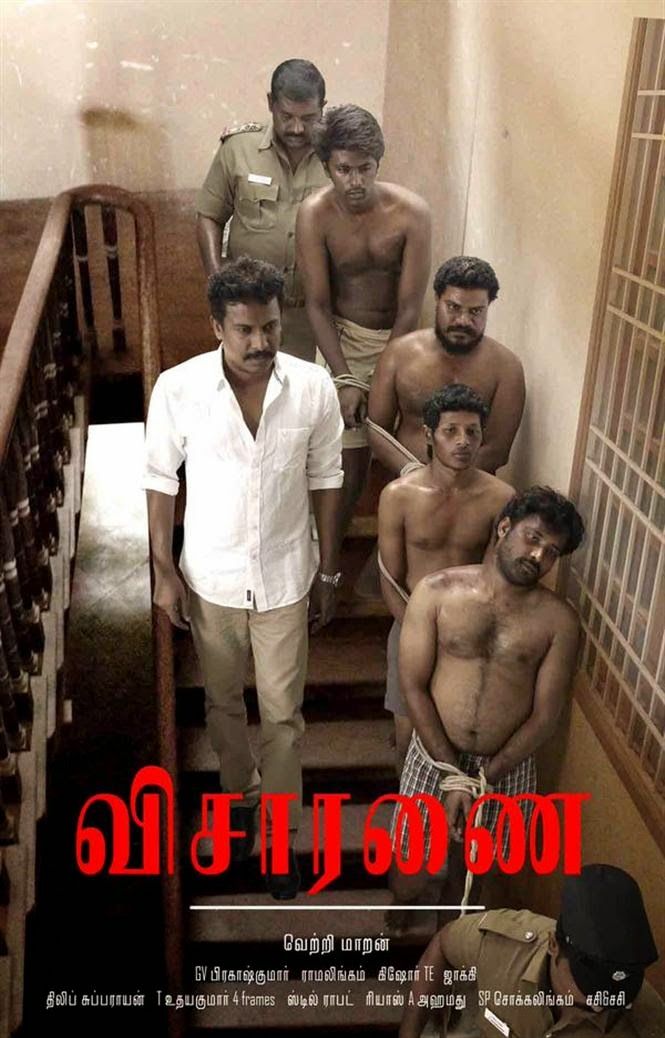
visaranaiThe fest news continues. After Toronto’s list, now Venice Film Festival is out with their line-up. Vetri Maaran’s Visaarani has been selected to premiere at the fest.

The film will compete in Orizzonti (international competition dedicated to films that represent the latest aesthetic and expressive trends in international cinema) section of the fest.

Titled Interrogation in English, the 106 minute long film stars Dinesh Ravi, Samuthira Kani, Murugadas Periyasamy .

Chaitanya Tamhane’s Court was in the same section last year where it bagged two top awards.

Guru Dutt’s classic Pyaasa will be screened in the ‘Venice Classics’ section of the fest.

The other Indian film is Ruchika Oberoi’s Island City. This film will be at Venice Days which is an independent section at the Venice Film Festival, and is promoted by the Italian Association of Filmmakers and authors. The idea was to develop a parallel sidebar on the lines of Directors Fortnight at Cannes.

Starring Vinay Pathak, Amruta Subhash and Tannishtha Chatterjee, the film ties together three absurd stories in a modern-day Indian city.

The first story revolves around a diligent office worker who wins the office ‘Fun Committee’ award. The second is about the domineering head of a family who suddenly falls into a coma and how his family slowly replaces him in their psyche with the seductive hero of a popular soap opera. The third is about a girl who falls in love with a man who writes her love letters. The first two stories are black comedies while the third one falls into the tragicomedy genre.

Guru Dutt’s classic Pyaasa will be screened in the Restored Classics section of the fest.

Irrfan

The Toronto International Film Festival has just announced its line-up for 2015. And here’s the good news – two Indian films, Meghna Gulzar’s Talvar and Leena Yadav’s Parched have been selected for World Premiere in ‘Special Presentations’ section.

Starring Irrfan Khan, Konkona Sensharma, Neeraj Kabi, Atul Kumar, Gajraj Rao, Sohum Shah and Tabu in a special appearance, the film is a gritty investigative drama about the Noida double murder case. With Gulzar’s lyrics, Vishal Bhardwaj’s music & screenplay, and cinematography by Pankaj Kumar (Haider, Ship Of Theseus), the thriller is a fictional dramatization of true life events revolving around Aarushi Talwar murder case investigation.

Leena Yadav’s Parched has Tannishtha Chatterjee in the lead role. The official page has one line description – In a rural Indian village, four ordinary women begin to throw off the traditions that hold them in servitude, in this inspirational drama.

(Disclosure – One of our editors is closely associated with Talvar)

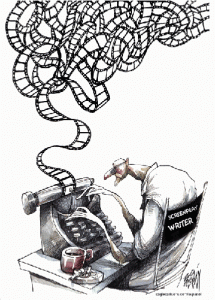
screenwriting-215x300National Film Development Corporation, India announced its selection of six projects for the Screenwriters’ Lab 2015, from submission of about 280 applications.

Previously hosted in Toronto, Locarno and Venice film festivals, Screenwriters’ Lab is going to be held in collaboration with the Sarajevo Film Festival this year.

Selected projects will travel to Sarajevo in August for the first part of the lab and then to Goa in November for the second, before being presented at Film Bazaar, the annual international film market, held alongside the International Film Festival of India (IFFI).

The selection this year includes projects spanning across varied stories, styles and genres.

Scripts

Bombay Rose – Gitanjali Rao

City of Light – Shubhashish Bhutiani

Dastaan-E-Awaargi – Ankit Kothari

Mango’s Tale – Sidharth Gupt

The Return – Asad Hussain

The Sun Goes Round the Earth – Arijit Biswas

Writers

Gitanjali Rao is an animator and filmmaker whose latest project, True Love Story, premiered at Cannes Critics’ Week, 2014 in competition. Her other animation short, Printed Rainbow, received several awards including the Kodak Short Film Award, and the Young Critics Award at Cannes Critics’ Week, 2006.

Shubhashish Bhutiani forayed into filmmaking with his short film Kush which won the Orizzonti Prize for Best Short Film at Venice International Film Festival. He has previously worked as an assistant director in commercials and feature films.

Ankit Kothari is an emerging writer who graduated with a BFA in Applied Arts from MSU, Baroda. Kothari worked as an art director in the advertising industry before venturing into filmmaking.

Sidharth Gupt is a filmmaker who wrote and directed one of the segments in Shorts, a compilation of five short films, produced by Anurag Kashyap. As an assistant director, Gupt has worked in Dasvidaniya, Gangs of Wasseypur and Khoobsurat.

Asad Hussain’s journey as a screenplay writer led him to co-write Children of War, a film based on the war for Bangladesh’s liberation. He has written the additional screenplay for Bajrangi Bhaijan. Apart from these, Hussain has also worked for educational content in Afghanistan.

Arijit Biswas is the co-writer of Agent Vinod and Badlapur. He has also written extensively for Hindi and Bengali television.

10409588_391302141077650_8545138430389074028_nWith Vicky Kaushal getting rave reviews for his debut performance in Neeraj Ghaywan’s Masaan, it seems like the perfect time to launch the first look of another film starring him – debutant Mozez Singh’s Zubaan.

The film has Vicky Kaushal, Sarah Jane Dias, Manish Chaudhary, Meghna Malik and Raaghav Chanana in lead roles.

The official FB page has only one line description so far – Zubaan is a coming-of-age musical drama about a young man who has a fear of Music!

Do check out the trailer.

Trailer

Crew

Story & Directed by: Mozez Singh
Produced by: Guneet Monga, Shaan Vyas, Mozez Singh
DOP: Swapnil Sonawane
Editor: Deepa Bhatia
Action: Sham Kaushal
Sound Design: Anthony Ruban
Screenplay: Thani, Sumit Roy, Mozez Singh
Dialogues: Sumit Roy
Music: Ashutosh Phatak
Additional Songs: Ishq Bector-­‐Shree d, Manraj Patar
Lyrics: Surjit Patar(Punjabi), Varun Grover(Hindi)
Costumes-: Aki Narula
Production Designer: KhyateeKanchan
Choreography: Uma‐Gaiti

For more info, FB page is here, and Twitter feed is here.