Posts Tagged ‘Cannes’

main-titli

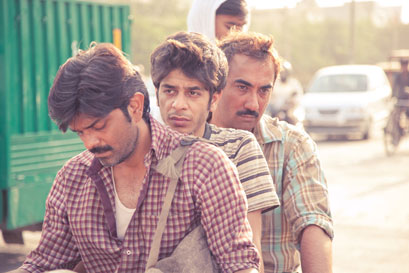
Time to say we told you so. Here – where we wrote that we are going to hear a lot about Kanu Behl’s Titli in the coming days. And much before anyone else, it was our Varun Grover who saw the film at Goa’s Film Bazaar, wrote about it’s brilliance and predicted that the film has all the potential to travel far. He got this one bang right.

So here’s the big news – Kanu Behl’s debut feature Titli has been selected for this year’s Cannes and will premiere in Un Certain Regard section.

Produced by Dibakar Banerjee Productions and Yash Raj Films, Titli features Ranvir Shorey, Amit Sial and newcomer Shashank Arora in lead roles. And here’s the official synopsis of the film –

In the badlands of Delhi’s dystopic underbelly, Titli, the youngest member of a violent car-jacking brotherhood plots a desperate bid to escape the ‘family’ business.
His struggle to do so is countered at each stage by his indignant brothers, who finally try marrying him off to ‘settle’ him.

Titli, finds an unlikely ally in his new wife, caught though she is in her own web of warped reality and dysfunctional dreams. They form a strange, beneficial partnership, only to confront their inability to escape the bindings of their family roots.  But is escape, the same as freedom?

Kanu is an almunus of SRFTI, worked with Dibakar Banerjee on Oye Lucky Lucky Oye, and co-wrote Love, Sex Aur Dhokha.

Vikramaditya Motwane’s Udaan and Ashim Ahluwalia’s Miss Lovely had premiered in the same section of Cannes.

And this is what Varun Grover wrote about the film in our year-end post

The best Indian film I saw this year, and hopefully the whole of world will see soon, is Kanu Behl’s ‘Titli’. Seeing it on a desktop computer in IFFI, Goa’s ‘viewing room’ should be counted as an underwhelming, far from ideal setting, and still, this very dark very funny very depressing dastaavez on patriarchy BLEW ME AWAY like nothing this year. Stunning is the word. Breathless is another. Writing so sharp (Kanu Behl and Sharat Kataria co-wrote it) and performances so bang-on, not to mention excellent edgy-gritty cinematography (Siddharth Dewan), this is our best bet for world cinema honors next year.

True Love Story

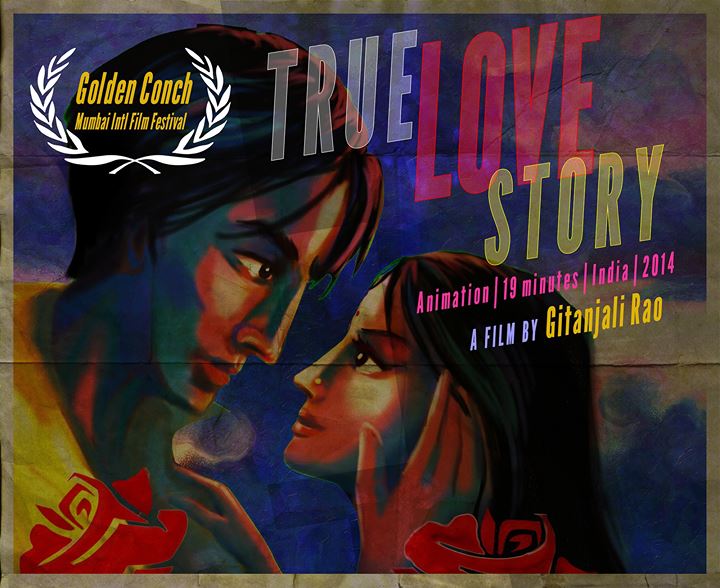
Gitanjali Rao’s new animation film ‘True Love Story’ bagged the Golden Conch Award for Best Animation Film at the recently concluded Mumbai International Film Festival. This 18 minute animation, set in the streets of Mumbai explores what happens when the ultimate Bollywood fantasy is applied in reality.  It gives glimpse into the influence of Bollywood on real life in Mumbai, told through puppet animation.

Here’s the trailer of the film

More about the film from Scroll – It’s a frame by frame painted 19-minute film about love, told from the eyes of two migrants who come to Mumbai and fall in love with each other. The boy in the film is hugely influenced by Bollywood and he falls in love with the girl across the street. Who will teach him how to woo her? This is a boy-meets-girl story, from the perspective of people who find themselves adrift in the big city.

As we have said million times in the past, and still keep repeating ourselves, if you have not seen Rao’s work, you have not seen the best animation that this country has produced. So we are embedding one of her popular animation films here. Do watch.

From her official website –

‘Printed Rainbow’ describes the loneliness of an old woman and her cat, who escape into the fantastical world of match box covers.

Gitanjali painted the entire film frame by frame over three years as a labour of love dedicated to her mother and cat. The film went on to premier in Cannes in 2006 and won her the first set of laurels with three Awards for the Best Short film in Critic’s Week, Cannes 2006. Then followed 22 international awards and screenings in over a hundred international festivals.

– She also did the delicious opening credits of Stanley Ka Dabba. To know more about her work and films, click here.

Blue Is The Warmest Color has easily become the most talked about film of the year. With its release in US, the debate is still on. Fatema Kagalwala saw the film, ponders over it, and tries to understand the controversies and criticism surrounding the film. Read on.

blue-is-the-warmest-colour-alt-poster-600x937

I watched BITWC at MAMI and not without fighting a few battles for it. It included doing a town-to-Andheri trip in rush hour traffic, giving up watching ‘The Past’ after much deliberation, and other such sundry mad-hatter-ness over-enthu cuts are usually prone to. I had bought the hype completely and the third, on–request screening at the MAMI film fest was just way too precious to miss.

I watched the 3-hr long film and then began reading about it all. The criticism of the male gaze, the length of the sex scene, the book vs film, (It is based on Julie Maroh’s graphic novel ‘Blue Angel’), Kechiche’s treatment of the girls and so on. I was quite surprised to read the content of the criticism and notice that the intense film hadn’t moved the nay-sayers enough to be more forgiving. At the same time I was very surprised to see I felt much more for the film than I first realised.

At the outset, it seemed to be yet another coming-of-age European film, delving delicately into the inner life of its tremulous 15 yr old. It turned out to be quite so, except that it wasn’t delicate and it wasn’t a ‘yet another’ film. It was one of the most disturbing, hell-fire-raising films, which days later remains haunting, just like the sleepy eyes of its protagonist Adele.

From the time the film starts we know Adele is special. Just like Juno, in that other defining teenage film of the same name. And she is searching. Just like each one of us is at that age. We don’t know yet what exactly is she searching for, but she is expectant and anticipating. Almost holding a breath, waiting for life to surprise her as she pats her unruly hair in place and casually walks up to her school bus.

Adele’s first romantic encounter isn’t bad. In fact she seems to be enjoying the attentions of this nice guy who really seems to be interested in her. But her first heterosexual encounter leaves her cold. And confused. She wakes up in the middle of the night fantasising about this strange girl with blue hair she passed by on the street the other day and since then hasn’t been able to forget.

Suddenly, she is so restless we crave for her to find that blue-haired girl. She is completely unaware of what she feels though, when she kisses another girl in a fleeting moment of irrepressible passion. By then, we have an inkling of Adele’s journey and wonder if it is going to be easy. By now we know she is an intense person and at that delicate threshold of age where experiences can make or break her.

She meets that blue-haired girl soon enough. It is at a gay bar Adele goes to with her best friend and stays back in, exploring it on her own…almost intuitively, the same way she has decided to explore this new side of her. The girl with blue hair is called Emma and she has been drawn by Adele too. There is something to be said about unexplainable chemistry that all of us at some point have encountered, the same that has now drawn Emma and Adele into its net. It isn’t new for the older Emma, and soon Adele gives herself up to this new-found passion. She gives in because she senses this is the truth she has been seeking. It envelopes her completely and she lets it possess her with a consuming intensity.

As we suspected early on, it isn’t easy for her. The first attack comes from her girl gang back at school and we learn of the irrational, demonic homophobia the world is gripped in. Teenagers, before they turn rebellious, generally are the most prejudiced, most intolerant, most judgemental, operating from a world-view sharp in its blacks and whites. Adele also has a conventional, hetero-normative family, equally prone to the same discomfort with homosexuality her classmates share. It is this that makes Adele introduce Emma as her friend to her family.  But it does not provoke questions in her mind, she is consumed by the passion she feels for Emma. And Emma, for all her arty ambitions, is deeply involved as well, happy to devour Adele and be possessed by her.

They are famished for each other and satiated by each other. The two unprecedented sex scenes in the film, controversial but landmark, define the passion they feel for each other, a passion governed by an unbreakable bond and undeniable chemistry, stuff that made-for-each-others are made of. There have been several disconcerted noises about a straight film-maker making a lesbian film and the male gaze re-imagining a female sexual encounter to its own benefit. As much as my limited understanding of homosexual relationships, desire, love and togetherness goes, they aren’t any different from heterosexual ones. Desire after all, is an equaliser and passion is not partial; that fire consumes all of us equally. Kechiche captures Adele and Emma as raw and animal as possible. They WANT each other and want each other completely. There is something life-affirming in a passion like that and Kechiche and both the girls do complete justice in bringing it to life.

The carnality of the sex scenes, their raw lust for each other and unbridled nudity puts the question of the gaze in picture. Whose point of view the film is from and whose point of view is Kechiche trying to underscore? This (link) lambasts Kechiche for using lesbian sexuality to satisfy the male voyeurism for girl-on-girl action. This (link) criticises the un-emotionality of the scene and feels the 3rd person pt of view, the staginess and complete lack of the girls’ point of view takes away from their story. For the writer, the male gaze claim is somehow validated by the way the scene is staged. However, I find it difficult to imagine how close-ups would have escaped a similar criticism of exploitation. The staging of the film, one that includes the entwined nude bodies of both locked in lust but views it at a distance, could be seen as a documentary eye as well. Or observant. To my mind, if he had cut close, that would have rang false, and maybe then looked like the male gaze on a trip.

Someone asked me if, being a woman, the un-emotionality of the carnal scenes put me off. But being a woman, the scene wasn’t unemotional to my eyes. The lust was raw but it arose from a deep bond the two felt between themselves. And Kechiche’s portrayal seemed to be capturing that bond from a safe distance, hesitant to step in lest he interfere and become the unnecessary third person. I loved what I saw, the unabashed hunger of a female for another female, somehow affirming the yin and yang of ourselves and how we have enough of both in each one us irrespective of our genders.

What is important about the entire male gaze question is the question of protagonist. In a heterosexual sex scene, the action is almost always filmed from the male point of view, with the female framed as the object of vicarious desire for the film-maker and audience. But with both people involved being women and the camera being distant, I was left asking – who was the desired and who was the one lusting, and how was the audience meant to relate to it all? It was an interesting equation Kechiche threw up and I think he did away with the male gaze with his framing. The 3rd person point of view lens helped me watch and engage with a very intimate film without obstruction, without external baggage. It may not have been the intention, but it was liberating. It is worthy of note that in most other emotional scenes Kechiche goes and stays really close, so close it almost seems like he is desperate to peek into Adele and Emma’s souls…And it is important because that involves us intimately, without us really realising it.

Adele’s growing up from a student to teacher is glossed by. Suddenly, she is playing the dutiful, loving ‘wife’ to Emma and her party of arty friends whom we still don’t know if we can take seriously. I am indifferent to the jump in years because what matters most is the change in their relationship. They have settled into a regular live-in relationship and life has begun to fray the passion. Emma doesn’t seem to be as devoted as before and is it only the stress of a career going nowhere? Why the need to connect with Adele intellectually? Why the need for Adele to have a passion especially in the arts? Why isn’t Adele’s love for teaching, something she does intuitively very well, not enough? These questions are at the edge, because the film meanders aimlessly and stops at a lot of places it needn’t have. But after touching on all those uncomfortable questions lightly, it stops at a random encounter of Adele with a man. And Adele’s downward spiral begins. She is lonely and searching again. This time it hurts to watch.

Which was the most disturbing scene – the break-up or the sex scene? Which more agonising? Interviews (link) of the stars have mentioned the trauma they underwent while filming both. Adele speaks of being very raw from being being hit hard and of Kechiche screaming at Emma to hit her even harder. The scene was filmed for hours and hours on end, that and only that scene repeatedly. That I closed my eyes during the scene is probably evidence enough that Kechiche got what he wanted, a soul-searing portrait of heartbreak complete with tears, snot and blood.

When Adele was out on the streets, helpless and howling like a pup in pain, it was then that actually I began to feel for her character. I wanted Emma to take her back and say all was fine. I wanted their passion to be restored to its previous glory and I wanted Adele to be safe. Because after that we never see the Adele we had been watching till then. And as with all those heart-broken, Adele’s lowest point comes in the restaurant when she desperately begs Emma to take her back. We see Emma settled into a boring, conventional life without any of the spark she shared with Adele and it is not explained to us why chose that. Maybe it is age, maybe wisdom, maybe disillusionment. Heartbreaks can leave unrecognisable scars and change us unfathomably. Although she responds with long-repressed passion to Adele’s sexual overtures she chooses to walk away, finding the comfort of a homely twosome more reassuring than the wildfire of one with Adele.

Intentionally or not, the film pushes us to take sides. It is Adele who strays but it is Adele’s hurt we relate to the most. Infidelity in any relationship is traumatic, but in one as intense as this, can be much more; powerful enough to break spines. Irrespective of who strays, both bear the brunt and Emma must have too but we don’t have an opportunity to know her side. She arrives at ‘infinite tenderness’ for Adele by the end of the film and it is a stirring moment. Because after great passions have worn themselves off and great rages have tired, it is actually only infinite tenderness that remains. We do not see Emma’s reconciliation with the loss, nor her transition from anger to forgiveness. But in the fabric of the film, her journey is not important, only Adele’s is and the film seems to be mute about it from this point on. It hangs like Adele does, between the last vestiges of Emma’s memories and a present that refuses to bear a better tomorrow. Anyways, when does life move until healing liberates us? Stranded, life stagnates or goes round and round in circles, desperate to find that point where it all began and where it all ended. It is called moving on for that reason. Adele is stuck too but one day she will move on.

Kechiche’s universe is not dystopian but it isn’t dreamy either. He just leaves enough space for us to imagine and hope if we are optimistic. For Adele though, it’s an end, final. She has no choice but to move on and there is no more of that we can be a part of either. The film ends with her walking away from Emma’s fashionable, successful art show. Adele has grown up or maybe she hasn’t but knowing what we know of her, she will. Perhaps that is why the French title – “La Vie d’Adèle—Chapitres 1 et 2’ makes more sense.

There is so much sensuality in the film and not all of it is tactile. The camera caressing the forms of nude statues, the indulgent focus on food, the splash of blue everywhere, Emma’s nude paintings of Adele and so on. It makes for a voluptuous fabric, the lust seeping out of the seams and spreading across the entire canvas with a hedonistic glee. This focus on the nudes in art points at an attempt to subtly explore the relationship of sexuality and art, foregrounding Emma’s artistic pursuits heightened by Adele’s presence (she calls Adele ‘my muse, my inspiration’.) Adele isn’t gratified by this; modelling for Emma is just an extension of giving herself to Emma. But for Emma, this space isn’t seamless, there are brackets. If there weren’t, her flagging artistic ambitions wouldn’t be straining their relationship. There is a reason why she is an artist and Adele a teacher in the film.

To hear the story of the original novel the film birthed from, after having watched it, it seemed like a K serial re-envisioned by Ray. I am glad the film did not have any of the sentimentality of revisiting memories through diaries, having to deal with the angst of long-suffering bitter parents of your lover and so on. It dealt with the ‘now’ of Adele, with an honesty and temerity few can muster. Kechiche must be an extremely dark and intensely emotional person to have delved into the soul of love, desire and betrayal as he has. Blue, indeed was the warmest colour at Mumbai Film Festival.

Ritesh Batra’s The Lunchbox (Dabba) and Amit Kumar’s Monsoon Shootout had their premiere screenings at the ongoing Cannes Film Festival. Lunchbox is selected in International Critics Week section and Monsoon Shootout had a midnight screening. Some early reviews of both the films have been pouring in. For curious folks like us, here are the excerpts and links to the reviews.

Variety review is here

A feel-good movie that touches the heart while steering clear of expectation, “The Lunchbox” signals a notable debut from tyro helmer-scripter Ritesh Batra. The ingredients on their own are nearly fail-proof, yet it’s the way Batra combines food with an epistolary romance between a nearly retired number cruncher and a neglected wife that hits all the right tastebuds. An indie Indian pic with the crossover appeal of “Monsoon Wedding,” it’s sure to be gobbled up by audience-friendly fests before heading into niche cinemas.

Screen Daily review is here

A wistful, elegant love story played out across the streets of Mumbai, The Lunchbox is an unexpectedly aromatic charmer from first-time film-maker Ritesh Batra. Eschewing the pitfalls of what appears, on face value, to be a highly schematic set-up, Batra infuses his film with warmth and humanity, while cameraman Michael Simmonds steps up to deliver delicate visuals of modern Mumbai.

Film Business Asia’s review is here

There’s hardly a shot, line or gesture out of place in The Lunchbox, a hugely impressive feature debut by Mumbai-born, partly New York-based Ritesh Batra that starts out like a foodie film but spins a simple idea into a whole mini-universe of feelings.

– To watch the presentation ceremony video, click here

– To watch Ritesh Batra’s interview, click here

– Two clips from the film

Cast and crew list

Directed, written by Ritesh Batra.
Camera (color, widescreen) – Michael Simmonds
Editor – John Lyons
Music – Max Richter
Production designer – Shruti Gupte
Costume designer – Niharika Bhasin Khan
Sound (Dolby Digital) – Michael Kaczmarek, Ramesh Birajdar, Joerg Theil, Tom Korr
Line producers – Meraj Shaikh, Smriti Jain
Assistant director – Prerna Saigal
Casting – Seher Latif.
Cast – Irrfan Khan, Nimrat Kaur, Nawazuddin Siddiqui, Denzil Smith, Bharati Achrekar, Nakul Vaid, Yashvi Puneet Nagar, Lillette Dubey

And here are the reviews of Amit Kumar’s Monsoon Shootout.

Peter Bradshaw’s review is here

It’s a moody, broody downbeat drama for most of the time, a rainy noir. But along with the plot trickery, there are some unexpected turns…..It’s an entertaining popcorn-movie with a twist, for which commercial success is on the cards. There should be space for pictures like it in Cannes.

The Hollywood Reporter review is here.

A cunningly intricate first film from India, Monsoon Shootout combines the best of two worlds – a ferocious Mumbai cops and gangsters drama, and a satisfyingly arty plot that turns in on itself to examine the outcome of three possible choices a rookie cop might make when he confronts a ruthless killer. Three times the story returns to a key moment: a boy with a gun uncertain whether to pull the trigger. Though the idea of Dirty Harry meeting Sliding Doors may sound abstract, writer-director Amit Kumar pulls it off gracefully, without losing the sense of heightened drama that earned the film a Midnight Movie slot in Cannes. The Fortissimo release should make good headway in territories open to India and exotic genre fare and put Kumar on festival radar.

Screen Daily review is here.

Serving up a portion of Rashomon with a side of Sliding Doors, this tasty Mumbai crime story offers multiple outcomes of one fateful decision in a rookie cop’s professional life. Though it sounds like a potentially experimental premise, Monsoon Shootout is a glossy ethical drama designed to appeal equally to more upscale Indian audiences and worldwide genre fans.

Film School rejects review is here

The Upside: Nicely photographed; boasts decent enough lead performances, specifically the presence of Thapa as Adi’s beau; sound editing is also strikingly effective

The Downside: Aspirations towards existentialism don’t pay off well because it lazily recycles some grand ideas, but without the same level of ingenuity and entertainment value; atrocious editing stifles the action beats, which are themselves too sparse and brief to satisfy.

Here’s the Variety review:

“Monsoon Shootout” is a racy mash-up of Tarantino-esque ultra-violence and-gritty but-hip contempo Indian actioners. Amit Kumar invests a schematic police-thriller structure with a compelling moral dilemma hinging on a standoff between a cop and his suspect.

And here’s the Rope of Silicon podcast on the film.

A look at the film:

Cast and crew list

Production companies: Yaffle Films, Sikhya Entertainment in association with Pardesi Films AKFPL, Dar Motion Pictures

Cast: Vijay Varma, Nawazuddin Siddiqui, Neeraj Kabi, Geetanjali Thapa

Director: Amit Kumar

Screenwriter: Amit Kumar,

Producers: Trevor Ingman, Guneet Monga, Martijn De Grunt

Co-producers: Anurag Kashyap, Arun Rangachari

Director of photography: Rajeev Ravi

Production designer: Mayur Sharma

Editor: Atanu Mukherjee, Ewa Lind

Music: Gingger Shankarv Sales Agent: Fortissimo Films

88 minutes

(Pics taken from various online sources/social media)

Update: TWITTER BUZZ…

Since reviews for Indian films are scarce, we decided to add some tweets into the mix.

On The Lunchbox:

THE LUNCHBOX (R Batra): Like a bonsai tree, modest but magnificent. Standout performances. Bit cloying, but only if you want to find faults. — @bgji May 20, 2013

A very well-deserved, sustained, standing ovation for The Lunchbox at Cannes. Congratulations, Ritesh!! — @Shripriya May 19, 2013

On Monsoon Shootout:

MONSOON SHOOTOUT is the ‘Choose Your Own Adventure’ of crime actioners. I’m not completely convinced, but I do respect the ambition. #Cannes — @RylandAldrich May 19, 2013

MONSOON SHOOTOUT (D-) 3 versions of the same story, except it’s not as the filmmakers abandon the logic of the conceit. Morally dubious too — @CSkinner May 19, 2013

MONSOON SHOOTOUT does somehow seem to have become the defining film of the Festival. #cannes2013 — @JonathanRomney May 18, 2013

MONSOON SHOOTOUT (A Kumar): Thoroughly ordinary. Heavy handed 3 pronged narrative structure/metaphor. More imagination re: Bombay, please. — @bgji May 19, 2013

Monsoon Shootout is the Sliding Doors of cop thrillers. Fleetingly entertaining but the alt-outcomes narrative wears thin… #Cannes2013 — @totalfilm May 19, 2013

Monsoon Shootout – 2/5. Slumdog Millionaire meets Run Lola Run (Run Slumdog Run?) in fecklessly bloodless gimmick thriller #Cannes2013 — @ShaunMunroFilm May 19, 2013

MONSOON SHOOTOUT is the Indian RUN LOLA RUN if RUN LOLA RUN were a predictable cop drama. #Cannes2013 #cannes — @FredTopel May 19, 2013

On Ugly:

UGLY (A Kashyap): A Blaft-like pulp thriller with @ankash1009 bravely pushing his style to the limits. Depressingly hilarious & brilliant. — @bgji May 18, 2013

And finally…

UGLY and MONSOON SHOOTOUT taught me not to be a person who works for, needs help from, or who is wanted by police in India. #cannes2013— @marshalclark) May 19, 2013

Jai Ho. 🙂

At the ongoing Cannes Film Festival, India has a much better presence this year compared to last few years. So we are back with our regular post to track all the Cannes buzz that the desi films are creating there.

Anurag Kashyap’s film Ugly had its screening in the Directors’ Fortnight section. Some of the early reviews are out.

– The Holly Reporter review is here

Kashyap’s nasty point is that, between violence, greed and corruption, just about no one is innocent in the end. Certainly all the characters are selfish beyond belief. This existential cynicism hits home in the horrific crime revealed in the last shot, But by that time, the emotions feel light years away.

– Translated text of French review on Telerama is here.

Heavy, unbearable. Surprising to the end, vitriolic portrait of contemporary India…

– Twitchfilm review is here

Really, the more divisive issue of the film will be the content itself, and audiences willingness to spend so much time watching greedy, ruthless and often idiotic people going from bad to bottom of the barrel. The ending may be a potential deal-breaker for some too, and while I can’t argue in detail without spoiling it, my sleep-deprived Cannes impression is that the haunting final shot effectively hammers home the moral center of the movie rather than functioning as the cheap, shock-value alternative. In fact, reflecting on the way Kashyap handled the rest of the film, specifically spurts of intentional violence, I do feel that there was a sympathetic voice in the film — it was just behind the camera instead of in front of it.

– The Hindu’s report on the film is here.

“The first 10 minutes of the film have to do with my own life when I depict the relations between the divorced father and his little girl. But the rest of the film came about after I read about the disappearance of children in India.

– Screendaily review is here.

After the five-and-a-bit-hour gangland epic Gangs Of Wasseypur, the godfather of the Indian commercial arthouse sector, Anurag Kashyap, serves up a slimline two-hour hard-boiled crime thriller with Ugly. But the running time is the only thing that’s restrained about this lazy kidnap caper, whose hints of Fargo, echoes of Old Boy and touches of Tarantino are compromised by the story’s sprawling lack of discipline.

Mubi’s short review is here.

The dissonance between the tone of the highly mobile plotting with its harsh and justified moral judgement of everyone in the film and the unconscious, conventionally acted characters break the film’s sinister, society-flailing vision. Thus Ugly‘s interest is more academic than actual—perhaps a failed experiment—and while its disappointing inconsistency instills dullness, it also provokes a strange and blistering series of events, each unfolding in shocking succession.

Directors Fortnight videos

Interview of AK

Q & A after the screening

The Hollywood Reporter on Kashyap getting the French honour Chevalier dans l’ordre des Arts et Lettres honour (Knight of the Order of Arts and Letters)

– Cast and Credit list from THR

DAR Motion Pictures presents a Phantom Films production

Cast: Ronit Roy, Rahul Bhat, Tejaswini Kolhapure, Anshika Shrivastava, Vineet Kumar Singh, Girish Kulkarni, Surveen Chawla, Siddhant Kapoor

Director: Anurag Kashyap

Screenwriter: Anurag Kashyap

Producers: Madhu Mantena, Vikas Bahl, Vikramaditya Motwane, Arun Rangachari, Vivek Rangachari

Co-producers: Vivek Agrawal, Shahnaab Alam

Director of photography: Nikos Andritsakis

Production designer: Mayur Sharma

Costumes: Divya Gambhir, Nidhi Gambhir

Editor: Aarti Bajaj

Music: Brian McOmber, G V Prakash Kumar

Sales Agent: DAR Motion Pictures, Mumbai

124 minutes.

(Pics – from social media/DF Facebook page)

For those who have been curious about Ritesh Batra’s Dabba, we have got the first look of the film. Here are some of the stills from the film which look really impressive. We do also have all the cast, credit and official synopsis details.

The film will have its international premiere at Cannes Festival in International Critics Week section.

(Click on any image to start the slide show in hi-res)

Though Nawaz was also in Paan Singh Tomar, but it looks like this film finally brings together two of the finest actors of our generation in full fledged roles. And is Irrfan Khan in Namesake avatar again? Bring it on!

Official Synopsis

A mistaken delivery in Mumbai’s famously efficient lunchbox delivery system connects a young housewife to an old man in the dusk of his life as they build a fantasy world together through notes in the lunchbox. Gradually, this fantasy threatens to overwhelm their reality.

Mumbai, a city of miracles.

One of Mumbai’s miracles is Mumbai’s Dabbawallahs – a community of 5000 dabba (lunchbox) deliverymen. It is a hereditary profession. Every morning the Dabbawallahs deliver hot meals from the kitchens of housewives to the offices of their husbands, and then return the empty lunchboxes back to the homes in the afternoon. For 120 years they have provided Mumbaikars with a taste of home in the office. They navigate through the overcrowded local trains and chaotic streets – that often have a namesake or more than one name. The Dabbahwallahs are illiterate, and instead rely on a complex coding system of colors and symbols to deliver dabbas in the labyrinth that is Mumbai. Harvard University analyzed their delivery system, concluding that just 1 in 8 million lunchboxes is ever delivered to the wrong address. Dabba is the story of that one lunchbox.

A mistakenly delivered lunchbox connects a housewife, Ila Singh, to Saajan Thomas, a lonely man in the dusk of his life. Ila lives in Dadar, the conservative middle class Hindu enclave. And Saajan lives in Ranwar village, Bandra, an old Christian neighborhood that is threatened by the new high rises in Mumbai. Very soon Saajan will retire and bid goodbye to a Mumbai that has crushed his dreams, took away his loved ones one by one, and turned his hair white. Just then Ila comes into his life. In the big city, that crushes dreams and recycles them every day, both find a dream to hold on to. Ila begins a fantastical affair with a mystery suitor, pouring her heart into cooking meals for him. And Saajan looks forward to lunch box deliveries from a mystery woman every day. They exchange notes via the lunchbox and create a fantasy life. As the lunchbox goes back and forth, this fantasy becomes so elaborate that it threatens to overwhelm their reality. The characters of The Lunchbox exist on the line between the Mumbai of reality and the Mumbai of fantasy.

The Lunchbox is the story of the life we dream of versus the life we live in, and of the courage it takes to turn out fantasies into reality.

Credits

director: Ritesh Batra
screenplay: Ritesh Batra
cinematography: Michael Simmonds
editing: John Lyons
sound: Michael Kaczmarek
production design: Shruti Gupte
music: Max Richter

Cast:
Irrfan Khan
Nimrat Kaur
Nawazuddin Siddiqui
Denzil Smith
Bharati Achrekar
Nakul Vaid
Yashvi Puneet Nagar
Lillete Dubey
Sada (Dabbawala)

The film is produced by Sikhya Entertainment (India), Dar Motion Pictures (India), and co-produced by National Film Development Corporation (India), ASAP Films (France) and Roh Films (Germany).

Btw, Michael Simmonds? The DoP of Ramin Bahrani’s films? Chop Shop, Man Push Cart, Goodbye Solo and Plastic Bag. That’s a great talent to have on board.

To know more about the film and the filmmaker, click here to read his interview on DearCinema.

Director

Ritesh Batra is a writer/director based in Mumbai and New York. In 2009, Batra was selected for the Sundance Writers and Directors labs for his feature project “The Story of Ram”. He was also named the Sundance Time Warner Storytelling Fellow and an Annenburg Fellow. He was part of the Graduate Film Program at New York University’s Tisch School of the Arts, from which he dropped out in 2010. His short films have been presented in many international film festivals and fine arts venues. His recent short “Café Regular, Cairo” was featured in the 2012 Inter- national Film Festival of Rotterdam and 2012 Tribeca Film Festival. His upcoming short ‘The State of Siege’ is currently in post-production.

His feature screenplay THE LUNCHBOX was part of the 2011 Binger-NFDC Screenwriting Lab, it won an Honorable Mention from the Jury at the 2012 edition of the Cinemart at the International Film Festival of Rotterdam and was part of the Berlinale Talent Project Market.

(Cast/credit/synopsis/Director’s bio taken from various co-producers’ site)

The Cannes Directors’ Fortnight section unveiled its official selection list today. And there’s one Indian film in the list – Anurag Kashyap’s Ugly. His two-parter Gangs Of Wasseypur was also screened in the same section last year.

An edge of the seat thriller, Ugly stars Rahul Bhatt, Tejaswini Kolhapure, Ronit Roy, Girish Kulkarni and Siddhant Kapoor.

Interestingly, five films which are going to Cannes this year has some kind of connect with Kashyap or his company, AKFPL. Ari Folman’s The Congress, Amit Kumar’s Monsoon Shootout and Ritesh Batra’s The Lunchbox – these three films have been co-produced by AKFPL. And Kashyap has directed one of the shorts in Bombay Talkies which is going to have its Gala premiere at Cannes.

Click here to know more about The Directors’ Fortnight section.

Dabba 2

The 52nd Cannes International Critics Week unveiled its lineup today.

Among the 11 features screening in the sidebar, which showcases first and second films, there’s one film from India – debutant director Ritesh Batra’s Dabba (The Lunchbox). The film stars Irrfan Khan, Nawazuddin Siddiqui and Nimrat Kaur.

And here’s the official synopsis from the site of one of the co-producers, Cine Mosaic

A mistaken delivery in Mumbai’s famously efficient lunchbox delivery system connects a young housewife to an old man in the dusk of his life as they build a fantasy world together through notes in the lunchbox. Gradually, this fantasy threatens to overwhelm their reality.

The Lunchbox is the story of the life we dream of versus the life we live in, and of the courage it takes to turn out fantasies into reality.

Apart from Dabba, Cannes will also screen Bombay Talkies and Monsoon Shootout.

Cannes

Cannes Film Festival has just announced its official selection list. And as expected not too many Indian films at fest this year.

As part of tribute to 100 years of Indian Cinema, Bombay Talkies will have its Gala premiere at the fest. It’s a collection of four short films directed by Dibakar Banerjee, Anurag Kashyap, Karan Johar and Zoya Akhtar.

Another selection is Amit Kumar’s Monsoon Shootout which is in Midnight Screenings section. It stars Vijay Varma, Nawazuddin Siddiqi, Tannishtha Chatterjee, Neeraj Kabi, Geetanjali Thapa.

And here’s the official synopsis – A rookie cop faces a suspected gangster in a dead-end alley and has to decide whether to shoot or not to shoot. Three separate scenarios explore the impact of his decision on other people’s lives.

Amit had earlier directed a terrific short called Bypass which won many awards. Click here and here to watch the film in two parts.

Also, Indian actor and director Nandita Das is part of the CineFoundation and Short Film Jury.

To read the complete list, click here.

always-being-born-recipient-of-dadasaheb-phalke-award-mrinal-sen-a-memoir-275x275-imad96etkbdskjezRecently I watched a documentary film where Mrinal Sen is quoted. Mrinal Sen? It left me wondering when was the last time I heard his name. Honestly, not sure. In which discussion? Well, really not sure. We talk so much about world cinema, but we rarely get to hear the desi names beyond the few obvious ones.

People like us, who could easily be branded as the fest-fuckers, are bigger culprits. Even before fests became kind of cool for kids here, Sen had been there, done that. Apart from many other international awards, his Kharij was in Cannes Official Competition and bagged the Jury Prize in 1983. His another film Akaler Shandhaney (In Search Of A Famine) was in cometition at Berlin Fest where it bagged the Silver Bear in 1981, and at Venice Film Festival, Ek Din Achanak got an Honourable Mention. Do watch the films if you haven’t.

Back to Sen, and we have a new segment – Just A Page. The film reminded me of his memoir, Always Being Born. I had read it long back. As soon as i came back home, i took out the book and read few pages. Ironically, even at the risk of it being used to poke fun at me for obvious reasons (by friends and well-wishers mostly), am going to quote a page from this book. Quite a terrific one. Do read.

Suddenly, from behind a boulder on which I was seated, appeared a boy, hardly ten, the external anatomy giving the appearance of a beggar. He stood before me, but unlike a hungry beggar, his eyes were bright. I smiled and he smiled back. I pulled out a ten-rupee note, quite a fat amount in those days, and gave it to him. He could not believe that the amount was meant for him. I drew him close, patted him on the shoulder and gave him the push with a smile. The boy ran away with the money, looked back from a distance, his eyes beaming, and disappeared. Instantly, I felt I was a different man altogether. I sprang to my feet and, with nobody around, i shouted at the top of my voice and in ecstasy uttered a few Bengali words, Dekh-re Shala’ra, Kemon Aami Nirbaashan’e Aachhi! (Look bastards, I’m an exile here!) And there was nobody around. Bengali, for the first time in last three days, because it was Greek in Jhansi. Could there be a streak of madness in me? Or, to quote Jacques Tati or getting a kick from Chaplin, Inspired Nonsense?

I, then, returned to my hotel, shut myself up in my small room and moved towards the tall mirror. Standing before the mirror, I could see myself from top to toe, head to foot. Watching me, I enjoyed looking at “it”. As I looked deep into the eyes of my ‘double’, I wanted to see more of ‘it’, the whole of ‘it’. Without caring to behave myself, I made a violent move to strip myself.

There stood my ‘double’, stark naked, face to face with me. Was the look menancing? The double’s? Or mine? I did not remember. I remembered the ‘talk’ I had with ‘him’. I said, hugely intrigued:

There you are, Mr Mrinal Sen, one who read a lot on cinema, wrote substantially on its aesthetics and made frantic efforts to impress others! Now, here you are, Mr Sen, a dawai-walla (medicine-seller), who once wanted to be a filmmaker! Didn’t you, Mr Sen, manage to hook a money-backer and finally backed out for fear of making  lousy film? Oh, no! Serve your bosses well, rot here and try to get an increment. To feel bored is not your business, you cannot afford it, can you?

So saying, I made faces, muttered words in languages I know, then giggled and laughed and made all kinds of absurd gestures and finally, unable to control myself, I cried. Cried like a child. All alone in a hotel room in Jhansi!

After three days, I sent a long telegram to the management in Bombay and I resigned.

You can order the book from Flipkart here.

(PS – To make life bit simpler, now you don’t need to fill in all the details to post comments. If you are already logged into Facebook or Twitter, just log in with your FB/T account. Click on the small (FB/T) icon below the comment box, a pop up will appear, authorize the app and you are done)

@NotSoSnob