Posts Tagged ‘review’

This one is a brief  (and spoiler free) recco/review of the film. We happened to catch this at a private screening and quite enjoyed it. Here’s the post containing the trailer and the short story on which it is based on. The film releases on 12th July. Here are two small reviews by Kartik Krishnan and Nusrat Jafri.

BA Pass3

Ajay Bahl takes us through the narrow lanes of Pahadgunj and the badi badi kothis of Kamla Nagar/Rajpura/DU in his adaptation of Railway Aunty by Mohan Sikka (one of the many stories in the must read book Delhi Noir). The days are lazy with the freshly served wahi-purana-Rajma-Chawal-wali-Punju-Middle class Dilli-Roohafza sherbets-Cokey Coley; while the nights are neon lit with all kinds of depraved creatures on the prowl (Beer se naha kar Gaddi chalane wale Jaat, Rishwatkhor Thulley – you know the ilk). Such is the world the characters of BA Pass inhabit.

The story is fairly straightforward in the Noir ballpark. This ‘Postman Always Rings Twice‘  begins with the very talented Shilpa Shukla playing the seductress with zestful ferocity and oomph, charming the young & unsuspecting Shadab Kamal, who then delves deeper into the behind-the-parde-wala world of Kothiwali aunties residing in posh Delhi colonies. Money is tempting; Sex with ‘experienced’ married (lonely) women is irresistible, and a combination of both is a potent enough mindf**k for any below average BA/B Com/B Sc student. Not only is he struggling to make ends meet with two younger sisters (and their troubles) but is also feeling suffocated in a not so pleasant rishtedaaron ke ghar mein PG environment. Slowly but steadily, the pyaada goes onto becoming the wazir but not before he traverses through the netherworld, with the transition punctuated by clear daylights transforming into rang birangi tubelit hazy nights.

This erotic drama boasts of arresting performances by the supporting cast right down to the junior artists. While the ‘Bijis’ & the ‘Chachis’ add color to the story, the benevolent gravedigger Johnny (played adequately by Dibyendu Bhattacharya – though may be a Vinod Nagpal or M K Raina might have taken the role to another level) and the ever reliable Rajesh Sharma (once again pitching in with a bravura 3-4 scene performance) stand out. Shilpa Shukla nails Sarika Aunty to perfection and hope she gets meaty roles like this in Bollywood. One wishes however, that the pivotal performance by the sincere Shadab Kamal had been a little more nuanced and multi layered as opposed to the two note one. Also may be the film could have gone one a tangent than in the somewhat predictable direction, but that is perhaps a limitation imposed by a faithful adaptation of the short story.

But a special mention for Ajay Bahl (the Director – Dop – Producer) who’s done quite an impressive task of faithfully adapting the story and embellishing it with realism and drama. It is to his credit (along with the enthusiastic production design) that the film (considering the subject material at hand) steers away from B Grade/Kanti Shah/tacky-pulpy/Low budget ‘gareeb’ film territory and that there is enough foregrounding/back grounding in the frames to lend an aesthetic richness to the film. Definitely looking forward to the director’s next.

Kartik Krishnan

Ajay Behl’s Erotic Noir film, BA PASS is based on Mohan Sikka’s short story “Railway Aunty,” which was published in Delhi Noir. And true to the tagline of the book, B A Pass is indeed the story of “Darkness and Despair.”

Mukesh, is a young, shy, small town boy, who moves in to live with his Bua’s family in Delhi, after tragedy strikes home. He is burdened with the responsibility of two younger sisters, with whom he longs to re-unite. He runs errands in the house and plays chess in a graveyard at leisure. Until Mukesh meets the flirtatious Sarika “Aunty” at his Bua’s kitty party, and his rollercoaster ride of sex, life and deceit begins. Their surreptitious affair and dealings go on till Sarika’s husband walks in on them. Things go out of control and life reveals it’s ugly teachings to Mukesh.

When I saw the promo of the film, I was captivated. It looked classy and well made, even though the amount of sex in the promo itself was a bit concerning. Films made on such shoe – string budgets, can easily look tasteless but B A Pass is aesthetic to say the least.

Ajay Behl, donning the cap of both the Director and the Cinematographer takes you into the world of Mukesh, the naïve, and emotionally vulnerable boy. In a perverse world that not only exists but also flourishes behind the veneer of boredom that middle class lives project. It takes us into the mysterious world of Sarika, who is not only fiercely attractive but has desires that break the hypocrisy of our middle class notions of modesty. Shilpa Shukla, adds power to the character with her is impressive performance. She has gotten into the skin of the character and not let inhibitions get in the way. Rarely seen in Indian films.

Sex is a big part of the film.  Seeing purely from the growth of Mukesh’s character, it goes from initial lust driven to fulfilling the quirky requests of Sarika, to hilarious script narrations with one of the other women clients! But never once is it lewd.  The scene when Khanna, (Sarika’s husband) walks in on her and Mukesh, gave me goose bumps. It was scary and real in equal measures.

Behl has captured a middle class Delhi of colonies and gullies. One that is aspiring and ruthless at the same time. He uses sound and silences beautifully. Shadab Kamal, is raw and his performance as the lonely, timid and vulnerable boy, is very good. Though at some point I felt the transformation in his character didn’t surface too well. Supporting cast members, Dibyendu as the graveyard caretaker and Sarika’s husband are all fantastic.

I loved Bibiji, in the scene (it’s in the trailer too!) when she says “vo dayan hai” to Mukesh, she is brilliant!

Mohan Sikka’s short story ends quite metaphorically; Behl’s screenplay leaves Mukesh with even fewer choices.

If Noir has it’s roots in German Expressionist Cinematography, BA Pass has it’s in Neon – Realistic Cinematography (If I may be allowed to coin a phrase!). This is the Pahargunj we saw in Dev D, but only more asphyxiating, garish, neon lit, and yet real. Tough lessons for this BA Pass.

Nusrat Jafri

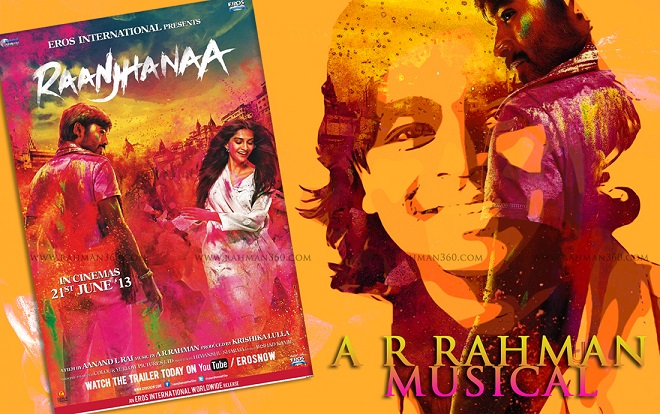
raanjhanaa_rahman360_Arrahman

After a long wait, it’s finally out – the music of Raanjhanaa. But seems the wait was worth it. Do check out the music of Raanjhanaa. Rahman is back and how. Over to @Rohwit for its music review.

  • Raanjhanaa hua – The ever so melodious (yet not as popular as I would like him to be) Jaswinder Singh starts the song and vanishes too quickly. Anyway, the song belongs to ‘at times out of sync Shiraz Uppal’ and that’s what you will love the song for. It just doesn’t try to ‘fit in with calculated singing’. The percussion arrangement – top class, the use of Sitar – exemplary. In fact, when the song ends, the sitar doesn’t leave your mind. Go ahead, try it! A racy tune marked with excellent violins (which literally take the song to it’s peak every time they appear), the song is top class! Watch out for the faint guitar riffs throughout!

  • Banarasiya – Like the name indicates, a song that ought to remind us of Benaras. Starts quite rightly with Sarangi and flute (aided with the mandatory manjiras). Tune wise crisp, singing wise excellent, Shreya Ghoshal’s vocals! Sitar, Tabla and flute do their bit to raise the level of the song. The playful backup vocals by the hugely talented Meenal Jain and Anwesha add the right amount of playfulness and mischief to the song and you can picture the dancers in a group, exchanging glances and moving the neck and eyes in sync.The atmosphere is very ‘evening’ and the setting reminds us of the ‘Kotha’ culture.

  • Piya Milengey – The song that begins with KMMC sufi ensemble going at it along with Sukhwinder is endowed with definitive bass and faint piano notes towards the beginning part of the song. The ensemble does an excellent job without getting loud at all. A song that is likely to appear in the background as the film paces up. Thankfully a bollywood – sufi offering that leaves an impact and not screaming singers in the mind as it ends.

  • Aye Sakhi – A song that has the most delightful and talented singers around. Madhushree, Chinmayi, Vaishali and Aanchal sethi come up with a song that’s treated with sheer brilliance and arranged classically (and gives out a feel that the singers are practising kathak). In fact, the music and the feel around the ‘aye sakhi uljhan’ reminded us of ‘Jao rey jogi tum jao rey’ (from Amrapali). The ‘Tyun tyun tyun’ bit in between reminded us of the Tain tain tain song from Gangs Of Wasseypur. Still so enjoyable! The song has an element of ‘Kya dekh rahey ho tum’ from Taal in terms of feel but is vastly different tune wise. Thumbs up!

  • Nazar Laaye – With lazy guitars, simple beats and Rashid Ali who is almost sleep-singing along with Neeti Mohan, the first impression of the song is ‘JTYJN-hangover!’ A typical song that gets skipped most of the times but stays in the playlist nevertheless.

  • Tu Mun Shudi – A lot has been written and propagated about Hazrat Amir Khusro’s Persian words around which the song is created, so we won’t go there. (By the way, Tu = you, mun = mine, shudi = became, Muntu = me yours, shudam = have become). The techno start to the song with superlative A R Rahman setting the tone of the song welcomes Rabbi (No no, not the Rabbi who sang Challa, this one sings better!). The use of shehnai in the song is top class. The way it flirts with the beats, we never thought it can, and all this with a constant hip-hop like beat. There is always that song in an ARR album that evokes extreme reaction (apart from other songs which are tagged in ‘Give it time and they will grow’ category). This one belongs to the ‘extreme reaction’ category. People will either like it or completely dislike it. We? LOVED it! ARR at his innovative best (with his characteristic giggle!)

  • Aise na Dekho – A bonfire song. Starts with a frolicky mouth organ up and about with guitars. Yet another ‘JTYJN-hangover’ infected song, one might argue. Sung by ARR himself, the song scores low on words and the way they are pronounced (May be intentional?). Still the music arrangement is soothing. The whistling in between is simple and adds charm to the tune. Will I hear it again? Not now.

  • The land of shiva – Heavy chants with heavier music setting and bells marks this piece and before you realise what is happening, it gets over. With a little over 1 minute running time, the tune is clearly added to compliment the overall feel of the album and is surely going to appear in the film.

  • Tum Tak – May be it is Javed Ali who melts with the musical arrangement (The other way of looking it could be – his voice doesn’t stand out), the song is likeable only because of it’s music arrangement. The construct is too confusing, singing wise. Too many ‘Tum taks’ are irritating to say the least. The sudden change in the song on the other side of 3 minutes is bearable vocally. Kirthi and Pooja are efficient in the song. What lessens the impact of average singing is the excellent use of Manjeera and shehnai.

AR Rahman somewhere mentioned that the use of shehnai in this album is a tribute to Ustad Bismillah khan.

What we liked the most about the album is that it gives out sense of the film without being vague. The lyrics by Irshad Kamil are largely effective.

The variation that we hear in terms of tune selection and treatment is vast, the music arrangement as usual top drawer! The album exudes a lot of confidence and the feeling of ‘durability’ oozes in good measure.

Just when the promos were looking an ordinary, it is unbelievable what a brilliant music album can change it all. Now only if the film is good enough to hold it all together.

Correction for Tu man shudi explanation – Tu man shodi” means You became me and “Man tu shodam” means “I became you” not “yours”. “Man” means “I” not “mine”. “I became yours” is “Man maal-e-to shodam”. Thank you for correcting it everyone

Ritesh Batra’s The Lunchbox (Dabba) and Amit Kumar’s Monsoon Shootout had their premiere screenings at the ongoing Cannes Film Festival. Lunchbox is selected in International Critics Week section and Monsoon Shootout had a midnight screening. Some early reviews of both the films have been pouring in. For curious folks like us, here are the excerpts and links to the reviews.

Variety review is here

A feel-good movie that touches the heart while steering clear of expectation, “The Lunchbox” signals a notable debut from tyro helmer-scripter Ritesh Batra. The ingredients on their own are nearly fail-proof, yet it’s the way Batra combines food with an epistolary romance between a nearly retired number cruncher and a neglected wife that hits all the right tastebuds. An indie Indian pic with the crossover appeal of “Monsoon Wedding,” it’s sure to be gobbled up by audience-friendly fests before heading into niche cinemas.

Screen Daily review is here

A wistful, elegant love story played out across the streets of Mumbai, The Lunchbox is an unexpectedly aromatic charmer from first-time film-maker Ritesh Batra. Eschewing the pitfalls of what appears, on face value, to be a highly schematic set-up, Batra infuses his film with warmth and humanity, while cameraman Michael Simmonds steps up to deliver delicate visuals of modern Mumbai.

Film Business Asia’s review is here

There’s hardly a shot, line or gesture out of place in The Lunchbox, a hugely impressive feature debut by Mumbai-born, partly New York-based Ritesh Batra that starts out like a foodie film but spins a simple idea into a whole mini-universe of feelings.

– To watch the presentation ceremony video, click here

– To watch Ritesh Batra’s interview, click here

– Two clips from the film

Cast and crew list

Directed, written by Ritesh Batra.
Camera (color, widescreen) – Michael Simmonds
Editor – John Lyons
Music – Max Richter
Production designer – Shruti Gupte
Costume designer – Niharika Bhasin Khan
Sound (Dolby Digital) – Michael Kaczmarek, Ramesh Birajdar, Joerg Theil, Tom Korr
Line producers – Meraj Shaikh, Smriti Jain
Assistant director – Prerna Saigal
Casting – Seher Latif.
Cast – Irrfan Khan, Nimrat Kaur, Nawazuddin Siddiqui, Denzil Smith, Bharati Achrekar, Nakul Vaid, Yashvi Puneet Nagar, Lillette Dubey

And here are the reviews of Amit Kumar’s Monsoon Shootout.

Peter Bradshaw’s review is here

It’s a moody, broody downbeat drama for most of the time, a rainy noir. But along with the plot trickery, there are some unexpected turns…..It’s an entertaining popcorn-movie with a twist, for which commercial success is on the cards. There should be space for pictures like it in Cannes.

The Hollywood Reporter review is here.

A cunningly intricate first film from India, Monsoon Shootout combines the best of two worlds – a ferocious Mumbai cops and gangsters drama, and a satisfyingly arty plot that turns in on itself to examine the outcome of three possible choices a rookie cop might make when he confronts a ruthless killer. Three times the story returns to a key moment: a boy with a gun uncertain whether to pull the trigger. Though the idea of Dirty Harry meeting Sliding Doors may sound abstract, writer-director Amit Kumar pulls it off gracefully, without losing the sense of heightened drama that earned the film a Midnight Movie slot in Cannes. The Fortissimo release should make good headway in territories open to India and exotic genre fare and put Kumar on festival radar.

Screen Daily review is here.

Serving up a portion of Rashomon with a side of Sliding Doors, this tasty Mumbai crime story offers multiple outcomes of one fateful decision in a rookie cop’s professional life. Though it sounds like a potentially experimental premise, Monsoon Shootout is a glossy ethical drama designed to appeal equally to more upscale Indian audiences and worldwide genre fans.

Film School rejects review is here

The Upside: Nicely photographed; boasts decent enough lead performances, specifically the presence of Thapa as Adi’s beau; sound editing is also strikingly effective

The Downside: Aspirations towards existentialism don’t pay off well because it lazily recycles some grand ideas, but without the same level of ingenuity and entertainment value; atrocious editing stifles the action beats, which are themselves too sparse and brief to satisfy.

Here’s the Variety review:

“Monsoon Shootout” is a racy mash-up of Tarantino-esque ultra-violence and-gritty but-hip contempo Indian actioners. Amit Kumar invests a schematic police-thriller structure with a compelling moral dilemma hinging on a standoff between a cop and his suspect.

And here’s the Rope of Silicon podcast on the film.

A look at the film:

Cast and crew list

Production companies: Yaffle Films, Sikhya Entertainment in association with Pardesi Films AKFPL, Dar Motion Pictures

Cast: Vijay Varma, Nawazuddin Siddiqui, Neeraj Kabi, Geetanjali Thapa

Director: Amit Kumar

Screenwriter: Amit Kumar,

Producers: Trevor Ingman, Guneet Monga, Martijn De Grunt

Co-producers: Anurag Kashyap, Arun Rangachari

Director of photography: Rajeev Ravi

Production designer: Mayur Sharma

Editor: Atanu Mukherjee, Ewa Lind

Music: Gingger Shankarv Sales Agent: Fortissimo Films

88 minutes

(Pics taken from various online sources/social media)

Update: TWITTER BUZZ…

Since reviews for Indian films are scarce, we decided to add some tweets into the mix.

On The Lunchbox:

THE LUNCHBOX (R Batra): Like a bonsai tree, modest but magnificent. Standout performances. Bit cloying, but only if you want to find faults. — @bgji May 20, 2013

A very well-deserved, sustained, standing ovation for The Lunchbox at Cannes. Congratulations, Ritesh!! — @Shripriya May 19, 2013

On Monsoon Shootout:

MONSOON SHOOTOUT is the ‘Choose Your Own Adventure’ of crime actioners. I’m not completely convinced, but I do respect the ambition. #Cannes — @RylandAldrich May 19, 2013

MONSOON SHOOTOUT (D-) 3 versions of the same story, except it’s not as the filmmakers abandon the logic of the conceit. Morally dubious too — @CSkinner May 19, 2013

MONSOON SHOOTOUT does somehow seem to have become the defining film of the Festival. #cannes2013 — @JonathanRomney May 18, 2013

MONSOON SHOOTOUT (A Kumar): Thoroughly ordinary. Heavy handed 3 pronged narrative structure/metaphor. More imagination re: Bombay, please. — @bgji May 19, 2013

Monsoon Shootout is the Sliding Doors of cop thrillers. Fleetingly entertaining but the alt-outcomes narrative wears thin… #Cannes2013 — @totalfilm May 19, 2013

Monsoon Shootout – 2/5. Slumdog Millionaire meets Run Lola Run (Run Slumdog Run?) in fecklessly bloodless gimmick thriller #Cannes2013 — @ShaunMunroFilm May 19, 2013

MONSOON SHOOTOUT is the Indian RUN LOLA RUN if RUN LOLA RUN were a predictable cop drama. #Cannes2013 #cannes — @FredTopel May 19, 2013

On Ugly:

UGLY (A Kashyap): A Blaft-like pulp thriller with @ankash1009 bravely pushing his style to the limits. Depressingly hilarious & brilliant. — @bgji May 18, 2013

And finally…

UGLY and MONSOON SHOOTOUT taught me not to be a person who works for, needs help from, or who is wanted by police in India. #cannes2013— @marshalclark) May 19, 2013

Jai Ho. 🙂

At the ongoing Cannes Film Festival, India has a much better presence this year compared to last few years. So we are back with our regular post to track all the Cannes buzz that the desi films are creating there.

Anurag Kashyap’s film Ugly had its screening in the Directors’ Fortnight section. Some of the early reviews are out.

– The Holly Reporter review is here

Kashyap’s nasty point is that, between violence, greed and corruption, just about no one is innocent in the end. Certainly all the characters are selfish beyond belief. This existential cynicism hits home in the horrific crime revealed in the last shot, But by that time, the emotions feel light years away.

– Translated text of French review on Telerama is here.

Heavy, unbearable. Surprising to the end, vitriolic portrait of contemporary India…

– Twitchfilm review is here

Really, the more divisive issue of the film will be the content itself, and audiences willingness to spend so much time watching greedy, ruthless and often idiotic people going from bad to bottom of the barrel. The ending may be a potential deal-breaker for some too, and while I can’t argue in detail without spoiling it, my sleep-deprived Cannes impression is that the haunting final shot effectively hammers home the moral center of the movie rather than functioning as the cheap, shock-value alternative. In fact, reflecting on the way Kashyap handled the rest of the film, specifically spurts of intentional violence, I do feel that there was a sympathetic voice in the film — it was just behind the camera instead of in front of it.

– The Hindu’s report on the film is here.

“The first 10 minutes of the film have to do with my own life when I depict the relations between the divorced father and his little girl. But the rest of the film came about after I read about the disappearance of children in India.

– Screendaily review is here.

After the five-and-a-bit-hour gangland epic Gangs Of Wasseypur, the godfather of the Indian commercial arthouse sector, Anurag Kashyap, serves up a slimline two-hour hard-boiled crime thriller with Ugly. But the running time is the only thing that’s restrained about this lazy kidnap caper, whose hints of Fargo, echoes of Old Boy and touches of Tarantino are compromised by the story’s sprawling lack of discipline.

Mubi’s short review is here.

The dissonance between the tone of the highly mobile plotting with its harsh and justified moral judgement of everyone in the film and the unconscious, conventionally acted characters break the film’s sinister, society-flailing vision. Thus Ugly‘s interest is more academic than actual—perhaps a failed experiment—and while its disappointing inconsistency instills dullness, it also provokes a strange and blistering series of events, each unfolding in shocking succession.

Directors Fortnight videos

Interview of AK

Q & A after the screening

The Hollywood Reporter on Kashyap getting the French honour Chevalier dans l’ordre des Arts et Lettres honour (Knight of the Order of Arts and Letters)

– Cast and Credit list from THR

DAR Motion Pictures presents a Phantom Films production

Cast: Ronit Roy, Rahul Bhat, Tejaswini Kolhapure, Anshika Shrivastava, Vineet Kumar Singh, Girish Kulkarni, Surveen Chawla, Siddhant Kapoor

Director: Anurag Kashyap

Screenwriter: Anurag Kashyap

Producers: Madhu Mantena, Vikas Bahl, Vikramaditya Motwane, Arun Rangachari, Vivek Rangachari

Co-producers: Vivek Agrawal, Shahnaab Alam

Director of photography: Nikos Andritsakis

Production designer: Mayur Sharma

Costumes: Divya Gambhir, Nidhi Gambhir

Editor: Aarti Bajaj

Music: Brian McOmber, G V Prakash Kumar

Sales Agent: DAR Motion Pictures, Mumbai

124 minutes.

(Pics – from social media/DF Facebook page)

TheMaster.php

Great cinema always inspires great writing. And going by that rule, the latest one to join the club is P T Anderson’s The Master. And like us, if you also love reading everything possible related to a film once you have seen it and love it, then you have come to the right place. Some of us have seen the film and googled everything on it so that you don’t have to. Also, there are high chances that once you have seen the film, you will have too many questions. This post has links to some of the explanations offered.

But DON’T READ ANYTHING if you have not seen the film.

The Master is finally getting a theatrical release in India this friday. It might not work for everyone but you can’t deny Anderson’s stamp of great film-making all over. So don’t miss it. And for two more reasons – it deserves to be seen on big screen. There’s no other way. If it works out well, we might get to see much better releases in the coming months.

At the end of the scene, Lancaster sings “(I’d Like to Get You On) A Slow Boat to China” to Freddie. And yes, it’s eerie and perhaps more than a little homoerotic, but it also feels like a twisted version of a lullaby — the most domestic and familial of actions turned into something terrifying and strange — making it clear once and for all that Freddie’s dream of becoming a family with Lancaster and Peggy Dodd is an impossibility. And freeing him, ironically, to try and form a new family — perhaps with Winn, the girl he’s met in the final scenes of the film, right before we see him lying next to the female sand sculpture, suggesting that his search goes on.

– Vulture has done a brilliant piece titled “What Is The Master Really About?: Five Interpretations”. Click here to read.

It’s hard to make a lot. That was one thing when I was working on The Master, they kept being like, “well, he’s got a tea kettle, and he’s making gallons of spirit out of it.” I’m like, “Mmm, you might get a shot of spirit out of a tea kettle.” Like that flask setup in the shed in the cabbage field? No way that would have produced a five-gallon glass carboy full of moonshine, unless you were working every day for several weeks. But, you know, movie magic.

– Vulture has also done a piece answering that million dollar question which everyone will surely ask after watching the film – Can You Really Make Booze Out of Paint Thinner? Click here to know the answer.

The haunting, utterly inward stillness of the actors in “The Master” is one of the director Paul Thomas Anderson’s most apparent achievements, and it’s no mere ornament or element of dramatic plausibility—it’s at the core of the film, as is the very question of performance as such.

– New Yorker’s Rochard brody has written a long essay titled “The Astonishing Power Of The Master”. Click here to read.

– And if you want to read about the making of the film, click here for a long interview.
In “The Master,” we’re often left gasping for air, as in the scene when Freddie is required not to  blink for a painfully long stretch of his processing. Or because of the sheer beauty of some of the compositions. Warts, wanderings, reiterations and all, this is a film destined to be processed in many different ways. And hallelujah to that.
– Michael Philips’ 4 star review is here.
There are hints of an erotic relationship between Freddie and Dodd’s daughter (Ambyr Childers) and a not-too-veiled suggestion that Dodd’s paternal yearnings for Freddie are complicated by other desires. But at the risk of issuing a spoiler of sorts, beyond a bewildering point-of-view sequence when Freddie imagines that all the women at a Philadelphia cocktail party are naked, this is a film suffused with sexual desire that has no sex in it. If you look at “The Master” through the lens of Paul Thomas Anderson’s body of work, this is a prelude to the world of “Boogie Nights,” a disordered America where nobody was getting any that led straight to the disordered America where everybody was getting too much.
– Another great piece by Salon’s Andrew O’Hehir. It’s titled “The Master: A forbidding portrait of L. Ron Hubbard’s America” . Click here to read.
All of this striving — absurd, tragic, grotesque and beautiful — can feel like too much. “The Master” is wild and enormous, its scale almost commensurate with Lancaster Dodd’s hubris and its soul nearly as restless as Freddie Quell’s. It is a movie about the lure and folly of greatness that comes as close as anything I’ve seen recently to being a great movie. There will be skeptics, but the cult is already forming. Count me in.
– A O Scott’s article is wickedly titled “There Will Be Megalomania”. Click here to read.
– Time Out Chicago also offers “An Explanation” of the film. Click here to read.

So where does this leave “The Master” on the Anderson landscape, that oddly populated terrain? Few modern films have been as crowded as “Boogie Nights” and “Magnolia,” and few have been more lonely than “There Will Be Blood.” The new work sways toward the latter. I kept expecting, and even hoping, that Dodd would acquire a tinge of Elmer Gantry—that he might start to muster large throngs to the Cause, with Freddie employed as the muscle to keep the mob in line. But the scale of the story, for all Dodd’s swagger, remains compact, and the plot slowly condenses into a blend of character studies. Look at Amy Adams in closeup, for instance, all the scarier for being so perky and correct, her features filling the screen as she quizzes the reprobate. Or look at Phoenix, lifting his head high and proud, as Brando used to do, with an added, cranky stiffness that comes from having, or being, a serious pain in the neck. The eyes narrow and the mouth is awry, one corner twisting into an Elvis curl, though it looks too sour for seduction, let alone song.

– Anthony Lane’s review in the New Yorker is here. And it’s a must read.

Why do you make things so difficult? Else it wouldn’t be fun.

–  1 hour long Q & A with Anderson
– The Career of Paul Thomas Anderson in Five Shots
If you read any other brilliant essay on the film, do post it in the comments section.

unhung heroSince none of us are getting much time to write posts these days, i thought let’s at least compile cinema related interesting news bits that we come across on the net everyday and put it in a post. Otherwise it just gets lost in the timeline flood.

When i first heard the term “cockumentary”, i had no clue how to react. But that’s how Patrick Moote branded his film “Unhung Hero” – a cockumentary. And it started because of his cock size and because of which he was publicly rejected by the girl whom he proposed. The film is premiering at the ongoing SXSW Festival.

Indiewire has got a clip. Click here to read more about it and watch the clip.

Twitchfilm has reviewed the film. Click here to read.

But does size matter? Well, this isn’t the first time that the million dollar question has bothered men. And this won’t be the last. You can’t deny that it’s a serious issue. Problem is the moment one tries to talk about it, the reactions goes in all extreme directions.

And like Moote, filmmaker Lawrence Barraclough also has mini-me issue. And he made two docus on it, putting the camera on his dick. First one is called “My Penis and I” which was made for BBC. The second one is called “My Penis and Everyone Else’s”. Both the films are quite funny, sad and serious. He even talks to his girlfriend and parents about it. If not big dick, this surely needs big balls. Do watch.

And that’s not all. If you were offended by Seth MacFarlane’s “We Saw Your Boobs”, Ladies, here’s your revenge – we saw your junk. Have fun.

Pic courtesy – FB page of the film

With the positive reviews pouring in from all quarters, i was waiting for some contrarian views. Because what’s the fun if we all are on same page. Though there have been few such views too, and criticism mostly have been looking at the big picture and the issues involved. But Runcil Rebello believes that the film is about “the smaller picture”. And he also writes about how the film is different from the book.

kai-po-che

In Abhishek Kapoor’s Kai Po Che!, it’s all about opposition – ideas clashing with each other, and sometimes both winning, sometimes just one. There is the age-old money versus passion squabble, further highlighted in the academics versus sports issue omnipresent throughout Indian homes. Then there is the overarching notion on which the film is built: friendship versus ideology, and friendship does not always win. There is also Mathematics versus Biology.

Kai Po Che!, adapted from Chetan Bhagat’s The Three Mistakes Of My Life, is a story set in Gujarat around the turn of the millennium. The nineties were done and dusted with. Internet, Nokia mobiles, malls were making their introduction into daily Indian life. The Indian cricket team would become a leading Test-cricket playing nation in the following decade. Religious politics had not yet reached a fuming and flaming high.

But Kai Po Che! doesn’t have its eyes set on such large-scale issues. Rather, it is content telling the story of three friends: Ishaan (Sushant Singh Rajput) – flamboyant, impulsive, passionate, Govind (Raj Kumar Yadav) – logical, ambitious, money-minded, and Omi (Amit Sadh) – simple, lovable, easily swayed, who set up a sports equipments store-cum-cricket training academy-cum-Maths tuition classes. This film is as much an ode to friendship as it is about the decay of that lovely bond.

The idea of opposition isn’t hammered into our heads. It’s brought up now and then, never over the top. Just like the film. The story (written by Abhishek Kapoor, Chetan Bhagat, Pubali Chaudhuri and Supratik Sen) does not veer much from the book, and if you’ve read the book, you’d realise then that it is a story tailor-made for Bollywood. And yet, the writers and the director stitch the film into an altogether different piece of fabric. The film is removed from typical Bollywood treatment. No star actors, no item numbers, no over-the-top treatment, just three songs (Hell! The soundtrack by Amit Trivedi [with lyrics by Swanand Kirkire] includes a garba-beat song in Shubhaarambh, but the film’s garba scene isn’t picturised on it. Unexpected.) Instead, Kai Po Che! is about the small moments in the fabric. Don’t lose sight of the smaller picture.

Characters, especially Omi’s, oscillate, not able to settle on one thing. He, at times, goes where the wind blows, and sometimes marches to the beat of the other drummers of the show. He may not always like what he does, but he is loyal to any cause he signs up for. Govind and Ishaan, on the other hand, are the proverbial immovable object and unstoppable force. They’d go to any distance to get what they want, albeit what they want is in diametrically opposite directions. Govind has to let loose, has to understand that not all things in life are solved by Mathematics, but some by Biology too. Ishaan’s sister Vidya (Amrita Puri) would be his teacher in this regard. Ishaan has to grow up, has to not let anger affect his decisions, but his mind. Ishaan, and to a lesser degree, Govind too, do not care about how religion plays into their plans. They are fine with sitting on the fence when it comes to this particular power struggle, letting Omi handle the dirty work.

What these three have in common, though, is something India is obsessed with: cricket. Cricket (and films) are said to heal wounds. In this film, it is the historic 2001 Calcutta test match between India and Australia that plays the role of mediator and doctor. It is also cricket that brings together children of two opposing homes, Omi and wiz kid Ali (Digvijay Deshmukh), under one roof.

Abhishek Kapoor has a knack for staging event situations. In Rock On!! earlier, he staged rock concerts in a way no Indian film had before. In Kai Po Che!, he goes large scale, but doesn’t make them the focus of his movie. The eye firmly remains on the three friends. Earthquakes, cricket matches and the Godhra Riots form the trifecta of incidents around which they break and mend. Tough decisions are made, mostly on impulse and emotion. When calamities strike, there is no time to think. Govind, Omi and Ishaan choose their respective sides all on basic instinct.

The film, though, has been meticulously planned. If Anay Goswami’s cinematography portrays Gujarat in a favourable light, Hitesh Sonik’s background score livens up the lives of the three friends. Deepa Bhatia transitions from one date to another finely, giving her best cut in the crucial scene during the riots.

Sushant Singh Rajput and Raj Kumar Yadav play their roles well. They really look the part, and so does Manav Kaul, being crafty and smart as Bittoo mama, Omi’s political leader uncle. Amrita Puri is cute and plucky adequately. In fact, the casting (by Mukesh Chhabra) is impeccable. The one actor, though, to make the most impact is Amit Sadh. From portraying a simpleton to a political henchman, Amit Sadh’s eyes, and hair, speak.

All these people, eventually, are just holding the manja. It is Abhishek Kapoor flying this kite, cutting every other kite in his path. He’ll be the one screaming kai po che! at the end of it. And what a delight it has been to watch this kite soar great heights.


P.S.: If you’ve read the book, you’ll understand the flashback and the conclusion has changed; all for the best. Below are a few details of what is different in the film.

(SPOILERS AHEAD!)

Chetan Bhagat, in his book, The Three Mistakes Of My Life, had Govind as the lead character. The biggest change is towards the end. In the riot scene, Omi is the one who protects Ali, Ishaan and Govind from his uncle. Omi dies in the process, and Ishaan doesn’t talk to Govind for years because of the revelation that his sister and he were in a relationship. Govind eventually, before committing suicide many years later, writes a letter to Bhagat, who he is inspired by, thanks to his two books Five Point Someone and One Night At The Call-Centre, who then intervenes and brings all of them together again. An utterly melodramatic end to the story, which thankfully was changed.

Another important section that was missing from the film was the part where the three friends finance a trip for Ali and themselves to Australia to receive cricket coaching. The Australians, seeing the marvel that Ali is, offer to train him but only if he eventually plays for Australia. Ali here in an outright dramatic fashion proves his patriotism for the country by shouting that he’ll play only for India and then they return to India.

Also, Vidya and Govind sleep together on Vidya’s eighteenth birthday at her home itself in the book. This too was changed in the film.

Also, missing in the book is the Diu section. The three friends are basically saints in the book, not leaving their pol to do things normal twenty-something guys would do i.e. to drink.

Abhishek Kapoor also changed the narrative by making all three characters equally important, thereby removing the crux of the story from the ‘three mistakes’.

The rest of the movie is pretty faithful in its adaptation.

This post is bit late. But here’s Mohit Patil‘s notes from PIFF, 2013. And as his twitter bio goes, he loves films and scotch. For films, the recco list is here. For scotch, you can ask him on twitter.
PIFF2

First things first, this was the most awesomely organised edition of PIFF. They not only made sure that we got to watch great films from around the world, but also end up learning the basics of film projection before the fest concluded. For most of the screenings took place only after someone from the audience helped the projection operator with his job – like explaining what subtitles are, helping him change the aspect ratio, explaining the difference between the original audio track and the Director’s Commentary, telling him that talking on the phone in the projection booth is bad manners etc.

Anyway, here’s what I thought of the films I saw at the Pune International Film Festival 2013 –  The old ones and the new ones, the shorts, the documentaries, feature films, everything.

[ Title (Director, Country, Year, Section under which the film was screened) ]

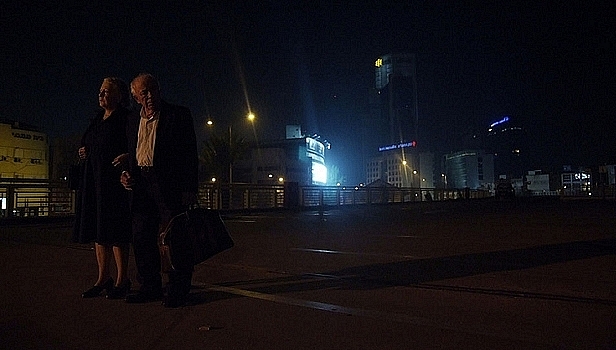
Epilogue (Amir Manor, Israel, 2012, Opening film):

1

(Another short paragraph and I’ll be done with the rant, I promise)

I was in a terrible state of mind when I saw this one. They delayed the screening by an hour, then started the film without subtitles, and then after half the delegates had walked out disappointed and about half an hour of hunting for a PIFF authority (and eventually finding none) began the film. Only to allow the projectionist to talk (read: shout, yell, scream etc.) on the phone for a full 45 minutes.

I came across this review by Leda Galanou which nicely sums up what I thought of, from whatever I could grasp of this mess of a sceening of a fine little film.

Story Of A Love Affair (Michelangelo Antonioni, Italy, 1950, Retrospective) :

                                          “Giovanna separated us in life… And in death…”

This debut feature film of the Italian master Michelangelo Antonioni is as entertaining as it is a meticulous study of its characters stuck in a labyrinth of guilt, paranoia, wild lust and reluctant pragmatism, and a theme common to quite a few Antonioni films – characters replete with material needs but craving for emotional/spiritual solace. The film throws basic noir elements at us right from the beginning, where a private detective investigates about a certain Paola Molon for her rich suspicious husband, ironically causing Paola to meet and eventually start seeing her former lover after years. And what follows is a dark, incisive Hitchcockian trip.

The Fifth Season Of The Year (Jerzy Domaradzki, Poland, 2012, World Competition):

1095_fifth-season-of-the-year-640

The opening 5 minutes of the film are highly misleading. It opens with a picturesque long shot of the sea, sunset and a boat enters the frame, all this accompanied by a quaint piano; followed by a close up of a kohl eyed woman playing with a cigarette lighter; the kind of opening which prepares us for a film blatantly art-house in nature. The rest of the film, however, is nice fluffy entertainment: a romcom-cum-roadtrip movie, and a very likable one. The charm lies in its simplicity and although it doesn’t really offer anything you haven’t seen before, it’s the fine strokes Domaradzki paints the characters with, largely aided by the actors that made this one work for me. After one film  screening full of sulking and another one which was a great film, but a tiring watch too, this film came as a whiff of fresh air.

Kaliya Mardan (D.G.Phalke, India, 1919, 100 Years Of Indian Cinema) :

The film by Dadasaheb Phalke based on Little Krishna’s mischiefs in the neighbourhood and his endeavor to conquer the giant snake Kaliya was the first Indian film to employ special effects. While Ms.Mandakini Phalke steals the show as Krishna, and the film might be historically significant with respect to Indian cinema, it was a bit of a slog and didn’t really work for me. Full film is available on youtube here.

Duvidha (Mani Kaul, India, 1973, 100 Years Of Indian Cinema) :

Duvidha is based on the same Rajasthani folk legend as Amol Palekar’sPaheli. The story has been narrated through voice-over, allowing the haunting imagery to take over the film, and how! The dialogues are minimal, the frames mostly consist of reds and whites, the camera is mostly static and the actors do little but stare at something or someone. And Kaul incredibly employs this hyper de-dramatized style to amplify the eventual pay off. You can watch the entire film on YouTube here.

(P.S. Since Paheli treats the story as a wicked comedy-cum-romance, an approach completely different than Kaul’s, I’m salivating at the idea of Vishal Bhardwaj making his version of Paheli. Anyone?)

——————————————————————————

 Short Films – Live Action shorts by students:

Allah Is Great (25 min, A foreigner in a politically tense region and his Indian cab driver): The film quite smoothly shepherds us through the journey of and the conversations between the foreigner, who’s  here for a conference and his cab driver who’s a die hard film buff, a bade dilwala, and ardently religious. I’m still unsure of the purpose of the inclusion of one of the subplots here. And the film makes me appreciate the ending more than I would have on paper.

Back Against The Wall (14 min, A girl desperately wants the attendant at a shop to know something) : I’d be spoiling it for you if I say anything about the story. All I can tell you about are the performances and the atmosphere, and both are very good here.

Last Calls (22 min, A 17-something girl dials the numbers last dialed by her departed sister) : Wow! This one hits all the right notes. Has a very strong emotional core and terrific mood too. Completely different tonally and structurally, but it reminded me of another favourite of mine, Vihir.

(This was the last of the short films section. Over to feature films.)

————————————————–

Rose (Wojciech Smarzowski, Poland, 2011, World Competition) :

2

It’s Summer of 1945 and we are in Masuria, a German territory before the war but granted to Poland afterwards. The war is the backdrop and the emphasis is on the two main characters living together under brooding circumstances. Shot in greyish-greenish quasi-monochrome, the film doesn’t shy away from showing us the horrific consequences of war – personal lives shattered by macro-level political moves, but instead of going for kitschy manipulation, it wisely and effectively uses these as devices to develop the relationship between Rose, the widow of a soldier and his colleague who happens to stay with her.

Celluloid Man (Shivendra Singh Dungarpur, India, 2012, 100 Years Of Indian Cinema):

Celluloid Man2

The first “Wow!” of the fest. The 164 minute documentary traces the life and work of one of arguably one of the greatest contributors towards Indian cinema not as a filmmaker but as a film archivist : the founder of National Film Archive of India, P.K.Nair. The film begins with a vivid image where we see P.K.Nair juxtaposed against  a scene from Citizen Kane playing on the screen behind him. And the film before us, much like the film playing in the background, builds a fascinating sketch, mostly through interviews, of a towering personality. Through a series of interviews with some important figures of Indian parallel cinema, with each giving insight into Mr.Nair’s life – how he would acquire films from the archives abroad or from the families of the early pioneers, some admitting with a smile and a coy pride that some of their films exist today simply because of Mr. Nair’s relentless and unbiased passion for film preservation. Interspersed with footages from classics, and talks with Mr.Nair himself about his childhood memories with cinema, his “Rosebuds” and how cinema became a part of him and vice versa; the film is a tribute to a man who Indian cinema owes its history to, a fascinating trip to the early cinema, and an important film asserting the importance of film archiving in a country that boasts of its cutural prosperity. What’s more, the screening took place at NFAI and was graced by Mr.Nair’s presence.

The film is scheduled for release in March.  Click here for the teaser. 

Short Films – Legends We Remember:

I Am Twenty (S.N.S Sastry): This epic docu-short was made in 1967, when independent India was exactly 20. Through a series of interviews with the then-20-year-olds hailing from diverse cultural backgrounds and strata and holding diverse interests and ambitions; the film serves as a sprawling essay on the then past, present and future of India with respect to personal, professional, societal, and cultural spheres through its youth; their dreams and their fears, their interaction with the country, and their take on the varied phenomena India was going through then.

Explorer (Pramod Pati):

Pramod Pati’s exceptional Explorer(1968), a highly abstract experimental short can be said to be a hefty companion piece to ‘I Am Twenty’. If Sastry used conversations with youngsters as a device to present a comprehensive picture of India, Pati shows India torn between past and future, science and religion through a mosaic of random, sequentially rhythmic shots using elemental components of cinema: camera movements, the sounds accompanying every shot and swift focus shifts dexterously.

You can watch the film here.

(P.S. Some other films by Pramod Pati are available on Youtube. Here are the links: a) Trip/Udan   b) ABID c) Claxplosion d) Six, Five, Four, Three, Two. )

(Essential reading: 1) A superb exhaustive essay on ‘Explorer’ by Just Another Film Buff

2) Excavating Indian Experimental Film by Shai Heradia 

3) Pramod Pati – The Cinema Of Pra-Yoga, Of Swa-Bhava by Amrit Gangar)

Arrival (Mani Kaul):

Through incessant shots of jam-packed crowd and of the action of eating (consuming), Arrival is a cold, stirring look at the exploitation of life to cater to industrial needs. And even here, Kaul lets the visuals do the talking and the technique is used to maximum effect in one of the most chilling moments of the film, when we’re given a detailed visual account of sheep being brought in, unpeeled and slaughtered, treated like objects; cut to shots of labourers who, much like the sheep, are mere pawns of a much larger commerce.

Daastan-E-AlamAra (Chetan Mathur):

This short uses some 30 stills from Alam Ara that have managed to survive (the film itself is not available anymore) and employs a lyrical narrative written by Kaifi Azmi and sung by Jagjit Singh (citation needed) to plot the story of India’s first talkie. Sounds interesting on paper? Well, the film, sadly, is pitiably insipid.

Khilonewala (S Sukhdev):

The disappointing ‘Khilonewala’ begins with saccharine event when a bunch of children gather around a Khilonewla and he makes faces and sings for them. It was after an assortment of goons (Amrish Puri in multiple roles, to underline the fact that crime has no class or religion) encircle the Khilonewala that the film begins to get unbearable. You can watch it here.

Mandi (Shyam Benegal, India, 1983, Tribute – Ashok Mehta) :

Mandi (Market) satirizes the interpersonal relationships between people directly or indirectly associated with a brothel when a social activist decides to eradicate prostitution from the town. For me, it was darkly funny with some sharp observations and  ironies, but ultimately vacuous.

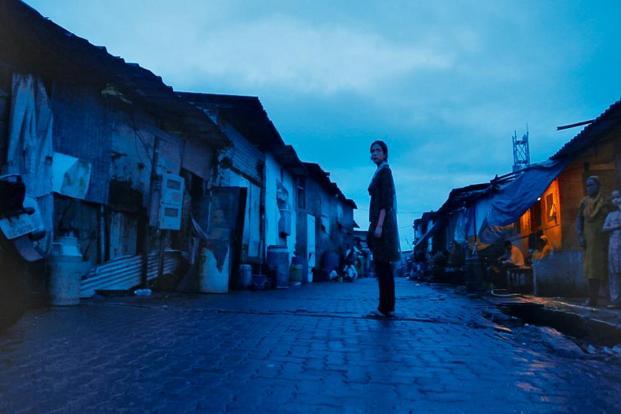
I.D. (Kamal K.M, India, 2012, Indian Cinema Today):

IDKamal--621x414

Another Indian Wow! Here, we have a taut, nuanced thriller that transcends the limitations of the “quest to find someone’s identity” sort of films and presents a complex and intriguing portrayal of obsession, and the ambiguity and elusiveness of one’s “identity” as our protagonist gets sucked from her laidback life shot sharply in robust colours into the dusky blue-tinted world of digression. I was quite impressed. The film is produced by Resul Pookutty and Rajeev Ravi, and I don’t see a reason why it shouldn’t find a release. Don’t miss it when it does. And be warned, the official trailer floating online contains a spoiler.

Blow Up (Michelangelo Antonioni, USA, 1966, Retrospective)

Thomas, a fashion photographer spends most of his time clicking the most glamorous “birds” (sic) in the business, who he is fed up of being with. He clicks informal photographs of a couple in a garden and spots a man with a gun hiding in the bushes when he develops them. He visits the garden the next day, finds the corpse lying there and soon intrigue turns into obsession. The film rightfully doesn’t even care to tell us any more about the murder and Antonioni’s Blow Up is really a solemn rumination of its central character’s emotional solitude and his dire pursuit of the feeling of having done something remarkable. For me, it served as a languid companion piece to the somewhat dynamic Taxi Driver. And it’s the muted final scene of Blow Up that takes it to an all new meditative high. Mind Blown Up.

My Father’s Bike (Piotr Trzaskalski, Poland, 2012, Global Cinema)

My Father’s Bike, a delicately crafted family drama with not one, but two sour father-son relationships at its core. The film, instead of judging its characters, gives us a warm coming-of-age picture of a family with its members innocuously flawed and imperfect. In other words, human; but unforgivably so among themselves. And there’s some very good acting at display.

With You, Without You (PrassannaVithanage,Sri Lanka/India, 2012,Global Cinema)

With You, Without You, based on Dostoyevsky’s short story “The Meek One”; designed and scored in blues making us feel the gloominess; is a tenderly composed and deeply moving film about a personal relationship ruptured irreparably by politically influenced deeds of the past.

Night #1 (Anne Emond, Canada, 2011, Global Cinema)

786-NIGHT_no_1

Night #1 could well be described as a darker, more Bergman-esque version of Before Sunrise. Oh, and quite brilliant. Through their profoundly bleak yet romantic monologues, the two characters open themselves up to each other, revealing their true inner fractured selves after a one-night stand.

Laurence Anyways (Xavier Dolan, France/Canada, 2012, Global Cinema)

156233_445021915514187_361463324_n

Initially, I was sort of put off by Dolan’s music video like style and wasn’t sure what to make of certain sequences. It was after some pondering that the film started to grow. The film tracks over a decade of Lawrence Alia’s life and relationships and remarkably makes us sense not only the protagonist’s physical transformation but her emotional journey as well. And with a lot of heart.

Liv & Ingmar (Dheeraj Akolkar, Norway/UK/India, 2012):

Note: I’m fully aware that it’s unfair to opine about a film one hasn’t seen completely.

Implication of the Note: I walked out.

This utterly frustrating documentary about the off-screen relationship between the legendary Ingmar Bergman and his muse-cum-wife Liv Ullmann makes some terrible choices: it chooses peripheral cutesy over insight, shows us random shots of pretty landscapes which make no sense whatsoever in context and intersperses that with clips from Bergman’s films which are so literally synonymous (and thus redundant) with the lines spoken (by Liv Ullmann in the interviews) that it insults the the medium of cinema itself. I myself am a Bergman fanboy but I can’t even give ‘Liv & Ingmar’ the least respectable pass(?) a film can get, that “it’s strictly for fans.”

Heck, even ‘Mohabbatein…’ was less schmaltzy. Cons of going for a film without watching the trailer. Sigh.

80 Million (Waldemar Krzystek, Poland, 2011, World Competition) :

Beginning with dense details and lots of jargon about a confrontation between communists and the opposition in Poland, what we find here is a rather entertaining heist movie about a group of Solidarity activists who conspire to withdraw 80 million of the Union money from a bank before their account would be blocked. And it was refreshing to see a film that declares that it was “based on true events” only in the end credits.

The Adventure (Michelangelo Antonioni, Italy/France, 1960, Global Cinema):

Much like Antonioni’s ‘Story Of A Love Affair’, we have a couple madly in love but separated by the dead, by their conscience. And much like a theme common to a lot of his films, it is a study of the emotional isolation of its characters and the complexity of love.

Clip (Maja Milos, Serbia, 2012, Global Cinema):

The disconcerted Clip is crammed-to-the-point-of-rupture with scenes of hyper-explicit sex (so much so that it has little else to offer for most part) and often tested my patience. It’s only towards the end that the film begins to work as an unruly depiction of the wayward, disturbingly nonchalant and shallow youth of urban Serbia. And all those scenes, which had seemed showy earlier, start making sense rendering the film with meaning. A one that takes forever to arrive at its point? Yes, and may be no. May be, the indulgence is the point here. May be the director wants the film to be a metaphor for its characters. Boy, that was repulsive in parts, often repetitive, but ultimately trippy. And a special mention for Jelena Mitrovic, who is absolutely terrific as the disillusioned, riotous Jasna.

Chidambaram (Govind Aravindan, India, 1985, Retrospective):

The imagery and expressive silences render the languidly paced Chidambaram effectively with the meditative quality it was supposed to have.  Aravindan explores the personal spiritual journey of Shankaran battling his own conscience.

BiggerLOGO

Light play, clever shooting angels, or whatever people might be waiting for, when Vishal Bhardwaj announces a film, there is a breed of people that waits for the music of his film because even if it is ‘7 Khoon maaf’-ish, the music album comes packed with a lot of ‘Gulzar Goodies’. Save for the mess that the music release of the film created, we really can’t complain much because as someone wise once remarked ‘If it’s worth the wait, then shut up!’

1. Matru Ki Bijlee Ka Mandola – Sukhwinder…O Sukhwinder! You have done so much on the same lines already, yet you make it sound all so easy and peppy! Excellently arranged and marvellously penned, the song gives a lesson or two to some ill-fated idiots who think in order to sound catchy (and in order to use the name of the film in a song) they have to have an ‘item’ to endorse it. The splendid African weaving in between (with a continuous guitar note in the background) gives the song a certain amount of class that is always missing when it comes to halkat sheilas who are talking about munnis all the time. The bass effect that ‘stops and starts’ gives just the adequate thump to the song. 2 Thumbs up!

2. Khamakha – Beautiful ‘evening’ guitars, accompanied by a coral like backup group (with African lyrics?), excellent bass and, and, and Vishal Bhardwaj! Sung like a madly in love ‘aashiq’, this is easily one of the best arranged songs by Vishal ever. The simple yet never so beautifully expressed habits of those in love (sleeping by the window, for example) are a forte of Gulzarsaab. What amazes simple listeners like us is his ability to convey love every time in the simplest manner without EVER repeating words. Anyway, the end of the song, the last 1 minute and 14 seconds of the song, tell us why there is an ever-growing army of hopeless romantics who wait for a Vishal Bhardwaj music album. The song is pregnant with a range of varied emotions that haven’t been explored before. The note on which the song starts and the note on which ends will tell you exactly what we are talking about. 3 Thumbs up!

3. Oye Boy Charlie – ‘Singerwala Shankar Mahadevan’ starts the song and the song shoots higher thanks to Rekha Bhardwaj and Mohit Chauhan. There is a bit of saxophone and then there is a bit of nasal Shankar Mahadevan (that is just too good!) and then there is a good amount of ‘motorwala mouth organ’ in between along with good guitar. ‘Vishal purists’ might not like the song much because there is an element of cacophony in between, where you feel VB is trying too hard to arrest your attention by throwing in too many elements altogether. There are way too many elements that I missed in the first hearing. It is a fun song with an element of ‘Jhoom Barabar Jhoom’ and ‘Kajra re’ and ‘Satrangi re’ and some comedy and this and that!

4. Lootnewaley – Sukhwinder and Master Saleem start the song. If you play the song with the ‘Awara’ expectation from Master Saleem, you will be a tad disappointed. Sukhwinder emotes better than Saleem to convey the anger. The track is serious. The words are direct and effective. Clearly, a revolution is being hinted. At times chaotic (which may be intentional), the song won’t set music charts on fire. You might argue that any other set of singers could have done the same job as Sukhwinder or Master Saleem have done. The fantastic possibility that these two names promised is clearly missing. How we wish they were exploited better!

5. Sha ra ra – Prem Dehati starts the song again with the typical mela like music arrangement. The brass bands sing along with the singer to elevate the effect of the song. A very short track that begins and ends leaving the brass bands in your mind.

6. Badal Uthiya – The track starts beautifully with Prem Dehati echoing at a distance and then the music setting takes a completely contemporary turn with generous dose of sitar in between. Rekha Bhardwaj does a splendid job (What’s new?) with this track and even though the Prem Dehati version of the song is my favorite, this track can’t be sidelined at all. Rekha Bhardwaj in her typical ‘soul drugged with romance’ voice makes it very hummable.

7. Char dina ki – A Haryanvi kickass item that just elevates the level of the album and how! Excessive usage of brass bands and some real catchy lyrics ensure that it has a very roadside feel. The beginning of this track has shades of ‘chicha leather‘ from Gangs of Wasseypur. Pankaj Kapur, Prem Dehati and Imran Khan go behind the microphone for this and clearly Mr. Kapoor is having fun like only he can. Excellent track! (Mind it – ‘Char dina ki chamak chandni’ will linger in your head…shart laga lo tau!)

8. Chor Police – A fun recitation by Pankaj Kapur with heavy dose of political wrongdoings that the elected government has been committing. Ends with a splash! Back up vocals, brass band and excellent tempo ‘waali’ claps is what make this track up…good one!

9. Nomvula – African track it may be, but this composition has fun written all over it. If you aren’t one of the ‘I don’t understand the words so I won’t automatically like the song’, then you will like it. A very ‘by the beach with beers’ feel. Really what’s music got to do with language?

10. Badal uthiya (Reprise) – There are few good souls that are trying their best to give the masses a taste of the sheer variety that Hindustani classical offers. This song is an addition to that effort. Prem Dehati accompanied with excellent sitar and a contemporary music arrangement hold your soul hostage. The words, the pronunciation of the same, the stillness, the sadness, everything has traces of God particle in it. If you didn’t know, God particle is generally defined as a song/composition that has mastery of Gulzar saab and Vishal Bhardwaj in it.

11. Lootnewaaley (Reprise) – A strong vocal demonstration against the shrewd landlords, Sukhwinder leads the backup singers in what sounds like a ‘lagaan-like’ track, feel wise. Word rich and music light. The track is clearly banking a lot on the visuals. It isn’t musically as structured as the other version. Clearly a circumstantial song.

Including the recitations and other titbits is the new ‘in’ thing for Hindi film O.S.T these days. Strictly ‘song-wise’ speaking, Khamakha, Badal Uthiya (both versions but Prem Dehati version), title song and Oye Boy Charlie are the ones that will remain with us and that’s a lot of them! We missed the mandatory ‘Have Vishal, so Suresh Wadkar will sing’ song.

An album that benefits (like all of us!) with the presence of Gulzar saab and showcases the obvious abilities of Vishal Bhardwaj, the composer. Also, those having silly doubts on Gulzar saab (Ref: JTHJ) have gone missing and how! ख़ामाखा का doubt, वो भी अल्लाह पे? हट पगले!

Post by @Rohwit (who is currently देहाती.)

Wouldn’t it be very boring if we all start liking the same things – no arguments, no fights. And that’s the beauty of  cinema – a divided house, because it means different things to different people. So while i wasn’t sure about the “faith” factor in this week’s release, Life Of Pi, here’s a post by Suprateek Chatterjee who thinks otherwise – have faith, will sail.

A software engineer by degree, Suprateek is passionate about cinema as well as music, and on weekends, can be found writing, composing and playing new music for his electro-rock band Vega Massive. He harbours a strong dislike for pretentious attitudes, Salman Khan fans and Andheri station. Currently at Hindustan Times as features writer/film critic.

Until the age of ten, I used to be quite religious. More than religion, it was mythology that fascinated me. C Rajagopalchari’s versions of Ramayana and Mahabharata occupied a place of pride on my bookshelf, next to my prized Enid Blytons, Hardy Boys and R L Stine’s Fear Street series. I had another book, Tales From The Bible, part of my Catechism/Moral Science curriculum in Don Bosco School, Delhi, where I studied for four years. I was fascinated by the stories, wildly improbable as they seem now, and would often characterise myself according to them.

Alas, I eventually grew up and turned to atheism. However, while the myth stopped appealing to me, the stories didn’t. Over the years, I realised that a part of being religious is accepting a myth blindly, no matter how incredible it sounds. It doesn’t make you smarter or stupider – or better or worse – to give yourself to the myth, and take back the right lessons (whatever those may be).

I read Yann Martel’s Life Of Pi nearly nine years ago and have been waiting dying to watch a cinematic version since. The fact that it was supposedly ‘unfilmable’ (I don’t think I ever agreed with that) only added to the charm, given that past cine-adaptations of unfilmable novels have included stellar films such as ‘A Clockwork Orange’, ‘Lolita’ and ‘American Psycho’, amongst many others.

I watched Ang Lee’s version last Tuesday at a press screening and was stunned. To me, this is the best film version of the novel that could’ve been made. The visuals were stunning and usage of 3D, to me, the best ever – it somehow felt more necessary here than it did even in ‘Avatar’, to convey that feeling of loneliness and intimacy, not to mention the stunning CGI and creature effects. Richard Parker, the part-live-action, part-CGI tiger, is a creation of genius, and goes right up there with Gollum in the category of Non-Human Characters That Deserve All Kinds Of Accolades. The sequence where a helpless Pi spreads his arms heavenward in the face of a raging storm, screaming, “I give myself to you, God!” stands out as one of the most powerful sequences in recent memory. And, of course, that little sequence depicting Pi’s hallucinations when he’s almost lost hope is surely our generation’s version of the Jupiter and Beyond sequence from 2001: A Space Odyssey. If there were an award for The Trippiest Shit Ever Put On Film, this sequence would surely be a strong contender.

I’m not saying I loved everything about the film. David Magee’s screenplay was slightly patchy and hurriedly put together – I agree with CilemaSnob only on that count, that one doesn’t entirely get the sense of Pi having spent 227 days out at sea. Also, that short minute-and-a-half appearance of Pi’s uncle, who named him, has got to be the worst Peter Sellers impression of all time.

That said, a lot of people have been criticising the accents in the film, particularly how Irrfan, the older Pi, and Sharma, the younger one, don’t sound like they speak the same way. How people have come to this conclusion (without being armed with a degree in linguistics, might I add) is beyond me. The older Pi has stayed in Canada for 20 years, but clearly within an Indian community. If we must nitpick about accents, why should we assume that Irrfan’s mostly-Indian-with-a-few-random-Canadian-inflections accent is inauthentic? After all, accents have no set patterns – I have a friend who went to the States for a year and came back with a strong accent and an uncle who has lived in the UK for 40 years and sounds like a Kolkata Bengali trying to put on a slight British accent. Isn’t this just our inherent bias of trying to look for flaws because we’re so sensitive about how Indians are being portrayed by Hollywood, as though Hollywood is aces at portraying everyone else accurately? One justification for this argument goes: “How come our actors can’t pull off accents as well as theirs can?” The answer, of course, is “That statement is bollocks, unless one’s name is Christian Bale,” as this article and this article will show you.

As for the central complaint, about why a story that claims to make one believe in God doesn’t leave you feeling any different, all I can say is, somewhere Yann Martel and Ang Lee are snickering to themselves over a drink and saying, “Gotcha!” Were you really expecting your carefully-constructed belief system, built up over at least a couple of decades, to be shaken by a two-and-a-half hour film? Life Of Pi is not a story about God or religion – it is a well-disguised critique, or should I say an analysis, of how faith affects us. The concept of the myth, religion’s greatest tool, forms the basis for the central act of Life Of Pi. The alternate storyline, revealed at the end, is probably the true version of events, but does that matter? Ultimately, the story is all about faith: Pi’s faith in his many Gods, his faith in his ability to survive, his faith in the story he tells and our faith in his journey.

Irrfan’s Pi asks the writer, “Which of the two is a better story?” Martel and Lee seem to be asking us a similar question: “Between religion and its sometimes-incredible myths, and atheism and its rationalised outlook, which do you prefer?” Whichever side of the fence you’re on, the answer is immaterial; what they’re really asking us is, “Do you like good stories or do you like great stories?”