Archive for July, 2015

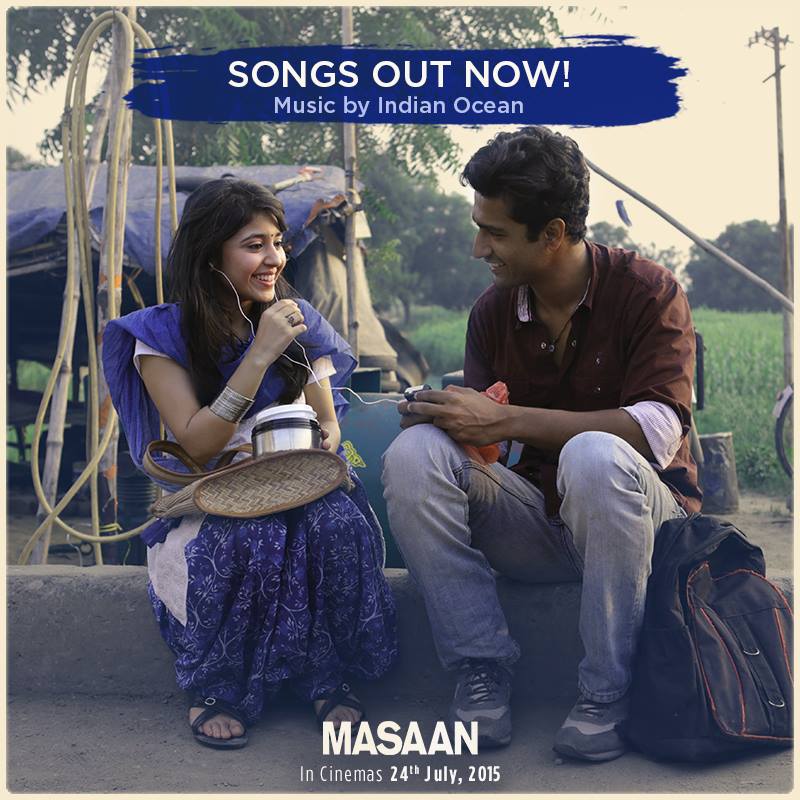
Masaan Music

Neeraj Ghaywan‘s FIPRESCI winner at Cannes 2015, MASAAN releases in India on 24th July. Here, film’s screenplay writer and lyricist Varun Grover talks about the music of the film.

**********

Masaan  is the most difficult music album I have worked on till now. It has just 3 songs, out of which one (‘Bhor‘) is written by Sanjeev Sharma, and still the amount of distress and self-doubt I went through figuring out the lyrics for the other two was more than me and Sneha Khanwalkar felt on the mammoth ‘Gangs of Wasseypur’ album.

Prime reason was the burden of being the writer of the film as well and hence this feeling that lyrics in this film should be ‘extra-special’. As I said elsewhere, “Jab halwaayi ke ghar mein hi shaadi ho toh mithaayi se expectations unreal ho jaati hain aur halwaayi ki zindagi haraam ho jaati hai.’

This self-doubt also made the choice of a music director for the film difficult and after meeting some really worthy composers, we decided to request Indian Ocean to come on board.

1. Tu Kisi Rail Si

As I was low on confidence and the film has an element of poetry (Shweta Tripathi’s character is a shaayari-fan), we thought of using some existing Hindi poetry for the love song. One poem by Uday Prakash saab (Kuchh bann jaate hainI loved in particular and we shared it with Indian Ocean who gave us strange looks as it’s in Mukd Chhand and nearly impossible to compose.

Then suddenly, these lines by Dushyant Kumar saab came back to me and I knew we have a starting point. I had heard these lines first many years ago at an informal kavi sammelan at a friend’s wedding in Lucknow. (Haan ji, Lucknow mein shaadiyon mein bhi kavi-sammelan hota hai.)

I wrote the rest of the lyrics, taking the first two lines from Dushyant Kumar’s ghazal ‘Main jise oadhta bichhaata hoon‘. After many tunes by Indian Ocean, we finally arrived at a consensus on one based on the footage, tempo, tone, and rhythm of the song. Since the footage was already shot and it had to be a celebratory number, these criteria were necessary to be fullilled.

We also got to meet Dushyant saab’s wife (Rajeshwari ji) and his son Aalok Tyagi ji who by a huge stroke of luck happened to live right across our editing studio in Versova! They gave us permissions and blessings for the song.

Dushyant Kumar ji

Swanand Kirkire recorded it in his grainy voice and we had our song ready.

Lyrics: 

Mukhda
Tu kisi rail si guzarti hai
Main kisi pull sa thartharaata hoon
Tu bhaley ratti bhar na sunti hai,
Main tera naam budbudaata hoon.
Kisi lambe safar ki raaton mein,

tujhe alaav sa jalaata hoon.

Antara

Kaath ke taaley hain,
aankh pe daale hain,
unmein ishaaron ki chaabiyaan laga.
Raat jo baaqi hai,
shaam se taaki hai,
neeyat mein thodi kharaabiyaan laga.
Main hoon paani ke bulbuley jaisa,

tujhko sochoon toh, phoot jaata hoon.

*********

*********

2. Mann Kasturi Re

If the first song killed us, the second one did it twice over. This song is supposed to be the soul of the film, the theme that connects all the stories and characters which meant ‘Anthem jaisa kuchh chaahiye‘. Another problem was that the reference track on the footage was ‘Aik Alif‘ from Coke Studio Pakistan and it was too overwhelming a track to compete with.
For this one too, my first instinct was to run away and leave the job to some great. So we chose Nazir Akbarabaadi’s ‘Banjaranama‘ and Indian Ocean did a fantastic job of composing it into a stunning anthem. The only problem – the tempo of the footage was on another level. Marta kya na karta, I had to step in and attempt writing new words.

Like it happens most of the times, difficult to tell how/when this phrase ‘Mann Kasturi‘ popped in my head but the rest of the song became easy after that. Kabir and Banaras were constant in my head while writing it.

Lyrics

Mukhda

Mann kasturi re,
jag dasturi re,
baat huyi naa poori re!
Khoje apni gandh naa paave,
chaadar ka paiband naa paave,
bikhre bikhre chhand sa tahale,
dohon mein ye bandh na paave.
Naache ho ke phirki lattu,
khoje apni dhoori re,

Mann kasturi re!

Antara

Umar ki ginti haath naa aayi,
purkhon ne ye baat bataayi,
Ulta kar ke dekh sake toh,
Ambar bhi hai gehri khaayi.
Rekhaaon ke paar nazar ko,
Jisne phenka andhe mann se,
Satrangi bazaar ka khola,
Darwaaza phir bina jatan ke!
Phir toh jhooma baawal ho ke,
Sar pe daal fitoori re

Mann kasturi re!

For lyrics in Devnagari, click here.

Full album here:

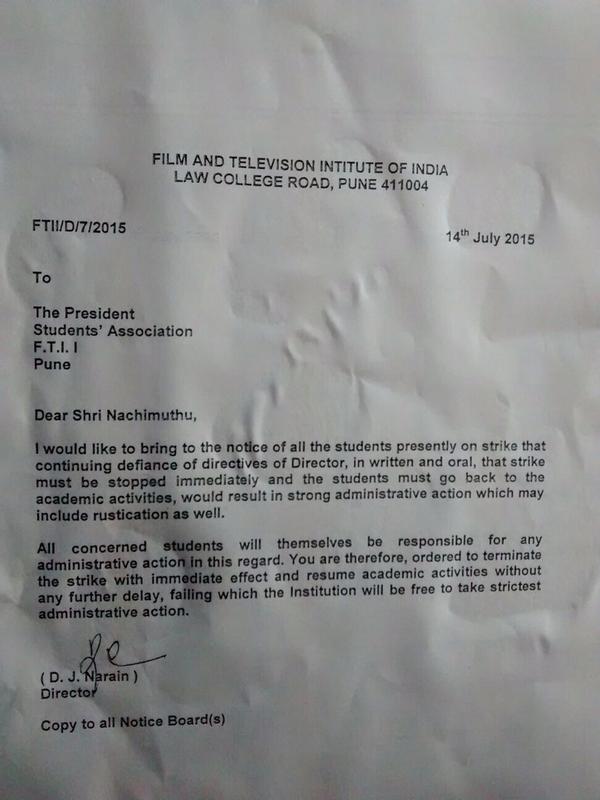
With the Government in no mood to replace Gajendra Chauhan, FTII has now gone ahead with a strict warning to the students. The Director of the institute has issued a notice to the students asking them to stop the strike or face severe consequences. This is so weird and wrong at so many levels, especially when so many film talents across the board and alumni of the institute are also backing the students demands.

CJ98aiFVEAAf6dN

Oscar and BAFTA Award winning sound designer Resul Pookutty was among those who criticized the latest move by FTII.

11254134_1613812798858597_8819805450063716450_oWe have yet again communicated with the I&B ministry to open a second round of discussion. A letter was sent yesterday, to which we are yet to receive a response. Meanwhile, many claims and counter claims are being made with respect to FTII, the students and the academic culture of the Institute. With no communication coming forth from the ministry, it becomes imperative to clear air of speculations and faulty, misunderstood facts, and provide context to the allegations made. For without perspective, they are no better than half-truths.

Backlogs:

The alleged backlogs of certain batches is not a recent phenomenon but a result of government policies imposed on the institute from 2004-05. To quote Mr.Pankaj Rag, IAS officer and former Director of FTII (2008 – 2011), “….In 2004-05 eight new short term courses were started, and that suddenly increased the number of students. The Supreme Court ruling regarding the increase of reservations quota also added to the number of students. Despite this rise in the number of students the infrastructure and human resources of the institute were not increased and upgraded, which should have happened simultaneously…”

Adding to that, earlier the three-year course for the four main disciplines of film-making – Direction, Cinematography, Editing and Audiography, catered for 8 students per department. As of now there are 14 students per discipline and for some batches the figure rises to 16. Hence more number of student films is being made per year without adequate infrastructure support. This obviously leads to delay as students helplessly wait for the equipment and infrastructural support to be available.

Also in the recent years, within the practice of film-making, the technology has rapidly shifted from analog to digital. While earlier we used film negative rolls to shoot films, now the practice is to use digital cameras and equipment. With this shift, the accompanying upgradation in skills of faculty and staff vis-a-vis these new technologies was not undertaken. Apart from a few short workshops by experts from the industry, no effort has been made to offer an in-depth, holistic training to the students. Hence we are left to our own means to learn and use this equipment. This is a major reason for delays in completion of students’ projects.

Infrastructure crunch adds to our woes. There is only one Sound mixing studio for all the projects happening on campus. So, while the projects are shot on time, at the post-production stage students have no option but wait for a previous project to close. Why are students alone being blamed for the delays? Why would Post-Graduate level students extend their courses and compromise on the productive years of their lives? Without understanding the real day-to-day problems, faced by a student on this campus, allegations regarding our conduct and academic sincerity are misinformed and conveniently hide various Governments’ repeated apathy towards the Institute.

Number of Strikes

Here we reiterate the need to discern the difference between a protest and a strike. FTII, we repeat has not witnessed 39 strikes. The number is preposterous. We ask those who make such allegations to back their claims with evidence. To our knowledge, as per official records FTII has seen 32 protests and six strikes till date, the current strike being the seventh in number. Also, it’s important to get a perspective on the reasons for the strikes called in the past. The first strike was called in 1971 to protest changes in course structure and syllabus. In 1979 strike was called against the decision to discontinue the acting course which took another 28 years to restart. All the following strikes in 1984 – against administrative issues, in 1989 – against syllabus change and director’s apathy, 1994 – proposed syllabus and privatization, 2001 – against fee hike and revised course structure, points less towards restless students and more towards successive governments’ lack of commitment and vision to address recurring systemic issues. It also highlights a historic oversight, repeated till date- syllabus and academic changes made without accounting for the needs, aspirations of students along with a lack of pedagogic vision for the study and practice of film making.

This has led to the present scenario where on paper, even in an ideal situation, second and third year syllabi and projects cannot be completed within a year. A knee-jerk solution to this is repeatedly offered in ways that dilute course inputs and project based practice to fit the three year time frame. However, constructive suggestions to revitalize the syllabus, teaching approach and quality of inputs are not taken into account. Dilution rather than dedication seems to direct education policy approach.

After sixty years of independence, students are still not considered important stakeholders and therefore collaborators in devising education policies. Why such a top down approach? How can a young India bear the burden of such old values?

Tax Payer’s Money:

Comparing the functioning of FTII to that of an IIT, IIM or Medical college is both unfair and misleading. All four institutes cater to different academic and professional pursuits. In FTII students are required to make films using state-of-the-art technology that is in accordance with standards followed across the world. These equipments are manufactured outside the country and cost per unit is high. For example, one Arri Alexa camera used to shoot student projects cost between one to two crores, this includes cost of lenses and other accessories. This very camera is hired out for Rs. 25000-30000 per shift of 8 hours. Similarly other equipment like the sound recording devices, studio lights, post production software and hardware, used throughout the process of making a film are expensive. Hence film-making is resource heavy. So the alleged amount a Government spends per student must be understood in this context, of many students sharing limited resources.

Per batch FTII trains around 60 students in the 5 main disciplines of film-making. Acting enrolls another 12 students. An IIT trains, on an average, 500 students per year. Comparisons made to compare per student expenditure in the two institutes are misleading as nature of resources needed are different.

Here we humbly ask the government to provide a concrete break down of the alleged 12 lakhs being spent on each student because our daily struggle with diminishing academic resources point to the opposite. We indeed want more transparency to locate where the funds are going?

Also, the government grants FTII about 20 crores per year. Whereas IIT Guwahati gets Rs.110crores and IIT Bombay gets Rs.100crores. Then is the current debate about whether arts are as relevant as science and technology, to a country like India. Isn’t it the duty of any responsible and progressive government to equally support the arts and crafts of a country? How can the plural fabric of our nation and culture be democratically represented without patronage of the various arts and crafts, whether it be classical dance, music, folk art or cinema.

In fact, for a country so zealously building its international reputation, cannot afford to ignore the appeal and soft power of its cultural art forms and cinema. Delegations and heavy dossiers don’t win over as convincingly as simple yet powerful truths; art has the power to communicate. Therefore, the recent tarnishing of FTII’s image is short-sighted and regrettable. An institute that is a cultural asset for this country both nationally and internationally is being asked to justify its very existence. And, above all these facts, the government should take note on one thing that any forms of art cannot be quantified in material terms.

In this regard, the cut in allocations to education and heath from the GDP is a step that retreats than fosters growth. As repeatedly mentioned by renowned economists, education is the building block of any nation that aspires to be developed. A strong nation needs strong and empowered citizens.

Students’ Association, FTII

FB Page is here.

11221886_10154045180829863_6005978746482162900_nAcclaimed production designer Samir Chanda made his directorial debut with a Bengali film titled Ek Nadir Golpo (Tale Of A River). The film stars Mithun Chakrabaorty, Shweta Prasad and Jisshu Sengupta. It’s an adaptation of a short story by well known Bengali writer Sunil Gangopadhay.

Unfortunately, because of his untimely death in 2011, he could not see the release of the film.

Now, his son Sandeepan Chanda shared the good news about its release on a FB post.

So here is a little story for those who might not know about it.

Back in 2006, my father decided to take a break from being a production designer and make his directorial debut. He chose to adapt a small Bengali story he had read and was deeply moved by when he was in his college days. After borrowing money from his friends and also putting in all his savings, he jumped head first into the project. We all became involved in it, all his family members, most of his friends and then by his sheer enthusiasm and passion, we finished the film a year later. It went on to be screened at various prestigious film festivals and was critically lauded by all. He now only needed to share his labor of love with the audience.

But unfortunately he struggled to find a distributor/exhibitor who would buy the film and release it in theaters. A struggle that went on for the next four years before his untimely death in 2011. His wish remained unfulfilled.

My mother then took on the responsibility to shop the film to various production companies and distributors. And now because of her persistence and having the patience to endure smaller setbacks, the film, 8 years after being filmed, is all set to release in theaters on 14th of August, this year. A dream which started with my father, soon became ours and is now on its way to become a reality.

‘Ek Nadir Galpo – Tale of a River’
A film by – Samir Chanda

Trailer

https://www.youtube.com/watch?v=0XV5JpMwhSE

Crew

Produced by Leela Chanda & Kaustuv Ray

Screenplay, Dialogues & Direction : Samir Chanda

Executive Producer : Chintu Mohapatra & Sanjay Pathak

Lyrics & Music : Nachiketa

DOP : Rajen Kothari

Editor : Sanjib Dutta

Trailer/Making : Subrata Dey, Debashis Mondal

CHwp7T7UAAAU-6I

With students of Film and Television Institute Of India in no mood to compromise, the strike is still on. And looking at what the Government’s various mouthpieces (people, sites, channels) are shouting, this seems to be a clear cut strategy.

First, they can’t contest the fact that Gajendra Chauhan is not really a credential face for the FTII.

SO —> Second, since that’s not working and we can’t take control of the institute, let’s shut it down.

WHY? —-> Third, FTII is the heaven for drugs and debauchery. There is no focus on studies and the course. Anonymous posts are being circulated.

HOW? —> Fourth, so the Government is wasting “YOUR” tax money in a film institute where “naxalites and anti-government” people are having fun. It just doesn’t make any sense, right? Remember the stress on “your”. Yes, “your” tax money should be spent on MP/MLAs subsidised canteens and big statues.

Aha, what coincidence. And this is coming out from every mouthpiece. A pied piper says so, everyone repeats it.

At its core is a stupid mindset that still thinks “engineering” is the only reason that mankind exists. So Government should spend money on IITs only. And 100 other universities where nobody smokes or drinks or have never even heard of any kind smoking stuff. And yes, we must spend money on big big statues that will save us from every disaster.

Since art (and especially films which have the widest reach) is one of the strongest voice of dissent, why spend money on people who will raise their voice against us? Why feed them? And what is the use of a camera anyway, other than clicking a selfie, right? For that you don’t need to run a film institute.

Aha, myopia at its worst.

Not surprising that the few voices which are supporting the idea that FTII should be privatised are the ones who run their own private institutes who charge such exorbitant fees that most can’t even afford. In such a scenario, FTII/SRFTII is the only hope for many who want to get into arts. In terms of quality, almuni and the credential, those private institutes are light years behind FTII. It’s not only a premiere institute in the country, but is easily among the best in the world. It would be a really sad scenario if just for selfish political mileage the institute will be harmed in anyway.

Also, those who are claiming that since bollywood makes so much money, why should Governement run it. Well, FTII is NOT bollywood. Indian Cinema is NOT just bollywood. Get up from your troll account, google, learn what it is about.

As far as the claims about FTII gone to dogs in last 10 years, so it should be shut down, well, we have tried to compile the list of those “dogs” who have got some kind of national/international claim in the last few years. We are sure this is not a complete list, and we must be missing many here. Do keep adding the names in the comments section. And remember, this is just last 10 year list.

It takes years to build an institute of such repute. It takes one bad decision to kill it all.

2004
Nice Girls – by Nimisha Pandey Best Documentary Film Award – 0110 Digital Film Festival, New Delhi, 2004
Ek Aakash – by Sudhakar Reddy Special Mention Award – 3rd International Film Festival, Argentina,

Special Jury Award, 51st National Film Award 2003

Baba Pagla – by Ramesh Birajdar Best Audiography, 51st National Film Award 2003
Mangali – by Shilpi Das Gupta Special Mention for Innovative Direction, 51st National Film Award 2003
2005
Girni – by Umesh Kulkarni

Cinematography by Manoj Lobo

Best Short Film Award, Govt. of Maharashtra, 2005

Best Non-Feature Film, 52nd National Film Awards 2004

Best Cinematography Award, 52nd National Film Awards 2004

Dwijaa – by Pankaj Purandare Best Film on Social Issues, 52nd National Film Awards 2004
Kshya Tra Ghya – by Amit Dutta

Audiography by Vivek

Special Jury Mention, 52nd National Film Awards 2004

Best Audiography Award, 52nd National Film Awards 2004

Cradle Song – by Nimisha Pandey 1) Best Short Fiction Film, 52nd National Film Awards 2004
Saanjh – by Jasmine Kaur 1) Best Film on Family Welfare, 52nd National Film Awards 2004
Sukravarsh Aakash – by Emmanuel Palo 1) First Prize of EADS AIRAET, Germany, 2005
Amachi Kasauti – by Rrihu Laha 1) Best TV Documentary, IBDA          Awards, Dubai

2) Best Student Film, INR 10,000

2006
Closer – by Anmol Bhave ‘Rajat Kamal’ Award for Best Audiography, 53rd National Film Awards, 2005
Voices Across The Ocean – by Ganesh Gaikwad ‘Swarna Kamal’ Award for Best Direction, 53rd National Film Awards, 2005
Parsiwada Tarapore Present Day – by Paramvir Singh ‘Rajat Kamal’ Award for Best Cinematography, 53rd National Film Awards, 2005
Chabiwali Pocket Watch – by Vibhu Puri

Anay Goswamy

Best Feature at IBDA Awards, Dubai 2005

Special Kodak Award for the director at the 13th International Film School Festival, Poland

Special Jury Award for the director Vibhu Puri, 53rd National Film Awards, 2006

Winner, Asia Pacific Kodak Filmschool Competition, 2006

Best Cinematography award in the ‘Emerging Filmmakers’ section, Cannes Film Festival:

2007
Kramasha – by Amit Dutta

2009

Kramasha – by Savita Singh

Kramasha – by Ajit Singh Rathore

2007

“GOLD MIKELDI FOR FICTION” by the International Jury of the 49th edition of the Bilbao International Festival of Documentary and Short Films, Spain

2008

Golden Conch, MIFF, 2008

2009

Rajat Kamal and cash prize of Rs. 50,000/- for Best Cinematography in 55th National Awards

Rajat Kamal and a cash prize of Rs. 50,000/-  for Best Audiography in 55th National Awards

Bhanga Ghara, Nilanjan Datta Silver Lotus, Best film on Environment, 55th National Film Awards (Awarded in 2009)
2008
Chasing Angelina Jolie – by Saurav Dey Best Student Documentary (Golden Trophy), Indian Documentary Producers Association, Mumbai
Udedh Bun – by Siddhartha Sinha Silver Bear, 58th Berlin International Film Festival, Berlin, 2008

Rajat Kamal and Cash Prize of Rs. 50,000/- to the Director for Best Short Fiction in 55th National Awards

Haravalele Indradhanushya – by Dhiraj Meshram 1) Silver Conch, MIFF, 2008

2) Best Short Fiction Film (Golden Trophy) and Best Screenplay (Silver Trophy), Indian Documentary Producers Association, Mumbai.

Undertakers – by Emmanuel Palo Silver Conch, MIFF, 2008
Three of Us – by Umesh Kulkarni

Shariqua Badar Khan Cameraperson

2008:

Grand Prix Grimstad , 2500 Euro,Norwegian Short Film Festival

Best Documentary and Trophy, 16th Curtas Vila Do Conde International Film Festival, Portugal.

Best Documentary Award, Rio de Janeiro International Short Film Festival – Curta Cinema 2008

Grand jury prize, signe de nuit, France

PATTON award for Best Indian Film, 6th Kalpanirjhar International Short Fiction Film Festival, Kolkata.

2009:

6th Competitive We Care Filmfest  2009, New Delhi  First Prize (Mentally Challenged Category)

2010:

Best Direction – SWARNA Kamal and Rs 1,00,000/- to the Director, 56th National Awards 2008

Best Cinematography – Rajat Kamal and a cash prize of Rs. 50,000/- and Adlabs Mumbai, 56th National Awards 2008

Narmeen – by Dipti Gogna HBO Short Film Competition Jury Award and cash prize of $2,500, 5th South Asian International Film Festival 2008, New York.

Best Director Award of a cash prize – $1,000, Whistling Woods International Students Film Competition Live Action

(Short Film) During 7th Pune International Film Festival, Pune.

Jury Award for Best Short Film at the 7th annual Indian Film Festival of Los Angeles

2009:

Gold Award for ‘Excellence in Short Fiction’ (Professional category) in Indian Documentary Producers’ Association (IDPA)

Best Short Film Award at ‘Bollywood and beyond’ Indian Film Festival, Stuttgart, Germany 09

Jury Special Mention Award for Section – “Children World” in 7th edition of the International Short Festival ‘Salento Finibus Terraein’, Italy.

Gold Award for ‘Excellence in Sound Design’ (Fiction) in Indian Documentary Producers’ Association (IDPA) – Manik Batra

2010

Best Music Direction Award – Rajat Kamal and a cash prize of Rs. 50,000/-, 56th National Awards 2008 – Vipin Mishra

PATTON AWARD for the Best Indian entry 8th Kalpanirjhar International Short Fiction Film Festival, Kolkata – November 1 to 5, 2010

2009
Dhin Tak Dha – Saikat Ray 1) Gold Award for ‘Excellence in Editing’ (Fiction) in Indian Documentary Producers’ Association (IDPA).
Swayambhu Sen Foresees his End – by  Debashish Medhekar 1) Certificate for Merit for Best Short Fiction’ (under 30 minute) in Indian Documentary Producers’ Association (IDPA).
In Transit – by Arunima Sharma 1) ‘Silver Award’ for ‘Best Documentary’ (30 min.) in Indian Documentary Producers’ Association (IDPA)
Who Thought of the Little Boy  – Devendra Golatkar 1) Gold Award for ‘Excellence in Cinematography’ in Indian Documentary Producers’ Association (IDPA)
Take Off – by Collin D’Cunha Koenig Ludwig Trophy for Best Beer Advertisement, Munich 2009
Echoes of Silence –  by Zubin Garg – Rajat Kamal and a cash prize of Rs. 50,000/- for Best Music Direction Award in 55th National Awards
Aadmi ki Aurat Aur Anya Kahaniyan (The Man’s Woman and Other Stories) – by  Amit Dutta 1) Special Mention in the competition section of Horizon (Orizzonti Section) – 66th Venice International Film Festival held from 2nd to 12th September, 2009
Turbulence – Cinematography by Rangoli Agarwal Best Film / TV Feature – Ibda’a Awards, Dubai, 2009
Gaarud – Umesh Kulkarni

Deepu S. Unni, Cameraman

Lipika Singh Darai Sound

PATTON award for Best Indian Film, 7th Kalpanirjhar International Short Fiction Film Festival, Kolkata.

Sharing Best Film : Short Fiction (Under 30)- Gold, Indian Documentary Producers’ Association (IDPA) 2009, Mumbai

2010

Golden Conch (cash award of Rs. 3 Lakh/-, MIFF, 2010)

Sharing Best Film : Short Fiction (Under 30)- Gold, Indian Documentary Producers’ Association (IDPA) 2009, Mumbai

Best Cinematography – Rajat Kamal and a cash prize of Rs. 50,000/- and Adlabs, Mumbai – 57th National Awards 2009.

Best Audiography for Re-recordist (final mixed track) – Rajat Kamal and a cash prize of Rs. 50,000/-. – 57th National Awards 2009

Thread – Lilium Leonard Best Short Film Rs. 25,000/- 8th Third Eye Asian Film Festival, Mumbai
2010
The Watch Clinic / Ghadyalancha Dawakhana – by Vikrant Pawar Best Film Award of a cash prize – $2,000, at Whistling Woods International Students Film Competition Live Action (Short Film) during 8th Pune International Film Festival, Pune – 7th to 14th Jan. 2010

2011

Best Film for 1st Pune Shot Film Festival 2011

Certificate – Special Mention for 17th International Children’s Film Festival – Golden Elephant, Mumbai 2011

Trip – by Emmanuel Palo Best Scientific Film – Rajat Kamal and Cash Prize of Rs. 50,000/- each to the Producer and Director, 56th National Awards 2008
Stations – by Emmanuel Palo

Manoj Kannoth, Editor

Short Fiction Film – Rajat Kamal and Cash Prize of Rs. 50,000/- each to the Producer and Director, 56th National Awards 2008

Best Editing – Rajat Kamal and a cash prize of Rs. 50,000/-, 56th National Awards 2008

When This Man Dies – Jayakrishna Gummadi, Cameraman Best Cinematography – Rajat Kamal and a cash prize of Rs. 50,000/- and Filmlab, Mumbai, 56th National Awards 2008
Ekti Kaktaliyo Golpo – Tathagata Singha Sharing Best Debut Non-feature Film of a director – Rajat Kamal and Cash Prize of Rs. 37,500/- each to the Producer and Director. – 57th National Awards 2009.
Vaishnav Jan Toh…. – Kaushal Oza Sharing Best Debut Non-feature Film of a director – Rajat Kamal and Cash Prize of Rs. 37,500/- each to the Producer and Director. – 57th National Awards 2009.

Best Student Film : Short Fiction – Gold – Indian Documentary Producers’ Association (IDPA) 2009, Mumbai

Vilay – Umesh Kulkarni

Nitika Bhagat, Cameraman

Best film award in the 14th Thai Short Film and Video Festival, Thailand held on August 2010.

Special Mention – Certificate only – 57th National Awards 2009.

Reflections – Swati Khatri Special mention of the Jury – 8th Kalpanirjhar International Short Fiction Film Festival, Kolkata – November 1 to 5, 2010
The Light and her Shadows – Avinash Arun Best Cinematography – Short Fiction – Gold, Indian Documentary Producers’ Association (IDPA) 2009, Mumbai
Chaatak (Waiting for Rain) – Reema Borah Best Film : Short Fiction (Over 30) – Special Mention – Indian Documentary Producers’ Association (IDPA) 2009, Mumbai
2011
Come and See (playback) – Tathagata Singha Indo Canada Student Innovation Award 2011 (ICSIA), Mumbai
Shyam Raat Seher – Arunima Sharma

Murli G., Cameraman

Best Direction award with Swarna Kamal and cash prize of ` 1,50,000/- 58th National Film Awards

Best Cinematography award with Rajat Kamal and a cash prize of Rs. 50,000/- each to the processing laboratory – Film Lab, Mumbai – 58th National Film Awards 2010.

Kal 15 August Dukan Band Rahegi – Pratik Vats Best Short Fiction award with Rajat Kamal and Cash Prize of Rs. 50,000/- each to the Producer and Director – 58th National Film Awards 2010
Urnanaabh – Zalina Gamat

Jigmet Wangchuk, Cameraman

Silver Trophy for ‘Excellence in Short Fiction’ (Student category) – IDPA Awards 2010

Kodak Film School Cinematography National Competition 2011

Airawat – Renu Savant Special Jury Mention in 4th International Short and Documentary Film Festival of Kerala 11.

Special Mention Certificate only for 59th National Awards in 2011

Blue Palace – Mahavir Sabannavar, Audiographer Best Sound Design Award – NO LIMITS FILM FESTIVAL, Sheffield, UK
Memories – Ms. Gayatri Joshi Silver Trophy for ‘Excellence in Animation’ (Student) – IDPA Awards 2010
Utsav – Animation Student group project Special Jury Mention – IDPA Awards 2010
1, 2 – Prantik Basu

Gautam Nair, Audiographer

PATTON award for Best Indian Film, 9th Kalpanirjhar International Short Fiction Film Festival, Kolkata

Technical Awards in Camera Gold and Sound Silver 4th Cut.In Students’ Video Festival, Mumbai 2011

2012

Indian Jury Award i.e. Cash Award of Rs. 2,50,000/- in the Indian Competition in the 12th Mumbai International Film Festival for Documentary, Short and Animation Films (MIFF -2012)

Best Audiography for with Rajat Kamal and a cash prize of Rs. 50,000/- for 59th National Awards in 2011

Open Café v2.5 – Naveen Padmanabhan

Sylvester Fonseca, Cinematographer

Gold Award in Documentary category and for Sound Gold and Camera Silver in Technical Awards in 4th Cut In Students’ Video Festival, Mumbai 2011

Best Cinematography for Whistling Woods International Student Film Competition (a section of the Pune International Film Festival (PIFF), 2012

2012
Shankarnama – Nikhil Mullay Best Sound for Whistling Woods International Student Film Competition (a section of the Pune International Film Festival (PIFF), 2012
Rizwan – Deepti Khurana

Cinematographer – Akash Agrawal

Special Jury Mention at 5th International Short and Documentary Film Festival of Kerala held from 8th to 12th June 2012

Cinematography award in the Diploma Section in Fujifilm – Indradhanush Film School Competition 2012

Prabhat Nagari Film 1 – Aman Wadhan

Cinematographer – Srijit Basu

Special mention in Student Non fiction category for Prabhat Nagari in 11th IDPA award in Mumbai (2015)

Cinematography award in the Fujifilm – Indradhanush Film School Competition 2012

Kaun Kamleshwar – Camera: – Rangoli Agrawal

Dir: Anurag Goswami

specially acknowledged films by the jury members in the Fujifilm – Indradhanush Film School Competition 2012

Satyajit Ray Foundation’s short film award, held in conjunction with London Indian Film Festival, 2013.

Moon Stars Lovers –

Cinematographer: G. Balakrishna Sharma

specially acknowledged films by the jury members in the Fujifilm – Indradhanush Film School Competition 2012
Afterglow – Kaushal Oza Patton Award for the Best Indian Film at 10th Kalpanirjhar International Short Fiction Film Festival, Kolkata held from November 1 to 5, 2012.

BEST FILM ON FAMILY VALUES award with RAJAT KAMAL and Rs. 50,000/- each to the Director and Producer – 60th National Film Awards

Chumbak – Gaurav Shimpi Special Jury Award in the Kyoto International Student Film and Video Festival scheduled from 17th to 23rd November 2012.
The Elephant, From the Bridge (Dir Abhilash Vijayan) 2nd Best Documentary film, 3rd Best Director and 2nd Best Editor award in 1st Smita Patil Short Documentary Competition, 2012.
11 Minutes (Dir Karma Takapa) Best Director award in 1st Smita Patil Short Documentary Competition, 2012.
2013
Allah is Great – Dir. Andrea Lannetta Special Jury Mention – Coming Stars Panorama in 5th Jaipur International Film Festival 2013

SPECIAL MENTION – 60th National Film Awards

2nd Best Film in Dubai International Film Festival (Shorts Section) with a prize money of AED 25,000.

Kaatal – Dir. Vikrant Pawar

Abhimanyu Dange, Cameraman

Kaatal – Dilip Kumar Ahirwar, Sound

BEST SHORT FICTION award comprising RAJAT KAMAL and Rs. 50,000/- cash each to both Director and Producer (FTII) – 60th National Film Awards

Best Student Film Award in International Film Festival of Fiji 2013.

BEST DIRECTION with SWARNA KAMAL and Rs.1,50,000/-  cash – 60th National Film Awards

Best Direction in Fiction in 1st NSFA & SFFI, 2013.

BEST CINEMATOGRAPHY award with RAJAT KAMAL and Rs. 50,000/- cash each to cameraman and laboratory (Cash Component to be shared between films)

2014:

Best Short Fiction film with Golden Conch trophy and Rs. 500,000 cash prize (Rs 300,000 for the Director and Rs 200,000 for the producer – FTII) in 13th Mumbai International Film Festival for Documentary, Short & Animation Films (MIFF) 3rd to 9th February 2014.

Best Sound Recordist with Rs. 1,00,000/- and certificate in 13th Mumbai International Film Festival for Documentary, Short & Animation Films (MIFF) 3rd to 9th February 2014.

After Glow – Dir. Kaushal Oza BEST FILM ON FAMILY VALUES award with RAJAT KAMAL and Rs. 50,000/- each to the Director and Producer – 60th National Film Awards
Man from Maldeo – Dir. Ruchir Arun Special Jury Award in Non-Fiction in 1st NSFA & SFFI, 2013.
The Donkey Fair – Dir. Rakesh Shukla Best Documentary award in 3rd Smita Patil International Film Festival 2014 organized by Arogya Sena Co-organizer SYS.with prize rs10,000/- and certificate

Best Cinematography in Non-Fiction in 1st NSFA & SFFI, 2013

2015:

Best Documentary award in 3rd Smita Patil International Film Festival 2014 organized by Arogya Sena Co-organizer SYS.with prize rs10,000/- and certificate.

The Drowning Song – Dir. Sandhya Daisy Sundaram Best Music Video in 6th International Documentary and Short Film Festival in Kerala.
Black O’ Whyte – Dir. Jithindas C.H. and Sibin Anto M. Best Animation Film in 6th International Documentary and Short Film Festival in Kerala

Best Director for animation award in 2nd National Students Film Awards at SRFTI, Kolkata .27th feb to 3rd march 2014.

Kaun Kamleshwar – Dir. Anurag Goswami Satyajit Ray Foundation’s short film award, held in conjunction with London Indian Film Festival, 2013.
Dwand – Dir Abhilash Vijayan

Sahil Bhardwaj, Camera

Best Short Film in Ladakh International Film Festival 2013.

Best Cinematography Award in 13th International Student Film Festival Písek 2013, Czech Republic.

Firdous – Dir. Tushar More Best Cinematography Award in Kodak India Film School Competition 2013.

2015:

Special mention in Student fiction category for Firdous in 11th IDPA award in Mumbai

Best Direction Category in Samyak Short Film Festival, Pune.

That Elephant from the Bridge – Dir. Abhilash Vijayan) Documentary Gold at Cut.In National Student Film Festival 2013 at Tata Institute of Social Sciences, Mumbai.

Best Documentary Award at Kolhapur International Film festival, 2013.

2014
Chidiya Udh – Dir. Pranjal Dua

Gautam Nair Audiographer

BEST DIRECTION award with SWARNA KAMAL and Rs.1,50,000/- cash – 61st National Film Awards 2013

BEST AUDIOGRAPHY award with RAJAT KAMAL and Rs. 50,000/- cash – 61st National Film Awards 2013

Mandrake! Mandrake! – Dir. Ruchir Arun

Kavin Jagtiani, Cameraman

Special Mention Fiction (10 to 30 min) in 2nd National Students Film Awards at SRFTI, Kolkata 27th feb to 3rd march 2014

BEST SHORT FICTION award comprising RAJAT KAMAL and Rs. 50,000/- cash each to both Director and Producer (Director, FTII) – 61st National Film Awards 2013

2015:

Silver medal in Student Fiction category for Mandrake Mandrake in 11th IDPA award in Mumbai

BEST CINEMATOGRAPHY award with RAJAT KAMAL and Rs. 50,000/- cash each to cameraman and laboratory

Things Missing – Karan Singh, Editor (TV course film, dir : Samar Ali Warsi) Best Editing Non-fiction (shared) in 2nd National Students Film Awards at SRFTI, Kolkata .27th feb to 3rd march 2014.
Makara – Susmit Bob Nath, Sound (dir. Prantik Narayan Basu) Best Sound Design Fiction (10 to 30 min) in 2nd National Students Film Awards at SRFTI, Kolkata 27th feb to 3rd march 2014
Sonyacha Amba – Dir. Govind Raju Specail Award for IDPA Award for the best student film with IDPA Trophy and Rs. 1,00,000/-in 13th Mumbai International Film Festival for Documentary, Short & Animation Films (MIFF) 3rd to 9th February 2014.
Makhi – Dir. Umesh Kulkarni Best Short Film – Fiction in SIGNS 2014 – John Abraham National Awards 28th May to 1st June 2014
Aisa Nahin Hua Tha Tahira –
Dir. Rajula Shah
Cinema Experimenta – Fiction in SIGNS 2014 – John Abraham National Awards 28th May to 1st June 2014
Thutse Kyume – Dir. Takapa Karma Jury Special Mention – Fiction in SIGNS 2014 – John Abraham National Awards 28th May to 1st June 2014
A Dream Animal – Dir. Sanyukta Sharma

Pinak Agte

Susmit Bobnath

Jury Special Mention – Fiction in SIGNS 2014 – John Abraham National Awards 28th May to 1st June 2014

2015:

Best Director for A dream Animal in 3rd NSFA pune

Best Audiography for A dream Animal in 3rd NSFA Pune

Best Sound Design for A dream Animal in 3rd NSFA, Pune

Mukhabir – Manoj Nitharwal Best Student Film Award in International Film Festival of Fiji 18th to 28th July 2014.
Roots -Antara Anand, Film ‘Roots’ – 2nd Prize (Shared) – Non Fiction

Prize consists of – A cheque of Rs. 15000/-, Certificate & a Memento.

Glass-Naveen Padmanabha Film ‘GLASS’ – 1st Prize – Fiction

Prize consists of – A cheque of Rs. 20000/-, Certificate & a Memento.

Sahara Rider -Devendra Meher Film ‘Sahara Rider’ – 2nd Prize (Shared) – Non Fiction Prize consists of – A cheque of Rs. 15000/-, Certificate & a Memento.
2015
Renu Savant- Aaranyak

Vijay Kalmakar

Best Short Fiction Film award at Asian Film FestivalThird Eye Mumbai , 2015.

Best Film Aaranyak in 3rd NSFA Pune

Best Direction for Aaranyak in 62nd National film Award in non feature film category. . Swarna Kamal and 1.5lakh cash prize

Best Editor for Aaranyak in 3rd NSFA pune

Song we Wrote- Sandhya sundaram BEST AUDIOGRAPHY category Audiographer :- Sumit Kuhate in live action competition in 13th Pune internation Film Festival.
Tushar Kharalkar – Sadabahar Brass Band (Dir: Tushar More) Best Art and Production Design for Sadabahar Brass Band in 3rd NSFA in pune
Return to innocence – Dir: Deepanjan Laha Gold medal in Student animation category for Return to Innocence  in 11th IDPA award in Mumbai
Seek & Hide, Manoj Nitharwal Special mention with certificate in 62nd National film award in non feature film category for Seek and Hide.

New York Indian Film Festival (OUTSIDE)  Best short film

Film Writers Association (FWA) recently did a workshop on “pitching your story”. Filmmaker Vikramaditya Motwane, screenwriter Shridhar Raghavan & Kamlesh Pandey, and producer Ram Mirchandani shared their ideas and experience about the process.

It’s great that FWA is finally taking some initiatives that will help the new writers. Just wish the video/audio was done professionally. And big thanks to the person who transcribed the entire video.

Watch the video or click here to read the transcript.

https://www.youtube.com/watch?v=q9LMw0moabQ


The event happened in May. And somehow we missed it. But the pictures are so priceless, we thought it would be good to share with you all. All these pictures were part of the exhibition, “The Master & I”. The event was part of Ray’s 94th birth anniversary celebration. Click here to read more about the event.

Move your cursor on any pic to get the description. And click on any pic to start the slideshow.

Thanks to Debosmita Sarkar for the pics from the exhibition.

Q and Umesh Kulkarni – two daring film-making voices from two different corners of the country, and whose films we always look forward to. And this time both of them seem to be trying something new which they haven’t done before. Q’s film is called Ludo and Umesh’s film is Highway Ek Selfir Aarpaar.

Q has directed the film with Nikon.

LUDO

Trailer :

Official Synopsis :

Four desperate teenagers. A night of sexy mayhem. The big city. Or so the plan goes, until a series of misadventures later, Babai, Pele, Ria and Payal end up in a locked shopping mall in the dead of the night. Alone at last… until an old couple appears out of nowhere with a piece of folded leather and a glass container with two dice made of bone. A game. Simple, but deadly. They call it Ludo. A game defiled by a young couple centuries ago. An unbreakable curse, a living board, eons of bloodbath spanning the subcontinent. A game that has reached this city. Not just monsters, but prisoners of fate. Immortal lovers existing under a curse that will not die. They live within the game. Blood must spill. Bone must shatter. Beware the rattle of the Ludo dice.

Cast & Crew

Rii, Tillotama Shome, Kamalika Banerjee, Joyraj Bhattacharya, Ananya Biswas, Murari Mukherjee, Ronodeep Bose, Soumendra Bhattacharya, Subholina Sen.

Directed By: Nikon, Q (Qaushiq Mukherjee)
Produced By: Celine Loop, Nandini Mansinghka, Q (Qaushiq Mukherjee), Tilak Sarkar
Screenplay : Nikon, Surojit Sen
Story Writer :Nikon, Q (Qaushiq Mukherjee)
Production Company(S) : Overdose Joint, Idyabooster, Starfire Movies

HIGHWAY

Trailer :

https://www.youtube.com/watch?v=UOUTVfEeh3k&feature=youtu.be

Official Synopsis

Highway is a film of that escape which all of us yearn for. It is an attempt to see our own reflections in today’s time.

Cast :
Girish Kulkarni, Huma Qureshi, Tisca Chopra, Renuka Shahane Rana, Vidyadhar Joshi, Mukta Barve, Sunil Barve, Mayur Khandge, Shrikant Yadav, Kishore Chaugule, Kishor Kadam, Vrishali Kulkarni, Purva Pawar

10408487_1642579932629945_5019700179334138502_n

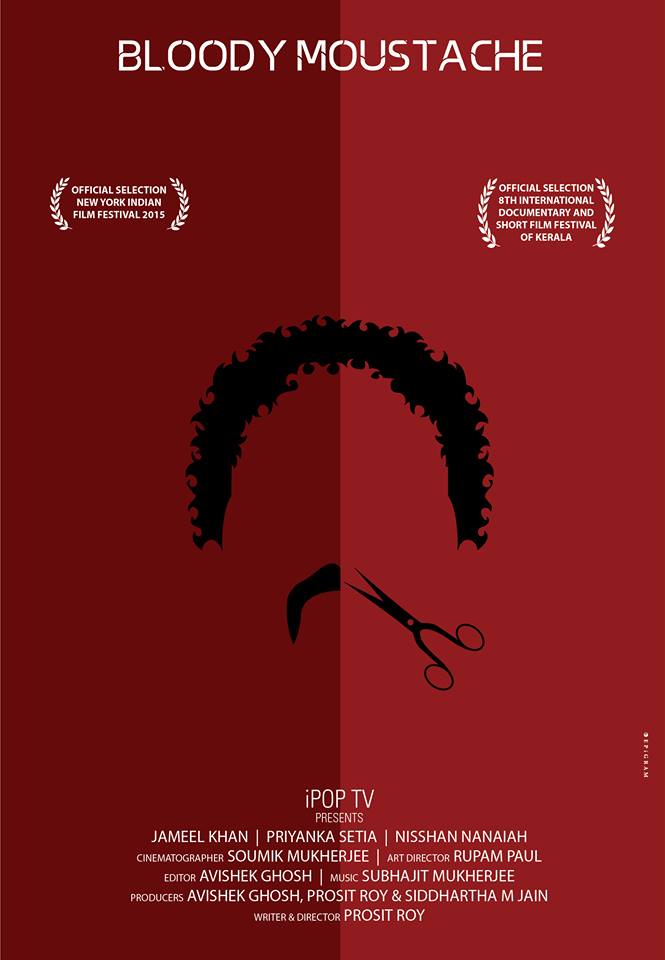
After having its screening at New York Indian Film Festival and International Documentary and Short Film Festival of Kerala, Prosit Roy’s short film Bloody Moustache is online now. Do check it out.

The film stars  Jameel Khan, Priyanka Setia and Nisshan KP Nanaiah.

It’s written and directed by Prosit Roy.

Click here to read more about the film.

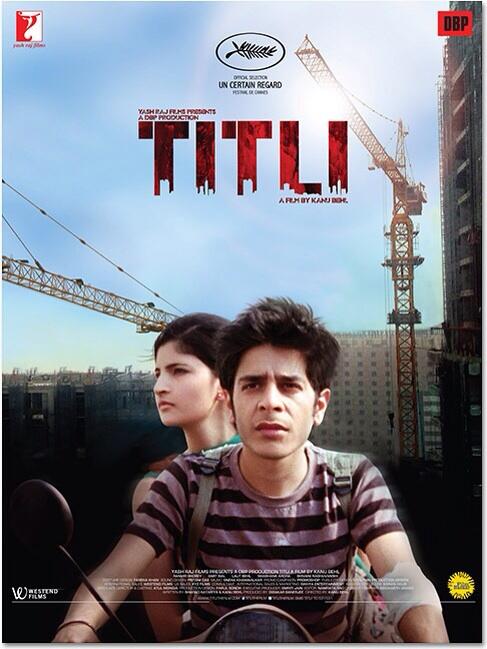
Titli

Finally, Kanu Behl’s much acclaimed directorial debut, Titli has a release date – October 16th, 2015. Produced by Aditya Chopra and Dibakar Banerjee, the film had its premiere at the Cannes Film Festival’s Un certain regard section in 2014. Since then, the film has been doing the fest rounds.

Cast and Crew

Cast – Ranveer Shorey, Amit Sial and introducing Shashank Arora

Directed by: Kanu Behl
Produced by: Dibakar Banerjee and Yashraj Films
Music by: Karan Gour
Written by: Sharat Katariya & Kanu Behl

Official Synopsis

In the badlands of Delhi’s dystopic underbelly, Titli, the youngest member of a violent car-jacking brotherhood plots a desperate bid to escape the ‘family’ business. His struggle to do so is countered at each stage by his indignant brothers, who finally try marrying him off to ‘settle’ him. Titli, finds an unlikely ally in his new wife, caught though she is in her own web of warped reality and dysfunctional dreams. They form a strange, beneficial partnership, only to confront their inability to escape the bindings of their family roots. But is escape, the same as freedom?

https://www.youtube.com/watch?v=8GseAIMlyvI

For more details about the film, click here.