Archive for the ‘bollywood’ Category

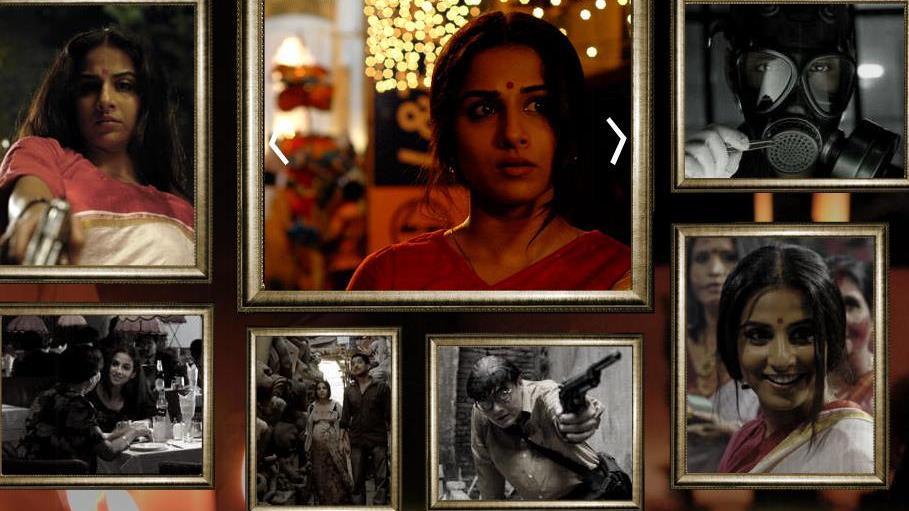
Thanks to filmmaker Sujoy Ghosh, we had put out the script of Kahaani here. And here’s an interesting post by one of our readers Deepanjali B Sarkar where she compares the script with the film. And also keeps a check on the timeline – what happens where, at what time, and for how long. Over to her.

Kahaani2

KAHAANI

I’ve now seen Kahaani several times, the last time with the script in hand, provided by this blog. Here are some rapid notes I made – mainly on the pacing and plot points (which is what makes it such a gripping film). Sharing it – in case others find it useful. Have listed the run time at which each plot point takes place.

So here goes

  • Hook – introduced within 10  mins: taxi driver says it’s for the first time that he has driven someone to the police station straight from the airport. Add to that – that she is pregnant.
  • Dramatic premise – husband missing: approx. 15.45 mins. Vidya files missing complaint in Kalighat police station. This sequence is packed with information (set up/clues) that will come into critical use as the thriller unfolds (pay off):
    • Husband worked in National Data Centre. Later we get to know the main suspect Milan Damji is an employee of National Data Centre, as is Shridhar, the IT head who assigns Bob Biswas, the hired assassin, his targets.
    • Vidya is a firewall expert. Crucial in her gaining access to IT head’s system, which leads them to IB head, Bhaskaran.
    • Vidya has a dizzy spell when asked to sign the missing person report. Pay off – she never left behind any fingerprints.
  • First red herring: Mona Lisa Hotel. Approx 20 mins.

By the way – had a question here. Did her husband actually stay here? Or how did she know of the decorative piece, the peacock? If he didn’t why this hotel in particular? Because it didn’t keep any records of its guests?

  • Second red herring: Arnav’s uncle’s house. 31 mins
  • Third red herring: Arnav’s school. 31.30 mins
  • Fourth red herring: Kolkata immigration
  • First clue! Milan Damji; Second clue – Bombay blood group. When Vidya meets Agnes Demelo in Mocambo. 35 mins
  • Bob the Killer introduced. 35.58 mins
  • First murder – Agnes Demelo. 37.29 mins
  • Khan – crucial link in plot – introduced. Being from the IB, he will lead Vidya to _____. 38.24 mins. 40 mins
  • Capt. Bajpayee introduced. The Kahaani actually starts with him training three agents. Introduced at 40.07 mins
  • Plot thickens! Vidya remembers that Khan refers to Damji by first name. So he must be familiar with him though he claims not to know him. 44.22 mins
  • Khan inducts Rana into the case (audience doesn’t know of it as yet)
  • Bob’s 2nd assignment: Retrieve Milan Damji’s file. 49.52 mins
  • Third clue! Identity of Milan Damji – from old records of National Data Centre. 50.23 mins
  • Pre-interval climax! Vidya pushed into metro tracks. 55.55 mins
  • NOW – Backstory. 57.38 mins

But why will Bhaskaran approach Bajpayee when he himself is the kingpin of the entire operation?

  • Vidya voices audience’s doubts. Missing from script. (1) Arnab has deserted her (2) Arnab and Milan are one and the same (3) Arnab has been targeted because he looks like Milan Damji.
  • Turning point: Jis din Milan mil jayega, us din, Arnab mil jayega. So hunt on for Milan Damji. No longer for Arnab.  59.07
  • Transition scene: Missing in script. Lovely touch of the playful side of Vidya. The two are travelling in a tram, she accidentally kicks Rana. He touches his forehead (pranam). She is intrigued and playfully kicks him again…and again!
  • Fourth clue! Milan Damji’s house – tea glasses from tea stall outside. Boy at tea stall remembers man with brass corners briefcase. This is the FINAL LINK to Bhaskaran. 1.03 hrs
  • Clue – follow up- Bombay blood required by Milan Damji when he was admitted in Ekbalpur Nursing Home.
  • No records of Milan Damji in Ekbalpur Nursing Home. Next —> Police Informer
  • Kumartuli – locate police informer. Nice touch – Vidya slips, Rana holds her hand. 1.06 mins
  • Police informer – Pal asked to locate who needed Bombay Blood in Ekbalpur Nursing home and why. Pal refuses to help. Vidya pleads, appealing on behalf of her unborn child. Vital leads acquired only because she is a helpless pregnant woman. Police wouldn’t have been able to extract the information. 1.07 hrs
  • Police informer Pal talks of shoot-out. Next clue – doctor who treated Milan Damji. Bob receives next job – kill Doctor Ganguli. 1.09 hrs
  • Vidya finds details about the shoot-out from Kalighat police station computer records

Rana’s attraction to Vidya grows (proximity as she bends over him to look at computer records)

  • Scene 142: Set up that will lead to the Denouement —> Vidya cleans table. Cleans it off her finger prints
  • Scene 143 – 145: Shoot out explanation by Rana. National Data Centre provides IB agents with cover/double identities
  • Scene 146 – 147: Poltu points out man with Briefcase -> Shridhar. 1.14 hrs
  • Scene 148: Bob’s next job -> Vidya. Shridhar, the Chief Technology Officer of Data Centre scans Vidya’s photo and MMS’ it to Bob
  • Scene 149: Nice touch. Bob is shining his nails when he gets his next job. He looks exasperated and the way he says to rickshaw valla – turn around, it looks as if he’s been given an errand to run to the fish market before leaving for office!
  • Scene 150 – 151: Dramatic scene. Chase! Bob chases Vidya. Kills innocent passerby. Rana chases Bob. Bob is run over by a truck. 1.16 hrs
  • Scene 154: Track Sridhar, handler of Bob/CTO of Data Centre. 1.19 hrs
  • Scene 155:   IP address of sender of MMS to Bob
  • Scene 158:  Sridhar signs out. Set up: peon carries three glasses; visitor’s book is out
  • Scene 162: Sridhar figures out his computer is being hacked. 1.23 hrs
  • Scene 163 – 166: Sridhar runs to his chamber. 1.25 hrs
  • Scene 167 – 168: Shridhar chases Vidya. Fight between Rana and Shridhar. Vidya kills Shridhar.
  • Scene 169: Khan arrives on scene. Says he wanted Shridhar alive to lead them onto Damji.
  • Scene 170: False denouement: Khan tells Vidya she had been used as bait to lead them onto Damji because no one suspects a pregnant woman. TURNING POINT: Khan asks Vidya to hack into Sridhar’s computer to find out who is the kingpin of the entire plot. 1.28 hrs
  • Scene 171: Not present in script. Panchami-idols come at night. Vidya watches a Durga idol. Charulata shot: from window to next window she follows the idol atop a truck. Ekla chalo re song plays in the background. She is readying herself for the final slaying of the demon – Milan Damji. Scene ends with close up of Durga’s lion on beheaded head of Asura Mahishasura and Goddess being bedecked with jewellery. She is being empowered.
  • Montage: not present in script. Vidya trying to hack into Sridhar’s computer to get info about kingpin; sashthi, the first day of Durga puja; women in white and red saris; Vidya cleaning her room meticulously; Vidya calling Bishnu for hot water; Puja in full swing – aarti in evening, dhunuchi dance; Vidya looking at parents with their kids at puja pandals; 1.32 hrs
  • FINAL CLUE! Vidya finds a code in Sridhar’s computer she can’t decipher. Rana realises it might be a phone number. Turns out to be Bhaskaran’s old number. Khan asks Vidya to call Bhaskaran – rest in script.
  • Scene ends with call from Milan Damji. Final link in the chain. (Nice touch – Khan forced to plead with Vidya “please help me”)
  • Pal, the informer warns Rana that Damji is back in the city and will kill Vidya. (didn’t see the point of this bit of information. Audience knows Vidya is in mortal danger). 1.38 hrs
  • “Upping the ante” as they say! Rana begs Khan to call off operation as Vidya’s life is in danger. Khan locks him up. Mocks him – don’t love the wrong person. 1.39 hrs.
  • Pre-climax: Vidya wears red-white sari. She breaks down. 1.40 hrs. Bishu quietly leaves his transistor behind for Vidya
  • Countdown to denouement: Rana escapes (OC helps him). Rushes to Mona Lisa hotel. Told Vidya has checked out. Notices something about Bishu (we still don’t know what)
  • Montage of Durga Puja at Triangular Park. POV of Vidya as she looks at the sea of faces around her trying to guess who might be Milan Damji
  • Shindoor khela: set up for Vidya’s final escape – climax
  • Scene 183 – 185: Milan Damji – jo ab take k kahaani tha. CLIMAX – Milan is killed by Vidya

•    Scene 187: 3 mins –    Denouement 1.50 hrs: Arnab’s school is actually Bishnu’s school; she used to regularly dust her room; She never signed – first time at police station when she was asked to sign missing report, she fainted; at Mona Lisa hotel she refused to sign because register was tattered; She killed Sriharan before IB could get to him; She knew as Khan himself would say, no one would suspect a pregnant woman searching for her missing husband

• Scene 190: Flashbacks. Pyrrhic victory: Vidya realises she had truly started believing she was pregnant and that she would find her husband. 1.53 hrs

• Scenes 191 – 193: Bhaskaran arrested. 1.56 hrs

  • Voice over – Goddess Durga comes to vanquish evil and then leaves; Candlelight remembrances

Notes:

•  Scenes 84 – 87: Deleted

– Vidya meets Rana at his home. This scene is replaced by a scene in front of Kalighat Police station. Vidya sees women in red border sarees going to Kalighat temple and remembers her conversation with Arnab.

– The change of location works – more colour. Also, home would have been too intimate. Would have struck a wrong note – why should Vidya visit him at his home?

IMPORTANT: missing from script – Rana says Milan Damji does not exist. He is just a kahaani

And some additional notes I made

  1. The plot moves because Vidya is pregnant – leading to disclosures. OC says husband got her pregnant and is absconding. IB – Khan reiterates the same. Emphasis on her as a victim of a domestic case. No one takes her missing file report seriously. Rana is of course chivalrous and concerned.
  2. Fun side of Vidya, making her endearing. Our empathy increases: Teases Bishnu about his radio; Gentle with Poltu; Mocks Rana. About his name. Mocks him when she makes him pick locks, twice (Data Centre Office; Damji’s house); Kicks him in tram.
  3. Rana’s growing attraction towards Vidya. Very economically dealt with. No dialogues: Concerned. Caring. Always worried she might hurt herself as she bends down, climbs stairs. Holds her hand. Intrigued, charmed by her playful side when she deliberately kicks him in the tram. Admires her tenacity. Admires her knack with children. Glowingly praises her maternal instinct.  When Vidya bends over him as she checks computer records – he is acutely conscious of his attraction towards her. When Vidya gets to know from Khan that she is being used as a bait she is appalled. Asks – her life, her child’s life was at threat. Immediately Rana says nothing would have happened to her – because he had taken up the case solely to ensure she was safe. Khan gives an amused, meaningful glance at Rana. He knows Rana has fallen for Vidya. Gifts her a sari, on behalf of Arnab. Genuinely cares for her.
  4. Detailing in sets:  (a) Calender of Sri Ramkrishna in Kalighat Police station (b) Trinamool Congress emblems on walls of North Kolkata when Vidya goes to locate Milan Damji’s house (c) Aalna or clothes stand typical of a Bengali house in hotel room
  5. RD Burman influence: Songs being played on radio in several street sequences; Song played on car radio when Sridhar realises his computer is being backed is Lekar hum deewana dil.

(For more posts by Deepanjali, you can check her blog here)

When we put out the post on Lootera’s first teaser, i wrote that “close your eyes and watch the teaser again – i think it’s the music.” Well, none of us had any clue that it will turn out to be KLPD.

Why?

Play both the tracks back to back and decide for yourself.

So? Who is the culprit? Who has done the background score? Or have they taken the rights? Can anyone please connect the dots?

Tip – Prosit

(PS – Something similar had happened when Udaan’s trailer came out. The text was plagiarised from the trailer of Where The Wild Things Are and we had mentioned in our post.)

Lootera

The man behind one of the best debuts films in recent times Udaan, Vikramaditya Motwane is back with a new film titled Lootera starring Ranveer Singh and Sonakshi Sinha. And as the latest trend in bollywood goes, the first look of the film is just a teaser and not the full trailer.

The teaser doesn’t tell you much about the film but just gives you a sense of the place and the mood of the film. But close your eyes and watch the teaser again – i think it’s the music. Old world charm, silent glances, character introductions and then those last 30 seconds where it kicks in – snow, gun, letters, light, fire and dhickiyoon, credits and the hero limping on snow! Now, give me the full trailer.

This completely stands out from the garbage that Bollywood is churning out these days. There’s so much silence, and most importantly, there’s NO FUCKING TEXT on screen to explain it. But this also seems to be from school of Sanjay Leela Bhansali. Just hope that it’s less grand, less manipulative and more intimate.

The credit list seems to be the same as that of Udaan. DoP is Mahendra Shetty. Screenplay by Vikramaditya Motwane and Bhavani Iyer. Dialogues – Anurag Kashyap. Music – Amit Trivedi. Lyrics – Amitabh Bhattacharya.

Though the makers have been saying it publicly that it’s inspired/based on O Henry’s short The Last Leaf, why isn’t it mentioned in the credit plate?

chasme 2

More than three decades after it was first released, Sai Paranjpye’s cult classic “Chashme Buddoor” will get a theatrical release again on April 5, the same day when its modern-day remake by David Dhawan is releasing. The film has been digitally re-mastered for the re-release.

An initiative of PVR Director’s Rare, it will be released in all major cities at PVR Cinemas, Cinemax and select theatres. And here’s new trailer to re-visit the antics of Miss Chamko and the boys.

Since we are talking about the film, good time to plug something from our archives – click here to read Sai Paranjpye’s offer letter to Ravi Baswani.

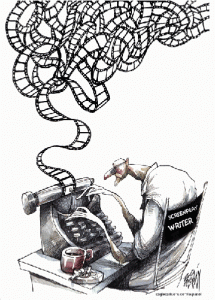
If you are attending the ongoing FWA Indian Screenwriters Conference, then great. If not, our good ol’ mister Screeny (if you are regular follower of the blog, you know) is back with all the details and dope.

screenwriting-215x300Inspired from Dear Kamal Swaroop, I’ve decided to smoke a joint/have a nip/acid before attending anything related to cinema academics. It turned out to be quite an enjoyable experience as I learnt to appreciate some of the usual sarkari fuckups (lunch came in ‘installments’ due to improper communication and people were waiting in queues for nearly 2 hours) that plague any event of such sort which involves ‘artists’, especially screenwriters! Also some sentences may appear incoherent/incompletely bridged together. This is just meant to be snippets of the lectures.
And a humble request to all those who attend screenwriting seminars – Please have some sharm-o-haya before asking chutiyape ke sawaal to the panelists  Not only do you insult their intelligence but also of your screenwriter brethren! Listening to some of the audience questions in the Q&A sessions makes you realise why we make such fuckall films. Agar ek 20 minute ke lecture ke baad ek audience member screenwriter khud irrelevant, inarticulate, tangent pe jaane wale, haggu sawaal poochega, toh 120 pannon mein kitna Diarrhoea failayega ?

WELCOME ADDRESS

Day 1 began 30 min late.

Anjum Rajabali spoke about the recently passed Copyright Amendment Act briefly. How for first time FWA is interacting with WGA. The career of a writer doesn’t begin when he gets the contract, but when he begins to write.
The annual turnover of Indian Cinema is 2.1 Billion USD whereas the mere pension fund of the WGA is 2.2 Billion USD !!! They can buy out the entire Indian Film Industry if they wish with just their pension plan.

Rajesh Dubey (writer of Balika Vadhu & many TV serials) – Achchi baat yeh hai ki aaj ke seminar mein koi saas nahi hai. Toh bina rok tok discussion chal sakti hai. Jitney TV ke writers hain unmey se shayad 30% logon ne hi kabhi kitchen mein kadam rakhkha ho, par phir bhi kitchen politics ke baare mein likhte hain, kaunsi bahu ne kheer mein cheeni ki jagah namak milaya – uss baare mein likhtey hain. Maine aaj tak ek murder nahi kiya lekin mere likhe huey serials ke murder techniques koi criminal dekhega toh yakeenan khud chaunk jaayega.
Television hindustan ke 2/3 gharon mein chalta hai. Bahut prabhaavshaali maadhyam hai par uski zimmedaariyon ke baare mein behes kabhi nahi hoti. Hoti hai toh sirf Talk shows aur debates mein. Kya samaaj ki unnati se TV Writers ka koi sarokaar hai ya nahi ?

Vinay Shukla – like always made a dead boring speech about history of responsibility of cinema. He also added ‘Hang out in there and fight everything you believe in’ in his soporific voice with which he had directed Koi Mere Dil Se Poochey & Mirch (No! Godmother & the cameo in Maqbool was a different Vinay Shukla).

Javed Akhtar (As always the old man has lot of wit and fire underneath his kurta)
Market demands Vs what we see around us. How commercial compulsions are to be made compatible with our basic instincts as a writer. Is the Indian mainstream media completely far removed from reality? (He spoke about the same old pattern of villains over the decades – moneylender-underworld don-capitalistic or a mill owner – politician – to eventually becoming a hero as a vigilante). Now we’ve even gotten bored of Pakistan as the villain. Whatever is villain-ish has become part of our society’s morality. So how do we make villains anymore ?Reg. Social Responsibility – We were unaware of it when we were writing our scripts. We had no idea our scripts had any social responsibility or political reference. We were simply writing.

Alam Ara the first sound film had nearly 50 songs. Now people are trying to change the structure. Sadly, now the only thing that is keeping the music culture alive in films is the ringtone business. Earlier we used to fall in the trap of melodrama. Now we even shy away from drama, which is a big trap. Our trump card now is comedy and not emotions. Why are we embarrassed by it ? Which was the last good romantic song you saw on screen? Do we not fall in love anymore ? We are gaining tempo/speed at the cost of depth. We can’t go back to the tempo of the 60s but we can’t lose depth either.

Reg. Delhi Rape and how we don’t have rape scenes in films nowadays- Because the victim is no longer part of a family. All films show Nuclear families (as they are prevalent in our society). No joint family, hence no hero’s sister (hero’s gf/wife can’t be raped else she will become apavitra), and hence no rape. We are not seeing families or characters’ families. We’re becoming cold gradually.

Now immediate gratification is the vogue. Nobody wants ‘hits’. Everyone wants on the table profits. And because they get it, producers/distributors are not bothered about script/content. Script is always lowest in the list of priorities. The only way we can do it by telling and convincing the producer that there is great money in our scripts. The buyer should be impressed. We are not dealing with saints but businessmen.

So pitch the complete script and not just a concept/story/idea. Model contract is the bottom line. Writers should fight for their names on the posters. They will not offer it to us in a platter. We have to fight for it. It’s a multi throng fight. We’ve to fight with ourselves to improve ourselves and fight them. There are two kinds of things. Things which are for the market and things which create the market. I suggest you go for the latter.

Tom Schulman VC of WGA (writer of firangi mohabattein – Dead Poets Society)

In silent movie era in Hollywood, the movies were ‘written’ by title card writers. A big movie Moghul later is known to have said these two things regarding writers

1. Writers were shmucks with underwood (typewriter)
2. He is the most important person in the creation of motion pictures and he should never know of this!

Early movies, writers had no/little money and no credit. A writer would be shocked to see that the ‘written by’ credit has many a times been given to the production exec’s cousin/sister.

The Oscar Academy was started out in protest of (and to prevent & monopolize) the Writers Union!
We’ve gone on a strike and been successful in our demands being approved for 7 times (for 4 yr duration) in the last 80 yrs. And then we fought for Royalties.

Dharmesh Tiwari (President of Western Indian Cine Employees & a side trivia – played Kripacharya in Mahabharat) These days TV ki haalat itni kharaab hai ki I remember a case of a TV writer approaching an exec with the idea of adaptation of Premchand’s stories. And she was met with a response – “Woh toh theek hai par iss Premchand ne aur kya likha hai?’

Bumped into Thiagarajan Kumararaja (Aaranya Kaandam – National award 2011 best Editing & Debut) who said he follows moifc and was thankful that there is a good quality DVD print of his film with English subtitles floating around. Sadly there has been no official DVD release of his film yet. (We got the DVD via some usual suspects. Thank you ji)

The film was shot in 58 days with 2 days re shooting as the guy who was playing Gajendran (younger bro) originally had passed away in a heart attack. He later discovered the actor who plays Gajendran and realised he is an ex gangster. The elder brother was a retired boxer.
Ilayaraja influence was always there. Though using Poonmene Urungudey from Moondram Pirai (Oh babua Yeh mahua in Sadma) was added later.
Tarantino influence is conscious. Kitano influence isn’t. Have only seen one Kitano film.
It took 4 yrs from writing to making the film. I’m writing my next one.
I’m fascinated with Myth & Mythology

SESSION 1 – KEY NOTE SPEECH – SCREENWRITING AND TRUTH OF OUR TIMES

The much acclaimed Sociologist Key note speaker Shiv Vishwanathan was every inch a GRE word mouthing, every adjective/adverb/composite word spewing intellectual who talked too much but shifted goalposts every now and then and made little sense after a point. Read at your own risk –

Sociologists make very poor storytellers. They are always envious of scriptwriters. Sociology is about capturing the ambiguity of life.
‘Can film be socially responsible?’ – This statement comprises of firstly the word Culture which is usually taken for granted. He narrated an anecdote of a Nazi Minister who said “When I think of Culture, I reach for my gun” And Alexander Grushev who responded with “When I hear the gun, I reach for my Culture”. We however, when hear ‘culture’, reach out for the dictionary.

Cinema vs TV – In the dingy slums of New York couple of decades ago; a young woman was being stalked by a stranger for a long time. As she yelled in fear, suddenly the lights around the tenements were switched on. The stalker took cover but after seeing that no one came to help the girl, came back and stabbed her 41 times and then ran away. When Sociologists asked the people why they didn’t run to help the girl, they responded “We felt we were watching TV!”.
TV provides time table – to wake up in morning to Aastha Channel and go to sleep at night after watching Daily Soap Operas. TV is Civics. Cinema is myth.

Manto is the predecessor of Javed Akhtar. His story on Bombay Talkies is the answer to Pakistan. Bombay Talkies was left alive. Manto created the myth of Bombay Talkies, about unity between Hindus & Muslims.
Bollywood captures part of the imagination, part of the culture of solidarity. But myth of Bollywood is Silence. It amplifies myth of Hindu Muslim Unity but is silent about caste. Heroes are Brahminical angry young men. But no Angry young Dalits.
Social Responsibility is what you cook up when it doesn’t exist. It belongs to Planning Commission not to Bollywood. Because if Bollywood addresses Social Responsibility it loses it’s myth. Bollywood brings oral imagination to Society. It is the secret preamble to the Constitution. The answer to a myth is another myth. Myth is the beauty of Bollywood.

I remember singing Mera Joota Hai Japaani so much in my childhood that my mother often chided me ‘You sing it so much that you think it is the National Anthem’.

Stereotype is comfortable. It is a large house with lots of windows where we go to rest peacefully. AB on Cinema is different from AB on TV (KBC). While AB on Cinema has wisdom and gives solutions, AB on TV gives information.

I liked Rang De Basanti so much when I first saw it but then later it became part of the Aamir Khan Narmada Bachao Aandolan & Anna Hazare movement it became something else. When politics and cinema merge, it becomes embarrassing. People with myopic view of Indian History (fed on NCERT History books) suddenly felt an irresistible urge to be a part of a national movement (like the leaders of Indian National Movement) and took part in it. If problem solving was so easy then what was the problem in the first place? It shouldn’t have become an ideological tome. Social Responsibility thrust on something/someone becomes Fascism. RDB was consumed twice. First time it was eloquence. Second time it became banality.

There have been more people displaced due to the ‘development’ of cities than due to wars we were part of.

Javed Akhtar’s Response – Responsibility is a duty and not a desire. If the writer’s heart is in the right place then social responsibility will be inherent in his work. But if you ‘want’ Social Responsibility then it will be an outsider imposed phenomena. Just like we cannot blame a son for his parents’ wrongdoings, similarly one cannot blame the artist if his art is ‘consumed’ in a particular fashion by the audience. Shakespeare and Ghalib were not exactly gentlemen in their personal lives. Should we criticize their work because of that?

Kamlesh Pandey’s response – When I was writing RDB I had no social responsibility sword hanging on my head. I had a personal grievance though. In my growing up days, we had heard speeches of Nehru that the criminals and corrupt would be hung at the lamp post on the streets. Next day when we went to see the lamp post in our nearby streets, we saw none of the ‘criminals’ hanging there. I channelized my grievances into RDB.

(Shiv Vishwanathan responded to Kamlesh Pandey with an assortment of words strewn tenuously in meandering sentences which were punctuated with words like Digitality, Duality, Causality, Plurality, Technicality, Textuality, Contextuality, Subtextuality, Hypertextuality, Mythicality, Bestiality and other -ities)

Govind Nihlani – Also take into consideration the lack of NFDC funding now. When we had funding, we made ‘socially responsible’ films. But now we have producers who are more into business. The analysis of Bollywood should be done taking into account who is funding those films. Writer/Director cannot function in an autonomous environment.

Anjum Rajabali’s response – I disagree. Iran with so many issues, with so much censorship yet churns out lovely low budget personal films which are political in content too. That cannot be a filmmaker’s excuse.

Shiv Vishwanathan’s response – I’m sure Mr Nihlani you are doing injustice to your work and undermining your own self by using funding as a constraint. Funding & Censorship are constraints for everyone!

Javed Akhtar retorted – I’m sure No source of funding can force Govind Nihalani to make a Dabang! People who provide funding are from no caste/creed/community but are simple money minded business people.

A senior writer Tanvir Saaheb narrated an anecdote – K Asif Saab aur Mehboob Khan saab aksar apne writers ke saath baith ke likhte thay. Kabhi kabhi yeh sawaal uthta tha – ‘Yeh scene censor pass karega kya?’ They used to retort ‘Censor toh film banne ke baad hota hai! Pehle film bana lene do phir censorship ka sochenge‘. V shantram ji ne hamesha mainstream filmein banayi jo socially relevant bhi thi. Aur jahaan tak film industry ka sawaal hai, maine Sunil Dutt saab ko subah 7 ki chai pe script narrate kar rakhi hain. Par aaj naubat aisi hai agar main apni kahaani kisi bade star ko (jis se meri khaasi jaan pehchaan hai) narrate karna chahoon toh mujhe koi uske paas fatakne tak nahi deta. Responsibility toh door, hum mein toh humari jamaat ke liye hi unity nahi hai!

Session 2 – DO SCREENWRITERS HAVE SOCIAL RESPONSIBILITY

K Hariharan (Dean Prasad Academy Chennai)
In India, Cinema came before other industries came and industrialization happened. As a result there was a phase when any tom dick and harry would make a film.  
Social Responsibility is not a mandate. We can however use creative solutions to embed social responsibilities in our writing. One of the first film made in Hollywood was the Great Train Robbery (1903) which is somewhat realistic compared to our first film was Raja Harishchandra which is mythological and non-realistic. We seek solutions in mythology as well. Post Independence we handled several issues like Sexuality, Legality, Crime etc. with creative solutions. Today several mainstream regional films are very intelligent and popular (eg: Tamil Cinema). They are handling formal issues and social messages in a very deft manner.

Tom Schulman – I wrote Medicine Man starring Sean Connery about a doctor who discovers a cure for cancer but loses it somehow in the rainforests of South America. And when he goes to the rain forests in search of the medicinal plants, he finds that the rain forests are being destroyed. The movie did well but the audience sensed that may be they were being preached to or talked down upon. There is an old saying by Sam Goldwyn – ‘If you have a message, call Western Union’. My first few scripts were tagged as ‘message oriented’ scripts. But if I don’t have a theme then what am I writing about? Why am I writing at all? I write because I have something passionate about something to say. Dead Poets Society is about non conformity. If it is tagged as encouraging indiscipline, then so be it! The trick is to know the art & craft of obfuscating/burying the theme so deep that the audience watches the characters/stories and not realise the ‘message’; that the audience absorbs it sub consciously. Although now I understand the criticism of Dead Poets Society since I have children of my own! May be the film does encourage indiscipline.

Vivek Bahl (Programming Head at Star Plus, Zee TV, Chief Entertainment Dir at Sony) – TV has been overtly socially responsible in India! Beyond the loud soap operas it speaks of strong women, empowering the women folk by touching issues like Education, Child Remarriage, Dowry, Balancing the family etc. We don’t do it for society. We do it for the eyeballs. The women. The Housewives. The TRPs. They cannot watch movies in halls. They watch TV. They cannot step out in evenings for a movie. They don’t have options like you and I. We’re giving them some excitement in their lives. We’re entertaining them while connecting with them. And this is a proven fact! In houses with access to cable TV, the attitudes to issues is more progressive. As a business it has worked for us. The ‘change’ will happen when people will start watching the ‘new’ shows. There should be checks to ensure we don’t go the wrong way. We’ve set up BCCC which is similar to the Censor Board except that it is a non-government body.

Reg. approving new ideas & concepts for TV shows –
It depends. I’m not making a low budget film. I’m talking to millions of women and families. It is a huge social responsibility on us to consider ‘Can we say this? Can we get away with that? Will it upset the existing morality too much?’ For eg: An astrologer comes and predicts some event which will happen in the next two days provided the characters take some ‘action’. Now if the event does indeed happen, then we will be reinforcing superstition! Instead I tell the writer – get the astrologer to do the prediction in the episode, but make sure it doesn’t come out true!

Jaideep Sahni – I haven’t looked deeply into the idea of Social Responsibility deeply. You are a citizen of this country and tumhari responsibility utni hi hai jitni baaki citizens ki. If something touches me, I try to share it with whatever empathy & skill I have. There is a saying in Mira Nair’s school in Uganda – “If we don’t tell our stories, who will?”. Beyond the film, one starts entering the realm of Gurus and I’m not comfortable with that.

Chak De India was about women hockey players. I wanted to write a book and make a documentary on their plight. But I found no sponsors. That was a stimulus to get a movie made on them so that they become famous. So that they don’t have to beg for track suits. Rest all are our issues which seeped in by themselves. If you deliberately try to stuff social issues consciously then people get bored. I have to use indirect ways like Humor and stay true to the feeling. If you start becoming too analytical, you will screw it up. It comes automatically from your world view. CDI was not a flag by me. It was a flag of the women athletes and I was just the carrier/messenger.
There are 16 different dialects of Hindi. It is fun to enjoy them & work with them and hope people enjoy them too.

Gajra Kottary (writer of Balika Vadhu, Astitva, Beera) – Balika Vadhu is the first example of an entire show based on a social issue (Child Marriage). 4-1/2 yrs later, it still is true to its concept. The theme itself lent us to speak our own voices. The spin off benefits are that we’ve touched upon many more issues as well – Parenting, Gender Equations, Mother in Law Domination, Education etc.
It should come from within. Natural and Organic. Conviction comes through all the levels. “It is not so much about the lines but what you say between the lines”. After Balika Vadhu, the instances of Child Marriage in Rajasthan have reduced. We don’t have to artificially inject messages in our work. It should come from within. Social Messaging sounds like an NGO. It should not hang like an albatross around our necks.

On comparison with TV Series in US and melodrama in Indian Serials-
Theoretically, we would want to change the melodrama in our serials but the dynamics of business do not allow us to do so. Some sections of the audience may be ready but in a country with 40% illiteracy, we cannot draw comparisons with US TV Series quality standards. I’m all for newer formats but standing up to moral and ethical issues in a family is also Social Responsibility.

Javed Akhtar – Social Responsibility is a boring and puritan term. The objective of Art is to entertain. But there is a difference between ART and Circus. Good art is created somewhere in the no man’s land of Conscious Mind and Sub Conscious mind. Otherwise imposing what you think or I think of social responsibility and imposing it will make us into Khap Panchayats. Social Responsibility is often not bad. It shouldn’t lend itself to Moral Policing. When the ‘WE’ becomes the ‘ME’, social responsibility takes a back seat. A famous person said ‘Show me the advertisements of a society and I will tell you all about the society”. Ads, TV, Films, Art, Literature, Language, Music all are the barometers.

I wonder if any long running TV Serial has been made on a rape victim who survives. Or any rom-com TV Series has been made about Live In Relationships. TV accepts the most regressive forms of society. It has taken over Grihasti & Gharana. Empowered women are shown as Vamps. We can’t show them as positive. Else Moral Police will come. Only ‘bad’ women are empowered. Good women wear saris.

When I entered the industry, I was told ‘Write a script which will do well in the small towns of India, because our money lies there’. In 40 yrs the mantra is turned on its head. Now a well-established Producer/Director says “I don’t care if my films don’t release in UP/Bihar. Urban cities and Diaspora is good enough for me”. He’s indirectly saying that 75% Indians don’t matter to him. He doesn’t care about the small cities. Is this a sign of Development? So what Social Responsibility are we talking about? The culprit is also the audience. Like a religious man cannot blame God, we can’t blame the audience. But the truth is our audience is mediocre. A vulgar song is created by 10-15 people – the lyricist, actor-actress, music director, choreographer, director, producer etc. But when it becomes a big hit, it is the millions of people enjoying it are the culprits, not just the 10-15 people associated with it.

Do Beegha Zameen, Shri 420, Ganga Jamuna, Mother India, Pyaasa were all blockbusters! In the 50s-60s the middle class was educated and went in for professions like Doctor, Engineers, Teachers, and Bureaucrats. Industrialization created a new middle class. In 25 years, almost 20 crore people jumped into the middle class bracket. Culture takes 3 generations to come and 3 generations to lose. Intellectual depth will take time. Another 10 years and we will have the kind of scripts which we’ve never seen before onscreen. You cannot impose social responsibility. It has to be part of the fabric.

Rajesh Dubey – Javed Akhtar Saab key opinions 8 saal purane TV serials ke baare mein hai. Aaj Vamp ’empowered’ nahi hai. Aaj Hum log inn inn subjects par Serial Episodes bana chuke hain – Honour Killing, Child Marriage, Marital Rape, Rape, Puberty, Remarriage, Eve Teasing, Surrogacy, Adoption. Aur in sab subjects ko hum kaafi entertaining tareeke se treat kar chuke hain.

Audience Q&A
1. Why is the family structure still omnipresent on TV Serials?
A-It is breaking but gradually. It cannot happen overnight. The Sari clad woman image is changing slowly.

2. I approached a TV executive with an adaptation of Jai Shanker Prasad’s Kamyani. The response was ‘Kamyani kaun hai ? Inki biwi hai kya?’ Why are the execs so ill read when it comes to literature?
A- Some people are always there. It is a business not literature. However, change is happening.3. Why is the TV target audience women? Why not make serials for Men in the house? We have to step out when our wives are watching Saas Bahu serials.
A- Just take the remote from your wife, sir.

SESSION 3 – HOW DOES OUR POPULAR CINEMA & TV POTRAY WOMEN

Rajni Bakshi (freelance journalist) – Draupadi Cheer haran from Mahabharat is traditionally told in the ‘vilaap’ mode. She asks some profound questions during that event. “If I’m part and parcel of you, then I should never separate from you. Why did you put me at stake separately? And since you did put me on stake separately, that implies I’m an autonomous person and I have my own identity. Then how can you stake me as a property against my will?”

I have interacted with women working in the Silicon Valley who still believe in the practice of Dowry.
The Sex Ratio is worse in Malabar Hills & Colaba than Thane !

Shabana Azmi – I grew up in an environment where IPTA leaders used to regularly attend meetings in my house. I’ve read their writings which had potrayls of real women, in the works of Manto, Chughtai, Kaifi Azmi, Sardar Jafri, Premchand etc.

Regarding Delhi Gang Rape, everybody started blaming everyone else. I think it is the time to look inwards. The first thing to be abolished should be the item number. Nirbhay wanted to live ! And it was heartening to note so many people coming out with placards saying ‘Nirbhay. Tum achchi ho jao’

Between Draupadi and Savitri, the latter is the role model of Indian Middle Class women while it should have been the former since she challenges the patriarchy! 

I may be accused of Nepotism but in ZNMD, Katrina Kaif had such a small yet significant role. She was important to the story. The intention of the director is revealed during her Deep Sea Diving Lessons scene, where the camera doesn’t linger at all on her assets (unlike other Hindi films). Katrina is the one who helps Hrithik overcome his vulnerabilities and re-discover Love, and she goes on a bike and seizes the moment by kissing him; something which normally a hero would have done. Even the romantic song is picturized on the expressions of Hrithik Roshan and not on her body contours.

Ashutosh Gowarikar – Is cinema affecting reality or does reality influence cinema? When I was young I would go to the theatres (in the 70s) and would see maar dhaadh action films in which the importance of heroines was reduced. When I went home and saw films like Sujata, Bandini, Ganga Jamuna on DD, I used to be fascinated by the strong women characters. Cinema of 60s got left behind in the 70s & 80s.

The depiction of rape/seduction sequence is different in a mainstream masala film, from a ‘meaningful’ film. It depends on what the target audience is. I tried to create meaningful women characters. Writers would approach me with scripts and say ‘Ek ladki ki kahaani hai. Bahut achcha women oriented subject hai. Women will be empowered’.

Even in a mainstream film we need to take care and ensure sensitive portrayal. Earlier there were Cabaret girls as the heroines would not be ‘expected’ to do them. Now Cabaret has got restructured as item numbers.

Indian Hero has been ‘macho’ since the time of Raja Harishchandra, in which the female character was played by a male artist. And even in that scene, ‘her’ anatomy was shown. Exhibition of women onscreen has always been a moneymaking proposition. We cannot differentiate between Sensuality & Vulgarity.
A line like ‘Tumhari Charanon ki dhool hoon main, yehin jiyoongi, yehin maroongi’ worked in Sahib Biwi Ghulam back then. But today it will look so regressive.

Thiagarajan Kumararaja – I see no difference between a man and a woman. Violence against women has been an issue since ages. Until recent times it was always in vogue to show women ‘differently’. I doubt if people gain knowledge from TV/Cinema. It is the family that imparts knowledge.The recent rise of the ‘macho’ man is implied that it has come from the south. But the truth is that it came from the north to south as the angry young man to start with! TV is a women’s medium as opposed to Cinema which is a man’s medium. Men (at least in South) go to the theaters and want to watch their own representation on screen. Mostly men go to the theaters while women watch TV.

Anuradha Tiwari (writer of TV serials & Fashion, Jail, Heroine)
As they say, TV is the thing with Hindustan (small town middle class) & Bharat (villagers). Cinema is for India (metros).
There are no women oriented films. Except a rare Kahaani & English Vinglish which could have been stories about persons and not necessarily women.

I wrote a crime serial on 26/11 attacks & terrorism (which is sadly not doing so well). After each episode I submitted, I would get a response ‘Why isn’t there a woman? We need some rona dhona!’ And the same day I would go and meet producers regarding pitching my feature film script about three women friends. ‘Female Dil Chahta Hai types hai kya?’ would be the first response. I would reluctantly agree and proceed to narrate my story when the second response would be ‘Arey yaar falaana ka boyfriend jo hai na, uska role badhao thoda. Nahi toh picture chalegi kaise?’
I couldn’t understand how Anushka Sharma comes out of the talaab in a village in haryana and yet agrees to get forcibly married against her wishes.

Rajesh Tiwari (TV writer) – Three days ago in an upmarket residential society in Malad where I stay, I was shocked to see that while there is a tussle going on for car parking space and area for children to play; the society has gone ahead and planted a Tulsi ka ped in the compund! That is the dichotomy we are going through. ‘I want two SUVs (not a small car) and Tulsi ka ped too!’.

Q. I fail to understand why there are so many female characters on TV and yet there is no potrayl of the progressive woman.
A- Because they do market research in small towns. This is what works and will work!

Question to Anuradha Tiwari – Fashion and Heroine are regressive films
A – I don’t get the criticism of the ‘regressive nature’ of Fashion & Heroine. In fact, Fashion became a template for the new age Indian Woman. She was allowed to fall down (due to the choices she made), and yet climb up and walk again! 3 men she slept with in the film and yet she didn’t come across as a Slut!

With the positive reviews pouring in from all quarters, i was waiting for some contrarian views. Because what’s the fun if we all are on same page. Though there have been few such views too, and criticism mostly have been looking at the big picture and the issues involved. But Runcil Rebello believes that the film is about “the smaller picture”. And he also writes about how the film is different from the book.

kai-po-che

In Abhishek Kapoor’s Kai Po Che!, it’s all about opposition – ideas clashing with each other, and sometimes both winning, sometimes just one. There is the age-old money versus passion squabble, further highlighted in the academics versus sports issue omnipresent throughout Indian homes. Then there is the overarching notion on which the film is built: friendship versus ideology, and friendship does not always win. There is also Mathematics versus Biology.

Kai Po Che!, adapted from Chetan Bhagat’s The Three Mistakes Of My Life, is a story set in Gujarat around the turn of the millennium. The nineties were done and dusted with. Internet, Nokia mobiles, malls were making their introduction into daily Indian life. The Indian cricket team would become a leading Test-cricket playing nation in the following decade. Religious politics had not yet reached a fuming and flaming high.

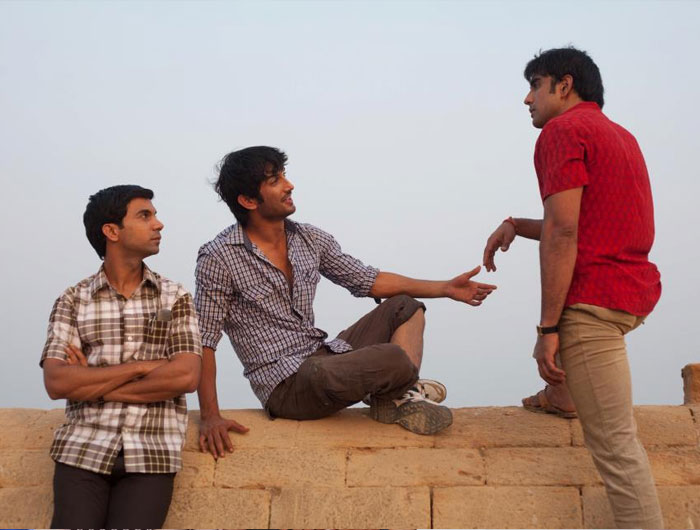
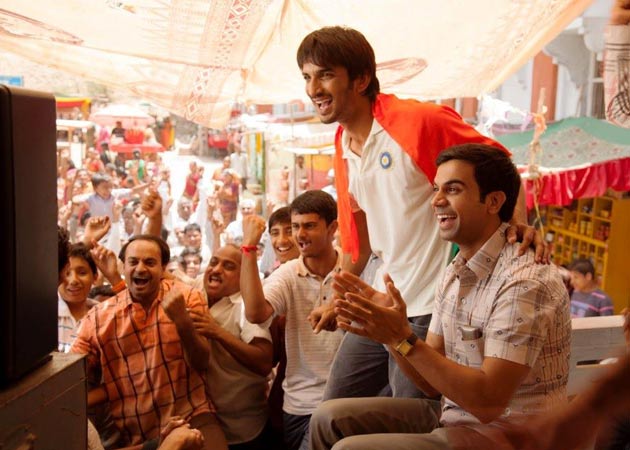
But Kai Po Che! doesn’t have its eyes set on such large-scale issues. Rather, it is content telling the story of three friends: Ishaan (Sushant Singh Rajput) – flamboyant, impulsive, passionate, Govind (Raj Kumar Yadav) – logical, ambitious, money-minded, and Omi (Amit Sadh) – simple, lovable, easily swayed, who set up a sports equipments store-cum-cricket training academy-cum-Maths tuition classes. This film is as much an ode to friendship as it is about the decay of that lovely bond.

The idea of opposition isn’t hammered into our heads. It’s brought up now and then, never over the top. Just like the film. The story (written by Abhishek Kapoor, Chetan Bhagat, Pubali Chaudhuri and Supratik Sen) does not veer much from the book, and if you’ve read the book, you’d realise then that it is a story tailor-made for Bollywood. And yet, the writers and the director stitch the film into an altogether different piece of fabric. The film is removed from typical Bollywood treatment. No star actors, no item numbers, no over-the-top treatment, just three songs (Hell! The soundtrack by Amit Trivedi [with lyrics by Swanand Kirkire] includes a garba-beat song in Shubhaarambh, but the film’s garba scene isn’t picturised on it. Unexpected.) Instead, Kai Po Che! is about the small moments in the fabric. Don’t lose sight of the smaller picture.

Characters, especially Omi’s, oscillate, not able to settle on one thing. He, at times, goes where the wind blows, and sometimes marches to the beat of the other drummers of the show. He may not always like what he does, but he is loyal to any cause he signs up for. Govind and Ishaan, on the other hand, are the proverbial immovable object and unstoppable force. They’d go to any distance to get what they want, albeit what they want is in diametrically opposite directions. Govind has to let loose, has to understand that not all things in life are solved by Mathematics, but some by Biology too. Ishaan’s sister Vidya (Amrita Puri) would be his teacher in this regard. Ishaan has to grow up, has to not let anger affect his decisions, but his mind. Ishaan, and to a lesser degree, Govind too, do not care about how religion plays into their plans. They are fine with sitting on the fence when it comes to this particular power struggle, letting Omi handle the dirty work.

What these three have in common, though, is something India is obsessed with: cricket. Cricket (and films) are said to heal wounds. In this film, it is the historic 2001 Calcutta test match between India and Australia that plays the role of mediator and doctor. It is also cricket that brings together children of two opposing homes, Omi and wiz kid Ali (Digvijay Deshmukh), under one roof.

Abhishek Kapoor has a knack for staging event situations. In Rock On!! earlier, he staged rock concerts in a way no Indian film had before. In Kai Po Che!, he goes large scale, but doesn’t make them the focus of his movie. The eye firmly remains on the three friends. Earthquakes, cricket matches and the Godhra Riots form the trifecta of incidents around which they break and mend. Tough decisions are made, mostly on impulse and emotion. When calamities strike, there is no time to think. Govind, Omi and Ishaan choose their respective sides all on basic instinct.

The film, though, has been meticulously planned. If Anay Goswami’s cinematography portrays Gujarat in a favourable light, Hitesh Sonik’s background score livens up the lives of the three friends. Deepa Bhatia transitions from one date to another finely, giving her best cut in the crucial scene during the riots.

Sushant Singh Rajput and Raj Kumar Yadav play their roles well. They really look the part, and so does Manav Kaul, being crafty and smart as Bittoo mama, Omi’s political leader uncle. Amrita Puri is cute and plucky adequately. In fact, the casting (by Mukesh Chhabra) is impeccable. The one actor, though, to make the most impact is Amit Sadh. From portraying a simpleton to a political henchman, Amit Sadh’s eyes, and hair, speak.

All these people, eventually, are just holding the manja. It is Abhishek Kapoor flying this kite, cutting every other kite in his path. He’ll be the one screaming kai po che! at the end of it. And what a delight it has been to watch this kite soar great heights.


P.S.: If you’ve read the book, you’ll understand the flashback and the conclusion has changed; all for the best. Below are a few details of what is different in the film.

(SPOILERS AHEAD!)

Chetan Bhagat, in his book, The Three Mistakes Of My Life, had Govind as the lead character. The biggest change is towards the end. In the riot scene, Omi is the one who protects Ali, Ishaan and Govind from his uncle. Omi dies in the process, and Ishaan doesn’t talk to Govind for years because of the revelation that his sister and he were in a relationship. Govind eventually, before committing suicide many years later, writes a letter to Bhagat, who he is inspired by, thanks to his two books Five Point Someone and One Night At The Call-Centre, who then intervenes and brings all of them together again. An utterly melodramatic end to the story, which thankfully was changed.

Another important section that was missing from the film was the part where the three friends finance a trip for Ali and themselves to Australia to receive cricket coaching. The Australians, seeing the marvel that Ali is, offer to train him but only if he eventually plays for Australia. Ali here in an outright dramatic fashion proves his patriotism for the country by shouting that he’ll play only for India and then they return to India.

Also, Vidya and Govind sleep together on Vidya’s eighteenth birthday at her home itself in the book. This too was changed in the film.

Also, missing in the book is the Diu section. The three friends are basically saints in the book, not leaving their pol to do things normal twenty-something guys would do i.e. to drink.

Abhishek Kapoor also changed the narrative by making all three characters equally important, thereby removing the crux of the story from the ‘three mistakes’.

The rest of the movie is pretty faithful in its adaptation.

Abhishek Kapoor’s new film Kai Po Che has released today. The reviews so far have been unanimously positive. But does it mean anything beyond that – The Big picture? Over to filmmaker Hansal Mehta who connects the dots.

Kai Po che

4 reasons for not watching the increasing number of films released every week –

  1. I am perennially broke
  2. I am lazy
  3. I need to work
  4. My wife is not in the mood
  5. I am hoping I get invited for a preview/premier.

The past few weeks have been different though. The spate of films released and due for release stared at me in the face because

  1. They featured friends in lead roles
  2. They were directed by friends
  3. They were produced by friends
  4. I was looking forward to the films
  5. I felt compelled to watch them

I am going to limit my post to the Hindi films I saw because in the case of foreign films:

  1. I feel inadequate commenting about commenting on them
  2. I did not feel like watching many of them
  3. I am waiting for uncensored DVDs of some of them
  4. I don’t get invited for previews of these films

In the past few years, most significantly 2012, I am seeing a pattern in films that are successful (relatively) and appreciated. A majority of them stand out for their choice of actors, their choice of subject, their non-formulaic narratives and a host of other similarly intellectually stimulating reasons.  One factor that has begun to increasingly stand out in these films is sheer audacity. The more I think about what drew me to watch the films, to like some of them, to dislike some of them and to find some of them memorable was the lack of apologetic film-making that has mostly led our films towards pathetic levels of mediocrity.

I’ve noticed that many film-makers no longer feel pressured to make the same formulaic nonsense with the same boring people over and over again. Many of the older directors also seem to realize the futility of formula and are trying hard to reinvent. Those who aren’t will soon be history.

Ever since I made Shahid, I’ve been asked over and over again about how the trend of biopics is on the increase. The media unfortunately reads trends very poorly and looks for convenient analysis. Trade pundits who have in the past thrived upon silly generalization are very shallow in their understanding of artistic/creative decisions taken by film-makers or in analyzing the success of films that don’t fall into their formulaic comfort zones. The truth is that book adaptations, biopics and stories inspired by true events are an indicator and not trends in themselves. We now have film-makers looking for newer stories to tell. We have film-makers looking for new ways to tell stories. We have film-makers who are fearless. We have film-makers who are not afraid of audacity.

Whether it is Talaash, Gangs of Wasseypur, Ek Main Aur Ekk Tu, Vicky Donor, Special 26 or Kai Po Che, I notice a fearless streak in the directors and the team that has made these films possible. Even potboilers like Dabangg, or before that Wanted, or the recently released ABCD have displayed a certain audacious vision. Rockstar had the audacity to be deeply philosophical and sometimes mendering while pretending to have commercial trappings. A certain Anurag Kashyap whose films either got banned or termed as jinxed is now celebrated because of his delightfully indulgent Gangs of Wasseypur or his subversive take on Devdas. Sujoy Ghosh redeemed himself with the surprising Kahaani. Tigmanshu Dhulia’s Pan Singh Tomar was commercially successful. English Vinglish marked the successful return of a Bollywood diva who churned out some of the most cringe-worthy films of my growing up years. The list could be exhaustive and I’m sure it will soon dominate successful box-office lists. On the other hand there has been a steady increase in films (Ship of Theseus, Miss Lovely, Peddlers etc.) that have found appreciative audiences in international film festivals and critics. These films have shown a fierce independence in their making while giving alternate Indian cinema a new lease of life and an unpretentious, fresh form of expression. They have been audacious in their abandonment of what we perceived as ‘art-house’ or ‘parallel’ cinema in India. They were unabashed in their treatment, style, narratives and expression. These and many other films that I have viewed over the past year and this year have challenged audiences, provoked critics and subverted formulaic convention with amazing audacity. Even more encouraging is the fact that producers, actors (including some stars) and trade have begun to embrace the audacious breed, backing them to the hilt.

So what is the point I’m trying to make? It’s simple. Audacity is in. Safe is not safe anymore. Take the second installment of Dabangg. It disappointed because it succumbed to ‘ingredientization’ and failed to live up to the fearless audacity of the first part. Films like ‘Zila Ghaziabad’  or ‘Jayantabhai Ki Love Story’ are passé. They will continue to get made. They will continue to remind us of everything that is unimaginative and about how we have allowed ourselves to be taken for granted all these years.

So here is my two bit gyaan. Whether you aim for the mainstream or the alternate space, make it audacious. Just making it big will soon cease to work – neither for the makers or the audience. Yes, we will have regular installments of successful franchises. We will have ridiculous remakes. We will have mindless, story-less films – but my guess is that all of them will work for their audacity and not for their adherence to convention.

Audacious will soon be safe. Safe is already dangerous. It could soon be suicidal.

Film Writers Association (FWA) has announced the 3rd Indian Screenwriters Conference. The central theme this year is “Untold Stories : Screenwriting and the truth of our times”.

– Venue : Venue: St. Andrew’s Auditorium, Bandra (W), Mumbai

– Dates: February 25, 26, 27, 2013

– Only FWA members can attend. So if you are not a member of FWA yet, do become one. Click here to go to FWA site for more details.

And here’s the programme detail..

screenwriting-215x300Day 1 – Monday, February 25

1000-1020: Introduction to the Conference by Convenor & Co-Convenor, ISC

1020-1030: Welcome Address by President, FWA

1030-1100: Minister HRD (expected) declares the Conference

1100-1130: The Chief Guest’s address

1130-1145: Tea/Coffee break

1145-1230: Keynote Speech by Shiv Vishwanathan

1230-1300: Audience Q&A with Keynote Speaker

1300-1400: Lunch break

1400-1545: Do screenwriters have a social responsibility?

Moderator: K. Hariharan

Panel: Javed Akhtar, Tom Schulman, Rakeysh Mehra, Girish Kulkarni, Dr. Chandraprakash Dwivedi, Vinod Ranganath, Gajra Kottary

1545-1600: Tea/Coffee break

1600-1745: How does our popular cinema and TV portray women?

Moderator: Ranjani Mazumdar

Panel: Ashutosh Gowariker, Anurag Basu, Kumara Raja, Preiti Mamgain, Satyam Tripathi, Ila Bedi

Day 2 : Tuesday, February 26

1000-1130: The charge of the new ‘write’ brigade!

Moderator: Pubali Chaudhuri

Panel: Juhi Chaturvedi, Habib Faisal, Ravi Jadhav, Akshat Verma, Reema Kagti

1130-1145: Tea/Coffee break

1145-1330: Is the old order cracking? New ways of storytelling.

Moderator: Govind Nihalani

Panel: Urmi Juvekar, Anurag Kashyap (TBC), Sanjay Patil, Bejoy Nambiar, Abbas Tyrewala

1330-1430: Lunch break

1430-1600: What is driving TV content? Is it changing? Can it?

Moderator: Saurabh Tewari

Panel: Tripurari Sharan, Vivek Bahl, Sukesh Motwani, R.D.Tailang, Charudutt Acharya, Gul Khan

1600-1615: Tea/Coffee break

1615-1730: The new brigade of TV!

Moderator: Anuradha Tewari

Panel: Raghuvir Shekhavat, Mihir Bhuta, Amal Donvar, Swati Pande, Chinmay Mandlekar, Mrinal Jha

Day 3 : Wednesday, February 27

1000-1145: The empty playroom. Why such few children’s films?

Moderator: Chandita Mukherjee

Panel: Gulzar, Nila Madhab Panda, Preiti Mamgain, Farhan S., Anand Sivakumaran

1145-1200: Tea/Coffee break

1200-1330: The light through the fog: Implications of the amended Copyright Act for film and TV writers

Moderators: Rajesh Dubey & Anjum Rajabali

Panel: Souvik Biswas, Nikhil Krishnamurthy, Sai Gopal, Ameet Dutta

1330-1430: Lunch break

1430-1545: Writer-Producer Bhai-Bhai! The Minimum Basic Contract for film writers

On stage: Dharmesh Tiwari, Vipul Shah, RameshSippy, Nikhil Krishnamurthy, Anjum Rajabali

1545-1600: Tea/Coffee

1600-1730: The way forward! What FWA has for you in the next one year.

On Stage: The Executive Committee of FWA

Conducted by: Vinay Shukla & Kamlesh Pandey

1730-1745: Vote of thanks

– To know more about the topics and the speakers, click here and scroll down to “A MORE DETAILED EXPOSITION“.

– 850 screenwriters and writer-directors are expected to participate. This is the most important event for screenwriting in the country, and ought to impact the profession in a significant way.

– Confirmed participants include : Salim Khan, Javed Akhtar, Gulzar, Ashutosh Gowariker, Anurag Basu, Rakeysh Mehra, Govind Nihalani, Sriram Raghavan, Sudhir Mishra, Amit Khanna, Vipul Shah, Jabbar Patel, Vikramaditya Motwani, Bejoy Nambiar, Abbas Tyrewala, Amole Gupte, Habib Faisal, Navdeep Singh, Girish Kulkarni, Umesh Kulkarni, Lekh Tandon, Abhishek Sharma, Shridhar Raghavan, Kumararaja (Aranya Kandam), Rituparno Ghosh, Hariharan, Urmi Juvekar, Ishita Moitra, Manu Rishi Chadha, Leena Yadav, Prasoon Joshi, and others.

– Also, Tom Schulman (Oscar winner for ‘Dead Poets Society’) and Rebecca Kessinger (Asst. Executive Director of Writers’ Guild of America) will be there as guests since FWA and WGA are planning several collaborative initiatives.

(all info from press release)

– If you are completely clueless and confused whether to attend or not, click here and here to read our coverage of previous FWA conference.

kai-po-che3

Berlin International Film Festival have added few new titles to its programming list in the last few days. And it includes some Indian films as well.

Abhishek Kapoor’s new film Kai Po Che will have its International premiere in the Panorama section. It stars With Sushant Singh Rajput, Raj Kumar, Amit Sadh, Amrita Puri and is based on Chetan Bhagat’s book 3 Mistakes Of My Life. And here’s the official synopsis of the film…

Best friends Ishaan, Omi and Govind – young, ambitious and restless – are trying to make a mark in the India of the early 2000’s. These are exciting times – a new millennium has just dawned, India is a nuclear power and ostensibly shining – a perfect place for the 3 Ahmedabad boys to start a business that could be their ticket to fame and riches. In a country where cricket is religion, they hit upon a brilliant plan – to start a training academy that could produce India’s next sporting superstars! What follows is without doubt the greatest adventure of their lives, as they attempt to navigate the big hurdles in the path of fulfilling their dreams.     Based on Chetan Bhagat’s bestselling novel “The Three Mistakes of My Life”, Kai Po Che (meaning a triumphant yell in Gujarati) is an unforgettable ode to friendship and the magical moments one shares with one’s closest pals – celebrating festivals, drunken dancing, watching cricket matches together, strategizing on how to catch the attention of the cute neighborhood girl, being there to watch each other’s back in troubled times and to celebrate one’s successes by screaming “Kai Po Che”!

The other Indian films include Sourav Sarangi’s Char…The No Man’s Island and Powerless by Fahad Mustafa and Deepti Kakkar which will be screened in Berlinale Forum. DearCinema has more details about these two documentaries –

Powerless is set in Kanpur, a city with 15-hour power cuts, where a nimble young electrician provides robin-hood style services to the poor. Meanwhile, the first female chief of the electricity supply company is on a mission to dismantle the illegal connections, for good. The documentary recently received a grant from Sundance Institute’s Documentary Film Program and Fund.

Char…The No Man’s Island,about a fourteen year-old boy who smuggles rice from India to Bangladesh, recently won a Special Mention in Muhr Asia Africa Documentary category at Dubai film festival 2012.

The 63rd Berlinale will be held from February 7-17, 2013.

MKBKM

Vishal Bhardwaj is a disturbed man.

At least that’s what it seems. And that’s a good starting point. Filmmakers and artists should feel disturbed by their environment. Great art always comes out of that disturbance. So while rest of the bollywood seems to be living in Tumbuktoo with no connect to the issues that matters, and want you to remain equally stupid, blind and deaf with their corn-cola-crap combo, Matru Ki Bijlee Ka Mandola is Vishal Bhardwaj’s first reaction to the changing world around us.

At a recent presser, Bhardwaj said that wo jo ugly malls…meri saansein aani band ho jaati hai wahan…uske andar…wahan ke shor se. As i watched the film where Pankaj and Shabana talk about his dreams on a hill top with dark clouds hovering over them, and a surreal sequence involving giant cranes, industries and malls comes up, it was eerie (wish they had avoided those tacky interior shots of the malls though). That’s the core of this whimsical film by Vishal Bhardwaj – development at what cost?

Land.

That doesn’t feature in our dictionary. The ones who are born and bought up in city never knew that it existed. We, the kids of small towns who moved to smaller houses in bigger towns, used to hear about it from our previous generation. Now, we are either comfortably numb, or understand the size of 1BHK – space is our only connect with “land”. And in this scenario, it’s quite easy to understand how difficult and daring it is to make a film like Matru Ki Bijli Ka Mandola. Land, farmers, farming, rainfall, pesticides, gobar, anaaz, anaaz ka bhav – they don’t exist in our films anymore. Not that it deserves all the credit just for the dare act.  But, then, the industry and this country doesn’t understand “satire” either. We are still stuck at Jaane Bhi Do Yaaron. Even on the day when the film is out, the makers are selling it as “massy comedy drama”, like they did with the trailer and tried to hide the film. Massy comedy drama? Paincho paincho!

And that’s the tragedy of Vishal Bhardwaj and his films – audience. Maybe the blame lies with him too. Intention is always honest, filmmaking is always top notch, but he wants big budgets. Big budgets means only one thing – big stars. Doesn’t matter if they can act or not. With big stars and big budgets, you need the big box office numbers too. So? Package it as “vitamin ki goli“, or massy comedy drama, as they would like you to believe.

Last time when he made a film without any compromise, he delivered two of the best films of his career which are classics in more than one way – The Blue Umbrella and Maqbool. Since then it’s always been a slippery ground. This balancing act is a tough business. Emir Kusturi-ca’s absurdity is full throttle. Bhardwaj’s absurdity is bollywoodised where every solution lies in hero-heroine ki shaadi. Some of the best cinema across the world never looks for solutions, and trying for a quick fix is unpardonable. Problems/issues – that’s the muse of a true artist. And this is what i found completely indigestible in Matru – how suddenly everything comes together in the end. Maybe they meant it’s “massy comedy drama” by its climax. Aha, the trappings of commerce when the film has an anti-commerce stand. Irony! And watching this film funded by a corporate giant in a multiplex inside a mall. Irony ka baap!

But other than its hurried and hotchpotch climax, the film has so much more to offer and is deliciously wicked. Sit back, relax, and chew it bit by bit like Gulaabo does. This one needs jugaali. (i hope you know what it is) Make sure you watch the film in a theatre which has good audio system. Miss one line and you will miss the joke. But wait, if your idea of being funny is 50 plus actors making faces on the tune of pon pon, this movie is not for you. Call it quirky, whimsical or absurd, i wonder if Mao and moo moo will ever get together in one film. Or you can just buy some species because you like their music. Or a Gulaboo bhains in such a pivotal role. It’s Cattle-ship Communism!

The story is simple – man has a daughter. man has a servant. daughter has a lover with a corrupt mother. It’s a hindi film and so you know the end. In the illustrious filmography of Bhardwaj, this is his first political film. i remember an interview of his where he said script aapko nanga kar deti hai…aap kya sochte ho, wahan sab dikhta hai. And if that’s so, am happy to tell that one of my favourite filmmaker looks smart even when his soch is stark naked. He makes other filmmakers of his generation who are still busy doodling with matters of heart, look like nursery kids. Paincho, ab toh duniya dekho! 

And hand over all, i mean ALL the trophies to Pankaj Kapur. A slur here, a sigh there, a blank stare in this direction – this actor is pure delight on screen. He owns it and how! Forget his Jekyll and Hyde avatar, he is 100 times the Jekyll hidden in one Mr Hyde! The film belongs to him and it’s no wonder that Bhardwaj calls him his most favourite actor on this planet. It’s been ages since an actor made everyone look like lilliput. Even if nothing interests you, just watch the film for him. Actors of his age are put in a bracket called “character actors” in this country and you never know when someone like him can get another terrific role like this one and will do full justice to it. Shabana Azmi is the Politician-who-licks-Lollypop and is a perfect match for Kapur as his footsie partner. And like any other Bhardwaj film, this one also has the entire supporting cast setting up a great ambience and a distinct world where the story unfolds. Any film which has great performances by actors in small roles, or even just for one dialogue – that’s my kind.

Book your tickets now!

– by @CilemaSnob

(PS – Dear VB, why this big dhokha this time?)