Archive for the ‘cinema’ Category

sniffer-002

Two new teasers of Buddhadeb Dasgupta’s new film Anwar Ka Ajab Kissa (Sniffer) has released online. Both the teasers don’t say much about the film but there’s a great mood there. The film stars Nawazuddin Siddiqui, Pankaj Tripathi, Niharika Singh and Ananya Chatterjee. Have a look.

Official synopsis

Master Bengali filmmaker Buddhadeb Dasgupta teams up with India’s hottest indie actor Nawazuddin Siddiqui in this richly textured black comedy, set against a magical, surreal tableaux of the Bengali city and countryside that’s typical of Dasgupta’s eye. Anwar (Nawazuddin Siddiqui) is a well meaning if clumsy private detective, or ‘sniffer’, who can’t help getting personally embroiled with the clients he is spying on. His only true companion is an old dog. His pet and his regular drunkenness put him at odds with the local orthodox Muslim housing block, who want him out. At the same time, Anwar increasingly struggles to cope with his small-time sleuth work that shows him that, in the modern world, even love is for sale. When a case takes Anwar back to his rural homeland, he’s forced to confront his own love tragedy. Siddiqui lights up the screen, displaying a talent for deft comic timing that makes Sniffer a joy to watch.

Duration :132 mins

The film premiered at London Film Festival last year and will be shown at New York Indian Film Festival this year.

Editor’s Note: This is a guest post by Amit V Masurkar, the director of “Sulemani Keeda”, a self-proclaimed “Versova indie” that was released to much acclaim at last year’s Mumbai Film Festival. More about the film here.

Four years ago, a friend shared his hard disk with me which had gems such as Whit Stillman’s ‘Metropolitan’ and Noah Baumbach’s debut feature ‘Kicking and Screaming’. Google and tastekid led me to more gems from a similar world- young, urban, scruffy, real and often funny. That’s when I discovered (pretty late in life) true blue American Indie Cinema. I’m not counting Jim Jarmusch and Richard Linklater, I’m not talking about Larry Clark, I’m talking about young people like you and me who were actually taking their cameras and telling their own stories. In most cases, their courage and honesty was more inspiring than the film itself.

Here amongst my fellow cinema geeks I would like to share my ten favourite mumblecore-ish films. I’m sure atleast three filmmakers here will object to being bracketed here but it is with utmost respect and love for their films that I present this list.  Hope you enjoy watching these films as much as I did! The numbering is random and not ranking.

Note1: I was tempted to add Noah Baumbach’s “Frances Ha” which in my opinion is his best but I’m desisting simply because he’s now a famous millionaire and his film cannot be considered low budget indie even if it is one!

Note 2: Also, I am not adding  some famous first-films made on celluloid which were my inspiration for my debut feature film, Sulemani Keeda. Films such as Kevin Smith’sClerks’ , Jon Favreau’s Swingers and Indian classics like Saeed Mirza’s Arvind Desai ki Ajeeb Dastaan’  and Awtar Krishna Kaul’s  ‘27 Down’. I want to limit this list to films made on the digital format in the last six-seven years.

1) In search of a Midnight Kiss (2007): Semi-autobiographical film by Alex Holdridge who made this film based on an experience of meeting a woman on Craiglist. Of course the other parts of them walking around the decrepit areas of  Los Angeles on New Years’ Eve seem inspired by the template of Richard Linklater’s ‘Before Sunrise’  but everything else is fresh. They chose to go with Black and White to avoid the ‘digital look’ that SLR cameras give if not exposed correctly and it works for this movie. Watchout for the slight twist in the end, something not seen frequently in this genre. Also, one of the first leading roles of Scoot McNairy who pitched in the money for the film and went on to get better roles in films like Andrew Kaulder’s ‘Monsters’ which is a sci-fi fantasy about an American rescuing his ex-girlfriend from South America when aliens come attacking.! Monsters was shot guerilla and the director and his friends sat at home and made the mindblowing CG that studios spend millions in making!

2) Computer Chess (2013): With his earlier films, Beeswax and Mutual Appreciation, Andrew Bujalski proved that he was a formidable player in this sub-genre. But Computer Chess is where his ambitions and skills are shown in full bloom. This period black and white film explores the subculture of chess nerds who are fighting computers in duels.

3) Drinking Buddies (2013): My absolute favourite from this list. This one attempts to answer the famous question that has baffled psychologists and philosophers: “Kya ek ladka aur ladki sirf dost ho sakte hai?” Made by Joe Swanberg- the Dadamoni of the mumblecore movement who has made more than a dozen films in half a dozen years. IMDb lists some six films alone under his name in 2011. Most of these are not available online but the ones which I thought were worth mentioning include ‘Uncle Kent’, ‘All the Light in the Sky’ and ‘Alexander The Last’.  After watching these films, like a fanboy, I had added Swanberg on Facebook and asked him for technical advice under the guise of making his acquiantance. Swanberg politely told me that he was quitting Facebook to focus on his films and asked me to check one of his many interviews on the web for the answers! I am ashamed to admit I haven’t watched his best known film, ‘Hannah Takes the Stairs’ starring the uber talented Greta Gerwig and if anyone has a DVD (since we don’t promote piracy here), I would love to do a swap.


4) Quiet City (2007): The most unassuming film in this list. Another film that follows the ‘Before Sunrise’ template- of a couple walking the talk, this time in New York, over two days. The film actually makes you feel how easy and free you feel when you shoot digital. However  Aaron Katz, the director followed up with the disappointing mystery, ‘Cold Weather’.

5) Tiny Furniture (2010):  Lena Dunham’s female (and better) version of ‘Wake up Sid’- ok, I’m not great at pitching, but this is a “I wanna figure out life after college” film and a masterstroke at that! I guess this is where she got noticed and got signed to make ‘Girls’ for TV.

6) Puffy Chair (2005): I’m tempted to add this handycam film! It’s grungy and the video quality is puke but the film purely works because of the underplayed performances by the lead pair. It’s about a guy played by the co-director Mark Duplass who goes on a road trip (another favourite template in this genre) to deliver a second hand chair to his father on his birthday. Accompanying him on this journey are his girlfriend and his good for nothing brother.  Directed by The Duplass Brothers—Jay and Mark, who are veteran gareebon ke Coen Brothers of Mumblecore, they followed up with a horror comedy, “Baghead”. Mark satisfied his acting urges with the hilarious “Humpday”, directed by Lynn Shelton where two buddies attempt to shoot a gay porn film for some critical acclaim. Post these films, Mark has become a bada aadmi with starring roles in  films such as “Your Sister’s Sister” and “Safety Not Guaranteed”.

7) August The First (2007): After its debut at SXSW and Karlovy Vary Festivals, Lanre Olabisi’s drama about a Nigerian father returning to New York at a familiy reunion with a hidden agenda has been waiting for the recognition it deserves. Lanre has now started The New York Film Collective and is directing ‘Somewhere in the Middle’- a crowd funded ensemble film.

8) Les Amours Imaginaires (2010): A simple French-Canadian story about a love triangle- M1 loves M2, F loves M2. But whom does M2 love? This one as wikipedia tells me was made on a budget of Canadian $6,00,000 (that’s roughly Rs. 3 Crores) and doesn’t qualify to be in this list. But STILL, I want it here because it’s a film you have to watch! I have no words to describe how beautifully it’s shot. My butt burnt (direct translation from the Hindi phrase) when I found out that the director Xavier Dolan was only 21 years old when he made this and… this was his second film. Such graceful direction and writing!

9) Gandu (2010): I went for a screening of Q’s Gandu at Film Republic which was cancelled as the manager feared an attack from some bigots who had found out about the notorious sex scene. But soon, I downloaded the film and watched it. I haven’t seen a better slacker film from India which puts the reality of our banal existence in a more brutal and straight forward way. It reminded me of another film with a similar theme which I had liked despite the poor projection quality at the MAMI festival, Srinivas Sunderrajan’s The Untitled Karthik Krishnan Project’.

10) Mumbai Cha Raja (2012): The most senstitive depiction of Mumbai’s slum kids after Salaam Bombay. What inspired me most was the fact that I knew Manjeet Singh for years and I never expected him (Sorry Manjeet!) to make such an amazing jewel. I saw him make it on a shoestring budget and directly hold him responsible for making me believe that good cinema can be made without big monies.

PFR

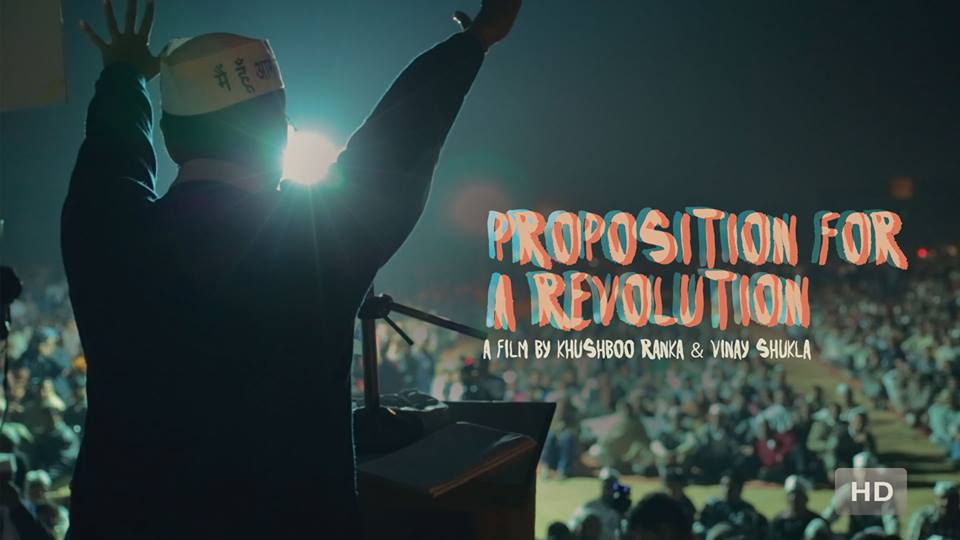
Khushboo Ranka and Vinay Shukla have documented one of the most exciting political turn of events in recent times – the making of AAP and the rise of Arvind Kejriwal. They have just released the first look of the documentary titled ‘Proposition For A Revolution’. They are also looking for post-production funds. So do check this out and if you like, do contribute.

– To contribute, you can go to their official site here.

After doing the fest rounds, Nisha Pahuja’s critically acclaimed documentary, ‘The World Before Her’ is all set to release on May 16th, 2014. Filmmaker Anurag Kashyap is presenting it and PVR Directors Rare is releasing the film. Moving between the worlds of a Durga Vahini training camp and the beauty boot camp of the Miss India Pageant, the film is a powerful story that could not have come at a better time. Some of us managed to watch the film earlier and we have put it in MFC’s Must Watch recco list. Click here to read our recco post on the film.

We are posting two clips from the film – one from the film, and one that did not make the cut. We also got Nisha to write on these two clips.

1. Pooja’s story

Director’s Note – I remember when Pooja told me the story of almost being killed at birth for being a girl..that moment became a turning point for me in terms of the focus of the film. I knew it had to be about the struggles that so many Indian women continue to face. It also changed the way I looked at Miss India–suddenly it was no longer passe or just simply derogatory..it was so much more complex. I had to ask myself “Given the Indian context, can I disregard my Western prejudices and see a beauty pageant as “empowering.” It’s something I still grapple with..

2. Tulsi’s story

Director’s Note – When I began the research in 2008, I was determined to find a young woman from a village who harboured dreams of becoming a Miss India.  Somehow I did. Meet Tulsi – achingly lovely..a symbol of “aspiring India.” Tulsi’s story was incredible, she comes from a village in UP that got electricity in 2009, and that only intermittently. Her grandfather was a freedom fighter and and there was a temple that had been built in his honour. Tulsi’s mother did not want to get married but was forced to.  So in an act of defiance on her wedding night she chopped off all her hair and began to dress like a man. Somehow she was accepted. She decided she would allow her daughter to do as she wished. When Tulsi told her parents she wanted to move to Bombay and pursue her Miss India dream, they sent her off with the money they had been saving for her dowry.  The Miss India team never responded to her application or her pics and when I last saw her in 2010 she was having a hard time and it seemed clear to me that she was being exploited, but didn’t want to talk about it in too much detail. I still get the odd email from her but she never responds when I write her back. I had always wondered how her grandfather, who had fought for India’s freedom would feel about Tulsi’s dream of winning a beauty pageant. Was this the freedom he was prepared to die for?

TRAILER

FUND-A-FILM Project

The makers of the film are also running a kickstarter campaign with the goal of taking the film to a wider audience – schools, colleges, public screenings. Click here to read about their plan and do contribute if you want to support the initiative. The aim is to raise US$ 50,000 out of which they have already got $ 41,000. Now they have just a week left to achieve the target. So if you feel for it, do contribute generously. The film needs your support.

As we have done in the past, this year too we are trying to source the scripts of some of the best films of the year. As most of you know, the scripts of Hollywood films are easily available online, even the unreleased ones. But we don’t have any such database for Hindi or Indian films. So that has been the primary reason for this initiative. And it has been possible because some of the filmmakers have been very supportive about it. It’s only for educational purpose and much like the spirit of the blog, is a complete non-profitable exercise. Thanks to Abhishek Kapoor, Hansal Mehta, Vikramaditya Motwane and Nikhil Advani, we have been able to post the script of Kai Po Che!, Shahid, Lootera, D Day – hereherehere and here respectively.

Ritesh Batra’s The Lunchbox has been one of the most critically acclaimaed and successful film of the year. It’s still running in US and few other territories. It’s been a long time since an Indian film manage to go beyond the diaspora crowd and The Lunhcbox set a new benchmark in that regard.

Thanks to Ritesh Batra, we are posting the script of The Lunchbox. Since its US release was due, we could not post it earlier.

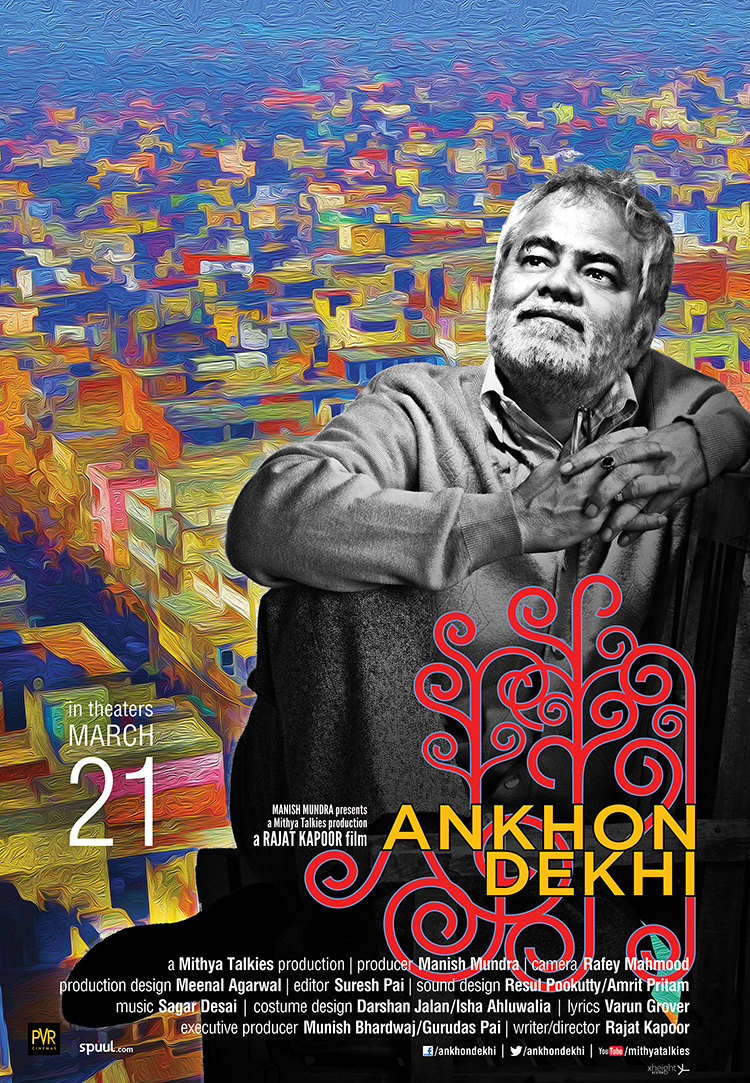
Rajat Kapoor’s new film Ankhon Dekhi opened with rave reviews. Though it has been a limited release, if you still haven’t seen it, do watch. It’s easily one of the finest films of the year. And if you have seen it, here’s Fatema Kagalawala on what worked and what didn’t. Read on to see if you agree or not.

“Rather than love, than money, than fame, give me truth.” ― Henry David Thoreau, Walden

ankhondekhi-4b (1)

Are stories set in a real-life world created with an unimaginable honesty, enough? Remember this line as you read along.

There are films that are character-centric, there are films that are character-driven, there are plot-driven films and there are those where the idea looms large enough to swipe everything under its shadow. Ankhon Dekhi is one of those films. Truth is your inner truth, your own truth, what you can see and feel and experience. Can a theme get more universal and personal at the same time than that? Can a theme get more exciting, thirsting to be explored threadbare than that?

“There are only two days that are important in life; the day you were born and the day you realise why.” – Mark Twain

Bauji has an eiphany one day and he must follow it because suddenly he has realised why he was born. He must follow his own truth and his own truth will only be that which he has experienced. Soon, the meaning of his entire life changes. He leaves his job as a travel agent because he hasn’t seen any of the places he regularly recommends and hence it is a false existence, something he cannot allow in his life anymore. “Rather than love, than money, than fame, give me truth”, Bauji could easily have been Thoreau. Or Maya Angelou who when asked what is right simply said, “Truth is.” His loving wife and daughter indulge him, his younger brother, tired of hauling material responsibilities leaves him, his loyal fans follow him blindly and we have a picture of life as we all have seen unfolding in our own worlds.

Creating a world to touch and feel

Every film is rooted in its own ideology and born of it, whether it likes it or not, whether it is conscious of it or not. Rajat Kapoor’s cinema seeks to question consciously and that is the joy of watching his films. In Mixed Doubles he questioned the idea of monogamous relationships, in Mithya and Fatso identity and truth, in Ankhon Dekhi truth again. There is something very honest, at an intrinsic level, in his searching and nudging set beliefs. That draws you in and makes you take it seriously, keen to know if the journeys of his characters will somehow make your own easier and enlightened.

It does but not in the philosophical proddings. It does in the earthy, rustic (and inspired) casting of Sanjay Mishra, Seema Pahwa and others. It does in the lovely, early morning winter mist-like songs written by Varun Grover used beautifully. It does in the very common-sounding but carefully written dialogues. It does in the loving relationships we see functioning in what we see as a very average, very ordinary family. We smile when we see Seema Pahwa’s Amma, nagging but warm and soft-hearted wife and mother because we know her, maybe in our own mothers, wives, mother-in-laws, aunts, grandmothers or neighbours. Even if we don’t she seems familiar. Because she is real.  There is no artifice in her character or her performance and she appeals to us in a way no hot babe or heartthrob can aspire to. Like most women do, she forms the spine of the family, keeping it together emotionally yet invisibly. (If you disagree, imagine the family without Bauji. Then imagine the family without her). Getting her character right (and getting the brilliant Seema Pahwa to play it) is the first solid brick Rajat Kapoor lays in creating a world we cannot help but fall in love with.

As we gently land into the world we are welcomed by a ruckus over the inappropriateness of the friendship the daughter of the house has with a boy. Bauji protects her as Amma lashes at her. We then see Bauji’s younger brother Rishi (a terribly miscast Rajat Kapoor) step in to play the peace-making voice of sense role with a sigh; a role he has probably been playing for a long time now and is weary of. There is also the no-good younger son (a character that spirals the story even more out of focus in the second half) whom Bauji doesn’t know what to do with and we see that the irregularities of the family are as regular and middle-class as they can get. There is daily bickering, daily endearing moments, gentle warmth and regular disappointments as ordinary yet interesting for it, as the patchwork quilt the family cosily shrouds themselves in, in the cold nights of this North Indian town.

“The truth is out there!”

Bauji would like to believe so but there is a strong corollary to that. Only that truth is truth that is true to your experience. And hence begins a journey of a family dragged into this search of truth by the man of the house who now begins to appear a little senile to our eyes shrouded by practical concerns. We, as an audience become the family and Bauji the lone crusader trying to put out what he has discovered.

I tripped out on the promise of the premise completely.

“In a time of deceit telling the truth is a revolutionary act.” ― George Orwell

Truth does revolutionise Bauji’s life. The search for truth comes with a price, from Gandhi to Satyapriya, they all knew it. The price Bauji pays is to see his joint family breaking up. Rishi chooses to live separately with his family and the graceful Bauji lets him be. We sense there is a parallel search for one’s own truth unfolding elsewhere. Practical and material concerns do not provide us the middle-class luxury to indulge in fancy philosophical journeys; no, that’s for the elite. And hence the entire family rises up in arms against Bauji’s new avatar. Philosophy is costly but we forget that in merely surviving we let go of living. Subtly deceiving ourselves that this is what life is meant to be after all. For Bauji, surviving suddenly becomes an ugly word.

Sadly, his discovery does not become an expansive, life-affirming philosophical journey or a guiding light. Neither does it elevate itself to a deep, cinematic exploration of its theme. Like Matrix did for example.

Instead, we have a situation with little sub-text to the real theme, of his younger brother’s separation from the joint family. Animosity grows between the brothers, one that is treated gently and with love but does it contribute anything to the central conceit of the film? Yes, the younger brother is following his own truth but the film seems to be saying little about his journey, treating it with realist-humanist sympathy alone with no philosophical implications. A mere by-product of the mess Bauji has invited in his life by choosing what he has. That a sub-plot that crucial has little bearing to the theme than being a mere outcome seemed to me to be disservice to everyone included.

“Men occasionally stumble over the truth, but most of them pick themselves up and hurry off as if nothing ever happened.” ― Winston Churchill

The tender-hearted Bauji suddenly becomes a braveheart in our eyes because he finds in himself the courage to face the truth he has found. It isn’t easy, such conviction, but neither is it difficult because when you have an epiphany, when the clouds clear for that insoluble moment of time and the sun shines brighter than it ever has, all shadows fall away, and the truth stands alone, refusing to be blind-sided, refusing to be hidden by rationalisations yet again. With such truth such courage comes as default. One has no other way. Yet, Bauji’s truth does not become ours nor egg us to seek ours. It gets lost in the whimsy of card-playing popularity, fan-following herds, and placard-holding eccentricities. None of which are organic or dynamic. They remain interesting plot points, the ‘coulds’ one writes on the margins of a script when at crossroads of plot development.

It’s almost like Rajat Kapoor himself stumbled over the truth, picked himself up and hurried off as if nothing happened.

And that killed the film for me. A theme as rich as that I found aimlessly tossed around, especially one with a very honest intent and one that is completely devoid of posturing. I know what became of Bauji but was it an organic growth or a cop-out? To me it seemed like the latter. Not that I know, but the alleys of truth must be convoluting, without easy answers, especially since so many of us know so little about it. The end of Bauji’s search seemed very easy. And his journey very unmindful as well. For a man who has found the reason of his existence, one which has been turned 360 degrees, he seemed to be acting more from whim than a focussed intent. Because whim is superficial but intent helps you delve deeper. If Bauji’s character had truly delved deeper he wouldn’t be going on trips to the zoo very late in the second half to establish a point he had painstakingly established very early on. If his character hadn’t taken an eccentric turn he wouldn’t suddenly become the lucky charm of a small-time Mafioso. His character seemed to be truly seeking and struggling, breaking free and revolutionising all that we know of an average man’s search for truth (notice the paradox in the statement) when he took to standing on the chowk holding confounding placards embarrassing his family. But suddenly, there was no movement in this journey. And a brilliant plot point became a mere set piece contributing nothing to anything.

 “The more I see, the less I know for sure.” ― John Lennon

Is this why Bauji ends up the way he does? We don’t know, however we are led to believe that he has come to a fructifying end to his journey. With the end as he chooses for Bauji, Rajat Kapoor seems to want to put an existential spin in the narrative which is as exciting a thought as his original theme. But there are no questions raised before we are led to this resolution. Nor is there an indication of a journey that seeks a proper close. The end comes and goes, just like Bauji’s epiphany, leaving us cold when it should have ideally left us shivering with goose bumps. Maybe inches closer to our own spiritual or intellectual thirst. That is because we did not see enough. Deep enough. Of Bauji and his thirst, his angst of marrying his new reality with his old, or a trajectory that led to his resolution that seemed to satisfy him. The film is linear and not episodic, however treating his journey as episodic fails the entire structure of the film and the audience, who by the middle are expecting more. Not answers, no one has them nor they can give anyone (Your truth is your own, remember?). Nor was it the intent of the film to provide ready ones. It was the experience of the search, the pain, angst, growth, questions, answers, trials and peace. Logically, all of this exists in the film but tattered and scattered, making little sense, not feeding off each other as it should and hence coming across as an under-played game of TT where no one wins.

Aldous Huxley once wrote, “Experience isn’t what happens to a man, it’s what a man does with what happens to him.”

I think that just about sums up, at many levels, what I feel about the film.

– Fatema Kagalwala


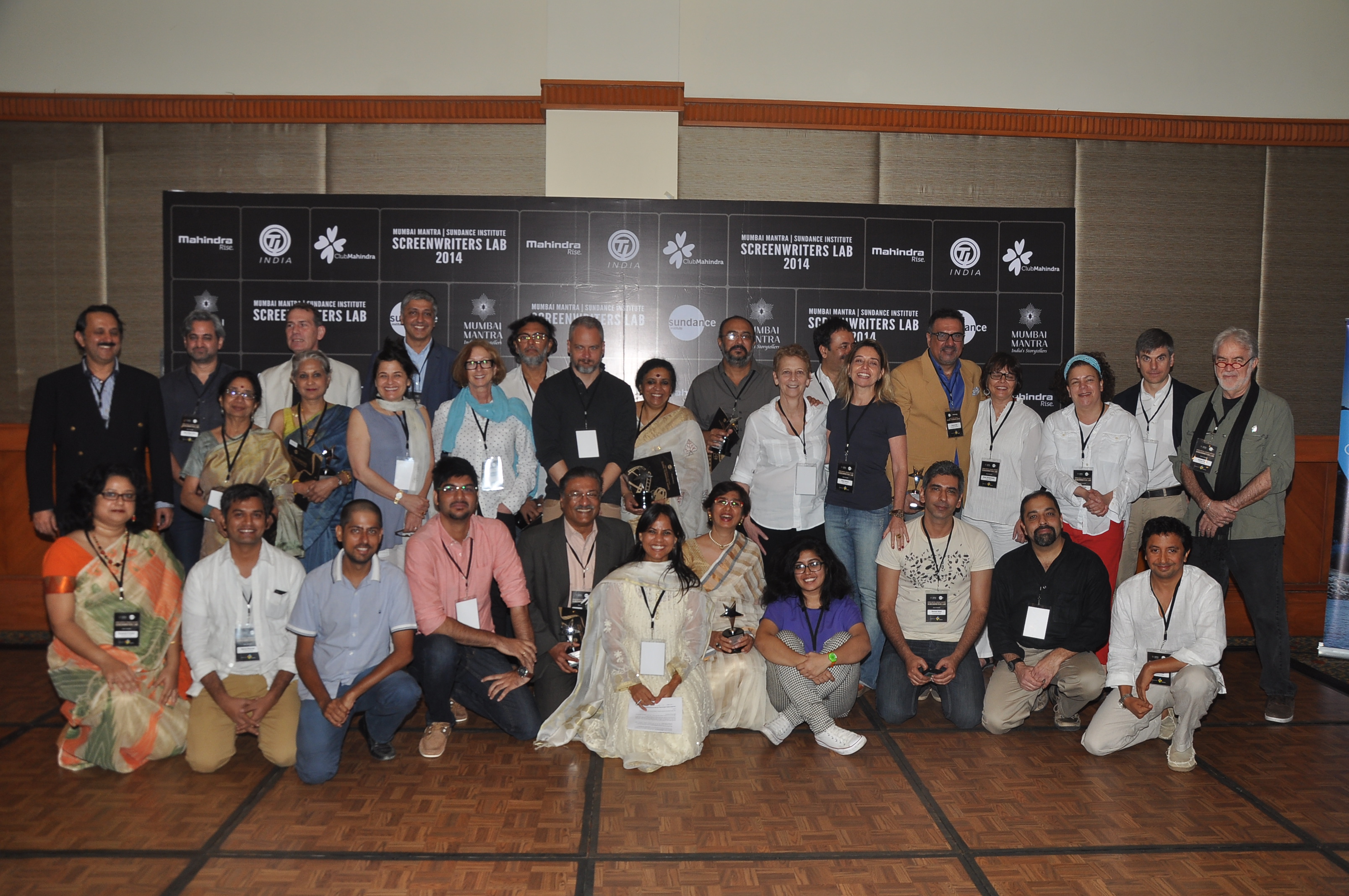
Mumbai Mantra Sundance Institute Screewriters LabMumbai Mantra, the media and entertainment division of the Mahindra Group, in collaboration with Sundance Institute, has selected eight Indian Screenwriters and their feature film projects for the third annual Mumbai Mantra | Sundance Institute Screenwriters Lab, to be held from March 16-21 at the Club Mahindra Resort in Tungi.

– This year’s Screenwriting Fellows, selected from submissions from India and the Indian diaspora around the world, are: Navneet Behal (Experiments with Truth); Ashvin Kumar (Noor); Bornila Chatterjee (Nuclear Hearts); Gaurav Madan (Shaktipur Crude); Deepanjali B Sarkar (Svadharma); Dylan Mohan Gray (The Last Day of Winter); Sanjay Talreja (The River Murder); and Neeraj Ghaywan and Varun Grover (Ud Jayega / Fly Away Solo).

– Creative Advisors include: Naomi Foner (Running on Empty, The Bee Season), Michael Handelman (The Ex, Night At The Museum), Dante Harper (The Delicate Art of the Rifle), James V Hart (Contact, August Rush, Dracula, Tuck Everlasting), Malia Scotch Marmo (Hook, Madeline), Anjum Rajabali (The Legend of Bhagat Singh, Raajneeti), Elena Soarez (City of Men, House of Sand), Rose Troche (Go Fish, The Safety of Objects) and Sooni Taraporevala (Salaam Bombay!, Mississippi Masala, The Namesake).

– Mumbai Mantra received over 500 applications for the Lab from Indian screenwriters across the globe. After a rigorous deliberation and consultation with Sundance Institute, the final eight projects were chosen.

– The Selection Advisory Committee included Advaita Kala, Anjum Rajabali, Deven Khote, K. Hariharan, Kanika Luthra, Mahesh Samat, Meenakshi Shedde, Neeru Nanda, Prakash Kovelamudi, Ram Madhvani, Ravina Kohli, Uma Da Cunha and Vikramaditya Motwane.

PROJECTS AND SCREENWRITERS SELECTED

EXPERIMENTS WITH TRUTH

LOGLINE: Following three children over the course of eighteen years, Experiments With Truth explores a recent history of state-sponsored violence.

Writer/director: Navneet Behal

While pursuing his Masters in Film at the New York Institute of Technology, Navneet Behal started work in New York as a camera operator. Upon his return to India, Navneet worked as Associate Director on a Hindi feature film, produced by Wild Elephant Motion Pictures. He is currently directing his first feature film, produced by M.A.S Universal Fin & Intra, due for release in 2015.

NOOR

LOGLINE: A six year-old girl sets out to find her missing father and stumbles upon mass graves, implicating the Indian army and putting herself in danger.

Writer/director: Ashvin Kumar

Ashvin Kumar is the youngest Indian filmmaker to be nominated for an Academy Award, for Little Terrorist, which played at 130 film festivals, winning 25 awards, including Honourable Mention at BAFTA/LA and a nomination by the European Film Academy. In 2012, his documentary Inshallah Football was awarded the National Award, India’s highest honor for cinema. Its sequel Inshallah, Kashmir won the National Award for best investigative film in 2013. His other work includes Dazed in Doon and The Forest.

NUCLEAR HEARTS

LOGLINE: A Bengali lounge singer who becomes involved with two French expats living in Calcutta, India.

Writer/director: Bornila Chatterjee

Bornila Chatterjee graduated from New York University’s Tisch School of the Arts with a BFA in Film and TV in 2008. Her debut feature film, Let’s Be Out, The Sun Is Shining, premiered at the 2012 New York Indian Film Festival, where it won the Audience Award and received a Best Actress nomination for lead Lipica Shah. Bornila was previously Managing Director of Stone Street Studios, a screen acting school and advanced conservatory in the Department of Drama at Tisch. Bornila is a curator and essayist for Vyer Films, a Brooklyn-based film streaming service, and a writer for Overdose Art Pvt. Ltd, a progressive art platform and production company in Calcutta, India.

SHAKTIPUR CRUDE

LOGLINE: When oil is discovered, a small village at Indo-China border suddenly becomes the most important place in the country and changes the lives of its people forever.

Writer/director: Gaurav Madan

Gaurav Madan grew up in a small town in Haryana. He received his Masters in Communications from University of Pune. He has won several awards for his commercial work, and owns an advertising production company based in Mumbai. His first screenplay was 3 nights 4 days, which was completed in 2009.

SVADHARMA

LOGLINE: The true story of an army officer who is betrayed by his government and sentenced to eight years of solitary confinement.

Writer/director: Deepanjali B Sarkar

Deepanjali B Sarkar is a digital media content specialist with experience ranging from internet and telecom content to corporate communications. She has worked with ITC, Indiatimes.com and Mobifusion. An alumnus of Presidency College Kolkata and Jadavpur University, she blogs regularly at http://filmandbookclub.blogspot.com/.

THE LAST DAY OF WINTER

LOGLINE: Condemned by a thuggish political regime as the son of a traitor, a 15-year-old boy faces a torturous set of choices as he reluctantly leaves childhood behind.

Writer/director: Dylan Mohan Gray

Dylan Mohan Gray is an award-winning producer, writer and director. His documentary Fire in the Blood was presented at the 2013 Sundance Film Festival and set a record for the longest theatrical run by a non-fiction feature film in Indian history. Fire in the Blood has won major awards in Washington, Hamburg and Vancouver and also received the award for Best Debut Film at the 2014 Mumbai International Film Festival (MIFF). Trained as a historian, Dylan founded the production company Sparkwater India in 2005 and has worked in various capacities on feature films, including collaborations with directors Fatih Akin, Peter Greenaway, Paul Greengrass, Deepa Mehta and Mira Nair.

THE RIVER MURDER

LOGLINE: A small town cop investigates whether a body found floating on the river is one of four missing local men.

Writer/director: Sanjay Talreja

Sanjay Talreja is an award-winning writer, director and editor of narrative features and documentaries, whose work has appeared on television and at film festivals. He most recently wrote and directed the feature film Surkhaab, which won Best Director, Foreign Language Feature at the 2013 London International Film Festival. Sanjay also teaches at various colleges and universities in Canada, the US and India. He has a MFA in Film.

UD JAYEGA (FLY AWAY SOLO)

LOGLINE: Four lives intersect along the Ganges river, each yearning to escape the constrictions of a small town.

Writers-director: Neeraj Ghaywan / Varun Grover (co-writer)

Neeraj Ghaywan worked with Anurag Kashyap on the veteran director’s two-part opus Gangs of Wasseypur and as second unit director on Ugly. His short films as writer-director include Shor and The Epiphany. Shor won the grand jury prize at three International film festivals.

Varun Grover grew up in Dehradun and Lucknow. He has written stand-up comedy for various TV shows and currently performs stand-up comedy at the biggest venues in India, writes fiction and graphic series for children in Chakmak (published from Bhopal, by Eklavya), and has written lyrics for Anurag Kashyap’s Gangs of Wasseypur (2012), Vasan Bala’s Peddlers (2012), Rajat Kapoor’s Aankhon Dekhi (2013), and Fahad Mustafa/Deepti Kakkar’s Katiyabaaz (2013).

1658720_566365606793453_343484244_o

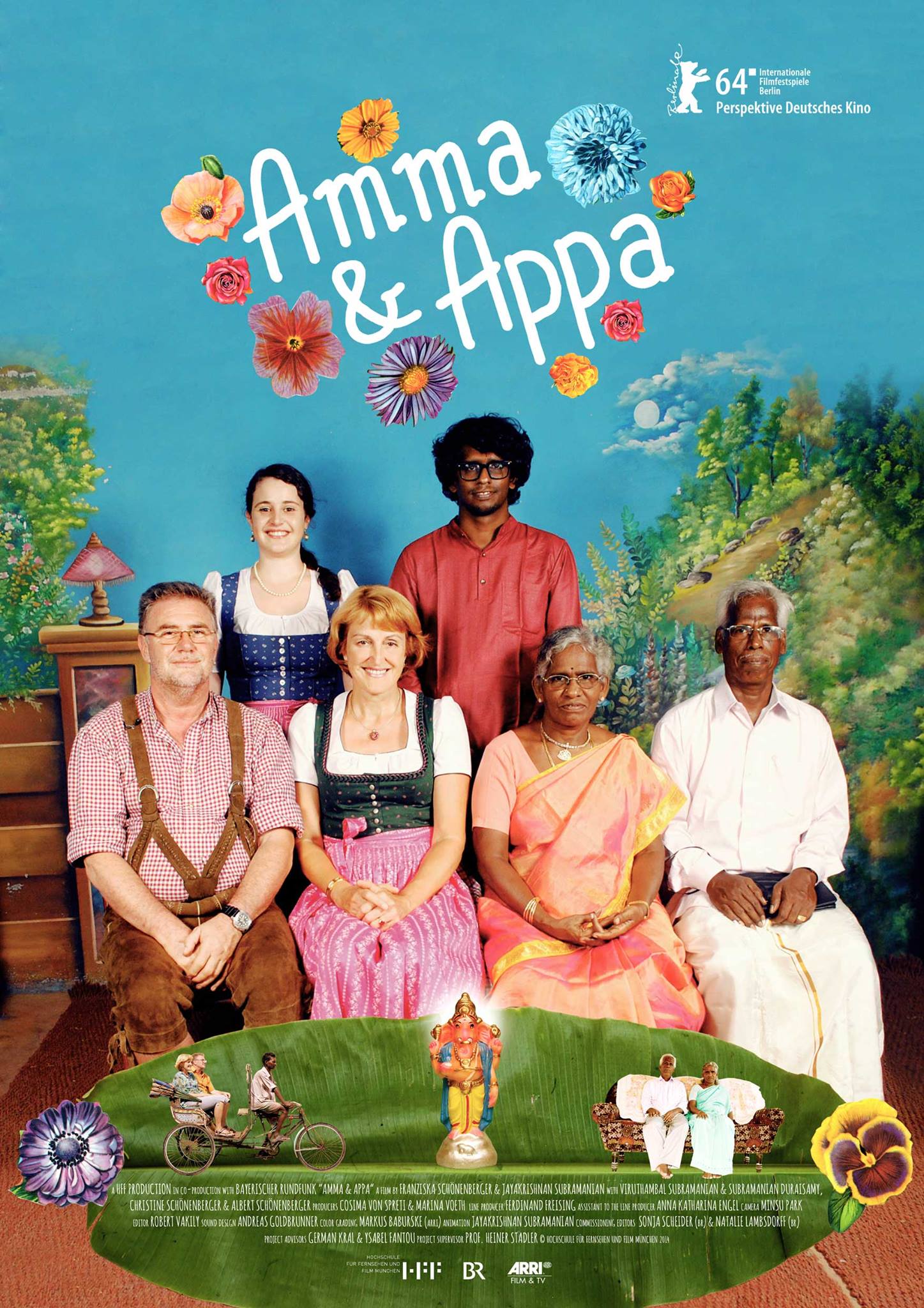
As we have said before, it’s a great time for desi documentaries. And while this one is not an Indian production, it does have a desi connection. Amma & Appa is a personal documentary about the cross-cultural marriage of director Franziska Schoenenberger and her fiancé and co-director Jayakrishnan Subramaniam. It was warmly received when it showed recently at the Berlin Film Fest in the Perspektive Deutsches Kino section. Check out the trailer and synopsis below:

Franziska comes from Bavaria and is in love with Jayakrishnan from southern India. When the couple decide that their love should lead to marriage and a life in Germany, both sets of in-laws find that cultural customs they took for granted are now suddenly subjected to scrutiny.

Whilst Franziska’s parents chose to marry of their own free will, the marriage of Jayakrishnan’s parents was arranged within their own caste, as is customary in Caddalore in southern India. As far as they are concerned, their son’s intention not only to marry a foreigner but to marry for love represents a cruel act of revenge on the part of the gods, since the match calls into question their whole traditional way of life.

Hoping to overcome cultural barriers, the parents of the Bavarian bride-to-be decide to travel to India to visit their future son-in-law’s parents. Interspersed with delicate animation sequences, Amma & Appa is a personal documentary which tells the story of one intercultural union — and in doing so humorously explores the familiar in the unfamiliar, and the unfamiliar in the familiar.

For more info on the film, check out the FB page or the website.

First, came this (on Highway). Then, we read this (on Nebraska). And now, this new post – another film, another personal connect, and another journey. This time it’s about Vikas Bahl’s Queen and why Svetlana Naudiyal could find a personal resonance with it. As the saying goes, Not all those who wander are lost. Read on.

I don’t remember being so happy after watching a Hindi film in a long time. It’s as though I am few beers down. I saw it yesterday, and the smile refuses to leave my face.

Her cardigan, her fading Mehndi, her awkward dance moves…the flashbacks…the dancing like crazy but carefully tucking the cardigan in her handbag…the gradual changes in body language…the Alice in Wonderland pullover…Golgappe, Salt and Pepper, Hostel, irrelevance of languages…the list can go on. The several little things, and the lovely whole.

Life needn’t always be particularly traumatizing. You might not have a rich, cold, cruel family; you might never have a heartbreak that turns into Rockstar-dom. It’s easier to tell the black to white story of a somewhat melodramatically traumatized/damaged character, and difficult to go wrong there. But some films still do. It’s not that easy to tell the story of a very ordinary girl from your neighborhood, it’s not easy to catch the greys. There’s a doting happy family, a comfortable life, and you know for a fact that the heartbreak can soon be forgotten. Eventually a new proposal will step in, and the bygones will be bygones, like it happens in real life. Queen’s situation is barely a speck in the universe of the so called Emotional Crises of the International Concern. Internal conflicts of the unconscious mind, particularly those of an unremarkable, ordinary person, are the least appetizing of all stories.

For telling the story of the internal misgivings, and telling it so well – seemingly insignificant, seemingly simple, a king-sized hat tip to Queen!

I am nobody like her but there’s so much of me, and many others I know, in her story. What do we call it – The unsaid understanding of the lone travelers?

For the last few hours, I’ve been sifting through my own photos, scribbles, email drafts from the trips. If there’s any poetry or meaning in life, it’s traveling. That’s it.

——————-

Salinas Drive, Cebu, Philippines. I was inhabited by the chaos of that street. And I loved it. In that chaos, all my noisy selves came to the fore, talking, asserting their presence. Nothing under the sun could stop them anymore.

For very long, of the several people I was and I could be, I was just being this one person. I was clueless, lacked confidence, suffered from low self-esteem, sought approval from everyone but myself, and to top it up – I was confused (which is an alright state to be in otherwise but not in combination with the aforementioned symptoms). I was stuck in a Mangrove swamp and had no strength to realize and admit that I was. All this when all my life, prior to this particular phase, I had been a strong, independent person.

To put it simply – my brain was a mess. I was not even the protagonist of my own life. I didn’t like myself and instead of acknowledging it, I would go overboard with pretending to be fine, sorted and in complete control of what I was doing. I believe staying away from home teaches you that – ‘How to pretend that everything is alright or will be alright soon’. Folks call and you tell them everything is good. (It’s been a decade away from home and I must admit that at this kind of lying, I can quite often defy the mommy sensor!)

Friends could see the mess, but my pretense confused them as well and in turn no one raised an alarm or even a question for that matter.

It was nothing short of a miracle that Philippines happened, and saved me. Through some odd coincidences, I got a freelance assignment at a first time documentary festival in a city called Cebu, that required me to be there for 6 weeks.

I can confess this now, perhaps. And I hope my parents won’t be reading this. Until I reached Cebu, I had no clue what the job entailed. Broadly speaking, and this was the story I told everyone, including my parents – I was supposed to help set up the festival, programme and also take a short course on organizing/setting-up festivals with a batch of film-making students. I didn’t even know if I was appropriate for the job but for once in life, I gathered all my selfishness and jumped at the opportunity headlong.

The organizer person I was interacting with seemed shady, neurotic and hyper, which I later discovered wasn’t an exactly incorrect observation. Her ex-associate on the project – an Indian, was shadier – she had conceived and subsequently abandoned the project, was constantly unavailable or lying about her whereabouts, her work. The organizer inviting me was facing allegations of intellectual infringement on the event concept. Google told me all this and i didn’t even bother to crosscheck with the organizer. My travel, stay, food was on them, and I thought that was enough. I was also promised an alright remuneration too, which was never paid on arrival. And well, not even on departure.

Just a month before leaving, I landed myself a nice job which would eventually entail travel. So actually, there was no urgent need to go to a far flung third world country for a something-fishy assignment. Of course, I didn’t think twice, I was already too much into the plan. Well, actually, in a corner of my mind, I think I told myself – “when you can, for no substantial reason, have faith in some really assholish people, why not take the chance of having faith in humanity”

I don’t know if some friends would remember this. I called up people to say, “bye, I’m leaving for so and so thing in a few days..” I made it point to call everyone I could recall, people I was fond of or cared for. Because I honestly thought what if this job is really some shady thing, what if I do get into some kind of trouble and never return!

(Work there is another story, maybe for another time)

Being removed from your context is an inexplicable relief. Like some plants that find a sudden rush for life in unfamiliar soil. Some adorable new people, a few very discomforting ones. I was as much a stranger to all of them, as I was to me. We were even.

Looking back, I wish I was more disconnected from the world I belonged to. Some transformations would perhaps been faster. There are way too many connecting roads – Whatsapp, Viber, Twitter, Facebook, Skype.. I wish I had some clue, how switching off would/could help me. But again, back then, I hadn’t even acknowledged that I was messed up.

In the sifting, came across something I scribbled back then. Like it happens in movies, everything makes sense in flashback.

“I feel like a familiar stranger to me. There is this sudden feeling of being in love and I don’t even know with what….There’s very little money that I have and that’s depleting quite steadily. I am slightly clueless if this organization is going to pay me at all. And I am barely worried about being absolutely broke when I return. I keep claiming that I am worried but deep inside I’m not. I amble around religiously even though the streets aren’t particularly safe. I tell myself, I’m from India, it’s as bad there. There’s this very silly and surprising joy in being an outsider, a foreigner. I stare at the books, at web-pages, flip through films but it’s walking unfamiliar streets that feels like reading poems. I am engulfed by a comforting loneliness, wordlessness, even the occasional footsteps feel silent. There’s no sun in sight, yet there’s a lingering feeling that the haze will vanish…eventually… hopefully…”

Towards the end of my stay at Cebu, I took a dive safari trip. It was living with a group of strangers on a boat and scuba diving that brought out a little-bit of the person I once used to be – someone who wasn’t awkward or uncomfortable with herself. Overcame my fear of water bodies, forgot that I didn’t know how to swim and let a dive instructor be the master of my life. Picked a bikini and soaked up the sun. It didn’t even cross my mind that how flabby my tummy was, or that the love handles were on display. It was the long-forgotten-least-bothered me, back in form, again! Of course, I figured this out only in hindsight. I didn’t give a damn, nobody gave a damn. There’s a strange freedom from yourself, when you’re not a ‘body’ for people around. Thin, fit, flabby? Nobody cares.

The strength to reclaim my own life, didn’t come back that easily upon return. All I had was a vague blueprint of what I wanted to fix, with a little hopscotch here and there, and somehow managed to do it, eventually.

Friends heaved a collective sigh of relief. So did I.

Post that, it took two more trips and lone-time in different cities, where I went for work, that finally got my head (with self-esteem and sense) back in place. While limping around with a broken foot, in a fast paced first world city. In striking a friendship over ducks & parables, the old-fashioned way, where you meet people in real life first. In a long heart to heart chitchat with a German cabbie who could only speak, what he said was small-English, and I could only speak small-German.

With sharing this, I leave my story on the wall, at least one of the several circles has finally come full circle.

———-

Almost a year after my return from Philippines, I got paid by the organizers. That too without asking for it. #Win!

———-

p.s. I think, I can safely say that through primary, secondary and tertiary experiences, I have a PhD in the Vijay types, by now. Dear Women, for the love of yourself, recognize the ones in your lives, if any, (there are way too many in the world and they needn’t always appear as boyfriends)…take a lone trip to somewhere or not, but run run run, run far away from those.

p.p.s. Oh, and I love you Kangana! Hug!

@svetlana25

What’s the Global Dialogues contest all about?
Global Dialogues invites you to come up with an original idea for a short film about HIV/AIDS, sexuality, violence against women, or alcohol, drugs & sex. The best ideas will be turned into films by some of world’s greatest directors and young cinema talents. The Global Dialogues films, each proudly displaying the young authors’ names, are viewed by millions of people every year on TV and on the Internet. You can see the films they’ve produced so far at http://www.youtube.com/globaldialogues

Who can participate?
The Global Dialogues contest is open to all young people worldwide who will be under the age of 25 on 31 March 2014. (If you are older than that, you may participate by working in a team led by someone who is under 25.)

When’s the deadline?
All entries must be submitted by midnight GMT on 31 March 2014.

What are the contest prizes?
The contest entries will be examined by a series of juries. There will be 20 winners of the international contest. Each of these winners or winning teams will receive a cash prize of US$125, as well as the possibility of having a film based on their idea made and shown on TV and the Web. In addition, the top 3 winners or winning teams will receive special cash prizes:

Grand Prize: US$2,500
Second Place: US$1,250
Third Place: US$625

Winners of the international contest will receive their prizes on or before 31 July 2014 at the address they give on their Participant Questionnaire. Only one prize will be given to each winning team.

How to participate?

Topics: Your idea can be about any topic related to HIV/AIDS, sexuality, violence against women, or alcohol, drugs & sex. On the next page, you’ll find a list of suggested topics that you can use if you wish.

Story form and language: It’s up to you to decide what form your idea will take. Most participants in Global Dialogues contests write short stories, but you can also send in a video, a theatre play, a comic strip, a song, a poem.… Anything is possible as long as the text is in one of the official Global Dialogues languages: English, French, German, Hindi, Bahasa Indonesia, Kiswahili, Mandarin, Portuguese, Russian or Spanish. Length. If you write a story, it may be up to 10 pages long (maximum). Recorded songs or videos may not be longer than 10 minutes.

Resources: As you create your idea, please talk to organisations or individuals in your community who can provide you with good information on the contest issues, or visit credible sources of information online. You can take part alone or in a team.

For more info, get in touch with the Global Dialogues team on Twitter, Facebook or on their Official Website.