Archive for the ‘cinema’ Category

Your Own Voice, Whatever It May Be Worth

Posted: February 24, 2013 by moifightclub in cinema
Tags: , ,

The precocious students of Ruia College nagged and pestered and forced me to do this – a piece for their film publication “Film Eye” which came out last week (a highly readable magazine too). Asked to choose my own subject, I figured directly addressing the students in the piece (whilst being aware of the context of the publication) might have more value than a generic piece that could have appeared anywhere. It was really for their eyes, and perhaps not very smart of me to put it out here but I just feel like doing it. If nothing else, at least it will make me even more unpopular than I presently am (if that is even possible), even though, contrary to what some think, that is not exactly an objective.

 Instead of a general piece on cinema that could be published anywhere, this is an attempt to do a customised piece for this particular publication addressing its readers directly. Many among you may be contemplating a career in the arts – perhaps cinema. That professional world is perhaps inscrutable and even intimidating. Dealing with the clear conflict between the mainstream and personal expression is the toughest battle ahead. This piece uses film references to make its points – for whatever they are worth.

In what is perhaps the greatest documentary series ever made (the “Up Series”), fourteen British children aged 7 were selected from diverse backgrounds in 1964 and their lives revisited on camera every 7 years (director Michael Apted stayed constant too) – in 2012, they were all 56 years old, and there had been 8 films made. From these, the most revealing films are 21 Up (film made when they were 21) and 28 Up – not because of the individual films but because of the transformation that occurred between these two ages. Most of the hopes and aspirations these young men and women had expressed at 21 had been significantly tempered by 28, and a strange sort of auto-pilot acceptance crept into their worldview.

This is not the only evidence to suggest that the age-span 21-26 (or so) is perhaps the most important stage in an individual’s life when his (or her, of course) relationship to his work (any kind of work, not just in the creative fields) is fundamentally determined. It would appear that the majority give up during this time, and focus on stability – in their jobs and family lives. There’s no rocket science required to process why this happens – it is natural and perfectly understandable. Those who develop a different relationship to their work and have a drive and restlessness to reach out for something beyond this assured stability with no guarantees are not necessarily more intelligent or talented; it has more to do with a certain attitude and perhaps it can even be argued that it is often not a voluntary choice one makes but more akin to an urge.

This absolutely does not mean that these people have to achieve something within this age or that people with say, artistic ambitions, have to complete something by then. Many such people may actually take a decade or more to express themselves properly, to create or build something. Some may change several jobs, even professions to find their true calling. What they have in common – regardless of what their muse is, or where their interests lie, is that they don’t stop searching. For some reason, whether consciously or not, the commitment to this mindset appears to be almost invariably made during this 21-26 age-span.

So, this crucial period in your life is now ahead of you when this commitment will be defined, consciously or otherwise. Circumstances have a big role to play here – and no-one should ever be judged on what calls they take on this count. However, given that the vast majority of people (including commercially thriving people) seem to live “lives of quiet desperation” and compromise, some even wearing their unfulfillment on their sleeve, it is likely to be the most important choice you will make as it will define the rest of your life. Perhaps even more than matrimony, as this certainly seems to be more irreversible (as a mindset, not as an act).

However, even if you decide to commit to a life of self-expression (or self-realisation), that would just be the starting point – the long road ahead would still have plenty of potholes to waylay you.

There was an outstanding advertising filmmaker in the late-1980s – everybody believed his transition into feature filmmaking was a certainty (also because he was related to a legendary Bengali filmmaker) and would happen very soon. 25 years later, it still hasn’t. A few years back, he was asked amongst friends why he had never ended up making a feature film – and after some cajoling he said that the idea of matching up to his legendary filmmaker relative intimidated and discouraged him so much that he could never quite get started with any kind of confidence or momentum.

He deserves sympathy not for bearing such a great weight but for getting it so completely wrong. The point of any kind of art is not to match up to anybody (whatever the award shows may suggest to you) – but to put one’s own expression out there – tell one’s own story, try to find and communicate personal truths, whatever it may entail. To get scared of doing that (and there is no other way to quite describe what happened to this advertising filmmaker) suggests a complete misplacement of priorities – where it is craft that is aspired to, not art. The art is in the search and the soul of the work, not in the barebones of craft, however accomplished the latter may be.

We are very emphatically living in an age where how a sentence is crafted is appreciated more than what it conveys. And nowhere is this truer than in India where interpretation (rather than original expression) has been all-important anyway – from folk to classical music, from film songs (where interpretation is happening at every level) to talent shows on television, it has been about getting it “right” first, about technique and “correctness” then individual expression. This, coupled with the post-colonial inferiority complex we are still very comprehensively reeling from, has made creative confidence a very rare commodity in our country.

This is precisely why someone like Quentin Tarantino has destroyed two generations of Indian filmmakers without knowing it. The man who made violence hip and cinematic more than anyone else in film history did it with a slant that was its real dimension but too many in our quarters have gone about mimicking the cool and ignoring the vision (it is this vision that makes Tarantino a great filmmaker, not the craft). Some of our filmmakers discovered that the shock value that could be extracted from this mimicry also provided considerable commercial felicities. Today, the gangster genre (unimaginatively and perhaps typically in our quarters, this is almost the only genre in which this mimickery happens) is the most prolific (and profitable) one in the Mumbai film industry and this brand of quick-shock cinema consistently produces films that amuse more than they last. Some of them make enough money, and even excite enough “critics”, to perpetuate this hollowness.

If a law forced these filmmakers to not allow the characters in their films to bear arms, much like the Chambal dacoits who have been surrendering their arms from the early 1970s, one suspects many of them wouldn’t really know what to do with themselves. It could lead to a forced clarity that would almost certainly have very welcome long-term consequences as they would be forced to look at life around themselves then (as perhaps happened to Iranian cinema, thanks to the limitations imposed upon it). Of course this is just flippant fantasy, as thoughts of forcing anything on anyone should be in a democracy.

Also, unfortunately, most of our younger filmmakers seem to think the path to becoming a world-class film director is through imbibing world cinema immaculately. As a result, they seem to live in this cinema more than in life around them and their rootedness, has, for the most part, gone missing. As certain bastions of the elite cinema universe (like Cannes) evoke the Miss Universe/ World pageant in the 1990s in its temporary interest in work that departs from their exotic notions of Indian cinema (which has tragically been Bollywood for about a decade now), their aspirations even appear to be bearing fruit, which the jaunty media here rejoices over. Overlooking the undeniable fact that not a single indigenously-made Indian film ever commercially crosses over internationally outside the time-honoured melodrama markets (like say, Egypt) or captures the imagination of the world cinema audience (precisely because of that lack of genuine rootedness). For the most part, we produce spurious cinema in these times which is such a waste (especially given what diversity these churning times offer us). Why just films, even our books and popular music do not show signs of much originality and honesty for much the same reasons (with rare, but notable, exceptions).

The over-emphasis on detail and craft (which is also derived from foreign shores) is one of the main reasons why very little work has an original voice in our country, and therefore, very little value beyond the ephemeral. Even the people who consume (the audience) and the ones who judge (the “critics”) are more conscious of these details than the big picture or the soul of the work – this has become the predominant cultural sensibility in our country. Leading to the celebration of ersatz poster boys.

Spiritualists of all kinds and persuasions say one thing in common – that the human mind often comes in the way of fulfilling an individual’s true potential, thanks to the distractions of everyday life and its preoccupations. The same could be said for the stories being told around us – their true soul remains unexplored, underutilised, underappreciated, thanks to the focus on the details around them than the core itself. Every aspect of the entertainment industry perpetuates this these days, especially, sadly, the audience.

Of course, there are in-between spaces where new talent can try and find their feet (and some do but they are almost invariably non-commercial spaces). For example, it is curious that just like new acting talent rarely gets the choicest opportunities without familial connections within the film industry, new filmmakers never ever seem to emerge from outside the “camps” and the various coteries. There is a good reason why the industry is considered by many to be run by a kind of internal “mafia”. So, how does someone with no connections negotiate all this?

Besides adopting the path of least resistance and aligning your objectives to the status quo or opting out altogether (and changing professions), there is a new alternative that is gradually emerging in these digital times. A 1 TB hard-disc costing about Rs 5,000 (when in 2006, it cost about Rs 1.2 lakhs) is just a small indicator of how accessible things have got. Digital cameras and sound equipment are personally affordable today. A huge pitfall for some people is their excessive preoccupation with formats and cameras and technology and the rest – it is all nonsense, really. They forget that even the lower-end cameras they get to work with today are better than the high-end cameras the established professionals may have been working with a decade or two ago (and some produced classics with).

However, the commercial possibilities of cutting-edge work are limited in today’s film environment in India and practically no-one who wants to do innovative and personal work without significant compromise can really make much of a living from it.  Thankfully, due to the dynamics that are changing so rapidly, it is most likely a temporary state of things.

In the meantime though, how does one keep this promise alive? One option could be to try and make filmmaking a hobby, and find a job or a line of work that sustains you financially, perhaps even something allied to films (though it often helps the cause if you do something that does not exercise the same muscles that filmmaking does, to keep the freshness intact). And work in your spare time in cinema – the digital revolution has made DIY (Do-It-Yourself) cinema more achievable than ever before. Find like-minded people to work with and expand the scope of what is possible within your set-up gradually. With the Internet breaking down old ways of distribution as well, this way of working outside the system should eventually end up transforming the mainstream as well. And it may not even take as much time as many fear. By removing middlemen and having direct access to the final consumer, thereby being able to find your core audience much faster than possible ever before, significant profitability (significant enough to at least allow all its participants to earn a living from it) is not such a pipe-dream anymore.

The ones to benefit the most from these changing equations would be those who keep their desire of personal expression alive in some way. And amongst most of you reading this, this decision will happen in the next 4 or 5 years. Whatever you decide, do it consciously. It will probably lead to the most apt decision, for yourself. Good luck.

– Jaideep Varma

The above writer is a fringe filmmaker/writer (Local, Hulla, Leaving Home) and should have very little credibility for those seeking fame and fortune in the entertainment world. The piece, even if it did not provide any food-for-thought, hopefully at least entertained a bit.

With the positive reviews pouring in from all quarters, i was waiting for some contrarian views. Because what’s the fun if we all are on same page. Though there have been few such views too, and criticism mostly have been looking at the big picture and the issues involved. But Runcil Rebello believes that the film is about “the smaller picture”. And he also writes about how the film is different from the book.

kai-po-che

In Abhishek Kapoor’s Kai Po Che!, it’s all about opposition – ideas clashing with each other, and sometimes both winning, sometimes just one. There is the age-old money versus passion squabble, further highlighted in the academics versus sports issue omnipresent throughout Indian homes. Then there is the overarching notion on which the film is built: friendship versus ideology, and friendship does not always win. There is also Mathematics versus Biology.

Kai Po Che!, adapted from Chetan Bhagat’s The Three Mistakes Of My Life, is a story set in Gujarat around the turn of the millennium. The nineties were done and dusted with. Internet, Nokia mobiles, malls were making their introduction into daily Indian life. The Indian cricket team would become a leading Test-cricket playing nation in the following decade. Religious politics had not yet reached a fuming and flaming high.

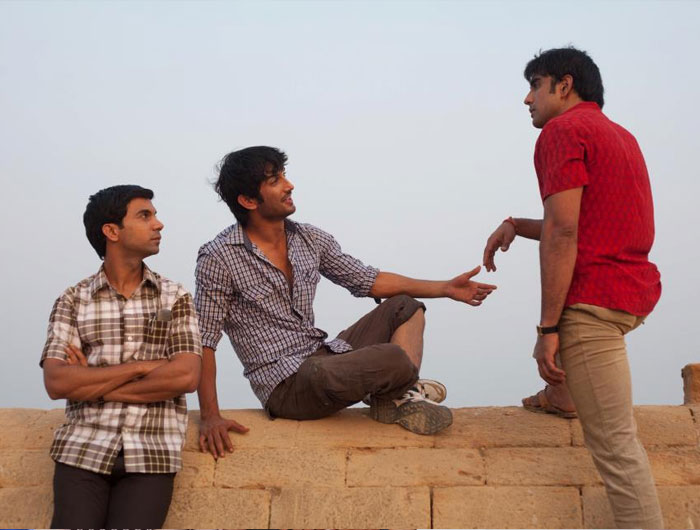
But Kai Po Che! doesn’t have its eyes set on such large-scale issues. Rather, it is content telling the story of three friends: Ishaan (Sushant Singh Rajput) – flamboyant, impulsive, passionate, Govind (Raj Kumar Yadav) – logical, ambitious, money-minded, and Omi (Amit Sadh) – simple, lovable, easily swayed, who set up a sports equipments store-cum-cricket training academy-cum-Maths tuition classes. This film is as much an ode to friendship as it is about the decay of that lovely bond.

The idea of opposition isn’t hammered into our heads. It’s brought up now and then, never over the top. Just like the film. The story (written by Abhishek Kapoor, Chetan Bhagat, Pubali Chaudhuri and Supratik Sen) does not veer much from the book, and if you’ve read the book, you’d realise then that it is a story tailor-made for Bollywood. And yet, the writers and the director stitch the film into an altogether different piece of fabric. The film is removed from typical Bollywood treatment. No star actors, no item numbers, no over-the-top treatment, just three songs (Hell! The soundtrack by Amit Trivedi [with lyrics by Swanand Kirkire] includes a garba-beat song in Shubhaarambh, but the film’s garba scene isn’t picturised on it. Unexpected.) Instead, Kai Po Che! is about the small moments in the fabric. Don’t lose sight of the smaller picture.

Characters, especially Omi’s, oscillate, not able to settle on one thing. He, at times, goes where the wind blows, and sometimes marches to the beat of the other drummers of the show. He may not always like what he does, but he is loyal to any cause he signs up for. Govind and Ishaan, on the other hand, are the proverbial immovable object and unstoppable force. They’d go to any distance to get what they want, albeit what they want is in diametrically opposite directions. Govind has to let loose, has to understand that not all things in life are solved by Mathematics, but some by Biology too. Ishaan’s sister Vidya (Amrita Puri) would be his teacher in this regard. Ishaan has to grow up, has to not let anger affect his decisions, but his mind. Ishaan, and to a lesser degree, Govind too, do not care about how religion plays into their plans. They are fine with sitting on the fence when it comes to this particular power struggle, letting Omi handle the dirty work.

What these three have in common, though, is something India is obsessed with: cricket. Cricket (and films) are said to heal wounds. In this film, it is the historic 2001 Calcutta test match between India and Australia that plays the role of mediator and doctor. It is also cricket that brings together children of two opposing homes, Omi and wiz kid Ali (Digvijay Deshmukh), under one roof.

Abhishek Kapoor has a knack for staging event situations. In Rock On!! earlier, he staged rock concerts in a way no Indian film had before. In Kai Po Che!, he goes large scale, but doesn’t make them the focus of his movie. The eye firmly remains on the three friends. Earthquakes, cricket matches and the Godhra Riots form the trifecta of incidents around which they break and mend. Tough decisions are made, mostly on impulse and emotion. When calamities strike, there is no time to think. Govind, Omi and Ishaan choose their respective sides all on basic instinct.

The film, though, has been meticulously planned. If Anay Goswami’s cinematography portrays Gujarat in a favourable light, Hitesh Sonik’s background score livens up the lives of the three friends. Deepa Bhatia transitions from one date to another finely, giving her best cut in the crucial scene during the riots.

Sushant Singh Rajput and Raj Kumar Yadav play their roles well. They really look the part, and so does Manav Kaul, being crafty and smart as Bittoo mama, Omi’s political leader uncle. Amrita Puri is cute and plucky adequately. In fact, the casting (by Mukesh Chhabra) is impeccable. The one actor, though, to make the most impact is Amit Sadh. From portraying a simpleton to a political henchman, Amit Sadh’s eyes, and hair, speak.

All these people, eventually, are just holding the manja. It is Abhishek Kapoor flying this kite, cutting every other kite in his path. He’ll be the one screaming kai po che! at the end of it. And what a delight it has been to watch this kite soar great heights.


P.S.: If you’ve read the book, you’ll understand the flashback and the conclusion has changed; all for the best. Below are a few details of what is different in the film.

(SPOILERS AHEAD!)

Chetan Bhagat, in his book, The Three Mistakes Of My Life, had Govind as the lead character. The biggest change is towards the end. In the riot scene, Omi is the one who protects Ali, Ishaan and Govind from his uncle. Omi dies in the process, and Ishaan doesn’t talk to Govind for years because of the revelation that his sister and he were in a relationship. Govind eventually, before committing suicide many years later, writes a letter to Bhagat, who he is inspired by, thanks to his two books Five Point Someone and One Night At The Call-Centre, who then intervenes and brings all of them together again. An utterly melodramatic end to the story, which thankfully was changed.

Another important section that was missing from the film was the part where the three friends finance a trip for Ali and themselves to Australia to receive cricket coaching. The Australians, seeing the marvel that Ali is, offer to train him but only if he eventually plays for Australia. Ali here in an outright dramatic fashion proves his patriotism for the country by shouting that he’ll play only for India and then they return to India.

Also, Vidya and Govind sleep together on Vidya’s eighteenth birthday at her home itself in the book. This too was changed in the film.

Also, missing in the book is the Diu section. The three friends are basically saints in the book, not leaving their pol to do things normal twenty-something guys would do i.e. to drink.

Abhishek Kapoor also changed the narrative by making all three characters equally important, thereby removing the crux of the story from the ‘three mistakes’.

The rest of the movie is pretty faithful in its adaptation.

Abhishek Kapoor’s new film Kai Po Che has released today. The reviews so far have been unanimously positive. But does it mean anything beyond that – The Big picture? Over to filmmaker Hansal Mehta who connects the dots.

Kai Po che

4 reasons for not watching the increasing number of films released every week –

  1. I am perennially broke
  2. I am lazy
  3. I need to work
  4. My wife is not in the mood
  5. I am hoping I get invited for a preview/premier.

The past few weeks have been different though. The spate of films released and due for release stared at me in the face because

  1. They featured friends in lead roles
  2. They were directed by friends
  3. They were produced by friends
  4. I was looking forward to the films
  5. I felt compelled to watch them

I am going to limit my post to the Hindi films I saw because in the case of foreign films:

  1. I feel inadequate commenting about commenting on them
  2. I did not feel like watching many of them
  3. I am waiting for uncensored DVDs of some of them
  4. I don’t get invited for previews of these films

In the past few years, most significantly 2012, I am seeing a pattern in films that are successful (relatively) and appreciated. A majority of them stand out for their choice of actors, their choice of subject, their non-formulaic narratives and a host of other similarly intellectually stimulating reasons.  One factor that has begun to increasingly stand out in these films is sheer audacity. The more I think about what drew me to watch the films, to like some of them, to dislike some of them and to find some of them memorable was the lack of apologetic film-making that has mostly led our films towards pathetic levels of mediocrity.

I’ve noticed that many film-makers no longer feel pressured to make the same formulaic nonsense with the same boring people over and over again. Many of the older directors also seem to realize the futility of formula and are trying hard to reinvent. Those who aren’t will soon be history.

Ever since I made Shahid, I’ve been asked over and over again about how the trend of biopics is on the increase. The media unfortunately reads trends very poorly and looks for convenient analysis. Trade pundits who have in the past thrived upon silly generalization are very shallow in their understanding of artistic/creative decisions taken by film-makers or in analyzing the success of films that don’t fall into their formulaic comfort zones. The truth is that book adaptations, biopics and stories inspired by true events are an indicator and not trends in themselves. We now have film-makers looking for newer stories to tell. We have film-makers looking for new ways to tell stories. We have film-makers who are fearless. We have film-makers who are not afraid of audacity.

Whether it is Talaash, Gangs of Wasseypur, Ek Main Aur Ekk Tu, Vicky Donor, Special 26 or Kai Po Che, I notice a fearless streak in the directors and the team that has made these films possible. Even potboilers like Dabangg, or before that Wanted, or the recently released ABCD have displayed a certain audacious vision. Rockstar had the audacity to be deeply philosophical and sometimes mendering while pretending to have commercial trappings. A certain Anurag Kashyap whose films either got banned or termed as jinxed is now celebrated because of his delightfully indulgent Gangs of Wasseypur or his subversive take on Devdas. Sujoy Ghosh redeemed himself with the surprising Kahaani. Tigmanshu Dhulia’s Pan Singh Tomar was commercially successful. English Vinglish marked the successful return of a Bollywood diva who churned out some of the most cringe-worthy films of my growing up years. The list could be exhaustive and I’m sure it will soon dominate successful box-office lists. On the other hand there has been a steady increase in films (Ship of Theseus, Miss Lovely, Peddlers etc.) that have found appreciative audiences in international film festivals and critics. These films have shown a fierce independence in their making while giving alternate Indian cinema a new lease of life and an unpretentious, fresh form of expression. They have been audacious in their abandonment of what we perceived as ‘art-house’ or ‘parallel’ cinema in India. They were unabashed in their treatment, style, narratives and expression. These and many other films that I have viewed over the past year and this year have challenged audiences, provoked critics and subverted formulaic convention with amazing audacity. Even more encouraging is the fact that producers, actors (including some stars) and trade have begun to embrace the audacious breed, backing them to the hilt.

So what is the point I’m trying to make? It’s simple. Audacity is in. Safe is not safe anymore. Take the second installment of Dabangg. It disappointed because it succumbed to ‘ingredientization’ and failed to live up to the fearless audacity of the first part. Films like ‘Zila Ghaziabad’  or ‘Jayantabhai Ki Love Story’ are passé. They will continue to get made. They will continue to remind us of everything that is unimaginative and about how we have allowed ourselves to be taken for granted all these years.

So here is my two bit gyaan. Whether you aim for the mainstream or the alternate space, make it audacious. Just making it big will soon cease to work – neither for the makers or the audience. Yes, we will have regular installments of successful franchises. We will have ridiculous remakes. We will have mindless, story-less films – but my guess is that all of them will work for their audacity and not for their adherence to convention.

Audacious will soon be safe. Safe is already dangerous. It could soon be suicidal.

Film Writers Association (FWA) has announced the 3rd Indian Screenwriters Conference. The central theme this year is “Untold Stories : Screenwriting and the truth of our times”.

– Venue : Venue: St. Andrew’s Auditorium, Bandra (W), Mumbai

– Dates: February 25, 26, 27, 2013

– Only FWA members can attend. So if you are not a member of FWA yet, do become one. Click here to go to FWA site for more details.

And here’s the programme detail..

screenwriting-215x300Day 1 – Monday, February 25

1000-1020: Introduction to the Conference by Convenor & Co-Convenor, ISC

1020-1030: Welcome Address by President, FWA

1030-1100: Minister HRD (expected) declares the Conference

1100-1130: The Chief Guest’s address

1130-1145: Tea/Coffee break

1145-1230: Keynote Speech by Shiv Vishwanathan

1230-1300: Audience Q&A with Keynote Speaker

1300-1400: Lunch break

1400-1545: Do screenwriters have a social responsibility?

Moderator: K. Hariharan

Panel: Javed Akhtar, Tom Schulman, Rakeysh Mehra, Girish Kulkarni, Dr. Chandraprakash Dwivedi, Vinod Ranganath, Gajra Kottary

1545-1600: Tea/Coffee break

1600-1745: How does our popular cinema and TV portray women?

Moderator: Ranjani Mazumdar

Panel: Ashutosh Gowariker, Anurag Basu, Kumara Raja, Preiti Mamgain, Satyam Tripathi, Ila Bedi

Day 2 : Tuesday, February 26

1000-1130: The charge of the new ‘write’ brigade!

Moderator: Pubali Chaudhuri

Panel: Juhi Chaturvedi, Habib Faisal, Ravi Jadhav, Akshat Verma, Reema Kagti

1130-1145: Tea/Coffee break

1145-1330: Is the old order cracking? New ways of storytelling.

Moderator: Govind Nihalani

Panel: Urmi Juvekar, Anurag Kashyap (TBC), Sanjay Patil, Bejoy Nambiar, Abbas Tyrewala

1330-1430: Lunch break

1430-1600: What is driving TV content? Is it changing? Can it?

Moderator: Saurabh Tewari

Panel: Tripurari Sharan, Vivek Bahl, Sukesh Motwani, R.D.Tailang, Charudutt Acharya, Gul Khan

1600-1615: Tea/Coffee break

1615-1730: The new brigade of TV!

Moderator: Anuradha Tewari

Panel: Raghuvir Shekhavat, Mihir Bhuta, Amal Donvar, Swati Pande, Chinmay Mandlekar, Mrinal Jha

Day 3 : Wednesday, February 27

1000-1145: The empty playroom. Why such few children’s films?

Moderator: Chandita Mukherjee

Panel: Gulzar, Nila Madhab Panda, Preiti Mamgain, Farhan S., Anand Sivakumaran

1145-1200: Tea/Coffee break

1200-1330: The light through the fog: Implications of the amended Copyright Act for film and TV writers

Moderators: Rajesh Dubey & Anjum Rajabali

Panel: Souvik Biswas, Nikhil Krishnamurthy, Sai Gopal, Ameet Dutta

1330-1430: Lunch break

1430-1545: Writer-Producer Bhai-Bhai! The Minimum Basic Contract for film writers

On stage: Dharmesh Tiwari, Vipul Shah, RameshSippy, Nikhil Krishnamurthy, Anjum Rajabali

1545-1600: Tea/Coffee

1600-1730: The way forward! What FWA has for you in the next one year.

On Stage: The Executive Committee of FWA

Conducted by: Vinay Shukla & Kamlesh Pandey

1730-1745: Vote of thanks

– To know more about the topics and the speakers, click here and scroll down to “A MORE DETAILED EXPOSITION“.

– 850 screenwriters and writer-directors are expected to participate. This is the most important event for screenwriting in the country, and ought to impact the profession in a significant way.

– Confirmed participants include : Salim Khan, Javed Akhtar, Gulzar, Ashutosh Gowariker, Anurag Basu, Rakeysh Mehra, Govind Nihalani, Sriram Raghavan, Sudhir Mishra, Amit Khanna, Vipul Shah, Jabbar Patel, Vikramaditya Motwani, Bejoy Nambiar, Abbas Tyrewala, Amole Gupte, Habib Faisal, Navdeep Singh, Girish Kulkarni, Umesh Kulkarni, Lekh Tandon, Abhishek Sharma, Shridhar Raghavan, Kumararaja (Aranya Kandam), Rituparno Ghosh, Hariharan, Urmi Juvekar, Ishita Moitra, Manu Rishi Chadha, Leena Yadav, Prasoon Joshi, and others.

– Also, Tom Schulman (Oscar winner for ‘Dead Poets Society’) and Rebecca Kessinger (Asst. Executive Director of Writers’ Guild of America) will be there as guests since FWA and WGA are planning several collaborative initiatives.

(all info from press release)

– If you are completely clueless and confused whether to attend or not, click here and here to read our coverage of previous FWA conference.

Fahad Mustafa and Deepti Kakkar’s documentary Powerless was selected to premiere at the ongoing Berlin Film Fest. The first look of the film is out with three interesting trailers.

Powerless is set in Kanpur, a city with 15-hour power cuts, where a nimble young electrician provides robin-hood style services to the poor. Meanwhile, the first female chief of the electricity supply company is on a mission to dismantle the illegal connections, for good. The documentary recently received a grant from Sundance Institute’s Documentary Film Program and Fund.

To read the Hollywood Reporter’s review of the film, click here.

Production companies: Globalistan Films, ITVS International

Directors: Fahad Mustafa, Deepti Kakkar

Producers: Fahad Mustafa, Deepti Kakkar, Judy Tam, Leopold Koegler

Directors of photography: Maria Trieb, Amith Surendran, Fahad Mustafa

Music: Gingger Shankar

Editors: Maria Trieb, Namrata Rao

Sales Agent: Globalistan Films

No rating, 84 minutes

Pune 52

If you have been following the blog for a long time, you know our take on “sharing scripts online”. And going with the idea of creating a database of Indian film scripts, we are adding a new one to the list – Pune 52. Most probably the first Marathi film script that we are sharing on the blog.

All thanks to its director Nikhil Mahajan.

To check out other scripts that we have posted on the blog, follow the links “here” :  click here for Sujoy Ghosh’s Kahaani script, click here for Sriram Raghavan’s Agent Vinod script, here  is Shaku Batra’s Ek Main Aur Ekk Tu script. Click here for Vikramaditya Motwane’s Udaan script, here is Anurag Kashyap’s Dev D script and click here for Dev Benegal’s Road, Movie script.)

And she has just 9 days to go.

We are starting a new segment on the blog – Fund A Film (FAF). With social media changing the way we communicate and crowd-funding in vogue, we thought it would be nice to highlight the projects that we find interesting. So if you want to contribute and fund a film, you know where to look.

kickstarter image

Today’s Project is “The Tiger Hunter” by Lena Khan.

Over to Lena for an intro..

Years ago, if I had told somebody about the idea of my film, they might have asked, “Is this for Bollywood?” So, for that reason, when I came up with the idea for it…I put it aside. “Who wants to see a movie with brown people,” I thought.

But now, things are different. In America, at least, Indians are the new cool. Sure, we always had a few stand-out successes—the success of The Namesake or the popularity of Bend it Like Beckham. But the market is changing.

Now, we’re mainstream. We’re popular. Sure, we all knew about the popularity of Slumdog Millionaire, but now we’re cool even when we aren’t playing characters that revolve around our skin color. People stand in line to go see Aziz Ansari’s comedy tour. Kal Pen can still headline a Harold and Kumar sequel and stay on How I Met Your Mother for nearly an entire season. Kunal Nayyer is one of the stars of the most popular sitcom on television, The Big Bang Theory. And I’m not sure if you’ve watched FOX lately…but there’s a brown girl named Mindy Kalin heading up her own show there!

My movie, The Tiger Hunter, is about a young Indian man who comes to 1970s America on a quest for success. Is it a story for Indians? Sure. But mostly, now that times have changed—it’s a story for everyone else, too. And I’m moving forward at full speed to get it made.

And here’s more on the film :

The Tiger Hunter is the story of Sami Malik, an ambitious young man with an engineering degree who travels to 1970s Chicago to impress his childhood crush and live up to the legacy of his father, a local legend and tiger hunter. When Sami ends up living in a tiny co-op with two oddball roommates and taking a job as a lowly mail clerk, what ensues is a series of adventures involving outlandish schemes, an arch-nemesis in an absurd office environment, and a variety of misfits that Sami may soon call friends.

– Click here to go its Kickstarter page where you can read more about the film, people attached to it and watch videos. And if you can, contribute. If you can’t, do spread the word.

– She is also blogging about her entire experience. Her blog is Lena Makes A Movie.

– Scott Myers of that awesome blog GoIntoTheStory has also given his endorsement for the film. Click here.

– Click on the play button to watch the pitch video.

screenwriting-215x300There have been some changes in NFDC’s Screenwriters Lab this year. And also there’s a new partner – Toronto International Film Festival. Scroll down for further details.

WHAT : In keeping with the mandate of promoting the development of the Cinemas of India, the National Film Development Corporation of India (NFDC) conducts the Film Bazaar Screenwriters’ Lab. The 2013 Lab will be in partnership with Toronto International Film Festival.

LAB : The Screenwriters’ Lab 2013 gives an opportunity to six independent screenwriters to develop their skill under the guidance of a variety of industry experts from across the globe. Through one-on-one sessions with their Mentors, the Screenwriter Fellows are advised on tools and techniques required to improve their scripts and methods to pitch the same in the international domain.

—> Selected screenwriters attend the first part at the Toronto International Film Festival and the second part at NFDC’s Film Bazaar, Goa.

The Screenwriters’ Lab is specially re-designed to prepare screenwriters with original Indian stories for working with the international filmmaking market.  The Screenwriters’ Lab also creates a unique opportunity for these scripts to gain a direct entry to the Film Bazaar Co-Production Market.

(Revised) Application Process :

– Apply before March 1, 2013 with your synopsis.

– Short listed participants will then be asked to submit their scripts by June 2013.

– Six participants will be declared in the month of August 2013.

General Rules

– This Lab is open only to Indian passport holders

– The selection process is in two parts. This is the first part of the selection procedure where participants will be shortlisted based on the submitted synopsis.

– Participants shortlisted for the second stage will be given a scheduled duration to submit completed scripts.

– Submission via email only as a single pdf/doc file. Do not send requisite material as separate attachments. No hard copy submissions are to be sent.

– Applications are to be sent to screenwriters-lab@fimbazaarindia.com

– Application Fee for the lab is INR 1000/- only. It is payable by Demand Draft made in favour of National Film Development Corporation Ltd payable at Mumbai or by Wire Transfer.

—> To know more about the rules, regulations, application form and the rest, click here.

This post is bit late. But here’s Mohit Patil‘s notes from PIFF, 2013. And as his twitter bio goes, he loves films and scotch. For films, the recco list is here. For scotch, you can ask him on twitter.

PIFF2

First things first, this was the most awesomely organised edition of PIFF. They not only made sure that we got to watch great films from around the world, but also end up learning the basics of film projection before the fest concluded. For most of the screenings took place only after someone from the audience helped the projection operator with his job – like explaining what subtitles are, helping him change the aspect ratio, explaining the difference between the original audio track and the Director’s Commentary, telling him that talking on the phone in the projection booth is bad manners etc.

Anyway, here’s what I thought of the films I saw at the Pune International Film Festival 2013 –  The old ones and the new ones, the shorts, the documentaries, feature films, everything.

[ Title (Director, Country, Year, Section under which the film was screened) ]

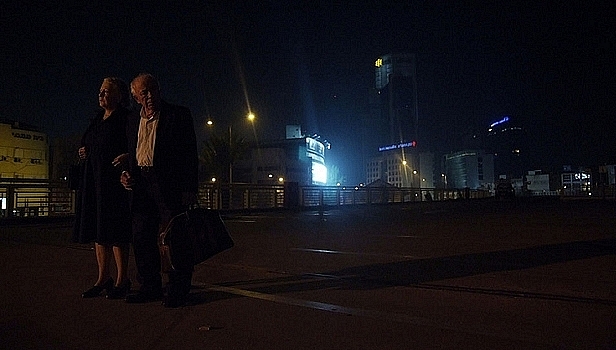
Epilogue (Amir Manor, Israel, 2012, Opening film):

1

(Another short paragraph and I’ll be done with the rant, I promise)

I was in a terrible state of mind when I saw this one. They delayed the screening by an hour, then started the film without subtitles, and then after half the delegates had walked out disappointed and about half an hour of hunting for a PIFF authority (and eventually finding none) began the film. Only to allow the projectionist to talk (read: shout, yell, scream etc.) on the phone for a full 45 minutes.

I came across this review by Leda Galanou which nicely sums up what I thought of, from whatever I could grasp of this mess of a sceening of a fine little film.

Story Of A Love Affair (Michelangelo Antonioni, Italy, 1950, Retrospective) :

                                          “Giovanna separated us in life… And in death…”

This debut feature film of the Italian master Michelangelo Antonioni is as entertaining as it is a meticulous study of its characters stuck in a labyrinth of guilt, paranoia, wild lust and reluctant pragmatism, and a theme common to quite a few Antonioni films – characters replete with material needs but craving for emotional/spiritual solace. The film throws basic noir elements at us right from the beginning, where a private detective investigates about a certain Paola Molon for her rich suspicious husband, ironically causing Paola to meet and eventually start seeing her former lover after years. And what follows is a dark, incisive Hitchcockian trip.

The Fifth Season Of The Year (Jerzy Domaradzki, Poland, 2012, World Competition):

1095_fifth-season-of-the-year-640

The opening 5 minutes of the film are highly misleading. It opens with a picturesque long shot of the sea, sunset and a boat enters the frame, all this accompanied by a quaint piano; followed by a close up of a kohl eyed woman playing with a cigarette lighter; the kind of opening which prepares us for a film blatantly art-house in nature. The rest of the film, however, is nice fluffy entertainment: a romcom-cum-roadtrip movie, and a very likable one. The charm lies in its simplicity and although it doesn’t really offer anything you haven’t seen before, it’s the fine strokes Domaradzki paints the characters with, largely aided by the actors that made this one work for me. After one film  screening full of sulking and another one which was a great film, but a tiring watch too, this film came as a whiff of fresh air.

Kaliya Mardan (D.G.Phalke, India, 1919, 100 Years Of Indian Cinema) :

The film by Dadasaheb Phalke based on Little Krishna’s mischiefs in the neighbourhood and his endeavor to conquer the giant snake Kaliya was the first Indian film to employ special effects. While Ms.Mandakini Phalke steals the show as Krishna, and the film might be historically significant with respect to Indian cinema, it was a bit of a slog and didn’t really work for me. Full film is available on youtube here.

Duvidha (Mani Kaul, India, 1973, 100 Years Of Indian Cinema) :

Duvidha is based on the same Rajasthani folk legend as Amol Palekar’sPaheli. The story has been narrated through voice-over, allowing the haunting imagery to take over the film, and how! The dialogues are minimal, the frames mostly consist of reds and whites, the camera is mostly static and the actors do little but stare at something or someone. And Kaul incredibly employs this hyper de-dramatized style to amplify the eventual pay off. You can watch the entire film on YouTube here.

(P.S. Since Paheli treats the story as a wicked comedy-cum-romance, an approach completely different than Kaul’s, I’m salivating at the idea of Vishal Bhardwaj making his version of Paheli. Anyone?)

——————————————————————————

 Short Films – Live Action shorts by students:

Allah Is Great (25 min, A foreigner in a politically tense region and his Indian cab driver): The film quite smoothly shepherds us through the journey of and the conversations between the foreigner, who’s  here for a conference and his cab driver who’s a die hard film buff, a bade dilwala, and ardently religious. I’m still unsure of the purpose of the inclusion of one of the subplots here. And the film makes me appreciate the ending more than I would have on paper.

Back Against The Wall (14 min, A girl desperately wants the attendant at a shop to know something) : I’d be spoiling it for you if I say anything about the story. All I can tell you about are the performances and the atmosphere, and both are very good here.

Last Calls (22 min, A 17-something girl dials the numbers last dialed by her departed sister) : Wow! This one hits all the right notes. Has a very strong emotional core and terrific mood too. Completely different tonally and structurally, but it reminded me of another favourite of mine, Vihir.

(This was the last of the short films section. Over to feature films.)

————————————————–

Rose (Wojciech Smarzowski, Poland, 2011, World Competition) :

2

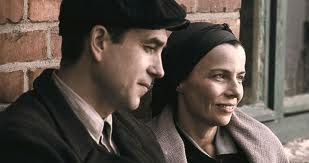
It’s Summer of 1945 and we are in Masuria, a German territory before the war but granted to Poland afterwards. The war is the backdrop and the emphasis is on the two main characters living together under brooding circumstances. Shot in greyish-greenish quasi-monochrome, the film doesn’t shy away from showing us the horrific consequences of war – personal lives shattered by macro-level political moves, but instead of going for kitschy manipulation, it wisely and effectively uses these as devices to develop the relationship between Rose, the widow of a soldier and his colleague who happens to stay with her.

Celluloid Man (Shivendra Singh Dungarpur, India, 2012, 100 Years Of Indian Cinema):

Celluloid Man2

The first “Wow!” of the fest. The 164 minute documentary traces the life and work of one of arguably one of the greatest contributors towards Indian cinema not as a filmmaker but as a film archivist : the founder of National Film Archive of India, P.K.Nair. The film begins with a vivid image where we see P.K.Nair juxtaposed against  a scene from Citizen Kane playing on the screen behind him. And the film before us, much like the film playing in the background, builds a fascinating sketch, mostly through interviews, of a towering personality. Through a series of interviews with some important figures of Indian parallel cinema, with each giving insight into Mr.Nair’s life – how he would acquire films from the archives abroad or from the families of the early pioneers, some admitting with a smile and a coy pride that some of their films exist today simply because of Mr. Nair’s relentless and unbiased passion for film preservation. Interspersed with footages from classics, and talks with Mr.Nair himself about his childhood memories with cinema, his “Rosebuds” and how cinema became a part of him and vice versa; the film is a tribute to a man who Indian cinema owes its history to, a fascinating trip to the early cinema, and an important film asserting the importance of film archiving in a country that boasts of its cutural prosperity. What’s more, the screening took place at NFAI and was graced by Mr.Nair’s presence.

The film is scheduled for release in March.  Click here for the teaser. 

Short Films – Legends We Remember:

I Am Twenty (S.N.S Sastry): This epic docu-short was made in 1967, when independent India was exactly 20. Through a series of interviews with the then-20-year-olds hailing from diverse cultural backgrounds and strata and holding diverse interests and ambitions; the film serves as a sprawling essay on the then past, present and future of India with respect to personal, professional, societal, and cultural spheres through its youth; their dreams and their fears, their interaction with the country, and their take on the varied phenomena India was going through then.

Explorer (Pramod Pati):

Pramod Pati’s exceptional Explorer(1968), a highly abstract experimental short can be said to be a hefty companion piece to ‘I Am Twenty’. If Sastry used conversations with youngsters as a device to present a comprehensive picture of India, Pati shows India torn between past and future, science and religion through a mosaic of random, sequentially rhythmic shots using elemental components of cinema: camera movements, the sounds accompanying every shot and swift focus shifts dexterously.

You can watch the film here.

(P.S. Some other films by Pramod Pati are available on Youtube. Here are the links: a) Trip/Udan   b) ABID c) Claxplosion d) Six, Five, Four, Three, Two. )

(Essential reading: 1) A superb exhaustive essay on ‘Explorer’ by Just Another Film Buff

2) Excavating Indian Experimental Film by Shai Heradia 

3) Pramod Pati – The Cinema Of Pra-Yoga, Of Swa-Bhava by Amrit Gangar)

Arrival (Mani Kaul):

Through incessant shots of jam-packed crowd and of the action of eating (consuming), Arrival is a cold, stirring look at the exploitation of life to cater to industrial needs. And even here, Kaul lets the visuals do the talking and the technique is used to maximum effect in one of the most chilling moments of the film, when we’re given a detailed visual account of sheep being brought in, unpeeled and slaughtered, treated like objects; cut to shots of labourers who, much like the sheep, are mere pawns of a much larger commerce.

Daastan-E-AlamAra (Chetan Mathur):

This short uses some 30 stills from Alam Ara that have managed to survive (the film itself is not available anymore) and employs a lyrical narrative written by Kaifi Azmi and sung by Jagjit Singh (citation needed) to plot the story of India’s first talkie. Sounds interesting on paper? Well, the film, sadly, is pitiably insipid.

Khilonewala (S Sukhdev):

The disappointing ‘Khilonewala’ begins with saccharine event when a bunch of children gather around a Khilonewla and he makes faces and sings for them. It was after an assortment of goons (Amrish Puri in multiple roles, to underline the fact that crime has no class or religion) encircle the Khilonewala that the film begins to get unbearable. You can watch it here.

Mandi (Shyam Benegal, India, 1983, Tribute – Ashok Mehta) :

Mandi (Market) satirizes the interpersonal relationships between people directly or indirectly associated with a brothel when a social activist decides to eradicate prostitution from the town. For me, it was darkly funny with some sharp observations and  ironies, but ultimately vacuous.

I.D. (Kamal K.M, India, 2012, Indian Cinema Today):

IDKamal--621x414

Another Indian Wow! Here, we have a taut, nuanced thriller that transcends the limitations of the “quest to find someone’s identity” sort of films and presents a complex and intriguing portrayal of obsession, and the ambiguity and elusiveness of one’s “identity” as our protagonist gets sucked from her laidback life shot sharply in robust colours into the dusky blue-tinted world of digression. I was quite impressed. The film is produced by Resul Pookutty and Rajeev Ravi, and I don’t see a reason why it shouldn’t find a release. Don’t miss it when it does. And be warned, the official trailer floating online contains a spoiler.

Blow Up (Michelangelo Antonioni, USA, 1966, Retrospective)

Thomas, a fashion photographer spends most of his time clicking the most glamorous “birds” (sic) in the business, who he is fed up of being with. He clicks informal photographs of a couple in a garden and spots a man with a gun hiding in the bushes when he develops them. He visits the garden the next day, finds the corpse lying there and soon intrigue turns into obsession. The film rightfully doesn’t even care to tell us any more about the murder and Antonioni’s Blow Up is really a solemn rumination of its central character’s emotional solitude and his dire pursuit of the feeling of having done something remarkable. For me, it served as a languid companion piece to the somewhat dynamic Taxi Driver. And it’s the muted final scene of Blow Up that takes it to an all new meditative high. Mind Blown Up.

My Father’s Bike (Piotr Trzaskalski, Poland, 2012, Global Cinema)

My Father’s Bike, a delicately crafted family drama with not one, but two sour father-son relationships at its core. The film, instead of judging its characters, gives us a warm coming-of-age picture of a family with its members innocuously flawed and imperfect. In other words, human; but unforgivably so among themselves. And there’s some very good acting at display.

With You, Without You (PrassannaVithanage,Sri Lanka/India, 2012,Global Cinema)

With You, Without You, based on Dostoyevsky’s short story “The Meek One”; designed and scored in blues making us feel the gloominess; is a tenderly composed and deeply moving film about a personal relationship ruptured irreparably by politically influenced deeds of the past.

Night #1 (Anne Emond, Canada, 2011, Global Cinema)

786-NIGHT_no_1

Night #1 could well be described as a darker, more Bergman-esque version of Before Sunrise. Oh, and quite brilliant. Through their profoundly bleak yet romantic monologues, the two characters open themselves up to each other, revealing their true inner fractured selves after a one-night stand.

Laurence Anyways (Xavier Dolan, France/Canada, 2012, Global Cinema)

156233_445021915514187_361463324_n

Initially, I was sort of put off by Dolan’s music video like style and wasn’t sure what to make of certain sequences. It was after some pondering that the film started to grow. The film tracks over a decade of Lawrence Alia’s life and relationships and remarkably makes us sense not only the protagonist’s physical transformation but her emotional journey as well. And with a lot of heart.

Liv & Ingmar (Dheeraj Akolkar, Norway/UK/India, 2012):

Note: I’m fully aware that it’s unfair to opine about a film one hasn’t seen completely.

Implication of the Note: I walked out.

This utterly frustrating documentary about the off-screen relationship between the legendary Ingmar Bergman and his muse-cum-wife Liv Ullmann makes some terrible choices: it chooses peripheral cutesy over insight, shows us random shots of pretty landscapes which make no sense whatsoever in context and intersperses that with clips from Bergman’s films which are so literally synonymous (and thus redundant) with the lines spoken (by Liv Ullmann in the interviews) that it insults the the medium of cinema itself. I myself am a Bergman fanboy but I can’t even give ‘Liv & Ingmar’ the least respectable pass(?) a film can get, that “it’s strictly for fans.”

Heck, even ‘Mohabbatein…’ was less schmaltzy. Cons of going for a film without watching the trailer. Sigh.

80 Million (Waldemar Krzystek, Poland, 2011, World Competition) :

Beginning with dense details and lots of jargon about a confrontation between communists and the opposition in Poland, what we find here is a rather entertaining heist movie about a group of Solidarity activists who conspire to withdraw 80 million of the Union money from a bank before their account would be blocked. And it was refreshing to see a film that declares that it was “based on true events” only in the end credits.

The Adventure (Michelangelo Antonioni, Italy/France, 1960, Global Cinema):

Much like Antonioni’s ‘Story Of A Love Affair’, we have a couple madly in love but separated by the dead, by their conscience. And much like a theme common to a lot of his films, it is a study of the emotional isolation of its characters and the complexity of love.

Clip (Maja Milos, Serbia, 2012, Global Cinema):

The disconcerted Clip is crammed-to-the-point-of-rupture with scenes of hyper-explicit sex (so much so that it has little else to offer for most part) and often tested my patience. It’s only towards the end that the film begins to work as an unruly depiction of the wayward, disturbingly nonchalant and shallow youth of urban Serbia. And all those scenes, which had seemed showy earlier, start making sense rendering the film with meaning. A one that takes forever to arrive at its point? Yes, and may be no. May be, the indulgence is the point here. May be the director wants the film to be a metaphor for its characters. Boy, that was repulsive in parts, often repetitive, but ultimately trippy. And a special mention for Jelena Mitrovic, who is absolutely terrific as the disillusioned, riotous Jasna.

Chidambaram (Govind Aravindan, India, 1985, Retrospective):

The imagery and expressive silences render the languidly paced Chidambaram effectively with the meditative quality it was supposed to have.  Aravindan explores the personal spiritual journey of Shankaran battling his own conscience.

TOWPOS2(COMP)

Few months back, we had put a post on “The Other Way“, a film by Aniket Dasgupta and Swathy Sethumadhavan documenting the indie filmmaking scene in India, and they were trying to raise funds for it through crowd-funding. Good news is they have managed to raise the funds for it and have just released its first look.

I have always felt that we have a terrible record when it comes to documenting our cinema and the stories surrounding them. A film like this one, Dungarpur’s Celluloid Man, Jaideep Varma’s film on Sudhir Mishra – we need many more such docus.

So check out the first look.

To know more about the film, click here and to read about he making of the film, you can click here for their blog.