Archive for the ‘cinema’ Category

Locarno Film Festival’s Open Doors session this year was devoted to cinema from India. 12 projects, selected out of over 200 applications in 18 different languages from 30 regions in India, participated in the Open Doors co-production lab, organised with the collaboration of the Festival Industry Office. The objective of the 4-day workshop that took place during the Festival, was to assist the selected directors and producers to find co-production partners and to complete their films.

The jury, composed by Martina Malacrida and Nathalie Soldini for the Festival del film Locarno, by Walter Ruggle and Martial Knaebel representing the Swiss support fund for production “visions sud est”, by André de Margerie and Remi Burah for ARTE, by Jacqueline Ada and Ramdane Saâd for CNC (Centre national du cinéma et de l’image animée) decided upon the following grants, awarded by the Swiss Agency for Development and Cooperation (SDC):

(from left: Alka Raghuram, Shanker Raman, Signe Byrge Sorensen, Sourav Sarangi, Anup Singh, Johannes Rexin)

Grant Open Doors 30.000 CHF

THE TRAPPER’S SNARE by Shanker Raman produced by Rucha Pathak

Grant Open Doors 20.000 CHF

BURQA BOXERS directed and produced by Alka Raghuram

Grant for development CNC (Centre National du cinéma et de l’image animée) 7.000 Euros

LASYA (The Gentle Dance) by Anup Singh produced by Johannes Rexin

Grant for development ARTE 6.000 Euros

CHAR… THE ISLAND WITHIN directed and produced by Sourav Sarangi, co-produced by Stefano Tealdi and Signe Byrge Sørensen

The Trapper’s Snare is the spiritual journey of 15 year old Sundaran, his experiences and realizations, and his rite of passage into adulthood. The film is a meditation on the significance of what one is able to or willing to leave behind.

In a culture where beauty, delicacy, refinement and submission are the prized traits to the ultimate feminine career fulfilment, marriage, young Muslim girls learn boxing at a little gym in Kolkata, India. Burqa Boxers tells the story of these warriors determined to knock out a few stereotypes. It will be the story of three young women Amina, Shyara, and Khadija as they train for the state amateur boxing championship.

In addition, the 64th Locarno Festival proudly presents three films whose projects took part in Open Doors co-production lab past editions: in the Concorso internazionale TANATHUR (Last Days in Jerusalem) by Tawfik Abu Wael (Israel/Palestine/France/Germany), winner of the 2007 Open Doors co-production lab; in the Concorso Cineasti del presente SOLNETCHNIYE DNI (Sunny Days) by Nariman Turebayev (Kazakistan), winner in 2010, and HELLO! SHU XIAN SHENG (Mr. Tree) by Jie Han (China), part of Open Doors 2009.

Pratim D. Gupta is a full-time film critic with The Telegraph and a part-time screenwriter. Well, part-time till his film gets made. Based in Kolkata, he closely tracks Bengali film industry’s every intelluctual, pseudo-intelluctual and aantel (ask your bong friend. There is no english word for this one) move. So where does Aparna Sen’s latest film Iti Mrinalini fits in? Scroll down and read on…

Disclaimer: I don’t know why I am writing this piece. In an industry where scratching backs is the only way forward and where every film is a classic and every performance award-winning, one online rant really matters very little. Unlike Bollywood where good films and bad films, moneymaking films and praiseworthy films all have their own space, Bengali cinema is going through this incredible phase where you have to laud at everything and anything up there on screen. If you do not comply, you are against the growth and prosperity of Bengali cinema. “How dare you? Just because your script hasn’t got funding, you are badmouthing other films!” Honestly, I can’t help myself. I refuse to be party to this mogojdholai (brainwashing). So you can have your own conspiracy theories but I have my own views and I will stick by them. And no I didn’t like Iti Mrinalini. You too have a choice — close the window at this stage or read on.

What goes wrong with Aparna Sen? She makes a brilliant film and follows it up with something so ordinary, you start wondering how could she have possibly made that earlier great movie? One of the frequently asked questions in Bengali movie circles that has refused to die: Did Ray ghost direct 36 Chowringhee Lane? You watch Mr & Mrs Iyer, Paromita’r Ek Din and The Japanese Wife and you know the answer. You watch Yuganto, Sati and 15 Park Avenue and you are not so sure about your answer.

The problem is not just with inconsistency. There are many great directors whose great films are punctuated with not-so-great films. It is the sheer ordinariness of some of Aparna Sen’s films that really complicates the situation. You look at every nook and corner of the frame hoping to spot that Rina-di touch and your disappointment mounts by the minute till the time you want to throw up your hands and leave the theatre.

Sen, along with Rituparno Ghosh, has been the so-called custodian of the modern Bengali woman on celluloid. Her fantastic domestic femmefatales are independent, self-sufficient beings who manage to emerge on top of every challenge that men (and society) have thrown at them. From Paroma to Paromita. Sen herself in the 1970s was this ultimate epitome of everything that was new and clutterbreaking about the Bengali woman ultimately leading to her print revolution, as editor of Sananda.

Mrinalini is a wimp! A namby-pamby, a maudlin… such a waste of human life, that I do not want to watch her wet — strictly tears — life on screen for two hours. I do not care which bits of that life are fictional and which bits are from Sen’s own life, the life is dull, boring and flaccid. She fell in love with a boy in college who was a Naxal and got shot down, she then fell for her director who had a wife and two kids and was never really interested to set up a home with his kept and their daughter, and then she developed feelings for a man who has a very sick wife at home and yet is always there by her side. As is evident, it’s always the men who call the shots in Mrinalini’s life, who is just a ping-pong ball in search of the net.

And this insipid biopic is narrated in the most archaic way possible — an unfinished letter, a bottle full of sleeping pills and lots and lots of glycerine! You get the drift?

The only mildly interesting bit of the film is Mrinalini’s daughter with her director lover Sid who she gives away to her Canada-based brother and sister-in-law but ensures that the girl spends the summer vacation with Pishi and Kaku. It is a unique relationship that these five people share where terms of endearment and lines of blood get beautifully blurred. But then the most important scene of the film, when the young girl Sohini reveals to Mrinalini that she already knows that Pishi is her real mother and Kaku her real father, is so lazily written and treated so matter-of-factly that the emotional fulcrum is not tampered. How can Mrinalini’s reaction line be: “When did this happen?” As if the date and time of the revelation is more important to her — clearly written with the audience in mind — than the fact that her daughter knows she is her daughter. Compare this scene with the heart-wrenching revelation scene between Irrfan and Kal Penn in the car in The Namesake and you know where the difference lies.

The script has no structure or build-up of any sort and have scenes that shouldn’t have ever made it to the screen. Towards the climax we have a scene between Mrinalini and her young director love Imtiaz which goes something like this… “Have the tea Imtiaz.” “I didn’t ask for tea.” “Now that the tea is here, have the tea.” “No.” “Will you have coffee then?” “I can have coffee. But black coffee.” After she has ordered the black coffee for him, she asks: “Have you studied in America?” “Why because I asked for black coffee?” “Something like that.”

And then the whole film is explained in one scene. “There are different types of love Minu,” says one of the men in her life. Ok alright, we get it! But Rina-di, have you seen Frida? That film conquered what you set out to achieve. Yes, it’s a biopic of a real person and obviously a far more fascinating person that Mrinalini but it has the same plot points comprising Frida Kahlo and the men in her life. And this feels really silly on my part to tell this to someone like you but just by giving voice to WHAT THE WOMAN WANTS, Frida becomes so bloody awesome. When her husband Diego Rivera learns that Frida has been unfaithful to him, he says: “You’ve broken my heart, Frida.” She gives it back to him: “It hurts doesn’t it? But why? It was just a fuck, like a handshake.” Mrinalini sadly has no venom or vermin.

The Rituparno effect on Aparna is quite telling in this film. The whole analogy to Karna-Kunti Sambad and Raktakarabi bears a strong whiff of Ghosh and company in the way literature is blended into the lives of the characters. Throughout Iti Mrinalini there is an attempt to attach importance to a subject which is obviously not that important. It’s not true to its genre, it tries to be An Aparna Sen film. The political events streaming in the background (Vishal Bhardwaj tried the same in 7 Khoon Maaf) and the baffling ending are the biggest examples. It wishes to leave you dumbfounded, just like the ending of 15 Park Avenue. It’s that last shot in the arm to elevate the film to something substantial but when it backfires – like it does here – it really does more harm to the film.

The only masterstroke of Iti Mrinalini is how Konkona Sen Sharma is asked to perform like Aparna Sen and not the other way round. They both play Mrinalini and Konkona has the lengthier role but yet she tries to ape Aparna. Because the director understands that the better actor should be given the difficult task. And while Konkona cannot possibly start looking like a young Aparna, her body language and especially her speech is ditto her real-life mother. Close your eyes in the theatres and you will know what an outstanding job Konkona has done in Iti Mrinalini.

All the other actors barring Aparna herself — these filmmakers who act really need someone else directing them, as was evident in Ranjana Aami Ar Ashbo Naa recently — are good. The deadly combo of Rajat Kapoor on screen and Anjan Dutt in the dubbing studio makes Sid such a believable character. Koushik Sen is so effective in the few scenes he has. Saheb impresses in his little cameo. Priyanshu has great presence but is saddled with such a strange character, he can only do that much. The late Somak Mukherjee shot Iti Mrinalini with a lot of pizzazz, especially that shot on the beach where the two women are chatting and the camera curls on the young girl sleeping on top of Rajat. Wish there was at least a hint of period detailing, though.

Iti Mrinalini is really a very weak and disappointing effort from Aparna Sen. But sometimes there comes a performance that becomes so much bigger than the movie it comes in that the ordinariness of the films takes a back seat. Konkona has always reserved her best acts for her mother’s films. And while her mother’s films have ranged from brilliant to bad, she has shone in all of them. Personally, I found this performance to be her best till date. Here neither did she have the superficial condiments embellishing a Mrs Iyer nor the free mind of a schizophrenic patient like Meethi. It’s just one of the best actresses of our countries at the top of her game.

But Rina-di, don’t you think Koko deserves better? And maybe we too?

Iti Pratim

She used to be a teacher in an ICSE board school. But her kids were sent to another school where most Officers’ kids used to go. Her husband was a Chartered Accountant, and as most bongs like to flash their CA degree, he was no different. As kids, we always thought snob quotient was just for the Roys. And then one day her daughter lost an eye accidentally. A death in the family followed. She was no longer part of the Officers’ Wives club. Searching for answers, she found solace in my Granny’s words, whose life used to revolve around all the 33crore Hindu Gods. Some of them were family members too. She was searching for answers – why it happened to her daughter? She was the prettiest of them all, the mother always talked about her, a matter of pride. With an eye gone, it was a cruel joke on her beauty. And why that sudden death?

Ironically, the kids were inspired by Ramanand Sagar’s Ramayan and were trying the tricks with homemade bows and arrows when one of the arrow hit her eye. With kids and Gods, its difficult to put the blame on anyone. If only she was careful, it could have been averted. The thought never left her. Family member’s death disturbed her more. She was restless till the complete transformation happened. She found a Guru, sandalwood tilak followed and prayer beads inside a small bag became her constant companion.

As kids with curious minds, it was baffling to notice the change. Mr. R had mellowed down too. Grief does strange things to us. Add guilt to it, and it’s difficult to cope with. A friend of mine stays away from civilisation, in the jungles of Mcleodganj. It’s been more than two decades, he still holds himself responsible for his brother’s suicide. His conversation with his father is limited, as he was the one who in a moment of rage had pointed out that the culprit was my friend. It pierced the young heart and hasn’t left it since then. As he struggles with his writing, voluntary work for an NGO and relationship issues, most of his nights are spent drinking till wee hours of morning.

Arun Shourie took another extreme route. He explored religion scriptures, went to all the Godmen and spiritual Gurus to find the answer to his son’s suffering. Conclusion – suffering refutes religion. It’s all in his new book, Does He Knows A Mother’s Heart. Click here to read excerpts from the book. And click here to see a video interview of his where he explains his beliefs and thought process.

Terrence Malick’s Tree Of Life is all this and much more.

His fifth film in the last four decades or so. If you are familiar with his work, the elements are all there. The sun, green, nature, insects, birds, water, life, death, birth, suffering and those meditative voice-overs. I believe Malick started pondering over those existential questions in its entirety from The Thin Red Line. In a world where you have to map the plot points after every 20 pages for the Hollywood Studios to green light your film, it’s a brave new world that Malick has been able to create. And voice-overs that don’t follow any pattern or technique. With Tree Of Life, he goes to the extreme. If it was possible to attach a camera to your thoughts when you are coming to terms with the death of someone close to your heart, this film captures all that and puts it out on the big screen. Do you think or dream in a linear fashion? The camera attached to the thoughts floats in the universe as your mind ponders over everything possible, and Malick tells an intimate story of hate, grief, guilt and redemption in that background.

In one of the most brutally honest sequence that i have ever seen on the big screen, young Jack contemplates if he can kill his father with just a single trick. And he will be safe because his revenge will look like an accident. My heart skipped a beat there because i was worried about the old Jack then, guilt would have killed him so ruthlessly. Keep all the morality aside, think if you ever felt the same during your growing up years. And may be that’s why we had a chapter in our Moral Education book where a son plans to kill his father because he is frustrated with his constant jibes about his son’s work. As the son is about to enter the father’s room, he overhears the conversation between his mother and father, she is comparing the son to the Moon but the dad says, even Moon has some black spots, his son doesn’t have any. The son breaks down.  In Tree Of Life, the son becomes the father. The son starts hating the father but he slowly transforms into him. He starts with mimicking him, and then dictating the world around him, just like his father. In that honesty, lies the brilliance of story telling. We all hate our dads for some reason, and yet, we all end up becoming like him. With the kind of comfort that mothers pampers us with, mostly they make it happen.

Tree Of Life needs complete submission. Its a meditative piece by a yogi filmmaker which transcends every possible limit set by this medium. Just go with lil’ patience, you might get lost at many places, like I did, but just let it all flow. You will come back to Malick for sure. Don’t worry on that part. And even if you don’t, its good to be lost in your thoughts once in a while

With Jack, we float in his thoughts, his world, his world view, his guilt and finally some redemption which is pure consolation. Because we all eventually make peace with ourselves at some point, create a new world in our thoughts/dreams and make it comfortable for our soul. The soul-shuddhi needs time and space. Seems Malick too did the same with this film as this Guardian article points out that his brother, Larry, committed suicide in Spain while studying guitar under the teacher Andrés Segovia in 1968. Umesh Kulkrani did his with Vihir.

I’m struggling with mine. How long will my Mcleodganj friend take, am not sure. And you?

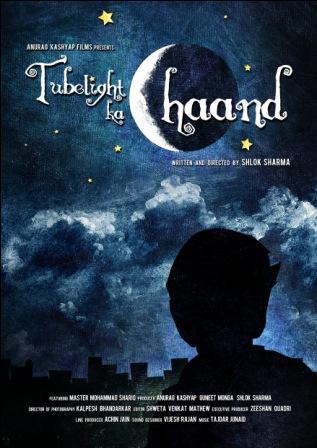
Shlok Sharma’s short film Tubelight Ka Chand has been doing the festival rounds since sometime and winning accolades too. The film is finally online. Do check it out.

It seems there is some problem with the upload quality though because the colours look much better if you see it on screen. A delightful film about a kid called Tubelight and his weird dream.

Also, i loved the credit roll done by Vijesh Rajan. Is there anything done by Vijesh that i don’t like? Sooper talented guy!

Do watch and post your comments.

If you follow this blog regularly, you must have read a post on the indie film Kshay. If you haven’t, do click here to check out its interesting trailer and synopsis.

We have now been offered a preview of the soundtrack of the film. We are embedding two tracks here. Do check it out. We would like to know your feedback, so scroll down and use the comment box.

Kshay OST – Home

Kshay OST – Everywhere

And if you like the tracks, here’s some more dope on the music from the film’s production notes…

Music for Kshay has been done by director Karan Gour and Siddharth Bhatia. For the music, both Siddharth and Karan knew that we couldn’t be using electronic samples, which would be the independent way to go. We needed a little more character than that to help support the film’s imagery. We narrowed down on a string quartet and a harp, but that would be far too expensive to record in a studio. Hence, we managed to get some more cash together and bought the Vienna String collection off their website which consisted of brilliantly recorded solo strings that could be manipulated in various ways to match a natural, textural string composition. Both of them did their own versions of the movie and we actually had 2 soundtracks for the movie. The final soundtrack was a mix of both the composition types, although it went through a lot more evolution than just that, taking about 3 months to complete.

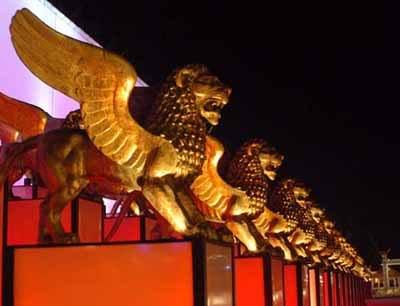
Venice Film Festival has announced its line-up for this year. The festival will take place from August 31-September 10, 2011.

Two Indian films have been selected for the Orizzonti section of the festival, which is presented as an exploration of the modes of contemporary cinema. According to official release, in open dialogue with the films of the main competition, Orizzonti questions reality, forms and representations. It seeks to unbalance the status of images, it tears open perception and meaning and allows us to perceive new directions.

The two Indian films are Amit Dutta’s Sonchidi and Gurvinder Singh’s debut film Anhey Ghorhey Da Daan (Alms of the Blind Horse).

Film : Sonchidi. Director : Amit Dutta.  Cast : Nitin Goel, Gagan Singh Sethi. Duration : 55’

Film : Anhey ghorhey da daan (Alms of the Blind Horse) Director :  Gurvinder Singh. Cast : Mal Singh, Samuel John, Serbjeet Kaur, Dharminder Kaur. Duration : 112’

Dutta seems to be a Venice veteran now as two of his earlier films  also premiered  at the festival. And with such a unqiue and strong voice, he is easily on the best filmmaker of this country that most people are not aware of.

If you have any more info on the films (stills, poster, synopsis, trailer), do let us know. Click here to read more about Gurvinder’s film.

The festival will also screen Mani Kaul’s Duvidha as a tribute to the filmmaker. The film will be screened in Out Of Competition section which screens important works by directors already established in previous editions of the Festival.

MANI KAUL – DUVIDHA [MANI KAUL (25.12.1944-6.7.2011)]

India, 82′

Ravi Menon, Raeesa Padamsi


Enlighten Film Society is organising Naya Cinema Fest this month. The idea is to celebrate the filmmakers whose early footsteps marked their foray into the niche circle of path-breakers of Indian Cinema.

According to official release, The Naya Cinema Festival focuses on first and second films by Indian film directors that contrast with the works of the state sponsored Indian New Wave between 1969 and 1990. The works of contemporary film makers like Dibakar Banerjee and Anurag Kashyap have been able to successfully shake up the feudal star system in a very different way from the works of Kumar Shahani and the recently deceased Mani Kaul, who were not functioning within the logic of the industry. The dialogue hopes to create a fresh discourse on a gradually emerging independent cinema in India, which Mani Kaul had himself titled ‘New Stream’.

We strongly recommend this festival because you will not get to see some of the films anywhere else.

DATES : 23rd July to 31st July, 2011.

SCHEDULE :

23-07-11 – Two Mani Kaul Films: Duvidha (Dilemma, 1973) and Satah Se Uthata Aadmi (Arising from the Surface, 1980). Edward Theatre 12:00PM

23-07-11 : Inshallah Football (Ashvin Kumar, 2010, 80 minutes,Urdu)+ Little Terrorist (Ashvin Kumar,2004,15minutes). Edward Theatre 04:00PM

23-07-11 : Udaan (Vikramaditya Motwane, 2010,134minutes,Hindi). Edward Theatre 6.30PM

24-07-11 : Dil Chahta Hai (FarhanAkhtar,2001,Hindi/English,183 minutes) Cinemax(Versova) 12.00PM.  Introduction and Discussion with Farhan Akhtar

24-07-11 : Aaranya Kaandam (Thiagarajan Kumararaja,2010, Tamil,153 minutes) Cinemax(Versova) 4.00PM The screening time has been changed. Mostly 9-9:30am. Do cross check once.

25-07-11 : John & Jane (Ashim Ahluwalia, English, 2005, 82minutes) Mumbai Times Café 6.00PM

26-07-11 : Mirch Masala (Ketan Mehta, Hindi, 1987, 128minutes)NFDC Auditorium 6.00PM

27-07-11 : Ocean of an Old Man (Rajesh Shera,Hindi,2008,80 minutes) World College – School of Media Studies 1.00PM

27-07-11 : Hrkhagoroloi Bohu Door (Jahnu Barua, 1995,Assamese, 106 minutes) World College – School of Media Studies4.00PM

27-07-11 : Black Friday (Anurag Kashyap,2004,Hindi,143minutes)World College – School of Media Studies6.30PM

28-07-11 : Girni (Umesh Kulkarni,Marathi,22 minutes) and Vihir (Umesh Kulkarni, Marathi,2010) Mumbai Times Café 6.00PM

29-07-11 : The Untitled Kartik Krishnan Project (Srinivas Sunderrajan, English and Hindi, 2010, 75 minutes) Edward Theatre 2.00PM

29-07-11 : Shor in the City (Krishna D.K. and Raj Nidimoru,2011,Hindi) Edward Theatre 4.00PM

29-07-11 : Harishchandrachi Factory (PareshMokashi,Marathi,2009,96 minutes) and excerpts from Kaliya Mardan and Raja Harishchandra by Dadasaheb Phalke Edward Theatre 7.00PM

30-07-11 : Gandu (Kaushik Mukherjee,2010,Bengali,85minutes) Performance by ‘Q’ and Gandu Band. ( Venue and time yet to be decided)

31-07-11 Futureview – This will screen excerpts from Anand Gandi’s The Ship of Theseus, Prashant Bhargava’s Patang and Aarakshan. Cinemax (Versova) 12.00PM

VENUES : Edward Theatre: Edward Cinema, Kalbadevi Market, Marine Lines (East), Mumbai 400002.

NFDC :  Discovery of India Building, Nehru Centre, Dr. A.B.Road, Worli, Mumbai 400 018.

Mumbai Times Cafe : Crystal Shoppers Paradise, 5th Floor, Off Linking Road, Bandra (W), Mumbai 400050.

World College : Rajasthan Sammelan, S.V Road, Goregaon (W), Near Saraf College Mumbai 400064.

Cinemax Versova : Infiniti Mall, New Link Road, Versova, Andheri West, Mumbai-400058

PASSES: You can’t buy tickets for individual screenings. You have to buy the festival pass for Rs 500.  You can buy the passes from –1. Enlighten Film Society.307/ 308, 3rd Floor, Aditya Banarsi Heritage.Off Link Road, Behind Inorbit Mall. Mind Space, Malad (W)  /// 2. Sarvodaya Video Library, Behind Ambedkar Statue, 21 Dr Ambedkar Road, Khar (W) /// 3. Mumbai Times Cafe. Crystal Shoppers Paradise. 33rd rd (KFC lane). off linking road, Bandra (W) /// 4. Edward Theatre. Kalba Devi

– For online registration, click here. Or you can contact Ronak – +91-9870090105

CONTACT :  To know more about the films, click here. For Naya Cinama’s FB page, click here.  Twitter handle – @EnlightenCinema

– For more information, TEL: 02242141414. MOB: 9870090105

– EMAIL: enlighten@enlighten.co.in Or visit http://www.enlighten.co.in

RECCO : And here’s our recco list – Inshallah Football, Aaranya Kaandam, Girni + Vihir, Gandu and preview of Anand Gandhi’s The Ship of Theseus + Prashant Bhargava’s Patang. And do we need to recco Mani Kaul’s films too? If you haven’t, do watch it along with the other films as some of the prints are rare.

Mumbai Film Festival (October 13-20th, 2011), organized by MAMI is a Reliance Big Entertainment Ltd. (RBEL) initiative  and it showcases the best of contemporary world cinema, Indian cinema and feature length documentaries. The Festival is a highly regarded and anticipated event in Mumbai’s cultural calendar and last year it managed to screen some of the best films from across the world.  Click here and here to read our posts on last year’s fest.

The festival is inviting submissions for this year’s fest. The festival accepts feature-length films for its various competitive and non- competitive sections.

DATE: Entry forms and screeners for selection must reach the festival office before August 1st, 2011.

FEES : There is NO entry fee.

Cash Awards & Incentives – Mumbai Film Festival offers one of the highest cash awards – US $ 200,000

– International Competition for the first feature films of directors -US $100,000 for the Best First Film to be shared equally between the film’s producer and director.

– US $ 50,000 for the Grand Jury Prize to be shared equally between the film’s producer and director.

– The Audience Choice Award : US $ 20,000 to be shared equally between the film’s producer and the director.

– Cash incentives for Sales Agents : US $ 10,000 if the award winning films are international or world premiers.

SECTIONS : 1. International Competition for the First Feature Films of Directors More

2. Above the Cut (First Feature Films which could not be included in the competition Section) More

3. World Cinema (Award Winning, Critically acclaimed feature films produced during the one year period after the last edition of the Festival) More

4. Dimensions Mumbai (A short film competition for the youth of Mumbai). More

5. Harmony Celebrate Age (International Competition for films dealing with the concerns, spice, fun and adventure of growing older) More

6. Real Reel (A selection of feature length documentaries)

7. Indian Frame (A selection of high quality Indian Films) More

8. New Faces in Indian Cinema (first or second films of directors) More

9. Retrospectives / Tributes / Master Classes More

ADDRESS: 13th Mumbai Film Festival, Mumbai Academy of Moving Image(MAMI), 49/50, Maruti Chambers, 3rd Floor, Fun Republic Lane. Off Veera Desai Extn. Road, Andheri (W), Mumbai – 400 053, INDIA.

CONTACT : +91-22-4016 8223 (Board) / 4016 8221, F : +91-22-4016 8222

EMAIL: info@mumbaifilmfest.com | mumbaifilmfest@gmail.com

For more information about the festival, rules and regulations, click here.


The wait is over. The Baap is here to kick all the ass! It stars Tony Leung and Zhang Ziyi. The Grandmasters is the biopic of Yip Man, the first martial artist to teach Wing Chun, the man who trained Bruce Lee and others. Leung plays Yip Man in the film.

Here it is..

We are quite late on this one. Have been reading a lot about the film and have missed few screenings too. The good news is the film will again have a screening in Mumbai soon at the Naya Cinema Festival. If you haven’t seen it yet, check out the trailer of the film.