Archive for the ‘cinema’ Category

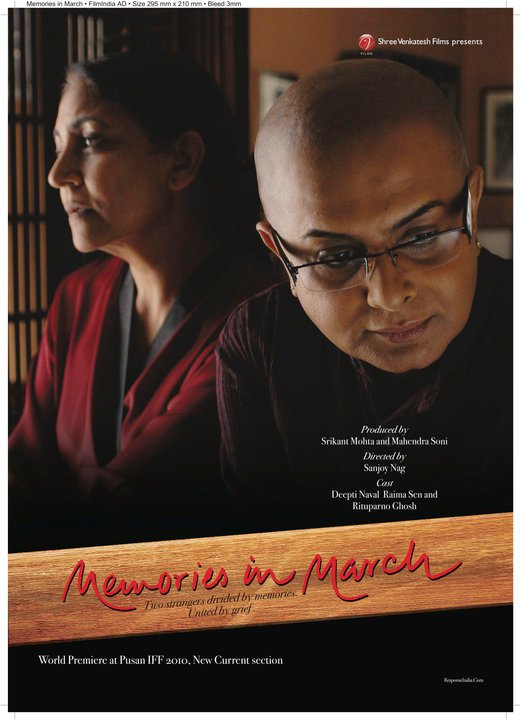
Well, he can shout out Meri Marzi! Fair enough. But do watch the videos in this post. The first one is a trailer of his new film Memories in March. The film is directed by Sanjay Nag and stars Rituparno Ghosh, Deepti Naval and Raima Sen.

To quote from the official release, “Written by Rituparno, Memories in March unspools the story of a bereaved mother who comes to Kolkata to collect her son’s ashes. She is Arati Mishra, an art curator who lives in Delhi. Through his friends and colleagues, she discovers that they knew him in ways different from the way she knew him as his mother.”

Seems like Memories In March is Hazar Chaurasia Ki Maa, just replace Naxalism with sexuality. But from the trailer it feels like Rituparno Ghosh might have killed the film with his acting. Because he is just playing himself.

A filmmaker who knows how to explore that intimate space in a relationship so bloody well, and someone who has done it so many times, why this acting keeda suddenly ? Mr Ghosh, you can do better.

The second clip is from another bengali film titled Just Another Love Story (Arekti Premer Galpo). Directed by Kaushik Ganguly, it’s about a filmmaker Abhiroop Sen (played by Ghosh) who makes a documentary about Chapal Bhaduri, the legendary jatra (Bengali folk theatre) actor who spent his entire career playing female roles on stage, primarily as Goddess Shitala. Thus begins a journey where director and subject learn from one another – on the one hand is Bhaduri (playing himself) who was a closeted gay for fear of social ostracism but was openly accepted as a cross-dressing actor, and on the other is the modern urban filmmaker who is open about his sexuality but is still negotiating his gender identity.

The film stars Rituparno Ghosh, Raima Sen, Jishu Sengupta, Indraneil Sengupta and Chapal Bhaduri.

And click here to read Variety’s review of the film and more about Ghosh’s acting debut.

We haven’t seen either of the films and may be it’s completely wrong to judge his acting just on the basis on the trailers. But then,  if the reverse is true, we will write the apology post in big and bold font too.

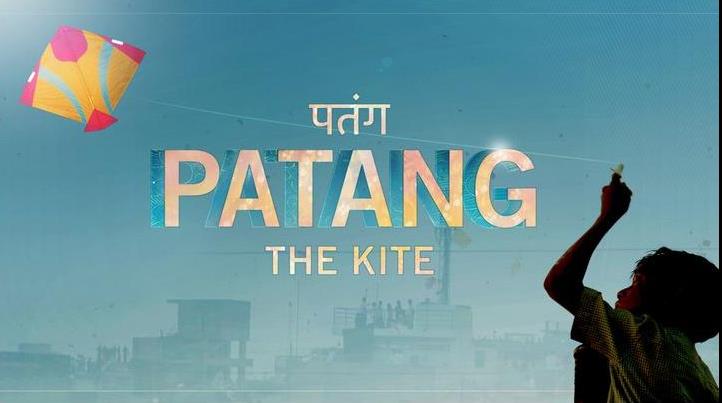
Patang – The debut feature of Prashant Bhargava will have its North American premiere at the 10th Tribeca Film Festival. It will be shown in the World Narrative Feature Competition and will compete with 11 other films for the Founders Award for Best Narrative Feature, Best New Narrative Director, Best Actor and Actress, Best Screenplay, and Best Cinematography.

The film was also shown at this year’s Berlin Film Festival in the International Forum of New Cinema. It stars Seema Biswas, Nawazuddin Siddiqui, Sugandha Garg and Aakash Mahayera, and has been shot by Shanker Raman.

Click on the play button to check out its goregous preview trailer…

To quote from Tribeca’s official release..

A family saga set against the colorful spectacle of the Uttarayan, India’s largest kite festival, The Kite is a kaleidoscopic whirlwind of energy, romance, and turmoil. A businessman arrives in Ahmedabad for a surprise visit to his once grand family home, bringing with him his daughter and some unexpected news for the family’s future. Amongst the flurry of preparations and the energy of the festival itself, the transformative and intersecting tales of six characters unfold.

To know more about the film, click here. To read more about the other films selected for Tribeca Fest, click here.

You can also watch Prashant Bhargava’s short film Sangam at www.mubi.com. The film premiered at Sundance Film Festival in 2004.

The 9th Annual Indian Film Festival of Los Angeles (IFFLA) which takes place April 12-17 at ArcLight Hollywood has announced the 13 short films that will screen in the 2011 festival. The shorts were selected from over 350 submissions worldwide. The shorts will be presented in two programs each one screening twice throughout the six-day festival.

The IFFLA programming team includes Rani Breslow, Isaac Klausner, Sudeep Sharma, and Rachael Sevilla along with Executive Director Christina Marouda and Programming Consultant in Mumbai Uma Da Cunha.

Shorts Program 1

BEHOLDER (Director/Writer Nisha Ganatra)
USA/Los Angeles Premiere/English
Imagine a future where it is mandatory to alter the sexual orientation of an unborn child who doesn’t fit the heterosexual norm.

IDOL (Director/Writer Kranti Kanade)
India /Los Angeles Premiere/Marathi, English*
A father and son fight in defense of each of their idols, be it Lord Ganesh or soccer superstar Maradona

IN THAT MOMENT (Director/Writer Shripriya Mahesh)
USA /Los Angeles Premiere/Silent
A brief moment of tenderness in Central Park is enough to brighten a lonely man’s day.

THE RETURN ADDRESS (Director Abi Varghese Writers: Matt Grubb, Abi Varghese)
USA /Premiere/English
A young boy plays cupid in a small, sleepy town.

THE STITCHES SPEAK (Director Nina Sabnani)
India /Doc/USA Premiere/Gujurati, English, Kutchi*
In this animated documentary, Kutch artisans tell stories of finding both themselves and a home.

TUBELIGHT’S MOON (Director/Writer Shlok Sharma)
India/World Premiere/Hindi*
If you cannot go to the moon – make one!

WHEELING DREAMS (Director Hardik Mehta Writers: Bharat Parmar, Hardik Mehta)
India/USA Premiere/Hindi*
Beware of other men eyeing your wheels.

Shorts Program 2

JUST THAT SORT OF A DAY (Director/Writer Abhay Kumar)
India /Animated/USA Premiere/English
Disconnected characters each have one of those days that you really can’t put a finger on.

ALL IS WELL (Director/Writer Akshay Roy)
India/Los Angeles Premiere/Hindi, English*
A rich boy and a poor boy spend the night at a roadside tea stall.

FAÇADE (Director/Writer Iram Parveen Bilal)
Pakistan/Los Angeles Premiere/English,Urdu*
A dancer reflects on life and art.

JOY OF GIVING (Director/Writer Shlok Sharma)
India/World Premiere/Hindi*
Kindness is always rewarded, sometimes in the most unexpected way.

MUMBAIKER GANESH (Director Collin D’Cunha)
India/ Doc /USA Premiere/Hindi*
Hello World! Meet Ganesh from Mumbai!

THE ECLIPSE OF TAREGNA (Director/Writer Rakesh Chaudhary)
India/Los Angeles Premiere/Hindi*
An eclipse draws a man, his grandson, and their village closer together.

*Subtitled in English

Having seen Shripriya’s In That Moment and Shlok’s Tubelight’s Moon will recco both the shorts. Congrats!

BEHOLDER (Director/Writer Nisha Ganatra)
USA/Los Angeles Premiere/English
Imagine a future where it is mandatory to alter the sexual orientation of an unborn child who doesn’t fit the heterosexual norm.

IDOL (Director/Writer Kranti Kanade)
India /Los Angeles Premiere/Marathi, English*
A father and son fight in defense of each of their idols, be it Lord Ganesh or soccer superstar Maradona

IN THAT MOMENT (Director/Writer Shripriya Mahesh)
USA /Los Angeles Premiere/Silent
A brief moment of tenderness in Central Park is enough to brighten a lonely man’s day.

THE RETURN ADDRESS  (Director Abi Varghese Writers: Matt Grubb, Abi Varghese)
USA /Premiere/English
A young boy plays cupid in a small, sleepy town.

THE STITCHES SPEAK (Director Nina Sabnani)
India /Doc/USA Premiere/Gujurati, English, Kutchi*
In this animated documentary, Kutch artisans tell stories of finding both themselves and a home.

TUBELIGHT’S MOON  (Director/Writer Shlok Sharma)
India/World Premiere/Hindi*
If you cannot go to the moon – make one!

WHEELING DREAMS (Director Hardik Mehta Writers: Bharat Parmar, Hardik Mehta)
India/USA Premiere/Hindi*
Beware of other men eyeing your wheels.

SHORTS PROGRAM 2

…JUST THAT SORT OF A DAY (Director/Writer Abhay Kumar)
India /Animated/USA Premiere/English
Disconnected characters each have one of those days that you really can’t put a finger on.

ALL IS WELL (Director/Writer Akshay Roy)
India/Los Angeles Premiere/Hindi, English*
A rich boy and a poor boy spend the night at a roadside tea stall.

FAÇADE (Director/Writer Iram Parveen Bilal)
Pakistan/Los Angeles Premiere/English,Urdu*
A dancer reflects on life and art.

JOY OF GIVING  (Director/Writer Shlok Sharma)
India/World Premiere/Hindi*
Kindness is always rewarded, sometimes in the most unexpected way.

MUMBAIKER GANESH (Director Collin D’Cunha)
India/ Doc /USA Premiere/Hindi*
Hello World! Meet Ganesh from Mumbai!

THE ECLIPSE OF TAREGNA     (Director/Writer Rakesh Chaudhary)
India/Los Angeles Premiere/Hindi*
An eclipse draws a man, his grandson, and their village closer together.

*Subtitled in English

If your answer to the question in the header is NO, then Gyandeep Pattnayak feels awful about it. He really does.  And so, here is a recco post by him, why you should watch it and make Gyandeep feel better when he asks the same question next time. Read on…..

Every time, I used to hear someone say, “You should see this murder mystery. It’s damn bleak, man.” – I was reminded of 36 China Town. I don’t know why. No, it doesn’t mean that I considered 36 China Town to be CINEMA at all. It doesn’t even qualify to be a tele-serial which Ekta Kapoor can produce in order to re-invent herself. Anyway, I digress.

What is a good murder mystery, in your opinion? Something which is plausible, something which makes you go, ‘Whoa’ and something which ties up all the loose ends neatly. But most importantly, a better murder mystery is one which lures you all along and just when you think you’ve figured it all out, it pulls the rug from beneath your feet and makes you think, “Christ, only if there were more movies like this.”

Guillame Canet’s Ne le dis à personne or Tell No One is exactly that kind of a film. And more than just that, if you will.

Let me try to be as brief and as careful as possible while I try to give you an idea of what this film is all about. The film opens with a terrific scene in which our protagonist Alexandre, a doctor by profession, drives along with his wife Margot to a lake. They swim, have fun, make love, bicker and eventually get into a heated argument. Margot, hurt and angry, jumps into the lake and swims to the other side. Alexandre waits for a while longer and senses something is wrong. As he gets ready to take a jump into the lake, somebody knocks him unconscious. He wakes up to find his wife brutally murdered.

The story cuts forward to eight years later. Alexandre carries on with his mundane life, still haunted by the memories of that fateful night. One day, suddenly, too many things happen at once. Alexandre is implicated in a double homicide. All evidence pins him down as the one and only suspect. Simultaneously, he gets a mail from his “wife” Margot – the very same Margot who has been dead for eight years. The mail has a video link in which “Margot” can be seen, hale and hearty – although, it isn’t very clear enough to determine whether or not she is his dead wife. The mail also contains a note which is chillingly mysterious and reads – “Tell no one. They’re watching.” Before Alexandre can piece together what’s happening, he finds himself running – from the law and from someone who doesn’t want him to find the truth.

So much for being as brief as possible.

Adapted from author Harlan Coben’s bestselling novel of the same name, this movie remains largely unseen by audiences. It would not be unfair if I said this is the rare case in which the film excels the novelization of the same story. The climax has been tweaked or rather, has been made more reasonable. Why Hollywood wasn’t first in the queue to adapt this book beats me. That a French guy named Guillaume Canet (actor, husband of the very gorgeous Marion Cottilard) has gone ahead and done it is not only laudable but also a befitting reminder, if we needed any, of the fact that the very finer aspects of cinema lie in the writing. Canet , along with Philipe Lefebvre, has written the screenplay which could serve as a tutorial for budding writers. He also enacts a small but integral character in the movie. If the word multitasking were to be used in this context, it suits him to the T. Multitasking and efficient.

Murder mysteries like these not only tend to be formulaic and ordinary, 99 times out of 100, they actually ARE formulaic and ordinary. Red herrings, cheating climaxes, a random murderer (here’s where the butler and housekeeper in 36 China Town come into the frame) – you name it.

So, how different is Tell No One? Different isn’t the word you would normally like to associate with a movie as restrained and as suspenseful as Tell No One. Trust me, I want to tell you every bit of the film but that would not make a whole lot of sense. As I sit here, typing out this recommendation, my fingers want to point out why this film is more recommendable than others in this done-to-death genre. And that would be a sacrilege. That would mean giving the movie away.

Let’s just say, Things are not as simple as they seem to be in the movie. Everything happens for a reason and everything is deeply rooted in the family, its past, its actions and the reverberations of those actions. The suspense in this movie is not crafted; it ties its own knots and weaves the fabric of an intricately laid out tale of love, lies and deceit.

I hate talking about movie climaxes but Tell No One compels me to write something about it. I will give you one piece of advice. Don’t try thinking too much about what is happening. There are people, who, while seeing the movie along with me, were trying to second-guess the whole time. Please. Don’t. Do. That. Relax, watch the movie and let the twists catch you off-guard. That way, the impact will be brutal. And yes, don’t let any douchebag tell you the ending. That will stink.

Francois Cluzet beautifully underplays his part but really it would be a crime to say so little about the man who makes melancholia his own. When we see him eight years later, his eyes are saggy, drooping and we forget that it is Cluzet. We forget that he is an actor. Such is the hypnotic power of his performance. Marie-Josee Croze, as Margot, is hauntingly beautiful and she brings certain believability to her part, which is entirely to her own credit. What is it about these French actors? Why are they always so good even if they are in an equally bad film?

To make a film half as good as this one is an achievement. I hope you can figure what it would be like to make a fuller such film. This film stands right there – amongst the great, modern murder mysteries such as Mystic River, The Secret in Their Eyes and Gone Baby Gone. Now, when people recommend me a good murder mystery, I promptly ask them, “Have you seen Tell No One?” It feels awful when they say no. It really does.

This is not going to end so soon. We started with this post, Varun wrote this one, and Subrat took the Mir route with this post.

And in this post we are putting out some of the interesting links that we read recently…VB, Ranjan Palit, 7KM, Ismat Chugtai, prosthetics and more.


Time Out’s Nandini Ramnath did an interview with 7 Khoon Maaf’s cinematographer Ranjan Palit. To quote…

In an interview with Time Out in 2009, Palit declared, “I wouldn’t do a Bollywood song and dance film even if I were paid a crore.” Famous last words, it seems.

Click here to read the interview.

Pratim Das Gupta of The Telegraph also interviewed Palit after the release, much longer and a better interview….what he shot, how he shot and why he shot it that way….To quote…

I had to try and make sure that the prosthetics couldn’t be seen. I think there were around seven-eight prosthetic parts stuck on her face in the aged avatar. She would be made up for four hours every day. So, I was asked to shoot in such a way that those parts were not seen. But you can do that in an interior night scene, what do you do during the daytime? We had decided that we would correct that with computer graphics but it’s hugely expensive and tough to spend so much money after the shooting is done….

…..You know what, I first saw a two-hour-45-minute version. It was then cut by 25 minutes for the final theatrical version. In that cutting, some of the finesse, some of the moments got lost. Maybe the rhythm has also slightly suffered. That director’s cut was beautifully paced….

….People in Mumbai have shown interest in working with me right from the time the 7 Khoon Maaf trailer came out. Boley na, jaatey uthey gechhi! But there’s no existing filmmaker apart from Vishal with whom I want to work. I am a snob that way. I appreciate what (Anurag) Kashyap does. bolley, hoyto korbo. I am not dying to work with anybody. I am dying to work with Vishal again.

Click here to read the full interview.

And if you are bored of the long and meandering reviews, then Nisha Susan of Tehelka has packed the Seven Course Meal in short  and sassy new way. To quote…

+7 FOR THE ISMAT CHUGHTAI moment when PC and Irrfan make an elephant under their lihaaf. 10 for naming the Russian Vronsky and Susanna reading Anna Karenina.

+8 TO NEIL NITIN MUKESH
for waving a phallic stump at Priyanka
. Minus 9 points to Neil for setting our teeth on edge a la Kangana whenever he speaks English.

The film scores 98 invaluable points and the point system follows no convention. Bring it on! Click here to read her piece, point-by-point.

If Tehelka is here, can Open be far behind ? Ajit Duara of Open has thrashed the film completely and rated it just 1 star. To quote…

What substitutes for motive is a dark lighting style;  as if to say that if you light a movie dimly enough, depth and hidden meaning will emerge. It never does, and 7 Khoon Maaf ends up as a hothouse of exotic spouses with names scratched off the catalogue at metronomic  intervals.

Click here to read the full review.

Open also has an interesting article titled – Inside the Mind of Vishal Bhardwaj.  His long time associate, co-writer, and the director of Ishqiya, Abhishek Chaubey describes the filmmaker, from his Makdee days to 7 Khoon Maaf. To quote..

After Makdee was made, Vishal called me to a theatre in Juhu. Gulzarsaab and his friend Shivam Nair were also there. Makdee had been made for the Children’s Film Society of India (CFSI). They had rejected it outright, claiming all sorts of problems with it—“Badly directed, badly shot.” He wanted us to see if that was really the case. We all thought their reaction was extreme.

Then Vishal did something courageous, given that he was just a music director then, and not the sort with 20 songs in the bank that he could give producers when they’d come to him. He had worked on very few films. As a producer, he was nobody. And yet, he decided to take the CFSI head on. He told them, “If you don’t like the film, I will buy it off you.” He must have paid Rs 20–30 lakh. He put everything at risk. We completed Makdee and went around town selling it…..

….Vishal had the letter he got from the CFSI framed, and it is still on his wall. It’s right in front of where he sits. Not only was Makdee released, it also won an award at a children’s film festival in Chicago. ‘Courage’ is too goody-two-shoes a term for it. It takes balls.

Click here to read the full piece.

And the last link is a video. Click on the play button to hear Gulzar dissect his own words…the poetry in 7 Khoon Maaf.

Pic Courtesy – Time Out Mumbai

Having divided audiences and critics, the discussion on 7 Khoon Maaf refuses to die down. And we are not complaining. First, we had a post expressing disappointment at a film that ‘packed so much, yet offered so little‘. Then we had Varun Grover passionately defending 7KM saying: ‘If 7 Khoon Maaf is boring, then Pratibha Patil is exciting.’

Never before has a Vishal Bhardwaj film been the subject of such intense debate and such diverse opinion! And never before has Subrat been so inconsistent with his reaction. Who knows, maybe it’s the effect of slow poison. Post-interval, post-climax and two days after watching the film, Subrat’s reaction to the movie has been changing quite fast. And yesterday he tweeted, “Have upgraded 7KM from a Good to a Very Good watch.” He is going to watch the film again. Not sure how he will react after second viewing.

In his own words, this ‘is not a 7 Khoon Maaf review. It is about my love affair with dekh to dil ke jaan‘. Professor in poetic mood. Read on:

Having sated myself with kababs and sheermal at Tunday’s that afternoon, I decided to seek some cerebral entertainment for myself with the matinee show at the Sahu theatre in the now faux-Victorian Hazratganj. That is how I watched a faux gangster noir titled Yeh Saali Zindagi. It led me to understand how there might only be 2 degrees of sepration between me and a cross-dressing gangster from Delhi who moonlights as a fashion designer in Ukraine. Chitrangada had so much bronze on her that it wouldn’t surprise me to find that Jyoti Randhawa catches her one day melting one of his trophies since Delhi has run out of bronzing creams. I trudged back to catch a drink at Faluknuma and see if the Ghazal troupe there could lift my mood.

I caught him playing ‘Main kahin kavi na ban jaoon’ when I stepped in which convinced me 2012 is definitely the year of mahapralay. Somewhere between the second and the third Kingfisher strong, a minor miracle unfolded. The singer went quiet for sometime and then burst into ‘Dekh to dil ke jaan se uthta hai, yeh dhuan sa kahan se uthta hai’. Sitting there, not more than a few miles away from where Mir passed away a couple of hundred years ago, I let the words and the excellent Avadhi pulao take over.

A couple of weeks later, on another Sunday, I sat watching 7 Khoon Maaf unfold before me. The reviews that had streamed in were the classic examples of damning by faint praise. ‘Vishal is, undoubtedly, a master craftsman (a term that brings the image of VB in that carpenter wala fevicol ad to me) but this time he fails to soar. But we should forgive him because I am saying so.’ Having equated the Bong gangsters of Kaminey to the cross dressing Ukranian variety of YSZ just that week, such reviews left me with dread.

There wasn’t much initially to dispel my fears. But gradually, I started noticing a lightness of touch and a certain approach to managing the difficulty of filming a story that is episodic in nature. I was about to warm up to all of this when Wasiullah decided to bring Mehdi Hassan singing ‘Dekh to dil ke jaan se uthat hai’. And, I was swept away. Especially, when he stops to ask Sultana about the meaning of ‘naa-tawan’ and then slaps her with the answer ‘kamzor’. Such beautiful detailing! And, this is what people are calling forced references to Pushkin, Anna Karenina et al. Forced? Pushkin had his exile which was ‘milon door’ from his home. From there on, it was Vishal the poet all the way.

You can’t go too wrong with that Mir verse. The first time it played in Hindi cinema was in Pakeezah in the sequence where Meena Kumari recounts the ‘Aapke paon zameen pe mat utariye’ incident to her friend (I think it was Vijaylaxmi). Naseem Banu (no, not Saira Banu’s mom) sings the ghazal which can be heard in snatches between the conversation. Subtlety was not one of Kamal Amrohi’s strengths. But the choice of Mir’s sher forced even Amrohi to go easy on the scene. The second time it appeared was in the opening sequence of Chashme Baddoor where the Mehdi Hassan version is used as you see the dhuan raising out of the cigarette in a pun that sets the film up.

I am glad Vishal continues and takes forward the fine tradition and delivers a film that brings him back as a true desi auteur (there, I said it). Who needs Ritchie or Tarantino when you can get such desi cross referencing.

As for the reviewers who don’t find the film delivering anything at the end, all I have to say is:

Reviewing ek meer bhari patthar hai
Kab ye kuch naatwan se uthta hai

(PS – Profsaab, yeh video aapke liye…chand panktiyaan aur hai…idhar udhar..)

Pic courtesy – Mint Lounge

WHAT : The Venice International Film Festival (La Biennale di Venezia – Mostra Internazionale d’Arte Cinematografica) announces its Call for Entries in all categories for 2011.

Essentially a World Premiere Festival, it is open to films of any format and length that have been produced during the twelve months preceding the festival.

WHEN : The selection process will start from 1st March 2011 and will continue till the end of June 2011. Deepti DCunha will be leading the pre-selection process for the entries sent from India for the Venice International Film Festival, 2011.

The festival’s director Marco Mueller will be visiting India in mid-March for a first shortlisting of the Indian film entries.

DATE : The festival runs from Aug 31 to Sept 10, 2011.

FORMAT : DVDs/ Digi Beta tapes (duly subtitled in English)

REQUIREMENTS : Press kit or documentation including synopsis, cast and crew and other info about film’s content and filmmaker’s vision should be sent along with the film.

CONTACT : deepti.dcunha@gmail.com (from March onwards, also  deepti.dcunha@labiennale.org)

ADDRESS : All submissions (duly subtitled in English) should be sent to the contact details given below..

Deepti DCunha. 23, Gautam Niwas. 7 Bungalows, Andheri (West). Mumbai, 400 053

WEBSITE : For complete rules and regulations please visit the Festival website at http://www.labiennale.org/en/cinema


The header is from one of the tweets of Varun Grover. He has posted a long comment on this post also. Just when we thought that we all agree on one film finally, Varun felt otherwise – Aha, the joy and beauty of cinema! One film but so many things for so many souls.  He gives a strong recco for Vishal Bhardwaj’s 7 Khoon Maaf – Poetry, pain, darkness, more than a bunch of crackling performances, and quirks that stab you lovingly. Read on…

‘७ खून माफ’ के बारे में बहुत कुछ कहा जा रहा है. बोरिंग, कच्ची, बचकानी, और ना जाने क्या क्या! इन सब रंग-बिरंगे इल्जामों का जवाब देने में वक्त बर्बाद किये बिना मैं बस यही कहूँगा कि  जिसे ‘७ खून माफ’ बोरिंग लगी उसे गज़लें नहीं सुननी चाहिए और ना ही ठंडी-अँधेरी रातों में बाहर निकलना चाहिए. उन लोगों को गज़लें भी बोरिंग लग सकती हैं, और ठंडी अँधेरी रातें बेमतलब.

फिल्म के अंदर का मैं कुछ भी नहीं बताऊँगा…और मुझे भी फिल्म शायद इसलिए बहुत पसंद आई क्यूंकि मैं खुद बहुत बच के रहा था पिछले दिनों फिल्म के बारे में कुछ भी जानने से. अच्छा-बुरा कुछ भी नहीं. तो अगर आप सिर्फ ये जानने के लिए पढ़ रहे हैं कि देखनी है या नहीं – तो अभी कह दिया – देख लो जा के! और बाकी का वापस आकर पढ़ो.

अगर फिर भी कीड़ा है, और अभी पढ़ना ही है तो भी वादा है कि आगे कोई spoiler नहीं है. लेकिन उसके बावजूद – जो भी है, फिल्म से ही जुड़ा हुआ है ना! आगे आपकी श्रद्धा.

मैं यहाँ बस यही बताऊँगा कि फिल्म देख कर मुझे क्या-क्या याद आया. कौन-कौन सी चीज़ें याद आयीं. और वो चीज़ें, यादें, कितनी गहरी हैं. क्यूंकि याद बहुत कुछ आया. सबसे पहले तो याद आया विशाल का गुलज़ार से इतना लंबा रिश्ता. फिल्म शुरू होने के १० मिनट में ही भाषा ने पकड़ लिया. इतनी साफ़, नपी-तुली ज़बान सिर्फ विशाल की फिल्मो में ही कैसे मिलती है? उनकी फिल्म यू.पी. की हो, या बंबई की, या कश्मीर की – सब जगह की ज़बान का वज़न बराबर रहता है. और ‘७ खून माफ’ में तो उन्होंने ‘ग़ालिब’ से लेकर ‘मीर’ तक सबको याद कर लिया है….साथ में गुलज़ार साब के लिखे गाने!

इसके अलावा याद आयीं दो फिल्में जिनका इस-से कोई सीधा लेना-देना नहीं है (फिर भी treat this as a spoiler) – पहली Lars Von Trier की Dogville, और दूसरी ‘साहिब बीबी और गुलाम’. दोनों में प्यार से जुडी उदासी, manipulations, cruelty, अंतहीन खोज, और अधिकतर शांत (या reaction-mode में) central female character है. और इन दोनों फिल्मों का याद एक ही फिल्म देखकर याद आना मेरे हिसाब से बहुत बड़ी उपलब्धि है.

फिर याद आये विशाल के पुराने गुरु Shakespeare और inevitably, मकबूल. फिल्म में बार बार यही लगता है कि विशाल ने रस्किन बोंड की कहानी को शेक्सपियर वाली बोतल में डाल के जमा दिया. किरदारों की भीड़, नौकरों का कहानी में बहुत बड़ा रोल, quirky characters, और लंबे-लंबे dialogue…सब उसी कमरे के थे जिसमें मकबूल लिखी गयी थी. और भी बहुत सी वजहों से मकबूल याद आई…पर यहाँ नहीं बताऊँगा. देखो और सोचो.

इसके अलावा भी बहुत कुछ याद आया – बहुत सी कविताएं, गज़लें, सपने, डर, और गीत. एक बार ‘मेरा नाम जोकर’ भी याद आई.

और अंत में बाहर निकलते हुए, जब आगे चल रहे दो लड़के बोल रहे थे ‘यार ठीक थी…पर कहानी कुछ पूरी नहीं हुयी…’ तो याद आया कि थोड़े दिन पहले कहीं और भी बात हो रही थी (‘दायें या बाएं’ देखने के बाद) – कि हम लोगों ने कहानी को इतना सर पे चढ़ा लिया है कि सिनेमा के बाकी मतलब कभी ढूंढते ही नहीं. परदे पर कई बार एक साथ १०-१२ चीज़ें चल रही होती हैं….और हम लोग सिर्फ ये खोजते रह जाते हैं कि कहानी कहाँ आगे बढ़ी? मुझे तो खैर इसमें कहानी भी हर वक्त आगे बढती हुयी ही दिखी (सिर्फ एक जॉन अब्राहम वाला किस्सा थोड़ा out of place लगा) – लेकिन जो सिर्फ कहानी देख के आ जायेंगे, उनको इस फिल्म का असली प्रसाद नहीं मिलने वाला. एक-एक फ्रेम, एक-एक लफ्ज़, एक-एक किरदार का मतलब है…और वो मतलब गज़ल की तरह ही, कई बार हौले से बोला गया है….कई बार उर्दू या फ़ारसी में, जो हमें समझ तक नहीं आती. उसे दोबारा सुनो, या जोड़-घटा के समझो, या गुज़र जाने दो…किसी अच्छी गज़ल के उस हिस्से की तरह जो समझ आये बिना भी हम गुनगुनाते रहते हैं.

PS – To copy-paste another tweet of his – All you good folks, falling for bad-reviews of 7KM, just one piece of advise – GO WATCH IT! VB IS STILL THE DADDY.

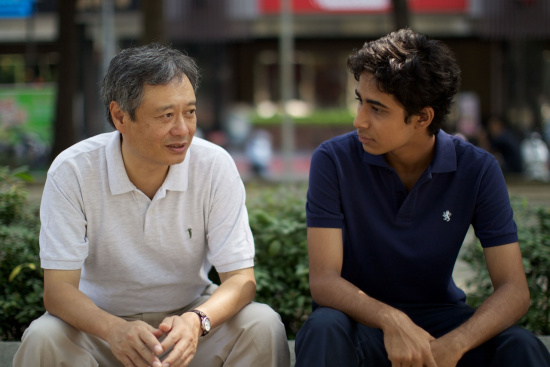
Thanks to the good soul who mailed us the (un)official synopsis of Life Of Pi. The film is directed by Ang Lee and is based on Yann Martel’s novel of the same name. It has Irrfan Khan (Older Pi), Tabu (Pi’s mother), debutant Suraj Sharma (Piscine Molitor ‘Pi’ Patel) and Adil Hussain (Pi’s father) in lead roles. It’s scheduled to release in 2012 and will be in 3D.

And here is the synopis…

PISCINE “PI” PATEL (54) was born in India but now lives in Montreal. Though he loves Canada, he misses the heat of his native country. He is still a bit traumatized by the memory of being abandoned by RICHARD PARKER when he was 12.

Pi’s father studied zoology in Paris which is where he met Pi’s mother. An avid swimmer, Pi’s father taught Pi how to swim when he was seven. His father worked as the director of the Pondicherry Zoo in Madras. Pi grew up around the animals, learning to love each of theirs unique and sometimes amusing idiosyncrasies.

In school, Pi earned the unfortunate nickname of “pissing Patel”. When he entered middle school, he took the moniker Pi and was thankfully never teased again.

In 1964, over the objections of his mother, Pi’s father took Pi and his cousin RAVI to the tiger cage to watch it kill a goat. It was a lesson to teach them to fear the big cats. They may look fluffy and cuddly but they are ferocious animals.

Pi became interested in Catholicism. He would visit the local church and talk to the PRIEST about his religion. Pi was raised as a Hindu and would go to temple to question the PANDIT about his philosophy. Pi also would go to the mosque to ask the IMAM about his religion. Pi was fascinated by all three religions and considered himself a member of each. It never proved a problem until one day when he was walking with his parents and encountered the priest, pandit and imam. Each declared Pi a member of their congregation and got into a fight when the others made the same claim.

When the owner of the zoo, the MAHARAJAH died, his SON took control of his holdings. He decided to raze the zoo and replace it with a golf course. Pi’s father hoped he could change the Maharajah’s son’s mind by acquiring a lion for the zoo. He took Pi with him when he went to a circus to look for a lion to buy. While he negotiated a deal with the circus owner, Pi met the LION TAMER. He took the boy into the cage with him and showed him how he controlled the animals. The most important thing he taught Pi was never to show fear and to always be in command. Pi’s father was unable to make a deal with the circus owner and they left empty-handed.

With the zoo closing, Pi’s father got a job with the Canadian zoo which purchased all of the animals. They were loaded onto a boat along with Pi and his family. While on the cruise to their new home, Pi helped to feed the animals.

Pi was awakened one night to find his room flooding. The ship was sinking. The sailors freed most of the animals, giving them a chance on the open sea rather than drown on the boat. Unable to find his parents, Pi was taken topside by a sailor who threw him into the ocean. Pi swam to the nearest lifeboat, climbed aboard and watched the ship go down. That’s when he noticed that he wasn’t alone on the lifeboat. He shared it with a zebra, peacock and a hyena. Pi never saw his parents again.

Pi saw a tiger named Richard Parker clinging to a piece of driftwood nearby. It got that name from the Brit who found the orphaned cub that was then given to the zoo.

Pi is telling the story from his hospital bed to MR. OKAMATO and MR. CHIBA, investigators from the insurance company who were questioning him about why the boat sunk. Besides the two Japanese, there were a few nurses and orderlies also listening to Pi’s fascinating tale.

Pi then saw a hand grab the edge of the lifeboat. It belonged to a female orangutan who pulled herself into the boat. After a couple of days and getting hungry, the hyena moved to attack the zebra. Pi tried to fend it off with an oar but couldn’t stop the starving animal. It attacked the zebra who panicked and fell out of the boat. Thwarted, the hyena then turned and attacked the orangutan, killing it. That’s when the tiger reappeared, jumped into the boat and killed the hyena. Pi escaped the boat after making a raft from oars and life preservers. He stayed near the boat because it contained supplies that he might need.

As Pi continued his tale, his hospital room began to be filled with more patients and staff who were hanging on every word he said.

As the days continued, Pi remembered the things he learned from the lion tamer. Using a fishing hook he found in the survival kit on the lifeboat, Pi began catching fish to feed himself and the tiger. He would clean the fish by using one of the tiger’s discarded claws. In time, they formed an unlikely truce. The tiger wouldn’t eat Pi as long as he continued to feed him. When Pi got the chance, he would also feed on sea turtles and sea birds that he would encounter. Pi would keep track of the days by making notches on an oar. He would eventually make a total of 137 notches.

Pi woke up one morning to find that his boat had reached an island. The tiger jumped out and ran into the jungle. Pi began to investigate himself before passing out from exhaustion. He woke up to find his hands and feet bound. The sailor from the ship was also on the island. The sailor was apologizing for his what he was about to do – eat Pi. Before he got the chance though, he was attacked and killed by the tiger. Pi jumped back in his boat and began to paddle away but then felt guilty about leaving the tiger, so he used a whistle he had found to call the big beast. It came running (carrying the sailor’s arm in his mouth) and jumped back in the boat.

Some time later, the boat washed up on the beaches of Mexico. The tiger leaped to the shore and disappeared into the woods. Pi was extremely saddened by the loss of his only friend. Pi was found by some locals and taken to the nearest hospital.

By now Pi’s audience had filled his room and spilled out into the hallway. When he finished his story, many of the listeners dabbed at the tears in their eyes. Some openly wept.

SPOILER

Mr. Okamato and Mr. Chiba expressed their doubts about the veracity of the story, finding it to be just too implausible. When they saw Pi’s eyes look downward, they thought they hit a nerve so they ushered everyone out of the room. Pi then told a simpler tale. He said when he reached the lifeboat, it held his mother and two sailors, one with a broken leg. After a few days out on sea, one of the sailors wanted to kill the injured one to eat. Rather than face that fate, he jumped into the ocean taking his chances with the sharks. The sailor then turned and killed Pi’s mother, stripping her flesh to hang and dry. When the sailor fell asleep, Pi killed him and later ate him. Mr. Okamato and Mr. Chiba are distressed by the story, feeling sorry for Pi having to witness his mother being killed and cannibalized. As they left the boy alone, they remarked how similar his two tales were, marveling how the young man’s imagination had replaced humans with animals. They figured the hyena was one sailor, the zebra was the injured sailor and the orangutan was Pi’s mother. Who then was the tiger? Well, Pi of course.

SPOILER ENDS

Years later, Pi is living in Montreal. He returns to his apartment. Pi still has the tiger’s claw.

The day I got to know that Vishal Bhardwaj was adapting another Ruskin Bond short story for the big screen, I went to all the possible book stores, searched desperately for the book with the story Sussana’s Seven Husbands, found it, bought it, read it and then heaved a sigh of relief. How else can you claim to be a Bhardwaj Fanboy!

The short story (just 5 or 6 pages) by Bond is a mood piece, sets an atmosphere where you don’t feel comfortable and there is an eerie feeling that something is lurking around the corner. Things are not explained, deaths are without any reasons and everything else is left to your imagination. Once I and other B-fanboys finished reading it, we all wondered endlessly about how Vishal is going to adapt it for the big screen. Knowing Bond, it should have been easy to predict. Rewind to Rusty days.

But what will compensate for the lack of central drama ? Add to that, our cinema habit of enjoying a “destination film” more than a “journey film”. If the last 20 minutes doesn’t satisfy us, nothing can compensate for the price of the ticket, no matter how brillant the rest of the film is.

And every fear came true with 7 Khoon Maaf. In CBSE curriculum, we had a short story in school titled “Curiosity Killed The Crow”. In case of 7 Khoon Maaf, I was the Crow. Not sure how different my reaction would have been had I not known about all the spoilers. Since the announcement of the film, have been following every bit of news, forcing every possible source to spill out the beans and I even knew about the spoiler in the film. The film’s official synopsis made matters worse where it gave out every detail about the plot. The only thing left to know was – How ?

The film opens with a scene where Priyanka is holding a gun close to her head. And the first thing I noticed was the patchy make-up on her face. You don’t expect to see such a face in a film directed by one of the country’s top five filmmakers. And things got worse from there. Not sure on whom the blame should be put but you can almost feel the layercake of make-up put on Priyanka’s face in many scenes.

If you follow the blog, am guessing you know more than enough about the story. Sussana. Six Marriages. Husbands. Dead. Neil’s character had so much potential but if only fake moustaches could save the day, we all would have been roaming around with those. John, well, I don’t have too many adjectives for wooden blocks. More or less, he remains the same. Naseeruddin Shah doesn’t have much to do, Russian actor Aleksandr Dyachenko has a charming presence and as always,  Annu Kapoor is effortless. Irrfan Khan – benign by day, beast by night and he can go no wrong. But the one who gets to be the dude is Shah Junior – Vivaan. Not conventional good looking but confident and how! An assured debut. Unlike other first timers, not self-conscious of his body language at all. Blame it on the Shah-DNA. But to imagine him as Konkona’s husband, and again with that layer-cake make-up, that was the toughest part. Priyanka is spot-on, whatever she is expected to deliver, she does it well. If only she could get rid of that school-girl giggle, she would be more likeable.

If I ever murder someone, I’ll put the blame on Coen Brothers. Because they make killing look so cool. Wish I could share the blame with Bhardwaj too. But he goes for the emotional baggage. Justifiying every killing of the “dukhi-bechari-badkismat” Maidyum. Looking for love. Settling for blood. Killing just for the sake of killing, what a delicious dish it is! Like that war of whip-lashes (Neil Nitin Mukesh) in an open muddy ground.

And what’s the big picture ? 1,2,3,4,5,6 and then go for the sublime sufi swirls. Count that 7 and bingo!

The brillance of Bhardwaj is there, but too little, the way scenes are set and lit ( Double woot for Ranjan Palit).  The master who has penned some of the best dialogues in the last few years, also drops few few lines here and there. Shaadi jaldi jaldi aur pachtao araam se. But it all boils down to nothing. It’s packed with so much stuff and yet offers so little.

The worst – even the song Tere Liye is not there in the film. At least that would have compensated for some of the pain of seeing one of your favourite filmmakers falter this way.