KAUFMAN - "Or cramming in sex, or car chases, or guns. Or characters learning profound life lessons. Or characters growing or characters changing or characters learning to like each other or characters overcoming obstacles to succeed in the end. Y'know ? Movie shit."
Kaufman is sweating like crazy now. Valerie is quiet for a moment - from "Adaptation".
We are all about CINEMA. That movie shit.
NOTHING is sacred.
NOBODY is spared.
Because we talk about films, dammit.
Not your sex life.
Films, fests, unsung, indies, undiscovered - all that and some fun. If you have dope on anything related to cinema or you would like to share something, do write to us at moifightclub@gmail.com.
The views, opinions, reviews, articles, or positions, expressed by the authors and those providing comments are theirs alone, and do not necessarily reflect the views, opinions, positions or strategies of ANY OF THE EMPLOYERS, FRIENDS, RELATIVES, PR agencies, Production houses, Media group and such third parties associated with the authors. The latter make no representations as to accuracy, completeness, currentness, suitability, or validity of any information on this site and will not be liable for any errors, omissions, or delays in this information or any losses, injuries, or damages arising from its display or use.
In short, if you have an issue with us or any post we've written, write to us at moifightclub@gmail.com
For Shorts and Documentaries below 40 minutes: $50
For Features and Documentaries above 40 minutes: $65
Submission fees are discounted by $5 if paying through Withoutabox. Films received after the final deadline will not be accepted.
– The fest has also announced a new partnership with Carpe diem Residency. IFFLA’s 2015 Grand Jury Prize winner for Best Feature will be awarded a participation at their artists-in-residence program, a retreat designed to allow artists, writers and filmmakers an opportunity to create new works in a stimulating environment. The winner will get to choose from one of these exciting locations for their residency: Almora, Rishikesh, Kerala and Spain.
– All filmmakers will be notified via email by February 27, 2015.
The Sundance Institute has unveiled the competition line-up for the 2015 edition of the Sundance Film Festival. The fest will run from January 22nd to February 1st, 2015. Out of 12,166 submissions, about 185 selections were made.
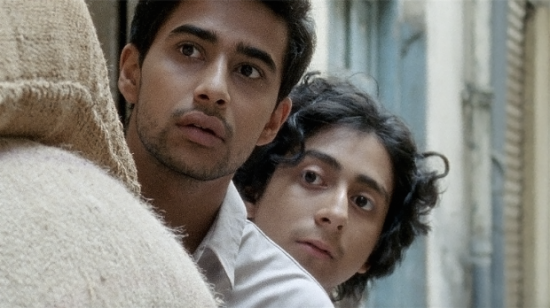
Prashant Nair’s film Umrika will have its world premiere in the “World Cinema Dramatic Competition” section. This section has twelve films from emerging filmmaking talents around the world which offers fresh perspectives and inventive styles. The film is produced by Swati Shetty and Manish Mundra. And here’s the official synopsis of the film –
When a young village boy discovers that his brother, long believed to be in America, has actually gone missing, he begins to invent letters on his behalf to save their mother from heartbreak, all the while searching for him.
The film’s leading cast includes Suraj Sharma, Tony Revolori, Smita Tambe, Adil Hussain, Rajesh Tailang and Prateik Babbar.
Last year, Geethu Mohandas’ Liar’s Dice was in the same section of the Sundance Fest.
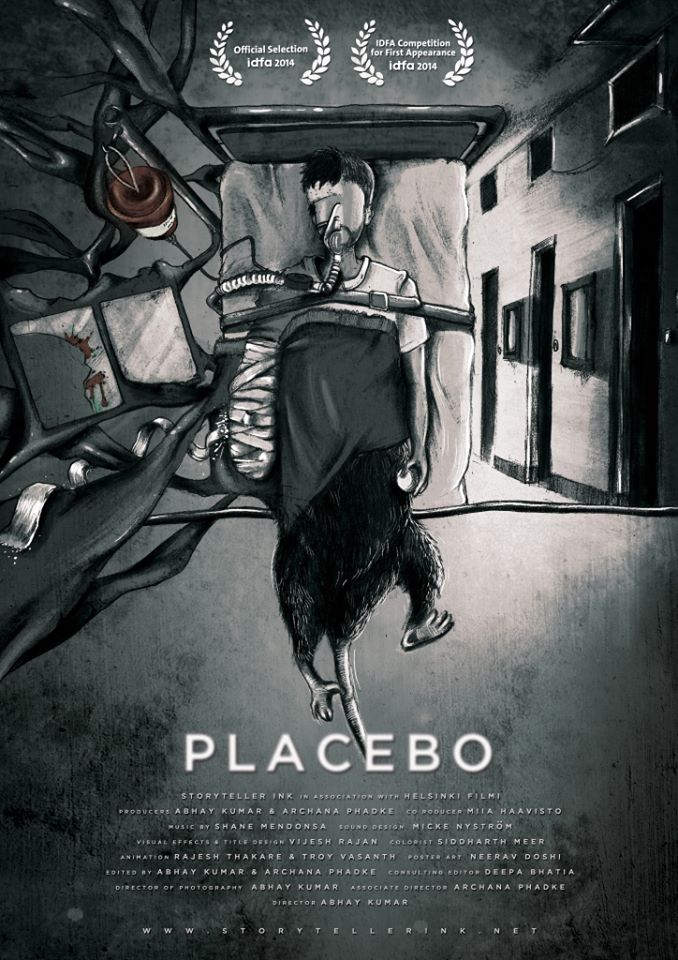
Abhay Kumar’s documentary film, Placebo, just had its international premiere at the reputed International Documentary Film Festival of Amsterdam (IDFA).
And the good news is the film has also been nominated for Best Film in “Competition for First Appearance” category. It’s competing with Always Together (Czech Republic) by Eva Tomanova, Drifter (Hungary/Germany) by Gábor Hörcher and Mother of the Unborn (Egypt/United Arab Emirates) by Nadine Salib.
Here’s the first look teaser of the film
Synopsis
After witnessing an act of brutal violence, a film maker starts following the lives of four students at one of the prmiere educational institutes of India. However, as the camera starts infiltrating this complex mindscape of ambition and restless youth, a startling new reality begins to emerge – one in which an implosion is taking place. In this world, what can be the cure?
So what do you do when you get to know that there’s a screening of Libaas? Well, only a Gulzar fan can tell you the right answer. So over to Mohit Kataria who tells us what exactly he did.
Before you start:
Please don’t read this post as a film review post, it’s all about my personal experience with the movie Libaas and the way I got to watch it. I’ve never written any movie review before and I don’t think I even qualify for writing one (if there is any qualification criteria). You might also find it really biased as I’m a fan of Gulzar Saab and always wear a particular pair of admiration glasses while reading/watching/listening to any of his works.
Prologue
What do you do when you get any once-in-a-lifetime opportunity? You grab it with both the hands, right? That’s what I also did.
It all started with a Facebook post from a very dear friend and an ardent fan of Gulzar saab, Pavan Jha, that I came to know about Libaas getting screened in IFFI – 2014 in Goa on 22nd Of November. Then after a number of confusions, calculations and discussions later, I decided to go ahead and started making my travel plans. Then, I came to know about something called a delegate registration (I have already warned you about my credentials ), which was already into its “register-with-late-fee-phase”. Somehow got registered with some made up bio-data to prove that I was worthy enough to be a delegate there. I got an email mentioning that the confirmation will be done after some careful review of my bio-data. I waited impatiently for the whole day which was the last day for the registration, and by the end of the day, I got a confirmation mail asking me to pay to be a delegate. I followed the instructions and completed the formalities. Then it was time to book the tickets for travel. After doing some calculations, considering family, work, economics and time dynamics, I booked the flight from Bangalore, scheduled to reach Goa at 2 PM on the day of screening (22-Nov-14) (Libaas was scheduled for screening at 5:30 PM) and also booked first available flight from Goa the very next day (23-Nov-14). Needless to say, my only purpose of going through all this exercise was to witness something I really was waiting for ever since I started following and loving Gulzar Saab and his work – to get a chance to watch Libaas. And I never thought I would get an opportunity of a lifetime in this manner, to watch it with Gulzar Saab himself.
Experience
Before cutting through all the details of getting the passes (where Ashok Bindalji and IFFI organizers helped a lot), reaching the theater following Gulzar Saab, and finally settling down to watch Libaas, I would like to mention here that there were lots of people who wanted to get in and watch Libaas and the auditorium had a limited capacity of accommodating 280 people only. So one senior IFFI organizer (I won’t name him to get him into any trouble), took a call after consulting with Gulzar Saab and Vishal Bhardwaj, to allow people to sit in the gallery, on the floor, to stand on the gates, behind the last row and any other place wherever possible without making others uncomfortable. It got reminded me of the pre-multiplex era when it was a norm for any big movie. Isn’t it delightful to treat and watch the movie in the same manner we used to watch movies when it was actually made (in 1988)?
The stage was set by welcoming Gulzar Saab by the IFFI authorities, and then Vishal Bhardwaj presented the movie Libaas as the inauguration movie of retrospective: Gulzar. Vishal said that it’s an honor for him to present this movie, and spoke about how Gulzar Saab started his career as a poet and brought his poetry from paper to screen. Each of his movies are poetries on screen. He also briefly mentioned about the efforts at various levels that have gone in trying to get the movie released, including his personal efforts of 20 years which has gone in vain. Then he mentioned what it means to him personally, and for his whole family to be part of this historic event.
Gulzar Saab was visibly holding back his emotions, and he started on a lighter note saying, saying, “दोस्तो, मैं भी उतना ही curious हूँ फ़िल्म के लिए, जितने कि आप हैं. आप ने भी नहीं देखी फ़िल्म, मैंने भी नहीं देखी”, which rightly summed up the significance of the film. He was happy that the family and friends have come from all over to see this screening. You can listen to the whole discussion here. And then the magic started on screen. We were in for a very delightful treat for next couple of hours.
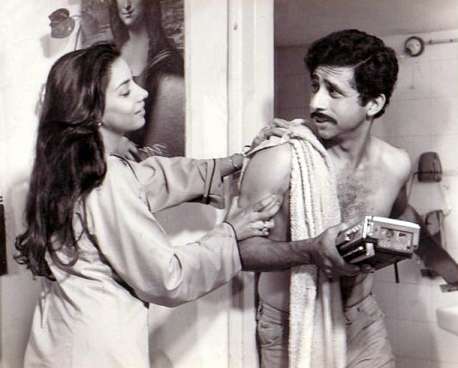
As you might know, the movie was completely based on Gulzar Saab’s own story Chaabiyaan which has also published later with the title Seema. There was wit, brilliance, intelligence and emotions written all over the movie. Each frame was flowing into the other one like the way water flows – at times like a river, sometimes like a silent lake and often like waterfall. It was a sheer pleasure to experience Gulzar Saab’s poetry for the next 137 minutes. The movie has four main characters – Sudhir Bhardwaj (a passionate theater director, played by Naseeruddin Shah), T.K. (a flamboyant businessman, played by Raj Babbar), Seema (an amazing actress who is also a not-so-happy wife, played by Shabana Azmi) and the theater which is the sutradhar which keeps tying all the running threads of the movie. It also has a handful of supporting cast who made their presence felt without shadowing the main leads. Not even a single character was out of place or not required. The story primarily deals with husband-wife relationship and a extra-marital affair, all in the backdrop of theater. While watching it, I could feel it was much ahead of its time (it was scheduled to be released in 1988), as was confirmed by Gulzar Saab in a post screening Q&A session that such things were happening at that time but were never shown in cinema. He dared to reflect what was part of society then.
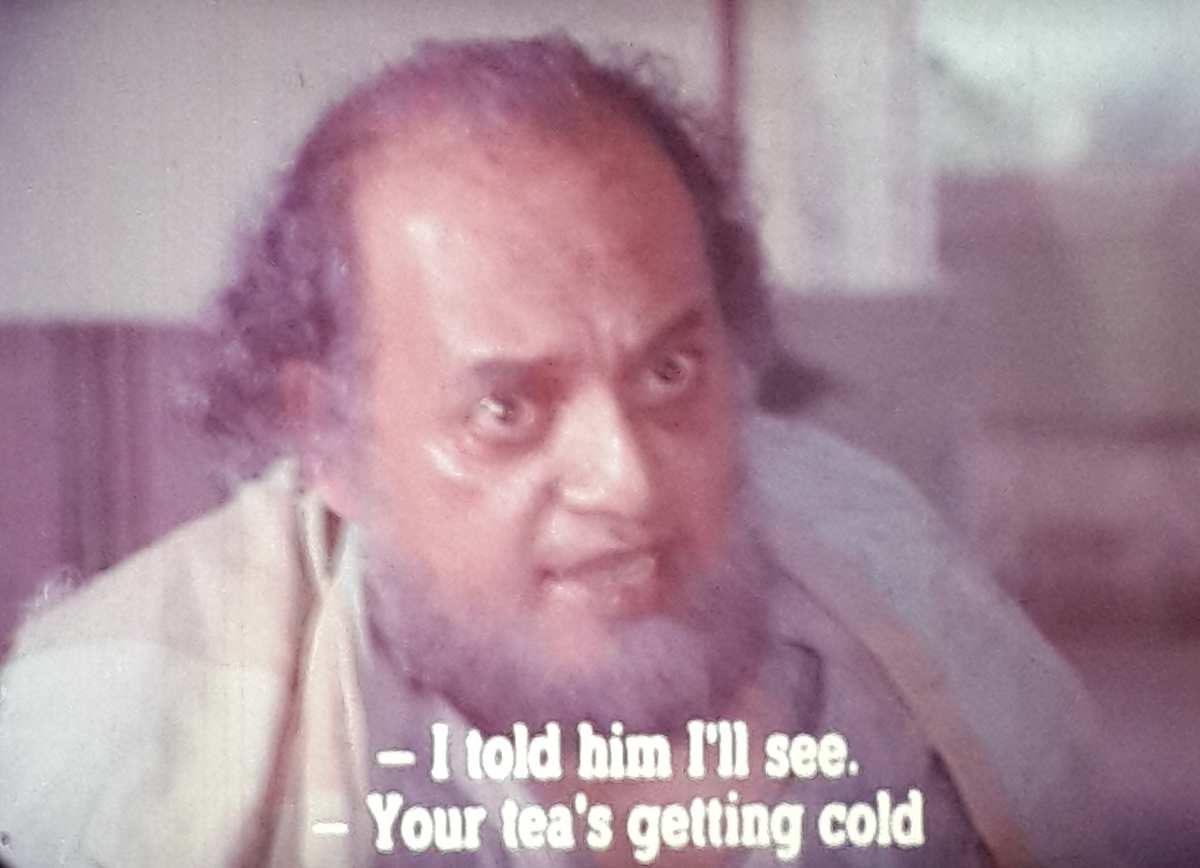
Opening scene of the movie is in a theater, where Jamal Saheb (played by Utpal Dutt) is entering the theater while taking a look at the play being staged.
Utpal Dutt in Libaas
In the canteen, he is greeted by youngsters who are theater artists/aficionados and the scene establishes that Jamal Saheb is a great artist from the times gone by. He is not relevant anymore and is in a poor state. He has been replaced, so to say, by Sudhir, who is dominating the contemporary theater scene. In next few scenes, we come to know that for Sudhir, the first priority of his life is theater – the way he forces Seema to gargle every day in the morning, no matter what, and the way he keeps on talking about and enacting various scenes from his plays. One scene which nails it down clearly is when Seema asks Sudhir if she could get a hair-cut as she feels she would look prettier in short hair. To which he replies, if she gets the hair cut, what would happen to all the characters she is playing in theater, and starts quoting each of the characters from different plays. All the members of his theater group love and fear him in equal measure due to his strictness while doing the rehearsals. A couple of times when Seema forgets her lines during the rehearsals, he yells at her, and at home, he tells her,
“खाना बनाना भूल जाओगी तो बर्दाश्त कर लूँगा, dialogues भूल जाओगी तो कभी बर्दाश्त नहीं करूँगा.”
Phir Kisi Shaakh Ne Phenki Chaanv – Libaas
Seema is already strained, and wants a break from the monotony of Sudhir being so hard on her as he always thinking about one thing – theater. That’s when T.K. enters the scene and their home. He is informal and is such a close friend of Sudhir that even Seema feelss surprised as she had never seen Sudhir being so comfortable with anyone, including her. TK’s flamboyant style of talking and cheerful behavior attracts Seema, and he gets attracted to her beauty. They all meet a couple of times and then while one relationship starts forming, other one starts breaking. On one side, Sudhir is always busy with his play rehearsals and on the other hand, T.K., a well versed businessman is always ready to meet her and pay attention to her.
Her loneliness and boredom from theater adds fire to the fuel, and before even they realize, the relationship becomes complicated. The high-point of the movie is a scene which has brilliance of Gulzar Saab written all over it. It was Gulzar Saab’s craftsmanship that he handled such a burdened situation in such a subtle manner. The treatment of the characters, the dialogues of this one scene leaves us completely mesmerized and catches us unguarded. The scene is when Sudhir decides to confront T.K. and Seema about their relationship. Seema and T.K. enter the house after spending some good time together, and they find Sudhir at home. T.K. tries to cover up his embarrassment by telling Sudhir that he was asking about him from Seema as Sudhir was very busy, they were not able to meet.
T.K. – और किस ड्रामे में busy हो आजकल?
Sudhir – “अ..अ..म.. आजकल… अ… एक personal से नाटक में ज्यादा busy हूँ.”
“ह.. ह.. मतलब..?”
“नाटक तो दूसरे लोगों का है, मैं खा-म-खां बीच में फंस गया”
“अम.. कुछ समझा नहीं यार, वो कैसे?”
T.K., though embarrassed, is still trying to appear innocent even though he is guilty of cheating Sudhir.
“क्या है के हमारे यहाँ… हमारे यहाँ, वो हैं ना… मि. मुखर्जी”
He looks at Seema and starts building the story.
“मुखर्जी? कौन?”
Seema asks, to which Sudhir replies –
“तुम मिली हो उन से, शायद याद नहीं है… मि. मुखर्जी में याद रखने जैसा कुछ है या नहीं मालूम नहीं… लेकिन अपनी पत्नी की वजह से वो.. अक्सर याद रह जाते हैं लोगों को…. बड़ी talented… और talented से ज्यादा ख़ूबसूरत पत्नी है उन की. अब ज़ाहिर है कि लोग उन की तरफ़ तवज्जो देते हैं, attract होते हैं. और ये कम्बख़्त चीज़ ऎसी है कि आदमी हो या औरत, पाँव तले की ज़मीन खींच लेती है. आदमी सोचता है, इश्क ही में ज़िंदगी है, बाकी सब तो फ़न, आर्ट, talent, सब सजावट की चीज़ें हैं. बहरहाल, मि. मुखर्जी का problem है, उन की पत्नी… वो किसी के इश्क में पड़ गई हैं या कोई है जो उन के इश्क में पड़ गया है….”
Seema asks, “तो problem क्या है?”
To which Sudhir replies, point blank, still keeping it indirect,
“तुम्हें नज़र नहीं आता?”
“नहीं मतलब… समझ में आता है लेकिन दोनों अगर एक दूसरे को चाहते हैं तो…”
“नहीं, नहीं, नहीं, नहीं… तुम उस लड़की के problem को देख रही हो, मैं मि. मुखर्जी के problem की बात कर रहा हूँ”
“उनका क्या problem है?”
“क्यूँ? याने… उन का कुछ है ही नहीं?…
उन का problem ये है कि उन्हें मालूम हो गया है… और जान लेने के बाद शौहर यानि मि. मुखर्जी क्या करे उस पत्नी का? चुप रहे? देखता रहे? होने दे जो हो रहा है? मुश्किल तो ये है कि कोई भी शौहर जान लेने के बाद ये निगल नहीं सकता”
Now T.K. intervenes,
“आख़िर मुखर्जी चाहता क्या है?” “चाहता क्या है, वो छोड़ो, क्या करना चाहिए उसे?”
“अम..ज़ाहिर है अगर उन की पत्नी, उन के साथ नहीं रहना चाहती तो उन्हें कोई हक़ नहीं है कि वो उस के साथ ज़बरदस्ती करें. After all.. वो अपना अच्छा-बुरा समझ सकती है, ऎसी कोई बात नहीं है…”
“हाँ, समझना तो चाहिए, सिर्फ़ ये कि जिस से वो प्यार करती है, क्या सचमुच प्यार करती है? यूँ ही उन्स में तो नहीं पड़ गई? ख़ा-म-ख़ां का infatuation तो नहीं है, जिसे वो प्यार समझ बैठी है?”
“आख़िर शादी-शुदा औरत है, क्या इतना नहीं समझती? इतनी mature नहीं होगी के…”
And that’s when Gulzar Saab’s intelligence of handling the complicated situations comes in full form.
Sudhir interrupts Seema at this point and says it straight,
“इतनी mature हो तुम? इतना समझती हो कि जिस राह पे जा रही हो, जिस के साथ जा रही हो वो झूठ-मूठ का कोई ड्रामा तो नहीं कर रहा है?”
At this time T.K. tries to escape saying this is personal matter between husband and wife and he is an outsider.
Then, as a matter of fact, Sudhir tells him,
“बैठ जाओ T.K., तुम भी कोई बच्चे नहीं हो… बैठ जाओ… देखो T.K., इन रिश्तों में कानूनी, ग़ैर कानूनी कुछ नहीं होता. कानूनन कोई पत्नी नहीं बनती, कानूनन कोई शौहर नहीं होता.Law has nothing to do with it. हम ज़बरदस्ती इन रिश्तों पर कानूनी मोहरें लगाते रहते हैं. आज तक, कोई किसी आते को नहीं रोक सका और ना किसी जाते को थाम सका है. और मैं ये कैंसर ले कर नहीं घूम सकता…. तुम ने ठीक कहा, अगर सीमा मेरे साथ नहीं रहना चाहती तो मुझे कोई ज़बरदस्ती नहीं करनी चाहिए, मैं नहीं करूँगा, लेकिन मैं इसे रास्ते पर नहीं छोड़ सकता. मैं तुम्हारा फ़ैसला जानना चाह्ता हूँ, तुम दोनों का फ़ैसला जानना चाहता हूँ… अगर तुम दोनों flirt नहीं कर रहे हो, एक-दूसरे को धोखा नहीं दे रहे हो, सचमुच एक दूसरे को चाहते हो, तो हाथ पकड़ो और निकल जाओ इस घर से.”
Seeli Hawa Chhoo Gayi – Libaas
Even after Sudhir and Seema get separated and she remarries T.K., there is still an element of care and affection for each other.
T.K. and Seema are living happily, yet Seema is not able to forget her past so easily.
In one scene, where one evening she is sitting sad all alone on a yatch, T.K. comes and asks,
“क्या हुआ… सुधीर का ख़्याल आ गया?”
“हूं..”
“इसीलिए तो तुम्हें शादी के बाद यहाँ ले आया. जानता था, अगर वहाँ रहोगी तो अतीत याद आएगा. अतीत बुरा हो तो सीमा, आदमी गर्द की तरह झाड़ दे, ख़त्म कर दे, लेकिन सुधीर जैसा… मुझ पर अंधविश्वास था उसे. जो कुछ हुआ, मुझे उस का अफ़सोस नहीं, बिल्कुल नहीं, बस यही है कि अगर तुम किसी दोस्त के यहाँ ना होती ना…तो अच्छा होता, क्यूँकि तुम जहाँ भी होती, मैं यही करता, I love you. मैं तुम से प्यार करता. I love you Seema, I love you.”
[Edit Note : While Mohit has written the climax in his post, we are not going to reveal what happens in the end, as we expect more screenings of the film soon and expect you to watch it someday, somewhere. We leave you here with Ravi Shastri Quote : All Three Results Possible ]
And the end credits roll over with the song
“तुम से मिली जो ज़िंदगी, हम ने अभी बोई नहीं,
तेरे सिवा कोई ना था, तेरे सिवा कोई नहीं…”
…Leaving everyone in the theater completely spell bound.
Gulzar Saab got a standing ovation which refused to die down for the next few minutes.
Epilogue
It had Gulzar written all over it. Gulzar the writer, Gulzar the dialogue-writer, Gulzar the lyricist and Gulzar the director. It was like various Gulzar competing with each other and attaining the pinnacle of expressions. The music of R.D. Burman was also a highlight of the movie as the melodies are so soulful, the film would have been definitely incomplete without such lovely songs.
From story perspective, it is really difficult to say what was wrong or who was wrong or whether anyone was wrong at all? This is the power of a sensibly told story on screen. We all know that Gulzar Saab has great sense of expression when it comes to relationships. He is the one who has given the words to all the emotions we have gone through at various points in our different relationships. He is no different here as well. Gulzar Saab has also given various references of past work of theater artists who have explored the complexities of husband-wife relations – Leo Tostoy’s Anna Karenina, Vijay Tendulkar’s Khamosh adaalat jari hai, Mohan Rakesh’s Aadhe-adhure. The film, even though made some 26 years back, is still relevant and I believe due to the nature of human relationships, will be relevant even after 26 years.
There are so many situations in the movie which could have been exploited with melodramatic scenes but he kept them subtle, and trusted the intelligence of audience he was catering to. Like after re-marriage, one day when T.K. is gargling in the morning, all of a sudden she gets reminded of Sudhir, who was always after her for gargling. She gets in that groove for a moment that she actually calls out her old maid’s name “दुर्गा…” and then she realizes her mistake. And when she calls up their family doctor (played by A.K. Hangal) asking him to visit their home for T.K.’s cough and cold, she forgets to mention to the doctor about his new life and husband. The doctor habitually visits their old home and because Sudhir is also suffering from the cough at the same time, he doesn’t find it surprising that Seema called him up. Subtle ways to show that the bridges are not yet burnt completely. The central idea of the story keeps coming back again and again in multiple ways.
During the post-screening Q&A we came to know that the climax which was shown in the film was not his choice but the producers insisted upon him to change the climax.
He wanted to leave it a bit open ended, which he couldn’t do in this movie, hence he made Ijaazat, another masterpiece on husband-wife relationship which he ended the way he wanted it to be.
Nobody dared to ask the question, “अगर लिबास release हो जाती फिर भी क्या वो इजाज़त बनाते?” and I doubt if anyone who has watched Ijaazat would even dare to think it being non-existent from the filmology of Gulzar Saab. Nothing to compare but to give a flavor to the people who could not watch the screening of Libaas, in my opinion, it was at par (if not more) with Ijaazat in terms of exploration of relationships, writing, dialogues, songs, direction and music.
To sum it up, I would just say, no matter how many years the movie has spent in the laundry or dry-clean, this Libaas is still as crisp, clean and white as new.
(Mohit Kataria is an IT engineer by profession, writer & poet by passion, a Gulzar fan by heart. He is based in Bangalore and can be reached at [kataria dot mohit at gmail dot com] or [@hitm0 on twitter)
(Pics & Videos by Ashok Bindal [ajbindal at gmail dot com], a close associate of Gulzar saab, based in Mumbai)
Retrospective Inauguration Video via Ministry of I&B YouTube Channel]
So after much hype (courtesy our friends Namrata Joshi, Aseem Chhabra and others), a few of us finally ended up joining them this time at the 3rd edition of the annual Dharamsala International Film Festival, up in the beautiful township of McLeodganj- and I’m happy to report that it did live up to the buzz, and I can’t wait to get up there again next year. It’s an excellently organized festival- with helpful signs all over town to guide you, autos hired to take you up to the main venue TIPA (Tibetan Institute of Performing Arts) and a wonderful, warm team of volunteers, some of who travel from various parts of India and the world to be part of this joyous little celebration of cinema up in the mountains, in a town without a single cinema theatre.
Clearly, the common thread among many of the films shown at DIFF was that they belonged to the genre I will call ‘cinema of social unrest’- and from what I hear, this was the case the year before as well. So there are many documentaries as well as fiction features about social and political movements, revolutions, human rights violation and conflicts of land, culture and identity. This feels especially apt considering Dharamshala itself is a place where you can distinctly feel the angst of displacement and the forced refugee status of Tibetans under the gentle, tranquil atmosphere of the town.
This year included a fairly interesting selection of films (you can check out the list here) as well as some interesting retrospectives, curated short film packages and masterclass/Q&A sessions with filmmakers such as Rajat Kapoor, Hansal Mehta, Gitanjali Rao, Q and Umesh Kulkarni. I’m afraid I did not manage to catch a whole lot of them- the main drawback of having a film festival in such a picturesque location is that you are conflicted whether to spend your time watching films or savor the sights around, not to mention visit all the charming cafés and eateries in the area. Still, here are a few notes on some of the films I did catch at the festival:
KILLA:
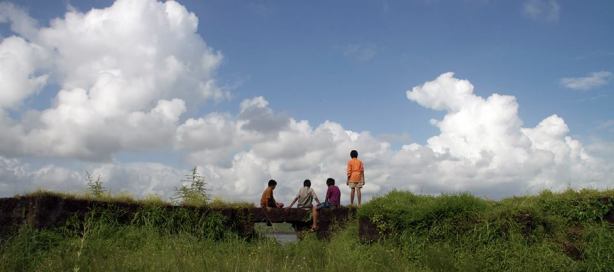
Avinash Arun’s debut feature is a gorgeously evocative and poignant film about friendship, loss and the resilient ability of children to deal with disappointment, displacement and even death. Killa is clearly a very personal film, and is shot and crafted with great love and sensitivity. It also features some unforgettable, textured characters brought to life with amazingly natural performances from Amruta Subhash, Archit Deodhar, Parth Bhalerao and a wonderful ensemble of young actors. This is yet another strong contemporary Marathi film about children, and definitely the one with most finesse out of the ones I’ve seen. I must mention here though that I haven’t seen Umesh Kulkarni’s acclaimed Vihir yet- interestingly, Avinash Arun cites Kulkarni as his mentor and a strong influence.
BRINGING TIBET HOME:
Bringing Tibet Home documents the deeply emotional and often funny story of New York-based artist Tenzing Rigdol’s audacious art project to reunite exiled Tibetans with their land, quite literally. After his father dies with his last wish of setting foot in his homeland unfulfilled, Tenzing decides that if Tibetans can’t return to Tibet, he will bring Tibet to them by smuggling 20 tonnes of native Tibetan soil to Dharamshala for a one-of-its-kind art installation. It was especially moving watching the film in Dharamshala- though it did also really make me ponder about what makes land itself so important to human beings. Maybe because I’ve never quite had roots anywhere, soil to me just feels a little overrated… ‘it’s just tiny little rocks.’
THE SQUARE:
This shattered my heart and blew my mind to bits. Jehane Noujaim’s The Square is the most devastating film I have seen in a long time and easily the best one I saw at Dharamshala. The film puts you right at the heart of a revolution inside Tahrir Square, with young, common people spiritedly fighting a fascist and fundamentalist regime in Egypt, spilling their blood and guts out for the hope of a brighter, free future even as they come to the crushing realization that courage and idealism aren’t enough to win their war against oppression. This is absolutely essential viewing- the auditorium was filled with tears and goosebumps in the end and the applause didn’t stop till the credits had finished rolling.
(PS: Also spotted in the documentary- Aida Elkashef from Ship of Theseus and a Vikramaditya Motwane doppelganger. I kid you not- the resemblance is uncanny. See if you can spot him. 😉 )
OMAR:
Director Hany Abu-Assad cleverly sets a gripping tale of love, deceit and betrayal against the Palestine-Israel conflict. The film borrows sparingly from Romeo and Juliet and Othello to give us a heady mix of socio-political thriller and Shakespearean drama-and while a comparison might be a little unfair- I can’t help feel that Omar blends the two a lot more seamlessly and effortlessly than Vishal Bhardwaj’s Haider, which of course is very good in its own right. Adam Bakri gives a superbly charismatic performance as the protagonist- though admittedly, it’s hard to take your eyes off him anyway considering how jaw-droppingly good he looks.
TRUE LOVE STORY:
Filmmaker Gitanjali Rao showcased a great set of Indian and international animated shorts curated by her at DIFF (including her marvelous Printed Rainbow), and ended the session with her newest film True Love Story, which screened at the Cannes Critics’ Week section earlier this year. The film, originally scripted to be part of a feature film (alas, no one wants to fund quality animation films in India) begins as a homage to masala movies which is both affectionate and hilariously tongue-in-cheek- but in the end reveals itself to be a sharp social satire, using a real-life tragedy that made headlines a few years back (the court case is still on) to brilliant, scathing effect. The film is a visual and aural delight with its colorful evocation of Bombay’s sights and sounds through Bollywood tinted glasses, and hopefully it will make its way to a wider audience soon. And I hope some producers funding ‘indie’ films (which more often than not, turn out to be sub-par) see the potential in this medium and back Ms Rao’s extraordinary talent and bring more of her singular, unique vision to the big screen.
Mumbai Film Festival is over, but the hangover remains. And so here comes one more post. This is a guest post by Mohamed Thaver.
I recently saw ‘Killa’ (The Fort) at the MAMI film festival, a subtle, understated and beautifully woven coming-of-age narrative of an 11-year-old boy, who along with his mother, shifts to a Konkan town after his father’s death. ‘Coming of age’ movies – that seemed to be the flavor of the recently concluded MAMI film festival – by their very nature, demand a certain level of deft handling of the filmmaking craft, a nuanced, under the radar approach – one does not come of age with fanfare – bearing a ‘handle with care’ tag, as the object being worked with: childhood, is brittle indeed. Much to our delight, first time director Avinash Arun, understands that one exposure to an insensitive, over the top scene at that age, could result in a lifelong scar.
After watching the movie (more on it later) as I was walking back, I could almost visualize a certain recurring pattern develop in some good Marathi movies I had seen lately. A small joining the dots act, comprising of drawing mental lines from Shwaas to Shaala to Fandry and Killa – to name a few – revealed to me a certain aesthetic I had seen somewhere. I told my friend with some delight, ‘I think Marathi cinema is going the Iranian cinema way. Isn’t it?’
Although not exclusively, but Iranian cinema, from Children of Heaven to Colour Of Paradise, has more so always vied for the heart over the head, the innocent over the intelligent attitude to film making. It has been more interested in the simple everyday stories, mirroring on screen the day-to-day struggles faced by families, seen on several occasions from the point of view of young eyes and muddled heads. It is this innocence – that without proper treatment of the subject matter could risk seeming ineffective at best and banal at worst – that for me makes Iranian cinema endearing more than anything else.
Now having a look at some good movies to come out of Marathi cinema of late, from the poignant Shwaas to Shala, Fandry and now to Killa, the movies here do not rely on some larger than life characters or a cinematic twist in the tale or even a resolution. Rather moving to the other extreme, it tries to present a slice of life of the most common person that it could find, thereby making the theme universal. Here too, a’ la Iranain cinema, the simple head and inquisitive eyes of a child are turning out to be a preferred medium of communication. Like in Fandry, when Jabya because of being born in a particular caste, has to chase the pig in front of his school mates, the humiliation is complete and would not be lost on anyone who has ever been a child. This is not to say that the aesthetic similarity between Marathi and Iranian is of a deliberate nature, but a beautiful tool employed effectively by two very diverse cultures.
I think it is good news for Marathi cinema, because it does require a certain amount of confidence in your art for a director – and a first time director like Avinash Arun at that- to pick up a story like Killa, where you cannot hide behind on screen histrionics. In a recent interview, Vishal Bharadwaj talking about the vulnerability of a director said, “You can tell a lot about a filmmaker from the movie. The filmmaker is emotionally naked on the movie screen” It is a healthy sign that many Marathi filmmakers are willing take off the garb of everything that is not good cinema and stand naked before the viewers with regularity.
Now coming back to Killa, my friend who has grown up in Kolhapur sprinted down memory lane within the first few minutes of the movie. When Bandya is shown humming ‘chandrakanta ki kahani’ she could not believe it. It was almost like someone has gone into her mind and splashed forth her childhood on the big screen. A special mention of the inspired scene when Bandya, a full of life youngster along with friends do a dhina-dhin-dha Anil ‘Ram Lakhan’ Kapoor style to welcome a classmate who enters wearing glares. It is such a blend of keenly observed childhoods, humour and imagination that it creates magic on screen.
Several movies at MAMI received a standing ovation. For Killa, however, it did not stop at that. People just stood as the credits rolled over and then did not know what to do with themselves after the credits have rolled over. They wanted more. They wanted to relive their childhoods just a wee bit longer.
(A crime reporter on a sabbatical, Mohamed Thaver loves well created worlds – on screen, on pages or musical notes. His blog is here)
The third edition of the Dharamshala International Film Festival begins on October 30th, 2014 with Rajat Kapoor’s acclaimed feature, Aankhon Dekhi. Rajat will also be present to introduce the film.
– The festival will also welcome several filmmakers along with Rajat Kapoor: Chaitanya Tamhane with his award-winning Court; Geetu Mohandas with Liar’s Dice, Q with Nabarun, Shabnam Sukhdev with her documentary, The Last Adieu; Pushpa Rawat with Nirnay; Tibetan filmmaker Tenzin Tsetan Choklay with Bringing Tibet Home; Finnish-Tibetan filmmakers Donagh Coleman and Lharigtso with A Gesar Bard’s Tale; and Swiss-Kurdish filmmaker Mano Khalil with The Beekeeper.
– Gitanjali Rao, one of India’s best-known animation filmmakers, will introduce her new film, True Love Story, and has also curated a series of animation films from India and internationally.
– Fest includes an Indian short film selection curated by reputed filmmaker Umesh Kulkarni.
– A highlight this year is the exciting package of films from the Middle East: Sundance and TIFF award-winning The Square by Jehane Noujaim; Return to Homs by Talal Derki which won the Grand Jury Prize at Sundance; A World Not Ours by Mahdi Fleifel; and Hany Abu-Assad’s Cannes 2013 Jury Prize-winning Omar, which was also nominated for the Oscars.
– DIFF has also announced a series of Special Programmes that include an exploration of the world of sound, a visual journey through anonymous and powerful Tibetan voices, and a tribute to German artist and filmmaker, HarunFarocki, who passed away earlier this year.
a) Soundphiles is a celebration of listening. Curated by Samina Mishra and Iram Ghufran, the first edition – Many Echoes, Many Words –features filmmakers, artists, journalists and arts students who combine a diversity of worlds and forms of sound. The series draws the audience through the rhythm of the textile mills of Malegaon, broken sounds from the contested streets of London, a deafening bombing in Iran, scratchy magnetic tracks of old Hindi films and more.
b) In collaboration with the Shelley and Donald Rubin Private Collection, DIFF 2014 presents Unattributed, a video art series showcasing anonymous Tibetan artists living in Tibet and in the diaspora. The presentation explores the tension between an ancient culture’s unbroken artistic tradition and the personality-driven world of contemporary art.
c) In collaboration with the Goethe Institute, DIFF 2014 will present a retrospective of Harun Farocki’s films. Three films that capture the essence of his work will screen at the festival: Inextinguishable Fire (Farocki’s first movie after leaving film school); Videograms of a Revolution (in which he collects amateur video and material broadcast on television and chronicles the fall of a dictator in Romania); and Workers Leaving the Factory (an exploration of the factory worker through 100 years of film history).
– DIFF Film Fellows initiative; a programme was launched this year to nurture upcoming filmmaking talent in the Himalayan regions. The winners are Akee Sorokhaibam from Manipur, Khanjan Kishore Nath from Assam, Kombong Darang from Arunachal Pradesh, Munmun Dhalaria from Himachal Pradesh and Smanla Dorje Nurboo from Ladakh. The five DIFF Film Fellows were selected from 28 applicants through a rigorous process by a jury of eminent film personalities – Hansal Mehta, Anupama Srinivasan and Bina Paul.
The five winners will have the opportunity to be a part of DIFF 2014 and to engage in special mentorship sessions with the jury and attending filmmakers. They come from varied backgrounds, brought together by a shared passion for filmmaking.
– The 3rd edition of the Dharamshala International Film Festival will take place in McLeod Ganj, Upper Dharamshala, between 30 October and 2 November. Longtime residents of Dharamshala, Indian-Tibetan filmmaking couple Ritu Sarin and Tenzing Sonam, initiated the film festival with the aim to bring high quality independent cinema to Dharamshala, encourage local filmmaking talent and create a meaningful platform for engage all the communities in the area.
– For more : DIFF House, Opposite Norbulingka Institute, PO : Sidhpur, Distt : Kangra, HP 176057
The film will open the South Asian International Film Festival (SAIFF) which runs from Nov 18-23, 2014. Interestingly, it’s 1 film with 11 segments directed by 11 filmmakers. The directorial bunch includes Sudhish Kamath (Good Night | Good Morning), Q (Gandu), Nalan Kumarasamy (Soodhu Kavvum), Suparn Verma (Aatma, Ek Haseena Ek Khiladi), Raja Sen, Sandeep Mohan (Love Wrinkle-Free), Pratim Gupta (Paanch Adhyay), Hemant Gaba (Shuttlecock Boys), Abhinav Shiv Tiwari Sankhnaad (Oass), Anu Menon (London Paris New York), and Rajshree Ojha (Aisha, Chaurahen). And this includes 3 film reviewers. If you don’t like the film, well, you get the drift.
Check out the first trailer of the film. And scroll down for detailed synopsis, cast & credits.
Official Synopsis :
Is man meant to stick to one woman? Is film meant to conform to one genre?
X is a one-of-its-kind film because eleven Indian filmmakers with disparate styles of filmmaking have come together to make different parts of the same film. In strikingly different styles as a bridge between the various cinemas of India. Mainstream, Arthouse, Popular, Underground, Regional and Global – all at the same time. NOT an anthology but a single story.
The story of K (Rajat Kapoor), a filmmaker with a mid life crisis, who meets a mysterious young girl (Aditi Chengappa) who reminds him of his first girlfriend at first, and subsequently, of every woman in his life. Who is she? Is she real or imaginary? A stalker or a ghost? His past catching up or a character from the script he is writing?
Each episode, directed by a different filmmaker (since every woman/story required a different genre) unravels the role of a different woman in his life. Every woman is different and through the lens of different filmmakers, X hopes to explore the role women play in shaping our lives.
What is it that makes us tick or stop? What is it that keeps us anchored or free falling? What is it that makes us move or let go? Are we products of our past or present? What is that X factor that defines who we are?
Cast & Crew
Cast: Aditi Chengappa, Bidita Bag, Gabriella Schmidt, Huma Qureshi, Neha Mahajan, Parno Mitra, Pia Bajpai, Pooja Ruparel, Radhika Apte, Richa Shukla, Rii Sen and Swara Bhaskar with Anshuman Jha and Rajat Kapoor
Directed by: Abhinav Shiv Tiwari, Anu Menon, Hemant Gaba, Nalan Kumarasamy, Pratim D Gupta, Q, Raja Sen, Rajshree Ojha, Sandeep Mohan, Sudhish Kamath and Suparn Verma
Written by: Abhinav Shiv Tiwari, Anu Menon, Hemant Gaba, Pratim D Gupta, Q, Raja Sen, Rajshree Ojha, Sandeep Mohan, Sudhish Kamath, Suparn Verma and Thiagarajan Kumararaja
Directors of Photography: Anuj Dhawan, Aseem Bajaj, Dinesh Krishnan, Gairik Sarkar, Katyayani Mudholkar, Maeve O Connell, Q, Ravi K Chandran, Sandeep Mohan, Siddhartha Nuni, Sidharth Kay and Viraj Sinh Gohil
So we read this piece on Quartz India – “A Bollywood-backed Twitter campaign saved the Mumbai Film Festival—but crushed its spirit”. Friends told us it’s a well respected website. Yet to figure out why. (Not that we trust Columbia Journalism grads on desi film industry, most of the times they have no clue about bollywood or indie-bhindies) As we were joking about it, we thought let’s not respond to it till the closing ceremony. Aamir, Madhuri, Anushka, Parineeti, Esha…OMG! So many stars at MAMI! We have never seen them before at Mumbai Film Festival. They killed the indie spirit and how. Look at the winners. Bollywood must not have heard about these filmmakers and they crushed them by giving them awards – Avinash Arun (Killa), Bikash Mishra (Chauranga) and Chaitanya Tamhane (Court). And these 3 films bagged top 6 awards in International Competition and India Gold section. Interestingly, all three are based in Mumbai. City’s fest, city’s filmmakers, what an achievement! MAMI never had a better year than this. If only some people knew what they are writing about.
Killa
Moving on, here’s our day wrap of last 2 days
’71
A Soldier is abandoned accidentally by his unit in the middle of a riot in Belfast. I must confess I was at loss quite a few times thanks to the heavy North Irish accent, but this edge of the seat thriller-drama has enough moments to keep you hooked on. The riot sequence and the chase alone itself is worth the watch. Editing, Cinematography, Production Design, Look and feel – all top notch in this gritty film. One can feel the pain of the wound being stitched, the weight of the stone being thrown and the deafening screech after an unexpected bomb blast. Watch it.
Court
This film deserves every accolade it has got abroad. Minimal with pitch perfect detailing, long takes & wide shots, performances that seem natural and unrehearsed, a dab of social & political commentary every now and then, and a realistic depiction of a Kafkaesque trial – it at times ceases to be a film and seems like life unfolding in front of your eyes. Easily one of the top films at MFF this year. Do not miss this for anything.
This is as unpretentious and straightforward a film can be. And that’s where lies its joy. A young Jordanian boy is left alone to fend for himself in bandit territory with the bandit that killed his brother. The bandit becomes his protector and the boy needs him to reach safety. Its not the barren terrain alone, a terrain from whose womb few films emerge but an entire world that opens up to us simply by the choices the characters make in this film. If you like films as an observer and seeker of experience, then this is well worth it.
Clouds of Sils Maria
Literary world threatens to envelope the real and the real world reflects the literary one, shadowing each other as the film explores the nature of time and age. Oblique with a lot of subtext, Clouds of Sils Maria is a meta referential guide to an aging actor’s work and life experience as we explore her inner world and art through her explorations of the character she is playing. Absorbing and visually beautiful, the end is mystifying but Juliette Binoche’s glorious performance makes it more than worth the watch even as a the point in its entirety maybe subject to subjective audience interpretation or simply lost. Almost meta referential of tha film again!
Mission Rape – A Tool Of War (Documentary)
Disturbing even at its short length of an hour. The documentary talks about the mass rapes that were used to perpetrate horror in Bosnia-Herzegovinian conflict during the early nineties. Victims and their families fighting for justice speak their stories and how justice has been denied to them. A stark image of the hegemony of patriarchy and the politics of war stares in front of us as we despair at the continuing inhumanity of the world. There is no attempt to dramatise events or manipulate the audience, facts are laid out bare and footage used matter-of-factly. Its short and not as incisive or comprehensive as it could be, but its honest and dignified, and therein lies its worth.
Girlhood
Is it me or was there a major number of women-centric films this year at MAMI?In any case, its a cause for celebration and I did with Girlhood. In fact, what better film than that! Its a journey of an African teenage girl, bred and brought up in a steeply patriarchal culture finding her independence. Not only the thrift of storytelling and the simplicity of narration but the wealth of detailing makes this not only an important coming-of-age film, but a feminist film. Blue as the primary colour in the scheme, girls finding their freedom in acting like boys, the need for male approval, the male gaze and so on and on, the script explores each one of these very important aspects of influence in the shaping of a girl into a woman. A must watch!
Coffee Bloom
An interesting film about coming to terms with the past…Set in lush Coorg that is filmed with a lot of love, it is a the story of Dev, a troubled young man who is trying hard to gather his life torn apart by loss of his childhood home and his love. Love, loss, betrayal with spirituality on the fringes are some of the themes that inform the plot-driven narrative with able support from the lead actors. The screenplay is tight and engaging, the unfolding or rather undoing of the characters and their coming together quite convincing. A minor grouse, however, were the dialogues or maybe it was the way some of them were delivered, that sounded quite banal. An assured debut.
Demons
An adaptation of Dostoevsky’s novel by the same name, it is an ambitious film that tries hard to embody all of Dostoevsky’s ideas questioning nihilism, utopianism, spirituality and the human condition. Unfortunately, it fails to portray the complexity of these ideas, leave alone present a picture of 19th century Russia in all its multifarious-ness. The narrative is non-linear, something that adds a complex physicality to the film but does not supply the necessary depth or breadth, leave alone create any darkness in mood. Demons is supposed to be an intense literary work, both exploring the interiority of its characters as possessed by an inexplicable evil that is part of human belief system as well as the social conditions of Russia and its politics of the time. The film, despite its three hour long running time does little justice to the dark world of Dostoevsky or the zeitgeist of Russia, confusing hyperventilating for intensity and substituting CG work for surrealism.
In the 15th century, a deadly tradition began in the Balkans, which were then under Turkish rule. Krvna Osveta is still practiced in Albania today. But that is not the story of The Tree, though it does flutter in the backdrop. Instead, in three sections, we see captivity (or, as the director prefers to say, “entrapment”) of three kinds. The story is also about power; about struggling against power; about the various shades of power — personal, political, emotional and familial. Intimately shot and powerfully acted against a spare landscape in three main colours, this film will enter your mind and haunt you endlessly.
Slovenia makes only five to ten films a year — and the director, Sonja Prosenc, who graced the screening, informed us that two of the three remarkable leads were amateurs. In such a spare landscape, it is even more remarkable when a director makes such a stunning debut.
The Big Journey
Perhaps the best movies about journeys are those that are not about the journey at all. A devout, French Muslim coaxes his reluctant son to drive him all the way to Mecca — a taxing route spanning 3000 miles. But there are no sights on the way, even though the son would like to stop for some of them. Instead, we enter the minds of the protagonists and travel through their maze of differences — due to a significant distance in their ages; due to their belonging to different times; due to their having different beliefs about religion, and right and wrong.
Their clashes are the age-old clashes of the conservative and the modern; the devout and the casual believer; the old and the young. There are some regular road movie tropes thrown in — such as trouble at customs; thieves and strange companions on the journey. But there is also some great detailing — especially in the last part where we meet travelling Arabs going to Mecca, replete with their customs, their prayers, their caravans.
As the father and son travel farther away from home, The Big Journey becomes all about bridging the distance between two minds and hearts.
Theeb
Are we a product of our environment? Or do we shape it? Theeb suggests the former. After all, who can shape the mighty desert? In Arabia in 1916, we see the cruel, unforgiving, death-giving desert produce children who see, and accept, cruelty as a routine ingredient of their lives. Of course, accepting cruelty with such equanimity requires fearlessness as well. And we see all of this in both Theebs — the protagonist, and the movie.
Mesmerisingly shot entirely on location against the ravishing landscape of Wadi Rum and Wadi Araba, and cast with non-professional actors from one of the last of Jordan’s nomadic Bedouin tribes to settle down, Theeb is often disturbing — for its hyper-realistic depiction of life in the desert, the desperation it induces, and the everyday violence accepted by the tribes. Often the movie crawls, just like the days in the desert, and it becomes difficult to watch on. But life is never easy; why should such a marvellous movie be?
Extremely real situations (too close to reality for people who keep tabs on what’s happening), real people and performances. In fact, a lot of people in the cast are not professional actors but they seem natural in front of the camera. Film unfolds mostly in a courtroom where a man (a Shahir) stands accused of abetting suicide of another man. Clearly it’s just an excuse by the state to put him behind bars. While the starting point of the film seem to be inspired from real events, it aims to take a broader view of the society and its functioning as well as its relationship with the state and its institutions by going into the lives of each of the main players.
I have to say I wasn’t terribly impressed by this, given the hype. Powered by a cool ‘vampire-in-a-veil’ conceit and hip soundtrack, it’s fun but doesn’t do anything very interesting thematically or in terms of storytelling, especially given the vast potential of its premise. Instead, it feels disappointingly content in just being an exercise in posturing and Sin-City style B&W visuals instead of being genuinely groundbreaking or revelatory. (Perhaps Tomas Alfredson and John Ajvide Lindqvist set the bar way too high a couple of years back.)
Clouds Of Sils Maria
Juliette Binoche and Kristen Stewart play off each other brilliantly in Clouds Of Sils Maria, Oliver Assayas’ sharp, brutally funny and super-meta movie with a heart of melancholy. The compelling dynamic and amazing chemistry between the actresses alone makes this a must-watch, even as all the nudging and winking occasionally gets a tad overbearing. The film is too diffuse to be devastating (or a modern companion-classic to Sunset Boulevard) but Clouds of Sils Maria is always compelling, and when Binoche bares her soul with such blazing poise and elegance, it’s hard not to be floored.
Mumbai Film Festival – Our annual movie ritual is on. And like every year, we are going to cover the Festival like nobody else does it. Team moiFightClub will bring you all the day’s reccos and reviews. We are also involved with the fest this year – helping wherever you can to make it better.
Our Day-1 Wrap is here, Day 2 is here, for Day 3, click here, and for Day 4, here.
Clownwise
A sheer treat! A writer explores the life of three old professional clowns, now in their sixties and battling personal struggles. One of them has cancer, another is caretaking his wife afflicted by Alzheimer’s, another has a disrupted family he needs to make up to, and so on. Razor-sharp wit, versatility of craft, snappy dialogues and wonderful performances aren’t just what make this a heart-warming film. It’s the uplifting worldview, the thrift of storytelling and sheer brilliance in balance between emotion, drama and tongue-in-cheek comedy that made me laugh and cry at once at the heartfelt-ness and absurdity of it all. Just like how the filmmaker intended I’m sure. And just like how life is.
Pride
Empathy is what makes us human. Empathy is what makes the world go round. And empathy is what makes us one. At one point in history, a gay and lesbian group decided to support UK’s miners fighting for their rights because they saw the same issues in their own fight. They had nothing to gain but they thought expressing solidarity is the right thing to do and they did so. Pride tells the tale of this incident that happened in UK in 1984 and looking at the world today, I must say we need such lessons in humanism more often. So realistic, so humane, and so balanced. Without any revolutionary bluster, without a comment, and without any bias, it’s a beautiful expose of how the world looks at marginalised communities (and it isn’t a coincidence that fat, old WOMEN are the biggest supporters here). It leaves us questioning our biases and breaks down man-made boundaries so succinctly, I’m not ashamed to admit I did shed a few tears in the end. A must must watch!
Nymphomaniac – Volume 2
Blown away! I will admit I got tired halfway through Volume 2 but the end wrapped up Lars’ dystopian world and film so wonderfully it left me with goosebumps! Volume 2 is a seamless continuation of Volume 1, something that belies the trailer which suggests a buildup in tempo and tension, something that works itself up innocuously and not dramatically. Trier gradually goes from science to psychology to ideology to plain old animalism and the transition is so smooth, it is stunning. We began to pyschoanalyse Joe, the protagonist (and her name is quite telling too) in Volume 1 itself but Volume 2 forces us to go deeper and probe, just like Trier (and Joe and Seligman) are doing for that matter. The explicit sexual content continues to demystify sex, elevating it from a gratifying or sentimental point of view to a scientifically analyse-able object (not subject). The Christian context continues and so do allegories, adding to the wealth of connections of human evolution Trier is trying to make through exploring a so called ‘base’ instinct-human sexuality. Like I said earlier, blown away!
Godard bids farewell to the language of cinema and creates his own new cinematic language. I went in expecting Godard to challenge the audience, and he does. Experimental in its true sense, this is one trip that you must miss (generally and in 3D). Images float, projection abruptly quits, sound breaks, big words and author names are being thrown around, camera spins, dog barks. There is no way I can interpret what was going on, my observations are literal. In conclusion: Goodbye Godard.
This documentary showcases the emergence and rise of ‘scholarism’ – the Hong Kong based student activist group which protested against ‘Moral & National Education’ & the Chief Executive Leung Chun Ying (referred to sarcastically as ‘Wolf’ – for his cunning abilities). Would you believe that the brains and mouth behind this group is a surprisingly articulate and confident 16 yr old student – Joshua Wong. Although one wishes the director had covered few voices that were not necessarily the voices of dissent. Despite perhaps coming across at times as slightly one sided & propagandist, this one is a decent window into changing Hong Kong political scenario.
P.S – Apparently as per the National Education Curriculum – if a student cried during the national anthem, he/she would’ve been given higher marks than others.
Party Girl
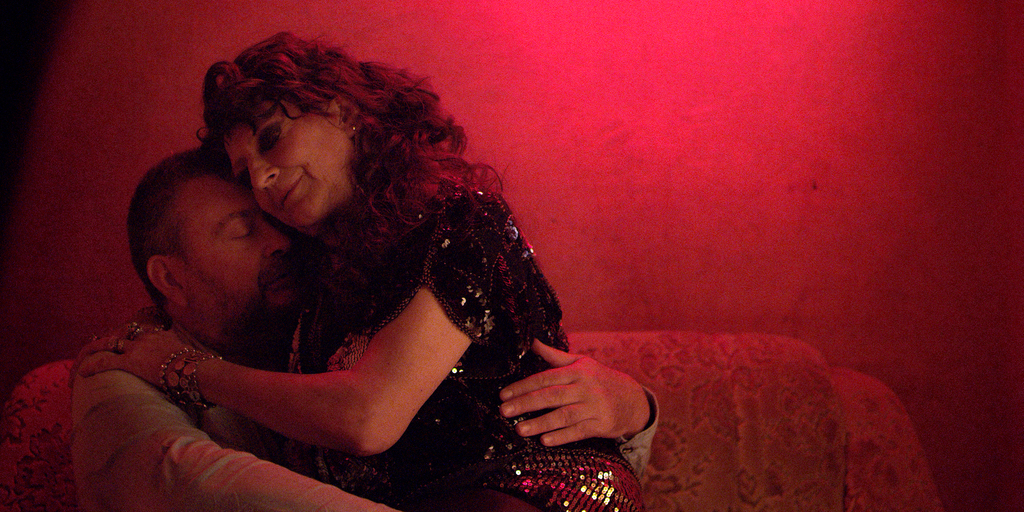
A 55+ yr old woman working in a cabaret (Strip Bar/pickup joint) decides to settle down with a customer who is deeply in love with her. And then what happens. This interestingly titled film delivers a powerful punch, thanks to a lovely performance by the lead actress. You not just curse her for failing to get a grip on her life, but also empathize with her, despite the fact that she has a screwed up family situation, sad personal life & an unhealthy lifestyle. Is love enough? Do old habits really die hard? Will the wedding happen? Will she reconcile with her estranged kids?
Breathtaking shots of Mongolian highlands are enough to make you fall in love with this film. Norjmaa, a shepherd waiting for lover to return from some war, remains steadfast against the wishes of the rest of the village to move to a safer place during the second world war. She nurses a Russian and a Japanese soldier back to health only to realize that as soon as they are able to move, they are at each other’s throat. Every comic moment that ensues as a result of this is a comment on the futility of war. Badema, who play Norjmaa, is brilliant in every scene. She embodies loneliness and kindness. Her maternal attitude and anger is touchingly portrayed whether it is directed to her livestock or to the soldiers she saves. Highly recommended.
Party Girl
An aged stripper agrees to marry a man who has been a regular at her cabaret joint and is in love with her. Although she is seen preparing for her new life, one is never convinced that she is doing it because she really wants it. Or she is doing it because she needs it. A sort of social acceptance, a nod from her children that she is a part of the civil society now. Her uncomfort and indecisiveness seep through the screen. Will she marry this man or does she prefer going back to the cabaret spending the nights getting drunk with her other stripper girlfriends? Is this an easy decision for someone who has been in the job as long as she has been?











 F.i.g.h.t C.l.u.b